




Abstract
The consumption of fossil and especially alternative fuels from renewable sources is supposed to rise in the future. Biofuels as well as fossil fuels often contain alkali and alkaline earth metal impurities that are potential poisons for automotive exhaust catalysts. The impact of these contaminations on the long-time performance of the exhaust aftertreatment system is a major concern. However, engine test bench studies consume considerable amounts of fuel, manpower and time. The purpose of this research project was to examine whether accelerated engine tests can be achieved by a modified diesel aftertreatment system in a test bench and contamination of biodiesel with known amounts of elements potentially poisoning automotive catalysts. A variety of potentially harmful elements (sodium (Na), potassium (K), calcium (Ca), magnesium (Mg), sulfur (S) and phosphorous (P)) were added all at once to enhance the contamination level in biodiesel. A diesel oxidation catalyst and a catalyst for selective catalytic reduction reaction were placed in a stream of exhaust gas generated with a single cylinder engine. For reference purposes, a second test series was performed with a commercially available biodiesel. Catalysts were analyzed post-mortem using a bench flow reactor and X-ray fluorescence regarding their activity and deposition of the harmful elements. For both diesel oxidation catalyst and selective catalytic reduction catalysts, significant deactivation and decrease in conversion rates could be proven. For diesel oxidation catalyst, linear correlations between mass fractions of added elements and aging time were observed.
Keywords
Introduction
Biodiesel can be made from a broad range of raw materials. Beside several kinds of vegetable oils, a growing diversity of alternative feedstocks like animal fat, used cooking oil (UCO) can be used. Current political developments in the European Union focus on the application of algae, wastes und residues for biofuel production.1,2 As the renewable sources vary, the quality of biodiesel may become rather variable. Despite enhanced purification efforts and intense refining during the production process, a certain amount of catalyst poisoning elements is left in the final product. The well-known catalyst poisons sodium (Na), potassium (K), calcium (Ca), magnesium (Mg), phosphorous (P) and sulfur (S) are regulated by the specifications defined in the EN 14214 and consistently controlled. Element levels in biodiesel on the German market have been far below the limits during the last decade.3–9 But a changing feedstock base might cause a rise in alkaline and alkaline earth metal, phosphorous, sulfur and non-regulated elements like aluminum or zinc (sulfur 10 and phosphorous 10 are typical part of vegetable oil and animal fat; sodium, 11 potassium, 11 calcium 12 and magnesium 12 reach at the purification and refining process of the biodiesel production). Furthermore, considerable contribution to elements emitted by the exhaust originates from burnt engine oil. Independent on the path of entry, metal fuel impurities can potentially harm the emission control devices used in diesel engines. The impact of the possible contaminations is important to know in order to evaluate long-term-stability of exhaust aftertreatment system. Usually, field sampling or time consuming and expensive engine test bench studies are necessary for examining the correlation between deposition of inorganic ash and deactivation of catalysts. Several studies have been carried out on the effect of biodiesel on catalyst performance.13–16 Time need and costs can be reduced considerably using an accelerated catalyst aging method. But so far only few studies have been published on accelerated aging procedure using selected substances as impurity additives for biodiesel.17,18 The purpose of the work presented in this article was to develop an accelerated aging test of a diesel exhaust aftertreatment catalyst system by applying biodiesel with added catalyst poisons.
Experimental setup
An accelerated aging method was developed in order to expose the exhaust aftertreatment system to the amount of ash emitted during 300,000 km real driving within 500 h runtime of the engine test bench or even less. Several laboratory tests showed that the element level in the test fuel can be raised up to 50 times above the level of the commercial biodiesel. As six catalyst poisoning elements were added to biodiesel at the same time, the ash content of the contaminated biodiesel was elevated from 0.002% up to 0.035%. Based on the exposition to potential catalyst poisons, the time gain is estimated by a factor of 18. The contaminated biodiesel was applied to poison an exhaust aftertreatment setup containing a diesel oxidation catalyst (DOC) a selective catalytic reduction (SCR) catalyst. The catalysts were fitted into the tailpipe of an engine test bench. In order to estimate the influence of the added poisons, the same exhaust aftertreatment setup was run with commercial available biodiesel. For SCR reaction, an aqueous solution of urea (32.5 wt%) is commonly used as a reducing agent. Urea solution has a number of disadvantages. It is a corrosive liquid that crystallizes easily, freezes below −11°C and decomposes above +50°C. It is to be made from very pure urea and distilled water to avoid any unwanted impurities in the exhaust system. Whereas it is feasible to cope with these problems in an engine test bench, another drawback is not as trivial: when spraying the urea solution into the tailpipe, the exhaust gas temperature decreased by several degrees and influencing the activity of the used catalysts especially in the low-temperature regions. To avoid these pitfalls, gaseous ammonia was utilized in the experimental setup for this study. Uniform concentration of gaseous ammonia was verified by preliminary tests. In the following, the experimental setup of the biodiesel contamination, the catalyst selection and preparation, the engine test bench, the setup of the bench flow reactor and the elemental analysis of the catalysts are described.
Fuel preparation
Biodiesel as a straight fuel (i.e. 100 vol% biodiesel (B100)) produced via transesterification from rapeseed oil, animal fat and oil-containing residues was delivered by a German producer in a 1000 L intermediate bulk container (IBC). The biodiesel met the European fuel standard EN 14214. For raising the level of catalyst poisoning elements in B100, a defined substance was to be added for each single element. Simultaneously, an operation procedure was developed for adding the substances to the fuel using standard laboratory equipment. Mixing of biodiesel with the additives was done in 20 L canisters. Afterward, the prepared test fuel was transferred into 200 L fuel barrels and stored until use. Repeated measurements showed that the mixture was stable during storage for at least 4 weeks.
Numerous experiments were performed in order to identify the most suitable contaminants for raising the level of catalyst poisoning elements. Target substances had to be soluble in the used biodiesel and similar in their characteristics to avoid any changes at the used biodiesel matrix. In order to ensure safe handling, the dopants had to be nontoxic and for economic reasons inexpensive. Six substances were identified for fulfilling all the requirements: sodium oleate (Na), potassium oleate (K), magnesium stearate (Mg), calcium stearate (Ca), lysolecithin (P) and n-dodecyl mercaptan (S). In total, 6.7 g of the substances were mixed to 1 kg biodiesel. After the fuel preparation, the contaminated biodiesel has element levels 21 times higher concentration for the alkaline earth metals and a 50 times higher concentration for phosphorous compared to the commercial biodiesel (Table 1).
Analytical data of commercial and contaminated biodiesel.
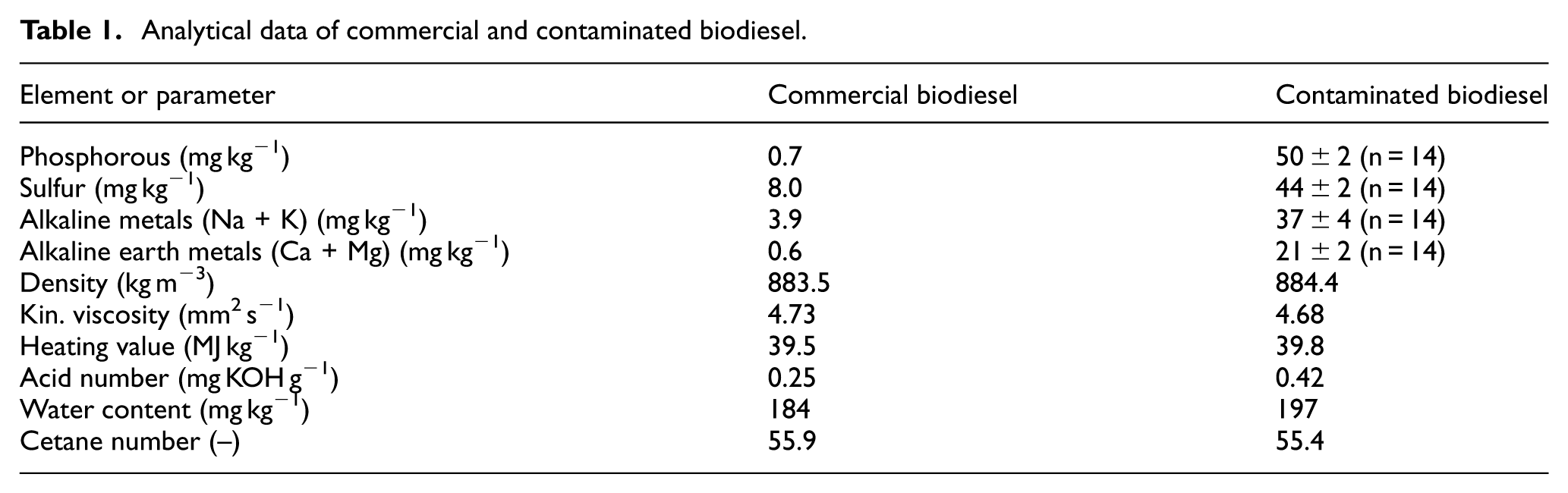
The feedstock of the used biodiesel was mainly rapeseed oil with its characteristic fatty acid profile. For contaminated biodiesel, the low fraction on contaminants did not change this fatty acid profile.
Catalyst selection and preparation
Experimental investigations on rapid catalyst aging were done with a diesel oxidation catalyst (DOC) and a selective catalytic reduction (SCR) catalyst. The applied DOC brick was a Pt-Pd/Al2O3 catalyst. For the SCR sample, a V2O5-WO3/TiO2 catalyst was used. Both catalysts were provided by the Forschungsvereinigung Verbrennungskraftmaschinen (FVV) e. V. A diesel particulate filter was not integrated in the experimental setup. The SCR and DOC bricks were cut into 14 equal ashlar-formed samples. The dimensions of the bricks were adjusted to the exhaust volume flow in order to fit the engine test bench and the bench flow reactor. The ammonia slip oxidation catalysts of the SCR samples were removed. The dimension of the used DOC catalysts is 225 mm2 facing, 80 mm length and cells per square inch (CPSI) of 400. The dimension of the used SCR catalyst is 225 mm2 facing, 225 mm length and a CPSI of 300.
Engine test bench setting
The accelerated aging procedure was run using a single cylinder research engine with a swept volume of 500 cm 3 , common-rail injection and exhaust gas recirculation. The engine was configured for diesel fuel and diesel substitutes. As further benefits, monitoring and controlling of the cylinder pressure, supercharged air supply, pressure and temperature of the exhaust gas system and the fuel, oil and coolant conditioning are possible. The exhaust gas system had to be modified for the simultaneous aging of 4 DOC and 4 SCR catalyst bricks. A bypass was integrated in front of the DOC canning and used for controlling the exhaust gas flow and the space velocity, respectively. The exhaust gas temperature was measured at the engine outlet, as well as at each of DOC and SCR inlet and outlet. The exhaust pressure was measured at engine outlet, DOC outlet and SCR outlet. The soot content and the gas flow were recorded at the end of the exhaust gas system. In addition, an exhaust back pressure valve typically used for controlling the exhaust gas recirculation (EGR) was used to control the exhaust pressure. The distance between engine output and DOC inlet was 400 mm and between DOC outlet and SCR inlet was 2400 mm. The reducing agent ammonia was added to the exhaust gas via a mass flow controller in 2100 mm in front of the SCR inlet. A schematic of the exhaust gas system is illustrated in Figure 1. The used DOC and SCR canning has four parallel catalyst slots. Every slot has the facing of the used catalyst and a separate exhaust sample output. The catalysts were sealed with high temperature yarn in the slot.
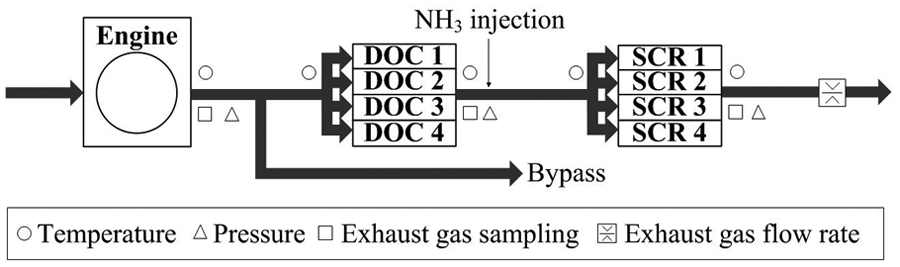
Schematic of the exhaust gas system in the engine test bench.
The gas composition of CO, CO2, NO, NO2 and H2O was measured by a Fourier transform infrared spectroscopy (FTIR), O2 by a paramagnetic detector (PMD) and hydrocarbons (HC) by a flame ionization detector (FID). The soot content was measured by a smoke meter.
Two test series were performed at the engine test bench, one series with (a) commercial biodiesel and one series with (b) contaminated biodiesel. Both series comprised 945 h during which seven DOC and seven SCR catalysts were aged in each case. The aging procedure of the DOC and SCR catalysts was staggered as follows: 135 h (slot 1), 270 h (slot 2), 405 h (slot 3), 540 h (slot 3), 675 h (slot 2), 810 h (slot 2) and 945 h (slot 4).
Every single 135 h time segment was divided into three engine modes (Table 2). Engine mode #1 was set to an SCR inlet temperature of 200°C. This temperature represents a typical low-temperature engine mode at the low working range of SCR catalysts. Engine mode #2 (300°C SCR inlet temperature) represents the optimum conditions for vanadium-based SCR catalysts. And the engine mode #3 (450°C SCR inlet temperature) represents the high temperature side of the catalyst working range.
Used engine modes.
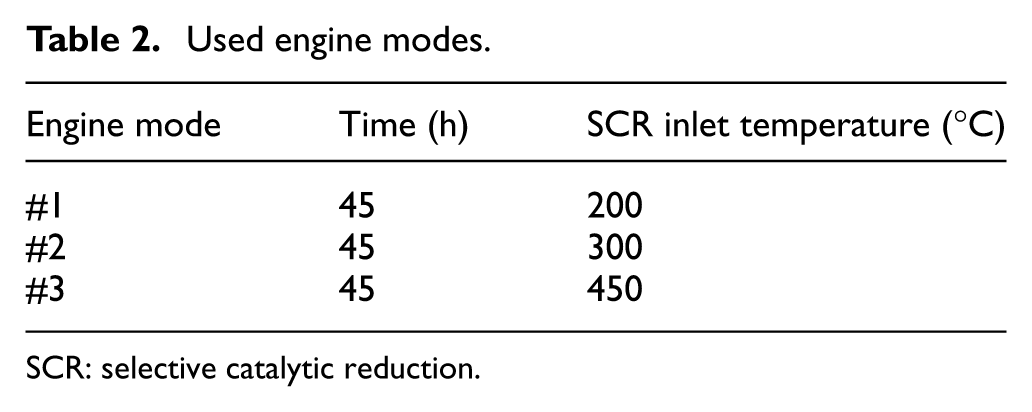
SCR: selective catalytic reduction.
The electronic control unit (ECU) was set to operate the three engine modes considering the following prioritization:
Constant SCR inlet temperature;
Constant exhaust gas flow or constant space velocity (gas hourly space velocity (GHSV), h−1) of the catalysts;
Constant composition of the exhaust gas at engine outlet.
Ideally, all of the three prioritizations were fulfilled during the aging procedure. If not, the constant SCR inlet temperature had the highest prioritization. In case of need, the ECU could correct the injection timing and amount of the fuel or the bypass of the exhaust gas system was readjusted to meet this criterion.
Bench flow reactor setting
After operating the catalysts on the engine test bench, the activity was checked on a bench flow reactor. The same conditions were applied for all DOC and SCR samples (Table 3).
Conditions for catalytic assessment of DOCs (upper section) and SCR (lower section) on a bench flow reactor.
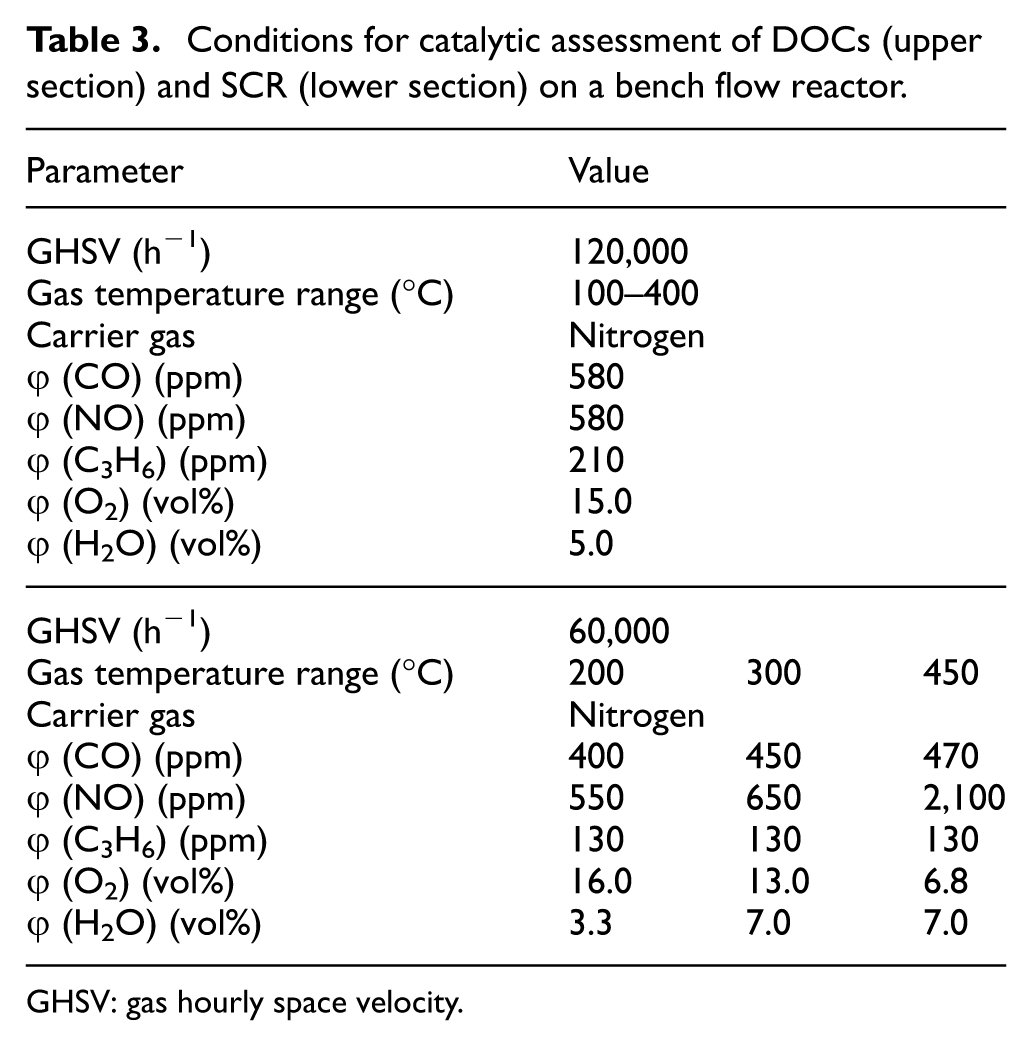
GHSV: gas hourly space velocity.
The choice of conditions and reactants allows the evaluation of the aging effects on CO, C3H6 and NO oxidation as well as reaction hysteresis effects using two temperature ramps with a heating rate of 3 K min−1. The ammonia content of the selective catalyst reduction was controlled at the bench flow reactor of an ammonia slip of 10 ppm.
Elemental analysis
To get information on the axial distribution of the physico-chemical properties of the aged catalysts, the monoliths were cut in three equal pieces (E: entry; M: middle; X: exit), lengthwise. From each part, the first 3–10 mm were cut off and ground to a fine powder (dp < 100 µm). The chemical composition was determined using X-ray fluorescence (XRF) analysis. The measurements were performed on a Bruker S4 Explorer device with a rhodium (Rh) anode, typically 50 kV anode voltage and 20 mA emission current. The catalyst powders were pressed into 3–4 mm thick tablets with a diameter of 20 mm. Special XRF wax (Hoechst wax C micropowder, Merck) was used as a binder in a 7:1 ratio. The tablets were pressed at a pressure of 200 MPa for 10 min, transferred to an 18 mm stainless steel holder and investigated in vacuum (10−4 mbar) by means of a turret 4 collimators brass (0.23°, 0.46°, 1° and 2° beam divergence) and 5 analyzer crystals of laser-induced fluorescence (LiF) (220) (2d = 0.2848 nm); LiF (200) (0.4028 nm); germanium, Ge (0.653 nm); PET (0.874 nm) and ovo-55 (5.5 nm).
Results and discussion
Ammonia distribution
The NOX conversion over the SCR catalyst mainly depends on the presence of the reducing agent ammonia (NH3). But significant excess of ammonia is to be avoided as the NH3 slip of the catalyst is restricted out of ecological reasons. The NH3 slip of the described experiments was set to 10 ppm. This value had to be kept for each of the four canning slots. In order to verify equal values, NH3 distribution was measured at each of the four canning slots as well as at the SCR outlet setting an ammonia slip of 20 ppm. The distribution testing ran without catalysts to avoid cross-influences. The 20 ppm NH3 slip was selected for the distribution testing instead of the 10 ppm slip as a constant background emission of approx. 10 ppm NH3 without ammonia injection had been observed in earlier test runs. The obtained results showed an equal distribution of the NH3 slip values at the four slots and the SCR outlet (arithmetic mean: 20.33 ppm; standard deviation: 0.28 ppm). For the aging test runs, NH3 slip was therefore measured at the canning outlet only.
Exhaust gas temperature
The most important criterion of the setup was the constant temperature at the SCR inlet. For the use of biodiesel this temperature (Figure 2, upper section) could be kept constant. The standard deviation was lower than 6 K. Also the DOC inlet temperature was constant. The standard deviation was slightly lower compared to the SCR inlet temperature.
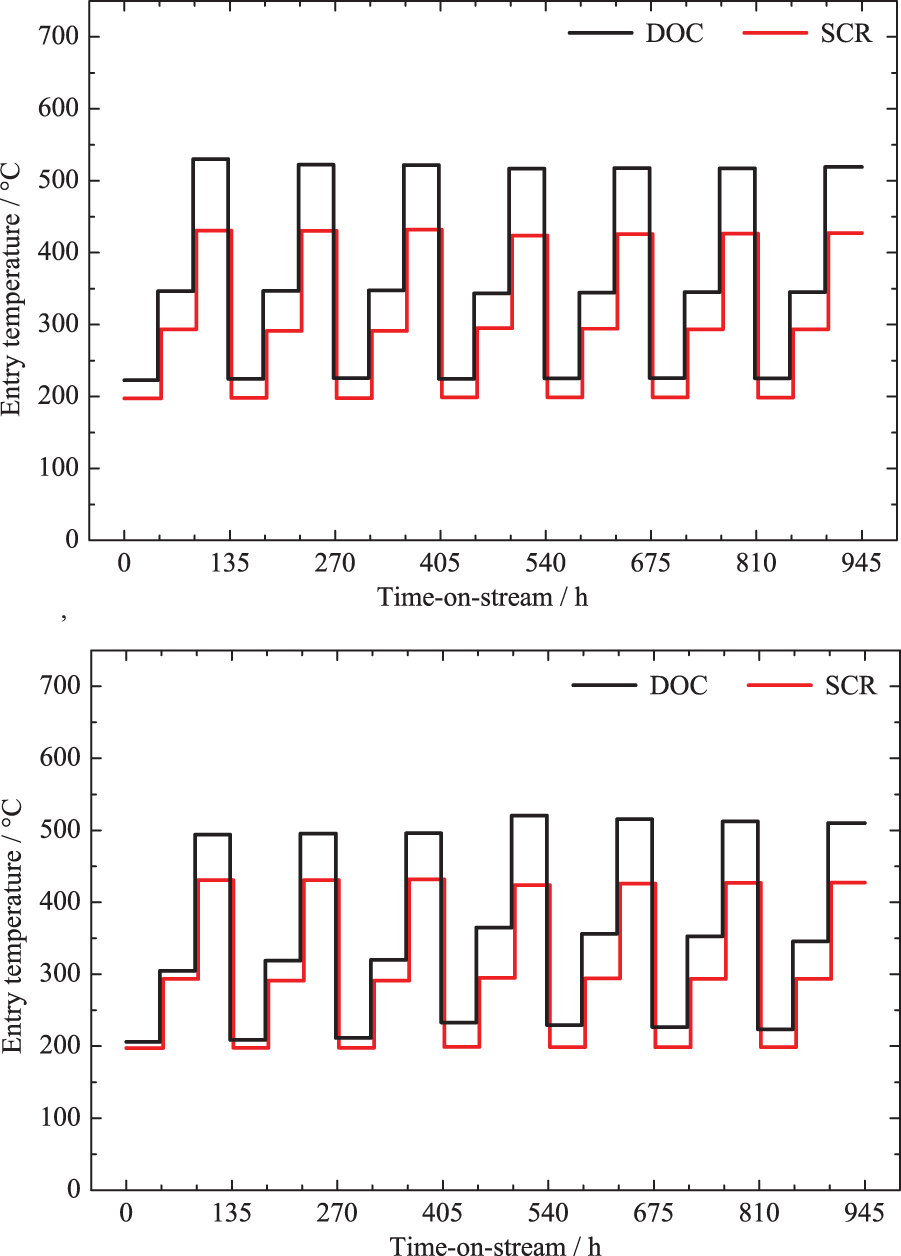
Inlet temperature on DOC and SCR with commercial (upper section) and contaminated biodiesel (lower section) as function of the time-on-stream.
The application of poison containing biodiesel was more challenging. There were two recurring complications during the 945 h test phase. The used contaminated fuel tended to cause injector nozzle coking. Furthermore, ash and soot were formed in high concentrations. This ash and soot plugged the channels of the catalyst bricks. The injector nozzle coking was reduced by cleaning the nozzle in shorter time intervals. The catalysts were frequently cleaned with compressed air to eliminate the plugging.
Figure 2 (lower section) shows the average inlet temperature of the 7 DOC catalysts and the 7 SCR catalysts using contaminated biodiesel. As plugged catalysts, particular DOC catalysts with a high time-on-stream, reduced the exhaust gas flow. The plugged DOC catalysts with a high time-on-stream reduced the exhaust gas flow and consequently the exhaust gas heat at SCR. The primary aim of a constant SCR inlet temperature could only be achieved by increasing the exhaust gas temperature at the engine output and the injection timing of the fuel supply. This caused an increase of the DOC inlet temperature starting from the sample taken after 540 h. Exhaust gas flow rate could be increased slightly by frequent cleaning of the plugged catalysts in the further course of the test. Correspondingly less exhaust gas heat was needed and the DOC inlet temperature was slightly reduced as shown in the decrease of the temperature curve for 675 and 945 h, respectively. At the end of the test, the standard deviation of the SCR inlet temperature was at the same level compared to the test with commercial biodiesel (3 K), but the DOC inlet temperature was more than twice compared (12 K) to test with commercial biodiesel.
Exhaust gas flow rate and space velocity
For the use of commercial biodiesel, the GHSV was constant for all of the seven catalyst samples at engine mode #1 only (Table 2). At engine modes #2 and #3, the samples taken after 135, 270 and 405 h had a 10% lower GHSV compared to the other samples. However, a reason for the lower values could not be identified; measurement errors could be excluded. The standard deviation of the GHSV is 3900 h−1. The upper figure of Figure 3 illustrates the GHSV of the SCR catalyst for each of the three engine modes.
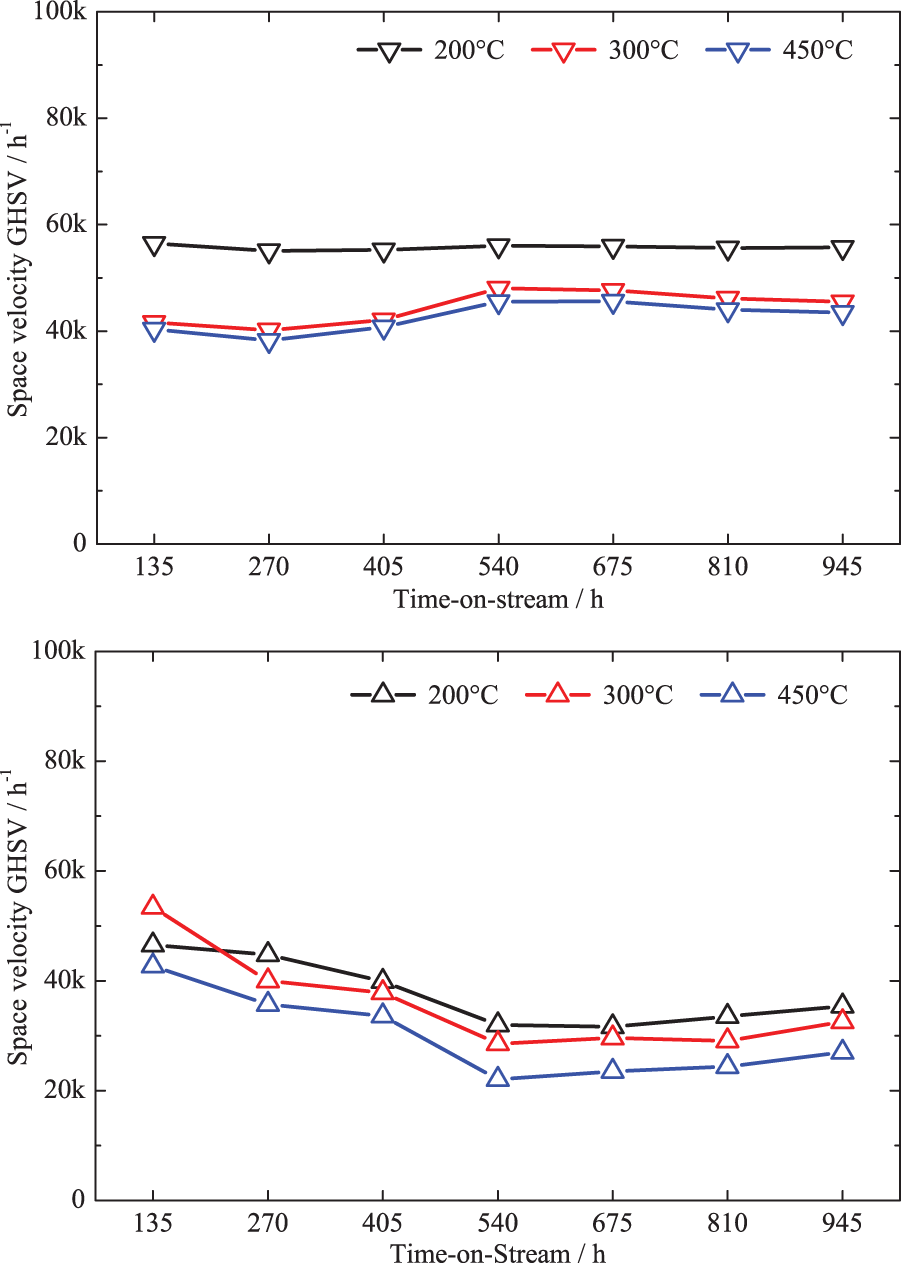
Gas hourly space velocity for the aged SCR catalysts with commercial (upper section) and contaminated biodiesel (lower section).
As described above, the catalysts were plugged by ash when feeding highly poison contaminated biodiesel. The exhaust gas flow was reduced in the main pipe as a large part of the exhaust was lost via the bypass. Consequently, GHSV, as a temperature sensitive measure of the exhaust gas flow rate, decreased. As the lower figure of Figure 3 shows, the SCR catalyst after 540 h on-stream was aged with minimum GHSV. For subsequent catalyst samples, GHSV could be stabilized by frequent injector and catalyst cleanings.
Composition of exhaust gas
For the use of commercial biodiesel, the NO emissions were very constant over time-on-stream as shown in Table 4 (upper section). The arithmetic mean of the smoke number was 0.08 FSN (standard deviation (SD) 0.02 FSN) at engine mode #1, 0.21 FSN (SD 0.07 FSN) at engine mode #2 and 0.18 FSN (SD 0.01 FSN) at engine mode #3. The main configurations of the engine control unit could be kept almost unmodified in use with commercial biodiesel. Merely the injection timing was adjusted to compensate different fuel qualities and different ambient temperatures.
NO emissions (engine output) with commercial (upper section) and contaminated biodiesel (lower section).
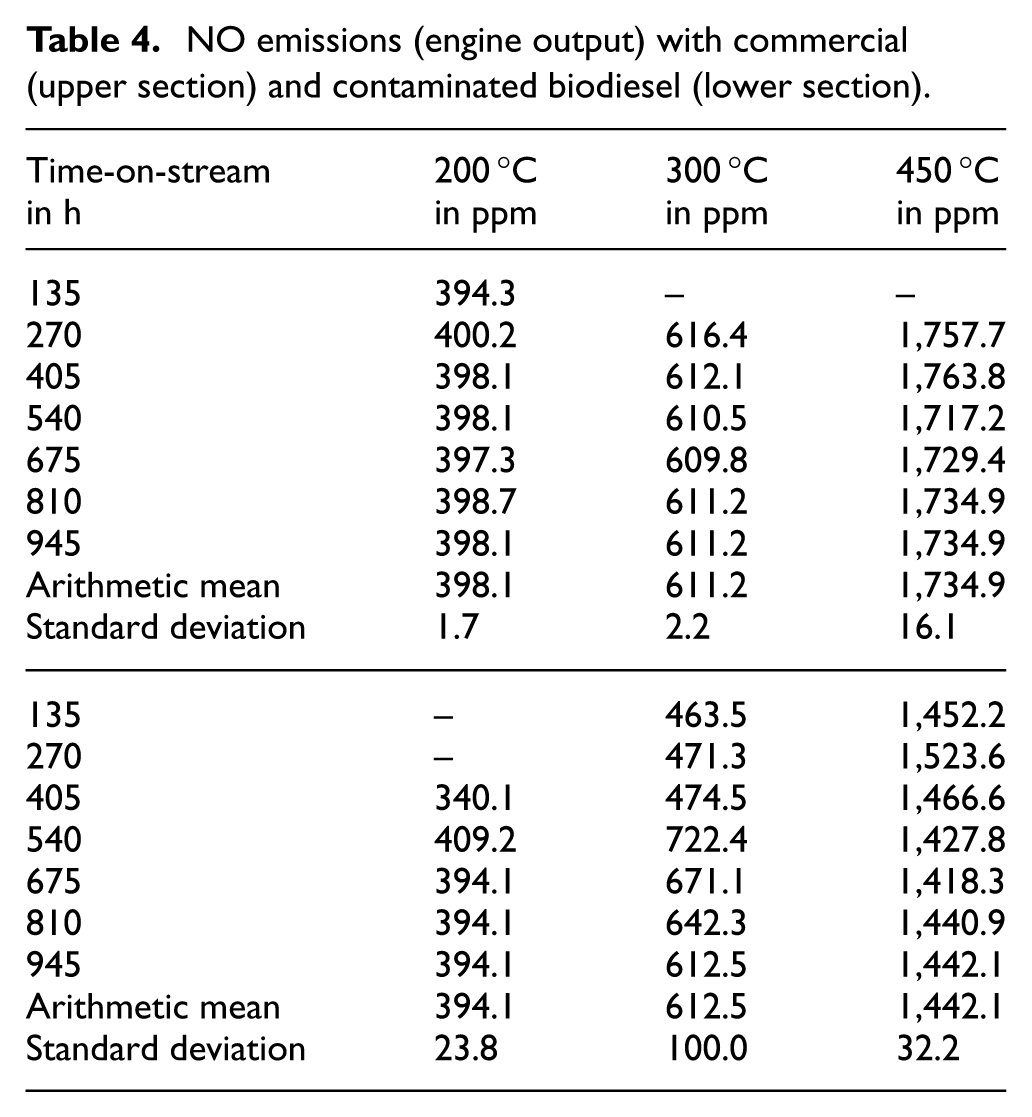
Exhaust gas emissions for the application of contaminated biodiesel varied in a broader range in comparison to commercial biodiesel. The required extra exhaust gas heat as a result of the plugged DOC catalyst brigs was provided by an adapted configuration of fuel injection; basically, the fuel supply was raised. In addition, the injector nozzle coking negatively affected the combustion of the poison-added biodiesel. Both events caused an increase of the soot concentration in the exhaust gas, a reduction of the NO emissions at the full load engine mode #3 due to the reduced air/fuel mixture caused by the increasing fuel consumption and a considerable increase of the variance (standard deviation) of all exhaust gas emissions. During the total runtime, the soot concentration had an average value of 0.24 FSN (SD 0.02 FSN) at engine mode #1, 0.48 FSN (SD 0.02 FSN) at engine mode #2 and 0.61 FSN (SD 0.06 FSN) at engine mode #3. As an example for the exhaust gas emissions, the NO data are given in Table 4 (lower section).
A short additional test on the engine test bench was done in order to identify the cause of the combustion problems when using contaminated biodiesel. By adding the fuel dopants separately, the critical agent was found to be lysolecithin (phosphorous). This fuel additive promotes injector nozzle coking and generates high soot and ash concentrations.
Catalyst characterization
DOC (bench flow reactor)
Figure 4 (upper section) shows the maximum conversion (columns) and light-off temperature (LOT; temperature at 50% conversion) of C3H6 for commercial (black) and contaminated biodiesel, determined by bench flow reactor tests after operation on the engine test bench. For comparison, the fresh catalyst (left) and a field-aged catalyst (right, 100,000 km with 10 vol% biodiesel and 90 vol% petroleum diesel (B10) fuel) have been added. While the maximum conversion after operation with biodiesel remains mostly unchanged, a clear and continuous drop in conversion can be observed for the catalysts operated with poison-added biodiesel (red). Also the LOT increases with time-on-stream by applying contaminated biodiesel while it remains constant when using commercial biodiesel. For the 945 h catalyst with contaminated biodiesel, no LOT can be given, because conversion was below 0.5. The aging state of the field-aged catalyst is reached after a shorter time-on-stream than in the first sample at 135 h. Similar observations were made for CO in terms of conversion (Figure 4, lower section). The LOT, however, remains unchanged after the first aging step and is higher than in the field-aged catalyst. The oxidation of C3H6 seems to be more sensitive to aging effects than the oxidation of CO.
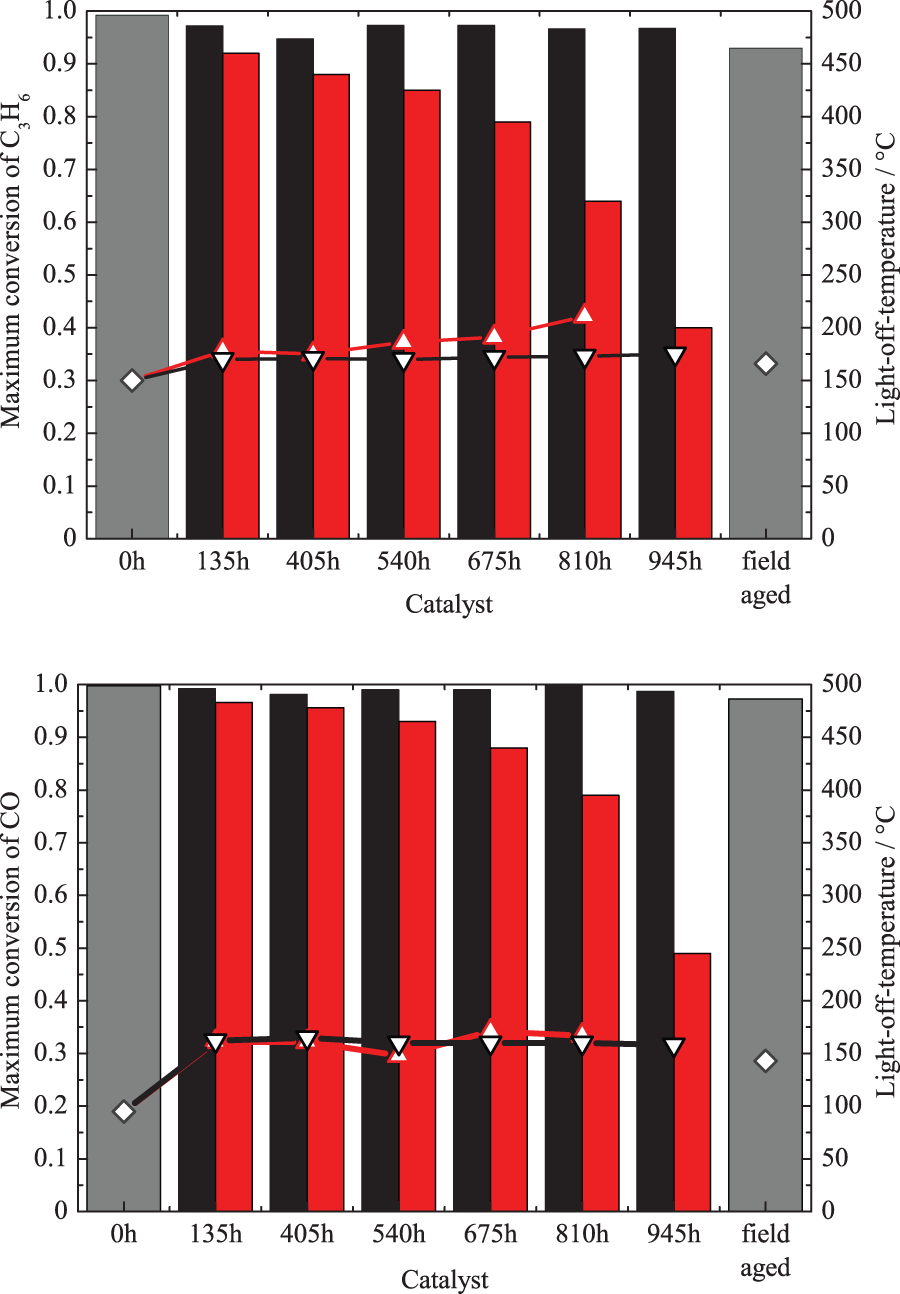
Maximum conversion (columns) and LOT (points) of C3H6 (upper section) and CO (lower section) at DOC catalysts for commercial (black) and contaminated biodiesel (red).
In Figure 5, the maximum conversion of NO and the temperature at which this maximum is reached for each catalyst are shown. The maximum conversion is reached at higher temperatures after operating the catalyst with exhaust gases from contaminated biodiesel compared to commercial biodiesel. Additionally, the observed conversions are lower. The catalytic behavior of the field-aged catalyst lies between those of the catalysts aged with the two biodiesel fuels (commercial and contaminated). In this regard, it has to be pointed out that deactivation of the field-aged catalyst for the oxidation of C3H6 and CO is less pronounced than found for the oxidation of NO. Thus, the catalytic activity to oxidize NO to NO2 was reproduced in an acceptable level after aging a DOC for 540 h with contaminated biodiesel. Whereas such a statement is difficult to make for the oxidation of C3H6 and CO because of the mentioned less grade of deactivation for the field-aged catalyst.
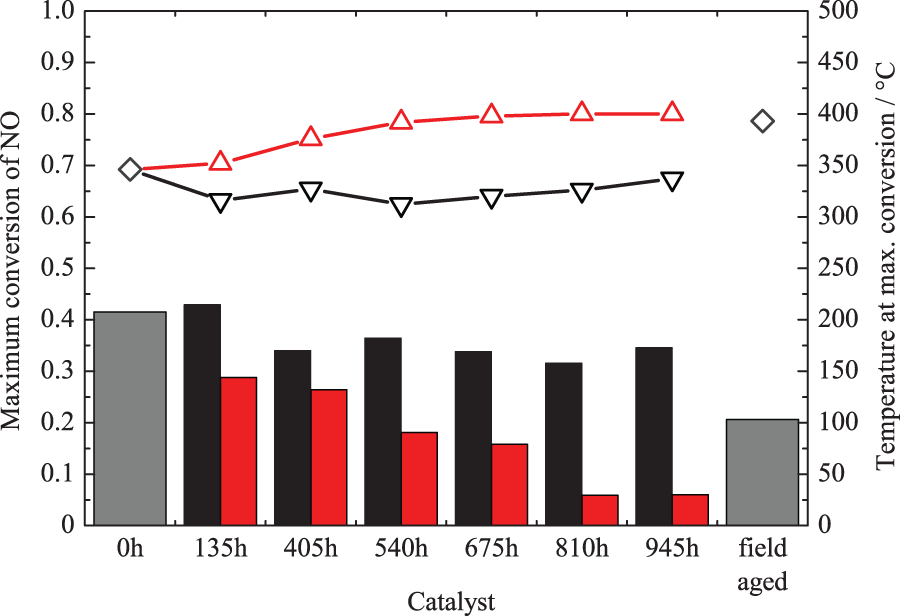
Maximum conversion (columns) and temperature at maximum conversion (points) of NO at DOC catalysts for commercial (black) and contaminated biodiesel (red).
DOC (elemental analysis)
Figure 6 shows the mass fraction of phosphate and potassium oxide on the catalysts after different times-on-stream. A linear correlation between the mass fraction of poisons and the time-on-stream is observed for all poisons with an axial gradient in flow direction with exception to the middle section (M), which has a different washcoat density. After 945 h, an average mass fraction of 0.047 for sulfate, 0.0125 for sodium oxide and 0.005 for calcium oxide was determined. For the field-aged catalyst that was exposed to the exhaust of biodiesel for 100,000 km, the average mass fractions of sulfate were 0.0052, 0.0011 for sodium oxide and 0.0010 for calcium oxide.
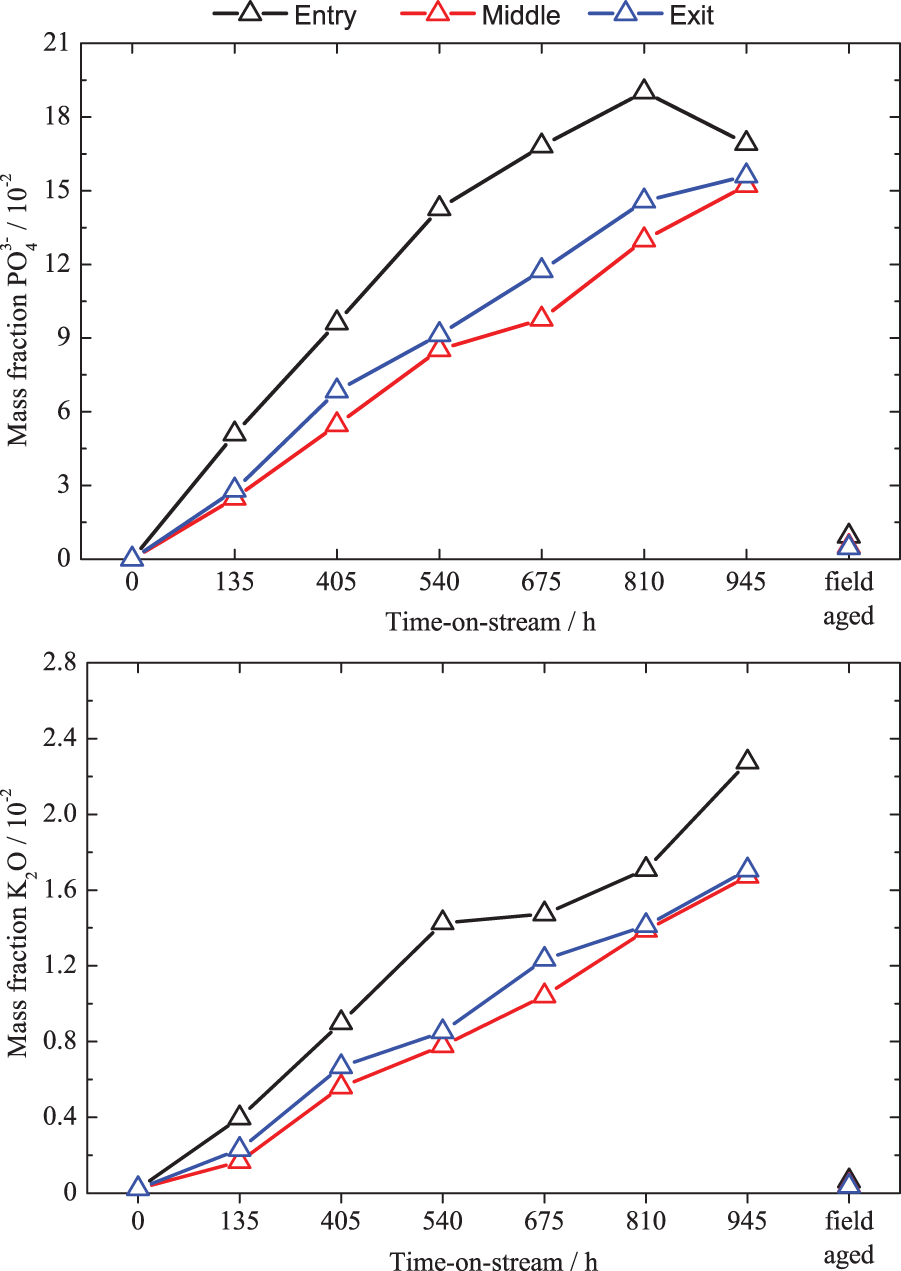
Mass fraction of phosphate (upper section) and potassium oxide (lower section) on DOC catalysts after operation with contaminated biodiesel.
The mass fraction of sodium oxide, magnesium oxide, calcium oxide and sulfate on the catalysts operated with contaminated biodiesel is about twice as high as that found when using commercial biodiesel and an operating time of 945 h. However, much more phosphate (fivefold) and potassium oxide (sevenfold) were deposited when using the poisoned biodiesel. Thus, there must be sources beside the fuel, or poisons on the catalyst with different particles and/or particle sizes.
SCR (bench flow reactor)
The activity of the SCR catalysts was tested with the same bench flow reactor, but different reaction conditions were applied. Table 3 shows that three temperatures and inlet gas compositions were chosen that were adapted to the conditions on the engine test bench.
The results obtained by these experiments are shown in Figure 7. While for the fresh catalyst, the maximum conversion is reached at 300°C, it is shifted to 450°C for both aging procedures with the two biodiesel fuels (commercial and contaminated). While the NO conversion of the contaminated biodiesel aged catalysts decreases with time-on-stream for all three temperatures, it remains almost unchanged after aging with commercial biodiesel. The irregularities at the commercial biodiesel aged catalysts for the test at 200°C can be attributed to minor catalyst damages caused by sample mounting and dismounting on the engine test bench. As obvious from Figure 7, the use of contaminated biodiesel leads to a faster deactivation of the SCR catalysts.
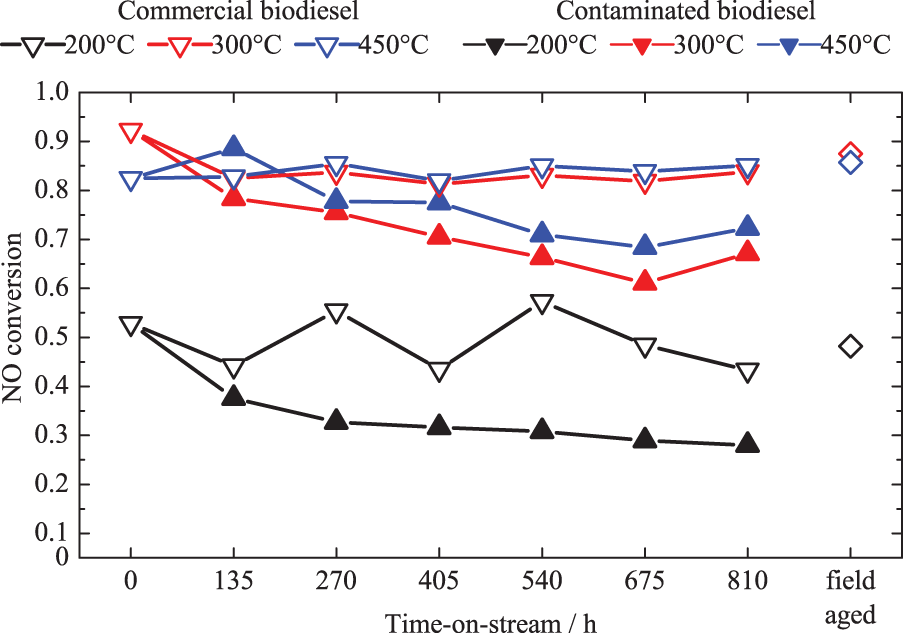
NO conversion over SCR catalysts at three temperatures after operation with commercial and contaminated biodiesel.
SCR (elemental analysis)
After the catalytic measurements, the SCR catalysts were analyzed by XRF to gain information about axial elemental composition. The results for DOC catalysts were similar for the SCR catalysts, but not for all poisons. For phosphate, a linear correlation between mass fraction and time-on-stream (Figure 8, upper section) and an axial concentration gradient from entry to exit were observed. For all other poison elements, this observation was less obvious. For potassium oxide (Figure 8, lower section), increasing amounts were found with time-on-stream, but no clear correlation can be drawn. The same applies to magnesium oxide, calcium oxide, sodium oxide and sulfate. The ratio of mass fraction of phosphate found on the catalyst operated with exhaust from contaminated biodiesel and commercial biodiesel is about 6 and comparable to that for the DOC catalysts. The difference of the mass fractions of poisons found on DOC and SCR catalysts can be explained with the arrangement of the catalysts in the engine test stand. The DOC is positioned ahead of the SCR catalyst and is exposed to higher concentrations of poisons in the exhaust gas. Thus, poisons that deposit on the DOC or the tailpipe will not deposit on the SCR catalyst.
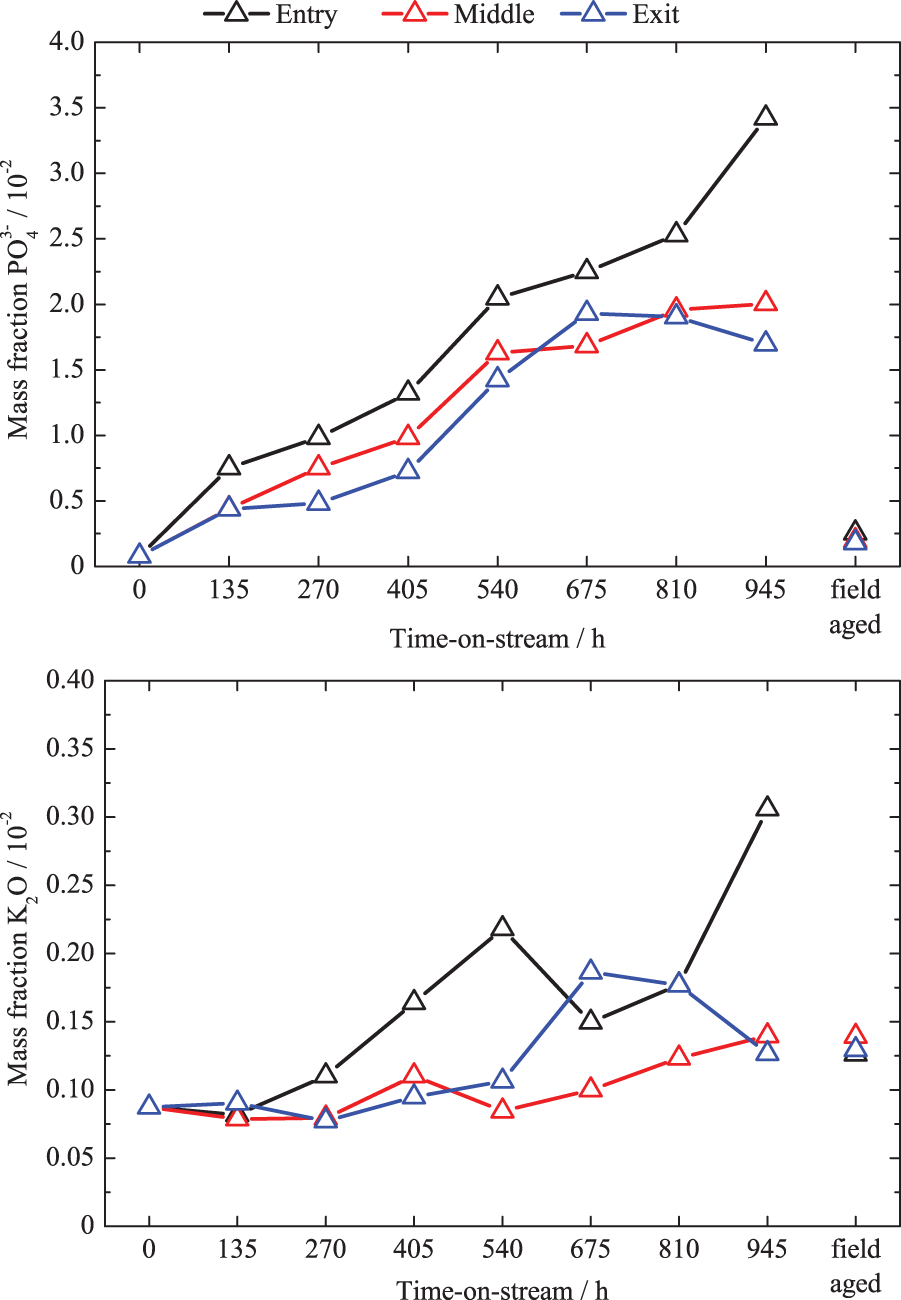
Mass fraction of phosphate (upper section) and potassium oxide (lower section) on SCR catalysts after operation with contaminated biodiesel.
Summary and conclusion
An accelerated aging test of a diesel exhaust aftertreatment catalyst system was developed. The components of the aftertreatment systems had to be adjusted to the dimensions of an engine test bench prior to the aging. The biodiesel was artificially contaminated by added alkali, alkaline earth, phosphorous and sulfur-containing compounds. Thus, the levels of poison elements were raised up to several times the upper limits given in EN 14214.
DOC and SCR catalysts were exposed to the exhaust of a single cylinder research diesel engine. Time-on-stream was varied between 135 and 945 h. Two test series were performed, one with contaminated biodiesel containing the additives and another with commercial biodiesel as commercially available on the German market.
The following main outcomes can be summarized:
The ash content of the contaminated biodiesel was raised from 0.002% to 0.035%, corresponding to an increased runtime by a factor of ca. 18.
The used substance for phosphorus poisoning (lysolecithin) tends to coke the injection needle.
Ammonia distribution and exhaust gas temperature could be kept constant throughout the tests. A slight increase in the DOC inlet temperature for the use of contaminated biodiesel had to be applied as partially plugged catalysts reduced GHSV and SCR inlet temperature. Frequent cleaning with compressed air prevented a further increase.
The composition of the exhaust gas emissions with contaminated biodiesel varied in a broader range than for commercial biodiesel. The soot concentration was raised, whereas NO emissions at full engine load (450°C) decreased due to the reduced oxygen content.
The analysis of the investigated DOCs after catalytic use showed a clear and continuous drop in the maximum conversion of C3H6 with time-on-stream for the operation with contaminated biodiesel as well as an increasing LOT. Similar observations were made for CO in terms of conversion. The elemental analysis revealed a linear correlation between mass fraction of the poisons and time-on-stream.
The analysis of SCR catalysts after catalytic use showed a decrease of NO conversion with time-on-stream when operated with contaminated biodiesel, but remained almost unchanged for commercial biodiesel. Elemental analysis of the catalysts showed a linear correlation between mass fraction of phosphate and time-on-stream. For the other elements, this observation was less obvious. This can be explained by the arrangement of the catalysts in the engine test bench with the DOC being positioned ahead of the SCR catalyst.
For both types of catalysts, it was possible to reproduce the concentration profiles of catalyst poisons by aging on an engine test bench. Whereas the amounts of deposited poisons on the catalysts after aging for 135 h were already significantly higher than found for the field-aged counterparts, the corresponding grade of deactivation after 135 h is lower for the DOC. A comparable deactivation between field-aged and engine test bench aged DOCs regarding the oxidation of NO was reached at 540 h. This relates to the fact that the kind of deposited poisons differs for both. Regarding the SCR catalysts, the grade of deactivation determined for the field-aged sample was very low and thus was already exceeded after 135 h time-on-stream on an engine test bench with contaminated biodiesel. In this context, the accelerated aging of DOC and SCR catalysts can be achieved by application of intentionally contaminated biodiesel on an engine test bench.
However, some further optimization is still needed. For instance, the method for selectively contaminating the test fuel needs to be further improved in order to minimize the influence on engine combustion. Also the kind and the amount of dopants have to be optimized. In this context, different grades of deactivation were achieved for the two different investigated types of catalysts. These can also affect a formation of other poison compounds on the catalyst surface and thus lead to other grades of deactivation.
Footnotes
Appendix 1
Declaration of conflicting interests
The author(s) declared no potential conflicts of interest with respect to the research, authorship, and/or publication of this article.
Funding
The author(s) disclosed receipt of the following financial support for the research, authorship, and/or publication of this article: The work presented here was part of the collaborative project “Ageing of Diesel Exhaust Gas Catalytic Converters in operation with Biodiesel,” jointly funded by the Forschungsvereinigung Verbrennungs kraftmaschinen (FVV) e. V. and Fachagentur Nachwachsende Rohstoffe e. V. (FNR). The support is gratefully acknowledged.