




Abstract
Low-temperature compression ignition combustion can result in nearly smokeless combustion, as indicated by a smoke meter or other forms of soot measurement that rely on absorbance due to elemental carbon content. Highly premixed low-temperature combustion modes do not form particulate matter in the traditional pathways seen with conventional diesel combustion. Previous research into reactivity controlled compression ignition particulate matter has shown, despite a near zero smoke number, significant mass can be collected on filter media used for particulate matter certification measurement. In addition, particulate matter size distributions reveal that a fraction of the particles survive heated double-dilution conditions. This study summarizes research completed at Oak Ridge National Laboratory to date on characterizing the nature, chemistry and aftertreatment considerations of reactivity controlled compression ignition particulate matter and presents new research highlighting the importance of injection strategy and fuel composition on reactivity controlled compression ignition particulate matter formation. Particle size measurements and the transmission electron microscopy results do show the presence of soot particles; however, the elemental carbon fraction was, in many cases, within the uncertainty of the thermal–optical measurement. Particulate matter emitted during reactivity controlled compression ignition operation was also collected with a novel sampling technique and analyzed by thermal desorption or pyrolysis gas chromatography mass spectroscopy. Particulate matter speciation results indicated that the high boiling range of diesel hydrocarbons was likely responsible for the particulate matter mass captured on the filter media. To investigate potential fuel chemistry effects, either ethanol or biodiesel were incorporated to assess whether oxygenated fuels may enhance particle emission reduction.
Keywords
Introduction
In-cylinder blending of gasoline and diesel to achieve reactivity controlled compression ignition (RCCI) has been shown to reduce NOX and particulate matter (PM) emissions while maintaining or improving brake thermal efficiency as compared to conventional diesel combustion (CDC).1–3 The ability to control the percent of premixed low-reactivity fuel along with the timing and number of injections of the direct-injected high-reactivity fuel allows not only for reactivity stratification but also for temperature and equivalence ratio stratification in the cylinder, providing further control of combustion phasing and cylinder pressure rise rate. RCCI is characterized by the early direct injection (DI) of a high-reactivity fuel such as diesel fuel and a well-mixed low-reactivity fuel (most often port-fumigated gasoline or methane). Figure 1 illustrates the RCCI concept with DI high-reactivity fuel and port fuel injection (PFI) low-reactivity fuel.
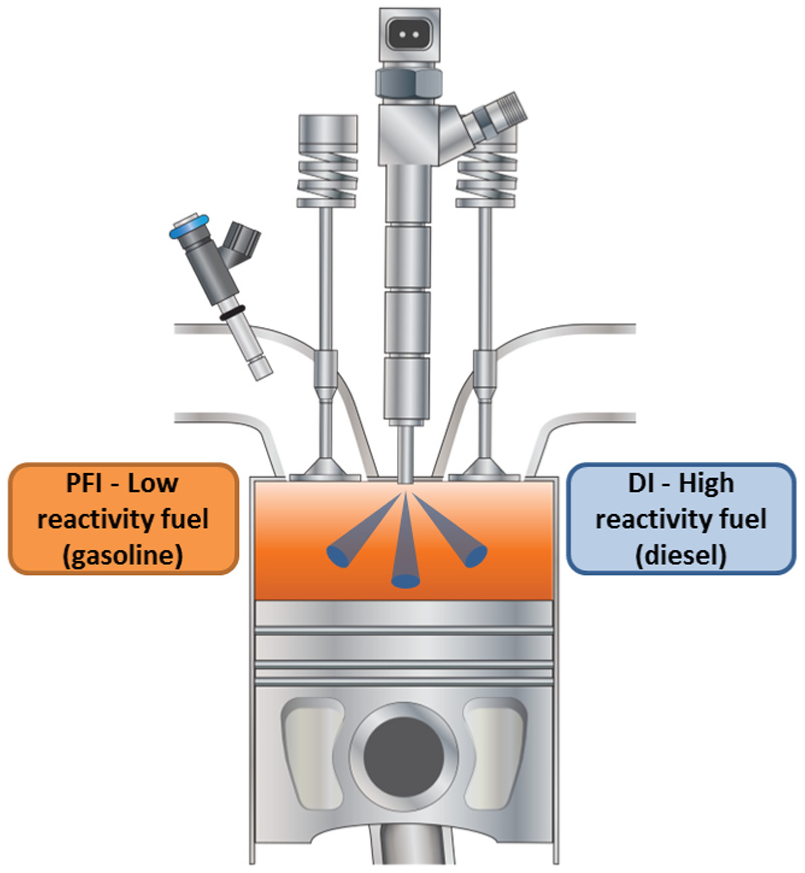
Reactivity controlled compression ignition concept.
The difference between RCCI and conventional dual-fuel combustion modes is in the complete decoupling of end of injection of the DI fuel and the start of combustion allowing for well-mixed and dilute charge. The low-temperature combustion (LTC) process results in ultra-low NOx and soot emissions compared to CDC by avoiding the traditional NOx and soot formation islands, as illustrated in Figure 2. In the case of RCCI, this is done using a lean premixed charge of the low-reactivity fuel (equivalence ratios < 0.5) and providing enough mixing time of the direct-injected, high-reactivity fuel to avoid fuel-rich regions. Therefore, RCCI is an LTC strategy that uses a slight amount of fuel stratification, which may have impacts on the PM formation and oxidation processes.
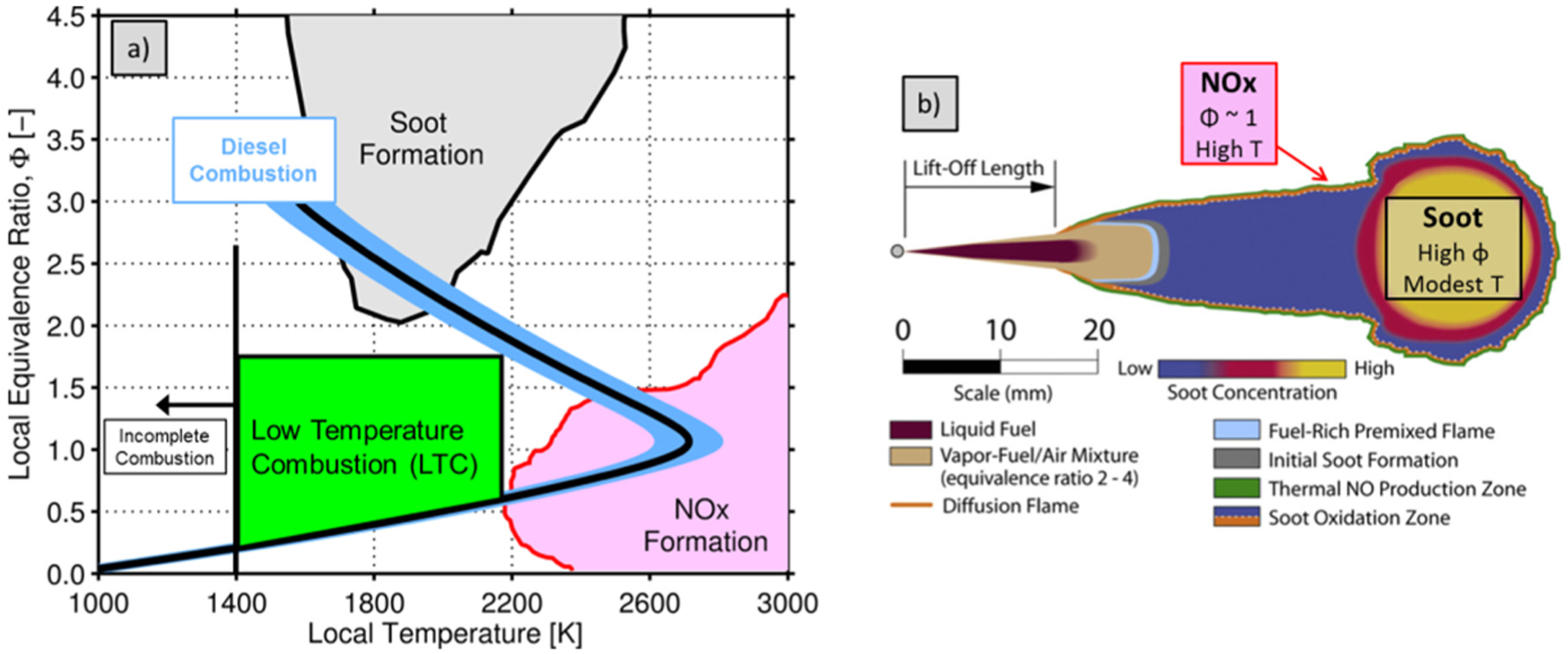
The disruption of the traditional soot formation pathways with kinetically controlled, highly premixed combustion modes can be further understood by examining the conceptual model of diesel combustion by Dec 4 (right) shown in Figure 2 6 which is shown next to the soot and NOx islands from Kitamura et al. 5 (left). In the case of RCCI, there are very few if any localized regions during combustion that have high equivalence ration (Φ) and modest temperature to support initial soot formation.
With the highly premixed LTC mode with two fuels of differing reactivities, compositions and boiling ranges, it would be expected that any PM formed would be different both physically and chemically. In most studies of RCCI combustion, particle emissions have been evaluated by measuring the filter smoke number (FSN).7–26 FSN is an optical measurement based on the reflectance of filter paper through which a given volume of raw exhaust has passed. 27 Reduction in reflectance by light-absorbing soot is correlated to mass concentration, which is not intended to include volatile PM. 28 Since light-absorbing organics such as polycyclic aromatic hydrocarbons (PAHs) can alter reflectance, 29 low soot and highly condensable aromatic hydrocarbon (HC) concentrations in the exhaust can make interpretation of FSN difficult. For such conditions, Northrop et al. 30 found that using a sample volume of 3000 mL over an FSN range of 0.02–1.5 was adequate for correlating FSN to soot mass for premixed charge compression ignition (PCCI) combustion with conventional fuels and biofuels. For RCCI, however, the FSN is often near or below 0.02. 31 Thus, FSN is unsuitable for measuring RCCI PM due to its high organic fraction.
In one of the few studies to include metrics other than FSN, Jiang et al. 32 made gravimetric measurements of RCCI particle mass and determined the soluble organic fraction (SOF) for the samples. These PM samples were evaluated for a four-cylinder engine at 1500 r/min with DI of diesel and PFI of gasoline. The fraction of gasoline was about 56% at 4 bar brake mean effective pressure (BMEP) and 71% at 6.5 bar. At 4 bar BMEP, particle mass was slightly lower for RCCI than CDC. However, at 6.5 bar, there was a substantial difference, with RCCI particle mass being 57% lower than CDC. The authors suggested that better fuel and air mixing led to greater particle mass reduction at the higher load, although it should be noted that there is a lower ratio of direct-injected diesel fuel to gasoline at higher loads as well. Although particle mass was lower for RCCI than CDC, the SOF was greater. The SOF values were 66% and 49% at 4 bar, and 52% and 27% at 6.5 bar for RCCI and CDC, respectively. SOF remained relatively high for RCCI but dropped for CDC at the greater load. The results indicated that emissions of condensable HC species may be prevalent over a wider range of operating conditions for RCCI than CDC.
Previous studies have compared the results of FSN and PM filter mass measurements from RCCI operation and have shown that RCCI PM is mostly organic carbon (OC) with almost no elemental carbon (EC). 33 Prikhodko et al. 34 made gravimetric measurements of particle mass for a similar load (4.2 bar) but higher speed (2300 r/min) than that of the above study and found a much greater reduction (77%) for RCCI relative to CDC. One factor influencing the difference may be the higher fraction of gasoline (75%), which probably resulted in enhanced fuel and air mixing. The effect of a diesel oxidation catalyst (DOC) was investigated, and RCCI particle mass emissions were reduced by 47% ± 9% downstream of a DOC operating at 250 °C. The DOC had a greater effect on RCCI than CDC particle mass emissions, most likely because RCCI particles had a greater organic component. Summaries of comparisons of RCCI to other combustion modes can be found in Storey et al. 35 and Dempsey et al. 36
The first measurements of RCCI particle number–size distributions were made by Prikhodko et al.33,34 following single-stage dilution at 45 °C. At 2300 r/min and 4.2 bar, the accumulation mode (>30 nm) concentration was about 100 times less for RCCI than CDC, while nucleation mode (30–300 nm) concentrations were of the same order. Soot or EC particles often reside in the accumulation mode and may have been reduced by the well-mixed fuel and air charge characteristic of RCCI combustion. Accumulation mode particles (30–300 nm) are traditionally thought to be composed of, at least partially, a solid carbon core versus nucleation mode particles which are typically composed of condensed HCs. It is suspected that the nucleation mode particles may have been present as a result of low RCCI post-combustion temperatures. A DOC was effective in reducing the RCCI nucleation mode particles by 35%±6% but had little effect on accumulation mode particles. 34 Another study showed that PCCI particle mass was reduced by 77% through a DOC for a low engine load and 200 °C inlet temperature. Additionally, the study showed that the particle conversion efficiency was near 99% when using a DOC and diesel particulate filter (DPF) combination due to adsorption of HCs in the DPF. 37 Because of their small size, nucleation mode organic droplets have greater surface tension than accumulation mode droplets and are more likely to evaporate and be catalytically oxidized. Furthermore, if the RCCI accumulation mode had a significant soot component, the DOC would not affect their concentration. Thus, a DOC, operating at about 250 °C, was able to remove the nucleation mode particles (<30 nm) but did not significantly change the PM mass. The focus of these studies was the effect of a DOC on emission control. The health effects of RCCI PM have not yet been studied as there have been only limited studies with emission control devices that would be present in a production vehicle.
In the United States, the US Environmental Protection Agency (EPA) 38 regulates emissions based on federal drive cycle compliance. There are a number of EPA dynamometer driving cycles that attempt to simulate driving conditions seen with light-duty passenger vehicles. Emissions, both gaseous and particulate, are collected over a given section of the cycle or “bag.” The different section emissions are then used to calculate a composite emission number in terms of mass or distance of the drive cycle. The Code of Federal Regulations prescribes the method by which particulate emissions are collected on sample filters from the dilution tunnel. 39 Thus, any mass collected, whether it is solid particulate or condensed phase organics, counts toward the regulated emission limits. RCCI operation, with both low FSN and NOx emissions, offers the promise of meeting the emission limits with much less aftertreatment than conventional diesel; RCCI PM, however, tends to have a high condensed organic phase, which will most likely get measured as PM mass. Thus, understanding the physicochemical characteristics of the PM will be critical to mitigating the PM emissions.
This study summarizes research completed at Oak Ridge National Laboratory (ORNL) to date on characterizing the nature, chemistry and aftertreatment considerations of RCCI PM and presents new research highlighting the importance of injection strategy and reactive and unreactive fuel compositions on RCCI PM formation.
Methodology
The bulk of the experimental results presented in this study are from a multicylinder light-duty diesel engine modified to operate in the RCCI combustion mode. The following section describes the engine and the methodology used for investigating and characterizing RCCI PM size, chemistry and morphology.
Engine
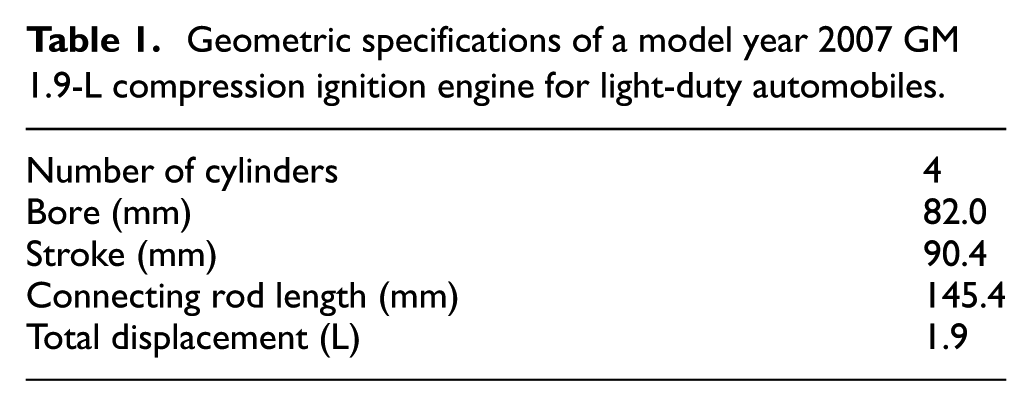
The engine used for this study was a modified 2007 GM DI 1.9-L diesel engine. This modern light-duty diesel engine was equipped with the original high-pressure common rail injection system, high-pressure exhaust gas recirculation (EGR), variable geometry turbocharger and variable swirl actuation. The intake manifold was modified for PFI as described in Curran et al. 2 The engine geometry and specifications are given in Table 1; both stock pistons and pistons with a wider, shallower bowl 9 were used. The modified piston yielded an increase in both combustion efficiency and indicated efficiency for RCCI operation in single-cylinder engine experiments.
Geometric specifications of a model year 2007 GM 1.9-L compression ignition engine for light-duty automobiles.
Particulate measurement
For these studies, either single-stage or two-stage dilution was used. Single-stage dilution is needed to collect enough material for mass quantification and chemical speciation. Two-stage dilution is used to prepare the PM for particulate size distribution (PSD) measurements. A diagram and description of the systems appear in Storey et al. 35 Briefly, the two-stage dilution was designed to conform to the European Particulate Measurement Protocol (PMP) 40 with a heated evaporation zone of 350 °C. The system was validated before use with laboratory-generated aerosols of NaCl and tetracontante (C40). System losses were <5% for the RCCI-relevant size range of 20–100 nm but higher (20%) for >100-nm particles. The system was shown to remove >99% of the aerosols generated from C40 in the heated zone.
A single-stage micro-tunnel dilution system held at 45 °C was used to prepare PM samples for thermal–optical transmission electron microscopy (TEM) and chemical speciation measurements. The system is based on an ejector pump dilution design by Abdul-Khalek et al. 41 and was described in Barone et al. 42 Exhaust was transported to the system using a heated stainless steel line at 190 °C, and the flow rate was maintained by a critical orifice. Two sampling streams with two types of filters were used: On one sample stream, a primary quartz-fiber filter (QFF, pre-fired Pall 2500 QAOT-UP) was collected and submitted for thermal–optical analysis of the PM for EC and OC. In the second stream, a Teflon membrane filter (TF, Pall Teflo) was the primary filter, followed by a secondary QFF. The TF was weighed before and after for PM mass and then sent for analysis of elements (lube metals) by X-ray fluorescence (XRF). The secondary QFF was also submitted for EC-OC analysis; the absorbed organics on the secondary QFF can be subtracted from the organics found on the primary QFF to correct for filter adsorption artifacts. The QFF has a high surface area and thus is prone to adsorption of HCs that would normally remain in the gas phase in the absence of a large surface area on which to adsorb. In ambient air sampling, the tendency for QFFs to adsorb HCs has been well documented. 31
Particles were collected for TEM analysis using an electrostatic precipitator developed by Fierz et al. 43 In the TEM sampler, particles acquired positive charge in a unipolar diffusion charger and migrated by way of their electrical mobility to the sample substrate (grid), held at negative potential. The device has several advantages including high nanoparticle collection efficiency and uniform particle collection across the sample substrate such that a small area can be analyzed, and the results can be extrapolated to the entire surface of the grid. In addition, the sampling time is optimized, the number of charged particles in the aerosol is measured by an electrometer, and the sampling time is computed and output by the instrument to prevent under- or over-sampling. Particles were collected on 300-mesh copper grids with carbon film and were analyzed at 8.1 × 10⁴–1.75 × 10⁵ magnification using a Tecnai 20 transmission electron microscope (FEI Co., the Netherlands).
RCCI composition
One of the most significant findings in the relatively new studies of RCCI PM is the discrepancy between FSN and PSDs and number concentration as first reported by Prikhodko et al. 33 The most striking visual evidence of this is apparent in Figure 3, which shows PM samples collected on filters for CDC, PCCI and RCCI with the same engine at the same speed and load point. The mass collected on the RCCI filter is larger than the mass collected from PCCI operation, despite the obvious lack of soot. Plotting the PM mass concentration in the raw exhaust in conjunction with FSN emissions, and using the FSN concentration conversion, emphasizes the disparity between FSN and mass emissions measurements for the LTC modes.
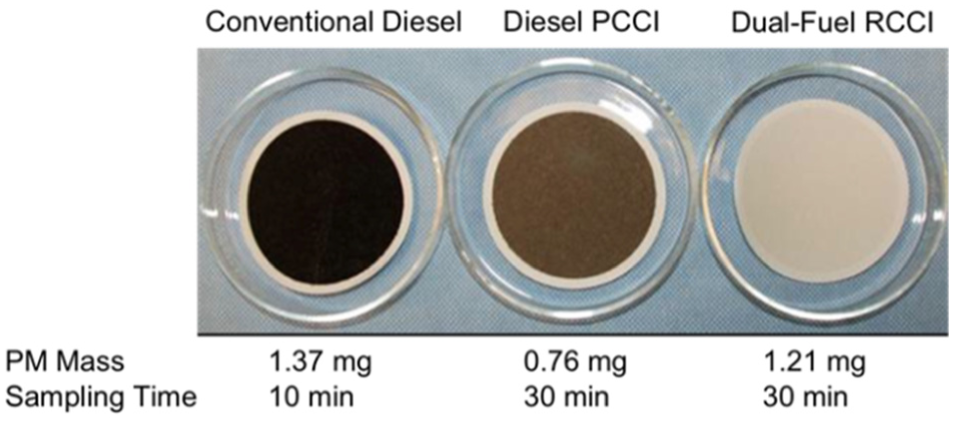
Particulate matter (PM) mass samples collected on Teflon-coated quartz-fiber filters for conventional diesel, diesel premixed charge compression ignition (PCCI) and dual-fuel reactivity controlled compression ignition (RCCI) combustion. 33
The mismatch between FSN and measured PM mass is further illustrated in Figure 4, which compares raw exhaust concentration to measured FSN. The estimated PM mass concentration (carbon in units of mg/m3) is from the FSN-opacity correlation detailed in the AVL 415S application notes document 44 and shown in equation (1)

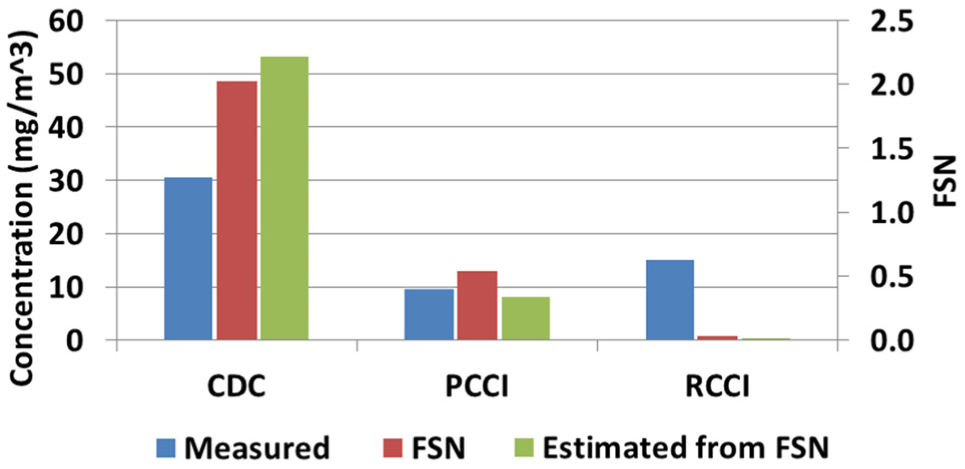
Filter smoke number (FSN) and particulate matter mass for conventional diesel combustion (CDC), premixed charge combustion ignition (PCCI) and reactivity controlled compression ignition (RCCI); blue bars are measured soot mass concentration (leftmost) and the green bars estimated soot concentration from FSN (rightmost).
The differences in the bulk properties of FSN and collected mass can be explored further by examining the PSDs for the three modes, as shown in Figure 5.
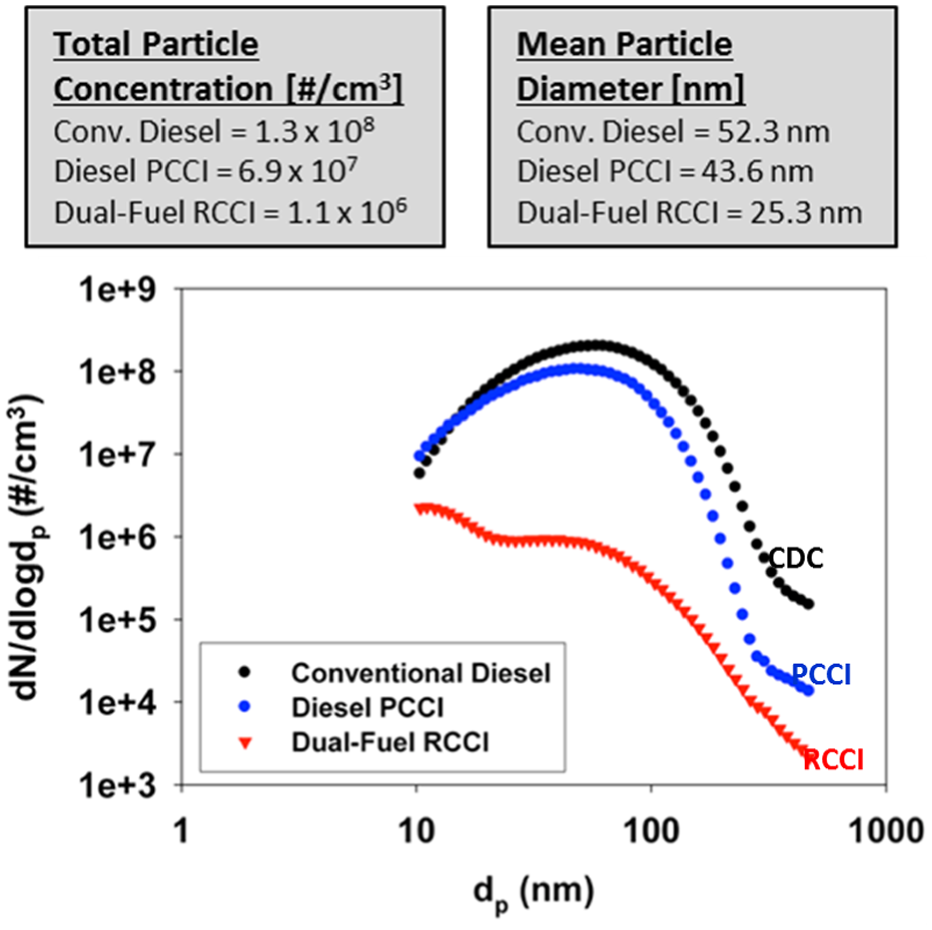
Particle number concentration for conventional diesel combustion (CDC), diesel premixed charge compression ignition (PCCI) and dual-fuel reactivity controlled compression ignition (RCCI) at 4.2 bar brake mean effective pressure/2300 r/min as measured by a scanning mobility particle sizer for particles from 10 to 470 nm. 34
The integration of the PSDs in Figure 5 would imply that the mass of the RCCI PM should be much smaller than what the filter measured. By converting the particle number distributions in Figure 5 to mass, it is possible to calculate a total mass concentration for each PSD. This mass concentration is used to calculate a brake specific mass emission rate, which is compared with the filter specific mass emission rate in Figure 6. From this chart, the discrepancy observed in the number distributions is obvious—the mass emission rate based on PSD is 2 orders of magnitude smaller than that measured on the filters for RCCI. For the conversion from number distribution to mass distribution, a particle density of 1.0 was assumed. However, this assumption is likely too high for the fractal particles in conventional diesel operation, and the integrated mass from the PSD is higher for CDC. This figure implies that the double-dilution step removed the semi-volatiles that make up the majority of the filter PM emitted in RCCI operation.
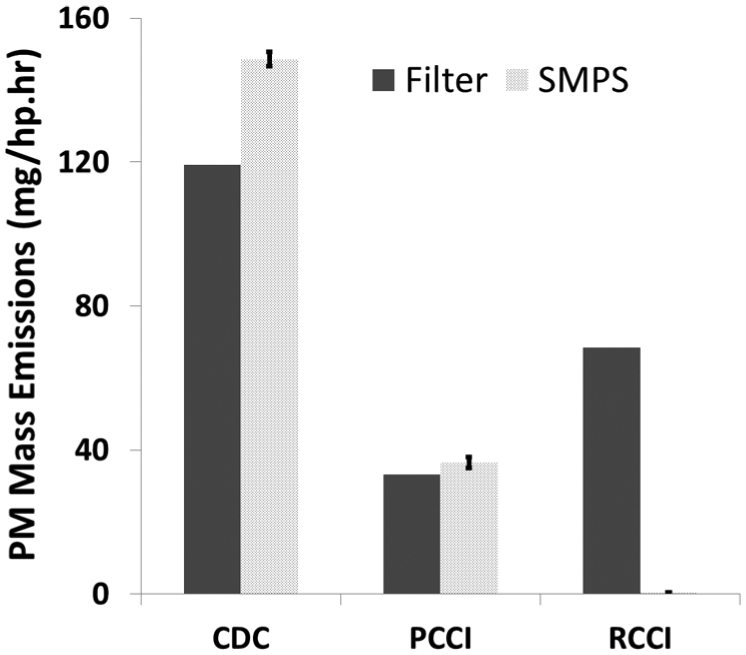
Comparison of filter-based mass emission rates to mass emission rates based on the particle size distribution. Engine point: 2300 r/min, 4.2 bar BMEP.
To better understand the soot (FSN) and NOx tradeoff that occurs with advancing start of injection (SOI) allowing for increasingly premixed diesel fuel going from CDC to RCCI, an SOI sweep was performed, as shown in Figure 7. The engine was run at 2000 r/min, 4.0 bar BMEP, starting with CDC (0% gasoline) without EGR at a main SOI timing of −2.2 crank angle degrees (CAD) before top dead center (BTDC). PSDs were collected over the SOI sweep starting with the lower premixed ratio case (41%) at an SOI of −5 until RCCI with ultra-low NOx, and soot was eventually achieved at the same load with a premixed ratio of 75% gasoline with a single injection of diesel fuel at 50 CAD BTDC. It was not possible to run stable dual-fuel combustion at an SOI of 5 CAD BTDC with a premixed ratio of 75% without significantly adjusting other operating parameters, so the premixed ratio was lowered to 41%, while all other operating conditions were kept constant. The intermediate points running in dual-fuel mode are not RCCI as defined by ultra-low NOx and soot but are included to show how the traditional NOx and soot tradeoff does not continue to hold with advancing SOI once combustion transitions to RCCI. Figure 7 shows the FSN from the AVL 415S and brake specific NOx (BS_NOx) over the course of the sweep. The plot clearly illustrates the transition from CDC, at FSN = 0.6, to lower values of FSN as the diesel fuel becomes more premixed with earlier injections and then into RCCI, where a simultaneous reduction in both NOx and soot starts between a main SOI of 30 and 40 CAD BTDC.
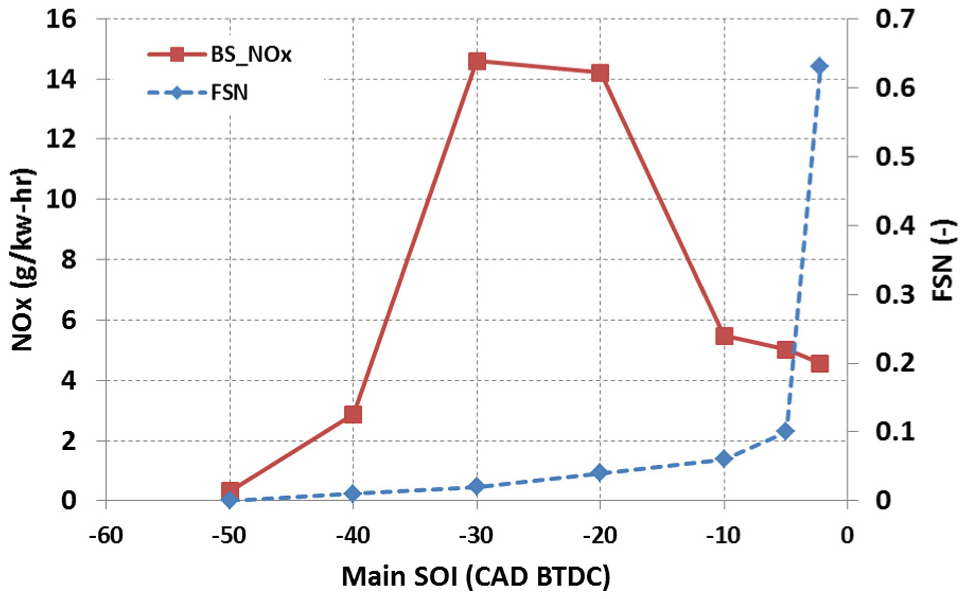
Soot (filter smoke number (FSN)) and NOx tradeoff with advancing start of injection (SOI) going from conventional diesel combustion to reactivity controlled compression.
As mentioned earlier, there is no direct correlation between FSN and measured PM mass for RCCI as there is for conventional combustion modes with more carbonaceous soot components. Over the course of the sweep shown in Figure 7, particulate size was measured using the same double-dilution setup with scanning mobility particle sizer (SMPS) described earlier. The results of the PSDs shown in Figure 8 represent the average of three scans for four of the SOI points. The PSDs for the other SOIs were omitted for clarity but do progress in the same order. As SOI decreases toward top dead center (TDC), the number of particles increases by more than an order of magnitude; the peak particle diameter increases from ∼40 to ∼60 nm; and the number of large particles, those particles >100 nm, increases dramatically. The larger particles not only have more mass, since mass increases by the cube of diameter, but also will scatter light more effectively. The growth of larger particles with SOIs closer to TDC implies greater soot formation, leading to higher filter opacity as measured by FSN. The PSDs in Figure 8 thus can help explain the FSN data in Figure 7 by showing the significantly greater amount of larger particles.
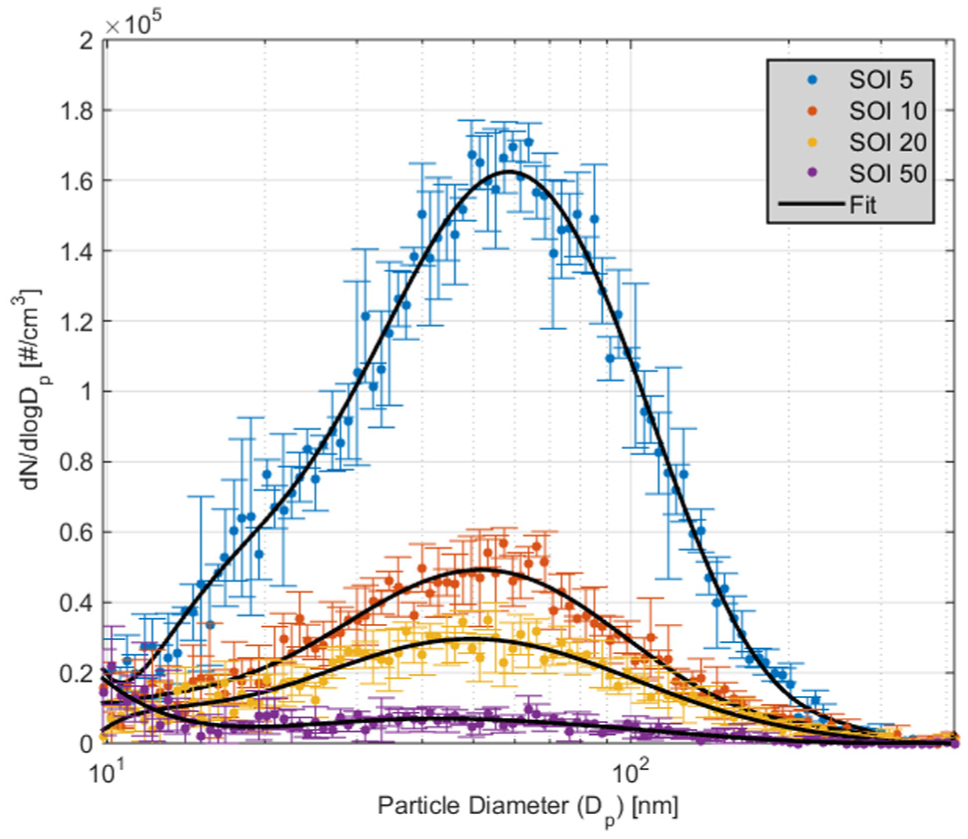
Particle size distributions (dilution corrected) for the exhaust at 2000 r/min, 4.0 bar brake mean effective pressure. Start of injection n (SOI n) refers to n degrees before top dead center for SOI.
In recent studies, the effects of removing semi-volatile components from exhaust particulates have been examined. In two studies about the effect of a DOC on measured PSDs from RCCI operation, Prikhodko et al.33,34 examined the effects of a DOC at mid-load operation (2300 r/min, 4.2 bar BMEP). Figure 9 shows PSDs with single-stage dilution. The mode at 10 nm represents the nucleation mode of particles made up of the semi-volatile components, and this mode is removed by the oxidation catalyst. For reference, the line representing size cutoff for the European particulate number standard is shown. No particles smaller than 23 nm are counted as part of this standard, so about 1/3 of the particles would not be counted.
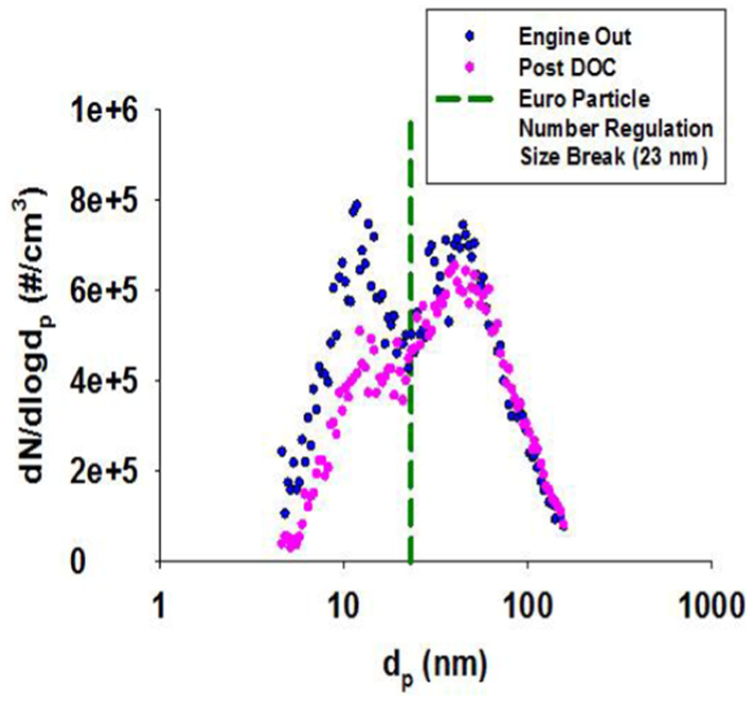
Dilute size distribution of particulate matter from reactivity controlled compression ignition combustion for engine-out and diesel oxidation catalyst–out (DOC-out). For reference, the dashed line represents the 23-nm particle size cutoff of the European protocol. 34
Dempsey et al. 36 examined PSDs during RCCI operation at four speed and load combinations, with and without a DOC in the exhaust. Particles from single- and dual-stage dilution were examined. Figures 10 and 11 contrast PSDs for a moderate load point (2000 r/min, 4 bar BMEP) with a higher load point (3000 r/min, 7 bar BMEP). Figure 10 shows that for both the two-stage dilution PSDs, the engine-out and DOC-out distributions are identical. The stage 1 DOC result shows that some semi-volatile particles (mode at 10 nm) remain in the exhaust after the DOC; the exhaust temperatures (269 °C DOC-in and 300 °C DOC-out) are likely too low to effectively remove all of the semi-volatile components. In contrast, Figure 11 shows that the PSDs are very similar for all four cases at the higher load point. The exhaust temperatures (315 °C DOC-in and 361 °C DOC-out) are sufficiently high for the DOC to remove the semi-volatile particles. Note that the error bars associated with dual-stage dilution are larger due to the low particle counts at these points.
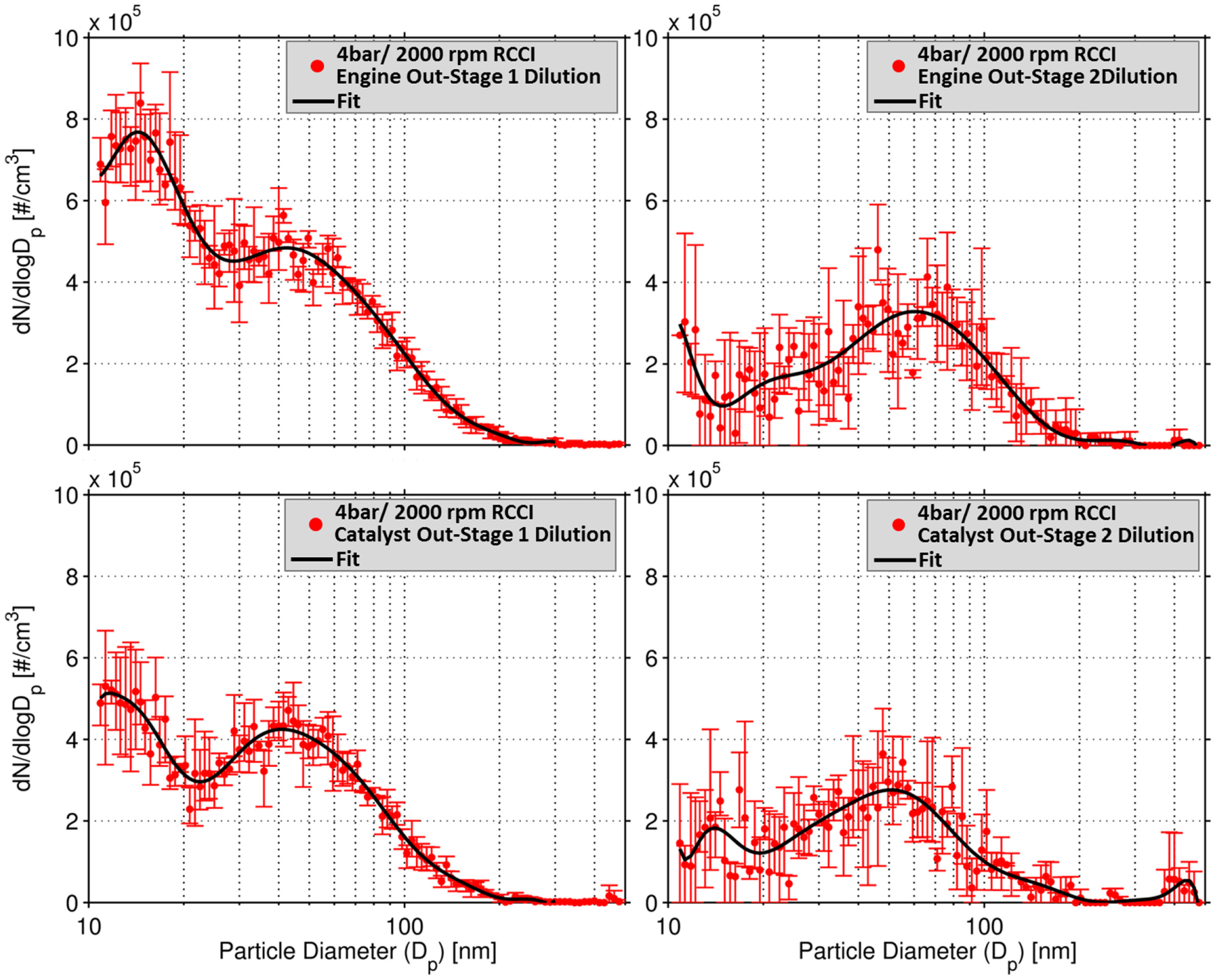
Particle size distribution measured by the scanning mobility particle sizer (SMPS) after first- and second-stage dilution for 4.0 bar BMEP and 2000 r/min reactivity controlled compression ignition operation. Error bars represent minimum and maximum particle number count at a given particle size from multiple SMPS scans (3–6 scans). 36
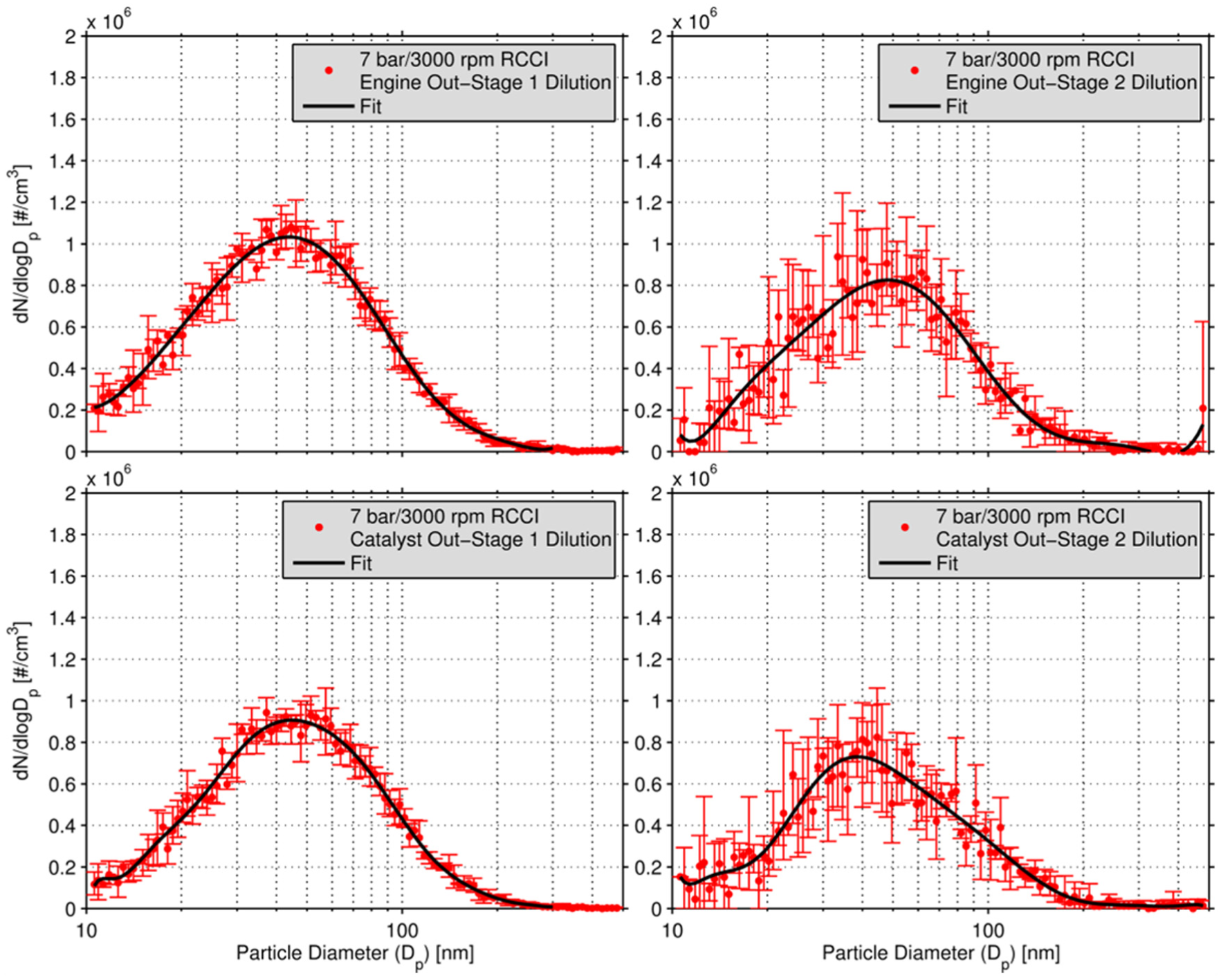
Particle size distribution for reactivity controlled compression ignition operation at 7.0 bar BMEP and 3000 r/min. Error bars represent minimum and maximum particle number count at a given particle size from multiple scanning mobility particle sizer scans (3–6 scans). 36
Lucachick et al. 45 did a systematic evaluation of the volatility of PCCI and RCCI particles from the same, or similar, engines as those in the aforementioned studies. The study shows how a relatively small difference in dilution temperature (25 °C vs 47 °C) results in a large difference in nucleation mode particle number for RCCI. In addition, when the diluted particles were passed through a catalytic stripper, the nuclei mode was removed. In the same study, evaporative tandem differential mobility analysis was used to explore particle volatility as a function of particle size for 13- and 40-nm mobility RCCI particles. The results show that by heating the size-selected aerosol up to 125 °C through a thermal conditioner, the particles decreased in size or were removed entirely. The size reduction compared well to data with the same diameter C32 n-alkane particles generated and run through the same apparatus. The engine exhaust particles also shrank at a lower rate as conditioning temperature increased, indicating particles from RCCI and PCCI form through nucleation of low volatility material and grow through condensation of semi-volatile HCs.
PM formation from other combustion modes has been shown to be sensitive to fuel chemistry. A comparison of RCCI size distributions for three speed and load combinations with three different fuel combinations (E85 (85% ethanol–15% gasoline)–ultra-low sulfur diesel (ULSD), gasoline-ULSD and gasoline-B20 (20% biodiesel−80% diesel fuel)) was conducted, and the results are shown in Figure 12. No significant differences are observed for the low, medium and high load points. In contrast, diesel combustion and gasoline direct injection (GDI) combustion with oxygenate fuels have been shown to reduce the peak particle concentration.46–48 Use of E85 or B20 for RCCI combustion did not enhance particle emission reductions. At 2000 r/min, 2 bar, the number–size distributions were equivalent for bio- and petroleum-based fuels, probably because post-combustion temperatures were consistently low and condensable HC species remained. At the higher speed or load points, nucleation mode and low-range accumulation mode particles increased with E85 use. A higher fraction of diesel fuel was required to initiate combustion given the higher latent heat of vaporization and octane of E85, which is consistent with elevated concentrations of diesel-associated organic species in semi-volatile particle samples. Use of B20, the highest biodiesel blend level commonly available in the United States, did not significantly change the number–size distribution for the higher speed or load points. Thus, RCCI particle emissions were relatively insensitive to fuel type as opposed to diesel PCCI for example, which has been shown to have significant differences in particle mass and number for biodiesel versus diesel fuel. 49
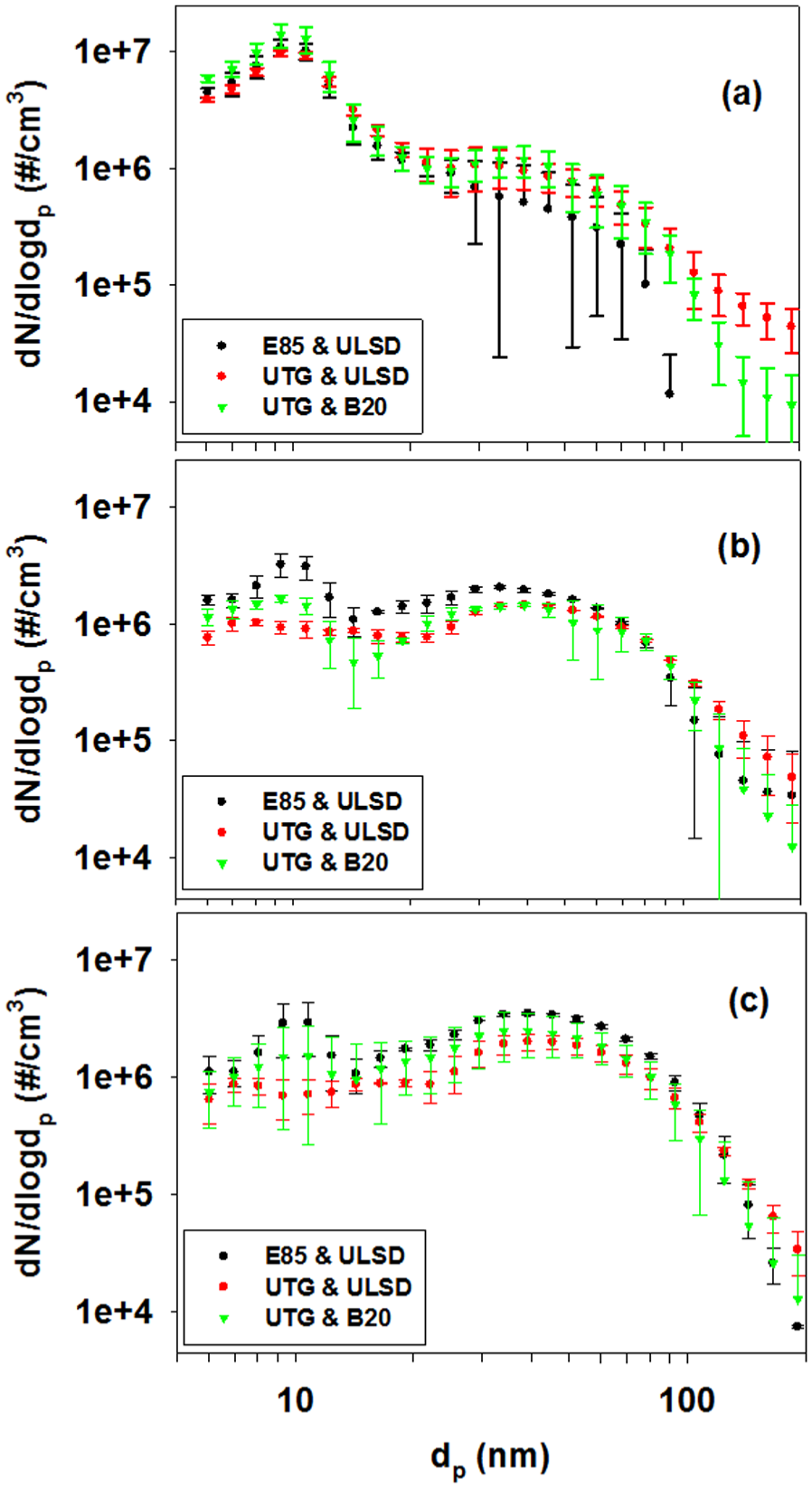
Reactivity controlled compression ignition size distributions for three fuel combinations for 2300 r/min, 4.2 BMEP: (a) 2000 r/min, 2.0 bar; (b) 2300 r/min, 4.4 bar; and (c) 3000 r/min, 7 bar.
In summary, these studies establish that there are solid particles but at extremely low concentrations, which is why they are not revealed in the FSN. The majority of the mass, particularly at low load, is made up of semi-volatile organic species. To date, these findings represent the physical evidence of condensed HCs making up the majority of filter PM mass.
RCCI PM morphology
Another way to characterize engine nanoparticles is using TEM to characterize the morphology. The following section presents visual confirmation of the condensed phase being present on the PM aggregates. TEM analysis of particles emitted from the GM 1.9-L engine at 2000 r/min, 2.0 bar BMEP, indicated the presence of condensed HC droplets as shown in Figure 13. The lack of carbon structure and lack of optical density compared to more typical soot (e.g. Figure 14) indicate that the origin of the droplets in Figure 13 was HCs that partially evaporated under the high vacuum and the electron beam used for TEM. The lack of graphitic structure in Figure 14 is consistent with the RCCI PM forming in a different manner than PM during CDC. Also, it is noted that these droplets are in the size range that was in the accumulation mode, >40 nm. Nucleation mode droplets were most likely abundant, but given their high surface tension, they may have evaporated in the low-pressure environment of the transmission electron microscope.
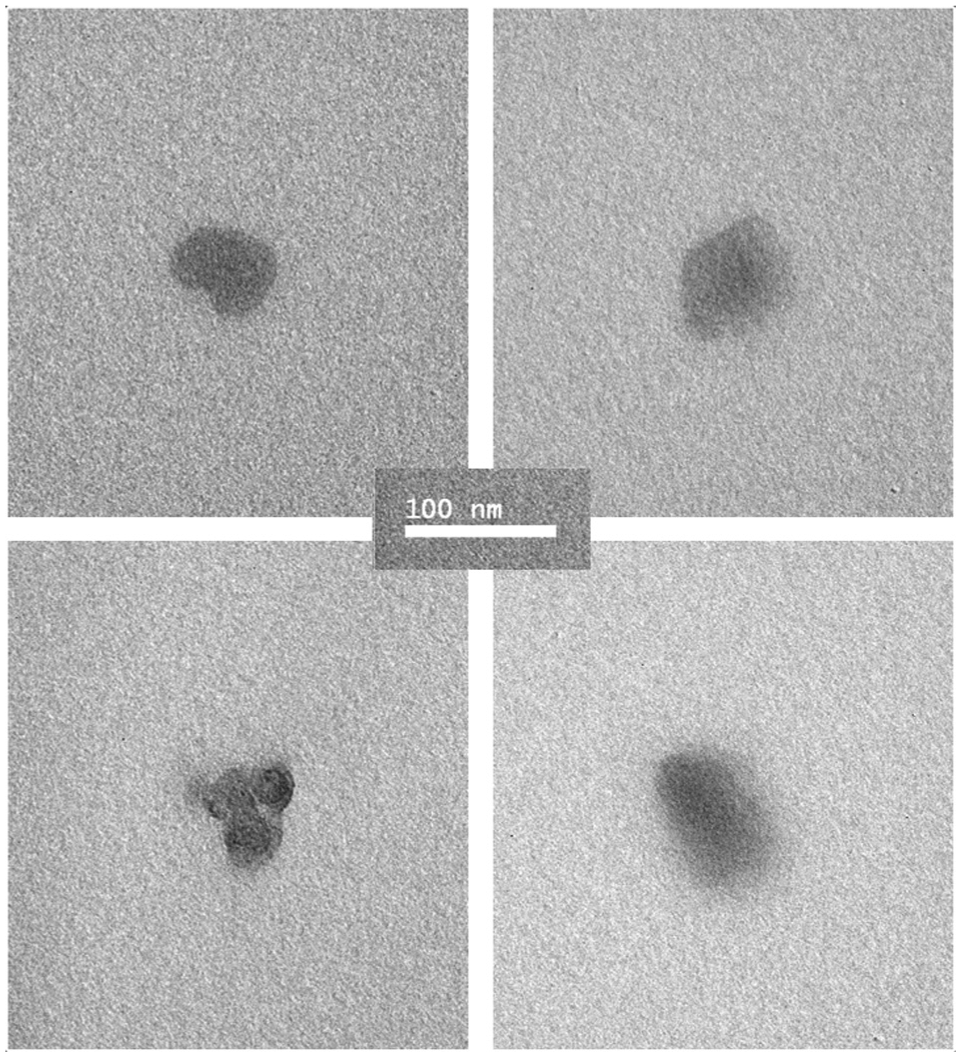
Transmission electron microscopy of particles collected during reactivity controlled compression ignition operation (2000 r/min, 2 bar BMEP).
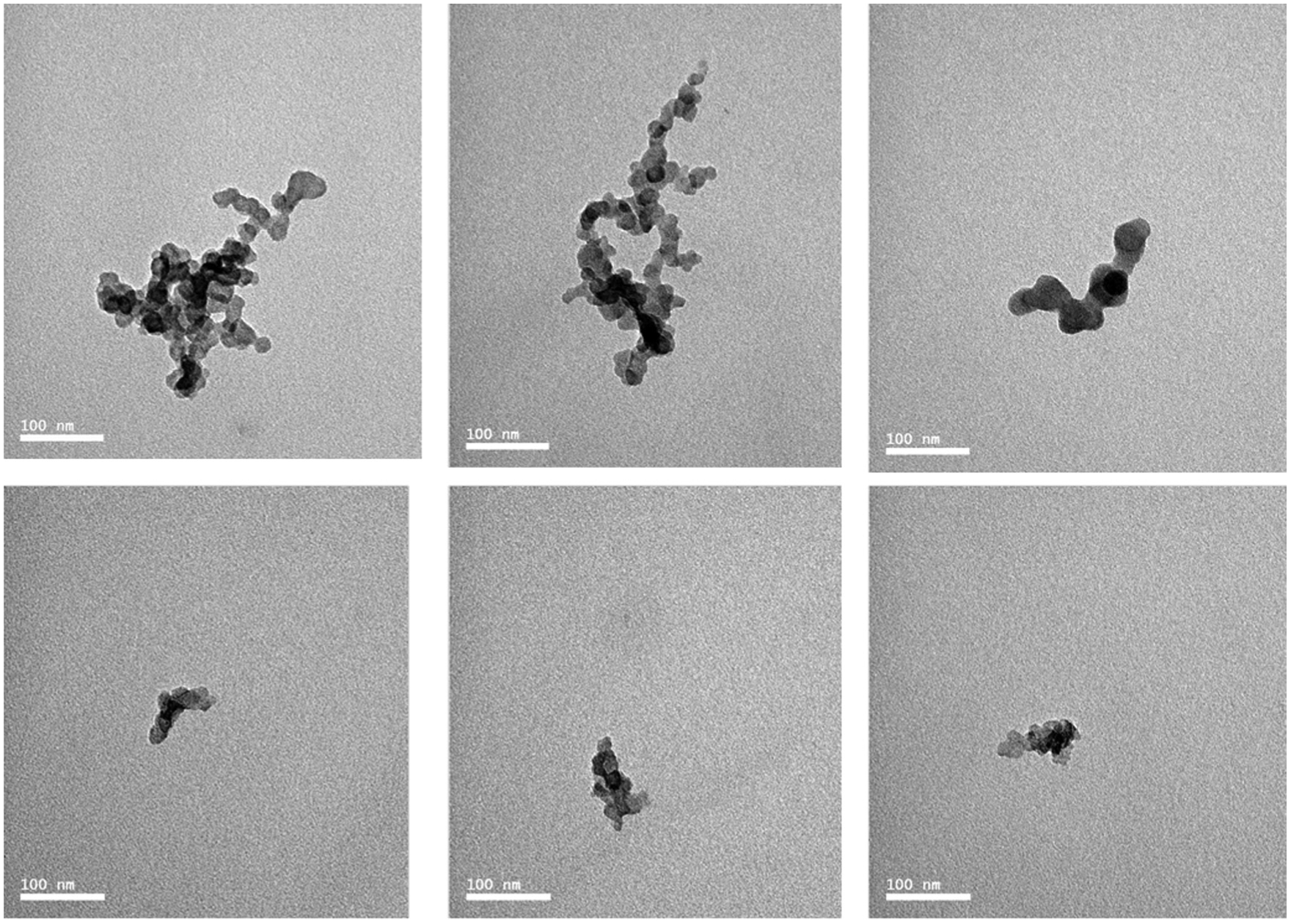
Transmission electron microscopy of soot aggregates collected from the exhaust during reactivity controlled compression ignition operation. Engine conditions: 2300 r/min, 4.4 bar BMEP.
Thermal–optical carbon, which will be discussed in the next section, and FSN measurements suggest that RCCI particles are composed entirely of OC; however, some typical accumulation mode soot particles were also observed by TEM, as shown in Figure 14. Although the soot mass concentration may have been within the thermal–optical measurement uncertainty, the number concentration may be significant, but low, as shown in the PSDs in the previous section. Although not shown here, it is worth noting that it is possible to estimate the contribution of soot to the RCCI number–size distribution using TEM analysis. To do this, a PSD can be constructed from TEM data using a calibrated sampler43,50 and may be consistent with SMPS measurements for sub-60-nm engine-emitted particles, as shown in Barone et al. 51
Chemical characterization of RCCI PM
Having established the physical presence of condensed HCs, we present the current understanding of the chemistry of this condensed phase in the following section. Considering that RCCI combustion entailed a large fraction of PFI gasoline (30%–80%) and that diesel fuel was injected early in the compression cycle (30°–70° BTDC), the fuel and air were most likely highly premixed. Hence, the rich zones needed to promote EC-based soot are likely not present in significant areas during combustion. A large OC-to-total carbon (TC) ratio for highly premixed combustion modes is consistent with previous studies
A first step in speciating PM has historically been the separation of OC and EC with a thermal–optical technique. The thermo-optical method suggests that RCCI particles are primarily composed of OC. Figure 15 shows the ratio of OC to TC for three different RCCI fuel combinations at 2300 r/min, 4.2 bar BMEP, using a single injection. This shows that the highly dilute premixed RCCI combustion mode is less sensitive to fuel chemistry, with Figure 15 showing no statistically significant difference in OC–TC ratio despite significant differences in the fuels used. This is again in contrast to diesel combustion and GDI combustion with oxygenate fuels, which have been shown to reduce formation of EC.46,47
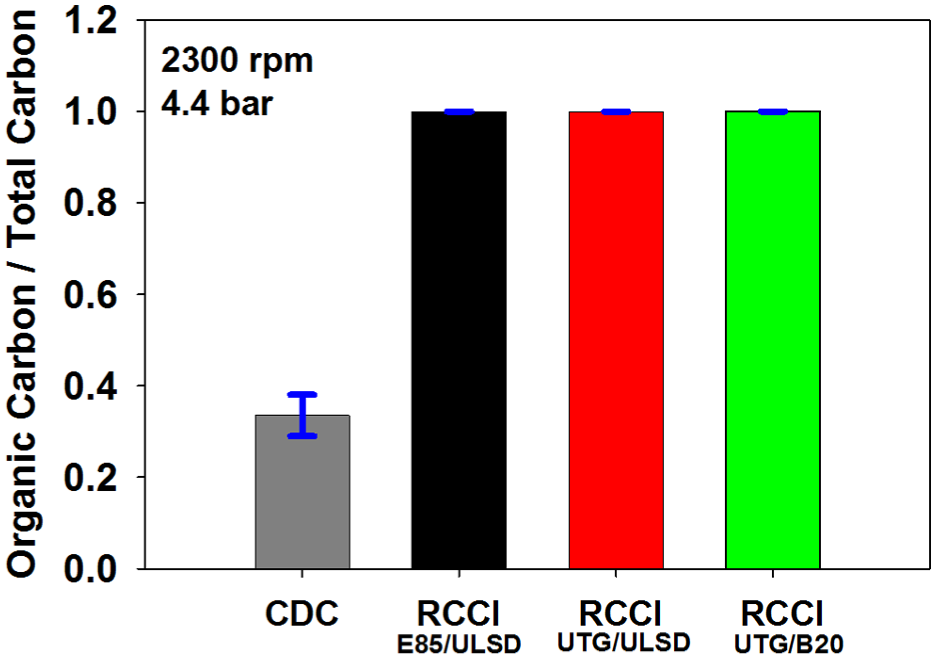
Organic carbon-to-total carbon ratio for three different reactivity controlled compression ignition (RCCI) fuel combinations compared to conventional diesel combustion (CDC).
Figure 16 shows the ratio of OC to TC for three different samples, examining the difference between single and double injections. The error bars represent the maximum and minimum for triplicate filter samples at each point. The first was for CDC, the second for RCCI with single diesel (SGL) injection and the third for RCCI with double diesel (DBL) injection. In both RCCI cases, the OC dominated the TC, although the double injection appeared to produce a small amount of EC. These data are consistent with Figure 6. The OC would be removed by the PMP-style dilution and thus would not show up in the mass calculated from the PSD.
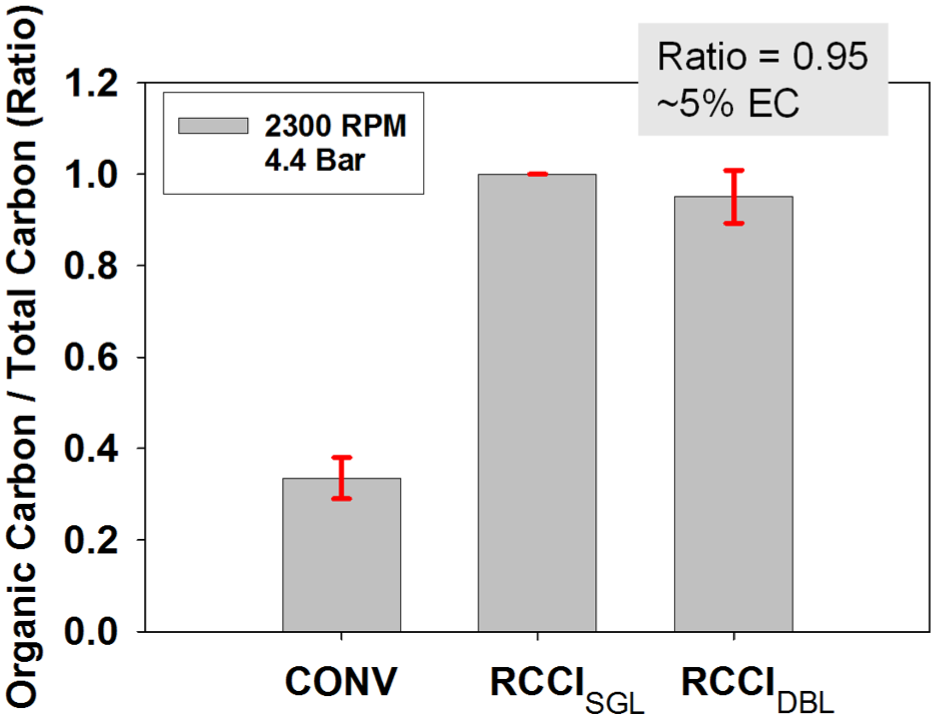
Organic carbon-to-total carbon ratio for conventional diesel combustion (CONV) and reactivity controlled compression ignition (RCCI) operation (2300 r/min, 4.4 bar BMEP).
To investigate the chemistry of the organic fraction, it was necessary to devise a way to collect the RCCI PM in sufficient quantities for analysis with gas chromatography mass spectroscopy (GC-MS). Because most of the PM collected on a filter is condensed semi-volatiles, one could use traditional solvent-based SOF extraction of the filter followed by analysis. Unfortunately, the traditional solvent systems used for SOF extraction techniques may introduce a bias based on the solubility of the semi-volatiles in the chosen solvent system. Direct analysis of PM chemistry required the development of a novel PM speciation method using thermal desorption or pyrolysis gas chromatography mass spectroscopy (TDP-GC-MS). 47 At the low PM concentrations typical with modern and advanced combustion engines, sampling times can be on the order of several hours to collect sufficient mass. For this method, filter samples of up to 2 mg of PM are collected on a supported membrane filter and then gently removed for analysis with vacuum suction. The particles are then directly desorbed into the GC-MS using a thermal desorption accessory.
In the case of the RCCI PM, it is not possible to harvest the particulate from a filter since the organic compounds partition to the filter media itself, preventing vacuum removal. Another possibility was to exploit the adsorption of the organic compounds to QFFs, used in the thermal–optical EC-OC technique. Small punches of the exposed filters were placed in the thimble of the TDP-GC-MS apparatus and then analyzed. Unfortunately, despite elongated collection times in the initial experiment, the mass of OC collected was insufficient for this approach to work. A third technique uses a condensation particle sampler (CPS) to concentrate the sample of exhaust particles for analysis. The CPS, derived from water-based condensation particle counter technology, 52 was designed 53 to collect samples of secondary organic aerosols from ambient air. The nanoparticles enter the CPS and are exposed to saturated water vapor, which “grows” them to supermicrometer size. The large particles are then focused with an aerodynamic lens and placed into a heated microwell for later analysis. For this study, the instrument was modified by placing a small punch (4.7 mm) of pre-cleaned stainless steel foil in the well so that the aerosols would impact the foil. The foil disk was then removed and placed into the thimble for analysis with TDP-GC-MS. Much work would be needed to make this technique quantitative; for instance, the efficiency of scavenging the aerosol particles would need to be determined, as well as the collection efficiency of the disk. However, a sample sufficient to obtain the GC-MS results shown in Figure 17 was collected in 2 h. Note that the largest peaks are paraffins, representing the heavy end of the diesel fuel–paraffin envelope. The absence of peaks at C25 and higher indicates that the organic fraction is most likely not lubricant derived. Pyrene is the only PAH present above the detection limit of the TDP-GC-MS technique (about 1 ng) and is present at about 1% of C21 mass, which has a similar retention time, as shown in Figure 17. Lighter PAHs are not expected to be collected due to their higher vapor pressure; that is, they remain in the gas phase rather than condensing into the solid particles that are collected with this technique. However, pyrene has a vapor pressure consistent with C21, which was most efficiently collected with this technique. It is worth noting that pyrene has been shown to be formed during the combustion process with other gasoline combustion modes, 54 but the formation pathway in RCCI is not well understood.
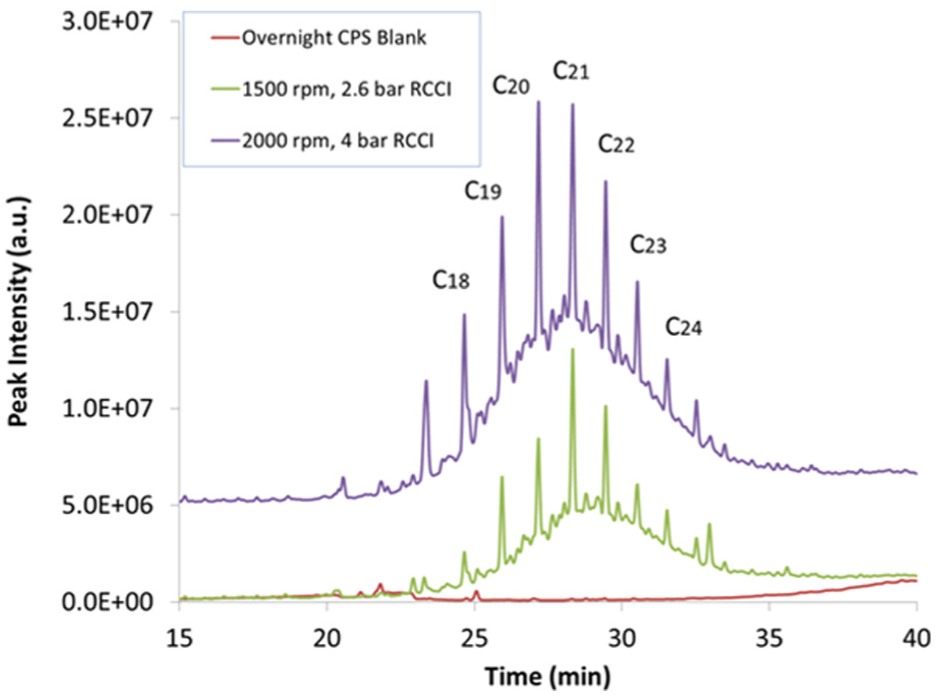
Gas chromatography mass spectroscopy trace of organic particulate matter captured by condensation particle sampler (CPS) with 2-h sampling time and two different reactivity controlled compression ignition (RCCI) engine points. The 2000 r/min, 4 bar BMEP, trace is offset for clarity. The labeled peaks are all n-alkanes (paraffins).
The results confirm that the source of the observed OC is likely to be the unburned heavy ends of the direct-injected high-reactivity fuel (i.e. diesel fuel). To further understand this, a comparison of RCCI semi-volatile phase HC species using three different fuel combinations at the same engine speed and load point was completed. Figure 18 shows speciation results for semi-volatile HCs that suggest that there were greater emissions of diesel-associated compounds, dodecane, tetradecane, pentadecane and hexadecane. Such compounds have been associated with diesel emissions by Gentner et al. 55 In contrast, noncondensable light HC species were reduced with the E85 and ULSD RCCI case for compounds such as methyl butane, toluene and xylene as shown in Figure 19.
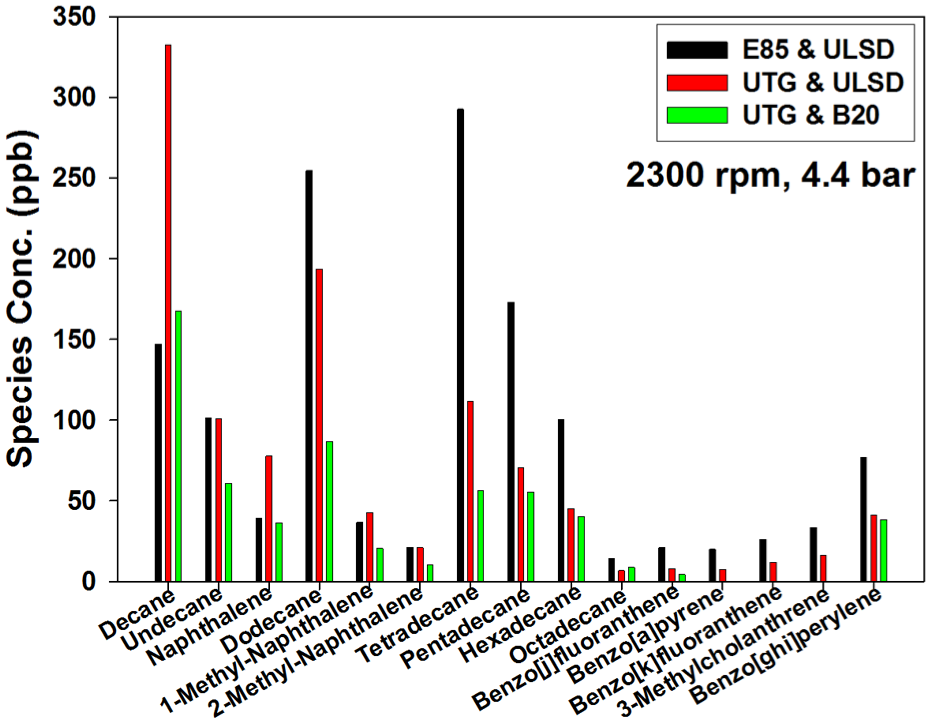
Speciation results for semi-volatile hydrocarbons with three fuel combinations for 2300 r/min, 4.2 bar BMEP, suggesting greater emission of diesel-associated compounds.
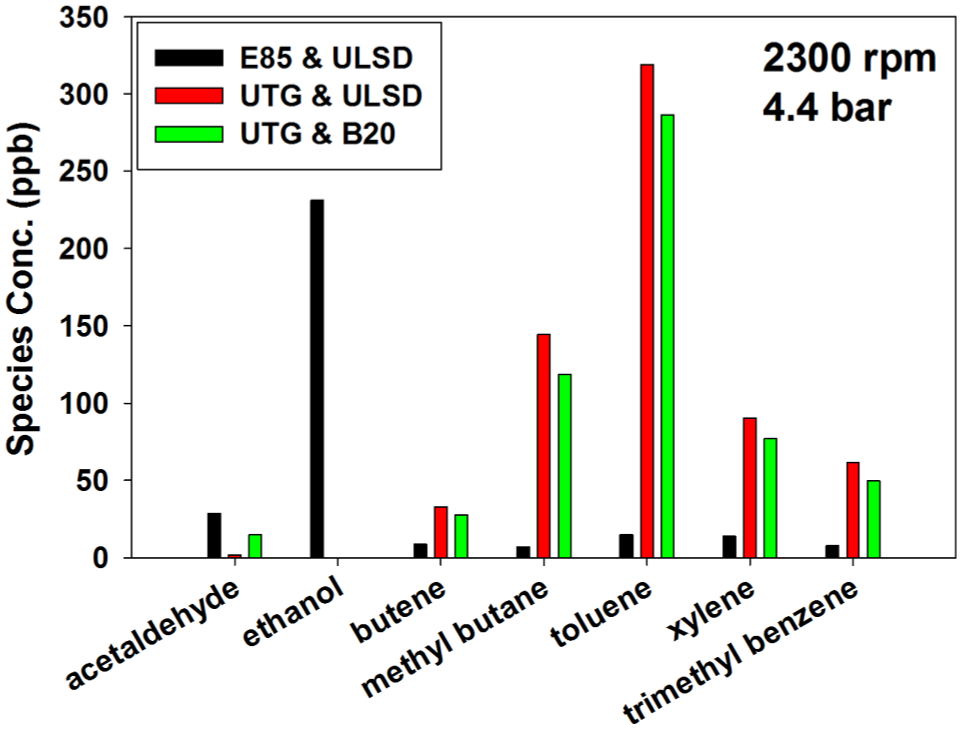
Light hydrocarbon species results for three fuel combinations at 2300 r/min, 4.2 bar BMEP, for three fuel combinations.
Another study set out to investigate specifically whether the lubricant was the source of the RCCI organic PM fraction. 35 In this study, primary reference fuels, n-heptane and isooctane, were used to operate a single-cylinder engine in RCCI mode; the bore and stroke were the same as in the 1.9-L RCCI engine described in Table 1. The premise was that the contribution from the lubricant would not be masked by the contribution from the fuels as each fuel was much more volatile than diesel. What was found was that the PM mass concentration simply dropped to near ambient levels of 1–2 mg/m3. Elemental analysis of the PM showed small amounts of lube metals were present but always less than the amount collected from the same engine operating on ULSD in CDC.
An additional step was taken during the single-cylinder engine study to collect a greater amount of sample. Raw exhaust was sampled to ensure some PM was collected for the very low PM emissions in RCCI mode and to concentrate the PM for chemical speciation. For the raw exhaust sampling, a QFF (pre-fired Pall 2500 QAOT-UP) was mounted in an oven held at 125 °C to avoid water condensation on the filter. Raw exhaust was sampled through a heated line onto the filter, and after collection, the filter was submitted for direct thermal analysis of the PM with TDP-GC-MS. No diesel-range HCs were found (except for the filter from CDC operation), and although some lubricant was collected, the amount was lower than what was collected from the raw exhaust during CDC operation, consistent with the XRF results for lube metals.
Implementation effects
The results presented here have focused on steady-state engine experiments as RCCI is still in the development phase. As transient capabilities for RCCI operation are developed, we expect to see more variability in the physical and chemical makeup of the PM collected on filters per the EPA regulations. However, no full vehicle transient experiments have been completed to date. A recent study by the University of Wisconsin and ORNL looked at a series hybrid electric vehicle configuration where a single RCCI load point was used to maintain battery pack state of charge through an on–off strategy. 56 The results of this study evaluated PM mass collected on TFs over multiple Highway Fuel Economy Tests (HWFETs) until the filter had accumulated enough mass to be weighed. Then, the accumulated hot start PM mass collected over the HWFET was divided by total miles driven. The RCCI PM emission over the hot HWFET was 1.85 mg/mi (1.15 mg/km). There is no PM standard for the HWFET, but for reference, the EPA tier 3 standard is 3 mg/mi (1.86 mg/km) and tier 2 standard is 10 mg/mi (6.21 mg/km). While the results indicate the ability for RCCI to reduce PM emissions, they do not confirm one way or another, the need for a DPF.
Insufficient data have been presented to date to guarantee that a particulate filter (or catalyst) will not be needed for RCCI engines. Factors such as yet-unknown behavior during transients and the possible need of a multimode operation strategy that would require an engine to go into a CDC mode to cover the full speed and load range of a drive cycle in vehicles with conventional (multispeed, nonhybrid) transmissions will play important roles in meeting stringent regulations.
Conclusion
This article has summarized our current understanding of the physicochemical characterization of RCCI PM. Developing an understanding of the size and composition of the PM can help determine the source of the PM and lead to potential mitigation measures. Physical measurements in our laboratory and by others confirm that the measured PM from RCCI combustion is dominated by semi-volatile HC species that are mostly removed with heat in an evaporator tube or by catalytic stripping. At all of the engine operating points in which RCCI PM has been investigated, there is a consistent solid particle fraction peaking in size between 40 and 60 nm, a mode that is very low in concentration and does not show up in conventional soot measurements. Bulk and detailed chemical speciation of RCCI PM also confirm the majority of the PM mass is in the organic phase. OC is >95% of the TC in EC-OC analysis, and GC-MS results show that this phase is consistent with the heavy fraction of the high-reactivity fuel. In addition, a novel sampling method, designed to capture the native exhaust aerosol, was implemented using a CPS. This technique allowed the direct capture and analysis of the exhaust PM without a filter and showed the presence of the heavy fraction of the diesel fuel, with no obvious lubricant presence. Also, the previous study by Storey et al. showed that when a primary reference fuel such as n-heptane was used for the high-reactivity fuel, no high boiling components were observed on the filter as measured by TDP-GC-MS. 35
The nature of the RCCI PM indicates a fundamentally different PM formation process than that which occurs during CDC might be occurring. The highly premixed nature of RCCI combustion does not provide the localized rich zones that are normally attributed to soot formation in CDC. Additional evidence of a different PM formation process is provided here with results showing no significant difference in PSD with RCCI using biofuel–conventional fuel combinations. Typically, in conventional combustion of diesel or gasoline, an oxygenate such as biodiesel or ethanol will reduce PM because the oxygen is thought to interfere with the soot formation process.46–48 However, there was little difference observed in the size and concentration of PM during RCCI combustion with biofuels. Thus, the formation of RCCI PM appears to occur through the condensation of semi-volatile HCs on a small solid core (carbonaceous, ash or other), but additional research into the in-cylinder formation pathway of this measured PM is still needed.
PM investigations from steady-state engine operation are useful in characterizing the composition of RCCI PM and provide insights into mitigating PM emissions. It is well understood that volatile matter associated with combustion products often contains listed carcinogens. Until the requirements for PM emission control are determined, speculating on the potential health effects of RCCI engine PM is premature. Without transient engine experiments in a hardware-in-the-loop setting or actual vehicle experiments, the data are insufficient to confirm the ability of an RCCI engine or vehicle to meet PM regulations without any aftertreatment of PM, especially in light of research pointing to the need for a multimode CDC-RCCI strategy to cover the full speed and load range. An oxidation catalyst associated with the vehicle aftertreatment train 57 may be sufficient to remove the semi-volatile organics responsible for the PM mass. The need for particulate filters associated with such multimode combustion is still not well understood.
Footnotes
Acknowledgements
This material is based upon work supported by the U.S. Department of Energy, Office of Energy Efficiency and Renewable Energy, Vehicle Technologies Office via the Advanced Combustion Engine manager Gurpreet Singh and Fuel and Lubricant Technologies manager Kevin Stork.
Declaration of conflicting interests
The author(s) declared no potential conflicts of interest with respect to the research, authorship and/or publication of this article.
Funding
The author(s) received no financial support for the research, authorship and/or publication of this article.