




Abstract
A fuel reactivity controlled compression ignition (RCCI) concept is demonstrated as a promising method to achieve high efficiency – clean combustion. Engine experiments were performed in a heavy-duty test engine over a range of loads. Additionally, RCCI engine experiments were compared to conventional diesel engine experiments. Detailed computational fluid dynamics modelling was then used to explain the experimentally observed trends. Specifically, it was found that RCCI combustion is capable of operating over a wide range of engine loads with near zero levels of NO x and soot, acceptable pressure rise rate and ringing intensity, and very high indicated efficiency. For example, a peak gross indicated efficiency of 56 per cent was observed at 9.3 bar indicated mean effective pressure and 1300 rev/min. The comparison between RCCI and conventional diesel showed a reduction in NO x by three orders of magnitude, a reduction in soot by a factor of six, and an increase in gross indicated efficiency of 16.4 per cent (i.e. 7.9 per cent more of the fuel energy was converted to useful work). The simulation results showed that the improvement in fuel conversion efficiency was due both to reductions in heat transfer losses and improved control over the start- and end-of-combustion.
Keywords
1 Introduction
Rising fuel costs and a focus on reduction of greenhouse gases has driven the need for increased efficiency from the internal combustion engine. This need for increased efficiency has placed the diesel or CI engine (note that all acronyms are defined in the Appendix) in the spotlight due to its superior fuel efficiency compared to SI engines. However, under conventional diesel operation, regions of the combustion chamber pass through both rich and lean high-temperature regions, forming soot and NO x , respectively. Soot can be effectively reduced through the use of a DPF; however, DPFs require periodic regeneration (i.e. removal of collected soot), which often increases fuel consumption. Additionally, since diesel engines generally operate lean of stoichiometric, UHC and CO are generally not available to reduce NO x to nitrogen using a TWC. Several attempts have been made to operate CI engines stoichiometric such that a TWC can be used for NO x reduction [1]; however, these efforts generally resulted in poor fuel economy; thus removing the CI engine’s advantages over the SI engine. In addition to stoichiometric-TWC NO x reduction, forms of NO x after-treatment compatible with lean operation exist (i.e. LNT and SCR). An LNT is essentially a TWC reformulated to enhance storage of NO x during lean operation [2]. As such, LNTs provide NO x reduction in a very similar manner as a conventional TWC; that is, NO x is reduced to N2 through reactions with products of rich combustion (CO, HC, and H2) [2]. An engine relying on an LNT for NO x reduction must periodically operate rich to reduce the stored NO x ; thus, fuel efficiency is reduced. In contrast to LNT technology, SCR technology can be used for NO x reduction without the need to operate rich; thus the fuel economy benefits of the lean-burn CI engine are retained. However, similar to the required periodic rich operation of LNT technology, SCR technology requires the introduction of a reducing agent (urea). The urea is stored on the vehicle and is injected into the exhaust system, providing no useful work; thus the consumed urea used for NO x reduction can be considered additional ‘fuel’ consumption.
Considering the presented discussion it is clear that to maximize overall engine efficiency, an engine should minimize the need for after-treatment-type emissions reduction. Accordingly, reduction of NO x and soot in-cylinder has been investigated by many researchers. Most of the current strategies can be lumped into the category of premixed LTC. Lower combustion temperatures result in NO x reduction due to the high activation energy of NO formation reactions [3]. In addition, utilizing long ignition delay times allows adequate time for mixing prior to the start of combustion; thus, rich regions are reduced and soot formation is inhibited. Many researchers have shown that HCCI and PCCI concepts are promising techniques for simultaneous NO x and soot reduction [4–10]. In addition to significant NO x and soot reductions, premixed LTC operation can provide fuel efficiency advantages due to reduced combustion duration and lower HT losses. In the past HCCI and PCCI combustion generally suffered from high levels of CO and UHC emissions; however, in recent years several researchers have demonstrated boosted HCCI and PCCI combustion featuring nearly 100 per cent combustion efficiency [7, 11, 12]. These improvements came through the use of piston designs featuring minimum crevice volumes as well as highly boosted operation.
Due to the existing fuel infrastructure, most HCCI and PCCI research has been conducted using either strictly gasoline or diesel fuel. However, in their neat forms, each fuel has specific advantages and shortcomings for PCI operation. Gasoline has a high volatility; thus, evaporation is rapid and a premixed charge can be obtained using PFI. Furthermore, Kalghatgi [13] and Kalghatgi et al.[14, 15] have shown promising emissions and performance results using a gasoline partially PCI strategy. In their work, gasoline’s resistance to auto-ignition (i.e. low cetane number) was exploited to extend the pre-combustion mixing time in order to achieve simultaneous reductions in NO x and soot emissions. However, other researchers (e.g. [16, 17]) have shown that the poor auto-ignition qualities of gasoline can make it difficult to achieve combustion at low-load conditions. Conversely, diesel fuel has superior auto-ignition qualities; however, this can result in difficulty controlling the combustion phasing as engine load is increased. Therefore, when neat diesel fuel is used in a PCI strategy, high levels of EGR are required to phase combustion appropriately [10].
Experiments performed by Bessonette et al. [18] have suggested that the best fuel for HCCI operation may have auto-ignition qualities between that of diesel fuel and gasoline. Using a compression ratio of 12:1 and a fuel with a derived cetane number of ~27 (i.e. a gasoline boiling range fuel with an octane number of 80.7), they were able to extend the HCCI operating range to 16 bar BMEP – a 60 per cent increase in the maximum achievable load compared to operation using traditional diesel fuel. Furthermore, their results showed that low-load operation, below 2 bar BMEP, required a derived cetane number of ~45 (i.e. traditional diesel fuel). Thus, it may be beneficial to explore HCCI operation using fuel blends optimized for specific operating conditions.
Inagaki et al. [19] investigated dual-fuel PCI operation as a means for reducing the EGR requirements of PCI strategies. Using premixed iso-octane and direct injected diesel fuel, they were able to operate in PCI mode at 12 bar IMEP. Furthermore, they showed that stratification of fuel reactivity (rather than only equivalence ratio) resulted in reduced rates of heat release and reasonable combustion noise.
Based on the work of Bessonette et al. [18] and Inagaki et al. [19], it is likely that different fuel blends will be required at different operating conditions (e.g. a high cetane fuel at light load and a low cetane fuel at high load). Thus, it is desirable to have the capability to operate with fuel blends covering the spectrum from neat gasoline to neat diesel fuel depending on the operating regime. This work proposes PFI of gasoline and early cycle DI of diesel fuel.
HCCI combustion is a kinetically controlled process; therefore, the combustion phasing is very sensitive to charge gas temperature. In the laboratory, where intake temperature and EGR can be precisely controlled, single-fuel HCCI combustion can demonstrate very promising results. However, in practice the charge gas temperature of practical engines depends on many factors and varies with speed, load, and operating environment. To understand the motivation for investigating in-cylinder fuel blending, Fig. 1 shows constant-volume ignition delay calculations using a PRF mechanism developed by Ra and Reitz [20] for neat iso-octane, neat n-heptane, and a 50-50 blend of iso-octane and n-heptane. For optimum thermal efficiency, the combustion phasing must be precisely controlled and to maintain high efficiency an engine must be able to accommodate changes in the operating conditions (e.g. charge temperature) while maintaining the optimum combustion phasing. Figure 1 shows that, since each fuel has a unique ignition delay–temperature curve, each fuel will be limited to a narrow operating range where peak efficiency can be achieved. For example, if a representative temperature of 750 K is selected and the ignition delay that is required to achieve the optimum combustion phasing is ~40° CA, neat diesel fuel would provide the optimum fuel reactivity to achieve peak efficiency. However, if the operating conditions changed such that the representative temperature increased to 800 K, neat diesel fuel would result in overly advanced combustion phasing, increased HT losses, and reduced thermal efficiency. However, by using in-cylinder fuel blending, peak efficiency could be maintained by moving from neat diesel fuel to a 50-50 blend of diesel and gasoline.
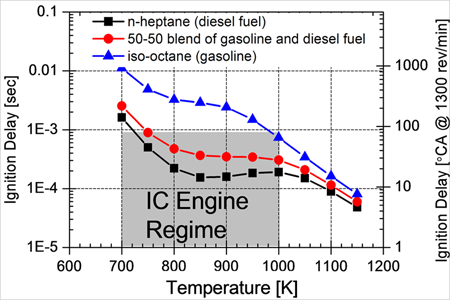
Constant-volume ignition delay times for neat n-heptane, neat iso-octane, and a 50-50 blend of iso-octane and n-heptane calculated using the SENKIN code [44] and a reduced PRF mechanism. This set of simulations was performed at an initial pressure of 70 bar and an equivalence ratio of 0.5. The shaded area shows representative TDC temperatures and ignition delay times representitive of conditions seen in internal combustion engines
2 Experimental Setup
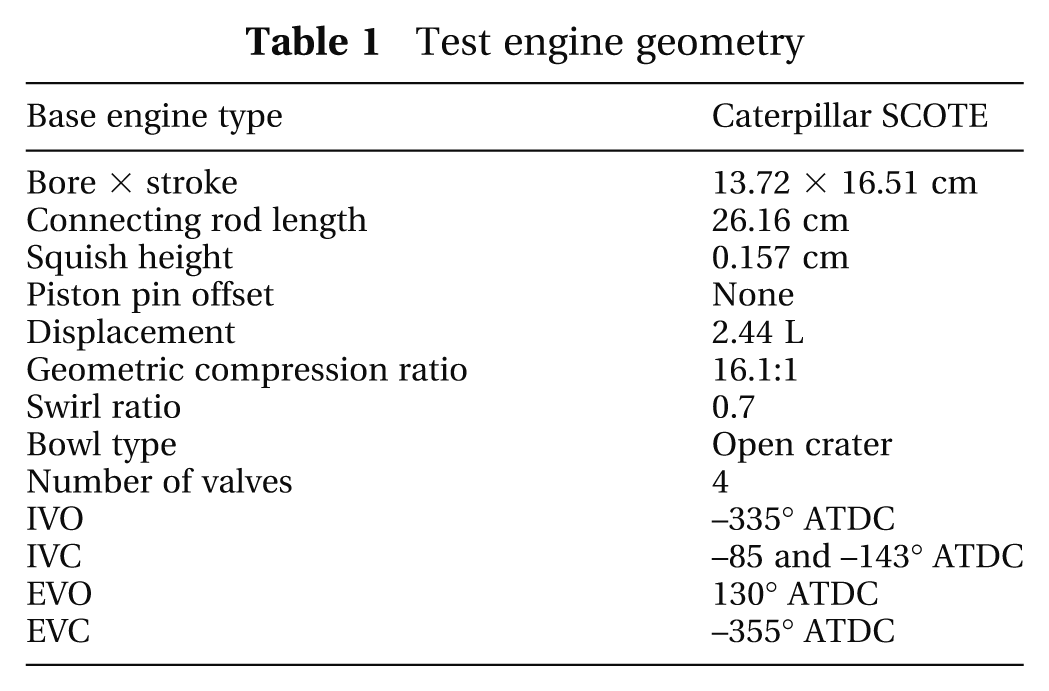
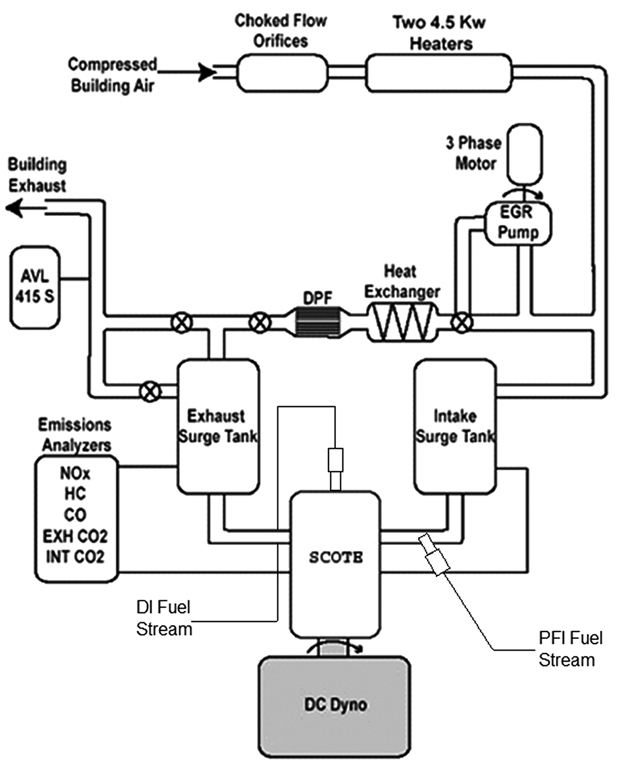
A single cylinder, HD diesel engine based on a Caterpillar 3401 SCOTE was used for all engine experiments in this study. The engine specifications are shown in Table 1 and a schematic of the laboratory setup is shown in Fig. 2. This engine is a typical HD-type diesel engine with a geometric compression ratio of 16.1:1, an open crater piston, and a low swirl head. Notice that two different cam shafts were used for this work. The stock camshaft of the HD test engine has an IVC timing of −143° ATDC. However, to aid in combustion phasing control a modified camshaft with an IVC timing of −85° ATDC was used. Both cams have the same IVO timing of −335° ATDC.
Test engine geometry
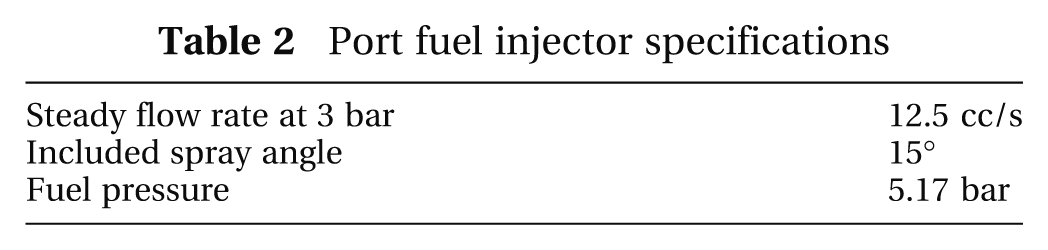
In this work, a premixed charge of gasoline is achieved using an automotive type PFI system and the diesel fuel is delivered using a common rail type DI system. The specifications for the port-fuel-injector and direct-injector are given in Table 2 and Table 3, respectively.
Port fuel injector specifications
Common rail injector specifications
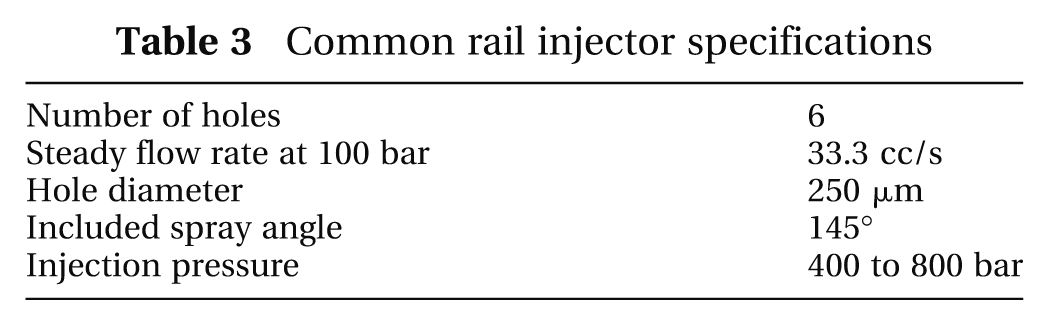
Cylinder pressure was measured with a Kistler model 6043 Asp water-cooled pressure transducer in conjunction with a Kistler model 510 charge amplifier. Acquired cylinder pressure traces were averaged for 500 cycles. Intake air flow was measured using choked flow orifices. To obtain choked flow for a variety of engine operating conditions, combinations of six different sized orifices were used to gain the desired intake air flowrate. Intake air was heated with two immersion-style heaters and PID control to ±1 °C. Both the intake and exhaust system surge tank pressures were equipped with PID control to ±0.7 kPa. PM measurements were performed with an AVL model 415s smoke meter. PM measurements of FSN, mass per volume (mg/m3), and specific emissions (g/kW-h) were related with the factory AVL calibration and averaged between five samples of a 2 L volume each with paper-saving mode off. All gaseous emissions measurements were performed with a five gas emissions bench. The EGR rate was determined through the ratio of intake CO2 to exhaust CO2 levels. Gaseous emissions were averaged for 30 s after attaining steady state operation.
The EGR system consists of an electrically driven supercharger and a diesel particulate filter to prevent fouling of the EGR cooler and supercharger. The EGR supercharger was implemented as a pump to maintain constant EGR levels with constant surge tank pressures as the DPF fills.
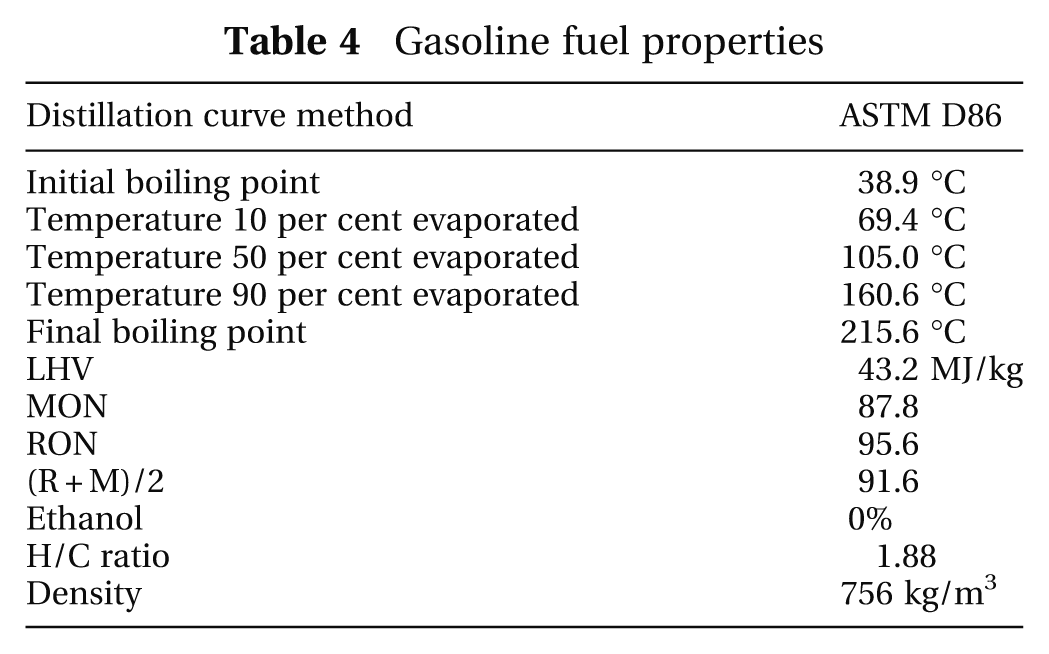
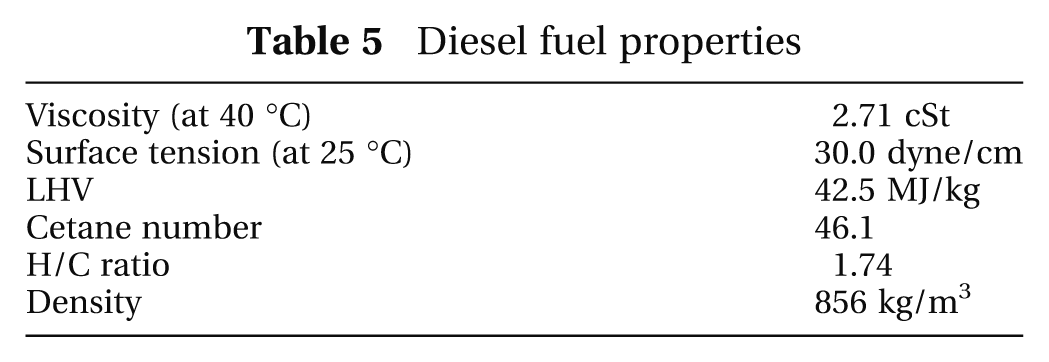
Commercially available 91.6 antiknock index ((R+M)/2) gasoline and ultra-low sulfur diesel fuel with a cetane number of 46 was used for all tests. Table 4 and Table 5 show an independent lab analysis of the fuel properties.
Gasoline fuel properties
Diesel fuel properties
3 Computational Model
Computations were performed using the KIVA-3v release 2 coding [21] with improvements to many physical and chemistry models developed at the ERC [22–25]. The KIVA-3v code is coupled with the CHEMKIN II solver for detailed chemistry calculations. In this study the chemistry of gasoline and diesel fuel are represented by that of iso-octane and n-heptane, respectively. A reduced reaction mechanism made up of 45 species and 142 reactions [20] describes the combined oxidation of n-heptane and iso-octane. Note that many studies (e.g. Ra and Reitz [26]) have shown that the combustion characteristics of gasoline and diesel are closely represented by iso-octane (i.e. PRF 100) and n-heptane (i.e. PRF 0), respectively. This approach has also been shown to yield acceptable agreement for blends of gasoline and diesel fuel (e.g. Kokjohn et al. [6], Hanson et al. [27], and Splitter et al. [28]). The physical properties (for spray and mixing processes) of diesel fuel are represented by tetradecane. Of course, the multi-component vaporization of the diesel fuel used in the experiments is not captured by this approach (i.e. the distillation curve of diesel fuel is not reproduced). It is possible that the differences between single- and multi-component vaporization result in differences in the fuel distribution prior to and during combustion. PCCI combustion has been shown to be very sensitive to the mixture preparation details (e.g. Opat et al. [10]); therefore, the simplified vaporization model should be borne in mind when accessing the observed differences between the simulations and experiments. However, this approach has been used in numerous studies and has been shown to yield acceptable results. For example, Shuai et al. [29] compared model predicted fuel distributions to fuel distributions acquired using planar laser-induced fluorescence in an optically accessible engine operating in a low-temperature combustion mode. They showed that, under low-temperature combustion conditions, the spray models used in the current study accurately reproduced the measured fuel distribution.
Soot is predicted using a phenomenological soot model [25] based on the approach of Hiroyasu and Kadota [30]. The soot model used in the present study uses acetylene as an inception species, which allows the soot model to be coupled to the chemistry solver through the addition of 13 reactions involving acetylene. NO x emissions are predicted using a reduced NO mechanism [31] consisting of four additional species and 12 reactions.
The spray model employed in this study uses the LDEF approach. In order to reduce the grid size dependency of the LDEF spray model and allow accurate spray simulation on a relatively coarse grid, the Gasjet model of Abani et al. [23] is used to model the relative velocity between the droplets and gas phase in the near nozzle region. Their approach assumes that the relative velocity between a droplet and the gas phase is equal to that between the droplet and a turbulent gas-jet with the same mass and momentum of that of the injected fuel.
Droplet breakup is modelled using the hybrid KH – RT model described by Beale and Reitz [22]. The droplet collision model is based on O’Rourke’s model; however, a radius of influence method is used to determine the possible collision partners to further reduce mesh dependency [32]. In addition, the collision model was expanded by Munnannur [32] to include a more comprehensive range of collision outcomes. The current implementation of the droplet collision model considers the effects of bounce, coalescence, and fragmenting and non-fragmenting separations. Droplet interactions with the wall are considered through a wall film submodel [33, 34], which includes the effects associated with splash, film spreading, and motion due to inertia.
Simulations were performed using the three-dimensional computational grid shown in Fig. 3. To reduce the computational burden, a 60° sector mesh (corresponding to a single nozzle hole of the six hole injector of this study) with periodic boundaries was used. Notice that the region above the top piston ring is resolved in this study; however, ring motion and flow past the compression rings are not included.
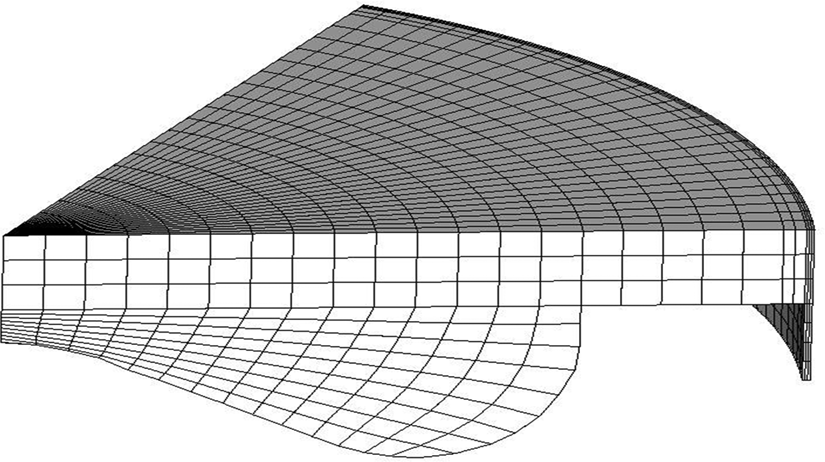
Computational grid with crevice volume. The grid consists of ~10 000 cells at BDC
4 Scope and Objectives
In the authors’ previous studies [6, 27, 28, 35] RCCI combustion was explored through parametric studies at a fixed load. In this work, RCCI combustion is investigated over a range of engine loads from 4.6 to 14.6 bar gross IMEP. First, the experimental results are presented and emissions and performance are analysed. Next, operation at 9 bar IMEP is selected for further analysis using engine experiments and detailed CFD modelling. An experimental and numerical comparison between RCCI combustion and conventional diesel combustion operating at very similar conditions is presented. The effects of HT and the energy release characteristics are isolated by making comparisons with adiabatic operation.
5 Injection Strategy
To control the overall fuel reactivity and therefore combustion phasing, RCCI combustion uses in-cylinder blending of two fuels with differing auto-ignition characteristics. In this work, gasoline is delivered using the port-fuel-injector of Table 2 and diesel fuel is delivered using the common rail type direct-injector of Table 3. In addition to controlling the overall fuel-reactivity, in-cylinder fuel blending allows the generation of fuel reactivity gradients which result in control over the combustion duration.
In previous work RCCI operation was demonstrated at 6, 9, and 11 bar IMEP [27, 35] using an injection and in-cylinder fuel blending strategy developed with detailed CFD modelling [36]. The injection strategy is highlighted in Fig. 4. A first injection, shown in Fig. 4 as the squish conditioning pulse, is delivered near 60° BTDC targeting the squish region of the combustion chamber. The purpose of this injection is to control the fuel reactivity in the squish region ensuring complete combustion of the premixed gasoline in the outer portion of the combustion chamber. The second injection occurs near 35° BTDC and targets the bowl region of the combustion chamber. This injection event generates a relatively high reactivity region which acts as an ignition source.
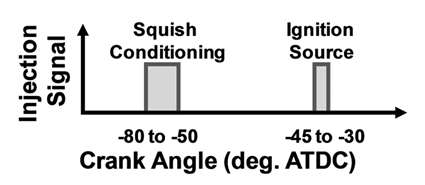
Injection strategy used for split injection dual-fuel RCCI combustion
6 Results and Discussion
6.1 Engine performance over a range of loads
In this section RCCI combustion is demonstrated over a range of loads from 4.6 to 14.6 bar IMEP. The results presented here are a combination of the highest efficiency cases from a number of different experiments; thus, the engine parameters and operating variables are not fixed over the load sweep. Further note that to accommodate concurrent research projects at the ERC, the 4.6 bar IMEP case uses a slightly modified piston from that shown in Table 1 with a compression ratio of 15.5:1. This slight change in compression ratio is not expected to significantly influence the results. Table 6 shows the operating conditions over the range of loads considered in this work. Notice that the per cent gasoline was adjusted over the load sweep to maintain acceptable RI. In the present study, the gasoline percentage and EGR combinations were selected based on chemical kinetics simulations presented in the authors’ previous work, see Kokjohn et al. [6]. In that work it was found that combustion should be phased later in the cycle as load is increased to control the RI (rate of pressure rise). However, it should be noted that the results presented here have not been rigorously optimized and it is expected that different combinations of injection parameters, EGR levels, and gasoline percentages may yield similar results.
Operating conditions for dual-fuel RCCI load sweep from 4.6 to 14.6 bar IMEP
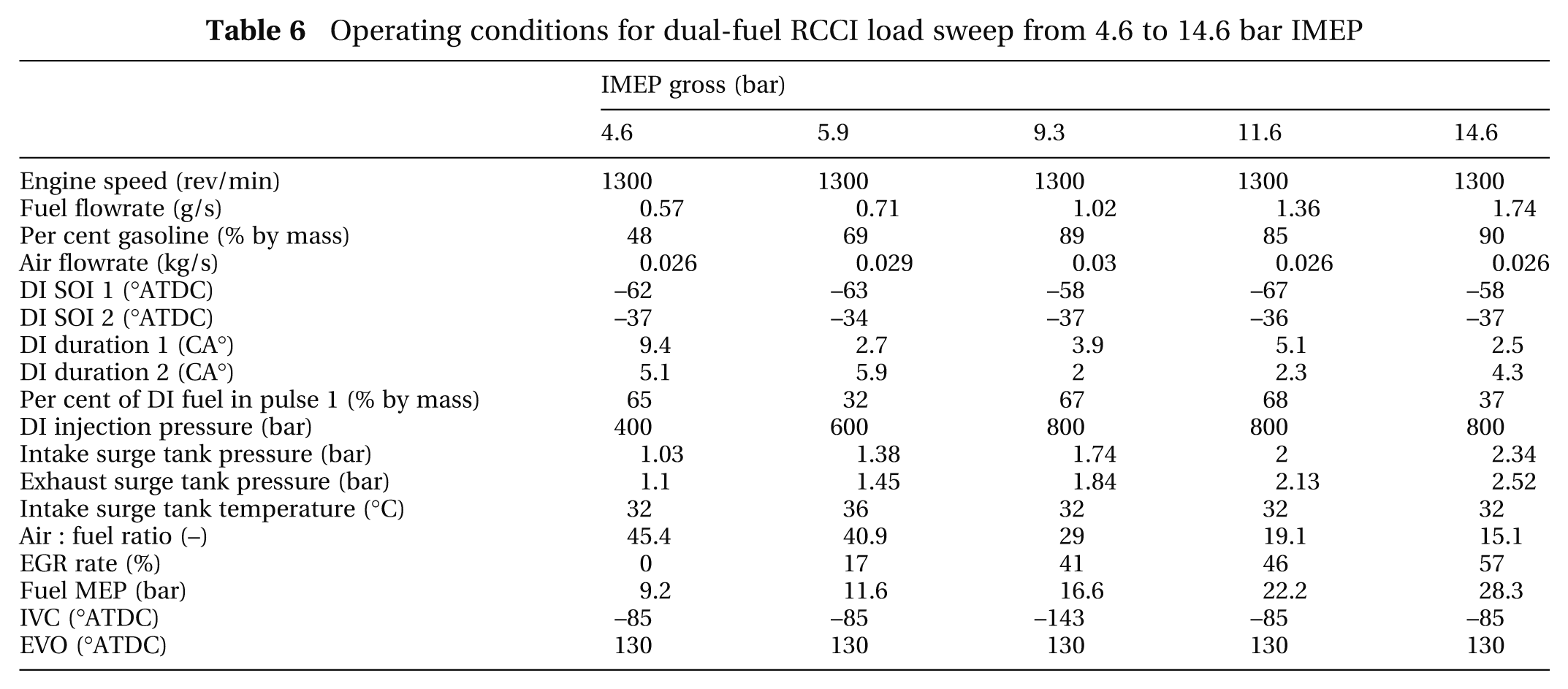
Figure 5 shows the measured and predicted cylinder pressures and AHRR over the load sweep. It can be seen that the simulations are able to accurately capture the combustion characteristics over the range of loads considered in this work. Figure 6 shows the measured and predicted emissions and performance over the range of loads. In Fig. 6 NO x and soot are shown on a gross indicated basis. The gross indicated efficiency is defined as the (gross-indicated-work)/(fuel energy). Because the engine operates under boosted condition for all but the lightest load, the PRR is not representative of knock [11]; therefore, the RI correlation of Eng [37] is used

where γ is the ratio of specific heats, (dP/dt)max is the peak PRR, Pmax is the peak pressure, R is the ideal gas constant, and Tmax is the peak temperature. In a similar engine, Dec and Yang [11] stated that RIs below 5 MW/m2 resulted in acceptable combustion noise and knock-free operation; thus, in this work 5 MW/m2 is used as an upper limit for acceptable combustion noise. Also shown in Fig. 6 are the US 2010 EPA HD on-highway truck limits for NO x and soot emissions (i.e. 0.268 g/kW-h and 0.0134 g/kW-h for NO x and soot, respectively).
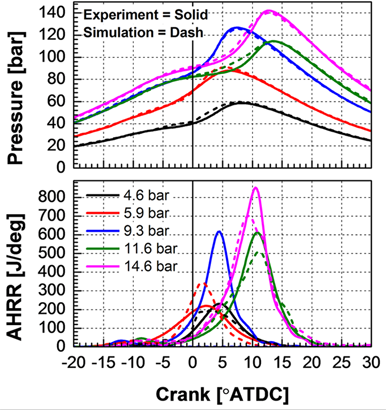
Comparison of cylinder pressure and AHRR over the load range from 4.6 to 14.6 bar IMEP. The experimental pressure and AHRR traces are shown in solid lines and the simulation results are shown in the dashed curves
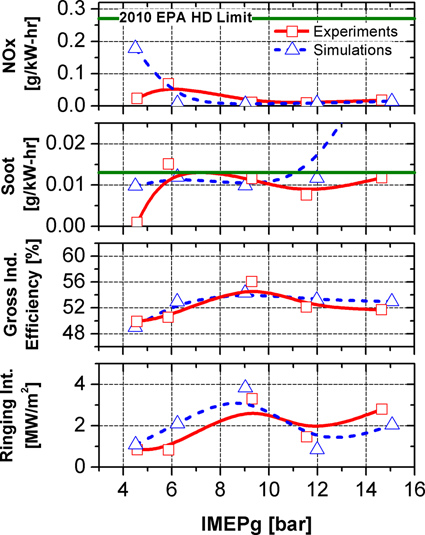
Emissions and performance of dual-fuel RCCI over a range of loads from 4.6 to 14.6 bar IMEP. The solid horizontal lines show the US 2010 EPA on-highway truck emissions limits for NO x and soot
Notice that the measured NO x is near zero and significantly below the 2010 EPA HD limits. Furthermore, it can be seen that soot is extremely low and below the 2010 EPA HD limits for all but the 6 bar IMEP point, which is very near the limit. It is possible that slight modifications to the operating parameters could be explored that would result in passing soot over the load sweep; however, since fuel efficiency is the focus of this study, methods for further soot reduction were not investigated. Even with the current soot levels, it can be seen that dual-fuel RCCI combustion is a promising technique to meet the stringent emissions regulations without the need for NO x after-treatment and since soot is extremely low, if a DPF were required, the time between regenerations could be significantly extended compared to higher sooting operation.
Of more interest for this study are the fuel efficiencies and RIs. It can be seen that the gross indicated efficiency is ~49 per cent at the low-load condition, peaks at ~56 per cent at 9.3 bar IMEP, and levels out near 52 per cent for the higher loads. It should be noted that the most optimization has been conducted at the 9.3 bar IMEP operating point, which is likely the primary reason for the peak in the fuel efficiency at this point. However, it is still informative to investigate the fuel efficiency trends over the load sweep. Figure 7 shows the energy balances for each case. As previously stated, the gross indicated efficiency is calculated as the (gross work)/(fuel energy). The combustion losses are calculated as

where ṁco and ṁUHC are the measured exhaust mass flowrates of CO and UHC, respectively, and ṁfuel is the mass flowrate of the fuel. LHVCO and LHVfuel are the LHVs of the CO and fuel, respectively. Here it is assumed that the UHCs have the same heating value as the fuel. The exhaust energy is calculated from the measured exhaust temperature as

where ṁexh is the mass flowrate of the exhaust, hexh and hint are the exhaust and intake enthalpies evaluated using the NASA database [38] assuming the exhaust contains only O2, N2, CO2, H2O, CO, UHC, and NO. Note that since all species except UHC were measured on a dry basis; thus, the water concentration in the exhaust stream was obtained using atom balancing. The heat loss contains the contributions of losses to the coolant, oil, and ambient and was obtained using an energy balance with the EGR loop located outside of the control volume; thus, the exhaust energy contribution contains heat rejected in the EGR heat exchanger.
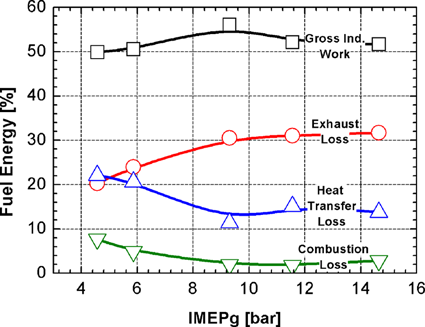
Flow of fuel energy over the load sweep
Starting with the peak efficiency point (i.e. 9.3 bar IMEP), it can be seen that as the load is decreased, the HT and combustion losses increase; however, the exhaust losses decrease, nearly cancelling out the increase in HT losses. Thus, it can be seen that the main cause of the reduced efficiency at the lightest loads is the reduced combustion efficiency. Furthermore, as the load is increased past the peak efficiency point, the engine begins to approach stoichiometric operation; and thus it appears that the slight reduction in fuel consumption is also due to increased combustion losses.
Comparing the model predicted and measured values in Fig. 6 it can be seen that, similar to the combustion characteristics, the models do a reasonable job capturing the emissions and engine performance over the load sweep. Notice that, at the 4.6 bar IMEP condition NO x is over-predicted by the model, but for the remainder of the load sweep NO x is predicted reasonably well. It should also be noted that for these cases both the measured and predicted NO x levels are very low; thus slight differences are not of significant concern. Comparing the measured and predicted soot emissions it can be seen that the models do a reasonable job capturing the soot trends; however, soot is significantly over-predicted at the 14.6 bar IMEP operating point. It should be noted that the soot model constants were held fixed over the load sweep (i.e. no attempts were made to ‘tune’ the soot model to each specific operating condition). Recall that the 14.6 bar IMEP operation point is near stoichiometric and some portions of the combustion chamber undergo slightly rich combustion. The over-prediction of soot as rich combustion is encountered may suggest that different soot model constants are required for rich and lean combustion. However, since the primary focus of this work is fuel consumption, adjustments to the soot model parameters were not explored. More importantly in the scope of this work, it can be seen that both the trends and magnitudes of the gross indicated efficiencies are closely captured by the models. Furthermore, because PRR and combustion noise are a major limiting factor for premixed operation, it is important to note that the simulations do an excellent job capturing both the trends and magnitudes of the RI.
Because the simulations reproduce the experimental results well and it appears that combustion efficiency dominates the gross indicated efficiency trend, the simulations are used to understand the combustion efficiency trends observed in Fig. 7. Figure 8 shows iso-volumes of UHC and CO for the 4.6, 9.3, and 14.6 bar IMEP cases at a CA of 40° ATDC. It can be seen that at the light-load condition UHC is found in both the centreline and crevice regions. For this case CO is primarily found in the centreline region. The centreline UHC and CO is due to an overly lean region which does not release enough energy to completely oxidize the CO and UHC. Moving to the 9.3 bar IMEP case it can be seen that UHC is only located in the crevice region and CO is only located in the region near the cylinder liner. The UHC in the crevice region is primarily unreacted iso-octane (gasoline) resulting from the premixed charge. The CO in the near liner region is due to relatively low temperatures due to HT from the gas to the cylinder liner. Additionally, as the crevice region outgasses late in the cycle, some UHC is converted to CO; however, temperatures fall rapidly and the CO in this region is not oxidized to CO2. Finally, moving to the 14.6 bar IMEP case it can be seen that, similar to the 9.3 bar IMEP case, UHC is found only in the crevice region. However, in this case it can be seen that CO is present both in the near-liner region and the centreline. Similar to the 9.3 bar IMEP case, the CO near the liner is likely due to a combination of crevice outgassing and HT from the fluid resulting in low reaction rates. In this case, the centreline CO is not the result of overly lean regions, but rather locally rich regions created by the DI event. Recall that for this case operation occurs only slightly lean of stoichiometric (equivalence ratio of ~0.97), thus due to the DI event, some regions of the combustion chamber undergo rich combustion and insufficient oxygen is available to completely oxidize the CO.
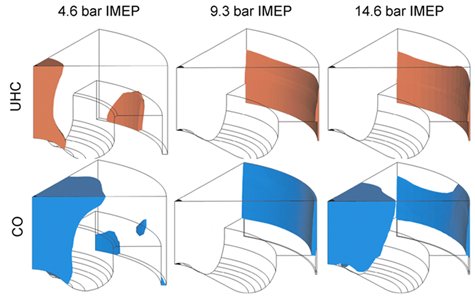
Iso-volumes showing regions with mass fractions of UHC (top) and CO (bottom) greater than 4000 ppm
Considering Fig. 8 the trend in combustion efficiency and gross indicated efficiency is clear. At the lightest loads operation borders on the lean limit for the premixed gasoline and complete oxidation of UHC and CO is difficult. At higher engine loads, as stoichiometric operation is approached, the DI event must be carefully controlled to avoid rich regions and incomplete combustion due to insufficient oxygen. Note that it is likely that at the highest engine loads the UHC and CO emissions could be reduced by increasing the boost pressure to eliminate the regions undergoing rich combustion. However, this has not been explored at this time. Finally, the peak in gross indicated efficiency and combustion efficiency at 9.3 bar IMEP is the result of operation avoiding both the lean and rich oxidation limits.
6.2 Comparison of conventional diesel and RCCI combustion
Previous studies [27] have suggested that dual-fuel RCCI shows increased gross indicated efficiency compared to conventional diesel operation through reduced HT losses and improved combustion phasing and duration. However, in the previous works direct comparisons were not made between conventional diesel and RCCI operation. In this section direct comparisons are made between conventional diesel operation and RCCI operation at the 9 bar IMEP operating point. The conventional diesel case was taken from the experiments of Tess and Reitz [39] where conventional diesel operation was investigated at nearly identical conditions to those of the 9.3 bar IMEP case discussed in the previous section. Table 7 shows the operating conditions for the two cases. Note that the conventional diesel case was part of a size-scaling study [39] which required operation at a slightly lower speed than the RCCI cases investigated in this work. However, since the speeds differ by less than 100 rev/min it is thought that this will not influence the findings of this study.
Operating conditions for the comparison between conventional diesel and RCCI combustion
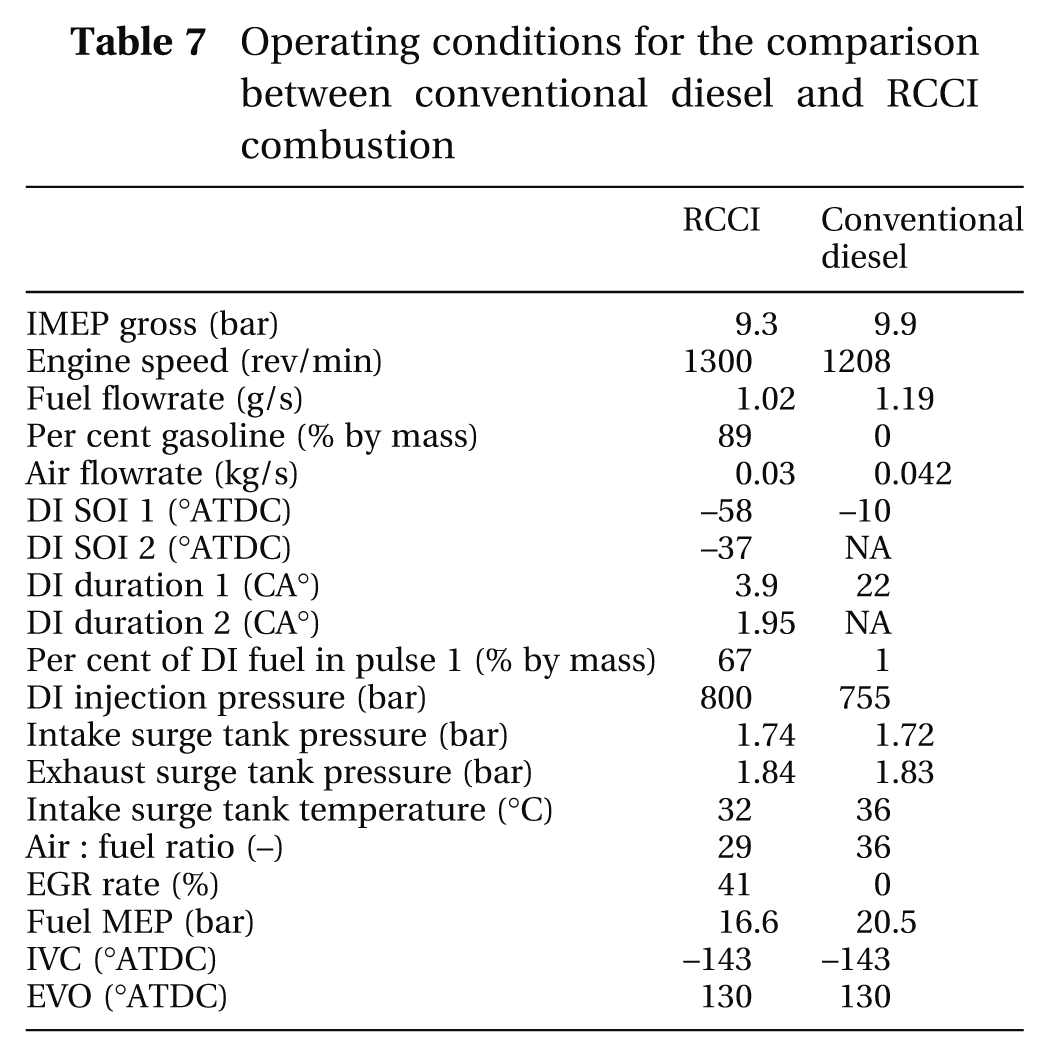
The RCCI case is the 9.3 bar IMEP operating point from Table 6 operating using 89 per cent premixed gasoline and a split DI of diesel fuel. The first DI pulse occurs at −58° ATDC and the second pulse occurs at −37° ATDC. In this case 67 per cent of the direct-injected diesel fuel is delivered in the first DI pulse and the injection pressure is 800 bar. The RCCI case uses 41 per cent EGR providing an intake oxygen concentration of 15.8 per cent by volume. The conventional diesel case features a single DI occurring at −10° ATDC with an injection pressure of 755 bar. The conventional diesel case operates without EGR and for both cases the intake pressure is near 1.7 bar. Figure 9 shows a comparison of the measured and predicted cylinder pressure and AHRR for conventional and RCCI combustion. First of all, it can be seen that the models used in this study are capable of capturing the combustion characteristics over a wide range of operating conditions from the low-temperature combustion dual-fuel RCCI mode to the high-temperature, mixing-controlled conventional diesel mode. Table 8 shows the comparison of the measured and predicted emissions and performance for these cases. Note that the exhaust temperature was not measured in the conventional diesel experiments of Tess and Reitz [39]; thus, the HT cannot be evaluated from the experimental results. However, given difficulties associated with accurately measuring the exhaust temperature (e.g. accounting for radiation from the thermocouple to the exhaust surge tank walls [40]) the model-predicted HT values likely provide more insight into the combustion process. For the model predictions, the HT considers only the closed portion of the cycle (i.e. from IVC to EVO). This is likely a reasonable approximation since a majority of the HT occurs during the energy release period near TDC. Since the simulations only consider the closed portion of the cycle, the temperature at EVO is not representative of the exhaust temperature; therefore, the exhaust energy is solved for using an energy balance. These approximations should be considered when comparing the relative quantities of HT and exhaust energy to other data; however, in this section the comparisons of the energy balances will rely completely on the model predictions and are therefore deemed acceptable.
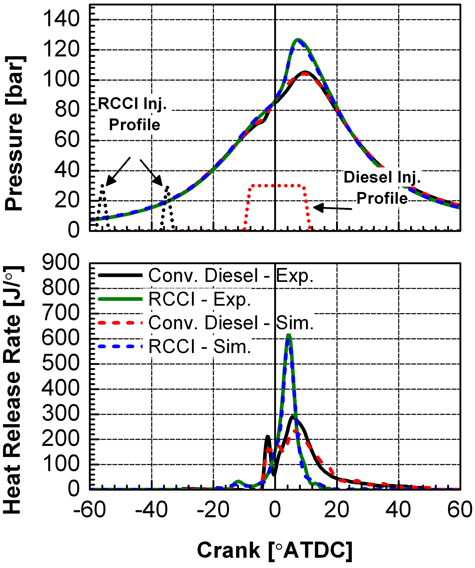
Measured and predicted cylinder pressure and AHRRs apparent heat release rates for conventional diesel and RCCI combustion at 9 bar IMEP
Emissions and performance of RCCI and conventional diesel combustion
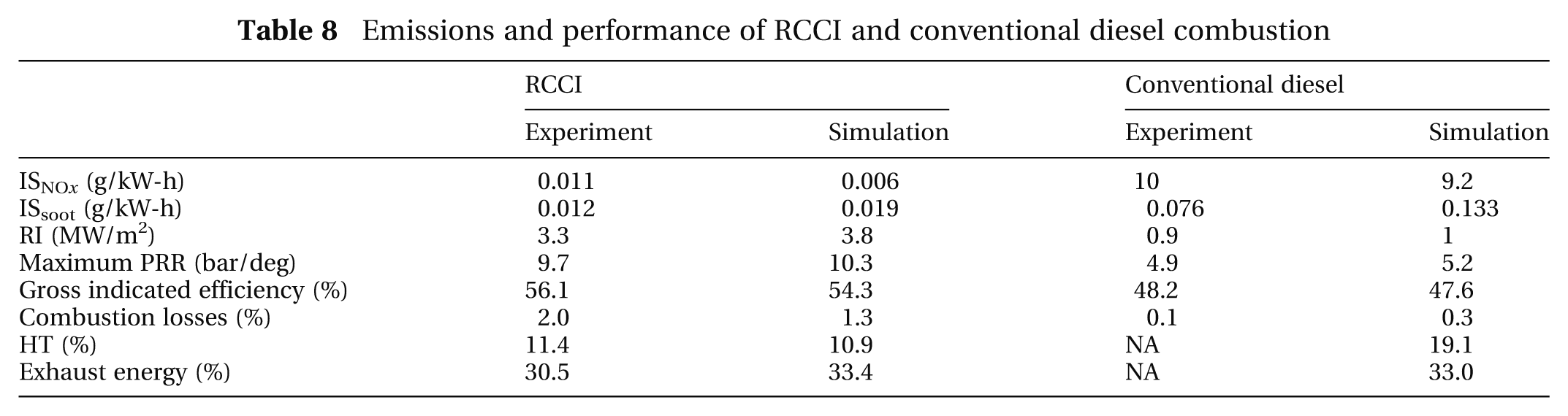
Compared to conventional diesel combustion, RCCI demonstrates three orders of magnitude lower NO x , a factor of six lower soot levels, and 16.4 per cent higher gross indicated efficiency (i.e. the RCCI case converts 7.9 per cent more of the fuel energy to useful work). However, RCCI combustion shows increased PRR, RI, and combustion losses (i.e. increased UHC and CO). However, it can be seen that the RI is well below the value of 5 MW/m2 suggested as an upper limit by Dec and Yang. [11]. Additionally, model results show that, at this condition, nearly all of the UHC emissions result from the relatively large ring-pack crevice volume. Although beyond the scope of this work, it may be possible to reduce UHC and CO emissions through improvements in the ring-pack design.
Similar to the previous section, the simulation results are used to gain insight into the experimentally observed improvements of RCCI compared to conventional diesel operation. The improvements in NO x and soot are explained by plotting the simulation results in temperature–equivalence ratio space. Figure 10 shows the corresponding temperature and equivalence ratio for each computational cell at 5° ATDC for the RCCI and conventional diesel combustion cases. It can be seen that, as expected, conventional diesel combustion has significant locally rich regions as well as lean high-temperature regions, which form soot and NO x , respectively. The RCCI case shows that the peak equivalence ratio is near 0.6 and due to the combination of relatively lean operation and reduced intake oxygen concentration, the flame temperatures remain below the NO x formation threshold.
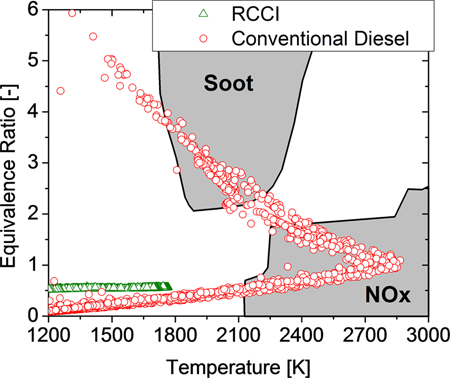
Equivalence ratio versus temperature plot comparing conventional diesel (circles) and RCCI combustion (triangles) at 5° ATDC. The NO x and soot islands are approximate and based on the work of Akihama et al. [45]
To understand the improvement in gross indicated efficiency, Fig. 11 shows the model-predicted HT losses. It can be seen that the RCCI case has 43 per cent lower HT losses than the conventional diesel case (i.e. 8.2 per cent less of the fuel energy is lost to HT).
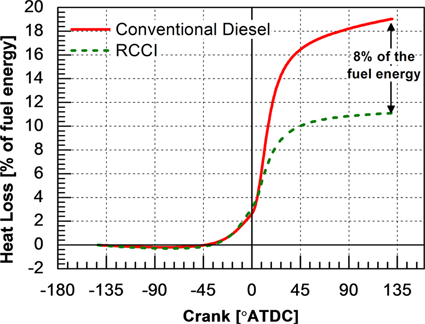
Model-predicted heat transfer losses for the conventional diesel (solid line) and RCCI (dashed line) cases of Table 7 normalized by the fuel energy
Figure 12 shows the model-predicted average and peak temperatures for the RCCI and conventional diesel combustion events. It can be seen that the average temperatures are very similar; however, the peak combustion temperature for the conventional diesel case is near 2800 K; whereas the RCCI case shows a peak temperature near 1700 K. It should also be noted that the conventional diesel case has slightly higher average temperatures due to the slightly higher load operation as indicated in Table 7. When the exhaust energies are compared, it can be seen that the conventional diesel and RCCI cases result in nearly identical energy levels available to drive the turbocharger. Furthermore, Fig. 13 shows contours of the temperature predicted by the CFD modelling. It can be seen that not only does conventional diesel combustion have regions of the combustion chamber at significantly higher temperatures than the RCCI case, but these regions tend to be located on or near the piston bowl due to the penetration of the fuel jet. These high-temperature regions result in significantly increased piston bowl HT and reduced thermal efficiency.
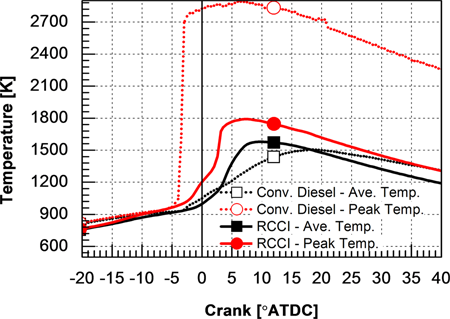
Comparison of model-predicted average (global) and peak (local) temperatures for RCCI and conventional diesel combustion
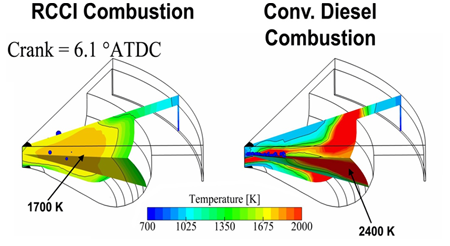
Temperature contours on cut-planes coincident with the spray axis at a 6.1° ATDC (i.e. near the 50 per cent burn location (CA50)) for RCCI and conventional diesel combustion
While a majority of the improvements of the gross indicated efficiency can be attributed to reductions in HT losses, the remaining improvement in gross indicated efficiency is due to improved control over the combustion event. Recall that the RCCI combustion process converts ~8 per cent more of the fuel energy to useful work than the conventional diesel case. However, due to lower combustion temperatures and the fact that the engine was not designed to operate on a premixed fuel – this engine has a large ring-pack crevice volume – the combustion efficiency is approximately 2 per cent lower for the RCCI combustion event. To make an accurate comparison of the energy release processes, care must be taken to evaluate the energy release without the influences of combustion efficiency. To make this comparison, the thermal efficiency, ηthermal, is defined as

where Wg is the gross indicated work and ηcomb. is the combustion efficiency. The thermal efficiency as defined by equation (4) of RCCI combustion is 9 per cent greater than that of conventional diesel.
The remaining improvements in thermal efficiency can be explained by improvements in the start- and end-of-combustion. Revisiting the pressure and heat release traces of Fig. 9 shows that, compared to the RCCI case, the conventional diesel combustion case has an earlier start-of-combustion and a later end-of-combustion (i.e. the combustion duration is longer). Each case shows combustion occurring slightly prior to TDC, which results in increased compression work, which cannot be fully recovered during the expansion stroke due to irreversibilities (e.g. HT). However, comparing the duration of combustion it can be seen that the rate of heat release falls off rapidly for the RCCI case and by 16° ATDC the combustion event has reached completion. In contrast to the RCCI case, the conventional diesel case continues to show slow energy release until nearly 40° ATDC. This late cycle burning results in reduced thermal efficiency due to the loss of expansion work.
To further the comparison and isolate the effects of only the combustion event, the simulations were used to evaluate adiabatic operation in both RCCI and conventional diesel combustion. Figure 14 shows the comparisons of cylinder pressure and AHRR for cases with and without HT. In the adiabatic cases, the IVC temperatures were adjusted slightly to provide the same combustion phasing as the cases considering HT. For the RCCI case the IVC temperature was reduced by 7 K and for the conventional diesel case the initial temperature was reduced by 5 K. Notice that, since the HT is eliminated, the peak AHRR for the RCCI case increases significantly. However, since the rate of heat release for conventional diesel combustion is controlled by transport (i.e. the transport of reactive material to the reaction zone) the combustion rate for the conventional diesel case is relatively insensitive to the elimination of HT. However, the RCCI case shows that aside from an increase in the peak heat release rate, the end of combustion is much more rapid. This is due to the elimination of cool regions near the cylinder liner where reaction rates are relatively low and combustion struggles to reach completion.
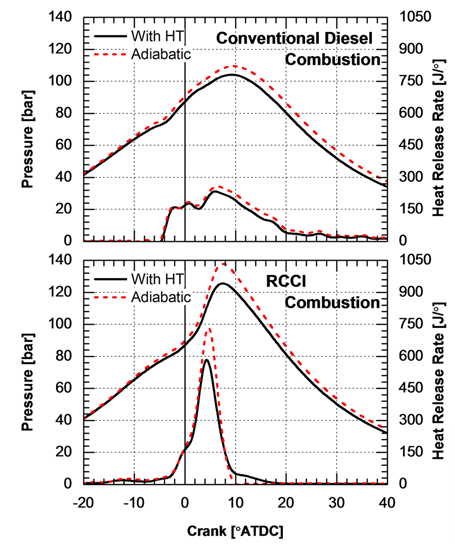
Cylinder pressure and heat release rate for cases with and without heat transfer for conventional diesel and RCCI combustion
Table 9 shows the energy balances for each case. With adiabatic operation it can be seen that the gross indicated efficiency of each combustion mode increases by approximately 8 per cent of the fuel energy. Further notice that the combustion efficiency of the RCCI case increases to nearly 100 per cent; however, the conventional diesel case shows very little increase in combustion efficiency. This is due to the fact that, in conventional diesel combustion, incomplete combustion occurs in two regions: overly lean regions outside of the spray plume and near the nozzle; and overly rich regions with insufficient oxygen in the centre of the plume. Since these combustion inefficiencies are primarily mixing-driven processes, they are relatively insensitive to the increased temperature resulting from the elimination of HT. However, in RCCI or any HCCI-type combustion (provided that the global equivalence ratio is above the lean oxidation limit: ~0.2 for operation without EGR), the primary causes of combustion inefficiency are unburned fuel located in low-temperature crevice regions and cool regions near the cylinder liner. In the adiabatic case, the entire chamber is compressed to the adiabatic core temperature and the fuel in the crevice regions is able to achieve complete combustion.
Energy balance for RCCI and conventional diesel combustion with and without heat transfer

The primary purpose of this section was to evaluate the relative quantities of the removed heat loss that goes into work and exhaust energy. In order to make a direct comparison of the relative quantities of the removed HT losses that go to work and exhaust losses for the adiabatic cases, an assumption must be made regarding the combustion losses. To provide a conservative analysis, the increase in work due to increased combustion efficiency is removed from the analysis by subtracting the increased combustion efficiency from the gross indicated efficiency of Table 9 (i.e. ηg.i., corrected = ηg − ηcomb.). With this assumption, the energy recovered by operating adiabatically must either go to increased work or exhaust energy. Figure 15 shows the partitioning of the HT energy to work and exhaust energy. It can be seen that the RCCI case converts 57.6 per cent of the recovered HT energy to useful work. Although the conventional diesel case shows a similar increase in gross indicated efficiency when adiabatic operation is considered, since the heat loss for the non-adiabatic conventional diesel case was significantly higher than for the non-adiabatic RCCI case, the relative percentage of the recovered heat loss that performs useful work is 14 per cent lower than for the RCCI case. Figure 15 clearly highlights the improved work extraction gained from improved control over the start- and end-of-combustion for the RCCI case.
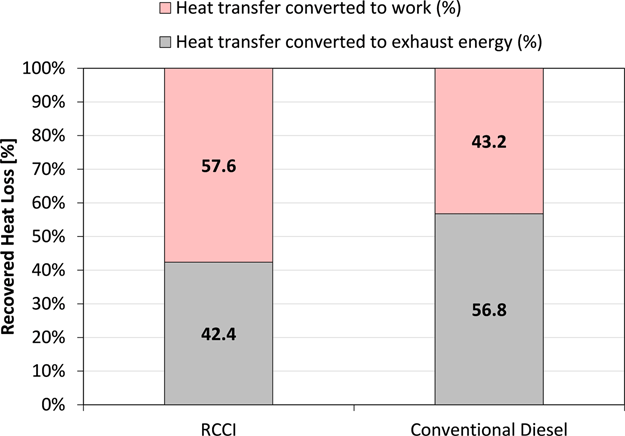
Partitioning of the recovered heat transfer from adiabatic operation energy to work and exhaust energy
Finally, to ensure the comparison of RCCI combustion and conventional diesel combustion was not biased due to differences in initial conditions, CFD modelling was used to compare RCCI combustion and conventional diesel combustion at the same operating conditions. The operating conditions for the modelling study are provided in Table 10. For the high-EGR diesel combustion case the injection timing was varied to achieve the same combustion phasing (CA50) as the RCCI case. Notice that the fuelling was held constant, thus the reduced efficiency of the high-EGR diesel case results in a lower IMEP. Table 11 shows the comparison of the computed emissions and performance. As expected, the reduced oxygen concentration of the high-EGR diesel combustion case results in significantly lower NO x emissions than the zero EGR conventional diesel case presented in the previous section (i.e. the results of Table 8). However, it can also be seen that the RCCI combustion case shows two orders of magnitude lower NO x emissions than high-EGR diesel combustion case. Recall that the high-EGR diesel and RCCI cases have identical initial conditions; thus for a given equivalence ratio the global adiabatic flame temperatures would be identical. However, since the RCCI injection strategy allows sufficient time for mixing prior to reaction, the peak local equivalence ratio during the combustion process is only 0.6. The lean operation results in a peak temperature near 1700 K (see Fig. 10). Conversely, the high-EGR diesel case features a mixing-controlled combustion process where reactions occur in a near-stoichiometric band on the outer edge of the spray plume. Because combustion occurs in a stoichiometric region the peak temperature of the high-EGR diesel case is over 2500 K. From this comparison, it can be seen that the NO x reduction is due to the elimination of high temperature, near-stoichiometric regions. Of course it would be possible to reduce the flame temperatures of the high-EGR diesel case to 1700 K by further reducing the inlet oxygen concentration (i.e. increasing the EGR rate). Since it is expected that combustion would occur in a stoichiometric region for this case, the required level of EGR can be computed using homogenous reactor simulations. Assuming constant pressure combustion it is found that the inlet oxygen concentration must be reduced to 8.5 per cent by volume to achieve a stoichiometric flame temperature of 1700 K. To realize this reduction in inlet oxygen concentration at the present operating condition, the EGR must be increased to approximately 70 per cent.
Operating conditions for the comparison between high-EGR diesel and RCCI combustion
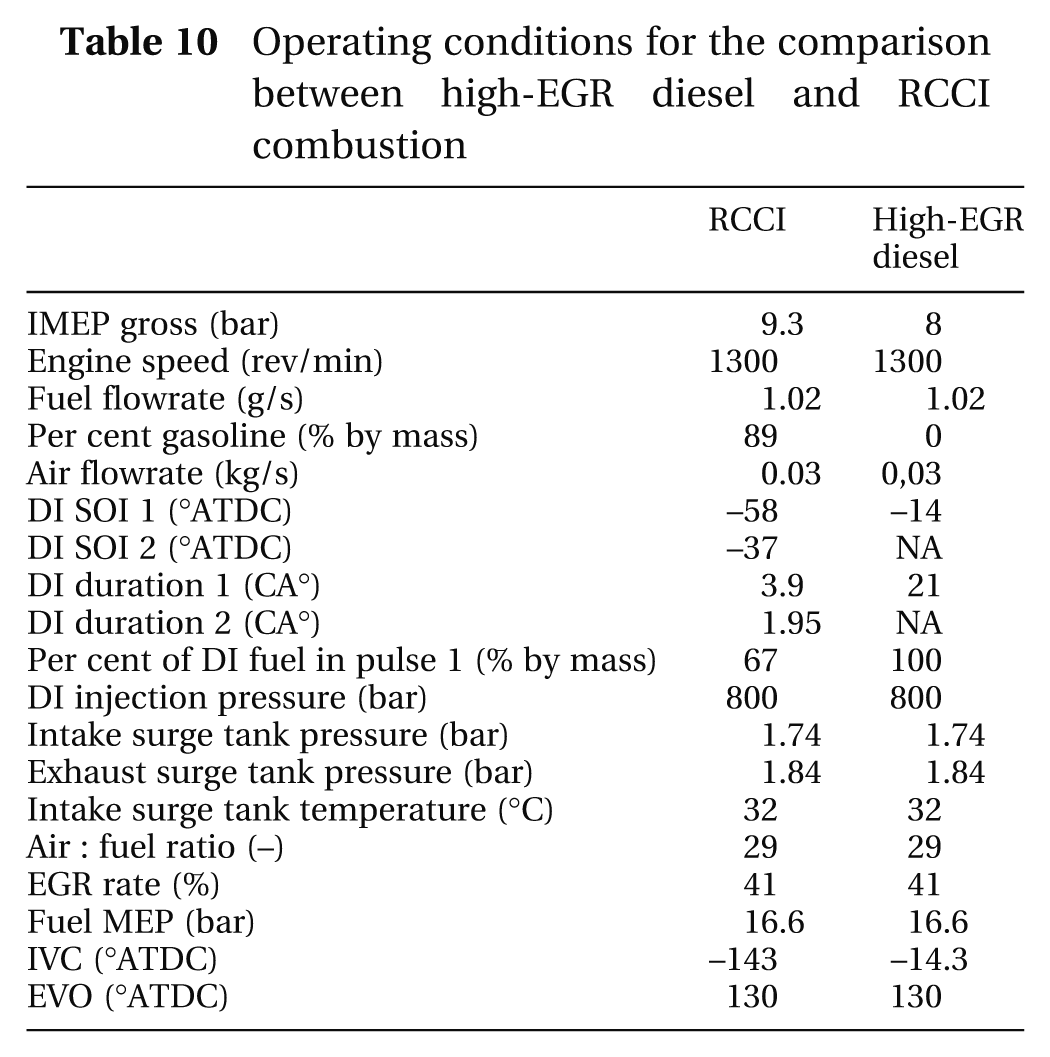
Emissions and performance of RCCI and high-EGR diesel combustion
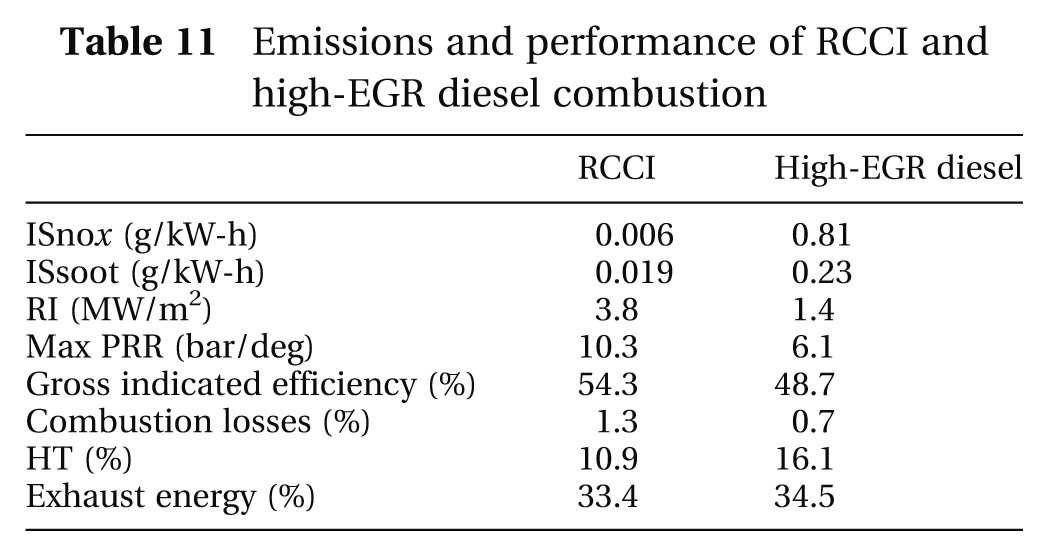
In addition to a significant NO x reduction, the RCCI case shows ten times lower soot emissions. Finally, comparing the energy balances of Table 11, it can be seen that the RCCI combustion case results in an improvement in gross indicated efficiency of 11.5 per cent (i.e. the RCCI combustion case converts 5.6 per cent more of the fuel energy into useful work). Similar to the comparisons with conventional (zero EGR) diesel combustion, it appears that the improvement in gross indicated efficiency is primarily due to reduced HT losses.
7 Conclusions
This work further demonstrates the feasibility of a dual fuel RCCI concept that uses two fuels with different reactivities [41]. The present study used PFI of commercially available gasoline and DI of commercially available diesel fuel. The RCCI concept has been shown to provide improved control over the combustion process and to allow high-efficiency and low emissions operation over a wide range of speeds and loads. In the present work RCCI is demonstrated in a HD diesel engine operating at 1300 rev/min with loads from 4.6 to 14.6 bar IMEP. Additional experimental results are available in the literature [5, 6, 27, 28, 42, 43] over wider operating ranges and with different fuels.
The present study demonstrates that RCCI is a promising strategy to meet current and future emissions regulations without relying on NO x and soot after-treatment. Aside from the ability to meet NO x and soot emissions in-cylinder, RCCI is shown to provide high efficiency over a wide range of engine loads, with a peak gross indicated efficiency of 56 per cent at the 9.3 bar IMEP operating point.
To help understand the origins of the improved performance, engine experiments were used to compare RCCI and conventional diesel combustion. Compared to conventional diesel combustion without EGR it was found that RCCI results in a NO x reduction of nearly three orders of magnitude, six times lower soot, and 16.4 per cent higher gross indicated efficiency. In addition to the experimental engine comparisons, CFD modelling was used to compare RCCI and high-EGR diesel combustion. It was found that at identical operating conditions (e.g. equal inlet oxygen concentrations) NO x was reduced by two orders of magnitude, soot was reduced by a factor of ten, and gross indicated efficiency was improved by 11.5 per cent.
The CFD modelling indicates that the observed NO x and soot reductions are due to the avoidance of high equivalence ratio and high temperature regions in the combustion chamber. Two factors were found to explain the improved thermal efficiency. First, RCCI combustion avoids high-temperature regions that are located near the piston bowl surface that are observed in the conventional diesel combustion case; thus, HT losses are reduced by nearly a factor of two. Second, RCCI combustion shows improved control over the start- and end-of-combustion. This improved combustion control allows the combustion timing and duration to be optimized for minimum compression work and maximum expansion work (i.e. maximum indicated efficiency). The improved control over the start- and end-of-combustion was highlighted by exploring adiabatic operation with the CFD modelling. It was found that when HT is removed the RCCI combustion process converts 14 per cent more of the recovered HT energy into useful work than conventional diesel operation.
Footnotes
Appendix
Acknowledgements
This work was supported by the Engine Research Center’s Diesel Engine Research Consortium, and by DOE grant DE-EE0000202 and the DOE Sandia Laboratories.