




Abstract
Crafting a viable social justice–based policy is touted as critical for revamping social development in emerging economies. There is little understanding of social justice and forging sustainable relationships for social development through utilization of indigenous know-how. With evidence from local communities in Cameroon, this article explores conceptions of social justice through indigenous know-how and considers their implications for social development, policy and practice. Drawing on empirical data and in-depth, semi-structured interviews with key informants, this case study lays the foundations of what drives social justice and social development, often ‘behind the scenes’. This study ‘unpeels’ the invisible enablers and barriers to social development; a proposed social justice wheel and instruments deployed demonstrates how indigenous knowledge systems and institutions address multifaceted problems. Uppermost on the social justice agenda are issues related to counsel, affective community ties and social cohesion, oral traditions and mores, arbitration of community affairs, and projects of pressing need such as clean water, land disputes, mobilizing local resources in tackling key concerns related to poverty, agricultural practices, food security and climate change. Although due process and traditional diligence are harder to maintain due to underhand arrangements and often corrupt leadership, communities are reframing social justice to build capability on an incremental scale. The study illuminates the centrality and policy conundrum of fostering people-centred development. Harnessing indigenous agency, in synergy with modern governance institutions such as social services, to bolster social development is a prerequisite for enhancing a heightened sense of human rights and lessening inequality.
Introduction
The rationale for this study is to provide a nuanced, yet contextualized conception of social justice, necessary for achieving social development outcomes within predominantly rural communities. Social justice remains a contested concept within social work, social development and policy debates (Hare, 2004; Healy, 2012; Lombard and Viviers, 2020). Rawls’ (1999 [1972]: 266) conception of social justice as the basic structure for equality of opportunity – social institutions working to secure basic rights, thereby lessening inequalities for the least advantaged in society – resonates with this study. As an evolving concept, social justice is subject to multiple and sometimes conflicting interpretations, diverse cultural narratives and unequal power hierarchies (Postan-Aizik et al., 2020). To remain relevant in a rapidly changing world, social justice needs to be prominent at local and policy levels to play a transformative role in society and guarantee sustainable development (Levin, 2018; Lombard and Viviers, 2020; Taylor, 2019). Policy expertise resulting in good outcomes is contingent on how well communities exercise greater leverage in building a social justice agenda, a prerequisite for social development (Fonchingong, 2018). Formal state-led development initiatives are failing to reach rural and marginalized populations, and this strengthens the rationale for building on existing indigenous knowledge systems and institutions (Fonchingong and Mbah, 2021). Navigating complex social development challenges in emerging economies of sub-Saharan Africa (SSA) is key to sustainable development (World Economic Forum [WEF], 2019). From a social justice and policy perspective, this study aims to offer empirical insights on how local resources (agency) are mobilized for social development. It is vital for social policy to be rooted in real-world situations of people in a local context while presenting valuable lessons and principles in a time of globalization and how the micro–macro nexus should play out (Lombard and Viviers, 2020: 2264). Social justice through village oversight is a vital ingredient for social development, often overlooked as spaces where local resources are critical (Taylor, 2019). Specifically, this study aims to first explore why a local and contextualised understanding of social justice is necessary for achieving social development outcomes. Second, through both the social justice framework and instruments deployed, this study interrogates why formal state-led development initiatives are failing to reach rural and marginalised populations. Finally, a consideration of a social justice-based policy is provided to build on existing indigenous knowledge systems and institutions.
In 2020, COVID-19 pushed an additional 26 to 40 million additional people in Africa (excluding Northern Africa) into extreme poverty (WHO, 2020; World Bank, 2020). Remarkably, two in every five people living in Africa are still living in extreme poverty, and other persistent challenges remain (United Nations Development Programme [UNDP], 2021; United Nations Economic Commission for Africa [UNECA] et al., 2022). Activating indigenous know-how and a sociology of agency is imperative in the drive to reduce inequality and build resilient communities. This requires governments to recalibrate their policies and programmes to accelerate or re-start efforts to achieve Sustainable Development Goals (SDGs) and Agenda 2063 (United Nations [UN], 2020; UNECA et al., 2022). It is averred that a large segment of rural populations, the overwhelming majority in most African countries, continue to adhere principally to village and local institutions (UNECA et al., 2022). These village institutions are buoyed by dynamism of village leaders, deployed in the arbitration of community affairs based on a mastery of village know-how, instrumental in social development drives within marginalized communities shattered by conflict (Fonchingong, 2018; UNECA et al., 2022).
Pursuing social justice resonates with debates on solution-focused, problem-solving and building capability at a local level. In some Asian countries, notably Japan, South Korea, India, and Bangladesh, exist lived experiences on the viability of indigenous know-how, likened to traditions in Africa. Notable examples are Asante Kingdom and Asanteman council in Ghana, Ibo village assembly in Eastern Nigeria, Eritrean village baito (assembly), the gada (age-set) system of the Oromo in Ethiopia, Kikuyu and Masai of Kenya and the Bafokeng community of South Africa. These village-led institutions adhere to traditional governance, including settling disputes through the arbitration of village leaders (Adem, 2004; Economic Commission for Africa [ECA], 2007; Mengisteab, 2003). Yet, a fuller understanding of social justice from the standpoint of indigenous know-how remains under explored. While indigenous knowledge systems are inextricably linked to social development (Eyong, 2007; Kangalawe et al., 2014), little is known of its instrumentality. Part of this invisibility is attributed to state bureaucracy that precludes traditional institutions and chiefs as respectable law enforcers (Kisangani, 2009). The integration of indigenous knowledge and institutions is trumpeted as vital for social development (Kangalawe et al., 2014; Taylor, 2007; World Bank, 1998). However, the existing duality of formal state institutions and customary/traditional institutions, which govern the lives and livelihoods of large segments of Africa’s population, remains problematic (ECA, 2007, 2013). Social justice offers communities leverage to pursue social development goals amid lethargic state input. For UNECA et al. (2022: 12), accelerating the pace of inclusive and sustainable development requires governments’ commitment to strong, proactive and responsible governance frameworks, based on a long-term vision and leadership, shared norms and values, and rules and institutions that build trust and cohesion.
Conceptual proposition: social justice, indigenous know-how and social development
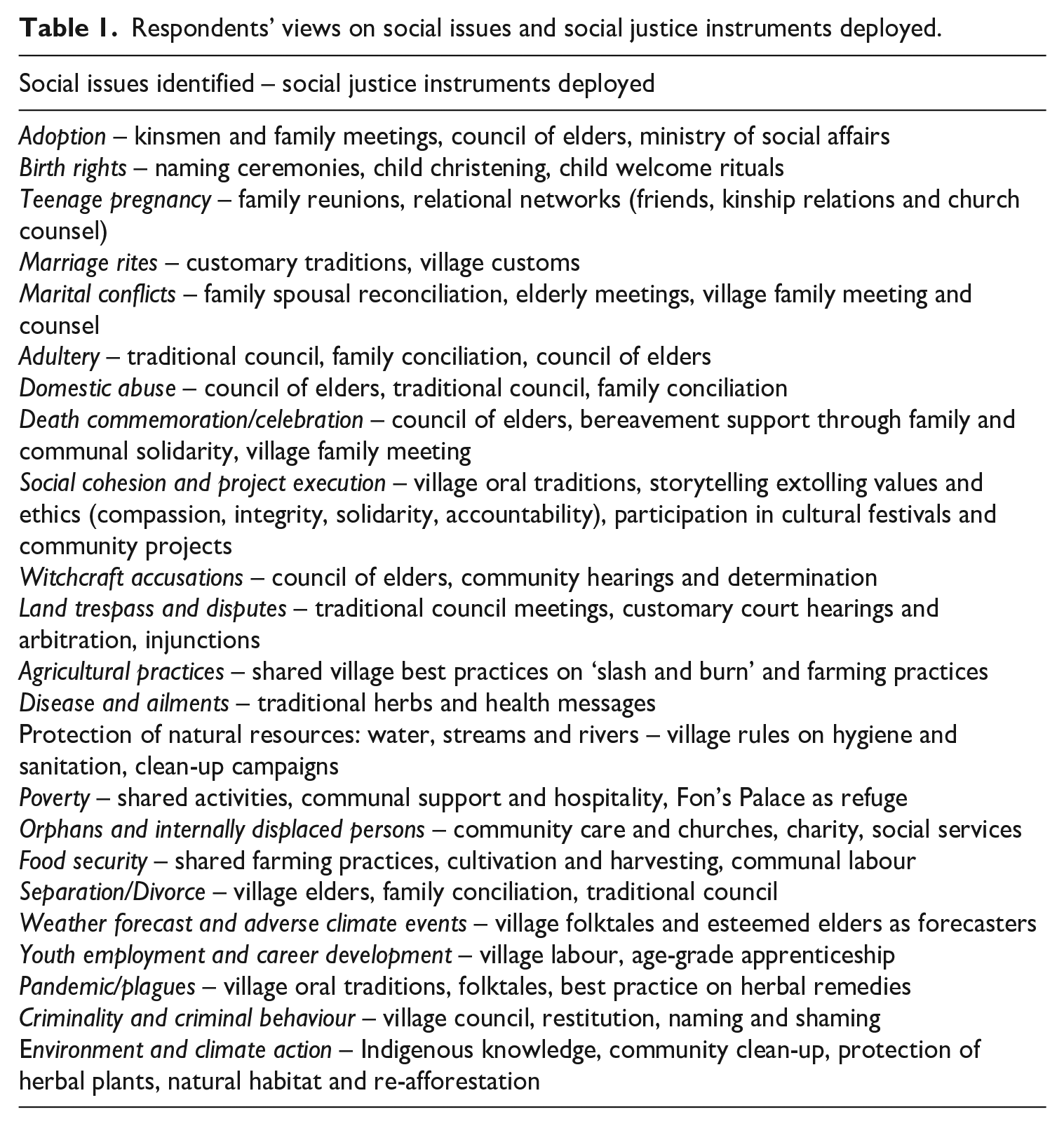
Ascertaining the links between social justice and indigenous know-how and their implications for social development, policy and practice are relevant for emerging economies, including Cameroon. Social justice is central to every person’s right to have freedom, be recognized, and be treated as equal and use limited resources efficiently (Isbister, 2001; Rawls, 1999 [1972]). A social justice standpoint offers insights into indigenous know-how and contextual reality (Figure 1), aligned on the need to formalize ‘social rights’ for communities (IFSW, 2018; Rinkel and Powers, 2017). Social justice is hypothesized on social issues identified and instruments deployed in resolving these social concerns, underpinned by the utilization of flourishing cultural assets, rooted in people’s everyday lives and dilemmas (Table 1). The discursive linking of people participation is in tandem with the World Bank (2001) praxis of social capital, which is not imposed from above, but based on contextual realities. Communities in Africa value the culturally esteemed tradition of village institutions and the enduring value of community agency, calibrated around a social justice architecture, necessary for achieving social development outcomes (Figure 1).
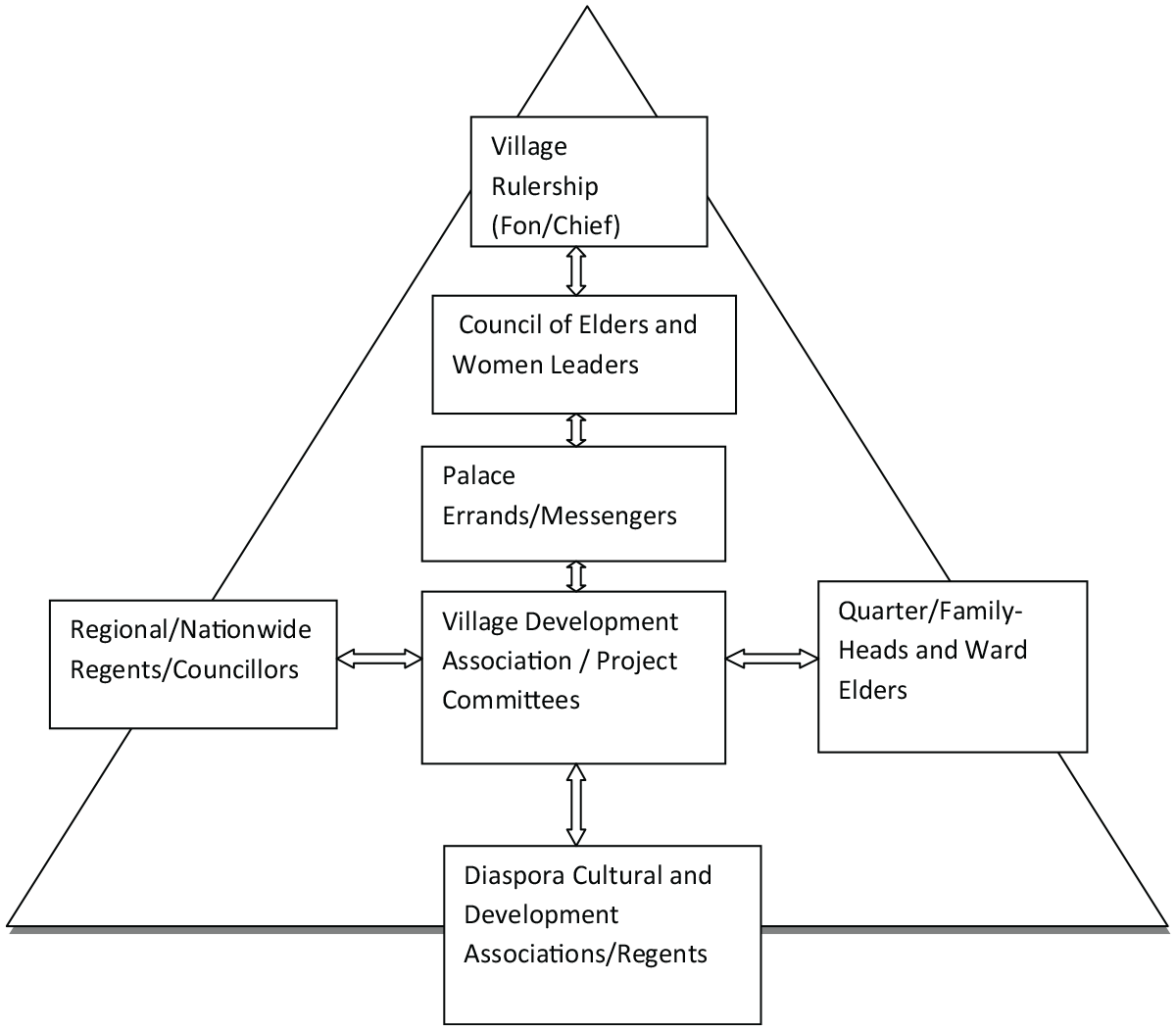
Pyramidal framework – Dispensing social justice through indigenous know-how.
Respondents’ views on social issues and social justice instruments deployed.
In emerging economies, current debates on social development have relied on indigenous knowledge (ECA, 2007, 2013; Eyong, 2007; Kangalawe et al., 2014; Mengisteab, 2003; UNECA et al., 2022). Proponents of remaking development have advanced community rejuvenation (Briggs, 2005; Escobar, 1995; Herbert, 2000). This entails listening to people, learning from them and respecting their realities and priorities (Chambers, 1983) to improve livelihoods. Essentially, this study interrogates conceptions of social justice linked to social development, highlighting achievements and challenges, and the need to develop a social justice–based policy, informed by relational networks within the community (Fonchingong, 2018). Notions of indigenous know-how square with similar models of traditional institutions in Asia. Among the Jino clan of Yunnan China, each village is governed by a council of elders, formed by leaders of each clan, chaired by the Zhuoba, clan elder (Zheng, 2008: 50). Village leaders provide useful functions in the community, delivered within a context of other services provided by the state such as national security, education, transport, communication infrastructure, regulations and other matters of social development. Hase (2013: 82) corroborates this narrative, looking at county gentry and village elders in rural China. Village elders are advisers of County magistrates; they undertake customary duties such as land allocation and tax collection responsibilities. Elsewhere, panchayat institutions are influential in the rural areas of India and Bangladesh. They respond to people’s needs, leading to the empowerment of the poor, through synergy with the state, thereby enhancing people participation. Traditional village leaders (matbar) play an important role in settling small-scale village disputes in village meetings (salish). Complicated issues are dealt with by the union (upazila), council members (parishad) and political leaders (Parnini and Othman, 2014: 38).
An intersecting social justice and social development paradigm provides a critical foundation for building on existing indigenous knowledge systems and institutions. Social justice and social development are underpinned by practices, projects and outcomes that benefit the community. A community’s repository of oral traditions, local knowledge and capability in resolving social development challenges is deployed. The conventional conception of justice by Rawls (1999 [1972]: 7) concerns ‘the way in which major social institutions . . . distribute fundamental rights and duties and determine the distribution of advantages from social cooperation’ is relevant here. From a distributional and value-based perspective, social justice is visible in initiatives at building community cohesion, adjudication on community matters, initiating development projects, and responding to specific and collective needs (Figure 2). This transformation translates into higher levels of association, relational networking and social solidarity, important building blocks for social justice and lowering inequality (Fonchingong and Mbah, 2021; Fonchingong, 2018; Taylor, 2019), which remains problematic.
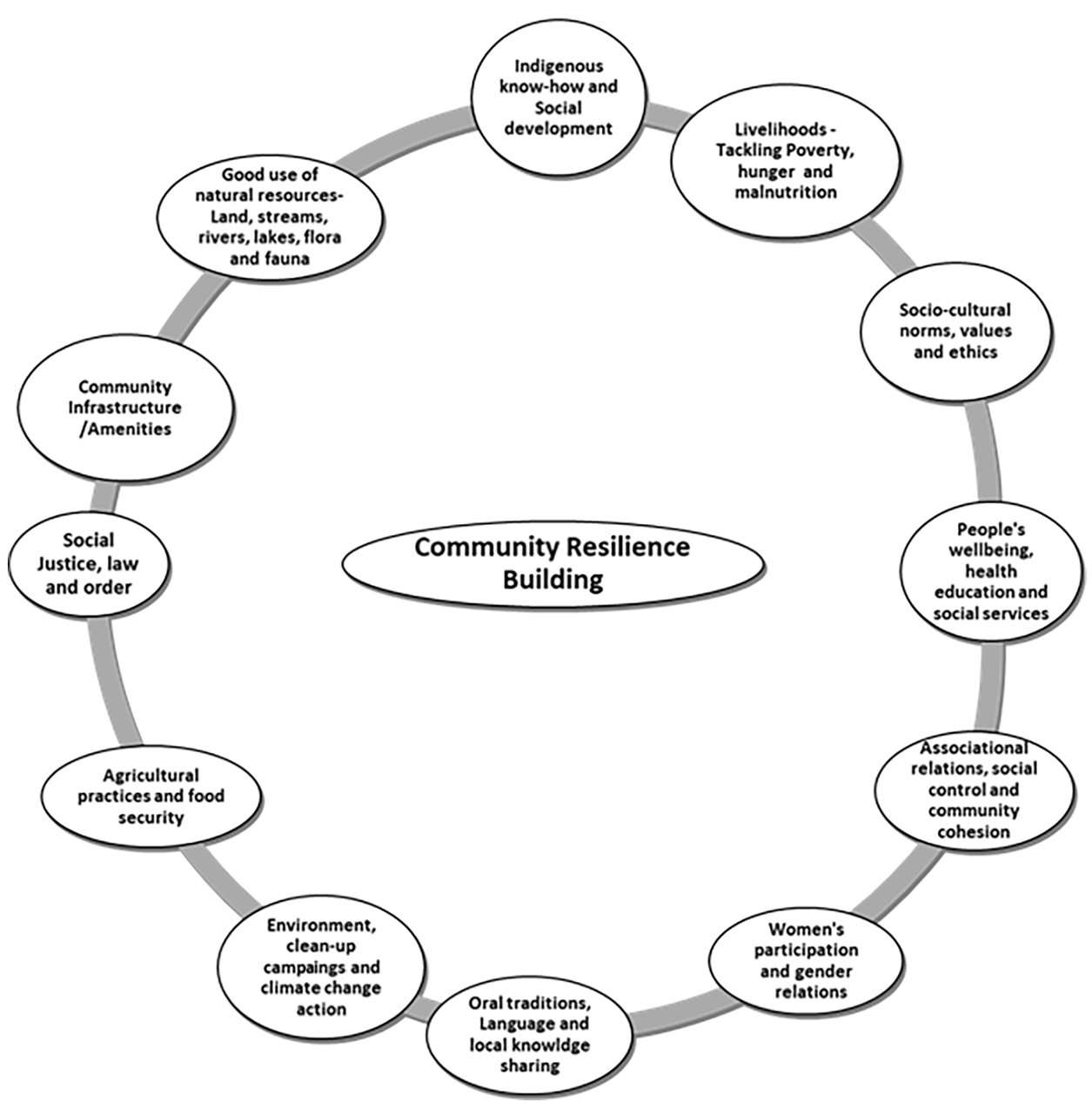
Author’s Framework on conceptions of social justice and social justice wheel.
Research context
Geographically, Cameroon is in central Africa, renowned for its vibrant indigenous knowledge systems and governance structures that revolve around chiefs, Fons, Sultans, Council of elders and other social structures. Cameroon’s population, estimated at over 25 million, is organized administratively into 10 regions, with the Northwest (region of study), home to over 1.8 million inhabitants. Cameroon is ranked 150th on Human Development Index (HDI), with corruption identified as a major stumbling block to social development (International Monetary Fund [IMF], 2013; UNECA et al., 2022; World Bank, 2013). Cameroon’s welfare regime is abysmally inadequate with government spending on social welfare roughly equating to 0.2% of the gross domestic product (GDP). The unresolved political conflict involving the Anglophone regions of Cameroon has exacerbated poverty and inequality, leaving most communities shattered by raging conflict (Fonchingong and Mbah, 2021; Human Rights Watch, 2019). Cameroon’s flawed decentralization agenda does not provide leverage for local government to deliver expected social services (Fonchingong and Mbah, 2021). To mitigate shortfalls in welfare provision, village-led and other community organizations are attempting to fill gaps but are limited in both scope and quality. In rural areas, social risk is still largely off-set by community and socially oriented, family-based relationships of solidarity and mutual support (Fonchingong and Mbah, 2021).
The Northwest region of Cameroon is heralded for its self-reliant development initiatives, rooted in rich cultural traditions of fondoms and chiefdoms (Fonchingong and Fonjong, 2002; Geschiere, 1993). In Cameroon’s National Development Strategy (2020), calibrating a social justice framework remains invisible in policy discourses on social development. In the region, community and social development thrives on village institutions building critical infrastructure. As custodians of tradition, the Fon/Chief – apex of traditional authority – is nested in ‘sacred powers’, working in tandem with other members of village-led institutions (Figure 1) to ensure that basic needs are met and social issues are resolved (Table 1). According to UNECA et al. (2022), a mass of community-building projects and spatial spaces that produce desired outcomes for members constitutes social justice. Through such relationships, outcomes are worked out for the good of the community, directly impacting on livelihoods. Social justice is complemented by conscientized empowerment (Fonchingong, 2018) as well as relational and solidarity networks (Fonchingong, 2018; Fonchingong and Mbah, 2021). Also, social justice involves indigenous knowledge and social institutions that generate both good outcomes and perpetuate social injustices, such as the marginalization of women and exclusion of ethnic minorities and other groups.
Methodology
This qualitative, case study is informed by in-depth, semi-structured interviews conducted in May–June 2021 with 37 respondents drawn from a random sample, selected from three localities, in the Northwest region, Cameroon, including 3 from Diaspora communities. The sample represented key differences between respondents by geographical location, status in the community, education and socio-economic status, gender and age. The data collection process hinged on generating data guided by key questions, formulated in line with key research propositions. Data and information obtained were scrutinized and cross-checked with follow-up conversations. Research participants were randomly selected from a list of community members, officials of village development associations and residents in selected localities. In eliciting information, questions posed to participants included the following: what constitutes social justice, understanding of indigenous know-how and connections to social justice and development, how indigenous know-how is deployed in tackling social issues, and what aspects of social justice and indigenous know-how have proved beneficial and problematic to the community. Further questions asked: how social justice and indigenous know-how are implemented within diaspora communities, how social issues/concerns are identified; what instruments are deployed to resolve them; and, how successful aspects of indigenous social justice can be factored within modern state governance architecture and pointers for a social justice–based policy. The interview process was explained, and consent was sought and obtained from all research participants. In the results and discussion section, key differences between respondents are represented by gender, age, geographical location and position of authority within the local community.
Respondents and informants provided information on contours and workings of social justice and indigenous know-how within selected communities. Community participants were drawn from a random sample of selected village development associations (VDAs). Most informants (n = 34) were residents of rural areas and from Diaspora communities (n = 3), specifically the United Kingdom. Participants were members of VDAs chosen for the study, which included the Ndong Awing Cultural and Development Association, Meta Cultural and Development Association (MECUDA) and Bafut Development and Cultural Association (BADECA). Through analyzing the case study material, it was possible to explore the utility of social justice in communitarian ventures, and indigenous know-how and challenges faced within a multiparty political context against the backdrop of simmering conflict in Anglophone region which constitutes a social development conundrum (Fonchingong and Mbah, 2021). This research involved qualitative open-ended interviews to develop descriptive multiple case studies (Eisenhardt, 1989; Yin, 2004). The use of a qualitative, evidence-based practice approach (Given, 2006) enabled the researcher to minimize the risk of presupposing the nature and quality of social justice mechanisms and to analyse the data within and across localities to achieve replication logic. This approach resulted in theoretical observations that are empirically valid, with logical coherence, as they are convincingly grounded in the evidence (Eisenhardt, 1989). Qualitative data have been analysed thematically, in keeping with emerging themes related to aims of the study.
Results and discussion
Local definitions of social justice and areas of concern
Respondents pointed to precepts and areas of concern for social justice (Table 1). Most respondents perceived social justice as the cornerstone of community cohesion. Others perceived it as decisions being made fairly when there is a dispute. An elder stated, ‘social justice enables the community to find its own voices and ways in problem solving. Kinsmen who are gifted with clairvoyance solve multi-faceted problems in its own way to uphold community relations and instil social order’ (male, elder, rural resident). Village-led institutions provide direction in community affairs and arbitration on important community issues (Figure 2). However, an interviewee stated, ‘social justice may be difficult sometimes as too much respect for elders may becloud their judgement. Sometimes women are scared to challenge decisions for they may be deemed as disrespectful of tradition and customs’ (female, elder, rural resident). These quotes point to deep gendered differences within communities, where safeguarding children and women from inherently patriarchal influence are contentious.
Reframing social justice offers insights on the dynamics of contemporary social development. The efforts of stakeholders in mobilizing key resources and assets, to build community cohesion and regeneration, are crucial. In this light, an informant captured the centrality of social justice: ‘justice is for us, we swim or drown together, we show compassion, solidarity in different ways and help the community to blossom’ (male, 60, rural resident, elder within traditional council). From such a narrative, a social justice approach is actualized through building local institutions and capability, looking inwards, yet outward-facing. Furthermore, data point to relevance of social justice within communities, indigenous know-how and social development as key determinants. Narratives indicate a traditional conceptualization of agency forged through village-led institutions (Figure 2).
Another respondent stated, ‘the traditional mind-set of what constitutes a village institution is culturally constructed; it is led by people who place the village before everything else and are there to ensure justice and good for the community’ (male, 65, rural resident, village family head).These notions reflect the social work mandate of promoting social development and social cohesion in under-resourced communities (Rinkel and Powers, 2017). An interviewee situates the centrality of social justice through indigenous know-how: we are what we are and exist for what we stand for. Social justice creates an even playing field and we share common values and goals. Everyone understands how the village breathes; for example, people hold vital knowledge of community issues and joint efforts to pave the way for social justice. (Male, 60, rural resident, elder within traditional council).
Social justice is construed culturally as the ability to stimulate change while building social cohesion. An informant said, ‘social justice is about helping those who are marginalised and vulnerable. It is about what animates the community, dealing with difficulties and threats to community cohesion’ (Female, 56, rural resident, women’s group leader’. Another said, ‘It is about fair play, building confidence, trust and supportive community relations during bad and good times. That’s reason social justice is directed at emotional challenges such as domestic violence and other family disputes in a reconciliatory manner’ (female, 62, rural resident, farmer). Such attributes tie up with social and human assets or capital that can be accumulated, including increased self-confidence and sense of self-worth, strengthened community co-operation and social networks (social capital) and a greater sense of self-reliance (Matarasso, 2007; Taylor, 2007).
Social justice is also entrenched through community values and ethics. A respondent echoed this: community is about values and things we stand for, it is about doing good for you and others, it is about what we cherish, values of compassion and solidarity. It could be resolving land disputes, marital concerns, and other social issues. It could be accountability in handling funds raised towards projects, organizing health, sanitation, and clean-up campaigns. (Male, 61, rural resident, president of village development association)
Oral traditions are crucial for social cohesion; this is underscored by an informant: ‘We take messages and hear stories from key people like our Fon/Chief. The Fon has a sacred duty as village spiritual, hereditary, and ancestral leader. Stories and heroic deeds help to foster a sense of justice, unity, and purpose’ (male, 60, rural resident, elder within traditional council). Community cohesion is fundamental in successful completion of projects. Village institutions entrench community values through accumulated community knowledge. Utilizing these experiences, village leaders arbitrate in customary courts on matters regarding community relations. ‘Disputes related to land, inheritance, farmer/grazier conflicts, food security, social security, health hazards; deemed to threaten life and blood of the village are dealt with’ (male, 60, rural resident, elder within traditional council).
Social justice also hinges on coping strategies in relation to everyday challenges such as agriculture, poverty and food security. Instilling cultural norms and code of conduct to uphold community relations is vital. A template for good behaviour christened ‘mbom allah’/‘country fashion’ (good manners) is derived from oral traditions. An interviewee said, ‘our village mores represent pillars of social justice. Everyone must show respect and do things correctly to pave the way for a healthier village’ (male, 57, rural resident, elder and farmer). These norms foster good family relations and build village cohesion (Table 1). Complex emotional concerns such as domestic violence/abuse, witchcraft, adultery and other social ills are addressed within traditional councils, quarters/wards and regents (Figure 1).
Building capacity is high on the social justice agenda. An informant noted, capacity is about engaging in addressing social problems, enabling community cohesion. Our leaders demonstrate a vision in managing local resources – water, land and natural habitat for common good. New knowledge and ideas are shared on agricultural practices, seedlings, and how to improve soil content, on traditional climate change strategies, farming methods, leading to healthy crops. (Male, 58, rural resident, official within village development association).
As UNECA et al. (2022: 40) note, food insecurity is contingent on significant increases in agricultural production, with more attention on increasing incomes of small-scale food producers, particularly women, indigenous people, family farmers, pastoralists and fishing families.
Evidently, a social justice approach matters for social development, and a local understanding of social justice (Figure 2) is important for achieving social development outcomes. Sequel to fostering good community relations, ward leaders (Figure 1) factor in needs of non-indigenes (strangers), particularly in relation to disputes over land, and the allocation of farming plots. Accordingly, such interventions uphold communal values of solidarity as disputes are resolved without undermining community cohesion (Table 1). Upon consultation with chiefs, village leaders in project committees and development associations are mandated culturally to undertake development projects, with positive outcomes for community livelihoods. Traditional agency and incremental cultural assets are mobilized within and beyond the polity. Such agency refers to individuals, an organization, networks, or a community process that drives change – either in a context of an individual who effects change within a community or a group that collectively does the same.
Aspects of people-centred development fall squarely within the five ‘pillars’ or clusters of the SDGs – people, prosperity, planet, peace and partnerships – included in UN 2030 Agenda for Sustainable Development and corresponding goals of the African Union provided in Agenda 2063 (UNECA et al., 2022). Implementing social policies and calibrating a social justice framework are challenging given the impact of colonialism and its social injustices in Africa (Ziltener and Kunzler, 2013). Imposing solutions elsewhere has far-reaching negative implications for family structure, social ills, indigenous solutions to social challenges and social class (Ocheni and Nwankwo, 2012). What works is enabling communities to engage with the implications of policies and to participate in shaping and reviewing these policies (Green, 2012; Taylor, 2019).
Intersecting social justice and social development
Social justice is delivered through indigenous know-how and different tiers of local governance, with Fons/Chiefs at its apex (Figure 2). Promoting social development rests on galvanizing the community through guided leadership and offering ‘wise counsel’. Community members are also motivated to give back to community through manual labour, project materials and individual expertise. The village-led governance framework espoused (Figure 1) is akin to Meta clan of Cameroon (Njoh, 2014). In Meta clan, every chiefdom follows the form of a pyramid with the chief at the zenith. The rung below the Fon is occupied by members of his inner circle of advisors (Mukum). These advisors are usually older than the chief and most likely have participated in his selection and coronation. Family heads (Etu-Minebi) occupy the rung below that of the Fon’s inner circle of advisors. Another rung is occupied by palace pages or errand-men (Nchindas). The bottom rung is occupied by the palace entertainers (Mogwei). These officials have a specific role or duty to perform, detailed rights, obligations, responsibilities and scope of authority. These responsibilities support the underlying principles of advocacy and empowerment, central in promoting social justice. In addition, each position in the chieftaincy is filled by individuals who have undergone extended periods of (albeit informal) apprenticeship (Njoh, 2014: 5).
Recognition and reward are major forms of advancing social justice. This is achieved through the conferment of traditional titles for community members with immense contributions. For example, the MECUDA through its Diaspora regents confers titles to individuals, classed of exemplary character, and those who have furthered community development initiatives. An interviewee notes, ‘for my commitment to Meta culture and development efforts in the Diaspora, I was conferred the traditional title “Ikaifon” which means “light of the Fon” (village head)’ (male, 55, Diaspora resident, representative within traditional council). Commendations are received towards sourcing of funds for development projects, financial injections, advice and counsel, provision of expert knowledge, physical/manual labour, and engaging in cultural festivities to promote a sense of identity and belonging of community members (Fonchingong, 2018).
Sourcing for development funds from central government to promote social development is prevalent. Village political elite chase up the implementation of ‘promised’ development packages. Heads of village development associations frequently link up with Fon/Chief to ensure that projects are successfully implemented (Fonchingong and Fonjong, 2002). In a cultural visit, to take stock of community affairs, the Fon of Bafut while communing with his ‘subjects’ of the Southwest region, Cameroon, installed cultural regents named Atancho. Atanchos are key players in mobilizing and generating funds for development projects in the village. For example, funds and other resources were pulled together towards the construction of the Bafut Development Manjong House – a cultural edifice and meeting hub for indigenes from Bafut based in the Southwest region of Cameroon. The funds collected and pledged at the fundraising ceremony totalled 1.8 million FCFA (about US$3000) (www.postnewsline.com).
Gender, social justice and social development
In dispensing social justice, local communities grapple with gender relations (Table 1). Women’s voices are not adequately factored in decision-making processes. Community-based social justice mechanisms often operate in ‘traditional’ societies with conservative patriarchal values and structures that reinforce aspects of social injustice. Women’s specific concerns are addressed through the inclusion of female representatives on a sporadic basis. Gender concerns and other hurdles may inhibit participation. Research participants indicated that customary courts handle land disputes, boundary issues, estate management, inheritance and gender concerns. A participant summed up the task of handling gender concerns: we understand that women are still not very influential in traditional decision making. In our locality, we have the Queen mother (eldest of Fon’s wives) who has royal duties and power to listen to female folk and factor their concerns; the Fon/Chief and other notables rely on information and advice passed on by queen mother.’ (Female, 67, rural resident, elder and representative within traditional council)
Although women play a vital role in village development, they remain peripheral to men. An informant said, we believe men still hold a dominant position in village institutions, though we have ‘nkeum mengye’ (crown title for Fon’s senior wife in Awing Village) charged with addressing women’s concerns, women are rarely consulted and do not have a major say in key decision making. (Female, 60, rural resident, elder within quarter community council).
Women’s agency as paragons and arbitrators of conflict and peace promoters in family and community (UNESCO, 2003: 8) needs to be harnessed. Apart from marginal responsiveness to women’s issues, elderly interventions are not homogeneous within localities due to competing interests. Regarding contributed funds for projects, a respondent indicated, we trust women to be good managers of funds. We are not sure if our funds are properly managed by mostly male elders; there are cases of male elders meddling and money contributed is unaccounted for at times. Corruption and corrupt practices have impacted on fair decisions within council of elders, and delayed the completion of major projects, coupled with false promises. (Female, 63, rural resident, elder and member of village development association)
Evidently, elder respect hinged on traditions and customs appears subdued in some communities due to corruption, biased decision-making and mismanagement of projects. However, it is argued that the esteemed cultural resource of seeking counsel from elders can be reactivated when needed (Adem, 2004). Chiefs and village heads under civil chieftaincy, as opined by Von Trotha (1996), constitute a forum where local interests are debated and articulated.
As evident in the quote above, building gender relations and optimizing the participation of women are key, while incorporating the views of women is vital in up-scaling social development drives. Although women leaders such as Queen mother exist for projecting women’s voices, she operates peripherally to men. Factoring in women’s concerns in traditional councils and regional assemblies is vital in sustaining cultural momentum for community development. ECA (2007) recognizes that capable democratic states must be grounded on indigenous social values and contexts while adapting to changing realities. The deeply entrenched politics of patriarchy (Fonchingong, 2017) and the often undemocratic exercise of power by unelected chiefs (Geschiere, 1993) are not necessarily progressive or transformative, and actually reinforce aspects of social injustice. These obstacles to popular participation should be identified and overcome (ECA, 2013).
Disjuncture between mainstream and local understandings of social justice
Implementing a social justice agenda is undermined by underhand arrangements and other traditional instruments deployed. An interviewee indicated that social justice works on the premise of respect for tradition and what custom demands (elder, male, rural locality). Unarguably, social justice is operationalized through traditional instruments deployed which are perceived not to be in ‘lock step’ and footsteps of tradition and local customs. Corruption and mismanagement of contributed funds for earmarked projects are recurrent concerns impeding the social justice agenda. The selective participation and conspicuous absence of women, gatekeeping by local leaders and unchecked influence of village leaders can be counter-productive, paternalistic and prescriptive (Njoh, 2002: 242-243). UNECA et al. (2022) capture the dismal influence of conflict and corruption: Conflict and strife, coupled with endemic corruption, discourage risk-taking by African entrepreneurs while encouraging rent-seeking behaviour by economic and political elites (p. 61).
Taboos are used as a means of social justice and control, however, they can be ill-judged and misconceived. An interviewee noted, ‘council and village elders do hide under taboos to impose their will which may not be right in every situation’ (female, 56, Diaspora resident, member of village development association). Taboos are viewed as unwarranted behaviour within the community and may either result in threats of a curse or, in extreme cases, banishment from the community. Revitalizing indigenous know-how, rooted in decentralized governance, can be beneficial if well managed, taking into cognisance gender and low representation of women. As UNECA et al. (2022) argue, women’s representation is also key to promoting and speeding up progress on gender equality and empowerment. The economic empowerment of women is vital to overall gender empowerment and equality.
Promoting a social justice agenda and equality of opportunity can be daunting. Constitutional changes requiring a mix of traditional and modern governance are limited. Informants proposed a body such as a Village Development Council (VDC) which is gender-inclusive. Cameroon’s senate and constitutional council can benefit from the input of a council of village leaders who hold expertise in village-driven development. The council would advocate and generate evidence-based data, provide a platform for sharing best practice and promote social justice at village level. UNECA et al. (2022: 82) note the rule of law is also an important element of justice, as it establishes a set of rules that elites must abide by while also developing norms, values and beliefs for citizens to adhere to. VDC can also serve as an arena to discuss workable development models, as well as enabling the design, implementation and auditing of social development projects. Proposals from the forum can be a blueprint for social development strategy for infrastructure provision.
Local elites, social justice and social development
Local elites often lobby for projects from central government; they draw on their political connections to solicit for development funds from government ministers, diplomatic missions and embassies. A case in point is the Ndong Awing Cultural and Development Association (NACDA), which partnered with Swiss Embassy in Cameroon to deliver safe drinking water in Awing village. Traditional authorities are potentially well-placed to support government efforts in service delivery through collaboration in dispensing social justice and mobilizing human and financial resources for expanding educational and health services. This strategy has traction with New Partnership for Africa’s Development (NEPAD) concept of ‘African solutions to African problems’ and principle of anchoring development on Africa’s resources and resourcefulness of its people (UNECA et al., 2022). Embedded in global development priorities framework of sustainable development are people (social justice), the planet (environmental justice) and prosperity (economic justice), are achieved in partnership with many stakeholders (UN, 2015).
A social justice–based policy leads to meaningful outcomes if elites push the boundaries of political connections. On the other hand, local village elite utilize their knowledge of traditions and customs through participation as village elders and elders in council to provide unalloyed support to traditional institutions. Accountability is vital in enforcing community compliance. An informant posits, our village leaders are the eyes and ears of the community, they help us to believe in ourselves, do things ourselves and not wait for others to do it for us. Also, they help us to find someone who can help; they build partnerships and networks. This may involve activities to secure development funds, expertise and sharing best practices from elsewhere. (Male, 62, rural resident, president of village development association)
This bottom-up approach enables people to design their own development priorities and participate in shaping their destiny (Ghosh, 2014). Fair decision-making is central to building social justice. As disclosed by an informant, ‘our institutions enable us to reach decisions by consensus in consultation with traditional hierarchy and other advisors in accordance with customary law’ (male, 67, rural resident, elder within traditional council). Conceptually, this ties up with notions of community as a place with social bondage (Goe and Noonan, 2007: 455), affective and instrumental order (Bourdieu, 1989), fostered through relational networks (Fonchingong, 2018).
Local elites work with local social services departments through needs-led assessments. This squares with the social work mandate of promoting social development and social cohesion in under-resourced communities (IFSW2018). The potential role of social work in the light of its quest for social justice and realization of human rights is critical (Lundy, 2011). Informants mentioned projects such as construction of palaces, schools, community halls, pipe-borne water, community health centres and clinics, village market stalls, village electrification, communal roads, bridges and culverts, and information technology centres. Concrete projects executed included community halls, scholarship funds and essential materials to support children schooling, and Awing pipe-borne water supply in partnership with Swiss embassy in Cameroon (Fonchingong, 2019; Fonchingong and Mbah, 2021). Linkages with Diaspora communities are central in galvanizing community members; they source for funds and expertise re-directed towards earmarked projects. Such funds are utilized in renovation/equipment of schools and rehabilitation of roads and health centres.
Possibilities of social justice–based policy
There are emergent policy implications from this study around integrating indigenous know-how within governance architecture. A social justice–based policy centres around the ‘gatekeeping’ role of social institutions that champion social justice. Communities and their social institutions help to shape the lives of the people who live in them, and therefore, social workers must be concerned about what takes place in communities (Rinkel and Powers, 2017). Integrating these parallel institutions of governance to complement each other (ECA, 2007) is crucial. Amid the polarized multi-party context, marred by identity and ethnic hegemony politics, building on indigenous know-how remains problematic. Although local institutions are perceived as a culturally progressive force, like House of chiefs and elders – an institution that existed in British colonial Cameroon – the British tended, at least formally, to respect the chief’s dignity and their prerogatives (Geschiere, 1993: 153). The trappings of multi-party politics can be obstructive. Political elite use village associations as a foothold for vested political interests (Fonchingong, 2018). A community member flagged up such vested political interests and potentially disruptive impact on community relations: ‘some of our Fons and village leaders have been co-opted into party politics, they militate in the ruling party, this undermines community relations leading to scattered allegiances among community members’ (male, 35, rural resident, youth leader within traditional council).
An avenue for social justice–based policy collaboration is sharing expertise, the streamlined inclusion of women and well-defined involvement of Diaspora communities. In the Diaspora, community regents and Fon’s representatives act as a proxy to indigenous governance. These representatives are considered village ‘ambassadors’ overseas. Given the Fon/Chief holds the mantle of traditional power, these representatives draw upon values imbued in this sacred position and village precepts. Our Fons are considered traditionally to hold wisdom that is sacred and sacrosanct. Working in consultation with village elders, they provide counsel in arbitration of community issues. (Male, 55, Diaspora resident, representative within traditional council)
Diaspora regents oversee, organize cultural assemblies, source for project funds and support the workings of village-led initiatives in Diaspora communities. Regents are mandated to confer traditional titles on members who have vigorously applied themselves in promoting community development initiatives. The pyramidal framework (Figure 2) represents a model of indigenous governance, wherein village-led institutions delegate leadership responsibilities. This enables designated leaders to oversee community affairs at different levels – locally, nationally and overseas.
The ambivalence surrounding traditional institutions (chiefs), whose power stem from local forms of organization but in many respects depend on the modern state, can be paralysing (Geschiere, 1993: 152). A rethink of social justice–based policy through augmented funding for social services and recognition of cardinal role social workers can play cannot be ignored. From a policy perspective, there is need to understand what works well and how social justice could be better calibrated around indigenous know-how. Co-production through practical policy consultations with village-led institutions on key social development projects is a possibility (Figure 1). For Taylor (2019: 3), social policy must be relevant for ‘real world situations’, providing a platform for social work to contribute actively to shaping social policy and responding to changing demands of society.
Conclusion
With an analytical focus on concepts on social justice and social development, informed by indigenous know-how, this article has laid out how reframing social justice constitutes a lens to understand how village communities engage with everyday challenges. Conceptions of social justice rely on principles of human rights, advocacy and empowerment, fairness and equality of opportunity, underpinned by community mores, values and ethics. As illuminated in the social justice wheel and community-based social justice mechanisms, building on indigenous knowledge and social institutions that both generate good outcomes and perpetuate social injustices, such as the marginalization of women and exclusion of ethnic minorities and other groups, is problematic. Traditional processes are being increasingly challenged and are critiqued for having too much weight placed on respect for elders and traditional authority, which inevitably undermines innovation, to produce more progressive outcomes that enhance social justice for all community members.
Relying on indigenous know-how and local resource mobilization – vital ingredients of social development – is an often missed opportunity in development planning. This constitutes micro social justice factored through community oversight in building on local capability. As evident, a social justice–based policy standpoint is a key driver for social development, anchored on a people-oriented approach, seeking out solutions on everyday challenges; fostering social cohesion; deploying efforts to resolve issues of poverty, hunger, malnutrition, environmental preservation, agricultural practices, adaptation and climate change actions; and tackling controversial issues such as domestic abuse, witchcraft allegations and other social ills that block the development capability of communities. Understanding contextual realities and micro–macro nexus (Lombard and Viviers, 2020) remains critical in formulating a social justice–based policy in low-income countries.
The merits and challenges of implementing social justice which emerge from the data add to a contextualized understanding of social development. Drawing on indigenous know-how and instruments deployed in resolving social issues, an incremental, solution-focused and capability framework in addressing social development concerns is discernible. Social justice assumes a ‘gatekeeping’ role through utilization of indigenous know-how, enabling enhanced capability – vital ingredients of social development. Integrating these traditional institutions into modern governance architecture constitutes a policy dilemma. Working in synergy with social workers, social services and other agencies, social development planning can position these actors in addressing the disjuncture between mainstream and local conceptions of social justice. Formal state-led development initiatives are failing to reach rural and marginalized communities. It is argued that reframing social justice through the calibration of indigenous agency has multifaceted implications for social development, policy and practice. Indigenous know-how can act as a buffer to bureaucratic state apparatus, enabling inclusive communities that can confidently undertake the implementation of development projects. The need for an evidence-based social justice policy rethink, to entrench workable standards as a blueprint for social development, with deliverable outcomes remains a conundrum. Deploying sustainable instruments of social justice is crucial in social development drives in rural communities.
Footnotes
Funding
The author(s) received no financial support for the research, authorship and/or publication of this article.
