



Abstract
Summary
Client documentation fulfills a variety of purposes in social work. As research on this topic has steadily increased, so has the need to take stock of what characterizes the literature in this area. This paper presents the results of a scoping review of 490 peer-reviewed articles published in English in this field, with a specific analysis of a subsample (n = 95) that explicitly focuses on documentation as a research theme and relies on client documentation as a source of data.
Findings
While nearly half of the 490 articles analyzed mention documentation in at least four sections, only one-third posed research questions directly addressing it. This suggests that much of the peer-reviewed literature in English on documentation in social work treats documentation tangentially rather than as a central theme. The array of analyses performed also shows that documentation research is unevenly distributed across social work domains, and that Child Welfare and Protective Services (CWPS) is the domain that has thus far contributed the most to research in this area. In addition, this review highlights the key areas of inquiry that are addressed in research that uses client documentation as data and has research questions/aims on documentation.
Applications
This paper exposes some of the knowledge gaps that characterize social work research on client documentation and argues that investing in delineating a future research agenda for this topic would benefit not only social work scholarship but also practice.
Introduction
This article contributes to social work's scholarly imagination by using scoping review methodology to explore the key characteristics of, and trends observed, in the evolution of peer-reviewed literature on client documentation. Inspired by C. Wright Mills (1959), who argued that assessing a field's scholarly imagination requires understanding its historical evolution, this article takes for granted that when scholars want to expand their understanding of a phenomenon, they need to critically appraise what is often regarded as given or overlooked in the literature that informs their debates. Thus, this article is also informed by Castoriadis’ (1994) contributions on how scholarly imaginations can be approached, adopting the view that it is through the critical appraisal of literature on a topic that one lays the groundwork for theorizing.
It is worth mentioning that the notion of theorizing is not new to the social sciences but has experienced a revival over the past decade as a result of Swedberg's (2012a) article on theorizing in Theory and Society. In that article, Swedberg describes when the most propitious time is for a field to invest in theorizing exercises and how scholars can approach theorizing. Swedberg (2012b) explains that when scholars shift their attention from inquiries driven by justification (hypothesis testing) to inquiries driven by discovery, they can advance their understanding of the phenomena that interest them. He argues that theorizing happens in the discovery mode because when we move beyond single empirical observations that are context-dependent to conceptual and theoretical observations, we lay the groundwork for expanding our scholarly imagination. The discovery mode facilitates, in other words, the unleashing of scholarly understanding about a phenomenon because it enables the formulation of new research questions (see also Castoriadis, 1994). Following this perspective, and in line with proposals that theorizing exercises should inform social work (see Lee, 2023; Mäntysaari & Weatherley, 2010), this article uses scoping review methodology to critically appraise social work's imagination on client documentation. Although this article may not expand this imagination, it seeks to map the peer-reviewed, article-based literature that informs it. In doing so, the article lays the groundwork for future theorizing exercises on this topic by identifying, among other things, the social work domains that have contributed to research on client documentation, the regions that have contributed to it, and the ways in which scholarly interest in this topic has evolved.
Why focus on documentation practices? The answer to this question is multifaceted, depending on whether we address peers (i.e., scholars in social work or sociology) or practitioners in social work domains who must navigate various expectations surrounding their documentation practices. This is the case because, in social work, client documentation serves multiple purposes besides being instrumental in the “gatekeeping” of welfare resources that is intrinsic to the social service sector (Broadhurst et al., 2010; Hall, 2019). As individuals navigate complex service systems, social workers rely on client documentation to assess needs, determine eligibility, plan and deliver welfare services, and exercise professional discretion while navigating ethical and policy-related considerations (Evans & Hupe, 2020; Knechtel, 2019; Olaison et al., in press; Reamer, 2005). Client documentation also shapes service users’ experiences, leaving tangible records that trace their clientization through social service systems (Kivistö & Hautala, 2020; Laird et al., 2017; Matarese & Caswell, 2018), and can play a role in reimbursement or resource allocation (Sidell, 2015). These are some of the reasons why documentation is important for both social workers’ and social service organizations’ legal accountability, as well as for effective service delivery (Callahan, 1996). Client documentation thus occupies a central role in social work. Although the relationship between documentation practices and the overall efficiency of social work is complex (Timms, 2018), scholars agree that client documentation deserves more attention, given the limited body of scholarship that specifically addresses this practice (De Witte et al., 2016; Devlieghere & Roose, 2019). Existing scoping reviews on social work documentation have, however, been domain-specific or focused on broader challenges, such as managerialism (e.g., Pascoe et al., 2023). This reinforces the idea that the outputs of scientific inquiries on documentation practices in social work ought to be critically assessed.
Against this backdrop, this article relies on scoping review methodology to answer the following research questions:
What characterizes the peer-reviewed, article-based literature on documentation in social work (published in English)? (RQ1)
Which social work domains are covered in this literature? What temporal trends can be observed? What are the predominant areas of inquiry in the peer-reviewed, article-based literature (in English) that explicitly focus on documentation—both as a research theme and as a source of data? (RQ2)
By taking stock of a portion of social work's imagination on client documentation, this article shifts modes (from justification to discovery) in order to critically assess the knowledge base surrounding debates on this topic and to lay the groundwork needed to begin theorizing about documentation practices.
Methods
This review draws on scoping review methodology, including the framework of Arksey and O’Malley (2005) and subsequent refinements that emphasize clarification, rigor, and utility (Lely et al., 2023; Levac et al., 2010). In this section, we describe the various steps utilized to identify and analyze the peer-reviewed literature in English that constitutes the data for this article.
Framing the Search Strategy
Although client documentation is essential in social work, terminology varies across domains, sectors, disciplines, and countries (Askeland & Payne, 1999). This diversity required a comprehensive search strategy so that we could initially capture the broadest possible scope of relevant peer-reviewed literature in English. The search was organized into two blocks of terminology. Block 1 covered terms across social work domains (e.g., social service, social work, social care), while Block 2 targeted documentation terms (e.g., case files, records, case notes). This approach made possible the inclusion of the various ways in which this literature refers to client documents. Thus, in this article, “client documentation” refers broadly to any type of document within a client case file, such as referrals or reports, created in a social work context. 1
Identifying Relevant Literature
Searches were conducted in PubMed, Web of Science (all databases), ASSIA, and Scopus. The search strategy combined terms related to social work and documentation, adapted to each database, and used the “anywhere except full text” function or its equivalent. The search concluded on July 5, 2023. Thus, articles added to these databases after this date were not included. Articles not based on empirical data, as well as opinion pieces and editorials, were excluded. The full sample—which will be used to answer RQ1—is comprised of 490 articles. The PRISMA chart (Figure 1) describes the selection processes.
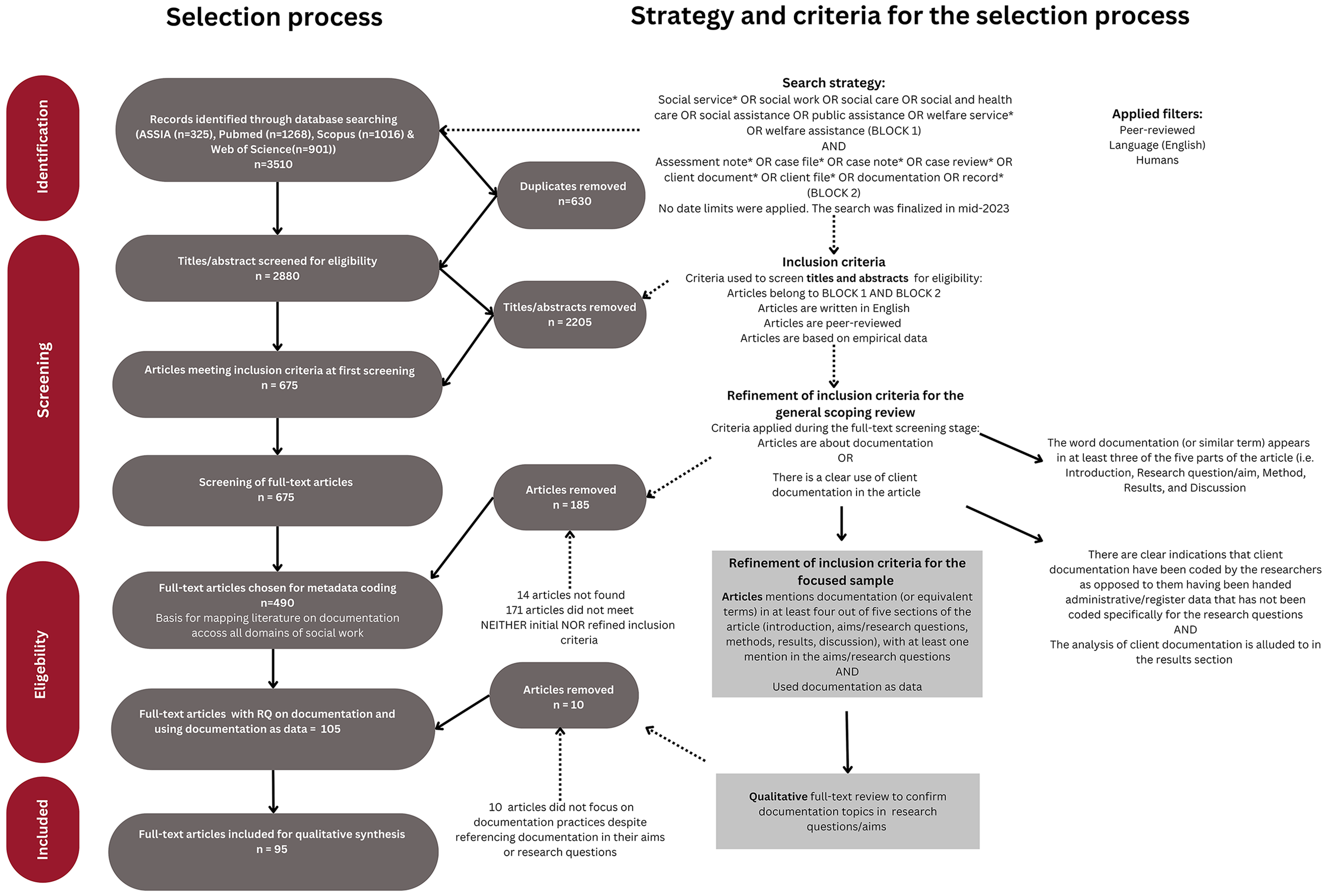
PRISMA chart: data selection process.
To answer RQ2, we applied more refined inclusion criteria, since we needed to distinguish between articles that merely mention documentation (i.e., those that offer the broader context of the scholarly imagination under scrutiny) and those that focus specifically on the phenomena of interest (i.e., research on client documentation in social work). Thus, to answer RQ2, we used the subsample of articles that (1) mention documentation (or equivalent terms) in at least four out of five sections (e.g., in the introduction, aims/research questions, methods, results, and discussion), with at least one mention in the aims/research questions, and (2) use client documentation as an empirical data source, alone or in combination with other data types. Using these criteria, we identified 105 articles. Since ten do not focus on documentation practices—even though they mention documentation in their aims or research questions—the subsample used to answer RQ2 includes 95 articles.
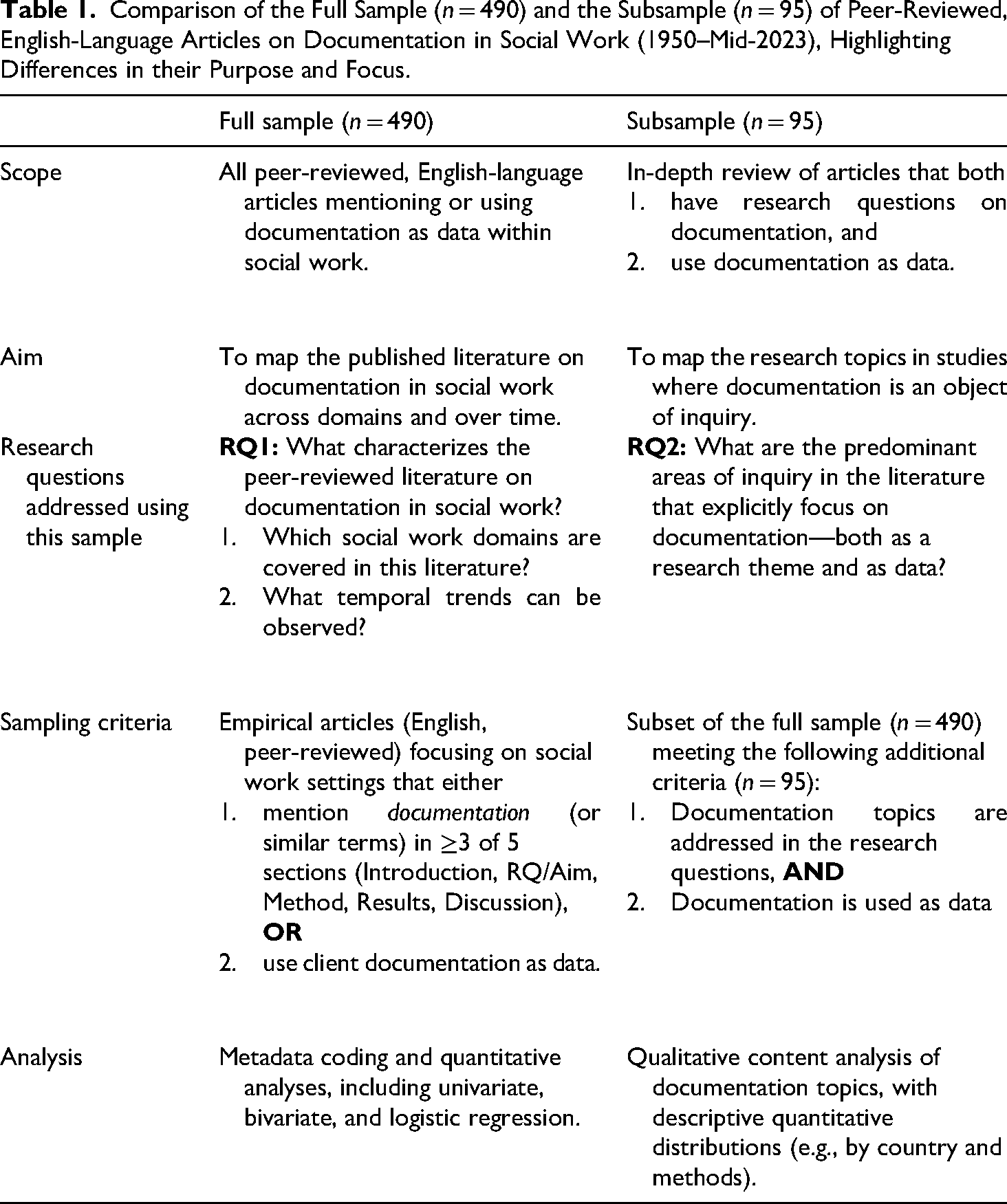
Table 1 summarizes the scope and aims of both datasets and shows that the full sample will be used to map overall characteristics, identify contributing domains and regions, and trace changes over time, while the subsample will be used to answer RQ2. By distinguishing between the two samples, the analysis differentiates between articles in which mentions of documentation are peripheral and articles in which documentation is a central topic.
Comparison of the Full Sample (n = 490) and the Subsample (n = 95) of Peer-Reviewed, English-Language Articles on Documentation in Social Work (1950–Mid-2023), Highlighting Differences in their Purpose and Focus.
Data Coding
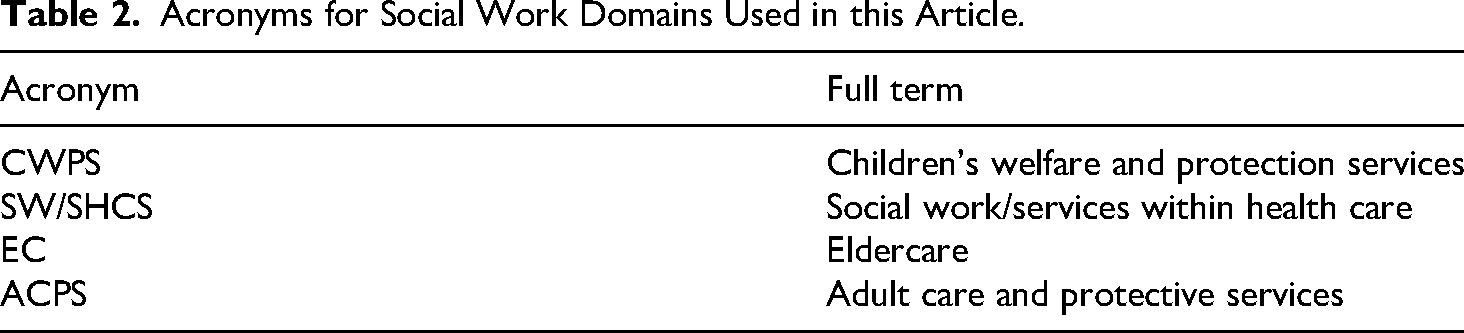
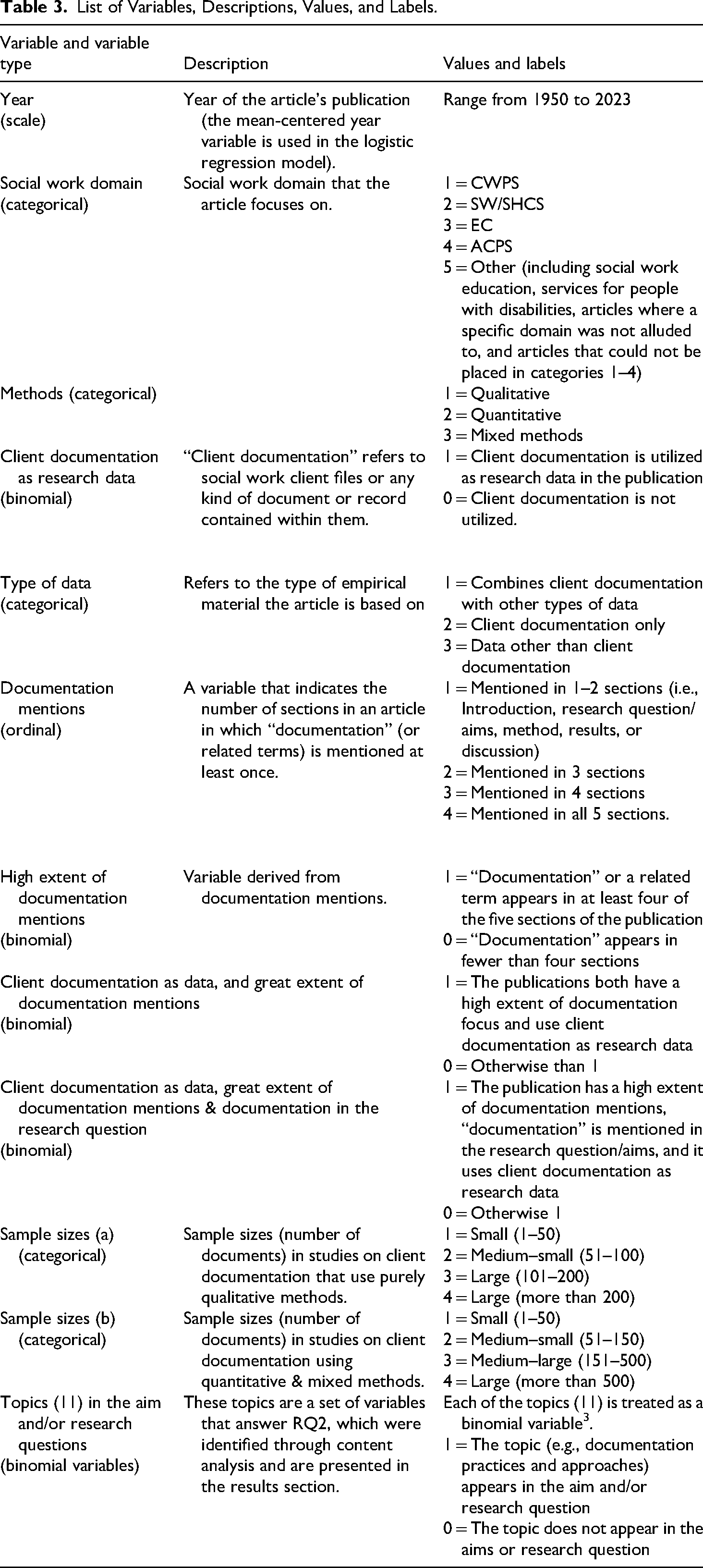
An extensive codebook, with all entries recorded in REDCap (i.e., a secure web-based platform; see Harris et al., 2009), was used when the full sample of articles was coded. A key variable used to categorize these articles is the social work domain they address. Table 2 outlines the acronyms for those domains, while Table 3 provides an overview of all variables relevant to the analyses. A charting table of key-coded data for the subsample used to answer RQ2 is available on Figshare (see Table 1 in Knechtel et al., 2026a), as is the additional codebook developed iteratively to analyze the subsample (i.e., Knechtel et al., 2026b).
Acronyms for Social Work Domains Used in this Article.
List of Variables, Descriptions, Values, and Labels.
Data Analysis
To answer RQ1 and RQ2, we relied on the full sample of 490 articles and a subsample of 95 articles—derived from the full sample—that met the inclusion criteria. The articles in these samples are the units of analysis. Table 1 shows the scope of each sample and how these samples were analyzed, along with the aims and research questions addressed through these analyses. The variables used in these analyses are listed in Table 3.
In this article, we present only those analyses that are central to answering our research questions. In addition to these, a range of complementary analyses were conducted. Following scoping review conventions, a selection of additional results is presented in tables and graphs in the supplementary material (i.e., Knechtel et al., 2026c). These materials provide more in-depth insight into the patterns found and suggest research gaps worthy of further inquiry. All quantitative analyses and graphical visualizations were performed using various packages on the R platform (R Core Team, 2025) via the RStudio interface (Posit Team, 2025), with the exception of the PRISMA flow diagram—illustrating the selection process of articles—which was produced using Canva, an online graphic design platform.
Results
Before presenting the main results, it must be noted that four review articles are included in the full sample. Mentioning these reviews is important because they contextualize the contributions of the present review within existing scholarship. Three of these employed scoping review methodology: one on the use of client documentation in adult care (Kuorikoski, 2022), one on assessment frameworks in child welfare (Vis et al., 2021), and one on the role of case files in child protection research (Witte, 2020). One systematic review was also identified, which examines how managerialism shapes social workers’ documentation practices (Pascoe et al., 2023). Unlike these domain-specific reviews, this article is—to the best of our knowledge—the first to comprehensively examine the entire peer-reviewed article-based literature in English on client documentation in social work.
Social Work Domains and Regions Represented
As shown in Figure 2, there is an uneven distribution of documentation research across various social work domains. As many as 321 articles (65.5%) in the full sample come from Child Welfare & Protective Services (CWPS). Social Work/Services within Health Care (SW/SHC) has contributed the second-largest share to this sample, with 55 articles (11.2%). Adult Care & Protective Services (ACPS) and Eldercare (EC) follow, with 10% and 6.9% of the research, respectively. Contributions from sectors with smaller representation—including Social Work Education (1.2%), Services for People with Disabilities (1.8%), and other domains such as schools, criminal justice, and veterans’ services (3.7%)—are grouped together as ‘Other’ (6.7%). The scarcity of articles that focus on these domains highlights an important knowledge gap: despite their relevance to social work practice, these domains’ contributions to the literature on documentation remain minimal.
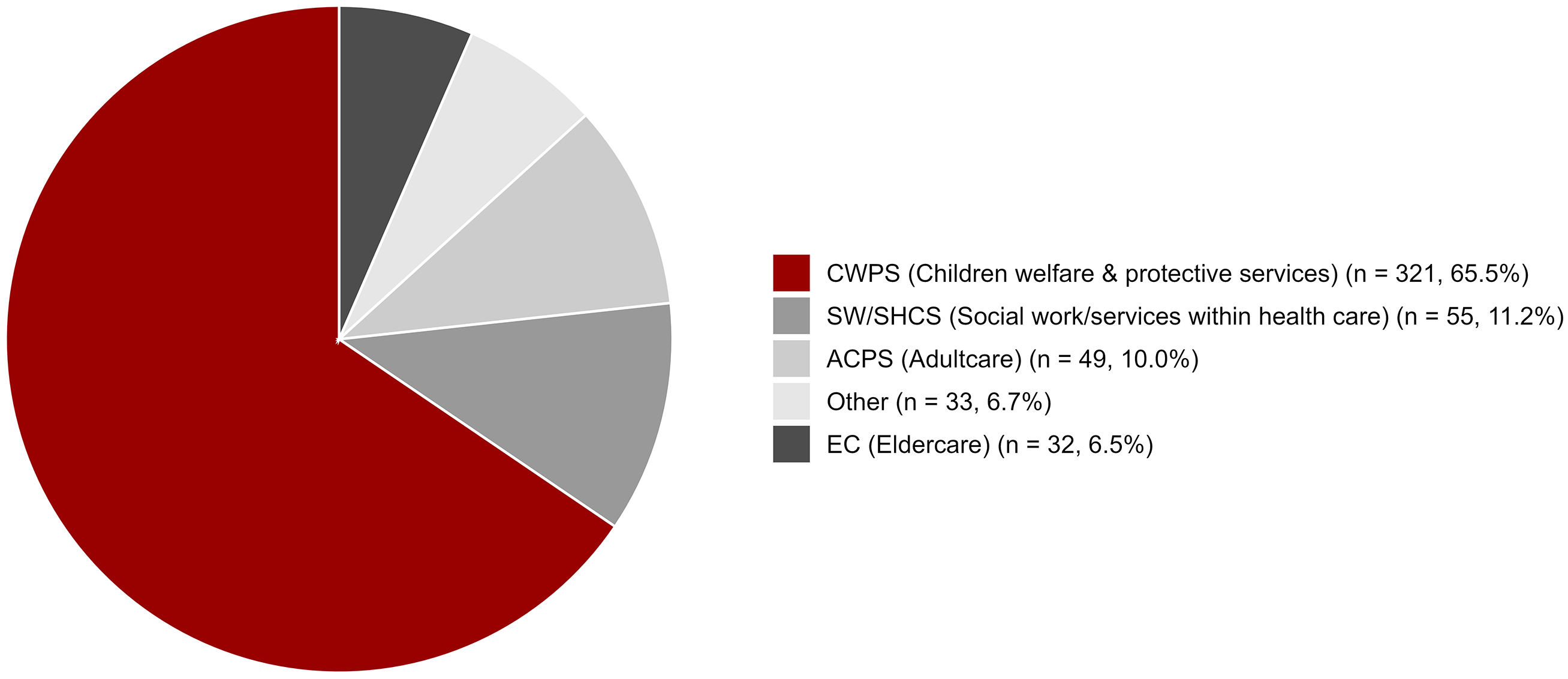
Social work domains represented in publications on documentation (n = 490) (1950–mid-2023).
The vast majority of the data corpus relies on empirical material originating from the Americas (250 articles; approximately 51%), with 237 (48.4% of the full sample) coming from the United States. Data originating from Europe accounts for 182 articles (37%). More detailed distributions of the empirical material, including country- and continent-level analyses, are available in the supplementary material (see Tables 1 and 2 in Knechtel et al., 2026c).
Trends Over Time
The number of peer-reviewed publications addressing documentation—both as a thematic focus and as a data source—has generally increased over time, with peaks in 2018, 2020, and 2022. Figure 3 depicts the time trends for articles analyzed by domain and shows that peer-reviewed articles on documentation have shown consistent growth within CWPS, while articles focused on other domains exhibit more fluctuating trends. A decline in 2023 was observed, which likely reflects the fact that the dataset includes only the first half of 2023 (see Figure 1 in the supplementary material, Knechtel et al., 2026c).
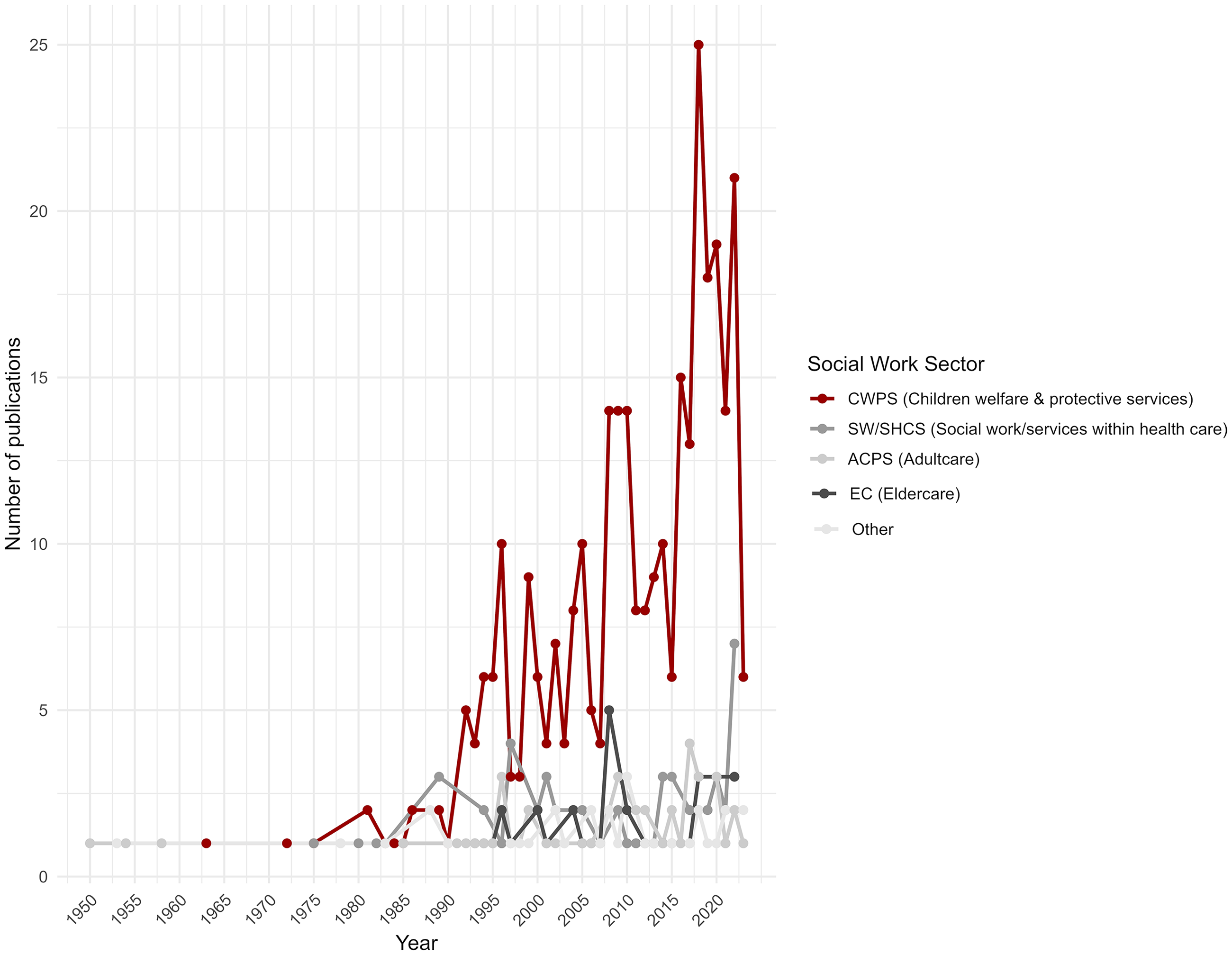
Time trend of publications on client documentation by domain (n = 490) (1950–mid-2023).
The trends outlined thus far pertain to articles on client documentation within social work broadly, but do not account for the evolution of literature that uses client documentation as research data across different sectors. To explore this, we conducted a binary logistic regression analysis, which revealed a small but significant increase over time in the likelihood of using client documentation as research data (see Table 3 in Knechtel et al., 2026c). However, the increase over time was no longer statistically significant after controlling for social work domains. At the same time, several domains exhibited a much lower likelihood of using client documentation compared to CWPS. Interaction terms between year and domain were not statistically significant, suggesting that temporal trends do not differ systematically across sectors.
Extent of Documentation Mentions and the Use of Client Documentation as Data
As detailed in the PRISMA chart (Figure 1), inclusion in the dataset used to answer RQ1 required articles to either explicitly use client documentation as a data source or mention documentation (or a similar term) in at least three of five sections. The three-section criterion applied only to articles that did not use client documentation as a data source. By setting this threshold, we aimed to include articles with a substantial focus on documentation, rather than those treating it as a peripheral aspect. Articles that mentioned the term in only one or two sections, without using documentation as data, were, in other words, excluded from the full sample because they lacked sufficient engagement with the topic. Table 4 illustrates the frequencies of documentation mentions across the dataset. Notably, approximately 12% of the articles use the term “documentation” or a similar term in only one or two sections, highlighting the variability that exists in how central documentation is to the research these articles report on.
Mentions of Documentation (or Similar Terms) in the Different Sections of the Articles (n = 490).
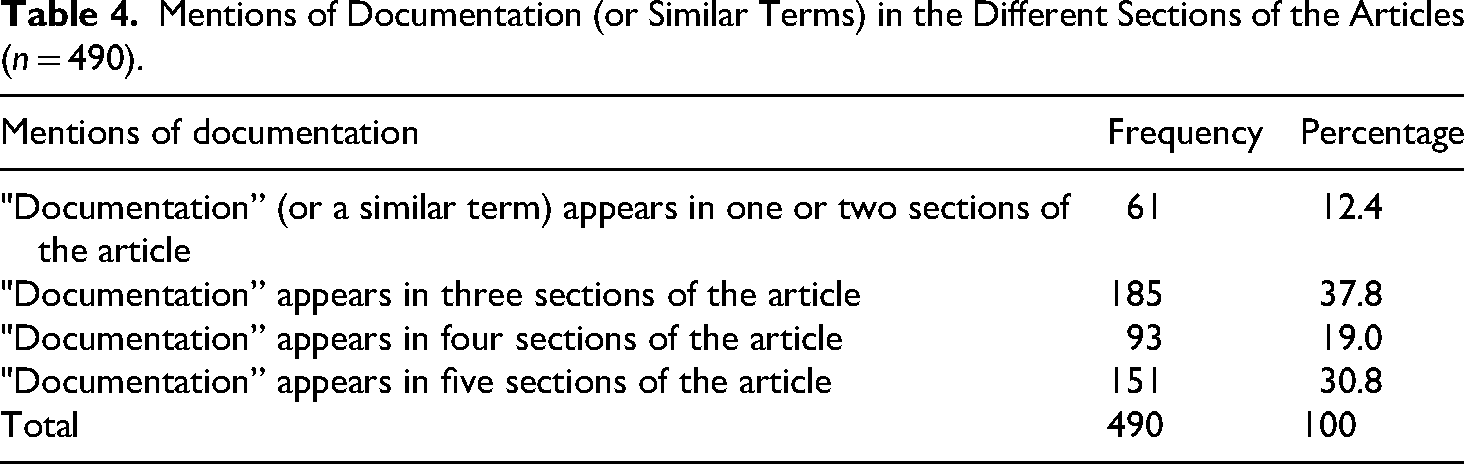
Interestingly, only 151 articles (30.8%) include documentation or a similar term in all sections. However, most articles (429 out of 490, 87.6%) exhibit a medium to high extent of mentions, with these terms appearing in at least three sections (Table 4). Of these, 243 articles (49.8%) show a high extent of mentions, with documentation or similar appearing terms in at least four sections. This suggests that documentation is used as a backdrop to several discussions in social work, even when documentation practices per se are not at stake.
We also examined how a high extent of documentation mentions aligns with mentions of client documentation in the research questions or aims, and the use of documentation as data. Notably, 167 articles (34.1%) pair a high extent of mentions with research questions explicitly addressing documentation or similar terms, while 170 articles (34.7%) combine a high extent of documentation mentions with the use of client documentation as data (see Tables 4 and5 in Knechtel et al., 2026c). 2 Highlighting these figures is crucial, as they lay the groundwork for the subsequent section, which introduces the approach used to answer RQ2.
Articles with a Distinct Focus on Documentation
This section presents a descriptive analysis of the 95 articles in the subsample, which is used to answer RQ2. The subsample includes articles that have research questions/ aims on documentation and use client documentation as empirical data (see Table 1). The majority of these articles stem from inquiries about the CWPS domain (n = 61), with smaller contributions from the social work domains of EC (n = 14), ACPS (n = 8), SW/SHCS (n = 8), and ‘Other’ (n = 4) (see Table 12 in Knechtel et al., 2026c). The methodological characteristics of the subsample, including the type of data used (i.e., whether client documentation was analyzed alone or in combination with other data sources), are presented in the supplementary material (see Tables 13 and 14 in Knechtel et al., 2026c).
Regarding time trends, articles with both thematic and empirical focuses on documentation show a clear upward trajectory, with the highest concentration (38.9%) being published between 2010 and 2019. Earlier decades, such as 1980–1989 and 1990–1999, have noticeably fewer articles, reflecting limited attention to the dual focus on documentation during those periods. From 2020 to mid-2023 (approximately 2.5 years, as the search concluded in July), there were 20 publications. This suggests sustained interest in documentation research despite the shorter timeframe compared to prior decades.
The growth in publications is particularly pronounced within CWPS. Research from other domains (such as EC, ACPS, and SW/SHCS) has contributed fewer articles, with EC contributing 14 articles and ACPS eight articles (see Table 15 in Knechtel et al., 2026c). Both of these domains show, in other words, modest increases in interest in this topic in recent decades. Overall, the upward trend highlights growing scholarly attention to documentation, particularly in the last two decades and within CWPS.
Key Areas of Inquiry in the Literature on Client Documentation
Three key areas of inquiry were identified when performing content analysis on the 95 articles that belong to the subsample (i.e., those that focus on documentation both as a research theme and as a source of data). These areas are as follows: documentation practices and frameworks, documentation purposes and impact, and documentation in context. A look at Table 5 offers greater insight into the topics found within each key area.
Key Areas of Inquiry Found through Content Analysis in the Subsample of Articles Combining a Thematic Focus on Documentation with Documentation as Data (n = 95).
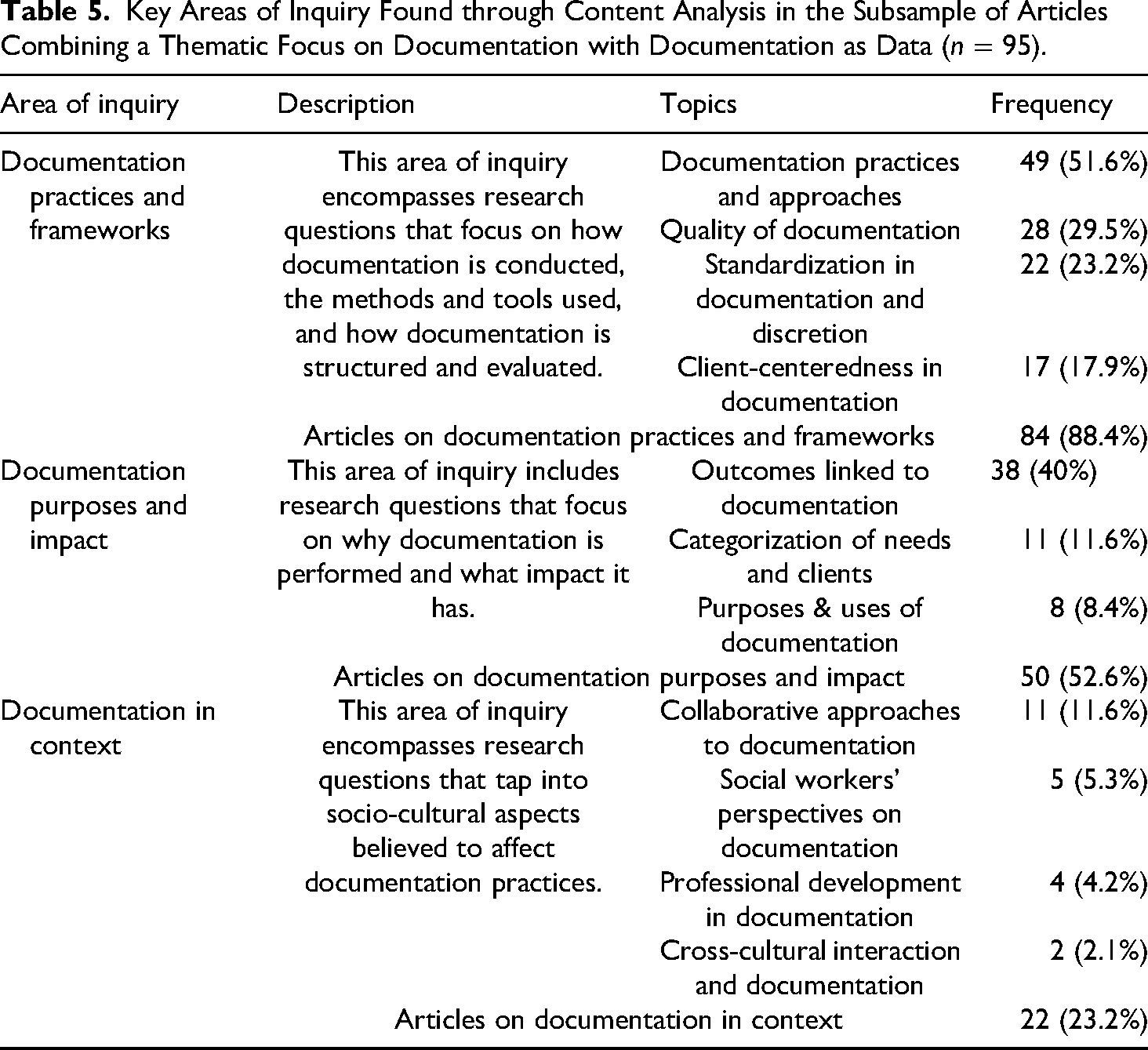
As shown in the second column of Table 5, the literature on client documentation in social work that uses such documentation as data has primarily focused on the how and why of documentation, as well as the kind of impact that documentation has. Notably, while some articles address the socio-cultural aspects believed to affect documentation practices, this remains one of the angles of investigation that has received the least attention. Fuller topic descriptions can be found in the codebook available in the supplementary material (i.e., Knechtel et al., 2026b).
Documentation practices and frameworks
Table 5 showcases the topics that the articles in this area explore while examining how documentation is conducted, what information is captured, and how practices vary across workers, settings, and case types (n = 84; 88.4% of the subsample [n = 95]). Topics include the following:
Thus, articles with RQs/aims that focus on documentation practices and frameworks tend to examine the processes, structures, and content of client documentation. The array of considerations that influence how documentation is carried out and organized are also explored in these articles, which is why this literature addresses critical research questions about the factors that shape documentation processes, the role of assessment tools and frameworks in balancing consistency with professional discretion, the quality of the documentation that social workers rely on, and the extent to which documentation reflects client-centered practices. Articles within this area of inquiry often focus on the accuracy, comprehensiveness, transparency, and reliability of client documentation. Together, these articles provide valuable insights into how documentation practices support both social workers and clients, highlighting the multiple and sometimes competing considerations that shape these practices, and the role of documentation in mediating between consistency and discretion and between organizational needs and client-centeredness.
Documentation Purposes and Impact
Table 5 also showcases the topics associated with this area of inquiry, which focuses on why documentation is performed and what kinds of effects it produces for clients, services, and organizations (n = 50; 52.6% of the subsample [n = 95]). Topics include the following:
Collectively, these articles highlight how documentation practices help social workers navigate tensions between compliance, accountability, and organizational utility. They illustrate how documentation shapes service delivery, influences client outcomes, and exposes underlying biases in social work. This research underscores the dual role of documentation as both a tool for professional accountability and a site where broader social and institutional values are enacted.
Documentation in Context
The third and final area of inquiry that Table 5 draws attention to consists of a comparatively small number of articles that highlight important socio-cultural and professional dimensions shaping documentation (n = 22; 23.2% of the subsample [n = 95]). Topics include the following:
Collaborative approaches to documentation: analyses of how it is used and integrated across multidisciplinary teams, and how it facilitates or constrains inter-professional cooperation. Social workers’ perspectives: studies that examine how practitioners (and occasionally clients) perceive documentation, including its effectiveness, role in practice, and influence on decision-making. Professional development in documentation: investigations of how training, education, and supervision shape documentation skills and influence the quality of record-keeping. Cross-cultural interaction and documentation: research on how ethnicity and cultural background affect what is recorded in documentation, raising questions of cultural competence, bias, and equitable practice.
Although these topics are addressed by a relatively small number of articles, they highlight that documentation is not a neutral activity but one situated within professional cultures, training practices, and diverse client populations. This area of inquiry suggests that there is a need for more research on how professional, organizational, or cultural contexts shape the production and use of client documentation, since documentation practices have significant implications for practice and equity in service provision.
Distribution of Topics by Social Work Domain, Methodology, and Geography
Building on the identification of predominant areas of inquiry and topics in the literature on client documentation, we now explore the distribution of these topics across different social work domains, methodologies, and geographical regions. Figure 4 illustrates the contributions of social work domains to the literature on documentation. This figure shows that CWPS has contributed to most topics. Figure 5 illustrates the geographic distribution of empirical material by topic and shows that contributions on outcomes linked to documentation and documentation quality rely most often on empirical data from America, closely followed by Europe. Conversely, data originating from Europe tend to be used when addressing documentation practices and standardization [see Figure 2 in the supplementary material (Knechtel et al., 2026c) for a more detailed breakdown].
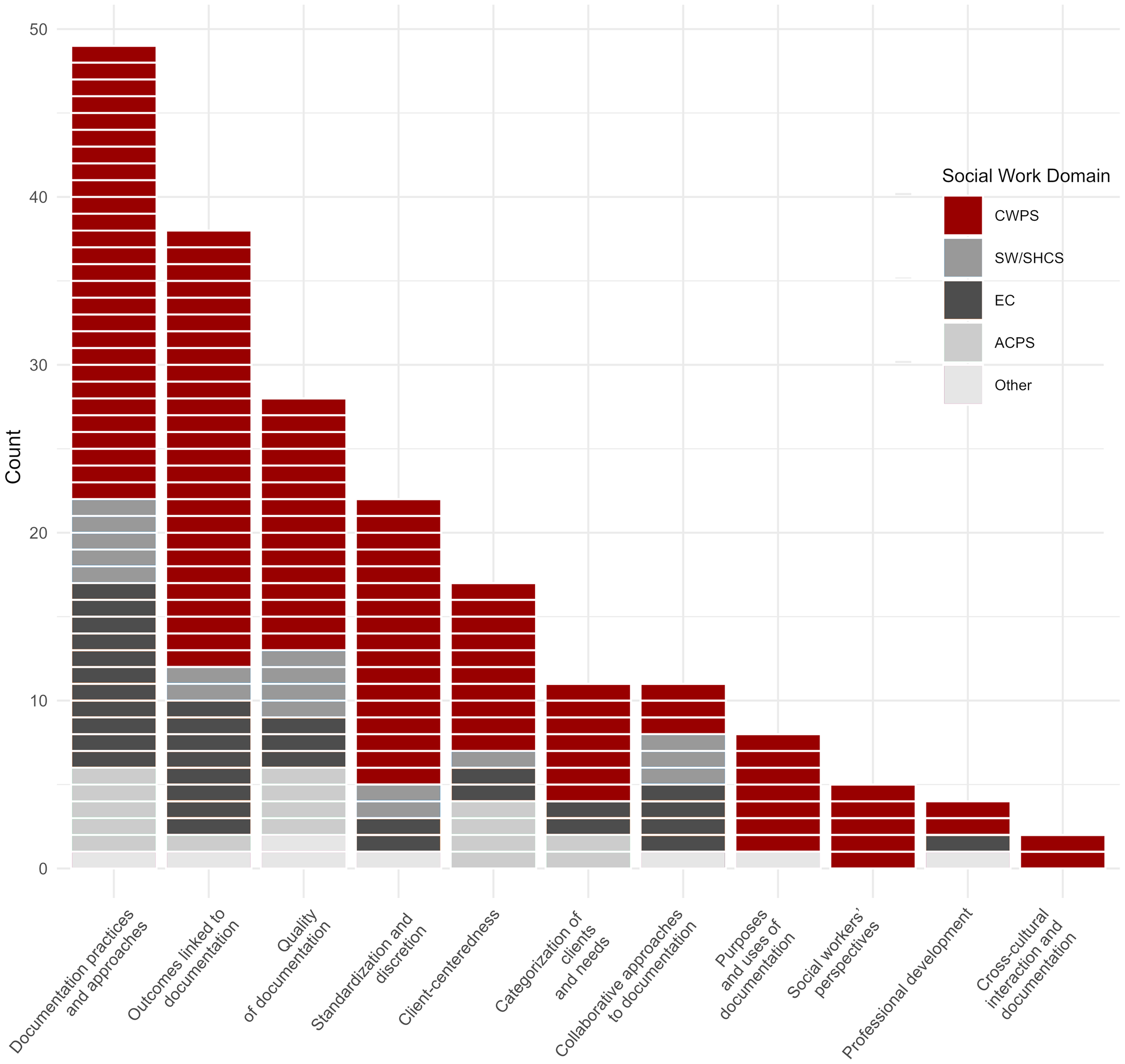
Distribution of topics by social work domain in the subsample of articles combining a thematic focus on documentation with the use of documentation as data (n = 95).
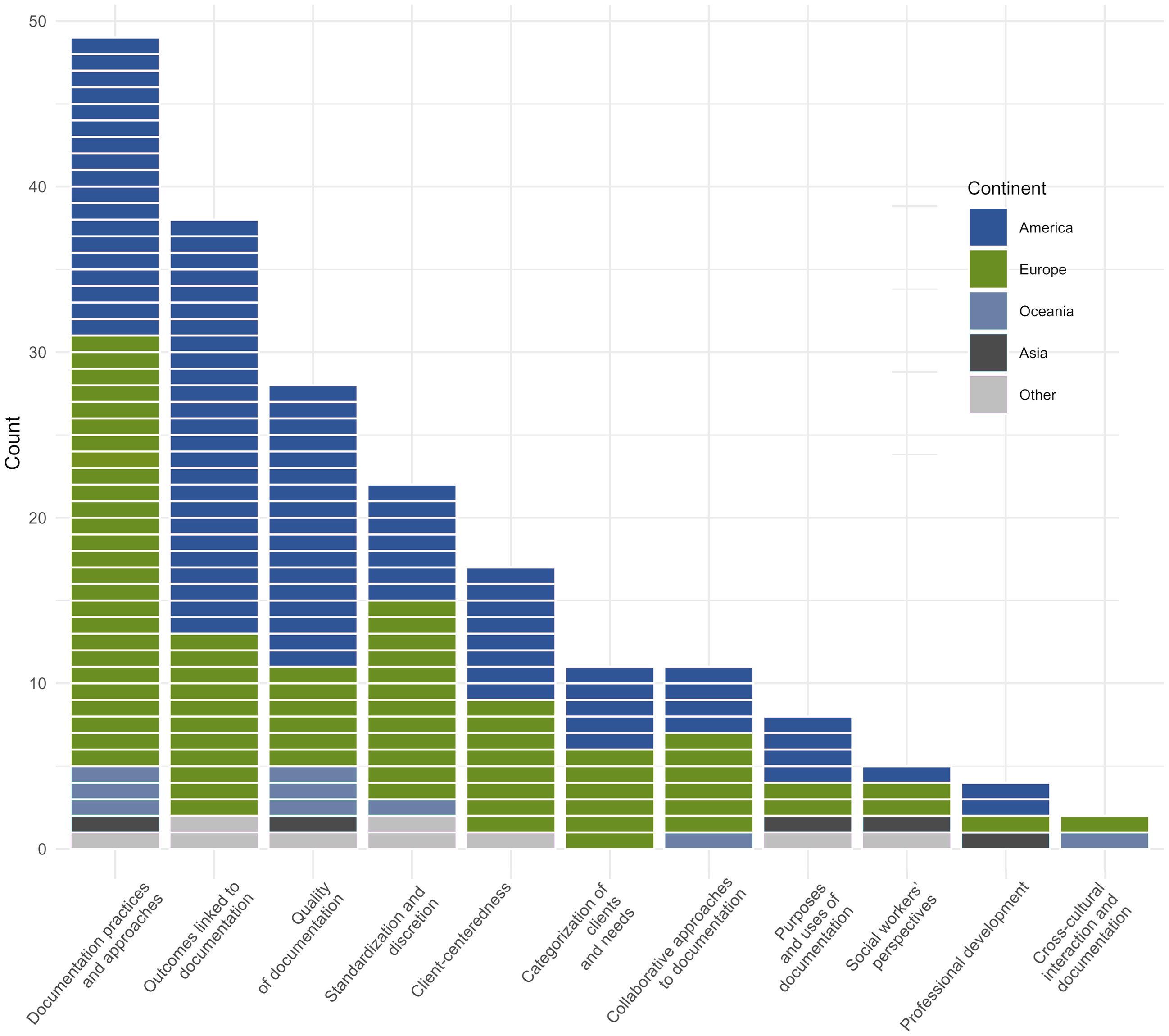
Distribution of topics by the geographic distribution of empirical material in the subsample of articles combining a thematic focus on documentation with documentation as data (n = 95).
Sample Size Distribution Across Topics and Methodologies
Comprehensive overviews of how methods are distributed across topics in the subsample of 95 articles, and a detailed breakdown of methods, domains, data types, and sizes are available in the supplementary material (see Figure 3 as well as Tables 16–19 in Knechtel et al., 2026c). These overviews highlight research gaps and point to the methodological approaches most needed. A specific look at methodology reveals, however, that articles relying on quantitative methods dominate the four topics that have received the most attention (i.e., documentation practices and approaches, outcomes linked to documentation, quality of documentation, and standardization and discretion). In contrast, mixed methods are notably underrepresented across all topics. The use of qualitative methodology in articles with RQs/aims that focus on either documentation practices and approaches or client-centeredness is also worth noting (Figure 3 in Knechtel et al., 2026c). Table 6 shows that qualitative studies (n = 35) in the subsample (n = 95) show a strong reliance on small sample sizes (1–50 cases), which account for 65.7% of the articles analyzed, while medium samples (51–100) are absent, larger samples (101–200) appear in 14.3%, and very large samples (>200) are rare (5.7%). Topics such as documentation practices and outcomes linked to documentation have mostly been studied with small samples, though some articles on client-centeredness and other topics use larger samples. In five cases, sample sizes are not reported (Table 6). The reliance on small samples reflects a focus on in-depth analysis at the expense of large-scale qualitative research (see Table 18 in the supplementary material, Knechtel et al., 2026c).
Distribution of Sample Sizes in Client Documentation Studies by Research Methodology in the Subsample of Articles Combining a Thematic Focus on Documentation with Documentation as Data (n = 95).
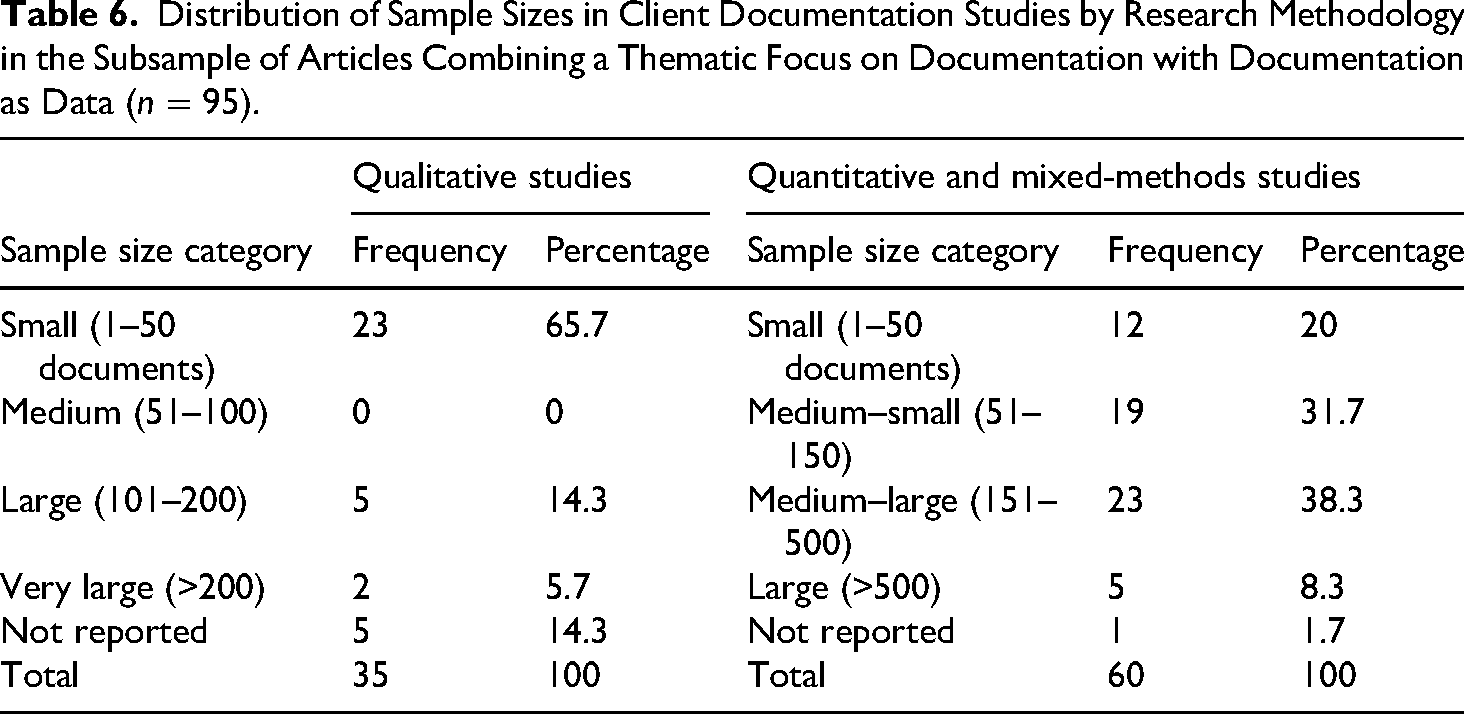
Within the subsample of 95 articles, quantitative and mixed-methods studies (n = 60) show, however, greater diversity in sample sizes. Small samples (1–50) represent 20%, medium-small (51–150) 31.7%, and medium-large (151–500) 38.3%, with few studies exceeding 500 cases. Topics such as outcomes linked to documentation and documentation practices span most sample categories, though large-scale studies (>500) remain rare, with only five articles covering multiple topics (see Table 19 in Knechtel et al., 2026c). This suggests that research on documentation in social work/social care is in dire need of research designs that rely on larger samples of client documentation since the evidence base available needs to be strengthened.
Discussion
Many scholars have highlighted the importance of client documentation in social work, yet until now, little was known about what characterizes the scholarly imagination on client documentation in social work or the extent to which this documentation has been used as data in social work research. As a result, we lacked knowledge about how research that relies on client documentation is distributed across social work domains, what characterizes that research, and which types of research questions this knowledge base has examined. To fill this gap, we conducted a scoping review of peer-reviewed, article-based literature on documentation in social work that has been published in English—an endeavor that, to the best of our knowledge, has not been attempted before. This review (and the supplementary material that complements it) has therefore highlighted several key insights, most notably an overall upward trend in publications on documentation over time and an increase in the use of client documentation as research data. This upward trend is, however, uneven, since most research stems from the CWPS domain, thereby overlooking other social work domains that rely on documentation but have yet to seriously launch research focusing specifically on this angle. The unevenness in publications per domain raises concerns about the risk that social work's scholarly imagination runs if it draws general conclusions about documentation practices based exclusively on CWPS research [see, for instance, Witte's (2020) review on the role of case files in child protection research]. Thus, although social work domains (such as EC, ACPS, and SW/SWHS, to name but a few) remain underrepresented in the peer-reviewed, article-based literature on documentation, social work scholarship would undoubtedly benefit from research contributions on documentation that stem from greater domain diversity.
The mapping of areas of inquiry in this review highlights how research has concentrated most heavily on documentation practices and frameworks (i.e., practices, quality, standardization, and client-centeredness) and documentation purposes and impact (mostly outcomes linked to documentation). These topics speak directly to social workers’ concerns by showing how client documentation affects service delivery, decision-making, and accountability structures. In contrast, the area of documentation in context—including collaborative approaches, social workers’ perspectives, professional training, and cross-cultural interaction—has received less attention. These underexplored topics also connect closely to practice, as they address how documentation skills are taught, how documentation is used across professional boundaries, how it captures (or fails to capture) client diversity, and how documentation practices must always adapt to cultural and institutional diversity.
This scoping review therefore raises questions about whether ongoing debates on documentation practices in social work adequately capture the diversity across regions, professional settings, and types of client documentation that are in fact used by social workers. Thus, this review highlights opportunities to expand social work's scholarly imagination on documentation practices by proposing that social work needs to formulate a research agenda on this topic that balances broader professional concerns with domain-specific inquiries, paying particular attention to the topics that are underrepresented in the various domains.
Study's Strengths and Limitations
This scoping review has employed a rigorous and transparent data collection process to systematically map the landscape of publications on documentation in social work. Although the choice of databases used to identify the sample—Scopus, Web of Science, PubMed, and ASSIA—is comprehensive for the literature in focus, it may have influenced the type of articles retrieved. The use of a detailed codebook, combined with REDCap for data collection, multiple rounds of error-checking, and inter-rater reliability assessments, helped to ensure data reliability. While the coding criteria were thorough, some subjectivity may have arisen in cases where relevant information in the articles was difficult to identify. Nevertheless, the large number of articles coded underscores the robustness of this review, providing a solid foundation for future theorizing exercises on the diverse lines of inquiry associated with client documentation.
It is also important to note that some of the knowledge gaps identified—specifically those concerning the underrepresentation or absence of certain topics across social work domains—are based on the subsample of 95 articles that combined a thematic focus on documentation with the use of client documentation as data. The full sample (n = 490 articles), used to examine key characteristics and time trends in documentation scholarship (RQ1), includes 88 articles that do not use client documentation as empirical data. Among these, 61 engage extensively with documentation and have research questions or aims addressing documentation, but they were excluded from the RQ2 analysis due to their lack of reliance on client documentation as data. Consequently, topics that appear absent or underrepresented in the RQ2 findings may, in fact, be present in these 61 articles, warranting further investigation.
Conclusion: Advancing a Research Agenda
By mapping the empirical literature on documentation, we identified the social work domains that have thus far dominated the scholarly imagination on documentation, the topics that remain underexplored, and the methodological trends observed. A notable finding is the discrepancy between articles that mention documentation and those that specifically focus on it. While nearly half of the 490 articles analyzed mention documentation in at least four sections, only one-third posed research questions that directly address it. This suggests that much of the peer-reviewed, article-based literature in English on documentation in social work treats documentation tangentially rather than as a central theme. These are some of the reasons why we suggest that the available knowledge base lacks the robustness needed to encourage theorization (i.e., the process prior to theory formulation). However, this scoping review hopefully opens up the intellectual space needed to do just that. It underscores the need for a research agenda that balances the discipline's broader goals on documentation practices with domain-specific empirical inquiries. Addressing the gaps identified heretofore, however, requires that we view client documentation as a rich and underutilized data source across the full spectrum of social work domains.
This review proposes that, if social work scholarship is to address the identified gaps, it must develop a research agenda for both documentation practices and the use of client documentation as data. These agendas should specify how studies on documentation practices and client documentation can advance the scholarly imagination of social work and open opportunities for theorizing. The review highlights potential entry points for formulating these research agendas, including underrepresented domains within key areas of inquiry. The literature charted in the supplementary material (see Knechtel et al., 2026a), which draws on client documentation as data, provides a valuable foundation for future theorizing in social work. We therefore encourage our peers to juxtapose this body of work with the findings of this review—specifically the research foci (Table 5) and the methods employed (Table 6)—as this combination offers the most promising entry point for developing a research agenda on documentation.
Taken together, the highlighted trends suggest that social work scholarship on documentation is at a crossroads, calling for a shift from justification-driven inquiries to discovery-oriented inquiries (i.e., the type of inquiry that, as noted in the introduction, enables theorization and can lay the groundwork for theory formulation). By identifying fertile ground for theorizing, this review makes explicit how the scholarly imagination in social work can approach documentation practices as a subject worthy of attention. In doing so, this review has hopefully contributed to laying a foundation for future research that could potentially inform practice in a scholarly, astute way. This review has also offered insights into the evidence base that is available thanks to the use of client documentation in social work research. In this respect, it is important to mention that client documentation is rarely a neutral or purely professional practice in social work. Documentation requirements often emerge in response to policy reforms, accountability frameworks, and regulatory demands (for example, structured case planning in the UK; see Munro, 2011; Witte, 2020, and increased demands for accountability and safety in Sweden; Ponnert & Svensson, 2016). Recognizing this dynamic underscores the need for future research that helps to anchor the profession's understandings of, and approaches to, documentation in the scholarly imagination on these topics. Such research should also seek to decouple these understandings from the broader policy contexts that shape and constrain them. Framing documentation research in this way would allow social work scholarship not only to capture its practical functions but also to illuminate its structural significance, thereby informing both future research agendas and practice debates.
Implications For Social Work Practice
This review has shown that the use of client documentation as data is most common in the CWPS domain. This suggests that other social work domains have yet to exploit the empirical richness that client documentation offers. In this respect, it is important to mention that a key limitation of the existing literature—particularly the 95 articles in the subsample—is the reliance on small and medium-sized samples. While such research designs often reflect an emphasis on in-depth, domain-specific analysis (e.g., Guest, Bunce & Johnson, 2006), they limit the generalizability of findings and the discipline's ability to build a comprehensive evidence base on client documentation. This limitation is particularly relevant in light of scholarship on evidence-based practice, which emphasizes the need to integrate research findings with organizational practices (Gambrill, 2011; Gray et al., 2009). Thus, in the context of client documentation research, robust research designs employing larger datasets are essential to produce results that can reliably inform practice, complement qualitative insights, and enhance the evidence base.
Footnotes

Ethics
Ethical approval was not required for this study, as it is a scoping review based exclusively on publicly available, previously published literature and does not involve human participants or identifiable personal data.
Funding
The authors disclosed receipt of the following financial support for the research, authorship, and/or publication of this article: This scoping review has been conducted as part of the larger project led by ST [entitled: Does IBIC contribute to better practice? A study of care managers’ reasoning and actual documentation within eldercare]. This project is funded by the Kamprad Family Foundation for Entrepreneurship, Research and Charity. Grant number: 20233080.
Acknowledgements
The authors thank the members of the Welfare Research Group at Uppsala University for their valuable comments on earlier drafts of this article.
Author Contributions
This scoping review was conceptualized by Sandra Torres (ST) in close collaboration with Anna Olaison (AO). ST secured the funding necessary to launch the project from which this review stems, designed the overarching methodology, and contributed to the interpretation of the data used in this article. Maricel Knechtel (MK) was responsible for data curation, including the implementation of the search strategy, the design of a data collection instrument within the REDCap platform for data management, and the development and application of R code for data analysis and visualization. MK led the development and implementation of the codebook used for article coding, based on collaborative input from ST and AO. ST assisted MK in the qualitative analysis of research aims within the subsample. The methodology and results sections of this manuscript were first drafted by MK, while ST first drafted the introduction and discussion sections. All three authors contributed to revising and editing this manuscript and approved the final version.
Declaration of Conflicting Interests
The authors declare that there are no conflicts of interest related to the research, authorship, or publication of this article.
Data Availability Statement
The full dataset of 490 publications analyzed in this study is not publicly available at this time, as it forms part of ongoing research. Data charting for the subsample of 95 articles alluded to in this article is available via Figshare (DOI: 10.6084/m9.figshare.29944778).
Open Practices
This study adheres to principles of transparency and reproducibility. While the full dataset is not publicly available due to ongoing research, a subset of coded data relevant to the analyses reported in this article is openly accessible (see Data Availability Statement).
Supplemental Material
Supplemental material for this article is available online.