



Abstract
Summary
This study presents a bibliometric analysis of social work academic production in Türkiye, aiming to map the discipline's intellectual development over four decades and identify emerging research priorities. Articles published in the Web of Science Core Collection between 1981 and 2024 were analyzed, examining publication trends, citation patterns, thematic structures, and authorship dynamics to provide a comprehensive overview of the field.
Findings
The analysis reveals a substantial increase in scholarly output after 2010, driven by the expansion of social work education, doctoral programs, and international collaborations. A notable spike in publications between 2020 and 2023 highlights the discipline's response to global crises, particularly the COVID-19 pandemic, which intensified research on mental health, child welfare, and social policy interventions. Key research themes include public health, social inequality, and family interventions, whereas underexplored areas such as digital social work, artificial intelligence applications, and environmental justice represent future opportunities. Methodologically, research is dominated by descriptive and cross-sectional studies, with limited use of experimental, longitudinal, and mixed-method designs. The analysis also indicates that a small group of prolific scholars significantly shapes the knowledge base, although broader participation remains limited.
Applications
This bibliometric analysis underscores the growing impact of Turkish social work research and calls for diversification of research methodologies, expansion of interdisciplinary collaborations, and stronger integration into global research networks. Bridging the gap between theory and practice through policy-driven and applied studies will be critical to further elevating the field's global visibility and influence.
Introduction
In 2014, the International Federation of Social Workers and the International Association of Schools of Social Work (IASSW) introduced a revised global definition of social work, fundamentally transforming not only the conceptualization of the profession but also its epistemological and methodological paradigms. The previous definition, established in 2000, primarily emphasized the promotion of social change, problem-solving in human relationships, and the empowerment of individuals. However, the 2014 revision redefined social work as both an academic discipline and a practice-based profession, underscoring the core principles of social justice, human rights, shared responsibility, and respect for diversity. The new framework shows that social work has two key roles: helping individuals and driving social change. It adds important concepts like social development, cohesion, local knowledge, and combining different disciplines (Akbaş, 2019; International Federation of Social Workers, 2014).
Social work research supports both academic progress and practical applications. It examines people's needs, evaluates social services, and studies education and practice in changing social and political settings. Furthermore, by critically analyzing the impact of social work policies and legislation on clients and society, research contributes to the generation of scientific knowledge essential for practice-oriented decision-making (Teater, 2017). Social work research does more than theoretical inquiry. It fosters scientific advancement and professional accountability. It also improves interdisciplinary communication and ensures equitable access to resources. It transcends the traditional notion of “science for science's sake” and instead assumes an ethical responsibility to maximize social benefit through the production, application, and integration of knowledge into professional practice (Krysik & Finn, 2015).
As both a profession and a domain of scholarly inquiry, social work plays an indispensable role in advancing human welfare and addressing the complex societal challenges that shape contemporary life. The effective response to evolving issues such as poverty, inequality, migration, and psychosocial instability demands the implementation of dynamic, evidence-informed interventions. Over recent decades, Türkiye has made substantial contributions to global social work discourse, influenced by its distinctive sociocultural fabric and transformative sociopolitical evolution. However, despite these advancements, there remains a significant gap in the comprehensive understanding of the intellectual trajectory and thematic priorities within Turkish social work research, particularly in terms of its visibility within the global academic community as reflected in Web of Science (WoS)-indexed publications.
This study utilizes a bibliometric analysis of articles published in WoS from 1981 to 2024 to examine the scientific evolution of social work academic production in Türkiye. By analyzing patterns in scholarly output, citation trends, authorship dynamics, and the thematic evolution of research, bibliometric methods serve as a powerful tool for uncovering pivotal insights. The objective of this research is to explore the historical development, intellectual impact, and emerging trends within the field by systematically analyzing this body of literature.
The academic output of social work in Türkiye holds substantial importance not only for evaluating its alignment with global standards but also for understanding how it addresses region-specific sociocultural and policy challenges. Additionally, this analysis contributes to the wider discourse on the localization of social work knowledge and its application within non-Western contexts. The findings of this study are expected to offer valuable insights to scholars, practitioners, and policymakers, aiding in the enhancement of the discipline's relevance and influence both domestically and internationally.
The subsequent sections of this paper outline the methodological framework and analytical tools employed, followed by a comprehensive presentation of the findings and their broader implications. By positioning Türkiye's academic contributions within the global scholarly framework, this study aims to advance the growing field of bibliometric research in social work.
Research Questions
In light of these developments, this study seeks to address the following key research questions:
How has the thematic structure of academic social work research in Türkiye evolved over time? What are the dominant research trends in terms of subject matter and methodology? How does Türkiye's social work research align with global scholarly trends? What are the existing methodological and structural gaps that need to be addressed to enhance the impact of social work research in Türkiye?
Through a comprehensive bibliometric analysis, this study aims to provide an in-depth assessment of Türkiye's social work academic production, offering insights into its developmental trajectory, thematic distribution, and methodological tendencies within the broader international context.
The Institutionalization of Social Work Research in Türkiye
The United Nations (UN) played a key role in developing social work education globally and in Türkiye. Its efforts to support education in developing countries had a major impact on Türkiye (Cankurtaran & Aykara, 2024). With UN support, the Social Services Academy was founded in 1961 as Türkiye's first social work school. It offered a 4-year program to train students in theory and practice to deal with poverty, urbanization, and health issues.
Experts from countries like the USA and the Netherlands supported the program (Kalaycı, 2021). In 1965, the Academy joined the IASSW (Cankurtaran & Aykara, 2024). In 1967, Hacettepe University established a social work department, marking a key milestone.
Social work education grew slowly in the 1960s and 1970s. But political unrest and economic problems in later years caused setbacks. After the coups of 1960, 1971, and 1980, only Hacettepe University continued to offer social work programs until the early 2000s (Acar & Polat, 2023). When the Presidency of the Council of Higher Education was established in 1983, social work education continued under a new organizational framework. After the merger of the Social Work Academy with the Department of Social Work through legal reforms, undergraduate social work education was integrated into the School of Social Work within Hacettepe University. In 2006, the Department of Social Work became part of the Faculty of Economics and Administrative Sciences at Hacettepe University (Cankurtaran & Aykara, 2024).
Thus, the institutionalization of social work education in Türkiye dates back to 1967, when Hacettepe University established the country's first academic program in this field. For several decades, this remained the sole academic institution offering social work education. However, beginning in the early 2000s, the proliferation of universities accelerated the institutional expansion of social work programs, with new undergraduate and graduate programs emerging across the country (Alptekin et al., 2017). The first postgraduate degrees in social work were awarded in 1974 within Hacettepe University's Graduate School, and from 1983 onward, graduate studies in social work were incorporated under the Institute of Social Sciences. To date, 538 students have completed postgraduate degrees in social work, with 174 earning doctorates, 296 obtaining thesis-based master's degrees, and 68 receiving nonthesis master's degrees (Hacettepe University Institute of Social Sciences, 2025).
Türkiye has made significant strides in expanding its graduate education capacity in social work, with master's and doctoral programs now offered in major academic hubs such as Ankara, Istanbul, Izmir, Sakarya, Samsun, Kocaeli, Eskişehir, Rize, Konya, and Balıkesir. Between 1999 and 2025, a total of 942 master's theses and 264 doctoral dissertations have been completed in social work (Presidency of the Council of Higher Education, 2025).
Challenges in Social Work Research and Professional Practice
Despite the quantitative expansion of social work research in Türkiye, several structural and professional challenges persist. As noted by Ünlü (1999) and later reaffirmed by Erbay (2016), social workers often exhibit limited engagement in independent research. This is attributed to a combination of factors, including insufficient research competencies, a lack of emphasis on research training at the undergraduate and graduate levels, financial constraints, and inadequate institutional motivation to foster research-oriented professional culture.
Social work education has spread quickly, but problems remain. Many new programs started without good planning or enough qualified staff. As a result, teachers from unrelated fields were hired, and course materials were often just translated, not adapted to local needs (Acar & Polat, 2023).
Tekindal and Attepe Özden (2020) point to several key problems. Old teaching ideas from the 1960s are still used. There are no standard curricula. Many instructors lack formal social work education. Important contemporary topics like migration and technology are missing from the courses.
According to Acar and Polat (2023), Türkiye's divided political environment affects social work. Some institutions follow human rights values, while others focus on traditional and charitable traditions. This divide makes it hard to build a common professional approach.
Social work education in Türkiye has changed and grown over time. It now produces more trained professionals. But the next step is to improve quality—by making the curriculum more local and by building strong professional skills. To effectively address its evolving social challenges, Türkiye must strengthen both the academic and practical foundations of its social work education system.
A study assessing the professional roles and working conditions of social workers (Zengin & Çalış, 2017a) revealed that while the majority of practitioners engage in networking (77.7%) and consulting (84.5%), research (46.6%) remains one of the least performed professional functions. This finding suggests that research engagement is not yet a fully integrated component of social work practice in Türkiye.
An analysis of 213 postgraduate theses (171 master's and 42 doctoral) produced over the past decade in social work departments across Türkiye (Zengin & Çalış, 2017b) found that over half of these theses originated from Hacettepe University, indicating a concentration of academic output in a single institution. A sharp increase in the number of social work theses has been observed since 2010, with most focusing on social work interventions related to families and children, particularly within the domains of health and justice. Methodologically, the majority of these theses employed descriptive research designs, with a strikingly low proportion of intervention studies, suggesting that practice-oriented scientific inquiry remains underdeveloped.
Similarly, a study conducted by Kınıkoğlu and Özdemir (2023) examining 674 master's theses produced between 2005 and 2020 found that the most prevalent research topics included child, youth, and school social work (22.11%), followed by social work education and professional development (16.02%) and medical and psychiatric social work (10.39%). Other areas of focus included family and marriage (9.5%) and gender and women's issues (9.2%). In terms of methodological distribution, quantitative research methods were employed in 443 theses, qualitative approaches in 212, and mixed-method designs in only 19 studies, highlighting a predominant reliance on positivist paradigms.
Trends and Gaps in Social Work Research in Türkiye
While there has been a substantial increase in the volume of social work research in Türkiye, a closer examination reveals that much of this growth remains centered on descriptive models rather than experimental or correlational studies assessing intervention efficacy. The scarcity of quasi-experimental and longitudinal studies reflects a methodological gap in the discipline. Although the positivist paradigm continues to dominate, there has been a notable rise in phenomenological research, particularly in recent years. However, the integration of mixed-method approaches remains remarkably low, indicating a need for more sophisticated research designs that combine quantitative rigor with qualitative depth.
A particularly noteworthy trend is the internationalization of Turkish social work scholarship post-2000. The increasing number of publications in internationally indexed journals and collaborations with global academic institutions signal a gradual shift toward greater visibility and engagement within the international social work research community.
Materials and Methods
This study uses bibliometric methodology to examine the scientific evolution of social work research in Türkiye between 1981 and 2024, focusing on articles published in WoS-indexed journals. By analyzing the structure, dynamics, and trends within a body of literature, bibliometric analysis provides insight into a field's productivity, collaboration patterns, and intellectual influence. Bibliometric analysis, a subset of scientometric analysis (Gingras, 2016), employs quantitative methods to measure, track, and evaluate scientific literature (Roemer & Borchardt, 2015). It focuses on publications and their characteristics, distinguishing it from broader scientometric studies that also examine research funding, personnel, and patents. Over time, bibliometric analysis has evolved with advancements such as citation mapping tools and h-index metrics (Roemer & Borchardt, 2015). Key bibliometric metrics are classified into four levels: individual author contributions analyzed through Lotka's law, publication distribution across journals according to Bradford's law, thematic and keyword analysis based on Zipf's law, and collaboration networks created using Price's law (Roemer & Borchardt, 2015). These analyses facilitate the systematic examination of research trends, journal impact, and institutional productivity, supporting data-driven evaluations of academic fields (Andres, 2009). The data was analyzed using standardized bibliometric methods with R Studio 3.6.0 software and its Biblioshiny library, following the principles of Lotka's, Bradford's, Zipf's, and Price's laws.
Data Collection
The Web of Science Core Collection, a comprehensive and widely recognized database, was utilized to analyze all articles published in social work. We searched the WoS database using the keywords “social work” and “Türkiye,” resulting in 617 publications. The following inclusion and exclusion criteria were used to select articles:
A search of WoS was conducted using the keywords “social work” and “Türkiye” to represent academic production in Türkiye. We selected WoS as the primary database for this analysis, and conducted an advanced search using the following field labels and Boolean operators. By using the Boolean operator “AND,” the two labels were connected, ensuring that only articles satisfying both conditions were included in the search results: (1) WC = “SOCIAL WORK” and (2) AD = “TÜRKİYE.” In lieu of selecting a specific period, all articles published up to the present were analyzed. The main WoS collection was searched using the Science Citation Index Expanded (SCIE), Social Sciences Citation Index (SSCI), Arts & Humanities Citation Index (AHCI), and Emerging Sources Citation Index (ESCI). To ensure consistency, only articles authored by Turkish researchers were included, while reviews, editorials, conference papers, and other types of documents were excluded. The dataset consists of 617 unique publications, with all duplicate records removed, ensuring a clean and reliable dataset for analysis.
Findings
The bibliometric analysis of social work academic production in Türkiye provides critical insights into the evolution of research output, thematic priorities, and methodological tendencies within the discipline. This section presents key findings regarding publication trends, authorship patterns, thematic distributions, and methodological approaches, offering a comprehensive examination of the intellectual landscape of Turkish social work scholarship.
Shifting Publication Patterns and Research Expansion
The examination of general publication trends in the field of social work reveals important patterns and shifts that reflect both the evolution of the discipline and its response to societal needs. Observing publication trends over time can help us identify new topics, periods of academic productivity, and factors driving these changes in research focus. Besides highlighting the most prominent research areas, such as mental health and child welfare, this analysis also provides insights into the broader academic and institutional dynamics shaping the field (Figure 1).
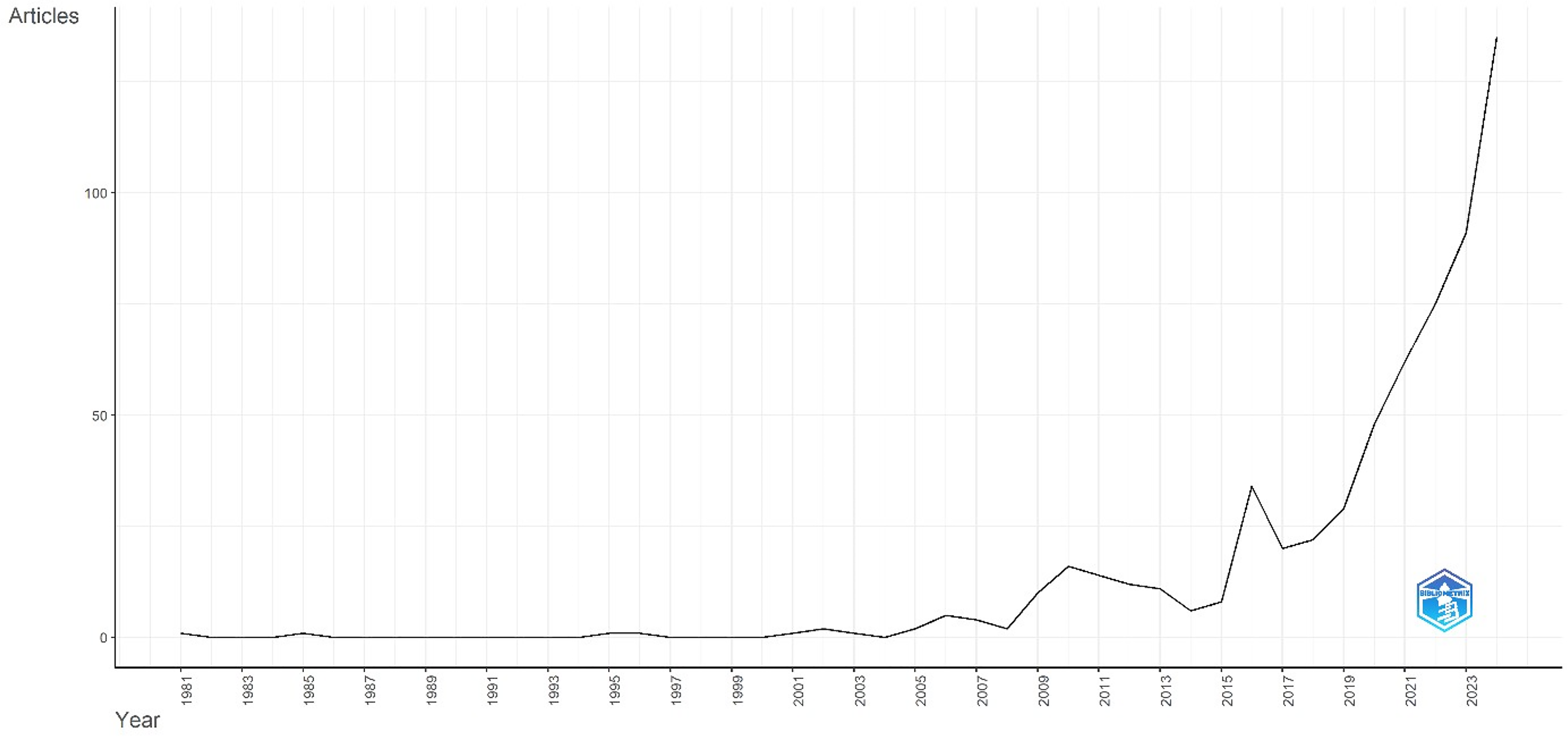
Annual Scientific Production.
In the period 1980–2010, social work publications remained minimal and stable, indicating limited interest or activity in the field. In 2010 and 2016, there was a gradual but steady increase in scientific output, reflecting a growing interest in social work research. This trend continued to be consistent until 2019, albeit with occasional minor fluctuations. A significant shift occurred around 2020, when the number of published articles increased dramatically. Over the 2020–2023 period, the growth rate was significantly higher than in previous years, suggesting an increased interest in the field, potentially caused by global events like COVID-19.
The upward trajectory in publication volume after 2010 implies an increasing recognition of social work as an essential research area. As a result, research methodologies have improved, financial support has increased, and global awareness of social issues has risen. As a consequence of the pandemic, which likely intensified scholarly attention on topics such as social work interventions, mental health, and community resilience, the pronounced spike in publications appears to be aligned with the pandemic. The rapid growth of the field in recent years indicates its progress toward maturity, which will be reflected in its integration into interdisciplinary studies and its focus on global issues.
The expanding body of research highlights the growing importance of social work in tackling complex societal problems. Publications indicate a response to global issues such as climate change, health emergencies, and social inequalities. In addition, this trend implies that scholars will have more opportunities to explore interdisciplinary collaborations and explore diverse subfields, further strengthening the field's ability to address social issues of today.
The Expansion of Social Work Education
Social work education in Türkiye began in the early 1960s at Hacettepe University, but international academic production remained limited for nearly two decades. Although the first article was indexed in 1981 in WoS, only four articles were published from then until 2000. As social work education and research expanded, publishing increased significantly in the 2000s.
Until 2002, Hacettepe University offered the only social work program. In 2002, Başkent University opened its second department, starting a period of rapid growth. A total of 50 universities offered social work programs by 2005, greatly expanding the academic and institutional presence of the field. Besides increasing student and faculty numbers, this proliferation also enhanced the quality and diversity of research, fostering broader academic inquiry and deeper engagement with international scholarship.
Internationalization and the Growth of Doctoral Programs
A growing integration of Türkiye into international academic networks has accompanied the global prominence of social work. Turkish scholars gained greater access to global discourse as a result of growing collaborations and research partnerships. As a result of the expansion of doctoral programs in the early 2000s, a new generation of researchers has contributed to national and international scholarship.
A rise in high-quality academic output resulted from the expansion of doctoral programs and the expansion of the research infrastructure. As a result of the increasing number of doctoral candidates and graduates, Türkiye's presence in global social work research was enhanced. Internationalization coupled with advancements in higher education has contributed to the surge in international publications, positioning Türkiye as an emerging contributor.
Key Sources and Interdisciplinary Focus in Social Work Research
The academic landscape of social work is shaped by a diverse range of scholarly sources that reflect both core disciplinary concerns and interdisciplinary intersections. By analyzing the most influential journals in the field, it becomes evident that social work research is deeply embedded in policy-making, child welfare, mental health, public health, and community development. The prominence of certain journals highlights the evolving priorities of social work scholarship, particularly in response to global challenges such as inequality, public health crises, and the well-being of vulnerable populations. This section examines the leading sources contributing to the advancement of social work knowledge, shedding light on thematic specializations and interdisciplinary connections that enhance the field's impact (Figure 2).
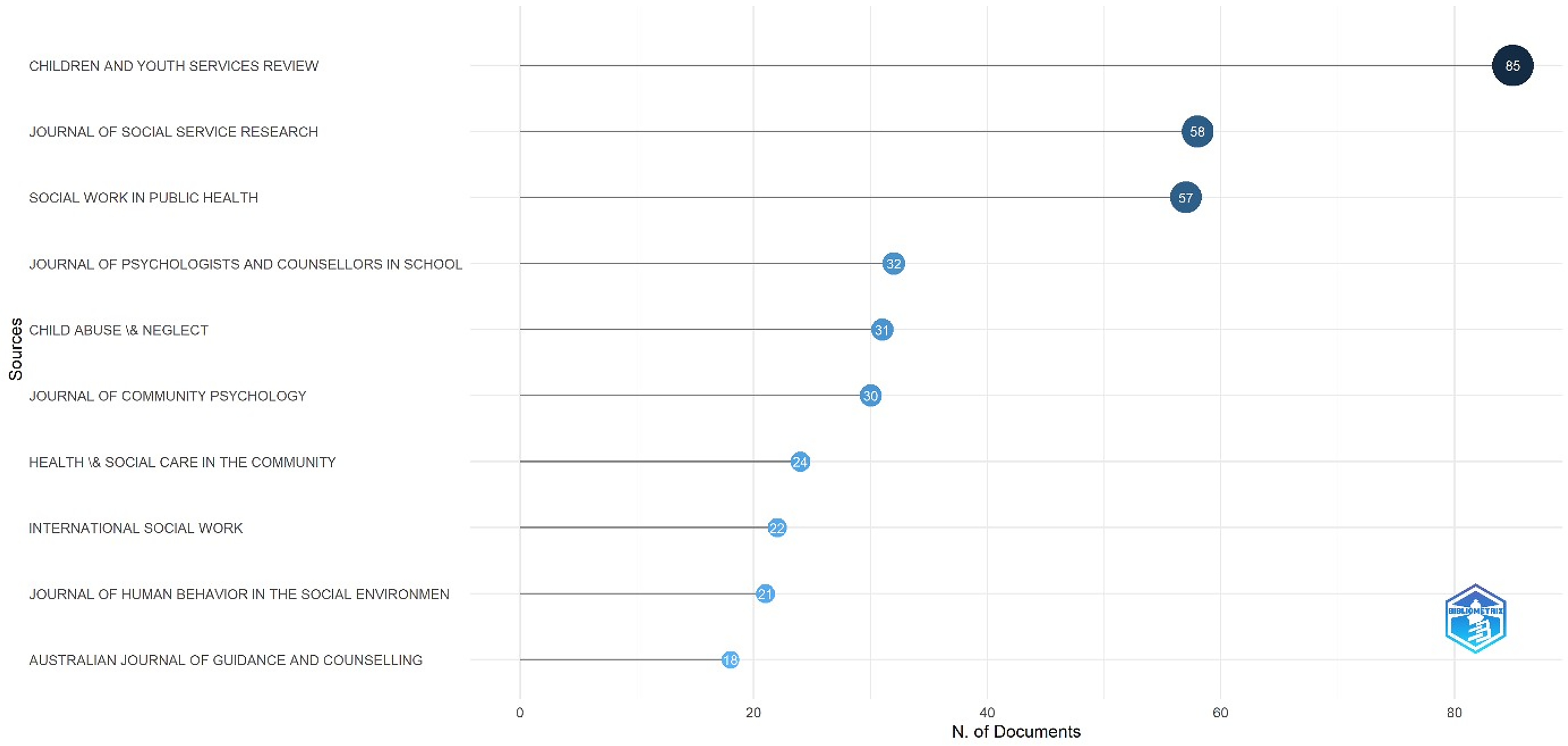
Most Relevant Sources.
The analysis of the most relevant sources in the field of social work highlights critical areas of focus and interdisciplinary integration. A strong research focus on issues related to children and youth, particularly social work interventions and welfare, distinguishes Children and Youth Services Review (85 documents) among the most influential journals. In a similar vein, the Journal of Social Service Research, with 58 articles, addresses policy, practice, and community engagement in social services as a whole. Featuring 57 documents, Social Work in Public Health underscores the critical intersection between social work and public health, reflecting the growing importance of interdisciplinary approaches to societal challenges.
Several subfields within social work are impacted by mid-level sources. The Journal of Psychologists and Counsellors in School (32 documents) emphasizes the integration of social work within school settings, with particular emphasis on mental health and psychological interventions. Social work plays a crucial role in child protection and abuse prevention, reinforcing the field's commitment to protecting vulnerable populations in Child Abuse & Neglect (31 documents). Similarly, the Journal of Community Psychology (30 documents) reflects the importance of social work in fostering community well-being through community-level interventions and psychological aspects.
Several lower-level but relevant sources provide valuable insights into social work specializing in specialties and regions. In Health & Social Care in the Community (24 documents), initiatives in community health and care are highlighted, demonstrating the field's ability to respond to local health needs. As social work practices become increasingly globalized, International Social Work (22 documents) emphasizes global and cross-cultural perspectives. The Journal of Human Behavior in the Social Environment (21 documents) bridges social work with studies of human behavior in various contexts, while the Australian Journal of Guidance and Counselling (18 documents) explores unique challenges and opportunities for social workers in particular countries.
Several thematic patterns and priorities are revealed in the analysis of social work research. A key focus area in the field is child welfare and protection, as highlighted in journals such as Children and Youth Services Review and Child Abuse & Neglect. A number of sources, including Social Work in Public Health and Journal of Community Psychology, reflect social work's interdisciplinary nature, incorporating both psychological and health factors. In social work research, the contributions from International Social Work and Australian Journal of Guidance and Counselling demonstrate a balance between global trends and regional concerns.
As a whole, these journals demonstrate the interdisciplinary nature of contemporary social work research, which integrates public health, social services, and child/youth welfare. A significant number of articles published in these sources contribute to improving social well-being and public health outcomes by advancing knowledge and practices.
Author Productivity and Impact in Social Work Research
A framework for showing author productivity is Lotka's law. According to this law, author productivity is distributed in the scientific literature according to the inverse square law, meaning that very few authors publish a large number of papers, while the vast majority only publishes a few papers. In Andrés (2009), the probability of authors publishing more papers decreases by 1/n2. Based on Lotka's law, the dashed line shows the theoretical model, while the other curve shows the situation for the publications analyzed within the research's scope. Figure 3 supports the validity of this relationship on scientific productivity as well as its importance both theoretically and practically.
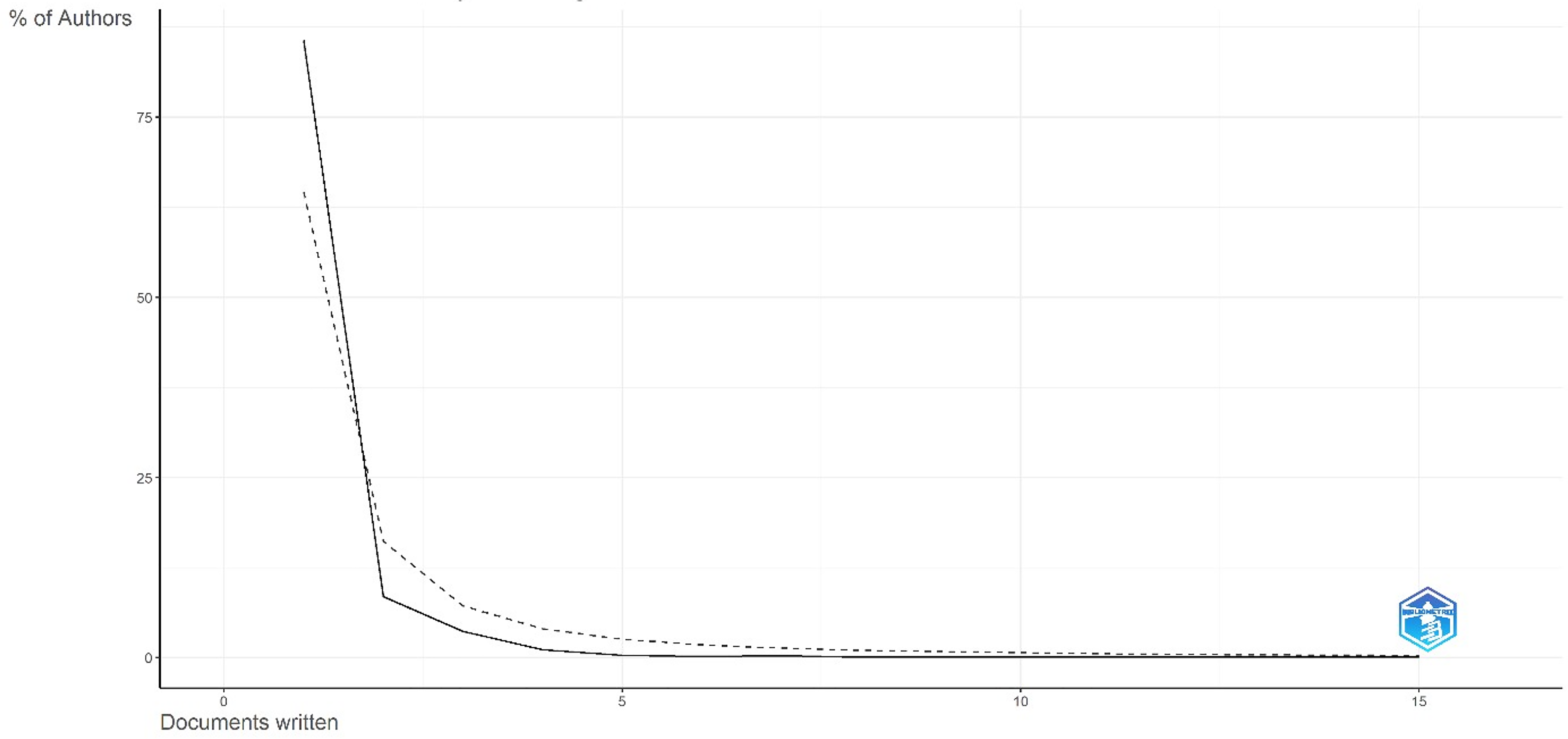
Author Productivity Through Lotka's Law.
Research on author productivity reveals distinct patterns and dynamics. In contrast to the steep decline in the initial segment of the graph, the distribution of productivity among authors is notably skewed, with most authors contributing only one or two documents. According to Lotka's law, a small number of highly productive authors contribute 10 or more documents. Based on the observed inverse power-law distribution, the number of authors is inversely proportionate to the square of the number of documents they produce. Moreover, the long tail of the graph highlights that a small group of authors is responsible for a disproportionately large portion of the scientific output, while the majority contribute infrequently.
Social work research agendas and foundational knowledge seem to be significantly influenced by a small group of prolific contributors, according to these findings. In addition, the large number of single-document authors suggests that the field remains open to contributions from a wide range of researchers, including those who engage occasionally or from interdisciplinary fields. Researchers with less experience and productivity may benefit from collaborating with more experienced and productive researchers to enhance their research quality and output.
Additionally, the dynamics of this author distribution reflect important aspects of social work research. Prolific authors maintain and grow core themes and methodologies, providing the discipline with a solid foundation. In addition, one-time contributors bring diverse, innovative, and interdisciplinary perspectives that enrich the field, stimulating exploration of emerging fields and fostering innovation. A balance between stability and diversity is indicative of social work research's evolving and inclusive nature.
Figure 4 shows the academic productivity of the top 10 most-productive authors in the field of social work over time, along with their citation impact (TC per year). A temporal overview of their scientific contributions is presented, along with the frequency of their publications and the impact each work has on citations. There is considerable variability among the top authors in terms of publication frequency and citation impact, even in a practical field like social work. These results suggest that, in disciplines such as social work, productivity and influence are influenced by individual, institutional, and temporal factors, which cannot be generalized.
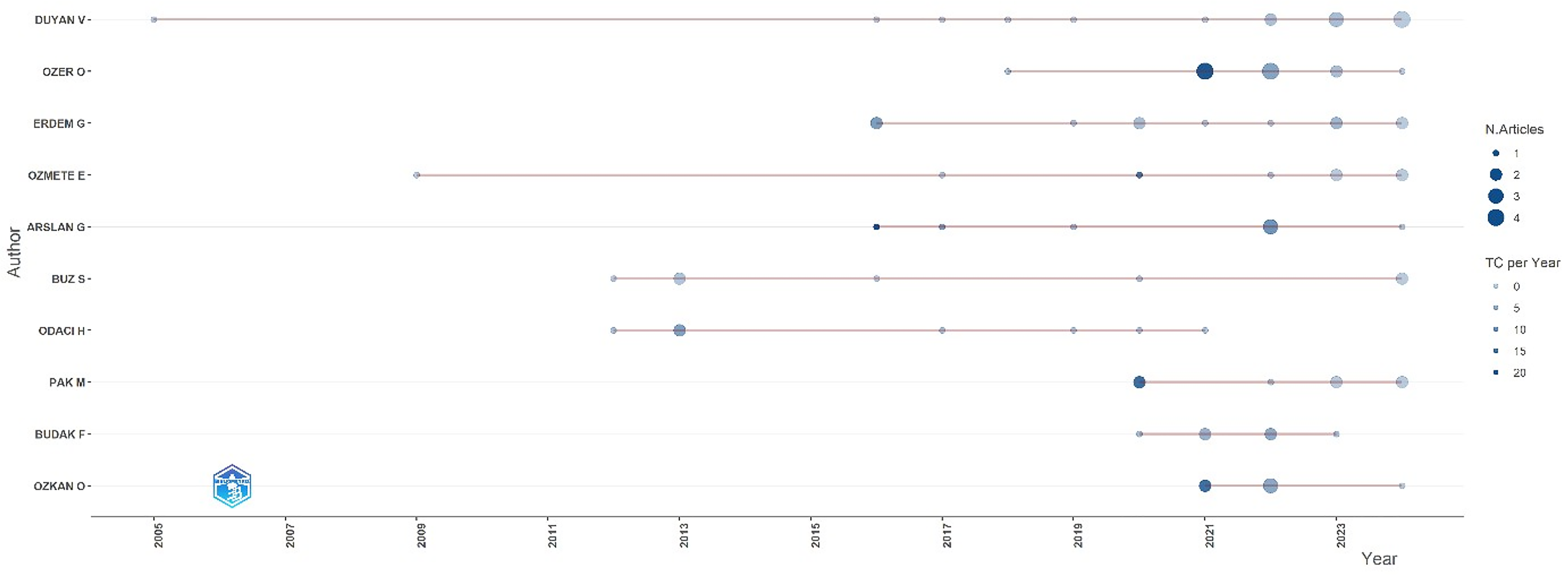
Authors’ Production Over Time.
The analysis of authors’ productivity in social work research highlights significant patterns and trends regarding contributions and their impact. Each author is represented by a horizontal line, with dots representing their publications over time. Dots are sized according to the number of articles (N. Articles) published in a given year, and their color indicates how many citations are published per year (TC). Higher citation impacts indicate a substantial impact, as indicated by darker dots.
There is a longer production timeline for consistent contributors, such as Duyan V. and Özmete E., indicating their regular and sustained contributions. As a consequence of consistent scientific output, these authors have been central figures in the discipline. It is likely that irregular or periodic contributors, such as Pak M. and Budak F. contribute intermittently or in a short burst during a particular period. Darker dots indicate high-impact authors, such as Özer Ö. and Duyan V., who contributed substantial citation impact in specific years.
A rise in productivity has been observed for many authors between 2020 and 2023. This is aligned with a broader rise in social work research output, potentially influenced by global challenges such as COVID-19. It is likely that social work's role in crisis management was heightened as a result of these challenges. In addition, citation trends reveal that some authors maintain consistent citation impacts over time (e.g., Duyan V.), while others experience peak years with highly influential publications (e.g., Pak M.).
Additional insights can be gained by examining individual contributions. Duyan V. has a long production span, frequent publications, and a number of high-impact contributions, positioning him as a leader in the field. Pak M. demonstrates a focused production period with significant citation impact in specific years, indicating critical work that shaped key discussions. Though she produced fewer documents, she had notable impacts during her active years, emphasizing the importance of targeted and high-quality contributions.
Core researchers play a crucial role in advancing social work research and mentoring new scholars, as evidenced by consistent contributors in these findings. Also, authors with fewer publications but high-citation impacts demonstrate the importance of quality over quantity in shaping the field's evolution. The dynamic and diverse contributions that drive the discipline forward are reflected in this balance between consistent output and high-impact work.
Keyword Analysis: Emerging Trends and Thematic Priorities in Turkish Social Work Research
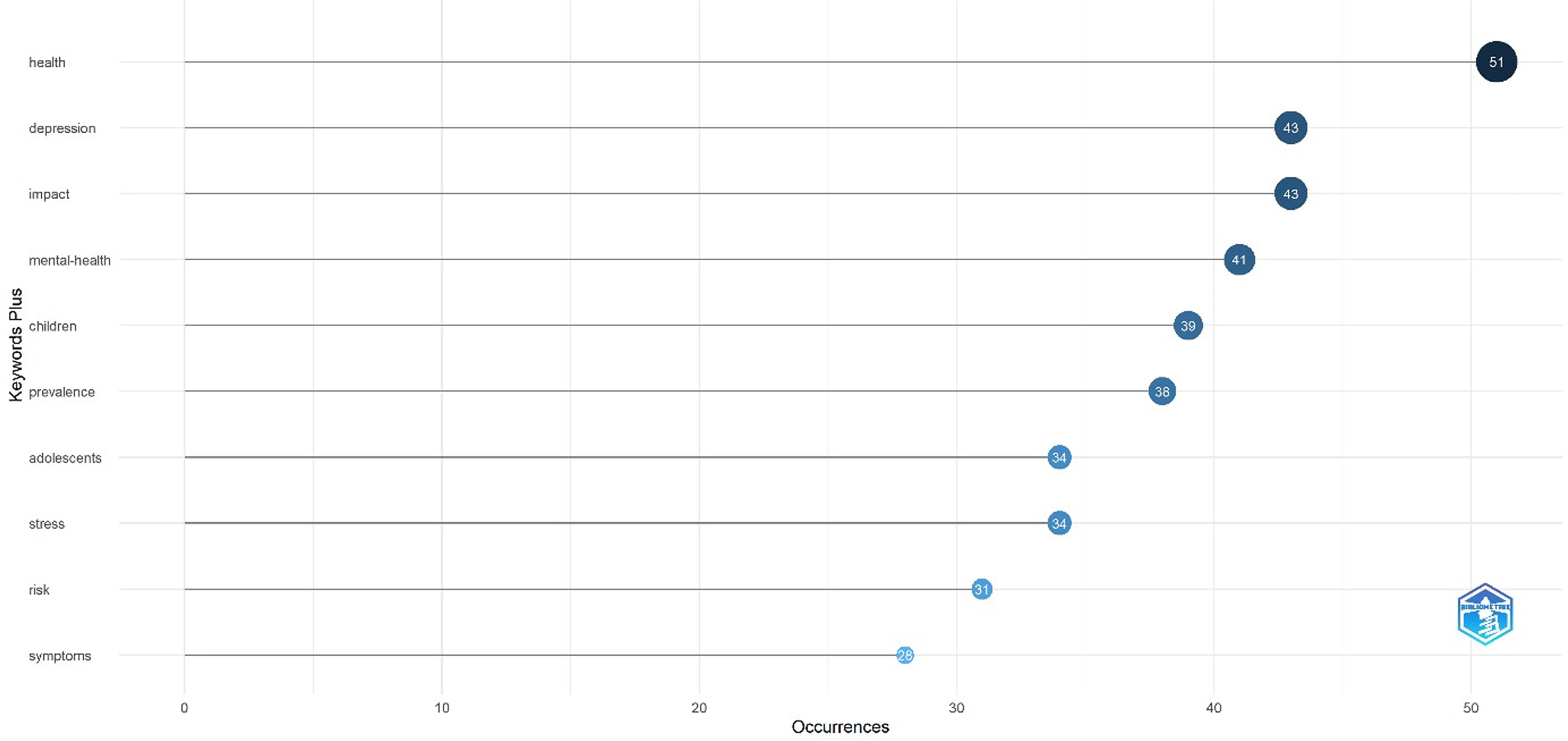
A keyword analysis serves as a valuable tool for understanding emerging trends within the field of social work in Türkiye as well as identifying the focus areas of academic research. We can uncover significant shifts in research priorities by examining the most frequently occurring terms in academic publications, revealing the changing interests and thematic focuses within a discipline. There are several key topics that dominate the literature, including health, depression, mental health, and child welfare, but this analysis also provides insight into the areas which are gaining increasing attention in recent years. In this section, we explore the key terms identified in the Turkish social work literature, highlighting emerging trends and their implications for the future development of the field (Figure 5).
Most Relevant Words.
It is important to focus on critical topics and prioritize thematic priorities in social work research by analyzing keywords. A strong integration of social work with public health and psychological interventions is highlighted by the high frequency of health (51 occurrences), depression (43 occurrences), impact (43 occurrences), and mental health (41 occurrences). The use of mid-level terms like children (39), adolescents (34), and prevalence (38) reflects a focus on vulnerable populations. A focus on specific mental health and well-being challenges is indicated by terms such as stress (34), risk (31), and symptoms (28).
Health and mental health are prominent keywords in social work research, illustrating the field's commitment to mental health within a public health framework. Children and adolescents reinforce the focus on young and at-risk populations, which is often examined in relation to mental health and societal impact. In assessing social issues, terms such as prevalence and risk indicate a strong reliance on quantitative methods, while stress and symptoms indicate attempts to improve psychological health.
A thematic orientation of social work research in Türkiye, notably in medical and psychiatric social work as well as child welfare, is reflected in the prevalence of these terms. Since the foundation of the Republic, health and child protection have been prioritized in national social policies. Several key institutions have played a central role in shaping the country's social welfare system, including the Former Ministry of Health and Social Assistance and the Social Services and Child Protection Agency.
It is clear that psychological well-being is becoming increasingly recognized as a fundamental aspect of social services because of the attention paid to mental health and depression. In the same vein, the country's recurrent attention to children and adolescents underscores its commitment to supporting vulnerable youth through social policies and welfare programs.
It is evident from the importance of these themes in Turkish social work literature that the field is closely related to national priorities for health and child welfare in Türkiye. These areas, central to the country's social welfare system, continue to shape both research directions and practical interventions, reinforcing the interdisciplinary and policy-driven nature of social work.
Trend Topics and Evolving Priorities in Turkish Social Work Research (2010–2023)
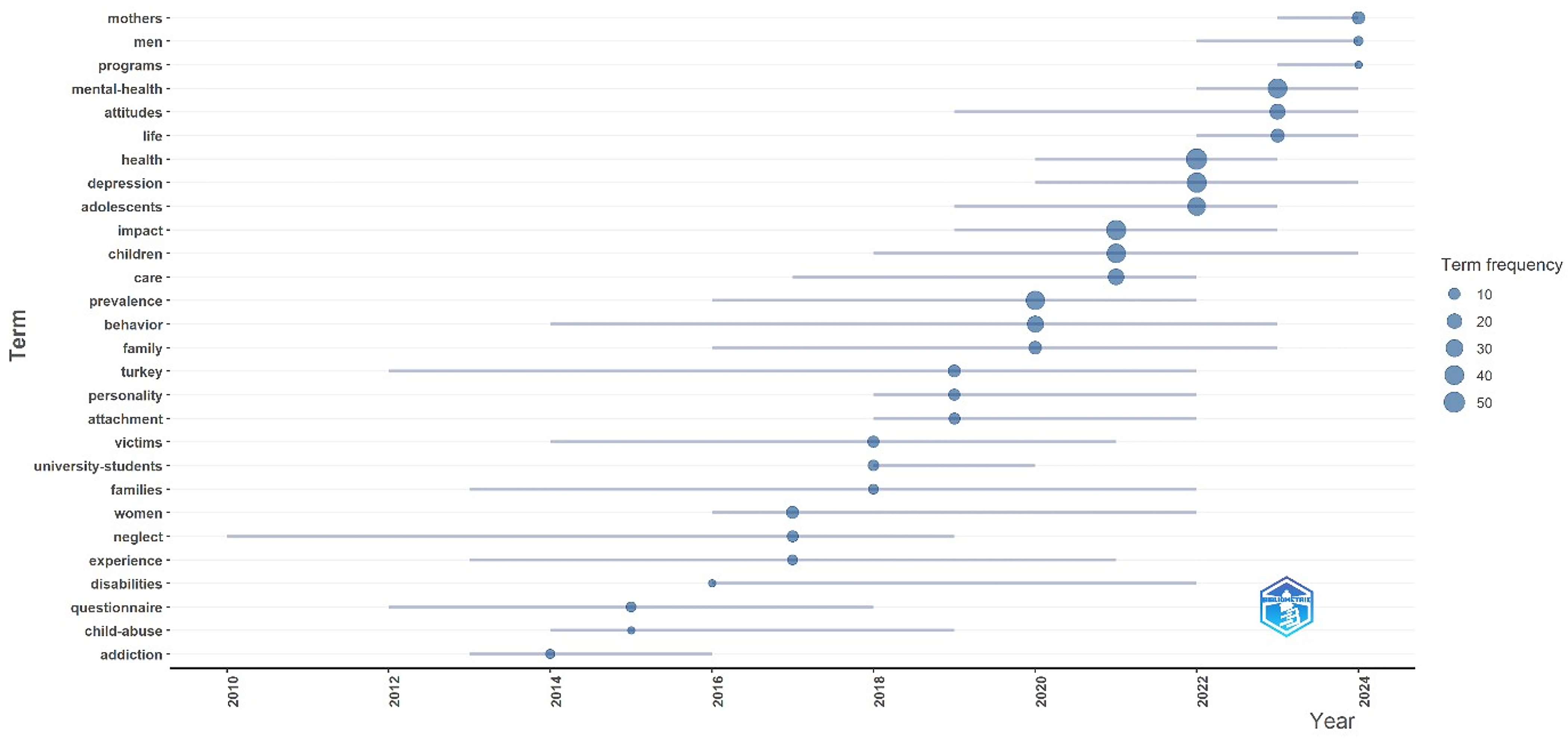
The thematic evolution of social work research in Türkiye over the past decade reflects shifting societal challenges and academic priorities. This section explores key research trends between 2010 and 2023, highlighting the most frequently studied topics and their transformations over time. By examining the changing focus of scholarly inquiry, this analysis provides insights into the discipline's development and its responsiveness to emerging social issues (Figure 6).
Trend Topics.
The analysis of research trends in social work from 2010 to 2023 reveals significant thematic patterns and priorities. According to the vertical axis, key topics such as “mothers,” “mental health,” and “child abuse” are represented by the horizontal axis. A term's frequency in a given year is represented by how large the bubbles are, with larger bubbles indicating greater usage. Connecting lines depict periods during which a topic was actively studied and its evolution as a trend.
Several key trends emerge from this analysis. Among consistently popular topics, mental health has been studied continuously since 2015, and will continue to be studied for a long time to come. The importance of family dynamics and social work's role in supporting these structures has been emphasized since 2017 as a critical focus point. In recent years, child abuse and addiction have gained popularity, with child abuse expected to become a major focus by 2020. As a result of these areas, social work practice is increasingly focused on child protection and addiction-related interventions. After 2018, a growing interest has also been drawn to specific areas like depression and adolescents, especially with a focus on targeted interventions for adolescent mental health.
Conversely, some topics have experienced declining attention. For example, university students received frequent research between 2015 and 2018 but seem to have received less attention in recent years. Over time, neglect, which was a focus area between 2012 and 2015, has also experienced a decrease in research interest.
As a result of the pandemic, social work research priorities have been significantly affected. As a result of the COVID-19 pandemic, social and psychological challenges exacerbated by child abuse, addiction, and mental health gained increased prominence starting in 2020. A number of family and child-related topics have shown consistent growth, emphasizing their importance to the field. These include family dynamics, child abuse, and adolescence. As a result of social work's commitment to addressing both personal and societal challenges, mental health, addiction, and depression continue to dominate research in this field.
Thematic Mapping and Emerging Research Directions in Turkish Social Work
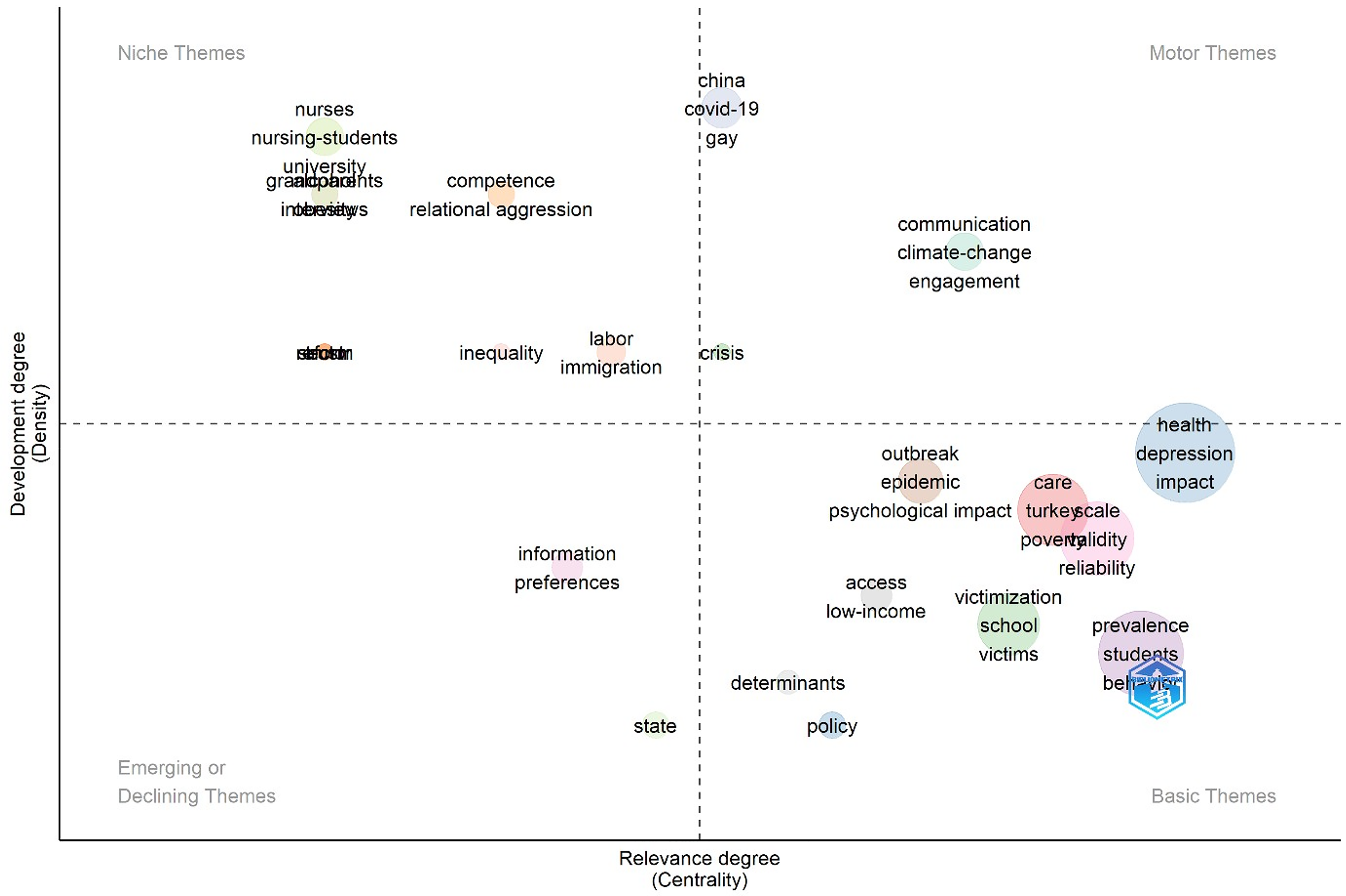
Thematic mapping provides a structured framework for understanding the development, centrality, and interconnections of key research topics within Turkish social work scholarship. This section categorizes themes into niche, motor, basic, and emerging or declining areas, offering insights into their relative importance and evolution over time. By analyzing these thematic clusters, this study highlights the core drivers of social work research, areas requiring further exploration, and potential directions for future academic inquiry (Figure 7).
Niche, Motor, and Basic Themes.
In social work research, there are four distinct quadrants that offer insights into the development and relevance of key topics within the field. Each quadrant represents the degree of development and centrality of a particular topic.
In the niche themes quadrant (top left), topics such as nurses, nursing students, university graduates, and relational aggression are well-developed but exhibit limited connections to other themes. It is likely that these topics represent specialized areas within social work, focusing on professional development and interpersonal challenges for certain groups. The focus on nurses and nursing students highlights the importance of healthcare professionals in social work contexts, while the emphasis on relational aggression indicates studies of conflict resolution in schools and workplaces. These themes can grow as interdisciplinary research increases.
The motor themes quadrant (top right) encompasses highly developed and well-connected topics, serving as core drivers of the field. Examples include communication, climate change, engagement, China, COVID-19, and gay. These themes are pivotal, tackling global and interdisciplinary issues that shape social work research and practice. In light of topics like climate change and engagement, environmental social work is becoming increasingly important. The inclusion of COVID-19 and China also reflects the pandemic's global reach and geographical focus.
The basic themes quadrant (bottom right) includes topics central to the field but not deeply explored. Foundational concepts such as health, depression, poverty, and prevalence suggest a consistent focus on addressing societal challenges. Other topics, such as reliability and students, point to methodological considerations and demographic focus areas, respectively. Interventions and policy development are built around these themes, which form the backbone of social work research.
In the emerging or declining themes quadrant (bottom left), topics such as information, preferences, and state are less developed and exhibit limited connections. Depending on their relevance, these topics may represent emerging research interests or themes that are fading. As an example, governance and data-driven approaches may be gaining traction, while preferences may be diminishing in importance.
Research priorities in social work are evolving as a result of the thematic map. Incorporating epidemic and psychological effects highlights COVID-19's significant impact on the field, leading to a shift toward crisis management and resilience development. Social work has expanded into traditionally external domains through interdisciplinary themes such as climate change and communication, emphasizing its adaptability and relevance in these areas. The focus on inequality also underscores the ongoing efforts to address systemic disparities and promote equity within social work.
Social work research could be enhanced by focusing on several strategic areas in the future. It is possible to enhance the relevance of the field to global challenges through interdisciplinary studies that focus on motor themes such as climate change and communication. For unique insights into specific populations, niche themes such as relational aggression and nursing students deserve further exploration. Monitoring the evolution of emerging or declining topics, such as state and information, may provide new opportunities for advancing the field and meeting emerging societal needs.
Discussion
The findings of this bibliometric analysis illustrate the significant transformation of social work research in Türkiye. It highlights the increasing scholarly productivity, evolving thematic focus, and growing international engagement. The steady rise in publication output after 2010 shows that social work is now seen as a major academic field. The sharp increase between 2020 and 2023 reflects responses to global events, especially COVID-19. This underlines the field's role in supporting public health and community well-being.
The institutionalization of social work education has supported research expansion in Türkiye. The rise of master's and doctoral programs has strengthened academic infrastructure and trained a new generation of scholars. Still, much of the research is produced by a small number of universities, especially Hacettepe University. This shows the need for more regional diversity to ensure a balanced academic environment.
Thematic analysis shows that social work research in Türkiye focuses mostly on mental health, child welfare, public health, and social policy. These topics match national priorities. However, new areas like digital social work, climate change, and technology-based interventions are still limited. Most studies are descriptive or cross-sectional. There are very few experimental or mixed-method studies. This points to the need for stronger and more diverse research methods.
A few highly productive scholars have a big influence on the field, while most researchers publish rarely. This shows the need for more collaboration, mentorship, and institutional support to help more people join and continue academic work.
Turkish social work research is becoming more international, as shown by more WoS publications and global cooperation. Still, more effort is needed to build international partnerships and secure research funding abroad.
Future research in social work should prioritize methodological diversification by incorporating experimental, longitudinal, and mixed-method approaches to enhance the empirical rigor and practical applicability of findings. Additionally, expanding research into emerging topics such as digital social work, environmental justice, and artificial intelligence (AI)-driven interventions is essential to align with evolving global trends and technological advancements in the field. To achieve a more balanced academic landscape, efforts should be directed toward decentralizing research productivity by strengthening regional institutions and reducing the dominance of a few academic centers. Moreover, fostering international collaboration through increased participation in global research partnerships, comparative studies, and international funding initiatives will further integrate Turkish social work scholarship into the global academic discourse. Finally, bridging the gap between theory and practice remains crucial, necessitating a stronger emphasis on applied research that informs policy-making and professional interventions, ensuring that scholarly contributions translate into meaningful social impact.
While this study offers a comprehensive overview of the scholarly development of social work in Türkiye, further attention should be given to how this academic growth contributes to the professionalization of the field. Becoming a profession requires more than expanding educational programs or increasing publication output. It also depends on integrating research into practice, shaping professional identity, and informing policy development. Although academic production has grown, many practitioners in Türkiye remain disengaged from research. This is often due to limited training, lack of institutional support, and weak links between academia and practice. Additionally, the dominance of descriptive studies and the concentration of research in a few universities limit the development of a broad, practice-informed knowledge base. These challenges reduce the impact of research on setting standards and improving interventions. To address this gap, it is essential to promote research literacy, support academic–practitioner collaborations, and ensure that research responds to field-level needs. Otherwise, social work research in Türkiye may continue to grow in volume but remain disconnected from its practical and transformative mission.
In conclusion, while Turkish social work research has experienced remarkable growth, addressing its methodological gaps, thematic imbalances, and institutional disparities is essential to sustaining its advancement. By embracing interdisciplinary collaborations, methodological rigor, and international engagement, the discipline can further enhance its contributions to both academia and social welfare practices.
Limitations of the Study
There are certain limitations to bibliometric analysis, even though it provides an effective framework for analyzing scholarly output. First, given that many significant Turkish-language journals and regionally impactful studies are not indexed in WoS, the current dataset may not fully capture the richness of domestic academic output. In addition, the analysis is limited by the accuracy of the metadata provided by WoS, which can occasionally include errors in affiliation or keyword indexing. The study offers a comprehensive and systematic exploration of social work research in Türkiye, despite these limitations.
To provide nuanced insights into Turkish social work scholarship's historical and contemporary dynamics, this study integrates quantitative bibliometric methods with a contextual understanding of the country's sociocultural and academic landscape.
Conclusion
This study provides a comprehensive bibliometric analysis of the evolution of social work academic production in Türkiye, focusing on articles published in WoS between 1981 and 2024. By examining publication trends, author productivity, keyword dynamics, and thematic mapping, this research elucidates the intellectual trajectory of the field, identifying both its strengths and areas requiring further development.
The findings underscore the substantial growth of social work research in Türkiye, particularly after the early 2000s, which coincided with the expansion of social work education, the establishment of new graduate programs, and increased international collaboration. The surge in scientific output, especially in the past decade, reflects not only the maturation of the discipline but also its responsiveness to global challenges such as the COVID-19 pandemic, climate change, and migration. Despite these advancements, the analysis reveals a persistent dominance of descriptive and cross-sectional studies, with a notable lack of experimental, longitudinal, and mixed-method research designs. This methodological limitation suggests a need for more rigorous empirical studies that assess the effectiveness of social work interventions and contribute to evidence-based policy-making.
The thematic evolution of Turkish social work research highlights a strong emphasis on mental health, child welfare, family interventions, and public health, aligning with both national social policies and international research priorities. However, the study also identifies underexplored areas, including digital social work, social entrepreneurship, and technology-assisted interventions, which are emerging as critical domains in global social work scholarship. Addressing these gaps will require increased interdisciplinary collaborations and methodological diversification.
Furthermore, author productivity analysis indicates that a small group of prolific researchers significantly influences the field's development, while a large number of scholars contribute only sporadically. Strengthening research networks, fostering mentorship programs, and encouraging collaborative projects can enhance knowledge dissemination and sustainability in the discipline.
From a global perspective, Turkish social work scholarship has progressively integrated into international academia, as evidenced by the increasing number of publications in high-impact journals and growing cross-national research partnerships. However, there is still room for greater engagement in international funding opportunities, comparative studies, and co-authored research with global scholars to further enhance the visibility and impact of Türkiye's academic contributions.
Based on the study's findings, several key recommendations emerge for the future development of social work research in Türkiye:
Diversification of research methodologies: Encouraging the adoption of experimental, longitudinal, and mixed-method approaches to strengthen the empirical foundation of the discipline. Expansion of emerging research areas: Focusing on underexplored topics such as digital social work, AI in social services, social work in disaster management, and sustainable social work practices. Strengthening interdisciplinary and international collaboration: Promoting research partnerships across disciplines and increasing participation in global social work initiatives. Bridging the gap between academia and practice: Enhancing the integration of academic research into social work practice through policy-driven studies, practitioner-led research, and applied interventions. Capacity building for early-career researchers: Establishing mentorship programs and funding opportunities to support young scholars in advancing their research agendas and contributing to the field's long-term sustainability.
In conclusion, while Turkish social work research has demonstrated remarkable progress in its academic production, there is an urgent need to address methodological constraints, expand thematic diversity, and foster greater international engagement. By strategically aligning future research efforts with global trends and societal needs, Türkiye can further solidify its position as a key contributor to the international social work community.
Footnotes
Ethical Approval
Ethical approval for this research was not required, as the study relied solely on publicly available bibliometric data retrieved from the Web of Science database. No human participants or personal data were involved.
Funding
The authors received no financial support for the research, authorship, and/or publication of this article.
Declaration of Conflicting Interests
The authors declared no potential conflicts of interest with respect to the research, authorship, and/or publication of this article.
Author’s Contributions
All authors contributed substantially to the conception, design, and writing of the article.
Prof. Dr. Emrah Akbaş led the development of the conceptual framework, provided overall supervision, conducted data analysis and interpretation, and reviewed the final manuscript.
Assoc. Prof. Dr. Esat İpek was responsible for data collection, bibliometric analysis, and interpretation of the findings.
Dr. Emrah Kayabaşı conducted the literature review and drafted the initial version of the manuscript.
Assoc. Prof. Dr. Gamze Erükçü Akbaş contributed to the literature review, editing, critical revisions, and formatting of the final manuscript.
All authors read and approved the final version of the manuscript.
Data Availability
The data used in this study were extracted from the Web of Science (WoS) Core Collection, and all bibliometric analyses were conducted using standardized methodologies. The dataset is available upon reasonable request from the corresponding author.
Acknowledgements
The authors express their gratitude to Ankara Yıldırım Beyazıt University for providing access to research databases and technical support.
