



Abstract
Summary
There is growing recognition that older adults may be affected by violence, abuse and harmful behavior within intimate and family relationships and that people who work with affected families play an important role fostering (or inhibiting) older adults’ processes of disclosure or help-seeking. This article reports a scoping review of empirical studies that investigated how social workers experience their work with older adults affected by abuse and harm.
Findings
The review found that social work with older adults affected by abuse is characterized as distinctive, requiring a need to maintain hope in situations of adversity and to value incremental, sometimes imperceptible, change. Practitioners draw on and appear to value “creative approaches” which are often synonymous with the use of professional discretion and autonomy. This is in the context of carrying out emotionally “heavy” work that has personal and professional impacts. Finally, we found that practitioners work with “complex” family dynamics and situations and see the preservation of (safe) relationships as a critical part of their role.
Applications
The review highlights the need to develop knowledge and understanding about how social workers cope, survive and thrive when working with older adults affected by violence and abuse. There is also a requirement for a more critical engagement with the concept of creative practice and the distinctly social dimensions of social work with older adults, including greater engagement with gender-sensitive and feminist responses.
Introduction
Internationally, the number of older adults experiencing situations of violence, abuse and harm within institutional and family settings is rising with an estimated one in six adults aged 60 years or older reported to have experienced abuse (Yon, Mikton et al., 2017; Yon, Ramiro-Gonzalez et al., 2019). Changes in reporting systems, reporting behaviors and improved research methods regarding the measurement of abuse suffered by older people (Lachs et al., 2021) make it difficult to ascertain if reporting rates reflect a real term rise in incidences of abuse. However, with demographic changes in many countries resulting in an increasing number of older to younger adults that is set to continue to 2050, there are pressing questions about how to care, support and protect people in late life (World Health Organization, 2022). Within families, vulnerability to violence and abuse in later life is associated with social factors, such as experiences of loneliness and isolation, reduced financial security and ageist attitudes around capability and worth (Pillemer et al., 2016). With increased health needs, a minority of older adults become more vulnerable to abuse within their family relationships as result of increased levels of dependency on others or changes in dynamics of power and need (Fettig et al., 2024 ). Intimate partner violence in later life may also manifest as a continuation, or exacerbation, of existing patterns of behavior and ways of relating amongst couples, sometimes referred to as “domestic abuse grown old” (Harris, 1996). Violence and abuse within older couple and family relationships is therefore best understood as multi-causal, with distinctions between “domestic” and “elder” abuse blurred and overlapping (Penhale, 2003).
Social workers are recognized as playing varied, important roles in efforts to prevent, identify and respond to violence and abuse suffered by older adults in familial and community settings (Bows & Penhale, 2018). The promotion of human dignity and self-determination is central to social work practice and this involves supporting people in situations where their choices are constrained and/or may result in undue harm or suffering (to themselves or others). As a result, social workers are well placed to understand how experiences of caring or being cared-for can result in heightened feelings of loss of control and compound stressed relational inter-dependencies (Sherwood-Johnson et al., 2023). Social workers also seek to challenge unequal power relations and unjust social systems and this involves identifying and working to address ageism, sexism, ableism and racism, and their intersections (Crockett et al., 2018). This dimension of the social work role is particularly important given the limited age-sensitive refuge, advocacy and therapeutic services available to older victim-survivors, which in turn reduces victim–survivors’ feelings of safety and confidence disclosing their experiences and seeking support from professionals (Crockett et al., 2018). There are also systematic age biases in recording systems relating to the way victim-survivor accounts are named and categorized, which contribute to the under-reporting and under-resourcing of key services for older adults (Milne, 2023).
Research about the role of social workers working with older adults affected by violence and abuse has to date tended to focus on two areas. The first area considers the efficacy and comparative merits of various screening, assessment and intervention approaches aimed to prevent abuse and/or to ameliorate its effects. The second primary area has focused on the developmental needs of the profession with the laudable aims of sharing learning, preventing repetition of poor practices and to highlight priority areas for improvement. One of the key findings from research is that it can be difficult for practitioners to work in a consistently “professionally curious” or “critical” way. This can lead to practitioners taking situations at face value, failing to interrogate different and potentially contrasting evidence and struggling to think creatively (Bracewell et al., 2022; Thacker et al., 2019) which in turn results in missed opportunities to identify and support older adults (Wydall et al., 2015). Some social workers are also found to lack knowledge of how gender dynamics and patterns of abuse may manifest in later life (Bows, 2018). This can mean that victim-perpetrator relationships (particularly when care dynamics exist) are insufficiently explored and that limited attention is paid to how family and couple relationships have functioned across the life-course (Benbow et al., 2019; Bracewell et al., 2022). Furthermore, when working with adults affected by domestic abuse, practitioners report feelings of hesitancy and confusion when the cognitive capacity of an older adult is unclear and their ability to be held accountable for their behavior and/or have capacity to change is contested (McLaughlin et al., 2016). This touches on some of the ethical and conceptual complexities that practitioners face reconciling knowledge about the impacts and contexts of violence and abuse in older adult relationships using contemporary domestic abuse concepts and models (Isham et al., 2019).
We suggest that there is a need to better identify what is known about how social workers experience their work with older people at risk of or experiencing abuse and violence. To date, there is limited research that explores how social workers understand and make sense of their work supporting affected adults. These are important insights as social workers are not only “witnesses” to the impact of violence and abuse or value-neutral “helping professionals” who enact assessment processes or interventions (Labarre et al., 2019). Rather, social workers work at the intersection of practice, policy and research, requiring them to interpret, analyze, and make sense of situations using their personal and professional skills (Fook, 2002). This is particularly the case when working with marginalized populations (e.g., Taha et al., 2024), as is likely to be the case with older adults affected by abuse and violence. Developing knowledge about how social workers feel and think about their work with older adults can therefore play an important role in understanding how policy and practice guidance is enacted and the extent to which theory and research is used in practice (Labarre et al., 2019). It can also help to understand how practitioners’ views can be shaped by contemporary and political factors (Venäläinen, 2023 ) and what motivates, supports and sustains them in this work (Tham & Meagher, 2009 ). This knowledge can in turn inform efforts to better recognize and support social workers working with older adults at risk of abuse and violence. It is set against this practice and research context that the primary aim of this review was identified: that is, to map the literature on how social workers experience their work with older adults affected by violence or abuse within familial or intimate relationships. The following Methods and Findings sections of this article seek to address this aim. In the Discussion section, we begin to identify gaps in research knowledge and areas for practice development.
Method
A scoping review approach
Scoping reviews are typically used to explore a wide-ranging body of literature with the purpose of addressing a specific, often practice-orientated research question (Levac et al., 2010). This is because scoping reviews include the mapping and synthesizing of different types of evidence, including empirical research generated by different methods, and non-empirical literature (e.g., policy documents, discussion papers). Scoping reviews employ systematic techniques for the searching, identification and retrieval of literature, (Arksey & O’Malley, 2005). As such, scoping reviews share methodological features with other review types, including focused mapping reviews, systematic mapping reviews and aspects of methodology reviews (Sutton et al., 2019). These commonalities across review types speak both to the growing consensus around markers of methodological “quality” in systematic-orientated reviews, as well as the increasing diversity and popularity of literature reviews, particularly in applied health and social science disciplines (Sutton et al., 2019; Tricco et al., 2018). In designing a review for an under-explored topic, we anticipated that the ability to synthesize a range of research, utilizing different study designs, would enhance opportunities to retrieve relevant evidence. We also set out to identify patterns and areas of “advancement” as well as “gaps” in the existing research with the aim of consolidating learning about social work practice (Bradbury-Jones et al., 2022).
Review parameters
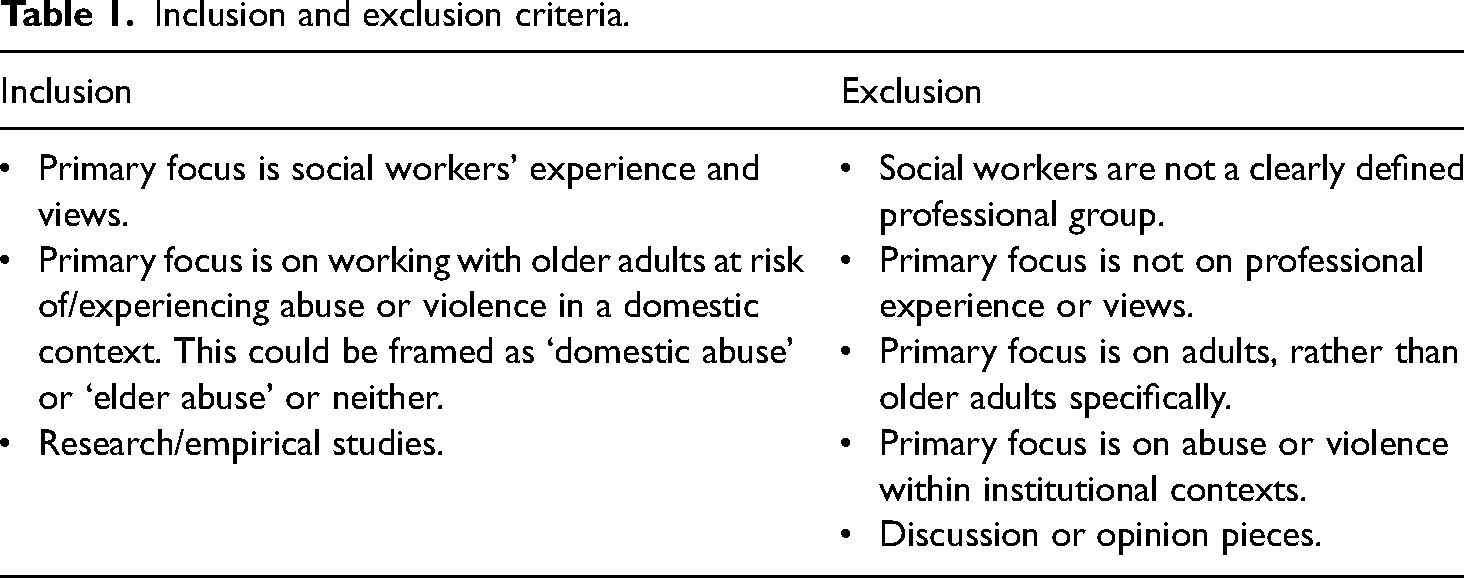
We carried out an initial exploratory search exercise in July and August 2023 using generic non-specialist databases (such as Google Scholar), in addition to running non-systematic searches of specialist academic databases (listed below). This process familiarized us with key characteristics of the literature and helped to sensitize us to key concepts and terminology used across potentially relevant literature. Initial searches returned over 100,000 returns so subsequent searches were restricted to papers that reported on empirical studies (of all study designs). To keep the review exploratory in nature we retained inclusive criteria on publication dates (30 years), and we included studies carried out in any geographical location. In the process of synthesizing an under-explored area of research and discussion, Arksey and O’Malley (2005) advise that it is often pragmatic to use an iterative approach to refining inclusion criteria and research questions (Table 1).
Inclusion and exclusion criteria.
Identification of articles
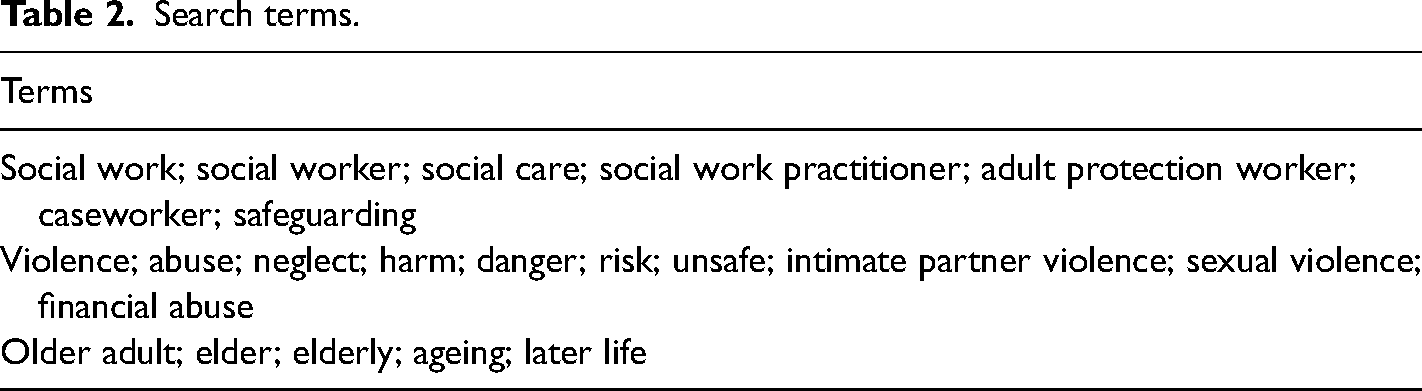
We systematically searched for relevant papers in September and October 2023 using four electronic databases: ProQuest (all databases), CINAHL Plus (Cumulative Index to Nursing and Allied Health Literature), PsycINFO and Web of Science. The databases covered a broad range of disciplinary perspectives and topic areas relevant to social work and/or older adults affected by violence or abuse. We did not search databases that were primarily related to biomedical or life science literature given that the focus of our review was on the experience of social work practitioners, although we recognize that exclusion of databases always runs a risk of overlooking potentially relevant research. When searching, we used a range of paired search terms in conjunction with Boolean operators (see Table 2). Searches were also carried out in key journals in the fields of social work, older adults, and violence and abuse studies to ensure relevant articles were retrieved. When studies were assessed as meeting the inclusion criteria, we used “pearl growing”—i.e., the screening of the article's references and citations—to identify additional studies that may meet the review criteria. Retrieved articles were initially screened by title and abstract. Following this process, articles were read in full by both researchers and points of difference regarding inclusion were discussed and resolved. The search process is outlined in Figure 1. Next, we quality appraised all studies, drawing on quality assessment tools as befitting the study design of each article (Critical Skills Appraisal Programme, 2018 ; Joanna Briggs Institute, 2020). No articles were excluded based on the results of the quality appraisal, however observations from the appraisal process informed our analysis of the synthesized articles: for example, regarding the clarity of study reporting, evidence of engagement with ethical issues and use of researcher reflexivity/sensitivity to position.
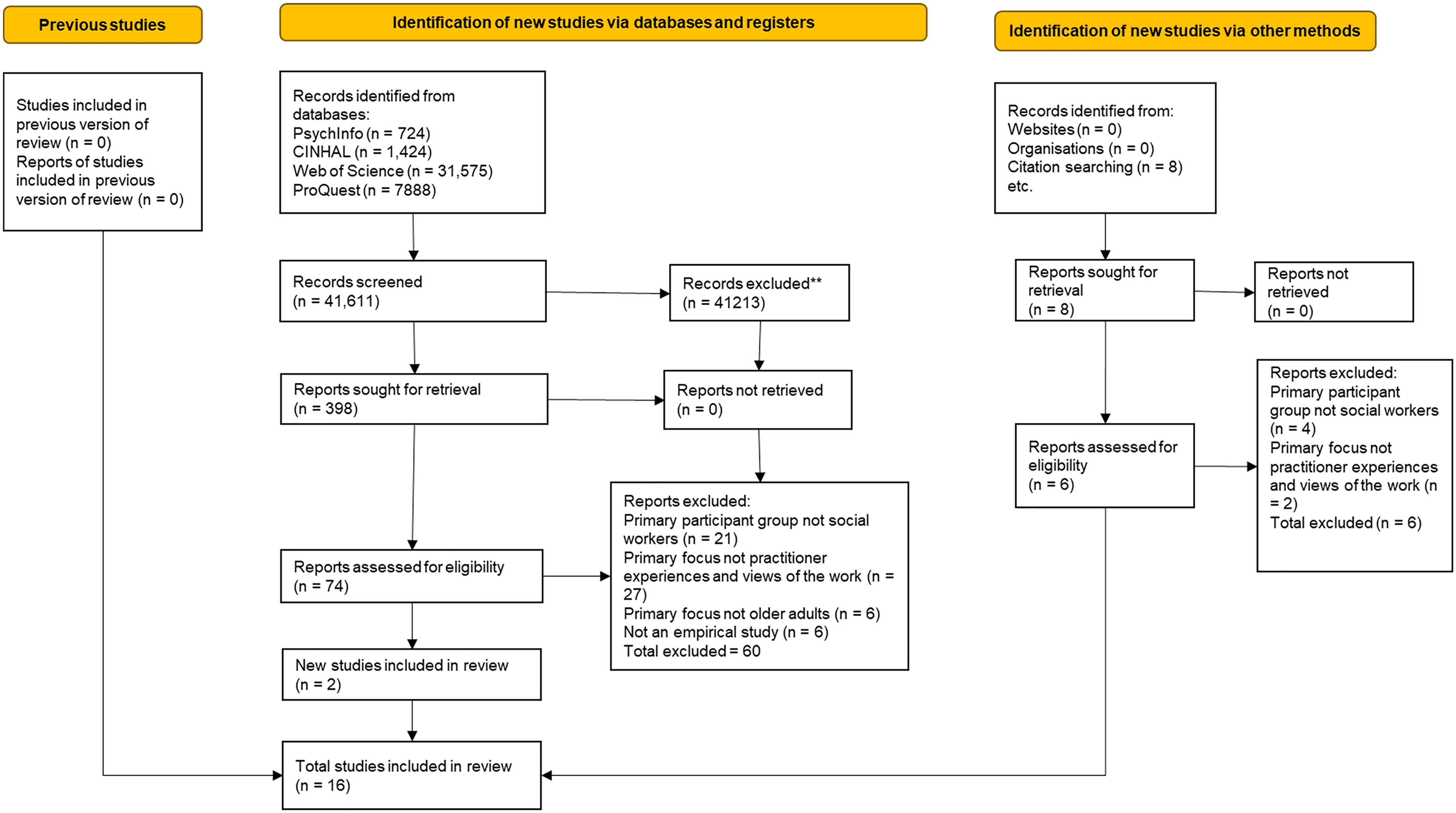
Search process following revised PRISMA guidelines (see Page et al., 2021).
Search terms.
Data charting, analysis, and collation
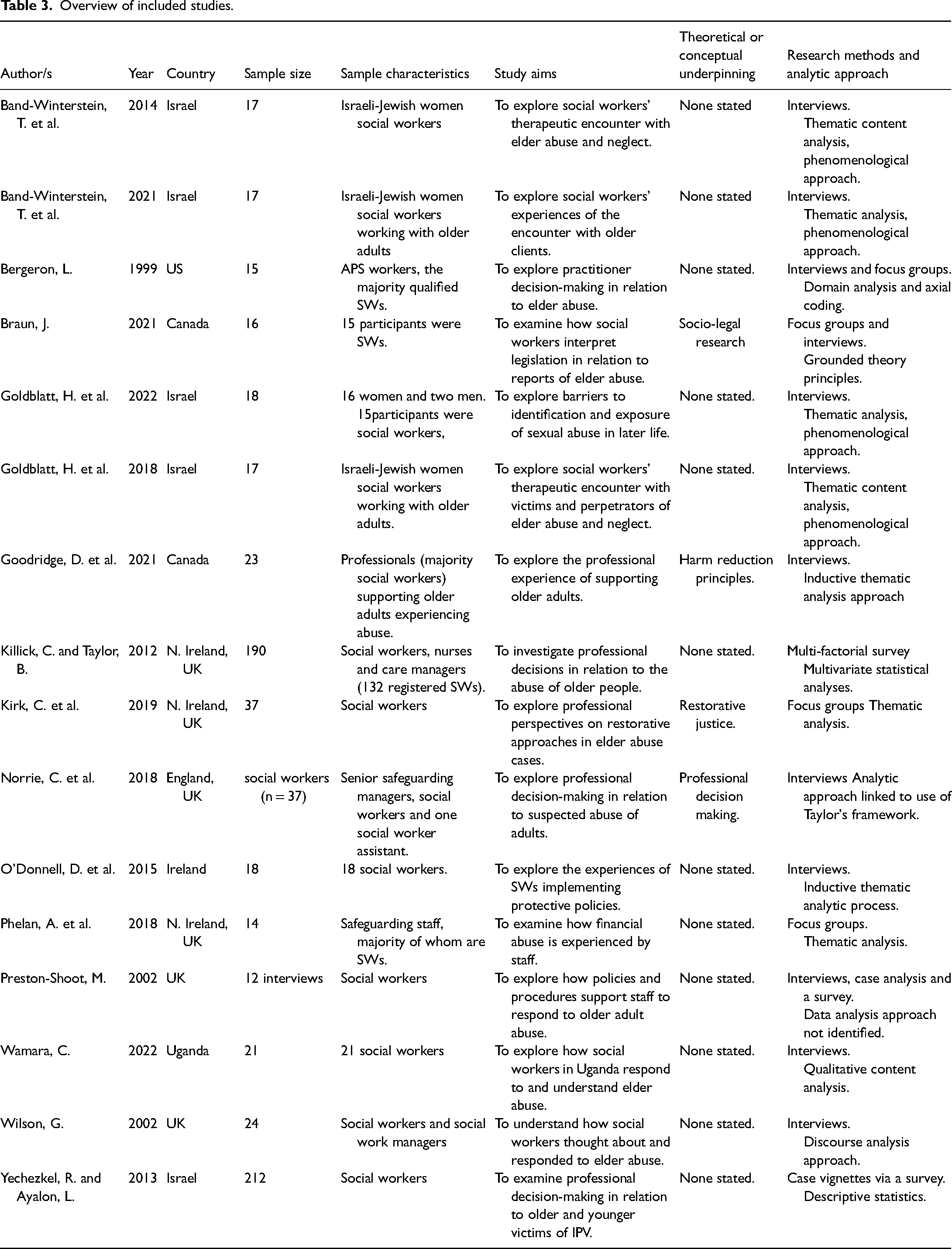
An overview of the key characteristics of the included studies is outlined in Table 3. To chart the data, we developed a thematic framework initially orientated around deductive themes, which was then revised and updated following initial familiarization with the included studies. We then cross-checked our mapping findings and discussed the key analytic findings of each study. This process resulted in refinement of key themes which were explored further through a process of individual and joint memo-writing. The memo-writing process then fed into a narrative overview of the synthesized studies, as outlined in the following section.
Overview of included studies.
Findings
The studies were drawn from different countries and continents although most studies were carried out in Israel, the United Kingdom and Canada. It was notable that there were few studies from the United States, Australia or New Zealand given the review only included studies published in English. Most studies (n = 13) employed qualitative methods and interviews were the most common data collection technique. A minority (n = 4) of studies reported using a theoretical or conceptual approach, although the extent to which the use of theory was explicit in the design and analysis of study data varied. Most studies were published in journals specifically focused on social work issues (n = 8), or journals that specialized in abuse and neglect towards adults (n = 3) or family or interpersonal violence (n = 4) with only one article published in a health-focused journal. We identified four central themes in the process of analysing and synthesizing the studies, discussed in the following section of the article.
Distinctive features and experiences
Several studies highlighted the importance of adopting an incremental approach when working with older adults even when they were perceived to be at risk of, or experiencing, abuse (Band-Winterstein et al., 2021; Goodridge et al., 2021; O’Donnell et al., 2015). Across several studies, practitioners spoke of their role affecting change amongst adults who had developed entrenched ways of thinking, behaving, and relating to one another and the need, in this context, to work with patience and sensitivity (Band-Winterstein et al., 2021; O’Donnell et al., 2015). Practitioners also discussed how it often took time to build positive working relationships with older people who were apprehensive about social work involvement, in part because they valued the sanctity of their private life, in line with generational norms (Goldblatt et al., 2018; Phelan et al., 2018). In turn, adopting a “slower” approach was associated with more reflective, deliberative practice (Band-Winterstein et al., 2021; Goodridge et al., 2021). This incremental approach could be at times an uncomfortable way of working for social workers as it could involve tolerating or “witnessing” older adults living with abuse. Recognizing their desire to intervene and problem-solve, some practitioners discussed how they had come to recognize that this was not an effective or supportive way of working when an older adult did not wish to, or was not ready to, make changes (e.g., Goldblatt et al., 2018). The coupling of an incremental approach with the promotion of service users’ right to self-determination was also a recurring theme in practitioners’ testimonies (e.g., Norrie et al., 2018; O’Donnell et al., 2015) echoing core social work values and principles.
In contrast, some studies highlighted the importance that practitioners placed on working towards transformative change, in turn raising expectations about the dignity and quality of life for older adults who had suffered abuse or violence. A transformative or radical approach sought to counter complacent attitudes and the tendency amongst some practitioners not to ask critical questions about their role and the power they had to affect change (Preston-Shoot, 2002; Wilson, 2002). Incremental approaches were also rejected on the grounds that social work with older adults could be acutely time sensitive (e.g., Band-Winterstein et al., 2014; Yechezkel & Ayalon, 2013). That is, because some older adults were moving towards the end of their life, there was a limited “window of opportunity” to affect change (Bergeron, 1999). This sensitivity to time could contribute to an increased sense of responsibility amongst practitioners, particularly when they felt constrained in their role (Band-Winterstein et al., 2021; Braun, 2021). Less commonly, the urgency of working with older adults was linked to the need for social workers to engage in activist and advocacy-orientated work in attempts to challenges ageist stereotypes and assumptions (e.g., Kirk et al., 2019; Wamara, 2022).
The promotion of creativity and discretion
In the reviewed studies, social workers talked about the importance of professional judgement, often linking this to the exercise of professional autonomy. Studies highlighted, for example, that practitioners did not always go “by the book” when working with older adults, citing the importance of adopting a person-centered, responsive approach (Kirk et al., 2019). Creative approaches could include but were not limited to exhibiting a “flair for decision-making” in difficult situations (Norrie et al., 2018, p. 1081); relying on “gut instinct” and personal initiative (Bergeron, 1999 ) and, working with different family members to create safety and restorative plans (Band-Winterstein et al., 2021; Goodridge et al., 2021). Creative approaches could also include social workers revealing their professional identity in a strategic way. For example, Norrie et al. (2018) shared accounts of social workers arranging to meet older adults on the pretence of social activities (such as going for a coffee) when their primary aim was to monitor their safety. Braun (2021) also found that some social workers adopted health professionals’ uniforms when undertaking home visits because the older adult service user trusted healthcare professionals and perceived them to have a higher status than a social worker. In the reviewed studies, creativity was closely linked with a view of social workers as resourceful and pragmatic, suggesting that practitioners judged each situation on its own merits and that practitioners were not wedded to doing things in a prescriptive way. A practitioner quoted in Bergeron (1999) summarized the situation thus: “It just makes me more and more upset every time I go back. I’m trying to find a new way in and around to try to help this person out. When I feel this way, I think I try harder within my legal limits” (Bergeron, 1999, p. 990). Creativity was also discussed in relation to harnessing practitioner experience and judgment. However, some studies highlighted that there was a paucity of formal education or training for social workers working with older adults, which meant practitioners sometimes had few options but to draw on the wisdom and experience of colleagues (Kirk et al., 2019; Phelan et al., 2018). Furthermore, whilst references to “creative” approaches were common, the concept was not clearly defined and therefore it was at times difficult to get a clear understanding of what constituted creative (and non-creative) approaches, or to compare how the term was operationalized across the reviewed study sample.
A minority of studies highlighted examples of procedural or rule-bound practice that contrasted sharply with the intuitive and creative approaches cited elsewhere. Following procedures uncritically was associated with defensive practice, particularly when social workers lacked knowledge and confidence to explore difficult topics and to take decisions (Preston-Shoot, 2002; Wilson, 2002). Wilson (2002) suggests that for practitioners: “the strength of the guidelines was that once a case had been identified there were procedures that could relieve individual practitioners of the professional and ethical dilemmas created by elder abuse”(pp. 90). Wilson (2002) argues that this response is understandable (albeit not desirable) given the complex situations that practitioners regularly encountered. Yechezkel and Ayalon (2013) also argue that social workers may find it difficult to engage with ideas of abuse of older women in comparison to abuse of younger women. This challenge, they suggest, may explain social workers’ tendency to minimize or downplay older adult domestic abuse, or to opt for “high” intervention responses that resulted in medical and criminal justice involvement, rather than social work involvement (Yechezkel & Ayalon, 2013). Similarly, Killick and Taylor (2012) found that the more extreme the incidence of (often physical) abuse in their featured vignettes, the clearer the social worker's reported course of action. However, more ambiguous abuse situations elicited more mixed responses, with practitioners’ responses ranging from “risk-averse” practices to “sophisticated” decision-making (Killick & Taylor, 2012). It seems important therefore to draw a distinction between creative approaches borne from professionals feeling confident and empowered to exercise their judgement, compared with creativity borne from ambiguity and, perhaps, feelings of professional helplessness.
Emotional dimensions
Several articles explored the emotional dimensions of social work practice and these articles tended to focus on one or two key areas: emotions as heuristics to professional decisions and the emotional impact of working in a “difficult” area of practice (e.g., Band-Winterstein et al., 2014, 2021; Goldblatt et al., 2018). Practitioners were reported to feel a sense of helplessness when managing situations of “high risk” involving older adults or when working in situations where the best course of action was ambiguous or contested (e.g., Band-Winterstein et al., 2014, 2021). Other studies found that practitioners experienced an acute “sense of failure” at not being able to stop abuse or affect positive change for older adults (Bergeron, 1999, p. 99). Some social workers were also reported to feel disgust at the severity or nature of abuse that older people could experience, for example in relation to sexual abuse (Goldblatt et al., 2022). Some practitioners were also reported to experience feelings of heightened vigilance and lower levels of trust towards people in their personal life as a result of the abuse they had witnessed through their work (Band-Winterstein et al., 2014, 2021; Goldblatt et al., 2018). It should be noted however that these findings were evident in only a minority of the reviewed studies and that there were also examples of social workers experiencing their work with older adults as life-affirming and hopeful (Band-Winterstein et al., 2021; Goldblatt et al., 2018) taking pride from the specialism and skill of their work (Norrie et al., 2018).
Some practitioners sought to put emotional distance between themselves and the older adults with whom they were working by adhering to strict professional boundaries, following protocols or emotionally disassociating from the work (e.g., Goldblatt et al., 2018; Preston-Shoot, 2002; Wilson, 2002). Analysis of practitioner accounts drew, in some articles, on concepts from psychology and therapeutic practice such as the idea of “defense mechanisms”, “psychological safety” and the concept of compassion fatigue. Band-Winterstein et al. (2014) found, for example, that some practitioners were depleted of emotional resources because of the exacting nature of their work and that this in turn made them unable to work in a compassionate or empathic manner (Band-Winterstein et al., 2014; Goldblatt et al., 2018). Goodridge et al. (2021) found that practitioners experienced moral distress when the need to promote older adults’ autonomy and right to self-determination appeared to come at the cost of “leaving” people in abusive situations. This was a form of moral distress, Goodridge et al. (2021) argue, because practitioners saw themselves as having moral agency but struggling to uphold conflicting professional values. Other studies, whilst not using the term compassion fatigue, noted that practitioners could present as emotionally overwhelmed by their work, however, they also cited the pressures of other challenges, for example having limited training or staffing (Kirk et al., 2019; Wilson, 2002). Working in pressured environments was thought to negatively affect social workers’ ability to identify signs of abuse or to adapt to unfolding situations, which in turn resulted in social workers intervening in a more reactionary or crisis-focused way (Bergeron, 1999; Kirk et al., 2019; Wilson, 2002).
Working with “complex” family dynamics and situations
Working with families was often described as “complex” on account of the need to consider people's relationship histories and their patterns of dependency and care over the life-course (e.g., Band-Winterstein et al., 2021; Braun, 2021; Goodridge et al., 2021). For practitioners, this raised ethical questions and a tendency to conceptualize their role as promoting older adults’ safety and dignity whilst being pragmatic about the extent to which they could affect change in family and intimate relationships in later life (Goodridge et al., 2021). Speaking to the more negative dimensions of family involvement, Norrie et al. (2018) found that family members could obstruct social workers meeting with older adults in a literal sense: for example, preventing practitioners crossing the home threshold to carry out visits. Family members could also make it difficult to build trusting relationships with older adults and to explore their views about issues such as care, finances and living situation (Norrie et al., 2018). Family members could also be the suspected instigators of abuse, although the degree to which their behaviors (or acts of omission) were intentional was more difficult to determine (Phelan et al., 2018). As a result, several studies reiterated the need for social workers to adopt a systems-orientated approach when working with families (see Kirk et al., 2019), underpinned by the belief that working with families offered an alternative to crisis-orientated approaches, and, crucially, that it was the approach that older people favored (Goodridge et al., 2021; Wilson, 2002). Whilst this type of work was often time-intensive and required considerable skill on the part of practitioners, it was seen to be important and valued-driven (Bergeron, 1999).
In the reviewed studies, social worker participants nevertheless raised questions about the efficacy of family-orientated approaches. Their concerns tended to center on how the concept of capacity could be (mis)used to justify inaction in situations where older people appeared to “choose” to live in harmful situations when this choice was not in fact meaningful (O’Donnell et al., 2015). Concerns surfaced that capacity assessments were not always fit for purpose, particularly when practitioners had limited training and/or were not involved in the assessment process (Bergeron, 1999) and that this could result in them turning a “blind eye” to more complex capacity and consent issues involving family abuse (Goldblatt et al., 2022; Wilson, 2002). Concerns also centered on the undue pressure that older people may feel to continue to care for family members with “vulnerabilities,” particularly adult grandchildren and intimate partners with health needs (Goodridge et al., 2021). The need to work with skill and sensitivity when supporting families was also made more difficult when practitioners did not have the time or training to carry out in-depth assessments and casework (O’Donnell et al., 2015). Finally, it was noteworthy that across the reviewed studies references to working with families were primarily illustrative and not the central focus of practitioners’ narratives. That is, whilst descriptions of families were dominant in practitioners’ accounts, there was limited analysis of how practitioners experienced and made sense of this work, apart from the Band-Winterstein et al. (2014, 2021) studies.
Discussion
Across the reviewed studies, social work with older adults was characterized as distinctive and requiring a particular set of skills and knowledge on the part of practitioners. Notably, several studies highlighted the importance of social workers promoting hope and compassion when working with older adults and placing value on incremental rather than transformative change (e.g., Band-Winterstein et al., 2021; Goodridge et al., 2021; O’Donnell et al., 2015). Social workers featured in the reviewed studies tended to frame their work in terms of adherence to core social work values—such as the promotion of individuals’ right to self-determination, human rights, and dignity—balanced against their duty to protect and support people at risk of or experiencing harm (e.g., Norrie et al., 2018; O’Donnell et al., 2015). These synthesized findings help to characterize the social work role and the expectations that practitioners have of themselves and their profession. These are valuable insights in the context of a body of research that tends not to distinguish between professions—and their respective histories, identities and values—when investigating responses to violence and abuse suffered by older adults.
There was nevertheless limited discussion about how social and structural factors may affect the nature of abuse and violence suffered by some older adults and it did not appear that social work participants explicitly raised these issues either: an issue highlighted by Wamara (2022), Goldblatt et al. (2018) and Wilson (2002). Given that we are not able to access the data of the included studies, this finding may tell us more about the foci of researchers’ analysis, rather than tell us whether practitioners did or did not have a sociological framework to understand their work. However, in multidisciplinary work with adults at risk of harm or abuse, allied colleagues value social workers because of their ability to bring a “social imagination” to problems and a sensitivity to social relations, particularly in situations involving complex ethical decision making and perceived risks to people's safety (Dixon, 2023). Similarly, research on older adults in the contexts of domestic and gendered-based violence consistently highlights the importance of recognizing the role of institutional and societal ageism in limiting the way older adult victim-survivors are recognized and supported (e.g., Benbow et al., 2019; Bows & Westmarland, 2017; Milne, 2023). It is within these contexts that social workers’ commitment to promote social justice and to work in an anti-oppressive way, cognisant of issues of power, privilege and inequality (Crockett et al., 2018) seems both highly relevant and surprisingly absent from some of the reviewed studies.
Secondly, the review found that social workers appeared to place a high value on what were variously called “creative” approaches. Such practices were linked, if not synonymous with, the exercise of professional discretion and autonomy (e.g., Bergeron, 1999; Braun, 2021; Kirk et al., 2019). Given the dynamic, sensitive situations that social workers may encounter working with older adults, it is understandable that practitioners would emphasize the importance of professional judgement and the skill it requires. Creativity in this sense may speak to feelings of competency and confidence amongst social work practitioners and their higher-level practice skills (Lymbery, 2003). Developing greater knowledge and understanding about “what works” in these situations of positive and confident practice may in turn help less experienced social workers and be of interest to allied professions. Nevertheless, the concept of creativity—and the apparently high value placed on it—requires more attention given the contextual challenges that practitioners were reported to face across the reviewed studies. For example, when working in under-staffed teams and with weak interdisciplinary systems of accountability (e.g., Bergeron, 1999; Braun, 2021; O’Donnell et al., 2015). Working in such circumstances, it is credible to ask if practitioners were referring largely to practices of adaptation and responsiveness, rather than creativity per se. Furthermore, there were some contentious examples of creativity featured in the studies: for example, practices that could be regarded as covert working or even potentially as deceptive, rather than creative. This suggests that, at worst, creative work could encompass practices that do not adhere to social work values or established ways of working. Comparative research with other disciplines may yield valuable insights about how creativity is uniquely understood and rewarded in contemporary social work, and why.
Thirdly, the reviewed studies underline that practitioners need support to recognize and respond to their emotions and those of people they work with (e.g., Band-Winterstein et al., 2014, 2021; Goldblatt et al., 2018; Wilson, 2002). Whilst this may seem axiomatic in a field such as social work, the studies identified that such space is not always afforded to practitioners working with older adults. Furthermore, the review highlights the relative paucity of research about how social workers cope, survive and potentially thrive in practice. These findings highlight the contrast in the literature relating to older adult social work and other areas of practice, where there is a more established body of literature that explores the emotional and embodied dimensions of social work (e.g., O’Connor, 2020). There is a need to enhance understanding about what sustains and nurtures social work practitioners working in different contexts (e.g., Singer et al., 2020 ). This in turn may have a positive effect on the profession's ability to retain and attract skilled practitioners working with older adults.
Finally, the review identified that practitioners frequently worked with “complex” families in which dynamics of care, inter-dependency and abuse were intertwined (e.g., Band-Winterstein et al., 2021; Braun, 2021; Goodridge et al., 2021; Phelan et al., 2018). This work nevertheless presented challenges when older adults remained closely connected, if not dependent on, people who were abusive or violent towards them. Few studies, however, sought to understand practitioners’ experiences working with families as a central theme or by adopting a theoretical approach (e.g., a feminist or adult attachment perspective). This was a notable finding given that such theories and models are routinely used in the context of social work with people at different stages of the life-course (e.g., Brits et al., 2022; Knox et al., 2024). This suggests that the ways social workers specializing in older adult work understand their work—and the evidence and theory base from which they (may) draw—is different from work carried out with younger age groups who are affected by violence and abuse and associated trauma. Working with families in situations of abuse, at any age, is likely to require enhanced knowledge and skills, not least because of the ethical and practical complexities that may be involved (Metze et al., 2019). These requirements need to be better understood, communicated and where relevant, celebrated, in research about social work practice with older adults specifically.
It has long been argued that the distinction between elder abuse and domestic abuse in later life is an ambiguous if not false one (Penhale, 2003). When domestic abuse is understood as an umbrella concept, under which different types of family and inter-generational abuse sit, these distinctions become even less relevant, belying potentially ageist assumptions. Whilst it is beyond the scope of this review to comment on how social workers’ practice was shaped by the language and concepts used in their organization or working environment, it is credible to suggest that the limited identification of gender sensitive or life-course perspectives in the reviewed studies speaks to an ongoing, potentially unhelpful, distinction between “elder” and “domestic” abuse in practice and research.
Limitations of the study
There are several limitations to this review. Firstly, we reviewed studies that operationalized different definitions of abuse and violence and that explored different “types” of abuse. This approach may limit understanding of whether some abuse “types” have specific impacts on practitioners (e.g., psychological vs. sexual abuse) and what this in turn means for the older adults whom practitioners are supporting. Based on the findings of our review, it was not possible to draw more than tentative observations about types of abuse and impacts on workers. This was because many of the reviewed articles did not differentiate between abuse type, likely reflecting that social workers often work with different and co-occurring forms of abuse. Only two articles focused explicitly on a “single” abuse type (e.g., financial abuse, sexual abuse). Secondly, we excluded some valuable theoretical and empirical studies that have generated understanding about gerontological social work more broadly: i.e. practitioners who work with but who do not specialize in work with older adults affected by violence and abuse (e.g., Ash, 2013; Willis et al., 2022). This limits the scope of our review and means that we are offering a specific (possibly narrow) lens on social work practice with older adults. Thirdly, we have not fully explored the differences in social work practice relative to the social, geographical and legal contexts in which it took place. Our inclusion of only English-language studies may explain why the majority of the studies were carried out in the “Global North.” As a result, the review cannot claim to be international in scope or analysis, although no geographic parameters were set in the search process.
Finally, we have not been able to compare or contrast how professionals from different disciplinary backgrounds may experience their work with older adults, relative to the experiences of social work practitioners. This may have been a missed opportunity given the small but growing body of literature exploring practitioners’ experiences working with older adults, drawing from participants working in health, domestic abuse, voluntary sector and community advocacy contexts (e.g., Bows, 2018; Cairns & Vreugdenhil, 2014; Lindenbach et al., 2019 ). Comparative research across professional groups would likely yield valuable insights about the relative strengths and limitations of social work practice. Similarly, it was notable that the review identified few studies that focused on social work practice in health settings, despite this being an important area in which gerontological social workers practice. Given that our search criteria required that studies’ primary focus was social workers’ experience of working with older adults’, it is likely that this criterion meant many health-focused studies would not have been included for a full-text review. I.e. whilst social workers may work in health settings they tend to do so as part of a multi-disciplinary team rather than as the sole professional group.
Conclusion
This review finds that there is a small but growing body of evidence about the experiences of social workers who work primarily or exclusively with older adults affected by violence and abuse. Most of this work has been developed in the last five to ten years, suggesting that awareness of the potential challenges and complexities of this practice area are gaining greater attention. Nevertheless, the reviewed evidence is “small” in volume—particularly for an international review of English-language studies—and it boasts few alternative disciplinary perspectives. There is also limited use of theoretical concepts amongst the reviewed studies; most notably, there is limited reference to feminist theory or gendered analyses of violence and abuse within intimate relationships or care relationships in later life. In terms of research findings, the review maps some of the unique and valued ways that practitioners make sense of their work, however it also raises critical questions about the extent to which some of the practical and ethical complexities of working with older adults are recognized and about the way creativity is celebrated and constructed in contemporary social work practice. Our aim is that the review helps to better contextualize and evidence the ways in which social workers support older adults, with the aim of sharing learning and “good practice” while also identifying potential gaps and limitations in our collective knowledge and understanding.
Footnotes
Ethical approval
Ethical approvals were not required for this study.
Funding
The authors disclosed receipt of the following financial support for the research, authorship, and/or publication of this article: This study was funded by the University of Birmingham School of Social Policy and Society Research Development Fund.
Declarations of conflict of interests
The authors declare that there is no conflict of interest.
Authors' contributions
AA carried out much of the searching and screening of articles (at the exploratory stages and during the review), whilst quality appraisal, analysis and synthesis of reviewed articles was jointly carried out by LI and AA. The article was co-written, with LI leading the writing process.
