



Abstract
Summary
The normative construction of social services’ organizational boundaries may operationally exclude marginalized people by neglecting their specific needs and placing them outside the organization's domain. In order to develop a critical outline of social services’ organizational boundaries, we present a qualitative study involving 10 transgender women in Israel, aged 18–25, exploring their interactions with social services.
Findings
The study present cases of organizational neglect and rejection, alongside cases of radical acceptance. These experiences of rejection and acceptance enable us to articulate social services’ organizational boundaries from a critical social work perspective, emphasizing customization, flexibility, and dialog.
Applications
Building on the concept of radical acceptance, social workers and social services are encouraged to broaden their professional and organizational boundaries through a critical social work lens.
Keywords
Introduction
A central characteristic of social services is the contradiction between their conservative function in maintaining the existing social order, and their opposing role of promoting inclusion, social justice and being critical of exclusionary social orders (Fook, 2023). This fundamental tension has been framed in the last few decades as a struggle between a neo-managerial and austerity-based economic approach, which support cost-reduction reforms and emphasize the sole responsibility of people over their lives (Clarke, 2004), and critical perspectives, which emphasize the role of social workers and social services as supporting marginalized people in fighting against their unjust life circumstances (Krumer-Nevo, 2020).
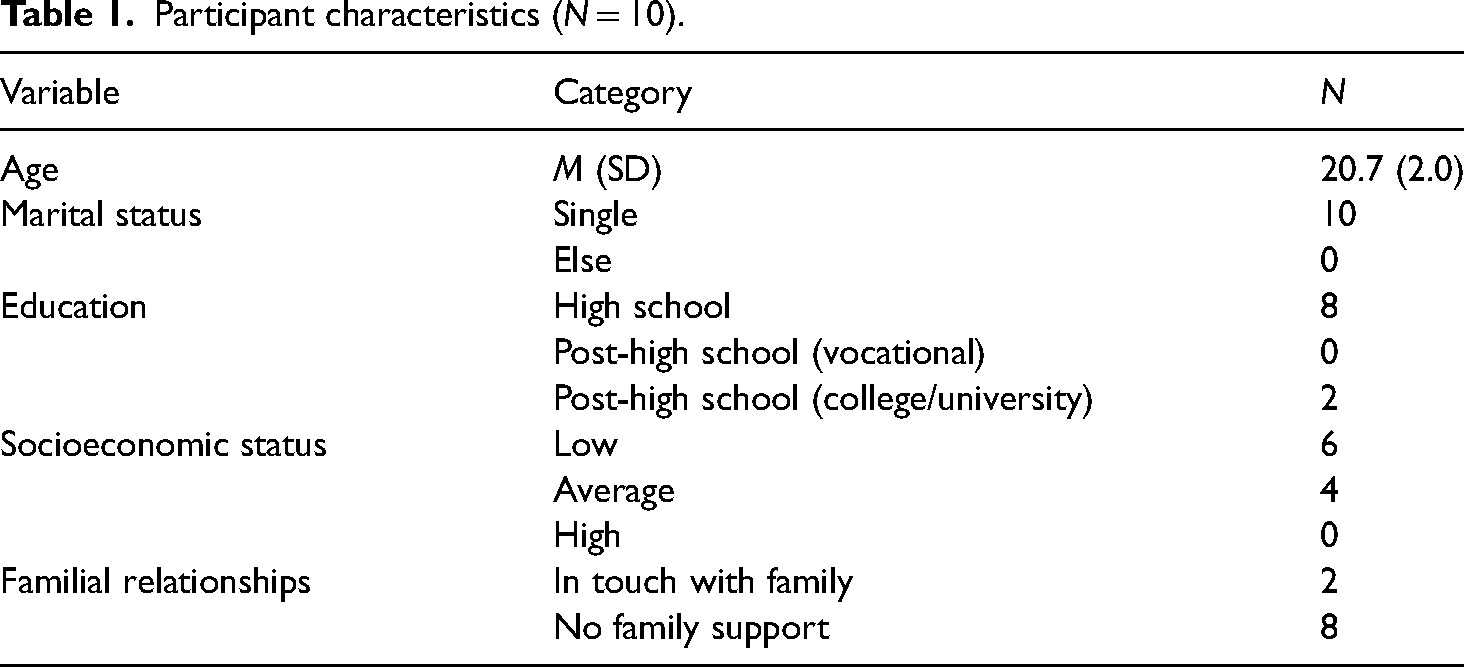
Participant characteristics (N = 10).
Most debates on this tension focus on the power relations between conservative and critical perspectives (e.g., Timor-Shlevin & Benjamin, 2021), and on the professional level, questioning social workers’ professional practices and attitudes toward marginalized people (e.g., Brodkin, 2011; Lavee, 2021). However, the organizational mechanisms that form the operational spectrum of social services receive less attention in this debate, leaving aspects such as social services’ organizational boundaries as fixed and functional, presumably blocking the organizational possibility of operating from a critical point of view. Organizational boundaries are mostly articulated under functionalist approaches and are thus perceived as firmly supporting organizational functioning (Santos & Eisenhardt, 2005).
In this article, we aimed to problematize the common notions of social services and social work organizational boundaries, by listening to the voices of young transgender women, that is, people assigned male at birth who identify and desire to live as women (Graham et al., 2014), at the ages of 18–25, regarding the ways they perceive social care. Their main claim is the need for a “radical acceptance” position, which they find to be unavailable to them in the institutional field of social services. Elaborating on the personal and organizational meanings of radical acceptance, we aim to broaden the debate on the ways social services navigate the tension between conservative, neo-managerial, and critical standpoints, focusing on social services’ organizational meanings and boundaries.
Neo-managerialism and its meanings for social services’ organizational boundaries
Neo-managerialism became common in the last three decades, through austerity-based reforms in social services, promoting economic rationality and cost-effective considerations for professional social work operation (Evetts, 2009). Basically, neo-managerialism adheres to the broader neo-liberal tenets of decreasing government spending and involvement in society, and the underlying normative demand from citizens to be productive, autonomous, and entrepreneurial (Clarke, 2004). These pressures are highly contested, as scholars have presented the negative impact of neo-managerial reforms on social services (Brodkin, 2011) and the condition of marginalized people who depend on social services (Schram, 2015).
Tracing the neo-managerial construction of social services’ organizational boundaries, some scholars have presented how, as a result of neo-managerial demands to present successful results alongside scarce resources, the phenomena of “creaming and parking” take place (Klenk, 2018, p. 738). Creaming represents an organizational tendency to focus on relatively easy-to-work-with service users, who demonstrate positive results in minimal interventions. Parking, by contrast, applies to end-scale service users, who need prolonged and intensive interventions, which social services tend to place outside of their mandate and professional responsibility (Carter & Whitworth, 2015). In other words, it may be that in the neo-managerial context of scarce resources and institutional demands for performance, social services are forced to restrict their organizational and professional boundaries, to both preserve their functionality and adhere to the common perspectives of neo-managerialism and neo-liberalism (Ringel et al., 2018). In examining organizational meanings from a neo-managerial vs. critical standpoint, we need to look at the way critical social work perspectives articulate organizational boundaries.
The construction of social services’ organizational boundaries from a critical social work perspective
Critical theory has been guiding social work since its professional initiation (Barak, 2019; Fook, 2023). The core of social work's critical perspective is the connection between structural power relations, informed by political oppression, and the well-being of individuals in society (Krumer-Nevo, 2020; Timor-Shlevin, 2023). Consequently, the struggle for social justice and the effort to help individuals achieve better well-being are inseparable and should inform both practice and policy (Barak, 2023). Based on this, critical social work has influenced the development of both professional theory (e.g., Krumer-Nevo, 2020) and practices that connect the personal and the political (e.g., Saar-Heiman, 2023). However, the construction of critical organizational boundaries in social work is underdeveloped, even though critical organizational construction is highly relevant to the mission of social work in promoting social-justice-informed policies, services, and practices (Saar-Heiman et al., 2023). Thus, we briefly articulate critical boundaries using the construction of critical direct social work.
Addressing exclusionary social orders, critical social work practice is mainly articulated at the systemic and policy levels, promoting social-justice-based policies (Morley & Ablett, 2017). In the last decade, critical social work scholars have articulated social-justice-based practice at the direct level of casework, highlighting the notion of standing by marginalized people (Krumer-Nevo, 2020; Timor-Shlevin et al., 2023). In order to counter processes of marginalization and exclusion, social workers creatively customize intervention settings to match service users’ needs. For example, Saar-Heiman et al. (2023) presented the notion of dismantling criteria for receiving services and removing organizational barriers (p. 515), as social workers proactively open opportunities for service users to receive assistance. This notion represents the need for flexibility and personalization of the intervention process itself, and thus, flexibility in organizational boundaries regarding intervention protocols and the entitlement to social support (Krumer-Nevo, 2020). Furthermore, in order to resist common societal power dynamics such as paternalism and othering, critical scholars have highlighted the need for transparent dialog regarding the setting itself and the power imbalances between social workers and service users. This dialog is based on the willingness and commitment of organizations to adapt their boundaries as much as possible to service users’ needs, without reaching symmetry or role replacement (Saar-Heiman, 2023; Timor-Shlevin & Benjamin, 2021).
Transgender women and their encounters with social services
In order to portray a preliminary picture of critical organizational boundaries, this article is based on listening to the stories of transgender women and their experiences of acceptance and rejection in seeking help from social services. Transgender people, who identify as a gender other than their birth sex, suffer from extreme social exclusion and isolation, which are related to high rates of depression, self-harm behaviors, and posttraumatic stress disorder in their early adolescence as well as in young adulthood (López et al., 2024). In addition to these challenges, the frequent lack of parental support, combined with discrimination and transphobia (Grooms, 2020), increases their vulnerability to homelessness and sex work 1 (Mountz et al., 2018). Transgender women, who are “socially assigned to the male sex at birth but self-identify and desire to live as women” (Graham et al., 2014, p. 101), are at higher risk for interpersonal distress, depression, and social isolation than other LGBTQ+ people (Mountz et al., 2018) due to higher levels of discrimination and social exclusion, especially in their youth and young adulthood (Falak et al., 2020).
It has been acknowledged that social workers have a significant role in developing and establishing positive affirmative care for transgender people that entails a non-pathologizing approach towards service users’ experiences of gender (Austin, 2018). This might involve integrating transgender identities into organizations’ mission statements, forms, and publications, as it “will help to shape a safer climate or organizational culture through normalizing such representations” (Heffernan et al., 2023, p. 158). Such practices should be complemented by transgender-affirming social work education and acknowledgment that trans-positive affirming practices are based on the ethics of the social work profession (Breaux & Thyer, 2021).
The overwhelming challenges transgender people face highlight their need to access and receive professional help (Moolchaem et al., 2015) in the areas of housing, identity, healthcare, and employment (López et al., 2024). Transgender women specifically emphasize their need for social connections and support, as well as medical gender-matching processes (Graham et al., 2014). Overall, safe and prolonged connections with professionals are considered crucial to enhancing resilience, well-being, and undoing the social exclusion and isolation of transgender people (López et al., 2024). However, scholars highlight significant barriers that prevent transgender people from utilizing the services that might help them (Snow et al., 2022). These barriers are mainly related to professionals’ misunderstanding and ignorance of transgender people's experiences (Grooms, 2020), and thus connected to transgender people's experiences of rejection (Mountz et al., 2018). Transgender people reveal that many emergency services are physically unsafe and/or do not respect their autonomy to define their gender identity (Coolhart & Brown, 2017). Moreover, previous experiences of rejection when seeking social support may inhibit future decisions to seek help (Spicer, 2010).
The Israeli context
The Israeli social service system is characterized by neo-managerial hegemonic perspectives, privatization, and scarce resources (Mandelkern & Paz-Fuchs, 2018). Although there are no valid statistics and scant research regarding transgender women in Israel, it seems that similar challenges are faced by transgender young adults in Israel as in other parts of the world. In a policy paper submitted to the Israeli parliament, the writers, representing two major organizations dedicated to advocacy and help for transgender people in Israel (Maavarim and Gila Transgender Empowerment Project, 2016), stressed that Israel was failing to provide adequate help for transgender people, specifically citing a lack of gender-affirming perspectives in general public services such as schools, community-based therapeutic services, out-of-home placements, and medical services, as well as a lack of adjusted housing and shelter services for transgender youth and young people. Societal transphobia, which can manifest as hostility and discrimination by helping professionals within public services, is further presented as another layer of inadequate services (Pizmony-Levy & Kosciw, 2016). This lack of suitable support should be understood against the backdrop of the roles that families and friends play in the lives of transgender young adults, as well as minority stress. In Israeli culture, family values are highly prized, yet Israeli transgender people often experience a lack of familial support (Shilo et al., 2015). The cultural and social forces in Israel significantly influence the rights and experiences of transgender individuals. Research on transgender people in Israel has revealed disparities in various aspects: discrimination and exclusion in employment; exposure to violence and aggression in the public sphere; lower economic status; offensive and hostile treatment from families; lack of awareness and even offensive treatment within the public health system, affecting accessibility to adequate treatment and deepening health risks (Goldin, 2020).
Indeed, there is a significant literature on the barriers preventing transgender women from accessing much-needed services. However, what is lacking is a more nuanced understanding of the perspectives of transgender young adult women regarding help, both in Israel and in other parts of the world, and the implications of these perspectives for the organizational boundaries of social services from a critical social work perspective. Therefore, we formulated the following research question: What are the experiences and perspectives of Israeli young adult transgender women, aged 18 to 25, regarding seeking and receiving help from social work organizations, and what do they consider helpful and unhelpful. Exploring their perspectives, we aim to conceptualize the potential implications for critical organizational boundaries. We believe that addressing these research questions could assist social workers in developing and delivering trans-positive and affirmative care. As such, this research has the potential to contribute to the social work profession in fulfilling its practical and ethical mission of providing help and assistance to those in need, particularly minority groups.
Methods
To pursue our research questions, we embarked on a research project utilizing a descriptive thematic approach to allow participants’ perceptions to unfold. The qualitative descriptive approach shares aspects from various qualitative research traditions (Sandelowski, 2010). Given its flexibility, a descriptive approach allows for “a comprehensive summarization, in everyday terms, of specific events experienced by individuals or groups” (Lambert & Lambert, 2012, p. 255).
Participants
All ten participants in this study were Israeli transgender young-adult women between the ages of 18 and 25 (mean = 20.7 ± 2.0 years), who agreed to participate, and had experience in needing social assistance. Recruitment was facilitated with the assistance of community workers who had experience working with transgender individuals. All of the participants identified themselves as having been or currently being in need of help due to challenges they faced as young transgender women. Specifically, eight out of the ten research participants had previous experiences with both homelessness and sex work, while one identified herself as having been on the verge of homelessness and sex work. These participants required mental health assistance, as well as emergency housing. One participant had coped with depression and needed support for mental health issues arising from the intersection of her transgender identity and life transitions. Sampling was stopped after conducting 10 interviews, when satisfactory variation was achieved (Fusch & Ness, 2015). The point of saturation was determined through ongoing analysis of the interviews conducted throughout the data collection process Table 1.
Research process
Upon receiving ethical approval, we invited potential participants to participate in a qualitative interview. Participants were first recruited by social and community workers who knew them and asked whether they would be willing to receive a phone call from the researchers. The third author then called the participants who gave their preliminary consent, to explain the purpose of the research, and subsequently held interviews with participants who provided their written consent. Semi-structured interviews are essential in the tradition of descriptive qualitative approaches, and were chosen because they can provide insights into participants’ experiences and perspectives, allowing them to articulate them comprehensively. In the sampling process, we ensured that our interviewees had diverse experiences with social services, thereby allowing for a wide spectrum of experiences to emerge, from praise to critique. Such purposive sampling is well suited for research aimed at a very specific population with unique and specific experience (Robinson, 2014).
The duration of the interviews was approximately two hours. Ongoing analysis of the interviews by the researchers was conducted throughout the data collection process. The interview guide covered the following topics: the history of seeking help from social workers (i.e., “Could you tell me about those instances when you tried seeking professional help?”); perspectives on the process of receiving help (i.e., “Could you describe the actual process of getting help?”); and recommendations for help that would be more suited to your needs (i.e., “Could you tell me about your idea of a good social service for transgender women?”).
Data analysis
We used a descriptive qualitative approach to identify the main themes that emerged from the participants’ descriptions of their experiences and perceptions of asking for/receiving help. The main phases of analysis, as described by Braun and Clarke (2006, p. 87), were as follows: (1) Familiarizing ourselves with the collected data by reading, rereading, and noting preliminary ideas; (2) Generating initial codes; (3) Generating initial themes based on the initial codes; (4) Reviewing and developing the themes; (5) Defining, refining, and naming themes through ongoing analysis; and (6) Writing the report.
Cooperation on data analysis between the authors was based on multiple coding, which involved an integrating dialog about different possible interpretations. Different than interrater reliability, in multiple coding, “what is ultimately of value is the content of disagreements and the insights that discussion can provide for refining coding frames [and] in alerting researchers to all potentially competing explanations” (Barbour, 2001, p. 1116). Such a process is considered to enhance qualitative trustworthiness (McDonald et al., 2019).
Coming from a critical social work perspective, we aimed to identify and shed light on the individual-organizational encounter of one of the most marginalized populations in Israel. Given our experience as social workers, we employed “bracketing” in the analysis process to enhance our awareness of our own biases and consider different interpretations from those that may seem trivial to us.
Ethical considerations
Ethical approval for the study was granted by Bar Ilan university's ethics committee. As this study dealt with potentially traumatic experiences, several steps were taken to ensure the well-being of the research participants: (1) A third party (a social worker and community worker) who knew the participants invited them to participate. No direct contact between the researchers and participants was made before participants gave their consent to be approached; (2) Participants were assured they could stop the interview at any time and could opt out of answering any questions; and (3) The research study was explained to the participants, who signed informed consent. Finally, to protect the anonymity of the participants, all names used in this article are pseudonyms.
Findings
Why not?
Participants in this study experienced past rejections and denial of social assistance. These rejections seemed to have accumulated into a strong feeling of distrust toward helping organizations and professionals in the community—a feeling that nurtured their tendency toward self-reliance. The themes “formal help was denied when I most needed it” and “I have to take care of myself” describe this process.
Formal help was denied when I most needed it
Although they knew what kind of help they were looking for, all of the participants experienced rejection when reaching out for formal help. This rejection was often based on an adherence to strict bureaucratic procedures, and especially on the basis of organizational pre-determined boundaries, ignoring participants’ lack of other options: It took me a great deal of time to send an email… and ask for help … [The organization rejected my request] because… there is a very, very high demand for help and because the financial situation of a lot of us doesn't allow us to pay for services … So now I have to deal with it, and it takes a lot of energy, from me … I also need psychological treatment, and its inaccessible to trans people
2
. Every step of this process is very, very difficult… (Liat)
Some participants were critical of the fact that social services’ formal requirements would not allow for them to receive greatly needed help: I remember I was young, and I had two or three days when I had no place to sleep. I asked the manager of an organization for youth at risk if [she could find me a place to sleep]. She asked: “Are you currently involved in prostitution? If so, you can’t stay here.” I was a 14-year-old girl, where else could I go? Where is your heart? (Gil)
This kind of rejection, which was based on formal eligibility criteria but failed to address the unique life situation of transgender young adults—many of whom were estranged from their families—resulted in a feeling of alienation and distrust in all kinds of formal help: I tried to call that hostel and explain my situation. They told me I could come on Saturday night but that my parents would need to consent if I wished to stay longer… I preferred not to come because I didn't really know what would happen next … it gave me such a very, very early feeling in my journey… that there was no one to talk to, like… I also think it's, like, because it was the first time I tried to reach out for help, and I was turned down, I thought I couldn't do it even if I had to. I thought I had to get along by myself alone. So, later in life I also knew I could not get help. I had to get along by myself alone. (Sivan)
I have to take care of myself
Having been disappointed in the process of seeking formal help, or simply due to personal predisposition, some participants were inclined to find ways to help themselves rather than seeking assistance, sometimes finding such self-reliance to be beneficial: “I always preferred to deal alone, not ask for help… I’m my own back-up … and I don’t even feel sorry for myself … because this approach did me a lot of good …” (Jennifer). In other cases, participants explained how being helped brought forth feelings of dependency, vulnerability, and shame: “I’m a person who … I don’t like people helping me … with money and things like that … It doesn’t do me any good … It puts me in a place of neediness, makes me feel ashamed” (Tina). However, the words of all of the participants made eminently clear the fact that self-reliance was often the result of an early painful rejection that originated in their transgender identity: I really explained everything [to my mother] and then she said: It wont happen, you will never be a woman, and you should know that if you decide to do this you will not have a family to support you. (Jennifer).
Some of the participants explained that the price of being alone and having no access to any supportive relative or organization—one that would validate their identity or simply allow them to make a living—was what led them to sex work. Thus, sex work was the consequence of having no other support and having to rely only on oneself in the face of urgent and overwhelming needs. In a dialectical sense, participants perceived sex work as both a source of trauma and as a helpful resource: When I lived in [name of town] no one was willing to hire me, and I could never find a job… and even in my workplace [when I had a job], they told me to “refine” my appearance, and use the male pronoun
3
… so it's clear why eventually trans women end up at the margins of society, in prostitution. (Sivan) There are those who come from families that are not really hostile, but still, we cannot stay there, and at the age of 16, what resources do we have? … The street has a lot to offer us at this age. Surgery seems a lot closer when you make 2,000 shekels a day. (Liat)
Why yes?
Participants identified facilitators to receiving help. Primarily, “good help” was perceived as being rooted in radical acceptance of who they were and the choices they had made. This form of radical acceptance was often found in professional assistance that had an informal feel to it. The themes “(in)formal help as acceptance” and “good help as radical acceptance” reflect these findings.
(In)Formal help as acceptance
Participants saw a lot of virtue in informal help as opposed to formal assistance, as friends offered the kind of radical acceptance that professionals were not able to provide, and they also had the advantage of being readily available: “When [I’m in a crisis] I consult with friends. Mostly friends, because that's where I find the most acceptance, the most understanding” (Tal). Participants explained that formal helpers did not offer the “right” kind of acceptance, whereas friendship did—perhaps due to the nonhierarchical nature of the relationship that characterizes friendship. This nonhierarchical connection made participants feel equal and validated: Sometimes I’m not in the mood for psychological treatment … maybe for a good friend … I have a friend … and she helps me with a lot of issues… Like a big sister … So, I would talk to her. Today, I wouldn’t have have approached any organization for help. (Mirit)
Another virtue of informal helpers was their ability to offer immediate acceptance in situations of pressing conflicts. Jennifer shared an example of how her network of friends provided her with instantaneous support. She recounted her first experience with sex work, explaining how Facebook allowed her to reach out to friends even in the middle of the night. The help she received implicitly contained an attitude of radical acceptance: I was sitting in bed thinking that I had 2,500 shekels on my bed right now, cash, and I got it from someone I slept with a second ago… On the one hand it was a lot of money that I really needed, but on the other hand—how could you touch this kind of money? I logged into my Facebook account… and I saw that one of my friends was online and it was the middle of the night … then straight away I sent him a message asking to tell him something and that he would not judge me over it … I told him everything … And he told me to take a drink of water and go to sleep. So, I went to bed and woke up in a good mood, like I completely forgot about it. I took the money and then I said, well, this money isn’t staying with me. (Jennifer)
However, informal help did not necessarily imply assistance exclusively from friends. When social services provided support that “felt” informal, it was much appreciated by the participants. In their view, this kind of help “came from the heart” rather than being part of someone's over-practiced professional routine. The sense of informality allowed for an intersubjective encounter, one that made it clear they had been accepted and validated as “subjects” rather than “clients”: The psychologists I knew were too robotic and formal for me … you sit and talk to a person who is supposed to be blank … Like it doesn’t matter who he is or what he likes or if he’s a friend of mine. And I had a very hard time coming and talking [in psychotherapy] … But in the case of the [name of social service] … something about their attitude—they had a personality… You could see that it came from deep inside them, and that it was in their blood to be there, and it wasn’t as if they were just doing their routine work … They came and sat with us, and laughed with us and got angry with us … It encouraged me to connect and open up. (Maya)
Good help as radical acceptance
Participants had a clear idea of what constituted good professional help, describing it as an encounter in which they were radically accepted and not judged for who and what they were. This kind of acceptance was perceived as a validation of their identity, even if the choices they made were extreme. [Good help] is listening … giving us space. Do you want to work in prostitution? Go ahead … We can realize ourselves when it is not working for us. She wants to work in prostitution? She’ll work, it doesn’t matter. She could come back and have someone to speak with, unload her burden, instead of taking drugs, or cutting veins … This way she’ll come and have a place to talk about what she was going through. (Gil)
Such an expectation, of helpers’ nonjudgmental acceptance, was echoed in both Tina's and Maya's words: “Transgenders need first and foremost containment—understanding without judgment” (Tina). The important thing is that the [helpers] are simply there to listen to me, in the most nonjudgmental way … Almost everyone was judgmental of me … I really needed to be listened to, and not enough listening was given to me. (Mia)
Indeed, nonjudgmental help was described in terms of its openness and the degree to which it was attuned to their different needs, offering them a variety of options from which they could choose, knowing that no “plan” or “intervention” was considered the “right” one: The transgender community does not need only one thing. And you can’t rate it by what's most important right now. There are fifteen-year-old trans people, and the most important thing to them right now is simply a weekly group meeting with an instructor … And there are transgenders who live on the streets, and most important for them is a place… that is completely open. Whoever they want they can just knock on the door, go in to eat, take condoms, whatever… a place that just lets transgenders come and… have no extra obligation …. (Maya)
Perhaps the idea of radical acceptance as what young transgender women wanted in terms of help stemmed from experiences of other interventions that imposed a “ready-made” outlook on them and assistance that was based on presumed ideas of what they needed. The helpers’ professional experience, in this regard, was not necessarily considered an advantage by some of the participants, as it was perceived as limiting the helpers’ ability to help without prejudgment: Mostly it would help me to find someone who is trans-friendly but does not come with a bias of many years of experience, believing she knows everything and putting everything into boxes. I don’t need someone who is professional and with seniority that makes her fixated on her own ideas. (Liat)
In the context of flawed “ready-made” interventions, the male-female body was often viewed as the main issue to be dealt with, usually via surgery. However, in the context of radical acceptance, the inner woman was seen and accepted for who she was; the body of the “outer” woman was not the only focus through this perspective: There are two women who are actually one woman with two dimensions. The outside woman can look wonderful, but the inner woman can be very neglected … I just think it's more convenient, easier to focus on the things that … can be measured … before/after…. (Tina)
Acceptance, thus, was described as a space where one's humanity, as well as one's femininity, could be validated, without the need for labeling, gendering, or sexualizing. Tina summarized this idea in a powerful statement, advocating for human-oriented rather than trans-oriented social services: Transgenders should receive, first and foremost, containment, understanding without judgment, not to be defined as a one, two, three, four, or five, because each of us needs a custom-made suit… There is no one way to be transgender, like there's no one way to be human… (Tina)
Discussion
The participants in the current study were more inclined to receive informal help that was immediate and non-judgmental than to receive formal help. They identified previous rejections from formal services as having created barriers to asking for help, but they were also able to appreciate formal help when it was provided in a non-formal manner, where no questions were asked, and no demands were made. Participants also felt that “good” help should be based on a radical acceptance of who and what they were and what they did, even if they were involved in sex work or lived on the streets. These findings support previous writing on transgender people, for instance, regarding hostility in social service agencies as a barrier to asking for help (Snow et al., 2022); lack of access to services; and the devastating effect of previous rejections from social services on transgender people's help-seeking behaviors (Spicer, 2010). Moreover, this study expands current literature regarding the need for transgender women to be seen and considered as full human beings. For the participants, radical acceptance meant a validation of their humanity, rather than just their gender identity. While professionals’ ability to accept transgender people's gender identity and needs is crucial to provide safe and adequate support (Graham et al., 2014), we argue that this research expands this view by articulating radical acceptance as a more critical stance of seeing and approaching transgender people as human beings who deserve safe, sensitive, and tailor-made support in relation to their diverse needs.
Taking this critical perspective to interpret the participant's experiences of rejection, this study highlights the formal-institutional meanings of rejection, which is rarely evident in current literature. Most literature focuses on professionals’ discriminatory positions as the main forms of rejection, considered to hinder young transgender people's access to social services (e.g., Mountz et al., 2018). In this study, formal-institutional rejection is experienced by the participants as society turning its back on them, thus they are left to struggle by themselves alone. Critical scholarship in social work highlights the potential holding abilities of social services, representing society as a whole, and contends that a just society provides such a holding environment to all its members (Timor-Shlevin et al., 2023). Failing to provide such a holding environment represents a fundamental abandonment of marginalized groups. In what follows, we take these experiences of radical acceptance and formal-institutional rejection to sketch an initial framework of critical social services’ organizational boundaries.
An outline of critical boundaries
We focus here on professional boundaries, addressing direct critical practice, and organizational boundaries, concerning critical policies at the organizational level. At the professional level of critical practice, participants’ descriptions of radical acceptance highlighted the importance of informal and close relationships, which favor personal encounters that “come from the heart,” over formality and distanced encounters. Furthermore, participants highlighted the importance of high availability and validation. Thus, radical acceptance at the micro level entails letting go of pre-disposed professional frameworks and boundaries, allowing for an intimate encounter tailored to service users’ specific needs. Participants were reluctant to use help that seemed “too professional.” In other words, given the way professionalism seemed to entail pre-assumptions and over-practiced routines, participants did not see it as addressing their fundamental need for validation (Barak et al., 2014). However, in cases where professionals could maintain a “fresh” inter-subjective encounter, it was much appreciated. A sense of being cared for and affirmed stemmed from an encounter that made participants feel unlabeled. This notion may complement but does not overlap with the concept of sex positivity, as participants were seeking acceptance that extended beyond just their sexual identity and/or sexual expression.
Such a professionally articulated notion of flexible and tailor-made boundaries echoes previous professional positions, such as Saar-Heiman and his colleagues’ idea of adjusting interventions to the specific needs and timing of marginalized service users (Saar-Heiman et al., 2023). Another framework that aligns with such flexible professional boundaries is the “ethics of care,” which constructs professional helping relationships as compassionate and nurturing (Gilligan, 1982), in ways that “provides a key critical framework for… moving beyond the current dominance of policies and procedures” (Campbell, 2015, p. 43).
At the level of social services’ organizational boundaries, radical acceptance is presented as a policy of availability and acceptance, characterized by an open approach that renounces formal and rigid preconditions for treatment. In other words, there needs to be a customized organizational operation that allows for diverse interventions to address the varying needs of service users. This open policy was very much absent in the participants’ experience, and very much needed, at the gatekeeping of receiving social assistance.
As the common construction of social service's eligibility criteria is challenged by transgender women's specific conditions and needs, such construction of organizational boundaries reflects the notion of creaming and parking (Klenk, 2018, p. 738), where transgender women are repeatedly abandoned, leaving them with no social assistance. In order to address the specific needs of transgender women, critical organizational boundaries would be much more “open” and flexible, highlighting the ethics of fundamental acceptance as their eligibility criteria.
It is possible to view the social services field, when governed by neo-managerialism, as a (safety) net with big holes in it, resembling the growing spaces between social services’ narrowing boundaries. Each hole represents the service user's characteristics, designated by social services as lying outside their domain. In an institutional climate that demands such a reduction of organizational boundaries (Klenk, 2018), groups that are more excluded and have intersectional needs are at growing risk of being neglected and abandoned by the social service system. As such, we suggest a critical construction of the social services field based on open organizational boundaries that provide radical acceptance. Such a field could be envisioned as a net with fewer holes and more overlap between social services. By radically opening their organizational boundaries and eligibility criteria, social services would overlap, offering multiple options for service users’ treatment. This approach would manifest radical acceptance at the policy level, providing a constant and more reliable social security net.
Finally, at both the direct-professional and organizational-policy levels, we view radical acceptance as a call to construct more open and flexible boundaries. Thus, the next question should be how to balance the need for functionality and safety, which often provide the basis for professional and organizational boundaries (Lamont & Molnár, 2002), with the need for critically-informed social services (Timor-Shlevin, 2023)? We offer two ideas to address this issue. First, building on the critical framework of feminist therapy presented by Brown (2018), we refer to the idea of transparent dialog on boundaries between professionals and service users, in navigating the tension between aspiring to an egalitarian relationship, and avoiding symmetry or role replacement. In terms of organizational boundaries, social services should strive to open their boundaries as much as possible, engaging in transparent dialog with their clients and other stakeholders. This process should avoid reaching an exaggeratedly unfunctional position, and instead should leave room for debate regarding the “final” point of setting organizational boundaries, resisting rigidity and preconceived notions of organizational boundaries. Second, containing and sustainably working with such open and flexible boundaries requires specific resources. There is a need for containing “vessels” for social workers and services that wish to operate in the liminal and gray areas of critical boundaries. Such vessels can take the form of supervision hours for social workers, or the extra budgeting of overlapping organizational responsibilities in terms of personnel, facilities, or operational budgets.
Limitations of the study
The current study had a few limitations. First, it was based on a small sample of Israeli young-adult transgender women. Individuals from other parts of the world or other parts of Israel may have described different experiences. Further research studies conducted in different parts of the world could contribute valuable insights into the experiences of transgender women, thereby filling existing gaps in our understanding. Second, the participants in our study discussed different kinds of help provided by different organizations without necessarily distinguishing between them, limiting our ability to make nuanced distinctions. However, participants exclusively referred to community-based social services, allowing our findings to shed light on community-based help processes. Finally, concerning our recommendation for radical acceptance, we understand that some of the risks faced by transgender women in life-endangering situations demand uncompromising actions to ensure their safety. It is important to stress that the ethics of care and radical acceptance do not equate to ignoring risk.
Conclusions
Constructing social services’ organizational boundaries from a critical perspective is a fundamental policy decision. In order to resist the neo-managerial reduction of the mission and operation of social services, organizations should rebuild their policies and operations on firm critical frameworks, which encompass both an ethical-theoretical dimension and a material-organizational one. Radical acceptance, in its deepest sense of being nonjudgmental of even the most extreme challenging situations and life choices, can be crucial for young transgender individuals living on the margins. Although professionals in the field often have a great deal of knowledge and expertise, in the absence of a radical acceptance of this most vulnerable population, their ability to provide help may be greatly curtailed.
Footnotes
Ethical approval
Ethical approval for this project was given by Bar-Ilan University (Ref. no: 081602).
Funding
The authors received no financial support for the research, authorship, and/or publication of this article.
Declarations of conflict of interests
The Authors declare that there is no conflict of interest.
Acknowledgement
The Authors acknowledge the following for their contribution to this article: The authors wish to thank the research participants who agreed to open their hearts and share their knowledge and life experiences.
