



Abstract
Summary
Social work field education has experienced major disruptions due to the COVID-19 pandemic, while also embracing new opportunities to grow. The Transforming the Field Education Landscape research partnership developed a cross-sectional web-based survey with closed- and open-ended questions to understand student perceptions of COVID-19’s impacts on social work field education. The survey opened during the first wave of the pandemic from July 8 to 29, 2020 and was completed by 367 Bachelor of Social Work (BSW) and Master of Social Work (MSW) students across Canada. Quantitative and qualitative data were analyzed using descriptive statistics and thematic analysis.
Findings
Respondents experienced reduced practicum hours and placements terminating early or moving online. Students were concerned about gaining adequate experience for future job prospects. They were generally positive about academic institutional responses to COVID-19 but described financial challenges with tuition costs and a lack of paid practica. Respondents were mostly satisfied with practicum supervision. They experienced negative impacts of COVID-19 on mental health with isolation and remote learning and described a lack of institutional mental health support. Students were concerned with missing direct practice skills, while some students reported more flexible hours, access to online events beyond their region, and increased research experience. They expressed a need for practicum flexibility and accommodation.
Applications
Recommendations include an increase in flexibility and accommodations for practicum students, exchanges of promising and wise field education practices, and accessible postsecondary mental health supports. Professional development opportunities should support graduates who missed learning opportunities in their practicum.
When the COVID-19 pandemic began to spread in 2019 and early 2020, it shocked the world with high rates of infection and deaths and difficult prevention and control. The huge global social, political, and economic impacts of the pandemic almost brought the world to an unprecedented stop (Aristovnik et al., 2020). The World Health Organization (WHO) declared it a “public health emergency of international concern” on January 30, 2020 and a “pandemic” on March 11, 2020 (WHO, 2020b, 2020c). To slow the spread of the coronavirus, most countries imposed measures such as banning public events and gatherings, closing workplaces, issuing stay-at-home orders, restricting domestic and international travels, and shutting down educational institutions (Aristovnik et al., 2020; Owusu-Fordjour et al., 2020). In Canada, the pandemic resulted in provincial and territorial governments declaring public health emergencies beginning in March 2020, which led to the closure of nearly all non-essential services. Canada's response to COVID-19 included social distancing and isolation protocols that restricted public gatherings and limited in-person contacts to reduce virus transmission (Chowdhury et al., 2020; Public Health Agency of Canada, 2020). Consequentially, postsecondary institutions in Canada were provincially legislated to cancel in-person classes starting in mid-March 2020 (University Affairs, 2020), with an estimated 92% of postsecondary students switching to online learning (Bazinet et al., 2020). With the closure of many workplaces, a survey conducted on interdisciplinary postsecondary field placements in Canada found that 35% of respondents had their placements delayed or canceled (Wall, 2020).
Field education is often recognized as the signature pedagogy of social work education and is crucial in preparing students for practice (Drolet, 2020). The term field education often used interchangeably with other terms such as field placement, internship, and practicum (Ayala et al., 2017), is the route by which students develop their professional identity and gain competence, effectiveness, and ethical growth, which are vital aspects of a social worker's training (Bogo, 2015). Field education also provides students with opportunities to apply classroom learnings to develop the skills to make a positive impact in their communities by helping people solve their everyday problems (Bogo, 2015; Council on Social Work Education [CSWE], 2015; Drolet et al., 2012). The pandemic suddenly disrupted field education through cancellations of practica or by moving to virtual practica through remote adaptations. These abrupt changes affected students’ field learning, although the extent of impact was unknown. The goal of this study was to understand student perspectives on how the pandemic affected social work field education. The guiding research question was, “what is the impact of the COVID-19 pandemic on social work field education from the perspective of Canadian BSW and MSW students?” This study was conducted in the summer of 2020, soon after the outbreak of the COVID-19 pandemic, and was undertaken by the Transforming the Field Education Landscape (TFEL) partnership that brings together social work researchers, academics, field coordinators and directors, practitioners, students, and partner institutions in Canada and internationally. TFEL aims to better prepare the next generation of social workers in Canada by creating training and mentoring opportunities for students, developing and mobilizing promising and wise field education practices, and improving the integration of research and practice in field education (Drolet, 2020).
Literature review
Field education in Canada
In Canada, social work field education was already in crisis prior to the pandemic (Ayala et al., 2017; Drolet, 2020; McConnell, 2016). In recent years, an increase in student enrolments in social work programs along with competition for placements with other disciplines has resulted in a growing need for more placement opportunities (Bogo, 2015; McConnell, 2016). The increase in demand for placements is occurring during a period of austerity and financial cutbacks in health and social services, resulting in diminished resources that increase field instructors’ workloads and negatively affect their morale. The effectiveness of field education is contingent on the quality of the program (Bogo, 2015); yet many social work programs face barriers due to a lack of resources and support related, in part, to insufficient tenure track and faculty positions for field coordinators (Macdonald, 2013). Together, these factors influence the ability of field instructors to supervise social work practicum students and contribute to the professional development of social workers (Ayala et al., 2017; McConnell, 2016).
Pre-pandemic, the Bachelor of Social Work (BSW) and Master of Social Work (MSW) programs provided students with a minimum of 700 and 450 practice hours, respectively (CASWE-ACFET, 2020b). However, in March 2020, the Canadian Association for Social Work Education – Association Canadienne Pour La Formation En Travail Social (CASWE-ACFTS, 2020b) recommended that students who had completed 75% of the required practicum hours should be listed as completing their practicum. As a result, BSW students were required to complete only 525 practicum hours, and MSW students were required to complete only 337.5 h during the pandemic. The reduction of hours is a practice that has continued to be utilized by schools of social work across Canada until April 2022 (CASWE-ACFTS, 2021). On March 18, 2020, the CASWE-ACFTS (2020b) issued guidelines for social work field education to suspend or transition to remote learning to minimize community contact and to support student safety and mental wellness. Reductions in hours and transitions to remote learning would not affect the accreditation of field education programs since CASWE oversees accreditation and issued the COVID-19 guidelines. While each program could adapt CASWE guidelines to the needs of their institution, they were required to follow provincial legislation which led to increased remote work in agencies.
Even though practicum is a substantial and essential component in social work education, they are generally unpaid in Canada (Pelech et al., 2009). Lately, however, the demand for paid practica has increased as schools are accepting more students with diverse needs and from rural and geographically isolated areas. Questions have also been raised about the commitment to providing accessible social work education amidst escalating tuition fees and cost of living (Barlow et al., 2005, Pelech et al., 2009), rendered even more severe with severe inflation as the COVID-19 pandemic persisted.
Use of technology in field education
Prior to the COVID-19 pandemic, technology was used for field supervision in remote field education programs and international field placements (Ayala et al., 2012). Traditionally, schools that served more remote areas of the country used technology-assisted learning models (Regehr, 2013). However, with online education becoming more common and with the development of interactive technology and virtual platforms in the past decade, schools have started to focus on the potential of online technology in field education (Ayala & Drolet, 2014). While remote learning using technology has started to expand in social work education, concerns about the effectiveness of teaching social work practice online have been raised and are well documented in the literature (Kourgiantakis & Lee, 2020; Levin et al., 2018).
With the rapid onset of the pandemic and the resulting disruptions in post-secondary education, many social work programs in Canada and internationally necessarily adopted technology to continue learning opportunities, including virtual field placements (CASWE-ACFTS, 2020a; Crisp et al., 2021; CSWE, 2020; Fronek et al., 2021). This sudden shift to fully virtual field education introduced new challenges and complexities for student learning (Crisp et al., 2021; Fronek et al., 2021). Canadian social work schools also faced critical issues implementing online teaching in the face of limited resources and notably short timelines to implement this shift (CASWE-ACFTS, 2020a). Although a formal evaluation of the learning outcomes associated with online practice teaching is yet to follow, social work faculty in leadership roles believe that the teaching community found energy, strength, and confidence through embracing technology and innovation in the delivery of social work education, including field education (Archer-Kuhn et al., 2020), although notable challenges and strains have emerged over time.
Mental health
Mental health strains have been found to have a significant impact on post-secondary students, with post-secondary institutions needing to play an important role in fostering students’ mental health (Watkins et al., 2012). Mental health problems such as anxiety disorders, mood disorders, and substance use disorders are widespread among university students and have been found to be associated with impairment in academic performance, role impairment in different domains, university career problems, and suicidal thoughts and behaviors (Alonso et al., 2018; Auerbach et al., 2018; Pace & Quinn, 2000). Mental health is particularly important to monitor in social work students as social workers are known to be at heightened risk for vicarious trauma, compassion fatigue, and burnout due to occupational stress (Cuartero & Campos-Vidal, 2018; Kreitzer et al., 2020; Shier et al., 2016; Simon et al., 2005). Canadian social work students in field placements have reported stress when speaking to clients in difficult circumstances, concerns about their own competency, experiences of threats and harassment, and tension with field instructors who were perceived to be unsupportive (Barlow & Hall, 2007). Wellness and self-care practices in the practicum context are also important considerations for student well-being and educational success (Drolet et al., 2017). In Canada, the COVID-19 pandemic has increased mental health stress, with reported increases in addictions, interpersonal violence, and suicidal thoughts and tendencies (Amin, 2020; Canadian Centre on Substance Use and Addiction, 2020; Canadian Mental Health Association Windsor-Essex County, 2020). Beyond Canada, postsecondary students similarly are reported to have increased negative mental health during the pandemic (Apgar & Cadmus, 2021; Biber et al., 2020; Lawrence et al., 2021). Factors such as isolation, financial concerns, difficulty adjusting to online settings, and worry about the pandemic have contributed to poor mental health among many students (Gupta & Agrawal, 2021; Laher et al., 2021; Salimi et al., 2021).
Social work in pandemics
Social work and allied professions are involved in responding to disasters, humanitarian emergencies, and pandemics due in part to the devastating impacts on populations in cases such as climate change and environmental degradation (Drolet, 2019). Pandemics are large-scale outbreaks of infectious diseases that greatly increase morbidity and mortality over a wide geographic area, causing secondary outcomes of significant economic, social, and political disruption (WHO, 2020a). The 2003 severe acute respiratory syndrome (SARS) pandemic and growing concerns posed by avian influenza led the international community to create pandemic plans to prepare for and mitigate their impacts (Madhav et al., 2017). However, significant gaps and challenges exist in global pandemic preparedness in reference to detection, availability of basic care, tracing of contacts, quarantine and isolation procedures, and preparedness outside the health sector (Madhav et al., 2017). Social workers are on the front lines of pandemics (Walter-McCabe, 2020); as an example, the social service and healthcare system response to SARS resulted in overworked healthcare professionals (Gearing et al., 2007). Rosoff (2008) noted that SARS underscored the dangers posed by the lack of mental health support for both healthcare workers and community members. Further, SARS presented unique challenges to universities. Hunter (2013) discussed how a post-secondary institution created a SARS management steering committee to inform operations. Chapman and Errecaborde (2016) suggested universities have a leadership role to play in proactively responding to emerging pandemic concerns and threats. For instance, Drolet et al. (2013) discussed Influenza “A” H1N1 pandemic planning and response from the perspectives of Canadian social work field directors and coordinators. The study found that post-secondary institutions and field agencies would likely continue to play a role in pandemic planning and response, particularly in the transmission of consistent and accurate information pertaining to university and agency protocols. However, the study by Drolet et al. (2013) focused on institutional pandemic planning in field education rather than pandemic impacts on students. Despite these findings, the literature review completed for the current study generally revealed a lack of literature on social work students’ field experiences during a pandemic. Accordingly, this study has examined the experience of students in their field education during the COVID-19 pandemic.
Methodology
Survey design
A cross-sectional web-based survey that included closed- and open-ended questions was used to understand the impact of COVID-19 on field education from the perspectives of BSW and MSW students across Canada. The survey design was informed by the researchers’ experiences and the relevant literature, which included prior surveys conducted on social work field education during the 2009 H1N1 pandemic (Drolet et al., 2013) and the current impacts of COVID-19 on Canadian postsecondary students (Frontiers 2020; Statistics Canada, 2020). While researchers’ social locations can contribute to bias, these can be mitigated through an awareness of biases and exposure to a range of perspectives and ideas (Michalski, 2020). A research team representing diverse stakeholders across Canada was formed. The researchers were affected by the global pandemic, and their lived experiences as field instructors, researchers, and practicum student supervisors informed the topic of inquiry and the survey questions.
Some authors of this article who met the study criteria responded to the survey, accounting for 2.5% of total responses. This is an example of co-research, where the lines between researcher and participant are intentionally blurred (Elmesky, 2005; McLaughlin, 2005). Thus, social work students not only responded to the survey but participated in the planning and implementation of research design and data analysis. This co-research approach allowed for an accessible survey tool centered on student priorities and informed by the realities students face (McLaughlin, 2006).
The survey included 27 questions and took approximately 15 min to complete. The survey included a Likert scale, ranking, open-ended short answers, and multiple-choice questions. Omrani et al. (2018) suggested that variation in survey response format improves response quality and reliability by enhancing participant engagement. Topic areas included practicum coordination including timing, geographic location, field of practice, supervision, and practicum delivery approach during the pandemic. Likert scale-type questions were used to inquire about institutional responses to the COVID-19 pandemic, supervision, student mental health, and academic and technological support. Additional areas included student needs and concerns, perceived gaps in skill development, and unanticipated benefits of engaging in a practicum during COVID-19. The final section of the survey included demographic questions and short answer questions for respondents to share their practicum experiences and perspectives.
A 6-point Likert scale was used with an external “not applicable” option and no neutral response. A neutral option was not included as it might have encouraged noncommittal responses. It is debated whether Likert scales should have a mid-point, depending on researchers’ preferences (Brown, 2000; Cohen et al., 2007; Garland, 1991). However, there is some evidence that even-numbered Likert scales reduce social desirability bias, preventing respondents who feel negative from selecting the mid-point if it is perceived as a more socially acceptable response (Garland, 1991).
Recruitment
The survey was administered in both English and French, the two official languages of Canada. The survey was first designed in English and then translated into French by two bilingual research assistants. Eligible respondents were BSW and MSW students enrolled at a CASWE-ACFTS accredited social work program who had completed or were going to complete, at least one practicum between January and December 2020. The survey was administered online on SurveyMonkey©, an American software company. Survey links in English and French were emailed to faculty, field directors and coordinators, staff, and student groups at all 43 CASWE-ACFTS accredited institutions across Canada. In addition, recruitment notices and posters were published on TFEL's website and Facebook and Twitter accounts to invite eligible students to complete the survey. The survey was available from July 8 to 29, 2020. Ethics approval was obtained from the University of Calgary Conjoint Research Ethics Board in advance of data collection and respondents provided informed consent prior to beginning the survey.
Analysis
Descriptive statistics were analyzed by a team of four researchers, with all analyses verified by at least two researchers. Quantitative data were analyzed using Microsoft Excel and SPSS. The data from ranking questions were analyzed using a weighted average ranking approach. The first choice had a weight of seven and the seventh choice had a weight of one. The average rank per choice was calculated as follows, where x = response count for choice and w = weight of ranked position.

Likert responses.
Two open-ended questions were asked, “in a brief statement, please describe your experience with practicum during COVID-19” and “is there anything else you would like to share?” Open-ended responses were analyzed using thematic analysis (Williams & Moser, 2019). Qualitative data were downloaded into Microsoft Excel. The primary and secondary coders became familiar with the data by reviewing all the responses. The second stage involved the primary coder creating broad themes of perceived challenges, neutral or unaffected responses, and perceived benefits. As more responses were analyzed, sub-themes were identified to further specify respondents’ experiences (Williams & Moser, 2019). Responses were color-coded with Microsoft Word based on sub-themes for a visual referencing back to the original statements, which allowed responses to include more than one theme or sub-theme. As coding is a subjective process, dependent on the analyzer's lens, the secondary coder engaged in a re-analysis of the data to verify the experiences fit their respective themes, and consensus was achieved through discussion (Saldaña, 2009). Themes were related back to the aims of the project and quantitative and qualitative data were reviewed to combine into themes that reflected the findings. Individual open-ended responses are presented alongside thematically related quantitative data to illustrate specific student experiences. Selected quotations that were representative of common experiences and those that highlighted challenges faced by specific populations (i.e., rural and Indigenous communities) are also presented.
Results
The national online survey had 367 respondents: 356 English responses and 11 French responses from 10 provinces and territories. Not all respondents completed all survey questions. The results presented in this section are based on the completed responses for each question, which explains the varying response counts. While 480 survey entries were recorded, 113 entries were removed due to being entirely blank or because respondents were ineligible (not from CASWE-ACFTS accredited institutions or not completing a practicum in 2020). Themes from the thematic analysis of long answer responses were paired with quantitative responses on similar topics. Themes included general COVID-19 impacts on field placements, student needs and concerns, institutional responses to COVID-19, practicum supervision, mental health, student learning, and technology and online learning.
Demographics
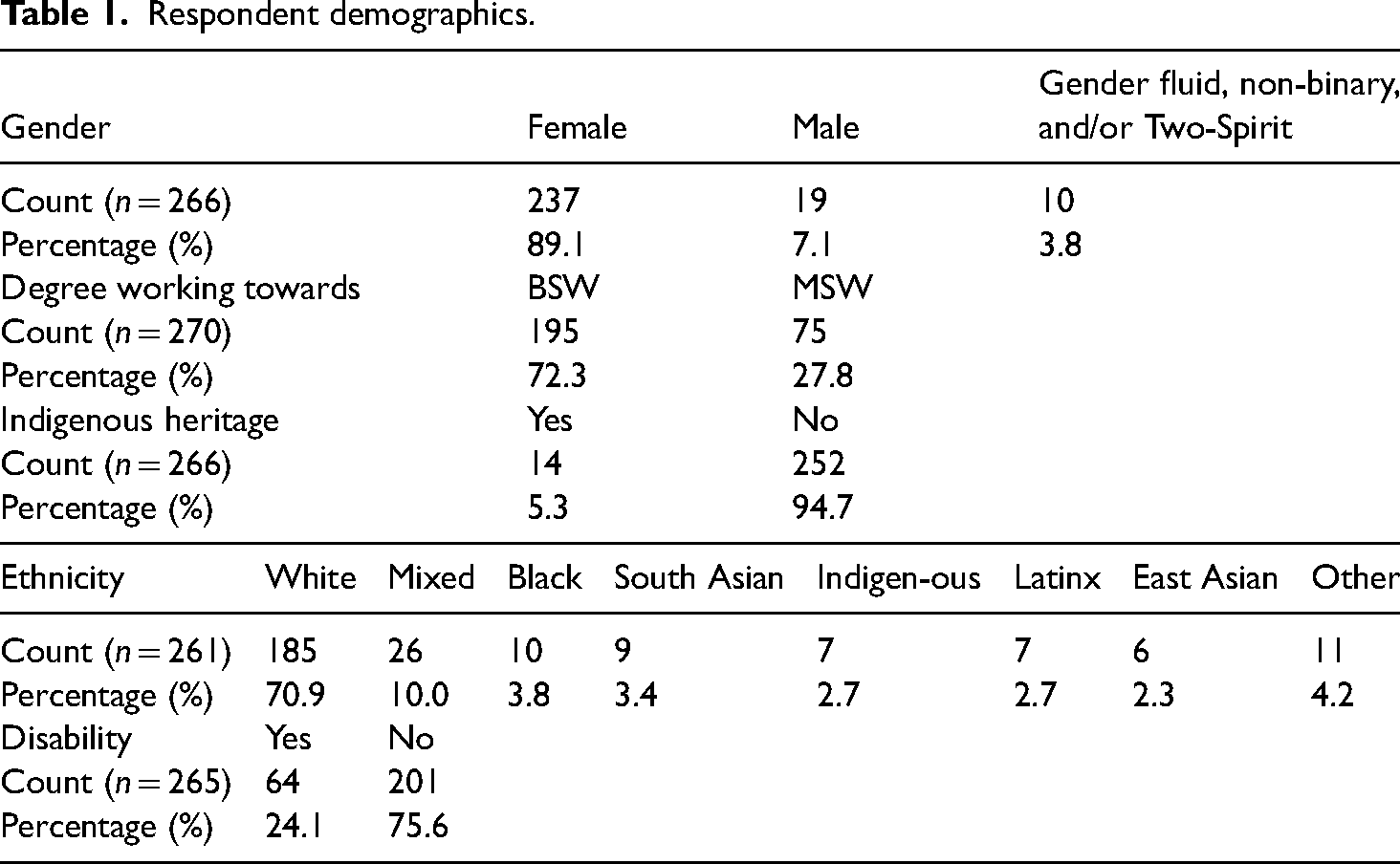
Out of all respondents, 89.1% were female, 5.1% were male, 3.8% were gender fluid, non-binary, and/or Two-Spirit, and 70.9% of the survey respondents self-identified as White/Caucasian (see Table 1). BSW students made up the majority of respondents (72.2%), while 27.8% were MSW students. A total of 59.3% of survey respondents were practicum students between January and April 2020, 25.5% between May and August 2020, and 31.9% of students were planning for a practicum between September and December 2020. This data included some overlap as some students had more than one practicum in 2020.
Respondent demographics.
Field education delivery
When asked how COVID-19 affected their field education experience, 59.9% of students indicated their hours were reduced and 50.7% had placements that were terminated earlier than scheduled. Other responses included placements moving completely online (36.0%), decreased requirements and learning goal expectations (34.0%), having a complete change in field placement (25.9%), and continuing to complete their practicum from home (23.3%). Only 5.5% of respondents reported no effect on their field placements and 5.8% had their practicum deferred.
Students reported that the sudden end to placement was difficult. A survey respondent explained, “the abrupt stop left me feeling unfinished in my placement with my clients and my coworkers” (Student Respondent 136). Others noted that, although their placement ended abruptly, they were satisfied they had sufficient hours to meet their requirements. According to a survey respondent, “I was extremely lucky. I had banked some hours and was just working on completing my final research project, finishing up my assessment. I had already hit my learning goals” (Student Respondent 204). Open-ended responses showed a trend of students perceiving that remote placements lacked opportunities to build real-life skills working with clients and a perception of a lack of agencies available to take practicum students.
For students planning their practicum for Fall 2020, a great deal of uncertainty was expressed. Many were unsure about the field of practice they would be assigned or if they would even get a placement. In part, this uncertainty stemmed from the lack of information or direction from institutions that were still adjusting procedures with practicum placements. For example, some institutions were considering a return to in-person placements. This new possibility left students who had already made the shift to online practica feeling disappointed. As stated by a survey respondent: I’m really disappointed that I have not been able to gain direct clinical experience in the area of practice I am interested in. I am further disappointed to know that my colleagues were offered opportunities in this area and wonder about the rationale for making those decisions. (Student Respondent 18)
Student needs and concerns
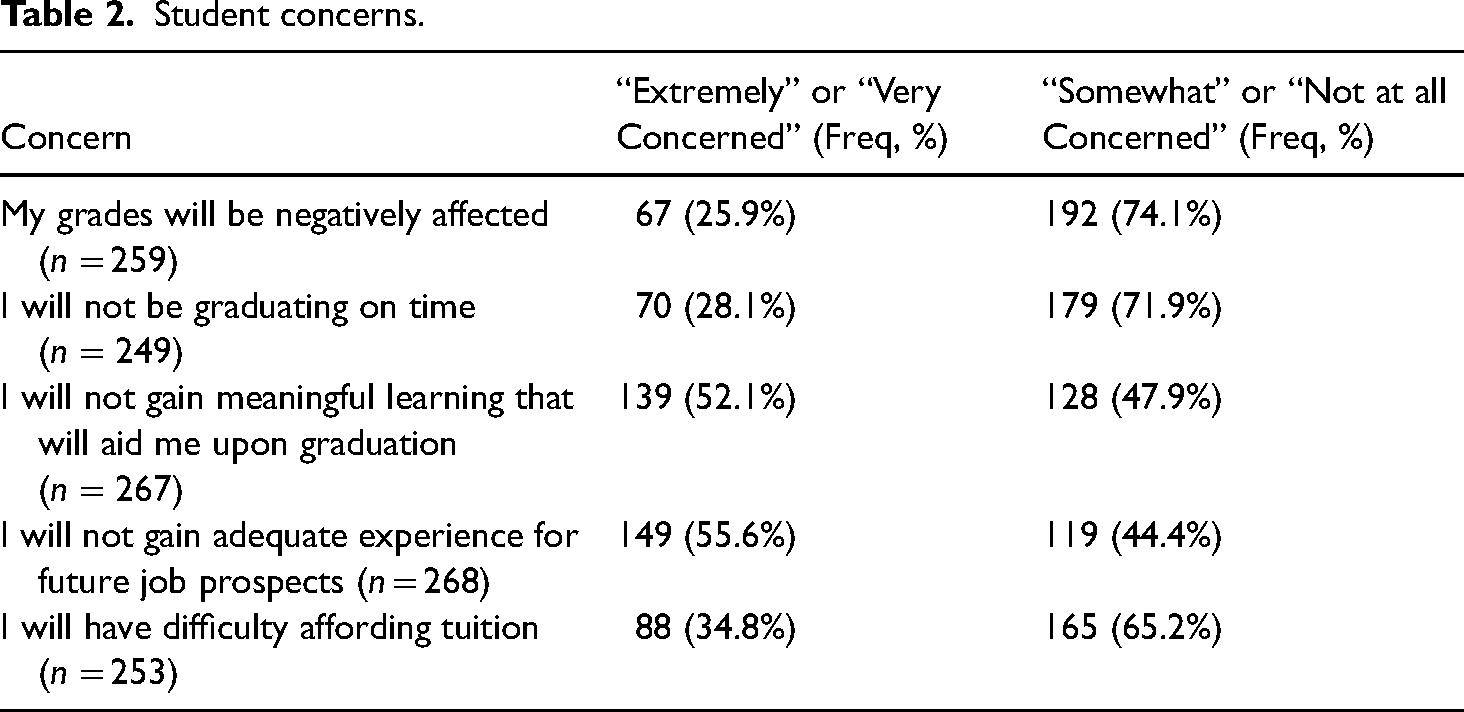
Students expressed multiple concerns related to COVID-19 impacts on their practica (see Table 2). Just over half (55.5%) of respondents were “extremely concerned” or “very concerned” they would not gain adequate experience for potential future job prospects (n = 268), and slightly fewer (52.1%) were concerned they would not gain meaningful learning to aid them upon graduation (n = 267). One student explained, “I am EXTREMELY concerned about being hired in the field with such little direct practice … my mental health has suffered significantly during this time due to fears of [my] future social work practice” (Student Respondent 248). Other concerns included difficulty affording tuition (34.8%, n = 253), grades being negatively affected (25.9%, n = 259), and not graduating on time (28.1%, n = 249).
Student concerns.
Students ranked their needs in practicum during the COVID-19 pandemic (see Table 3). From most important to least important, students’ needs were as follows: (1) flexible learning plans, hours, and accommodations; (2) supportive and accessible supervision; (3) prioritization of health and safety; (4) mental health supports and resources; (5) financial supports and resources; (6) technological supports and resources; and (7) accessibility supports. One student expressed that, “some more flexibility regarding the required hours and time frames to complete hours is needed. As well as some flexibility for parents lacking adequate childcare to complete the practicum” (Student Respondent 138).
Student needs.
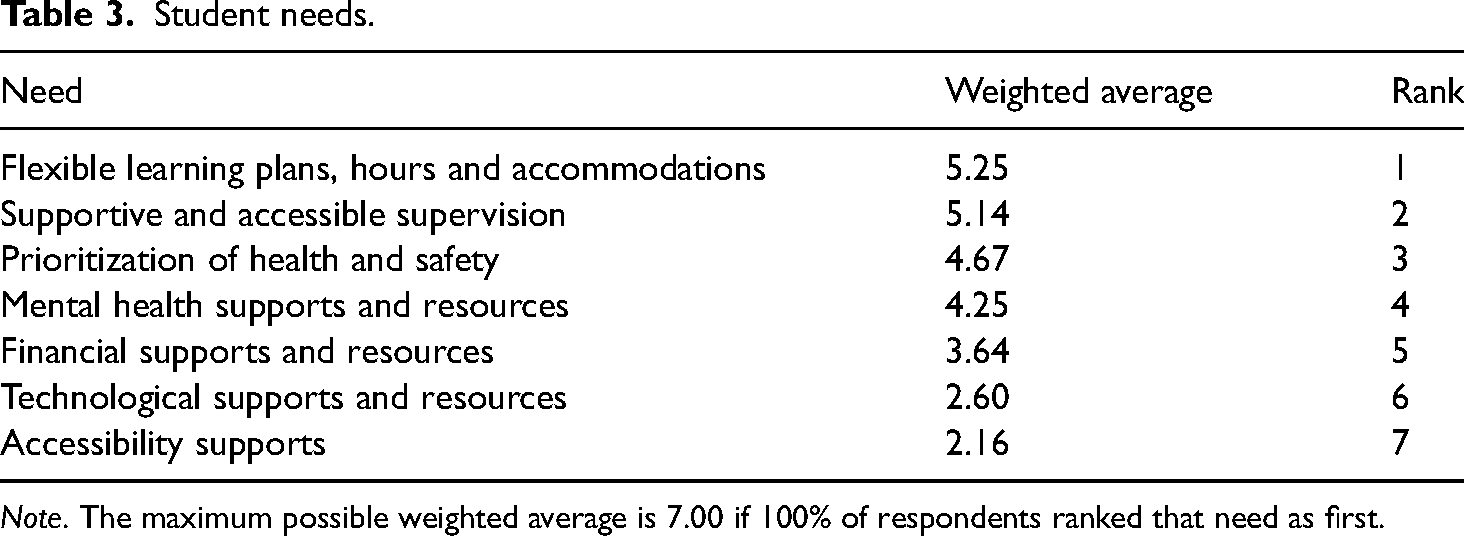
Note. The maximum possible weighted average is 7.00 if 100% of respondents ranked that need as first.
Institutional responses to COVID-19
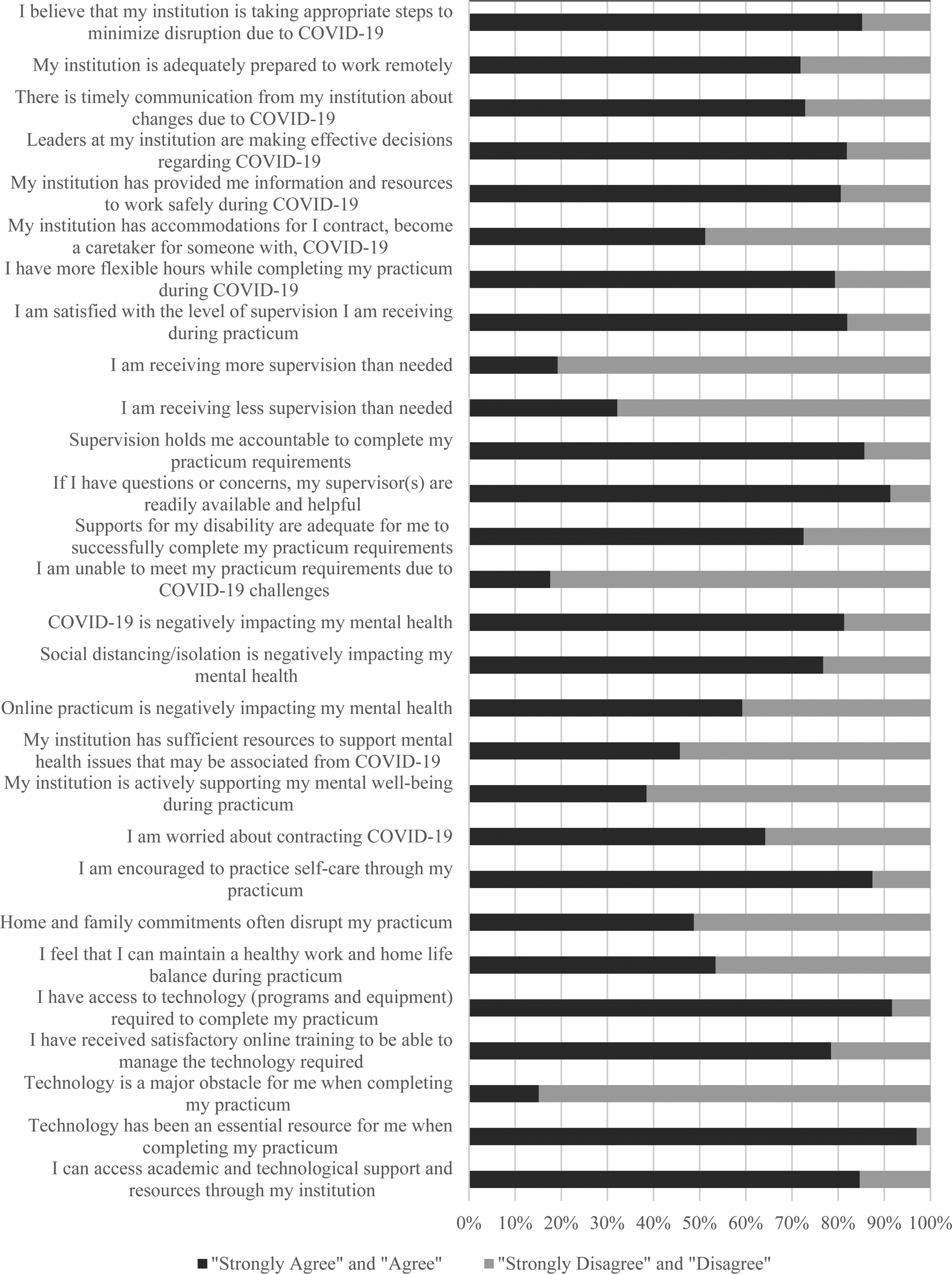
Students were generally positive about their academic institution's response to the COVID-19 pandemic (see Figure 1). There were 58.0% (n = 288) who “strongly agreed” or “agreed” their institution was taking appropriate steps to minimize disruption, 54.4% (n = 283) “strongly agreed” or “agreed” institution leaders were making effective decisions regarding the pandemic, and 50.1% (n = 271) “strongly agreed” or “agreed” their institution had provided information and resources to safely participate in the field during the COVID-19 pandemic. According to the respondents, 42.1% (n = 285) “strongly agreed” or “agreed” that their institution was adequately prepared to work remotely. However, only 32.5% (n = 197) of respondents “strongly agreed” or “agreed” their institution would make accommodations for them if they contracted COVID-19 or became a caretaker for someone with COVID-19.
Although most students were satisfied with their postsecondary institution's response to the COVID-19 pandemic, some identified concerns. Students expressed discontent with the general expectation that students complete an unpaid practicum and discussed financial challenges due to diminished paid work opportunities during the pandemic. Furthermore, students perceived that paying the same tuition and institutional fees when practicum hours and university services were reduced, was unjust. One student explained, “I understand that this is a complex topic, but the learning and experience that I am paying for is not being delivered to the fullest extent online” (Student Respondent 304). Consequently, students called for a decrease in university tuition and fees and increased financial support from institutions during the pandemic.
Students also noted the lack of communication from institutions left them uneasy about the future. For example, 18.9% (n = 286) of students “strongly disagreed” or “disagreed” that their institution provided timely communication about changes due to COVID-19. One participant stated, “I have not received any information on policies surrounding flexible learning. I’m not confident my university will have a reasonable plan in place” (Student Respondent 283).
Practicum supervision
Practicum supervision was delivered online for the majority of respondents (61.2%); however, some students received partial to full in-person supervision (55.8%), and over the phone 12.2% (n = 312). Many students reported engaging in multiple supervision methods. Of those who used online supervision (n = 191), the most popular platforms included Zoom (60.0%) and email (27.7%).
Students were generally satisfied with their supervision (see Figure 1) from March through July 2020, during the first wave of the pandemic. Specifically, 72.2% of respondents “strongly agreed” or “agreed” their supervisors were readily available and helpful (n = 248), 60.3% “strongly agreed” or “agreed” supervision held them accountable for meeting practicum requirements (n = 239), and 56.2% “strongly agreed” or “agreed” they were satisfied with the level of supervision they were receiving (n = 235). Some students struggled with limited communication from their supervisors and a lack of supervisor adaptability and understanding of their situations. However, the majority aligned with this student's quote, “I had a tremendously supportive supervisor, this makes all the difference, who was able to help me value my own self-care, and that was important learning in my practicum” (Student Respondent 3).
Mental health
Students reported that the pandemic had a negative impact on their mental health, with mixed responses regarding the provision of mental health support offered by post-secondary institutions (see Figure 1). The majority of respondents, 51.2%, “strongly agreed” or “agreed” the COVID-19 pandemic was negatively affecting their mental health (n = 287), with 48.5% saying the same about social distancing and isolation (n = 293) and 36.7% about online practicum (n = 210). As one respondent articulated, “it's been difficult to remain creative, motivated, and mentally well while staring at a screen all day” (Student Respondent 38). A further 39.4% of respondents “strongly agreed” or “agreed” they were worried about contracting COVID-19 (n = 287).
While 62.0% of students “strongly agreed” or “agreed” they were encouraged to practice self-care during practicum (n = 258), only 23.1% “strongly agreed” or “agreed” that their institution actively supported their well-being (n = 238). Only 23.5% of students “strongly agreed” or “agreed” that their institution provided sufficient resources to support mental health issues possibly associated with the COVID-19 pandemic (n = 272). A participant stated, “No support was provided, and I was left with very poor mental health. I fear entering the workforce as I am not confident in my abilities due to [doing practicum during COVID-19]” (Student Respondent 289).
In short answer responses, students identified a lack of information from post-secondary institutions, feeling disconnected from their program, experiencing loneliness, and negative interactions with faculty and field supervisors as contributing factors that increased stress and mental health concerns. Of special concern was a perception among respondents located outside of the city of the main university campus. For example, one such student expressed feeling “extremely isolated from any mental health support [they] could have been offered” (Student Respondent 9).
One-third (33.1%) of respondents “strongly agreed” or “agreed” that home and family commitments were frequent disruptions during practicum (n = 236). With schools and daycares closed, a particular burden was placed on students who were parents and caregivers. Many respondents commented on these challenges. A student participant explained, “the biggest challenge as a mother of four was having to homeschool three of my children while taking care of a baby and trying to complete my practicum to the best of my ability” (Student Respondent 303).
Student learning
Students were asked about skills they were concerned about missing due to the COVID-19 pandemic. Face-to-face skills (82.2%), direct practice skills (81.1%), and clinical practice (59.5%) were most frequently cited (n = 258). Other skills included community social work (48.3%), group facilitation (43.6%), presentation skills (32.8%), and program coordination (24.7%). Only 2.3% of respondents stated they were not concerned about missing opportunities to gain skills due to completing their practicum during the pandemic.
Respondents also noted unanticipated benefits of completing their practicum during the pandemic, with 56.3% of respondents gaining virtual or technology skills and 52.7% gaining self-motivation through self-directed study (n = 222). Almost one-third of respondents (31.1%) gained research skills in their practicum. While 8.0% of respondents had planned to complete a practicum in research before the pandemic, 14.2% of respondents actually completed a research practicum. One student explained, “[the COVID-19 pandemic] encouraged me to complete a research practicum that I would not otherwise have thought about” (Student Respondent 355). Other benefits included developing disaster social work skills (25.7%) and a better understanding of one's local community (22.1%). Open-ended responses highlighted increased time for oneself and the higher level of adaptability of online practica as beneficial. However, 16.2% of respondents found no unintended benefits to having a practicum during COVID-19.
Technology and online learning
With the sudden shift to remote learning, technology played a significant role in many social work field placements; 80.5% of students “strongly agreed” or “agreed” technology was an essential resource (n = 241) and 11.7% “strongly agreed” or “agreed” technology was a major obstacle (n = 248) in practicum (see Figure 1). Most students were satisfied with their access to technology and training. Specifically, 58.3% “strongly agreed” or “agreed” they could access academic and technological support through their institution (n = 266), 56.0% “strongly agreed” or “agreed” they had received satisfactory training to manage the technology required (n = 234), and 76.0% “strongly agreed” or “agreed” they had access to the technology necessary to complete their practicum (n = 262). Geographic location (e.g., rurality, remoteness) was a factor for students who had poor access to technology. As explained by a student participant, “rural internet made it challenging at times” (Student Respondent 200).
As an alternative to deferring practicum, a student acknowledged that “online practica are helpful in allowing us to complete our degrees in a timely manner” (Student Respondent 174). Some students enjoyed the increased flexibility of remote learning and noted positive opportunities. A student explained, “training outside of [my] community … was made available virtually due to COVID that we would not have had access to otherwise” (Student Respondent 80). However, other students did not find online learning meaningful, with one describing their school's online clinic as a “fake practicum” (Student Respondent 210). One student described the loss associated with the transition from in-person to online Indigenous social work practicum: I missed out a great deal by not being able to learn from Elders sitting in circle. For Indigenous communities and Wisdom Seeking, being together and sharing together is essential. It is not the same when done through technology and not all communities have stable access to technology (stable internet connection, etc.). I also missed out on many ceremonies that were meant to be part of my learning plan. (Student Respondent 200)
Students reported adapting to the increased use of technology and online learning in their remote practica. Some students approached online learning through a future-oriented lens. One expressed a positive experience, stating, “it taught me to work remotely which I believe is the way social work will move in the future” (Student Respondent 214). In a similar way, another student noted: The reconceptualization of what learning looks like has been explored with practicum during COVID-19. Traditional concepts of what social work skills look like have been challenged by external factors such as the pandemic and internal factors such as thought leaders who are quick to respond. (Student Respondent 1)
Discussion and implications
The study indicates the COVID-19 pandemic has had a significant impact on social work field education from the perspectives of BSW and MSW practicum students across Canada. While over half of respondents felt their field experience was diminished due to reduced hours (59.9%) or early termination (50.7%), it is important to note that only 5.5% of respondents reported having their practicum deferred. This is a remarkable success for social work education and in stark contrast to the reported national average of 35% of Canadian post-secondary students across disciplines who had their placements deferred due to the pandemic (Bazinet et al., 2020).
The survey found that the pandemic created uncertainty for students who were planning for their practicum. As post-secondary institutions were also pivoting to respond to changing procedures, there was a need for improved communication regarding the availability of placements and their respective fields of practice. Students appreciated new flexible learning plans and methods, including hours and accommodations, the availability of supportive and accessible supervision, the prioritization of health and safety, and other supports that were mobilized during the pandemic. Field education programs need to ensure that these supports are maintained in later phases of the pandemic and post-pandemic. Given that more than half of the survey respondents were extremely or very concerned about gaining adequate field experience for their future social work practice, there is a need for social work education programs to consider how to support students in developing direct practice skills in virtual environments and potential opportunities for professional development beyond formal education. With the increased delivery of virtual social services due to the pandemic, there is a need for future research to explore how to better educate and prepare students for virtual social work practice in diverse contexts.
Study results indicate that many students experienced financial stress during the pandemic. This concern has persisted through and perhaps been amplified by COVID-19, as post-secondary students were concerned with high tuition costs and living expenses even before the pandemic. For example, in the province of Quebec, thousands of students launched a strike against unpaid internships and practica in 2019 (Olson, 2019). This movement resulted in the province providing stipends for graduating students in social work, nursing, speech therapy, and other disciplines (Ministère de l’Éducation et de l’Enseignement supérieur, 2020). The payment of stipends to practicum students by the Quebec provincial government serves as a form of public recognition of the value and importance of field education, and the need for financial support and adequate working conditions in post-secondary field programs. Given the financial stress experienced by many students generally, which has been heightened during the pandemic, provincial and territorial governments, academic institutions, and social work programs should consider steps to make education more affordable, especially in pandemics or other strained conditions. Suggestions include decreasing tuition and fees as well as funding the labor provided by students during field education. This could be in the form of stipends or scholarships through academic institutions, governmental student aid, or labor payments at the agency level.
Financial stressors, uncertainties regarding potential job prospects, perceived negative impacts on grades, anxieties about contracting COVID-19, and experiences of isolation, all factored into the majority of respondents indicating that the pandemic had negative effects on their mental health. This finding is aligned with other studies showing decreased mental health in university environments as well as increased mental health and addiction issues in Canada (Amin, 2020; Canadian Centre on Substance Use and Addiction, 2020; Canadian Mental Health Association Windsor-Essex County, 2020). The negative impact of the COVID-19 pandemic on mental health, combined with ineffective or a lack of accessible post-secondary mental health supports and resources, was a concern identified by student respondents. Universities and social work field education programs should provide accessible mental health support for students in programs delivered virtually, including those living in remote areas and those attending satellite programs distant from the central campus. This may include developing student wellness plans, attending to the social aspects and challenges of virtual practica, and promoting flexibility in practicum requirements based on students’ individual circumstances (Apgar & Cadmus, 2021). The literature on promising practices in postsecondary mental health services and programs demonstrates an important role for faculty members to monitor student mental health, engage in intentional wellness-focused practicum supervision, create online mental health support communities, and provide mobile phone-based mental health resources (Johnson & Kalkbrenner, 2017; Kalkbrenner & Carlisle, 2021; Meany-Walen et al., 2016; Richards & Tangney, 2008).
Students were generally positive about their academic institutions’ pandemic responses with many agreeing that their institution was taking appropriate steps to minimize disruption, making effective decisions, and providing information and resources. Yet many challenges were noted, suggesting that post-secondary institutions should consider how to better facilitate accommodations for practicum students based on the survey responses.
Field supervision was delivered online for the majority of respondents generally using Zoom technology and email. Students were generally satisfied with their supervision and found that their supervisors were readily available and helpful. Some students struggled with limited communication from their supervisors and a lack of supervisor adaptability and understanding of their situations.
There were a number of unanticipated benefits associated with completing a practicum online during the COVID-19 pandemic including increased engagement in research and flexible learning opportunities. For others, more flexibility was needed, especially for parents and care providers who were completing their practicum without childcare or other resources. These mixed results demonstrate a need for educators to create more flexible quality remote learning opportunities and accommodate students’ various circumstances. It is also important to ensure equitable virtual learning opportunities that are accessible to students with disabilities and those residing in rural and remote communities with less access to technology.
Students were concerned about missing opportunities to develop specific skills, gain meaningful learning, and receive adequate experience for future career opportunities. This is consistent with Bazinet et al.'s (2020) finding that Canadian postsecondary students across disciplines were concerned about their credentials not being considered equivalent to those not obtained during the COVID-19 pandemic and their potential lack of job prospects in the near future. Professional social work associations, post-secondary institutions, and field education programs may consider providing specific training for current students and recent graduates on skills they may have missed during their practicum. For example, technology-based clinical simulations could supplement the learning of clinical skills (Washburn & Zhou, 2018), and professional development opportunities may be needed to enhance direct practice skills post-pandemic. Social work field education programs are encouraged to document promising and wise practices to learn from one another in order to ensure more students have access to quality experiences in the future. The most positive descriptions of virtual practicum experiences in the study incorporated meaningful learning, real-world connections, and flexible and supportive supervision.
With 92% of Canadian post-secondary education moving online during the pandemic (Bazinet et al., 2020), there is also evidence in other countries that the COVID-19 pandemic is spurring a global transition to more virtual learning (Agarwal & Kaushik, 2020; Sheth et al., 2020). While online social work programs have been offered for some time (Kurzman, 2019), the pandemic forced most programs to deliver remotely in an abrupt manner. The pandemic further forced many social work practitioners to practice remotely (Bright, 2020), which contributed to the development of new virtual social work practice opportunities. The anticipated benefits of virtual social work may include increased practitioner networking (LaMendola et al., 2009) and sharing of resources across jurisdictions. Virtual social work may allow clients in isolated areas to access support and may serve as a strategic means of reaching younger and other traditionally underserved populations (Law et al., 2019; Tregarthen et al., 2015). Social work education programs may use this opportunity to develop quality online and distance learning opportunities and technical supports, specifically in field education (Azman et al., 2020). Indeed, technology played a significant role in social work field education during the pandemic, which is likely to continue. Dube (2020) discussed the need to focus on social justice and equity in ensuring that rural students are not disadvantaged or excluded in the transition to online learning. Considerations must also be made for students living in Indigenous communities and others facing barriers (e.g., economic disadvantage) who may have faced additional barriers when demands for internet connectivity and computer access were imposed. Accordingly, there is a need to consider implications for clients who lack technology resources, which may limit their access to online services, resulting in further marginalization.
Future research is needed to better understand the impacts of the COVID-19 pandemic and other forms of disaster on field education from the perspective of field coordinators and directors, faculty liaisons, and field instructors in agencies. There is a need to collect more disaggregated data on diverse student experiences to reveal inequities. This study has provided a snapshot of student experiences during the first wave of the COVID-19 pandemic; however future research could assess subsequent waves of the pandemic and pandemic recovery. Additional research is needed to explore promising practices in virtual field education and to improve student wellness and mental health supports in post-secondary institutions generally and in the face of adverse conditions such as the pandemic.
Limitations
There is a lack of research on the impacts of pandemics, specifically COVID-19, on social work field education, particularly from the perspectives of students. The findings of the survey are not generalizable due to the relatively small non-random sample size and the lack of a control group. Further granularity in the data would have added in more deeply determining differences in specific types of placements or field sectors. Survey results only describe experiences during the first wave of the pandemic, it is likely that further waves of the pandemic presented a different picture of harms and benefits. We acknowledge that some experiences and concerns may not be solely attributable to the pandemic, and there may be variability in impact across the diversity of social work field placements and areas of social work practice. The timing of the survey in the summer of 2020, that is, in the depth of the COVID-19 pandemic, may have limited the response rates. Further, students who completed a practicum between January and April 2020 may have graduated and lost contact with their post-secondary institutions, and many staff in social work programs were notably on vacation during recruitment, hence were not responding to emails or promoting study participation. Staff working remotely through the pandemic have been challenged with an increasing number of emails and may have failed to see the survey or view it as a priority in their busy work lives, hence this may have lessened access to the survey by students. Furthermore, survey criteria sought students with a practicum between January and December 2020, so students whose placements were canceled or deferred may have believed they were ineligible. Only students with internet access could be included in the sample, thus students with limited technology access may not be included in the sample. There was an underrepresentation of French language practica as the survey had 11 French responses and 356 English responses.
Finally, the survey design was informed by our knowledge of the literature and our lived experiences during the pandemic, which may be perceived as potentially skewing the analysis and interpretation of our findings. We attempted to limit bias by having multiple research assistants and co-investigators from across Canada critically review the survey design and questions, contribute to the analysis, and report findings.
Conclusion
This study found that the impact of the pandemic on social work field education was significant. While some students enjoyed flexible and rich learning opportunities, other students were deleteriously affected. The COVID-19 pandemic has shed light on the challenges facing social work field education, and the need for transformation during and beyond this global crisis.
Because of pandemic requirements, social workers have undergone transformative changes in practice including rapid uptake of virtual technologies (Ashcroft et al., 2021). New innovations were spurred by the rapid and broad uptake of new ways of offering field education. However, challenges with access to technology and internet speed/access were notable. With the increase in virtual social work practice, there is a need to better integrate technology in practice and in field education.
We anticipate that the growing body of literature will continue to show the social and economic impacts of the COVID-19 pandemic on students, social workers, and clients. Given these impacts, there is a pressing need to support students, now more than ever, through quality field placements and flexible practicum options.
Footnotes
Ethics
This study was approved by the University of Calgary Conjoint Faculties Research Ethics Board REB number 19-0901_MOD2.
Funding
The authors disclosed receipt of the following financial support for the research, authorship, and/or publication of this article: This study was funded in part by the Social Sciences and Humanities Research Council of Canada (SSHRC) (no reference number).
Conflict of interest
The authors confirm that they have no conflict of interest in respect of the material submitted in this article.
Author contributions
Cara Au was involved in study design, data collection, analysis, and manuscript preparation. Julie Drolet was involved in study design, data collection, analysis, and manuscript preparation. Grant Charles was involved in manuscript preparation. Monica Franco was involved in study design and manuscript preparation. Jesse Henton was involved in study design and manuscript preparation. Marina Hirning was involved in study design and manuscript preparation. Vibha Kaushik was involved in analysis and manuscript preparation. Sheri McConnell was involved in manuscript preparation. David Nicholas was involved in manuscript preparation. Amanda Nickerson was involved in study design and manuscript preparation. Jessica Ossais was involved in study design, data collection, analysis, and manuscript preparation. Heather Shenton was involved in study design, data collection, analysis, and manuscript preparation. Tamara Sussman was involved in manuscript preparation. Gabriela Verdicchio was involved in study design and manuscript preparation. Christine A. Walsh was involved in manuscript preparation. Jayden Wickman was involved in study design, data collection, analysis, and manuscript preparation.
Acknowledgments
Special thanks to student research assistants Laurie Desrochers and Miranda Gamboa for the French translations.
