



Abstract
Summary
This article uses the 50th anniversary of social work education provision at one of north-east Scotland’s universities as an opportunity to reflect on social work education outcomes and motivations for undertaking training. This empirical assessment is based on the detailed responses to questionnaires and interviews with social work graduates who studied between 1968 and 2012 to evaluate social work training and education among graduates. We use the Kirkpatrick model to evaluate social work education.
Findings
We highlight the combination of prior experience with social work and a sense of altruism that served to motivate students to engage in training. We discuss the levels of preparedness for practice based on training and note that it is the combination of teaching and placements that benefits students most. We reflect on the centrality of a common set of social work values that arise from a period of introspection during education, and we show that these values are incorporated into both professional and personal life.
Applications
We show that ‘big picture’ and evaluations of social work education are important in order to orient social work education in line with political and social change. We also suggest that educators should be cognisant of the importance of personal development and growth that are central to the training of social workers. Rather than seeing personal development as a by-product of social work education, we argue that training that strengthens social work values of justice and empathy is imperative.
Introduction
Despite over a century of social work education programmes across Britain and around the world, there is a surprising lack of in-depth understanding of the outcomes of social work education (Carpenter, 2011; Orme, 2018). While there are module and course evaluations that give superficial insight, ‘bigger picture’ or longitudinal studies that consider course outcomes and the levels of preparedness for practice are needed in order that we can successfully understand the strengths and weaknesses of social work education (Orme, 2018). In this article, we address this bigger picture outcome gap through an empirical study that assesses and evaluates the outcomes of social work education. Our work goes some way to show how this gap can be filled through in-depth case studies, the findings of which can then feed back both into theory and practice. Our case study involves social work graduates from a university in the northeast of Scotland (referred to henceforth as ‘the university’), which has a tradition of educating social workers. Understanding the role of social work education in universities is of utmost importance as the social care sector experiences increasing cuts to funding that will affect future social workers (Evans et al., 2012).
Our focus on a Scottish university is particularly timely. In 2015, the Scottish Social Services Council (SSSC) – the regulatory body for social services work in Scotland – completed a review of social work education, and established that current qualifying education in Scotland is ‘fit for purpose’ but that the profession and universities needed to consider issues around access to education and new challenges faced by social workers in challenging times. Other topics that arose in the review were around continued professional learning and the potential for a mandatory supported year for newly qualified social workers (NQSWs). Our research was conducted three years after publication and shows that there is much to be learned from looking back at previous successes and failures.
Using the Kirkpatrick model as our evaluative frame, we are able to assess educational and training outcomes (Carpenter, 2011). This model uses four outcome ‘levels’ to gauge how impactful and meaningful training or educational instruction has been. These levels are reaction, learning, behaviour and results (Kirkpatrick, 1967 in Carpenter, 2011) and consider student satisfaction with a course or training programme, knowledge increase and application of knowledge. Using the Kirkpatrick model allows us to consider the successes and weaknesses of individual education programmes and to see how students apply their knowledge. We show the Kirkpatrick pyramidal model in Figure 1. We also acknowledge Stephen Webb’s (2015) observation that social work identity is not widely understood or researched (p. 15) and, through reference to social work graduates’ reflections, we offer insight into the ways in which social workers identify, the values with which they align, and how a social work education prepares students for the process of introspection and value acquisition. A mixed-methods approach was used for the study, combining questionnaires with a series of interviews, and focus groups. All participants were social work graduates of the university. A total of 33 questionnaires were completed and returned for analysis, 10 extended interviews were conducted, and 3 focus groups were held.
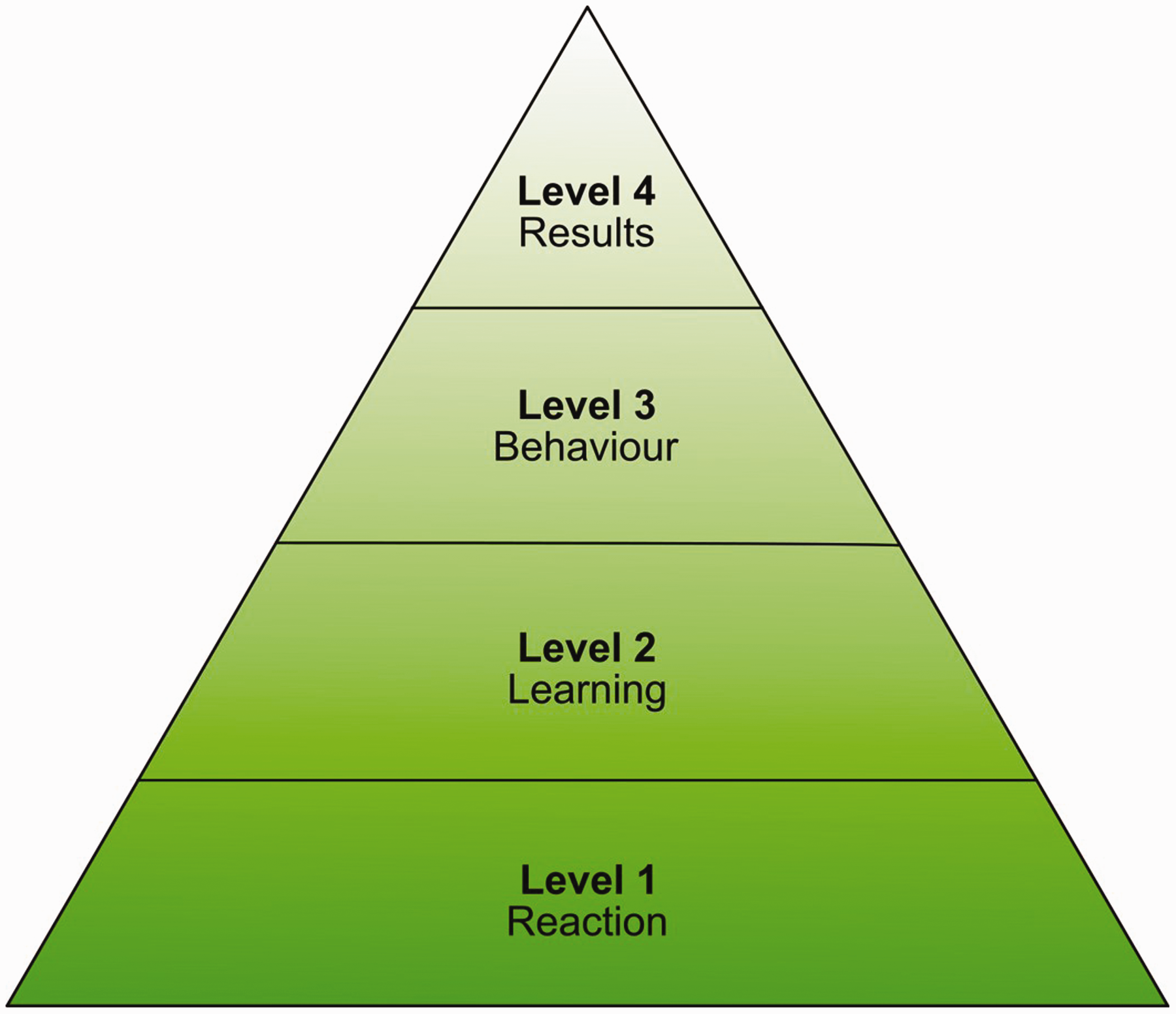
The Kirkpatrick Model.
This article first briefly highlights what we already know about the outcomes and identities of social work graduates, before discussing the methods our case study used. We then explore the study’s findings. The levels of the Kirkpatrick model are interwoven with the emergent themes in the main body of the article. First, in order to understand from where social work graduates come and what draws students to the profession, we reflect on graduates’ journeys into social work, considering their experience with the field prior to the commencement of education and their motivations for undertaking study and showing that those undertaking social work education were motivated by a desire to ameliorate lives and society. We also provide data on the career paths of social work graduates and show that statutory posts remain the favoured career path for graduates. We then turn to graduates’ reflections on the education that they received at the university, which draws on Kirkpatrick’s ‘reaction’ and ‘learning’ levels. Next, we turn to an oft-mentioned theme: social work values. This sense of a common ideology and value system serves as the link between Kirkpatrick’s ‘learning’ and ‘behaviour’ levels, marking the transition point between impact of education, and modification of behaviour and actions. In the subsequent section, we turn to the impact of social work education and instruction, which ties with the ‘behaviour’ and ‘results’ levels of Kirkpatrick’s model. We discuss the changes to self and society as a result of social work education and discuss graduates’ perceived impact on service users and the community. Before offering some concluding comments, we also discuss respondents’ self-reflection and retrospective assessment of their career as a social worker.
Outcomes and identities of social workers
Recent research has indicated that social workers perceive themselves as compassionate agents of positive change (Yuill, 2018). Similarly, Miehls and Moffatt (2000) explore the notion of the social worker performing as a ‘reflexive self’. Interestingly, Buchanan et al. (2007), in their study comparing social work and business degree students, highlight that social work graduates are more ‘careerist’ than business graduates, implying that social workers are motivated by career progression and status, which runs contrary to most literature that highlights the compassionate nature and motivations of social workers (Yuill, 2018). While this begins to address some uncertainties, we could still learn more about why social workers have historically sought to enter the profession, and how well prepared they feel for practice following their education.
As previously stated, there has been little research that adequately evaluates social work education from (a) a social work graduate’s perspective and (b) from a longitudinal perspective that considers the longer outcomes and satisfaction rates as opposed to analysing immediate post-graduation employment outcomes, for example. Thyer et al. (1997) are an exception to this trend as they compared the effectiveness of distance learning versus in-person interaction for social work education, concluding that in-person teaching yielded better outcomes. Their study evaluated the success of the learning according to students’ perspectives, but was primarily oriented at assessing the outcome of distance learning and televised instruction. Their study represents, however, an example of a study that considers the outcomes of social work education programmes.
While Thyer et al. (1997) did consider and evaluate the entirety of a course of instruction, most studies that have engaged in evaluation have largely considered how individual aspects of the social work education are beneficial to students in their career. A common theme in this section of the literature relates to evaluating the benefits of practical education. Barton et al. (2005), for example, evaluate the benefits of including placements in social work education and conclude that placements are beneficial as part of their degree programme and that they serve an important role from an employment perspective, ‘with 60% of respondents reporting that students were subsequently employed by the practicum agency’ (p. 301). Whether this figure is still valid in light of the contraction of the social care sector needs to be examined further in future research. Fortune et al. (2008) found similar benefits when considering the outcomes of practice fieldwork putting skills into practice left students more confident in their abilities and was associated with ‘greater self-evaluation of performance’ (p. 239). Recent developments have seen the establishment of Social Work Teaching Partnerships (SWTP) that have been set up to address the challenges associated with providing robust practice learning experiences, in addition to improving the training experience more generally (Department for Education, 2016). The arrival of the SWTP system should permit a straightforward and streamlined process for securing student placements. It should be noted that the SWTP was developed by the Department of Education and the Department of Health and Social Care at a central UK government level, but the partnerships do not exist in Scotland.
Other aspects of professional and training practice have been evaluated, such as the role of mentorship, which has been found to be beneficial from both the perspective of the mentor and the mentee (Collins, 1994). Worth noting in Pauline Collins’ (1994) study of mentorship in social work is that the evaluation measures that she uses are highly oriented towards financial gain – ‘career success, career satisfaction, and income level’ (p. 413) – as opposed to whether particular professional practice led to satisfaction with meeting core values, for example.
A study of the four-year Bachelor of Social Work degree at the University of Newcastle, Australia, evaluated the benefits of including critical thinking instruction in the curriculum. Evaluating the outcomes of this instruction using ‘The Cornell Critical Thinking Test, the Ennis – Weir Essay Test and a qualitative student self-appraisal’ showed that the critical thinking instruction helped social work students to hone their critical thinking skills (Plath et al., 1999). Studies such as this evaluate specific parts of a course of instruction in a ‘snapshot’ sense, considering the immediate effects and outcomes. What these studies do not do is consider the longer story of these outcomes, evaluating the educational experience in the longue durée, which is where our study intervenes.
Methods
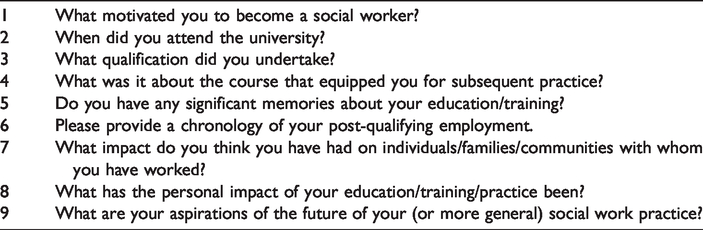
Coinciding with the 50th anniversary of the social work education programmes at the university, a call for participants was put out through local media, social media, alumni networks, and local councils and voluntary organisations. Respondents were asked to get in touch with a representative from the study if they wished to participate. Those interested in being involved with the study were emailed a questionnaire (see Table 1) consisting of nine questions that asked participants about their educational journey, subsequent career, reflections on their social work education, and aspirations for themselves and the field of social work more generally. A total of 33 participants completed questionnaires. This sample sizes we used in this study were selected in order to attain the depth of analysis that we sought, and they correlate to other social work studies (see Aadnanes, 2017; Barton et al., 2005; Yuill, 2018). They had graduated from the university between 1968 and 2013 and had studied for one of the following qualifications: BA Applied Social Sciences with Diploma, BA Applied Social Science with Certificate of Qualification in Social Work (CQSW), Diploma in Social Work, Diploma in Social Work by Distance Learning, Certificate in Social Work (CSW), PG Diploma in Social Work, CQSW, BA Public Administration with CQSW, BA (Hons) Social Work, BA (Hons) Social Work by Distance Learning, MSc and Diploma in Social Work (DipSW), BA (Hons) Social Work with DipSW. All of our participants had started and, crucially, completed their social work education. Our sample does not account for any individuals who began a course of study and then dropped out, and this leaves a gap to be filled by future research.
Questions included in questionnaire.
The questionnaire respondents were asked if they wished to participate in in-depth interviews that would explore their responses in more detail. Ten interviews and three focus groups were conducted in the weeks following the submission of the questionnaires. The interviews and focus groups were semi-structured with a series of questions put to participants but, according the flow of the conversation, topics evolved naturally. Participants were asked about their preparedness for practice following their education at the university, their reflections on their career, whether social work has changed as a profession, and advice that they would give to NQSWs. Those interviewed had graduated from the university between 1970 and 2013, with one participant being part of the first cohort of social work students taken by the university in 1968.
The questionnaire responses were quantitatively and qualitatively analysed, noting both numerical trends and common themes. Quantitatively, the data were analysed using a content analystic approach that employed descriptive statistics to draw attention to common trends, general themes and the frequency of certain responses. The audio-recorded interviews were transcribed and analysed qualitatively using a thematic content analysis to give an in-depth understanding of social work graduates’ experiences and to provide context. When we present a participant’s direct or indirect quotation, we use either a description of that participant’s background where relevant or a short abbreviated code that we developed to ensure anonymity (e.g. FG1).
Journey into social work
The questionnaires offered us a useful means of assessing how social workers came to enter the profession. Questionnaire respondents were asked about their experience with the field of social work prior to deciding to enrol on a course at the university. Twenty-two respondents (66.7%) had had direct experience or contact with social work or another caring profession, or with vulnerable groups. Respondents in this category had worked at or volunteered at homeless hostels, hospitals and residential facilities and had observed social inequality and marginality first-hand. This is consistent with the literature that suggests that social work students have had direct experience with challenging life events or have seen social injustice first-hand (Rompf & Royse, 1994; Yuill, 2018). Four respondents (12.1%) had not had direct experience but had ‘heard about’ social work through friends in the profession or through having family involved in the field. Their contact with these individuals led them to pursue a similar career themselves. Finally, six respondents (18.2%) had no direct contact or experience with social work or a caring profession prior to enrolling on the course (see Figure 1).
The various motivations to pursue a social work career coalesced around the desire to make an impact on people and society (see Figure 2). As a respondent who had completed the CQSW in 1979 stated, ‘I wanted to assist folk to get a fair deal and to improve their lives’. Only one respondent (3.1%) opted for a career in social work because of dissatisfaction in another field and another did not specify why s/he elected to transition into social work. Two respondents (6.1%) saw that a social work qualification would enhance their career opportunities. Two respondents (6.1%) reported that it was a respect for the social work values that led them to enter the profession. A further two (6.1%) had seen first-hand the work of inspirational social workers and wished to emulate them. Conversely, one respondent had seen the work of social work first-hand and had seen that it could be improved; this individual pursued a career in the profession in order to remedy the perceived shortcomings. Most common, however, the reasons given for entering the profession were a wish ‘to help people’ (30.3%), ‘to work with people’ (18.2%) and ‘to make a difference’ (21.2%); they all felt that social work was the means to achieve these goals. This fits with existing literature that suggests that social work students in England were motivated to train for ‘altruistic’ reasons (Stevens et al., 2012) and exhibited what Chris Yuill (2018) terms ‘a compassionate self’.
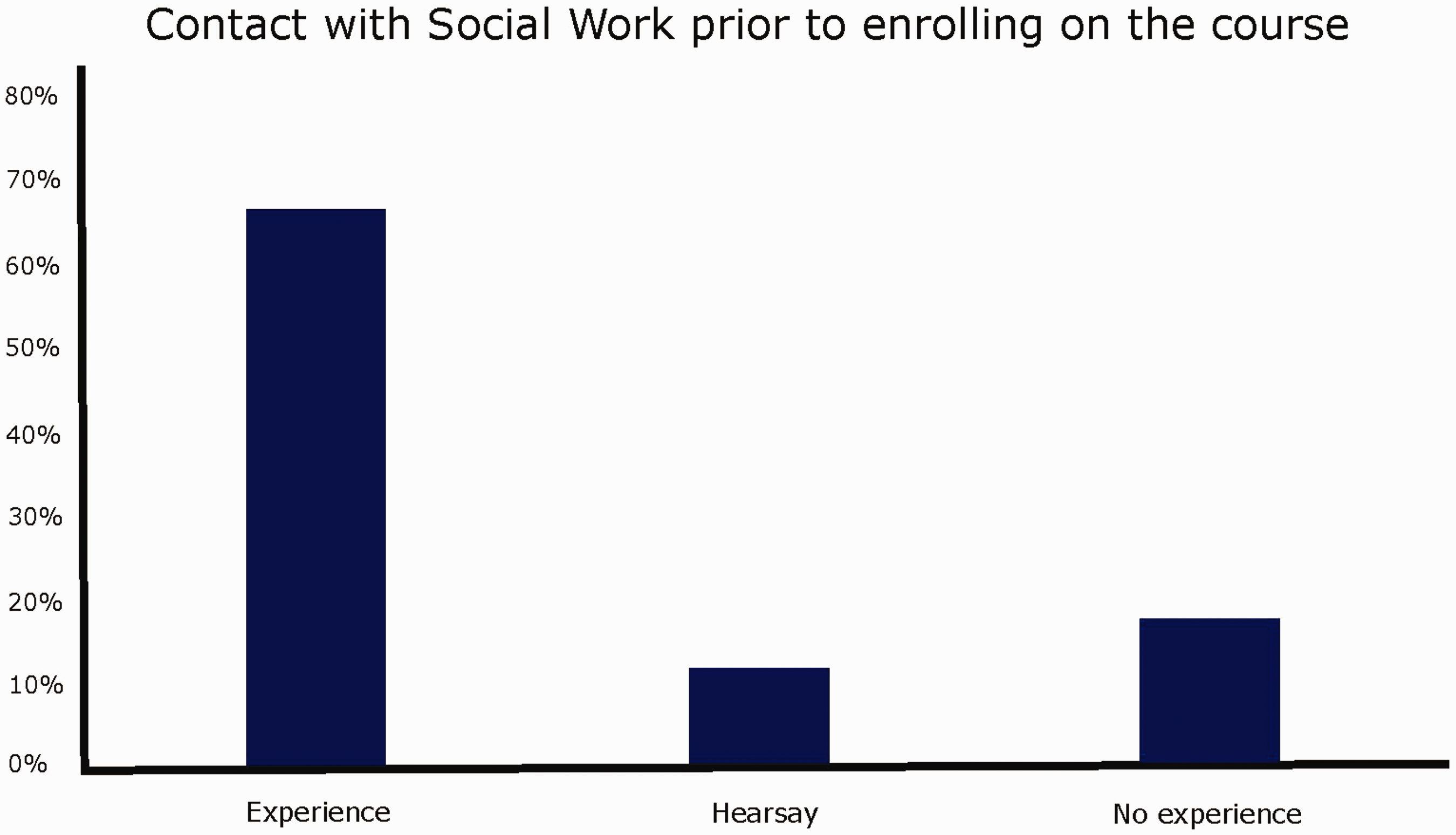
Respondents’ contact with social work or other ‘caring professions’ prior to enrolment on course.
Of note, is that those with no direct experience of social work overwhelmingly saw the field as a means ‘to help people’ (66.7%) and ‘to work with people’ (33.3%). This tells us something of the reputation that social work and social workers have in society; social work is perceived as a caring profession that has direct impact on lives. Relatedly, those who ‘heard about’ the profession through contacts saw social work as a means ‘to make a difference’ (50%).
There is little research on the career paths of social work graduates in Britain. Research in the United States suggests that between 18% and 25% of social work graduates of government funded Title IV-E social work programmes moved out of public sector employment and into non-profit agency (or third sector in the British perspective) social work practice (Robin & Hollister, 2002). The remainder pursued careers in county, state, school or hospital agencies (statutory posts) (Robin & Hollister, 2002). To understand the career outcomes of British social work graduates, we asked respondents about their career path and progression after graduating from the university (see Figure 3). Respondents had pursued careers in the third-sector (3.0%), in statutory settings (48.5%), a combination of third-sector and statutory posts (42.4%) and in academic settings (3.0%). This suggests that statutory posts remain the favoured employment option among social work graduates in Britain.
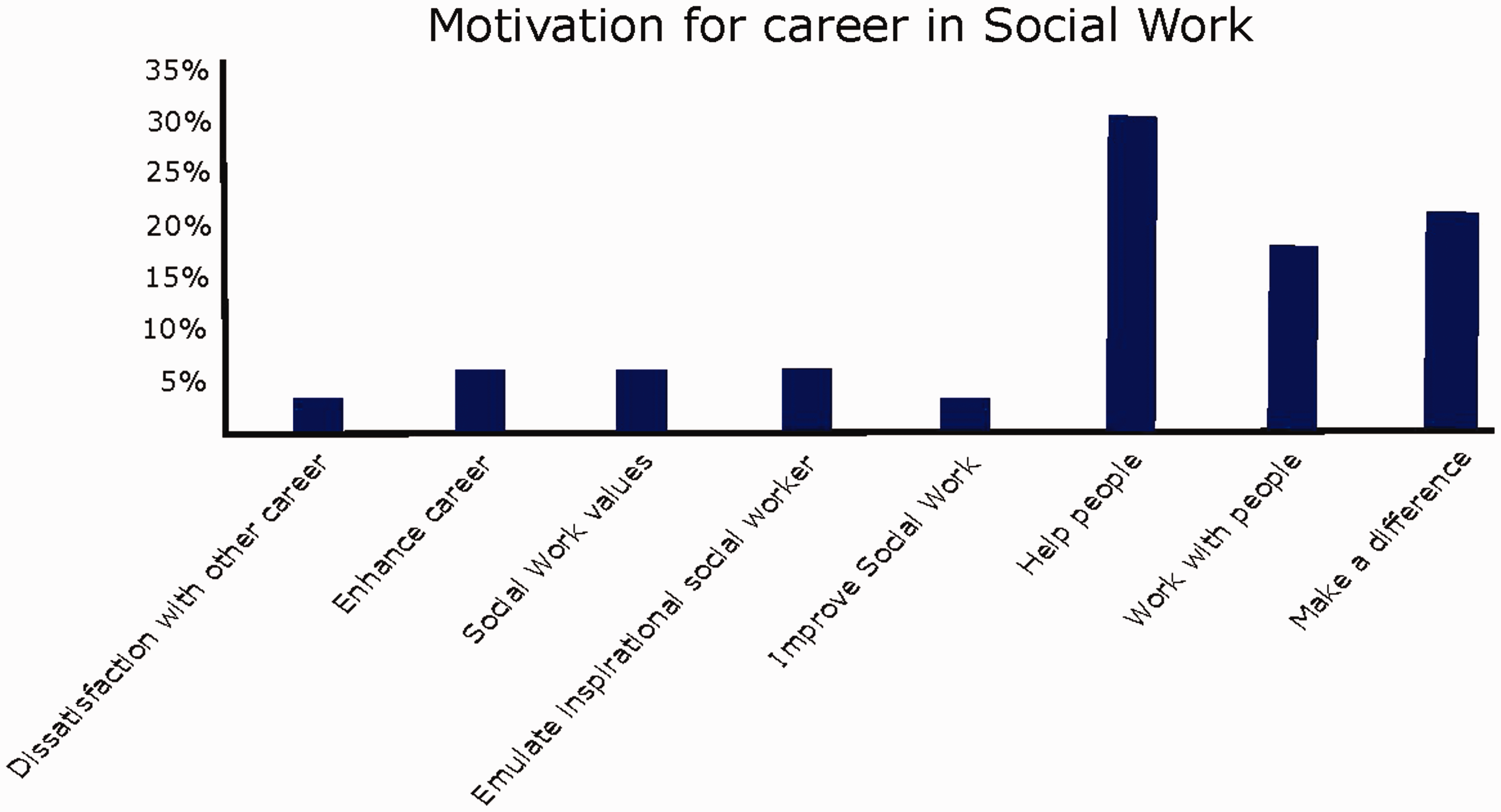
Respondents’ motivations for pursuing a social work career.
Of note is that all social work graduates pursued careers in social work. This is highly unusual among British higher education; as Lee Harvey (2000) explains, United Kingdom employers are at the forefront of ‘any discipline’ recruitment. That is, the majority of vacancies filled by graduates do not require someone from a specific discipline. On the contrary, employers recruiting in the UK often positively seek out graduates from disciplines other than that which would appear to be relevant. (p. 7)
Reflections on social work education
The previous section highlighted students’ journeys into social work and their motivations for entering the profession, thereby giving a sense of the expectations that social work students have when commencing study. The next sections will evaluate the efficacy and ability of social work programmes to meet the desired outcomes. These discussions will directly involve use of the Kirkpatrick model of evaluation. The first and second levels of this model are ‘reaction’ and ‘learning’. These refer to an assessment of the satisfaction with a given training programme or course of instruction and, relatedly, with the subsequent increase in knowledge. In this study, interview and focus group participants were asked to reflect on their education at the university (see Figure 4). All participants found that at least some elements of the course had prepared them well for their professional life. Over three-quarters of questionnaire respondents (78.8%) considered that the course at the university had prepared them entirely for their future work. The remaining 18.2% felt that some elements of their studies had given them an excellent grounding in social work. While the questionnaire responses allowed us to quantitatively assess the level of satisfaction with the education received, the interview data provided us with a depth of understanding. One interview respondent explains, ‘I am very positive about my four years here, I really am’ (LJ1, interview, 2018). The respondent continues, ‘I loved my course. I loved studying and I loved the placements I did’ (LJ1, interview, 2018). Another pointed to social work education as being about ‘basically opening your eyes and getting you to question things’ through both in-classroom teaching and through placements (FG1, interview, 2018).
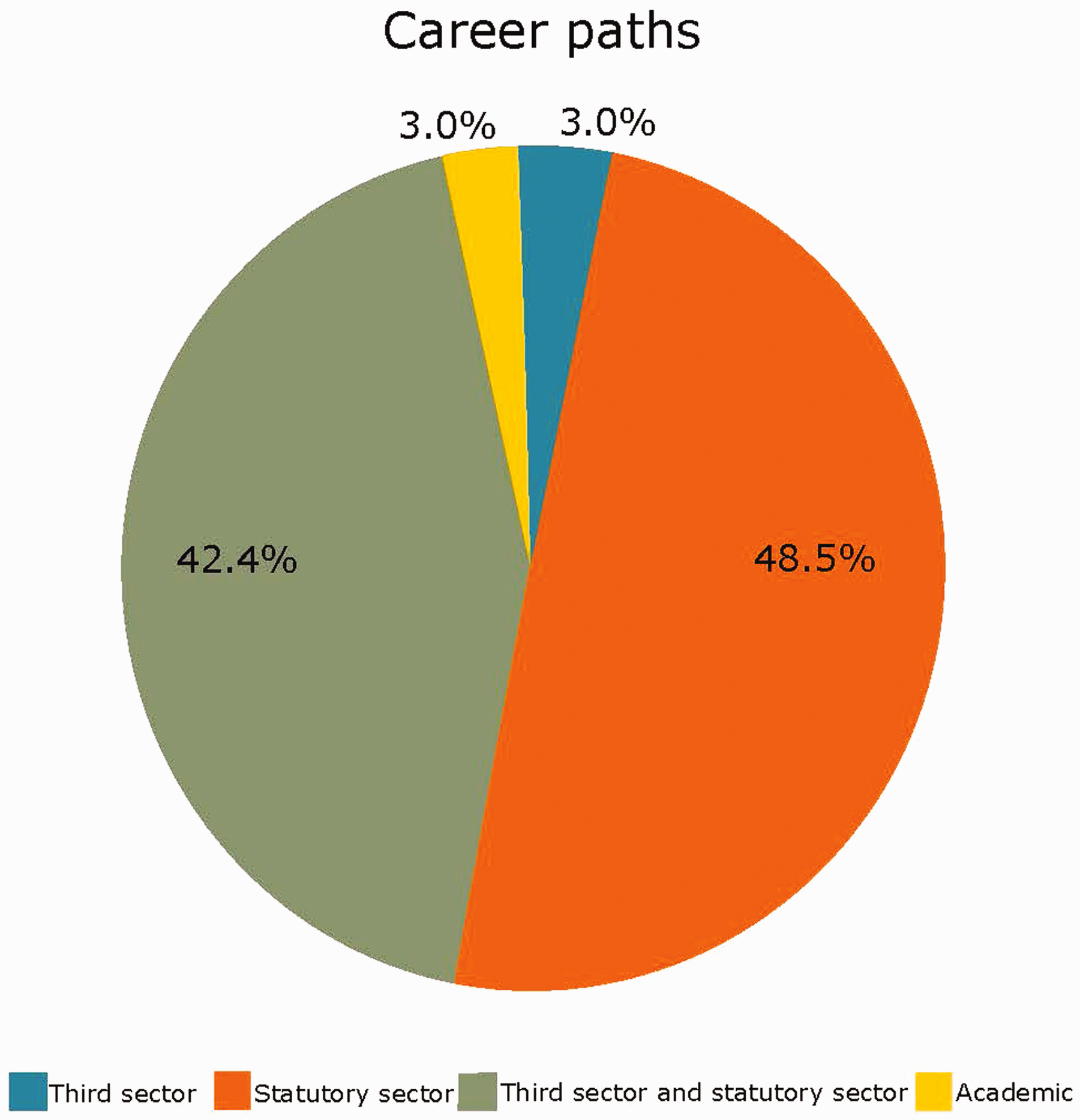
Career paths as reported by respondents.
When asked to consider which elements of the courses had prepared them for their careers, just under a quarter (24.2%) of questionnaire respondents felt that the teaching alone gave the necessary grounding, and 12.1% felt that it was the placements alone that had prepared them best. Generally, however, it was the combination of classroom learning (including seminars, tutorials and lectures) and placements that had led to a good level of preparedness for their career with 60.6% questionnaire respondents reflecting that the classroom learning grounded them in theory, whereas the placements helped to see social work in action (see Figure 5). One interview participant noted that ‘the two placements that I got at university really set me up for the rest of my career, so I do think there is a huge importance in getting the right placements for people’ (AH1, interview, 2018). Another participant picks up this theme, adding that, through placements, ‘you’re suddenly thrown into a world that’s completely new’ (JB1, interview, 2018) and that this is beneficial for growth. Other participants echo this, noting that there was significant benefit to having multiple placements, suggesting that the first placement was a chance to grow in confidence and as a person, where the second was about skill development (LJ1, interview, 2018). One respondent, reflecting on the choice of placements available, suggests that ‘if you have the opportunity to get a placement in the area that you would like to go into, then that would certainly help you when you’re leaving university to go into that field’ (FG3, interview, 2018).
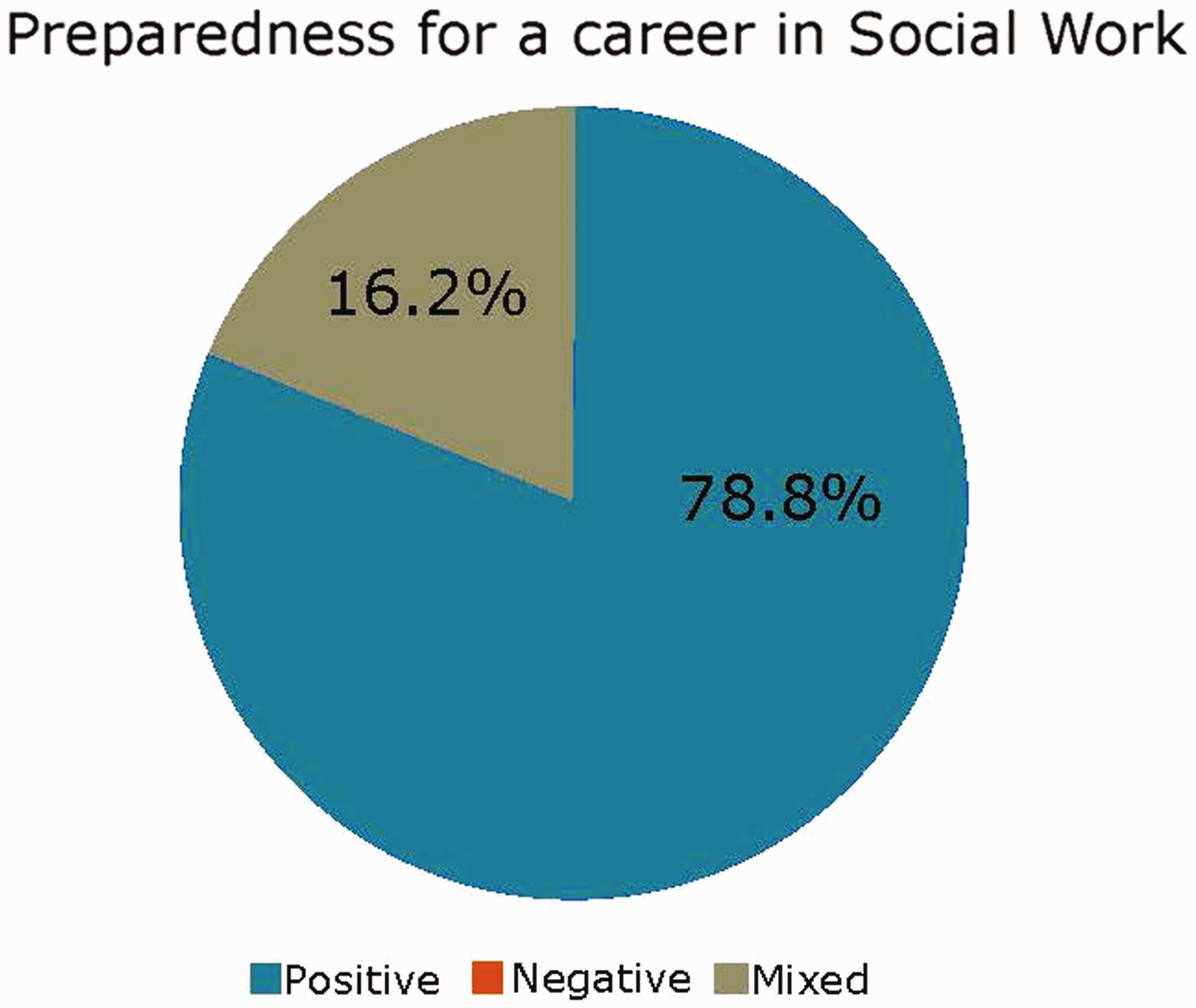
Respondents’ perception of preparedness for a career in social work following study at the university.
But placements were not the only element of the course that was valuable; participants also appreciated the teaching they received at the university, with participants crediting their seminars and lectures for helping them to develop a deep understanding of people (JM1, interview, 2018). Small seminar groups were noted as being particularly beneficial with a respondent noting, ‘I learned a lot from other people … We couldn’t just sit back in the seminar groups; we were expected to lead them, to read up, to contribute and that taught me a lot about stress’ (FG1, interview, 2018). This points to the value of the education provided at the university: it was not just the content of the training that was educational but the format and structure of the course, too. As budget cuts continue to affect tertiary education, increased class size is generally seen as both a way of cutting costs (Nik Ahmad et al., 2019), and of increasing accessibility for students (Phillips & Ahrenhoerster, 2018). While our respondents felt that small seminar classes had been advantageous to their training, there is inconclusive evidence regarding the benefits of small class size (Shi, 2019). Universities must be cognisant as budgets are further constricted that, while there may be insufficient evidence to conclude that small classes yield higher performance outcomes, student satisfaction levels may rise with smaller group teaching.
Many participants now work as practice teachers and come into contact with students from the university who are now training to become social workers. These respondents were positive about the current training being provided and the readiness of university-qualified NQSWs for practice. One participant explains that ‘I don’t see any gaps (in the university training) that I am conscious of really’ (MH1, interview, 2018), and a fellow participant adds that students from the university are advanced with theory in practice (AH1, interview, 2018). A former university student adds that ‘I felt relatively prepared for practice and I would say that I felt more prepared for practice than I see people coming out’ (CL1, interview, 2018), suggesting that, going forward, there is merit in reviewing previous curricula and pedagogies.
Social work values
The Kirkpatrick model’s third level is that of ‘behaviour’ which relates to the actions undertaken that reflect changes in attitude that arises through the ‘learning’ level. A key theme on which interview participants reflected is that of social work values, which relate to the learned attributes that, as social workers, the university graduates put into their practice.
The British Association of Social Workers (BASW) offers an international definition of social work that encapsulates some of the foundational principles and values: The social work profession promotes social change, problem solving in human relationships and the empowerment and liberation of people to enhance well-being (BASW, 2018)
In reflecting on the values needed to be a successful social worker, participants consider their own work. Relationships and the positive therapeutic value of relationships feature heavily in the discussion. One respondent explains this through commenting on the importance of ‘coming alongside’ individuals and working with them: I really believe that we can make a difference if we have the right attitude and the right skills and the willingness to walk the walk … I have tried to be that social worker who comes alongside families and I am quite proud when I look back on the fact that I have worked with hundreds of kids and hundreds of families and most of them I would have seen positive change (LJ1, interview, 2018).
For many participants, the values of social work are tightly entwined with personal values. One participant notes that ‘me as a social worker and me as a person are so intertwined now that I’m not sure I can see the difference anymore’ (JM1, interview, 2018). This highlights the deep and complex personal relationship that social workers have with their profession; this is best summed up by a participant who explains that in her work, ‘my most important resource is myself’ (JB1, interview, 2018).
In considering what advice they would give to NQSWs, interview participants reflect on the need to internalise social work values and to use them in quotidian practice. Firstly, respondents suggest that NQSWs should ‘stick to your values. Challenge anything that goes against that … Just remember your social work principles and measure what’s happening around you on those terms’ (SM1, interview, 2018). This response highlights the primacy of values-directed practice. Social workers seek to remind NQSWs that they need to foreground their values in their work and to use them to guide their practice.
Inherent in this advice is the assumption that social workers share a set of common values that both define their profession and guide practice. Other participants, while not directly advising NQSWs to adhere to these values, draw on the idea of the profession being impactful, which relates to the BASW’s assertion that the profession is grounded in ‘meeting human needs and developing human potential’ (BASW, 2018). A respondent in a focus group advises that ‘it is about remembering about the … maybe the brief contact you have with someone, it has a real impact on their life’ (FG3A, interview, 2018). This suggestion draws on the idea that social work has direct effect on people’s lives and that such influence should be valued by practitioners.
Related to the BASW (2018) code of ethics and reflection on values that centre around the empowerment of a person, one participant focussed on the need for NQSWs to listen and to invest time, particularly with children. The participant explains: I think they need to make time to speak with children or to make sure there is somebody involved, not too many people but somebody who is really listening and speaking to the children … I think what gets missed is to make sure that the child understands what is happening. (RK1, interview, 2018)
Impact of social work
The fourth and final theme of the Kirkpatrick model is that of ‘results’ or the benefits/changes to self and/or society arising from the education undertaken. Questionnaire respondents were asked to reflect on the impact they had on individuals/families/communities during their career following their education at the university. This question posed in the questionnaire portion of the study relates to practitioners’ perceived impact, assessed through self-reflective practice. A more in-depth study that surveys service users would be needed in order to assess the actual impact of social work practice. Two respondents (6.1%) did not engage with the question, and 9.1% reflected that their impact on service users was mixed, with one respondent, who completed a CQSW in 1990, suggesting that ‘it is difficult to gauge the impact of my practice as it is not always apparent at the time’. Mostly, however, respondents felt that they had had a positive impact on those with whom they had worked, with 81.8% stating that their impact was positive.
The ways that respondents felt that they had impacted service users varied. Two individuals did not respond to the question. More than a quarter of respondents (27.3%) felt that their impact had been based on giving support. A further 15.2% thought that their role had been in the empowerment of individuals. Two respondents (6.1%) thought that they had given a voice to vulnerable individuals. Others responded more generally suggesting that impact can be improved and/or is not always obvious at the time of action (9.1%). Some reflected on the groups of people helped including children, families and learners. One respondent who completed a Diploma in Social Work in 1997 suggested that impact ‘varies as there are times I could reflect where my interventions did not always have positive outcomes for people. However, there are numerous other times when my direct interventions or support to others intervening has been life-saving’. This comment underscores the primacy of self-reflection in social work practice and the need to be able to assess and acknowledge positive and negative interventions.
In addition to having impact on others, a social work qualification had personal impact on questionnaire participants (see Figure 6). A total of 78.8% of respondents maintained that their qualification had contributed to a process of personal or self-development. A respondent, who completed a BA in Applied Social Studies with a Diploma in social work in 2000, explains that ‘I feel I have developed hugely in a personal sense, partly through a broadening knowledge, new skills, critical thinking and reflection’.
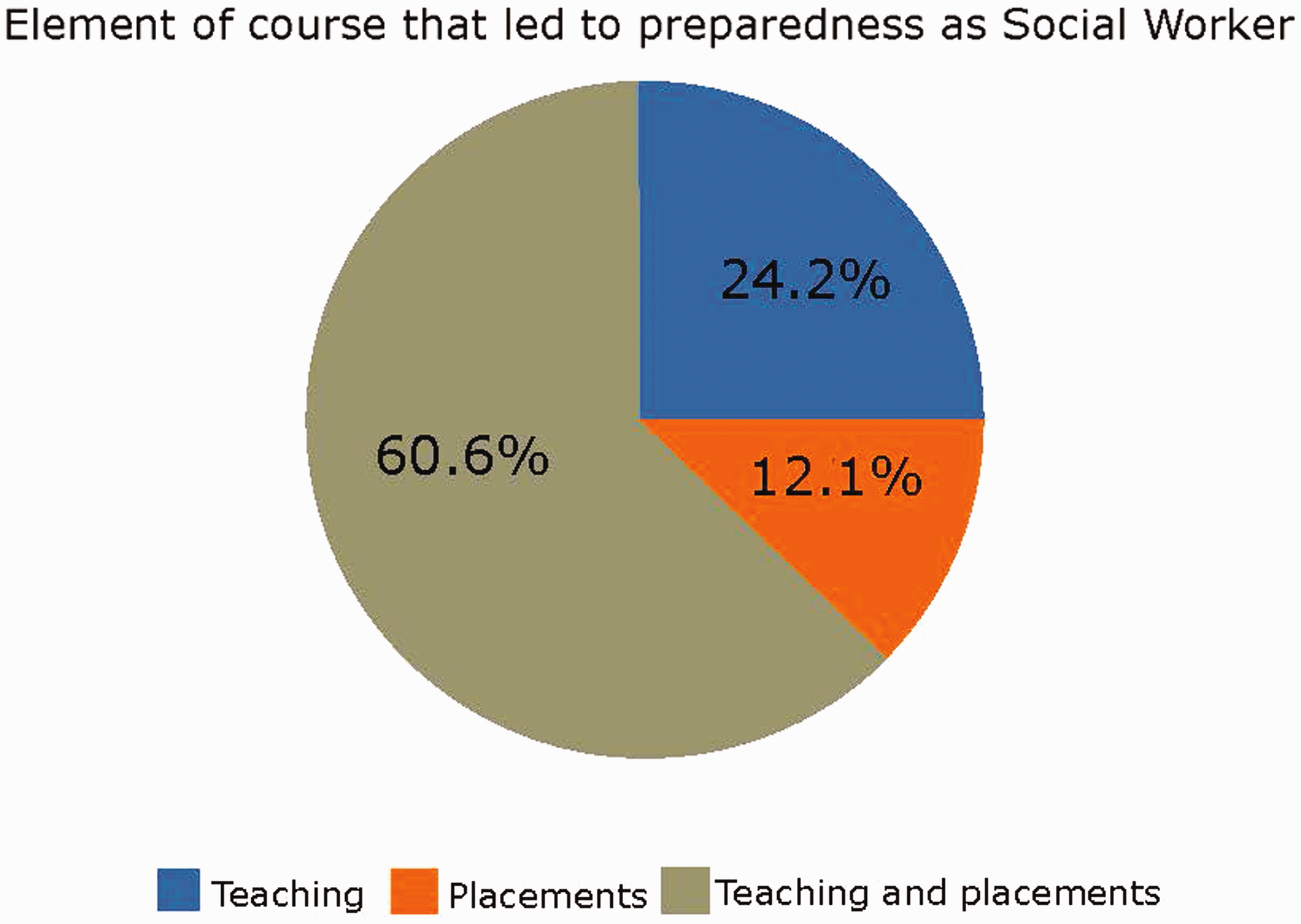
Respondents’ perception of which elements of the course prepared them best for their career.
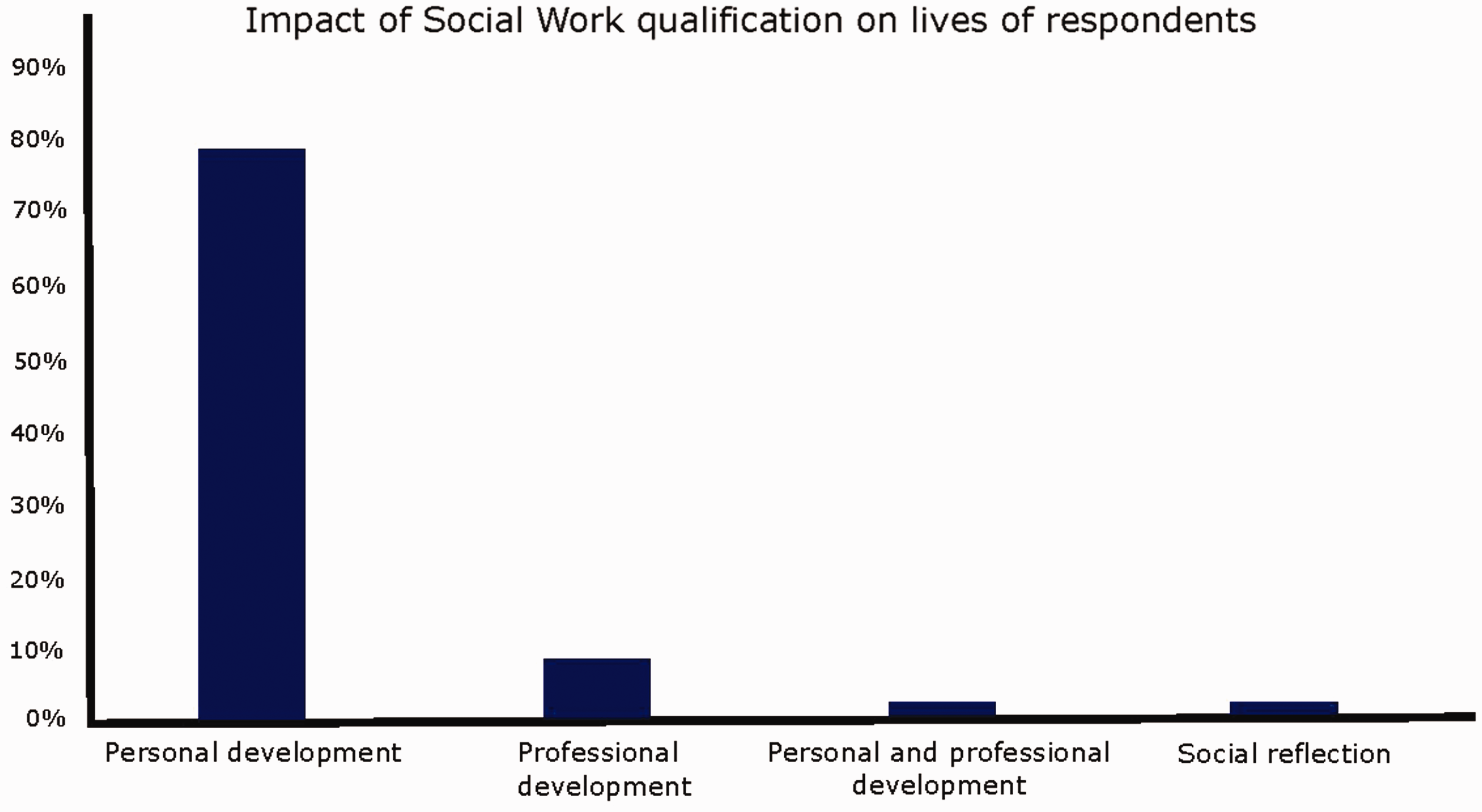
Respondents’ view of how their social work qualification has impacted their lives.
The theme of self-reflection and introspection is repeated frequently (Figure 7). Three respondents (9.1%) argue that their qualification has impacted them mostly in a professional sense, allowing them to progress in their career. One individual (3.0%) reflected on the impact of the qualification in both a personal and professional sense. While most individuals reflected on the role that social work had had on the self, one respondent (3.0%) felt that the qualification had permitted greater social insight, noting that ‘working in has given me a real life insight to the disadvantaged lives many people in our city face due to age, illness, disability, poverty, addiction and many other factors’. Finally, one individual did not respond to the question on the personal impact of their social work qualification.
Self-reflection
Related to the previous section where questionnaire respondents discussed the impact of their practice on both themselves and society, during the interview phase of the study, participants were asked to reflect on their career choice and they considered their work and their level of contentment with their career choice. This process of self-reflection – particularly in relation to identity – is crucial to social workers maintaining their sense of identity (Webb, 2015). All but one participant was content with the choice of becoming a social worker. The respondent who expresses regret for following a career in social work explains: I have to be honest and say I honestly, in hindsight, I’d not be a social worker. I think, you know, it gets such bad press … Everything in the media is very against social work. I suppose my experiences within social work haven’t been that great so, if I had a choice, I wouldn’t do it again. No, I wouldn’t. I often say I went into the wrong profession. It wasn’t for me. But I still do it 21 years later and yes, I enjoy it but … if I had another skill or something else, I would certainly do something else (FG3, interview, 2018). I don’t have any regrets about coming into social work; I will say that it hasn’t always been easy. I think I say that very honestly. If you think that choosing to go into social work will move you forward very fast and it will be easy, then you’ve chosen the wrong career path. (ST1, interview, 2018) In social work, I think we can make a difference. I really believe that we can make a difference. I really believe in our profession … I am very positive about my job. I could never imagine myself doing anything else and whatever passions I had that the training probably ignited a little more, they are still there. I still really believe in people and I still really believe that people can change, and I am incredibly passionate about our care-experienced young people and what they can achieve and what supports are required … I really believe in our profession. (LJ1, interview, 2018) I am absolutely still proud to be a social worker. It’s not the easiest job in the world but I knew I wanted to be a social worker before I really knew what a social worker was, from a really early age and there is nothing else I would rather do. (AH1, interview, 2018)
Limitations
While this study has highlighted a ‘bigger picture’ outcome of social work education and the levels of preparedness for practice, our research is limited to a small sample size and to respondents who studied at a single university in the north east of Scotland. There would likely be regional differences in perceptions of preparedness reflecting local and regional government policies. As such, while our study can serve as a useful springboard for other institutions in areas of the UK to explore the outcomes of their social work education programmes, researchers and practitioners should be aware that are findings are region-specific. Relatedly, we acknowledge that this research has a UK focus; however, our findings can hint at global factors such as increasing neoliberalisation, bureaucratisation of the profession and financial constrictions that affect the profession, and we believe that these changes are experienced globally.
Conclusion
This study has attempted to fill a gap in research by engaging in an outcome evaluation of social work education at the university between the commencement of the social work programmes in 1968 and the present day. Drawing on Kirkpatrick’s evaluation model, we have examined how classroom and placement-based education have contributed to a stronger professional practice and have demonstrated positive outcomes for social work instruction that is beneficial to graduates, service users, and more broadly, the aim of social justice.
In this article, we first highlighted that 66.7% of participants had had direct experience of social work before commencing their education, showing that exposure to social work was generally positive and reinforced a desire to pursue a career in the field. Relatedly, we showed that the main motivations for involvement in social work were to ‘help people’ (30.3%), to ‘work with people’ (18.2%) and to ‘make a difference’ (21.2%). This concurs broadly with existing literature, but we were also able to dig deep into the data to find that even among those with no direct experience of social work that the profession has a positive reputation in relation to humane and equitable values. This is particularly encouraging given that several interview participants in this study commented that media representation of social work and social work practitioners is not always positive. We were also able to provide insight into the career paths of social work graduates in Britain, highlighting that, while many social work graduates will spend some time employed in the third sector, the majority pursue a career in the statutory sector.
Using the Kirkpatrick model, we showed that social work education serves as positive preparation for a career in the profession, and we stressed that, based on questionnaire responses, it is the combination of classroom and placement education that adds value to education, with classroom learning serving to ground students in theory, while placements offer ‘eye-opening’ insight into the profession. Through a discussion of social work values – what Bisman (2004) terms the ‘moral core’ of social work – we showed that social work education helps students to internalise social work values. This internalisation bridges the gap between Kirkpatrick’s ‘behaviour’ and ‘learning’ levels, showing that students and graduates learn a set of behaviours and attributes that they can put into their practice.
To assess the results of social work education, we asked participants to reflect on their impact on service users, the community and themselves. A total of 81.8% of respondents felt that they had had a positive impact on service users, and all respondents saw that their education had had an impact on their own life (personal, social or professional), highlighting that the impact of social work education is far-reaching. We also showed that, when asked to self-reflect on their career choices, most social workers have pride in the profession and they continue to internalise the values of social justice and empowerment in both their professional and personal lives.
This article has helped to fill a gap in knowledge regarding the outcomes of social work education in Britain. We have demonstrated that social work education is impactful and value-laden and we showed that, despite perceived negative media reputation, the profession has a reputation for promoting social justice and equality. We have shown that altruism and values remain central to the profession and that part of the process of becoming a social worker is the internalisation of these values. Our article suggests that social work education is largely successful in preparing social work students for practice and that satisfaction levels are, generally, high. Our study also found that the effects of social work reach beyond academic and practice realms and directly influence social work students’ core values and moral compass. We suggest that educators consider the importance of personal development and growth as part of the education of social workers. This would be particularly important given that most students are motivated by values and beliefs that are grounded in social justice, and we argue that it is important to nurture these values during education.
As social work faces the monumental social and political changes of the contemporary moment (Scottish Executive, 2006), we need to understand the obstacles and successes of the past in order to move forward and in order to build an equitable and just future for all members of society. We suggest regular evaluation engagement in a ‘big picture’ sense to inform how social work education is meeting students’ needs and expectations. This article has served as reflection on the positive outcomes of social work education over the last half century and, hopefully, offers an optimistic vision of the field moving forward. This study has involved only social work graduates and practitioners; it would be beneficial to conduct a follow-up study that moves beyond an assessment of perceived impact and, instead, asks service users to reflect on the actual impact of social work on their lives. This would allow for greater understanding about the role of social workers in society and the changes to both curricula and practice that need to be implemented for social work to remain contemporarily relevant.
Footnotes
Acknowledgements
We would like to extend our thanks to the anonymous reviews and editorial board at the Journal of Social Work for their constructive feedback. We also thank members of Robert Gordon University’s School of Applied Social Studies past and present, whose experiences and academic studies have informed this research.
Ethics
Ethical approval for this project was given by Robert Gordon University’s RESA process in accordance with the University’s Ethics Policy.
Funding
The authors received no financial support for the research, authorship, and/or publication of this article.
