



Abstract
One of the most visible manifestations of overtourism is crowding; however, little is known about the psychological mechanisms through which crowds affect tourists. This paper presents the Fear of Crowding scale and supports its validity by demonstrating that it represents not merely a perception of density or risk, but a distinct emotional response with tangible behavioral implications. Based on data collected from three European countries, Serbia (N = 432), Hungary (N = 455), and Croatia (N = 479), the study employed a multiphase validation process, including exploratory factor analysis (EFA), confirmatory factor analysis (CFA), tests of convergent and discriminant validity, and behavioral proxy prediction. The findings confirm the scale’s reliability and generalizability, showing that Fear of Crowding is a consistent predictor of avoidance behaviors and reduced intentions to revisit. Beyond its methodological contribution, the construct offers valuable insight into the psychological burden of overtourism and provides destination managers with a practical tool for developing more considerate, sustainable, and responsive tourism policies.
Introduction
Research on tourism over the past few decades has primarily focused on the positive aspects of destination expansion, particularly in terms of economic growth, employment opportunities, and cultural exchange (Gorji et al., 2026). Tourism was always considered as one of the main sources of local enrichment and global fame (Fierro-Rubio et al., 2025). Nevertheless, the further intensified increase in the population of travelers and the integration of the travel market worldwide have caused new stress, particularly as destinations have surpassed their carrying capacities (Butler and Dodds, 2022).
Such a phenomenon as overtourism has become one of the key topics of modern tourism theory and practice within this framework. It includes a broad spectrum of impacts: both economic ones (in the form of price inflation and oppression of local populations) and environmental ones (the decline of natural resources and sociocultural alterations that distort the sense of community and quality of life) (Milano et al., 2018; Mohd-Saufi et al., 2024). Empirical studies have shown that the overload of visitors not only makes the experience of tourists less meaningful, but also creates opposition in local communities, generates social tensions, and promotes more radical demands regarding regulatory actions (Rogowski et al., 2025).
Despite the helpful information offered by the current body of literature, it is quite fragmented, mostly based on local contexts or specific case studies, and not integrated at a broader theoretical level (Den Hoed et al., 2024; Gani et al., 2025). The most widespread indicators, such as the number of arrivals, occupancy rates, or local residents’ perceptions are effective only at the descriptive level, yet they do not reflect the multidimensional and intricate nature of overtourism (Du and Liu, 2025). These solutions usually limit the problem of overtourism mainly to the sheer number of visitors and neglect important factors such as cultural, managerial, and institutional structures (Mihalic, 2020). Specifically, there are still no precise or scientific methods to measure the psychological and behavioral aspects of tourists, which could help better understand how this phenomenon develops internally.
The aim of this research is to develop a new method for measuring fear of crowding in tourism contexts. In this approach, crowding is not treated solely as a subjective perception or as an element related to satisfaction, but is examined as an independent psychological experience. This allows for a more precise assessment of tourists’ emotional reactions to crowding and a clearer understanding of how this fear influences decision-making and behavior in destination choice. The research was conducted simultaneously through three studies across different countries, including Serbia, Hungary, and Croatia. This methodology allowed the validation of the fear of crowding construct through replication in new cultural and tourism contexts, which in turn established that fear of crowding is not a product of a particular sample, but a consistent and generalizable construct. Cross-national replication, in this manner, was conducted, which further strengthens its nomological and predictive validity. The relevance of selecting these destinations is also supported by official data on tourist flows. Serbia is experiencing steady growth, and over 1.13 million foreign tourists stayed in Belgrade alone in the first half of 2025, which is a sign of high pressure on urban centers (Statistical Office of the Republic of Serbia, 2024). During the same year, Croatia registered 79.2 million overnight stays and 15.5 million arrivals, which proves that the country has been experiencing the issue of overcrowding over the past decades, particularly in coastal regions such as Dubrovnik or Split (Croatian Bureau of Statistics, 2024). Hungary, in turn, received 8.2 million tourists and nearly 19 million overnight stays during the first half of 2025, including particularly high peaks in September and October in Budapest and Balaton (World Bank, 2024). These measures provide a clear insight into the difference between well-developed tourist markets, where overtourism is already heavily established, and fast-growing tourist markets such as Serbia, which is only beginning to face these issues.
By separating the fear of crowding from concepts such as risk and travel intention, this study helps to better understand how crowding affects tourist behavior. In addition, this research provides a clearer view of the reactions of authorities in different Balkan countries to overtourism. In this way, the issue of overtourism is examined not only through numbers and statistics, but also by considering emotions, social conditions, and management structures. This new scale and proposed framework enable more precise measurement of this phenomenon in the future and assist in designing more sustainable methods for managing and developing tourist destinations.
As a result, this research first introduces the fear of crowding as an independent psychological factor that differs from traditional models such as satisfaction or risk perception. This new perspective helps better understand tourist behavior in crowded places and opens the way for designing new models in the context of avoiding crowded destinations. Second, since this scale was examined in three countries with different cultures but high tourism (Serbia, Hungary, and Croatia), it demonstrates that this construct is culturally reliable and applicable across various settings. This addresses a gap in research related to overtourism, which is usually limited to a specific region. Third, this study bridges the theories of psychology and practical tourism management. By providing a flexible tool for early warning about crowd-induced stress, managerial, promotional, and infrastructural decisions can be adjusted in almost real time.
Theoretical background
Overtourism and crowd-related responses
Overtourism has increasingly become a multidimensional phenomenon that generates intertwined economic, ecological, and sociocultural pressures, including escalating prices, strain on local communities, and the loss of authentic destination experiences (Milano et al., 2018; Stojanović et al., 2025). In addition to these structural influences, recent studies have shown that destination overcrowding also functions as a psychological and behavioral stressor that shapes how people perceive, emotionally experience, and respond to destinations (Mandić et al., 2023). In this sense, crowding does not exist solely as a physical condition but rather as a socially constructed experience embedded in power relations and destination governance processes (Yrigoy et al., 2023). Spatial and digital-trace techniques also indicate that the impacts of overtourism are not strictly confined to specific locations but instead generate pressures across wider areas, simultaneously shaping how overtourism is framed, negotiated, and managed (Banerjee and George, 2024; Foronda-Robles et al., 2025). Although overtourism has been examined in broader contexts related to sustainability, tourist satisfaction, and risk perceptions (Santos-Izquierdo et al., 2025), theoretical gaps remain in understanding the affective processes through which crowding translates into tourist behavior. Specifically, the literature has yet to conceptualize and measure fear of crowding as a distinct emotional response to tourist congestion.
Behavioral intentions under conditions of crowding
In tourism research, the Theory of Planned Behavior (Ajzen, 1991) is widely used as a framework for explaining behavioral intentions, assuming that intentions function as stable and linear predictors of behavior. However, growing evidence suggests that this assumption weakens under conditions of heightened uncertainty and perceived threat. Studies conducted in crisis contexts, including the COVID-19 pandemic, have shown that fear-related emotions substantially reduce travel intentions (Boto-García and Leoni, 2021; Luo and Lam, 2020), raising questions about the applicability of intention-based models when travelers perceive risks or stress due to crowding. Recent studies have shown that intentions are influenced by a heterogeneous mix of emotional, personal, and contextual factors. Anxiety and perceived vulnerability tend to reduce travel intentions, while in specific segments of the travel population, such as solo tourists, intentions can be both stimulated and inhibited by information overload and perceived congestion (Bianchi, 2022; Gan et al., 2023; Karagöz et al., 2020; Maghrifani et al., 2021). Other researchers focus on structural or situational constraints that shape intentions without necessarily involving the emotional processes associated with overtourism (Yang et al., 2023). This body of literature suggests that affective disturbances are highly influential on behavioral intentions, yet existing models rarely link these disturbances directly to crowding in overtourism. This fragmentation highlights the importance of incorporating emotional reactions, rather than treating intentions solely as cognitive constructs, into theoretical models of tourist behavior in overcrowded destinations (Tan et al., 2025). This kind of fragmentation stresses the need to incorporate affective mechanisms in the intention-based modeling, as opposed to viewing intentions as purely cognitive.
Avoidance behavior as a behavioral coping response
Tourists conceptualize avoidance behavior as a coping strategy, aiming to reduce perceived discomfort or threat while maintaining a sense of safety and control (Pulido-Fernandez et al., 2024). Importantly, avoidance behavior is not limited to crisis situations but results from a complex interplay of individual behavior, social norms, environmental attitudes, and geographical characteristics (Sangnak, 2025). Empirical research indicates that uncertainty, perceived environmental stress, and emotional discomfort can influence various forms of avoidance, including destination substitution, spatial withdrawal, and temporal changes in travel (Olya and Han, 2022). At the same time, the current literature tends to address avoidance from limited perspectives, which are insufficient to capture the full scope of tourists’ emotional processes. For example, some studies focus on residents rather than tourists (Ud Din et al., 2024), others examine coping at the organizational or employee level (Elshaer et al., 2024), and some link avoidance primarily to health risks and pandemic-related fears (Agag et al., 2023). Experimental and design-based studies suggest that spatial structures can mitigate avoidance, although their ecological relevance is limited (Wang et al., 2020). Recent research also indicates that avoidance can be indirectly triggered through mediated emotional stimuli. For example, Duong et al. (2025) show that exposure to negative content on social media can amplify negative feelings toward destinations and promote destination avoidance; however, the extent, impact, and durability of these effects remain poorly understood. Meanwhile, the concept of avoidance has been applied to a range of contexts beyond tourist behavior. For instance, Tiantian et al. (2023) examine avoidance in the context of tourism businesses’ taxation strategies, discussing both the conceptual scope of the construct and the potential ambiguities it may entail. These divergent applications underscore the importance of theoretically grounding avoidance within the framework of tourists’ emotional and behavioral responses, particularly in the context of overtourism. Overall, avoidance behavior has been examined in a fragmented manner, with comparatively little attention given to the emotional antecedents that trigger such coping mechanisms in overtouristed destinations (Selem et al., 2024). This distinction emphasizes the importance of conceptualizing avoidance as a behavioral outcome of affective responses, rather than as an isolated behavioral or purely cognitive reaction.
Perceived behavioral control and intention formation
Perceived Behavioral Control (PBC) has consistently been identified as a major predictor of behavioral intentions in tourism, although its effects vary depending on context and experience type. According to the moderate effect of PBC on forming an intention in culturally-specific contexts like halal tourism (Akter and Hasan, 2023) and moderates with the desire to travel in urban destinations (Tadawattanawit et al., 2023). Digital and immersive technologies further complicate this relationship by changing perceptions of control and presence (Lim and Weissmann, 2021; Zhao et al., 2023). Although gamification and metaverse-like experiences have been shown to enhance behavioral intentions in specific tourism contexts (Qin and Chen, 2025), further research is needed to assess the applicability of virtual experiences to actual physical travel decisions. Similarly, Sepe et al. (2024) demonstrate that metaverse experiences can shape behavioral intentions by enhancing the perceived value of cultural heritage; however, the translation of digitally mediated intentions into actual physical visits remains both theoretically and empirically unclear. Additionally, ecological and sustainability-focused research suggests that intentions often mediate attitudes, perceived control, and actual behavior; however, such models fail to adequately explain emotionally charged contexts, such as overcrowded destinations (Ding and Jiang, 2025; Putra and Andjarwati, 2025). Perceived behavioral control and behavioral intentions are not the focal constructs of this study but are instead used as nomological anchors, enabling us to test the explanatory power and distinctiveness of fear of crowding and avoidance within a broader behavioral model.
General risk perception versus fear of crowding
The interaction between crowding and risk perception has traditionally been conceptualized as the overlap of two constructs, particularly in the context of health (Chung et al., 2025). Research conducted during the pandemic indicates that perceived crowding and perceived risk increase with spatial proximity (Kim and Kang, 2021), whereas other studies treat crowding primarily as a logistical, rather than psychological concern (Chang, 2021). Previous studies also link overcrowding to emotional distress, loss of trust, and protective behaviors, though these studies do not focus on tourism (Seyd and Bu, 2022; Shen et al., 2022). Related efforts have sought to improve the measurement of crowding by incorporating dimensions such as perceived risk. For instance, Quezado et al. (2024) suggest the additions to be made in the scales of crowd perceptions, adding the aspects of familiarity and risk to the scales; however, their additions are less empirically validated and fail to draw a clear line between emotional reactions and risk appraisal decisions. Simultaneously, others, like Chung et al. (2025), pay more attention to emotional effects of overcrowding and correlate the crowd density in a city with the occurrence of phenomena of psychological distress, including so-called corona blue syndrome. The additional evidence provided by Zhao et al. (2023) also addresses that the perception of the risk is closely interconnected with the emotions and coping mechanisms, yet these data are mostly based on the context of the epidemic of public health issues, but not on tourism-related crowding experiences.
Overview concept.
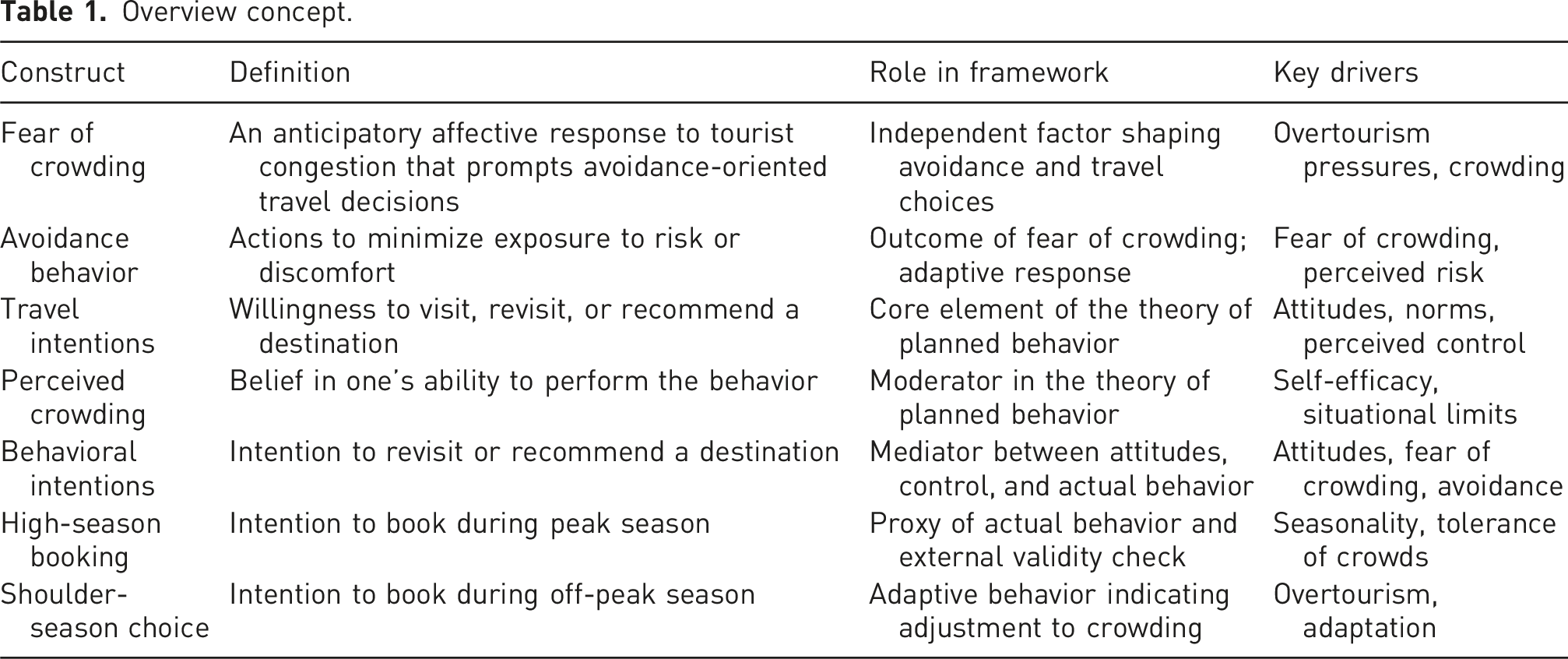
In this study, we define fear of crowding as an anticipatory affective response to an expected or previously experienced tourist crowd, characterized by heightened emotional arousal and a perceived reduction in psychological comfort within the tourist setting. We deliberately distinguish this construct from more general concepts such as discomfort (negative affect of low arousal), worry (primarily a cognitive appraisal), and risk perception (a cognitive assessment of likelihood and severity). Although anxiety is a broad term describing diffuse discomfort, the term “fear” is more appropriate here, as the theoretical framework is avoidance-based and action-relevant crowds evoke a sense of threat, which is followed by protective travel behaviors (e.g., avoiding large attractions or altering plans). Accordingly, fear of crowding is conceptualized as an affective process linking perceived crowd density to subsequent behavioral decisions during periods of overtourism.
Measuring fear of crowding
To measure fear of crowding as a distinct construct, an independent scale was created and supported that distinguishes the emotional reaction to overcrowding, and the more general risk perception or evaluation. The item pool was created to represent both the central affective experience (e.g., anxious/uncomfortable feelings at crowded locations) and the immediate tendency of the protective action that is theoretically instilled within the fear response (e.g. plan adjustment when faced with the expected overcrowding). Notably, the construct of behavioral enactment is distinctly modelled using the construct of Avoidance; hence, fear of crowding items indicate affect plus avoidance-oriented tendency and not behavior. Past studies of the crowding phenomenon have predominantly linked it to satisfaction and loyalty (Miah et al., 2025; Papadopoulou et al., 2022; Sanz-Blas et al., 2024; Stemmer et al., 2022), negative emotions and lack of control (Yin et al., 2024), protective behaviors (Jieyao et al., 2025) or resident responses (Ud Din et al., 2024). Despite their usefulness, these works failed to disaggregate the basic emotional experience of the crowding, so fear of crowding was created and measured as an independent construct in this study the first time in its history. The items were designed using previous results, although they were merged and tested as an independent scale. Besides fear of crowding, there are other constructs, namely Avoidance, borrowed and improved upon earlier research (Olya and Han, 2022; Selem et al., 2024; Ud Din et al., 2024), then Behavioral Intentions and Perceived Crowding, borrowed and improved on earlier studies (Bianchi, 2022; Kim and Kang, 2021; Luo and Lam, 2020; Quezado et al., 2024). Though there are fear of crowding items that indicate aversion or adaptation tendencies to travel plans (e.g., FoC_B and FoC_D), such items are conceptualized in the form of affective action tendencies, which are theoretically imbedded in fear responses. Noteworthy, Avoidance in this research represents a strategic and intentional behavioral coping, and fear of crowding represents an emotional urge to retreat because of the stress that may be experienced in a crowd. This difference enables the construct to maintain its emotive essence and at the same time recognize its motivational element (Figure 1). Scale validation stages.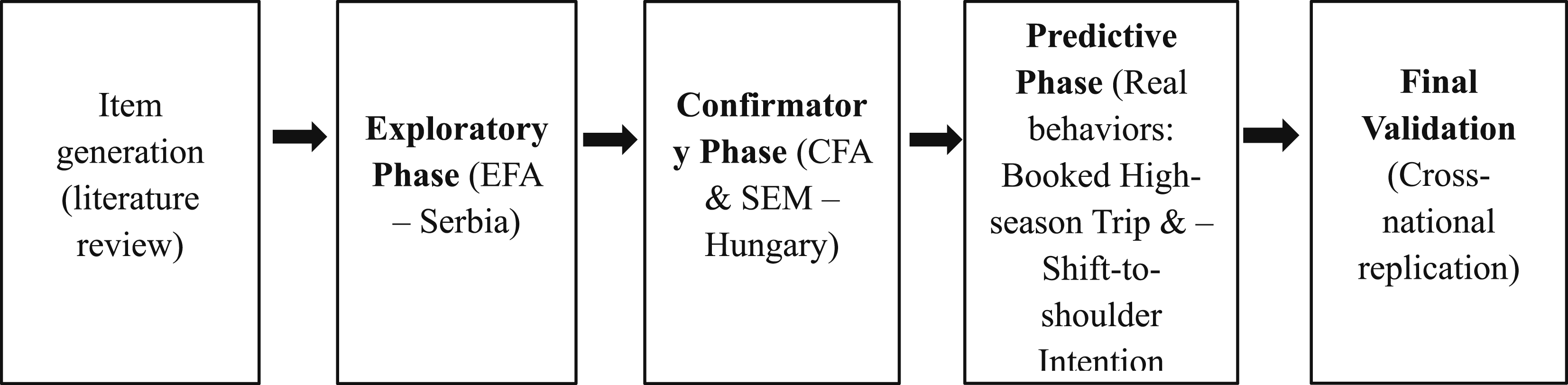
Preliminary items for measuring.
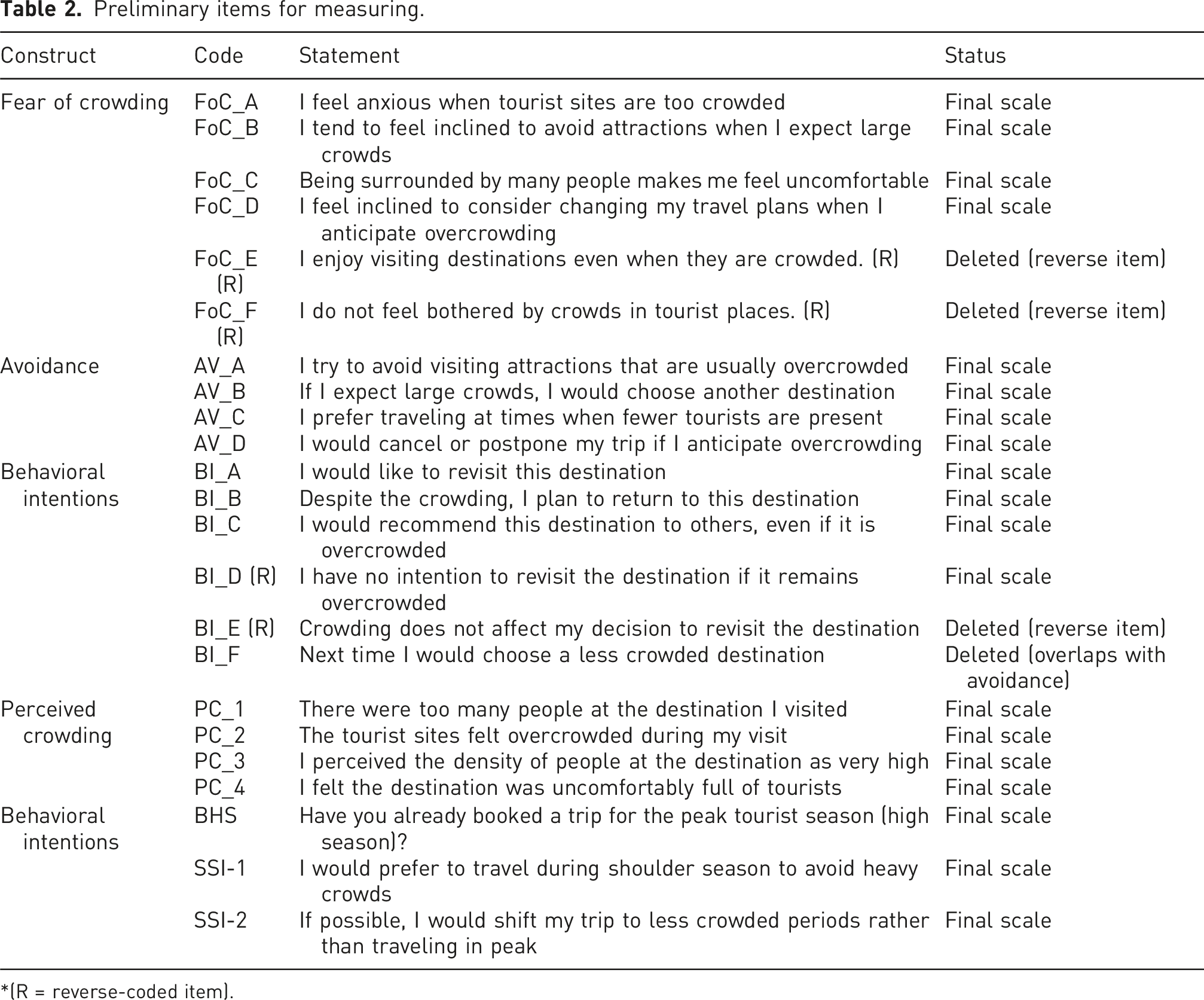
*(R = reverse-coded item).
Study 1: Operationalization of fear of crowding
Sample and procedure
Although previous research indicates that crowding affects destination perception and visitor experience (Koens et al., 2018; Seraphin et al., 2020), the fear of crowding construct has not yet been clearly operationalized. To address this gap, the first study was conducted in Serbia in spring 2025 on a sample of 432 respondents (Appendix A), with the aim of developing and testing an initial fear of crowding scale. Data were collected via an online survey distributed through panel providers and social networks. The study was conducted in Serbia (N = 432), Hungary (N = 455) and Croatia (N = 479), in the most popular tourist spots where the pressure of overtourism is the strongest. Respondents in Serbia were predominantly based on urban and touristically active surroundings in Belgrade (n = 260), in Novi Sad (n = 95), in the Kopaonik mountain region (n = 77). These destinations are the most important urban centres and areas of advanced tourism development in the national tourist chain. The sample in Hungary comprised of Budapest (n = 280) and the Lake Balaton region (n = 135) and the cities of Debrecen and Pécs (n = 40) which can be compared to metropolitan and recreational contexts with extraordinary visitor density and large seasonal oscillations. The data were also gathered in the prime summer season in resort towns and cities like Dubrovnik and Split (n = 185; n = 160) and in Zadar and Rijeka (n = 134) which are the most crowd-filled and seasonal areas of the Adriatic coast. Although the respondents were recruited from urban and tourist-intensive environments, data collection was based on answering within a clearly defined role (role-based response framing), whereby the participants were instructed to answer all questions in the role of tourists or potential tourists. Accordingly, responses relied on retrospective and anticipatory assessments of travel experiences, perceptions, emotional reactions and behavioral intentions related to travel. All items in the questionnaire were explicitly formulated in the context of travel decision-making, destination selection and seasonality of reservations, thus ensuring that the answers are grounded in the tourist context and not in the everyday experience of the local population. This approach is in line with established practice in research on tourist behavior and the theory of planned behavior, where intentions and travel decisions are examined on the basis of anticipatory and experiential self-assessments of respondents (Ajzen, 1991; Karl et al., 2015).
The questionnaire contained six preliminary questions that assess fear of crowding (FoC), scales of Avoidance, Behavioral Intentions, and Perceived Crowding that were validated, one question that assessed instructional attention check, and demographic variables. The construct of the fear of crowding was created as a novel and independent measure according to the previous studies, which explored the emotional impact of overcrowding in tourism, relying on the works of Papadopoulou et al. (2022), Sanz-Blas et al. (2024), Yin et al. (2024), Jieyao et al. (2025), Ud Din et al. (2024), and Miah et al. (2025). Olya and Han (2022), Ud Din et al. (2024), Selem et al. (2024) and Agag et al. (2023) have refined and adapted the Avoidance construct on the basis of prior studies. The measurement of Behavioral Intentions was conducted based on the Theory of Planned Behavior (Ajzen, 1991) and was supplemented by the results of Luo and Lam (2020), Boto-Garcia and Leoni (2021), Bianchi (2022) and Gan et al. (2023). The Perceived Crowding construct was modified with references to the already existing scales by Kim and Kang (2021), Quezado et al. (2024), and Papadopoulou et al. (2022). As the initial versions of items are created in the English language, they could not be utilized in this study, and thus, the initial versions were translated meticulously into Hungarian, Serbian, and Croatian to understand them better. In accordance with the translation procedures that are described by Ageeva et al. (2019), the entire items were translated forward to these languages, and then they were translated back to the English language to check the accuracy and integrity of the information. Prior to issuance, the questionnaire was looked at very keenly by faculty members and specialists in the tourism sector in an attempt to gain a better understanding on the question and deliver the finest outcome.
Evaluation of common method bias
The common method bias (CMB) may be an issue in research when the major constructs show extremely high correlation. However, the correlation matrix was not such in this study because all of the inter-variable correlations were below the 0.70 mark, which indicated no initial sign of CMB (Nitzl, 2016). To further confirm this, we used Harman single factor test (principal component analysis) (Podsakoff and Organ, 1986). The findings showed that one factor was only able to explain 33.754% of the total variance which is far less than 50% which is the suggestive level. Combined with the findings, these results give substantial support to the fact that CMB is not expected to have a significant effect on the relationships analyzed in this research (Al Halbusi et al., 2020).
Exploratory factor analysis
Exploratory factor analysis (EFA) was performed in R (version 4.x) using the principal axes method, with data suitability confirmed by the KMO and Bartlett tests (Straub et al., 2025). Reliability was assessed through item–scale correlations and Cronbach’s alpha. Convergent validity was measured by Composite Reliability (CR) and Average Variance Extracted (AVE) because it provides a broader view of the scale’s robustness before CFA (Karstoft et al., 2025).
Findings
Exploratory factor analysis and reliability results for all constructs.
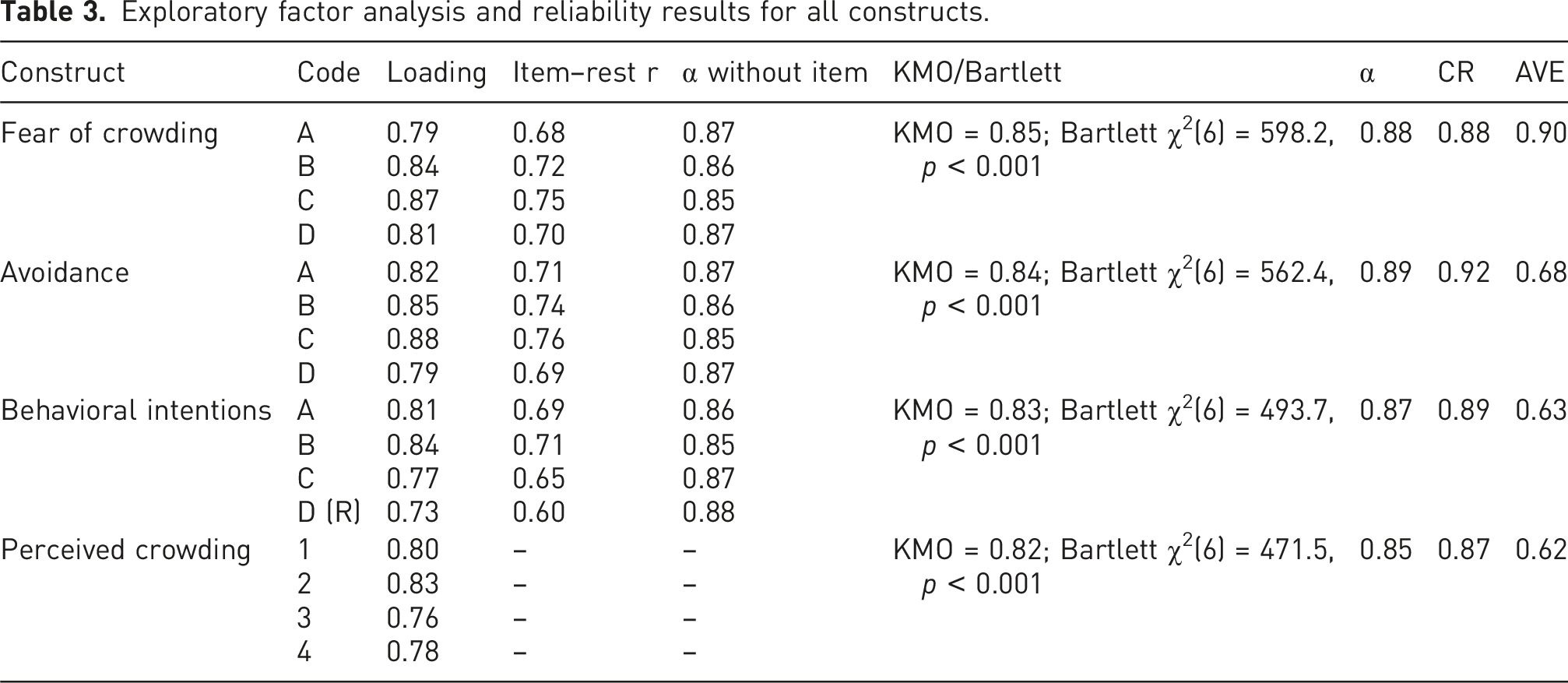
The findings confirmed the one-factor structure and demonstrated internal consistency, indicating that the fear of crowding measures a unique psychological response, distinct from the general Perception of Crowding. On this basis, Study 2 aimed to conduct confirmatory factor analysis (CFA) and examine the discriminant validity of fear of crowding in relation to related constructs.
Study 2: Nomological validity of fear of crowding
Sample and procedure
The second research was carried out in Hungary in the spring of 2025, on a sample of 455 participants (Appendix B). The survey was conducted using an online questionnaire through the services of a professional survey panel (Respondi AG), and further distribution was through social networks to broaden the coverage. Like in case of the first study, an attention check control question (How many days in the week?”) was introduced. The main objective was to establish the factor structure of the constructs that were developed in Study 1, and test their interrelationships in a nomological network. Four major constructs were considered namely Fear of Crowding, Avoidance, Behavioral Intentions as well as Perceived Crowding. The independent Hungarian sample and ML-CFA/SEM were analyzed with the AMOS 26.0 software with the help of the maximum likelihood method to confirm the structure and test the nominal relationships (Perceived Crowding → Fear of Crowding → Avoidance/Behavioral Intentions) based on the two-stage measurement plan and modeling (Figure 2). Research model nomological validity.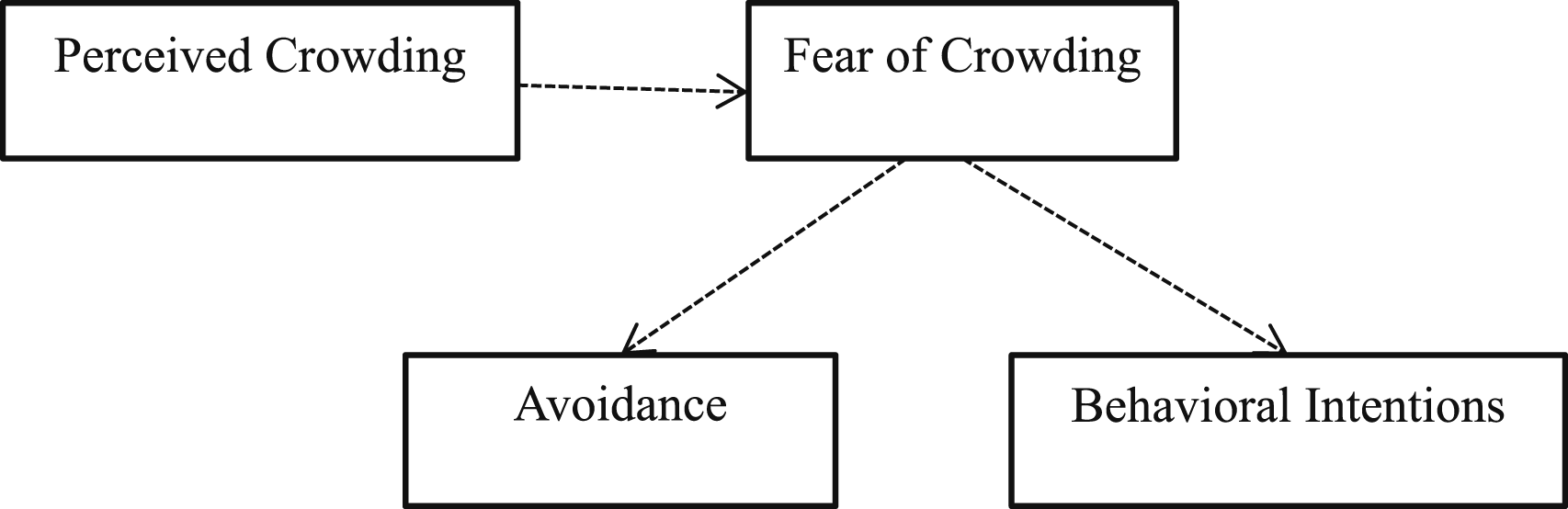
Findings
CFA by construct.

Fornell–Larcker criterion and inter-construct correlations.

Findings – SEM (nomological model)
SEM (nomological model).
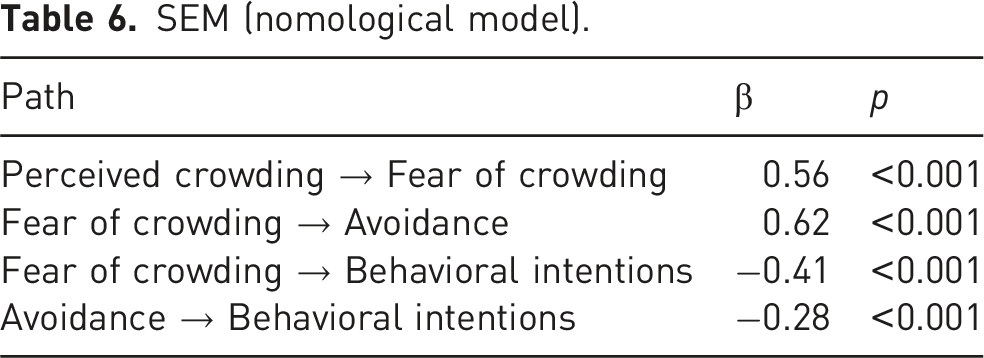
The findings of the second study confirm that fear of crowding is a separate and clearly differentiated construct from Avoidance, with both behaving in accordance with theoretical assumptions. Fear of crowding has both direct and indirect effects on tourists’ behavioral intention, which ensures its nomological validity. The differentiation of emotional reaction Fear of Crowding and Avoidance strengthens the theoretical and empirical basis of this research and prepares the ground for extended validation in the next phase (Study 3).
Study 3: Predictive validity of fear of crowding
Sample and procedure
The third research was performed in Croatia in the summer of 2025 on a sample of N = 479 respondents. The online survey was carried out with the assistance of a panel provider (Respondi AG), and the data was further disseminated through social networks in order to achieve the variety of samples. The relevance of the context of the research was especially high because the tourist season was in full blast, and the issues of overtourism became especially pronounced in the coastal resorts. There were four key constructs in the questionnaire (Perceived Crowding, Fear of Crowding, Avoidance and Behavioral Intentions), demographic items and a control question of quality of responses (Appendix A). Two other dependent variables were added to the model to test predictive validity and they included Booked High-season Trip and Shift-to-shoulder Intention. CFA and SEM analyses were done in AMOS 26.0 and other tests of discriminant and predictive validity were done using the same processes. Summer as the season of the highest participation in Croatia was selected on purpose to ensure that the predictive validity of Fear of Crowding and Avoidance could be assessed under the conditions of the strongest crowds (Booked High-season Trip and Shift-to-shoulder Intention as behavioral proxies) (Figure 3). Research model predictive validity.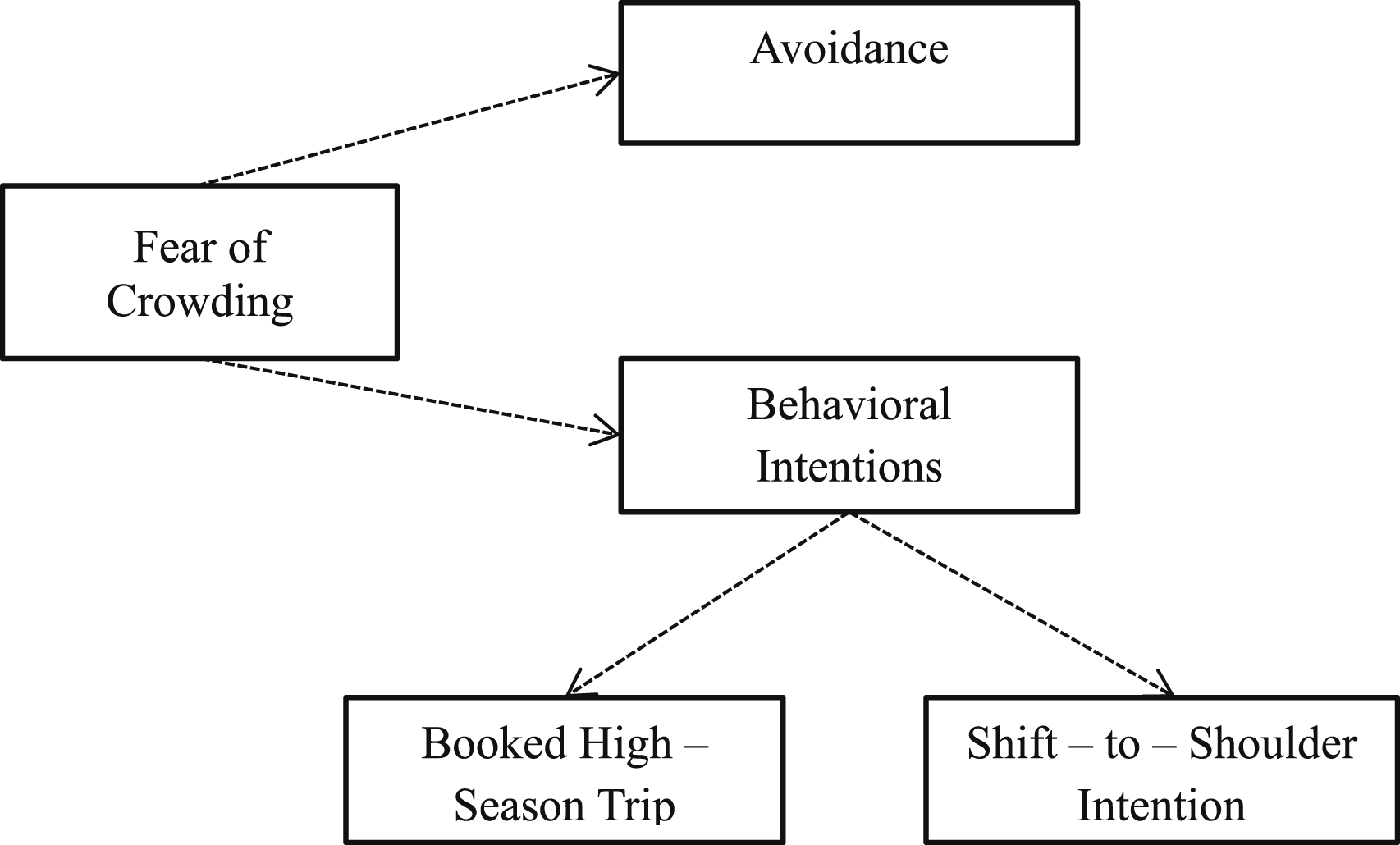
Findings – CFA analysis
Results of CFA analysis.

Results of CFA analysis for constructs BHS and SSI.

Findings - SEM analysis (predictive validity model)
Results of SEM analysis (predictive validity).
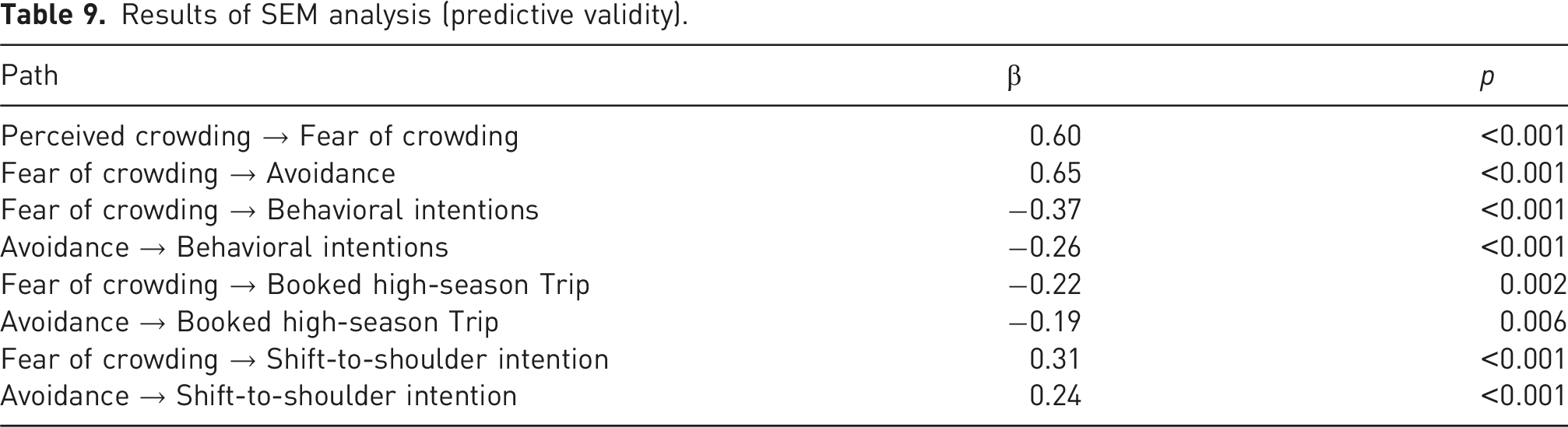
The findings of third studies confirm the predictive validity of the Developed scale Fear of Crowding. It is shown that Fear of Crowding and Avoidance not only shape the general intentions of tourists, but also have specific consequences on behavior, reducing the probability of bookings in the peak season and increasing willingness to travel in the “shoulder” period. These results further empower the practical value of the scale for understanding and managing the phenomenon of overtourism. The model clearly shows that Fear of Crowding is an emotional reaction, and Avoidance is a behavioral consequence, so they are different constructs (Figure 4). SEM results – direct effects.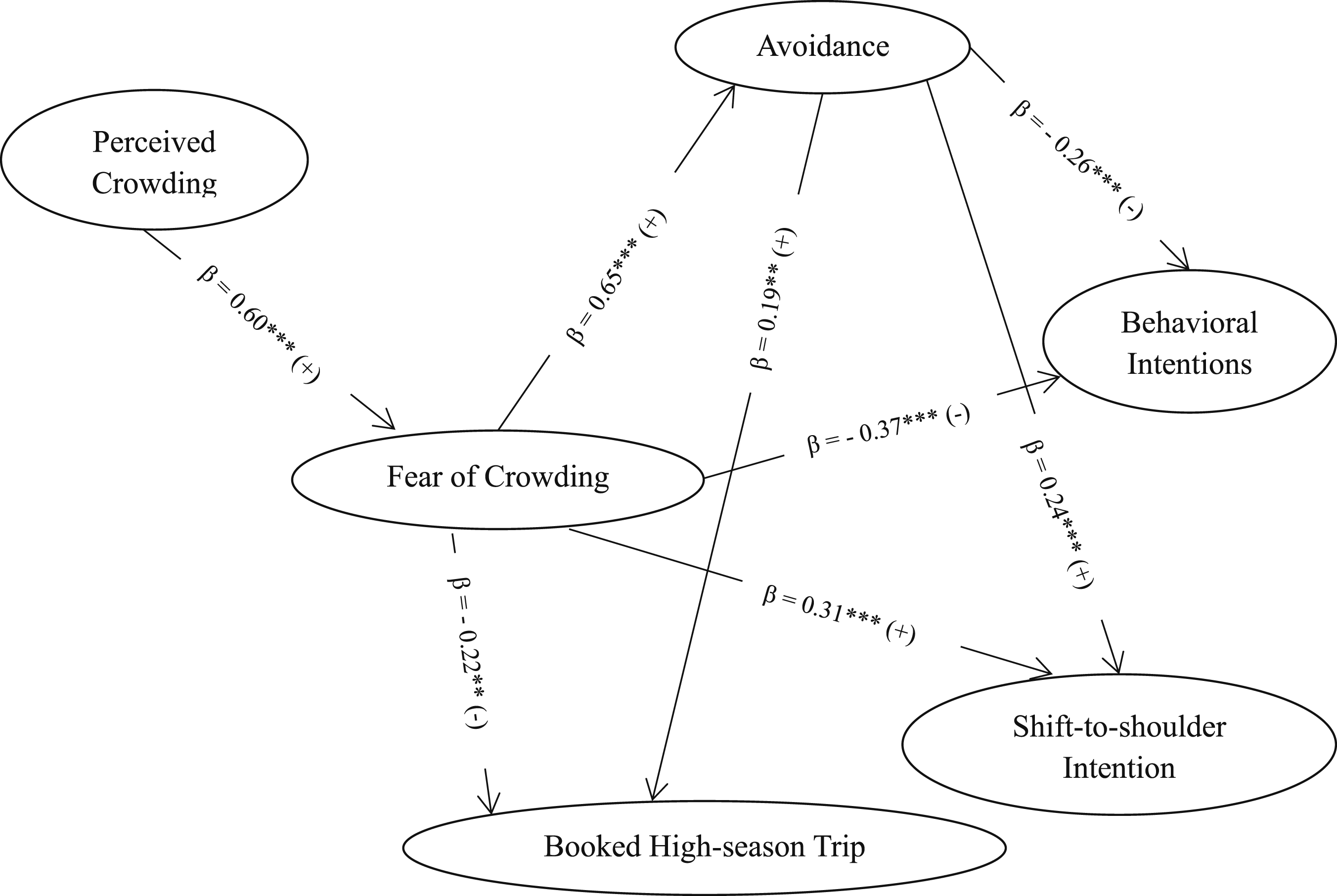
Additional analyses (control variables and mediation effects)
Effects of sociodemographic and traveler characteristics.
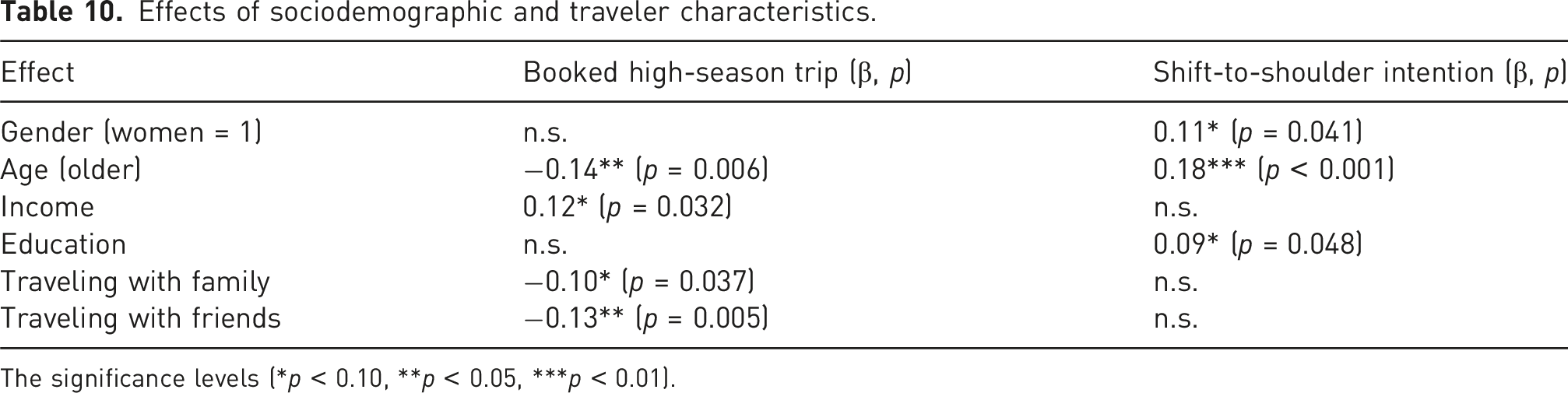
The significance levels (*p < 0.10, **p < 0.05, ***p < 0.01).
Results of SEM analysis - mediation effects.
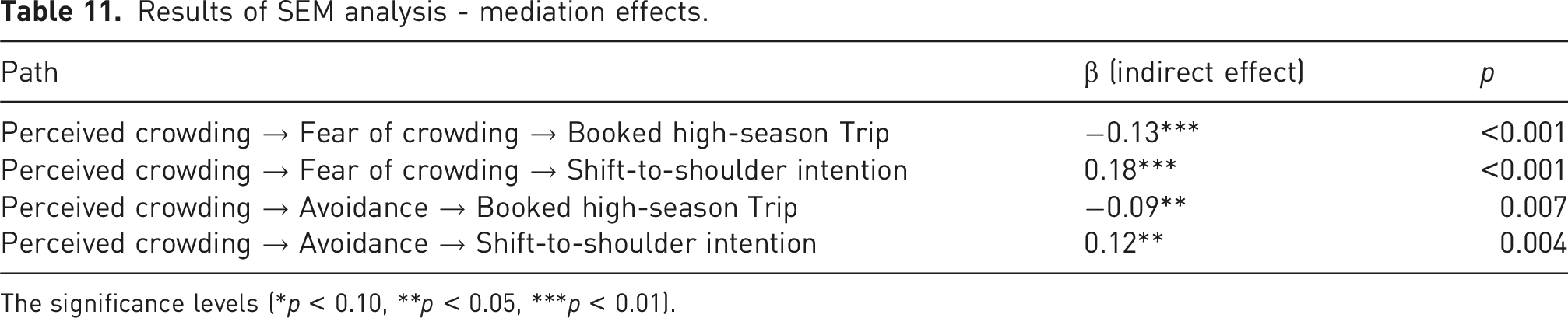
The significance levels (*p < 0.10, **p < 0.05, ***p < 0.01).
Discussion
The results of the conducted studies unequivocally confirm that fear of crowding represents a new, independent and empirically based construct, which fills a significant gap in the literature on tourism and overtourism. Previous research has mostly looked at crowding through the prism of perceived crowding (Papadopoulou et al., 2022; Sanz-Blas et al., 2024) or as a factor affecting satisfaction and loyalty (Miah et al., 2025; Stemmer et al., 2022), while affective reactions remained in the background. Our research clearly shows that fear of crowding is not just a more intense form of perceived crowding, but a qualitatively different psychological stressor that measures the emotional response to crowding.
In the first study, the one-factor structure and high internal consistency of the scale were confirmed, thus empirically proving that fear of crowding functions as a homogeneous emotional construct, separate from the cognitive appraisal of crowding. Another study with results from Hungary further demonstrated that fear of crowding has discriminant validity in relation to Avoidance and Behavioral Intentions. Structural modeling confirmed that fear of crowding directly promotes avoidance behaviors and reduces travel intentions, while perceived crowding plays an antecedent role. In this way, fear of crowding is conceptually and empirically separated from the broader framework of risk perception, confirming that affective reactions are the key mechanism through which crowding changes tourist behavior.
A third study with a sample from Croatia confirmed the predictive validity of fear of crowding through behavioral proxies, showing that higher levels of fear of crowding reduce the likelihood of peak season bookings and increase the willingness to shift travel to the shoulder season. The results present an empirical ground to the assertion that fear of crowding is influencing the intentions, as well as the actual decision made by tourists, and such empirical findings attest to the practical applicability and strategic significance of fear of crowding as a concept to destination management (Jieyao et al., 2025; Zhao et al., 2023).
All three studies together show that fear of crowding is a reliable, nomologically valid and predictively significant construct. Its development contributes to a clear theoretical differentiation between the cognitive assessment of crowding and the affective response to it, while on a practical level it enables a better understanding of tourist behavior in conditions of overtourism. The results open up space for further research into generational differences in the experience of crowding, as well as for the development of managerial strategies aimed at mitigating the negative effects of fear of crowding through the diversification of the offer and active management of seasonality.
Our results further confirm the relevance of fear of crowding by controlling for demographic characteristics and examining mediating effects. Analyzes showed that gender, age and income do not change the basic structure of the scale, which points to its robustness and stability in different segments of the population. This is consistent with the findings of Karagöz et al. (2020), who point out that socio-demographic variables shape the intensity of reactions to crowding, but do not question the existence of the underlying construct. In addition, the tested mediations indicated that the effects of perceived crowding on behavioral outcomes are mediated by fear of crowding and avoidance, which clearly confirms its nomological validity. Similar conclusions are drawn by Chang (2021) and Shen et al. (2022), who emphasize that crowding affects behavior through psychological mechanisms and not directly. This shows that fear of crowding is not redundant, but represents a key link in the explanation of tourist behavior in conditions of overtourism.
In addition, the consequences of fear of crowding are much more than the tourist behavior because it shaped the brand of the destinations and policy-making. When these kinds of destinations are perceived as a crowded place, not only the reputation of these places will damage due to the practical challenges, but also has negative impacts on the emotion of the visitors. This discomfort easily affects visitors and causes potential problems, the lack of satisfaction, loyalty, and revisit intention. As a result, fear of crowding is one of the key factors for evaluation of the destination image and marketing strategies to remain in a competitive market of the tourism and hospitality sectors.
Moreover, the developed framework and constructs provide significant guidance for designing tourism experiences that are both safe and engaging. Once the tourism planners understand that fear of crowding is a unique emotional reaction, they will apply more updated and advanced policies to focus on the needs of the tourists and improve their well-being in such destinations. The construct also gives one a proper chance to interdisciplinary work, particularly to professionals who are working in the fields of environmental psychology, public health, and urban planning. Clearly, the tourism sectors are not exclusive to the crow ding due to the emotional aspects; one can say that the emotional aspects that the fear of crowding captures can inform further discourse of spatial justice, mental well-being in civic space, and designing of inclusive environments. Such cross-sectoral applicability shows the potential of the theoretical richness as well as practical importance of the construct, and it can be useful in upcoming studies in this field or those connected to human-environment interactions.
Lastly, the employment of this methodological approach across the three countries in this research enhance the credibility of fear of crowding as a measurable and generalizable construct. By using different samples from different countries and applying robust statistical techniques, the research ensures that this study is not confined to a specific geographical territory, but it encompasses diverse cultural areas. This kind of methodological approach provide a suitable reference for future longitudinal investigations and cross-cultural comparisons. It also provides an opportunity for practitioners to explore how fear of crowding develops over time and across different socio-cultural environments.
Conclusions
The validation of fear of crowding as a unique psychological experience is regarded as a significant contribution to tourism studies, particularly when travelers decide to stay at and visit destinations. In contrast to traditional models that consider only mental image of crowding, this concept concentrates on the emotion and behavior strength of the crowd related stress that result in decisions made by the tourists in a better way. Findings of three accurate studies have demonstrated that this construct is scientifically trustworthy, predictable and stable among various demographic groups. On the whole, these results demonstrate that the fear of crowding can be considered theoretically relevant and very practical to the study of tourism. By placing fear of crowding in the middle of the relationship between perceived crowding and behavioral outcomes, this study highlights the crucial role of the affective mechanisms in determining not only the avoidance behaviors but also the travel intentions. This view does not just complement other models of satisfaction and loyalty but it also provides viable insights on the ways destination managers can solve the problem of overtourism. Specifically, this construct can inform the choice of approaches to planning tourism by guiding strategies that include managing seasonality, visitor experience diversification, and emotionally responsive design, which can be more empathetic and sustainable in their implementation.
The fact that this idea is persistent in various cultures and is related to the theory of psychology suggests that this may be applied in interdisciplinary studies and further research. Fear of crowding can be an appropriate model to analyze the changing relationship between tourists and destinations in terms of the growing complexity of tourist spaces and increased emotional burden of the latter, as well. Based on this, the generation differences, cultural differences and the relationship between the sense of security and destination branding can be explored in future research to better understand the role of emotions in creating the tourism experience as time passes. Fear of crowding cannot be regarded only as a corrective solution to the current criteria of measuring crowd, but as a new view on tourist studies. Being an integration of cognition and emotions, a connection between individual experiences and managerial decision-making, this idea may be a powerful one not only in theory but also in practice. The identification and exploitation of this perspective can transform how members of the tourism sector perceive the emotional side of travelling in the current hectic and congested world.
Theoretical implications
The theoretical contribution of the paper is manifested in the division of the emotional response to the crowding and the cognitive one. Whereas previous studies primarily considered the concept of crowding in terms of perception or risk (Kim and Kang, 2021; Quezado et al., 2024; Zhao et al., 2023), we demonstrate that the psychological of crowding has a distinct contribution to the behavioral decision-making. Fear of crowding has been incorporated into the nomological network by this study as a new construct which connects the crowding to destination avoidance and intention to travel reduced. This new perception adds to the overall perspective of the affective aspects of the tourist behavior and could be used as a foundation of the future studies that will address the generational differences, cultural differences, or even a particular destination scenario. In case fear of crowding is regarded as an independent emotion, it is a significant issue in tourism research as it bridges the relationship between cognitive estimation and emotional response to crowding or over-crowding. Although, the majority of earlier models acknowledge the influence of either environmental or cognitive factors on tourist satisfaction and loyalty, the current study had a closer look at the emotional dimension of the issue to demonstrate that the fear of crowding can also influence tourist behavior itself. This new direction proves that the gap between the conventional attitudes of crowding is immense and the model that takes into account both thought and emotion as a combination is in support of the fact that each of them has its independent effects on the decision making. In addition, this study indicated that fear of crowding could be an intermediate variable that may be used to explain the relationship between the perception of crowding and avoidance of crowded places by individuals, and can assist in understanding better the effect of crowding on travel decisions. The view is one that results in developing scientific discourses regarding the contribution of emotions, emotional management, and knowledge of stress in tourist destinations, and is consistent with contemporary psychological theories that attach value of emotions in everything a human can do. Also, since this notion has been constant among various people and culture, it can be transferred to other situations. This is why it can be used as a foundation of new theories in these fields, including overtourism, resilience of the destinations to the effects of tourism, and perception of emotional risk that travelers are subjected to.
Practical implications
The study of fear of crowding can find relevant application with the managers of tourism, destination planners, as well as policy makers in terms of overtourism. In a way where this fear is viewed as a unique form of emotional stress influencing the travel intentions and behavior, it can assist the tourism managers to have a better view of why tourists would avoid crowded places and what solution can be provided to eliminate it. In contrast to the conventional attitudes which only concentrated on the population size or the degree of crowding, the fear of scales offers a more accurate insight into the emotional uneasiness of people. This enables the creators who go directly to the psychological requirements of the tourists and guide the tourism management to resilient, visitor experience-based understanding.
Concept can assist in managing tourism planning processes as a manager. Through the knowledge about this fear, the destinations will be able to classify tourists in terms of sensitivity and pursue their marketing strategies according to their needs. More fearful of the crowd will probably be attracted to such suggestions as off-peak season travel, tailor-made programs, or computerized displays which would offer them a better feeling of control and relief. The same enables management of tourist seasons to be effectively done and demand spread well across the year in tourist destinations.
The fear of congestion may directly affect tourism experiences and services design. Through the information surrounding this fear, the tourism managers can make more informed decisions about the manner in which they can organize attractions, how they can manage the problems, and how they can employ various technologies in controlling crowds. Such measures assist to decrease the stress of tourists and enhance their satisfaction. At the same time, the psychological security, as the level of fear of crowding, may be discussed as one of the significant indicators of service quality, as well as such important measures as satisfaction and loyalty. These outcomes are entirely significant in terms of crisis management and sustainability of tourist destinations. During the times when destinations are extremely busy during festivals, annual or monthly events, knowing how tourists feel enables managers to relay more positive and constructive messages. By communicating with the tourists beforehand about the congestion, proposing alternative plans or times to visit the place and communicating with tourists openly, they can ease their anxiety and gain their trust.
Finally, as the fear of crowding is a common element among the individuals belonging to various classes, e.g., a heterogeneous group of travelers in terms of age, gender, and income, the concept could be applied in other tourism planning without considerable alterations. The fear of crowding is a realistic instrument to tourism service providers, urban planners and international institutions especially those in need of strike a balance between tourist satisfaction and sustainable developments. Fear of crowding offers tourism stakeholders with a scientifically informed and emotionally sensitive model of responding to the multifaceted management of overtourism. The application of it has the potential not just to enhance tourist experiences, but also to create more adaptive, resilient and emotionally sustainable long-term destinations.
Limitations and future research
Although the findings are consistent and confirm the validity of the new construct, there are some limitations of the research. First, the data were gathered using online surveys, which may affect the representativeness of the samples, and may also cause response bias. Second, the research has been done in three countries of Central and Southeastern Europe, therefore the findings cannot be generalized completely to other cultural and geographical contexts. Third, measures of bookings and travel diversions were based on self-reports of respondents and may be less accurate than actual booking data.
Future research should test fear of crowding in different cultural and geographic settings as well as in longitudinal designs to examine its impact on behavioral change over time. In addition, it is recommended to link fear of crowding with objective indicators of tourist behavior (e.g., data on reservations or tourist movements) to further confirm its predictive power. Also, the research of generational and cultural differences in the experience and reactions to crowds can open new directions for theoretical and practical insights. Although the respondents came from urban and tourism-intensive environments, the focus of the research was on their role as tourists when making travel decisions. Future research could further disentangle the perspectives of locals and tourists through the use of clearly segmented samples.
Footnotes

Funding
The authors disclosed receipt of the following financial support for the research, authorship, and/or publication of this article: This research was supported by the Ministry of Science, Technological Development and Innovation of the Republic of Serbia (Contract 730 No. 451-03-33/2026-03/ 200172).
Declaration of conflicting interests
The authors declared no potential conflicts of interest with respect to the research, authorship, and/or publication of this article.
Data Availability Statement
No data was used for the research described in the article.
Author biographies