




Abstract
The study examines motives and constraints shaping South African dog owners’ intentions to include their canine companions in overnight leisure travel. Drawing on attachment theory and leisure constraint theory, the conceptual framework distinguishes three predictor categories: bond-related motives (pet attachment, perceived travel benefits for dogs, reciprocity), owner-related motives (socialisation, prestige, novelty), and pet-related constraints (pet-specific, interpersonal, structural barriers). Data were collected from 437 South African dog owners through self-administered online questionnaires. The measurement model was validated through confirmatory factor analysis (CFA), and hypothesised relationships were tested using structural equation modelling (SEM). The measurement and structural models demonstrated acceptable fit. Results indicate that dog owners’ pet tourism intentions are positively predicted by pet attachment and novelty and negatively predicted by pet-specific and structural constraints. Novelty emerged as the strongest predictor, indicating that seeking novel dog-inclusive overnight travel experiences outweighs other examined motives and constraints for South African dog owners. Notably, perceived travel benefits for dogs, reciprocity, socialisation, prestige, and interpersonal constraints did not exert significant effects in the South African context. The findings highlight the importance of owner-related motives, particularly novelty-seeking, and emotional bonds (pet attachment) in motivating overnight pet-inclusive travel and emphasise that practical and pet-related barriers (pet-specific and structural constraints) can dampen intentions. For tourism and hospitality providers, addressing motivational and constraint-based factors—particularly through improved pet-friendly amenities and reduced structural obstacles—is crucial for attracting this emerging market. By integrating motivational and constraint perspectives, the research provides a framework for understanding and advancing dog-friendly tourism strategies in South Africa and similar markets.
Introduction
Pet 1 tourism—the inclusion of companion animals, specifically dogs, in leisure travel—has become a prominent global trend (Choi et al., 2025; Gong et al., 2020; Meng et al., 2024; Veas-González et al., 2025). The role of dogs in human lives has evolved: dogs are increasingly regarded as family members rather than mere pets and fulfil essential psychological needs such as companionship, emotional support, and affection (Carr and Cohen, 2009; Hidalgo-Fernández et al., 2023; Ying et al., 2021). This global shift has contributed to increased dog ownership (Horizon Grand View Research, 2025a) and growing demand for pet-friendly accommodation, activities, and transportation (Ramos-Ruiz et al., 2024; Tomassini, 2022). In countries such as South Africa, where dogs are the most popular companion animals (Cosgrove, 2025a), these trends are particularly pronounced.
Throughout the manuscript, the term ‘dog owners’ refers to individuals who intend to include canine companions in leisure travel. Understanding the factors shaping dog owners’ intentions to include dogs in travel plans holds academic and practical value. From a scholarly perspective, the topic intersects tourism, consumer behaviour, and human–animal studies, and contributes to an emerging interdisciplinary field. From an industry perspective, the research offers insights for tourism and hospitality providers seeking to capitalise on the expanding pet tourism market (Han et al., 2024; Meng et al., 2024). In emerging economies such as South Africa, growing demand for pet tourism represents a potential revenue stream and an opportunity to enhance customer experiences (Taillon et al., 2015).
Most pet tourism research has focused on regions outside Africa, including Asia (Taiwan, China, Korea), Europe (the United Kingdom, Spain, Turkey), North America (the United States), Latin America (Chile), and Australia (Carr and Cohen, 2009; Chen et al., 2013, 2014; Dílek et al., 2020; Dotson et al., 2010; Han et al., 2024; Hidalgo-Fernández et al., 2023; Rowan, 2022; Tang et al., 2022; Veas-González et al., 2025). These studies examine motives such as pet attachment and perceived travel benefits for pets (Chen et al., 2011; Hidalgo-Fernández et al., 2023; Rowan, 2022), and reciprocity, socialisation, prestige, and novelty (Tang et al., 2022; Veas-González et al., 2025), alongside constraints including pet-specific, interpersonal, and structural barriers (Chen et al., 2014; Dílek et al., 2020; Han et al., 2024). Although some research integrates motives and constraints (Chen et al., 2013; Hung et al., 2016; Meng et al., 2024; Ying et al., 2021), these studies employ different models or limited constructs. Despite progress, several research gaps persist. Few studies have developed and empirically tested integrated frameworks that examine motives and constraints within a single model (Meng et al., 2024; Tang et al., 2022). Additionally, theory-based categorisations of pet tourism motives remain underdeveloped, and existing frameworks often overlap or insufficiently distinguish core drivers. Finally, empirical research focused on African contexts is virtually absent, despite rapid increases in pet ownership and pet-inclusive travel (Ramos-Ruiz et al., 2024; Veas-González et al., 2025).
The present study addresses these gaps through three primary contributions. First, the study develops and tests an integrated model that simultaneously examines motives and constraints shaping dog owners’ intentions to engage in overnight leisure travel with their dogs, thereby responding to calls for holistic approaches that encompass both enabling and inhibiting factors (Tang et al., 2022). Second, drawing on attachment theory, the research proposes a dual-category motivation framework comprising (a) bond-related motives (pet attachment, perceived travel benefits for dogs, and reciprocity), which capture emotional and relational factors, and (b) owner-related motives (socialisation, prestige, and novelty), which reflect personal goals and aspirations. The theoretical refinement enhances conceptual clarity and strengthens market segmentation insights. Third, by conducting a large-scale, theory-driven investigation of pet tourism intentions in South Africa—the continent’s largest and most industrialised economy (Africa View Facts, 2025; O’Neill, 2025)—the study extends the geographical and contextual scope of pet tourism scholarship and addresses calls for more cross-cultural evidence (Veas-González et al., 2025). South Africa combines features of developed and developing economies, including rapid urbanisation, pronounced socio-economic disparities, a vibrant tourism sector, and fragmented infrastructure (World Bank Group, 2025). Examining pet tourism within the South African context is essential for designing, marketing, and managing culturally and economically suitable pet-friendly tourism products. A focus on South Africa shifts the literature beyond Western-centric perspectives and enriches cross-cultural understanding of how motives and constraints interact under diverse social, economic, and infrastructural conditions (Choi et al., 2025; Hidalgo-Fernández et al., 2023; Tang et al., 2022). With an estimated 21.7 million pets—around 45% of households own at least one pet, with dogs being the most common companion animals (Cosgrove, 2025a; Kuhlman, 2023)—South Africa provides a compelling context for exploring pet tourism. Given the substantial pet-owning population and rapid growth of pet-related expenditure, pet tourism in South Africa and other developing countries has attracted surprisingly little empirical attention. Additionally, by showing that novelty is the dominant driver of overnight dog-inclusive stays in this setting, the study extends prior work that has typically foregrounded attachment- or reciprocity-based motives, thereby repositioning novelty as a central motive in pet tourism for overnight travel.
Accordingly, the study empirically tests an integrated framework of dog owners’ pet tourism motives (bond-related and owner-related) and constraints to identify key predictors shaping South African dog owners’ intentions to include dogs in overnight leisure travel. The research defines pet tourism as leisure travel in which dog owners deliberately include dogs as accompanying companions in transportation, accommodation, and activities, rather than tourism aimed at animals or visits primarily intended for viewing animals (Carr and Cohen, 2009; Chen et al., 2013; Meng et al., 2024; Tang et al., 2022; Veas-González et al., 2025). The remainder of the paper is structured as follows: first, the literature review provides the theoretical foundation and presents the conceptual framework. Thereafter, the constructs are defined, and hypotheses are developed, followed by the contextualisation of dog ownership and pet-friendly tourism in South Africa. Next, the research design and data analysis procedures are detailed, and the results are reported. Finally, the paper discusses theoretical and managerial implications and concludes with limitations and recommendations for future research.
Literature review
Theoretical foundation
Summary of pet tourism studies.
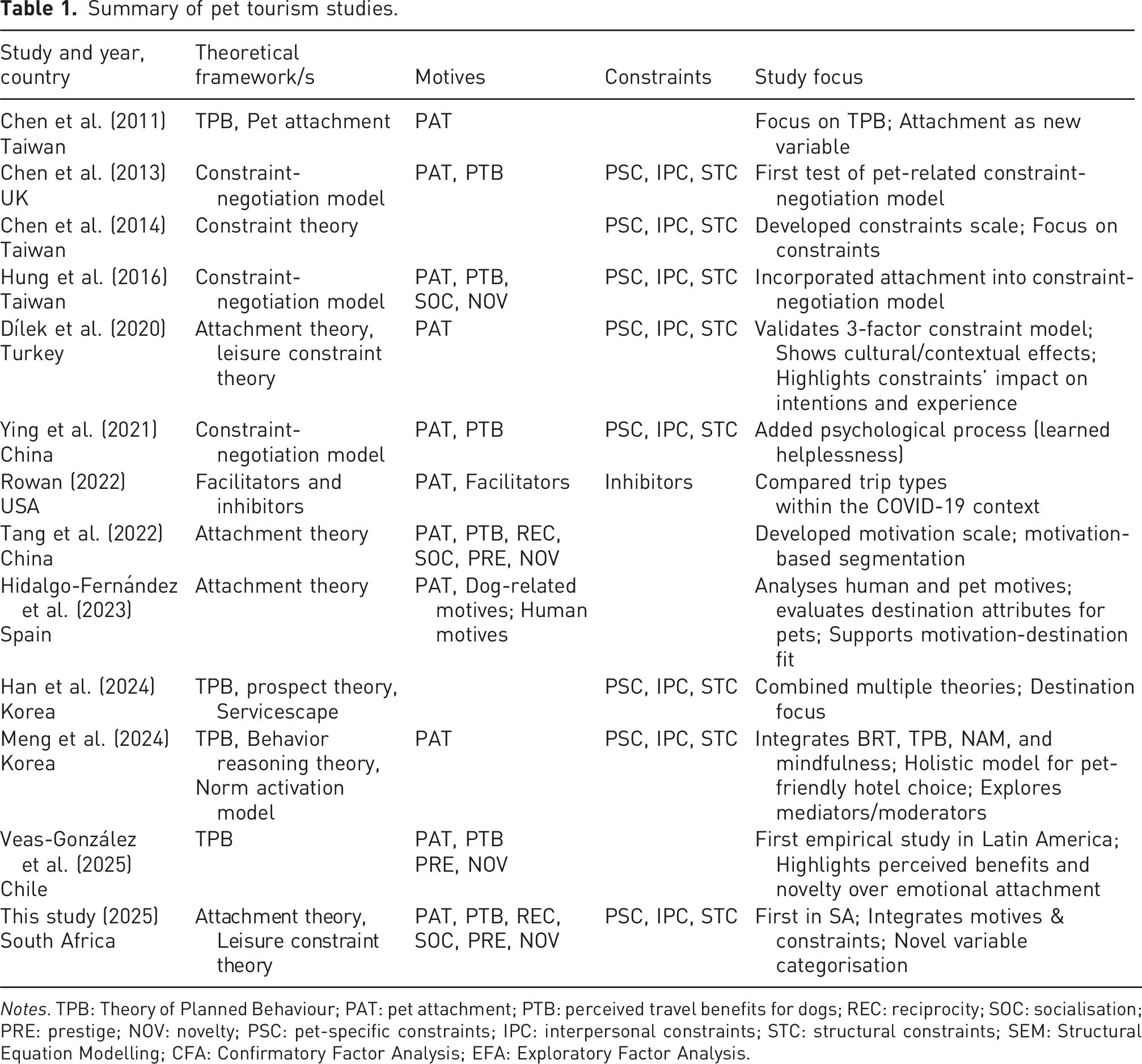
Notes. TPB: Theory of Planned Behaviour; PAT: pet attachment; PTB: perceived travel benefits for dogs; REC: reciprocity; SOC: socialisation; PRE: prestige; NOV: novelty; PSC: pet-specific constraints; IPC: interpersonal constraints; STC: structural constraints; SEM: Structural Equation Modelling; CFA: Confirmatory Factor Analysis; EFA: Exploratory Factor Analysis.
Attachment theory and pet companionship
Attachment theory explains the formation of emotional bonds between children and their caregivers, which in turn shape later relational expectations and behaviours (Cassidy et al., 2013). The theory has been extended to human–animal relationships, recognising that many owners form strong attachment bonds with their pets (Tang et al., 2022; Zilcha-Mano et al., 2012). Pets can fulfil functions comparable to human relationships, including companionship, security, and emotional support (Kim et al., 2025; Ying et al., 2021). Pets may also serve as extensions of the owner’s identity (projective function), substitutes for human relationships (surrogate function), and facilitators of social interaction (sociability function) (Veevers, 1985).
The shift from primarily functional roles (such as herding, guarding, or pest control) toward deeper emotional relationships (Irvine and Cilia, 2017) illustrates increasing humanisation (anthropomorphisation) of pets (Greenebaum, 2004; Kim et al., 2025). A substantial proportion of owners now attribute human-like traits to their pets, reinforcing anthropomorphism and strengthening attachment bonds (Serpell, 2003; Veevers, 1985). Pets are frequently regarded as family members or surrogate children and are integrated into household and leisure life (Carr and Cohen, 2009; Choi et al., 2025; Greenebaum, 2004). Demographic and cultural changes—such as delayed marriage, rising childlessness, and the diversification of family forms—have further contributed to the emergence of ‘interspecies families’ in which pets are explicitly incorporated as family members or ‘fur babies’. In particular, childless adults often invoke parenting norms and language to construct ‘pet parenting’ as an alternative pathway to parenthood (Owens and Grauerholz, 2018).
These shifts are especially pertinent in the pet tourism context, where the emotional bond between owner and dog is a central determinant of travel decisions (Payne et al., 2015; Ying et al., 2021). The broader redefinition of family helps explain why many dog owners seek to integrate dogs into everyday life and leisure activities, including overnight leisure travel. Attachment theory, therefore, offers a robust lens for understanding the motives that underpin the inclusion of dogs in leisure travel (Carr and Cohen, 2009; Choi et al., 2025; Payne et al., 2015; Ying et al., 2021).
Pet tourism motives
Previous research distinguishes between pet-related and owner-related motives (Hidalgo-Fernández et al., 2023; Rowan, 2022) and identifies distinct clusters of motivational factors (Tang et al., 2022; Veas-González et al., 2025). Building on prior work, the current study advances a novel, theory-driven categorisation grounded in attachment theory. Two broad categories are proposed: bond-related motives encompass pet attachment, perceived travel benefits for dogs, and reciprocity, capturing owner’s emotional closeness, commitment to dog’s well-being, and the reciprocally rewarding nature of the human–animal relationship. Owner-related motives include socialisation, prestige, and novelty, reflecting owner’s desire for personal fulfilment, social interaction, status enhancement, and the pursuit of new experiences. Empirical support for this dual framework emerges from segmentation and motivation studies that identify clusters of pet-owning travellers whose behaviour is driven primarily by emotional bonds or by owner-centric benefits (Choi et al., 2025; Chong et al., 2022). This categorisation improves conceptual clarity and enables more precise market segmentation.
Leisure constraint theory
Leisure constraint theory is a well-established framework in tourism and leisure studies that examines multiple barriers to leisure participation. Constraints are typically conceptualised at three levels: intrapersonal (internal psychological states such as attitudes or anxiety), interpersonal (social interactions or absence of suitable companions), and structural (external barriers such as time, money, accessibility, or facility limitations) (Chen et al., 2014; Crawford and Godbey, 1987). These constraints are not merely obstacles to participation; individuals must negotiate and navigate constraints, often sequentially, before deciding to engage in an activity.
Pet tourism constraints
Within pet tourism, Chen et al. (2014) applied and extended leisure constraint theory to examine factors discouraging dog owners from including dogs in tourism activities. Chen et al. (2014) demonstrate that leisure barriers extend beyond the owner and encompass the dog’s needs, as well as interactions among dogs, people, and infrastructure. Addressing such constraints is crucial for increasing participation in pet tourism. To reflect the unique challenges of pet-inclusive travel, Chen et al. (2014) adapted the original typology by identifying pet-specific constraints (animal health, behaviour, adaptability), pet interpersonal constraints (potential conflicts or discomfort arising from the presence of pets among other travellers), and pet structural constraints (inadequate pet-friendly facilities, costs, and regulatory or transport barriers).
Travelling with dogs often exposes owners to multiple constraints, most notably the limited availability of pet-friendly facilities along travel routes and at destinations (Carr and Cohen, 2009; Dílek et al., 2020). Even when pet-friendly accommodation is available, lack of infrastructure and services frequently deters travel. In response to such barriers, dog owners may shorten trip duration (Dotson et al., 2010) or decide not to travel at all (Carr and Cohen, 2009). Both outcomes negatively affect the tourism sector. Concerns about the availability and trustworthiness of pet care during the owner’s absence can similarly inhibit travel or, conversely, motivate owners to bring their pets along (Han et al., 2024; Ramos-Ruiz et al., 2024).
Conceptual model and hypotheses formulation
The study addresses literature gaps by empirically examining three predictor categories of dog owners’ pet tourism intentions for overnight leisure travel. The conceptual framework in Figure 1 summarises the study’s constructs and hypothesised relationships. Within the framework, antecedents of dog owners’ pet tourism intentions are organised into three categories: (1) bond-related motives, (2) owner-related motives, and (3) pet-related constraints. Bond-related motives comprise pet attachment, perceived travel benefits for dogs, and reciprocity; owner-related motives include socialisation, prestige, and novelty; and pet-related constraints cover pet-specific, interpersonal, and structural barriers (Chen et al., 2014). The remainder of the section conceptualises each construct and synthesises supporting literature to justify the hypotheses of the proposed model. Conceptual model. Authors' own construct.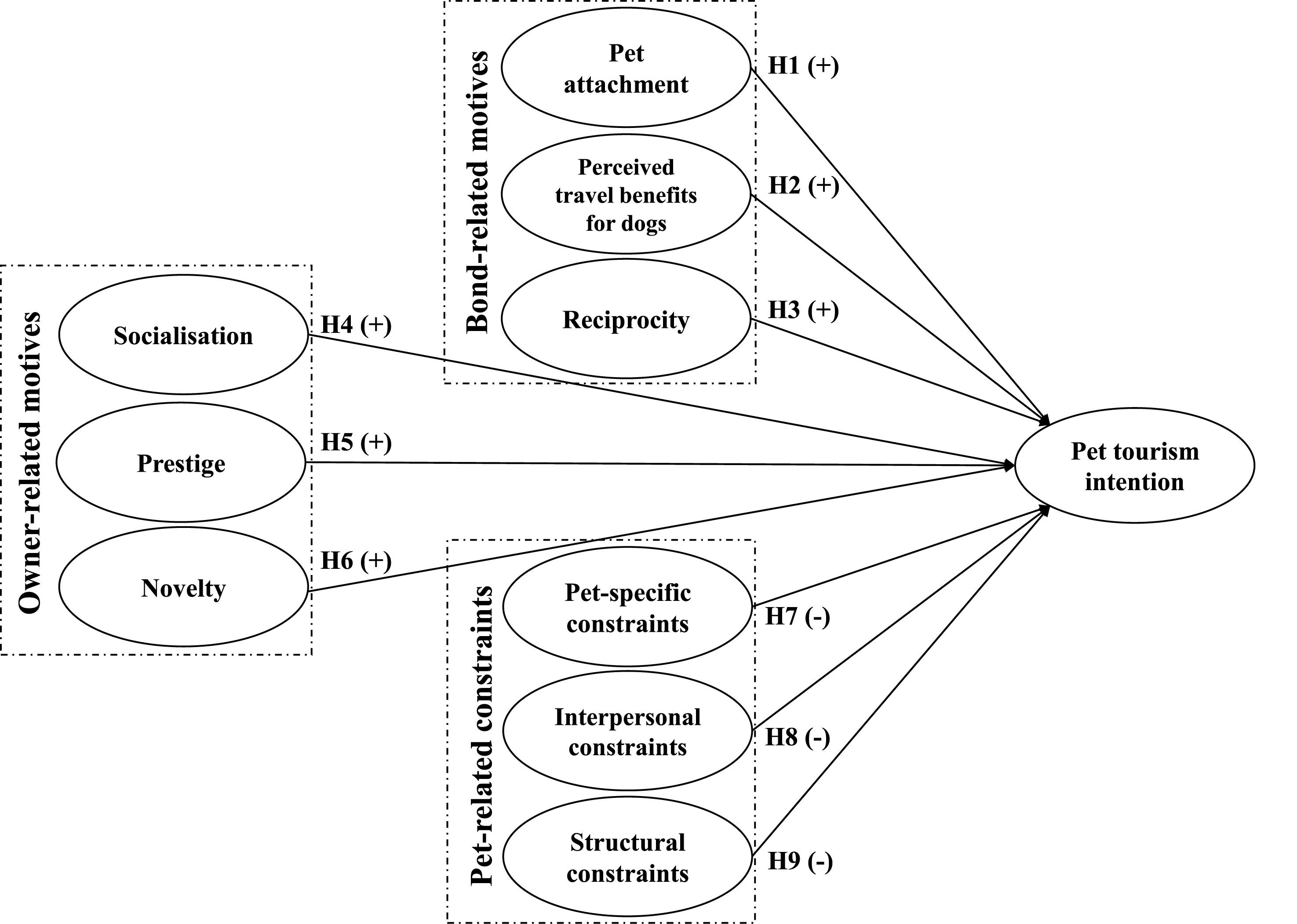
Pet tourism intention
Pet tourism intention refers to the likelihood that dog owners include canine companions in overnight leisure travel to particular destinations (Chen et al., 2011; Veas-González et al., 2025). Pet tourism intention is shaped by the desire to share leisure experiences with dogs—often regarded as family members (Carr and Cohen, 2009; Han et al., 2024)—and by perceived emotional and practical benefits of bringing dogs along (Hung et al., 2016). Many dog owners encounter challenges such as insufficient dog-friendly accommodation, transportation logistics (e.g., rest breaks, safety during transit), and managing dogs’ behaviour in unfamiliar environments (Clur, 2024). Leaving dogs behind can involve monetary costs (e.g., kennel fees) and emotional costs (e.g., guilt or anxiety about dogs’ well-being) (Carr and Cohen, 2009; Kim et al., 2025; Kirillova et al., 2015). Identifying factors that most strongly enhance or inhibit pet tourism intention is therefore crucial for both scholars and industry stakeholders.
Bond-related motives
Bond-related motives capture deeply rooted emotional and relational drivers that compel dog owners to include dogs in leisure travel (Gong et al., 2020; Han et al., 2024). The model identifies three dimensions: pet attachment, perceived travel benefits for dogs, and reciprocity. Although all three motives stem from the owner–dog bond, each represents a distinct motivational factor (Tang et al., 2022; Veas-González et al., 2025).
Pet attachment
Pet attachment refers to the emotional bond between a dog owner and a companion animal, characterised by affection, closeness, and a desire for proximity (Gong et al., 2020; Le Roux and Wright, 2020; Payne et al., 2015; Zilcha-Mano et al., 2012). The affective connection is a central motive for including dogs in various activities, particularly shared leisure travel (Kirillova et al., 2015). Empirical studies indicate that higher pet attachment predicts stronger intentions to travel with dogs (Tang et al., 2022), although some research reports non-significant findings (Chen et al., 2011; Peng et al., 2014). In line with the prevailing evidence, the following hypothesis is proposed:
Pet attachment relates positively to dog owners’ pet tourism intention.
Perceived travel benefits for dogs
Perceived travel benefits for dogs encompass positive outcomes that owners believe dogs experience from travel, such as increased physical activity, socialisation, stimulation, and skill development (Hung et al., 2016; Jyrinki, 2012; Ying et al., 2021). Studies confirm that dog owners who perceive greater benefits for dogs are more likely to plan dog-inclusive travel (Tang et al., 2022). Accordingly, the following hypothesis is proposed:
Perceived travel benefits for dogs relate positively to dog owners’ pet tourism intention.
Reciprocity
Reciprocity reflects owners’ motivation to ‘give back’ to dogs as an expression of gratitude for companionship, loyalty, and emotional support (Dílek et al., 2020; Tang et al., 2022). The sense of mutual reward often manifests in a desire to include dogs in enjoyable activities or travel as a form of repayment (Tang et al., 2022). Prior research suggests that reciprocity is a significant positive predictor of dog owners’ pet tourism intention (Tang et al., 2022). Thus, the following hypothesis is proposed:
Reciprocity relates positively to dog owners’ pet tourism intention.
Owner-related motives
Owner-related motives comprise drivers rooted in dog owner’s aspirations for social interaction, recognition, and novelty. The study focuses on socialisation, prestige, and novelty.
Socialisation
Socialisation refers to the motivation to seek interpersonal interaction facilitated by pet ownership (Tang et al., 2022). Dogs often act as social ‘icebreakers’ and foster connections among owners during walks, visits to pet-friendly venues, or shared travel experiences (Kent and Mulley, 2023; Le Roux and Wright, 2020; Veevers, 1985). Travelling with dogs creates opportunities for casual social interactions and promotes a sense of community among dog owners (Ramos-Ruiz et al., 2024). Empirical evidence demonstrates a significant positive association between socialisation and dog owners’ pet tourism intention (Tang et al., 2022). Accordingly, the following hypothesis is proposed:
Socialisation relates positively to dog owners’ pet tourism intention.
Prestige
Prestige denotes the desire for self-enhancement, social status, and public recognition (Tang et al., 2022). For some dog owners, travelling with a dog functions as a symbol of prestige or a marker of a distinctive lifestyle (Jyrinki, 2012), prompting a search for social validation within social networks or pet-focused communities (Tang et al., 2022). Although findings on the link between prestige and dog owners’ pet tourism intention are mixed (Tang et al., 2022), broader tourism research supports a positive relationship (Hanqin and Lam, 1999). Thus, the following hypothesis is proposed:
Prestige relates positively to dog owners’ pet tourism intention.
Novelty
Novelty refers to the pursuit of new, stimulating, or unconventional experiences (Tang et al., 2022). Contemporary travellers increasingly seek opportunities to explore unfamiliar destinations and experience the relatively novel practice of travelling with a dog (Han et al., 2024). Although often a weaker predictor than other motives (Tang et al., 2022), novelty remains conceptually important. Therefore, the following hypothesis is proposed:
Novelty relates positively to dog owners’ pet tourism intention.
Pet-related constraints
Despite the appeal of dog-inclusive travel, various barriers constrain intentions to travel with dogs (Chen et al., 2013). Drawing on leisure constraint theory (Chen et al., 2014; Crawford and Godbey, 1987), constraints to dog-inclusive leisure are conceptualised as follows.
Pet-specific constraints
Pet-specific constraints stem from dog’s physiological or psychological characteristics, including size, health conditions, anxiety, or behavioural issues in unfamiliar environments (Chen et al., 2014; Ramos-Ruiz et al., 2024; Ying et al., 2021). Such factors may directly limit travel feasibility or lead owners to exclude their dogs from trips (Ying et al., 2021). Multiple studies have reported a significant negative association between pet-specific constraints and dog owners’ pet tourism intentions (Chen et al., 2014; Dílek et al., 2020; Han et al., 2024). Hence, the following hypothesis is proposed:
Pet-specific constraints relate negatively to dog owners’ pet tourism intention.
Interpersonal constraints
Interpersonal constraints involve anticipated or experienced challenges arising from the attitudes or behaviours of others—such as family members, friends, or fellow travellers—who may object to or feel inconvenienced by the presence of dogs (Carr, 2017; Ying et al., 2021). Studies consistently find that interpersonal constraints substantially reduce the likelihood of travelling with dogs (Chen et al., 2014; Dílek et al., 2020; Han et al., 2024). Accordingly, the following hypothesis is proposed:
Interpersonal constraints relate negatively to dog owners’ pet tourism intention.
Structural constraints
Structural constraints encompass external barriers that limit travel intentions, including limited pet-friendly accommodation, high costs, regulatory restrictions, transportation difficulties, and inadequate facilities (Chen et al., 2014; Hung et al., 2016; Ramos-Ruiz et al., 2024). Additional obstacles, such as difficulty identifying trusted care for dogs during owner’s absence, also act as strong deterrents (Chen et al., 2014; Han et al., 2024). These constraints are particularly salient for overnight leisure travel, which requires complex logistical arrangements (Chen et al., 2014) and appropriate activities at destinations (Ying et al., 2021). Studies frequently identify structural constraints as the most significant barriers to dog-inclusive leisure travel (Chen et al., 2014; Dílek et al., 2020; Han et al., 2024). Therefore, the following hypothesis is proposed:
Structural constraints relate negatively to dog owners’ pet tourism intention.
Contextualising the study
Pet ownership
The global pet population is estimated at around 1 billion animals (Health for Animals, 2022), while the South African pet population is approximately 21.7 million pets (Kuhlman, 2023). Approximately 45% of South African households own at least one pet (Cosgrove, 2025a), a proportion somewhat lower than in higher-income regions, such as the United States (66%) and parts of Europe (46%) (Layne, 2025). Dogs constitute the most popular companion animals worldwide, followed by cats (Health for Animals, 2022). Other commonly kept pets include birds, fish, rabbits, rodents, horses, reptiles, and various exotic species (Cosgrove, 2025a; Han et al., 2024). In South Africa, the predominance of dogs as companion animals is pronounced: 78% of pet-owning households have at least one dog, compared with 36% that keep cats (Cosgrove, 2025a).
The global pet industry is expanding rapidly, with projections estimating growth from around USD 320 billion in 2023 to approximately USD 500 billion by 2030 (WhyFive, 2023). Rising pet ownership, the premiumisation of pet-related goods and services, and continued humanisation of pets are key drivers of this expansion (Horizon Grand View Research, 2025a). South Africa mirrors these trends, with the pet care market valued at approximately USD 452 million per year (Kuhlman, 2023).
Pet tourism
Travel that includes pets—particularly dogs—is increasing globally, with the highest participation rates reported in the United States (Clur, 2024; Cosgrove, 2025b). Reported figures for pet tourism, however, vary substantially across different data sources and methodologies, making it challenging to obtain precise global estimates. Nonetheless, available data indicate that a growing share of travellers seek to include pets, especially dogs, in overnight leisure travel plans. Although dogs are most commonly included in pet tourism, other companion animals such as horses, cats, and birds also participate in pet-inclusive travel (Dashper, 2020; Fooks and Johnson, 2015; Wyld’s Wingdom, 2025). Dogs account for more than half of pet travel services worldwide, followed by cats, birds, and horses (Cosgrove, 2025b; Jahn et al., 2023). High sociability and adaptability to varied environments likely contribute to dogs’ popularity as travel companions (Kent and Mulley, 2023).
The global pet travel services market was valued at approximately USD 2.4 billion in 2024 and is projected to reach around USD 3.9 billion by 2030, corresponding to a compound annual growth rate (CAGR) of 8.9% (Grand View Research, 2025). In South Africa, the pet travel services segment generated an estimated USD 50.4 million in revenue in 2024 and is forecast to exceed USD 85 million by 2030, reflecting a projected CAGR of 9.2% from 2025 to 2030 (Horizon Grand View Research, 2025b). Major booking platforms, including Booking.com, Airbnb, and SA Venues, have responded to increasing demand by introducing pet-friendly search filters and publishing guidance on leisure travel with dogs. Within South Africa, the Western Cape currently offers the largest concentration of pet-friendly accommodation, with over 550 establishments welcoming dog-owning visitors (SA Venues, 2024). Despite these advances, developing countries, including South Africa, lag behind regions such as the United States and Australia in the breadth and sophistication of pet-friendly travel services (Gong et al., 2020; Ying et al., 2021).
Trip purpose and type
Tourism is widely understood as a complex phenomenon encompassing people’s activities when travelling outside their usual environment for leisure, business, or other purposes (Suriñach et al., 2018). Trip purpose is recognised as a key non-traditional segmentation base, closely aligned with travel motivations, and is central to various segmentation strategies in tourism marketing (Sung et al., 2001). UN Tourism (2025) distinguishes two main visitor categories: same-day visitors (excursionists), who return home the same day (Suriñach et al., 2018), and tourists (overnight visitors), who spend at least one night away from home (Rowan, 2022). The subsections below provide a brief discussion of trip purpose and trip type.
Trip purpose
Leisure travel primarily revolves around personal recreation and visiting friends or relatives, which represent dominant motives within the broader vacation market (Sung et al., 2001). In the context of pet tourism, specifically travel with dogs, the trip purpose typically reflects both the dog’s well-being and enjoyment, as well as the owner’s pursuit of relaxation, exploration, or social connection (McKercher, 2024). Leisure trips with dogs often involve retreats in natural settings, outdoor adventures, or visits to friends and relatives in pet-friendly environments, with itineraries shaped by the dog’s needs, influencing both destination and activity choices (McKercher, 2024; Sung et al., 2001). Such trips are inherently multidimensional: travel with dogs simultaneously addresses companionship, recreation, and socialisation, positioning dogs as both travel companions and motivational drivers.
Trip type
Same-day trips are distinct from routine pet walks or errands and typically require less preparation, present fewer logistical challenges, and entail lower costs than overnight travel (Suriñach et al., 2018; Tang et al., 2022). In contrast, overnight stays demand more extensive planning, including booking suitable accommodation, managing rest stops, and navigating structural and interpersonal barriers (Chen et al., 2014). Consequently, overnight travel is associated with heightened constraints and potentially different motivational dynamics compared with same-day trips (Tang et al., 2022). The greater complexity and duration of overnight trips mean that dog owners’ intentions, motives, and perceived constraints may be particularly sensitive to the demands of overnight travel (Tang et al., 2022). Given these distinctions, the present study focuses on overnight leisure stays with canine companions to identify key factors influencing more involved forms of dog-inclusive pet tourism.
Method
Population, sampling, and data collection
The study targeted South African residents aged 18 years or older who owned at least one dog, had internet access, and used active social media accounts. Convenience sampling was used initially by posting an invitation to participate on several social media platforms, including WhatsApp, Facebook, X, Instagram, and LinkedIn. With approximately 45.3 million South Africans using the internet and nearly 26 million (over 43%) active social media users (Cowling, 2024), the sampling approach was considered suitable for reaching the target population. According to the Marketing Research Foundation (MRF) (2025), 11.45 million South African consumers aged 15 years and older live in households with one or more dogs, representing 26.3% of all South African consumers in this age group (MRF, 2025). Recent MRF data show that dog-owning consumers commonly use WhatsApp (66.6%), Facebook (56.7%), Instagram (17.4%), X (7.8%), and LinkedIn (3.8%). In line with previous pet tourism studies that employed non-probability sampling and social media platforms for respondent recruitment (e.g., Chen et al., 2013; Chen et al., 2014; Hidalgo-Fernández et al., 2023; Huang et al., 2022; Hung et al., 2016; Meng et al., 2024; Tang et al., 2022), the strategy enabled efficient, cost-effective access to a large number of dog owners. Primary data were collected using a self-administered online questionnaire hosted on Qualtrics between June and November 2023. Respondents accessed the survey via a link shared on social media platforms. Snowball sampling (Zikmund et al., 2019) was then applied to increase sample size by inviting respondents to share the survey link with other dog owners. The final sample comprised 437 completed responses. No incentives were offered for participation.
Questionnaire design
The online questionnaire opened with an introduction to the researchers, an explanation of the study’s purpose, and assurances of confidentiality and anonymity. Before proceeding, respondents provided informed consent to participate. The second section contained screening questions to ensure that respondents met inclusion criteria (Zikmund et al., 2019). Once screened, respondents indicated how many dogs they owned, and subsequent questions were tailored to refer to “dog” or “dogs”, as appropriate. To place respondents in a suitable frame of reference, the questionnaire included the following instruction: “Imagine you are thinking about taking your dog/s on an overnight stay. An ‘overnight stay’ refers to travelling with your dogs to a destination away from your place of residence and staying overnight at a paid accommodation establishment for at least one night. Answer the questions that follow while thinking of such an overnight stay.”
The third section measured constructs using multiple-item scales adapted from previous research. Pet attachment was measured with 10 items from Zasloff’s (1996) scale. The other motives were measured using scale items adapted from Tang et al. (2022): perceived travel benefits for dogs (five items) and reciprocity, socialisation, prestige, and novelty (four items each). All motive-related constructs were measured on seven-point Likert-type scales ranging from 1 (strongly disagree) to 7 (strongly agree). Respondents’ perceptions of pet-related travel constraints were measured using the Pet Owners’ Tourism Constraints scale developed by Chen et al. (2014) and validated by Hung et al. (2016): pet-specific constraints (five items), interpersonal constraints (four items), and structural constraints (six items). These three constructs were measured on five-point Likert-type scales ranging from 1 (strongly disagree) to 5 (strongly agree). The dependent variable, dog owners’ pet tourism intention, was measured with a three-item seven-point Likert-type scale adapted from Tang et al. (2022). The scale points were labelled as 1 (definitely not), 2 (highly unlikely), 3 (unlikely), 4 (neutral), 5 (likely), 6 (highly likely), and 7 (definitely). To mitigate common method bias (Chang et al., 2010; Podsakoff et al., 2003), the order of the rating scales and the item order within each scale were randomised. The questionnaire concluded with demographic questions relating to respondents’ gender, age, ethnicity, household income, and living status.
Following ethical clearance from the university’s Research Ethics Committee, a live pre-test (Perneger et al., 2015) was conducted with 70 respondents from the target population to identify potential problems; no modifications to the questionnaire were required. Once data collection concluded, responses were cleaned, coded, and imported into IBM SPSS (Version 29) for univariate and bivariate analyses (Zikmund et al., 2019). Subsequently, confirmatory factor analysis (CFA) and structural equation modelling (SEM) were conducted using IBM AMOS (Version 29).
Analyses and results
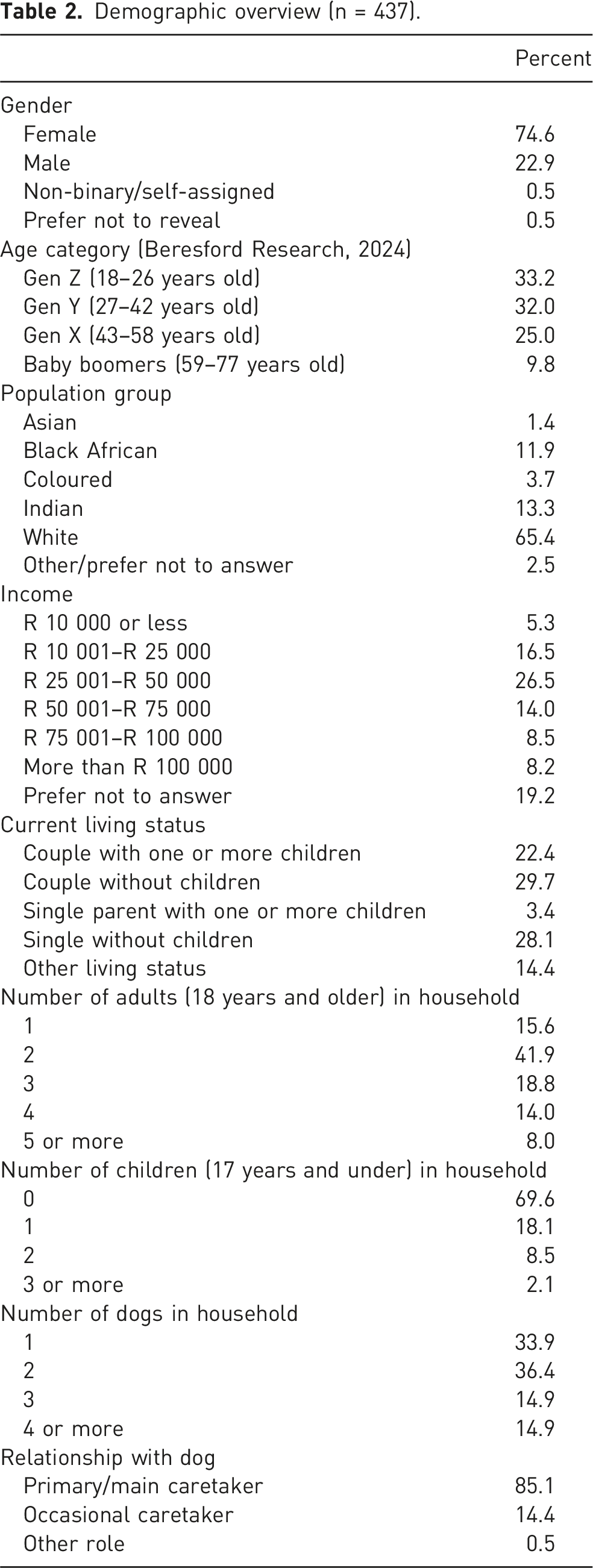
Demographic overview (n = 437).
Univariate statistics: constructs and items.
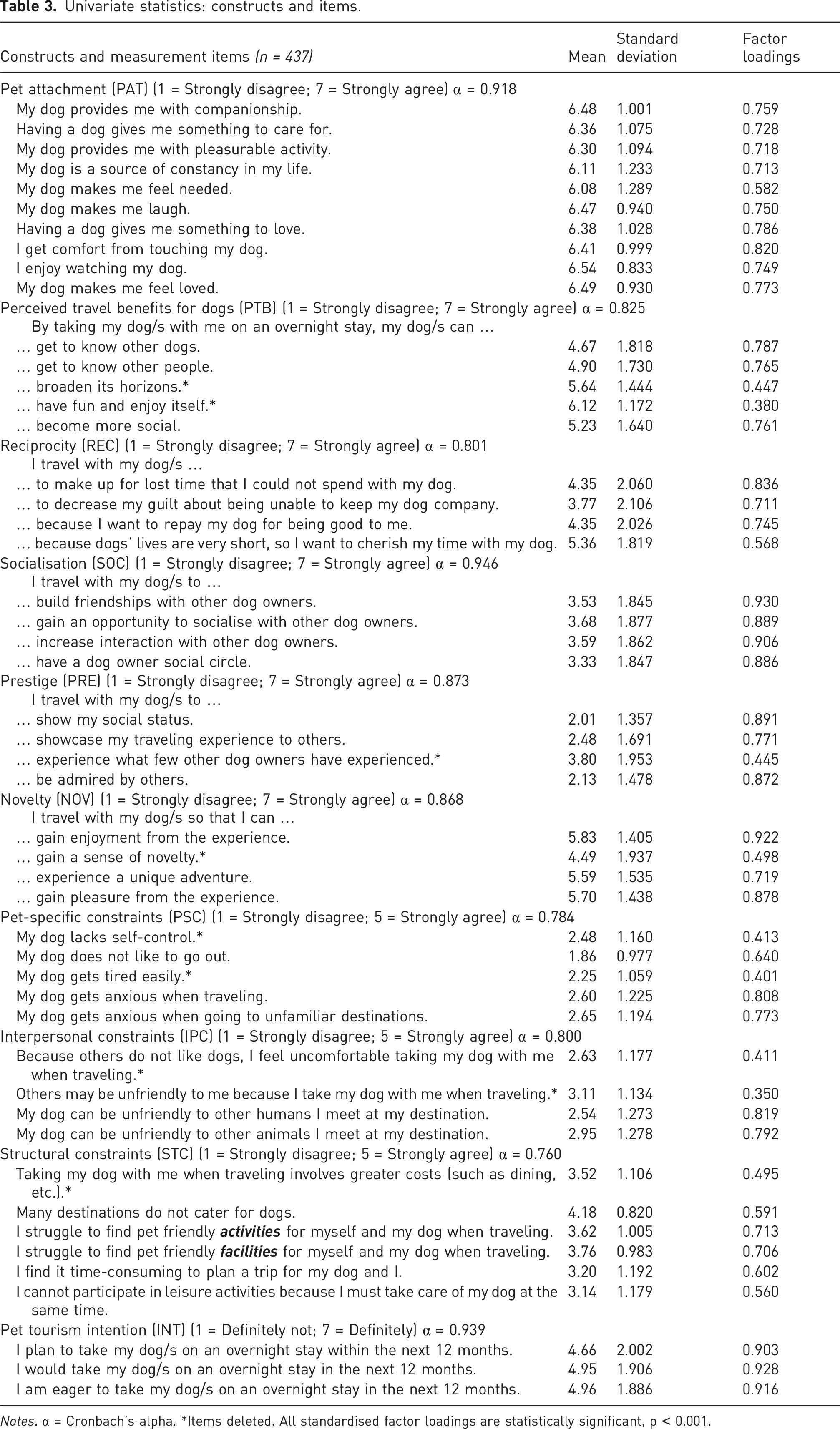
Notes. α = Cronbach’s alpha. *Items deleted. All standardised factor loadings are statistically significant, p < 0.001.
Assessing the measurement model: Construct reliability and validity
Since the constructs were measured using established scales, confirmatory factor analysis (CFA) was employed to assess the measurement model (Hair et al., 2019). Aligned with Hair et al.’s (2019) recommendation that standardised factor loadings should be statistically significant and exceed 0.5, items with lower values were removed. After re-estimating the CFA, standardised loadings ranged from 0.533 to 0.933 (see Table 3). Model fit was assessed using a combination of overall, incremental, and absolute fit indices (Kline, 2016), namely the model chi-square statistic (χ2), degrees of freedom (df), p-value and χ2/df ratio, incremental fit index (IFI), Tucker–Lewis index (TLI), comparative fit index (CFI), root mean square error of approximation (RMSEA), and standardised root mean square residual (SRMR). The results—χ2 = 1509.682, df = 695, p < 0.001, χ2/df = 2.172, IFI = 0.923, TLI = 0.913, CFI = 0.922, RMSEA = 0.052, SRMR = 0.064—indicated acceptable fit for the measurement model (Cheung et al., 2024; Hair et al., 2019; Kline, 2016).
Inter-construct correlations, squared correlations, reliability coefficients and average variance extracted.
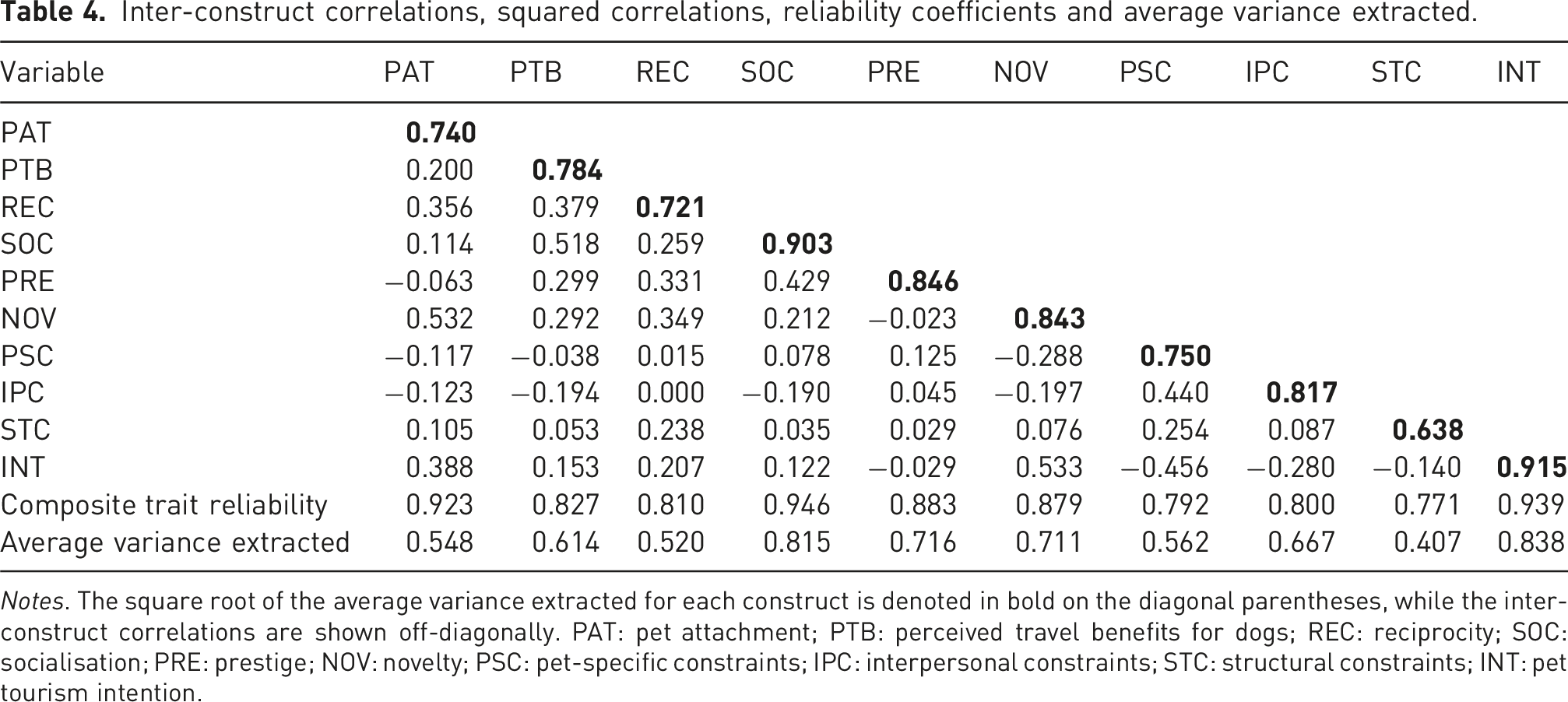
Notes. The square root of the average variance extracted for each construct is denoted in bold on the diagonal parentheses, while the inter-construct correlations are shown off-diagonally. PAT: pet attachment; PTB: perceived travel benefits for dogs; REC: reciprocity; SOC: socialisation; PRE: prestige; NOV: novelty; PSC: pet-specific constraints; IPC: interpersonal constraints; STC: structural constraints; INT: pet tourism intention.
Discriminant validity: heterotrait-monotrait (HTMT) ratios.
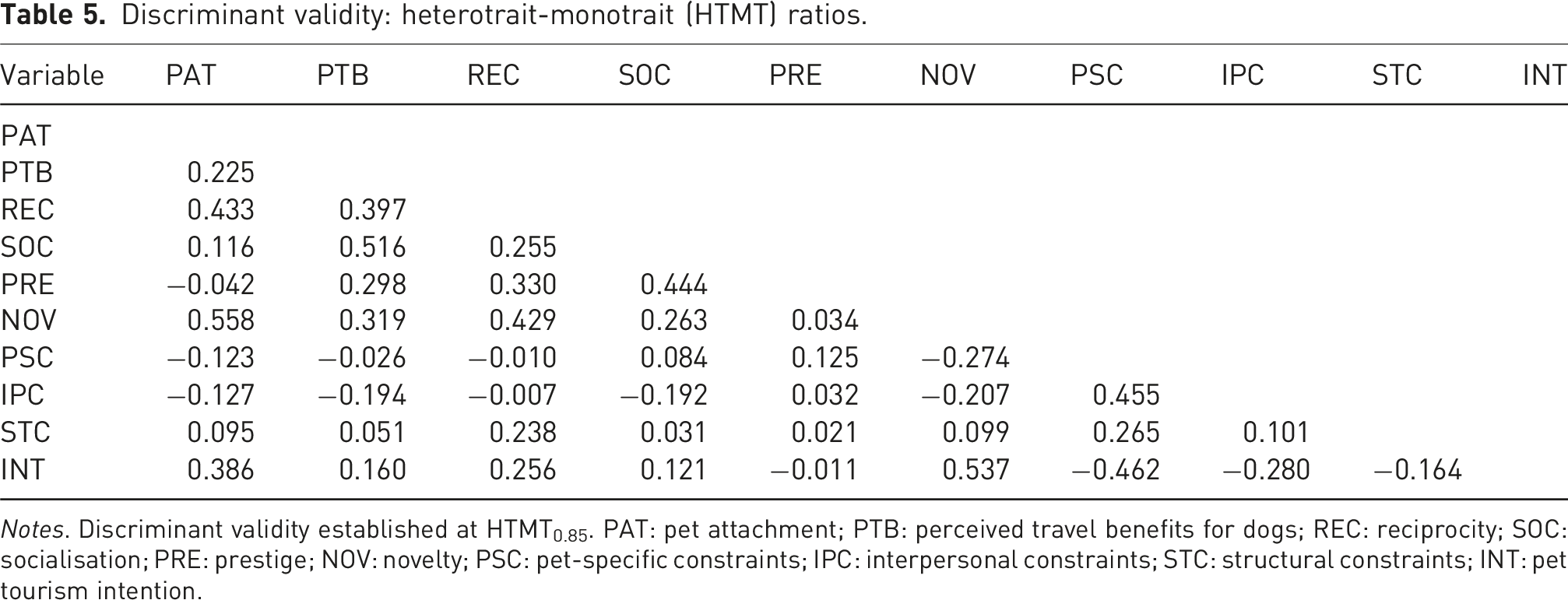
Notes. Discriminant validity established at HTMT0.85. PAT: pet attachment; PTB: perceived travel benefits for dogs; REC: reciprocity; SOC: socialisation; PRE: prestige; NOV: novelty; PSC: pet-specific constraints; IPC: interpersonal constraints; STC: structural constraints; INT: pet tourism intention.
Assessing the structural model
The structural model showed acceptable fit: χ2 = 1509.682, df = 695, p < 0.001, χ2/df = 2.172, IFI = 0.923, TLI = 0.913, CFI = 0.922, RMSEA = 0.052, SRMR = 0.064 (Cheung et al., 2024; Kline, 2016). Figure 2 presents the results of the hypothesised relationships between the constructs. Four hypotheses were statistically significant (p < 0.05), providing support for H1, H6, H7, and H9, whereas H2, H3, H4, H5, and H8 were not supported. Standardised regression weights for the supported hypotheses ranged from 0.120 (structural constraints → intention) to 0.342 (novelty → intention). Aligned with theoretical expectations, dog owners’ pet tourism intention was negatively associated with constraints and positively associated with motives. The variance explained was assessed using R-squared analysis (Chen et al., 2014), which indicated that the nine predictors jointly accounted for 36.3% of the variance in dog owners’ intention to include dogs in overnight leisure travel. Structural model. Authors' own construct. ***p < 0.001; **p < 0.01; *p < 0.05.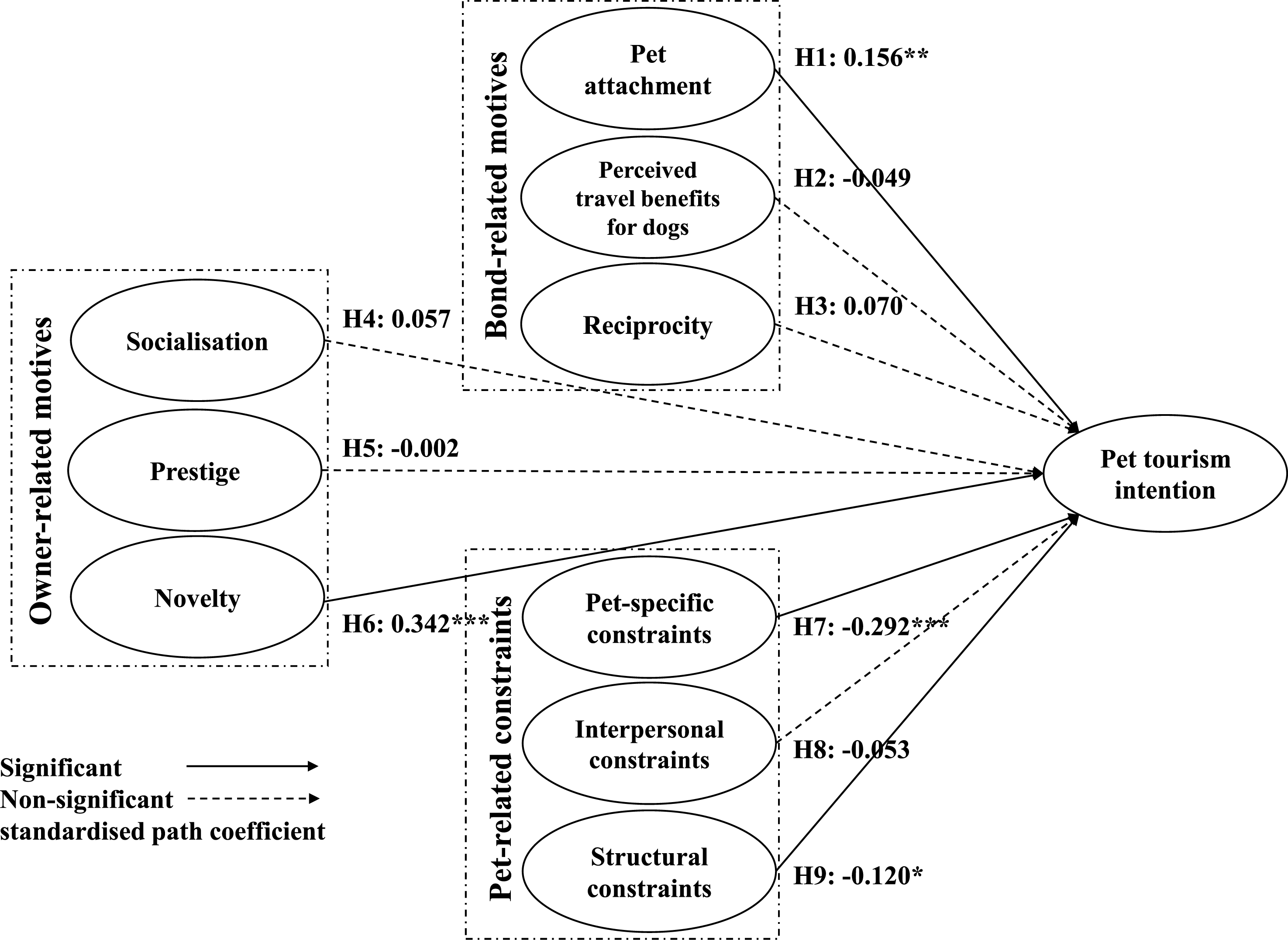
Discussion and theoretical implications
Through the dual lenses of attachment theory and leisure constraint theory, the study examines nine antecedents of South African dog owners’ intentions to include dogs in overnight leisure travel. Building on an integrated model, the research considers bond-related motives, owner-related motives, and pet-related constraints, thereby providing new empirical evidence from an under-researched African context. Statistical analyses validated the structural model for the South African sample, with four of the nine hypothesised relationships supported.
Bond-related motives and pet tourism intention: H1, H2, H3
Consistent with previous findings in Asia and Europe (Chen et al., 2011, 2013; Hidalgo-Fernández et al., 2023; Tang et al., 2022), the findings demonstrate that pet attachment positively and significantly predicts dog owners’ pet tourism intention in South Africa. However, in contrast to studies such as Tang et al. (2022), perceived travel benefits for dogs and reciprocity were not significant in the South African sample. These discrepancies may highlight important cultural and contextual differences. For example, South African dog owners may view dog-inclusive travel primarily as a form of owner enjoyment, rather than focussing on perceived direct benefits for dogs or framing travel as an act of reciprocation. Such differences underscore the importance of considering context when interpreting the importance of specific motivational drivers.
Owner-related motives and pet tourism intention: H4, H5, H6
Among the owner-related motives, novelty emerged as the only significant positive predictor of dog owners’ pet tourism intention. Moreover, novelty was the strongest overall predictor of dog owners’ pet tourism intention for overnight leisure travel. This finding aligns with results from Latin America (Veas-González et al., 2025) and China (Tang et al., 2022), suggesting that the desire for unique and stimulating experiences is pronounced among dog owners considering overnight leisure travel. In contrast, socialisation was not significant in the South African sample, diverging from some international findings (Tang et al., 2022). The apparent insignificance of socialisation in South Africa could be attributed to the country’s reputation as “the friendliest country in the world” (Fraser, 2024), where casual social interactions are commonplace and therefore less central as a specific travel motive. Prestige was also not significant, suggesting that dog-inclusive travel is not widely used to signal social status among South African dog owners, in contrast with some East Asian and Western contexts (Hanqin and Lam, 1999).
Pet-related constraints and pet tourism intention: H7, H8, H9
Consistent with previous studies (Chen et al., 2014; Dílek et al., 2020), pet-specific constraints emerged as the strongest constraint-related predictor of dog owners’ pet tourism intention, followed by structural constraints. Both constructs are negatively related to pet tourism intentions, consistent with evidence from Turkey (Dílek et al., 2020), Korea (Han et al., 2024), and the United Kingdom (Chen et al., 2013). These results confirm that practical and animal-related barriers are notable deterrents for South African dog owners, particularly for overnight leisure travel that entails substantial logistical preparation. Interpersonal constraints were not significant, suggesting that South African dog owners are either more tolerant of potential social challenges or experience greater societal acceptance of travelling with dogs.
Importantly, at least one predictor from each major category—bond-related motives, owner-related motives, and pet-related constraints—was supported, indicating that all three categories contribute meaningfully to explaining dog owners’ pet tourism intentions and providing empirical support for the conceptual structure of the proposed framework. In terms of relative strength, novelty emerged as the strongest overall predictor, followed by pet-specific constraints, pet attachment, and structural constraints. The prominence of novelty highlights a local emphasis on pursuing unique experiences in dog-inclusive leisure travel, while the importance of constraints underscores the continued relevance of infrastructural and practical considerations. The findings collectively underscore the context-dependent nature of motives and constraints in dog-inclusive pet tourism, suggesting that effects are not universal but vary with culture, socio-economic conditions, and travel context (for example, overnight versus same-day trips). Researchers are thus encouraged to design models that are sensitive to local values, infrastructure, and leisure patterns and to avoid assuming global homogeneity in pet tourism behaviours across species and destinations. Furthermore, the variance explained (36.3%) suggests that additional variables may shape dog owners’ pet tourism intentions. Future research should therefore incorporate additional predictors and explore complementary theoretical frameworks to gain a more comprehensive understanding.
The study advances theory in several respects: first, the results demonstrate that both attachment theory and leisure constraint theory exhibit explanatory power in a non-Western context, while also revealing that the relative importance of specific motives and constraints is context dependent. Second, the dominant role of novelty echoes findings from Latin America (Veas-González et al., 2025), yet contrasts with studies where pet attachment is the primary driver (Chen et al., 2011; Hidalgo-Fernández et al., 2023), suggesting that rapidly changing developing economies may prioritise novelty and experiential value compared with status signalling or emotional bonding. Third, the adverse effects of structural and pet-specific constraints highlight that infrastructural barriers and pet characteristics remain robust inhibitors of dog-inclusive travel across diverse settings (Dílek et al., 2020; Han et al., 2024). Finally, the results extend the generalisability of attachment and constraint theories to an African context and support the utility of the proposed dual-category motive framework for future pet tourism research.
Managerial implications
The findings offer guidance for tourism and hospitality professionals—including accommodation providers, attractions, rest stops, and ancillary service providers—who seek to attract and better serve South Africa’s growing segment of pet-owning travellers. By recognising the interplay of motives (such as pet attachment and novelty seeking) and constraints (particularly structural barriers and pet-specific challenges), organisations can design differentiated strategies that enhance competitiveness and foster customer loyalty in this emerging market (Choi et al., 2025).
Leveraging pet attachment (bond-related motive)
Harnessing dog owners’ strong emotional bonds with dogs is fundamental to value creation. Numerous studies have shown that companion animals are often regarded as family members, and that this attachment significantly shapes travel choices (Carr, 2017; Choi et al., 2025; Gong et al., 2020; Le Roux and Wright, 2020). Tourism and hospitality providers can capitalise on this motive by crafting marketing messages and on-site experiences that authentically reflect pet owners’ emotional connection with dogs. Emotional advertising featuring stories or visuals of pets enjoying travel alongside owners can strengthen brand appeal. Complementary personalised services—such as addressing pets by name, providing welcome treats, or offering tailored in-room amenities—and explicitly welcoming dogs as guests at accommodation, restaurants, and attractions can foster a strong sense of belonging among dog owners (Buhalis and Chan, 2023; Carr, 2017; Kim et al., 2025; Selisho, 2022).
Leveraging novelty (owner-related motive)
Novelty seeking among South African dog owners is a strong driver of overnight dog-inclusive travel. Tourism businesses are thus encouraged to curate distinctive pet-inclusive experiences, such as dog-friendly beach excursions, guided hikes, or vineyard tours that accommodate dogs. Themed events—such as “doggy brunches,” agility contests, or pet-friendly festivals—can further appeal to novelty seekers, while bespoke services such as pet birthday celebrations enhance memorability. Recent research on pet cafés suggests that pet-related attributes (e.g., opportunities for interaction and perceived cuteness) contribute more to satisfaction and social media sharing than traditional café attributes (Li et al., 2025). By analogy, pet-friendly overnight stays may benefit from emphasising dog-centred features (such as dedicated dog areas, interaction opportunities, and photo-worthy settings) rather than relying solely on standard hotel attributes when targeting novelty-oriented dog owners. Clear marketing communication about these distinctive offerings is crucial. Websites and booking platforms should make pet-friendly amenities and experiences easily discoverable (WhyFive, 2023). Experimental work on dog influencers—pet dogs who act as social media influencers and whose images and stories are strategically used in social media marketing content for tourism and hospitality brands—suggests that rational, information-rich social media content about pet-friendly services is particularly persuasive for dog owners with limited prior experience in hotel stays with dogs, while experienced owners respond similarly to both rational and emotional appeals (Wei et al., 2025). Collaboration with dog influencers can thus combine emotional storytelling with concrete information about pet-related facilities, helping to stimulate novelty-driven, dog-inclusive overnight bookings (Wei et al., 2025).
Addressing pet-specific constraints
Dogs’ health, behaviour, and adaptability can complicate travel (Chen et al., 2014; Gong et al., 2020). Businesses can respond to these constraints by offering solutions such as designated “stress-free zones” (for example, bookable private walking trails or play areas) and by providing or signposting resources related to travel-readiness training, local veterinary services, and dog-sitting services (Gong et al., 2020). Such measures can reassure owners and increase willingness to travel with dogs.
Addressing structural constraints
Structural constraints remain a key barrier to dog-inclusive pet tourism. Expanding and upgrading pet-friendly facilities is therefore critical. Purpose-designed pet-friendly accommodation—with durable furnishings, easy-to-clean floors, clearly demarcated pet play and sleeping areas, and secure exercise spaces—can substantially reduce these barriers (Han et al., 2024). High hygiene and cleanliness standards are paramount (Li et al., 2025), supported by robust deep-cleaning protocols and readily available cleaning supplies (Han et al., 2024). Beyond pet-friendly accommodation, dog owners also require pet-friendly rest stops along major travel routes, as well as pet-friendly dining and activity options at destinations.
To broaden market access, hospitality providers should recognise that, although luxury accommodation has traditionally targeted affluent dog owners (Buhalis and Chan, 2023), middle-income dog owners in South Africa represent a substantial and underserved segment (WhyFive, 2023). Affordable, competitively priced packages that bundle basic pet amenities, mid-range accommodation, and curated experiences can make dog-inclusive pet tourism more accessible. Marketing campaigns should therefore highlight not only luxury, but also practicality, cleanliness, and value. Transparent information on pet policies, in-room amenities, health and emergency support, and local attractions—provided via websites, apps, and booking platforms—can reduce uncertainty and anxiety. Digital tools, such as interactive maps, can further support planning by helping guests identify pet-friendly rest stops and recreational spaces along travel routes.
Ultimately, the consistent delivery of high-quality pet-friendly service depends on comprehensive staff training and the cultivation of a genuinely welcoming organisational culture. Employees across all guest touchpoints should be equipped to anticipate the needs of pet-owning visitors, address common concerns, and manage potential sources of friction, thereby creating an inclusive environment that encourages loyalty and positive word-of-mouth (Buhalis and Chan, 2023). Through coordinated investment in pet-focused infrastructure, service quality, and targeted marketing, South African tourism businesses can position themselves as leaders in dog-inclusive pet tourism, unlocking new revenue streams from the growing market.
Limitations and future research
Although the study advances understanding of motives and constraints influencing South African dog owners’ intentions for overnight dog-inclusive pet tourism, limitations warrant consideration. The use of non-probability sampling restricts the generalisability of the findings beyond the sampled population and context. Future research could employ probability sampling techniques, where feasible, and use appropriate sampling frames to enhance representativeness. As with several previous pet tourism and pet-related survey studies, the sample was disproportionately female, echoing participation patterns reported by Tang et al. (2022), Meng et al. (2024), Huang et al. (2022), and Hidalgo-Fernández et al. (2023). The gendered response bias suggests that women may be more engaged with, or more responsive to, pet-related research. Future studies should seek more balanced gender representation to better reflect the broader pet-owning population.
Another limitation stems from the exclusive use of self-administered surveys, which rely on self-reported motives, constraints, and intentions and may be affected by recall errors and social desirability bias, particularly when respondents reflect on their own travel habits with dogs. To capture more nuanced, context-rich insights into how motives and constraints are negotiated in practice, future research could complement survey designs with qualitative and observational methods, such as in-depth interviews, ethnographic or netnographic studies of online pet tourism communities, or direct observation of pet-inclusive trips.
The focus on South African dog owners limits the transferability of the findings to other regions, cultures, and pet species. Cross-cultural comparative studies and replications among owners of other companion animals—such as cats or birds—would help determine whether motives and constraints are species-specific or generalisable across the wider pet tourism sector. Longitudinal designs could further explore how constraints and motivations evolve as owners gain experience with pet-inclusive travel.
Additionally, the modest proportion of variance explained suggests that important predictors of dog owners’ pet tourism intentions remain unexamined. Future research could consider alternative psychological and contextual constructs; for example, learned helplessness (Ying et al., 2021) may arise when owners perceive pet tourism barriers as insurmountable. Analyses of mediating and moderating mechanisms—such as the role of prior travel experience with dogs, specific behavioural constraints (for instance, aggressive or anxious behaviour), or intervention strategies like training clinics and “travel readiness” programmes—could deepen understanding of how motives and constraints interact. Finally, shifting the analytical focus towards pets as consumers, as proposed by Carr and Cohen (2009), may reveal novel insights into animals’ tourism-related needs, preferences, and behaviours and stimulate innovative product and service development that moves beyond merely accommodating their presence.
Footnotes
Acknowledgements
The authors would like to thank the master’s and honors students for their assistance with the literature search and data collection.
Ethical considerations
The study received ethical approval from the Research Ethics Committee of the Faculty of Economic and Management Sciences at the University of Pretoria (protocol number EMS073/23) on June 9, 2023.
Consent to participate
The online questionnaire opened with an introduction to the researchers, an explanation of the study’s purpose, and assurances of confidentiality and anonymity. Before proceeding, respondents provided informed consent to participate.
Funding
The authors received no financial support for the research, authorship, and/or publication of this article.
Declaration of conflicting interests
The authors declared no potential conflicts of interest with respect to the research, authorship, and/or publication of this article.
Data Availability Statement
Research data are securely stored on university servers.
Declaration of generative AI and AI-assisted technologies in the writing process
In preparing the manuscript, the authors used OpenAI’s ChatGPT tool (version GPT-4, accessed January 2025) and Perplexity Pro (accessed November–December 2025) to edit existing text for grammar, clarity and readability. All content was subsequently reviewed and edited by the authors, who assume full responsibility for the final manuscript. Declaration adapted from  .
.