



Abstract
This study examines entrepreneurs’ ecological behaviours, with a focus on raft restaurants along the Mun River in Thailand. Building on protection-motivation theory, a structural model was developed with environmental awareness, green attitude, green product purchase intention, and ecological behaviour constructs, tested using data from 163 entrepreneurs. The aim of the study is to evaluate how environmental awareness, attitudes, and green product purchase intentions influence ecological behaviour, with specific objectives to assess the effects of awareness on attitudes, intentions, and behaviour; to examine the role of attitudes in shaping intentions and behaviours; and to evaluate whether purchase intentions translate into ecological behaviour. The results indicate that environmental awareness significantly and positively influences entrepreneurs’ green attitude, purchase intention, and ecological behaviour. Attitude significantly impacts upon purchase intention, while intention significantly impacts ecological behaviour. Interestingly, attitude does not directly influence ecological behaviour. The originality of this study lies in extending protection-motivation theory into the hospitality entrepreneurship domain, which has rarely been examined in this way. Unlike previous research that focuses on consumers or large operators, this study investigates small-scale, resource-constrained entrepreneurs in a developing country, thereby highlighting the intention-behaviour gap from a supply-side perspective. By situating the analysis in floating raft restaurants – a unique form of foodservice business facing distinct ecological and operational challenges – the study offers novel insights into sustainable entrepreneurship in niche tourism enterprises. The findings contribute theoretically to understanding ecological behaviour in hospitality, and practically to designing policies and training that encourage green practices among small foodservice entrepreneurs.
Keywords
Introduction
Climate change is widely acknowledged to represent an existential threat to human prosperity and wellbeing (Issa et al., 2024). The energy requirements of global economic expansion have led to an inexorable rise in fossil-fuel consumption, resulting in the release of greenhouse gases such as carbon dioxide at levels well beyond the assimilative capacity of the planet (Ganda, 2024). The tourism and hospitality industries are strongly implicated in this process. On the supply side, the services they provide can cause resource degradation and environmental pollution (Erdogan et al., 2024); on the demand side, tourists and guests are always looking for new, more distant, and more luxurious experiences to consume (Sampaio, 2024). Food-service providers with the tourism and hospitality sectors are by no means innocent of the causes or immune to the effects of climate change. Food service in the tourism industry is known to have a substantial ecological impact (Gössling et al., 2011). It has also been argued that high food and energy prices caused by climate change will negatively impact the economic stability of the food tourism market segment (Okumus, 2025). It likely to be the smaller, locally owned and run food-tourism businesses that are most adversely affected (Okumus, 2025).
Business such as floating restaurants, also known as food raft restaurants, are becoming increasingly popular in tourist destinations in Thailand and elsewhere (Awuni et al., 2023). They have both advantages and disadvantages in view of the need to respond to the threats and challenges of climate change. On the one hand, they operate at a small scale and remaining locally orientated can serve to insulate such business from the effects of climate change. On the other hand, such businesses often find it harder to rise to the challenges of minimising resource use, conserving water and energy, exploring possible alternative resources, and promoting waste reduction, reuse, and recycling (Renfors and Wendt, 2024). Kumolu-Johnson (2024) points out that business must also maintain high service standards in order to satisfy target markets, which clearly adds to the challenge. Those who own and run such enterprises therefore have some very difficult decisions to make. The challenges are arguably ever greater in developing countries such as Thailand, where supply markets are often inefficient and unreliable, and where cost margins may be extremely tight.
Understanding how service providers’ attitudes influence their behaviour toward green product use is therefore an important area of study. Indeed, entrepreneurs’ decisions can significantly impact upon the sustainability of their business operations (Sampaio, 2024). Previous studies have identified several key factors influencing entrepreneurs’ ecological behaviour, such as their attitudes toward environmental action, environmental awareness, and intentions to purchase green products (Pontes et al., 2024). Studies have also focused specifically on the determinants of green product purchase intentions on the part of tourism entrepreneurs (Shehawy and Khan, 2024). Such studies have, however, reached contradictory conclusions. While some suggest a direct, positive relationship between green attitudes and green purchase intentions (Carrión-Bósquez et al., 2025), others indicate a more complex relationship (Shehawy and Khan, 2024; Zhuang et al., 2021). Zhuang et al. (2021), for example, found that ecological understanding mediates green attitudes and green product purchase intentions. This suggests that is not enough simply to hold green attitudes: an entrepreneur must also know how to put them effectively into practice.
There has been a noticeable trend in recent years of tourists supporting eco-friendly businesses (Baena and Cerviño, 2024). This shift is more evident in developed countries where awareness of environmental issues is generally higher compared to developing countries. This discrepancy could be due to differences in economic priorities and the more limited reach of education about sustainability issues (Shang et al., 2024). Consumer support for environmentally friendly practices is, however, widely recognised as an important success factor for companies in the tourism industry (Martin-Rios et al., 2022). In addition, businesses that integrate sustainability into their operations tend to have a greater appeal to environmentally conscious consumers and realise long-term financial benefits as a result (Mudgal et al., 2024). According to Kim and Hall (2020: 135), restaurants can adopt sustainable practices such as “providing vegetable menus, carbon footprint menus, organic food, meat substitutes certified seafood/fishes”. Despite the significant impacts of sustainable practices on visitors’ decision making and business goals, these practices are still a priority only for customers with high environmental awareness, and are implemented mainly by well-established, well-resourced companies.
The Thai government has made significant improvement in managing the environmental impacts of the foodservice sector by promoting sustainable practices among operators (Nation Thailand, 2024). This includes the food raft businesses along the Mun River, which offer dining experiences that take advantage of the river’s natural attractions (Joujou, 2024). These floating restaurants can be defined as foodservice venues that are either entirely located on the water (both the traders and customers are in the boat) or partially located on the water (only the traders are on the boat) (Lunchaprasith et al., 2020). As such, floating restaurants offer an opportunity for guests to dine al fresco and take in the natural environment of the Mum River. Operators of small foodservice businesses in developing countries do, however, face challenges in prioritising environmental concerns compared to more developed and educated nations (Feigenblatt and Ricardo, 2023). This is often due to limited resources, economic priorities, and varying levels of public awareness and education about sustainability (Beckmann et al., 2024).
Despite the large number of studies in various categories of food services such as authentic and local food (e.g., Pratt, 2007), ethnic food (e.g., Arviv et al., 2024), and street food (e.g., Chompupor et al., 2024), the potential for floating restaurants to achieve more ecologically beneficial outcomes and meet customer demand has not been fully investigated. Considering the significant role of small businesses in addressing environmental and social challenges and accordingly promoting sustainable practices as key drivers of economic growth and innovation (Roberts, 2023), and the persistent long-term trend for guests to favour more authentic and thematic experiences (Arviv et al., 2024), there is a crucial need to better understand such niche markets. This includes the foodservice sector and, by association, the floating restaurants.
There is also a pressing need for studies that connect the growth of economic activity with greenhouse-gas emissions and examine the role of supply-side activities in breaking this connection, particularly in the often-neglected tourism and hospitality industry context. While attitudes and intentions around green product choice have been addressed insightfully from the customers’ point of view (He and Sui, 2024), those that consider the issue from the service providers’ viewpoint remain few (Madanaguli et al., 2022). The perceptions and attitudes of individual entrepreneurs, who are after all the key decision makers in the small restaurant industry, need to be further investigated.
This study aims to help fill these gaps by exploring entrepreneurs’ environmental awareness and attitudes, analysing how these factors influence the intention to use green products. The originality of this research can be seen in three main ways. First, it applies the Protection Motivation Theory (PMT) to the hospitality entrepreneurship domain, extending a theory that has rarely been used in this field. Second, it shifts attention from consumers and large operators to small-scale service providers, thereby addressing a critical supply-side gap in sustainability research. Third, by focusing on floating raft restaurants, a distinctive niche sector in Thailand’s food tourism industry that faces unique ecological and operational challenges, the study generates new insights into how ecological behaviours emerge in resource-constrained settings. These contributions not only advance theoretical understanding but also provide practical guidance for policymakers and educators seeking to strengthen sustainable practices among foodservice entrepreneurs.
Literature review and development of hypotheses
Theoretical foundation: Protection-motivation theory
As one of the most comprehensive theories empirically applied to consumer behaviour and purchase decision (Crossler, 2010), PMT (Rogers, 1975) suggests that consumers actively weigh up the cost and benefits of products when making purchase decisions (Maddux and Rogers, 1983). According to Wang et al. (2025: 3), PMT suggests that “when individuals encounter health threats or hazardous situations, they undergo an evaluation process that initiates psychological transformation, stimulating corresponding self-protective behaviours and subsequent action mechanisms”. The extent to which this occurs depends on the size of what is known as ‘fear appeal’, which itself results from three components: the destructive power of the event, the likelihood of an event’s occurrence, and the effectiveness of a protective response. These components feed into a cognitive mediating process through which the strength of protection motivation determines the consumer’s intention to adopt a protective response (Rogers, 1975). For example, disease prevention can be achieved through adaptive behaviours such as vaccination, while the extent to which these are adopted can be expected to depend on threat severity, threat vulnerability, and self-/response efficacy (Li et al., 2024). While this theory was first conceptualised for use in a healthcare context (Marikyan and Papagiannidis, 2023), it has since been successfully applied to other fields such as healthcare (e.g., Bashirian et al., 2019) and data security (e.g., Crossler, 2010). In the case of hospitality and tourism, PMT has been used to explain international tourists’ motivation to engage in health tourism (Seow et al., 2022), the management of COVID-19 in hospitality (Ryu et al., 2023). PMT has also been used to explain how persuasive communication can impact upon behaviour, along with the cognitive mechanisms that underpin the rationale to act or not to act according to the recommendations. Additionally, although not explicitly applying the theory, the study by Chen et al. (2020) also found that environmental concerns towards a specific environmental issue leads to certain protective behaviours, such as green purchase or willingness to pay more for pro-environmental attributes, which reflects the relationship between perceived environmental risks and environmental protective behaviour. This relationship aligns with the statement of the PMT; fear appeal (awareness of environmental risks in this context) leads to protection motivation and protective responses (intention to use green products in this context).
In the case of the present study, the application of PMT can be justified on the grounds that environmental awareness is a necessary precursor to a person being able to evaluate the potential threats and negative impacts of a particular activity, thus corresponding to the fear appeal of the experience. The fear appeal, in turn, shapes attitudes and thus intention to adopt ecological behaviour as a protection motivation. Attitude, which is analogous to intention to adopt a recommended response in PMT, therefore corresponds to green purchase intention on the part of raft restaurant entrepreneurs in this study. One of the earliest examples of studies on fears relating to the physical environment and behavioural intention was introduced by Hine and Gifford (1991). The authors argued that the earlier examples of fear appeal and behavioural intention relationship were focused on the threats of personal health. Their study, in contrast, started a new discussion by addressing the question of if fear appeals have different impact when the threat is directed to physical environment but not the person. Schmidt and Gifford (1989) previously argued that environmental threats are perceived more hazardous to the environment than to the self. This given distinction of threat to self and threat to environment, introduced a new perspective to apply fear appeal in tourism and environmental sciences, especially in the case of pro-environmental behaviour and sustainable practices. The study by Chen (2016) argues that the fear appeal of environmental concerns such as climate change can lead to pro-environmental behaviour; high environmental risk lead more intense pro-environmental behaviour; and risk perception and fears are associated with environmental behaviour. The study results revealed that the level of fear appeal impacts ultimate pro-environmental behaviour.
While the structure of the model developed in this paper resembles the Theory of Planned Behaviour (TPB) (Ajzen, 1991), PMT was applied to this study because the theory explicitly incorporates the threat appraisal process, which TPB does not address. In this study, environmental awareness is operationalised as a fear appeal, originated, motivated, and driven by the potential risks, reflecting entrepreneurs’ recognition of the severity and vulnerability of environmental risks such as river pollution, waste accumulation, and climate change impacts. This awareness motivates coping appraisals in the form of green attitudes and purchase intentions, which then shape ecological behaviours as protective responses. Additionally, this study implicitly focuses on potential risks of non-sustainable behaviours, as well as challenges and possibilities of applying sustainable practices for persistency of sustainability. Then, it is argued that the possible risks and fears, and awareness on these factors would be the main drivers for ultimate behaviour outcome. Although the components of TPB might also explain the given situation, these components are shaped in the mind of the individual not necessarily for a risky behaviour and clearly does not originate from a threat and/or risk. In this study it is argued that behaviours will be differ based on the direction of the driver aspect. In other words, the direction of a motivation, is also supported by Regulatory Focus Theory (Brockner and Higgins, 2001). According to the theory, promotion (ideals) versus preventions (oughts) – gaining pleasure and avoiding pain in the self-regulation process – are different motivational ends proving the importance and varying impact of direction or aspect of motivation. PMT, at this point addresses this specific concern considering the focus of this study is ways of mitigating the environmental risk; therefore, considers the potential risks as fear and argues the behaviours will differ based on the direction of the driver. Accordingly, PMT provides a more comprehensive framework for this specific study than TPB for explaining ecological decision-making in the context of raft restaurant entrepreneurs, who are directly exposed to environmental threats and must adapt their practices to ensure business sustainability.
Impact of environmental awareness on green attitude, green purchase intentions and ecological behaviour
The growing popularity of eco-friendly products across various economic sectors, including foodservice, hospitality, energy, automotive, and construction, has been said to reflect increasing public environmental awareness (Khan et al., 2024). Tavitiyaman et al. (2024: 3151) define environmental awareness as “a subjective perception that emerges after acquiring knowledge, recognition and understanding of the environment and the consequences of the environment”. Environmental awareness can be said to have two dimensions: awareness of resource scarcity and awareness of eco-friendly behaviours (Teng et al., 2023). Some studies indicate that environmental awareness is closely related to the adoption of pro-environmental behaviour (Bouzari et al., 2022), including green purchase intention (Carrión-Bósquez et al., 2025). In addition, as environmental awareness increases, protective behaviour can also be expected to increase (Handayani et al., 2021).
Environmental awareness can shape consumer attitudes towards green products (Tavitiyaman et al., 2024). Chevrier et al. (2025) suggest that an individual’s ability to adopt protective measures is determined to a considerable extent by their awareness of the threat or environmental problem and the potential for the protective measure, if adopted, to deal with the danger. While previous studies have examined the antecedents of environmental awareness (e.g., Aliman et al., 2019) and its potential moderating role (Asif et al., 2018), the possible outcomes of environmental awareness remain understudied (Zameer and Yasmeen, 2022). Accordingly, the following hypothesis is proposed:
Environmental awareness has a positive impact on the green attitude of raft restaurant entrepreneurs
Environmental awareness is considered a crucial component of educating people about environmental issues (Bouzari et al., 2022). Pro-environmental behaviour depends on the amount of information people receive regarding environmental issues (Shekari et al., 2024). Previous studies have, however, found mixed findings regarding the relationship between green awareness and green product purchase intention (Shang et al., 2024; Shehawy and Khan, 2024). For example, Tavitiyaman et al. (2024) found that greater green awareness by Hong Kong residents increases to their intention to stay in an eco-friendly hotel in their future travel plans. In another study, Hou and Wu (2021) confirmed the role of the level of awareness in decision-making of staying green hotels. A positive relationship between the two constructs has also been confirmed in a rural tourism context by Chen et al. (2023). According to Malik et al. (2019), fast-food consumers in Pakistan demonstrate that awareness of green products leads to green purchase intentions. In contrast, Liu et al. (2020) found that awareness and knowledge of environmental issues do not drive consumers to purchase green products. The following hypothesis is, therefore, proposed:
Environmental awareness has a positive impact on green product purchase intention of raft restaurant entrepreneurs
Ecological behaviour is defined as “actions which contribute towards environmental preservation and/or contribution” (Axelrod and Lehman, 1993: 153). Such actions may include pro-environmental behaviours such as sustainable consumerism, green purchasing, minimising using the resources and energy consumption, and the reduction, re-use and recycling of waste (Foroughi et al., 2022). Past studies demonstrate that awareness of environmental problems is one of the main antecedents of ecological behaviour (Pan et al., 2024). In the context of hospitality industry, studies suggest that employees who are aware and have knowledge and concerns regarding the environmental problems demonstrate ecological behaviours (Yu and Li, 2024). Accordingly, the following hypothesis is proposed:
Environmental awareness has a positive impact on the ecological behaviour of raft restaurant entrepreneurs
Impact of attitude on green product purchase intention and ecological behaviour
Attitude in the context of green consumption can be defined as the extent which a customer or guest has a positive or negative evaluation or judgement towards an environmental responsible behaviour (Han et al., 2018). Green attitude is considered to be an important driver for humans to consider consequences of their behaviours and act accordingly (Joo et al., 2023). The Cambridge Dictionary defines intention as something that people plan or want to do (Cambridge Dictionary, n.d). The theory of reasoned action (Ajzen and Fishbein, 1980) proposes that an individual’s perception is closely related to their intention. In a green product context, green product purchase intention can therefore be understood as the customer’s intention to buy products that are not harmful to the environment. It can therefore be assumed that attitudes are important in determining intentions. A study by Han et al. (2020) indeed suggests that volitional dimensions, including green attitudes, can significantly impacts upon pro-environmental consumption intention. In another study, Tan et al. (2018) and Moon (2021) found that green restaurant patronage intention depends on attitude towards green restaurant practices. Accordingly, the following hypothesis is proposed:
Green attitude has a positive impact on the green product purchase intention of raft restaurant entrepreneurs
Existing studies indicate that green attitudes held by consumers can have a direct effect on ecological behaviour (Ferreira et al., 2025). Grounded on value-attitude-behaviour theory, Kim et al. (2020) found that customers’ attitude towards waste reduction in restaurants resulted in environmentally friendly eating behaviour. According to Okumus et al. (2019), green attitudes of hospitality workers impact upon their ecological behaviours. In another study, Singh and Gupta (2013) found that Indian consumers’ attitudes are significant determinants of their ecological behaviour. Lin and Lee (2019) found that international tourists’ green attitude is a predictor of their ecological behaviour while hiking. In another study, Demirović Bajrami et al. (2025), confirmed that both domestic and international tourists’ environmental attitudes have an effect on their pro-environmental behaviours while at the destination. Thus, the following hypothesis is proposed:
Green attitude has a positive impact on the ecological behaviour of raft restaurant entrepreneurs
Impact of green purchase intention on ecological behaviour
Green purchase intentions can turn into the customer actually purchasing and consuming the green product – i.e., adopt ecological behaviour – provided that the green attributes attached to that product are sufficiently well-known and understood (Shin and Kang, 2021). According to Tan et al. (2023), however, few studies have examined the relationship between intention and behaviour particularly in a hospitality management context. Of those that do, some indicate that intention to purchase green services is a significant antecedent of ecological behaviour (Okumus et al., 2019), while others argue that intention to purchase green products does not inevitably result in pro-environmental behaviour (Chi et al., 2022). Chi et al. (2022), for example, suggest that even though many customers are willing to book green hotels, their intention does not translate into actual behaviours. In addition, tourists who show pro-environmental intentions on holiday do not inevitably engage in pro-environmental behaviour when they get home (Wu et al., 2021). The following hypothesis is therefore proposed:
Intention to purchase green products has a positive impact on the ecological behaviour of raft restaurant entrepreneurs
Building on the theoretical framework and the hypothesis of the study, the model shown in Figure 1 is proposed. PMT offers three stages in its overall schema: fear appeal, cognitive mediating process, and adoption of recommended response. The proposed structural model for the current study follows the three stages of PMT: environmental awareness to represent fear appeal; attitude and intention of green behaviour to reflect the cognitive mediating process, and ecological behaviour as adoption of recommended response. This study is one of the few studies that matches the constructs it uses with the steps of the theory to explain ecological behaviour in food services and small businesses. Conceptual framework.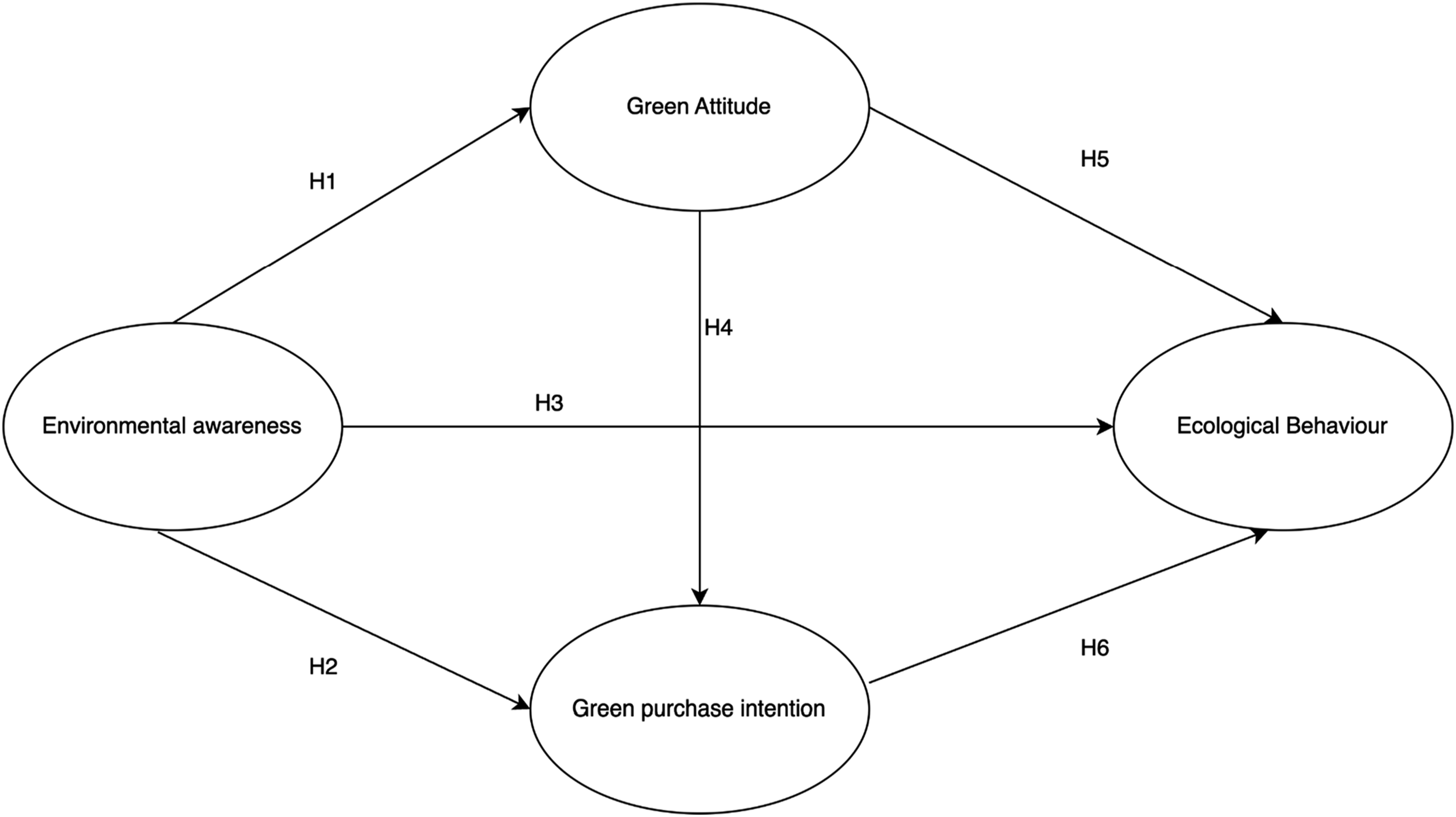
Method
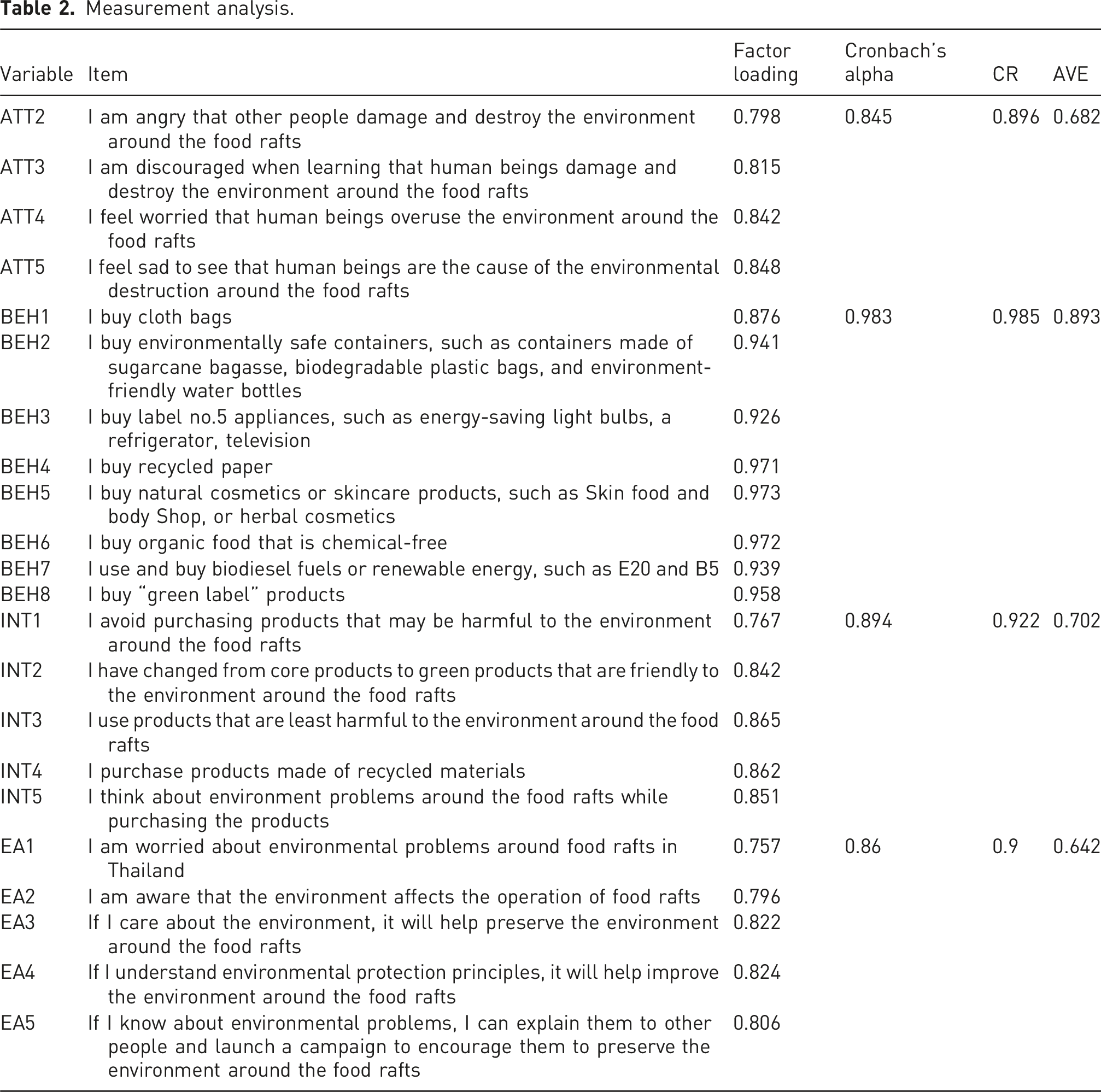
Data were collected using a 26-item rating scale questionnaire divided into four sections based on four variables: environmental awareness, green product purchase intention, environment problem attitudes, and ecological behaviour. All the questions were related to food raft entrepreneurs’ attitudes towards green product use behaviour. Environmental awareness was measured using five items adapted from Fu et al. (2020) and Foroughi et al.’s study (2022). Attitude was measured using five items derived from (Han et al., 2010). Ecological behaviour was measured with eight items from the studies of Shin et al. (2017) and Kilbourne and Pickett (2008), and green purchase intention was measured with five items from Nekmahmud et al. (2022).
Data collection and sampling
For the data-collection process, this study utilised a questionnaire to examine the attitudes and behaviours of food raft entrepreneurs regarding green product use in Ubon Ratchathani Province, Thailand. A total of 163 entrepreneurs participated. The data were obtained using a purposive site selection of four major riverside areas where raft restaurants are concentrated: Khu Duea, Pattayanoi, Khong Chiam, and Kaeng Saphue. Within these sites, entrepreneurs were approached on-site and invited to participate. While participants were randomly selected at the individual level within each site, the absence of a complete sampling frame for all raft restaurants in the region meant that full probability-based random sampling was not possible. This approach ensured coverage of diverse operating contexts while remaining consistent with common sampling practices in tourism and hospitality research, where full population lists are unavailable.
Survey distribution across riverside areas and comparison with Thai hospitality entrepreneurs.
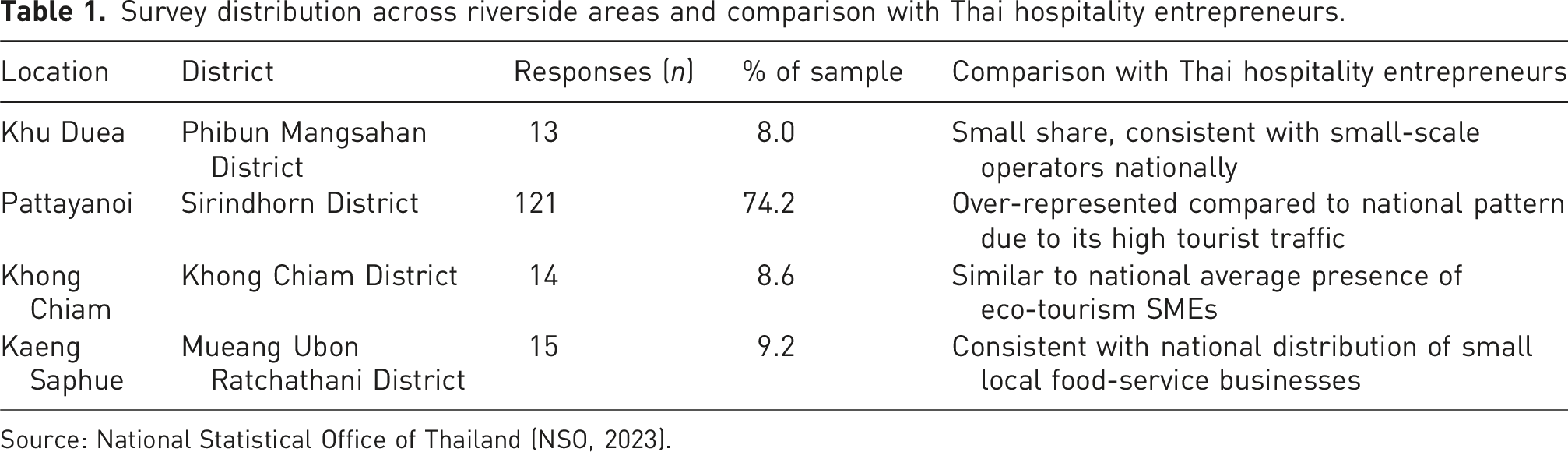
Source: National Statistical Office of Thailand (NSO, 2023).
Data analysis
The data analysis was carried out in two steps. First, the demographic information for the participants was extracted using SPSS software. Structural equation modelling (SEM) was then chosen to analyse relationships between constructs. The partial least-square (PLS-SEM) model was chosen for the SEM method for analysis (Hair et al., 2022) due to the limited number of respondents in the dataset.
This sample size is considered sufficient for PLS-SEM modelling but not for more sophisticated covariance-based SEM analysis (CV-SEM). According to Hair et al. (2022: 22) “when assuming that the minimum path coefficient expected to be significant is between 0.11 and 0.20, one would need approximately 155 observations to render the corresponding effect significant at 5%”. Published studies using samples of restaurant managers have used similar sample sizes (Jang et al., 2017). Furthermore, as the data were not normally distributed in this study, the PLS-SEM approach was considered the most appropriate approach (Aybek and Karakaş, 2022). A two-step analysis, comprising measurement analysis and structural analysis, is required in PLS-SEM. The following section will set out the results accordingly.
Results
Measurement analysis
Measurement analysis.
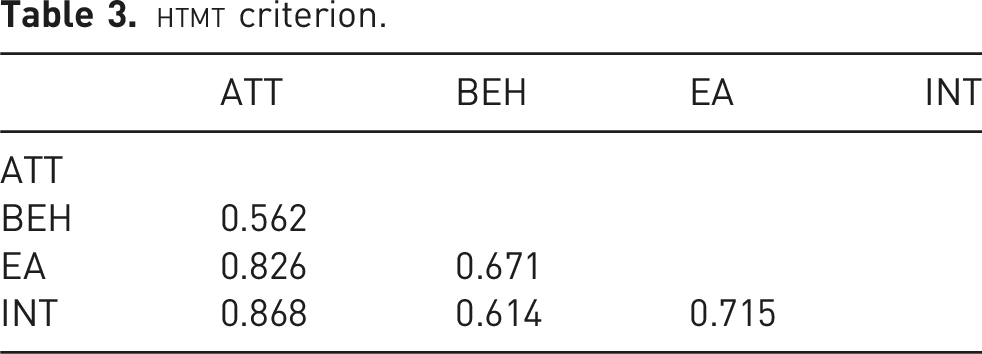
Fornell–Larcker criterion.
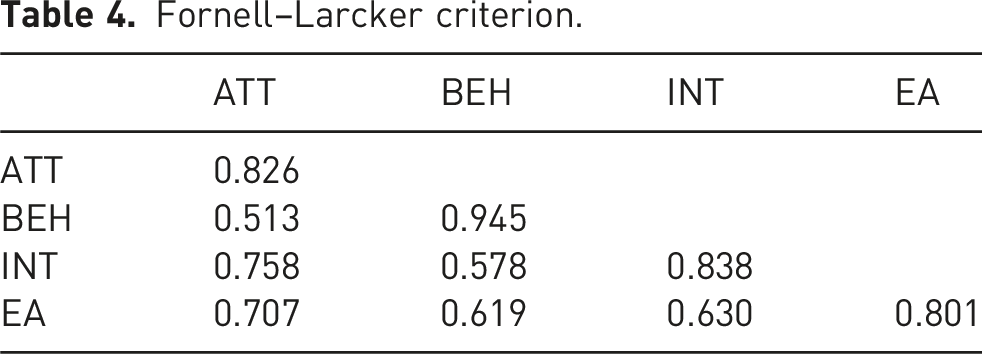
Structural model analysis
VIF scores.
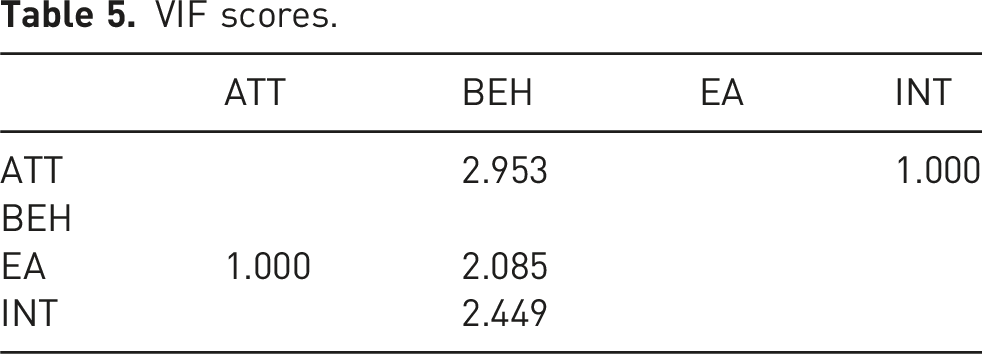
R-square.
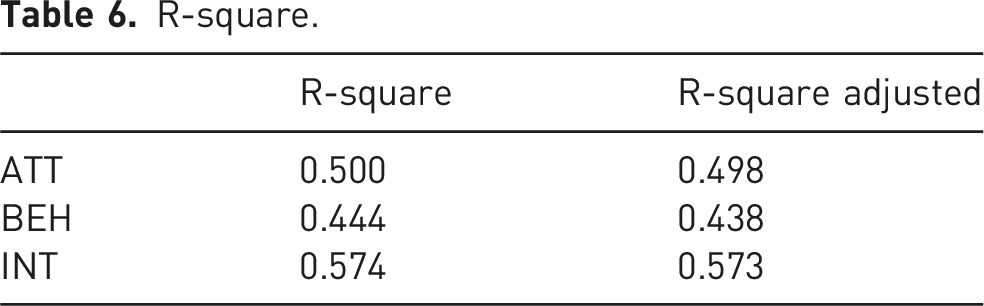
f2 scores.
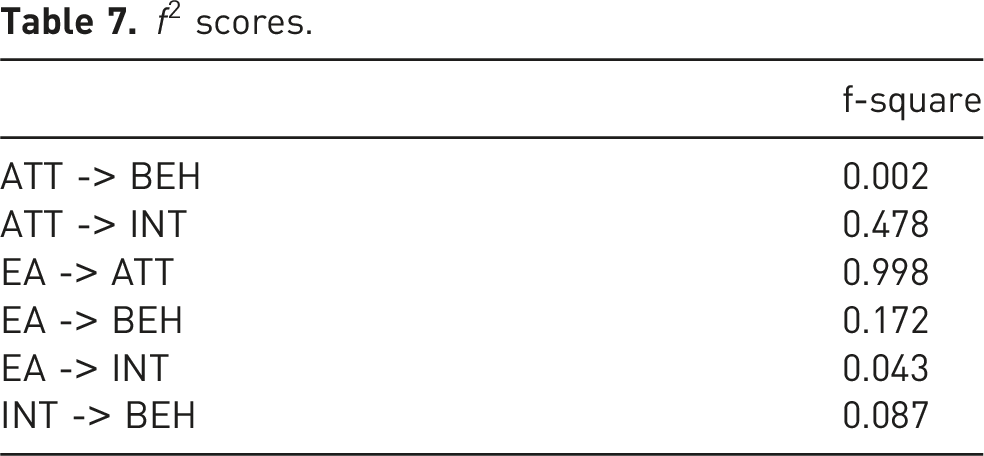
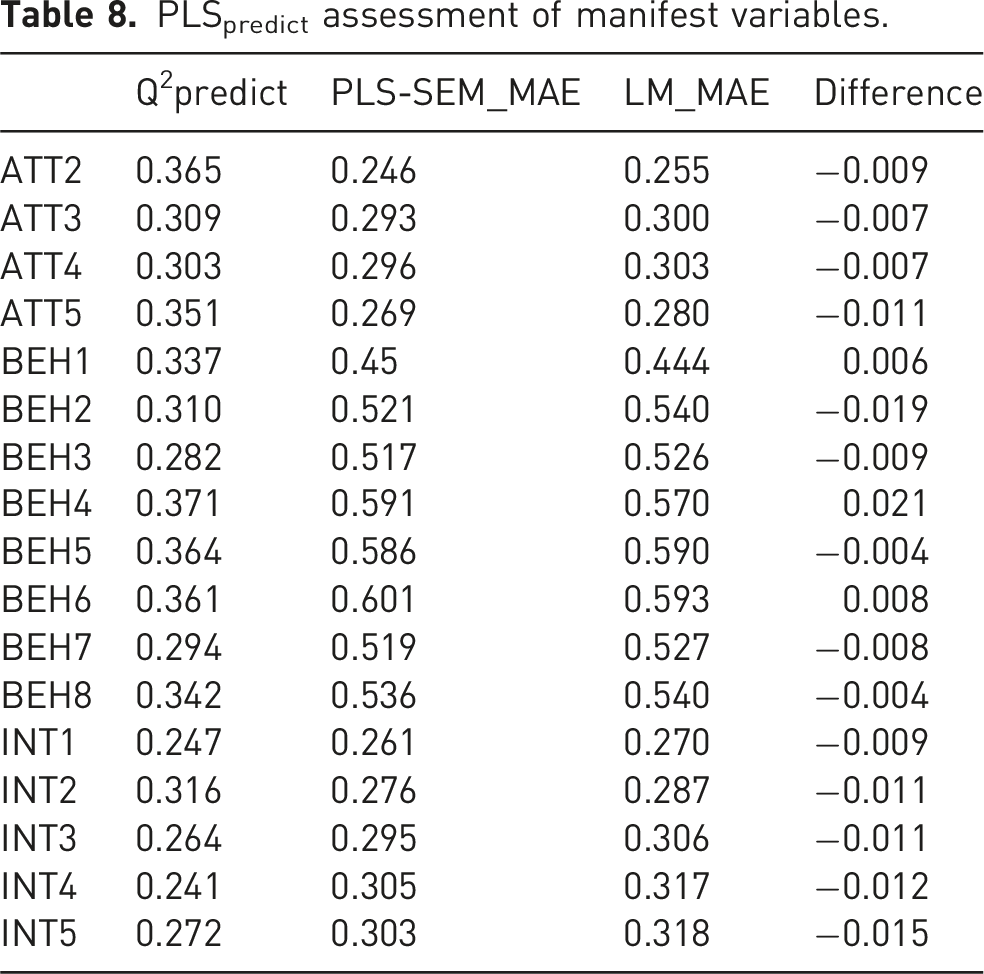
PLSpredict assessment of manifest variables.
Path analysis.
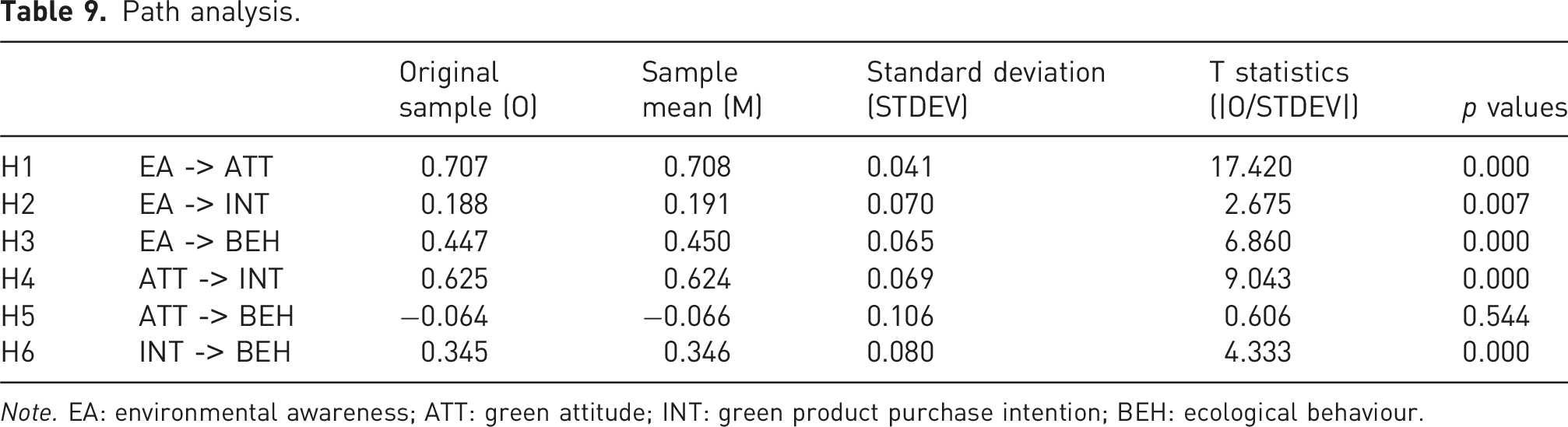
Note. EA: environmental awareness; ATT: green attitude; INT: green product purchase intention; BEH: ecological behaviour.
Discussion
Using PMT as the theoretical foundation, this study analysed the structural relationship between environmental awareness, green purchase behaviour, attitude, and intention to use green products in the context of floating raft restaurants in Thailand. Although PMT has mainly been used in the field of health sciences and not been applied in tourism and hospitality services, recent studies demonstrate that this theory is applicable in the context of tourism and hospitality studies (Zhu et al., 2022), which is supported by this study’s findings. Zhu et al. (2022) argue that PMT provides a better understanding of pro-environmental behaviour in small rural tourism enterprises, of which floating restaurants can be considered a constituent part. The findings of this study demonstrate that floating restaurant entrepreneurs have a strong understanding of the environmental problems of restaurant services and adopt ecological behaviour in response as the protection and motivation model proposes. Indeed, this study tested six hypotheses, five of which were supported (H1, H2, H3, H4, and H6). The relationship between green attitude and ecological behaviour was not supported (H5).
This study confirms that environmental awareness directly impacts on the green attitude of floating restaurant entrepreneurs. This finding is in line with existing studies indicating a positive relationship between the given two variables (Ojo and Fauzi, 2020). In addition, in existing studies, environmental awareness is considered a significant component in shaping consumer’s attitude in purchasing edible food packages (Hosseinikhah Choshaly, 2024). It can therefore be concluded that entrepreneurs who are more aware of environmental issues are more likely to have a positive attitude towards to green consumption. This result confirms that, even in a niche market such as floating restaurants, awareness plays a key role in shaping attitude. This implies that strategies to explaining and emphasise the positive impacts of green consumption on sustainability are likely to be effective in helping to form and shape service providers’ attitudes.
The results of this study also confirm the findings of previous studies that have suggested that that entrepreneurs who are aware of the environmental problems are more likely to purchase green products to utilise in their restaurants. Existing studies indicate that people who are aware of environmental problems are more likely to have the intention to purchase green products (Hou and Wu, 2021; Tavitiyaman et al., 2024). Handayani et al. (2021) further suggest that people with higher levels of environmental awareness are likely to show higher intentions to engage in ecological behaviour. Such relationships have also been found on the demand side. Zameer and Yasmeen (2022), for example, found environmental awareness to be a significant determinant of consumers’ green purchase intentions. It can therefore be expected that when sustainability concerns and the benefits of green product sourcing are effectively communicated to create awareness, this will have considerable potential to shape behavioural intentions.
Entrepreneurs of floating restaurants in this study were found to be well-aware of environmental problems, and the outcome of such awareness translate into actual ecological behaviour. Indeed, the relationship between awareness and ecological behaviour was found to be statistically significant. Such behaviour can relate to purchasing food ingredients (e.g., eco-friendly or organic foods), preparation equipment such as cloth bags or recycled paper, or buildings supplies such as energy-saving lightbulbs. Previous studies have found similar results, for example, environmental awareness has an influence on the environmental commitment of restaurant employees in India (Bouzari et al., 2022). Awareness thus has potential to predict actual behaviour in green consumption context, even in the raft-restaurant context, where supply chains are limited in terms of variety and quantity.
This study also found that restaurant entrepreneurs’ attitude towards green purchase is linked to their green purchase intention. Previous studies show contradictory findings regarding the impact of attitude on green purchase intentions. For instance, the finding is consistent with the study of Moon (2021), which found a direct impact of attitude towards green restaurants on intention to visit green restaurants. Despite the existence of positive relationships between variables, in their study, Tan et al. (2017) found that green attitudes had no influence on green restaurant patronage intentions. The significant relationship between the two constructs found in the present study may or may not be attributed to the context of the study, where other factors that might impact upon intention are limited. This is because most of the chefs, who will be responsible for purchasing the green products, are also owners. This serves to simplify the decision-making process.
An unexpected finding in the study was the insignificant relationship between the green attitude of the entrepreneurs and their ecological behaviour. This finding is inconsistent with existing studies indicating a positive relationship between the constructs (Kim et al., 2020; Lin and Lee, 2020). The explanation for the insignificant relation between the given constructs could be that the number of participants in the present study is relatively small and this sample size might cause the deviation from the existing findings. Although the sample represents the majority of the raft restaurant entrepreneurs in the area due to a small population size, the specific statistical characteristics of the sample may have led to this result.
Theoretical implications
The current study provides several theoretical implications. First, this study is one of the few that have utilised the PMT to examine foodservice providers’ ecological behaviour. PMT focuses mainly on environmental cost-benefit comparison to explain consumer behaviour. Particularly, threat and coping appraisals such as perceived vulnerability, perceived severity, self-efficacy, response efficacy and response cost are considered determinant variables of the theory (Wang et al., 2025). This study, however, successfully employs environmental awareness, green attitude, and green purchase intention as the operative components. Furthermore, TPB has to date been a popular theory to predict ecological behaviours of restaurant customers (Demirović Bajrami et al., 2025). However, this theory has limitations due to lack of taking into consideration of individuals’ perception of risk, threat or fear. Therefore, PMT suits better in explaining how the ecological behaviours of restaurant entrepreneurs’ are motivated by their understanding of environmental problems. Second, this study contributes to the theoretical understanding of the relationship between environmental awareness and the pro-environmental behaviour gap in service context. Existing studies in restaurant context suggest that environmental awareness is the determinant of the pro-environmental behaviour of the restaurant employees through environmental commitment (Bouzari et al., 2022). Lopes et al. (2024) also argue that when consumers have higher awareness of various aspects such as price and future benefits, green consumption behaviour is boosted. In line with existing studies, this study concludes that entrepreneurs who have a deeper understanding of the environmental problems will have a greater propensity to adopt ecological purchasing behaviour. Third, this study contributes to the existing literature on attitudes. Attitude is considered as a crucial predictor of ecological behaviours of consumers (Lin and Lee, 2019; Zhang et al., 2021). Having a positive attitude towards environmental issues does not, however, necessarily result in ecological behaviours (ElHaffar et al., 2020). The findings of this study suggest that stronger attitudes on the part of raft-restaurant entrepreneurs can increase their intention to use green products. Simply holding this attitude does not, however, result in their ecological behaviour. This result suggests that the context and the stakeholder’s characteristics should be included in the PMT for it to be applied in any given context. The theory should be applied depending on the context, agents, and other possible mediators or moderators.
Managerial implications
This study provides several practical implications for decision makers in the food service industry, especially those operating small businesses including government organisations. The findings suggest that environmental awareness is significant determinant of the green attitude, green purchase intentions and ecological behaviour of raft restaurant entrepreneurs. Thus, food service industry should promote greater environmental awareness. In addition, trainings should be provided regularly to generate awareness about environmental issues including waste management, water and energy consumption, green purchasing and minimising using the resources among owners and employees of floating restaurants. Minimising waste is vital for environmental conservation. At the same time, prioritising energy reduction by using renewable energy sources helps to lower the carbon footprint. The integration of these strategies promotes a holistic approach to sustainability, specifically designed for the restaurant industry. Moreover, employees should be rewarded for their ecological behaviours at the workspace to motivate them for being more environmental-friendly. Instead of simply making money and doing so in a way that does not harm the environment, raft restaurant entrepreneurs can look towards sustainable management practices and processes that minimise resource degradation and environmental pollution. Furthermore, the findings can be utilised by government organisations to improve environmental awareness through introduction and implementation of policies to promote greater sustainable practices in Thailand among restaurant owners. Such government policies that promote or mandate sustainability education and training for both entrepreneurs and employees could enhance the effectiveness of sustainability initiatives across the restaurant industry. The data were collected from raft restaurants, which are mainly small- or medium-sized enterprises. The lack of understanding of environmental issues might represent a potential barrier for entrepreneurs to adopt the ecological behaviours because as this study reveals once they are well-aware of the issues they tend to translate this awareness successfully into positive attitude, intention, and behaviour.
Limitations and future research
Despite its contributions, several limitations need to be considered, which also provide avenues for future research. First, the data were collected from 163 raft restaurant entrepreneurs in Ubon Ratchathani. While this number is sufficient for PLS-SEM analysis (Hair et al., 2022), it remains modest, and the findings should be generalised with caution. Future studies could expand the sample to include raft restaurants in other regions or increase the number of respondents for broader representativeness. Future studies should test the existing variables in other destinations to augment the findings of this study. Second, the unique context of floating raft restaurants may not fully represent the broader hospitality industry, although they do the represent various categories of foodservice such as local food, authentic food, themed restaurants, and sustainable food. The specific operational and environmental challenges these businesses face might differ from those encountered by other types of restaurants or service providers, which could influence the applicability of the findings. Third, this study focuses primarily on the perspective of restaurant entrepreneurs. While their insights are crucial, understanding and comparing the views of other stakeholders, such as suppliers and employees, could enrich the analysis and provide a more comprehensive understanding of the phenomenon. This suggests the need for future studies to examine the full range of different perspectives and integrate them.
Footnotes

Funding
The author(s) disclosed receipt of the following financial support for the research, authorship, and/or publication of this article: This research was financially supported by Faculty of Tourism and Hotel Management Mahasarakham University (Granted year 2021).
Declaration of conflicting interests
The authors declared no potential conflicts of interest with respect to the research, authorship, and/or publication of this article.