




Abstract
User-generated content and online reviews have become a prominent source of information for tourists in the last couple of decades. At the same time, hospitality firms show an increasing concern with environmental practices, in line with customers’ changes of attitude and awareness of their environmental footprint. This paper analyses the content of reviews posted on TripAdvisor by guests staying in a large sample of environmentally certified hotels. The objective is to find out if sustainability concerns are present in guests’ reviews and identify the most important sustainability attributes. Using the Maxqda and Leximancer software, 1748 reviews from 95 Portuguese hotels were analysed; the content analysis evidences that guests’ predominant themes regarding their experiences are mostly common and independent of the category, average review, or type of travel. Eco-issues are primarily absent from the reviews. Although all analysed hotels are ‘eco-certified’, that label does not seem to be associated with guests’ attitudes and concerns. The results have relevant implications for hospitality managers.
Keywords
Introduction
Tourism is one of the fastest growing industries in the world, representing 7.6% of the global gross domestic product (GDP) in 2022 and employing around 10% of the global workforce, with 22 million new jobs created in 2022 (WTTC, 2023). These numbers are recovering after the COVID-19 pandemic, beginning in 2023 to surpass the pre-2019 levels. In 2020, Portugal generated around USD 10.52 billion in the tourism sector alone. This figure corresponds to 4.1% of its GDP and approximately 22% of all international tourism receipts in Southern Europe (WorldData, 2023). Such rapid increase in tourism has its downsides, characterised by negative externalities. Greenhouse gas emissions (GHG) from the tourism sector in Portugal in 2021 represented 10.2% of the total national economy, against 17.8% in 2019 (WTTC, 2023). According to WTTC data, due to the reduced activity in the sector during the pandemic, this share of GHG emissions had already dropped to 9.8% in 2020. The WTTC report also reveals that, between 2010 and 2019, the economic growth of tourism and travel in Portugal moved away from GHG emissions. According to the WTTC, this decline results from measures implemented by the government and, in particular, by the private sector to create a more sustainable sector. As argued by Arici et al. (2023, p. 270), through green practices and consumerism, hospitality firms have entered the green creative process on the premise of a win-win situation - precisely, “green and competitive”.
In the last two decades, user-generated content (UGC) and online reviews have become tourists' most prominent sources of information (D'Acunto et al., 2020). Santos (2021) defines UGC (user-generated content) as any text, data, or even actions developed by online digital system users that are published and disseminated using independent channels with high effect in terms of expression or communication either on an individual manner or combined with other contributions from the same user or other sources.
User-generated content (UGC) and social media significantly impact many industries and generate engagement and WOM intention (Aksionova et al., 2023). UGC changed the hospitality industry’s communication strategies, such as using blogs and online travel reviews on travel destination images. The literature points to a connection between user-generated content and travel destination images (Aksionova et al., 2023; Fehrest et al., 2021; Kitsios et al., 2022; Naab and Sehl, 2017). Naab and Sehl (2017) consider that user-generated content contains three main characteristics: i) some degree of personal contributions; ii) it is accessible using means of open and public media; and iii) it does not derive from professional practices or routines. Moreover, literature shows a relationship between engagement and the generation of interests (interestingness), which leads to a higher willingness to share, comment, or retweet (Aksionova et al., 2023; González-Porras et al., 2021; Yu et al., 2014).
UGC is also known as e-WOM, which refers to “any positive or negative statement made by potential, actual, or former customers about a product or company, which is made available to a multitude of people and institutions via the Internet” (Hennig-Thurau et al., 2004: p. 39). Usually, e-WOM refers to all kinds of online reviews, comments and opinions (Cantallops and Salvi, 2014). One of the most relevant players in that area is TripAdvisor (https://www.tripadvisor.com/), available in 43 markets and 22 languages, which in 2022 had more than one billion reviews and opinions on nearly eight million businesses (TripAdvisor, 2023). Online reviews are widely used in the tourism area to research guests’ perceptions about products and services, albeit they are less used in the specific context of assessing the environmental practices of the providers of those products and services (e.g., Lee et al., 2016; Brazyté et al., 2017; D’Acunto et al., 2020). There is a clear behaviour gap between what customers explicitly state and how they behave (Han et al., 2011; Miao and Wei, 2013; Tilikidou et al., 2014), albeit there have been numerous studies using customer surveys to find out what attributes of green hotels are claimed to be favoured by guests, little is known about how visitors perceive sustainability-related issues.
According to the American Green Hotel Association, a ’green hotel’ is an environmentally friendly lodging property that implements different policies to reduce the negative environmental impact and protect nature (Green Hotels Association, 2023). Hotels with those concerns mainly focus on energy conservation, waste reduction and water conservation (Yi et al., 2018). Green initiatives must be implemented by hospitality firms to improve customer perceptions of quality and satisfaction with their environmental expectations. The natural way for a hotel to promote its green status and commitment to sustainability is to obtain third-party certification (Peiró-Signes et al., 2014). Travel agencies or internet sites (such as TripAdvisor’s GreenLeaders Program), the U.S. Green Building Council (offering the LEED certification), the American Hotel and Lodging Association (which certifies different types of green initiatives), or the ISO 14001 standard are different examples of certification entities. Moreover, according to Booking.com’s sustainable travel report (2023), 65 % of travellers prefer to stay in sustainable hotels which implemented eco-friendly certifications or labels.
In the present paper, the authors consider eco-labelled hotels as those defined as “environmentally certified” by Turismo de Portugal, the national public entity responsible for licensing the activities of all tourism operators. Through the analysis of 1,748 reviews from 95 Portuguese hotels, this paper aims to investigate how guests evaluate eco-hotels in terms of their accommodation experience, with a particular focus on their opinions regarding the hotels’ effective compliance with the principles and regulations of sustainability and eco-tourism. The objective is to discern sustainability-related considerations in guest reviews and to ascertain which sustainability attributes are deemed most significant by hotel guests. This paper contributes to the hospitality and tourism literature by presenting new evidence in the relatively underexplored domain of hotel reviews related to sustainability. This study specifically delves into the content of reviews for a collection of eco-labelled hotels located in one of the fastest-growing countries in terms of tourism.
The structure of this paper is the following: after this introduction, the following section reviews the literature and section 3 presents the methodology and the data collected. Finally, section 4 presents and discusses the main results and section 5 concludes the paper.
Literature review
The idea of 'guest satisfaction' was first put forth years ago to quantify the gap between consumers' expectations before purchasing and their appraisal of the service or product following consumption (Oliver, 1980). Fornell (1992) argued that a satisfied customer would produce positive word-of-mouth publicity and future purchases.
The hospitality industry has recently witnessed a growing emphasis on environmental practices (Brazité et al., 2017). This increasing concern stems from a global recognition of the pressing need to address environmental issues and promote sustainable living. Hotels are one of the most energy-intensive, water-consuming and high amount of waste-producing subsectors (Gössling and Lund-Durlacher, 2021). Hotels, as significant contributors to environmental degradation, are now expected to adopt eco-friendly practices as part of their operations. Such practices contribute to reducing carbon footprints and improving overall guest experiences (Goldstein, 2012; Hsiao et al., 2014; Peiró-Signes et al., 2014). Embracing environmental initiatives can enhance a hotel’s reputation, attracting environmentally conscious guests who prioritize sustainability when making travel choices (Prud’homme and Raymond, 2013; Galati et al., 2023). Moreover, implementing energy-efficient systems and recycling programs can lead to significant cost savings for hotels in the long run (Goldstein, 2012).
Tourism studies primarily use survey analysis. Nevertheless, online reviews offer higher-quality data than surveys. Online reviews provide more spontaneous and objective opinions since they are posted voluntarily by the users of tourism services (Schuckert et al., 2015). Social media and other interactive websites and apps enable tourists to post reviews and their experiences on online forums (Gretzel and Yoo, 2008). Nowadays, these instruments constitute the primary source of information for a tourist planning a visit (Chung et al., 2015; He et al., 2017; Shin et al., 2019), with their information being considered trustworthy (O’Connor, 2008). As a result, a growing number of studies on customer satisfaction use electronic word-of-mouth (e-WOM) data, namely in order to understand the tourist’s approach toward green hotel practices (Cantallops and Salvi, 2014; Yi et al., 2018; Gerdt et al., 2019; Nilashi et al., 2019; D’Acunto et al., 2020; Aakash et al., 2022; Ali et al., 2023). Online reviews analysing how green the hotel services and practices are could help future environment-conscious consumers when selecting their hotel. Those reviews are also a relevant input for hotel managers trying to improve their hotel’s green image and practices.
In the competitive hotel market, where the multitude of attributes and potential determinants of choice makes it more difficult for consumers to choose, eco-labels and environmental certifications provide a signal and constitute a source of differentiation (Peiró-Signes et al., 2014). For instance, according to Millar (2009), green certification is the most significant factor when analysing guest preferences for green hotel attributes. Galati et al. (2023) revealed a positive and significant relationship of the e-WOM on the willingness to pay of tourists for a green hotel. Nevertheless, although customers tend to have a positive attitude towards sustainability, other attributes such as price or location could prevail when choosing a hotel (Miao and Wei, 2013; Brazyté et al., 2017).
Lu and Stepchenkova (2012) provide a quantitative method for evaluating U.S. travellers' satisfaction with their eco-lodge stays in Costa Rica, using user-generated content from TripAdvisor. The study identifies 26 attributes influencing ecotourists' satisfaction and classifies them into four categories: satisfiers, dissatisfiers, criticals, and neutrals. The paper suggests viable strategies to sort managerial priorities when the hotel’s goal is customer satisfaction. When resources are limited, focusing on areas with the potential to decrease dissatisfaction and maximize satisfaction can be both effective and efficient.
Based on the literature results, some specific examples of green practices that guests mention in their reviews include Linen and towel reuse, reducing energy usage, recycling, energy conservation, reflective roofing systems, stormwater management systems, and guest training (Gil-Soto et al., 2019; Lee et al., 2016; Olorunsola et al., 2022). Overall, guests tend to give positive assessments when recognising green practices during their hotel stay. However, it is essential for hotels to effectively execute these practices as negative perceptions can lead to solid disappointment (Olorunsola et al., 2022). Additionally, green practices that guests have negatively commented on in their reviews include Hotels claiming to be environmentally friendly but not following through on their promises (greenwashing), ineffective execution of green practices, green practices not being prominent or noticeable, green practices contributing weakly to guest satisfaction when positively perceived, but firmly to guest disappointment when negatively perceived (Lee et al., 2016; Olorunsola et al., 2022; Yi et al., 2018).
Adopting different perspectives, several researchers have extensively researched environmental issues in the hotel industry. For example, they have observed how hotels' environmental actions impact outcomes regarding financial performance, customer loyalty (Liu et al., 2014), willingness to pay (Galati et al., 2023), and among the community (Nicolau, 2008). As stated by Moisescu (2015), those actions can be very effective; however, some caution is necessary since they can generate a secondary effect by raising doubt and the perception of greenwashing. In order to promote a green image without drawing criticism for 'greenwashing', hotels must be careful (Helen-Chun and Giebelhausen, 2012).
According to earlier studies (Dolnicar and Grün, 2009; Miao and Wei, 2013), pro-environmental behaviour is more prevalent during daily activities than while travelling. Peiró-Signes et al. (2014) found significant differences in ratings of Spanish hotels with or without the ISO 14001 label, particularly in the four-star category. Lee et al. (2016) looked into how guests' online reviews portrayed how green the establishment was. Despite only using a sample of 10 green hotels in the USA, Yu et al. (2017) used internet reviews to examine how green practices and customer loyalty relate. Furthermore, to investigate how visitors react to sustainability initiatives in their online reviews, Brazytė et al. (2017) concentrated on a small number of Costa Rican hotels with a sustainability certificate. Customers who openly acknowledge that a hotel has adopted sustainability measures will likely give it higher ratings. An examination of a small sample of Austrian hotels by Ettinger et al. (2018) shows that customer reviews most frequently discuss environmental issues and supplier interactions. D'Acunto et al. (2020) analysed more than 480.000 TripAdvisor hotel reviews for the six most popular European cities, finding that online reviews associated with environmental topics tend to be associated with positive emotions and higher rankings. One can also notice that some papers argue that customer awareness of green practices needs improvement (e.g., Assaker, 2020; Tsai et al., 2014; Yu et al., 2017). There needs to be more than simply obtaining an eco-certificate, as it is necessary to publicize the practices adopted to increase public perception and significantly impact buying decisions.
In summary, while hotels' eco-labels and environmental certifications may be a differentiating element, traditional features like location and price seem to still have a strong hold on satisfied guests. However, guests are more aware of and critical of green practices due to growing environmental concerns, which in turn motivates them to write online evaluations. As such, the present paper deals with the following set of research questions: Q1: What are guests’ predominant themes regarding their experiences in Portuguese “eco-certified” hotels? Q2: Are those themes moderated by different types of guests or other hotel attributes or characteristics? Q3: What is the frequency and incidence of “eco-issues” in guest’s comments?
Methodology and data
Research methods
Content analysis is an increasingly used scientific method in tourism (e.g., Camprubí and Coromina, 2016; Sánchez-Vargas et al., 2022). Using the Maxqda and Leximancer software, the present study performs a content analysis study of guest reviews on TripAdvisor. Comments were manually retrieved from TripAdvisor, with classifications given to different categories: location, cleanliness, service, value, rooms and sleep quality. The information about the type of travel (e.g., couple, family, alone, friends or business) was also retrieved.
Following Stoleriu et al. (2019), Olorunsola et al. (2022), and Ali et al. (2023), an exploratory content analysis of the qualitative data was used to identify the main themes and discover the frequency of themes and their relationships. Besides quantifying the occurrence of words with Maxqda, the Leximancer software was used to eliminate the researcher bias coder reliability and subjectivity objectively (Olorunsola et al., 2022). When handling a large data volume with manual content analysis, the researcher risks committing errors and bias the results. Leximancer mitigates this problem by avoiding manual intervention (Angus et al., 2013).
Sample
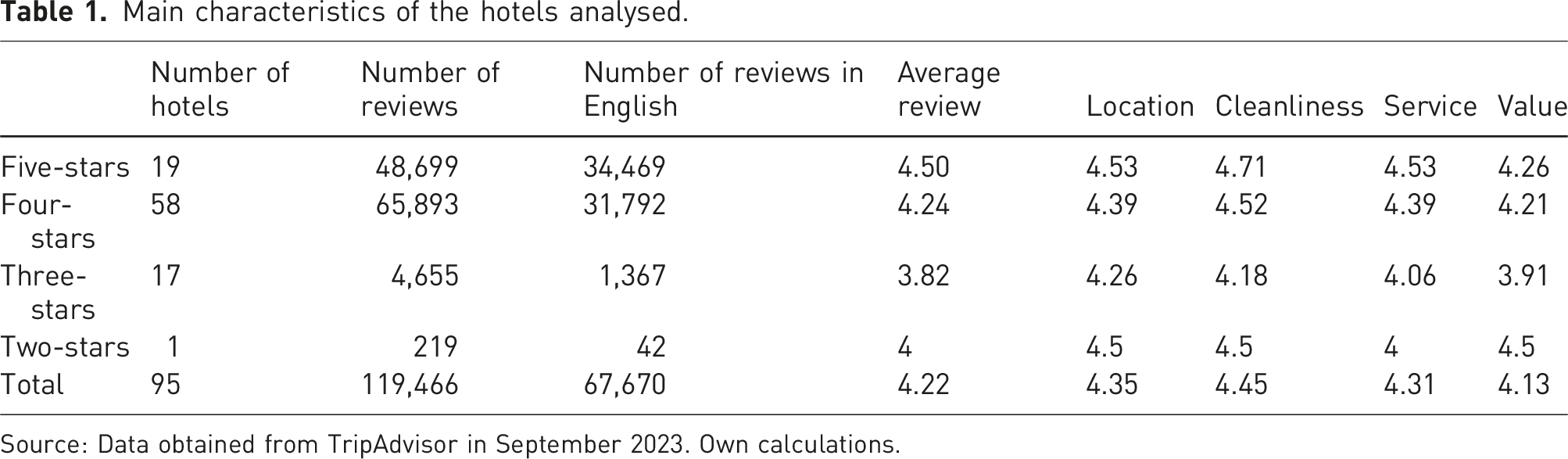
Main characteristics of the hotels analysed.
Source: Data obtained from TripAdvisor in September 2023. Own calculations.
Around 60% of the hotels are 4-star hotels, with the higher and lower categories representing around 20% of the sample. In global terms, and as expected, the average and specific reviews present decreasing values when starting from the higher-quality 5-star hotels and descend to the lower-quality ones. Notice that 57% of the reviews are written in English, with that percentage increasing with the hotels’ quality (71% in 5-star hotels). Also, 45 hotels are classified in TripAdvisor as Travellers’ choice, and only eight hotels in the sample are associated with TripAdvisor’s GreenLeaders Program (one gold, three platinum, two silver, one bronze and one eco-partner). The sample only contains one 2-star hotel, which was included in the group of 3-star hotels for analysis purposes.
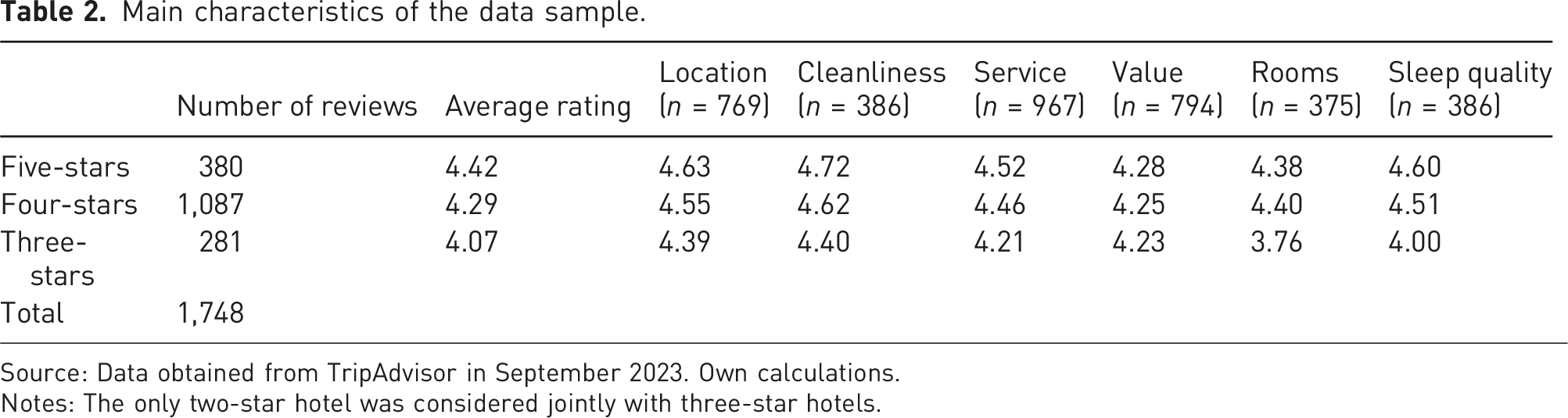
In September 2023, the last 20 reviews written in English for each of these hotels was manually retrieved from TripAdvisor, obtaining a total number of 1,748 reviews (some hotels did not present 20 reviews in English) with 4,270 sentences. The reviews were saved in Excel (CSV, comma delimited) format. The text of the comments was read, and all spelling and punctuation mistakes were corrected to be appropriately captured by the software selected for data analysis.
Main characteristics of the data sample.
Source: Data obtained from TripAdvisor in September 2023. Own calculations.
Notes: The only two-star hotel was considered jointly with three-star hotels.
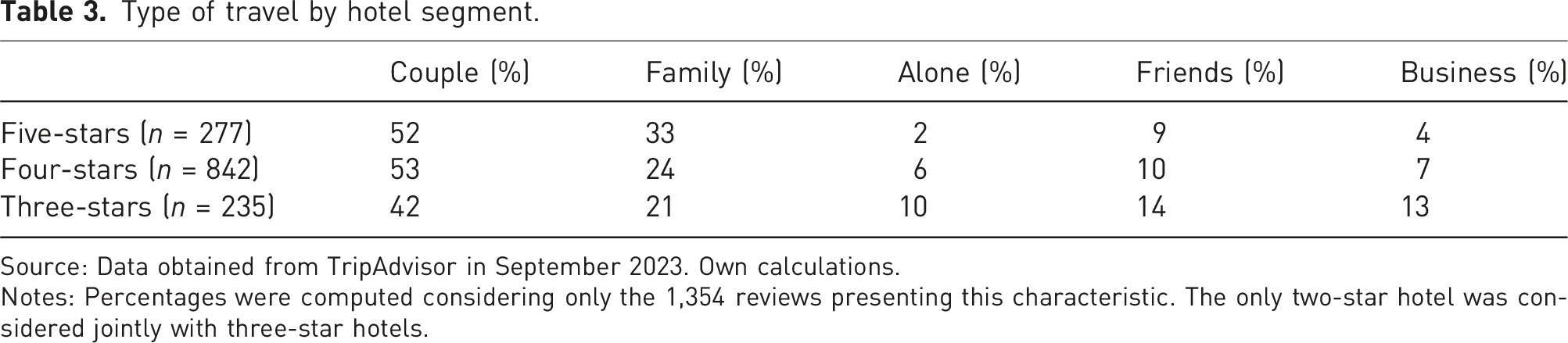
Type of travel by hotel segment.
Source: Data obtained from TripAdvisor in September 2023. Own calculations.
Notes: Percentages were computed considering only the 1,354 reviews presenting this characteristic. The only two-star hotel was considered jointly with three-star hotels.
Average reviews tend to decrease according to the hotel category, generally with a more evident difference between five/four-star hotels and lower-category hotels. T-tests evidence that average ratings are statistically significantly different between hotel categories (e.g., t = 4,27 and t = 3,46 between, respectively, five/three-star and four/three-star hotels). Regarding the specific attributes, average ratings tend to decrease according to the hotel number of stars, with striking differences appearing in the 'rooms' and 'sleep quality' attributes (respectively, t = 3,53 and t = 3,99, comparing five to three-star hotels). Table 3 shows that, independently of the hotel category, the majority of reviews' types of travel are 'couple' (n = 686, or 51% of total reviews), 'family' (n = 345, or 25%), and 'friends' (n = 139, or 10%).
T-tests reveal that average ratings are not significantly different among different types of guests. Statistically significant differences appear in some specific attributes, namely, 'location', 'service', 'rooms' and 'sleep-quality', particularly when comparing 'couple' with 'family' and 'friends' types of travel (for instance, t = 2,47 and t = 2,49, respectively, when comparing 'couple' with 'friends' in the 'location' and 'sleep quality' attributes). Finally, regarding TripAdvisor’s ratings, the 1,748 reviews are distributed in the following way: 5 (1,008 reviews; 57,7%), 4 (427; 24,4%), 3 (184; 10,5%), 2 (73; 4.2%), and 1 (56; 3.2%).
Results and discussion
Concept maps
Leximancer software was used to group concepts within themes and generate the corresponding concept maps to answer the first research question. Several phases were followed to build the concept maps. First, the Excel file with the reviews was uploaded into the software. It then detected the most repeated words and identified word patterns and clusters consistent in the review transcripts, classifying them as concepts. Finally, the software determines the frequency of co-occurrences and interconnectivity between concepts, displaying them graphically. Concepts are grouped into a more extensive set and classified as themes, represented in colour-coded circles containing interconnected concept links (Olorunsola et al., 2022).
The concept map for the complete sample (Figure 1) identifies the leading themes and concepts. A systematic approach was used, and the analysis results showed eight themes, further separated into 78 concept seeds and structured in the form of a conceptualized framework. The Leximancer analysis yielded the following themes: 'room', 'staff', 'restaurant', 'pool', 'bathroom', 'recommend', 'visit', and 'old'. The results of the customer analysis show the service’s distinctive characteristics by focusing on the tangible and intangible elements that comprise the service based on determinants (service experience), which leads to the resulting factor (intention to return or recommend). The following are revealed by the concept analysis (Figure 1). The 'room' theme is the most important, showing 100% relevance to the other themes and concepts. Concept map (complete sample).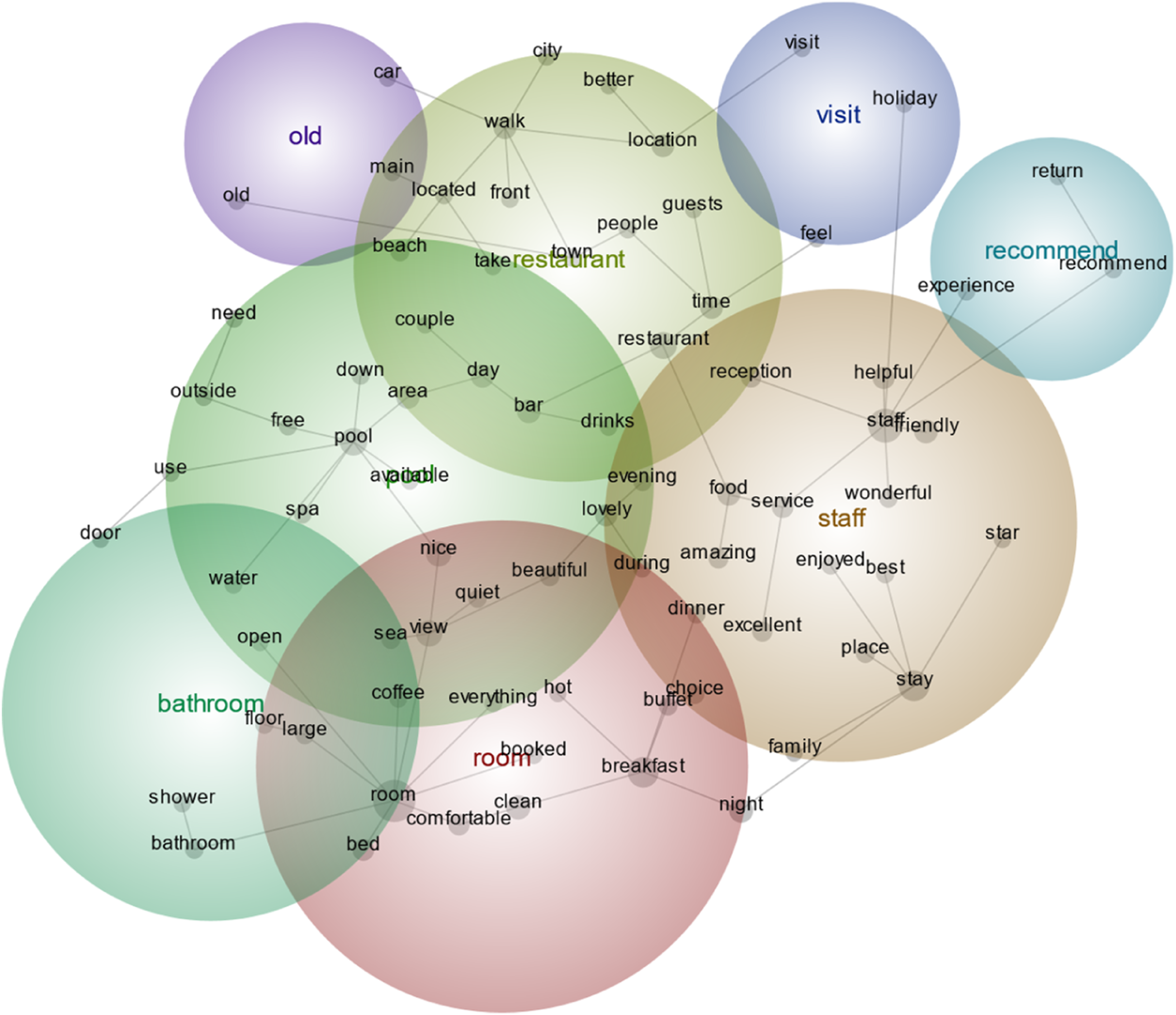
The concept maps for the three categories of hotels is now presented, according to their average review on TripAdvisor, namely 5 (57.7% of reviews), 4 (24.4%), and three or less (17.9%).
The concept map for hotels with an average review of three or less (Figure 2) identifies the leading themes and concepts in that hotel category. The analysis showed eight themes, further separated into 60 concept seeds and structured as a conceptualized framework. The Leximancer analysis yielded the following themes: ‘room’, ‘staff’, ‘time’, ‘stay’, ‘walk’, ‘better’, ‘experience’, and ‘shower’. The following are revealed by the concept analysis (Figure 2). The 10 significant concepts under the ‘room’ theme are ‘room’ (count = 398; relevance = 100%), ‘bed’ (82; 21%), ‘use’ (72; 18%), ‘reception’ (63; 16%), ‘clean’ (63; 16%), ‘bathroom’ (57; 14%), ‘down’ (48; 12%), ‘booked’ (41; 10%), ‘water’ (39; 10%), and ‘floor’ (35; 9%). Concept map (hotels with average reviews equal or below 3).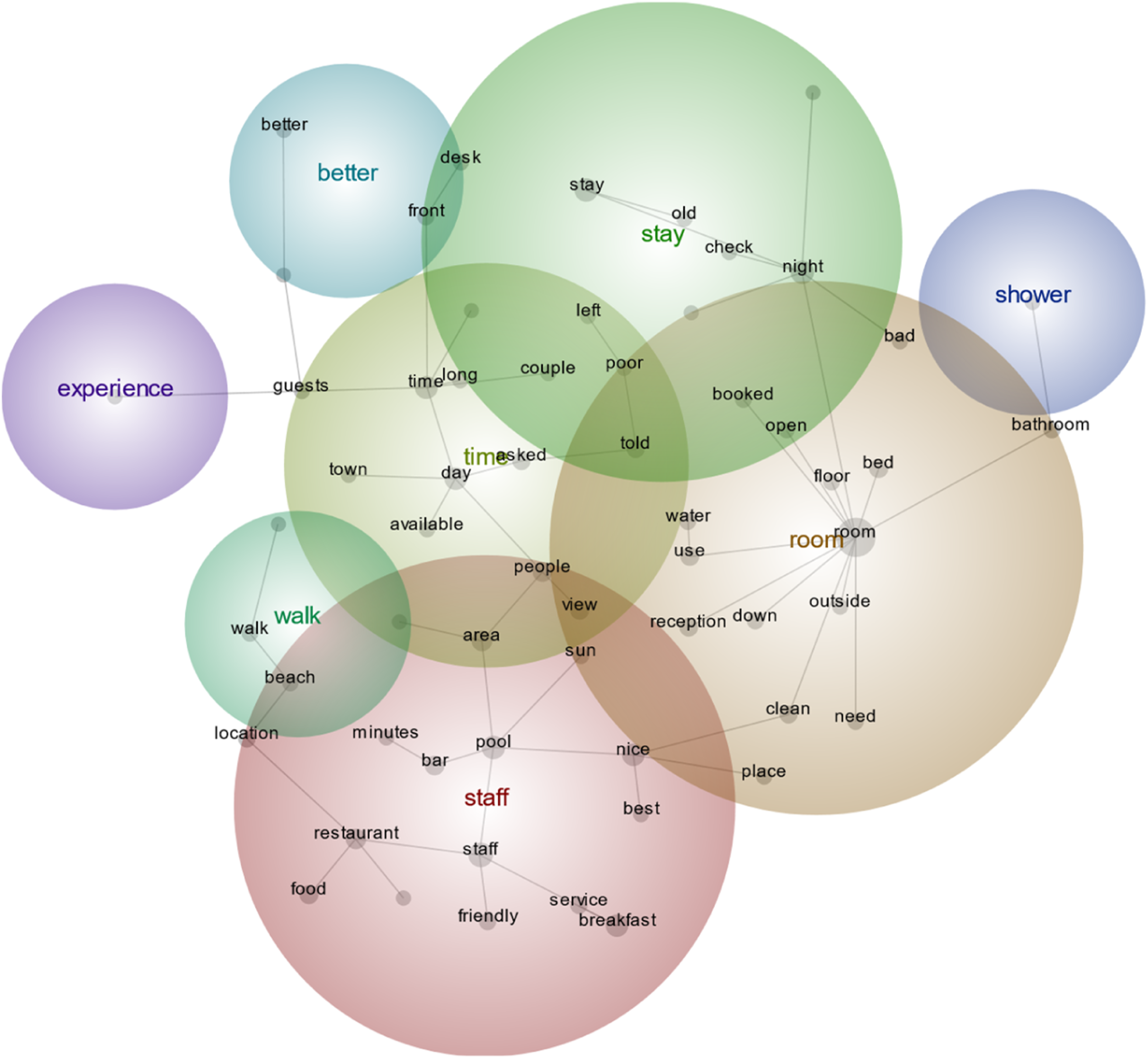
For hotels with an average review of 4, the concept analysis identifies seven themes, further separated into 62 concept seeds and structured in a conceptualized framework (Figure 3). The Leximancer analysis yielded the following themes: ‘pool’, ‘restaurant’, ‘breakfast’, ‘room’, ‘beach’, ‘recommend’ and ‘balcony’. The 10 significant concepts under the ‘pool’ theme are ‘pool’ (count = 177; relevance = 41%), ‘nice’ (178; 41%), ‘view’ (141; 33%), ‘bar’ (113; 26%), ‘area’ (104; 24%), ‘lovely’ (88; 20%), ‘outside’ (57; 13%), ‘need’ (40; 9%), ‘day’ (53; 12%) and, ‘use’ (45; 10%). Concept map (hotels with an average review of 4).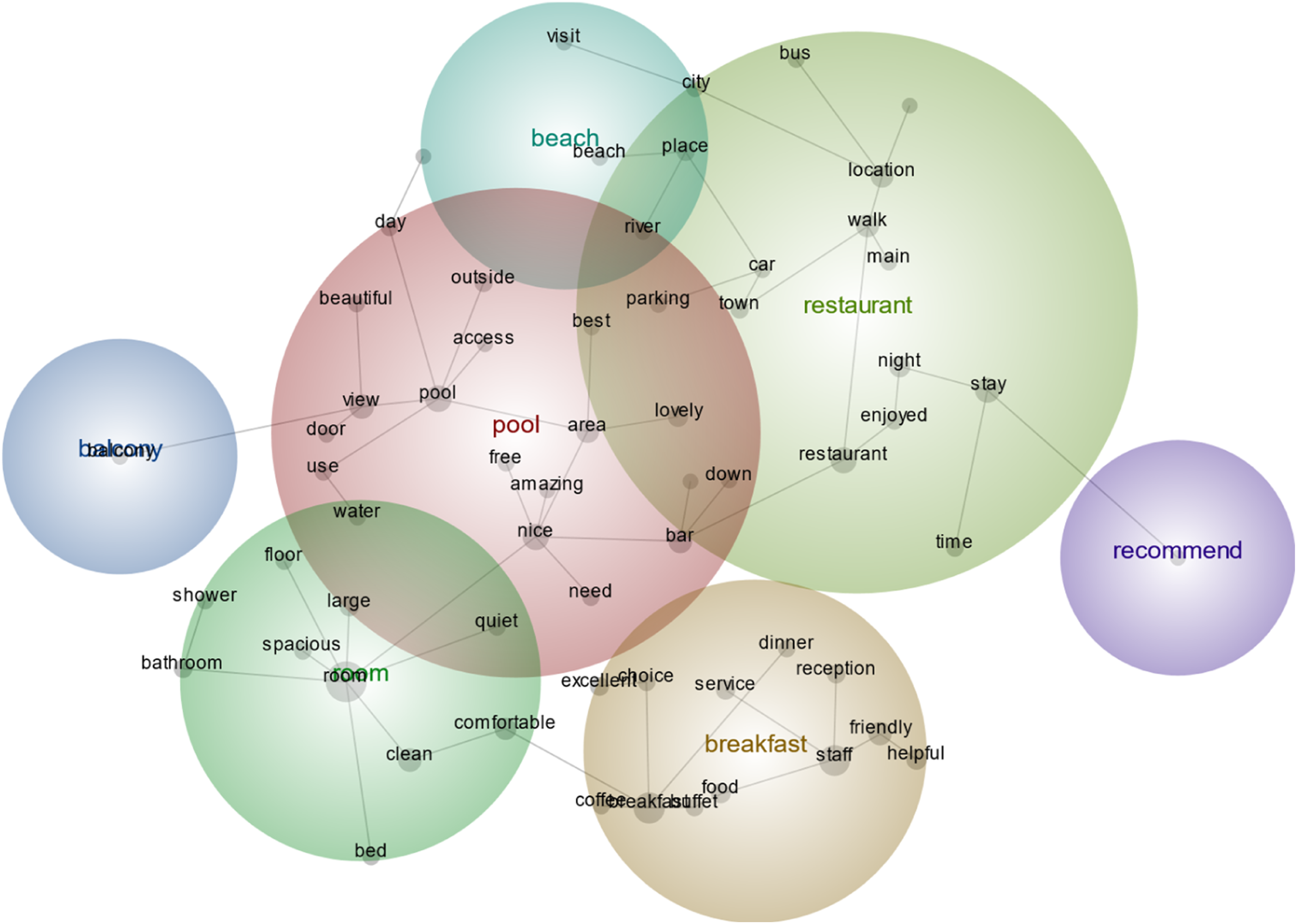
Finally, regarding hotels with an average review of 5, the concept analysis identifies six themes, further separated into 63 concept seeds and structured in a conceptualized framework. The six themes revealed by the concept map are the following: ‘room’, ‘staff’, ‘stay’, ‘location’, ‘recommend’, and ‘water’. The following are revealed by the concept analysis (Figure 4). The 12 significant concepts under the ‘room’ theme are ‘room’ (count = 600; relevance = 91%), ‘breakfast’ (371; 56%), ‘view’ (253, 38%), ‘pool’ (267; 40%), ‘clean’ (251, 38%), ‘lovely’ (198, 30%), ‘nice’ (198, 30%), ‘bar’ (166, 25%), ‘area’ (155, 23%), ‘comfortable’ (140, 21%), ‘bed’ (141, 21%) and, ‘beautiful’ (129, 20%). This evidences that a tangible room is an essential indicator of service quality. Concept map (hotels with an average review of 5).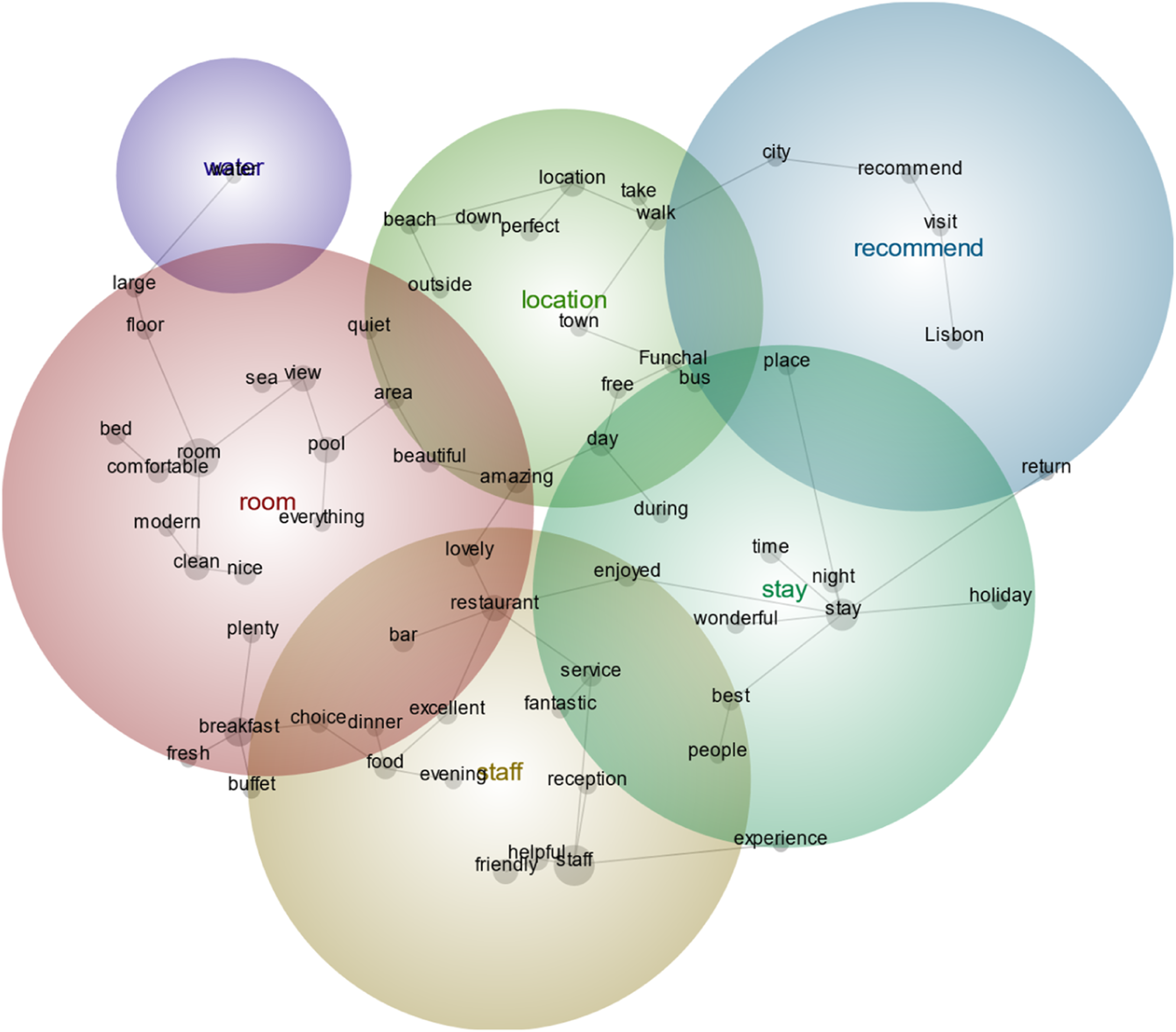
The only common theme in the three concept maps is ‘room’, a result which is in accordance with previous literature (Ali et al., 2023; Olorunsola et al., 2022). For instance, guests are dissatisfied with some room amenities, such as bed, bathroom and floor.
Albeit not presented, the reviews’ content was also analysed according to the type of travel. For instance, for reviews associated with ‘couple’ (51% of the reviews), Leximancer identifies four themes (‘room’, ‘staff’, ‘location’, and ‘recommend’), separated into 68 concept seeds. For reviews associated with ‘family’ (25% of the reviews), there are five themes (‘pool’, ‘staff’, ‘stay’, ‘room’, and ‘holiday’), separated into 61 concept seeds. As expected, the ranking (and differences) between the themes reflects the differing interests of those two groups, with couples giving higher relevance to room facilities and service quality. In contrast, families value more amenities like pool quality (Ali et al., 2023).
Regarding the first research question, is possible to conclude that the guests’ predominant themes regarding their experiences are mostly common and independent of the hotel category, average review or type of travel. Similarly, to previous research (e.g., Ali et al., 2023), reviews tend to focus on hotel facilities and staff themes, along with concerns regarding the location and food (restaurant/breakfast/lunch). It should be noted that while there are various themes identified, none specifically address environmental or sustainability issues.
Word frequency
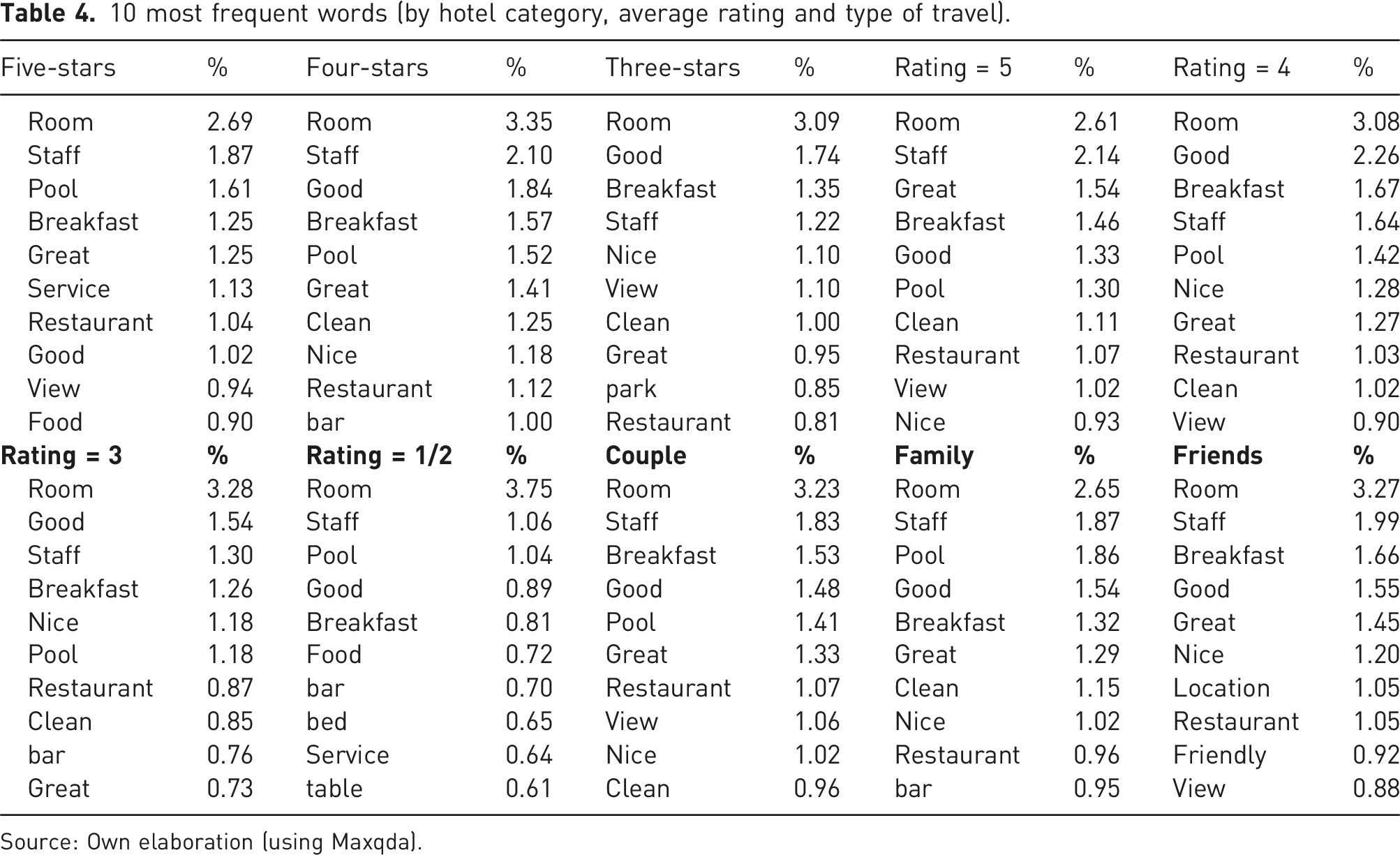
In order to answer the second research question, a word frequency analysis was carried out. Prepositions, numbers or articles that did not contribute meaning were eliminated. It was selected as a list of the 10 most frequently used words in the reviews of the three hotel categories. That exercise was repeated considering the distribution by average review and by the three main types of travel (‘couple’, ‘family’, and ‘friends’).
10 most frequent words (by hotel category, average rating and type of travel).
Source: Own elaboration (using Maxqda).
Ranking of the top five negative words.
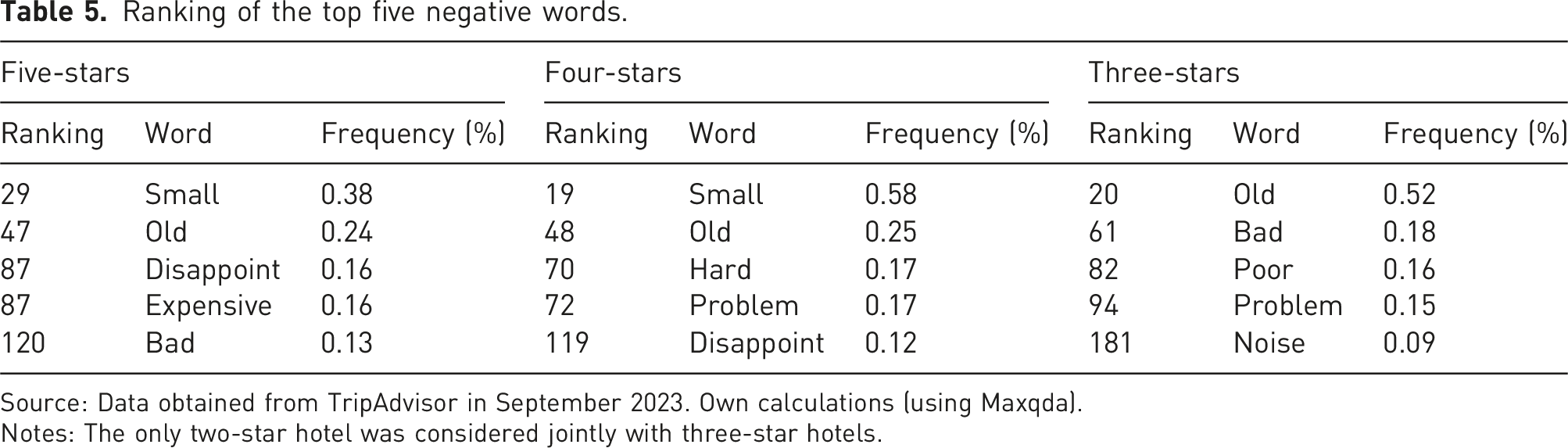
Source: Data obtained from TripAdvisor in September 2023. Own calculations (using Maxqda).
Notes: The only two-star hotel was considered jointly with three-star hotels.
Compared to 5-star hotels, negative words rank first in lower-category hotels. Negative words are primarily associated with hotel facilities, like room size and decoration, and staff, such as the inability to solve a problem or check-in or check-out delays promptly.
In sum, regarding the second research question, it is concluded that the predominant themes regarding guests’ experiences in Portuguese ‘eco-certified’ hotels tend to be independent of the type of travel and hotel category.
“Eco-issues” in reviews
Finally, regarding the third research question, it is observed an almost absolute disregard for sustainable and eco-friendly issues in the guests’ comments from the above analysis. For instance, ‘sustainability’ and ‘sustainable’ only appear five times in the 1,748 reviews. Two of the sentences have a positive tone: “And to top it all off the hotel is eco-friendly and sustainable.” (couple, 5-star hotel) “A beautiful family run hotel with the emphasis on sustainability and crafts.” (family, 3-star hotel)
Albeit the other three are more negative: “Finally, hotel should make efforts to replace the single use plastic packaging (butter at breakfast, bathroom amenities) with more sustainable options.” (5-star hotel) “Especially with their sustainability pledge.” (4-star hotel) “I don’t appreciate cardboard/Paper- I prefer a china cup/glass and given the paper cups were wrapped in plastic it wasn’t a decision based on sustainability!” (couple, 4-star hotel)
Also, comments associated with the words ‘reduce’, ‘reuse’ and ‘recycling’ only appear two times, for the same 4-star hotel, and from business guests: “Liked the recycling idea for the waste basket.” “Room on 7th floor was clean and I liked the waste basket split into four recycling containers for each different material.”
These comments align with Millar et al.'s (2012) and Ali et al.'s (2023) results, pointing to business guests as more environmentally conscious than leisure guests.
The issue of using ‘local products’ is mentioned three times (always in 4-star hotels): “The breakfast is excellent with first quality products and many local products.” “Very good breakfast, with a pancake machine and many local products I will return for sure.” “The only point that makes me not give a perfect score was the breakfast that should have much more options of fruit and juices, even I could understand that the preference is to use local products but on January the use of local fruit is very poor.” The environmental/green issues are referred seven times, not always in a positive tone: “They were also changed mid-week, which was a joy as so many hotels now say you should ask for this in order to save the environment!” (couple, 5-star hotel) “The architecture is bold, still totally fitting the environment.” (4-star hotel) “Beware smokers are allowed to puff their deadly smoke in the environment.” (alone, 4-star hotel) “Lights etc. are a bit funky as it is an environmentally friendly hotel” (family, 4-star hotel) “It is nice and big, yes, it’s salt water but not that much of a problem plus better for the environment.” (family, 4-star hotel) “As a green hotel, if you opt for not having towels changed daily, you get a voucher for free drink in lobby if it’s greater than one-night stay.” (alone, 4-star hotel) “I was also pleased about the unlimited free WiFi, and the environmentally friendly energy saving lighting scheme.” (friends, 3-star hotel)
Finally, words associated with ‘ecology’ only appear in one comment (“The Eco-initiative is a good idea” – couple in a 4-star-hotel), and a guest shows some concern with food waste (“I’m sure it must be cost-effective as there will be very little food wasted”). There are no comments directly referring to water conservation or renewable resources issues. So, environmental awareness and behaviours are scarce among reviews, and remarks on sustainable and responsible behaviour locally or globally are even more uncommon. These results contradict some previous papers (e.g., Ali et al., 2023; Arici et al., 2023; Olorunsola et al., 2022). Nevertheless, this sample’s small percentage of green reviews is not new (Gerdt et al., 2019). Stoleriu et al. (2019) evidenced that a certification label is not necessarily a powerful motivator for reviews. Additionally, Yu et al. (2017) and Arici et al. (2023) evidenced that green reviews are lower in European countries than in Asian and American countries.
Managerial implications
Yu et al. (2017) presented three possible reasons why green reviews account for only a small portion of the total number of reviews: i) guests may not be well aware of them (Lu and Stepchenkova, 2012; Tsai et al., 2014); ii) guests may care more about other hotel amenities, with tangible effects on their satisfaction, disregarding green practices and suspecting of greenwashing (Helen-Chun and Giebelhausen, 2012), and iii) it is possible that the hotel staff lacks sufficient understanding about the green initiatives the hotel is implementing (Chen and Peng, 2014). It is possible to conclude that even though all analysed hotels are ‘eco-certified’, that label does not seem to be associated with guests’ attitudes and concerns. That certification does not seem to attract guests, maybe because hotels do not significantly advertise it. Thus, effective communication and promotion strategies are needed from hotels to enhance eco-friendly practices visibility and also increase awareness of guests in this context, emphasizing specific green hotels’ characteristics (Galati et al., 2023). According to our research, visitors mostly take note of a few little details about sustainability (such as the food). Most of these factors have a direct impact on the visitors and are essential to achieving their satisfaction. Hotel management has the capacity to assess if the sustainability initiatives they are doing have an immediate impact on hotel guests and are observable or unobservable. In line with Gerdt et al. (2019), we advise giving priority to communicating sustainability initiatives that have a direct impact on hotel visitors but are not observable. Increasing people’s knowledge and understanding of food that is organic or locally sourced is one example of such a circumstance. Hotel managers should provide more information about local and organic food in their restaurants and bars. This issue leads to satisfaction and positive reviews. Additionally, special attention should be given to food waste and packaging, particularly in the breakfast, since that could lead to negative reviews from more environmentally conscious guests. Since couples and families are the primary type of guests in the analysed hotels, hotels should care to have some interpretation facilities and services specifically designed to meet those groups' needs (e.g., locally sourced food, food packaging savings, outdoor activities, or games for children).
Hotel customers are typically in favour of green practices, and sustainability and its indicators are seen as good features of a hotel’s operations. Thus, hotel management should promote activities that influence or are tangible for hotel guests first since only those that directly affect the customer experience are likely to be mentioned in online reviews and through word-of-mouth (Brazyté et al., 2017). Several papers imply that hotel corporations substantially impact customers’ comprehension of green consequences, and researchers also claim that hotel management teams should use various techniques to publicise their green initiatives. Hotel guests tend to view any sustainability initiatives adversely if they make their stay less comfortable, especially in the higher end hotel category. Therefore, the management of those hotels ought to concentrate their efforts on implementing sustainable procedures that don’t lessen the perceived level of luxury during visitors' stays. If a hotel is unable to implement sustainability principles throughout its entire operations, concentrating on certain tangible areas that have the potential to increase satisfaction and reduce dissatisfaction, could also be a good strategy to differentiate the hotel from other sustainable properties (Yu et al., 2017).
Improvements in some crucial areas can create positive purchase intentions among guests. In this context, online platforms, social media, microblogs, and other Internet technologies can be informative and influential. Hotel management might start by alerting customers about the hotel’s green practices and services upon check-in, thereby positively addressing the waiting time issue frequently mentioned in negative reviews. Finally, staff training is essential to convey the green message to guests. Hotels should communicate sustainable initiatives to their staff and foster an environment where employees may contribute to the conception, execution, and evaluation of those initiatives. Thus, staff awareness of the hotel’s current green practices and services could also increase guests' awareness.
Conclusion
This paper analysed the content of reviews posted on TripAdvisor by guests staying in a large sample of environmentally certified hotels. The Maxqda and Leximancer software analysed 1,748 reviews from 95 Portuguese hotels. Regarding the main themes in guests’ reviews, this study’s results align with previous literature. The relevance of themes such as ’room‘, ’staff‘, or ‘breakfast’ is expected (e.g., Ali et al., 2023; Arici et al., 2023; Chen and Peng, 2014; Olorunsola et al., 2022). However, the main conclusion is the scant importance given by guests to sustainability issues in their reviews. Although all the hotels in the sample seek to convey these values through their certifications, this does not seem to constitute a sufficient reason for attracting tourists, nor even an aspect that justifies a comment after their stay.
Sustainability is gaining growing significance among travellers. According to the latest sustainability travel report from Booking.com (2023), 80% of travellers affirm the importance of travelling in sustainable way. Therefore, hotels should persist in incorporating eco-friendly practices and services, primarily aimed at diminishing their environmental footprint. Communicating these practices to guests is also crucial, who are likely to give positive feedback reflected in their comments, demonstrating their appreciation for such efforts.
These results can be translated into some managerial implications. The main themes and concepts presented above can help eco-certified hotels develop the disclosure of their green initiatives and services. Regarding green concerns and practices, the results indicate that those issues could be more relevant and well-known among customers. Hotels may understand the necessity of ecologically responsible measures, but guests may not. As a result, ensuring hotel consumers’ understanding of these eco-friendly measures is critical in their purchasing decisions (Arici et al., 2023; Yu et al., 2017). Hotel management should thus promote their green initiatives to potential clients to increase their knowledge and understanding.
There are certain limitations to this paper that should be noted. The findings should be interpreted cautiously because the study only looked at 1,748 evaluations from 95 Portuguese ‘eco-certified’ hotels. Other cultures may have different traditions, contexts, perspectives or ethical concerns. In order to compare and contrast, future research should include various geographically distinct areas. Also, since only comments posted in English were analysed, future studies should consider other languages and examine potential differences between guests. Finally, the comments examined were done throughout a specific time period. Green attitudes will likely shift, and new reviews will be added. Future research could explore how perceived green practices affect hotel ratings and how different hotel sections/departments affect marketing strategies for eco-friendly hotel managers.
Although most guests do not prioritize or mention environmental practices in their reviews, it is essential to consider that individual perceptions vary greatly. However, as sustainability becomes increasingly important to travellers, hotels that demonstrate a genuine commitment to environmental responsibility are more likely to receive positive reviews from guests who value this aspect. It is fundamental for eco-certified hotels to capitalize on that label, effectively disclosing and executing their green practices and services and ensuring they are noticeable to guests. Guests’ greater awareness will later translate into positive reviews.
Footnotes
Declaration of conflicting interests
The author(s) declared no potential conflicts of interest with respect to the research, authorship, and/or publication of this article.
Funding
The author(s) received no financial support for the research, authorship, and/or publication of this article.
