




Abstract
Involvement has been viewed as a central tenet of experience. Nevertheless, the predominant types of involvement in the service and marketing literatures arguably fail to fully capture the involvement of customers throughout their experiences. As a result, this research proposes a new type of involvement, namely situated involvement to investigate how tourists’ interest in/motivation for a dining experience is enhanced in restaurants. The research also investigates whether such involvement impacts the dining experiences. The findings from 20 interviews in Queenstown, New Zealand reveal 13 themes related to factors contributing to situated involvement. Moreover, it appears that situated involvement plays a positive role in dining experiences of tourists.
Introduction
Businesses need to develop and provide customers with involving experiences in order to gain a competitive edge in the market (Pine and Gilmore, 1999). The interest in adopting this strategic approach derives from the value that involvement influences customers’ perceptions of experiences and even lead to unforgettable moments (Lin et al., 2021; Pine and Gilmore, 1999), which are vital for businesses to succeed within highly competitive markets (Amoroso et al., 2021; Lin et al., 2021). Given this, involvement has been a focal point of interest for service and marketing researchers and practitioners (Arora, 1982; Celsi and Olson, 1988; Michaelidou and Dibb, 2008; Richins et al., 1992; Zaichkowsky, 1986).
Existing literature of involvement suggests three types of involvement: enduring, situational, and response, which all happen before a purchase/experience (Michaelidou and Dibb, 2008). It, however, has been stated that the factors during an experience can create feelings in customers (Houston and Walker, 1996; Lin et al., 2022). Scholars stressed that a successful experience requires active involvement of consumers (Pine and Gilmore, 1999; Poulsson and Kale, 2004) as what happens during an experience is more influential than what happens before and after it (Aho, 2001). This, therefore, necessitates to conceptualise involvement as a dynamic, multi-phase concept to account for its pervasive impact on consumers’ experiences. Despite the fact that businesses are willing to involve their customers in all stages, previous studies only focused on pre-experience types of involvement (e.g., Hsu and Scott, 2020; Kinard and Capella, 2006; Levitt et al., 2019; Lu and Chi, 2018; Sharma et al., 2020).
Being aware of this, the present research proposes that environmental stimuli during an experience may initiate involvement in the experience. Since some of these stimuli can be highly involving, it is justified to introduce an on-site, real-time and in-the-moment involvement. This type of involvement is called “situated involvement” in this research. Researchers stated that a successful experience often involves a high level of customer involvement (Pine and Gilmore, 1999; Poulsson and Kale, 2004); thus, it is crucial in a business context to understand how customers become involved in an experience. Accordingly, the present research aims to identify what factors contribute to tourists’ situated involvement in restaurants.
Involvement must also be incorporated in the study of customer experience as it is known to strongly impact an experience, resulting even in a wonderful and memorable experience (Pine and Gilmore 1999). In the contemporary business world which is highly competitive, the ability to provide customers with memorable experiences is necessary to remain profitable and succeed. While some studies investigated tourists’ dining experiences (e.g., Hsu and Scott, 2020; Kim et al., 2009; Lin et al., 2021, 2022), they mainly focused on the experience itself not the influences on that experience. Hence, understanding the relationship between during an experience type of involvement and experience is of great importance as it enables experience providers to facilitate improved and even memorable experiences.
This research also responds to the call for qualitative research on involvement by Zaichkowsky (1986). The present research aims to contribute to the service literature in general and tourism & hospitality in particular by reviewing the literature and taking a closer look at customer involvement from a different perspective and method, because previous studies were largely quantitative, focusing on pre-experience stage (e.g., Kinard and Capella, 2006; Sharma et al., 2020). This research, thus, intends to gain deeper insight into tourists’ dining experiences by including a more nuanced concept of involvement as opposed to existing literature (e.g., Caber et al., 2018; Hsu and Scott, 2020; Levitt et al., 2019; Lu and Chi, 2018). The research questions are as follows: (1) What factors contribute to situated involvement? (2) Does situated involvement influence the food experiences? And how?
Theoretical background
This section provides an overview of the literature regarding the concepts which underpin this research. It begins by introducing the concept of experience, and subsequently discusses the framework of experience economy and the relevance of involvement. This is followed by a discussion of different types of involvement proposed by scholars in marketing and service domains. The review also identifies, however, the need for a more refined understanding of the factors that enhance tourists’ experiences including the role of tourist involvement.
Experience
Experience has become an essential part of marketing strategies for products and services (Lin et al., 2022). An experience refers to an interaction between a customer and an activity and can be positive or negative (Lin et al., 2022). According to Wijaya et al. (2013), experience is related to what customers bring with themselves in an activity in addition to what suppliers provide (Amoroso et al., 2021). As the focus of the world’s economy shifts from the service paradigm to the experience paradigm (Pine and Gilmore, 1999; Wijaya et al., 2013), researchers are increasingly realising the importance of experience and consequently have developed concepts and theories to guide empirical studies of experience. A pioneering concept of experience, namely “Experience Economy” was proposed by Pine and Gilmore (1999) which has sparked service and marketing researchers to investigate the experiential offerings. Experience is an essential tool in the service industry, including tourism and hospitality, where providing memorable experiences is the core of experience economy and an essential requirement for the success of the businesses (Amoroso et al., 2021; Lin et al., 2022).
The Framework of Experience Economy proposed by Pine and Gilmore (1999) suggests that providers and customers must interact with each other and be actively involved to make an effective and memorable experience. Researchers also stated that when customers are involved in an experience, they tend to be actively engaged in the experience, be influenced by the experience, and have a more positive evaluation of it. Involvement is also known to improve the meaning and memorability of an experience (Akhoondnejad et al., 2022; Lin et al., 2021; Pine and Gilmore, 1999). The above discussions necessitate paying closer attention to tourists’ experiences by examining the role of involvement in such experiences as well as the factors which contribute to that involvement.
Involvement
The concept of involvement has been given intensive attention from consumer researchers as it influences consumers’ decision-making and behaviour (Michaelidou and Dibb, 2008). Involvement has been overlapped with similar concepts such as importance, engagement and commitment (Michaelidou and Dibb, 2008); however, it refers to an interest in, concern about or commitment to something (Arora, 1982). While a review of involvement literature was conducted, a full discussion of the literature regarding the types of involvement is out the scope of this research. A recent study stated that “extant research classifies involvement as enduring and situational” (Sharma et al., 2020: 89). However, Michaelidou and Dibb (2008) conducted a comprehensive review of the literature and concluded that the treatment of involvement in the literature can be categorised into three types: enduring, situational, and response.
Enduring involvement has been described as a personal importance/relevance (Burton and Netemeyer, 1992). This approach treats involvement as a long-term attachment (Michaelidou and Dibb, 2008) developed based on cognitive elements such as values, goals (Celsi and Olson, 1988), personal needs or interests (Michaelidou and Dibb, 2008). While most of the definitions of enduring involvement have been cognitive-based, Park and Mittal (1985) proposed that the symbolic benefits derived from the use of a product/service (e.g., enhanced self-esteem or self-image) can make consumers interested in the product/service. The situational type is related to a purchase or decision and represents a temporary concern with a stimulus object (Michaelidou and Dibb, 2008). The response type is a behavioral orientation (Arora, 1982; Michaelidou and Dibb, 2008), referring to “the complexity of cognitive and other processes at various stages of the decision process” (Richins et al., 1992: 143).
Research on involvement
The concept of involvement has been investigated by a number of studies in the service and marketing literatures in general (e.g., Kinard and Capella, 2006; Sharma et al., 2020) and the tourism & hospitality literatures in particular (e.g., Caber et al., 2018; Hsu and Scott, 2020; Levitt et al., 2019; Lu and Chi, 2018). These studies provide valuable insights on how involvement influences customers’ decision-making process and behaviour. Nevertheless, the vast majority of these studies have analysed enduring type of involvement using quantitative methods. Such approaches might offer limited insights into how customers become involved in an experience. In addition, little attention has been paid to the factors that contribute to these involvements. The literature suggests that involvement may occur during an experience (Houston and Walker, 1996; Lin et al., 2022). As a result, there is an urgent need to incorporate during-experience type of involvement into relevant research and comprehensively construct a multiphase framework of involvement in order to offer additional insights into the process of this concept.
Situated involvement: a new type which occurs during an experience
The three types of involvement (enduring, situational, and response) play crucial roles in understanding customers’ decision-making process and behaviour. They, however, each account for an impact prior to purchase (Michaelidou and Dibb, 2008). As a result, these types of involvement arguably fail to fully capture the involvement of customers throughout an experience. Pine and Gilmore (1999) pointed out that businesses must stage experiences in which customers are actively involved. Actively involving customers leads to improved offerings and consequently the success of businesses (Poulsson and Kale, 2004). According to Houston and Walker (1996), an experience consists of various factors which can create feelings in customers, and some of these factors can be highly involving, which justifies the introduction of a real-time involvement. Hence, this research proposes that the environmental stimuli during an experience can initiate involvement in customers.
The literature emphasises that what happens during an experience is more influential than what happens before and after it (Aho, 2001). Therefore, it is conceivable that efforts to involve customers in experiences must focus on the during-experience phase of involvement. Consequently, the present research introduces a new type of involvement, namely situated involvement to capture on-site, real-time and in-the-moment involvement. This involvement refers to an unobservable state of motivation, arousal or interest towards an experience which is initiated by the stimuli during the experience. For instance, in the context of restaurant, a tourist who dines in a restaurant might be impacted by the environmental stimuli during his/her dining experience such as the uniqueness of the food/wine which may encourage him/her to sample some foods or wines and interact with the staff. In this case, sampling foods or wines and interacting with the staff would be classed as engagement while the process which results in such activities is about a type of involvement which has been neglected.
Although researchers have been used involvement interchangeably with engagement, what differentiates them is the behavioural aspect (Vivek et al., 2012). Involvement is a passive attitudinal phenomenon which initiates customers’ overt behaviour (Celsi and Olson, 1988; Vivek et al., 2012), while engagement refers to a behavioural action encompassing interactive customer experiences (Mollen and Wilson, 2010). As a result, engagement can be viewed as the behavioural component or a consequence of involvement emanating from an activity (Mollen and Wilson, 2010; Vivek et al., 2012). This involvement is vital in studying customer behaviuor as it directly influences customer engagement and might be a strong antecedent of subsequent behaviour, because what happens during an experience is more influential than what happens before and after it (Aho, 2001). Since situated involvement is an underexplored phenomenon, our understanding of the factors facilitating it is also limited. Thus, this research seeks to advance our understanding of the antecedents of situated involvement and to analyse the role of this involvement in experience.
Methods
Data collection
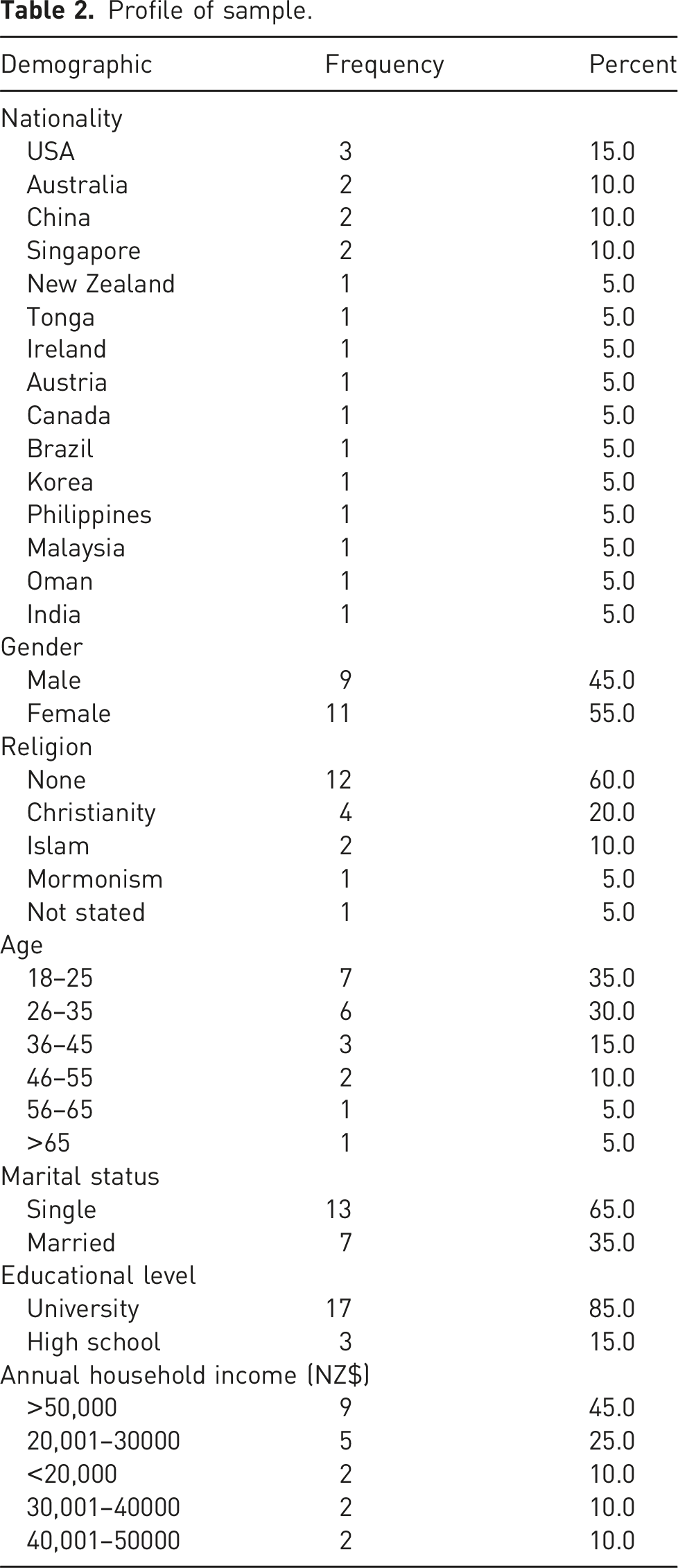
This phenomenological research focused on the restaurant context because of its experiential nature. The restaurant sector has also been viewed as a critical cornerstone of the tourism industry. The data was collected in Queenstown, New Zealand as dining opportunities in this town are rich (100% Pure New Zealand 2020; Fusté-Forné, 2020), making tourists to be highly involved in their dining experiences. This provides the opportunity to understand the food experiences of tourists who dine in various kinds of restaurants, for different purposes, and with different levels of involvement. Structured interviews were used to facilitate rich description of participants’ involvement and their dining experiences (Creswell, 2014) as interviews are apposite methods to explore the whys and hows regarding a phenomenon (Creswell, 2014; Flick, 2014). The sampling method was purposive/judgmental, because it is the most common method for data collection in qualitative research, allowing the researcher to select participants who share particular characteristics which in turn lead to providing rich, relevant and diverse data pertinent to the research questions (Creswell, 2014).
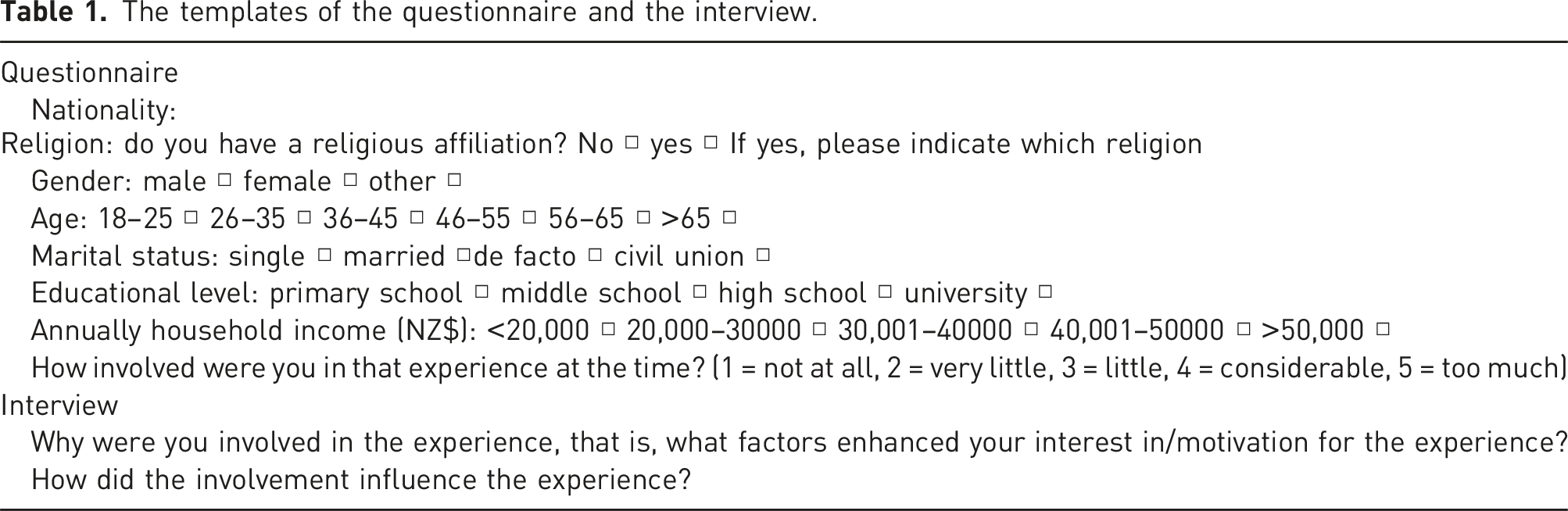
Tourists were approached when their dining experiences ended and they were going away from a restaurant, allowing to interview participants while their experiences were still fresh in their memory. They were first given a questionnaire to indicate their level of involvement in their dining experience before inviting them for an interview. Only highly involved ones were invited to take part in an interview as Flick (2014) emphasised that researchers must target a group that hold information central to the research objectives to learn more about issues of central importance. All interviews were conducted in an appropriate place (e.g., in a café, restaurant, public place, or in their staying place) upon the consent of participants. To achieve a broader and more complex understanding of the phenomenon, a data triangulation strategy was used (Creswell, 2014; Flick, 2014), that is, the participants were selected from different types of tourists (e.g., Asian and Western, young and old), restaurants (e.g., ethnic and luxury), and at different times (between 11 a.m. and 11 p.m.), because a heterogeneous sample can provide multiple perspectives on the same phenomenon.
The main researcher spent a considerable time in the area (above 2 months in Queenstown) and dined in various restaurants (e.g., ethnic and luxury) in order to facilitate understanding of tourists’ dining experiences (Creswell, 2014). Following Dimanche (1994), the interviews were conducted face-to-face with care so that each question was thoroughly understood by the interviewees. The interviewees were also given the opportunity to query the interviewer (Flick, 2014). The researcher listened as much as possible (Flick, 2014). All of the interviews were recorded with a digital audio-recorder in order to accurately reflect the participants’ views (Flick, 2014). Following Creswell (2014), the questions were kept as simple, specific and concise as possible. At the end of interviews, the informants were asked to make any comments on their dining experience, enabling them to tell their own stories in a relatively open manner.
The templates of the questionnaire and the interview.
Profile of sample.
Analytical approach
The data were analysed according to Creswell’s (2014) procedural process. First, all conversations were listened multiple times in order to be transcribed verbatim, making the analysis process easier and expose the reports/quotes to readers. After being transcribed, the data were checked for obvious mistakes. Examination of the interviews involved a coding of responses to identify common or important themes using thematic/categorical content analysis (Creswell, 2014). Following a thoroughly reading the transcripts, a pool of codes was generated manually through selecting significant sections from the participants’ statements to find patterns in data and choosing a word to represent each category. Manual coding allows a better examination of transcripts and identifies more rigorous patterns and themes (Patton, 2001). The codes were derived from both the theoretical understanding of the phenomenon (deductive approach) and the data (inductive approach) as new codes may come up when examining the data even if a set of codes is predetermined (Creswell, 2014; Flick, 2014). They were carefully created to cover several responses and contrast each other. It was also tried to strike a balance between too much and too little information. The codes were constantly compared with the data. Some of the initial codes were refined by subdividing or integrating into themes which are generally broader than codes. The codes were cross-checked by another researcher, and were finally interpreted.
Findings
Across the interviews, a range of factors which contributed to situated involvement was identified as well as how this involvement impacted tourists’ dining experiences. The following sub-sections describe the findings in more details.
Contributors to situated involvement
In the interviews, the tourists experienced a variety of 13 environmental stimuli during the course of their dining experience which encouraged their involvement in the experience. The stimuli are listed in the following sub-sections based on their frequency.
Food quality
Food quality stood out as being the most mentioned factor, and this is because food is the core of a dining experience in restaurants. The participants often reported the sensory impressions of their dining experience. According to Lin et al. (2011), “our sensory perceptions play a major psychological and physiological role in our appraisal and appreciation of food” (p. 32). Previous research stressed that the quality of food in restaurants plays a major role in diners’ experiences (Kim et al., 2009). As expected, the majority of the participants (three-quarter) stated that the quality of food enhanced their interest in or motivation for the food experience. In particular, an enjoyable taste made a good impression on most tourists. This finding is based on the following statements: “The quality of food; quality is the first and most important thing which needs to taste good” (Male, 26–35 years old, Austria). “Of course, the food is the most important thing you go to a restaurant. If you go to a restaurant again, that is because of the food, the quality, the taste” (Female, 18–25 years old, China). “The food quality, you really don’t know until you get there. I witnessed what I saw on the tables and how people were eating, that’s what picked our interest. The freshness, the whole fish been cooked entirely not cut not sliced. The fish […] was A la Carte Menu, mussels were steamed, and beautiful wine sauce. So, the freshness more than anything” (Male, 46–55 years old, Canada).
Being the first factor suggests that food quality/sensory factors is vital in tourists’ situated involvement, supporting previous research which found that sensory appeal significantly motivated the tourists to consume the local foods and drink (Kim et al., 2009). Pezenka and Weismayer (2020) also found that food was the most frequently mentioned aspect in restaurant evaluations of both locals and visitors.
Physical environment
The analysis of interview data revealed that the tourists not only cared about the core product of a dining experience (i.e., food or drink), they also cared about other stimuli which were present during the dining experience for evaluating their experiences. People may choose to eat in restaurants due to the restaurants’ atmospherics such as design, ambience, layout, music, table settings etc. These attributes can significantly influence customers’ perceptions and dining experiences (Wijaya et al., 2013). According to Chen et al. (2020), the physical environment can evoke positive feelings and create memorable experiences. More than half of the participants (11 tourists) mentioned physical environment as another trigger for their situated involvement. This finding supports previous studies which noted that the physical environment of restaurants is a key consideration for restaurateurs in enhancing customers’ dining experiences (Wen et al., 2020). In the interviews, tourists expressed that restaurants’ atmospherics triggered their situated involvement: “Another thing is the vibe of the restaurant, the atmosphere of the restaurant. Also, a place that takes the time to put in some decorations I think that’s really cool” (Male, 18–25 years old, USA). “I think one is the physical environment. So, the first physical environment should be amazing Latin style decoration which just engaged me feel I am in a typical Latin place which is great for me. And the second for the physical environment is the music. They placed a lot of Latin music which is also providing a kind of atmosphere” (Female, 18–25 years old, China). “Most importantly firstly is the cleanliness of restaurant. Actually, I don’t know the restaurant, I asked my assistant to research. I don’t have much time and she knows my standards: it needs to be clean. I don’t like crowded places, because it is too noisy to enjoy my food. I can’t even hear when I am chatting” (Female, 36–45 years old, Singapore).
Service quality
Service quality emerged as another trigger for situated involvement, albeit to a lesser extent than the primary and secondary antecedents. It has been stated that service quality is among the crucial factors for the success of service businesses, because it significantly impacts customers’ perceptions of their experiences. Wijaya et al. (2013) noted that the quality of the service offered in a restaurant has the potential to enhance the dining experiences. This research also found that tourists who experienced high quality of service in the restaurants tended to be more involved in their dining experiences. This finding corroborates the finding of previous research which showed that the restaurant staff were considered a key determinant of the provision of memorable dining experiences (Gibbs and Ritchie, 2010). Five informants reported that the service offered in the restaurants enhanced their involvement. This is highlighted in the following extracts: “… and the catering was good according to what they advertised” (Male, 26–35 years old, Brazil). “The staff must be friendly and good service and … so that the whole experience is comfortable and I can say I kind of enjoyed” (Female, 36–45 years old, Singapore). “If you go to a restaurant again, that is because of …, also service” (Female, 18–25 years old, China).
Price
The cost of the food was also among the factors enhancing the dining experiences. Indeed, price has been suggested as a crucial factor influencing customers’ perceptions and behaviour. For instance, researchers stated that some customers value restaurants based on the prices of their meals (Pezenka and Weismayer, 2020). As a result, a reasonably priced meal can significantly influence customers’ satisfaction and enhance their dining experience (Akdag et al., 2018). In other words, some tourists want to spend a reasonable amount of money on their dining experiences, and when a restaurant offers cheap or reasonably priced meals, the dining experience in that restaurant tend to be positive. Two tourists described this as follows: “And then price. I eat out, I am not made of money. I need to make sure what I am spending is reasonable” (Male, 18–25 years old, USA). “I was looking for a restaurant last night and I needed food cheaply. It was on the lake, it’s well priced” (Female, more than 65 years old, Ireland).
The combination of price and food quality was also highlighted, for example: “Price is also effective, like if it’s cheap and tastes good, it’s best and I am also willing to spend more which is really good” (Male, 26–35 years old, Austria).
Socialisation
Another factor which played a role in the involvement was socialisation. This supports the findings of Kim et al. (2009) who found that togetherness enriched the food experiences of tourists. Since human beings are intrinsically social, social interactions is an important part of everyday life. Social interaction is also one of the key factors in the context of dining out, because people usually go to restaurants in groups and want to have a food experience with someone close to them, as it enriches their moments (Wen et al., 2020). Five customers highlighted that eating in restaurants provided an opportunity for them to interact with others. This was described by two tourists in the following ways: “Off course, the companion my beautiful wife” (Male, 46–55 years old, Canada). “The companions, the people I was there with” (Female, more than 65 years old, Ireland).
Staff members can also make the tourists feel unique or pampered via attentiveness (Wijaya et al., 2013). As an interviewee said: “Meeting people, trying the food, meeting the people who work in restaurants, watching the people who walk around, talking to the people who around you. For me, that is the most part of the experience” (Female, 26–35 years old, Oman).
In addition, seeing other people and interacting with them enhance the food experience of some tourists, highlighting the significant role of other people as a part of the social aspect in shaping tourists’ dining experiences (Wijaya et al., 2013). This was illustrated by the following responses: “Fergburger was really crowded and many people were waiting in the queue to order their food. So, kind of like influenced my experience that” (Male, 26–35 years old, USA). “I don’t like eating in quiet places I like eating in louder places. Yes, it’s good when it’s busy there” (Male, 18–25 years old, USA).
Novelty
Novelty was also reported to influence situated involvement, albeit only for a few tourists (three ones). This is not surprising since people tend to go to restaurants in which different and new foods are provided in order to satisfy the need and desire to experience something new or eat meals which they cannot cook in their homes (Akhoondnejad et al., 2022; Lee et al., 2020). This finding is in line with other studies (e.g., Kim et al., 2009) in which eating novel food was exciting for tourists. For many, experiencing new things is thrilling; therefore, having a food experience in different restaurants has become a common activity among many people. The desire to have novel and unique food experiences has been an important aspect of contemporary tourism (Obonyo et al., 2013). Some of the comments made by the tourists which highlight the importance of novelty in encouraging involvement in them are as follows: “I like to try different kinds of foods. Today I wanted to try pasta. So, I came to an Italian restaurant” (Female, 18–25 years old, China). “Because I am travelling, so I want to try another type of food rather than go to Malaysian food. So, the novelty” (Female, 26–35 years old, Malaysia). “I am kind of explorer like I want to travel around the world and I want to try different foods. So, instead of travelling, because if you travel you need a lot of money. You can go first to the restaurant to try their foods and then with that experience it feels like you went to their country. First, it is a Brazilian food and we were curious about their menu” (Female, 18–25 years old, Philippines).
Reputation
Reputation refers to the opinion being held about a business based on what has happened in the past and is “a signal to the market and stakeholders that reduces the uncertainty associated with the quality of the managerial ability” (Kim and Lee, 2022: 871). The reputation of a restaurant plays a major role in the selection of the restaurant and the perceptions of the dining experiences (Akdag et al., 2018). For example, many people associate good dining experiences with famous restaurants (Lai et al., 2018). In this research, the reputation of the food or restaurant appeared to play an important role as a facilitator of situated involvement of some tourists. For example, an interviewee said: “The reputation of the restaurant. Fergburger was really crowded and many people were waiting in the queue to order their food” (Male, 26–35 years old, USA).
Türker and Süzer (2022) stated that dining in a famous restaurant can provide higher status and prestige to diners. This finding supports the idea that branding is an efficient way for businesses to create a positive image and influence tourists’ experiences (Lin et al., 2011). In the same line, another interviewee who stated that he had the food experience only because of the reputation of restaurant, remarked: “It also is famous, it’s got a good brand reputation” (Male, 26–35 years old, Tongan).
Local culture/authenticity
Another contributor was authenticity, which refers to the traditional culture and a sense of genuineness (Wijaya et al., 2013). According to Wen et al. (2020), perceived authenticity plays an important role in customers’ dining experiences and motivates them to visit different restaurants. In tourism, authenticity or experiencing the local culture has become a key motivation of many travelers to escape from their routine. Dining in a restaurant on holidays has the potential to offer tourists an opportunity to understand the local culture of the destination and provide them a sense of authenticity (Wijaya et al., 2013). Therefore, for tourists who have a strong desire to experience the reality of local culture, food experiences might be a very critical component of their travels and the uniqueness of food would enhance their experiences. Two participants remarked that authenticity or being local encouraged their involvement in their dining experiences. The followings are examples of the role of authenticity or local culture in tourists’ situated involvement: “It looks like a Korean restaurant” (Female, 18–25 years old, Korea). “Foods are cooked locally. It was nice at the Pier” (Male, 46–55 years old, USA). “I think one is the physical environment. So, the first physical environment should be amazing Latin style decoration which just engaged me feel I am in a typical Latin place which is great for me. And the second for the physical environment is the music. They played a lot of Latin music which is also providing a kind of atmosphere” (Female, 18–25 years old, China).
Levitt et al. (2019) argued that eating local cuisine is pleasurable for many tourists and provide them with a unique experience. Kim et al. (2009) empirically found that having an authentic experience was a motivational factor for tourists to consume local foods and dinks in destinations.
View
Another antecedent was view, which refers to what a person is able to see from a particular place. View is among the important attributes relating to dining places (Lai et al., 2018). Henderson (2009) argued that many tourists enjoy watching the scenes in the destinations. This is in line with the idea of the tourist gaze, stating that tourists’ experiences are constructed by visually impressive means (Urry, 1990). This finding indicates that some tourists wanted to have a great view of the destinations’ attractions from the restaurants, and this facilitated and enhanced their dining experiences. Key quotes from the interviewees’ comments related to the role of view, are: “In this case, eating outside and enjoying the view … the whole atmosphere including in this case view was that highlighted it” (Male, 46–55 years old, USA). “Well, the view for sure. We were right on the lake and we had boats and we were watching the activities on the lake” (Male, 46–55 years old, Canada).
Catering for different cultures
Since culture is a prevalent force determining what is acceptable or prohibited, consumption of acceptable and familiar foods tends to enhance people’s dining experiences (Henderson, 2009; Weidenfeld, 2006). While it is widely accepted that many tourists desire to have new food experiences on their travel, there are some who only consume familiar foods and drinks. Indeed, for some people, habit determines what foods are acceptable and enjoyable (Akdag et al., 2018). For instance, Muslims are allowed to eat and drink Halal foods and beverages. One participant reported that catering for specific cultures was one of the factors which enhanced his dining experience. The participant expected to have a particular type of food in the restaurants he visits. As he said: “I am a vegetarian. If they got a vegetarian menu that may impact me. And the particular type of food I like, I like Indian foods, for example” (Male, 56–65 years old, Australia).
Nostalgia
Another factor was sense of nostalgia, which is an emotional reaction and generally refers to a yearning for yesterday. According to Vignolles and Paul-Emmanuel (2014), a dining experience has the ability to make people to travel into their memories especially childhood ones which can be happy, sad or bittersweet. Thus, a sense of nostalgia can differentiate and enhance a dining experience. Chen et al. (2020) noted that a sense of nostalgia can be a powerful stimulus enhancing customers’ experiences in restaurants, the value they perceive, their attachment and loyalty. Richards (2021) established that nostalgia is an important driver of involvement. The findings show that a feeling that a time in the past was good or remembering something in the past encourages involvement in some tourists. For example, an interviewee spoke of a part of her dining experience which gives her a sense of past: “Another one is the dessert. So, the second about the dessert is the Spanish dessert. I really loved that with the chocolate. That is also one thing influenced my experience. I loved that chocolate dessert which makes me think about Spain” (Female, 18–25 years old, China).
Convenience
Convenience which emerged as another contributor, refers to being appropriate or useful, especially because it makes something easier or saves time (Poria et al., 2019). According to Kinard and Capella (2006), convenience has become one of the needs of today’s customers which must be met by businesses. One tourist remarked that convenience was a factor which enhanced her dining experience. This is because of the fact that many people are too busy to spend time and effort for purchasing and cooking foods and they want to enjoy their times on holiday by doing different and novel things. This was exemplified by the following words: “Also, because this is convenient” (Female, 26–35 years old, Malaysia).
Location
The least frequently identified antecedent was the location of restaurants. Compared to the other antecedents, location was seen to be a less significant contributor to situated involvement. According to Lee et al. (2020), restaurants which have a good location tend to succeed and remain competitive as many tourists choose to dine in restaurants which are located close to the main tourist attractions or city centres. Good location tends to provide diners with a positive experience. One participant discussed how the location of restaurant played a significant role in his dining experience: “So, a lot of factors and we were lucky to had that location” (Male, 46–55 years old, Canada).
The impact of situated involvement on dining experience
All of the participants agreed that the situated involvement influenced their dining experiences positively. When describing the impact of the environmental stimuli on dining experience, the participants mentioned three positive consequences including happiness/enjoyment (affective), memorability/enhancement (cognitive-affective), and satisfaction (cognitive). These impacts are explained in the following sub-sections.
Happiness/enjoyment (affective)
The most repeated theme across the participants’ comments was happiness or enjoyment. 17 respondents frequently stated that they were happy and enjoyed their dining experiences because of the environmental stimuli. For instance, the service during the experience made a diner happy as noted in the following quotation: “The service was really good, the waitress was nice. So, I had a good mood and I felt happy at the time. I think the good service impacted my food experience in a positive way” (Female, 18–25 years old, China).
Another participant referred to the specific type of food and cultural atmosphere as the environmental stimuli which made her happy. She remarked: “Yeah, it influenced a lot because it felt like we were in Brazil eating their foods with a lot of Brazilian people. Always try new things because it can make you happy and when you experience different things it is a little refreshing and relaxing” (Female, 18–25 years old, Philippines).
Another comment made by a participant was a more comprehensive response to the whole of the experience: “For example, when I went to the restaurant there was a lot of people there, difficult to get a table. I sat at the bar and when I was sitting at the bar, I could see what was going on in the kitchen. I could see other bar attenders right in front of me making all the drinks. I decided on a rib & steak. It was expensive but it was really good. So, I was willing to pay the money for it. They were really busy but the service was so good. So, I really enjoyed” (Male, 18–25 years old, USA).
Memorability/enhancement (cognitive-affective)
The second impact was memorability or enhancement of experience. As the literature stated, involvement in an experience enhances the experience and increases its memorability. This was also found in the current research. The following examples of customers’ narratives provide some clues about the role of situated involvement in enhancement or memorability of dining experiences. For instance, the following extract is about the entirety of the eating experience: “They created a memorable food experience for me” (Male, 46–55 years old, USA).
Another tourist talked about the roles of physical environment and service quality: “I don’t think I would have a good experience in a place that is not spacious enough, in a place that is not clean enough, and if the customer service is not good. So, it would probably ruin my experience. It did not happen. So, all these factors enhanced my food experience” (Male, 26–35 years old, Brazil).
The following remarks exemplify the importance of physical environment, food quality, socialisation, and service quality in the memorability of a dining experience: “It made us to stay there for longer. I wanted to hang out a bit more and experience the music, experience the food, and drinking stuff, and even the people who around there were really good hang out with them talk to, and services. I enjoyed there and they let me to have a memorable experience” (Female, 18–25 years old, India).
Although several factors are important in creating memorable experiences, an interviewee described the crucial role of the companion in having good moments in the following words: “Of course, these factors created a memorable food experience for me. We eat a lot, we travel a lot. You hungry you wanna eat. But that was beautiful because of the setting, all the factors I said, the setting, the freshness, the companion and usually 80% companion 20% food. If the companion is good the food is always better in most cases” (Male, 46–55 years old, Canada).
And, another participant expressed her interest in the food quality, cost of meal, and authenticity of restaurant: “The quality of food was very good, I enjoyed. The price was fine, because many Korean restaurants are fancy. But Kimchi was not. Very traditional Korean style. They made me to enjoy my food experience. Kimchi was one of my best food experiences in Queenstown” (Female, 18–25 years old, Korea).
Satisfaction (cognitive)
The third impact was satisfaction which is a cognitive consequence. For example, a tourist stated how an environmental stimulus which encouraged his involvement in his dining experience, convinced him that eating in the restaurant was a wise/good choice. This sentiment is illustrated in the following comment: “Seeing a lot of people in the restaurant gave me a sense of satisfaction. Knowing that other people like the burger as well, because many people select the quality restaurants. Because many people select the restaurants based on the quality of the food. So, because more people eat there it helped me make the decision” (Male, 26–35 years old, USA).
Discussion
The importance of experience in today’s economy is increasing, and thus, it is important to find ways to influence and enhance customers’ experiences. It has been argued that involvement influences customers’ experiences and can increase the memorability of an experience (Akhoondnejad et al., 2022; Pine and Gilmore, 1999). As a result, a qualitative analysis of tourists’ dining experiences as well as the factors contributing to their during-experience involvement was conducted to provide a theoretical basis for understanding how involvement influences experience.
This research proposed that environmental stimuli during an experience may initiate involvement in experience, and this is reflected in the interviewees’ involvement which differs from predominant conceptualisations of involvement in the literature. It was also assumed that some of the stimuli could be highly involving, and this is supported by the interviewees’ statements. For instance, a significant finding of the current research is the weighting of the stimuli, with the core product (food quality) being far stronger in the restaurant context than other stimuli such as view, which has been acknowledged as the strongest contributor to tourists’ experiences in the idea of tourist gaze proposed by Urry (1990).
The research identified the stimuli which enhance tourists’ dining experiences within restaurants, providing a very useful understanding of the formation of tourists’ situated involvement. Based on the findings, a model (Figure 1) is developed to contribute to the understanding of situated involvement and its contributors. The stimuli which enhanced tourists’ interest in/motivation for their dining experiences are as follows: food quality, physical environment, service quality, price, socialisation, novelty, reputation, local culture/authenticity, view, catering for different cultures, nostalgia, convenience, and location. Thus, the interviewees attributed their involvement to a blend of stimuli which were external, internal, or a mix of both. A model of situated involvement and its impacts on experience in the restaurant context.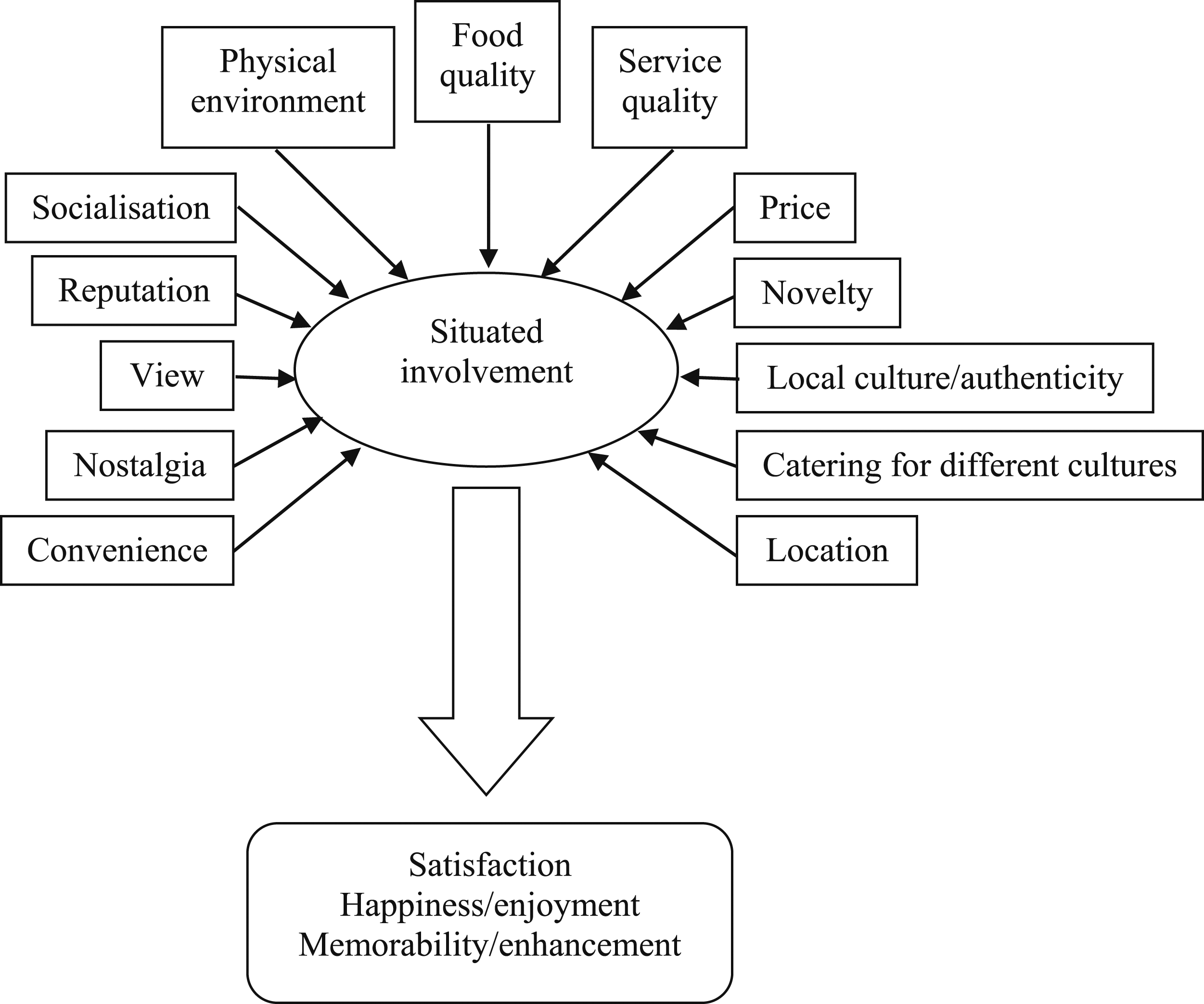
Situated involvement was found to impact tourists’ dining experience in positive ways including happiness/enjoyment (affective), memorability/enhancement (cognitive-affective), and satisfaction (cognitive). This is indicative of the cognitive-affective impact of situated involvement on dining experience of tourists. It seems that the environmental stimuli during a food experience in restaurants can provide an opportunity for tourists to be actively involved in their dining experience, and this leads to an enhanced and better experience. It is, thus, important to acknowledge that during-experience stage is a great opportunity to involve customers in addition to pre-experience stage. Therefore, the idea that involvement in an experience can create positive perceptions of that experience, leading to a meaningful and memorable experience (Akhoondnejad et al., 2022; Lin et al., 2021; Pine and Gilmore, 1999; Poulsson and Kale, 2004) is supported by the findings of this research.
Conclusions
The purpose of this research was to investigate how during-experience type of involvement impacts tourists’ dining experiences and what factors contribute to such involvement in the restaurant context. The research is built on the Framework of Experience Economy, and reports empirical insights drawn from a qualitative investigation. The findings identified 13 contributors to situated involvement and explicated the positive role of this involvement in dining experiences of tourists. Based on the findings, the following sub-sections discuss key theoretical and practical implications, and highlight promising areas for future research.
Theoretical implications
The current research makes several important contributions to the service and marketing literatures in general and tourism and hospitality literatures in particular. First, the concept of involvement has been extensively examined in the marketing literature, but the discussion of involvement has not been expanded to consumption of foods in restaurants. In addition, although the marketing literature suggested three types of involvement (enduring, situational, and response) which all happen before an experience, the literature failed to address a type of involvement which occurs during an experience. Researchers argued that what happens during an experience is more influential than what happens before and after the experience (e.g., Aho, 2001). It has been stated that environmental stimuli during an experience can encourage involvement in customers; however, the literature lacked a clear conceptualisation of experience-induced involvement.
This scarcity of research on involvement is surprising considering prior theoretical work that has established the importance of the factors during an experience in creating feelings in customers (Houston and Walker, 1996). The current research fills this void by offering a new conceptualisation of involvement, namely situated involvement and highlighting the roles of environmental stimuli during an experience in encouraging involvement in the experience. The findings, thus, confirm Houston and Walker’ (1996) proposition that the factors during an experience can create feelings in customers.
Taking a novel approach, this research conceptualises involvement as a dynamic, multi-phase concept to account for its pervasive impact on tourists’ experiences. The introduced concept of situated involvement provides fresh insight about what stimuli during a dining experience contribute to involvement in the experience, highlighting that a tourist needs more than just a service quality to be actively involved in a dining experience. This research focuses on the contribution of the environmental stimuli to involvement in a dining experience, and this distinguishes it from past research on service quality in the restaurant context in terms of their ability to enhance tourists’ interest in/motivation for a dining experience. This research, thus, is a valuable addition to the growing research on involvement and uncovers promising avenues for future studies to expand involvement literature in the tourism and hospitality domains.
Since much research on involvement in the marketing and service literatures was quantitative (e.g., Caber et al., 2018; Hsu and Scott, 2020; Kinard and Capella, 2006; Levitt et al., 2019; Lu and Chi, 2018; Sharma et al., 2020), the current research responded to calls for qualitative studies of customers’ involvement (Zaichkowsky, 1986) in order to provide an in-depth understanding of the phenomenon. Employing qualitative methods allows participants to freely express their opinions about what happens and what causes certain things, discuss new and unexpected ideas within the realm of the topic; thus, leading to clear explanations for phenomena. As a result, this research is expected to provide directions for involvement in the tourism and hospitality literatures.
This research argues that involvement should be seen as a concept which can happen during an experience. The research, thus, contributes to broadening our understanding of different types of involvement. The findings contribute to the theoretical knowledge of the antecedents of situated involvement. The research is also the first attempt to provide deeper insights into the importance of involvement in dining experience of tourists. Although involvement is known to influence customers’ experiences, this issue has not been empirically investigated. Building on the literature, the present research theorised that involvement influences tourist experience and clarified how environmental stimuli during a restaurant experience influence tourists’ perception of those experiences. A key theoretical implication of the findings, therefore, is to support and validate the Framework of Experience Economy proposed by Pine and Gilmore (1999).
The findings can be used for future theoretical developments in the tourism literature as they demonstrated the important role of situated involvement in dining experience of tourists. Situated involvement was found to have cognitive (satisfaction), affective (happiness/enjoyment), or cognitive-affective (memorability/enhancement) influences. The current research, thus, extends involvement research and the findings shed light on critical questions concerning during-experience involvement and dining experience.
Practical implications
Dining experiences which encourage involvement in customers tend to make them stay longer in restaurants and spend more on their experience, while ordinary experiences, on the contrary, are likely to discourage the customers to revisit the restaurants. Therefore, attention to the factors which contribute to customers’ involvements in their dining experiences is essential for delivering enhanced and memorable food experiences. The findings of this research, can thus, help restaurant managers/owners understand how they can provide or create the conditions which enhance customers’ involvement in the food experiences they offer, which in turn enhance the memorability of their offerings. The research highlighted the factors which lead to situated involvement. Based on these factors, restaurant managers/owners should design their dining experiences and provide opportunities to facilitate this type of involvement in tourists. This would help restaurants to deliver unique and memorable experiences which in turn result in loyalty and competitive advantage.
In order to enhance tourists’ situated involvement, restaurants should offer high quality foods and drinks which are well prepared and delicious. Physical environments must be attractive enough to attract tourists and make them enjoy their meal and stay longer. Restaurants must improve their services, for instance by employing professional personnel. The foods and drinks offered should be reasonably priced to encourage tourists to come back again. Restaurants should create opportunities to make it easier for tourists to interact with staff and other customers, for instance by employing attractive staffs as people are more willing to interact with attractive persons. In addition, staffs should be diverse in terms of gender and nationality to encourage social interaction. Renewing the current meals is highly recommended once in a while. Restaurants are suggested to build a brand and try to improve their reputation. Authentic experiences should be provided for tourists to enhance their dining experiences. This can be done, for example, by providing local dishes, playing local music, or designing the environment in a traditional way. Restaurants should be located in convenient and attractive places so that tourists can easily find them and enjoy the view. A wide variety of foods and drinks must be provided in restaurants so that tourists with different cultures can choose a meal among the options (Weidenfeld, 2006). Another way to enhance tourists’ situated involvement is to create a sense of nostalgia among them. This can be done, for instance, by asking tourists about their past good experiences and try to recreate those experiences.
Since situated involvement was found to impact or enrich tourists’ dining experiences, restaurateurs must follow some practices to offer positive experiences. Dining experiences should be much more than a meal and restaurants are expected to provide more than just a passive food experience. There is a need to develop a restaurant environment which provides factors stimulating tourists to be actively involved in their dining experience. In order to significantly enhance tourists’ experiences, restaurant owners/managers should increase their knowledge and skills to use the environmental stimuli which exist during their offerings to actively involve tourists’ mind and/or body. Restaurateurs are encouraged to work on the environmental stimuli identified in this research and try to improve them in order to enhance the food experiences they offer.
Limitations and opportunities for future research
This research is an initial foray into an exciting area of research, which could be expanded in several ways. First, while small sample size should not be seen as a limitation in qualitative research, a big enough group of participants is needed to ensure the accuracy of findings. Second, the sample was selected using a non-probability method in one destination. Thus, future research should employ a probability sampling method and be conducted in other destinations. Another limitation of qualitative studies relates to the impact of the researchers’ experiences and their cultural/religious backgrounds on the conclusions.
Given the critical role of suppliers in creation and delivery of experiences, future research should consider incorporating their voices as well. Due to the qualitative nature of this research, a quantitative study is required to validate these implications and to investigate the causal relationship between situated involvement and experience/memorability of experience. Future research could be conducted in different types of restaurants (e.g., ethnic vs luxury) to reveal additional contributors of situated involvement and their impacts on the dining experience. Finally, this research should be replicated in other contexts as that might offer additional antecedents of situated involvement not identified in this research.
Footnotes
Declaration of conflicting interests
The author(s) declared no potential conflicts of interest with respect to the research, authorship, and/or publication of this article.
Funding
The author(s) disclosed receipt of the following financial support for the research, authorship, and/or publication of this article: This research was funded by Lincoln University, Lincoln, New Zealand.
