



Abstract
This study compares guest reviews of Airbnb accommodations by country of origin, in order to identify cultural evidences. An exploratory study was conducted in two selected Airbnb accommodations through content analysis of 775 reviews by guests from 32 different countries. The authors analysed the data according to two dimensions of Hofstede’s Cultural Theory: (1) individualism/collectivism - the vision that the well-being is achieved by the action of each individual versus the collaboration of the society as a group; and (2) masculinity/femininity – a patriarchal society seeking success versus a society where quality of life is based on the well-being of all. The results suggest homogeneity in online reviews by country of origin. This result may be justified by the prevalence of cosmopolitan tourists in Peer-to-Peer (P2P) accommodation – those travellers with experience worldwide, looking to contact with the locals and who avoid reflecting cultural values due to their cosmopolitan mindset. The paper provides important implications both for managers of P2P platforms looking for universal legitimacy and to the theoretical research into cultural studies regarding the cosmopolitanism of the sharing economy.
Introduction
The tourist accommodation market has undergone several changes, given the type of experiences that consumers tend to increasingly look for - for instance, connection with the environment, interaction with local residents and housing affordability, thus valuing local accommodation (Belarmino and Koh, 2020; Li et al., 2023; Oskam and Boswijk, 2016). Under the approach of the sharing economy, the phenomenon of digital platforms such as Airbnb has boosted the importance of Peer-to-Peer accommodation (P2P) in the hospitality sector (Young et al., 2017). On the one hand, consumers make their purchase decisions based on their trust or mistrust of online reviews (Belarmino and Koh, 2020; Wilson et al., 2012); on the other hand, hospitality managers intent on improving their offer need to understand consumer expectations and satisfaction also via online reviews (Casais et al., 2020; Hu and Yang, 2021). In fact, online reviews are a key point of the P2P business model and determine the degree of trust of prospective customers (Cheng et al., 2019; Fu et al., 2021).
The topic of online reviews has been widely researched in a variety of product categories (Zheng, 2021) and some studies have recently discussed the effect of cultural background to explain the volume of online reviews produced (Filieri and Mariani, 2021) and the way online reviews are written (Barbro et al., 2020; Messner, 2020; Wang et al., 2019). This emerges a consequence of different consumer preferences and expectations (Stamolampros et al., 2019), perceptions, attitudes and behaviours (Zhong et al., 2019) across cultures.
Hofstedes’ Cultural Dimension Theory (Hofstede, 2001) is relevant to understand customers’ different responses of customers according to their cultural values. This theory consists of six dimensions and defines specific disparities in different countries for each dimension: individualism versus collectivism; power distance; masculinity versus femininity; uncertainty avoidance; long/short-term orientation; and indulgence versus restrained culture. In the hospitality sector, the role of culture is an old topic of research that considers that there are different service quality perceptions by country of origin of guests (Furrer et al., 2000), with implications in the generation of online reviews (Buzova et al., 2019). Recent studies found on TripAdvisor a significant effect of culture difference in hotel ratings and reviews (Litvin, 2019; Tsiotsou, 2021; Zhang et al., 2020b). However, there is a dearth of research on this phenomenon of P2P accommodation. To the best of our knowledge, only two studies have analyzed this phenomenon of culture in P2P accommodation. Hsieh et al. (2022) analyzed different risk perceptions and risk prevention strategies in P2P accommodation in the case of tourists from China and United States through interviews; and Zhang et al. (2022) analyzed cross-cultural experiences in P2P accommodation by focusing on the context of online reviews. Those authors evidenced differences regarding the host-guest relationship in the case of Chinese and English-speaking guests. The latter authors also found contradictory results across the dimensions of individualism and power distance of Hofstede’s Cultural Dimensions theory, having suggested further research on this topic.
This paper examines cultural influences in the written online reviews in the context of P2P accommodation, considering the importance of these reviews published in the sharing economy platforms in the hospitality sector (Zhang et al., 2020a). The study has particular relevance, since P2P accommodation has been mainly provided by local and informal businesses, which are preferred by cosmopolitan tourists. Tourists with a cosmopolitan mindset show open-mindedness, resilience and resistance to irrational fear (Veréb et al. 2022), seek authenticity (Paulauskaite et al., 2017), informal experiences and interaction with locals to learn about cultural diversity (Zhang et al., 2020a) and are also opened to novelty and engage with cultural diversity (Tran, 2020; Veréb et al., 2020; Zhang and Hanks, 2018). As Zhang et al. (2022) have suggested that different experiences in P2P accommodation may result of contextual factors beyond cultural differences, this study can contribute to the development of the field by addressing the existence or inexistence of cultural differences on online reviews of P2P accommodation. This topic is of relevant knowledge for hosts regarding the service items with the highest expectations in each culture, or on the contrary highlight the phenomenon of cosmopolitanism, when cultural differences are not patent in online reviews.
Considering that cultural differences may be found through written online comments (Buzova et al., 2019), the authors followed a qualitative approach and conducted an exploratory research via the content analysis of 775 online reviews related to two Airbnb accommodations, representing guests from 32 different countries. The authors considered two of the six dimensions proposed by Hofstede to analyze the online reviews on Airbnb, comparing (1) Individualistic versus Collectivist cultures; and (2) understanding the presence of greater masculinity or femininity. These two dimensions are those that most interfere with the characteristics of online reviews (Messner, 2020). The dimension of Power Distance was not used also because Individualism/Collectivism and Power Distance tend to be contradictory dimensions in this field and end up cancelling each other (Zhang et al., 2022). To proceed with the cross-cultural analysis, we selected the reviews of 12 particular countries that represented better the mentioned cultural dimensions, according to the literature (Hofstede, 2001).
Literature review
Online reviews of P2P accommodation
Consumer reviews are a feedback mechanism with a descriptive complement to the rating classification, influencing other customers’ expectations and purchase decision (Zheng, 2021). Online reviews have faced some criticism regarding its authenticity (Schuckert et al., 2015b; Shan, 2015), unreliability (Zheng et al., 2021) and usefulness (Bridges and Vásquez, 2018; Racherla and Friske, 2012), considering the discussion of review quality (Kutabish et al., 2023). However, the literature has researched the factors influencing the adoption of different online reviews and user generated content (UGC) (Kutabish et al., 2023; Ukpabi and Karjaluoto, 2018).
The impact of online reviews on hospitality performance is well sustained in the literature (Tsao et al., 2015), making this topic crucial for marketing and customer satisfaction (Pelsmacker et al., 2018). Travelers usually read online reviews about a hotel and sometimes avoid booking an accommodation when there are no reviews (Tsao et al., 2015). This is due to the reliability that consumers attribute to UGC (Filieri et al., 2021; Oliveira and Casais, 2019), and the fact that they consider it to be a reflection of the performance/experience of others travelers (Sparks and Browning, 2010). In tourism, the most common form of UGC is via online testimonies (Schuckert et al., 2015a). Online reviews are considered to be of major importance, both to measure the perceived quality of the service (Hu and Yang, 2021) and to innovate hospitality businesses (Casais et al., 2020). Online reviews have already been used as a mechanism to compare tourist expectations and satisfaction in traditional hotels and in the sharing economy (Zhang et al., 2020a).
P2P accommodation platforms have increasingly dominated the tourist housing market, providing consumers with alternatives that best meet their needs in terms of economic benefits, or the dimension of the accommodation, or even by providing them a social interaction with local people (Belarmino and Koh, 2020; Zervas et al., 2017). This phenomenon is well legitimated in tourism under the assumptions of the sharing economy (Paulauskaite et al., 2017), which is supported by online platforms that provide the technology for people to connect to each other to offer products or services (Ackermann et al., 2021). Contact between people is mediated practically only by a specific technological platform, thus becoming a tool to meet the needs of individuals and organizations in a fast and even sustainable way (Barbu et al., 2018).
The literature has focused on the relationship between guests and hosts of P2P accommodation platforms (Prayag and Ozanne, 2018) and concluded that this interaction is critical to trigger value co-creation. Managers should have the necessary skills to integrate the feedback received via online reviews in order to implement improvements and innovation (Casais et al., 2020). Dialogue plays an active role in this process (Grissemann and Stokburger-Sauer, 2012) and is of major importance in the tourism and hospitality sector (Buhalis and Foerste, 2015; Chathoth et al., 2016). UGC in the digital media in the form of testimonial reviews is a relevant factor for the evolution of the P2P business – as is the case, for example, of Airbnb (Ert et al., 2016; Phua, 2019). This feedback is critically important for the hosts to understand customer satisfaction, garner information about suggestions to improve the business, meet customer expectations or differentiate themselves from their competition (Pelsmacker et al., 2018). Hosts therefore recognize the importance of reviews as valuable feedback (Schuckert et al., 2015a), since reviews take on a central role in this sector of business (Gibbs et al., 2018; Yannopoulou et al., 2013).
A characteristic of P2P platforms is that both host and guest can evaluate each other, and these assessments are made available, thus justifying the inclusion of the host dimension as part of the assessment. Online reviews are crucial in P2P business models, considering their effect on trust (Cheng et al., 2019; Fu et al., 2021), which is even more important in informal businesses, since the signs of quality certification are crucial in services (Chatterjee, 2020).
The effect of cultural characteristics in the process of writing reviews in P2P platforms is still limited, despite its evidences in hotel rating and B2C websites (Zhang et al., 2020b; Zhu et al., 2017).
Cross-cultural evidences of online reviews
Culture is an important variable to study service quality perceptions (Furrer et al., 2000), service recovery (Kanousi, 2005), customer satisfaction (Crotts and Erdmann, 2000; Torres et al., 2014), e-WOM by country of origin (Fong and Burton, 2008), and even user-generated contents in online reviews (Zhu et al., 2017). The existing literature states that national culture has a moderate influence on the use of online reviews in the consumer decision-process, considering consumer characteristics and their attitudes when seeking online information about products and services provided by other consumers (Park and Lee, 2009). Consumer reliance on online reviews varies according to different cultural values (Kim, 2019). Consumers who read reviews written by people with a similar cultural background assume that they also share similarities regardinf preferences and attitudes, which therefore increases their perception of review usefulness (Kim et al., 2018).
Culture may be analyzed through six dimensions, ad theorized in the Hofstede’s Cultural Dimensions Theory (Hofstede, 2001). This theory defines specific disparities in different parts of the world according to the following six dimensions: individualism versus collectivism; masculinity versus femininity; high or low power distance; uncertainty avoidance; long/short-term orientation; and indulgence versus restrained culture. Although criticized in the literature (Adamovic, 2023), Hofstede’s Cultural Dimensions Theory has proved to be an important framework to understand cultural values with important implications in marketing studies (Soares et al., 2007), and is continues to be used today (Jadil et al., 2022; Srivastava and Sivaramakrishnan, 2022) to explain different consumer responses. This is no less true in the case of the evaluating online reviews (Filieri and Mariani, 2021). The dimension Individualism versus Collectivism describes the relationships that individuals have in each culture. In general, this dimension encompasses the degree to which individual well-being is valued more or less than the group well-being, and consequently the degree to which people are integrated in that same society (Soares et al., 2007). With regard to the dimension of Masculinity versus Femininity, a parallel is made between a rigid cultures versus flexible culture via the representation of what people in a given society seek to achieve. In countries where Masculinity is prevails, the dominant values are achievement and success, while care for others and quality of life are more important values in cultures where Femininity predominates (Hofstede, 2001). Power Distance considers the level of authority of governments and we know that cultures with lower power distance and long-term orientation tend to trust more on online reviews (Nath et al., 2018).
The motivations to write online reviews and the respective content may differ, depending on the reviewers’ backgrounds (Gonçalves et al., 2018), satisfaction or dissatisfaction with the service (Litvin, 2019) and the awareness that reviews influences the business (Schuckert et al., 2015a). The current knowledge about the cultural differences in online reviews consider that countries with higher power distance, individualism, masculinity, uncertainty avoidance and indulgence are more likely to write reviews on Booking.com (Filieri and Mariani, 2021; Zhang et al., 2020b). Culture affects the propensity to post, the overall sentiment and length of text reviews. Individualism/Collectivism and Masculinity versus Femininity are the cultural dimensions that generate the most differences in online reviews (Messner, 2020). These authors state that Individualist cultures provide more and longer reviews and previous studies have revealed that in a collectivist culture consumers tend to express their emotions in their reviews, while in an individualistic culture they tend to deviate from previous opinions by promoting self-expression and assertiveness in their reviews (Crotts and Erdmann, 2000; Furrer et al., 2000). American users (individualist culture) tend to write more about usability features of products and show higher propensity to provide negative opinions than Chinese users (collectivist culture), with the latter focusing on the aesthetic features of products (Wang et al., 2019). In the hotel business, guests from an individualistic culture attach importance on the tangible aspects of their stay, while guests from collectivist cultures favor the intangible aspects of their stay. In Western Europe, consumers tend to focus their reviews on the dwelling and food, whereas in Eastern Europe users focus more on the physical evidence. Western and Southern Europeans tend to be less generous in their online reviews than Eastern and Northern Europeans (Tsiotsou, 2021). In fact, there are differences in the volume, valence and usefulness of online reviews across different Amazon websites from different countries and using different languages (Barbro et al., 2020). As culture is intertwined with expectations and consumer preferences, attitudes, perceptions and behaviors, tend to reflect those differences (Stamolampros et al., 2019; Zhong et al., 2019). Uncertainty avoidance also affects attitude and satisfaction in reviews on TripAdvisor reviews (Litvin, 2019). This means that the cultural background influences the evaluations regarding hospitality (Zhang et al., 2020b; Zhu et al., 2017).
Despite the studies on the effect of culture on online reviews (Zhu et al., 2017), findings in the hospitality sector are extracted from online ratings and not from reviews (Zhang et al., 2020b), or from B2C e-commerce websites (Filieri and Mariani, 2021). or review platforms such as TripAdvisor (Litvin, 2019; Tsiotsou, 2021). There is a dearth of research on this topic on P2P accommodation platforms. Zhang et al. (2022) have conducted cross-cultural research on P2P accommodation and found that other contextual factors besides culture may explain differences in online reviews and that the dimensions of individualism and power distance show contradictory results. Furthering knowledge of this topic is of major importance, given the fact that online reviews are central in the P2P business model (Cheng et al., 2019; Fu et al., 2021) and in the process of value co-creation (Casais et al., 2020). Understanding how culture may affect or not online reviews in this context is crucial to overcome the possible bias arising from culture when analysing reviews to make purchase decisions.
At the same time, the fact that cosmopolitan tourists tend to favor P2P accommodation (Tran, 2020) further highlights the relevance of this research to find cosmopolitanism or cultural differences in guests’ online reviews. In fact, cosmopolitan tourists are particular open-mindedness and resistant to irrational fear (Veréb et al., 2022), since their travel experiences around the world mitigates the influence of their own culture resistances (Veréb et al., 2020). Understanding if online reviews in P2P accommodation reflects or not cultural values are relevant to furthering about the possible effect of cosmopolitan tourists in this typology of hospitality services (Tran, 2020) with direct implications for hospitality managers to better serve this type of tourists.
Methodology
This paper aims to understand the cultural differences expressed in online reviews of P2P accommodation. This topic is especially relevant, considering the specificities of P2P accommodation evidenced in tourism and hospitality research, (Zhang et al., 2020a) of which a good example is the Airbnb platform (Amaro et al., 2019; Cesarani and Nechita, 2017; Guttentag, 2015; Oskam and Boswijk, 2016; Zervas et al., 2017). Besides being a very a good example of a well-known and widely used platform of P2P accommodation (Zhang et al., 2020a), Airbnb has also the characteristic of limiting the reviews according to satisfaction categories, directing the respondents to the topics directly related to the service provided, rather than allowing open-ended answers about the experience. This is an example of a platform with a universal purpose looking for a standardized model of online reviews.
As the focus of this research is on the way online reviews are written, rather than the way recipients rely or incorporate them in their consumer behaviour, the authors stressed the dimensions of Individualism versus Collectivism and Masculinity versus Femininity. These are the cultural dimensions that most interfere with the characteristics of online reviews (Messner, 2020). Also, the collected data allowed differentiating these two dimensions, with countries it the database ranked in important places for each dimension.
Text analysis of multilingual online reviews is considered an adequate method for cross-cultural studies (Nakayama and Wan, 2021). The authors conducted a netnographic research (Kozinets et al., 2010; Perren and Kozinets, 2018) on the Airbnb platform. As an exploratory research, two accommodations available on this platform were selected as case studies - one located in Lisbon and the other in Porto, Portugal. The purpose was to fully understand the influence of different cultural backgrounds on the feedbacks to the same service, on a platform where the categories for reviews are restricted according to pre-established topics. These two Portuguese cities were selected due to the multiculturalism aspect shared by their tourists, with Lisbon and Porto being the two largest, most visited and busiest cities in Portugal, a country that has received several international awards of tourism dynamics and development in the last decade.
The accommodation in Lisbon is located in a central area of the city. It is a full space type accommodation, considered a superhost, with 4.98 rating in 5. This accommodation provided 418 Reviews by the time of data collection, in spring 2020. The accommodation selected for case study in Porto is also an apartment belonging to a superhost, located in the historic center of the city, with 4.78 rating and a total of 357 comments on the platform by the time of data collection.
In total, 775 reviews produced between July 2013 and March 2020 from the two properties were analyzed, representing tourists from 32 countries of origin. The authors conducted content analysis using NVivo to code and classify the data according to the categories of analysis that can be evaluated by the guests, according to the rating system provided by Airbnb: general experience, cleanness, reliability of online description, price communication, check-in process, location and amenities. After coding the 775 reviews in the mentioned categories, the authors considered the reviews of 12 countries that better reflect the assumptions formulated in the literature (Hofstede, 2001) about the two selected Hofstede’s Cultural dimensions (Individualism vs Collectivism and Masculinity vs Femininity) (Hofstede, 2001). The countries considered were the following: USA, UK, Netherlands, Australia, considered as individualist countries; South Korea and China, considered as collectivist countries; Japan, Germany and Italy classified with High Masculinity; and France, Spain and Portugal classified with low masculinity. Individuals from societies with a high level of individualism tend to deviate from previous opinions and are assertive in the statements they post assessing the tangible aspects of their stay (Crotts and Erdmann, 2000; Furrer et al., 2000). The countries corresponding to a collectivist culture are typically Eastern and attach importance to the intangible aspects of their stay (Litvin, 2019). The countries closer to the definition of Femininity are more concerned with independence, as well as with the quality of life and care for the others (Crotts and Erdmann, 2000).
Results and discussion
Individualist versus collectivist culture in airbnb reviews
Number of reviews by category and individualist/collectivist country.
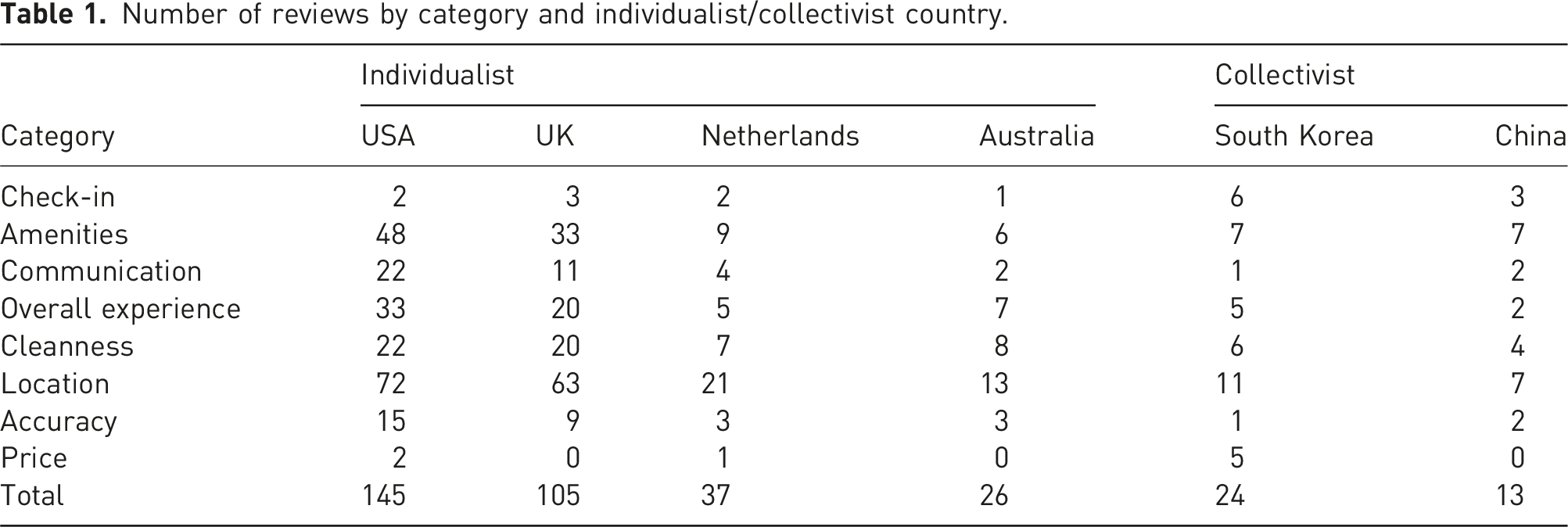
Individualist guests mention specific details when writing their feedback on the accommodation, qualifying the attributes of their experience and mentioning the unique qualities of the place. This pattern, which is followed by guests of the same origin, promotes precisely their independent view regarding previous visitors, providing a clear and descriptive analysis of their stay. In line with previous literature (Messner, 2020), these reviews are long, expressing their own opinion and emphasize the positive attributes via detailed examples regarding the accommodation. Individualists express their opinions and recommendations, particularly tourists from US, who use the information they provide as feedback to build e-WOM. With regard to the analysis of amenities, this category is promptly mentioned in detail by these guests, such as dwelling details of decoration, type of housing, existence/inexistence of specific accessibility parameters, comfort, light and space suitability, and always details regarding the internal and unique attributes of the accommodation. US Tourists tend to show their friendly posture in their comments, describing the accommodation regarding its internal attributes, as well as service flexibility.
The analysis of reviews does not evidence specific differences between users from individualistic cultures versus guests of collectivist cultures. Both mention the same aspects and prioritize relative feedback on Location and Amenities, and both share similar aspects regarding these two aspects of classification, such as view, condition of amenities and accessibility. However, while individualists tend to detail their experience, write long reviews and express their opinions, as stated in previous research (Messner, 2020), collectivists do not dwell on the description of the accommodation and the experience itself.
Masculinity and femininity culture in airbnb reviews
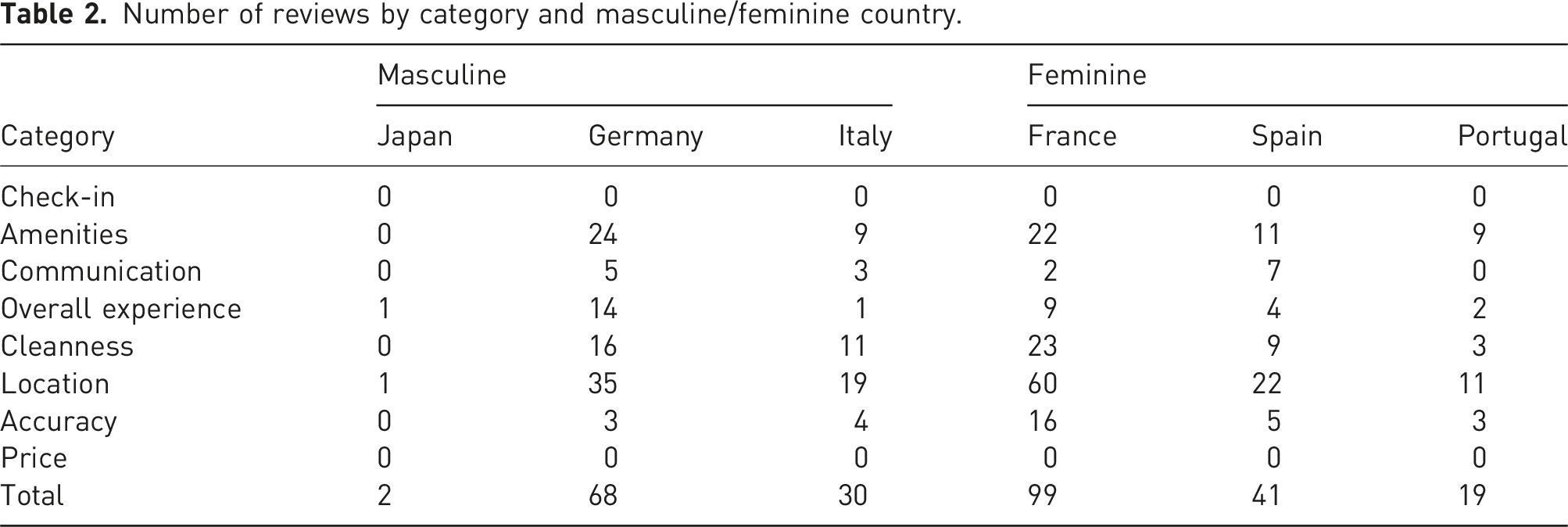
Considering the list of countries that correspond to masculinity and femininity cultures defined by Hofstede (2001), Japan, Germany and Italy represent countries with a high level of masculinity, with France, Spain and Portugal countries having moderately low masculinity.
Starting the analysis by countries with high masculinity, Japan is representative of the highest ranking in this indexed aspect, and there are only two reviews from this country. Countries with high masculinity prioritize location and amenities and these guests do not express their opinion regarding other aspects of the accommodation, besides cleanness.
Guests from both cultures evidence a growing concern with the material details of both the location and the facilities. The writing is presented in an assertive manner, and the details relating to the two classifications are similar to those presented by other countries. The lack of concern that differentiated this dimension is not clear in the analyzed data.
We would expect that online reviews from feminine countries were more concerned with the quality of life and care (Crotts and Erdmann, 2000). However, the content of reviews from those countries is similar to the countries with high masculinity. The similarities stem not only from the way the reviews are written, but also in reference to the various items of the Airbnb rating, such as location price, characteristics of the facilities, space cleanness and the reference to how everything influences the experience. The only highlight is verified in the case of guests from France, whose reviews share same characteristics of writing, but include a parameter that is not mentioned by other countries, which is reliability, an element that is fundamental in the business advertisements on the Airbnb, due to the level of confidence it conveys to consumers.
Number of reviews by category and masculine/feminine country.
Cultural differences in the process of value co-creation on airbnb
Mentions to host by country.
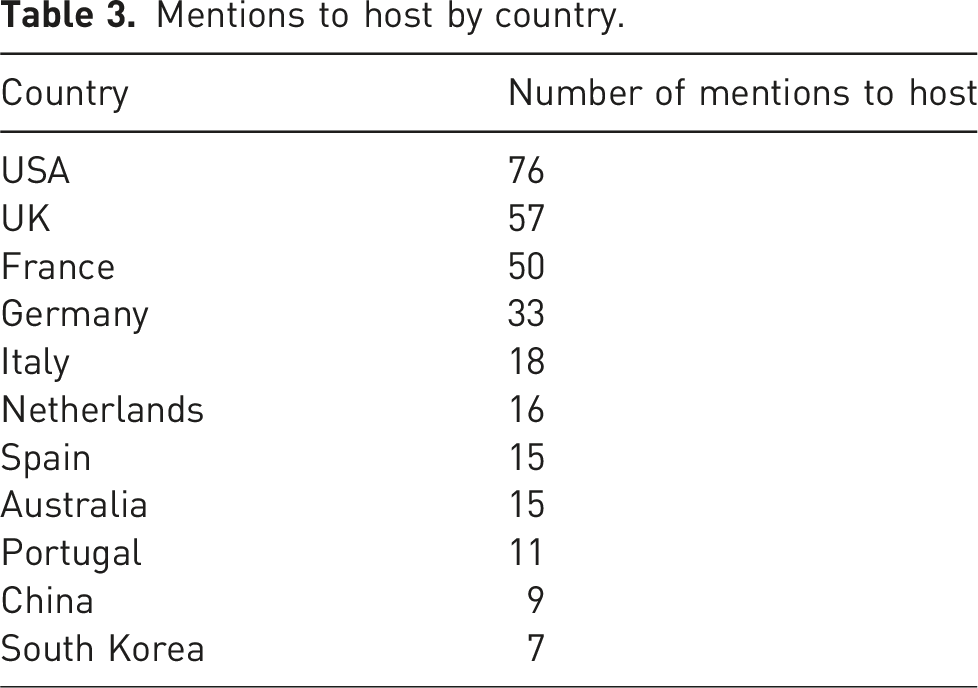
In most reviews there is mention to the host as a relevant part of the experience on Airbnb, some are described succinctly, as a token of appreciation, but others describe in detail, including their reception. This research shows that there is homogeneity with regard to this aspect. The contribution made by guests after their stay seeks to involve future customers and participation in the business.
Users from countries with a Collectivist culture consider the reception of the host as a fundamental aspect in this field of business, whereas users from countries that represent an Individualist culture make a detailed analysis in their assessment of the host, describing the reception in particular, ease of interaction, the attention from the host, as well as the information, recommendations and the speed with which the communication is made. Previous research had already found a difference in Chinese and English-speaking online reviews regarding the host-guest relationship (Zhang et al., 2022), but both cultures considering the importance of such relationship. The data from the countries representing the two poles of high and low masculinity do not show differences in what regards the importance of the hosts.
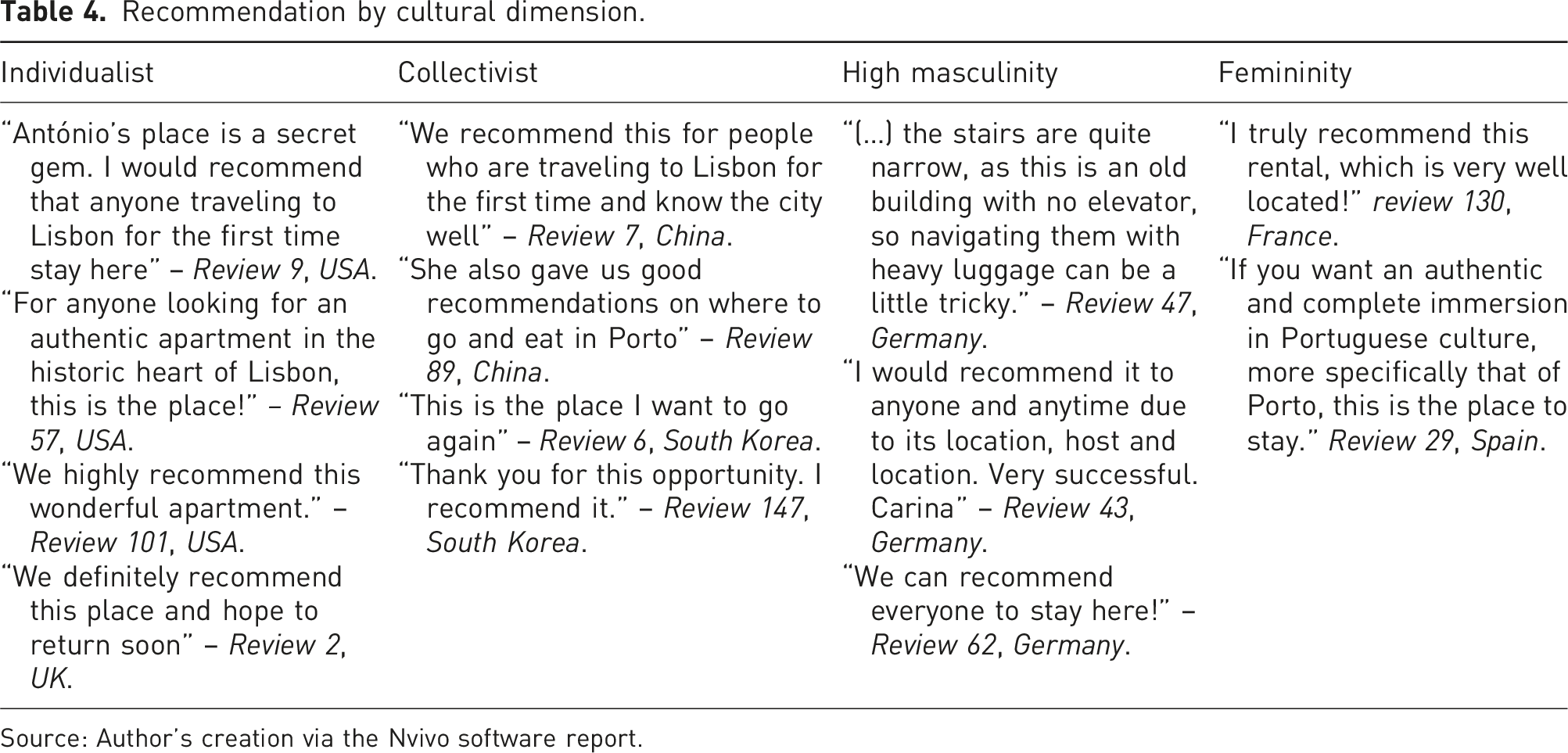
Recommendation by cultural dimension.
Source: Author’s creation via the Nvivo software report.
Reviewers’ recommendations express a desire to return and a personal evaluation. Personal experience is therefore highlighted, and for all the cultural dimensions under analysis there is a similarity in what is described for future guests. Nevertheless, an important to note is negative reviews, since they can influence the decision of consumers (Sparks and Browning, 2010). From the 775 reviews regarding the two Airbnb accommodations in Portugal used as case studies, there are 31 negative reviews. For countries with collectivist characteristics, group values override individual values; therefore there is a propensity to express emotions of compassion and abstain from writing extremely negative reviews (Wang et al., 2019). Although a previous study showed that collectivists shared more negative experiences in online reviews of P2P accommodations (Zhang et al., 2022), it is verified in this study that individualistic cultures tend to negatively mention specific aspects regarding amenities, cleanliness and location, whereas guests from collectivist cultures are more concerned with ensuring the validity of their stay, writing in a friendly and cordial way and abstaining from long descriptions. This is the only aspect showing some cultural differences.
Negative reviews by cultural dimension.
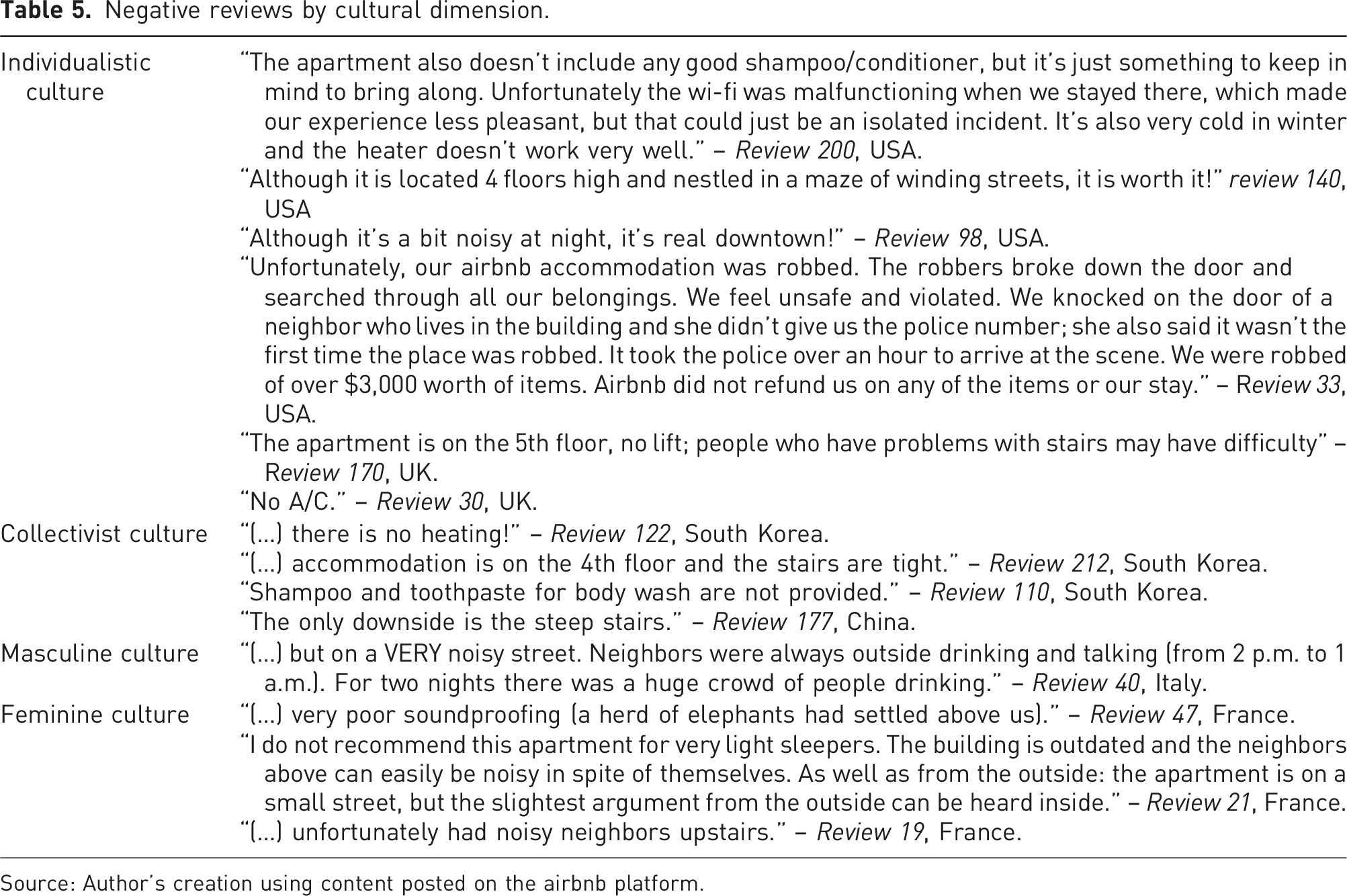
Source: Author’s creation using content posted on the airbnb platform.
The panorama described above shows that cultural dimensions are not evidenced in online reviews of P2P accommodation from the point of view of the guests. The personal experience is highlighted, with each reviewer interpreting the factors they consider most relevant in a stay, adopting a similar position regarding their description for future guests. The authors did not find discrepant differences between reviews from users originated in individualistic versus collectivist cultures, or masculinity versus feminine cultures, although it was expected to see individualists and masculine countries being more expressive in their opinions and criticisms, while collectivists and feminine cultures provide less content are being more friendly in their reviews (Laroche et al., 2005). In fact, through an exploratory analysis, this study suggests that customers of Airbnb write feedback in a similar way regarding their own culture. The results follow the idea that other contextual factors beyond cultural differences may explain differences in online reviews from P2P accommodation (Zhang et al., 2022).
Conclusions
In order to observe the cultural differences on Airbnb, our analysis focused on the guest’s reviews about their stay and the role of host recommendation. The paper suggests that the writing of reviews on Airbnb does not differ regarding the dimensions of individualism versus collectivism or masculinity versus femininity. Throughout an exploratory analysis, this study suggests that cultural values are not reflected in the way online reviews are written on Airbnb and that value co-creation is made in a standardized manner by guests. This is a surprising result that contradicts all the previous research expressed in the literature on cultural differences in online reviews, both in hotel rating platforms (e.g. TripAdvisor) and e-commerce B2C websites (e.g. Amazon). This study shows a different phenomenon in the context of the P2P accommodation platforms, particularly Airbnb. These results are in line with the previous study on cross-cultural analysis of online reviews in P2P accommodation (Zhang et al., 2022), that argued thar other factors beyond cultural differences may explain differences in online reviews, and supported that Hofstedes’ Cultural Dimension Theory may not be relevant in this case.
At the same time, our conclusions contribute to the reflection on the concept of cosmopolitan tourists. We already knew that cosmopolitan tourists seek to learn about local cultures (Paulauskaite et al., 2017; Tran, 2020), and our study suggests that their cosmopolitan mindset and lesser cultural resistance (Veréb et al., 2020, 2022) may explain the absence of cultural differences in the analyzed online reviews regarding P2P accommodation. These unexpected results may suggest that Airbnb achieves homogeneous standards of reviews, by preventing the culture bias in their business model.
Limitations and future research
This paper focuses on the cultural dimensions of Individualism versus Collectivism and Masculinity versus Femininity. Other Hofstede’s cultural dimensions - power distance, uncertainty avoidance, long/short-term orientation and indulgence versus restrained culture -should be further deepened in future research focused on P2P accommodation platforms.
The fact that this study considers only one P2P platform (Airbnb), despite its market relevance, may influence the results. The fact that this platform has closed categories to review may hinder open-ended answers that might reflect cultural values. Online platforms of P2P accommodation may opt for close- or open-ended questions for the evaluation of guests’ experience. The close-ended questions may look for a universal coverage, without allowing guests to write about what they want, but only about a particular category of their experience. The open-ended questions allow guests to evaluate some aspects of their experience that are not specifically questioned but that may be of importance for evaluation. This is a limitation and future research may focus on platforms with more open-ended questions or on different P2P accommodation platforms for comparison.
Our sample refers to an exploratory study and its dimension limits the generalization of the research conclusions. The period of analysis of the reviews – from 2013 to 2020 is substantiallywide, with Airbnb having gone through a major evolution from 2015 to 2020. Also, the two analyzed accommodations are located in urban setting and different results might be found by considered also rural accommodation. The analyzed data showed homogeneity of results in the two selected accommodations, not allowing for comparisons. A future study focused on a higher number of accommodations and featuring a higher diversity of culture is suggested.
Finally, considering that individualistic and masculine cultures are more likely to write reviews, our research design based on content analysis of online reviews is possibly biased. Future studies may encompass wider culture diversity.
Footnotes
Declaration of conflicting interests
The author(s) declared no potential conflicts of interest with respect to the research, authorship, and/or publication of this article.
Funding
The author(s) disclosed receipt of the following financial support for the research, authorship, and/or publication of this article: This work is financed by national funds through FCT - Foundation for Science and Technology, I.P., within the scope of the project «UIDB/04647/2020» of CICS.NOVA – Interdisciplinary Centre of Social Sciences of Universidade Nova de Lisboa.
