




Abstract
Hostels are an important part of the tourism industry but despite this, many of the metrics used to measure conventional hotels do not apply to the hostel sector. Therefore, this study developed a new methodology called HOSTELQUALITY for the classification of hostels. The method was applied in 10 establishments located in 3 tourist cities in Brazil. The method includes 29 questions in 10 dimensions: environment, leadership, security, cleanliness, location, social atmosphere, equipment, staff, price, and customers. It provides a five-level classification: Deficient, Weak, Average, Good, and Excellent. In addition, it provides graphical output. The results showed that half of the hostels received a good rating. The findings indicate that no establishment achieved a degree of excellence and demonstrated the new methodology’s applicability, providing a consistent and easy-to-interpret classification. This new methodology can be used on specialized websites, by institutions, and by governments to provide supporting information.
Introduction
The hotel industry depends on guest experiences. Customer satisfaction is the most decisive measure of hotel service quality (Vavra, 1997). Guests evaluate the quality of a hotel’s facilities by analyzing tangible and intangible attributes (Berezina et al., 2015; Dong et al., 2014; Wilkins et al., 2007). Among the intangible determinants, factors related to the behavior, attention, and availability of hotel staff are among the most important (Berezina et al., 2015). Regarding physical attributes, cleanliness and comfort help to achieve customer satisfaction (Chaves et al., 2012; Li et al., 2013). However, customer perceptions and expectations differ according to the hotel type (Xu and Li, 2016). This is because different hotel segments focus on different products and services (Tanford et al., 2012). Therefore, market segmentation in terms of hosting is considered a competitive strategy in this business.
According to Brochado, Rita, and Gameiro (2015), “hostels are formed in the popular backpacker market and embody a hybrid product that combines accommodation services with an informal and friendly atmosphere.” These characteristics make the niche hostel market attractive to new investors and valuable for the development of tourism.
For hotels, there are traditionally quality assessment tools that can provide quick information for future guests (Wu and Ko, 2013). In the case of hostels, several studies have explored the assessment of hostels (Valiyappurakkal, 2021; Nieves and Quintana, 2018; Valenca, 2020). Some studies have identified the most important attributes of hospitality services that affect consumer decision making. Concerning the specifics of the hostel business, several studies have been carried out to assess the quality of the services offered by hostels to their guests. For example, Nash et al. (2006) presented the results of research on hostels in Scotland, Hecht and Martin (2006) did the same for hostels in Canada, Chitty et al. (2007) for hostels in Australia, Musa and Thirumoorthi (2001) for hostels in Malaysia, and Brochado et al. (2015) for hostels in Portugal. Owing to the peculiar characteristics of hostels, many of these tools do not cover the specific characteristics of that segment.
In this context, the article’s objective is to present a method developed specifically for hostel evaluation named HOSTELQUALITY. The design of HOSTELQUALITY started with a Systematic Literature Review that covered the main quality criteria for hostels. Then constructs were generated, called dimensions, aggregating a set of evaluation criteria. This method offers three outputs: a quality index, a gap index, and a graphical presentation through a radar. The methodology was applied to a tourist region in Brazil, allowing the evaluation of the results of a real application.
This paper is organized into four sections. The theoretical framework is presented first, addressing the topics of service quality and customer satisfaction in the context of hostels. The second section presents the methods used and the factors for determining the choice of hostels, considering geographical limitations, for the application and validation of the radar. Next, the results of applying the instrument in the field are presented. The main conclusions and implications of the study are presented in the final section.
Customer satisfaction in hotels and hostels
Recently, the description of the dimensions that promote customer satisfaction in the hotel industry has driven several varieties of research (Deng et al., 2013; Ren et al., 2016). These studies are justified because high customer satisfaction is associated with the value of services, and products are essential to maintain a competitive advantage (Kotler and Armstrong, 1998).
In many studies, customer satisfaction is related to consumer emotions (Damasio, 1994; Deng et al., 2013; Han and Back, 2007). Emotion can be defined as a momentary state of the body, unlike feeling, which refers to a mental state (Damasio, 1994). There are two types of consumer emotion, positive and negative (Han and Back, 2006), and these feelings influence customer satisfaction.
Emotion is a complex reaction of a person arising from appraisals of self-relevant interactions with the environment, which result in states of excitement, the direction of attention, facial expressions, action tendencies, and behavior (Jordan, Spencer and Prayag, 2019; Lazarus, 1991; Levine, 2010).
The consumer behavior in the tourism sector should focus more on the relationship between involvement and emotions across longitudinal perspectives (Santos et al., 2021). The recent tourism literature shows growing interest in the measurement of emotions; the empirical contributions analyzed focus on emotion as generic category, on specific categories or sets or on one specific emotion (Volo, 2021). The role of emotions in tourism design is often discussed to offer suggestions to tourism stakeholders to better design experiences that can elicit certain emotional responses (Kim and Fesenmaier, 2014; Volo 2021)
Some tools have been proposed to support the management of hotel establishments. The Innovation radar in hospitality (Valença, Sobral, De Andrade Lima, and Farias, 2020) evaluated the innovation in these establishments. Multicriteria support for the decision was also applied, using PROMETHEE GAIA to evaluate the five-star hotels of Mashhad (Ostovare and Shahraki, 2019). The Data Envelopment Analysis obtained the relative technological bias between a specific group and the entire industry in Taiwanese tourist hotels (Yu and Chen, 2020).
When specifically examining accommodation type, it can be seen that consumer emotions significantly influence guest satisfaction (Han and Back, 2007; Lam, Cheung and Lugosi, 2021; Sukhu, Choi, Bujisic, and Bilgihan, 2019). Such emotions, however, must be related to emotional responses to the experiences provoked by the use or consumption of the product (Havlena and Holbrook, 1986; Jiang, K., Luk, S.T. and Cardinali, 2018). The client’s experience can be defined as a combination of physical performance, stimulated senses, and emotions, measured intuitively in opposition to their expectations, in moments of contact with the organization (Shaw, 2005).
Experiences are individualized and internal, making their measurement and management extremely challenging for hotels (Knutson et al., 2009). The effects of perceived credibility of online reviews influences hotel booking intentions (Chakraborty, 2019). In general, positive consumer emotions positively affect customer satisfaction with hotels and generate the intention to revisit in the future. Simultaneously, negative emotions negatively affect guest satisfaction (Han and Back, 2007; Lee, Cai, DeFranco, and Lee, 2020)
Identifying the factors that cause guest satisfaction is essential for hotel managers (Alrawadieh and Law, 2019) and promotes several benefits like customer loyalty and high reputation (Fornell, 1992). The definition and conceptualization of customer satisfaction vary throughout the marketing literature. However, these definitions and conceptualizations agree that the concept of satisfaction implies the necessary presence of a goal that the consumer wants to achieve (Ali, Amin and Cobanoglu, 2015). Several dimensions are known to influence customer satisfaction, and the tourism literature has already explored them to understand tourists’ perceptions (Moro et al., 2019). For example, customers’ positive perceptions regarding accommodation are evaluated in the form of products, services, and activities to improve the quality of service, such as proper maintenance of the facilities, well-defined operational procedures, and amenities offered by the hotel (Lee, Cai, DeFranco, and Lee, 2020; Prasad et al., 2014).
The attributes that define customer satisfaction vary according to hotel type (El-Adly, 2018; Xu and Li, 2016). In generic hotels, four dimensions cover the client’s experience: benefit, incentive, convenience, and environment (Knutson et al., 2009). For international tourist hotels, comfortable rooms, fast check-ins and check-outs, and high-speed internet are some of the indicators of customer satisfaction (Deng et al., 2013; Keshavarz and Jamshidi, 2018). For budget hotels, basic elements contained in the accommodation are considered important, such as cleanliness, temperature, and other attributes of comfort. In addition, the implementation of each control point of the dimensions that generate customer satisfaction differs according to the level and segment of the establishment (Knutson et al., 2009; Rahimi and Kozak, 2017). Therefore, defining a type of hosting medium and knowing its specifics are extremely important in the hotel sector.
According to Oliveira and Gameiro (2013), there are differences between traditional hotels and hostels. In this sense, in addition to their characteristic central services, different types of accommodation have different products. Therefore, clients evaluate accommodation differently and have different expectations, perceptions, and preferences according to the type of establishment (Beerli-Palacio, Martin-Santana, and Román-Montoya, 2020; Xu and Li, 2016).
The characterization of hostels is directly related to the profile of the guests. Backpackers are mostly young tourists who are aware of their financial resources and tend to stay longer at a destination (Pearce, 1990; Refaeli and Itzhaky, 2021). This segment of guests also presents advantages to the tourism sector as they typically travel through the year and across the destination country, use public transportation, and purchase from local businesses (Adam, Agyeiwaah, and Dayour, 2021).
Hostels emerged to serve specific segments of backpackers. Economical accommodation is their main attraction (Nash et al., 2006). Some factors distinguish them from traditional hotels, such as the provision of shared rooms and bathrooms and more informal communal environments that provide a greater degree of interaction between guests (Oliveira and Gameiro, 2013).
The hostel segment is growing, prompting several studies that seek to understand the main needs of hostel guests (Hecht and Martin, 2006; Nash et al., 2006; Oliveira and Gameiro, 2013; Adam, Agyeiwaah, and Dayour, 2021; Chakraborty, 2019; (Lockwood and Pyun, 2019; Rahimi and Kozak, 2017). Backpackers are different from traditional tourists (Møller Jensen and Hjalager, 2019). They cannot be considered a homogeneous group as they present different needs according to their age, gender, and nationality (Brochado and Rita, 2018; Hecht and Martin, 2006; Oliveira and Gameiro, 2013).
Regarding age, older backpackers give more priority to aspects such as privacy, security, and comfort (Adam, Agyeiwaah, and Dayour, 2021; Hecht and Martin, 2006; Oliveira and Gameiro, 2013). They also have a larger budget and do not object to paying a little extra for comfort and privacy (Hecht and Martin, 2006). On the other hand, young tourists place more value on social interaction with other visitors than older backpackers, mainly because hostels tend to be occupied by younger people (Hecht and Martin, 2006; Oliveira and Gameiro, 2013; Refaeli and Itzhaky, 2021).
Concerning gender differences, female backpackers appreciate cleanliness, amenities, safety, and staff quality more than male backpackers do (Oliveira and Gameiro, 2013). Similarly, Hecht and Martin (2006) found that safety was considered essential by female backpackers. However, men are more interested in meeting new people and making friends and do not usually book rooms as far in advance as women (Oliveira and Gameiro, 2013).
The intangible components of security and empathy are among the most significant dimensions that hostel guests consider regarding the quality of service. Among the tangible components, the facilities/equipment, a central location, a warm/friendly atmosphere, cleanliness, and feel-at-home factors are essential to guest satisfaction. When considering staff empathy, aspects such as courtesy, willingness to help, and individualized attention were the most reported by backpackers (Musa and Thirumoorthi, 2011).
Hostel managers must understand the factors that affect customer experience and adapt their establishments accordingly. In addition, the choice of an easy-to-understand methodology and its application to summarizing these attributes are other determining factors that are important for the business.
Method
The Dimensions of HOSTELQUALITY.
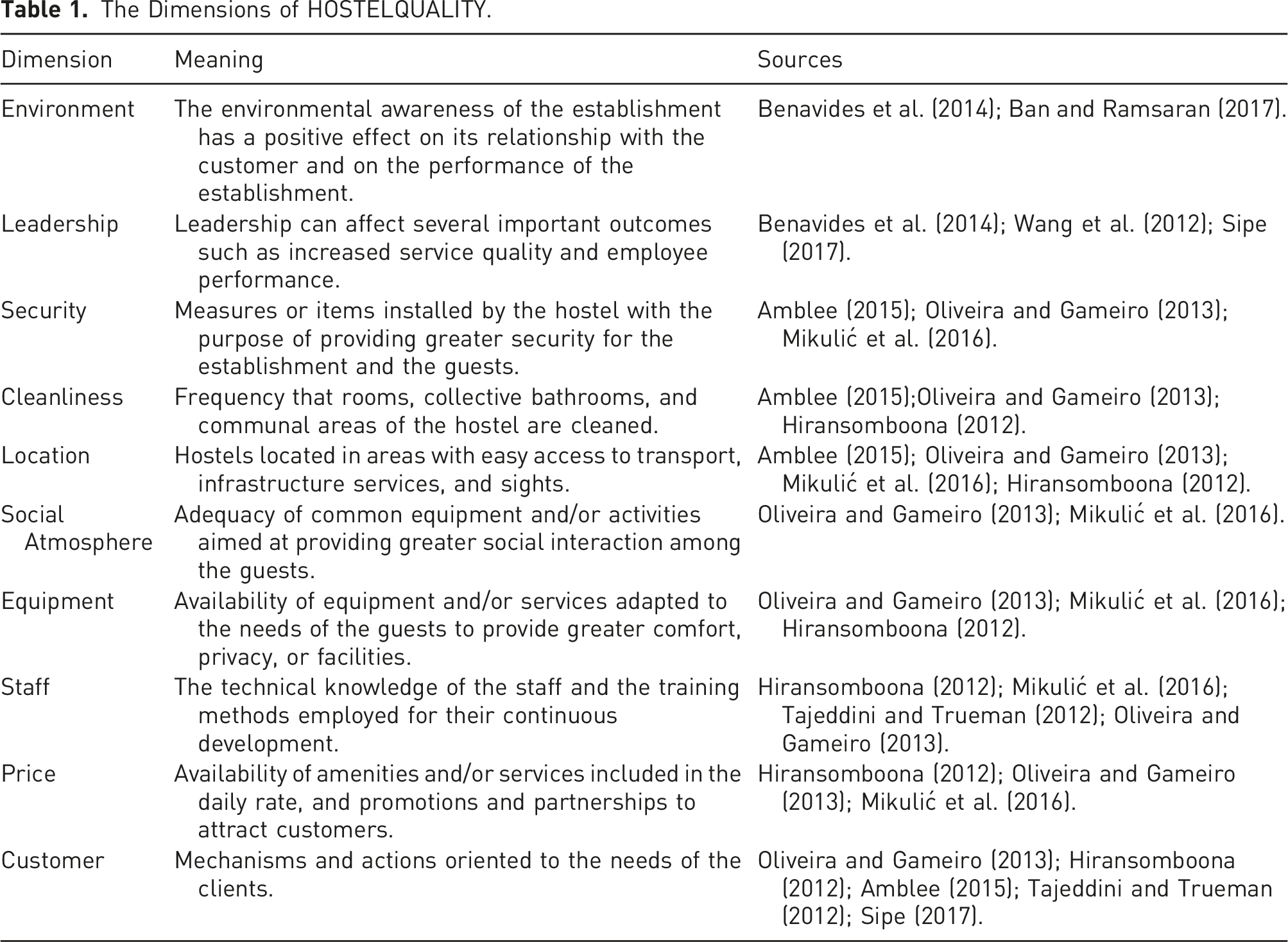
The environment dimension characterizes the environmental awareness of the hostel and the benefits these actions can bring to guest satisfaction. Actions such as reducing water consumption by implementing strategies to reuse or store this resource are an example of environmentally friendly actions. Other examples include actions that contribute to avoiding or reducing direct impacts on the environment, such as initiatives to reduce waste, effluents, or emissions (Benavides et al., 2014).
The leadership dimension represents one of the seven pillars of total quality management and positively contributes to a hostel’s outcomes mainly in terms of its marketing orientation and helping to build a better relationship with the customers (Wang et al., 2012).
The frequency and involvement of directors in training programs on quality and excellence, or groups or meetings and business associations, demonstrate their concern regarding the continuous improvement of the establishment. Other leadership actions include employee recognition, such as rewards, commissions, or employee of the month programs (Benavides et al., 2014; Wang et al., 2012).
The security dimension is a key factor that influences hostel guests at the time of purchase decision and accommodation choice (Amblee, 2015; Mikulić et al., 2016; Oliveira and Gameiro, 2013). Amenities that a hostel administration can offer include 24-hour reception, floors with exclusively female rooms, separate female showers, or even extra locks on windows and doors (Oliveira and Gameiro, 2013).
Cleanliness is an important physical attribute of hostels (Hiransomboona, 2012). When well executed, this implies organization, control, and consequent security on the part of the hostel’s administration (Amblee, 2015). Moreover, this dimension is frequently evaluated by guests on reservation sites specific to the hostel sector. Cleanliness represents a physical/tangible aspect and is considered an influential attribute for guests (Li et al., 2013; Musa and Thirumoorthi, 2011; Oliveira and Gameiro, 2013).
The location dimension is a key factor for backpacker satisfaction during their stay in hostels (Oliveira and Gameiro, 2013). Choosing a hostel with the right location can save backpackers time and energy (Hiransomboona, 2012). Offers of nearby excursions, evening entertainment, shopping opportunities in the vicinity, and souvenir centers (handicrafts) are often cited as qualities of an attractive destination (Mikulić et al., 2016).
The social atmosphere dimension was included because backpackers like to get to know and interact with other people and socially open environments that foster these contacts should be encouraged. Activities that can be arranged to improve the social atmosphere of the hostel include walking tours, surf lessons, movie sessions, and cooking classes (Oliveira and Gameiro, 2013). The social atmosphere can also be characterized by cozy and familiar social environments; that is, by combining the physical environment and the presence of guests (Musa and Thirumoorthi, 2011).
The equipment dimension can influence choices by backpackers. Usually, they look for fully equipped and furnished accommodation. Laundry services, available Wi-Fi internet, or computers are examples of supplementary services that are popular among backpackers (Hiransomboona, 2012). Bar service and the quality of the internet connection also reflect important supplementary services for hostel guests (Oliveira and Gameiro, 2013).
The quality of service personnel is an important attribute of the purchase behavior of backpackers. The quality of the service is related to the friendliness of the employees and mastery of the local language and English. Moreover, backpackers expect staff to be able to advise them on tourist activities (Hiransomboona, 2012).
Value for money can determine the attractiveness of a tourist destination to hostel guests (Mikulić et al., 2016). Price-related factors identified by backpackers include the offer of multiple room rate options, reasonable pricing concerning the service provided, appropriate pricing that fits one’s travel budget, and flexibility in tariffs (Hiransomboona, 2012).
The attribute knowledge and purchase behavior of backpackers can be an opportunity to improve the quality of services in an establishment (Amblee, 2015; Hiransomboona, 2012; Oliveira and Gameiro, 2013). Thus, in the client dimension, requests for guests to report their experiences on websites (for example, HostelWorld) at check-out is a strategy for monitoring feedback and driving continuous improvement. In this way, corrective actions can be taken promptly (Oliveira and Gameiro, 2013).
Dimensions and questions of HOSTELQUALITY.
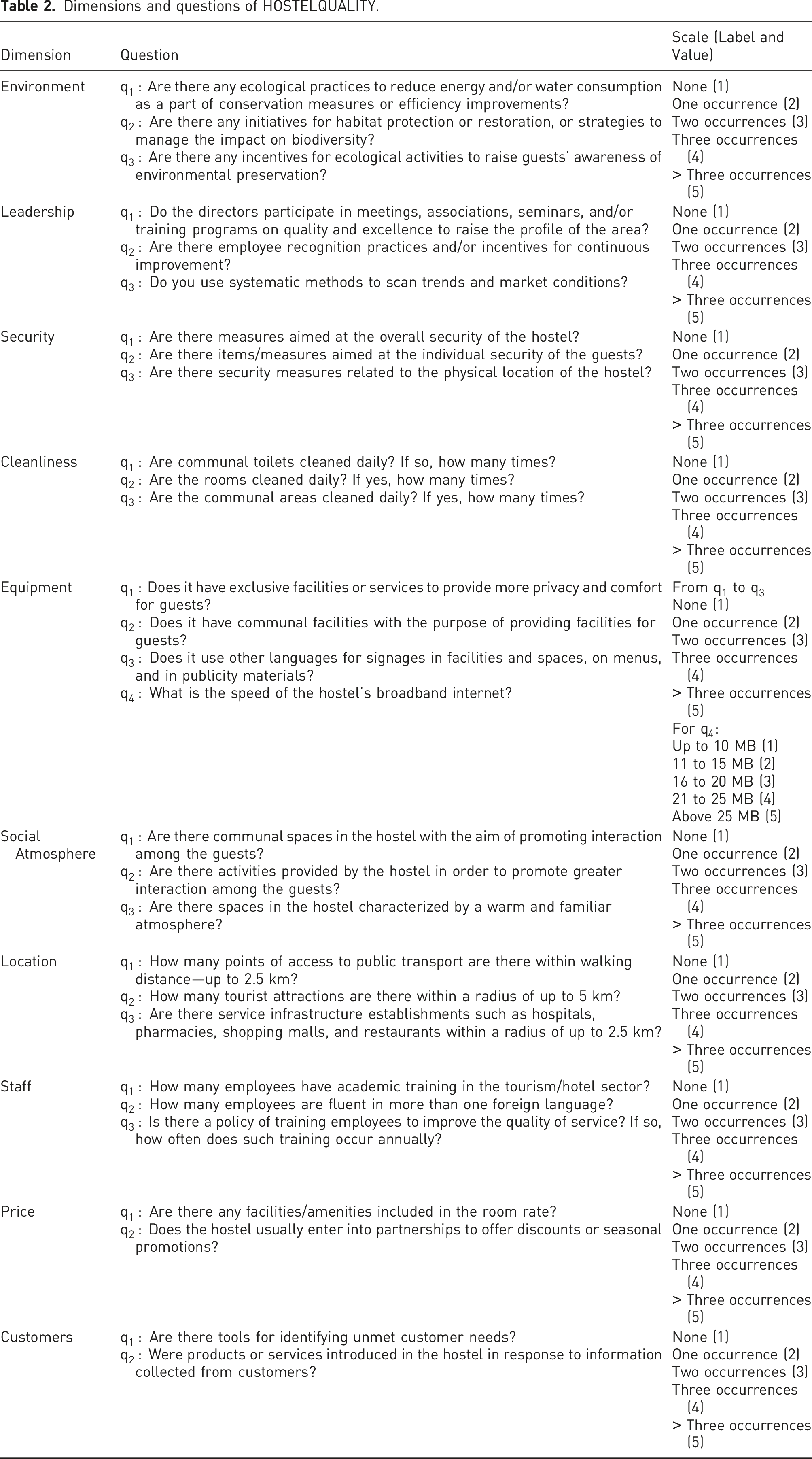
Each of these questions was evaluated on a scale of 1 to 5, where 1 represents the least desired result and 5 represents the greatest expected value for the hostel. The data aggregation procedure took place in two steps. The first was done by intra-dimensional aggregation, generating a score for each of the 10 dimensions. Then, the inter-dimensional step provided an overall hostel score.
The intra-dimensional aggregation was performed with the additive model, in which the decision-maker defines the values of the weights.
The scores of each of the dimensions 
Levels of quality.
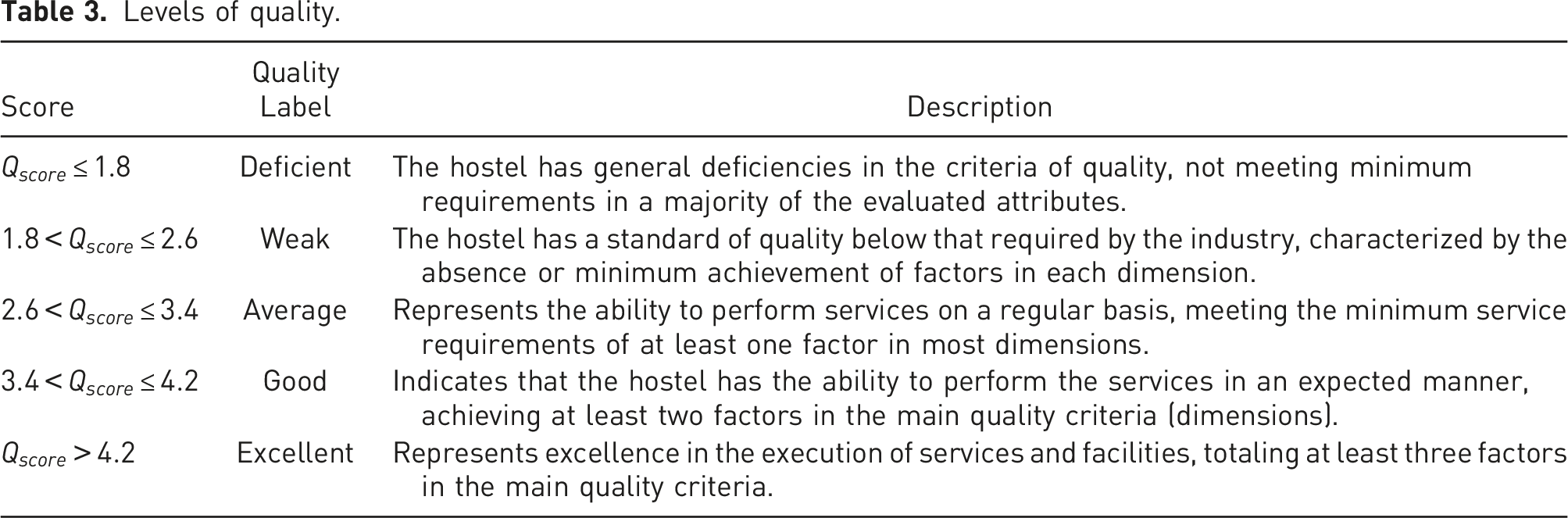
The first two quality levels, deficient and weak, demonstrate weakness in most of the required attributes. The average level indicates the ability to perform services regularly, achieving at least one occurrence of most issues. To achieve good quality, a hostel must display at least two occurrences on the scale, indicating that the services provided met the guests’ expectations. Excellent is the maximum level in the services, with an average of at least three occurrences in each factor of HOSTELQUALITY.
This index named gap quality score (
Results
In order to evaluate the performance of HOSTELQUALITY, an application was provided covering establishments in Recife, Olinda, and Ipojuca. These cities are chosen because they are tourist hotspots in Brazil (SETUR, 2008).
All the hostels were associated with the HostelWorld group. This platform covers more than 35,000 hotels and hostels in 170 countries (HSW, 2017). The platform features more than nine million comments from users who have stayed in their registered accommodation. These online reservation sites are considered influential in terms of guests’ decision-making processes and demands, as they publicly share client reviews (Kim et al., 2009; Torres et al., 2014).
There are 14 hostels in Recife, Olinda, and Ipojuca associated with the HostelWorld Group, and ten of the 14 hostels agreed to participate. This research used a non-probabilistic sample due to accessibility criteria for the interviewees (Batista and Campos, 2015).
This numerical application aims to present the operation of HOSTELQUALITY and demonstrate its characteristics. As the sampling process was non-probabilistic, such results cannot be generalized to the entire universe.
Interviews were conducted with the managers or owners of the 10 hostels using the structured questionnaire of HOSTELQUALITY. The respondents were expected to know both the infrastructure resources (physical attributes) and intangible attributes, including the services provided, as these aspects are determinants of guest satisfaction (Wilkins et al., 2007; Dong et al., 2014).
Hostels’ performance.
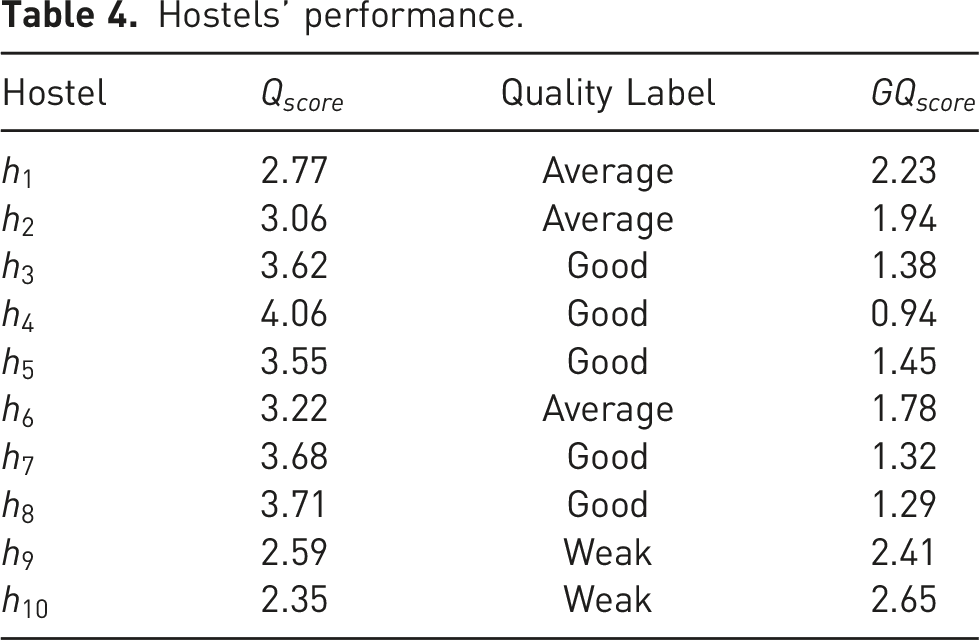
Two hostels (
Staff and leadership both presented similar scores in the weak category. The staff were primarily volunteers at Hostels with Weak, Average, Good, and Global Radars.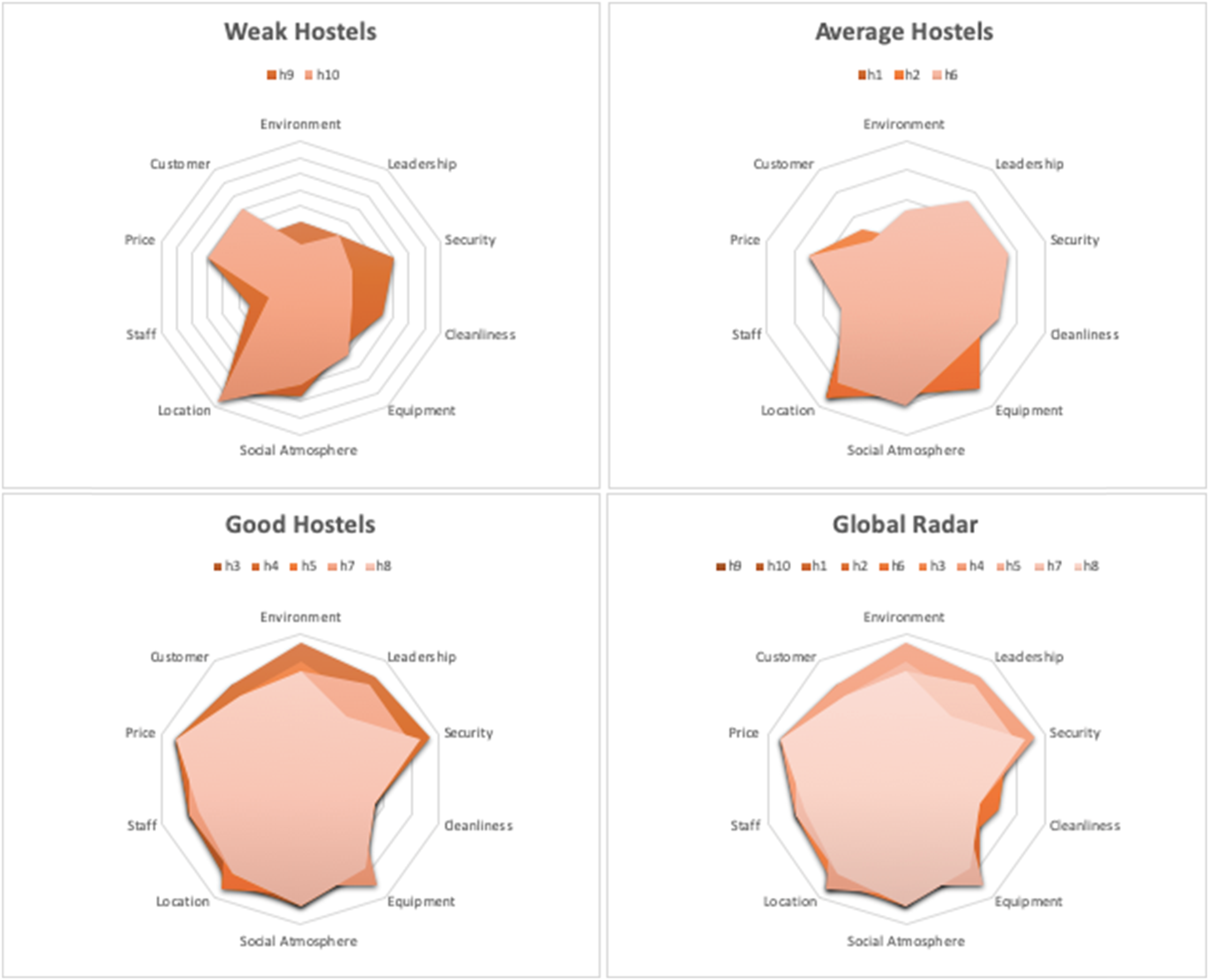
Three hostels (
The three hostels obtained similar negative results in the staff and environmental dimensions. In the staff dimension, the three establishments did not have employees with hospitality and tourism-related qualifications; hostels
Approximately 50% of the hostels reached the good-quality category. Hostels in this class stood out in the dimensions of staff, safety, and the social atmosphere. In the staff aspect, unlike hostels in the other categories, there was an appreciation for tourism and hospitality professionals, as demonstrated by the fact that three of the hostels had at least two employees who had graduated in these areas. These hostels required English-speaking receptionists, and all hostels in this class had at least two professionals with this ability. These aspects follow Oliveira and Gameiro (2013), who pointed out that to reach a level of excellence, the staff must have a baccalaureate degree and the ability to speak several languages.
Hostels
The cleanliness dimension had lower average values than the others. This result was probably due to the cleaning schedule. The communal toilets were cleaned twice a day, while rooms and public spaces were cleaned only once per day. These frequencies can be considered low because they are spaces with a high turnover of people, and cleanliness also represents a powerful security factor for hostel guests (Amblee, 2015).
The establishments obtained low scores in the environmental dimension. However, hostel
Finally, it is important to note that
The Quality Radar of the 10 Hostels.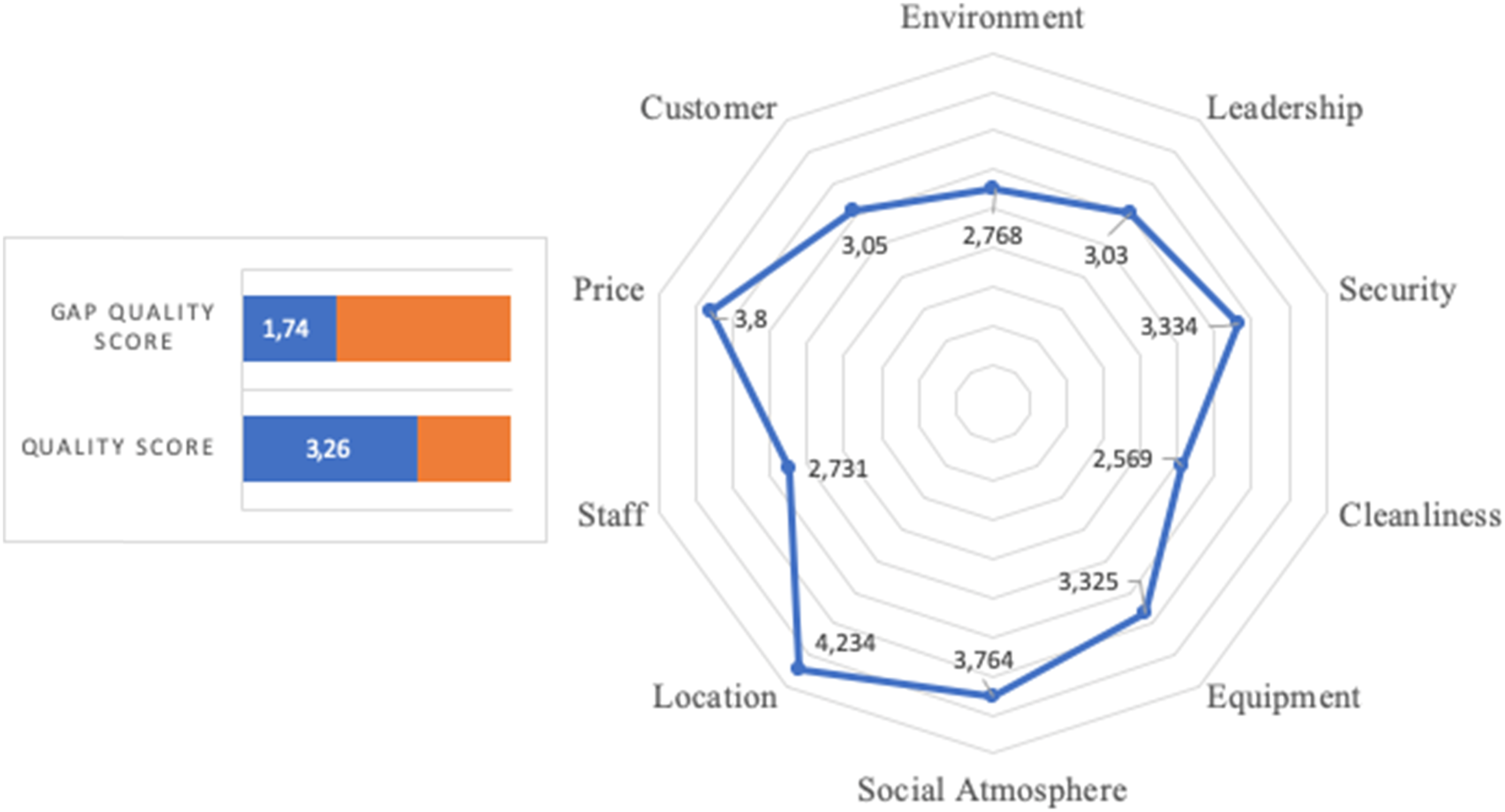
The individual
Conclusions
The present study aimed to create a method for evaluating the quality of hostel facilities. Based on a review of the literature on tourism, hospitality, and quality, a methodology called HOSTELQUALITY was developed.
The HOSTELQUALITY comprises 29 questions across ten dimensions, encompassing the main attributes considered essential by hostel guests. The quality score of the hostels and the gap quality score allow an assessment of the current situation of the hostel and how close it is to excellence. In addition, the method has a graphical output as a radar. This allows for a quick interpretation of the results. An additional conversion scale interprets the quality score in a five-level classification of hostels: deficient, weak, average, good, and excellent.
The method was applied in the real world to three of the most touristic cities in Brazil. It was possible to assess the performance of the method and compare its output with data collection. HOSTELQUALITY showed that some of these hostels were in the weak quality category and below some quality standards. The poor results in the staff and leadership dimensions were related to the absence of an employee training plan. This is a concern, as staff quality is an intangible aspect for guests. This result was also observed in the three hostels in the moderate-quality category.
Practical and theoretical implications
This research has applications in management, tourism, and hospitality. It has implications for academic and market environments. The results of this study contribute to academic research related to the use of qualitative methods to measure the quality of hostels. The investigation results provide data for strategic planning, especially in identifying the strengths and weaknesses of hosting institutions. The analysis categories allow us to verify where it is necessary to propose improvement actions and what to focus on as differentials to be explored in the institutions.
As for the marketing implications, the HOSTELQUALITY methodology can be used to classify hostels on hosting sites. In addition to being used as a guide for travelers, it can be consulted when choosing accommodation options. The system is suitable for analyzing hostel quality and providing quick information to guests. In addition, HOSTELQUALITY could serve as a guide for hostel managers to perform benchmarking regarding quality in similar establishments. It is worth mentioning that the radar results can provide information for hostel decision-makers, management groups, and government sectors. It can be used to compare quality improvements over time. Finally, the methodology can be a gateway to the development of new quality assessment methods for hostels.
Limitations
The model was designed using an additive model to promote compensation between the dimensions. In this sense, it is suggested that non-compensatory methods for the analysis of unbalanced dimensions be developed. Also, as it is a method developed for hostels, it cannot evaluate other forms of accommodation without adaptation. Another limitation is that the method considers a single decision-maker. There is the possibility of presenting respondent biases, as the questions can be answered based on the perceptions of the interviewee, from a single point of view.
Another research limitation refers to the sample size, 14 hostels in Recife, Olinda and Ipojuca. The results cannot be generalized, as they are not representative of the hostel population associated with the HostelWorld Group. The sample presented worked as a focus group to test the qualitative methods to measure the quality of hostels. As an intention for future research, applying a more significant sample is suggested.
Further research
Developing an index that measures the correlation between the ten dimensions is recommended in future research. This new indicator will allow a better understanding of the associations between the variables and dimensions of the method. Such an indicator could use the Spearman or Pearson Correlation Coefficient.
As a second recommendation for further research, the HOSTELQUALITY could incorporate additional empirical variables. The improvement will show how behavioral, cultural, and legal factors affect guests’ evaluations.
Finally, incorporating neural networks and artificial intelligence mechanisms into HOSTELQUALIT can support the decision maker in evaluating hostels. Such application will require deepening the questions of interaction and perception. However, nowadays, using the HOSTELQUALITY results in predictive tools such as Perceptron allows new horizons of evaluation of hostels.
ORCID iD
Marcos Felipe Falcao Sobral https://orcid.org/0000-0002-4768-2622
Footnotes
Declaration of Conflicting Interests
The author(s) declared no potential conflicts of interest with respect to the research, authorship, and/or publication of this article.
Funding
The author(s) disclosed receipt of the following financial support for the research, authorship, and/or publication of this article: This work was supported by the Conselho Nacional de Desenvolvimento CientÃ&z.hfl;Â-fico e TecnolÃ&z.hfl;Â3gico (001).