




Abstract
The sustainable development of “industry-ecology-well-being” is a strategic goal of rural revitalization. This study selects 10 typical tourist village communities in China as research sites. Based on the adaptability theory of social-economic-natural ecosystems, this study constructs a coupling model of the “ecological dependence-livelihood well-being” of farmers' in terms of adaptability and identifies the mechanism underlying farmers' adaptability to rural tourism disturbance in the context a microsituation by way of a multinominal logistics model. The results found that are as follows. (1) Rural tourism development enhances farmers’ livelihood adaptability, and “high ecological dependence-high livelihood well-being” has become the optimal response to tourism disturbance. (2) Changes in the human-land relationship constitute a fundamental factor in the adaptability responses of farmers to tourism disturbance, and government tourism support institutions are an important external driving force. This study provides useful decision-making support and policy suggestions for identifying the model of dynamic adaptation and impact mechanism of farmers in the context of tourism disturbance, thereby promoting the development of tourism, the consolidation and expansion of the key achievements of poverty alleviation and comprehensive rural revitalization.
Keywords
Introduction
Rural tourism is an important channel for poverty alleviation in China and a key aspect of promoting the realization of the grand strategy of rural revitalization. Rural tourism is thus a “people-enriching project” that expands farmers' employment and increases farmers' income, and it has become an important driving force for the economic and social transformation and development of rural tourism communities (Rosalina et al., 2021). However, as an external force that affect rural communities, tourism activities can also cause negative externalities such as changes in the human-land relationship, resource structure, and ecological environment of the community. In the process of rural tourism development, because externalities are internalized in terms of the behavioral practices of microparticipants, farmers are not only the main participants and an important stakeholder group but also the most basic unit of social production and decision-making regarding consumption (Guo et al., 2017). The livelihood adaptability behavior of farmers in rural tourism communities reflects the process, approach and path that allow microeconomic actors to use natural resources and ecosystem services (including supply, regulation and cultural services), which directly determines the sustainability of the relationship between ecological protection and economic development (He et al., 2014). Therefore, the significance of this research lies in the facts that it evaluates the effects of rural tourism development on poverty reduction and enrichment from the perspective of the adaptability of microfarmers, that is focuses on the sustainable and modern transformation of community ecosystems, and that is clarifies not only the impact of rural tourism on the livelihoods and well-being of farming farmers’ but also the model of ecological dependence coupling.
Therefore, this study focuses on the livelihood responses of microsubject farmers in rural tourism communities, and constructs an analytical framework for farmers' livelihood response choices to tourism disturbance based on sustainable livelihood theory. We use a multinominal logistics (MNL) model to identify the dynamic responses associated with the livelihood adaptation strategies and livelihood adaptation capacities of community farmers in tourist destinations based on the researcher’s survey and interview data draw from the case sites. This study explores the dynamic response mechanism associated with farmers' livelihood adaptability in the context of tourism disturbance empirically, and provides policy inspiration concerning the sustainable development of rural tourism. This study also provides path support and a methodological reference for clarifying the relationship between ecosystem services and livelihood well-being in rural tourism destinations in further detail.
Literature review and analytical framework
Literature review
The Department for International Development (DFID, 2000) proposed a sustainable livelihood framework that focuses on the ability of farmers to cope with stress (risk) and the process by which they do so in the context of an adaptive behavior-oriented approach to livelihood (Singh and Hiremath, 2010). Scholarly researches have mainly focused on the impacts of land change (Vista, 2012), climate impact (Gebrehiwot and Van Der Veen, 2013), resources and environment (Twyman, 2001), and livelihood trajectory (Soltani et al., 2012) on sustainable livelihoods, the measurement of farmers’ livelihood capital (He et al., 2014), and the choice of livelihood strategies (Nielsen et al., 2013). However, there remains a lack of sustainable research concerning the way in which tourism disrupts farmers' livelihoods. The literature has mainly focused on static analyses of various components of farmers' incomes, but has not evaluated farmers' income sources in a dynamic manner. To expand the literature pertaining to the impact of rural tourism on farmers' livelihoods, this study focuses on changes in the dynamic interaction between farmers' livelihood strategies and livelihood capital.
Adaptability is closely related to terms such as vulnerability and resilience. This notion is often used to refer to the ability of individuals, families, and communities to maintain or restore their original state in response to external disturbances (threats or opportunities) (Biggs, 2011). The system path method is used to analyze the evolutionary process involved in the interaction between internal connections and disturbances to the system (Ruiz, 2010). Extant studies have provided important theoretical and methodological references that allow us to perform an adaptability analysis of farmers in rural communities in terms of their responses to tourism disturbance. Most such research has focused on overall social adaptability to system fragility, and less attention has been given to the adaptability response behavior and the motivations of subjects who live in the social ecological systems (SES) (Larsen et al., 2011). Based on the interrelationship between tourism disturbance and changes in the human-land relationship, this study analyzes the dynamic changes in rural farmers' decision-making with respect to adaptive behavior and adaptive capacity at the microsubject level of rural communities and attempts to identify the dynamic adaptation model and the influencing mechanism by which rural farmers respond to tourism disturbance.
Research pertaining to tourism disturbance has reported many results. Most existing studies have explored the direction of the effect of rural tourism from a single perspective, such as those of the ecological environment, socioeconomics or regional scales, through the use of static environmental capacity tools (Korstanje, 2011; Liu and Lv, 2010; Strickland-Munro et al., 2010). The research focuses on the participation behavior exhibited by microsubject farmers and the decision-making and effects associated with community tourism participation (Bao, et al., 2006; Zheng and Zhong, 2004). However, there remains a lack of research investigating the ways in which farmers and their families adapt to tourism development and improve their livelihoods from the perspective of human-land interaction. Sustainable livelihood theory provides a new analytical idea relevant to the study of farmers' livelihood choices in cases of tourism disturbance. Therefore, the purpose of this paper is to investigate the dynamic changes in farmers' decision-making with regard to adaptive behavior and their adaptive capacity at the microsubject level of rural communities by clarifying the relationship between tourism disturbance and changes in the human-land relationship. This paper also aims at identifying the dynamic adaptation model and the adaptability of farmers in cases of tourism disturbance. This research expands the scientific development of sustainable livelihood adaptability theory and provides useful decision-making support and policy suggestions for ongoing processes of tourism development, the consolidation and expansion of the achievements of poverty alleviation and the comprehensive promotion of rural revitalization.
Analytical framework
Rural tourism development inevitably alters the relationship between human being and land and disturbs the function and structure of the rural community ecosystem and the livelihood and livelihood strategies employed by residents (Figure 1). Firstly, rural farmers employ a livelihood adaptation strategy in response to tourism disturbance. The development of tourism has altered the conditions and methods of traditional land and woodland utilization in rural communities. The natural ecological environment in rural areas has been improved, and farmers’ resilience and livelihood status have been enhanced (Hoque et al., 2017; Wu et al., 2017). Farmers can establish a diversified family income structure strategy (Jia et al., 2021; Ma et al. (2021). Second, the results of the livelihood adaptability response of rural farmers to tourism disturbance reflect the relationship between community ecosystem services (ES) and human welfare (HW) on a microscale. Scholars initially proposed the concept of ecosystem service dependency and constructed an ecosystem service dependency index (Larondellea and Haase, 2013; Yang et al., 2013). Therefore, the conceptual framework of rural farmers' livelihood adaptability to tourism disturbance is constructed (Figure 1). Conceptual model of the livelihood adaptability response of residents of rural tourism communities.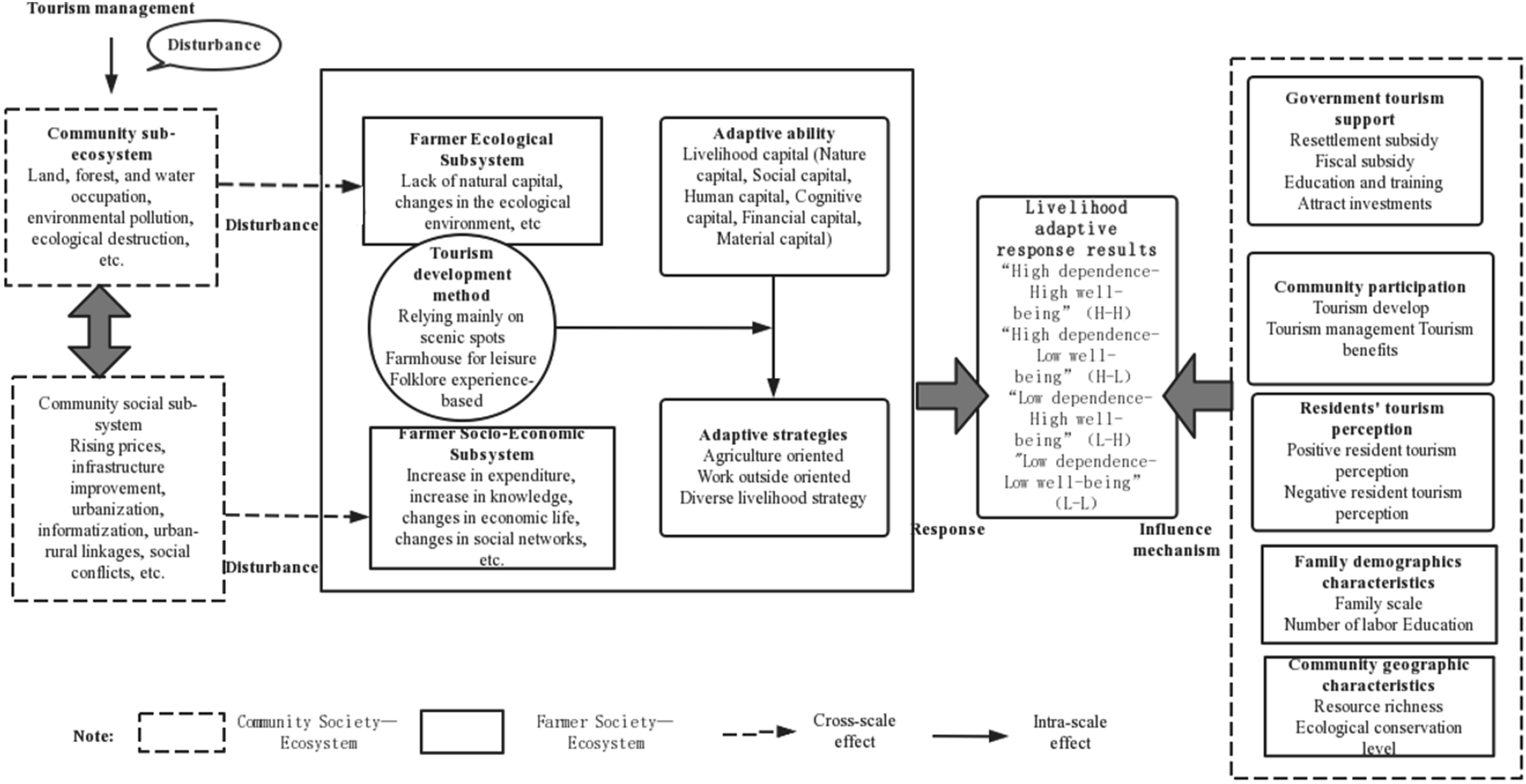
Methods
Data sources
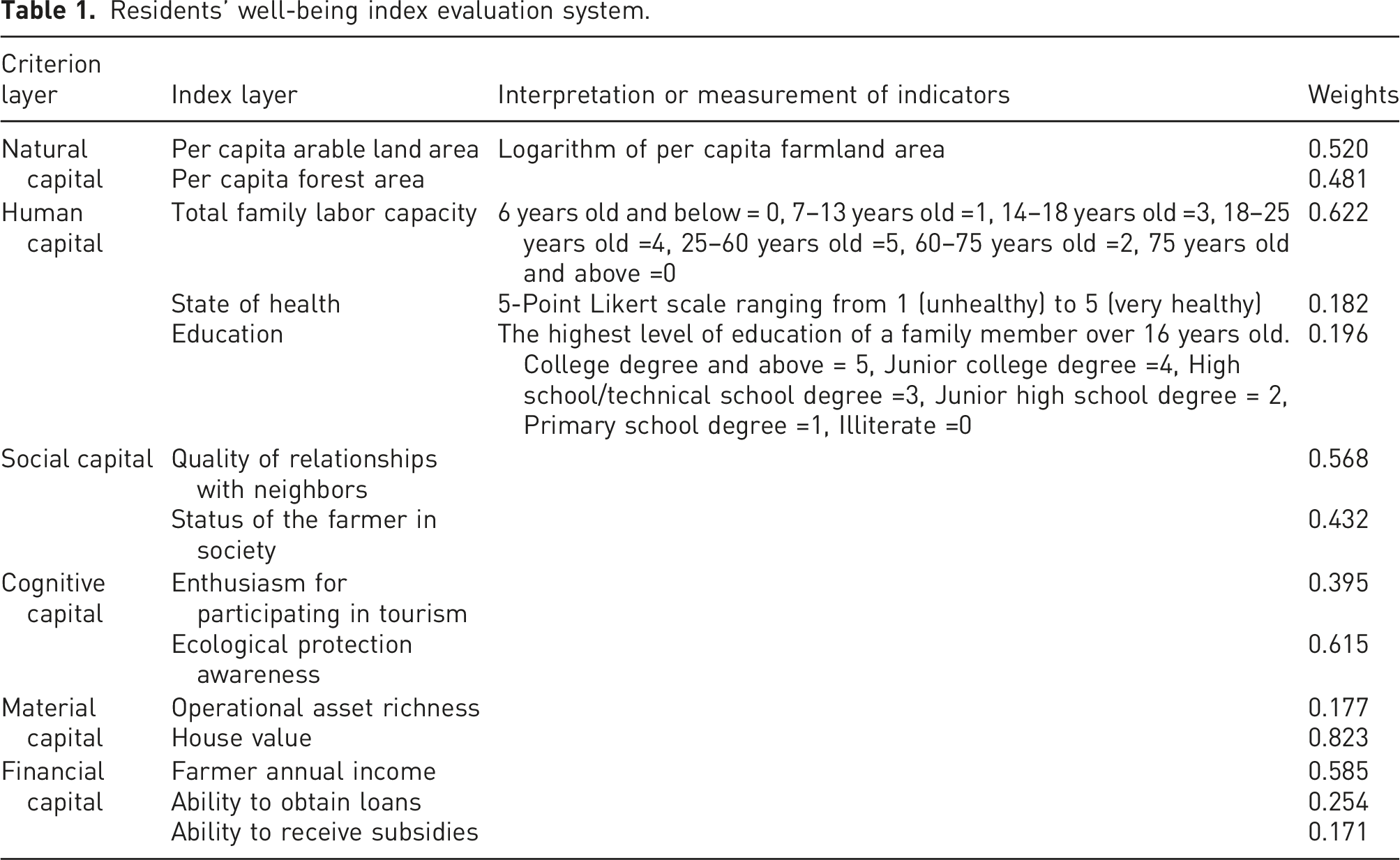
Residents’ well-being index evaluation system.
Data and indicators
Data standardization and weight determination
To prevent the occurrence of large errors resulting from a subjective determination of weights, we refer to the research by Cui et al. (2017), etc., and select the entropy method as an objective assignment method for calculating these weights (He et al., 2014). The specific calculation process is as follows:
Step 1: Construct the index evaluation matrix
Step 2: Standardize the evaluation matrix 
Then, for 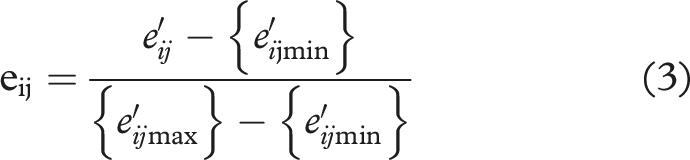
Step 3: Calculate the proportion of the evaluation of the ith farmer under the jth index by using the formula for
Step 4: Calculate the entropy value of the jth index according to the following formula for

Step 5: Calculate the entropy weight of the jth index in each dimension according to formula
Residents’ well-being (RWB) index
Residents’ well-being (RWB) has been described from different perspectives by scholars in the fields of psychology, sociology, and economics, and this term refers to a state that reflects residents’ happiness in life, material satisfaction, spiritual growth, and physical health (Li et al., 2017). Based on the five livelihood capitals included in the sustainable livelihood analysis framework established by the DFID, the livelihood characteristics of farmers in the China family panel studies (CFPS), and the research results obtained by He et al. (2019), and Zhao et al. (2016) concerning the quantification of indicators for rural farmers’ livelihood capital, this study constructed a farmer well-being evaluation index system that includes natural capital, human capital, social capital, cognitive capital, material capital and financial capital (Wang et al., 2017).
We employed the entropy method to obtain the weights of various indicators and subsequently calculated RWB based on the standardized values and weights for each indicator. The formula for calculating RWB is

Index of dependence on ecosystem services
The IDES is an indicator that measures the degree of protection of the community ecosystem. The IDES is equal to the ratio between the net income of residents derived from ES and their total income (Li et al., 2017). A high IDES value indicates that residents are highly dependent on the ecosystem (Zhang and Chen, 2021). The difference in the costs paid by community residents affects our ability to quantify the degree of ecosystem service dependence accurately. This study employs the IDES to reflect the degree to which community residents depend on ES, which can improve our ability to compare different farmers. ES includes supply services, regulation services and cultural services. The formula of the IDES is as follows

IDES represents the overall index of residents’ dependence on community ES, IDES i represents the subindicator of residents’ dependence on the ith ES, ENB i represents residents’ total net income from the ith ES, and SNB represents the income that residents receive from other economic activities.
In this study, a four-quadrant classification method was employed (Wang et al., 2017), featuring the RWB in the community as the ordinate and the community IDES as the abscissa; in addition, a coordinate quadrant chart was established to classify the patterns exhibited by the livelihood responses of community residents to rural tourism disturbance. To eliminate the influence of extreme values on these indicators, the median value was used as the boundary. The authors calculated the IDES and RWB of the overall effective sample and found that the median value of the IDES was 0.80 and that the median value of RWB was 4.61. The livelihood response models exhibited community residents can be divided into the following four models: model 1, “High dependence-High well-being” (H-H); model 2, “Low dependence-High well-being” (L-H); model 3, “Low dependence-Low well-being” (L-L); and model 4, “High dependence-Low well-being” (H-L). Figure 2 The livelihood adaptability response results of community residents to tourism disturbance.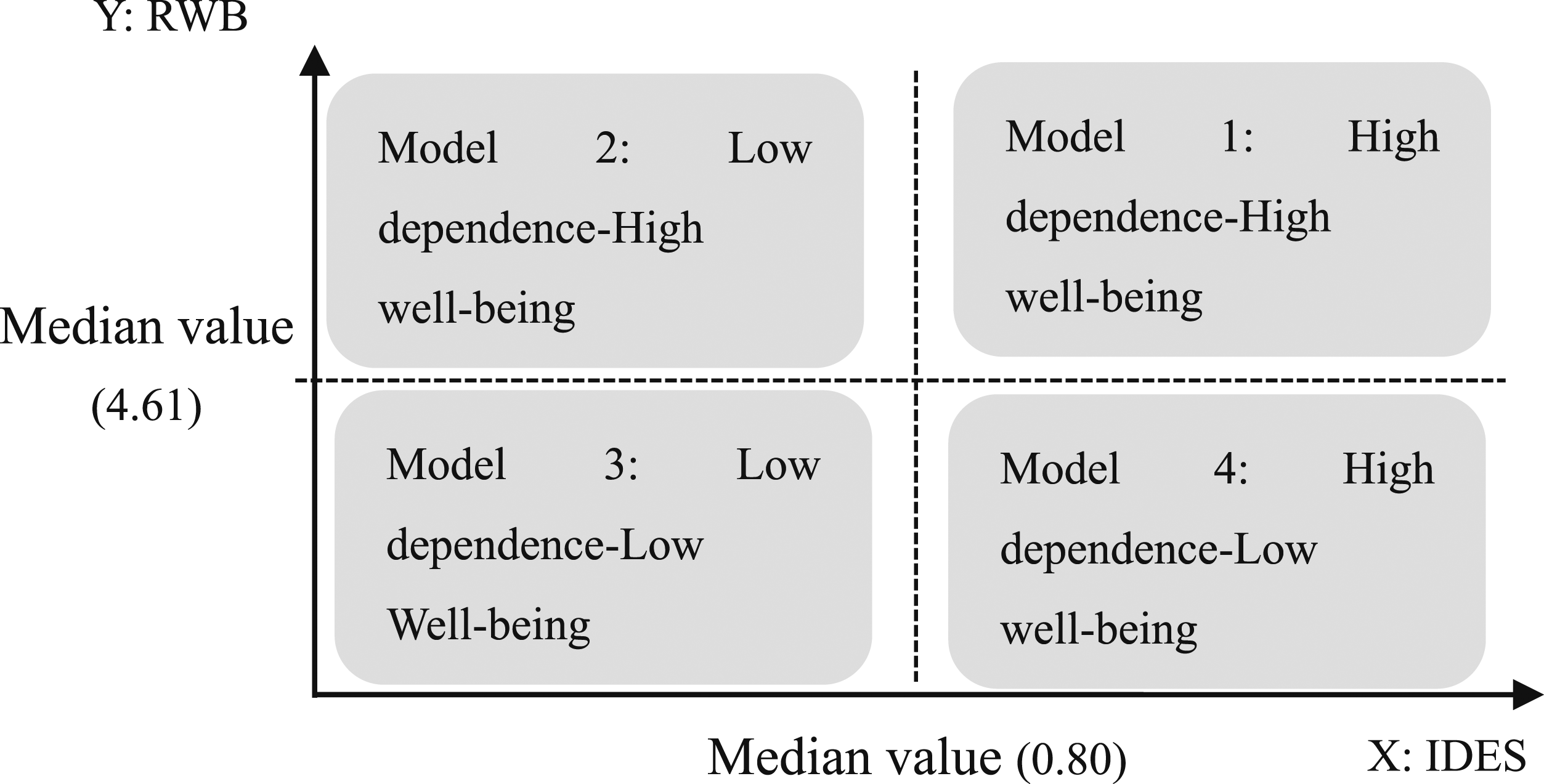
4 Data analysis and results
Descriptive statistics
Demographic characteristics
The average family size among farmers is 4.48 persons. The average number of members of the labor force within such a family is 2.24 persons. The average permanent farmer population is 3.17 persons. The proportions of families whose level of education is junior college and above, senior high school, junior high school, and elementary school and below are 10.8%, 22.1%, 47.3% and 19.8%, respectively. The average farmland area owned by farmers is 2593.31 m2, and the average woodland area is 16206.50 m2. The primary income sources of farmers are farming and external work, and the proportions of farmers’ diversified income sources that focus on tourism are 8.1%, 26% and 65.9% on average. The average family income level is $5817.28.
The livelihood adaptability strategy adopted by rural tourism communities
Based on the fact that a certain source of income accounts for more than 50% of total farmer income (Wen and Chen, 2020), this article classifies the livelihood adaptability strategies of rural tourism communities as agriculture-oriented (that is, income from family members engaged in agriculture, forestry and aquaculture accounts for more than half of total family income), migrant worker-dominant (that is, family members who leave their own villages to work outside the family for income accounts for more than half of total family income) or diversified (that is, family members engaged in tourism operations, agricultural and nonagricultural operations in their own villages, etc.). According to farmer income data pertaining to rural tourism communities in 2019, farmers engaged in agriculture-oriented, migrant labor-oriented, and diversified livelihoods at rates that accounted for 21.4%, 33.7%, and 44.9% of the total sample, respectively. The diversification of income is the main livelihood adaptation strategy employed in rural tourism communities.
Comparisons associated with the “ecological dependence-livelihood well-being” model among rural farmers in rural tourism communities
Comparison of rural farmers' livelihood adaptability strategies across different response models
Comparison of the livelihood strategies employed residents in rural tourism communities across different models of “ecological dependence-livelihood well-being”.
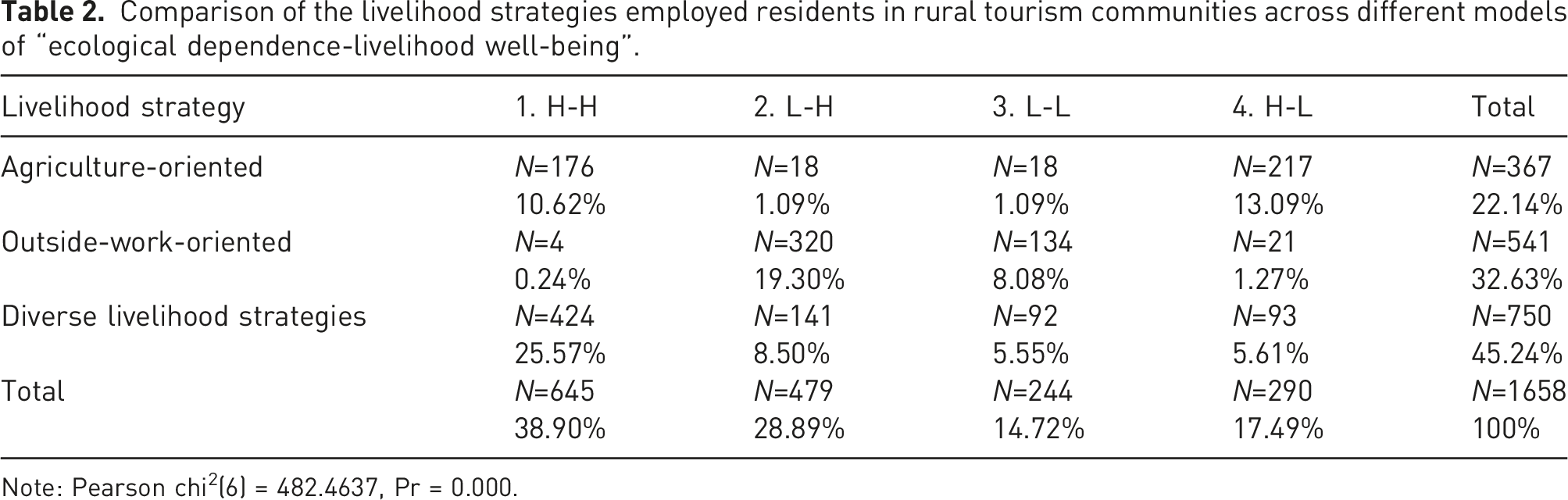
Note: Pearson chi2(6) = 482.4637, Pr = 0.000.
Comparison of rural farmers' livelihood capital composition across different response models
Comparison of residents' livelihood capital according to different models of “ecological dependence-livelihood well-being” in rural tourism communities.
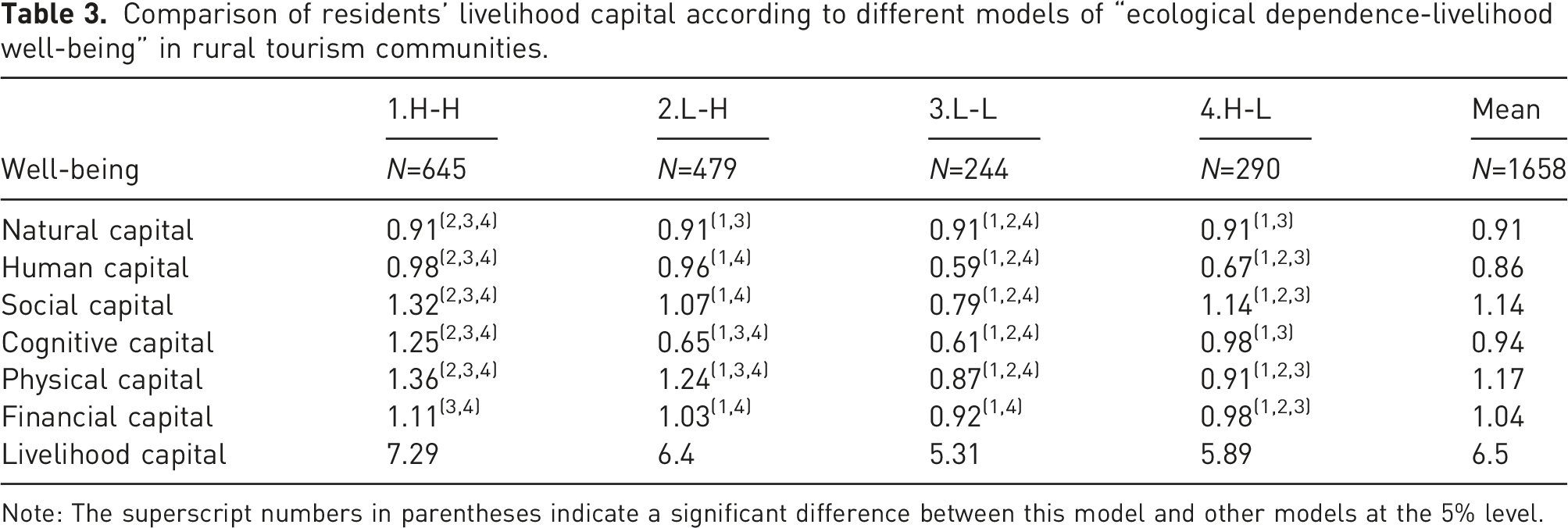
Note: The superscript numbers in parentheses indicate a significant difference between this model and other models at the 5% level.
Comparison of farmers’ IDES across different response models
Comparison of the IDES of residents across different “ecological dependence-livelihood well-being” models in rural tourism communities.
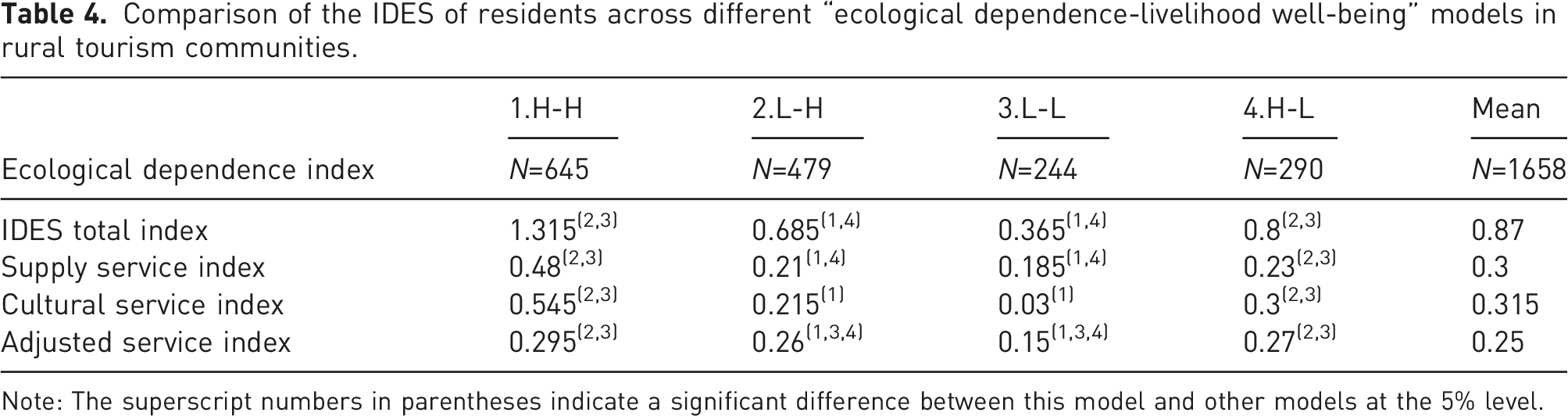
Note: The superscript numbers in parentheses indicate a significant difference between this model and other models at the 5% level.
Influencing mechanism of the livelihood adaptability response in rural tourism communities
Selection analysis model of the livelihood adaptability response model of rural farmers
In this paper, the selection probability of farmers' livelihood adaptability response model is used as the explained variable to regress the influencing factors in response to tourism disturbance. Since the livelihood adaptability response model of the explained variable counts as discrete data, the MNL regression analysis model employed by this article analyzes (Hausman and Mcfadden, 1984; Wang and Guo, 2001) the influencing mechanism of rural community farmers' adaptive response model selection in the face of tourism disturbance. The standardized unordered multiclass logistic regression model is 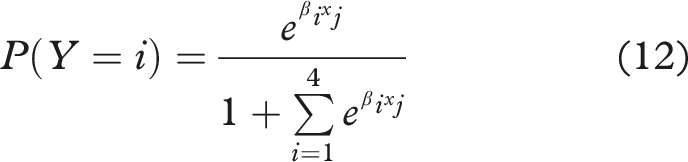

Influencing factors associated with the selection of the adaptability response model of rural farmers' livelihoods
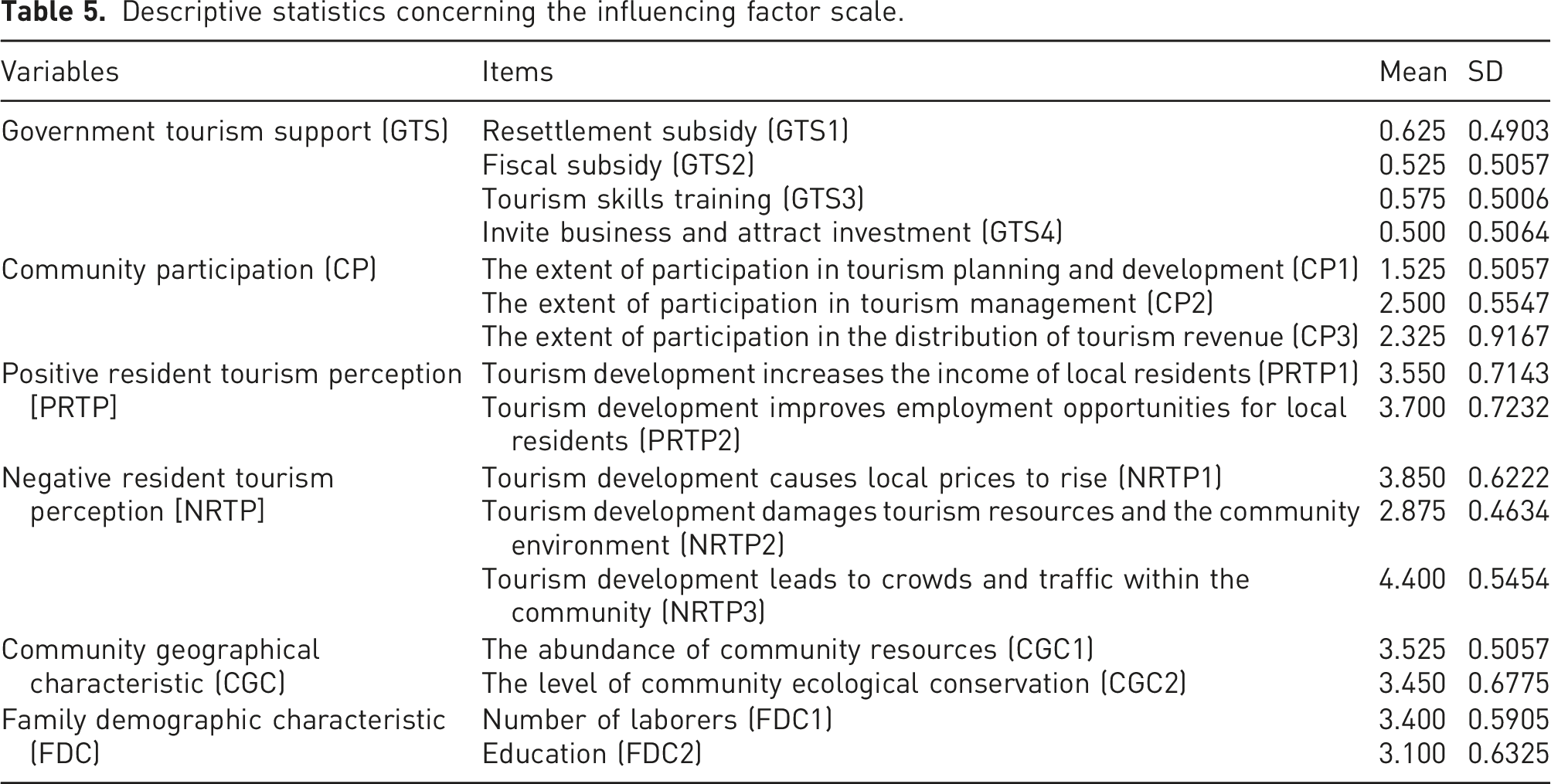
Construction of the influencing factors and descriptive statistics
Descriptive statistics concerning the influencing factor scale.
Reliability and validity tests for the common variance analysis of the influencing factors
To overcome the problem of common method deviation, first, the participants were informed of the purpose of the research when they completed the questionnaire survey, and this problem was similarly mitigated via the use of sampling program control and statistical methods (Lee and Kang, 2006). Harman’s single-factor test was used to assess the data. An exploratory factor analysis was performed with respect to all 17 measurement indicators, and the maximum explanatory variance among the factors was 27.98%, indicating that there was no common method deviation in the selected variable data. The Cronbach’s α coefficient of all variables ranged between 0.713 and 0.824, and the value of CR ranged between 0.718 and 0.895, suggesting that the index data exhibited high reliability and good stability. A confirmatory factor analysis (CFA) was conducted to test the convergence of the variable data and the discriminant validity. The variable factor loading coefficient was greater than 0.5, and the AVE value was between 0.496 and 0.724, indicating that the convergent validity of each variable index was good.
Results
Disorderly multiclass logistic regression results of livelihood adaptability response model selection by rural tourism communities in the context of farmers.
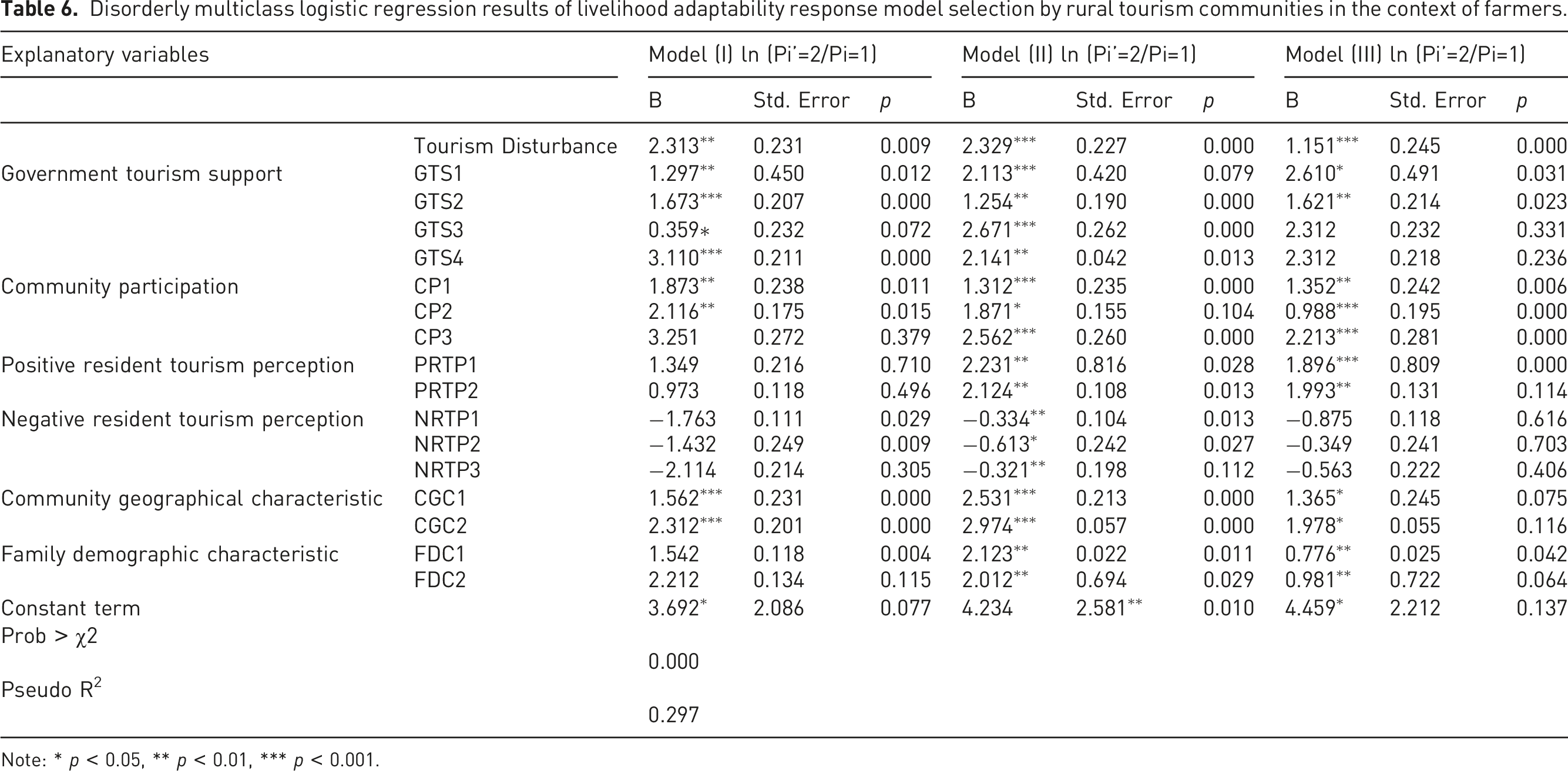
Note: * p < 0.05, ** p < 0.01, *** p < 0.001.
Model test
A multivariate logistic regression analysis was conducted to investigate the 17 factors associated with the impact indicators discussed above. The model prediction accuracy rate was 81.2%, and the model fit degree index was χ2 = 229.211, p < 0.01, thus indicating that the constructed model has a significant degree of fit; the goodness-of-fit index was p > 0.05, which reflects goodness of fit. Pseudo R2 value greater than 0.5 indicates that overall, the model passes the test.
Analysis of the empirical results
The results of the multivariate logit regression analysis of tourism disturbance in Models (I), (II) and (III) show that tourism disturbance has a significant impact on community residents’ livelihood response according to the H-H model at significance levels of 5% and 1%. The resident livelihood response model shifts from the L-H, L-L, and H-L models to the H-H model. (1) Changes in the human-land relationship constitute a fundamental factor in the livelihood adaptability responses of rural farmers to tourism disturbance. Tourism disturbance breaks the balance between human beings and the land within the community. The expropriation of rural farmers' land resources and the availability of a large number of nonagricultural employment opportunities have prompted an adaptive change in agriculture-oriented and migrant-worker strategies. Diversified livelihood strategies have become the dominant model for farmers' adaptive strategies. Land acquisition is required for community tourism development. The main source of income in residents’ diversified livelihood strategies remains resources drawn from the community ecosystem, the environment, etc. Therefore, a loss of land resources resulting from tourism disturbance does not reduce the dependence of farmers on the community ecosystem or the level of farmers' well-being. (2) Local government tourism support is an important external driving force that can improve the welfare of farmers. Local government tourism-supported resettlement subsidies, fiscal and tax subsidies, education and training, and investment promotion have significant impacts according to Models (I) and (II). Local government tourism support can improve farmers’ participation in tourism activities and allow them obtain benefits from such activities. The increase in the proportion of the value of the ES caused by tourism activities increases the probability of a shift in farmers’ livelihood adaptability towards the H-H model. However, education, training, and investment promotion are not significant according to Model (Ⅲ), which indicates that these three factors have no obvious effect on improving the well-being of farmers. This lack may be a result of the fact the farmers have restricted income due to tourism activities. (3) The psychological perceptions of farmers (tourism participation and the tourism development effect) represent the endogenous force driving their livelihood adaptability responses. Farmers’ participation in tourism planning and development, tourism operation and management, and tourism income distribution have significant effects according to both Models (Ⅱ) and (Ⅲ). When farmers participate more in tourism, their livelihood adaptability responses are more likely to shift from the L-H and H-L models to the H-H model. The participation of farmers in the distribution of tourism income is not significant according to Model (Ⅰ). Farmers' perceptions of the ability of tourism to promote community economic development and increase employment significantly affects the L-L model, and thus the H-L model shifts to the H-H model. The positive promotion of the development of rural tourism with respect to the value of community ES can be perceived clearly by farmers. (4) Family demographic characteristics and community geographic characteristics are basic factors associated with the livelihood adaptability responses of residents. Regarding family demographic characteristics, when the family population is larger and the education level of the family is higher, the number of residents who participate in community tourism activities in response to tourism disturbance is correspondingly higher. Tourism activities are more likely to improve RWB. However, an increase in population or level of education has no significant effect on the possibility of the livelihood model of residents shifting from L-H to H-H. There are few differences between the income earned by residents who operate as migrant workers and the income gained from community tourism activities. The abundance of community resources and the level of community ecological conservation have significant impacts according to Models (Ⅰ), (Ⅱ) and (Ⅲ). The status of the local ecosystem of the community can affect the well-being and dependence of farmers significantly. When the local ecosystem in the community is better, the probability that farmers will exhibit the H-H model in their responses to tourism disturbance is increased.
Conclusion and discussion
Research conclusion
Based on the theory of sustainable livelihood and Coleman’s rational choice theory, this paper analyzes the response model (the “ecological dependence-livelihood well-being” coupling model) of the adaptive livelihood strategy of rural community farmers to tourism disturbance. This study explores the influencing factors that affect the lively adaptability response model of rural farmers, which is a key factor in the realization of the strategic goal of rural revitalization. The main conclusions of this study are as follows.
Rural tourism development is helpful to the task of realizing the development strategy of rural revitalization. Rural communities use the thriving development of tourism to promote the ecological livability, rural civilization, and effective governance of their community as well as to pursue goal of living a prosperous life. The optimal choice for the adaptability response of community farmers' livelihoods to tourism disturbance is the “high dependence-high well-being” model. Tourism development increases the dependence of farmers on ecosystem service value as well as their well-being. The development of rural tourism helps farmers choose diversified livelihood strategies and mitigated seasonal problems relevant to agriculture and animal husbandry. The tourism business cycle is longer and provides greater benefits to residents, which prompts farmers to choose tourism as the leading means of diversifying their livelihoods.
Farmers' adaptability responses are a decision associated with farmers' rational survival choices under condition of tourism disturbance leading to rural community ecosystem imbalances. The government tourism support system is an important external driving force for farmers' adaptability response. The rational preferences of farmers in economic and social contexts (i.e. farmers' tourism participation and tourism perception effects) are internal driving forces for a variety of adaptability response choices. Geographical resource endowments and farmers' family demographic characteristics are basic factors associated with the differentiation of farmers' adaptive behavior choices.
Marginal contributions and directions for future research
Marginal contributions
The possible marginal contributions of this article are mainly reflected in the following aspects. (1) This study seeks to understand the impact of tourism with respect to the interaction between farmers and ecosystems in tourist destinations in rural communities. Based on a microsubject perspective, this research compares and analyzes the heterogeneity of farmers' livelihood capital, livelihood strategies, and ecological dependence in the context of different adaptability response models to rural tourism. (2) This research attempts to analyze the adaptability response results pertaining to microsubject tourism disturbance based on the coupling model of farmers' livelihoods and welfare and ecosystem service value. This research connects external stimuli, farmers' internal psychological perceptions and the results of farmers' adaptability response. Accordingly, this study is helpful with respect to the task of clarifying the influencing mechanism of farmers' adaptability response to tourism disturbance. (3) In practical, this research focuses on issues related to livelihood such as the livelihood and welfare of residents in rural tourism destinations and the sustainability of community ecosystems. This research can thus provide a reference for destination managers to formulate relevant policies for development based on people’s livelihood and to promote the realization of the dual goals of the high-quality survival of rural farmers in rural tourism areas and the ecological revitalization of communities.
Implications
Ways of increasing farmers' livelihood assets, improving the diversity of their livelihood activities, and reducing their livelihood vulnerability in the process of developing rural tourism are key aspect of local rural tourism development. Among these aspects, the creation of sustainable development capacity is a breakthrough point for reduce the livelihood vulnerability of farmers in the study area. First, in light of the currently low level of education among farmers, local government should focus on the cultivation of sustainable livelihood development by emphasizing human capita. It is necessary to consolidate rural compulsory education, promote rural vocational education and tourism skills training vigorously, and improve the employment skills and tourism management capabilities of the adult labor force among farmers. Second, the construction of tourism infrastructure should be improved and the reception capacity of rural tourism should be increased. Third, in light of the continuous expansion of land used for tourism development, a more equitable and reasonable compensation system for farmers should be designed.
Guidance by local governments should be strengthened. The government’s macrocontrol role should be emphasized, institutional guarantees should be established to allow farmers in relevant communities to participate in tourism, residents' right to participate should be protected, and residents' participation behavior should be standardized. Simultaneously, a variety of assistance policies should be implemented, such as the arrangement of special funds for tourism development, the adoption of various methods of improving the level of economic development in the community, use of the benign mechanism of tourism disturbance, the promotion of the benign optimization of the community structure, and improvement of the living standards of community residents.
Limitations and directions for future research
This study dose not include a cross-scale tracking analysis of multiperiod panel data according to different tourism development models for rural communities. This study mainly analyzes the impact mechanism from the perspectives of community farmers and the government, and the constructed adaptability response impact indicator system must be verified and improved further. This study also lacks an analysis of the impact of the livelihood adaptability response of community farmers to tourism disturbance from the perspective of tourist behavior selection, which can be used as a focus for follow-up research.
Footnotes
Declaration of conflicting interests
The author(s) declared no potential conflicts of interest with respect to the research, authorship, and/or publication of this article.
Funding
The author(s) received no financial support for the research, authorship, and/or publication of this article. This work is sponsored in part by the Social Science Fund of Henan province, China (2020BJJ057).This work is sponsored in part by 2019 Henan Province Colleges and Universities Youth Key Teacher Training Plan,(2019GGJS006).This work is sponsored in part by 2023 Henan Province think tanks of colleges and universities, (2023ZKYJ22)