




Abstract
Several recent destination crises have brought difficult challenges to the world’s travel, hospitality, and tourism activities. We explore how the brand image of a tourist destination is influenced by health crises, specifically within the context of the COVID-19 pandemic. We conducted interviews and online data collection in China. Exploratory factor analysis and confirmatory factor analysis were conducted to develop, purify, and verify scale items that measure perceived destination brand image, destination brand self-congruence, destination brand engagement, destination brand love, and perceived risk of destination health crisis. We identified key associations among the constructs of the study. This study offers a tested and validated destination brand image and tourist behavior (DBITB) scale to understand tourist behavior toward destination brands during and after health crises. Important theoretical and practical implications are discussed to inform future research on destination branding.
Introduction
Destination brand image is comprised of tourist perceptions of a destination and tourist mental associations with the cognitive representation of a particular place (Chi et al., 2020; Wisker et al., 2020). Destination crises exert significant impacts on a destination’s reputation (Helm and Tolsdorf, 2013) and a destination`s reputation impacts tourist perceptions of destination brand image (Su et al., 2020). This reveals a relationship between destination crisis and tourist perceptions of destination brand image. Destinations that experience health crises, such as epidemics, suffer long-term damage to destination brand image (Lu and Atadil, 2021). Destination health crises, such as severe acute respiratory syndrome (SARS), Middle East Respiratory Syndrome coronavirus (MERS-Cov), Ebola, and recently COVID-19, negatively impacted the destination reputation of crisis-hit destinations, leading to negative tourist perceptions of destination brand image and negative tourist destination brand choice of such destinations (Afshardoost and Eshaghi, 2020; Zhan et al., 2022). The COVID-19 pandemic caused a loss of US$ 320 billion to the global tourism industry just in 2020 due to low tourist arrivals (Lu and Atadil, 2021). Some COVID-19 consequences, such as suspended public events, closed tourist attractions, travel restrictions, mandatory quarantine, lockdown, and mandatory negative nucleic acid test reports alongside other medical certificates, have also become a part of tourist destination brand image in the on-going context of the COVID-19 pandemic. Since perceptions determine behaviors (Neuburger and Egger, 2020; Xue et al., 2020), there is a need to explore how tourists perceive destination brand image in the time of health crises that might influence tourist behavior.
The perceived impacts of brand products on consumer behavior have been well-documented (Japutra, 2019; Lin et al., 2020; Tran et al., 2019) in association with the impacts of brand self-congruence, brand engagement, and brand love on the consumption of brand products (Bigne et al., 2019; Chen et al., 2020; Japutra et al., 2017; Joshi and Garg, 2020). The impacts of destination crises on the tourism industry have also been documented (Farmaki, 2021; Wu and Shimizu, 2020) and a growing body of literature advocates that the COVID-19 pandemic exaggerated the feeling of fear and anxiety among tourists across the globe (Addo et al., 2020; Neuburger and Egger, 2020; Sánchez-Cañizares et al., 2020). The risk of catching the COVID-19 virus and its impact on tourism is claimed to be greater than earlier health crises (Lu and Atadil, 2021; Nadeau et al., 2022; Zhan et al., 2022).
A destination`s strong brand image holds tourists’ attention, interest, and visit intention which helps to differentiate a destination brand from others (Afshardoost and Eshaghi, 2020; Jeong and Kim, 2019). The associations among tourists’ perceived destination brand image, brand self-congruence, brand engagement, brand love, and destination brand choice in the context of a heath crisis are not well-explored in the extant literature. Although there are some studies that reflect the impacts of destination crises on the tourism industry (Avraham, 2020; Uğur and Akbıyık, 2020; Zheng et al., 2021), further research, that analyzes the impacts of the perceived health risk of a destination on the relationship between perceived destination brand image and destination brand choice, alongside the likely associations of intervening stimuli, such as destination brand self-congruence, destination brand engagement, and destination brand love, is needed. This study explores the following: (1) How do tourist perceptions of destination brand image impact tourist destination brand choice? (2) What are the relationships among perceived destination brand image, destination brand self-congruence, destination brand engagement, destination brand love, and destination brand choice? (3) How does the perceived risk of destination health crisis impact tourist perceptions and behavior toward destination brands?
By considering the COVID-19 pandemic as the study context, our objective is to identify and measure the likely associations among the constructs of the study. We propose a conceptual framework linking the identified constructs in this study. After conceptualization, it is important to develop an effective measurement tool to measure identified constructs. We developed and validated a scale by following the multi-study method (Churchill, 1979) to measure the identified constructs of the study. This study was conducted in China, assumed to be the first epicenter of the COVID-19 pandemic and the nation that survived a drop of approximately 80% of inbound tourists in the year 2020 due to the COVID-19 pandemic, which seriously damaged the nation’s destination brand image (Lu and Atadil, 2021). This study is important for future research and practice across different disciplines, such as tourism management, destination branding, destination marketing, consumer psychology, and consumer behavior, and will aid in understanding the dynamics of destination brand image and destination brand choice during and after destination health crises.
Literature review
Health crisis and the S-O-R framework
Health crises in the past, such as SARS, MERS-Cov, Ebola, H1N1, the Influenza pandemic, and foot and mouth disease, have impacted the global tourism industry (Zhan et al., 2022; Zheng et al., 2021). The novel coronavirus pneumonia (COVID-19) was declared a public health crisis and thus joined the list of health crises at the end of 2019 (Lu and Atadil, 2021; Sigala, 2020; WHO, 2020), and it continues to damage the tourism industry and other supporting service industries, e.g. the travel industry, the hospitality industry, etc. across the world (Ioannides and Gyimóthy, 2020). The United Nations World Tourism Organization (UNWTO, 2020) notes that the tourism industry is the hardest hit of all economic sectors. Countries across the globe are in the process of estimating the financial loss to the global tourism industry caused by the COVID-19 health crisis, and its continued damage to their respective tourist destinations (Ioannides and Gyimóthy, 2020; Sánchez-Cañizares et al., 2020; Sigala, 2020). This situation may become worse for destinations significantly hit by the COVID-19 pandemic, such as China, the USA, the UK, Italy, Spain, and India, to name a few.
Destinations hit by the COVID-19 pandemic are struggling to attract tourists due to their negative feelings about tourist destination image in the recent context, such as the image of catching the COVID-19 virus during travel to crisis-hit destinations (Sánchez-Cañizares et al., 2020; Zhan et al., 2022). Positive feelings or emotions fuel the likelihood of positive behavior; for example, pleasure instigates tourists to feel positive regarding tourist experiences in parallel to developing tourist destination brand love (Bigne et al., 2019). Consumer positive feelings, which are triggered by marketers toward brand products, exert a significant and positive impact on the consumer consumption behavior of brand products (Junaid et al., 2019). Destination marketing organizations (DMOs) promote destinations as brands to trigger tourist positive feelings about destination brands and to positively influence tourist behavior with the intention of overcoming the negative impacts of destination crises (Avraham, 2020).
To understand the impact of health crises such as the COVID-19 pandemic on destination brand image and tourist cognitive behavioral responses toward destination brands, the theoretical understanding of this study is nurtured under the spotlight of the stimulus-organism-response (S-O-R) model that helps to interpret individuals’ cognitive and affective reactions to environmental stimuli to understand individuals’ behavioral responses (Mehrabian and Russell, 1974). Previous studies have adopted the S-O-R model to examine consumer behavior in different contexts, such as organic food and consumer behavioral intention (Sultan et al., 2021), destination atmospheric cues and tourist word-of-moth (WOM) communication (Loureiro et al., 2021), and destination social responsibility and tourist search for alternative destinations (Su et al., 2018).
Stimulus triggers individuals’ emotional states, inducing individuals to behave in a particular way (Mehrabian and Russell, 1974; Loureiro et al., 2021). Destination brand image is linked to external cues and individuals’ associated feelings for destination brand image act as a starting point to stimulate tourist cognitive responses. Therefore, perceived destination brand image represents the stimulus component of the S-O-R model in this study. Environment, which is an external stimulus, acts as an antecedent to perceived destination brand image. Health crises are environmental stimuli that impair destination brand image (Ahmad et al., 2020). Tourist feelings linked to destination health crises, such as perceived risk of destination health crisis, stimulate tourist cognitive reactions. Cognitive reactions refer to the organism that manifests an individual’s cognitive state to gear up the momentum of stimulus and coordinate between an individual’s perceptions and behavior (Sultan et al., 2021). Destination brand self-congruence, destination brand engagement, and destination brand love show tourist cognitive reactions to external stimuli, such as perceived destination brand image and perceived risk of destination health crisis and are presented in this study as the organism component of the S-O-R model. The interaction between stimulus and organism is referred to as the response in the S-O-R model (Mehrabian and Russell, 1974; Loureiro et al., 2021; Su et al., 2018). Tourist destination brand choice is presented as the response part of the S-O-R model in this study.
Perceived destination brand image (Stimulus)
Brand image is consumer memories shaped by the reflection of consumer perceptions of a brand (Farmaki, 2021). The sum of consumer perceptions, impressions, ideas, and beliefs regarding the uniqueness of a destination is noted as perceived destination image (Currie, 2020; Liu et al., 2017). A unique perceived identity that differentiates a destination from its competitors and is a reason for competitive advantage is also noted as perceived destination brand image (Chi et al., 2020; Wisker et al., 2020). Destination brand image can influence tourist perceptions, decision making, and behavior (Liu et al., 2017; Rasoolimanesh et al., 2021; Valek, 2020). Extant literature interprets destination brand image in terms of cognitive image, i.e. an individual’s belief and knowledge, and affective image, i.e. an individual’s emotions or feelings, which may impact tourist perceived destination brand image (Afshardoost and Eshaghi, 2020; Currie, 2020; Japutra et al., 2017; Nadeau et al., 2022; Rasoolimanesh et al., 2021). Consumer perceptions of brands and cognitive feelings are shaped by brand cues, such as the good or bad image of a brand (Morhart et al., 2015). Tourist positive feelings about destinations’ brand images may positively impact tourist perceptions regarding the health-promising attributes of destination brands (Ahmad et al., 2020; Wisker et al., 2020).
Crises that impact tourist destinations are noted as those events that seriously damage destination reputation, destination visibility, and tourist perceptions of destination brand image (Avraham, 2016). Negative events, such as destination crises, easily damage a destination brand image and may create an “image crisis” for a destination (Currie, 2020). It may take a long time to restore brand destination image after it is linked to a crisis, and tourist destination attachment and destination choice may be negatively impacted even after the crisis is over (Avraham, 2015; Currie, 2020). In a health crisis, the mental representation of different destination brands influences tourist attitudes, beliefs, feelings, and behavior in different ways, pushing tourists to reconsider their travel decisions to destinations suffering through health crises (Das and Tiwari, 2020; Sánchez-Cañizares et al., 2020; Sigala, 2020; Zheng et al., 2021). Tourist negative perceptions regarding a destination image make destination efforts useless in attracting tourists (Avraham, 2020). Destination brands that suffer from health crises struggle to keep their brand image as one of the best tourist destinations. The public health crisis of the COVID-19 pandemic and its impacts in terms of high infection and mortality rates have raised tourist concerns regarding the image of several tourist destination brands worldwide (Avraham, 2021; Nadeau et al., 2022; Raoolimanesh et al., 2021) For example, China was one of those countries that considerably suffered through the COVID-19 pandemic and lost tourist engagement and preference, among other reasons, in the first year of the COVID-19 pandemic due to negative tourist perceptions about the destination brand image of China (Lu and Atadil, 2021).
Destination brand self-congruence (Organism)
Self-concept or self-image shows how individuals believe in themselves (Frias et al., 2019; Kla´ra, 2019) and self-congruence is when a tourist’s perceptions of a destination image matches his/her self-concept (Xu et al., 2021). A cognitive association between a destination brand image and the self-concept of a tourist is referred to as destination brand self-congruence (Chen et al., 2020). The level of congruence between perceived destination brand image and tourist actual self-image determines the magnitude of tourist behavior (Chen et al., 2020). Consumers are emotionally attached to brands when there is a strong connection between their actual or self-concept and brand image (Nadeau et al., 2022; Pool et al., 2018). Self-congruence predicts consumer behavior (Frias et al., 2019) such as satisfaction, brand loyalty, brand attachment, and brand choice (Lin et al., 2020; Wu et al., 2020), and results in consumer belonging with a place, product, or community (Kla´ra, 2019), fueling consumer motivation and leading to consumer purchase behavior (Pool et al., 2018). A favorable trade-off between tourist’s perceived image of a destination and tourist actual self-image fuels tourist belonging with a destination, and tourist positive attitude, destination attachment, and destination choice (Frias et al., 2019; Huaman-Ramirez, 2020; Japutra et al., 2017; Pool et al., 2018). Given the negative impacts of the COVID-19 pandemic on the tourism industry, the notion of perceived destination brand image has been shackled, leading to a disruption in the balance between tourist perceptions and tourist self-concept.
Destination brand engagement (Organism)
Brand engagement refers to the psychological process that motivates consumer dedication, attachment, and positive feelings towards the consumption of a brand (Rather, 2018). Consumer psychological engagement with a specific brand impacts consumer purchase intention (Junaid et al., 2019; Rather, 2018). The consumer’s sense of belonging, engagement, and positive emotions about brands depends on the consistency between a consumer’s self-concept and brands that supports the notion that brand engagement is determined by consumer brand self-congruence (France et al., 2016). Drawing on the theoretical underpinnings of consumer engagement with a brand that reflects consumer emotive and cognitive senses alongside the feelings of self (Japutra et al., 2017), tourist brand engagement reflects tourist self-concept and perceived destination brand image, each element interacting in a cognitive way to develop tourist engagement with the destination brand and to impact tourist destination brand choice. A positive destination brand image stimulates in tourists’ positive emotions, a sense of belonging, and a willingness to support a destination (Rasoolimanesh et al., 2021).
Destination brand love (Organism)
Love is an emotional state that may influence individual feelings and behavior toward others (Wang et al., 2019). Brand love enhances an individual’s willingness to accept a brand (Batra et al., 2012; Joshi and Garg, 2020; Junaid et al., 2019). Brand love is the consensus between consumer self-belief and perception that establishes consumer emotional connectedness with brands (Grisaffe and Nguyen, 2011). Brand love mirrors consumer passion, emotional attachment, satisfaction (Bigne et al., 2019), and brand purchase intention (Amaro et al., 2020). Passionate love, emotional attachment, and self-brand integration are the sub-constructs of brand love (Wang et al., 2019). Destination brand love depends on destination brand image. Attachment theory (Majeed et al., 2020), interpersonal relationship theory (Batra et al., 2012), and the theory of para-social love (Fetscherin, 2014) demonstrate the cognitive associations of consumer desires, beliefs, and emotional intimacy with brands. Scholars develop frameworks to showcase variables that influence consumer attachment with destinations (Japutra, 2019). The integration of passion, emotional attachment, and self-belief in brand love may positively influence tourist behavior. Tourist positive feelings and destination brand love unravel tourist emotional attachment with destinations and reflect tourist visit intention (Amaro et al., 2020). The feelings of connectedness instigate emotion-laden responses from the consumer toward brands and may resist consumer brand-switching behavior (Grisaffe and Nguyen, 2011).
Destination brand choice (Response)
Destination brand choice stems from tourist preferences for the best services offered by destination brands in the market (Bigne et al., 2020). Destination brand choice is linked to tourist intention (attitudinal loyalty) and choice behavior (behavioral loyalty) (Chi et al., 2020; Liu et al., 2020). Destination brand choice reflects tourist loyalty or emotional attachment to a destination, fueling tourist intention to visit/re-visit the brand destination (Liu et al., 2020). The frequency of tourist repeat visits to brand destinations shows the intensity of destination brand choice behavior among tourists, i.e. more visits, strong destination brand choice behavior, and vice versa (Chen et al., 2020; Martin et al., 2019). Destination choice largely depends on destination image (Lu and Atadil, 2021). Destination crises, such as epidemics, present a negative image of a destination and fuel tourists’ negative destination choice intention (Rasoolimanesh et al., 2021).
Perceived risk of destination health crisis: COVID-19 (Stimulus)
Consumer perceptions of a potential threat or danger during travel to destinations beyond acceptable levels are noted as perceived travel risk (Zhan et al., 2022). Brands stimulate consumer perception with market signals which ultimately impact consumer attitudes toward brands in parallel to shaping consumer behavioral intentions (Mandler et al., 2020). Negative market signals, such as perceived threats or potential loss in purchasing services, may stimulate consumer brand switching behavior. The perceived risk of destination crisis may act as a negative signal in the stream of consumer cognitive reactions, such as consumer beliefs, emotions, attachment, and love, that determine tourist destination choice behavior. The perceived risk of destination crises, such as epidemics, natural disasters, etc., may impact the rational choice of tourists among destinations (Kim et al., 2021; Sánchez-Cañizares et al., 2020). Tourists travel to destinations where the perceived risk of catching diseases is minimized (Sánchez-Cañizares et al., 2020; Zheng et al., 2021). Perceived risk in travel-related decisions, such as the risk of catching disease (Majeed et al., 2017), is one of the instrumental stimuli that impact the associations among tourist destination choice (Han et al., 2020; Matiza, 2020; Yang et al., 2015), self-concept, brand engagement, and brand loyalty (Zheng et al., 2021). Perceived travel risk promotes tourist doubts about the image of destinations (Perpiña et al., 2017) and negatively influences tourist emotions, attachment, engagement, and destination choice behavior, such as destination visit intention (Matiza, 2020). In the past, epidemics, e.g. SARs, MERs-Cov, Ebola, etc., fueled tourist risk of catching infectious diseases during travel and impacted the tourism industry with reduced tourist visits to destinations (Novelli et al., 2018). In recent years, the COVID-19 pandemic has shackled the image of tourist destinations (Majeed and Ramkissoon, 2020). Risk in the choice of destination determines the image of a host destination, i.e. a lower level of destination risk leads to a positive image of the destination and vice versa (Kim et al., 2021). Destination crises negatively influence tourist perception and destination image (Avraham, 2020; Han et al., 2020), which, as discussed earlier, is an orthogonal construct of destination brand self-congruence, destination brand engagement, destination brand love, and destination brand choice.
Sánchez-Cañizares et al. (2020) examined COVID-19 and its perceived impacts on tourist intention to travel and willingness to pay for higher safety measures during travel. Han et al. (2020) noted the perceived impacts of psychological risk and the knowledge of COVID-19 on tourist behavioral intentions for safer destinations. Majeed and Ramkissoon (2020) documented how the perceived health and wellness risks of the COVID-19 pandemic impacted the notions of the perceived goodness of therapeutic landscapes, health and wellness tourism, place attachment, and tourist behavioral intentions. The theoretical underpinnings show that a high level of perceived risk of destination crises exerts long-lasting negative impacts on the brand image of destinations which may discourage tourist visits to brand destinations (Ahmed et al., 2020; Avraham, 2020). A high level of perceived travel risk exerts a high level of negative pressure on tourist beliefs, emotions, and perceptions about destination image and, consequently, destination choice (Assaker and O’Connor, 2021; Ryu et al., 2013; Yang et al., 2015). Tourist destination engagement, attachment, and choice drop to a minimum level where places experience safety fear (Nguyen et al., 2021).
By exploring the notion of destination brand image and tourist behavior during health crises, the discussed theoretical underpinnings present how tourist perceptions of destination brand image, destination brand self-congruence, destination brand engagement, and destination brand love are influenced by the perceived risk of destination health crisis, which impacts tourist destination brand choice. The context of this study is the COVID-19 pandemic. We propose a conceptual framework to stitch together the connections of the discussed constructs on the canvas of this study (Figure 1), providing a theoretical understanding of perceived destination brand image during destination health crises, and its impacts on tourist destination brand choice. Conceptual model.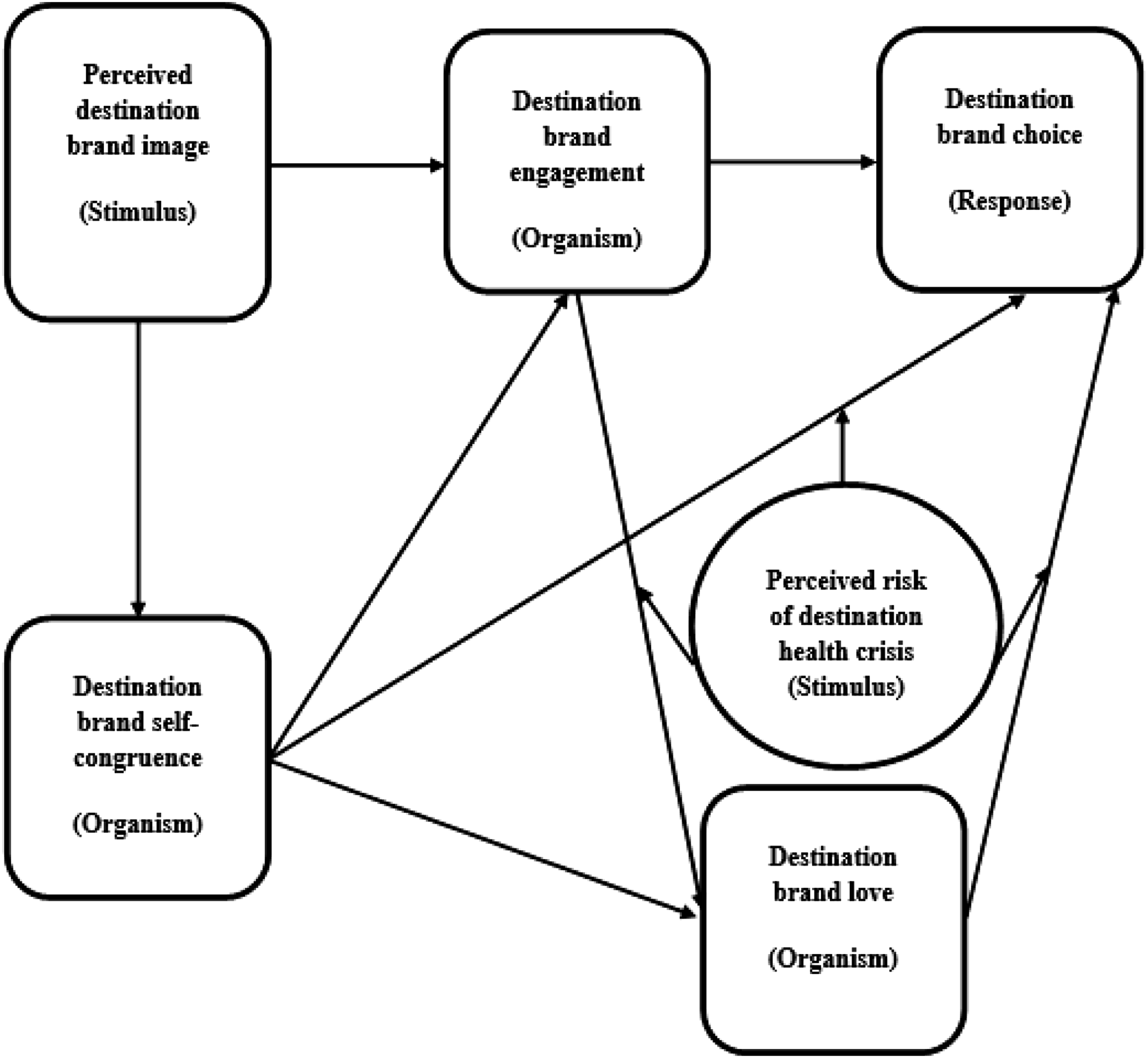
The COVID-19 challenge in China
China is one of those nations that were hardly hit by the COVID-19 pandemic. China is the first epicenter of the COVID-19 pandemic (Lu and Atadil, 2021) and has reported over 900,000 confirmed COVID-19 cases nationwide (WHO, 2022). The BBC reports that some places in China in the year 2022, such as Shanghai, are facing the biggest lockdowns since the COVID-19 outbreak started, amid the resurgence of the Omicron variant (Brant, 2022). Before the COVID-19 pandemic, China was considered one of the most prominent tourist destinations across the globe. However, the nation experienced a sharp decline in inbound tourism after the outbreak of COVID-19, i.e. a 98% drop in inbound tourism, and faced challenges protecting its tourist destination image alongside the struggle of maintaining positive tourist beliefs, destination attachment, and destination choice (Lu and Atadil, 2021). We utilized China as the research context in this study because the nation, while attempting to restore its destination brand image, experienced outbound tourism, inbound tourism, and a battle against the COVID-19 pandemic.
Methodology
The scale development process
We followed the guidelines of Churchill (1979) to develop a scale to measure perceived destination brand image and tourist behavior during health crises. We generated scale items, purified measures, and examined the reliability and validity of the constructs. We conducted three studies in the scale development process. Study 1 presents items generated from the literature review with the findings of in-depth interviews. Study 2 collects data to purify scale measures. Study 3 collects data to confirm the scale measures.
Study 1- items generation and interview
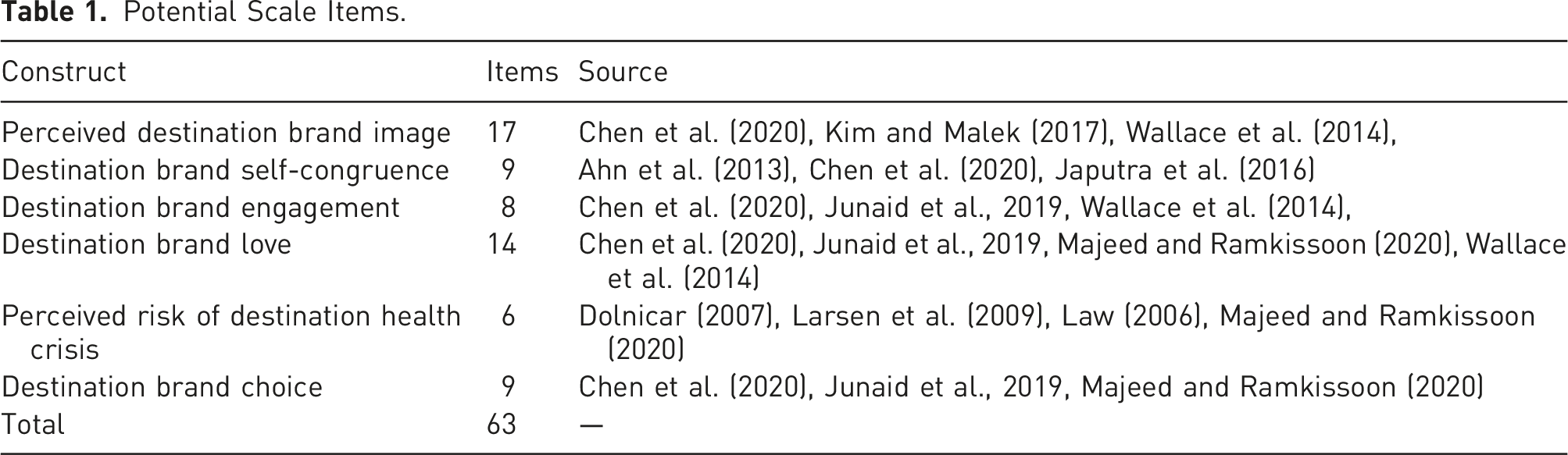
Potential Scale Items.
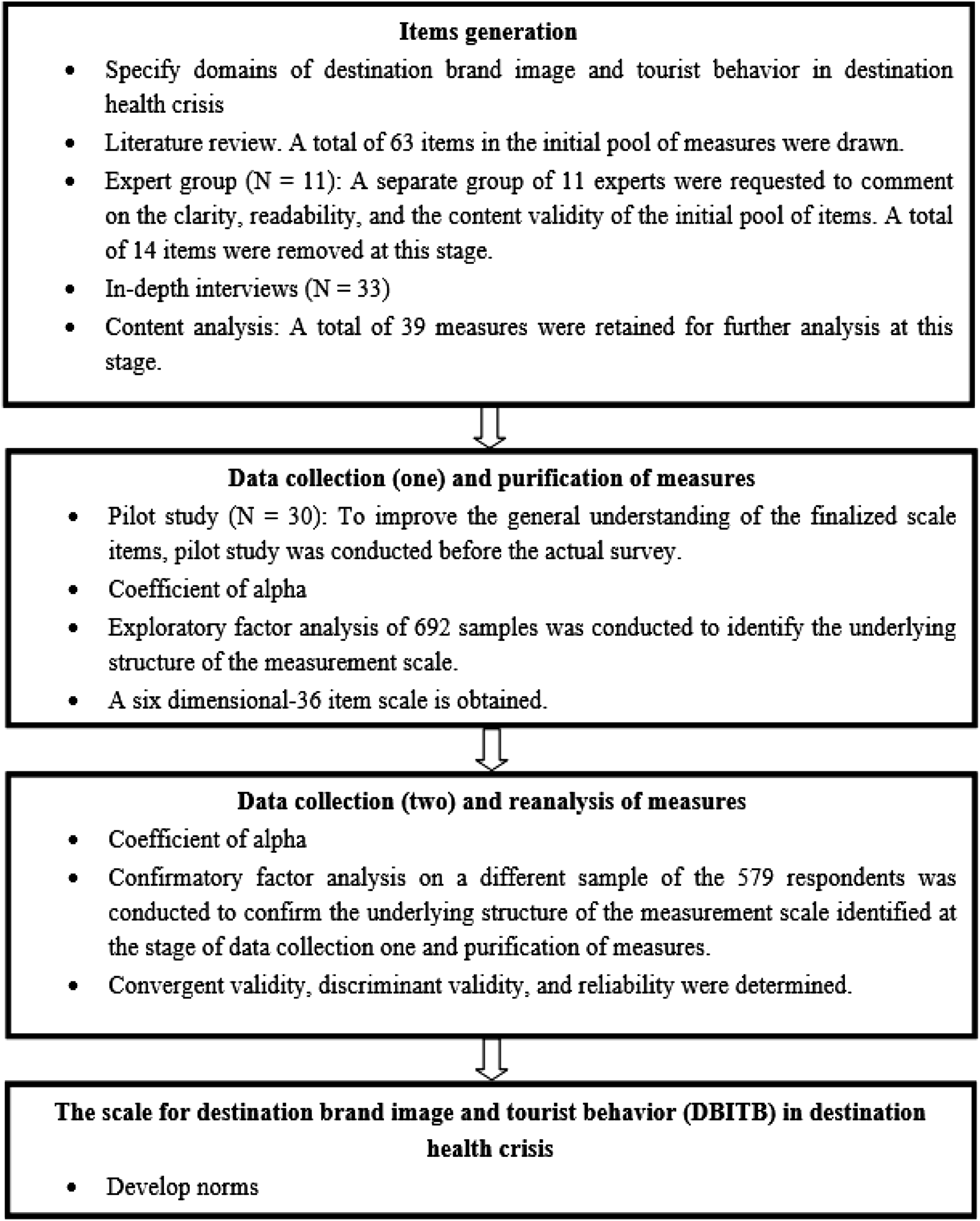
The stages of destination brand image and tourist behavior (DBITB) scale development process.
We conducted in-depth interviews to understand the constructs of this study and to delineate the scale items. The interview technique helps researchers to ask questions at several levels to get the most information from the subject. The combination of structured and unstructured questions can provide depth and richness to the data and, at the same time elicit data that are comparable from one subject to the next (DiCicco-Bloom and Crabtree, 2006; Fylan, 2005). A total of 15 tourism third party agents (TPAs) in the Chinese cities of Fuzhou and Shenzhen were asked over phone calls to provide access to their client tourists for interviews. A total of 11 tourism TPAs, 7 in Shenzhen and 4 in Fuzhou, finally agreed to share the contact details of their client tourists after getting the consent of their clients. We provided written informed consent to tourism TPAs that the anonymity of the study respondents will be ensured, and the gathered data will solely be used to promote research without any commercial interest. Only respondents of at least 18 years of age were considered, meeting the consent requirement. A total of 47 tourists answered our phone calls and were asked to participate in the interview. A total of 38 tourists who had prior experience visiting famous destinations, such as forest recreation areas, national parks, and historic sites or museums, finally agreed to attend phone call interviews scheduled between 17 February 2020 and 20 March 2020 in Fuzhou and Shenzhen, depending on tourist availability. We requested that respondents think about their favorite destination and name that as “brand destination X” while responding to the interview questions.
Screening questions were developed to determine the appropriateness of the study respondents. For example, how recent is your tourism experience? What is the name of your recently visited destination? How frequently do you travel to your brand destination X? The original English versions of the scale items and screening questions were translated into the Chinese language by 2 bilingual lecturers who were proficient in English and Chinese languages. The quality of translated versions of the interview stimuli was compared with the English questionnaire to ensure the correct translation. Each interview lasted for 50–80 min. The note-taking method was used to record the interview data. Findings showed that 5 tourists did not provide satisfactory answers to the screening questions. Thus, a total of 33 tourist responses were considered for further analysis. Descriptive analysis of gathered data showed that a total of 19 interviewees were male and 14 were female. Most of the interviewees were aged between 33 and 55 years with anaverage monthly income of approximately RMB 15,000. Emerging themes, the similarity in the responses of interviewees, and frequently used keywords were highlighted, summarized, collated, and retained for further analysis during the weekly team meetings of the researchers of this study.
Content analysis
The data gathered data from the interviews was organized and examined with content analysis (Kassarjian, 1977). The panel of experts, as introduced above, independently analyzed gathered responses. Each response of the interviewees was categorized as a unit of analysis. We highlighted similarities in keywords and generated 124 analytical units. After a comparison between scale items and analytical units, the acceptable response support was determined in light of expert recommendations. A total of 6 scale items had marginal response support while 43 scale items had acceptable response support. A team of 5 experts, including 3 experts having an industrial background in tourism marketing and 2 experts having recent working experience in the COVID-19 prevention and control unit, were invited to further analyze the scale items and to rate their responses on a 7 point Likert scale, i.e. (1) strongly disagree to (7) strongly agree, to ensure the best fit of developed scale items. A total of 4 scale items were ranked below 3 and thus removed from the finalized list of scale items to be used for the next study. Finally, a total of 39 scale items summarized in 6 constructs were considered for further study (see Figure 2).
Study 2-Scale purification
Respondent Profile (Study 2 and Study 3).
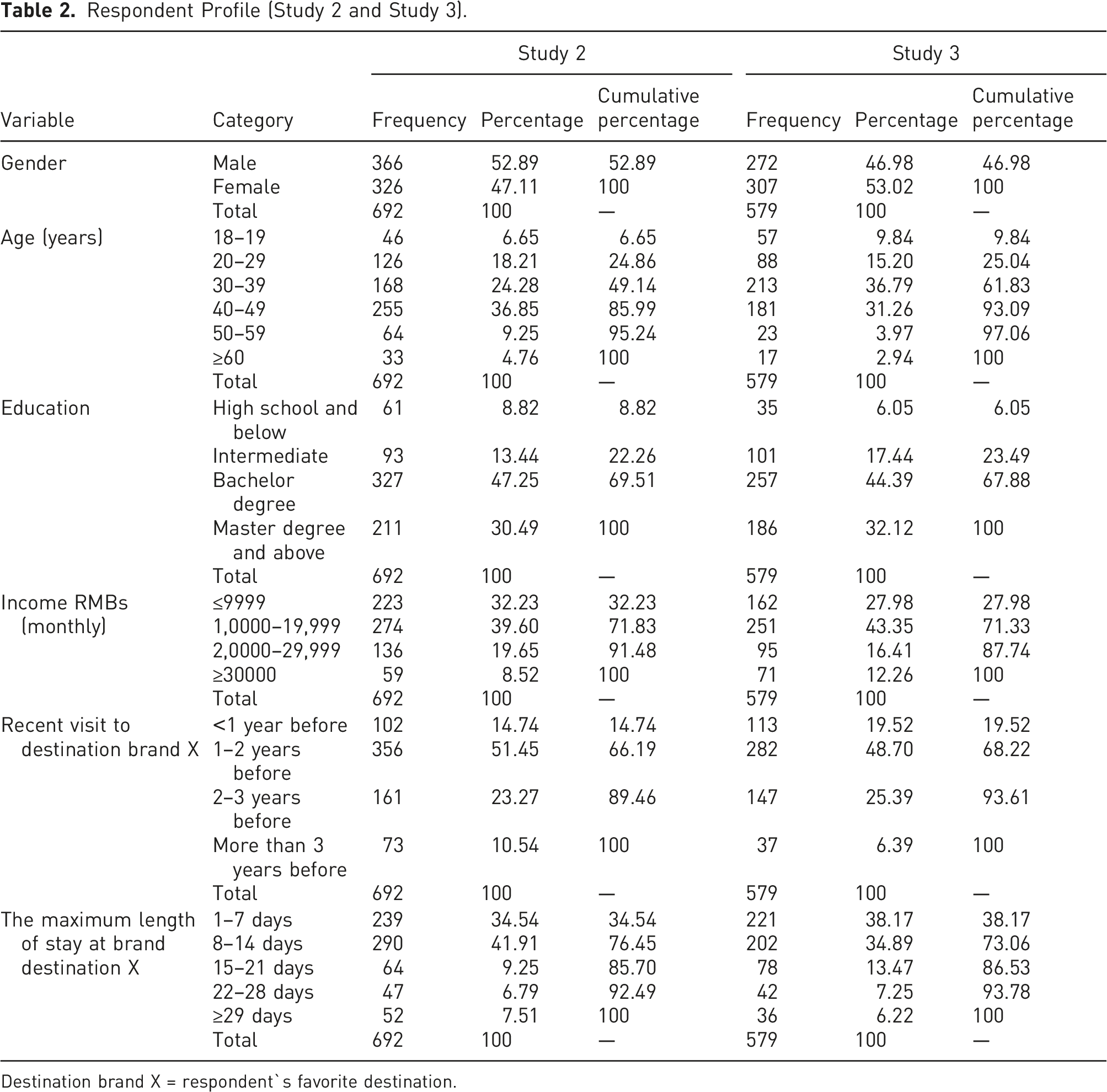
Destination brand X = respondent`s favorite destination.
Item reduction and exploratory factor analysis
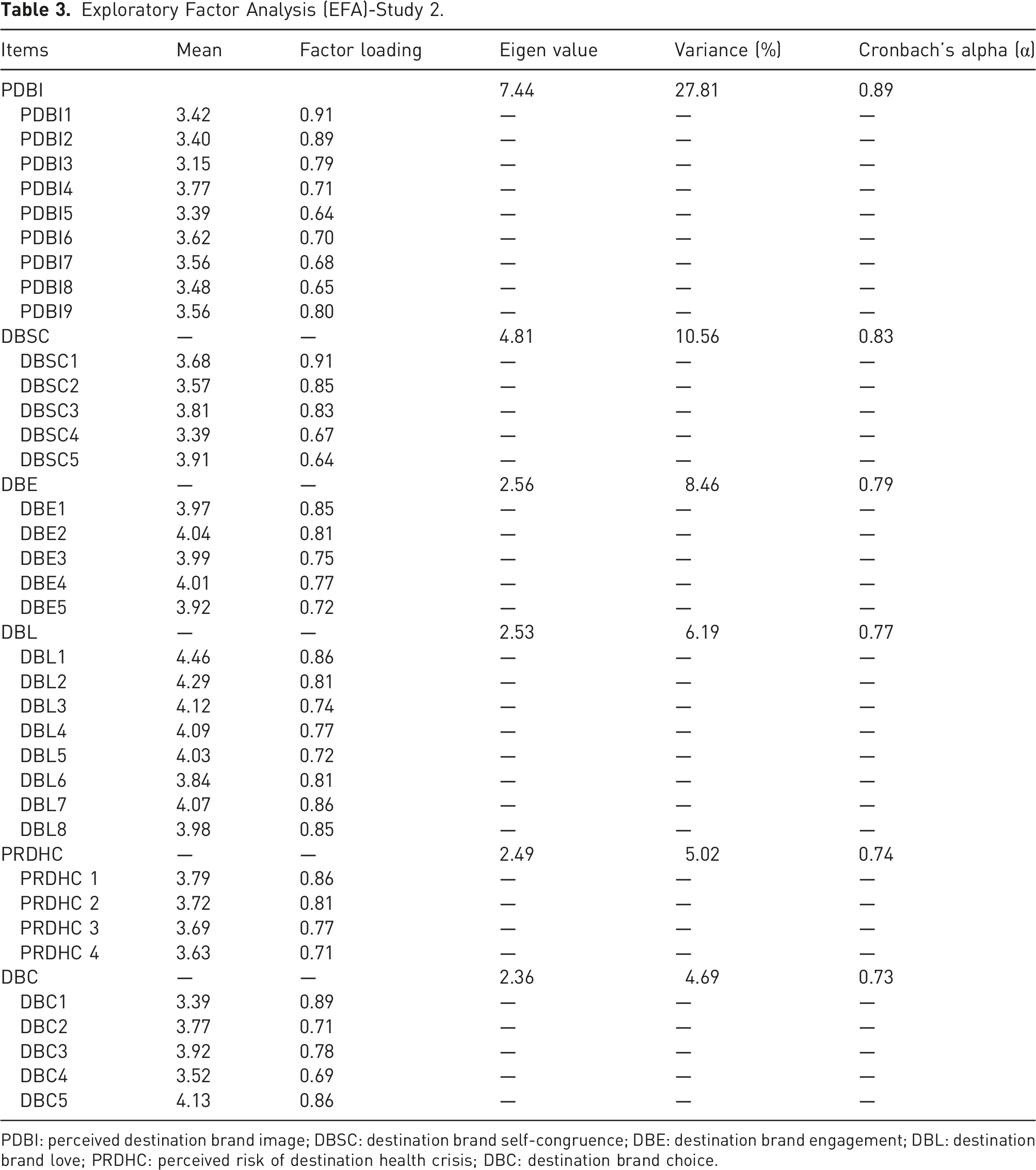
Exploratory Factor Analysis (EFA)-Study 2.
PDBI: perceived destination brand image; DBSC: destination brand self-congruence; DBE: destination brand engagement; DBL: destination brand love; PRDHC: perceived risk of destination health crisis; DBC: destination brand choice.
Findings show that the combined factor loadings are 61.58% of the total variance. The Cronbach’s α values of all factors were greater than 0.70 presenting a reliable estimate and support internal consistency measures (Hair et al., 2010). Findings show that all factor loadings were above the desirable threshold of 0.70 (Hair et al., 2010) except for a total of six factor loadings, i.e. PDBI5, PDBI7, PBDI8, DBSC4, DBSC5, and DBC4, that range from 0.64 to 0.68, which were also well above the acceptable cut-off point of 0.50 (Hair et al., 2010).
Study 3
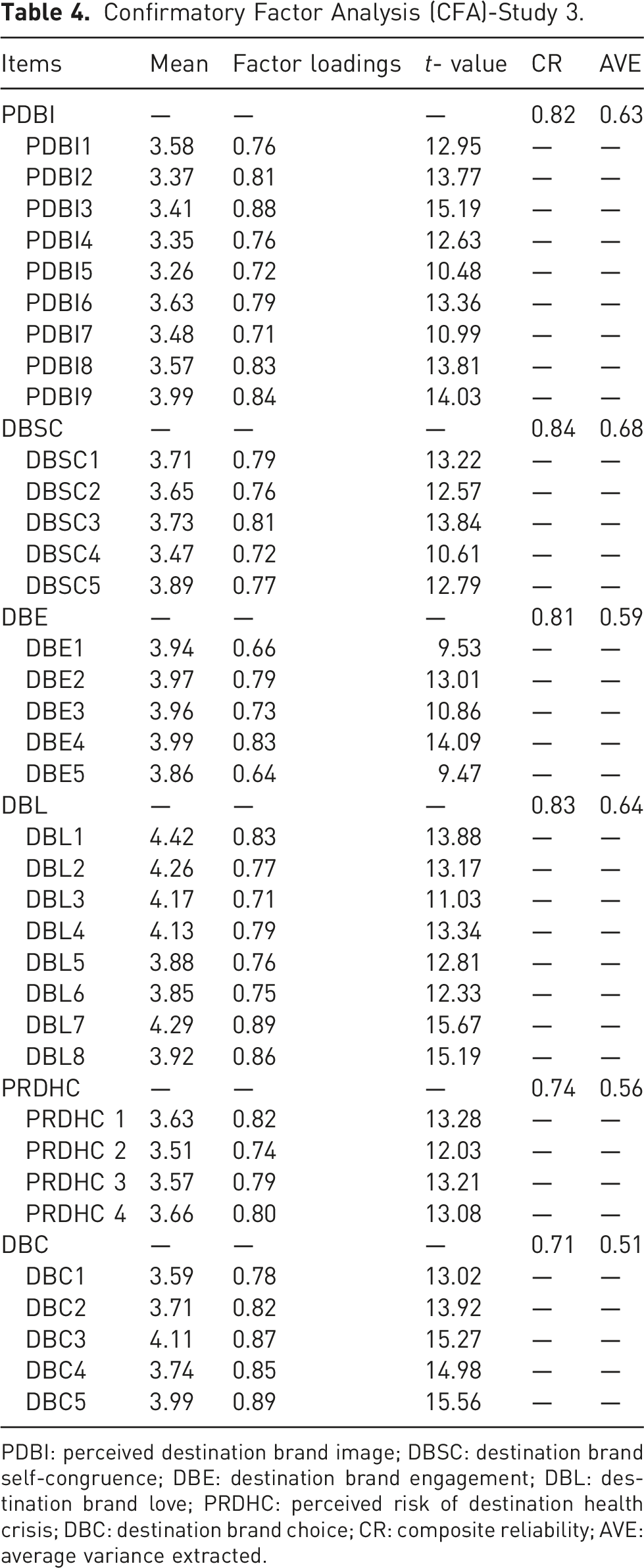
Confirmatory Factor Analysis (CFA)-Study 3.
PDBI: perceived destination brand image; DBSC: destination brand self-congruence; DBE: destination brand engagement; DBL: destination brand love; PRDHC: perceived risk of destination health crisis; DBC: destination brand choice; CR: composite reliability; AVE: average variance extracted.
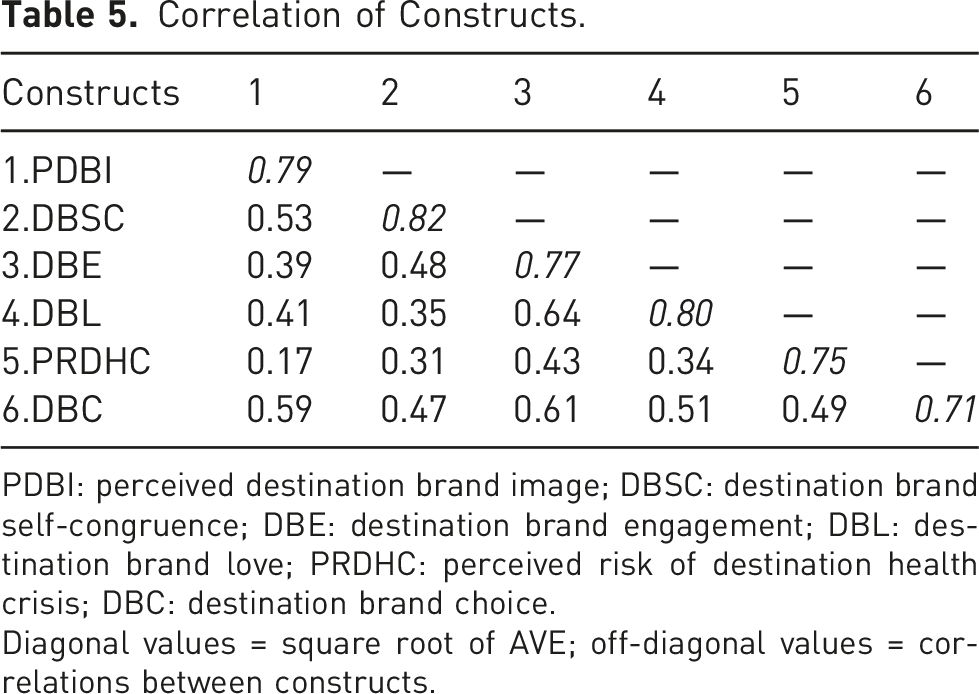
Correlation of Constructs.
PDBI: perceived destination brand image; DBSC: destination brand self-congruence; DBE: destination brand engagement; DBL: destination brand love; PRDHC: perceived risk of destination health crisis; DBC: destination brand choice.
Diagonal values = square root of AVE; off-diagonal values = correlations between constructs.
Table 5 shows that the coefficient of correlation among constructs is less than 0.85 and less than the squared root of AVE for each construct (Fornell and Larcker, 1981), and supports the discriminant validity of the constructs. These findings show that the 6 constructs with 36 items are reliable and valid in this study.
Discussion
The ongoing health crisis, i.e. the COVID-19 pandemic, demands a scale to appropriately measure destination brand image and tourist behavior during and after health crises. A comprehensive and systematic approach based on a multi-study method for scale development (Churchill, 1979) was adopted in this study to measure perceived destination brand image and tourist behavior under the influence of perceived risk of destination health crisis. The developed scale reflects the Chinese tourist perspective, but the scale can be adjusted according to the context of the research to measure tourist perceptions of destination brand image, tourist engagement, and tourist destination brand choice during and after travel to crisis-hit destinations. A 36-item scale, categorized under 6 constructs, reflects tourist cognitive reactions to destination brands suffering through a health crisis. Exploratory factor analysis (Table 3), confirmatory factor analysis (Table 4), and the square root of AVE alongside correlation among constructs (Table 5), shows that the developed scale is consistent, reliable, and valid. This study offers a robust measurement tool to advance research on the topic.
Theoretical implications
This study presents a conceptual framework to showcase how tourist perceived destination brand image interacts with the tourist cognitive reactions that impact tourist destination choice during a health crisis. This study offers a scale for destination brand image and tourist behavior (DBITB) to understand and explain tourist behavior toward destination brands in the ongoing context of the COVID-19 pandemic. Existing studies demonstrate the impact of brand products and services on consumer purchase behavior (Aboulnasr and Tran, 2019; Roy et al., 2016) and the impact of destination brand image on tourist behavior (Afshardoost and Eshaghi, 2020). This study not only confirms the findings of these studies regarding the impact of brand image on an individual behavior, but also extends the scope of destination branding literature by identifying an individual’s cognitive reactions, such as brand self-congruence, brand engagement, and brand love, which remained mixed and fragmented in previous studies and also examined in different contexts (Amaro et al., 2020; Bigne et al., 2019; Chen et al., 2020; Japutra et al., 2017; Rather, 2018; Wang et al., 2019), to interpret the relationship between tourist destination brand image and tourist destination brand choice. Few studies presented risk perception scales in the context of COVID-19 (Zhan et al., 2022). This study expands the theoretical understanding of destination branding and the risk perceptions of destination health crises, offering a DBITB scale in the on-going context of COVID-19 to measure the impact of tourist perceived risk of destination health crisis during travel to destination brands. A DBITB in destination health crisis scale provides support to the conceptual understanding of destination brand image and tourist behavior during the uncertain situation where the risk of contracting health-related complexity is heightened, such as catching COVID-19 virus, which previously remained under-explored. This study provides a measurement tool to support empirical research on DBITB during and after destination health crises. This study provides a timely scale to examine destination brand image, which might have been impaired due to the COVID-19 pandemic and its variants, and measure tourist response toward destination brands during and after the COVID-19 pandemic.
Practical implications
The presented constructs with measurement items in a DBITB scale of destination health crisis serve as clues to promote the relationship between destination brands and tourists during and after health crises. As some countries, such as Australia, Norway, Italy, Turkey, Denmark, South Korea, New Zealand, Thailand, Malaysia, India, Morocco, Cuba, The Philippines, to name a few, have re-opened their borders to welcome fully vaccinated travelers after their temporary closure to control the COVID-19 epidemic, (Kuta, 2022), DMOs have pressing concerns to develop effective marketing strategies to regain the momentum of tourism. However, tourists have reshaped their destination brand choices and prefer destinations that are less crowded, less well-known, and have state-of-the-art health facilities (Avraham, 2021). When developing marketing strategies to promote destination brand image during health crises, DMOs need to be aware of the importance of the interlinked phenomena of tourist cognitive processes, such as self-congruence, emotions, perceptions of health threat, and decision making in response to perceived destination brand image,. DMOs may consider boosting the brand image of tourist destinations which were at a greater risk of spreading the COVID-19 pandemic, e.g. the city of Wuhan in China, Athens in Greece, Milan in Italy, etc., alongside others which were at a lesser risk of the COVID-19 pandemic to resume travel and tourism activities after suffering through the difficulties of the COVID-19 pandemic. The scale presented in this study can be taken as a reference guide to understand tourist preferences for well-known and comparatively less well-known destinations in the context of health crises. A DBITB scale in destination crisis may help to examine the behavioral intentions of existing and new tourists planning to visit destination brands during and after theCOVID-19 pandemic.
Limitations and future research directions
The findings of this study are from the perspective of brand destinations. We encourage future research to utilize the findings of this study to analyze destination crises at non-brand destinations that might have posed a challenge to the local and national tourism industries of such non-brand destinations. Our study population was Chinese tourists. The findings of this study need to be interpreted cautiously for other nationalities due to their distinct cultural norms. Future studies may investigate the moderating impact of culture on the identified constructs of this study to extend the scope of this study.
Conclusion
The major contribution of this study is to develop a tested and validated scale with 6 constructs, i.e. perceived destination brand image, destination brand self-congruence, destination brand engagement, destination brand love, perceived risk of destination health crisis, and destination brand choice, and 36 items to examine destination brand image and tourist behavior for destinations that suffer from health crises, such as the COVID-19 pandemic. The findings of multi-study show that the presented DBITB scale is stable and can be applied to examine perceived destination brand image and tourist behavior during destination health crises. This study provides a robust measurement tool to scholars and practitioners of destination marketing to understand tourist behavior for the promotion of destination brand image during and after destination health crises.
Footnotes
Declaration of conflicting interests
The author(s) declared no potential conflicts of interest with respect to the research, authorship, and/or publication of this article.
Funding
The author(s) disclosed receipt of the following financial support for the research, authorship, and/or publication of this article: This work was supported by National Natural Science Foundation of China (grant # 72172093 and 71832015). The sponsors have no role in the study design; in the collection, analysis and interpretation of data; in the writing of the report; and in the decision to submit the article for publication.

Author Biographies
Items
Item code
Perceived destination brand image (PDBI)
I feel positive when I think about brand destination X
PDBI1
I feel brand destination X will not betray me even during the time of crisis
PDBI2
I feel that brand destination X will keep its promise
PDBI3
I feel that brand destination X cares about its consumers during the time of crisis
PDBI4
Brand destination X adds meaning to people’s lives every time
PDBI5
I feel that brand destination X connects people with their real selves every time
PDBI6
I feel pleased when I think about visiting brand destination X during the time of destination crisis
PDBI7
I feel excited when I think about brand destination X
PDBI8
I feel relaxed when I think about visiting brand destination X even when it is experiencing a crisis
PDBI9
Destination brand self-congruence (DBSC)
I feel that the image of the typical visitors of brand destination X is consistent with how I see myself
DBSC1
The values of brand destination X add meaning to my personality
DBSC2
I feel that the values of brand destination X are close to my personality
DBSC3
The image of the typical visitors of brand destination X is similar to how I would like to be
DBSC4
The image of the typical visitor of brand destination X is similar to how I ideally like to be seen by others
DBSC5
Destination brand engagement (DBE)
Brand destination X captures my attention every time
DBE1
I usually think about brand destination X
DBE2
I frequently talk about brand destination X to others
DBE3
I am always interested in buying products with brand destination X’s name on it
DBE4
I try to learn more about brand destination X
DBE5
Destination brand love (DBL)
I feel strong positive emotions when I think of visiting brand destination X during the time of destination crisis
DBL1
Thinking of a visit to brand destination X makes me happy
DBL2
I feel very attached to brand destination X during the time of destination crisis
DBL3
I feel proud to visit brand destination X
DBL4
To visit brand destination X is a pure delight during the time of destination crisis
DBL5
I could not imagine anything better than the settings and facilities offered by brand destination X during the time of destination crisis
DBL6
I identify strongly with brand destination X during the time of destination crisis
DBL7
I feel a strong sense of belonging to brand destination X during the time of destination crisis
DBL8
Perceived risk of destination health crisis (PRDHC)
I worry that my health might suffer from the occurrence of infectious disease at brand destination X
PRDHC1
I worry that my traveling decision might be affected by the threat of infectious disease at brand destination X
PRDHC2
I worry that I might be exposed to the risk of contagious diseases at brand destination X
PRDHC3
I worry that something may go wrong during my visit to brand destination X
PRDHC4
Destination brand choice (DBC)
I would visit destination brand X during and after the time of destination crisis
DBC1
I always consider brand destination X my first choice
DBC2
I have strong intentions to visit brand destination X during and after the time of destination crisis
DBC3
My friends/family would be disappointed if I start visiting destinations other than brand destination X
DBC4
I frequently explore information online about brand destination X to book an early visit
DBC5