




Abstract
Sustainable innovation is a solution for the hospitality and tourism (H&T) industries to cope with the COVID-19 crisis, build resilience, and ensure survival post-pandemic. The primary aim of our review is to systematically identify and critically review the literature on sustainable innovation in H&T amid COVID-19 (conducted in 2020 and 2021), in order to synthesize and classify prevalent types, antecedents, and outcomes of sustainable innovation. The authors present a comprehensive review of the 58 articles on sustainable innovation in H&T through the Web of Science (WoS) database, spanning over 2 years (2020–2021). This review demonstrates that since the beginning of COVID-19, H&T have strongly mobilized network technologies (especially social media and digital platforms) and data-processing technologies (especially Artificial Intelligence (AI) and Machine Learning (ML)) in comparison with physical-digital interface technologies (especially Virtual Reality (VR)), while physical-digital process technologies remain very limited in these industries. Several relevant antecedents of the adoption of sustainable innovation, more specifically digital technologies, have been identified at multiple levels of analysis, including the organizational, managerial, and stakeholder levels. Our research also reveals several consequences of the adoption of sustainable innovation in H&T. These consequences were congregated according to the three main dimensions related to sustainability in economic, social, and environmental outcomes. This study provides important practical implications for the H&T sectors in the digital era and post-pandemic. The current research is the first study to systematically and critically review sustainable innovation in an H&T context.
Keywords
Introduction
Innovation is important for sustainable development (Boons, Montalvo, Quist and Wagner, 2013; Elkhwesky and Elkhwesky, 2022; Elkhwesky, Salem, Varmus and Ramkissoon, 2022). Innovation is not only related to new ideas or research and development, but also refers to the successful utilization and commercialization of novel ideas (Charter and Clark, 2007). In the H&T industry, innovations are significant to enhance efficiency, improve productivity, and increase customers' loyalty (Bilgihan and Nejad, 2015). Examples of these innovations include wearable devices to identify guests, robots, voice-over internet protocol phones that are linked with an enterprise’s ecosystem, electronic luggage tags, mobile self-check-in, tablet menus, and smartwatch boarding passes to allow passengers to receive flight updates (Bilgihan and Nejad, 2015).
The COVID-19 pandemic has accelerated a process of digitalization (López Peláez, Erro-Garcés, Pinilla García and Kiriakou, 2021). Innovations could be a solution for H&T to cope with this crisis, build resilience, and survive post-pandemic (Breier, Kallmuenzer, Clauss, Gast, Kraus and Tiberius, 2021; Elkhwesky, Salem, Varmus et al., 2022; Sharma, Shin, Santa-María and Nicolau, 2021; Sharma, Thomas and Paul, 2021). More specifically, Mohanty, Hassan, and Ekis (2020) revealed that Augmented Reality (AR) as a part of innovation is important for tourism to be relaunched post-COVID-19.
The concept of sustainable innovation has gained a great interest in literature (e.g. Hemonnet-Goujot, Kessous and Magnoni, 2022; Inigo and Albareda, 2016; Ketata, Sofka and Grimpe, 2015). There are diverse definitions of sustainable innovation. For instance, sustainable innovation can be defined as innovation that fosters sustainable performance (Boons et al., 2013). Additionally, sustainable innovation is to integrate sustainability aspects (i.e. environmental, financial, and social) into company systems (Charter, Gray, Clark and Woolman, 2017). This applies to products, services, and technologies, as well as to new business and organizational models (Boons et al., 2013). Sustainable innovation is also defined by Tello and Yoon (2008) as developing novel services, technologies, and products for human needs and organizations with respecting the world’s natural resources and regenerative capacity.
Likewise, sustainable innovation refers to “the renewal or improvement of products, services, and processes that not only deliver improved economic performance but also enhanced environmental and social performance, in both the short and long term. Its long-term focus, integrated value creation, and transformative nature set sustainable innovations apart from conventional innovation” (Bos-Brouwers, 2010, p. 431).
Sustainable innovation is vital for business and society (Larson, 2000). In this vein, Chen (2016) stated that sustainable innovation is the long-winded source of enterprises' development. More specifically, sustainable innovation is important for creating new global markets (Boons et al., 2013). In this regard, sustainable innovation is important for enterprises to reduce their negative impacts either social or environmental, and ultimately improve business performance (Kneipp, Gomes, Bichueti, Frizzo and Perlin, 2019).
Furthermore, sustainable innovation in products, services, processes, and business models is the demand of legislation and society from enterprises to achieve sustainable development (Kneipp et al., 2019). Importantly, sustainable innovation is critical for long-term development because it helps businesses achieve economic, environmental, and social objectives (Cillo, Petruzzelli, Ardito and Del Giudice, 2019).
In the H&T context, Horng, Liu, Chou, Tsai, and Chung (2017) affirmed that sustainable innovation is a significant attribute in modern management and it is widely recognized by managers and experts. Additionally, sustainable innovation is important for the H&T industries to benefit the local economy, maintain cultural heritage, and reduce ecological impacts (Hallenga-Brink and Brezet, 2005). In the COVID-19 pandemic context, Lee and Trimi (2021) stated that sustainable innovation has a profound importance for both the survival and success of businesses (Salem, Elbaz, Elkhwesky and Ghazi, 2021; Salem, Elkhwesky and Ramkissoon, 2021).
The current review is needed since sustainable innovation research is important to comprehend how novel technologies and social practices enable communities to be more sustainable (Boons and Lüdeke-Freund, 2013). Our systematic review was based on the study of Aka (2019) who exhibited that future research is necessary on sustainable innovation to help managers how to develop these innovations. Our research was also initiated on the recommendation of Reficco, Gutiérrez, Jaén, and Auletta (2018), who affirmed that there is a critical need for more research on sustainable innovation since its importance for businesses' success and survival.
The current review followed the recommendation of Lee and Trimi (2021) to explore the strategic significance of sustainable innovation for enterprises in the digital era and amid COVID-19. Additionally, illustrating the types of innovations adopted during COVID-19 is a promising area for research (Brem, Viardot and Nylund, 2021). Hence, our review aims to indicate the types and outcomes of sustainable innovation during the COVID-19 pandemic (2020–2021). Previous systematic reviews on sustainable innovation did not focus on H&T sectors and did so without indicating their types, antecedents, and outcomes in a comprehensive manner (e.g. Cillo et al., 2019). Prior systematic reviews were also conducted in general domains (e.g. Afeltra, Alerasoul and Strozzi, 2021).
The current paper contributes to the body of knowledge by pushing the H&T industries to adopt sustainable innovations by indicating their antecedents, applications, and outcomes since innovation is still a buzzword with slow adoption in the H&T sectors (Bilgihan and Nejad, 2015). The current review is also important for H&T, specifically for small and medium-sized enterprises that are dominant in H&T (Elkhwesky, Castañeda-García, Abuelhassan and Tag-Eldeen, 2022), to understand the actors that drive sustainable innovation. Understanding these actors is a critical area of research (Kallmuenzer, 2018). More recently, De Larrea, Altin, Koseoglu, and Okumus (2021) asserted that there is an essential need to understand the innovation phenomenon in both H&T.
Consequently, the primary aim of our review is to systematically identify and critically review the literature on sustainable innovation in the H&T industries since the beginning of the COVID-19 pandemic (January 2020–December 2021), to synthesize and classify prevalent types, antecedents, and outcomes of sustainable innovation. Ultimately, our systematic review provides important practical implications for the H&T sector.
Methodology
The methodology used in this work is a systematic review. To ensure that data collection follows a rigorous, transparent, and reproducible process, systematic reviews follow four stages (Elkhwesky, 2022; Elkhwesky, Castañeda-García et al., 2022; Elkhwesky, Salem, Ramkissoon and Castañeda-García, 2022; Elkhwesky, Salem, Varmus et al., 2022): identification of databases and keywords; screening and selection of relevant articles; eligibility of relevant articles; and inclusion of the selected articles (Figure 1). The PRISMA flow diagram.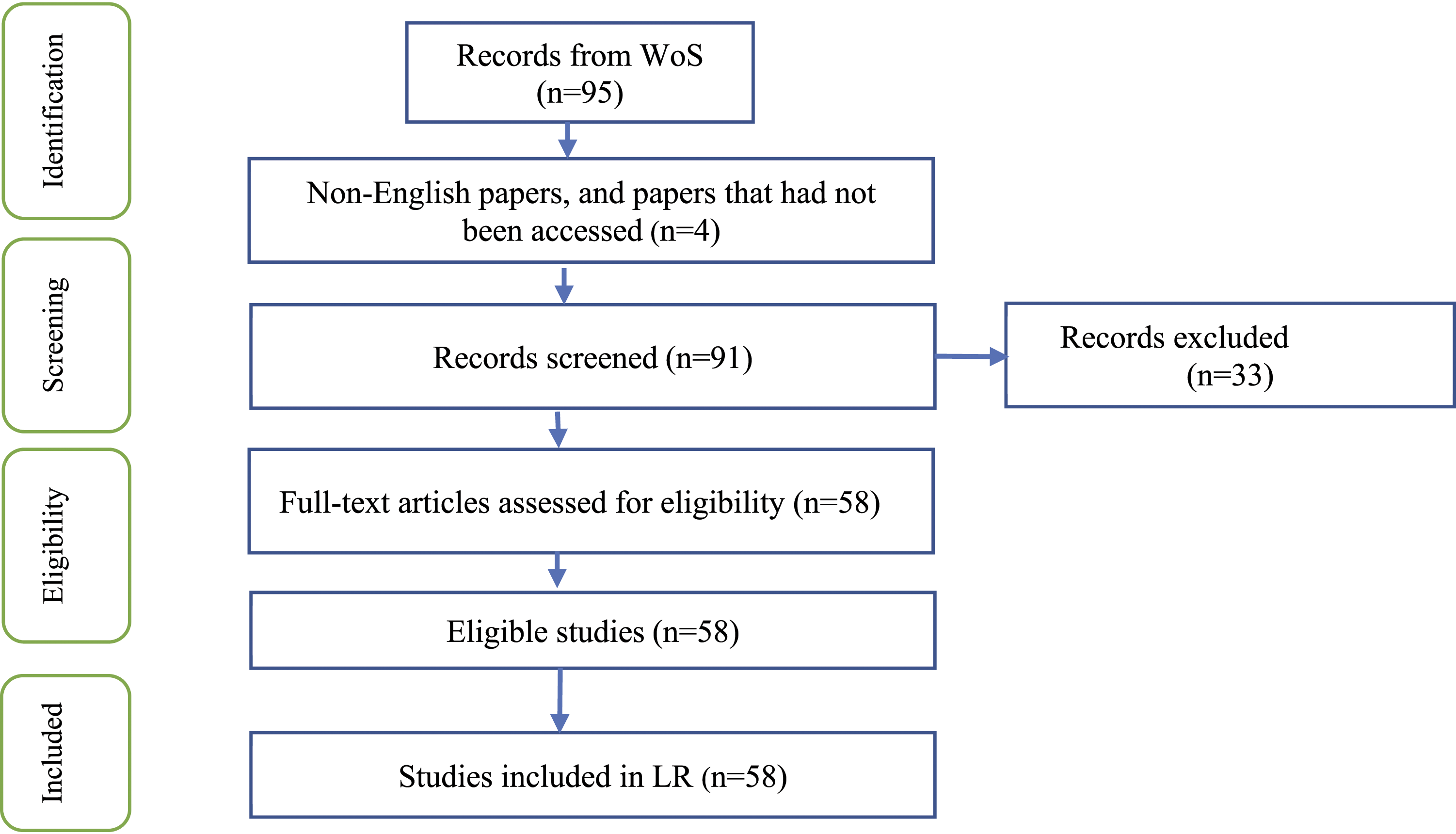
The WoS, which is a comprehensive database of papers with extensive bibliographic information, was used to find publications for this study. With 171 million records, more than 34,000 articles indexed, and 1.89 billion cited references, WoS is a major database (Clarivate.com, 2021; Elkhwesky, 2022). As a result, WoS is widely utilized for bibliometric analysis in a variety of fields, including H&T (Rodríguez-López, Alcántara-Pilar, Del Barrio-García and Muñoz-Leiva, 2020).
Based on Singh, Singh, Karmakar, Leta, and Mayr (2021), the WoS is a more selective database than Scopus and Dimensions. Due to the ability of the WoS to provide several options for filtering content, it is vital in performing systematic reviews (Elkhwesky, Salem, Ramkissoon et al., 2022; Gusenbauer and Haddaway, 2020). The WoS is a well-established and well-known database to conduct systematic and major reviews in H&T (Elkhwesky, 2022; Elkhwesky, Castañeda-García et al., 2022). The overlap between the WoS and Scopus databases is high (59%) in H&T (Álvarez-García, Durán-Sánchez, del Río-Rama and Simonetti, 2020; Sánchez, Del Río and García, 2017).
First, the authors used a list of keywords in themes to find the most relevant literature as promptly as possible. The search keywords were chosen based on (a) the concept of sustainable innovation and current literature and (b) consultation with and confirmation from two subjective experts. These keywords include sustainable innovation or sustainable technology in combination with travel or flight or destination or travel agency or travel agent or tour or museum or tourism or hospitality or restaurant or food service or hotel or motel or food-service or foodservice. To select studies that were conducted during the COVID-19 pandemic (2020–2021), the researchers also used a list of keywords which include corona or COVID-19 or COVID or pandemic or crisis or virus.
In December 2021, the authors used the aforementioned string to find relevant literature based on titles, abstracts, and keywords. The researchers next studied the titles and abstracts of the publications. The following were the inclusion criteria: (1) the focus is on sustainable innovation in H&T sectors, (2) English is the language used, and (3) access to the article via the authors' email university. Then, the COVID-19 pandemic was given a timeframe of 2020–2021 (until 22 December 2021).
For the subsequent analysis, 58 studies published from 2020 till the end of December 2021 were suitable for the latter. Finally, the publications' content was examined using systematic literature reviews in the H&T areas (Elkhwesky, 2022; Elkhwesky, Castañeda-García et al., 2022; Elkhwesky, Salem, Ramkissoon et al., 2022; Elkhwesky, Salem, Varmus et al., 2022). To sort out discrepancies and reach a consensus, each piece was subjected to a case-by-case in-depth discussion and analysis. The authors' names were sorted from A to Z to compile the data set. The articles were then classified according to types, antecedents, and outcomes of sustainable innovation. The purpose statement and significant findings were identified, as were the themes, which helped us identify the basic and transversal themes. Figure 1 depicts the review strategy (PRISMA; Liberati, Altman, Tetzlaff, Mulrow, Gøtzsche, Ioannidis, Clarke, Devereaux, Kleijnen and Moher, 2009).
Data systematic review and analysis
Papers' journal background
The selected 58 papers have been published across 43 different journals (Figure 2). It was found that more than half of the journals (33 = 66%) have published just one paper on the topic. Three journals have published three papers: Tourism Geographies (3 = 5%), Journal of Sustainable Tourism (3 = 5%), and Worldwide Hospitality and Tourism Themes (3 = 5%); while three journals have published two papers: Management and Marketing-Challenges for the Knowledge Society (2 = 3%), Journal of Enterprise Information Management (2 = 5%), and Current Issues in Tourism (2 = 5%). The leading journal that has published the most articles is the Sustainability journal (10 = 17%). Journals of reviewed articles.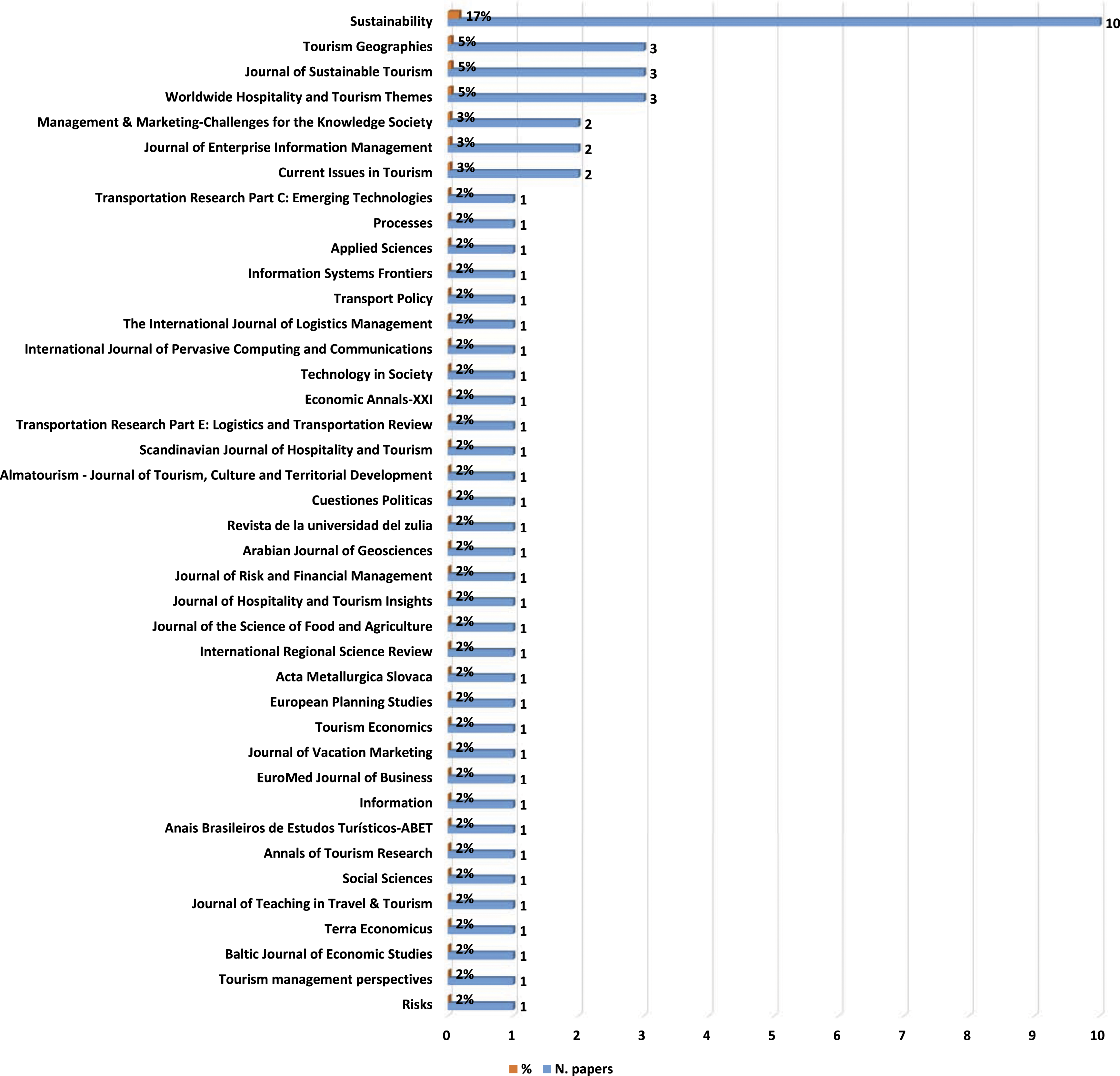
Methodology of the articles
As shown in Figure 3, most of the studies are quantitative (24 = 41%), compared to the small number of qualitative ones (8 = 14%), while a part of the studies (12 = 21%) have opted for a mixed methodology (both quantitative and qualitative). The authors note that 24% of the studies are conceptual in the form of literature reviews or monographs. Articles' methodology.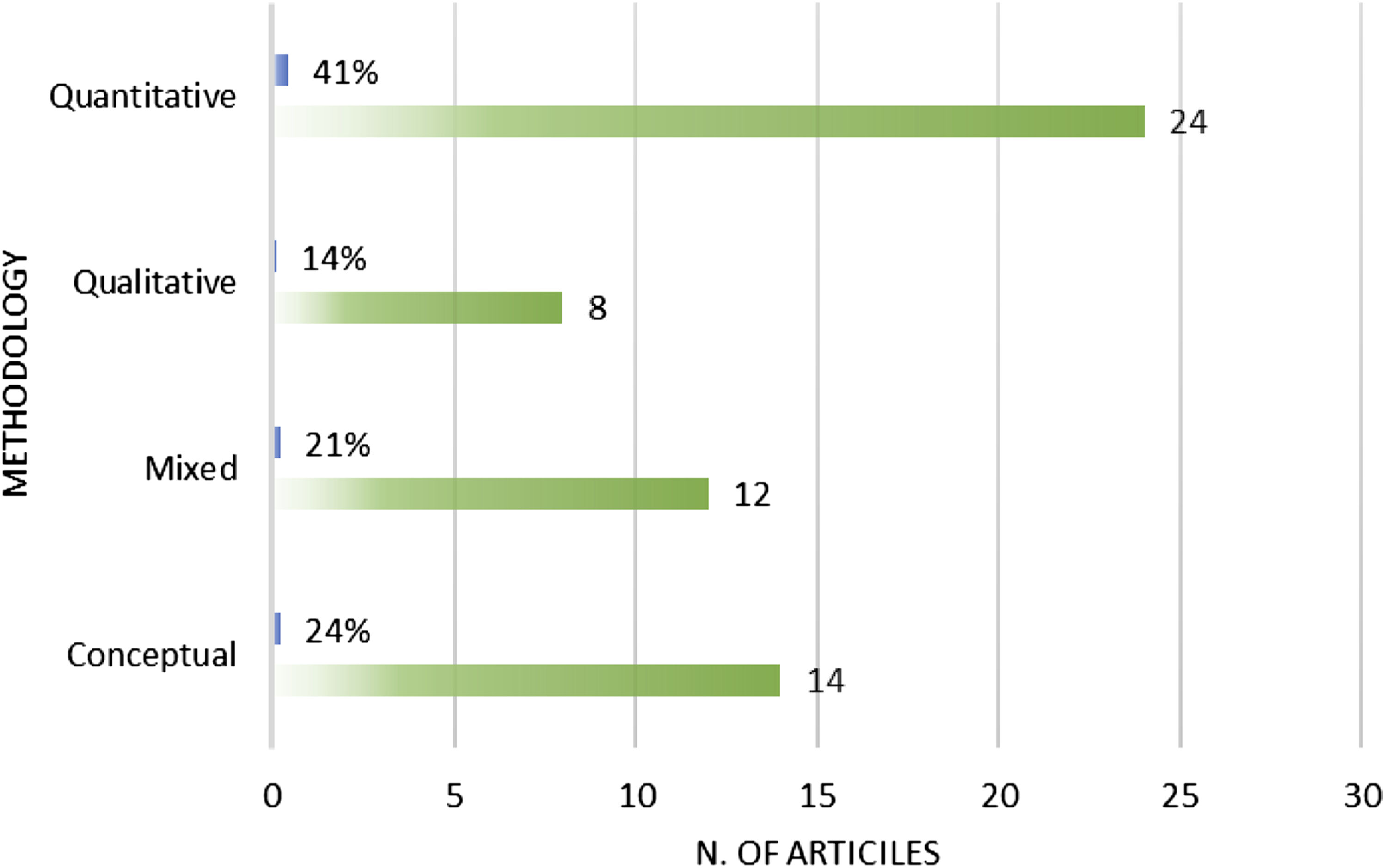
Geographical distribution of the articles
Figure 4 shows that the reviewed empirical studies came from 26 countries belonging to different continents (Europe, Asia, America, and Africa). Among the 26 countries, China (10%), Italy (8%), and the USA (7%) predominate. It should also be noted that 10% of the studies are multinational (conducted in more than one country). The remaining studies (79%) are distributed in different countries of the world. Geographical distribution of articles.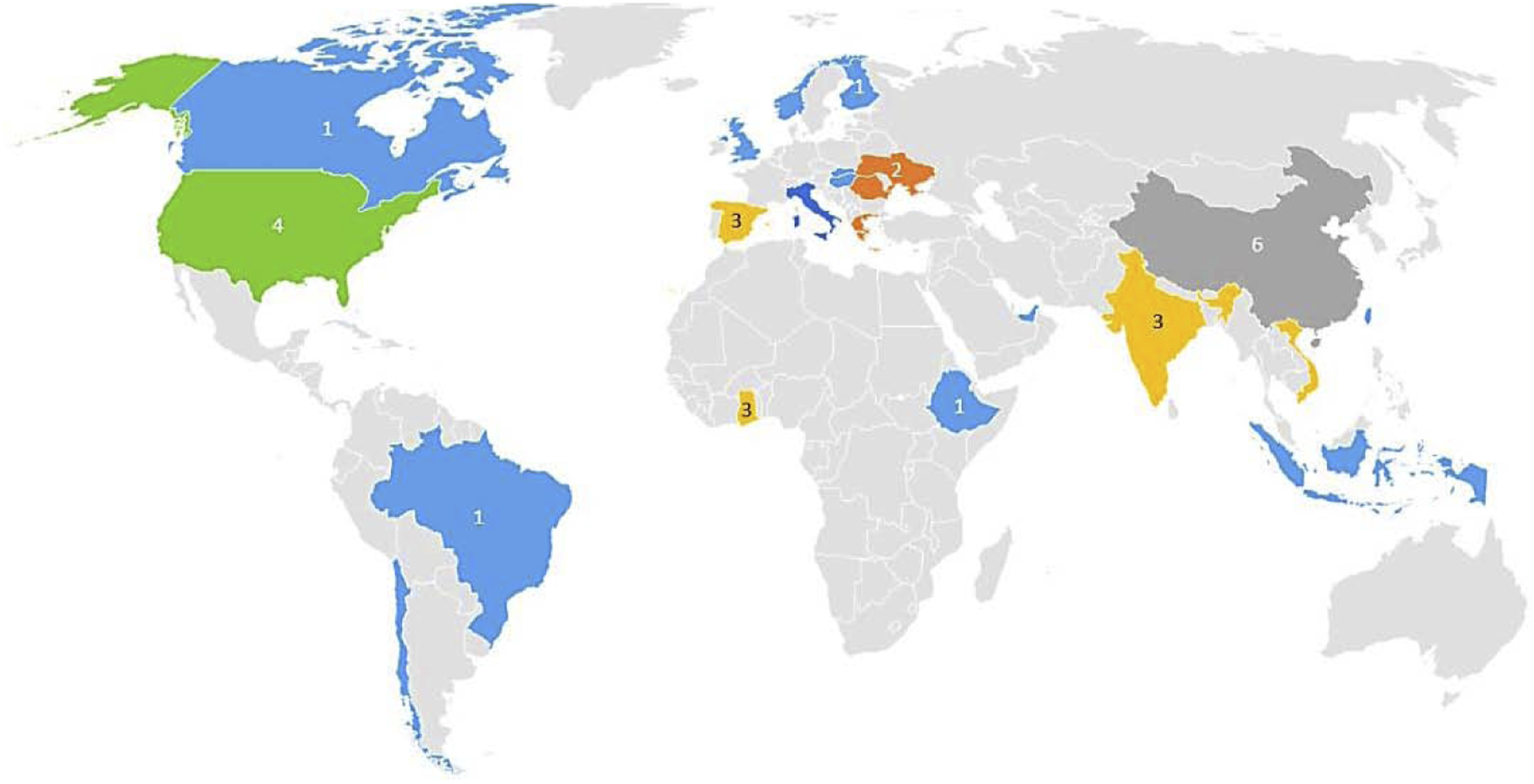
Thematic Map
Based on the analysis of the relationships between the keywords, the thematic map was used to bring out the conceptual structure of the topic. This latter has two axes, x (density) and y (centrality). The density is a measure of the development of the chosen theme, while centrality measures the importance of the central theme (Sharma, Malik, Kaur and Saini, 2021). A thematic map is an extremely informative plot that allows us to examine themes based on the quadrant in which they are situated: (1) motor-themes (the upper-right quadrant); (2) very specialized/niche themes (the upper-left quadrant); (3) emerging or disappearing themes (the lower-left quadrant); and (4) basic themes (the lower-right quadrant).
According to Figure 5, the research pivoted on seven themes: development policies, hospitality, sustainable tourism, sustainability, innovation, VR, and tourism. Most of the research has concerned the basic and transversal themes of COVID-19, sustainable tourism, sustainability, and innovation, which are shared and arise among the studies. Hospitality is a niche theme that is very specialized and peripheral and could be developed. VR and tourism are the motor themes that are the most developed in the reviewed literature. Finally, development policies could be noted as an emerging theme as the authors see more and more reports and policies related to sustainable development and technology from countries around the world. Thematic map.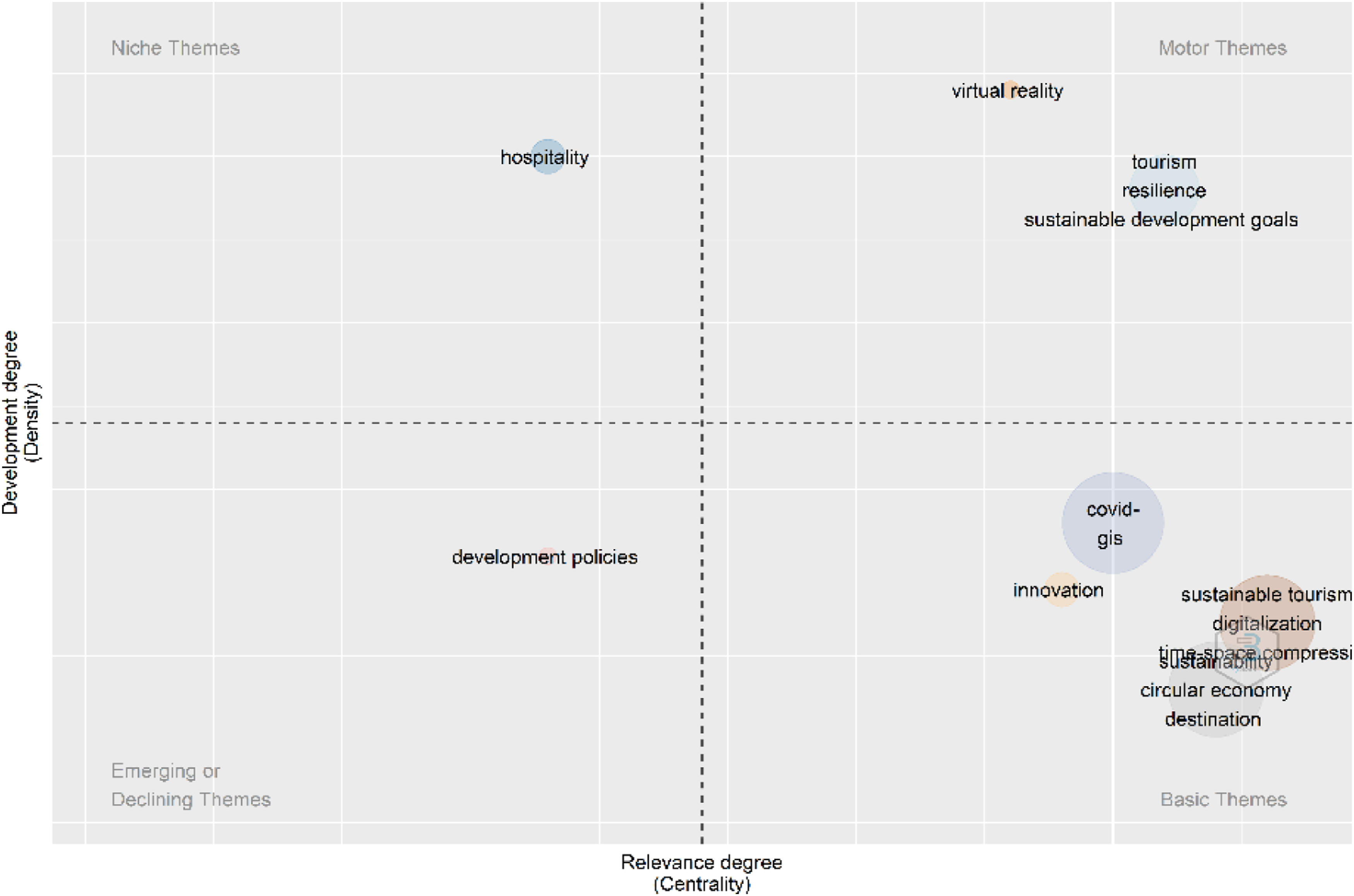
Discussion
As previously mentioned, sustainable innovation encompasses technologies and innovations to improve sustainability. From this conception, the researchers consider sustainable innovation in terms of digital technologies adopted by firms and the different innovation types that result from them for sustainable H&T.
Digital technologies in the hospitality and tourism (H&T) industries
The studies have evoked different and various digital technologies related to industry 4.0 that can be used in the H&T sectors. To better understand these technologies, they could be presented in four categories (Culot, Nassimbeni, G., Orzes, G., & Sartor, 2020).
Physical-digital interface technologies (high share of hardware components/extended network connectivity) connect cyberspace to the realities of machinery, products, and workers. The category includes the Internet of Things (IoT) like an electronic key, Radio Frequency Identification (RFID) used by hotels or lodging companies (Costa and Pereira, 2019; Elkhwesky and Elkhwesky, 2022; Farías and Cancino, 2021; Kumar, Maheshwari, Prabhu, Prasanna, Jayalakshmi, Suganya, Malar, & Jothikumar, 2020), high interactivity devices (e.g. voice assistants) (Papagiannidis and Davlembayeva, 2021), robotic room services and contactless hosting (Srivastava, Sengupta, Kumar, Biswas and Ishizaka, 2021), and drones used in providing online virtual tours of open-space tourist attractions (Ilkhanizadeh, Golabi, Hesami and Rjoub, 2020; Mehta and Sharma, 2021).
The most commonly used technology is the visualization technologies (e.g. VR, AR, augmented virtuality, mixed realities, future realities, real-time tour, and videoconferencing tools) used in tourism (cultural tourism and tour operations) (Briciu, Briciu and Kavoura, 2020; Caballini, Agostino and Chiara, 2021; Cardoso, 2020; Cooke and Nunes, 2021; Fennell, 2021; Gössling, 2020; Ianioglo and Rissanen, 2020; Kwok and Koh, 2021; Lemmi and Deri, 2020; Lu, Xiao, Xu, Wang, Zhang and Zhou, 2021; Streimikiene and Korneeva, 2020; Van, Vrana, Duy, Minh, Dzung, Mondal and Das, 2020; Varelas, Karvela and Georgopoulos, 2021). Also, virtual communication through live-streaming platforms and videoconferencing software (Amoah, Belás, Khan and Metzker, 2021; Caballini et al., 2021; Viñals, Gilabert-Sansalvador, Sanasaryan, Teruel-Serrano and Darés, 2021).
Network technologies (high share of software components/extended network connectivity) offer online functionalities, such as blockchain technology used in museums (Lemmi and Deri, 2020; Wang, Chen and Deng, 2021); interoperability (e.g. property management systems in hotels or lodging companies) (Farías and Cancino, 2021); and cybersecurity solutions (e.g. anti-cyber-crimes programs in service firms operating in tourism) (Ajmal, Khan, Shad, AlKatheeri and Jabeen, 2021). Social media are the most adopted network technologies by tourism (Ajmal et al., 2021; del Vecchio, Malandugno, Passiante and Sakka, 2021; Gössling, 2020; Ianioglo and Rissanen, 2020; Lemmi and Deri, 2020; Varelas et al., 2021) and hospitality firms (e.g. hotels or lodging companies) (Amoah et al., 2021; del Vecchio et al., 2021; Farías and Cancino, 2021; Ianioglo and Rissanen, 2020; Lemmi and Deri, 2020).
Data-processing technologies (high share of software components/low level of connectivity) aid in data analysis and provide data-driven input for control and decision-making. These technologies involve big data analytics more adopted in the tourism sector (Costa and Pereira, 2019; del Vecchio et al., 2021; Gössling, 2020; Mondal, Sahoo, Paria, Chakraborty and Alamri, 2021), (Mehta and Sharma, 2021; Van et al., 2020), real-time information, translation, connection with weather data for cultivation, monitoring (Karagiannis and Metaxas, 2020), and the Multi-Criteria Decision-Making (MCDM)-based framework combining the Fuzzy Analytic Hierarchy Process (FAHP) and the Weighted Aggregated Sum Product Assessment (WASPAS) used to evaluate and select online food delivery (Nguyen, Lin and Dang, 2021). The latter are considered as simulation and modelling technologies. ML is also underutilised in the tourism sector (Ajmal et al., 2021; Cui, He and Bian, 2021; Kumar et al., 2020) compared with AI which is quite common between hotels, restaurants, tour operations, and travel firms (Ajmal et al., 2021; Costa and Pereira, 2019; Cui et al., 2021; Gössling, 2020; Srivastava et al., 2021; Van et al., 2020). Even though data-processing technologies can function locally, they are more and more carried through cloud computing platforms (Ajmal et al., 2021; Culot et al., 2020; Farías and Cancino, 2021; Ianioglo and Rissanen, 2020; Kumar et al., 2020).
Physical-digital process technologies (high share of hardware components/low level of connectivity) including manufacturing equipment and novel materials, as well as energy management solutions such as hydrogen and fuel cell technologies have been identified as key Regional Innovation Policies (RIP) solutions for reducing greenhouse gas emissions and energy consumption (Cooke and Nunes, 2021), or LanzaTech’s Sustainable Aviation Fuel (SAF) produced from waste gas-derived ethanol (Kondo and Hegedus, 2020), and intelligent automation in tourism workplaces (Rydzik and Kissoon, 2021).
Figure 6 summarizes the adopted digital technologies and shows that, since the beginning of the COVID-19 crisis, H&T have strongly mobilized network technologies (especially social media and digital platforms) and data-processing technologies (especially AI and ML) in comparison with physical-digital interface technologies (especially VR), while physical-digital process technologies remain very limited in these industries. Key industry 4.0 digital technologies adopted in H&T during COVID-19.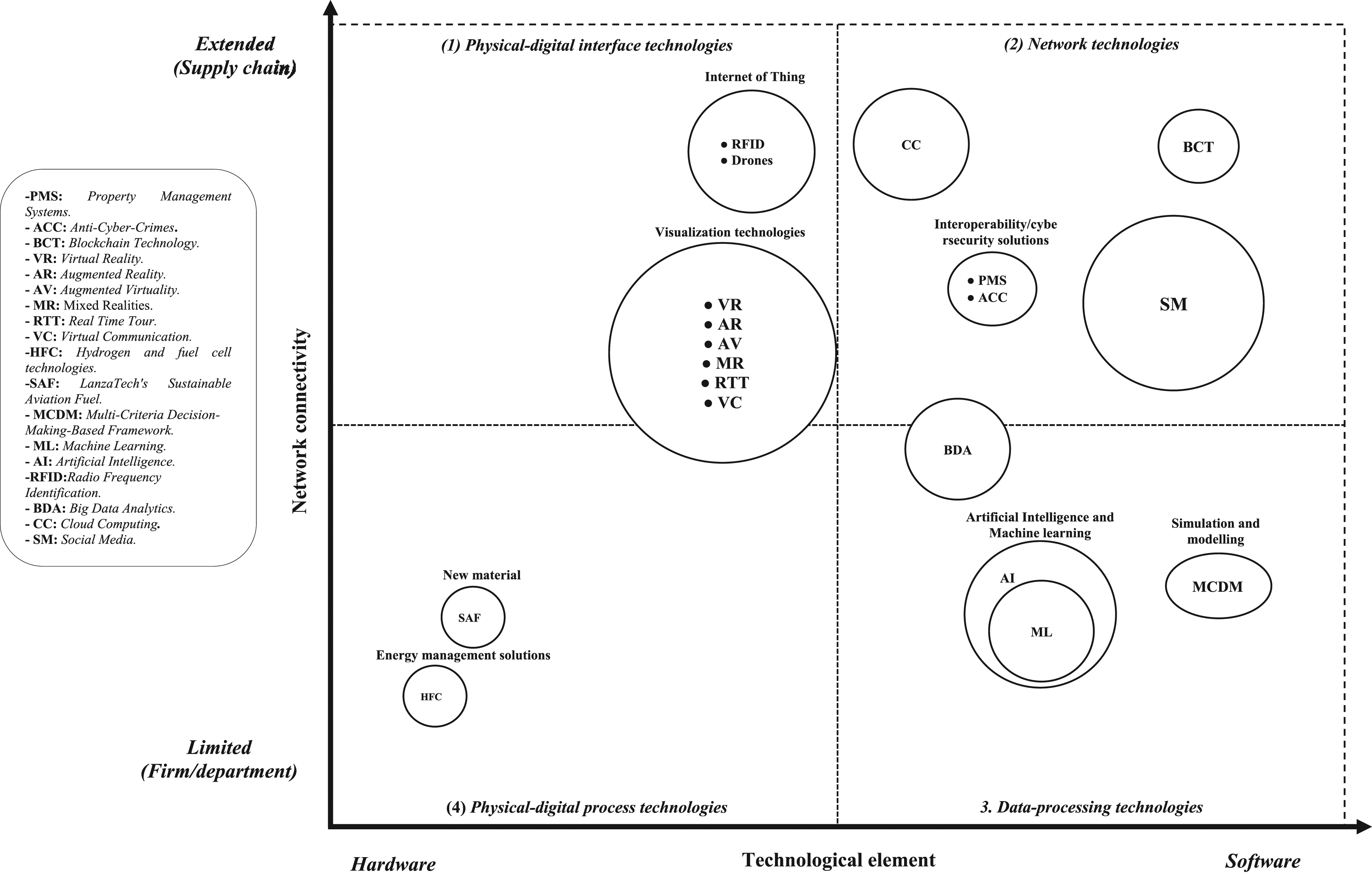
Sustainable innovation in the hospitality and tourism (H&T) industries
The resilience of the H&T sectors depends on their potential for innovation (Bangwayo-Skeete and Skeete, 2021). They must engage in innovation that respects sustainable development goals. In this sense, the profound inter-reliance of digital technologies plays a significant role as an enabler for the capacity of H&T firms to embrace different types of innovations that are sustainable. Based on our systematic and critical review, in the following sections, the authors describe these types of innovations (i.e. product, marketing, organizational, and business model).
Product/service innovation
Thanks to digital technologies, H&T firms can introduce new digital and sustainable products/services, or integrate digital technologies into existing ones, in times of pandemics and regional or global lockdowns. For instance, European Commission research shows that tour operators now use innovative technologies to develop differentiated tourism products (Barna and Semak, 2020). Through a case study of six historic sites in Rome, Ilkhanizadeh et al. (2020) showed that drones might be used to provide live virtual tours of open-space tourist locations, which would be an eco-friendly innovation and solution to the over-tourism problem during pandemics.
In the same vein, Lu et al. (2021) studied virtual tourism through the use of VR, which brings a new immersive experience to people without being physically at the destination, which can assist the control of COVID-19 by reinforcing stay-at-home order. The use of virtual tourism in tourism destinations, such as museums, indoor scenic sites, and cultural cities (Briciu et al., 2020; Ianioglo and Rissanen, 2020; Viñals et al., 2021), can provide a unique ‘try-before-you-buy’ experience and a sneak peek of a place to potential tourists (Lu et al., 2021), and could be used to increase the number of visitors to attractions and locations in the future (Fennell, 2021). Digital technologies are also advantageous for hospitality firms to reinvent their offers. The adoption of smart home technologies in accommodation creates smart accommodation that improves the entertainment and control of stay experiences and reflects the sustainable behavior of tourists (Fennell, 2021).
Marketing innovation
To promote their innovative, environmentally and socially responsible products/services and brand values, the H&T firms use digital technologies to also innovate in their marketing strategies and practices. Amoah et al. (2021) showed that social media is an effective modern marketing tool that SMEs in hospitality must integrate as a strategic tool to meet the evolving and sophisticated needs of today’s consumers and achieve sustainability.
As a result of the COVID-19 pandemic, the H&T sectors have been pushed to use social media to interact with consumers (Amoah et al., 2021), as social media platforms and applications are powerful for advertising and enable efficient influencer marketing. Videos and photos from the destination frequently reach a wider and more precisely targeted audience than any other marketing tool. Pre-sales marketing, initiating travel decisions, and sustaining the positive image of the destinations are all served by this social media collaboration with influencers (Ianioglo and Rissanen, 2020; Lu et al., 2021). According to Barna and Semak (2020), tour operators employ internet technologies to tailor marketing complex elements to market conditions, target specialized consumers, produce a differentiated tourism product, and improve customer understanding.
Besides the use of social media marketing, e-shops platforms are another marketing innovation that has been multiplying since COVID-19. As an example, Karagiannis and Metaxas (2020) found that wine-related enterprises have e-shops and make e-sales year-round. Interactive e-shops are a simple approach to reach final customers to sell souvenirs and products that would like to make additional purchases after a positive visit to the winery or after trying the products elsewhere (Caballini et al., 2021; Karagiannis and Metaxas, 2020; Lu et al., 2021). To facilitate the online purchase of products, some firms have started offering interactive online shopping, with purchases in streaming mode and shop assistants available through chat to assist customers with their questions (Caballini et al., 2021).
Organizational innovation
During the COVID-19 pandemic, various H&T sectors (e.g. hotels, lodging, airlines, and travel agencies) are increasingly relying on digital technologies to innovate in the way they carry out their operations and manage their external relationships in order to maintain their competitiveness and business survival (Farías and Cancino, 2021).
Firms took various initiatives such as remote working capabilities and digitization; digital platforms for ease in working; document online exchange; business intelligence systems; implementation of digital management systems (Ajmal et al., 2021); and automation in processes, production, and distribution channels, to make them more resistant to pandemics in the future (Ajmal et al., 2021; Rydzik and Kissoon, 2021). Studying four hotels or lodging, Farías and Cancino (2021) found that the impact of digital innovation on core process management, both in the back office and in the front office, was determined to be critical.
Also, firms have adopted digital monitoring and control for work (Rydzik and Kissoon, 2021). For instance, Nguyen et al. (2021) proposed a MCDM-based framework combining the FAHP and the WASPAS that allows online food delivery to control their work based on a comprehensive set of environmental, economic, quality, and technology criteria. Additionally, COVID-19 has caused human resource management to rethink, in a more sustainable way, the aspects regarding motivating, involving, and developing employees, as well as adopting knowledge and skills imparting systems (learning new skills for being competent in future crises); up-skilling (better in-depth learning of current tasks) (Kumar et al., 2020). Human resources are the cornerstone of business success in hospitality firms (Elkhwesky, Salem, Barakat, 2018, 2019, 2021).
Regarding the management of the external relationship, H&T firms took advantage of digital technologies to strengthen their partnership with existing stakeholders and new ones (e.g. health establishments and authorities). Tour operators have used internet technologies to maintain electronic communication with travel agencies (Barna and Semak, 2020).
Business model innovation
One of the recent and important innovations that can be generated by digital technologies is business model innovation, related to rethinking the way H&T companies create, deliver, and defend value coherent with the principles of sustainability (Chen, Huang, Su, Štreimikienė and Baležentis, 2021; del Vecchio et al., 2021; Dick-Forde, Oftedal and Bertella, 2020; Lemmi and Deri, 2020; Wang et al., 2021).
As the managers of H&T industries, especially in hotels, may not be adequately prepared for environmental (e.g. climate change) and pandemic crises and lack the tools to adapt their businesses, digital technologies are an important means to serve this purpose. This sustainable business model innovation is usually fueled by data, which combines digital technical advancement with long-term sustainability. For instance, del Vecchio et al. (2021) analyzed the successful case study of Ecobnb, a network-based tourism company devoted to sustainable tourism to which people can voluntarily attach their structures to increase visibility. It encourages low-impact tourism, the rediscovery of local places, and organic cuisine, to make travel more sustainable and environmentally friendly. Its servers are run entirely on 100% renewable energy.
According to Wang et al. (2021), museums could use the business model of “digital authorization” which is consistent with it is in line with the United Nations Sustainable Development Goals (UNSDGs), and which not only achieves the purpose of encouraging social education but also solves their financial concerns. This new business model provides a blockchain-based authorization technology, as well as the usage of cryptography, to secure museums' digital rights. The signature and time stamp mechanisms achieve non-repudiation and a timeless mechanism. It combines smart contracts and blockchain to grantee traceability, decentralization, un-forgery, and verifiability, as well as the non-repudiation of the issue of cash flow with signatures and digital certificates, for the digital rights of museums in business.
Antecedents of sustainable innovation in the hospitality and tourism (H&T) industries
Several relevant antecedents of the adoption of sustainable innovation, more specifically digital technologies, have been identified at multiple levels of analysis, including the organizational, managerial, and stakeholder levels.
Organizational factors
Various studies have shed light on the organizational factors (i.e. resources, capabilities, and structure) that enable the adoption of digital technologies. The first important factor is the infrastructure, including physical ones, technological capabilities, and financial resources (Amar, Syariati, Ridwan and Parmitasari, 2021; Van et al., 2020). Studies showed that the hotel’s infrastructure and IT capabilities act as a supportive environment for innovation and the use of innovative mobile technology (Amar et al., 2021; Han, Lee, Edvardsson and Verma, 2021; Lin, Chen, Yin, Li, Zhu and Luo, 2021).
The considerable financial constraints and high operational costs of digital technologies are always an issue of concern for their adoption (Mehta and Sharma, 2021; Van et al., 2020). All these resources may be insufficient on their own and require some dynamic capabilities to be well-orchestrated in a turbulent and competitive environment. According to Costa and Pereira (2019), the capability to innovate, qualification capability, renewal capability, and the capability to manage threats and mitigate risks are four dynamic capabilities that hotels should develop. The second factor concerns the organizational structure that promotes the adoption of digital technologies. The structure should be a techno-social structure that emphasizes human-machine interaction and enables them to work together in a coherent organizational system (Van et al., 2020).
Managerial factors
At the managerial level, digital technology adoption necessitates being driven by transformational leadership inside firms (Farías and Cancino, 2021; Van et al., 2020). Given that digital technologies bring important changes to the organization, transformational leadership is needed to manage organizational resistance to these changes (Farías and Cancino, 2021; Kumar, 2021; Mehta and Sharma, 2021; Van et al., 2020).
Transformational leaders are essential to motivating employees at the grassroots level and working at a lower profile to accept new technologies and change their ways of working (Elkhwesky, Salem, Ramkissoon et al., 2022). In this sense, some new management methods could be used, like the Mister Wolf workshop methodology that encourages change, collaboration, empathy, creativity, and empowerment (Bertella, Lupini, Romanelli and Font, 2021). This type of leader is needed to support the advancement of employees' technical skills through the improvement of their capacity to continuously learn in an environment where technology is always being upgraded (Farías and Cancino, 2021; Kumar, 2021).
Stakeholders
Customers (tourists) and governments are identified as the drivers and stakeholders of digital technologies adoption outside the tourism firm’s boundaries as they take on new responsibilities, driving and leading the way toward a more sustainable future (Cardoso, 2020).
Tourists
The wave of industrial digitalization is also transforming tourists' behavior, values, and requirements, which makes them the primary stakeholder, forcing tourism firms to adopt digital technologies. In their study, Lu et al. (2021) found that respondents strongly agree that they prefer virtual tourism (i.e. virtual technology in tourism) and are willing to use it even after the pandemic because it is viewed as a new form of entertainment. Also, tourists who have already experienced tourism through some digital technologies will always look for the same level, or more, of the experience with functional and emotional values, compared to traditional tourism customers (Lu et al., 2021; Papagiannidis and Davlembayeva, 2021; Van et al., 2020). The adoption of digital technologies is also driven by the growing interest, and preferences, of tourists in sustainable development issues (Dick-Forde et al., 2020; Fennell, 2021; Galvani, Lew and Perez, 2020), like green destinations and ecological accommodation establishments (Saseanu, Ghita, Albastroiu and Stoian, 2020).
Government
Another very important stakeholder for the adoption of digital technologies by tourism firms is governmental action. It plays a role in the support provided to companies in the sector and the laws developed to regulate it. For the first role, the government helps the adoption of digital technologies through the financial funding that it can provide (Bertella et al., 2021; Gounder, 2021); establishing digitalization programs (Farías and Cancino, 2021); and building an ecosystem based on the cooperation between tourism actors, especially firms and universities (Dick-Forde et al., 2020; Mehta and Sharma, 2021).
The second role of governments is to set up serious regulations, with the participation of tourism actors, that support the conception and employment of new development strategies, not only for COVID-19 health policies to contain the pandemic, but also to accelerate the transformation of tourism into a smart and sustainable configuration (Barna and Semak, 2020; del Vecchio et al., 2021; Lu et al., 2021; Remenyik, Horváth and Vasa, 2020; Rybalchenko, Stanislav, Roman, Valentyna and Iryna, 2021).
Outcomes of sustainable innovation in the hospitality and tourism (H&T) industries
The reviewed research raised several consequences of the adoption of sustainable innovation in the H&T industries. These consequences can be congregated according to the three main dimensions related to sustainability in economic, social, and environmental outcomes (Streimikiene, Svagzdiene, Jasinskas and Simanavicius, 2021). Figure 7 depicts the conceptual framework of antecedents, sustainable innovation adoption in terms of digital technologies and innovation types, and its outcomes. Conceptual framework.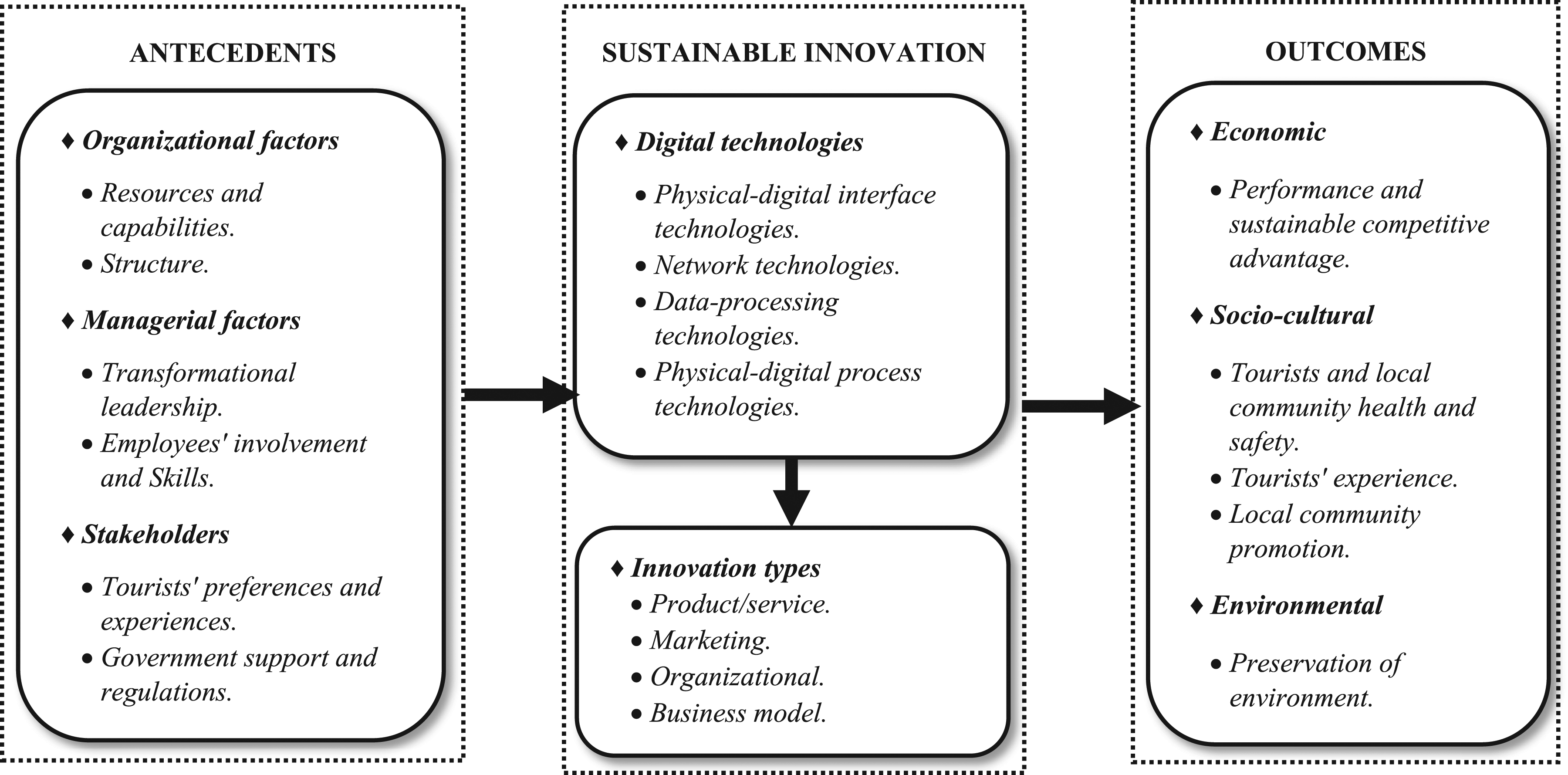
Economic dimension
Sustainable innovation is the basis of the performance of H&T firms and their long-term sustainable competitive advantage (Amoah et al., 2021; Kwok and Koh, 2021; Varelas et al., 2021; Yang, Ramiah, Pereira, Temouri and Behl, 2021; Yin, Yang and Yang, 2020). Digital technologies and the resulting innovations, support the performance on specific aspects like enhancing the firms' opportunity awareness during the crisis (Amar et al., 2021; Amoah et al., 2021), differentiating tourism product/service quality and design (Barna and Semak, 2020; Van et al., 2020), brand management (i.e. brand loyalty and knowledge, brand awareness, brand image, and consumer brand value perceptions), business marketing strategy, communication channel (Amoah et al., 2021; Barna and Semak, 2020; Varelas et al., 2021), leading to tourist attraction, satisfaction, and loyalty (Streimikiene and Korneeva, 2020; Van et al., 2020).
Accordingly, Barna and Semak (2020) showed that the impact of marketing innovation on travel companies can be seen in qualitatively new changes in the H&T industries, improved tourism infrastructure efficiency, management of sustainable tourism operations and development in the country, and the formation, positioning, and consumption of tourism services, all of which help to improve the travel companies' image and competitiveness. More particularly, digital technologies allow for greater efficiency in the management of key processes and operations (Farías and Cancino, 2021). They help in lowering costs associated with information processing, organizational communication, and advertising (Barna and Semak, 2020; Caballini et al., 2021; Rydzik and Kissoon, 2021).
Furthermore, the H&T industry’s shift toward technological solutions and disruptive innovation may influence the industry’s commitment to helping the tourist ecosystem’s most vulnerable actors, especially local communities (e.g. children, women, the disabled, the displaced, and the marginalized), preserving employees' livelihoods, and serving as a haven for precarious workers (Cardoso, 2020; Rydzik and Kissoon, 2021). For example, a museum can offer digital exhibitions under the terms of intellectual property rights and cultural asset protection and licencing. It can generate revenue from digital licensing to artists for local communities (Wang et al., 2021). This will contribute to the emergence of new entrepreneurs and the creation of H&T start-ups specialized in e-tourism.
Socio-cultural dimension
Sustainable innovation, through digital technologies, is useful to allow tourism firms to face the social constraints imposed by the pandemic while respecting the social aspect of sustainable development. They are a means to preserve the health and safety of tourists and the local communities by reducing the transmission of the coronavirus.
Communication/mobility technologies and AI (connected rooms, robotic room services, and contactless hosting, social media, VR, drones' tourism, geospatial technology, AI, e-shop, etc.) may provide benefits for the H&T industries in terms of robust health-safety and sanitary measures (Caballini et al., 2021; Mondal et al., 2021; Kumar et al., 2020; Srivastava et al., 2021) by limiting social interaction between visitors and local populations by avoiding congested areas or even minimizing massive international over-tourism (Caballini et al., 2021; Lu et al., 2021; Streimikiene and Korneeva, 2020) and providing up-to-date information on all areas of COVID-19.
This will make tourists feel more at ease with the equipment and generate confidence. This empathic service is also a key component of visitor pleasure and satisfaction, which will very likely convert to happiness (Van et al., 2020). For example, virtual tourism provides an immersive experience that allows tourists to unwind during lookdowns by exploring and engaging with the projected environment, as well as a risk-free option to escape the destination and travel safely and comfortably (Briciu et al., 2020; Lu et al., 2021; Mehta and Sharma, 2021; Streimikiene and Korneeva, 2020).
Beyond the health crisis, digital technologies open the doors for sustainable business model innovations that focus on providing services that allow tourists with disabilities and the elderly to overcome the physical and space difficulties while staying at home and hiring local guides to provide real-time, interactive, and personalized tours (Fennell, 2021; Kwok and Koh, 2021). This result in more equitable and equitable tourism that respect the needs of the different categories of tourist.
Culture continues to be a primary asset of tourist destinations in the global marketplace (Jiménez-Medina, Artal-Tur and Sánchez-Casado, 2021). In this sense, digital technologies are also beneficial to local communities as they help them to gain more notoriety and communicate more about their cultural heritage and tradition. For cultural tourism, the use of VR with mobile applications can help assist in promoting a destination’s cultural heritage and bring experience authenticity through the perspective of heritage preservation for increased user engagement and real-time contact with local populations (Briciu et al., 2020).
This interaction could also be facilitated through translation technologies (Van et al., 2020) that break the language barriers between local communities and potential international tourists (Van et al., 2020). All of this will contribute to the development of ethnographic-led tourism, a new humanistic approach that combines socio-cultural interchange between tourists and local populations, as well as a social discussion at the local, national, and international levels (Lemmi and Deri, 2020). Moreover, cutting-edge technologies, used for smart cities building, help in delivering the best living conditions to the inhabitants of the respective city and help in heritage management (Briciu et al., 2020). In the long run, this improves the destination’s and country’s technological capabilities (Van et al., 2020).
Environmental dimension
Environmental considerations have always been among the major concerns for sustainable tourism. The COVID crisis showed the extent of the impact of H&T industries on the environment (Cooke and Nunes, 2021). Through recent studies, sustainable digital technologies and innovation could be a solution to mitigate this impact.
Virtualization technologies can help in protecting the environment and maintaining its quality by reducing the pollution caused by tourism activities (Lu et al., 2021; Saseanu et al., 2020). Linked to this technology, virtual tourism makes it easier for tourists to visit places virtually without opting for invasive forms of accommodation and thus reinforces stay-at-home orders, which limits unnecessary greenhouse gas emissions from transportation (Briciu et al., 2020; Lu et al., 2021; Saseanu et al., 2020).
In the same line, virtual communication is critical for lowering negative externalities in transportation by controlling physical mobility, reducing peaks in physical mobility during “rush hours”, and better spreading mobility demand throughout the day (Caballini et al., 2021). In their study, Mehta and Sharma (2021) showed that studied hotels have pledged to reduce the industry’s carbon footprint by implementing several actions (e.g. water conservation and rainwater harvesting tools, shifting to electric vehicles, establishing smoking-free zones, utilizing renewable energy, improving waste management, recycling waste, switching to LED lighting, integrating green building automation systems, using chemical-free housekeeping supplies, and decreasing single-use plastic products).
The introduction of sustainable innovations (biotechnologies and bio-innovation) could support the management of the environmental resources related the food and nutrition to be prepared to adapt to changing conditions and deal with environmental threats (e.g. new human diseases like COVID-19, demographic changes, climate changes, new biological and chemical hazards, and resources scarcity). They may support building a resilient food system capable of recovering throughout time, maintaining the availability of sustainable and high-quality food for everybody. This would entail re-engineering the food system’s value chains, re-educating consumers to adopt a healthier diet, and requiring producers to develop new goods (Brassesco, Pintado and Coscueta, 2021).
Practical implications for hospitality and tourism (H&T)
This research proposes several recommendations that can help the H&T industries to come out of Covid-19 or potential future crises stronger and in a more sustainable way. These recommendations could be applicable and adapted to different parts of the H&T industries in the digital era:
• To meet the needs of new travelers, the H&T industries must demonstrate a formal commitment to the principles and policies of sustainable development, particularly at the strategic level of the organizations. Sustainable development can only be accomplished when it is understood, seen, and lived in persons' identities and everyday work lives (Galvani et al., 2020). Moreover, the actors of the H&T ecosystem must address the long-term challenges of this crisis by embracing responsible, creative, and innovative sustainable behaviors for solving problems (Cardoso, 2020; Elkhwesky, Salem, Varmus et al., 2022; García, Pino, Elkhwesky and Salem, 2022).
• The H&T firms need to advance their digital capacities and skills by accelerating a large-scale use of accessible and inexpensive technologies (e.g. social media, e-commerce platforms, and smartphone applications) and then invest in more sophisticated technologies (e.g. robots, big data, AI, and VR) to achieve a high level of digital transformation Elkhwesky and Elkhwesky, 2022. Also, firms must remain in phase with the technological advances in their industries to be always up to date to ensure their survival and strengthen their position within their environment.
• The expansion of the competitiveness of the H&T firms is heavily reliant on their innovative activities (Barna and Semak, 2020). In this sense, they must continually deploy sustainable innovations - in terms of product, marketing, organization, and business model - through investing in digital technologies, to prevent crises and improve their chances of survival in a free competitive market. More precisely, the resilience of the H&T industries in post-COVID-19 relies heavily on the development of sustainable business models within the spheres of the SDGs (Gounder, 2021).
• Managers of the H&T firms must adopt a transformational leadership style (Elkhwesky, Salem, Ramkissoon et al., 2022) to evolve employee skills through the adoption of digital technologies while developing a shared long-term vision that integrates responsible tourism principles. The employees' attitude is one of the cornerstones in the implementation of sustainable practices (Mehta and Sharma, 2021). From an organizational perspective, the H&T firms must have dynamic capabilities (e.g. sensing, seizing, configuring, and IT capabilities), within a more organic, flexible, organizational structure that allows them to be agile and better prepared for future crises.
• Relying on those digital technologies have a great implication for business recovery post-pandemic as they have a positive impact on firms' long-term sustainability and give them the potential to be more creative and to develop innovations concerning their products and services, marketing or even to change their business model towards more sustainable models.
• Governments and policymakers must provide the actors of the H&T sectors with financial support to face the ongoing pandemic and encourage their investment in the implementation of digital technologies to enable them to progress on the road to self-recovery. It is also necessary that governments invest more in building infrastructure for digital technologies (industry 4.0) to support the H&T industries to a smart and sustainable configuration Elkhwesky and Elkhwesky, 2022. In addition, following the international organizations (e.g. world tourism organization) and collaborating with universities and the H&T industries, the government should develop new policies considering the current situation to facilitate the attainment of sustainable goals. Political efforts that drive sustainability will not result in a sustainable global culture unless global consciousness and knowledge evolve at the individual level (Galvani et al., 2020).
• The higher education establishment, especially universities must focus more on designing curricula, with industrial cooperation, that serve the ongoing changing reality of the H&T sectors. They must be able to provide training for new professional profiles specialized in the digitalization of these sectors. To do so, it is necessary to integrate new digital technologies in teaching methods (e.g. VR for courses related to heritage management (Viñals et al., 2021)). Also, they should work hand in hand with industry to help upgrade the digital capabilities and creativity of lower-skill and precarious H&T sectors workers to prepare them for the future and protect them against the potential risk of technology replacement.
Limitations of the study
Although the WoS is one of the important databases to search articles for systematic reviews (Elkhwesky, 2022; Elkhwesky, Salem, Ramkissoon et al., 2022; Elkhwesky, Salem, Varmus et al., 2022; Salem, Elkhwesky, Baber and Radwan, 2022), we advise future research to use Science Direct. Applying bibliometrics with thematic analysis could be useful for further research to bring more contributions to the research field (Mühl and De Oliveira, 2022). According to the best knowledge of the authors, the recent paper is the first to systematically and critically review COVID-19-related studies on sustainable innovation in an H&T context.
Footnotes
Declaration of conflicting interests
The author(s) declared no potential conflicts of interest with respect to the research, authorship, and/or publication of this article.
Funding
The author(s) received no financial support for the research, authorship, and/or publication of this article.

Author Biographies
Zakaria Elkhwesky is a PhD candidate and an Assistant Lecturer of Hotel Management, Faculty of Tourism and Hotels, Alexandria University, Egypt. He has been awarded a fully-funded governmental scholarship as a researcher at the University of Žilina, Faculty of Management Science and Informatics, Department of Management Theories, Slovakia (2021−2022). He has obtained a fully-funded pre-doctoral stay at the University of Granada, Faculty of Economics and Business Administration, Spain (Erasmus+) (2019). His research interests are innovation, leadership, sustainability, technology, crisis management, entrepreneurship, and human resources. He has the ability to use many programs for statistical analysis in hospitality and tourism, such as SPSS, R, and SmartPLS. He serves on reputed journals as a reviewer, such as Current Issues in Tourism, Journal of Hospitality and Tourism Insights, International Journal of Hospitality and Tourism Administration. He published a series of research individually and with other scholars from diverse countries such as UK, Italy, France, UAE, Spain, Oman, Malaysia and Slovakia in leading journals such as Business Strategy and the Environment, Tourism Management, International Journal of Contemporary Hospitality Management, Tourism Management perspectives, Tourism and Hospitality Research, Journal of Hospitality and Tourism Insights, and Sustainable Development. Mr Elkhwesky is the corresponding author and could be contacted for any inquiry or possible collaboration at:
Younès El Manzani holds an international dual degree PhD in Management Studies from the Jean Moulin Lyon 3 University, France and the Cadi Ayyad University, Morocco. He is currently an associate professor at the Higher Institute of Management (ISM-IAE), VSQ University, Paris-Saclay University, and the director of the Master degree program “Customer Relationship, Digital and Quality”. Attached to the LAREQUOI research center for management, his research addresses topics related to strategic management, quality management, innovation management, and entrepreneurship.
Islam Elbayoumi Salem holds a PhD in Hotel Management from Alexandria University, and is an associate professor at the Faculty of Tourism and Hotels, Alexandria University, Egypt, and at the University of Technology and Applied Sciences - Salalah, Oman. His research interests are related to hospitality leadership, hospitality marketing, hospitality technology, hotels' outsourcing, and human resources. He has published more papers in scholarly journals, such as Tourism Management, International Journal of Hospitality Management, International Journal of Contemporary Hospitality Management, Tourism Management Perspectives, International Journal of Tourism Research, and Journal of Hospitality and Tourism Technology.