




Abstract
During the COVID-19 pandemic and subsequent lockdown of 2020, freedom to travel was restricted but there was a remarkable increase in webcam-travel, which can be defined as visiting place-based webcams online. Media commentators suggested that this technology was being used to connect with places and nature; an observation mirrored by webcam hosting organisations. This study examines the surge in popularity of these webcams which reflect a wide range of sites – often natural environments. It goes on to explore the attributes of webcam-travel to explain its rise during lockdown, primarily by employing an online questionnaire. It reveals that this experience is marked by feelings of freedom, nostalgia, and connection – each of which offers potential wellness benefits. Respondents exercised their freedom through these virtual portals to connect to nature, the outdoors, and places that they associated with happy memories pre-lockdown. This article also suggests that webcam-travel links to an increased likelihood to physically visit these sites in the future. Therefore, this research may be relevant to both academics and practitioners with an interest in the experience economy.
Preface
During the early days of lockdown in the UK, I received an e-mail from my son’s school with a list of websites showing live webcams around the world. They showed city centres, landmarks, beaches, aquariums, zoos, and wildlife sites. The intention was to amuse the children in lockdown with something which could be educational and open up the world as it closed down. In my household the family viewed bird nests in Wales, African wildlife at watering holes, Roman Piazzas, and train-cams; we were not alone. For example, Edinburgh zoo saw webcam views rise from 100,000 to more than 5 million per month (Beddington, 2020). This surge in views during lockdown is explored in more detail in this article. Social media and even mainstream media reported the increase in popularity of these cameras and it became clear that their appeal went far beyond home-schooling; individuals were viewing webcams of places that they no longer had the freedom to visit. As the majority of people stayed at home the impacts on the tourism industry were catastrophic, with much speculation about recovery. This situation of lockdown in 2020 is without precedent it should come as no surprise that no literature explores this phenomenon of webcam-travel at the time of writing this article, which is essentially exploratory in nature.
Aims and objectives
This article aims to explore the experience of webcam-travel during lockdown. The objectives are to define webcam-travel, to document any increase in popularity of webcam-travel, to explore the nature of webcam-travel in order explain any increase its popularity within lockdown, and to identify any connections between webcam-travel and post-COVID travel intentions.
Introduction
Webcam technology allows us to connect with places across the globe in a moment, to travel in cyberspace; this article proposes and employs the term ‘webcam-travel’, which is simply the act of viewing places or attractions through a webcam. The term webcam-travel was chosen over webcam tourism because one only has to type the words ‘webcam’ and ‘tourism’ into a search engine to see that media coverage of the sexual exploitation and abuse dominate the results; sadly webcam sex tourism has become a significant international issue. This abhorrent practice is entirely different from the focus of this article. To avoid confusion this article employs the term webcam-travel instead. In the material world, one might discuss the difference between tourism and travel but in the virtual world, this point seems mute.
The variety of place-based webcams is bewildering. The most popular categories, initially based on search engine results and confirmed by this research, are, ‘natural’ landscapes such as coastlines or mountains, urban scenes of city centres – often featuring squares, landmarks or famous skylines, a wide variety of tourist attractions - including heritage sites, themes parks, aquariums and zoos, and wildlife cameras – bird nest cameras are especially numerous but a wide variety of animal webcams are popular. Beyond these popular categories there is a wide variety of miscellaneous subjects from lava flows, cruise ships, civil engineering projects, pilgrimage sites and the northern lights. The typical place-based webcam is static, although some repeatedly sweep across a view and a few allow the viewer to control the direction of the camera to some extent – to pan and even focus (Koskela, 2011).
Webcam technology is less sophisticated than Virtual Reality (VR) but it is far more affordable and much more widely employed. Furthermore, webcam-travel fundamentally differs from VR which is concerned with simulation, immersion and interaction (Ankomah and Larson, 2019), none of which characterise webcam-travel - even the most basic virtual tourism experience would involve 3 D simulations which webcam-travel does not.Instead, it offers an unfiltered and unedited viewing experience which is usually live and with limited opportunities for interaction. In short, webcam-travel does not fit into current definitions of virtual tourism which may suggest that they need to be reworked to accommodate these online experiences. Alternatively, it could indicate that webcam-travel is quite distinct from VR and aligns more with other forms of imaginative travel such as viewing photography (Larsen et al., 2006). In any case, no research indicates that webcam-travel and virtual tourism will bring about a similar response.
The number of webcams is in the millions but the focus here is on place-based webcams which are publicly available on the internet. The number of these is unknown but must number many tens of thousands. EarthCam is one of the largest networks of live webcams and its website receives well over seven million web visitors per month, putting it in the top 1% of websites (Crunchbase, 2020). This one website lists thousands of cameras, with nearly three thousand in North America alone. Other notable companies which provide gateways to thousands of cameras are Skyline Webcams and Explore.org but there are many more. Then there are all the individual organisations that have live webcam feeds featuring on their website, these vary from conservation charities to outdoor bars and their number is unknown.
This article explores webcam-travel during lockdown and in doing so focuses on the three themes which emerged from the research. These are freedom, nostalgia and connection to places and nature. In each case, psychological concepts are employed as appropriate to shed light on the experience of webcam-travel. Before introducing these themes, literature relating to viewing place based webcams is explored.
Literature review
Webcam-travel – A gap in the literature?
Webcam-travel should not be seen isolation but something which is very much connected to modern-day tourism. Visual consumption arguably lies at the heart of both and there is undoubtedly a relationship between physical and virtual forms of tourism; Urry (2003) saw the internet as an accessory to and facilitator of physical travel. It is now well accepted that places featured in films are more likely to be visited by tourists, perhaps we should see webcam-travel in a similar vein? This begs a question, which is addressed during this study, will online visits translate into physical visits?
Despite the popularity of webcam-travel, a review of the literature on webcams, in the context of tourism, travel and leisure, generated surprisingly few results. Koskela (2011) comments on the increasing importance of city cams in tourism marketing as they can have the potential to strengthen a destinations sense of place in an increasingly competitive environment. She observes that the city cams often view a picturesque city square, glorifying a cliched landscape in order to sell. Timothy and Groves (2001) published a research note suggesting that webcam images could be useful sources of tourism-related data, the four main categories of which were crowd density, changes in facilities and infrastructure, licence plates and, in particular, the weather. Apart from such studies, which focus on the webcams as way to collect visual data, the literature review did not find any web-cam based academic articles which focus on tourism.
Nevertheless, one publication is noteworthy - Ratz and Conk (2010) considered the use of wildlife webcams for the U.S. Geological Survey. Much of the report was practical in nature, considering equipment options, installation and so on. They produced a thorough literature review of these topics and also considered questions about the impact of viewing wildlife cameras, however, they ‘were unable to identify any studies that directly addressed these questions for webcams’ (Ratz and Conk, 2010: 3). They go on to state, ‘It seems there is a general lack of research and publication regarding the use of webcams in general’ (p.6) and call for more research in this area.
Freedom
In Western culture in particular freedom is associated with open spaces, ‘From the security and stability of place we are aware of the openness, freedom, and threat of space, and vice versa’ (Tuan, 1977: 6). Tuan argues that the healthy human being needs to move between both place and space, to achieve the balance between security and freedom and avoid agoraphobia or claustrophobia. Logically, this movement was inhibited by lockdown; freedom was curtailed. So viewing webcams of such spaces, which represent freedom, might be a reaction to this.
In addition we exercise our freedom by deciding how we spend our leisure time, including where we visit online - leisure studies casts light on this experience. Due to a focus on experience, the emphasise here is on the psychological view of leisure rather than a sociological one; in essence, leisure is treated as a state of mind (Neulinger, 1981). The two critical components of leisure are freedom of choice and self-determination – each of which influences the quality of the experience. For a leisure experience to be meaningful and valued it must be entered into willingly, so it both relies upon and engenders a sense of freedom (Kleiber et al., 2011; Neulinger, 1981).
Lockdown has curtailed our freedom to travel, but at the same time allowed more time for home-based leisure, which, like travel, relies upon and facilitates a sense of freedom. During lockdown many are exercising their freedom online, rather than physically; in many cases, technology has become the vehicle for leisure (Gammon and Ramshaw, 2020). So, leisure, virtual or not, offers freedom but can also act as a buffer for stressful situations (Kleiber et al., 2011), furthermore it offers meaning and purpose in times of anxiety and loneliness (Watkins, 2000). It gives us something to look forward to, to savour and to focus on. Could it be that visiting and connecting with new virtual environments could be good for us?
Connection
According to the media (Beddington, 2020) the growth in webcam-travel in lockdown seemed to revolve around a sense of connection. In particular a feeling connection to the outdoors and natural scenes, which can have a positive effect on the individual. No academic area of study focuses on our connection with the outdoors and nature more than Environmental Psychology; it suggests that exposure to natural environments offers an uplift in mood and associated wellness benefits - this is explored in the following paragraphs. Therefore questions relating to relevant mind states (an uplift in mood) were posed in the questionnaire, including a direct question about any feelings of connection. Even if webcam-travel were to account for a small uplift in mood, this may be significant in lockdown – a time in which many concerns about mental health have been raised.
The subject of many webcams are outdoor natural settings or wildlife. Environmental psychology offers insights which help explain this appeal; for it has, unsurprisingly perhaps, demonstrated that spending time outside in natural environments is of benefit to us. With urbanisation we have become disconnected from the natural environment and scientists and psychologists now observe how exposure to natural environments offers wellness related benefits. Kaplan and Kaplan (1989) suggest that natural environments offer an optimal experience which can ease mental fatigue and replenish depleted energy. They theorized two forms of attention: directed and involuntary. Directed attention is associated with focus and expends a good deal of energy, so over-reliance on it causes the brain to suffer fatigue. They argued that when involuntary attention is sufficiently engaged, direct attention rests and recovery takes place. Relaxing places facilitate this change between attention types, as they are generally predictable, stable and carry lower levels of information-processing demands, allowing involuntary action to engage. They believed that natural environments tend to fit this description best and are often restorative.
White et al. (2010) compare the psychological benefits of visiting open spaces in urban areas, countryside, and coastal regions. They found that positive feelings (e.g. calm, refreshment and enjoyment) are associated with all three environments but are highest for visits to the coast followed by countryside and then urban open spaces. MacKerron and Mourato (2013) suggests that people were significantly happier in natural outdoors environments than they were in urban environments. Velarde et al. (2007) linked natural environments to the reduction of stress. Even when one removes the effect of exercise and socialising, it seems that nature can positively impact levels of ‘subjective vitality’ (or subjective well-being) which, in turn, has been implicated as an important component of well-being and physical health (Ryan et al., 2010: 167).
Importantly for this study, researchers have also demonstrated that these benefits are not limited to full physical exposure to green and blue spaces. Famously Ulrich (1984) found that the view from a hospital window could influence recovery from surgery – patients recovering from the same surgery with a view of trees recovered more quickly than those without. Even exposure to pictures of natural environments can be linked to mood restoration (Van de Berg et al., 2003). In an experiment which involved induced mental fatigue Berto (2005) found that viewing to photographs of natural environments improves recovery. Yet no such studies relating to webcams could be found by the author nor Ratz and Conk (2010).
Nostalgia
Even a few minutes using an online search engine reveals that many people use webcam-travel to keep connected to places they know. As we will see, visiting places online may facilitate nostalgia which is often linked to fears of an uncertain future. It therefore in theoretical alignment with the context of the COVID-19 pandemic, even if there is no literature confirming a link to webcam-travel. Modern video technology and media (although not webcams specifically) have been linked to nostalgia (Niemeyer, 2014). Modern video technology allows us to visit a place we know and value but are removed from; in doing so it facilitates a nostalgic experience. Technology has given us a more efficient way in which to visit our past and perhaps there is there may be a nostalgic appeal in the experience of visiting places familiar to us via webcam in lockdown, before returning to a restricted present. Therefore this bittersweet emotion, which has long been recognised as an important part of the tourist experience (Davis, 1979), is considered here.
Identity and continuity lie at the heart of nostalgia which is a selective representation of the past that reflects dissatisfaction with the present and/or concerns over the future (Davis, 1979). Nostalgia was once considered in almost entirely negative terms but psychologists have started to recognise that holds wellness related benefits. Sedikides and Wildschut (2016: 133) summarise nostalgia as an ambivalent but predominantly positive emotion which ‘showcases how “taking the good with the bad” in human experience can be advantageous for human health’ and which can buffer against well-being threats such as boredom, loneliness and a perceived lack of meaning in life. In doing so it is consistent with positive clinical psychology (Sedikides and Wildschut, 2016). For it can solidify identity, sustain a sense of meaning and invigorate social connectedness (Routledge et al., 2011). It allows identification with the earlier stages of our life, which links to and the formation a meaningful life-narrative based on past events. This in turn facilitates an uplift in mood which is linked to wellness related benefits.
In short, nostalgia can be considered a coping mechanism that allows us to buffer against the wellness threats posed by a psychologically challenging present and an unpredictable future. To access these benefits one must connect with the past and this is where place plays a role. Places and the sensory experiences they offer are linked to memories, a selection of these feed our nostalgia. Places associated with tourism experiences (which are often the focus webcam travel) commonly fulfil this role as nostalgia harbingers, as they are associated with valued leisure time and happy memories (Jarratt and Gammon, 2016). Nostalgia, along with a sense of connection and freedom, has the potential to lift our spirits, something which may take on new importance in lockdown.
Methodology
A three-stage methodology was adopted to explore the experience of webcam-travel during in lockdown. The first stage was desk-based research and this ran throughout the duration of the project. There was no single theory, supported by previous research, which explained the increase of webcam usage in lockdown and the implications thereof. More generally there was very little literature on webcams and tourism/travel, so desk research was as useful in the later stages when exploring emerging themes as much as informing research design. The second stage involved discussions with webcam tourism providers to establish if there had been an increase in webcam-travel and their views regarding it. The most detailed responses were offered by Skyline Webcams, Italy and by both Morecambe BID and Brockholes Nature Reserve, England; these helped inform the subsequent and final stage of research. A summary of these communications can be found in the next section which highlights the growth of webcam-travel during lockdown. The third and main stage was built upon the two preceding stages, it was an online scoping survey: a quantitative questionnaire – the most significant stage of primary research in this study.
The research philosophy here is pragmatic. Pragmatists do not see the process of gathering knowledge as either objective/positivist or subjective/constructivist but as operating in a continuum that allows them to accept both these poles. It is abductive in nature, therefore giving the researcher the flexibility to create both theories and data. The key point here is that pragmatism offers a flexible and reflexive approach to research design and methodology in order address the research question at hand as effectively as possible in the circumstances (Kaushik and Walsh, 2019). This pragmaticism is demonstrated through the sampling strategy and how were respondents were identified.
The sampling strategy of this survey, which was devised and circulated in lockdown, was to share it as widely as possible through social media – Twitter, Facebook, and Instagram. Messages were posted on social media feeds, explaining that the researcher was interested in finding out about how people had been using place/attraction/nature site based webcams during lockdown and asked if they would mind spending five minutes completing a survey. They were also encouraged to share the survey link with their contacts. Whilst this a sampling strategy could be described as one of convenience, it should be noted that the survey was only intended for people who viewed these cameras through websites; it only needed to reach people who spend time online. Therefore using social media was an appropriate method of reaching this group, as the majority of people online use social media – 84% according to Cooper (2020). Furthermore, for some time academics have viewed social media an appropriate way in which to conduct questionnaire-based research in social studies (Kayam and Hirsch, 2012).
This questionnaire survey was conducted online using Qualtrics software. Respondents simply had to click on a hyperlink. Questions regarding viewing habits during lockdown were kept as simple as possible and had the advantage of been completed during lockdown, therefore they did not rely on memory but rather current habits. They most often involved ticking boxes that applied or yes/no questions. Likert scales were also employed for questions exploring how viewing webcams made respondents feel, as well as impact on future travel habits. The scale items used here focussed on feeling more positive, feeling connected and feeling relaxed, which in turn can be linked to wellness benefits (Gallagher, 2007). In addition, respondents were asked to use one word to describe how viewing the webcams made them feel. This was to confirm that the scale items reflected the experience of webcam-travel. One of the later questions was open-ended an invited respondent to describe the experience of using their favourite webcam. Again this was to confirm findings but also to offer more of an insight into the viewing experiences of respondents; it was optional as it would add to the duration of the questionnaire. The survey was fully anonymous; the respondents could not be identified and no personal information was requested other than basic demographics – which was optional.
Information from webcam operators – The lockdown of 2020
Whilst, to date, there is no academic coverage on webcam-travel during the lockdown, various commentators in the media observed its rapid rise in popularity, for example, Beddington (2020) and Granville (2020). They suggested that webcam usage might be a way to connect to nature and the outdoors which were out of reach for many. Beddington (2020) referred to Edinburgh Zoo which saw its webcam views rise from 100,000 per month to more than 5 million. Granville (2020) wrote about Explore.org, one the leading nature-cam networks, and confirmed that they saw around an 85% increase in webcam views in March 2020, compared to the previous year.
Skyline webcams have over 1000 place based webcam around the globe, they tend to reflect city centres, beaches, and other populated places, rather than wildlife sites or wilderness settings. In an e-mail to the author (11/05/20), they outlined the rise in popularity of their webcams during lockdown and offer an explanation, With the spread of COVID-19 our site has, in fact, witnessed an increase in numbers, rising from an average of 70 million monthly page views to 120 million in March. Webcams have definitely played an interesting role during lockdown, they have connected - individuals to both distant countries and areas of their very own cities they would usually attend on a day-to-day basis.
Morecambe BID, or Business Improvement District, were contacted through Twitter messages regarding the three webcams that they had installed along the front of the seaside resort of Morecambe (UK). The statistics they provided (on 24/04/2020) also suggested an impressive upturn in webcam views. The average views per day for April 2018 were 86, 71 in 2019 and 614 in 2020, meaning a year on year increase of 865%. They were asked about why people used the webcam and the response was clear, the webcams ‘connected people to place’; people were often viewing webcams of places they knew and felt attached to – this is based on informal communications they had with the public. This communication with Morecambe BID, Brockholes and Skyline Webcams helped to validate the questionnaire design. Clearly, there appeared to be in growth in webcam tourism and the idea of connection was something that needed to be explored.
Questionnaire results
The respondents
303 people clicked onto the link but only 227 qualified - they had viewed at least one place or nature-based webcam in 2020. So, there were 227 respondents. All surveys were completed between April 11th and June 5th 2020. There was a good balance of range of ages represented, with no particular trend emerging. A surprising 69% of respondents were female; it is not clear why. 83% came from the UK, 7% from the USA and the remainder from a wide variety of countries, thus reflecting the fact that the link was shared from UK social media accounts.
Webcam-travel activity during lockdown
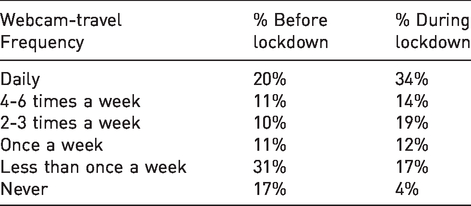
The respondents tended to view webcams more frequently since lockdown. Beforehand nearly one third had never undertaken webcam-travel and ‘less than once a week’ was the most common frequency. In contrast, during lockdown daily viewing was by far the most popular frequency and there was a steep drop in those who viewed webcam less than once a week (Table 1). In addition 64% of respondents had been viewing webcams for longer periods of time since lockdown. The typical viewing time was between 2 and 15 minutes for 70% of respondents and less than two minutes for 11%; the rest watched the webcams for longer periods of time.
The frequency of webcam-travel before and during lockdown.
The respondents were asked about the types of webcam they viewed. The most popular categories were wildlife cams, beach cams, zoo cams, city cams and countryside cams (Figure 1). The respondents could pick as many categories as they liked. By far the most popular category was wildlife cams which was selected exactly 100 times, followed by beach cams with 69, city centres with 48, zoos with 46 and countryside with 40.
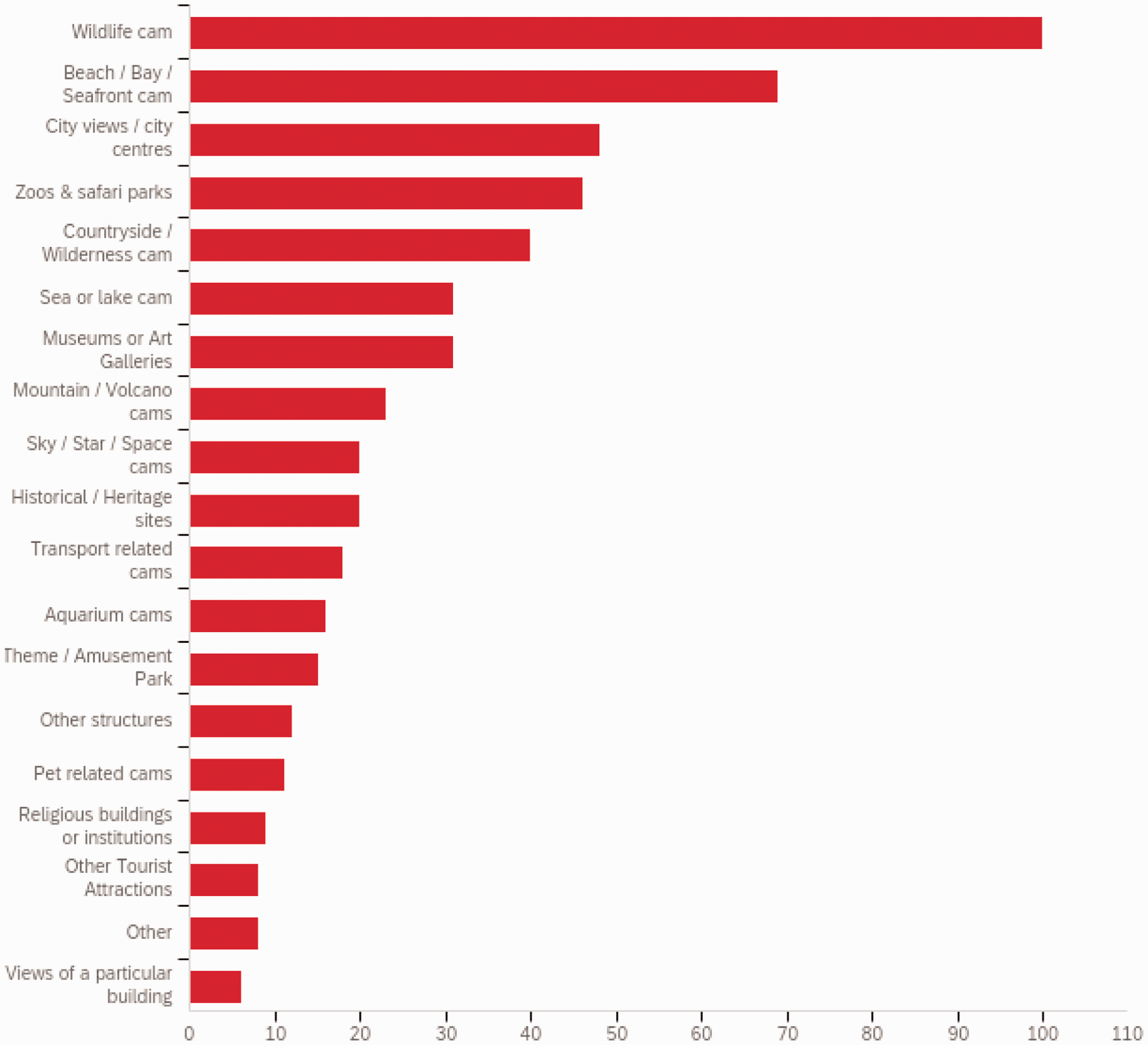
Types of webcam viewed during lockdown, showing the number of times each category was selected by respondents.
Nature was an obvious trend in these results; to gain further clarity, the results were re-categorised into two broad themes. Firstly nature - including all animal-related themes as well as seemingly natural places and, secondly, the built environment – cities, buildings, transport and attractions. 30% come under the built environment and 68% come under nature, with the remainder coming under ‘other’.
The respondents tended to find out about webcam through social media, websites which they already knew and search engine results (see Figure 2).
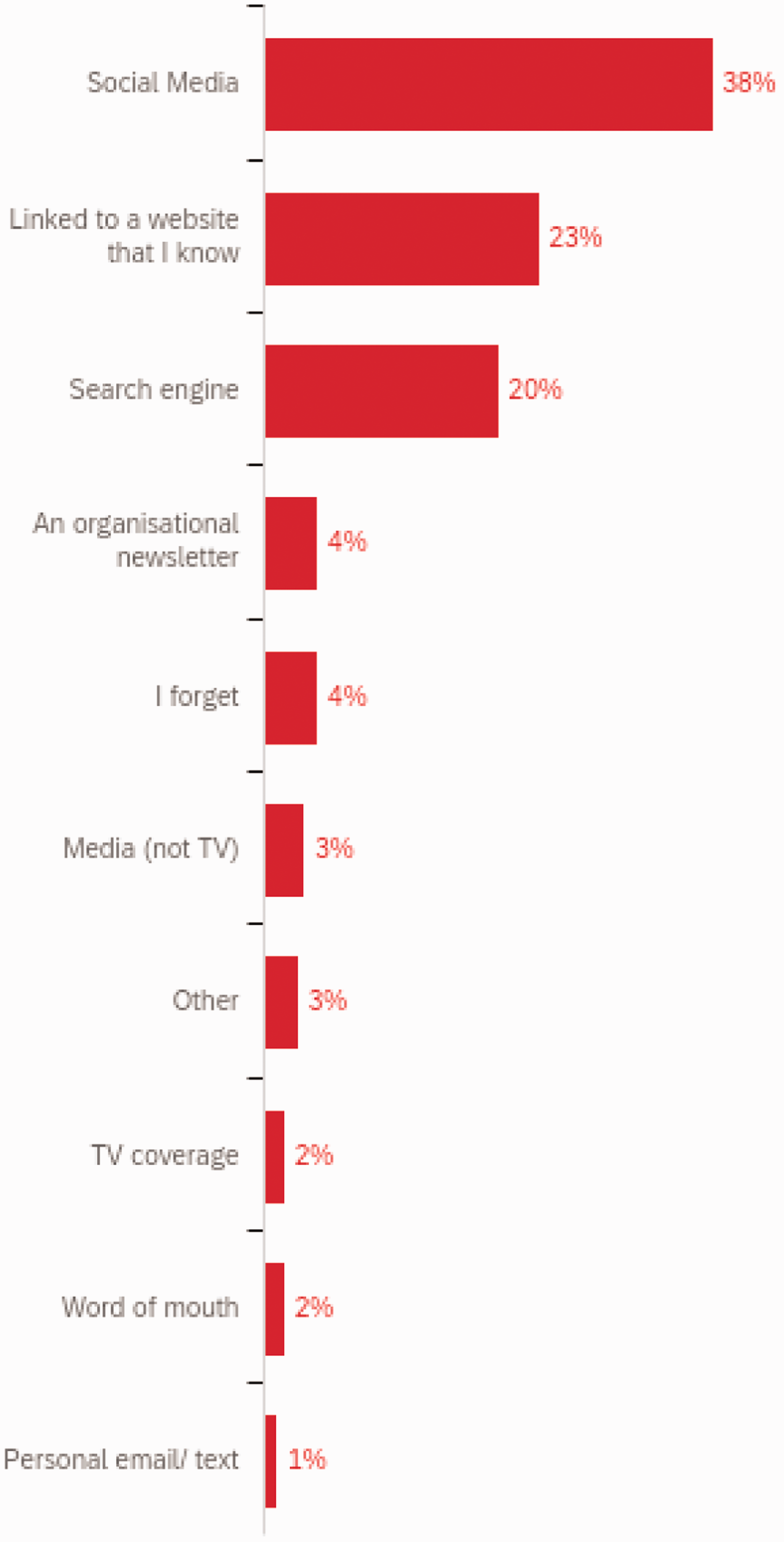
How respondents found out about their favourite webcam.
Some of the key findings from this survey are: 69% of respondents would be more likely to visit places that they have viewed through webcams since lockdown (see Table 2), 60% of respondents explored new places through webcams and 66%, tended to view webcams of places that they had already visited.
The likelihood of respondents visiting places in the future because they have viewed them on webcams during lockdown.
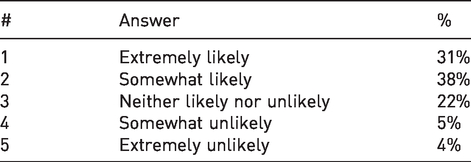
These figures link webcam-travel to potential physical tourism but should be viewed as a correlation rather than necessarily reflecting causation. Nevertheless, viewing webcams in lockdown is bound up with people’s post-COVID travel intentions.
The webcam-travel experience
As mentioned in the previous section 69% of respondents were more likely to visit places which they had viewed through webcams. This begs the question, what is the appeal of webcam-travel and what is about this experience that makes visits or re-visits more likely?
Exploration and happy memories of the past were significant elements of the webcam-travel experience according to a series of yes/no questions. Of the 59% of respondents who explored new places through webcams, 86% wanted to visit these places for the first time after lockdown. Of the 66%, who tended to view webcams of places that they had already knew, 83% said that this experience brought back happy memories, suggesting a nostalgic appeal.
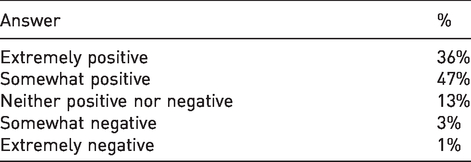
Other elements of the experience could be said to relate to wellness: 83% felt more positive after webcam-travel, 90% found it to be relaxing and 90% felt a sense of connection to place or nature. These are strong trends and point towards an uplift in mood (a sense of connection, relaxation and positivity) as a very important element of the webcam viewing experience and offer a clear insight into the appeal of webcam-travel for those who undertake it. Notably 62% ‘definitely’ felt connected after webcam-travel, suggesting that the initial feedback from webcam operators was indeed correct and this is a vital part of the experience. See Tables 3 and 4 for detail on all these responses.
How positive respondents felt after viewing webcams.
How relaxed and connected respondents felt after viewing webcams.
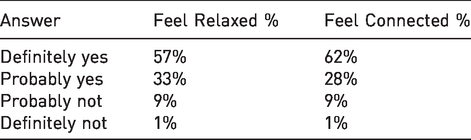
The results from these questions are extremely clear, only 10% of respondents did not feel relaxed or connected after webcam-travel and only 4% felt negative after the experience.
The respondents were also asked to use just one word to describe how webcam-travel made them feel. The most commonly employed individual words were happy and relaxed; they were used 28 and 13 times, respectively. These individual words are represented here in a word cloud (Figure 3).
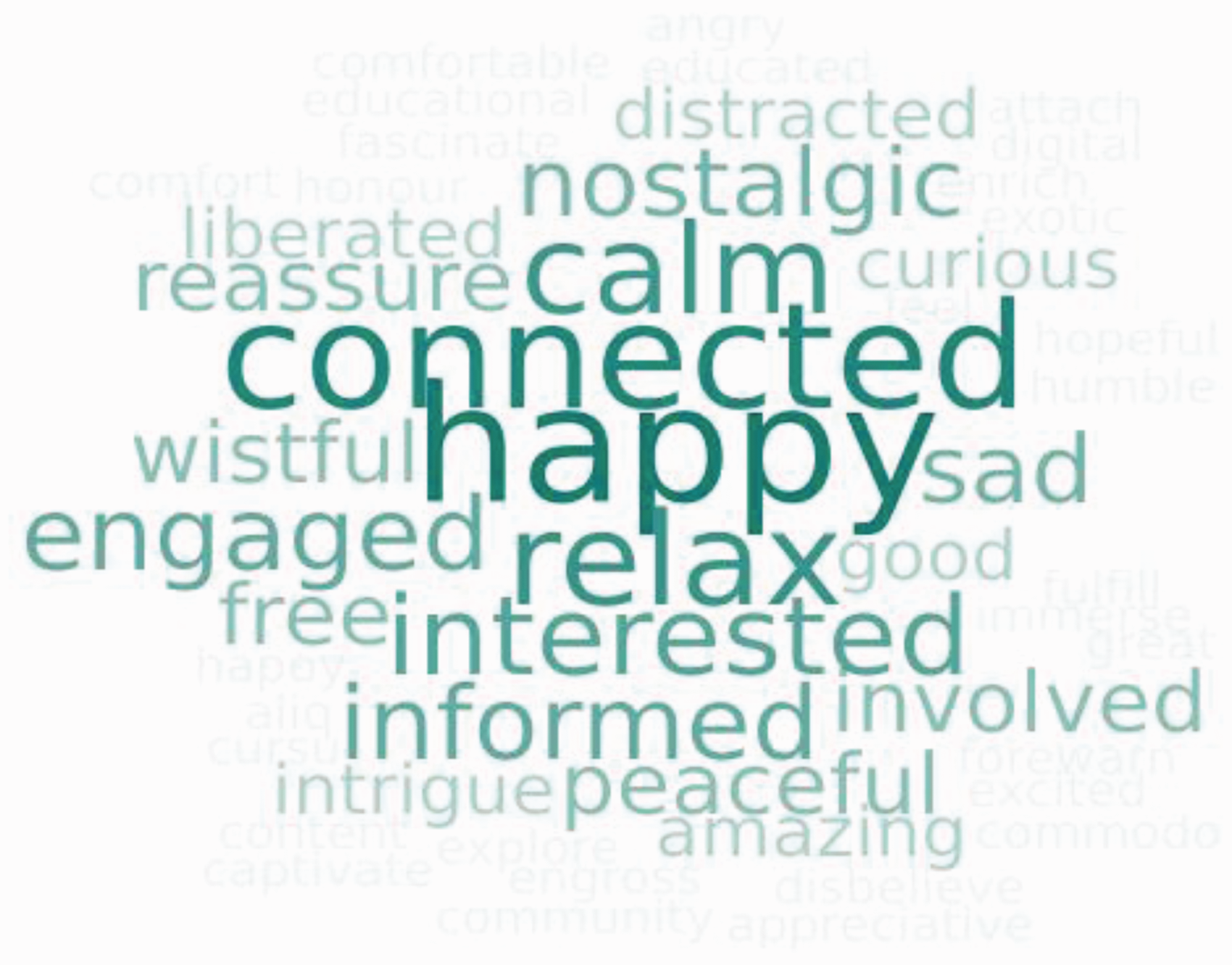
Individual words chosen to describe how Webcam-travel makes you feel.
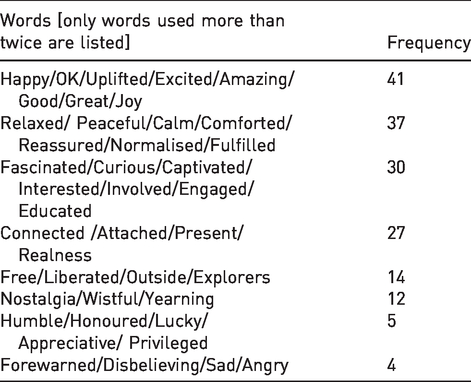
Responses were then grouped together; word groups which attracted more than two responses are presented in Table 5. Themes to emerge from this process that attracted double numbers were an uplift in mood, relaxation, fascination/engagement, connection, freedom and nostalgia. These align with the themes that emerged from other parts of this survey.
Words used to describe feelings associated with webcam-travel.
The respondents were also given the opportunity to describe their favourite webcam and why they use it. This was optional but some described their favourite webcams and a few explained why they used it. Wildlife cameras, such as Osprey nest cams, were often mentioned along with the blue spaces of the coast. A cross-section of these responses are included in the discussion section to underpin emergent themes.
In summary
The research suggests that an uplift in mood, a feeling of connection, nostalgia and a sense of freedom underpinned the webcam-travel experience. The results showed clear trends; webcam-travellers enjoyed the experience, felt a benefit from it and intended to visit places that they visited through webcams during lockdown.
Discussion
The most distinct themes to emerge as part of webcam-travel in lockdown, were feelings of freedom, connection and nostalgia all of which can be connected to an uplift in mood and therefore (subjective) well-being.
Freedom emerged as a theme when respondents were asked to describe webcam-travel in one word – those indicating freedom were the fifth most popular category. Whilst 59% of respondents explored new places through webcams, no questions specifically asked about freedom more generally but the open-ended questions served their purpose of identifying themes which would be otherwise missed. Freedom also emerged as a theme from the open-ended questions in which respondents described their experiences. The growth in webcam-travel appears to offer an arena to play out leisure choices and explore places virtually. For example, one respondent wrote that watching webcams of bird nests gave ‘a sense of freedom’.
As mentioned in the literature review, webcam-travel is a leisure activity and as such it both relies upon and offers a sense of freedom. For leisure choices to be valued they must be entered into freely and they offer feelings of freedom, which may contrast with other parts of life associated with responsibilities. Leisure can also act as a buffer for stressful situations (Kleiber et al., 2011), furthermore, it offers meaning and purpose in times of anxiety and loneliness (Watkins, 2000). It seems that in lockdown webcam-travel offers freedom and associated feelings of stress alleviation, relaxation and an uplift in mood. One of the respondents revealed that they were self-isolating and missing the countryside, they watched wildlife cameras because it was ‘relaxing’ and it made them feel ‘less claustrophobic’. A feeling of freedom is not entirely independent from a sense of connection with those spaces which could be described as ‘nature’. Eliciting a connection with nature is an important element of the appeal of webcam-travel for many, especially at a time when our freedom is otherwise limited.
Respondents felt that webcams connected them to place and nature - 90% felt a sense of connection. The word ‘nature’ comes with a caveat; it is subjective, contested and socio-culturally constructed. In many cases, it would include open spaces in urban areas, beaches and countryside, which are often managed. This theme, connection, emerged most often and most clearly and at every stage of research. This was confirmed by the communication with webcam providers and the open-ended questions in the questionnaire. For example, one respondent wrote ‘it’s relaxing and I feel connected to nature’. When describing webcam-travel in one word, ‘connection’ was often specifically mentioned - 27 times in total.
Gallagher (2007) suggests that society has become disconnected from the natural environment, for instance, we spend most of our time indoors, and environmental psychologists now observe how exposure (or reconnection) to natural environments offers wellness related benefits because they encourage positive feelings/happiness, subjective vitality, relaxation and stress reduction (MacKerron and Mourato, 2013; Ryan et al., 2010; Velarde et al., 2007; White et al., 2010). Even exposure to pictures of the natural environment is associated with such wellness benefits (Berto, 2005; Van de Berg et al., 2003).
The survey respondents reported that webcam travel facilitates a sense of connection, or re-connection, with nature and the positive feelings/uplift in mood associated with this. This mirrors findings from environmental psychologists summarised above and discussed in the literature review. In parallel to this Human Geographers have suggested that the movement between space and place, between freedom and security, is essential for our wellbeing (Tuan, 1977). Respondents undertook this movement and connected to nature via webcam travel during lockdown.
Not one indoor webcam was mentioned by respondents and indeed they are rare as search engine results confirm. Webcams should instead be seen as a way to connect not just to nature but to the outside. Whilst some webcam reflected urban environments, this would still be a part of this connection. More often though the respondents were more interested in natural scenes and it is quite common for feelings of connection to mark positive feelings towards natural places (Gallagher, 2007). 68% of the respondents had been viewing cameras of natural scenes rather than urban. One respondent typifies this trend when describing their favourite webcam, ‘Eagle Cam - Enjoy watching the eggs hatch and observing the eaglets mature over spring-time, learning to fly, and leaving the next. I find it a nice antidote to the urban environment in which I live and work’. This corresponds with the survey findings in which 83% of respondents felt more positive after webcam-travel and 90% found it relaxing. When describing how webcam-travel made them feel in one word, only ‘happy’ was used more than ‘relaxed’. In the open-ended questions a number of respondents also wrote how webcam tourism helped them, one wrote ‘It makes me feel calm and relaxed when I’m stressed or feeling anxious’. One advantage that webcams have in eliciting a feeling of connection is that they happen in unedited real-time, which was mentioned in the open-ended questions - watching webcams, ‘helps to keep in touch with places and things I like. Also watching in real-time makes you feel almost as if there’.
Whilst webcams essentially offer a simple 2-D window on the world, it seems that it does have a positive impact. The sense of sight alone, as opposed to a richer multisensory experience, is capable of inducing wellness benefits. Allen-Collinson and Leledaki (2015) interviewed people exercising in the outdoor environments of Wales, which was found to generate a sense of wonderment and connection to nature. Interestingly, the majority of comments relating to this feeling were about the visual dimension, ‘it was the sights of nature that provoked feelings of wonder and delight’ (p.6). So, natural environments afford us leisure opportunities linked to wellbeing but virtual natural environments also offer similar benefits, although not necessarily to the same extent. A webcam cannot offer an immersive multi-sensory experience, but the exercise of freedom and viewing ‘natural’ scenes have been linked to wellness-related benefits as summarised here. Yet, the appeal of webcam-travel is not limited to connecting us with ‘nature’ but also to the past.
Another way in which these webcams offered connection and lifted the mood of respondents was by eliciting nostalgic memories of places. Of the 66%, who tended to view webcams of places that they had already knew, 83% said that this experience brought back happy memories. The open-ended questions also reflected this nostalgic element, with respondents referring to specific past experiences and memories when they named their favourite webcam. For example:
‘Carbis Bay. Memories of a lovely break there. And it's a quiet and calming beach and sea vista.’ ‘Pure Michigan live feeds because I'm living in Australia and missing my hometown in Michigan.’ ‘Webcam at Arnside - A beautiful and unspoiled place in Cumbria – each time I look at it, it evokes very happy memories of lovely visits there.’
Nostalgia can ward off negative feelings such as loneliness, boredom and stress (Sedikides and Wildschut, 2016). These selective recollections offer refuge against the challenges, anxieties and frustrations associated with lockdown; they act as a coping mechanism. For even though the experience of nostalgia is bitter-sweet, psychologists now consider its effects to be positive as its ambivalence allows for a more positive outlook, even when the present is uncertain or seems to lack meaning (Routledge et al., 2011; Sedikides and Wildschut, 2016). This self-focussed emotional process can add meaning to lives through connection to past narratives linked to identity. This results in a wider sense of social connectiveness, reassurance, an uplift in mood and wellness benefits associated with a positive psychological outlook.
To accrue these benefits one must identify with the past; this is often achieved through attachment to certain places which hold memories or meaning; these are likely to include favourite visit holiday destinations (Jarratt and Gammon, 2016). Focussing on happy times, spent with loved ones, confirms identities and connects one to places and the people that once frequented them. Furthermore, fond, and selective recollections of past vacations, when people came together, can ward off negative feelings towards the present and future (Fairley and Gammon, 2005). Nostalgia is a reaction to uncertainty or fear and images are connected to memory, therefore viewing webcam images of places we know can be considered as a potential coping mechanism for lockdown. This does not just apply to webcam travel but reflects wider leisure practices during the pandemic which appear to have taken a nostalgic direction (Gammon and Ramshaw, 2020).
So, webcam-travel has at its heart feelings of freedom, connection and nostalgia and during lockdown respondents webcam viewing habits changed quite dramatically (see Table 1); desk research revealed a significant surge in popularity more generally. So whilst there may be an inherent appeal to webcam-travel, there is a little doubt that the lockdown restrictions heightened it. For it facilitated the freedom to connect to places, often associated with happy memories, which were otherwise out of reach. The result of this connection was a positive uplift in mood – 83% felt more positive and 90% more relaxed. A respondent conveyed this feeling well when describing their favourite beach cam, I always found (in the time before the lockdown) looking at the sea to be relaxing. I really miss walking by the coast. Watching the waves helps me to feel more connected with the outside world and reminds of me what is waiting once it is safe to venture out once more.
Will the connection enjoyed through webcam tourism translate into physical visits? It seems so; 69% of respondents thought so (see Table 2). This seems especially likely as often people were using webcams to connect to places they knew and liked. More generally, on-line experiences reinforce the desire for physical travel (Jansson, 2002). Whilst there is a lack of research on webcam-travel, it is widely accepted that attractions require an online presence to be competitive, marketing is increasingly content-driven and destination identity can be effectively communicated through online images (Govers and Go, 2005). VR can also offer engaging experiences of the sort which can highlight unique selling points and may encourage more visitors (Jacobius, 2016). Whilst VR is evolving quickly, it still requires a good deal of financial commitment to develop. In contrast, setting up a webcam which can be done for a few hundred pounds; making it more suitable or small and medium-sized enterprises. Furthermore, VR tends not to offer the real-time element, which seemed to be a factor in allowing webcam viewers to connect with places they know but are unable to visit.
Conclusion
Webcams offer a unique appeal, offer pleasurable experiences to viewers and facilitate a sense of connection, which may well offer opportunities to foster visitor loyalty. For tourism practitioners and suppliers, the implications of this research are quite clear. There does appear to be a relationship between webcam-travel and post-COVID travel intentions. The clear majority of respondents wanting to visit places they viewed during lockdown. A webcam then offers a useful and affordable addition to a website or content for social media. One may question if the popularity of webcam-travel will continue post COVID but the key question here is how far away that future is. One should also note that webcam-travel, though overlooked by many, was popular before the lockdown occurred. That said, it does seem likely that there will be some decline in viewing numbers as lockdown is eased and school or workplaces reopen.
In conclusion, this research suggests that the experience of webcam-travel during lockdown includes elements of nostalgia, connection and a sense of freedom. Furthermore, the experience has an uplifting effect on the respondents; they felt more positive and relaxed because of it. The appeal is not so much that it replaces tourism; for, unlike VR, it does not aim to recreate. Rather it supplements and supports our connection to place – more often than not places we already know. Some virtual tourism experiences collapse both time and space – for example, recreations of ancient monuments, but live webcams only collapse space. Part of the appeal of webcams appears to be that they operate in real-time; offering an unfiltered and unedited live view which facilitates a sense of connection; webcam-travel offers a window onto part of the ‘real’ world. Depending on the webcam location, they can also offer natural blue and green spaces which can hold wellness benefits as well as connect to places which afford travel possibilities or happy memories. Webcams offer a sense of freedom – transporting us despite our immobility; indeed this paradox could be part of our longstanding fascination with them. The effect could be compared to a reverie, a fleeting daydream in which the impossible is achieved and we are there, transported, for just for a moment. In 2020 webcam-travel offers a feeling of control over our movements; allowing us to exercise freedom virtually but not corporeally as we did in a past which is now subject to a wistful nostalgia.
There is a dearth of research into webcam-travel and an obvious way forward would be further studies into this phenomenon outside of lockdown as well as more phenomenological research to understand the experience more deeply. Further exploration of the elements of webcam tourism that modulate causation and correlation between online and physical interaction with destinations may well prove fruitful to scholars and practitioners. The wellness-related elements of webcam-travel may deserve particular attention in contexts other than travel and tourism and in situations where the movement of viewers is impaired or limited.
Footnotes
Declaration of Conflicting Interests
The author(s) declared no potential conflicts of interest with respect to the research, authorship, and/or publication of this article.
Funding
The author(s) received no financial support for the research, authorship, and/or publication of this article.
