



Abstract
When lockdowns or travel restrictions render in-person fieldwork impossible, how can ethnographers remain “in the field”? My answer is: livestreamed ethnography. This research provides a methodological reflection on conducting ethnographic observation through livestreaming during a university campus lockdown in China, reflecting on what presence means when physical access is denied. The reflection demonstrates how livestreaming enables virtual presence, real-time participation, and the reconfiguration of researcher-participant relationships. This method can not only enhance the integrity and traceability of observation records (through time-stamped audio-visual traces) but also enable real-time participation when physical access is restricted. By democratizing observation and diminishing power hierarchies between the observer and the observed, livestreaming redefines ethnographic relations within mediated spaces. Despite challenges such as reduced sensory immersion and privacy concerns, this study highlights the human ability to adapt, connect, and co-create meaning under constrained conditions.
Keywords
Introduction
The onset of the COVID-19 pandemic in early 2020 significantly altered the trajectory of academic research worldwide. The pandemic presented unprecedented opportunities and challenges for qualitative field research and ethnographic research specifically, which rely on in-person interactions (Borneman and Hammoudi, 2009; Fine and Abramson, 2020). Borneman and Hammoudi (2009) state that “being there” is the basis of ethnography and is about intersubjectivity; knowledge is gained through the intersubjective relation and experience of the researcher and participants. Embedded knowledge makes it possible to identify information not available through textual analysis (Borneman and Hammoudi, 2009). However, face-to-face interaction was made impossible by social distancing guidelines and lockdown measures, and so researchers sought substitutes (Abad Espinoza, 2022; Watson and Lupton, 2022).
As a response to these challenges, many researchers moved fieldwork away from traditional ethnography and conducted it digitally, such as through video conferencing, online interviewing, and remote surveying (Fosu, 2024; Nguyen et al., 2022; Yavo-Ayalon et al., 2022). It is clear that remote ethnographic research has several obvious advantages for conducting research in places that are difficult to reach or otherwise challenging, such as pandemic hotspots or conflict zones, as these approaches transcend geographical barriers. Nevertheless, most remote ethnographic methods pose an obvious time-delay problem that cannot be disregarded. This latency results in the loss of temporal details and dynamic emotions that occur in real conversations, which cannot be compensated for either through recorded interviews or through web conferencing and post-analysis (Hoholm and Araujo, 2011). Thus, my research bridges this methodological shortcoming by proposing livestreaming as a viable toolkit for conducting remote fieldwork, as a method for practicing remote ethnography. In addition to the novel ethnographic research methods this work proposes, it also undertakes a broad theoretical discussion of “being there” (Borneman and Hammoudi, 2009).
This methodological reflection is rooted in an inquiry into team culture, identity construction, and group behavior in a university wrestling team in China. Given the outbreak of COVID-19 during the data collection period, which led to the interruption of data collection, I had to change the data collection method. Eventually, I chose to use livestreaming as a data collection method, and it successfully helped me overcome spatial and physical constraints. Therefore, with the help of Douyin (the China-based version of TikTok) to livestream the real-time training of the wrestling team, this study was able to support the continuity of the data collection process during the COVID-19 pandemic. This success makes the methodological reflection based on the wrestling team study an ideal case for exploring new approaches to ethnographic practice and virtual presence. Conventional ethnography emphasizes that both participants and researchers should be physically present at the site to collect rich, contextual data on how people engage in social activities and cultural behaviors (Leigh et al., 2021). My study goes beyond this stereotype. In particular, this reflective study seeks to explore how livestreaming can be leveraged as a methodological innovation to conduct ethnographic research under spatial constraints. The research aims to reflect on three aspects: (1) how “virtual presence” blurs the conventional notion of “immersion”; (2) how the researcher–participant relationship is reformatted within the media field; and (3) what the ethical and practical ramifications of this approach are for future qualitative research.
Case background
The fieldwork site of this study is the wrestling club of a university in China. When the research was carried out in late 2021, this club had already existed for 7 years. It is a student organization dedicated to inheriting and practicing traditional Chinese wrestling. Although wrestling is a non-Olympic sport and not a mainstream sport in China, the club has achieved outstanding results in regional competitions. It is well known in the university for its strong sense of team cohesion. In addition, several media outlets in China have reported on the team’s sporting achievements and the sense of cultural pride gained by its members.
The club had eight to 10 active student members during the research period, including two to three female and six to seven male members. The team was guided by a teacher who worked as both a coach and a university staff member. One remarkable feature of this team is its high level of digital connectivity. In addition to the three offline training sessions every week, the team kept in touch through a very active WeChat group. This group chat included current team members and the coach, and it attracted dozens of alumni and other students on campus who were interested in wrestling. During the research period, the membership of this semi-open group chat grew to more than 80 people, covering different generations of the club.
In many ways, the WeChat group extended the team’s collective life into the digital space during COVID-19. The team members had already become skilled at maintaining and expanding their community within this hybrid online and offline life network. This created an ideal environment for trying out digitally mediated observation methods. Based on this community feature, the study combined real-time streaming and various digital tools during the pandemic to capture team dynamics and member interactions as fully as possible. In the following sections, I will specifically explain how, in the context of the pandemic, I used livestreaming and remote participant observation to portray the team’s daily life and cultural practices accurately.
Steps for implementing livestreaming participant observation
Since the prevention and control of COVID-19 were strengthened in China in 2021, the university implemented a series of closed control policies for campus and group activities. Due to the lockdown policies, the training activities of the wrestling team were mainly concentrated within the enclosed campus, and only teachers and students could come to the site; external visitors, including the researcher, were not allowed to access. Under these circumstances, I tried some remote research technologies. While text-based digital ethnography would have been another option, for example, observing members’ interactions in the WeChat group, it could not substitute for seeing the complex physical movements and bodily actions in wrestling training. Additionally, video recordings could help fill the gaps; however, for the purpose of a project about collective identity and team culture, maintaining as many elements as possible of immersive, real-time ethnography face-to-face was key. Ultimately, real-time livestreaming turned out to be an interesting alternative.
Ethical approval and informed consent
To ethnographically observe through the use of livestreaming presented several ethical challenges. I received formal written approval from my university’s Human Participants Ethics Committee and established detailed guidance on the use of live video, including how it could be used and for what purposes. The focus was on privacy, consent, and control over autonomy due to the visibility of livestreaming. In fact, I proposed a more privatized digital platform, such as Tencent Meeting, for livestreaming because I could only watch the training through such a platform. However, the team still insisted on directly streaming their training on Douyin, a platform where training was filmed for the public to watch. Such a strategy made the training atmosphere livelier, and the livestreaming was much more actively promoted in the mass media. The influence of this effect will be discussed in detail later.
I always obtained participants’ informed consent via livestreaming before each online training session, asking for permission on each day of the proposed observations to stream each training session. On every proposed observation day, both the coach (on location) and I (remotely) ensured that all participants knew the aims of the research and consented that my livestreaming of the training formed part of the study. Participants were also informed of their right to withdraw or to pause livestreaming if they wished to do so. For additional privacy safeguards, I anonymized all video recordings and screenshots included in the analysis or publications, for example, by blurring information that could easily be used for identification and by using pseudonyms. This balanced the visibility of livestreaming against the ethical and confidentiality imperatives of qualitative fieldwork.
Technical setup
The coach used his own Douyin account to begin the livestream. I bought a tripod for the team to stabilize the mobile phone used for livestreaming. In practice, I found that the camera location was the most critical factor. After a few trial runs, the coach placed the phone in the corner of the training room to get the widest possible view of the mat and training floor. This angle simulated the researcher’s position during training with minimal interference. Setting the camera in the corner was less intrusive than placing it in the center (see Figure 1 for the camera view). The Wi-Fi network at the team’s university ensured a stable internet connection, and a backup power bank was prepared to prevent power failure. Each livestream was synchronized with the training and lasted about 1 to 1.5 hours. I logged into Douyin using my account at the preset time to watch the livestream. Demonstration of livestreaming perspective and content.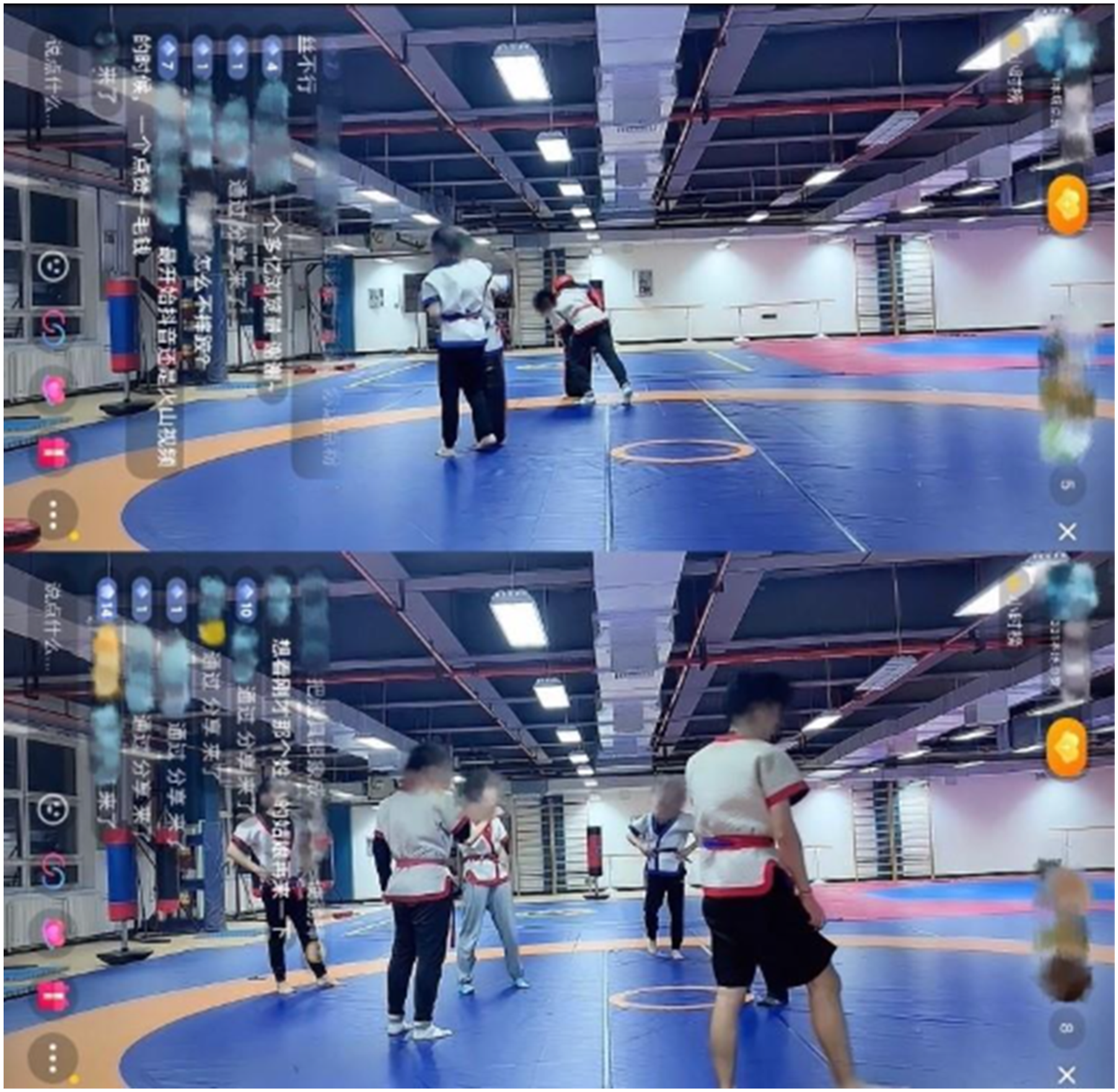
The livestreams were open to the public so that anyone else (in addition to the researcher) could connect in real time. Common viewers included former team members, unknown other viewers from Douyin, and family members of the team members. This inclusion in a larger online community proved to have beneficial qualities regarding my anonymity as a participant, compared with simply watching a session while sitting at the edge of the training site and taking notes. Accompanied by a broader audience, I was disconnected from the scene, becoming a partially visible observer behind the screen rather than a focal node at the edge. This may have minimized the jolt to the environment.
Data collection procedure
During each livestreaming session, I collected data in several ways:
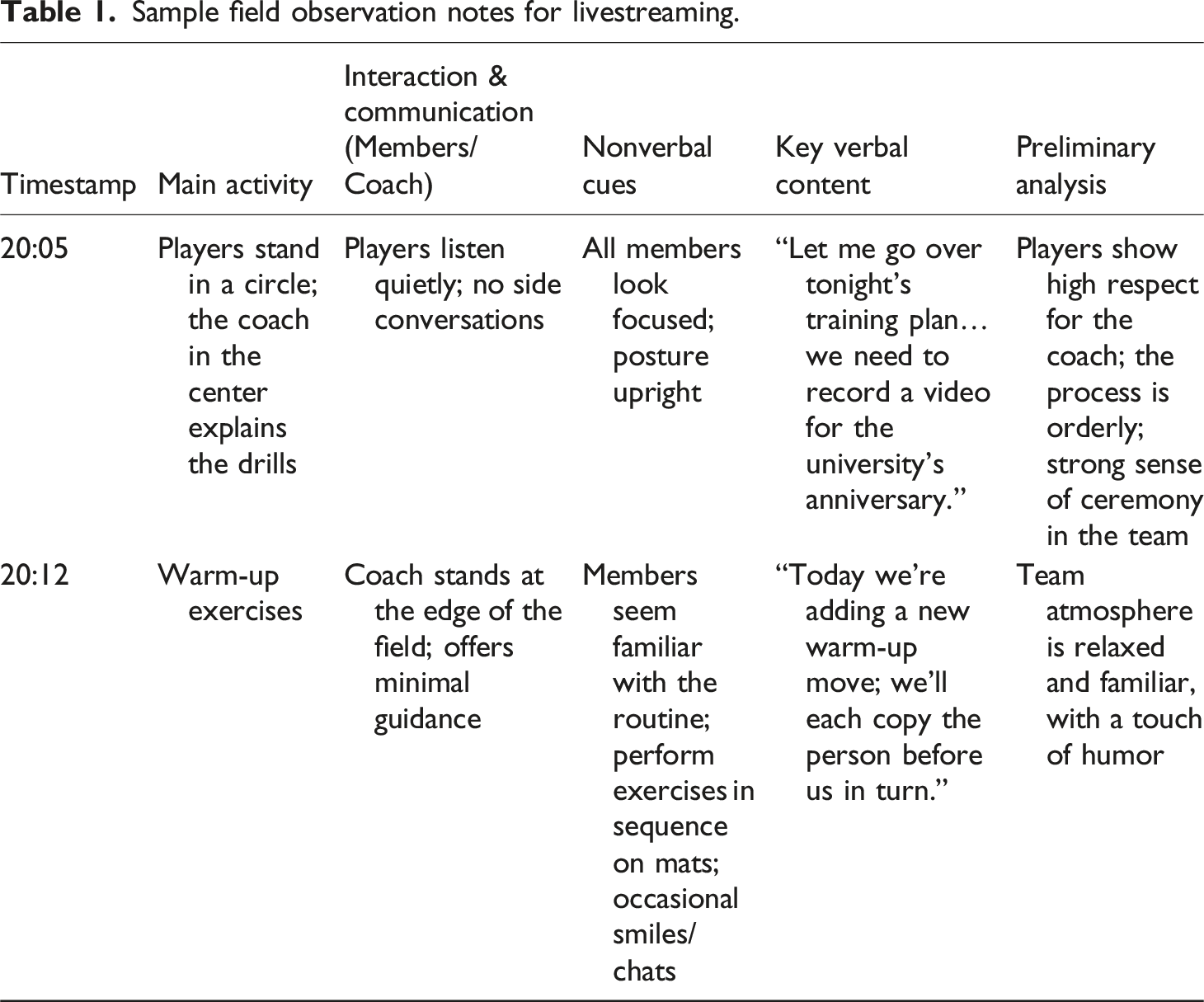
Field notes
Sample field observation notes for livestreaming.
Screen recording and multimedia materials
With participants’ consent, I used screen recording software to save the complete live videos of training sessions, including audio and real-time comments, for later replay and detailed analysis. I also took many screenshots of key moments, for example, when a member performed a particular wrestling move, when the team gathered for a discussion, or when members engaged in unrelated interactions during practice. These visual data strongly supplemented the field notes, ensuring that complex or fleeting events could be examined in detail later. For instance, one screenshot captured several members practicing combat moves, while others were lying on the mat, chatting and resting. This suggests that the team did not enforce strict discipline, but rather respected members’ physical conditions and personal wishes. Figure 2 illustrates the sequential steps for implementing real-time livestreaming in my remote ethnographic observation. Flowchart of livestreaming participant observation process.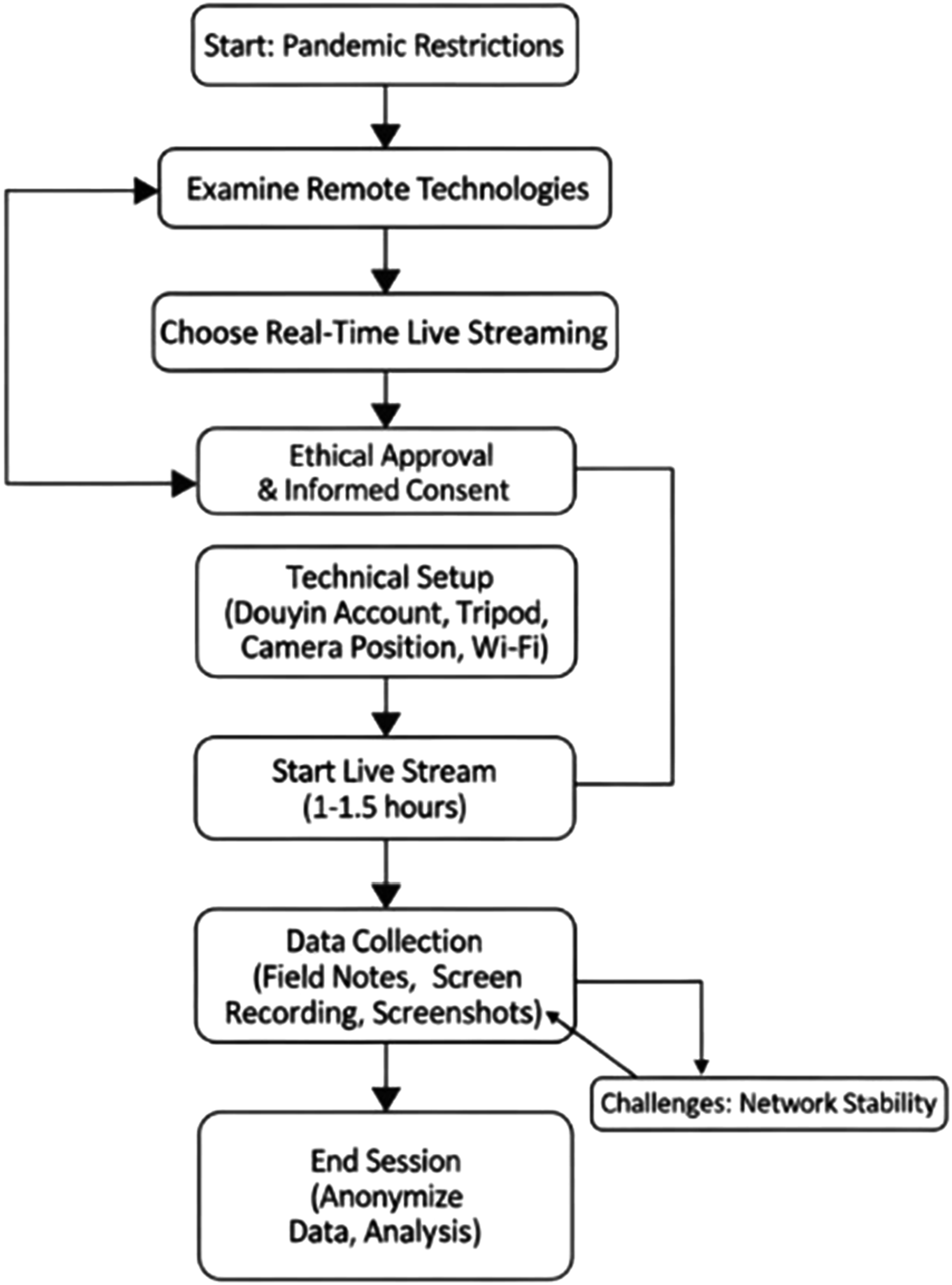
Beyond illustrating the procedural steps, the flowchart serves as a reflective framework for livestreaming ethnography, depicting three interlinked aspects: technological mediation, participatory co-construction, and distributed observation, which jointly form the modal pattern of virtual presence advocated in this reflection. In the flowchart, technological mediation stands for the technological tools applied to fulfil the live broadcast, including the Douyin platform, the positioning of the camera, and the internet support for the online livestream. These technological mediations are not neutral; their interweaving actively shapes what the researcher sees, hears, and records, and regulates the degree to which the researcher can be “present”.
In addition, participatory co-construction refers to the co-production of the site by the participants and the researcher during the livestreaming. As the flowchart shows, the participant, not the researcher, largely dominates both the ethical consent, the control of the camera, and the interaction with the viewers who enter the room to watch online. The embodiment of participant agency in these scenarios makes them co-creators of the observed scene.
Finally, distributed observation represents how the act of “watching” is shared by multiple audiences beyond the researcher. The live format disperses the researcher’s singular gaze, which is instead shared with other audiences, such as former team members, online viewers, and anonymous viewers. Livestreaming observation thus transforms the research site into a collective, networked process. Together, these three dimensions reconfigure virtual presence as a possibility for remote ethnography.
Advantages and innovations of the livestreaming method
In terms of methodology, this article not only emphasizes these technical advantages but also offers an opportunity to consider how livestreaming shapes the epistemological basis of presence and observation in ethnography. Livestreaming field observation provided a pragmatic solution for collecting data during the pandemic and led me to reconsider the boundary-shaping powers of digital tools in the practice of ethnography.
Positioning livestreamed observation within remote and digital ethnography
This study positions livestream participant observation as a hybrid type of remote ethnographic practice. It cannot be reduced to an online ethnography of natively digital field sites. Although digital ethnography at the text/platform level (such as merely observing the interactions within members’ WeChat groups) is technically feasible, it cannot replace the continuous witnessing of embodied movements and interactive rhythms during wrestling training. These dimensions are crucial for understanding the generation of team order and collective identity (Hine, 2020). In this study, the field has always been a material, embodied field placed in the campus training room. Livestreaming here serves as a mediating interface for entering the embodied field, allowing the researcher to reach and track the daily practices in this field even when physical access is blocked. In other words, livestreaming is not the field itself, but a technological means that leads to the field, and this means that the medium will participate in shaping what the researcher can see and how to be present.
Positioning livestreamed participant observation within related remote and digital ethnographic approaches.
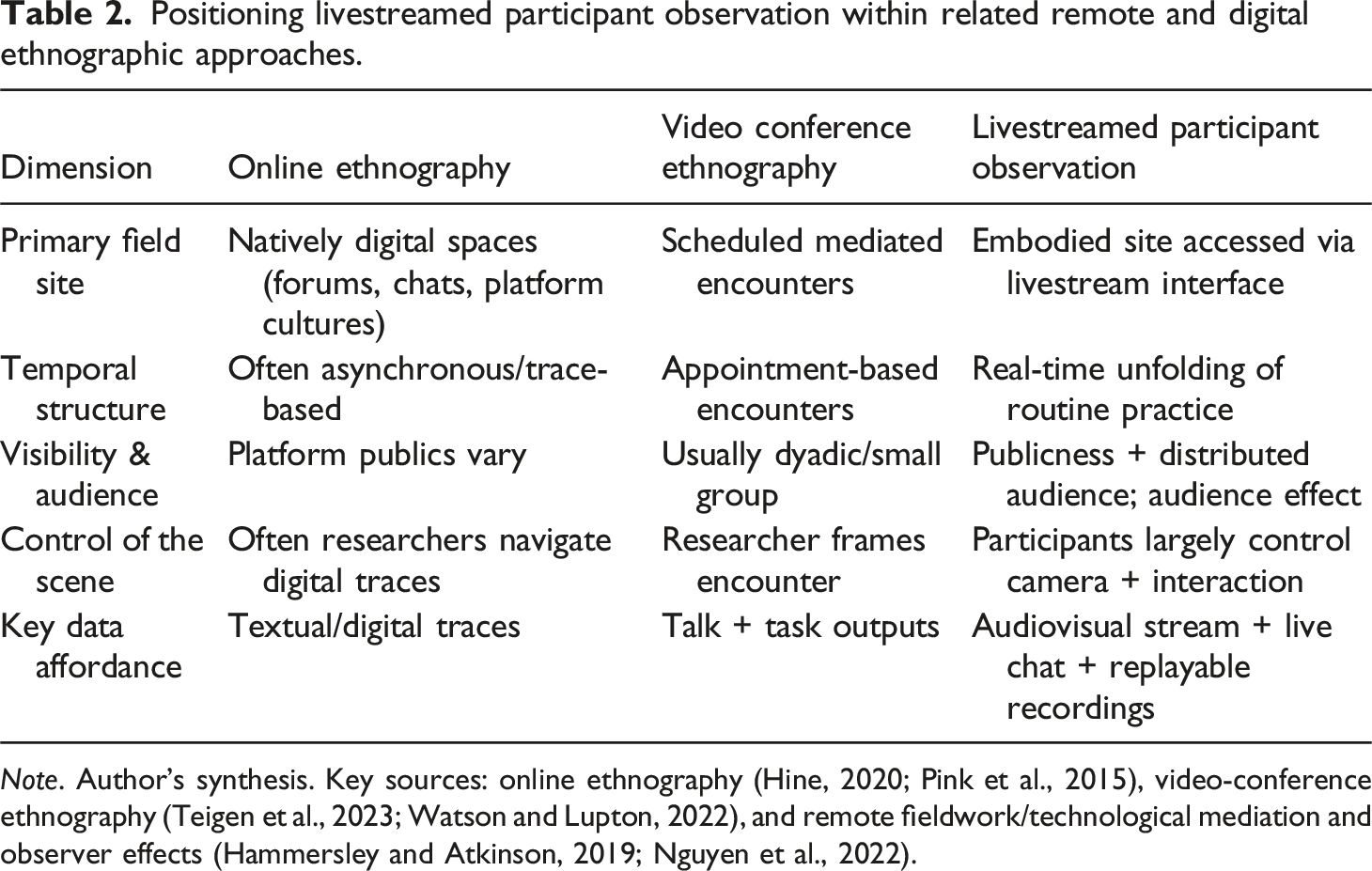
Note. Author’s synthesis. Key sources: online ethnography (Hine, 2020; Pink et al., 2015), video-conference ethnography (Teigen et al., 2023; Watson and Lupton, 2022), and remote fieldwork/technological mediation and observer effects (Hammersley and Atkinson, 2019; Nguyen et al., 2022).
Reactivating a dispersed community
Public livestreaming unexpectedly reactivated the wider wrestling team community (Taylor, 2018), especially former members and supporters. In traditional closed ethnographic settings, researchers usually observe only current members and coaches present at the scene. However, by broadcasting on a public platform, former members and other outsiders could rejoin and observe the training process. During data collection, former members often returned as viewers. For example, they sometimes sent jokes or words of encouragement to current members through the live chat and occasionally showed support by giving digital gifts via Douyin’s reward function (Rugg and Burroughs, 2016). When current members learned that former members were watching, they often greeted them in front of the camera, saying, “Hello, senior.” These online interactions gave me insights into generational transmission within the team’s culture, which is difficult to observe in fieldwork. This advantage expanded the understanding of collective identity beyond what could be learned only from current members.
Secondly, the presence of an online audience, other than the researcher, injected vitality into the training course, thereby pushing members to engage in a performative act of self-presentation (Goffman, 1978), portraying themselves as they are, with their cultural and identity heterogeneity. Once in front of other (online) viewers, participants were no longer being watched solely for the sake of the researcher but were presenting themselves to a bigger audience, essentially at a much closer analogue to a team putting on a semi-public show or an open training camp. I was able to observe how individual members consciously regulated their impressions to display team-specific cultural traits (discipline, loyalty, fortitude) and maintain an idealized team image by highlighting positive dispositions. For instance, the uncertainty of whether online viewers would join could motivate members to respond more actively to training or consciously view training as a potential platform to express their cultural identity. This could reduce the tension brought by the COVID-19 pandemic to the team.
According to Goffman’s (1978) conceptualization of front stage and back stage, members’ presence during livestreaming was the front stage of the team; team members adopted roles that served to display their social identity as members of the campus wrestling team. As shown by social identity theory, individuals may derive a sense of unity and resilience from such interactions within a community based on their shared identity (Tajfel, 1974). The results of my fieldwork challenge received wisdom. Through livestreaming during social isolation, I cultivated my sense of togetherness in the team and with the wider world outside the team. Emotional engagement with alumni and cultural identity performance provided team community while stretching the boundaries of my qualitatively derived framework into group collective identity.
Blurring the boundary between observer and observed
Traditional participant observation typically requires researchers to remain on the periphery of the research setting to avoid disrupting the research environment. However, in livestreaming observation, my physical absence further blurred the boundary between observer and observed.
During the livestream, my presence was relatively invisible, blending into the audience group with just an ordinary screen name. This setup significantly reduced the unnatural feelings that participants in traditional ethnography might have when they realized the researcher was present. Although the participants knew they were being watched, they faced not a particular and prominent researcher but a broader and more abstract collective audience. In this way, the role of observer became more democratic: the researcher was only one among many viewers, an ordinary onlooker in the field rather than a special visitor. This effectively softened the power dynamics that an outsider observer might generate when entering an internal group in ethnographic research. The objective of the team members’ performance was no longer only the researcher’s notebook but a more inclusive community, which also included them.
This observing mode reflects the concept of panoptic surveillance in computer-mediated communication (Spears and Lea, 1994). In cyberspace, the inspector is not an isolated human stationed in a tower but, through technological distribution, invisibility, and pervasive surveillance (Spears and Lea, 1994), becomes ubiquitous and transparent. Thus, in livestreaming, the diffuse and generic presence of the audience can affect players’ behaviors, inclining them to represent themselves in ways they believe are expected by spectators (Spears and Lea, 1994). It is worth mentioning that in my study, this panoptic surveillance did not become oppressive but rather an allied factor for the team. From a Foucauldian account of panopticism, this non-oppressive panoptic visibility is not a sign of the absence of power, but rather a transformation in the mode of power operation (Foucault, 1982, 2012). Team members are no longer disciplined by a single identifiable observer, but are instead actively subject to a diffuse and potentially permanent gaze. This gaze is generated by the infrastructure of the livestreaming platform and continues to spread through alumni, peers, and unknown audience groups. This visibility can invite anticipatory self-regulation, an internalization of the disciplinary gaze (such as a high level of vigilance towards self-expression when a livestream begins), but in a specific context, it is emotionally re-encoded as care and unity. For instance, supportive comments from former members and alumni reframed the gaze into an encouraging witness rather than a punitive oversight. From this, livestreaming is not only a means of monitoring but also builds a moral community around the team, where being seen becomes a resource for a sense of belonging. The interview content supports the caring gaze, as one member reported, “I’m very moved by the senior teammates supporting us for training in livestream chat. Due to COVID, we haven’t seen each other for a long time.”
Similarly, livestreaming techniques also helped alleviate the Hawthorne effect, where subjects might change their behavior simply because they are aware someone is observing them (Oswald et al., 2014). Participants in the livestreaming space did not have to remember that the researcher was watching them all the time; they only had to remember that “the public is watching us”. This phenomenon was observed in livestreams, where I noticed that some extroverted participants even came close to the camera to respond to viewer comments and greet the audience. The weakening of the Hawthorne effect, as observed in livestreaming, was further captured in interviews. When interviewed about their training experiences, participants used phrases such as “when we are streaming live…” rather than “when you gave us livestreaming instructions.” Such wording also manifests participants’ fading distinction between livestreaming and researcher observation (Cera, 2023), i.e., livestreaming becomes more of a part of their everyday actions and routine. As this blurring was a passive blur, it effectively allowed me, the researcher, to be less visible and in tune with a wider and more accommodating digital audience, resulting in potentially less disturbance by observers while presenting the behaviors of participants less artificially in public.
Meanwhile, the participants also became observers being responded to and were thus the people who controlled what viewers on the screen saw (Onderdijk et al., 2021). As team members read comments and responded to them during livestreaming, they temporarily became co-researchers. The coach also occasionally responded to the camera after training by giving a thumbs-up or saying, “Today’s training is completed; we end the livestreaming now.” The above actions show that participants were not only external observers but also active co-constructors, interpreters, and narrators of their own practices within the observation site.
The active participation of the participants, combined with my embedded role as a researcher, facilitated the integration of the observer and the observed, thereby weakening the power hierarchy (Clifford and Marcus, 2023). In short, the participants’ control of the camera helped them set up the agenda, and in this way, challenged the researcher’s dominant voice in ethnography (Clifford and Marcus, 2023). My invisibility as a researcher in the livestreaming environment allowed for a more natural and comfortable space for participant engagement. Conversely, the participants’ active responses and independent interpretations provided me with critical insider perspectives, through which I could understand how participants set up and displayed their practices in real-time.
Maintaining continuity of participation and data integrity
The remote ethnographic approach based on livestreaming has its special and irreplaceable meaning in building up community, creating identity, and continuing ethnographic participation in a special time or special situation (Fosu, 2024). During the strictest period of COVID-19 prevention in China in early 2022, I conducted 10 remote livestream observations over 3 months, seven of which were conducted during the peak control period. With this method in place, pandemic restrictions did not abruptly end the research. Fieldwork might otherwise have been halted for a year or even longer, and this would have heavily undermined ethnography’s requirement for relationship building and deep contextualization.
Although I could not be physically present at the training venue, virtual presence allowed for ongoing and close contact with participants. This stable virtual participation greatly helped to maintain research relationships and avoided the sense of distance caused by long-term absence. Even during informal observation periods, participants would actively interact with me online by asking, “I saw on the news that there was a flood in New Zealand. Are you okay?”
For livestream observation, the contact was just as instantaneous and natural. For example, “Is the camera location okay?” or “Nice to see you, senior,” people would whisper to me in front of the camera. This contact showed that I still maintained communication with the participants even though I was not there in the physical world. When I returned to the location for observation after the lifting of pandemic restrictions in China in 2023, the participants were no longer strangers to me, but rather old friends.
Live video recordings also help expand and complement the integrity of research materials. In contrast to offline observation, live video records can be replayed multiple times, and even frame-by-frame analysis can be used for investigation by researchers to examine body language and other fine details (Meier zu Verl and Tuma, 2021). Although on-site video/audio recordings can eventually accomplish the same effect, filming or recording continuously is less typical in traditional ethnographic research due to ethical, intrusive, and practical concerns. Nevertheless, since livestreaming is natural and non-intrusive, it brings authenticity and practicability to data collection.
Live video itself serves as an effective form of traceable record of participation. I could play clips of the live video during interviews and ask participants what was happening in the livestream at the time. For example, I showed one participant part of a conversation that happened during the livestream, which effectively helped her remember what that conversation was like. Video support enabled participants to quickly and accurately recall what occurred, presenting more detailed and precise information for the research in both narrative and explanatory data (Meier zu Verl and Tuma, 2021).
Driven by evolving digital technologies, qualitative research is seeing unprecedented opportunities for innovation (Palys and Atchison, 2012). The remote ethnography used in this research through livestreaming helped sustain continuity and stability during a special time, effectively improving the integrity and profundity of the research data, as well as the innovation and practicability of qualitative research methods.
Challenges and limitations of the livestreaming method
Although livestreaming in ethnographic fieldwork brings many benefits, it inevitably encounters unavoidable problems, including reduced sensory experiences, shifts in the researcher’s sense of presence, ethical and privacy issues, and new observer effects. Below, the major problematic issues in the actual application of live participatory real-time observation are discussed and examined, as well as how these issues significantly affect the ethnographic fieldwork paradigm.
Sensory experience and the meaning of being there
The change in sensory experience, inevitably brought by livestreaming for remote observation, is not simply a loss of information but stimulates the reconsideration of what it means to be there (Shriram and Schwartz, 2017). For conventional ethnography, bodily presence is rooted in the “embodied approach”, in which participants must physically be present (Borneman and Hammoudi, 2009). Such things tend to be elusive when transmitted in mediated forms; this forces researchers to reconsider their conceptions of presence.
In this study, I observed wrestling training through a single camera feed, inevitably sacrificing the panoramic advantages of field observation. The camera’s field of vision was relatively broad but still less than the full field of view of the training area. When confrontational training happened in other corners, I could only depend on the camera’s vision, so I might overlook on-site visual and/or auditory information. Physical cues at these moments, such as the tactile feedback from stomping on the training mats, the heating or cooling of the training room, the configuration of the room, and the ambient jokes and chit-chat of people, could be hard to depict (Shriram and Schwartz, 2017). This differs from immersion, where researchers can wander freely around the location, recording the exact words of interactions, tone of voice, or even physical gestures much more easily (Borneman and Hammoudi, 2009).
The lack of sensory experiences also inspired me to contemplate the diverse meanings of “being there”. Although there are shortcomings in multi-sensory experiences in remote contexts, researchers can also watch the screen attentively, paying closer attention to the micro-expressions of individual members, eye contact, or body language, sometimes overlooked in the noisy and distant physical world. Perhaps being there virtually is also a form of ethnography that should be embraced (Quintas-Mendes and Paiva, 2023). Virtual presence considered here is not the subsequent remote participation, such as viewing recordings, posts, or communities’ content in digital ethnography (Hine, 2020), but rather highlights the state of being present, that is, a mediated presence in contrast to digital ethnography (Quintas-Mendes and Paiva, 2023). Nevertheless, it is worth noting that physical distance will always create barriers and passivity. In these cases, participants’ actions cannot be followed by researchers in an active manner, and only presetting a camera angle is possible, meaning that a reduced amount of information is obtained.
These limitations forced me to utilize multiple data sources. In-depth interviews and follow-up field observations complemented my live observation, preventing excessive interpretation of subjects’ behavior that lacked full context. When I was doubtful of an interpretation while observing, I noted these questions in my field notes. For these questions, I followed up with targeted questions in follow-up interviews after fieldwork to compensate for specific sensory or contextual deficits.
Ethics and privacy issues
Researching public livestreaming platforms presents distinctive ethical challenges demanding perpetual monitoring and vigilance. The most concerning challenge is arguably protecting participants’ privacy rights within a public digital domain. Even though all members chose to join the stream, once streaming started, participants’ activities became open to public viewing, and the researcher’s influence on the identity and, presumably, subsequent actions of the viewers were minimal at best. As a case in point, audiences may unwittingly screengrab or record the livestream. Any public online content has exposure risks, but this aspect of research practice raises an ethical grey zone, as participants consented to be watched and have their data used by the researcher, but not by third parties who may watch or reuse the livestream (Zimmer and Kinder-Kurlanda, 2017).
As for the secondary participants, i.e., online viewers, although I did not collect data from them and never attempted to identify or track them, their comments on the platforms were visible to the general audience; therefore, their comments were included in my field observation notes. This creates complications when quoting or analyzing comments from casual participants in my research. Because the chat section on streaming platforms is a public space and commenters usually use nicknames, I treated these comments as publicly available data, similar to content from online forums. I always anonymized any user IDs and refrained from collecting or quoting comments that might include personal or identifiable information. Most comments in my analysis consisted of general words of encouragement, support, or questions about team activities. For instance, in the livestream, one past member asked, “Who were those two sparring just now?” Then, one current member answered the question verbally. I noted the name of the current member with a generic term such as “a first-year student”. Yet, this nonetheless suggests how livestreaming presents ethical challenges to ethnography.
At the same time, power imbalance and lack of voluntariness in livestreaming also need to be considered in terms of ethical reflection (Zimmer and Kinder-Kurlanda, 2017). In a team situation, even if everyone appears content with participating in livestreaming, there might still be some form of implicit coercion encouraging each member to follow the team’s request. It is quite possible that no one would wish to be the only dissenter against the proposal for livestreaming when asked to do so, fearing disruption to teamwork. To ensure voluntariness, I repeatedly asserted that if participants were not willing, the livestreaming could be stopped, or they could decide not to enter the frame. Everyone was free to stand outside the camera’s range according to their preference. Initially, I suggested members to stand on the side of the room to avoid being filmed, and I agreed. As mutual trust formed, these members later willingly came into view. This step, which allows people the opportunity to undergo a gradual process of consent, is important. The process of methodological innovation must not violate participants’ boundaries or comfort zones.
New observer effects and performance bias
Despite the use of cameras and spectators introduced above, as discussed earlier, while the Hawthorne effect resulting from the direct intervention of the researcher could, to some extent, be minimized, such an approach was not sufficient to eliminate the other observer effect, thus leading to a novel Hawthorne effect resulting from a wider audience (Oswald et al., 2014). As I witnessed, in the early days of the livestream, participants were sometimes unwilling to face the camera and moved in such a way that the camera could hardly locate them. These phenomena suggest that the presence of the researcher’s cameras made the participants realize the possibility of a wider, external gaze, which induced them to change their behavior by focusing on the behavior itself rather than addressing the change to the researcher, but to the perceived observer in the livestreaming room. While participants probably did not care much about my explicit presence, they were aware that they would be performing as far as the audience was concerned while facing the camera. In such cases, the traditional ethnographic researcher effect shifted to an audience effect (Goffman, 1978). As the title suggests, behaviors displayed in the livestreaming environment differ from those observed face-to-face. In addition, participants’ performative behavior prompts crucial concerns about the authenticity and validity of data in general, i.e., do some of the behaviors observed via livestream truly capture what happens in the team’s day-to-day life, or are they to some degree the outcome of performance (Goffman, 1978)? This concern demands a greater density of livestream observation and subsequent compensatory interviews.
Furthermore, some technical disruptions beyond the researcher’s control, such as livestreaming disconnections, are often difficult to completely avoid and may unintentionally trigger the Hawthorne effect, that is, when technical malfunctions disrupt the originally smooth remote viewing, the fact that participants are being observed will suddenly become more prominent. This prompts participants to adjust their behavioral performance in the moment (McCambridge et al., 2014). In livestreaming observation, this technical mediation may have maintained the researcher’s relative unobtrusiveness to some extent. However, once the livestreaming is interrupted and human intervention is needed (for example, the researcher has to contact the livestreamer to restore the picture), this mediation relationship will temporarily fail, and the researcher’s presence will also become more prominent and interactive (interactionally consequential), thereby amplifying the reactivity and reflexivity issues that have long been repeatedly discussed in ethnographic studies (Hammersley and Atkinson, 2019). Methodological accounts of remote/video ethnography also point out that research encounters do not occur outside of technology but are co-generated with it; therefore, technical disturbances not only affect the interaction rhythm and relationship establishment but also change the content and details that researchers can observe (Teigen et al., 2023; Watson and Lupton, 2022).
These scenarios also indicate the range of conditions of livestreamed observation. It is based on a minimal digital ecosystem, which requires a reliable power supply (including contexts of intermittent electricity), appropriate equipment, and a stable enough connection. In low-resource or low-bandwidth settings, researchers may need to rely on alternatives, such as audio and video recording, which can inevitably distance the method from its advantage of continuous real-time co-presence. Rather than a universal substitute for in-person ethnography, livestreamed observation is best understood as a situational toolkit for particular infrastructural and access constraints.
Conclusion
Qualitative field research, heavily dependent on on-site participant observation-based data collection, has faced unprecedented difficulties posed by the COVID-19 pandemic. Existing remote ethnography partially addresses but does not cover the richness of concurrent, on-the-spot interaction processes and the nuanced emotional atmospheres for participants and researchers during on-site observations (Fine and Abramson, 2020). Therefore, this reflection began with lockdown, transforming physical fieldwork into a digital space. It deploys livestreaming technology to fill this void and presents a fresh account of the meaning of “being there” in ethnography.
The notion of “being there” in ethnography has long been conventionally defined as a multi-sensory experience, considered the result of the researcher being physically present in the field (Borneman and Hammoudi, 2009). However, this study tentatively suggests the opportunity of being virtually there. Livestreaming grants the researcher a real-time, mediated means of participation that enables them to sustain continuous contact with, and through that, an understanding of the observed subjects even without physical co-presence. Cameras offer micro-features such as micro-expressions, eye contact, and body details that may be missed when immersed in noisy physical contexts, extending the feeling of being there through mediated qualities. Livestreaming techniques can therefore provide tool-based benefits for data collection and validity. Being able to record videos and then replay them enables the researcher to analyze, frame by frame, complex events, replacing the lower degree of control over complex scenes inherent in the use of field notes. Likewise, livestream recordings support the member-check process by allowing participants to recall and interpret their own past events. This underlines the merits of livestreaming in improving methodological rigor and the quality of qualitative data.
Aside from its immediacy during the pandemic, this experiment opens a new path to the long-term possibilities of livestreaming for ethnographic research. Indeed, the publicness of livestreaming has sparked the formation of dispersed communities, allowing former members and supporters of the researched team to re-establish engagement with each other, providing new avenues for transgenerational transmission between participants. Furthermore, public livestreaming included a broader anonymous audience that shifted how the researcher’s observation behavior became a mini-public event for a small team of participants. This motivated participants to focus more on the training process, to ‘perform’ for a larger audience, which in turn enhanced the researcher’s perspective on interpreting the team (Goffman, 1978).
The key is that the livestreaming approach radically abolishes the classic line between observer and observed subjects. The observer’s Hawthorne effect can be mitigated (Oswald et al., 2014), allowing observation to integrate into a team’s natural workflow rather than the subjects being directly observed by the researcher. Furthermore, since remote livestreaming enables participants to exercise greater control, they can react to audience feedback instantaneously and choose to control the camera’s field of view. In this manner, the participants and the researcher were both co-constructors of the observed scene.
Despite the benefits of public livestreaming technology, such technology also has distinct ethical consequences. Here, I received direct participants’ (i.e., team members’) consent; however, all content might be recorded and shared with others. This issue highlights the ethical frontier in future research. Moreover, though the remoteness of observation from its context can be addressed through follow-up interviewing and supplementing with in-person observations, the sensory and contextual blind spots cannot replace the richness of ethnography derived from face-to-face encounters. This justifies the usefulness of triangulation approaches to validate the observational findings collected via livestream.
Thus, this explorative reflection study not only presents a novel approach for real-time participatory observation in a complex context but also raises issues about the presence of ethnography in the digital era, community collective identity as a research topic, and researcher–participant relationship features. As a mediated practice in mediated societies, the delicate yet profound research methodology of ethnography is bound to increasingly cross physical and digital spaces, bodies, and screens.
Footnotes
Acknowledgements
The author sincerely thanks all participants for their enthusiasm and generous contributions to this study. The author also gratefully acknowledges the ongoing patient guidance and support of her PhD supervisors, Professor Toni Bruce and Dr Margaret Henley.
Declaration of conflicting interests
The authors declared no potential conflicts of interest with respect to the research, authorship, and/or publication of this article.
Funding
The authors received no financial support for the research, authorship, and/or publication of this article.
Ethical considerations
Approval for this study was obtained from the University of Auckland Human Participants Ethics Committee (Approval No. UAHPEC24290). All procedures involving human participants were conducted in accordance with institutional and national research ethics guidelines.
Consent to participate
Written informed consent to participate in live-streaming observation and related data collection was obtained from all team members prior to each session. Participants were informed of their right to withdraw at any time.
Consent for publication
All participants gave informed consent for anonymised data, screenshots, and quotations to be included in academic publications derived from this study. Identifying information has been removed to ensure confidentiality.

Data Availability Statement
Due to the inclusion of human participants and identifiable audiovisual data, the raw datasets generated and analysed during this study are not publicly available. Anonymised excerpts of field notes and screenshots are available from the corresponding author upon reasonable request.