



Abstract
To observe and experience how culture is embedded within agriculture, as the lead author I conducted a year-long ethnographic and autoethnographic study within an Australian small-scale market garden. This study sought to understand the social and ecological contributions of a farming community called Loop Growers and their perceptions of societal transitions to fairer and more just sustainable food systems. Six key reflections were synthesized regarding Loop Growers’ environmental and community values and linked to Agrarian worldviews. This farm challenges narratives of the dominant capitalist hegemon, exerted by those benefitting from industrial food systems, by providing purpose, holistic health and healing through small-scale farming and a ‘new peasantry’. Despite this, these farmers’ experience disproportionate risks and face barriers in access to land, education and government support. Lastly, we explore the prospects of a universal basic income for farmers and how this highly embedded experience inspired me to become a farmer myself.
Introduction
Globally, the ways we grow, share and consume food vary significantly, with agriculture being a key ingredient of culture in many different ways (Berry, 1977; Burton et al., 2020; Patzel et al., 2023). At the heart of agriculture are farmers who can provide essential contributions through their intimate connections to the land and knowledge of food production, the soil, biodiversity and climate, and their communities (Berry, 1977; Burton et al., 2020; O’Connor et al., 2024). Since the industrial revolution, the Global North has evolved an agriculture, or industrialized food system, based upon a dominant, highly pervasive and neoliberal capitalist cultural hegemon (Gramsci, 1992; Rose, 2013; Rose and Lourival, 2019; Saito, 2017). This dominant hegemon’s influence upon industrial food systems is demonstrated in ideologies and narratives promoting extractive, mechanical and commodified relationships to food, land and the natural environment, as well as human health, well-being and community (Berry, 1977; Holt-Giménez, 2017; Massy, 2017; Rose, 2013). These ideologies and narratives, exerted by powerful actors benefitting from industrial food systems, have led farmers to be deeply misunderstood, undervalued and exploited in our society (Berry, 1977; Mayes, 2018; Rose, 2013).
Investigating the lived experiences of Loop Growers’ farming community, this research asked (1) how do farmers’ lived experiences influence their ability to participate in societal transitions to sustainable food systems and contribute to social and ecological resilience? And (2) how can societal transitions to sustainable food systems be fair and just for farmers? Spending one year as a volunteer, I undertook autoethnographic and ethnographic approaches that embraced the subjectivity, embodied experience and situatedness of the self (Moustakas, 1994; Schliewe, 2020; Sundler et al., 2019; Zeiler, 2020). Collecting rich data through participant observation, reflective journaling and in-depth interviews, the ‘I’ narrating this article represents the autoethnographic experience of the lead researcher’s, Grace O'Connor's, PhD candidacy. The ‘we’ represents the ethnographic observations, interpretations and reflections of Loop Growers owners Alice Pheobe Star and Phil Garozzo, intern Alex Gardens, and their community of volunteers and partners on the east coast of Australia. Alex lovingly refers to this community as the “farmily” (blending ‘farm’ and ‘family’). Furthermore, Grace's supervisory team represents the ‘academic brains trust’ which supported this data collection and analysis of observations, interpretations and reflections. This approach allowed me, Grace, to explore the divided, but also nuanced, relationship between worldviews, with Loop Growers’ Agrarian leanings offering a counter-hegemon distinctly different from Australia’s dominant agriculture (Gramsci, 1992; Mayes, 2018). My reflections: (1) describe how Loop Growers challenge the dominant hegemon influencing Australian agriculture (Gramsci, 1992; Rose, 2013); (2) link the farm’s relationship with the natural environment and community to Agrarian worldviews (Berry, 1977; Wirzba, 2003); (3) consider how small-scale farming, specifically a ‘new peasantry’, can provide purpose, holistic health and healing; (4) highlight the risks and systematic barriers farmers disproportionately face in Australia through Marxist interpretations of work and labor (Marx, 1867); (5) utilize these insights to propose a Universal Basic Income (UBI) for farmers; and (6) recount my self-transformation from researcher to aspiring farmer.
This article demonstrates the integral contributions ethnographic and autoethnographic studies have in deeply and authentically observing and reflecting upon farmers’ lived experiences and worldviews, their contributions, what they perceive to be fair and just, and the role of the researcher (Moustakas, 1994; Patzel et al., 2023; Winkler, 2020).
Situating an embedded, embodied and participatory research approach
Between March 2023 and April 2024, I conducted a highly embedded, embodied and participatory ethnographic and autoethnographic study at Loop Growers farm (Moustakas, 1994; Schliewe, 2020; Sundler et al., 2019; Zeiler, 2020). Whilst this study does not to meet the criteria of hermeneutic phenomenology, which combines theory, practice and reflexivity to study “experience, particularly as it is lived and as it is structured through consciousness” (Hendricksson and Friesen, 2012, p. 1) the authors were highly informed by its’ foundations (Moustakas, 1994; Sundler et al., 2019). Specifically, this journey was strongly guided by Moustakas’s (1994) foundational work on descriptive phenomenology and hermeneutics, Sundler et al.’s (2019) phenomenological fieldwork and thematic analysis, Schliewe’s (2020) embodied ethnography, and Zeiler (2020) feminist interpretations of affectivity. Unlike other methodologies, particularly quantitative, these approaches possess radically different epistemological conceptions of subjectivity and reflexivity, the “situatedness of the self” (Zeiler, 2020, p. 384), and centring the underlying dynamics of experience, meaning and intuition (Moustakas, 1994; Schliewe, 2020). Proving integral to this investigation of lived experiences, Van Maanen (1982, p. 103-104) suggests that ethnographic inquiry allows for a “cultural description… that can emerge only from a lengthy period of intimate study and residence in a given social setting. It calls for the language spoken in that setting, first-hand participation in some of the activities that take place there, and, most critically, a deep reliance on intensive work with a few informants drawn from the setting”. Building upon this ethnographic approach, autoethnography served as a critical method to authentically incorporate my personal experiences and reflections as an activist orientated researcher and explore the “senses in embodied movement in nature and memory in connecting with place” (Humberstone and Nicol, 2019, p. 111; Neuman, 2014). Figure 1 describes the primary voices that influenced my evolving identity during this journey. Situating the lead author and voices of influence.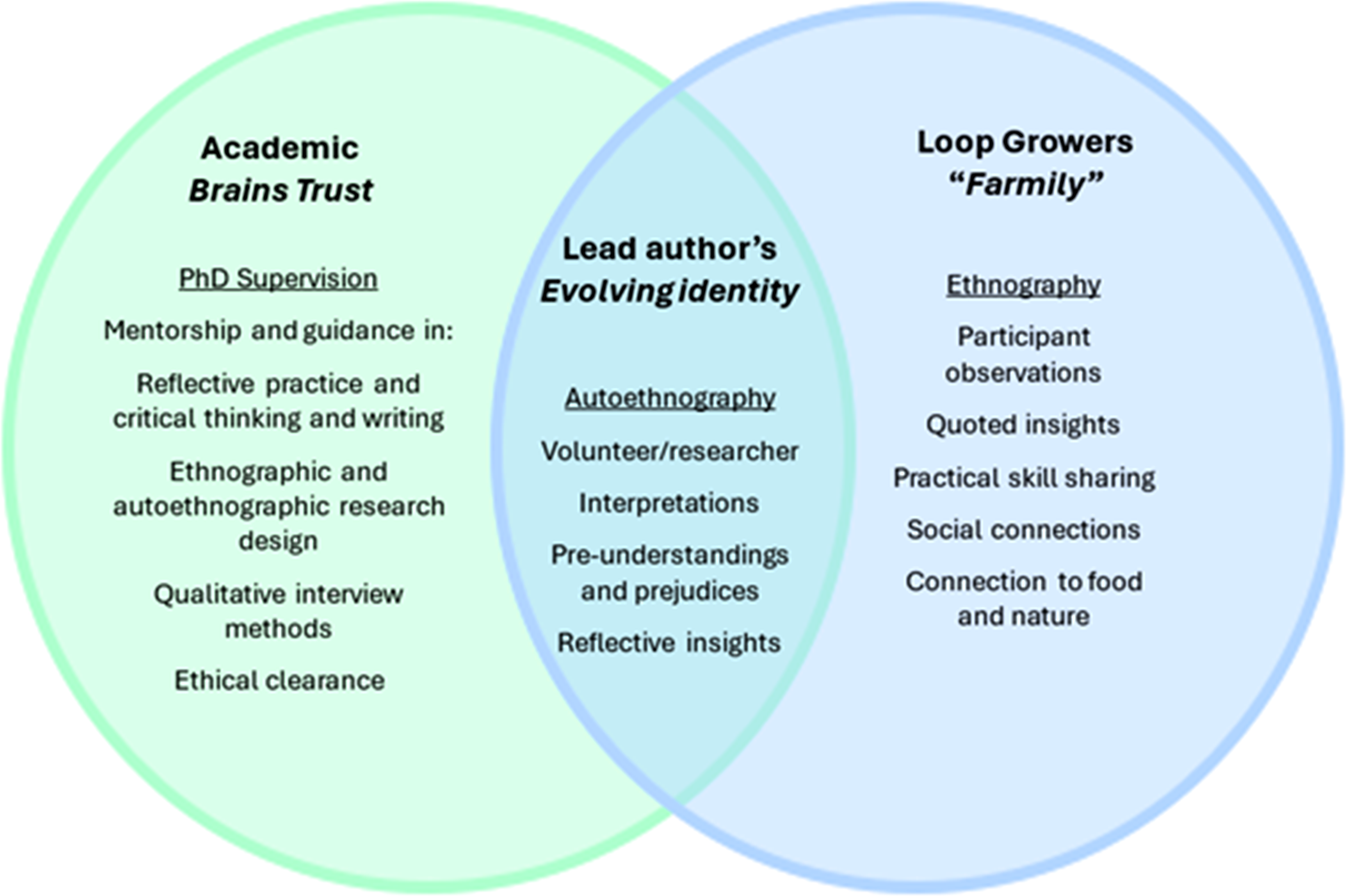
Autoethnographic study of a researcher
Knowing myself to be a passionate advocate for small-scale farmers, the blend of ethnographic and autoethnographic influences arose from my “activist orientation” towards research (Neuman, 2014, p. 116) and deep personal questioning about myself and “the world in which one lives” (Moustakas, 1994; Bradbury et al., 2019; Pitard, 2019; Saxton, 2015). Acknowledging my subjectivity, I explored my autoethnographic potential, as Sundler et al. (2019, p. 735) describes, to retain a “critical stance” and a “reflective attitude”. Aligning strongly with Habermas’s reflective epistemology, this required emphasizing my own sense of openness to the research process through curiosity, sensitivity and receptivity (Moustakas, 1994; Radder, 2012). This was helpful when “searching for meaning”, questioning how my pre-understandings and pre-reflective prejudices influenced my natural attitude and interpretations, and continuously returning and reflecting upon the knowledge generated from this research (Moustakas, 1994; Radder, 2012; Sundler et al., 2019). My natural attitude was influenced by finding value in meaningful work, such as previously growing food as an income source and currently volunteering for a young farmers’ advocacy organisation (Figure 2). Lead researcher Grace O'Connor.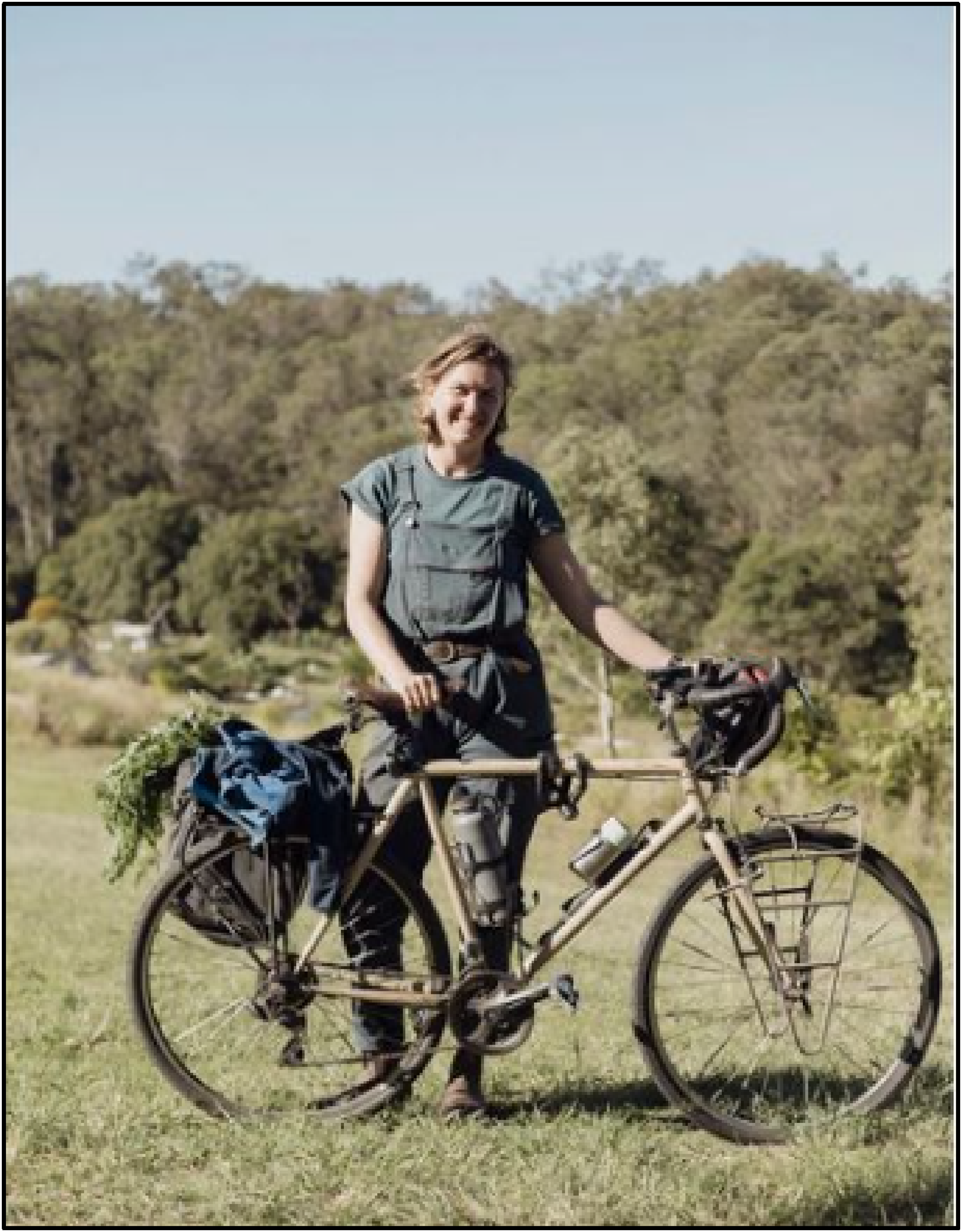
I chose Loop Growers for this research based on my awareness of Alice and Phil’s work since interviewing them for my honor's thesis in 2018. Becoming an intermittent volunteer at the farm in 2021, this was the catalyst for my interest and advocacy for small-scale farming, strengthening my arguments that food systems need to be fairer and more just for farmers, and forming an interrogative stance towards how research values farmers (Berry, 1977; Bradbury et al., 2019; Soubry et al., 2020).
Undertaking this study also meant appreciating farming as a deeply embodied experience and emphasizing its’ physical and spiritual dimensions (Guthman and Mansfield, 2015; Lamer, 2016). Schliewe (2020) and Zeiler’s (2020) informed my interpretation of the embodied experience and how the mind, body and emotions influence relationships with material objects and social dynamics. Considering more than just words and observables actions, Schliewe (2020) describes how researchers who incorporate introspection and reflection of their bodily sensations and evoked feelings gain a more complex epistemological, analytical and hence theoretical understanding of life-worlds (Pink, 2015). Zeiler (2020) also highlights how affectivity, that is, the experience of distinct emotions, feelings and moods, influences the lived experiences of different individuals in specific ways, and hence informs what they consider to be normality – their natural attitude. This proved critical to my version of ethnography and autoethnography involving farmwork’s challenging and enjoyable “bodily mode of being” for these farmers and myself (Azima and Mundler, 2022; Dupré et al., 2017; Zeiler, 2020, p. 381). The multisensory and emotional layers of my embodied experience were also informed by Lamer’s (2016) ethnography of first-generation women farmers.
Ethnographic study of a farm
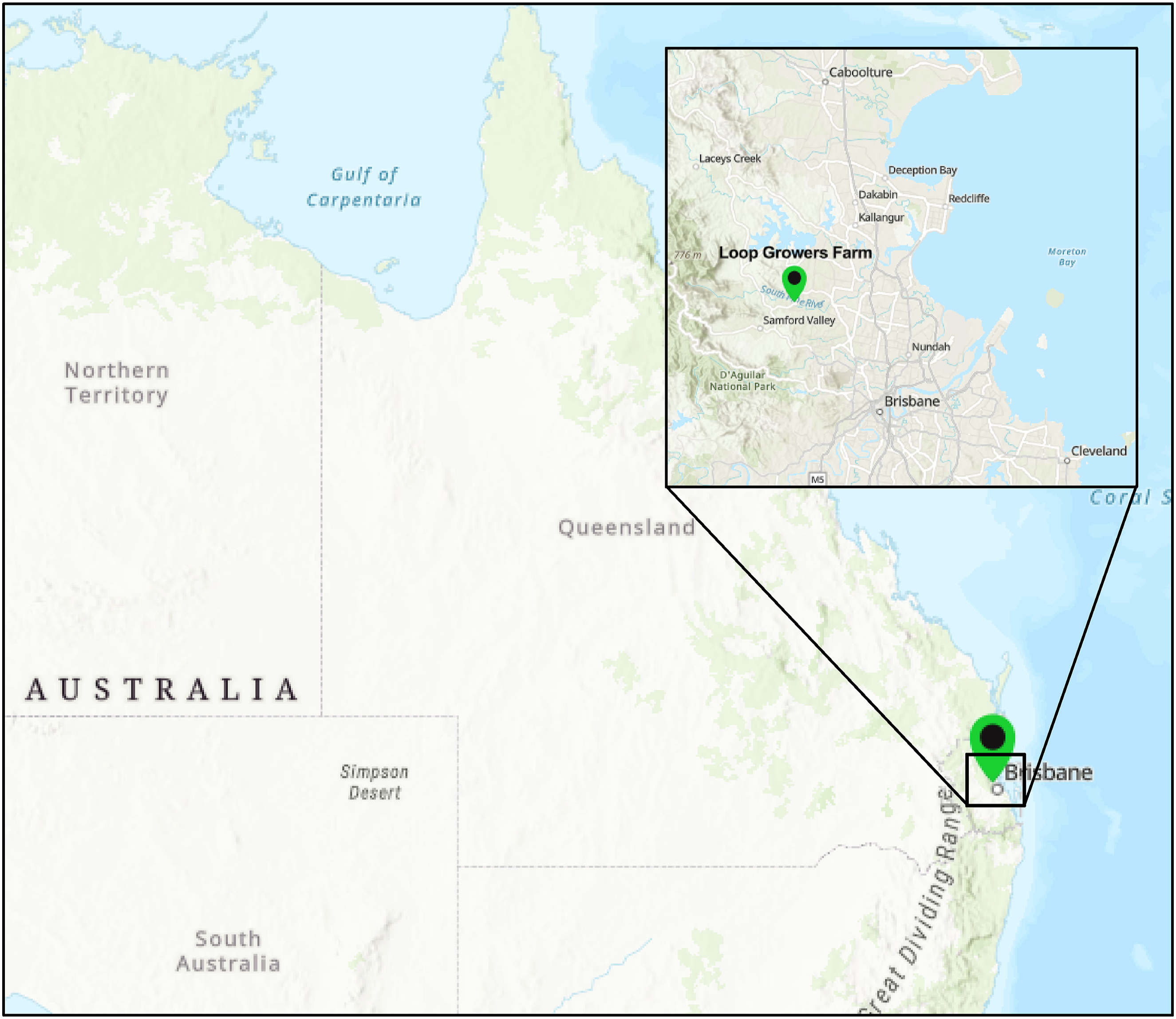
Loop Growers farm was established 10 years ago in 2015 by Alice and Phil (both 34 years old) when they were 25 years old (Figure 3). Moving from inner-city Brisbane to a 40-acre property owned by Alice’s dad in Samford Valley (Figure 4), this property is located on the unceded lands of the Aboriginal Jinibara, Yuggera and Turrbal peoples (AIATSIS, 2024). This lifestyle change, particularly this urban to peri-urban migration, is indicative of the ‘new peasantry’ movement, or the broader ‘neo-rural’ phenomena (Van der Ploeg, 2009; Vizuete et al., 2024). A key characteristic of this movement involves the pursuit of “vocation that aims to recover agrarian practices that are part of traditional ecological knowledge and pre-industrial land management based on subsistence and local markets” (Vizuete et al., 2024, p. 1284). Owners Alice Pheobe Star and Phil Garozzo (Loop Growers, 2024). Farm’s approximate location (Adapted from Esri, 2024).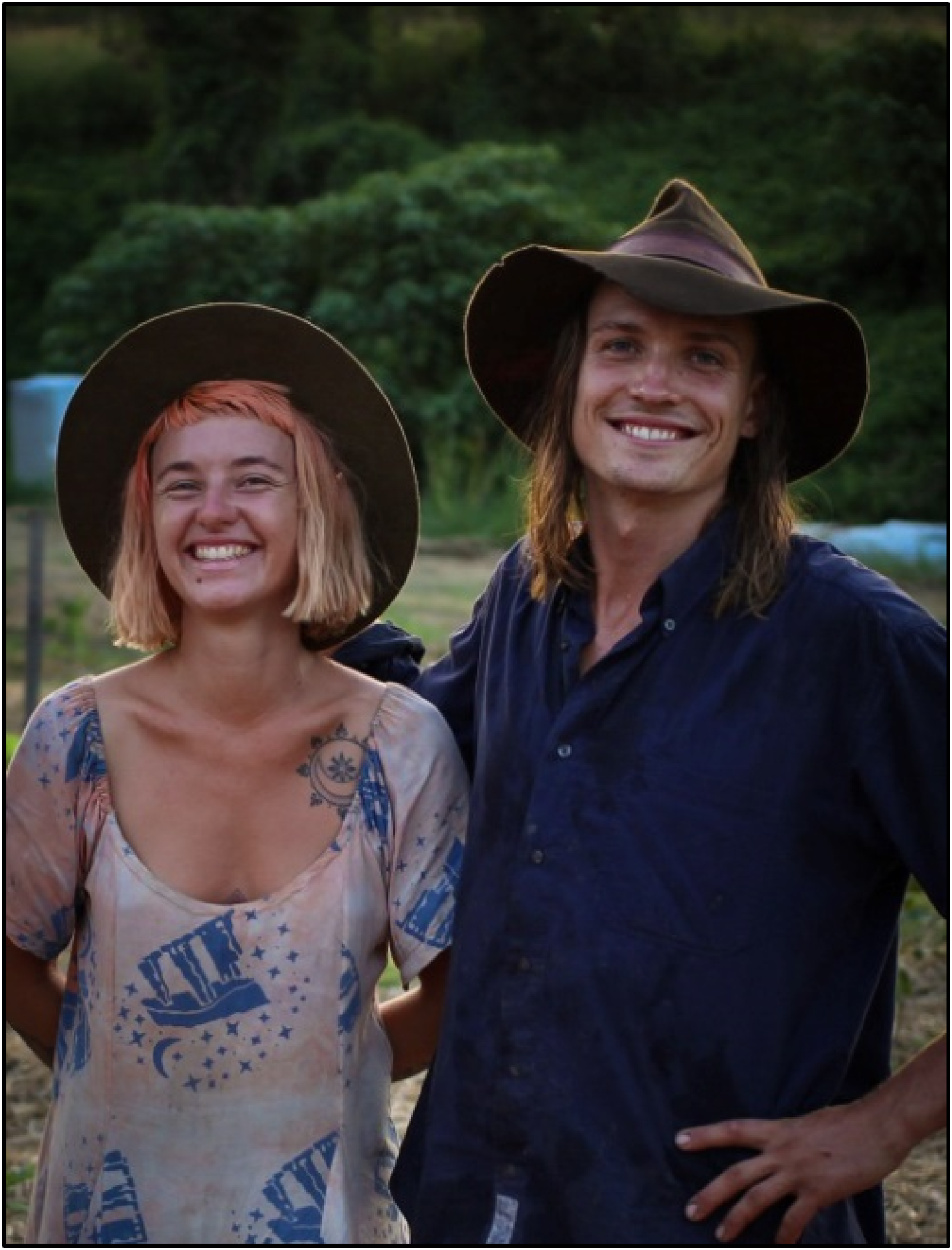
Operating as a two-acre bio-intensive market garden distributing to local hospitality businesses (Figure 5), the idea behind Loop Gowers began well before it was formally established. Specifically, Alice’s love for this land and growing vegetables developed whilst helping her dad grow garlic. For Phil, his interest and passion started with composting systems in the cafés where he worked. Alice describes how:
“when we met, we combined those two ideas and then the ‘closed loop system’ evolved from the synergy of those two elements. Like collecting compost and stopping it [from] becoming a waste stream in the city and bringing it out here to nourish the land -
it just made sense to us”.
Wide shot of Loop Growers farm.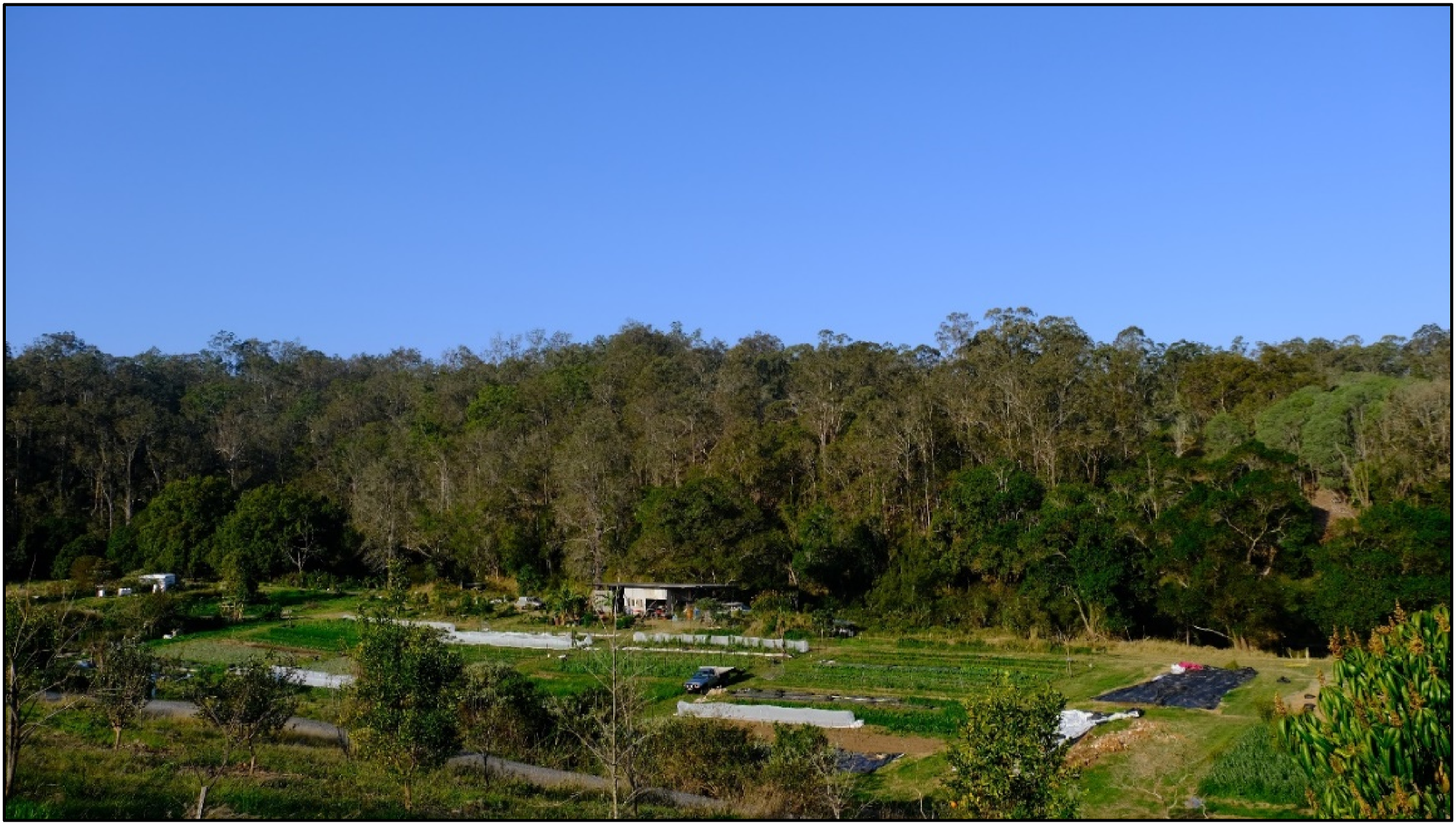
Ten years later, Loop Growers’ model (Figure 6) signifies a loop that collects yields from hospitality kitchens, builds biologically rich compost, grows a diversity of seasonal vegetables, and sells produce to the same kitchens. At the time of my field work in 2023, the farm was cultivating approximately 45 varieties of vegetables, collecting organic yields from and selling produce to 20 businesses, establishing a seedling subscription, using goats to holistically regenerate the land, and hosting farm tours and similar events. Whilst significant to manage, Alice explains this diversity of activities makes the “business far more resilient when things go wrong”. Some key enablers for Loop Growers have been their partnership with Alice’s dad as the landholder, freshwater creek access, and their “unique position” (Alice) from Brisbane allowing them to remain closely connected to their community. Key components of Loop Growers farm.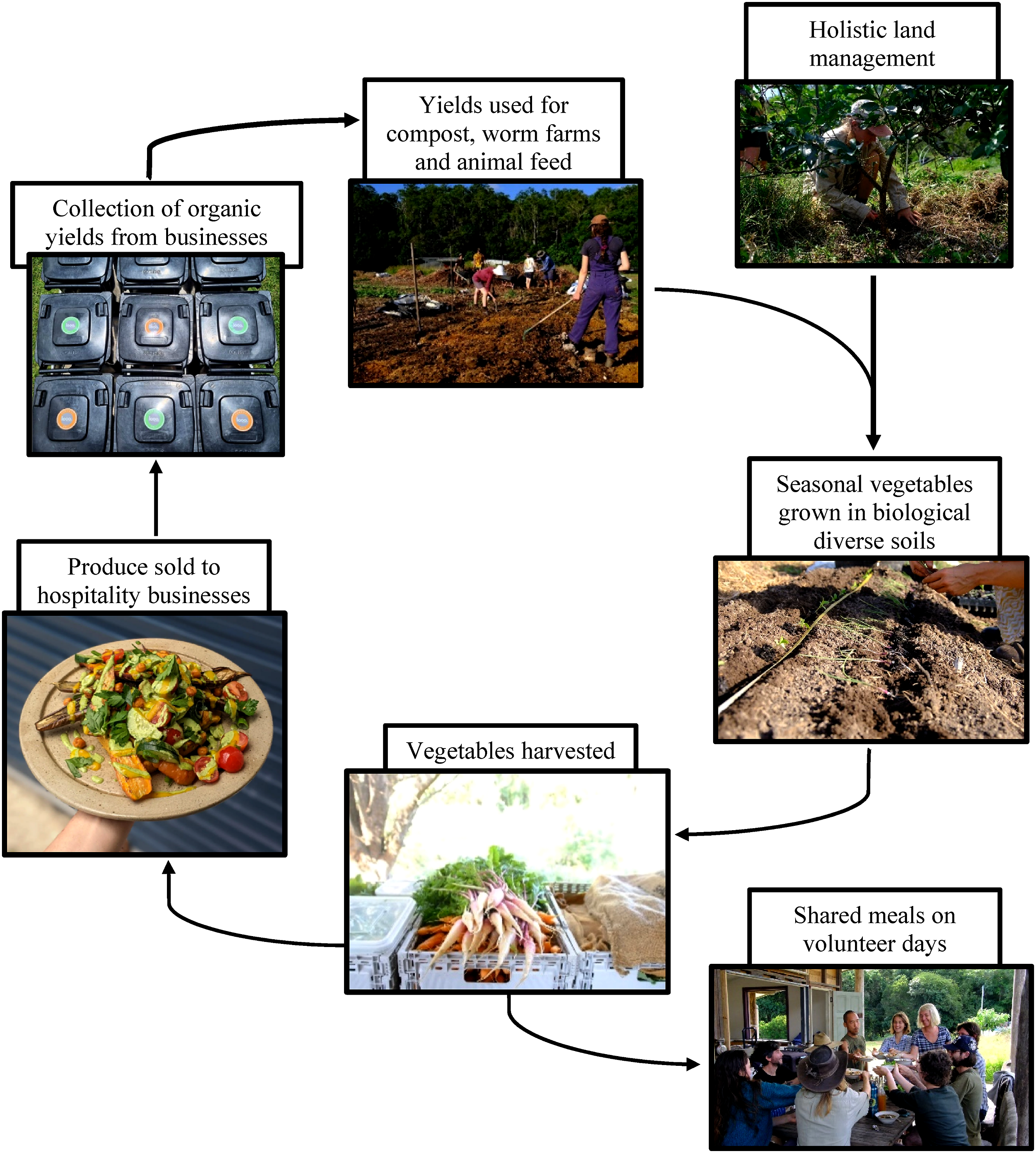
The collection of yields is a key and unique part of Loop Growers subscription-based model that involves partners paying a minimum of $25 per week for a tiered collection service, education and training, and a 10 percent discount on their produce (O’Connor, 2021). These organic yields are vital to their bio-intensive methods that involve growing “a lot of produce in a really small area” and returning soil nutrients in a way that offsets the intensity of a “high rotation of crops coming in and out” (Alice). Underpinned by a strong focus upon building soil biology and health, these methods also include growing a diversity of plants, ‘low-tech’ and human-scale practices and tools, soil tithing rather than tilling, and no artificial fertilizers or pesticides (Chang and Morel, 2018; Holmgren, 2018). Adopting bio-intensive methods that are largely European-informed and better suited to temperate climates of Europe and North America, these approaches can present challenges in South-East Queensland’s sub-tropical context (Holmgren, 2018; Massy, 2017).
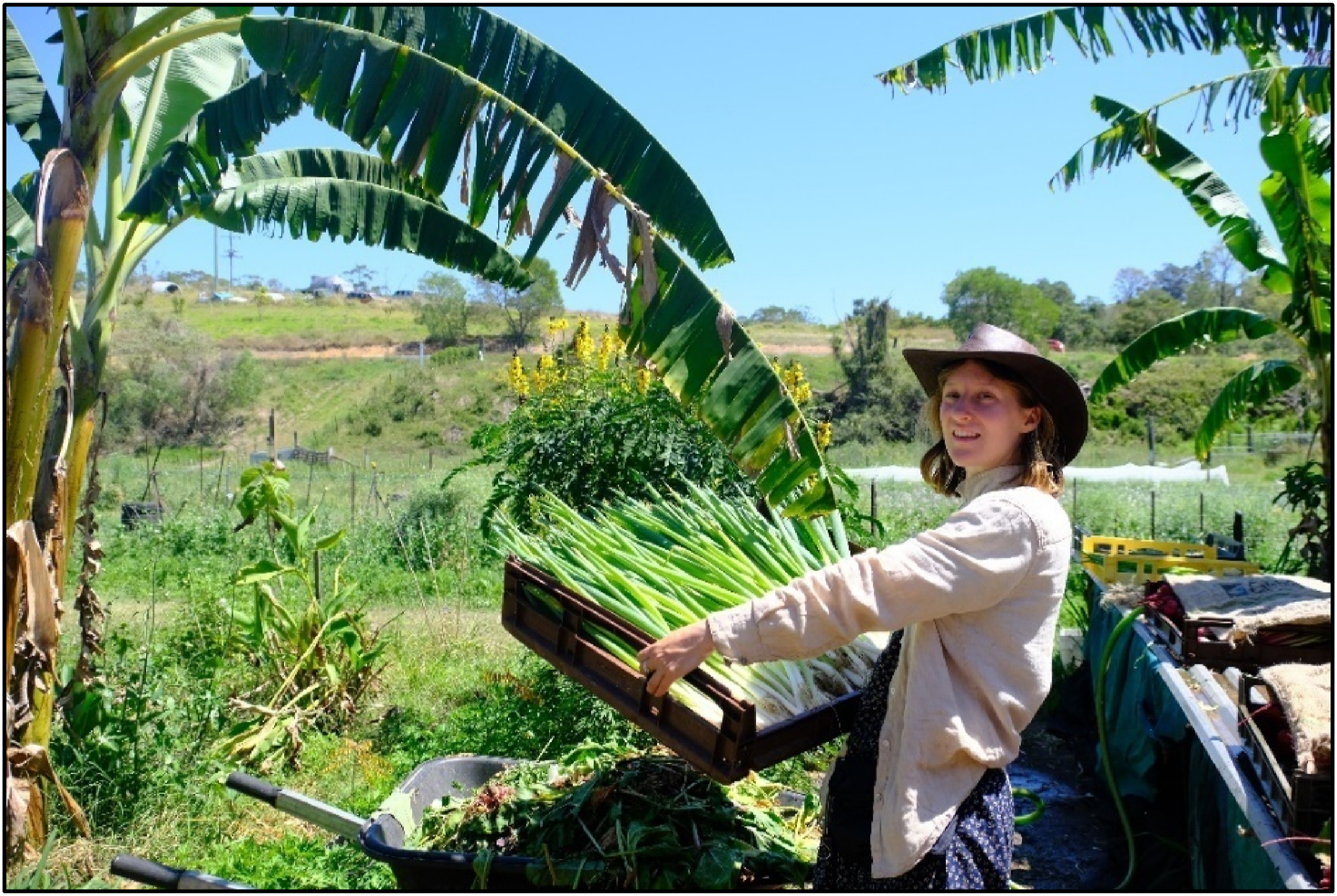
Emphasized in their slogan ‘Food Yields Community’, another vital part of Loop Growers approach to farming is their community of interns and volunteers (Figure 7). Loop Growers run informal and highly practical internships “accessible to anyone who can use a shovel and a rake” (Phil). During my fieldwork, interns included Alex (30 years old) (Figure 8) and two others. Common for many farms in their position, Phil highlights how internships are “essentially like a university course that doesn’t exist, or apprenticeship if you will, for this kind of farming”. They typically involve three months of working and living on the farm. Whilst not paid, interns are offered accommodation, food and other essentials. Many interns diverge from these conditions as, for example, Alex balances her internship with a full-time PhD by working on the farm three days per week and living nearby. Volunteer day – April 2025 (O’Doyle, 2025). Intern Alex Gardens.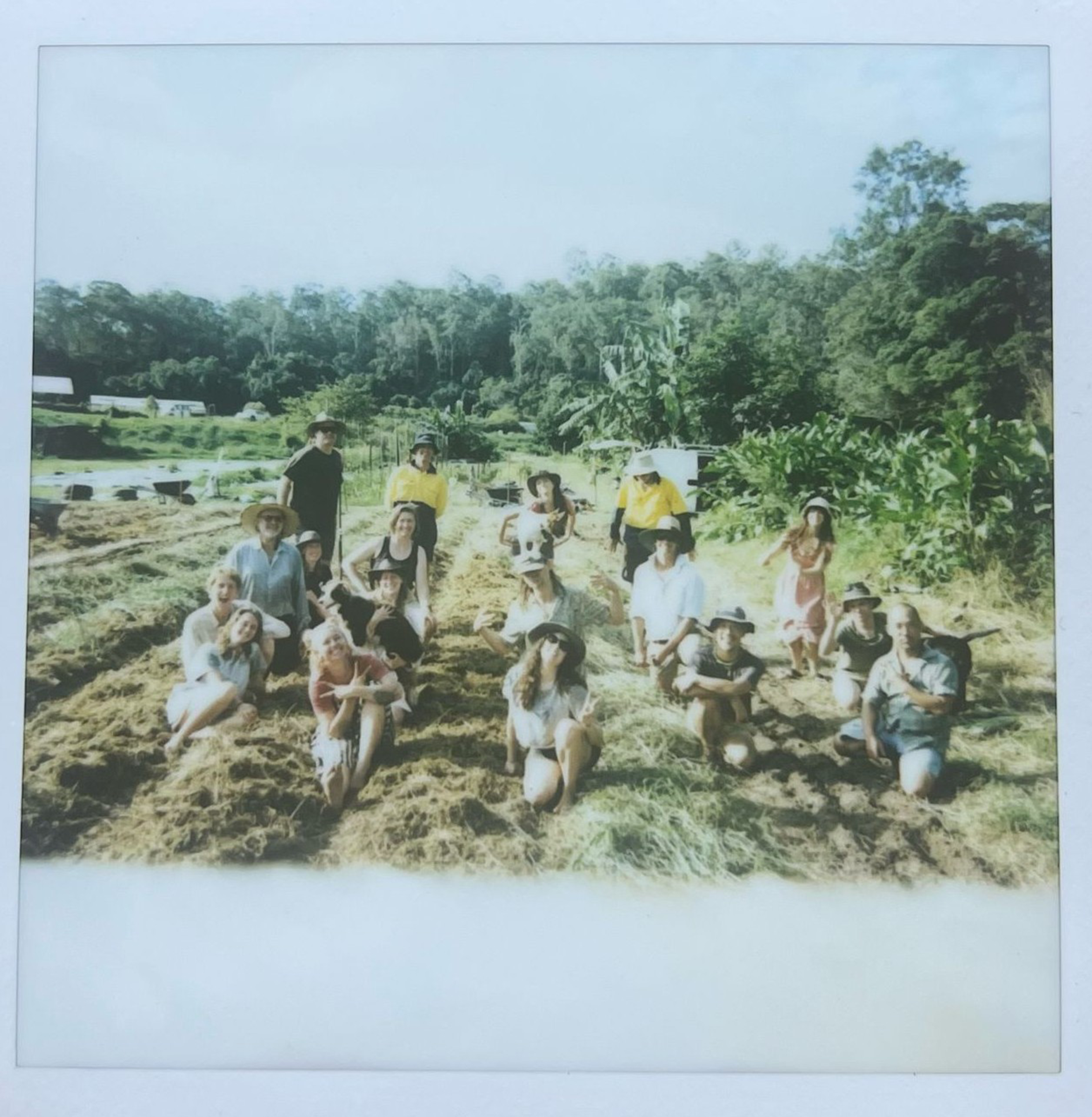
In addition to interns, weekly volunteer days have been running for 8 years. These days comprise of various farming jobs, lunch provided by the farm, creek swims and produce to take home. Being the perfect opportunity to collect data, I became a highly dedicated volunteer. My lived experience as a farm volunteer and PhD researcher aligned strongly with how I see myself moving meaningfully in the world.
Methodology
As a volunteer and researcher at Loop Growers I observed, interpreted and reflected upon the rich lived experiences of which I was part in a diversity of ways, including the social and ecological contributions on this farm and perceptions of fairer and more just sustainable food systems.
Data collection
The collection of data emerged organically, with opportunities to engage informally and formally at the farm. Obtaining consent from Alice, Phil and Alex involved informal discussions over a few months, followed by written formal consent, with other interns and volunteers providing verbal consent. All participants also agreed to be identified and filmed. Building relationships with participants in their own farm setting over this lengthy period achieved an intensity, intimacy and practical contribution to the farm that arguable could be attainable through standalone interviews and surveys (Moustakas, 1994; Pitard, 2019; Schliewe, 2020). Participant observations and conversations involved many “micro-events” that mostly took place in fields, sharing meals and swimming in the creek on volunteer days (Schliewe, 2020, p. 811). These interactions felt informal and reciprocal in nature, with my and participants’ questions reflecting a genuine inquisitiveness in each other’s lives’ (Moustakas, 1994).
These observations, my embodied experience, and reflections were recorded through journaling (Blaisdell, 2015; Moustakas, 1994; Schliewe, 2020). To reveal my perceived experience of the “ethical, epistemological and emotional complexity” within the farm, my journaling involved thick written descriptions of activities, inner lives and relationships (Blaisdell, 2015, p. 88; Neuman, 2014; Sundler et al., 2019). This space played a key role in reflecting upon my observations and acknowledging how my interpretations were informed and perhaps limited by my pre-reflective understanding, biases and impartialities. Furthermore, I also considered how my values, experiences and affective understanding as a volunteer may not mirror those of these farmers whose lives are remarkably different (Bradbury et al., 2019; Schliewe, 2020; Sundler et al., 2019; Zeiler, 2020). This includes the enduring physicality, economic risks, and responsibilities of farming an occupation and lifestyle (Bradbury et al., 2019; Chang and Morel, 2018; Schliewe, 2020; Zeiler, 2020).
To complement observations and journaling, I interviewed Alice, Phil and Alex toward the end of the fieldwork phase. These interviews were approximately 1.5 hours long. Providing important descriptions of their “conscious experience”, these interviews enhanced the study’s validity by confirming or altering my interpretations (Moustakas, 1994; Pink, 2015; Sundler et al., 2019). Questions with Alice and Phil related to why they started farming, opportunities and challenges they had experienced, their contributions to social and ecological resilience, and perceptions of how societal transitions to sustainable food systems can be fairer and more just for farmers. Whilst asking similar questions, interviewing Alex also gained unique insights from an intern’s perspective. The last component of data collection involved facilitating events with Alice and Phil, including hosting a farm tour as well as a soil and compost panel discussion at a local Urban Agriculture Forum.
Data analysis
Analysis of the data collected was undertaken in a systematic, highly reflective and critical way that included four major steps:
Step 1: Data analysis began with manual transcription of audio-visual filmed interviews and the additional reflective practice. Whilst a slower practice than utilizing automated software, manual transcription informed my reflections by allowing a more conscious and immersive technique that could “uncover more details” (Evers, 2011, p. 8; Sundler et al., 2019).
Step 2: Once completed, thematic analysis of interviews and journal reflections were undertaken using NVivo software. Employing opening coding, followed by axial and selective coding, this analysis was able to identify “patterns of meaning” in both data sources relating to these small-scale farmers values and motivations, challenges and successes, contributions to social and ecological resilience, and perceptions of fairer and more just sustainable food systems (Moustakas, 1994; Neuman, 2014; Sundler et al., 2019, p. 736). To strengthen the validity, rigorousness and transparency of this analysis, particularly the reflections of my own embodied experience, the other co-authors offered insights, supplementary interpretations and critiques of this methodological approach and collected data (Sundler et al., 2019). Importantly, these co-authors played an essential role in differentiating between objective conclusions in the data and the subjectivities, value judgements and biases of the lead author’s activist orientation and normativity (Hammersley, 2004; Lozic, 2024; Sundler et al., 2019).
Step 3: The next stage applied an inductive process of grounded theory that developed six reflections (Moustakas, 1994; Neuman, 2014). The significance and credibility of these reflections were illustrated through quotes from interviews and journal entries (Sundler et al., 2019). These reflections were also developed with the understanding of the inherit limitations, impartialities and biases of my perceptions of normativity, habits of seeing, and how these influenced what was visible, different and meaningful in the field, and what perspectives and details I saw directly through (Lozic, 2024; Neuman, 2014; Schliewe, 2020; Zeiler, 2020). Examples of these biases, or my agreeability towards the farm’s perspectives, could be observed in how my environmental, social and political-economic values and ideas of fairer and more just sustainable food systems were developed, aligned and/or strengthened during the fieldwork. Navigating the impacts of these biases, a key part of my critical reflection was understanding how this way of farming cannot be idealized or romanticized, particularly surrounding its’ capacity to address food security, environmental degradation, and issues of gender and racial inequality in food systems (Lozic, 2024; Vizuete et al., 2024).
Step 4: The final stage refined and strengthened the significance and credibility of these observations, interpretations and reflections by linking them to relevant theories. This was done through a process that Neuman (2014, p. 480) describes as “casing, [which] occurs when you bring data and theory together”, and was integral to an ethnographic study acknowledging that this specific farm cannot be representative of all small-scale farming in Australia and globally. Firstly, I observed Australia’s dominant and alternative social, economic and agriculture systems through the lens of Gramsci’s (1992) Theory of Hegemonic Culture (Rose, 2013; Winkler, 2020). Secondly, based upon Loop Growers explicit connections to alternative food movements I framed the farm as a counter-hegemon to neoliberal capitalist ideologies. From that point I linked my observations, interpretations and embodied experience to Agrarian worldviews, specifically Wendall Berry’s (1977) seminal descriptions of farming and community values in ‘The Unsettling of America’ and Marxist interpretations of labor and work (Marx, 1867; Rose, 2013; Rose and Lourival, 2019; Saito, 2017; Wirzba, 2003).
Cultivating reflections on Agrarian futures
After immersing myself in this farming community for over one year, my findings reflect upon the culture and agriculture I observed and experienced. The following six reflections frame the essential contributions of this farm and suggest ways forward for agriculture researchers that attempt to enable societal transitions to sustainable food systems that are fairer and more just.
Reflection 1: Questioning the dominant hegemon
The lived experiences I observed at Loop Growers’ farm strongly question the dominant hegemon surrounding agriculture and food in Australia (Mayes, 2018; Newsome, 2020). A dominant hegemon describes how social, economic, class and power relations are based upon highly pervasive cultural narratives, such as those underpinned by neoliberal capitalism (Gramsci, 1992; Rose, 2013; Saito, 2017). Exerted by those who mobilize neoliberal and capitalist ideologies, this hegemon shapes a broader social natural attitude of what constitutes ‘normal’ food systems (Ciplet, 2022; Holt-Giménez, 2017; Rose, 2013; Thomas, 2009). This hegemon is also encapsulated well in Berry’s (1977, p. 177) “orthodoxy agriculture” that forms part of the larger belief structure of unfettered “industrial progress and economic growth”. Described as a “fierce and self-protective” orthodoxy (Berry, 1977, p. 177) used to coerce populations to adopt certain narratives as their natural attitude, these narratives convince populations their role is only as consumers; that expertize is only gained through formal education; that small-scale farming is outdated, inefficient and unprofitable; and in order to feed populations we need long supply-chains, over-production, waste generation, and exploitation (Berry, 1977; Gramsci, 1992; Rose, 2013). Ignoring evidence that, for example, small-scale farmers on less than 2 hectares produce approximately 35 percent of the world’s food (Lowder et al., 2021), this dominant hegemon encourages a uniform and universal approach to agriculture that undervalues the diversity of local contexts, patterns and sensitivities (Berry, 1977; Holt-Giménez 2017; Patzel et al., 2023; YFC, 2021). This dominant hegemon has a significant and powerful influence in the food systems of regions classified as the Global North, such as Western Europe, North America and Australia (Alkon and Mares, 2012; Holt-Giménez 2017; Massy, 2017; Rose, 2013). In contrast, regions of Latin America, Africa and Asia, classified as the Global South, still have larger proportions of their populations living in rural areas, engaging in peasant economics and subsistence family farming, are grounded in greater intergenerational transfer of knowledge and land access, and food and seed sovereignty that often embody a counter-hegemon (Chaparro Africano and Calle Collado. 2017; Lowder et al., 2021; Misra, 2017).
In Australia, neoliberal capitalist forms of agriculture have evolved into export-oriented, industrial food systems strongly influenced by its’ settler-colonial past (Mayes, 2018; Newsome, 2020; Rose, 2013). This dominant hegemon is largely exerted by powerful actors, such as supermarket retailers, who legitimize and benefit from agricultural narratives that devalue and mistreat land, food and farmers and reinforce patriarchal structures, the underrepresentation of women, racial discrimination, and white privilege (Lamer, 2016; Mayes, 2017, 2018; Newsome, 2020; Rose, 2013; Rose and Lourival, 2019; YFC, 2021). A tangible example includes supermarkets tying farmers to supply-chain contracts that constrain and exploit them as ‘price-takers’ (Australian Competition and Consumer Commission, 2024; Mayes, 2018; Newsome, 2020). Those who exert and benefit from the narratives and negative social, environmental and economic impacts of this dominant hegemon would greatly benefit from reflection of their own natural attitude. However, we go beyond the bounds of this hegemon to find such insights.
At Loop Growers, concerns for industrialized food systems are explicit, align strongly with descriptions of the dominant hegemon and agriculture orthodoxy, and underpin much of Alice and Phil’s motivations to farm (Berry, 1977; Gramsci, 1992; Rose, 2013). Phil expresses his concerns regarding paradigms of economics and trade they farm within and against, stating that: “We’re abusing the one thing that keeps us alive – which is the soil and the water cycle. We’re poisoning the water system by using pesticides and herbicides. And in doing so we’re losing all our soil and turning it into salt and desert. And it’s just the craziest thing ever”.
For food systems to be fairer and more just, they argue there needs to be more respect and consideration for land, produce, people and communities. The lack of respect they see in industrial food systems is, for example, perpetuated through “vicious cycles” within long food supply-chains that treat food as only a “commodity” (Alice), as well as where and how it is produced not being a big focus in society (Booth, 2014). Alex also calls attention to the nonsensical and contradictory nature of narratives that generate high social value for farmers but simultaneously economically undervalue their work. Using examples of television fundraisers that portray an emotional appeal for farmers during droughts, Alex suggests that: “you can’t have a uniform devaluing of the work and then when there’s an instance of great hardship, you’re like ‘oh and now we’ll do a fundraiser…’”.
Beyond the farmgate, Loop Growers also express concerns for the “epidemic of health problems” (Phil) caused by unhealthy lifestyles of working and eating, as well as insufficient responses to food insecurity and poor nutrition (as highlighted by Guthman and Mansfield, 2015, Massy, 2017; Wells, 2016). Whilst envisioning food systems where health and equitable food access is essential, Alice and Phil emphasize the moral difficulty in navigating existing structures that create tensions between food insecurity and farmers’ rights that make access to local and organic food “elitist” (Alice). Similar arguments are presented by Alkon and Mares (2012) and Daftery-Steel et al. (2015).
Reflection 2: Challenging the dominant hegemon with Agrarian worldviews
Understanding worldviews during this study felt critical as they shape what is culturally valued in society and food systems (Page and Witt, 2022; Patzel et al., 2023). The way in which Loop Growers questions and challenges Australia’s dominant hegemon signifying a distinctly different worldview (Berry, 1977; Wirzba, 2003). Observing strong relationships to farming, community and the environment, I felt this farm most closely embodied an Agrarian worldview where “mind, culture and agriculture are wedded” (Berry, 1977, p. 183; Pinegar, 2022; Wirzba, 2003). Whilst a nuanced worldview, like any other, Agrarianism possesses distinct themes of “settlement, of kindness to the ground, [and] of nurture” (Berry, 1977, p. 196). Broadly, Agrarians are the early adopters of reconciliation and re-integration of the divide between and within human communities and the natural world. As such, they take seriously what they deem the failures of the past by intentionally and responsibly living within the limits of our world’s capacities (Berry, 1977; Wirzba, 2003).
The first indication of this Agrarian worldview in my fieldwork was Alice and Phil’s value for the environment and community that supersedes any desire to be super profitable (Lamer, 2016; Mayes, 2018; Vizuete et al., 2024). Placing limited importance on money and resisting suggestions to scale-up their operations, they emphasize the value in remaining small in a way that strengthens their collective relationships (Berry, 1977; Morel et al., 2017; O’Connor et al., 2024). Their value for the environment also has significant contributions to ecological resilience through their use of bio-intensive methods, collection of organic yields, and roles as land stewards (Berry, 1977). With a deep understanding of the interconnectedness of ecological systems and a feeling that they are “in charge of looking after [this landscape] for [their] short time on this planet” (Alice), these values are rooted in a mindset of giving back to the land and that farming is more than the act of getting a “crop in and a crop out” (Phil). Furthermore, having the mentality that soil is intelligent and inextricable to humans and other animals, Phil suggests how “every decision has to be based around whether it’s [going to] improve the health of the soil or it’s not”. Whilst they feel they contribute positively to ecological resilience, Alice and Phil acknowledge their bio-intensive methods create imbalances in the Australian landscape, which further motivates their efforts to holistically regenerate and manage this landscape (Massy, 2017).
This relationship between farmer and the more resilient landscape they maintain is reciprocal and benefits the food Loop Growers produce. Expressing a joy from “welcoming other species, rather than repelling [them]” (Phil), this approach resembles what Lamer (2016, p. 106) describes as the consciousness expanding that comes with “collaborative management of the more-than-human environment”. Furthermore, stating that controlling and predicting every element of the environment and their business is “just not really something you can do with farming”, Alice highlights an important distinction between industrial food systems that “idealizes control” and Agrarian worldviews that “idealizes cooperation” (Berry, 1977; Guthman and Mansfield, 2015; Lamer, 2016, p. 93).
The relationship and enjoyment of the human body and physical work was another key element of this worldview I observed and experienced at the farm, with farming being an occupation far more connected to the body than sedentary office work (Berry, 1977; Guthman and Mansfield, 2015; Lamer, 2016; Tremblay et al., 2010). Berry (1977, p. 224) describes how Agrarian worldviews encourage us to “think of human energy, our energy, not as something to be saved, but as something to be used and to be enjoyed in use”. Reflecting upon the physical embodiment of labor-intensive farming, I experienced how this farm also challenges narratives surrounding the productive capacity and value of women (Guthman and Mansfield, 2015; Lamer, 2016; Newsome, 2020). Whilst farming in Australia is generally “associated with masculine culture, imagery, language, and leadership”, women and non-binary people were very present at Loop Growers in a way that pushes against these social assumptions and homogenous portrayals of strength (Lamer, 2016; Mayes, 2017, 2018; Newsome, 2020; YFC, 2021, p. 5). This value for the body is well expressed through Alex’s motivation to understand and celebrate her capacity to do labor-intensive work whilst having Type 1 Diabetes, as well as a desire not to lose her mind during her PhD. Similarly, volunteering allowed me to adopt a more physically active, socially engaged and healthier lifestyle that differed remarkably from other more passive, isolated and sedentary research work I had undertaken previously. Despite these benefits, critiques do exist surrounding the viability and capacity of such labor-intensive work in a surplus-driven capitalist, rather than subsistence, economy, and the negative physical and mental health impacts for farmers (David et al., 2021; O’Connor et al., 2024; Younker and Radunovich, 2022).
Diverging slightly from classical Agrarianism, Loop Growers’ also hold a deep respect, support and admiration for First Nations people and firmly acknowledges they farm on unceded lands. Arguing that First Nations cultures are more attuned, respectful and spiritually connected to the land than Western cultures that suppress these connections, Phil describes how these connections are “present within us too, like it’s able to be awakened in every person, we’re not that far removed from being Indigenous to somewhere. It’s just about waking up again”. Alice and Phil also suggest we need to learn from First Nations peoples to transitions towards fairer and more just sustainable food systems (Massy, 2017; Pascoe, 2014; Snelgrove et al., 2014; Yunkaporta, 2019).
Reflection 3: Providing purpose, holistic health and healing through small-scale farming and a ‘new peasantry’
Encompassing more than the food they produce, the Agrarian worldviews of Loop Growers are keenly expressed in their contributions to social resilience through a strong value for community (Berry, 1977; Burton et al., 2020; Lamer, 2016). What I deemed to be a eureka moment, I experienced the essential impact and role of this farm lies in how it fulfils intrinsic human needs and perceives a more holistic appreciation of health and healing that offers an antidote to many social challenges perpetuated by the dominant hegemon (Berry, 1977; Dupré et al., 2017; Lamer, 2016). Alice and Phil consider their lives as farmers very worthwhile despite their self-proclaimed craziness for taking a path filled with numerous physical, mental and economic challenges. This craziness includes living on the same land they work, where Alice describes how “there’s not very much escaping” this all-encompassing lifestyle and that I “probably don’t want to hear how many hours [they work] per week”. The worthiness of this ‘new peasantry’ lifestyle (Vizuete et al., 2024), which provide them with what they consider a high quality of life, is well expressed by Alice commenting that:
“We’re tired and get a bit burnt out sometimes, but when you’re focus is food and eating with your friends and family, your cup is pretty full at that point. So, we get a lot given back to us because of the way we work”.
Embodied in a “really strong community” of partners, interns and volunteers connected by a passion for growing, eating and sharing food, Alex explains that the meaningful, satisfying and positive “impact of this place” is the interconnected and contributive nature of the farm. This community has also provided Loop Growers with immense support during times of acute stress, including significant time and financial support in response to the farm flooding in 2022 and 2024. Furthermore, the cohesive nature of this farm, particularly the supportive and enthusiastic atmosphere on volunteer days, breaks past many social barriers of our modern society (Lamer, 2016) and has become “quite vital to the mental health or the routine of people who are coming out” (Phil). Resembling the sensual experiences and embodied sensory knowledge gained by farmers in Lamer’s (2016) study, Phil emphasizes the healing capacities of spiritually connecting to other humans, the land and food: “You’re tapping into something that’s there within you, whether you like it or not, and you’re awakening it each time, as Alice said, when you’re talking with someone across a row while you’re weeding. It’s something that people have been doing since there were people working with their hands in soil, gathering food, enjoying each other’s company and socializing”.
Spending one year at Loop Growers I reflected deeply on what exactly made me feel so good about being at this farm. Paraphrasing a journal entry, I recall one difficult morning when life was feeling rather challenging, yet I still made the 5:20am journey by train and bicycle to the farm. Arriving I was greeted with hugs from everyone and began harvesting green garlics. Once harvested, I began processing these whilst looking at the surrounding trees, listening to the birds, and people chatting. In this moment I felt so content, mindful and relaxed surrounded by friends and nature that I could not remember why I was feeling so stressed earlier. Revisiting this reflection now, I feel that despite life’s challenges outside the farm, this place and this work offers a sense of hope and healing. This experience also aligns with the motivations underpinning the ‘new peasantry’ movement, specifically how “nature is understood as the ideal place for self-realization, the cultivation of personal relationships, slowing of the pace of life… [as well as encompassing] the essentialism of nature and rejection of the opposite, the city as “otherness,” materialized as urban pollution, rushing, noise, and consumerism” (Vizuete et al., 2024, p. 1284).
These observations of Loop Growers and my experience also resonate strongly with Berry’s (1977, p. 106) suggestion that healing is a “necessary and useful word when we talk about agriculture”. Explaining that “we’ve sort of been forced into work that disconnects us” from our labor, natural environment and ourselves, Phil contrasts his work as a farmer to how the culture of modern work undermines our health and well-being (see Maté and Maté, 2022; Saito, 2017 for similar insights). This is also echoed deeply in Saito’s (2017) investigation of Marxist’s interpretations of work and labor that describes how modern capitalist social and economic arrangements create conditions that are competitive, insecure, exhausting, and alienating (Berry, 1977; Marx, 1867; Maté and Maté; 2022). Conceiving that “health is rooted in the concept of wholeness” (Berry, 1977, p. 107), I feel that Loop Growers demonstrates a new peasantry lifestyle through purposeful and fulfilling work that creates a sense of agency, wholeness and healing (Azima and Mundler, 2022; Dupré et al., 2017; Saito, 2017; Vizuete et al., 2024).
Reflection 4: Identifying disproportionate risks and systemic barriers to change
Despite the essential contributions that I have laid out thus far, societies dependent upon industrialized food systems possess deep contradictions in how they value the purposeful work of farms like Loop Growers (Berry, 1977; Wirzba, 2003). Alex describes her frustration in how farming is generally perceived, stating “it’s so crazy to me that this thing that is literally life-sustaining work is just some of the least valued”. A similar frustration is echoed in Graeber’s (2019) ‘Bullsh*t Jobs’ who is conflicted by how highly nurturing and socially valuable roles in nursing, teaching and parenting, which he characterizes as the caring industry, are so poorly financially compensated. Observing Loop Growers’ nurturing approach to farming and community-building, I believe this sensibility can apply to farmers and may explain, as Alice says, why “farmers are the ones that bear the brunt” in our society. More specifically, Loop Growers experiences of financial stress, insecure land access, frontline impact from natural disasters and physical exhaustion highlights the disproportionate economic risk we place upon farmers globally, particularly in Australia and the Global North (Bryant and Garnham, 2014; Oxfam, 2018).
Key examples of this exist in Alice and Phil’s farming business, which comes with many financial risks and sacrifices to their time, income and social lives (Chang and Morel, 2018; Lamer, 2016). Despite estimating that this farmwork is equivalent of two full-time jobs each, Alice and Phil need other forms of income on and off the farm (Chang and Morel, 2018; Mundler and Jean-Gagnon, 2020; O’Connor et al., 2024). Much of this income is spent retaining the land they farm on, which is constantly threatened by increasing urbanization in the area, associated land-use zoning changes, mortgage interest rates, and personal and legal conflicts. These land access challenges are common for many young, small-scale farmers across Australia and other countries of the Global North, with inequitable systems of privatized and monopolized capitalist landed property or ownership a significant barrier (Berry, 1977; Orchard, 2018; Pickard, 2021; Saito, 2017). The impacts of land dispossession through settler colonization and land sovereignty for First Nations peoples is also a highly contentious challenge in Australia agriculture, as well as in Canada, the United States and New Zealand (Farrell et al., 2021; Mayes, 2018; Rotz et al., 2025; Thom, 2022). These challenges differ somewhat from the intergenerational transfer of land that is still common in small-scale family farming the Global South (Tittonell et al., 2021), though land sovereignty for Indigenous peoples is increasing threatened by dispossession through ‘land grabs’ (Beingessner, 2013; McMichael, 2015; Vizuete et al., 2024). Loop Growers’ financial stresses are also attributed to the unpredictable challenges of South-East Queensland’s sub-tropical hot climate, weather and natural disasters they have “no control over” (Alice). Being flooded in 2024 brought about a major shift in attitude and priorities for the farm, and in combination with both experiencing chronic pain and illness, Alice and Phil stopped selling their produce and collection service for a year.
In addition to these disproportionate risks, Alice remarks that a key barrier is “actually learning how to be a market gardener”. Facilitating a pedagogy that allows people to fully immerses themselves in this lifestyle, Loop Growers’ internships differ from more formal pathways that are informed by scientific and orthodox agricultural methods (Berry, 1977; Pratley and Archer, 2017; YFC and Farmer Incubator, 2021). Furthermore, despite the opportunities that come with these internships, I also observed the intense mental and physical adjustment of this work, as well as Alex describing that you are “kind of removing yourself from the capital flow of society”. Additionally, their informal and unpaid nature limits opportunities for people without certain time and economic privileges (Levkoe and Offeh-Gyimah, 2020; YFC and Farmer Incubator, 2021).
Given these risks and barriers, I reflected strongly upon the contending role of governments in enabling or disabling societal transitions to fairer and more just sustainable food system (Alkon and Mares, 2012; Berry, 1977; Rose and Lourival, 2019). For Loop Growers, they feel government support for small-scale farming is insufficient and antithetical to their values and motivations. Alice expresses her frustrations in government funding that only supports large-scale and export-oriented agriculture, stating that “there’s no incentive or there’s no support for the small people actually trying to encourage health and happiness in the community”. Alice and Phil have received little financial support, noted difficulties completing the Australian Agricultural Census which only feels intended for large farms, and when applying for the Australian Government’s flood recovery grant in 2022 they were not considered a legitimate farm. After arguing their case, they did receive support, but this proved a time-consuming process. These challenges are characteristic of Australia’s pro-competitive approach to agriculture whereby Australian farmers are some of the least subsidized in the world (Greenville, 2020).
Despite Loop Growers strong critiques of government and limited focus on money, there is an understanding of the realities of living within a capitalistic society and they feel legitimate government support “would be game-changing” (Alice). For this reason, Alex suggests reformed support needs to be more nuanced, localized and context-specific, less bureaucrat and have greater formal recognition for the contributions of small-scale farming (Greenville, 2020; Rose, 2013; Rose and Lourival, 2019). Alternative approaches to government support in Australia could be modelled from other countries in the Global North, for example, the European Union’s Common Agricultural Policy (CAP) that provides simplified income support interventions for farmers (European Commission, 2023).
Reflection 5: Enabling a universal basic income for farmers
To enable fairer and more just sustainable food systems for farmers, Loop Growers describes a future where farmers are provided a wage that allows them to grow and distribute their food for free within their community. Specifically, Phil states it hopefully becomes: “a situation where farmers, people doing the work, are comfortable and given a wage. And then you have the ability to access the food within a certain geo-specific region, especially if you’re contributing to the work on the farm”.
The viability of a wage or payment for farmers resembling a consistent, unconditional and uncompetitive Universal Basic Income (UBI) evolved as a major discussion point during my fieldwork (Chrisp, 2020; Graeber, 2019; Poulton et al., 2024; Widerquist, 2024). These basic incomes are “not new to politics” and include movements extending back to Thomas Paine’s 1797 pamphlet ‘Agrarian Justice’, who suggested one be funded through land taxation (Ranalli, 2020; Widerquist, 2024). The taxation of private landowners is a defining characteristic of basic income reiterations since, including Berry (1977) who recommends this as compensation for inequitable distribution of property and resources (Widerquist, 2024). Today, basic incomes are commonly proposed as a response to poverty, labor disruptions and unemployment, including from the impact of automation and artificial intelligence (Chrisp, 2020; Ferguson, 2024; Poulton et al., 2024; Widerquist, 2024). Chrisp (2020, p. 68) also states a basic income could be a “means to facilitate alternative working arrangements, including unpaid work”, which could include market garden internships (Levkoe and Offeh-Gyimah, 2020). Additionally, Graeber (2019) too proposes this as a viable mechanism to compensate those working in the caring industry.
Not just hypothetical, basic income schemes have been tested globally (Widerquist, 2024). For example, in 2022 Ireland’s basic income for artists provided a safety net that encouraged more rewarding and socially valuable work (Ferguson, 2024). Furthermore, the United Kingdom organization BI4Farmers advocates for a basic income for farmers after Brexit ended European Union subsidies (Poulton et al., 2024). More locally, the Australian Food Sovereignty Alliance (AFSA, 2022) proposes similar for Australian small-scale farmers. Greatly differing from the competitive grant funding and punitive welfare systems in Australia today, a basic income suggests a radical re-distribution of risk away from solely farmers (Poulton et al., 2024; Widerquist, 2024). Countering the dominant hegemon’s summations on human laziness, idleness and free riding (Panitch, 2011), Alex argues a basic income would allow people to pursue valuable, satisfying and meaningful work, including sustaining existing farmers and enabling more farmers (Chrisp, 2020; Dupré et al., 2017; Graeber, 2019; Poulton et al., 2024). Furthermore, Alice, Phil and Alex each believe a basic income would significantly alter how society values farmers, alleviate risks associated with uncertain economic markets, issues of overwork and stress of farming, tensions between equitable food access and fair compensation for farmers, and reduce the intensity of agricultural practices causing environmental degradation (Berry, 1977; Daftery-Steel et al., 2015; Poulton et al., 2024; Widerquist, 2024). Speaking to this last point, Phil explains how: “The reason [growing food is] so intensive is because the only way you can survive doing this is to be flogging your guts out doing it. And we’ve got enough land here to rest it and the soil is very well looked after…, but we still need to push really hard to make ends meet”.
Reflecting upon the political, economic and cultural feasibility of a basic income, the prospects of this mechanism in Australian policy development are highly dependent upon the power and influence of those exerting the dominant hegemon’s ideologies (Chrisp, 2020; Lyster et al., 2022; Spies-Butcher et al., 2020; Wispelaere and Noguera, 2012). The most salient features of this ideological influence in this context include the dominance of economic rationalism (Lyster et al., 2022; Spies-Butcher, 2019), the privatization and deregulation of social and environmental protections (Chrisp, 2020; Lyster et al., 2022), narratives suggesting that social and economic entitlements are only ‘deserved’ through the exchange of labor for a wage (Panitch, 2011; Saito, 2017), and negative social attitudes and preferences for a punitive welfare state (Chrisp, 2020; Schofield and Butterworth, 2015; Spies-Butcher and Stebbing, 2015). Whilst this mechanism is arguably incongruent under this dominant hegemon, crisis such as the COVID-19 pandemic, climate change and cost-of-living are highlighting the precarity of social, economic and ecological resilience and ineffectiveness of existing political approaches (Chrisp, 2020; Massy, 2017; Maté and Maté; 2022; Rose, 2013; Widerquist, 2024).
Reflection 6: Realising a self-transformation from researcher to aspiring farmer
Whilst I knew there was “nothing mysterious” (Berry, 1977, p. 185) about the contributions Loop Growers could offer research, this farming experience forced me to deeply question myself as a researcher and human in ways I did not expect. Making me contemplate the role that my research could play in facilitating change, this experience ultimately triggered an epiphany that only being a researcher is not enough, and that I also need to become a farmer. Contributing to this epiphany, fellow researcher Alex explained how her perceptions of research are influenced by Xiiem et al.’s (2022) book ‘Decolonizing Research: Indigenous Storywork as Methodology’. Whilst Xiiem et al. (2022) focuses upon research within First Nations’ communities, Alex explains these principles of building respectful relationships in non-extractive ways are also applicable in farming contexts. Specifically, she suggests that researchers should not be: “disrupting the thing that [they are] trying to document… I think that there can be too much looking… If it’s taking away from the work that’s happening, then that is probably something to be discouraged. And I don’t want to get to this point where we’re all like fetishizing farmers”.
Alex’s insights are well-founded as social and environmental research can often be an extractive act that fails to give back to the communities of study, particularly First Nations people, migrants and refugees, and other minority or under researched groups (Bradley and Herrera, 2016; Gaudry, 2011; Igwe et al., 2022; Xiiem et al., 2022). For example, Gaudry (2011) suggests that “few researchers are willing to acknowledge a major responsibility to the communities that they study”. Berry (1977) also critiques the extractive nature of ‘specialized’ experiments and expert agricultural knowledge as opposed to ‘unspecialized’ experience.
Alex’s insights also validated my intentions to undertake an ethnographic and autoethnographic study that felt attentive, responsible and made an active contribution (Berry, 1977; Bradbury et al., 2019; Guadry, 2011). More specifically, rather than stepping away from research, I sought to bridge the “chasm” between theory and practice in ways that better respect and value farmers (Berry, 1977, p. 50; Bradbury et al., 2019; Cartagena, 2019). Aligning with Berry’s (1977, p. 97) critiques that “as speed increases, care declines… and that the faster we go the less we see”, I experienced the worthwhile benefits and deep satisfaction of slow, embedded and experiential research. This included developing a deep vested interest and care for the farm and forming friendships that at times meant I felt more connected to than the research community. Furthermore, in comparison to the outputs of research, the impacts of farmwork felt incredibly tangible.
Whilst beginning this fieldwork as an activist and advocate, this experience further transformed my worldview and ignited a sense of responsibility towards land and community that previously felt suppressed (Berry, 1977; Massy, 2017). Exploring my own aspirations to join this ‘new peasantry’ and grow food as an occupation, this also comes with knowing there is a difference between weekly volunteering and fully committing this lifestyle (Vizuete et al., 2024). This includes considering the health, social and financial risks and responsibilities that Alice and Phil face daily and contemplating why such, as Alex says, “life-sustaining work”, is significantly less compensated than the researchers simply observing it (Berry, 1977; Bradbury et al., 2019; Graeber, 2019). Despite these considerations and contemplations, with more young farmers needed globally I feel a responsibility, or moral obligation, to “take [my] own advice before offering it to other people” (Berry, 1977, p. 217; Bradbury et al., 2019; Saito, 2017). In other words, instead of researching the phenomena, I in fact want to become the phenomena – the farmer.
Conclusion
Immersing myself as a researcher and volunteer through autoethnographic approaches and situating Loop Growers farming community through ethnographic approaches, I was able to observe and reflect upon the culture embedded within small-scale agriculture. Deriving six key reflections, this research suggests Agrarian ways forward that enable fairer and more just sustainable food systems for farmers. These reflections illustrate how Loop Growers’ Agrarian worldviews challenge the dominant hegemon underpinning industrial food systems through small-scale farming, specifically a ‘new peasantry’, that provides purpose, holistic health and healing. Despite this, these reflections highlight the disproportionate risks and systemic barriers farmers face in land access, education and government support, and consider the prospects of a Universal Basic Income for farmers. Finally, I explain how this experience profoundly transformed me from a researcher to an aspiring farmer. As society attempts to transition to more sustainable food systems, this article demonstrates the integral contributions that ethnographic and autoethnographic research has in deeply and authentically observing and reflecting upon farmers’ lived experiences and worldviews, social and ecological contributions, and what they perceive to be fairer and more just, as well as the role of the researcher.
Footnotes
Acknowledgements
We are so very thankful to Alice, Phil, Alex and Alice’s father Rob for opening their farm and their invaluable stories to this research. We would also like to thank and acknowledge all the members of this farming community, particularly volunteers, who have also shared their important stories. The authors would lastly like to thank Associate Professor Georgette Leah Burns for her supervision towards the end of the lead author’s PhD candidacy, as well as the reviewers who provided invaluable and insightful feedback and revisions.
Declaration of conflicting interest
The author(s) declared the following potential conflicts of interest with respect to the research, authorship, and/or publication of this article: Grace O’Connor declares a non-financial conflict of interest through her engagement as a volunteer for this research as well as holding a position with small-scale farming advocacy organization Young Farmers Connect. Dr. Kimberley Reis, Prof. Ingrid Burkett and Prof. Cheryl Desha declare no potential conflicts of interest with respect to the research, authorship, and/or publication of this article.
Funding
The author(s) disclosed receipt of the following financial support for the research, authorship, and/or publication of this article: Grace O’Connor received funding for this research through an Australian Government Research Training Program (RTP) scholarship. The remaining authors received no financial support for the research, authorship, and/or publication of this article. Open Access funding enabled and organized by CAUL and its Member Institutions.
Ethical statement

Data Availability Statement
The authors confirm that the data supporting the findings of this study are available within the article and its supplementary materials.