



Abstract
The article examines the discourses and positions that emerged in the Summer and Autumn of 2020, during the public discussion of bill 44/XIV, which regulated the operation of subscription video on demand (SVOD) services in Portugal. The bill was perceived as a moment of change and impending crisis and divided the film-making sector. Based on a longitudinal ethnographic study of film production practices in Portugal, I ask what made this crisis different from previous and ongoing experiences of crisis. I draw on interviews, informal conversations, participant observation, and published documents to discuss how ideas of the local, national and transnational, discourses of quality and diversity, and practices of future making and life making converged in the defence of a film production culture to which older and younger practitioners attributed a non-economic (or more-than-economic) value considered worth preserving.
Keywords
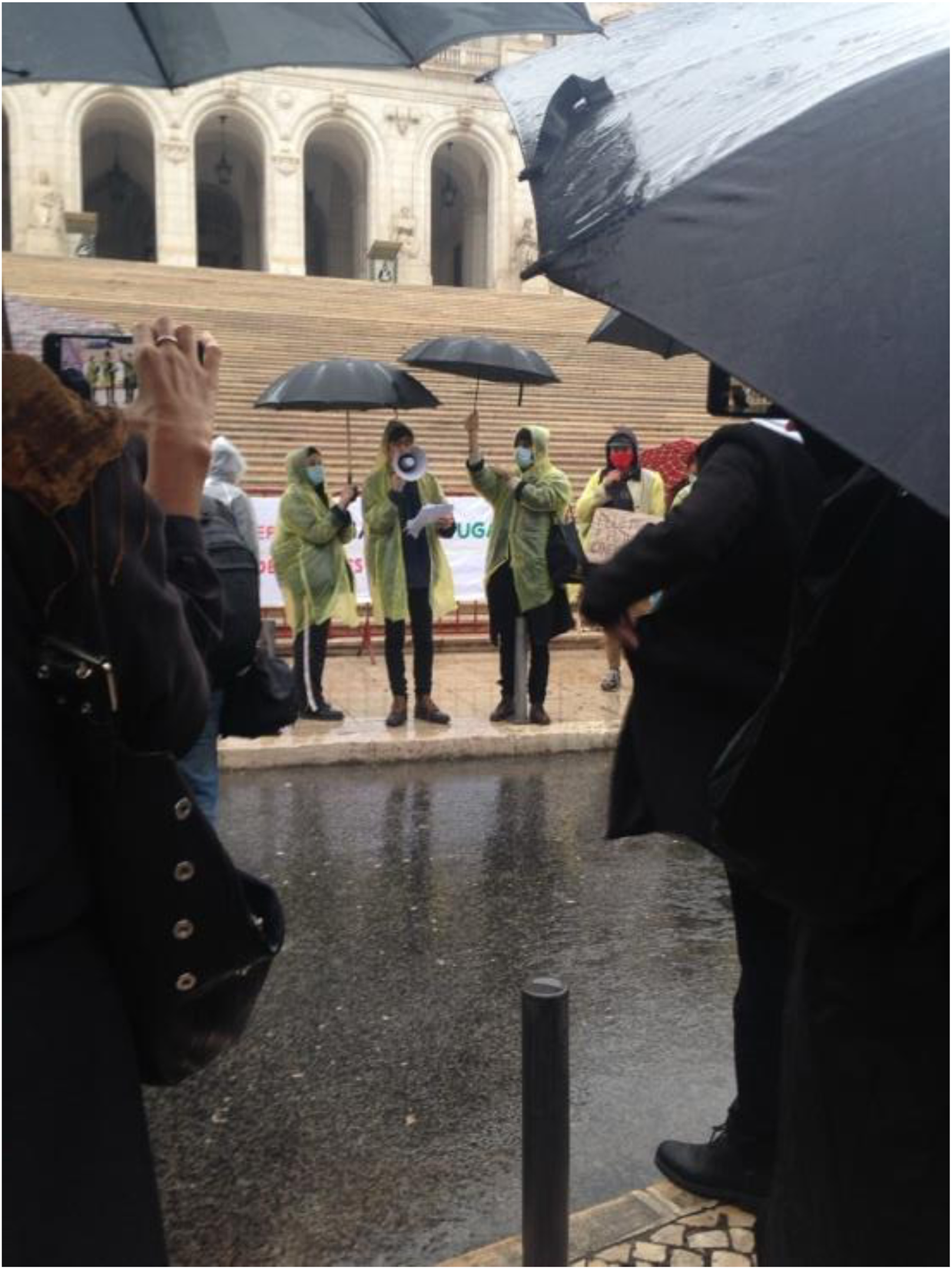
It is October 2020, and I am concluding an oral history interview with a film-maker on her work in Portugal during the 1970s. After I turned off the voice recorder, she says, in a resolute tone: “everything is changing”. My interviewee has been living and making films abroad and regrets that Portugal has not embraced Netflix (as Spain has, she adds), considering it a lost opportunity (field diary, 6 October 2020). Two weeks later, I attend a demonstration organized outside the Portuguese Parliament by the Student Movement for Portuguese Cinema (Figures 1 and 2). The movement brings together students taking degrees in film-making all over the country, their teachers and several renowned film-makers, producers and film festival directors and programmers.
1
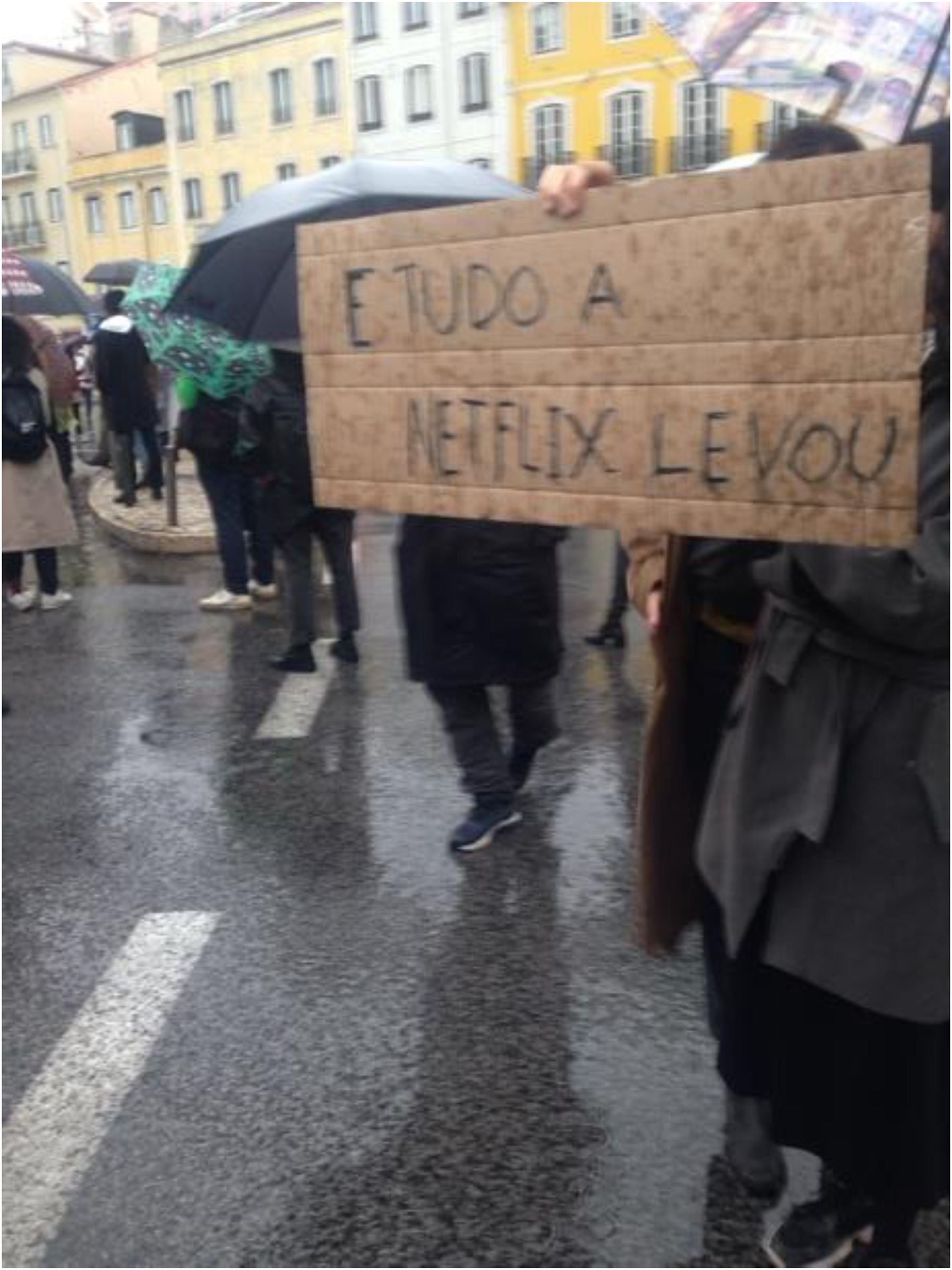
Despite the pandemic, the early hour, and the pouring rain, over a hundred people have turned up. The protest is peaceful but tense. A sense of despair runs through the speeches and banners, which vindicate the right “to film this country” and “to make cinema”. The protestors have a very different perception of Netflix to the one expressed by my interviewee, regarding it as a menace to creative freedom, in general, and to their future lives as film-makers, in particular, as one placard – “Gone with Netflix” – specifies (Figure 3). Their message to the Californian company is clear: “cinema in Portugal is with fiscal obligations” (emphasis added). Student Movement for Portuguese Cinema (Movimento Estudantil pelo Cinema Português). Protest in front of the Portuguese Parliament. Lisbon, 20 October 2020. © Author. Student Movement for Portuguese Cinema (Movimento Estudantil pelo Cinema Português). Protest in front of the Portuguese Parliament. Lisbon, 20 October 2020. © Author. “Gone with Netflix” (cf. Gone with the Wind). Lisbon, 20 October 2020. © Author.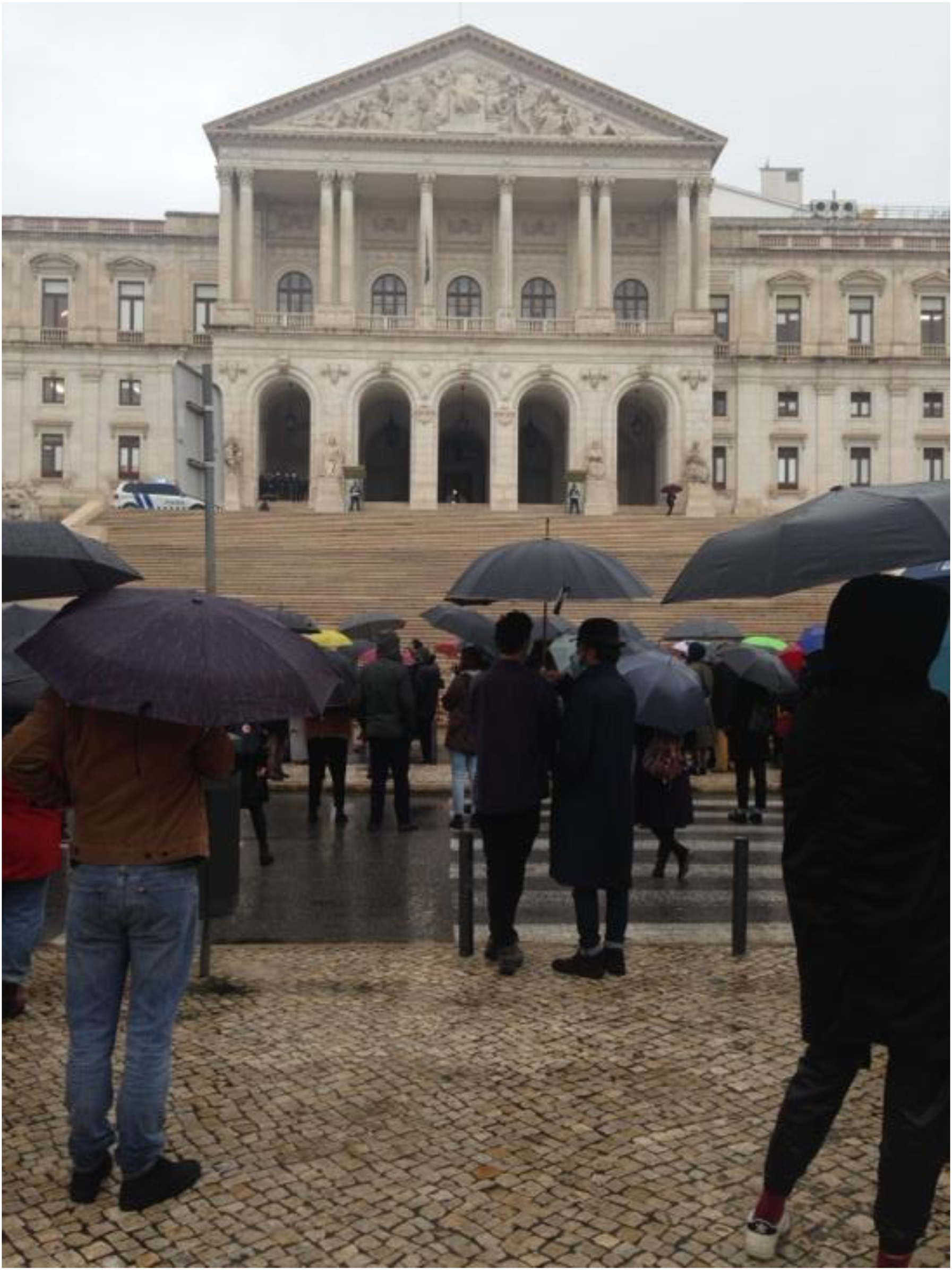
This public demonstration marked the start of my fieldwork on contemporary film production practices in Portugal, as part of a longitudinal study that combines ethnographic and archival methods to identify and analyse the main “production cultures” (Caldwell, 2008) of the Portuguese film-making sector from the perspective of its practitioners (cf. Sampaio, 2021). The pandemic and other academic obligations had forced me to postpone most of the contacts and interactions I had planned, so this public event (which received abundant press coverage) presented me with the opportunity to carry out direct observation and access the field through a particular and situated entry point.
The article focuses on the discourses and positions that were forged during the public discussion of bill 44/XIV, in the Summer and Autumn of 2020, perceived by many in the sector as a moment of crisis and impending change. The first half describes and analyses the main contours of this debate, spelling out the political and social background in which it took place. Instead of distribution, which has received most scholarly attention (e.g., Lobato, 2019; Szczepanik et al., 2020), I am concerned with Netflix and similar transnational over-the-top (OTT) subscription video-on-demand (SVOD) services with regard to their relationship with the film production field. I thus take up and explore the question that Diane Burgess and Kirsten Stevens recently formulated – “what does it mean to consider Netflix as cinema?” (Burgess and Stevens, 2021) – bearing in mind the persistent and salient definitions of cinema that operate within a given conjuncture. I analyse these in relation to the ideas of local, national, and transnational that flowed into these discourses and helped to shape the field’s different (op)positions.
In the second half, I discuss the use of notions of quality and diversity in some of these discourses and how they were mobilised to perform and sanction structural changes in established practices. To these seemingly abstract notions protestors counterposed their own practices of future making and making a living (Narotzky and Besnier, 2014), which they held in esteem and wished to preserve, in striking contrast with the rationale that was being inscribed in the new law. That these practices had deep roots in the country’s transitional period to democracy proved crucial to understanding the true nature and reach of this production culture.
Besides participant observation, the study draws on interviews with well-established and early-career directors, producers and film-related desk officials, who were selected based on previous connections and snowball sampling. During fieldwork, I also mobilised a wide range of published documents – legislation, parliamentary hearings on video, press releases, the news – and explored interface and public ethnography in half-way spaces, such as roundtables and Q&A sessions, as well as practitioners’ reflexive publications and (self-)representations (Caldwell, 2008; Ortner, 2013). While wary of self-promotional strategies, I found that observing public meetings where ‘cinema people’ spoke about their work before their peers – understood broadly as personal acquaintances, co-workers, professional contenders and reputed intermediaries – but also before a wider and more anonymous public, had advantages over individual interviews in that it allowed for a more dynamic analysis of discourses delivered in complex performative contexts. 2
In the wake of the theoretical shift to cultural production that has been taking shape over the past decades across French social sciences, US sociology and British cultural studies (e.g. Bourdieu, 1993 [1968–1983]; DiMaggio, 1982; Du Gay, 1997; Peterson and Anand, 2004; Born, 2010), I approach film-making in Portugal as a social practice grounded in relational spaces of individual and collective life making. I also draw on this theory’s more recent instantiations in media studies (e.g. Born, 2005; Caldwell, 2008; Hesmondhalgh, 2006; Mayer et al., 2009), which include media industries and creative labour studies (e.g. Curtin and Sanson, 2016, 2017; Hesmondhalgh and Baker, 2011; Szczepanik, 2021), as well as anthropological explorations of media production and creativity (Pandian, 2015; Sideri, 2023; Taylor, 2023). I follow John T. Caldwell’s definition of production culture as the specific assemblage of “cultural practices and belief systems” that are deeply embedded in “lived production communities”, thus adhering to this author’s proposition that film and television “very much function on a microsocial level as local cultures and social communities in their own right” (Caldwell, 2008: 1–2).
Finally, I am also indebted to historical (Nathaus and Childress, 2013) and anthropological approaches (Born, 2010) that regard cultural production as a historical field that contains its own genealogies, conventions, institutions and sedimented practices, but also as an open-ended locus of ongoing activity, where newness and transformations are possible. By thus combining ethnographic insights, historical depth, and cultural critique, the article introduces a perspective ‘from below’ that is rarely heard in debates about supranational media regulation. The present discussion of original ethnographic data on a little-known ‘film production culture’ offers fresh contributions to the public debate on cinema and cultural politics that, hopefully, will influence the ways in which better cultural policies may be imagined, planned, and implemented in the future (cf. Born 2010: 199), in Portugal and elsewhere.
“An integrated politics for the sector”
What triggered the students’ protest which I attended in October 2020 was the government’s bill that sought to revise the legal frame for media contribution and investment obligations, in Portugal, so that TV operators, SVOD services and video-sharing platforms could be placed in a position of “equity competition” vis-à-vis national film production. The context was that of the transposition into national law of the European Union’s Audiovisual Media Services Directive (AVMSD 2018/1808). 3 As early as February, Nuno Artur Silva, the Secretary of State for Cinema, Audio-visual and Media (a newly created position) had expressed commitment to “an integrated politics for the sector”, announcing that he had begun to dialogue “with the streaming and technological giants”. 4 In July, he had dismissed the need to tax the new players. To the press, the Secretary of State explained that, rather than “leave a tax that we can use as we please”, he considered it “more interesting” to have foreign operators invest in national content, which they would then be able to spread worldwide through their platforms. 5
Statements like these were received with apprehension by the Portuguese cinema sector. 6 The bill was approved in general (na generalidade) and scheduled to be discussed and voted in detail (na especialidade) after the summer recess. 7 When October arrived, shortly before the government’s proposal was to undergo its last round of debate and vote in Parliament, criticism hit the press. Two open letters appeared in the main daily newspaper censuring the government’s bill. The first one, signed by a group of film associations, festivals and unions (called “Platform for cinema”) considered that updating the sources of public funding was crucial for “the survival of a cultural ecosystem that lacks means and protection”. 8 Relying on two major levies (one on advertisement exhibition and another on TV subscriptions), these sources of revenue had been decreasing for decades. 9 The signatories welcomed the taxation of video-sharing platforms like YouTube but complained that this had not been extended to SVOD services. The second letter, signed by over 600 individuals (quickly rising to 800), which included independent exhibitors, producers, directors, artists, technicians, students, and film scholars, denounced the government’s hastiness and lack of vision, and called for more public discussion. 10 Finally, a third open letter came in support of the government’s proposal, hailing it as a “historical opportunity to converge with Europe”. 11 Around 400 individuals (mostly actors, screenwriters and TV producers) and over 30 production companies rejoiced in the fact that OTT services would be under the obligation to invest in national production directly, that is, without having to submit their projects to the highly competitive calls of the Institute of Cinema and Audiovisual (ICA), the entity responsible for the distribution of public funding in the film-making sector. 12
Asked, in July 2020, to emit an opinion, ICA had made a few recommendations but pronounced in favour of the government’s proposal. The position of this institution, which was created , in the early 1970s, to protect and promote national cinema and which now includes in its mission a duty “to ensure national representation in international institutions and bodies in the cinematographic and audiovisual fields”, reflects the ambiguity that has characterised Portuguese politics and policies for the sector. 13 Defined largely before the end of the dictatorship (cf. Cunha 2018), during the brief political opening known as marcelismo that allowed for the expression of counter-cultural and liberal ideas in several fields, these policies granted cinema a special and relatively protected place (especially in symbolic terms) in the broader and very dynamic political landscape that has been struggling to define “culture” in the new democratic context and, after 1985, in the evolving European order. This special symbolic place, however, has not prevented the sector from undergoing moments of stagnation and hardship, as different governments sought to strike a balance between free market and protectionist orientations and conciliate antagonistic understandings of “culture” and “cinema” in their relation to the state, the market and society at large.
It is worth opening a parenthesis here to offer a brief overview of the audiovisual landscape in Portugal, a country with around 10 million inhabitants, where watching TV is a major pastime (Fidalgo, 2021: 304). Even though internet-distributed television (which arrived with Netflix, in 2015) has been on the rise, pay-tv dominates (mostly through cable packages) with a market penetration close to 90%. 14 Open-signal broadcast TV has lost relevance – partly due to the country’s disastrous transition to Digital Terrestrial Television (DTT). 15 Computer and broadband penetration is also high, with close to 80% of the population using the Internet regularly (Fidalgo, 2021: 299–303). Although there are no official figures, around two million people are believed to subscribe VOD services (Silva and Lameiras, 2022: 720). The number of people who regularly go to the cinema is more difficult to quantify, but statistics for the 1960–2019 period show that cinema attendance has been historically low, reaching a peak in post-revolutionary times (4.576 spectators per thousand inhabitants in 1976) and an all-time low in 1994 (713 spectators per thousand inhabitants). In 2019, before the pandemic, this number was estimated at 1.500. 16 Finally, domestic production accounts for less than 5% of the market share of cinema exhibition (Silva and Lameiras, 2022: 719).
As Ramon Lobato has demonstrated (2019), Netflix’s intricate connections with television and the Internet are often difficult to disaggregate and quantify – in Portugal, for instance, this service is also available on cable TV. Rather than distribution, which is the focus of Lobato’s work, my concern is with the impact Netflix and similar services are having (or are likely to have) on film production. As John Caldwell has demonstrated, the cinema and television interface has been traditionally difficult to define, even before current forms of media convergence and “mongrelized viewing formats” (i.e. multiscale, serial, simultaneous and multitasked) became pervasive (Caldwell, 2009: 169–170). In Portugal, cinema has managed to retain a significant degree of autonomy in this “messy” media environment. Though rarely mentioned (or only in passing) in public or private discourses on film, television has acted as Portuguese cinema’s “other”, by crucially shaping the way “cinema people” have been viewing the sector and themselves.
The local, the national and the transnational
Perhaps unsurprisingly, ideas about the local, national, and transnational permeated the discourses that came to light in October 2020. Yet, it would be wrong to see in the students-government divide a straightforward and narrow opposition between national and transnational practices. The latter have shaped the national film-making scene ever since cinema arrived in Portugal. Indeed, like other national cinemas, Portuguese cinema has been historically imbricated in national and transnational practices. On the one hand, it has drawn on a vast range of locally based experiences to build unpredictable (and not always easy to market) filmic works, which are often taken as an expression of broader, but significant, collective (or even national) concerns. At different historical moments, public policies were put in place to ensure that a national cinema would remain in production, given the difficulties posed by a costly activity and a small exhibition market (cf. Cunha 2018; Graça 2021). On the other hand, just like other national cinemas, Portuguese cinema has been deeply embedded in transnational distribution and exhibition networks as well as international co-production practices, which go back at least to the 1930s (cf. Ribeiro, 2024) but became more relevant from the 1960s onwards (Cunha, 2018). In the 1990s, audiovisual institutions and policies launched by the EU put additional pressure on established (but far from stable) national film practices, contributing to a redefinition of co-production networks more conforming to “European identity building” (cf. Sideri, 2023). In any event, as John Hill has convincingly argued, national cinemas make sense to a variety of social actors, not least film-makers, critics, and audiences that are not necessarily national (Hill, 2016: 707).
The bill 44/XIV exposed the deep fractures that have divided the film-making sector for decades. This aspect was brought to my attention in an interview I conducted a few weeks later, in December. My interlocutor – a young and up-and-coming film director – whom I will call “Joana” –– was quick to introduce this aspect when we first met. 17 On hearing the subject of my research, she immediately pointed out that there were two “factions” in the Portuguese film-making sector, built on the distinction between “cinema” and “commercial cinema”, around which people gathered and took sides. She called it “a political question” (field diary, 17 December 2020). I was, of course, familiar with this divide, but had decided not to introduce it in the conversation to avoid leading my interlocutors into the terms of a debate that has dominated academic and non-academic film quarters and that I found opaque and largely unhelpful. Much of this debate comes down to defining what “Portuguese cinema” is (and is not) and, by extension, what it should (and should not) be (Sampaio, 2024). The expression is frequently applied to a cinema made by a group of outstanding film-makers (or authors) who independently contribute to a corpus of esteemed filmic works that the dedicated press, film critics and selected audiences consider together, as part of a common, national cinematic heritage and canon. By way of these implicit and explicit valuations, Portuguese film production is, therefore, effectively conflated with and reduced to a national art cinema (cf. Sampaio, 2024).
More critical voices have expressed concern with this cinema’s difficult-to-market contents and failure to reach the general public, arguing that it serves elite and international, rather than popular and domestic, audiences. 18 When informed by a free market ideology, this line of reasoning takes issue with Portuguese cinema’s reliance on state funding, disregarding (or misrepresenting) the fact that, as mentioned above, the public subsidies come from levies paid by private actors (advertisers and direct consumers) rather than the state budget and that, in any case, the amounts are too meagre to support the kind of high production value cinema that many of these critics endorse as a better alternative. A summary of these positions can be found in Graça (2021: 17–19), whose case that Portuguese cinema is a story of “unsuccess” rests mostly, as I have argued elsewhere (Sampaio, 2023), on a series of unacknowledged (and difficult to sustain) liberal-economic assumptions.
That the October 2020 activists should name, in their placards and slogans, “cinema” and not “audio-visual” is, of course, no small detail. Speaking to the Parliament on behalf of the Platform for Cinema, João Nicolau clarified that the latter was “a euphemism for television products”. He conceded that the two activities were permeable but insisted that they were also very different. For this film-maker, the idea of an “audio-visual sector” was “a fiction used by the Ministry” that failed to reflect reality. It was also “a narrative that came from the outside”, since cinema had never “asked for the audio-visual to be integrated in ICA”, which, in any case, had specific funding programmes for television.
19
Outside the Parliament, one demonstrator’s placard – “More taxes [equals] more cinema” (Figure 4) – left little room for doubt over which side the protest was being launched from. “More taxes More Cinema”. Lisbon, 20 October 2020. © Author.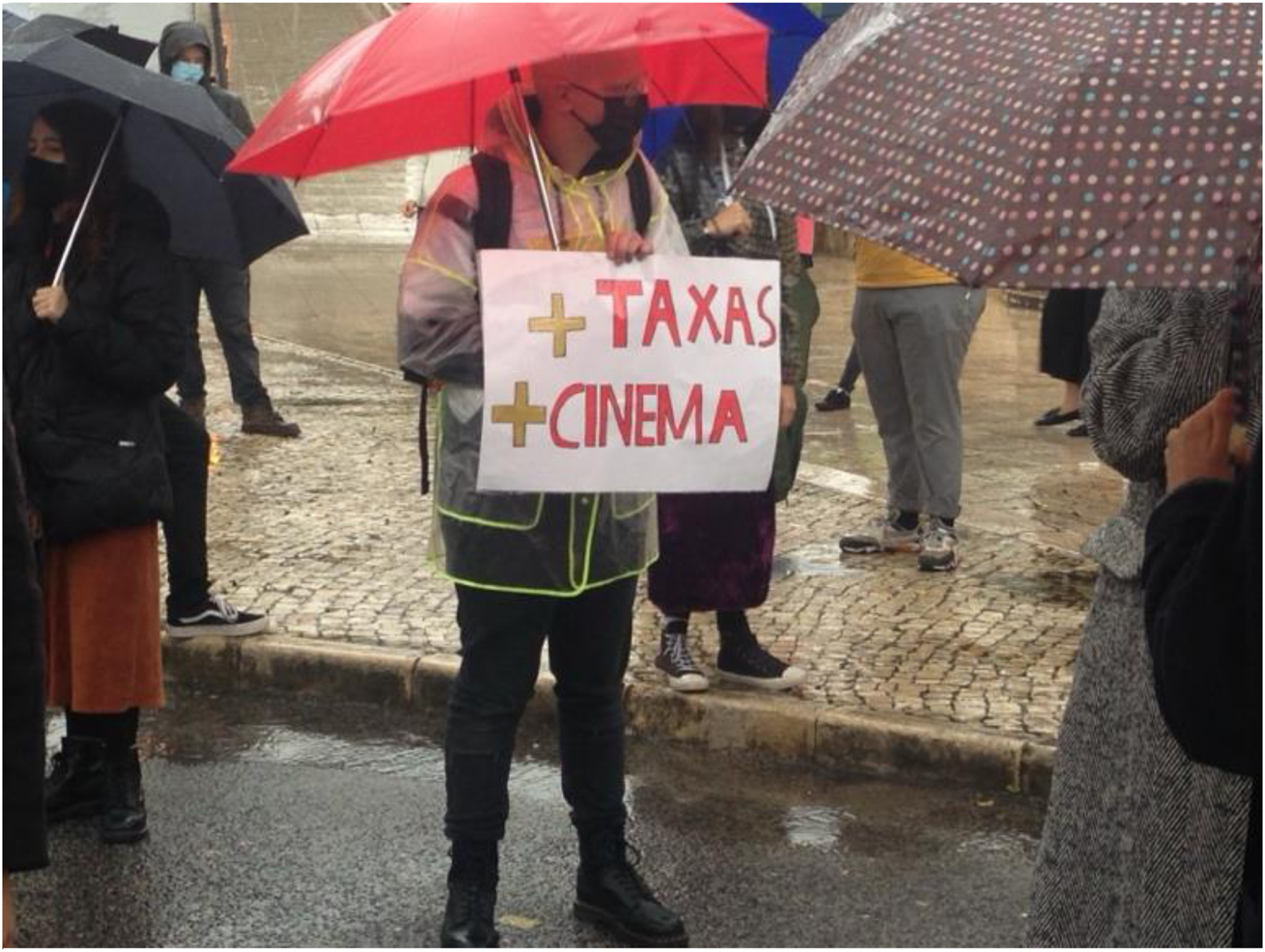
Film-making as future making
What impressed me most about the October 2020 demonstration was the protestors’ young age. Indeed, most were film students who felt directly implicated in the public policies that were under discussion in Parliament. Concerns about their future were patent in placards that read: “why study cinema if they won’t let us make it?” (Figure 5); “We support the present and future of Portuguese cinema”; “To believe in cinema is to believe in our FUTURE”; or “The future of Portuguese cinema is a MUTE Snow White”. The latter cleverly quotes João César Monteiro’s provocative, black-screened film to vaticinate the end of Portuguese cinema.
20
“Why study cinema if they won’t let us make it?”. Lisbon, 20 October 2020. © Author.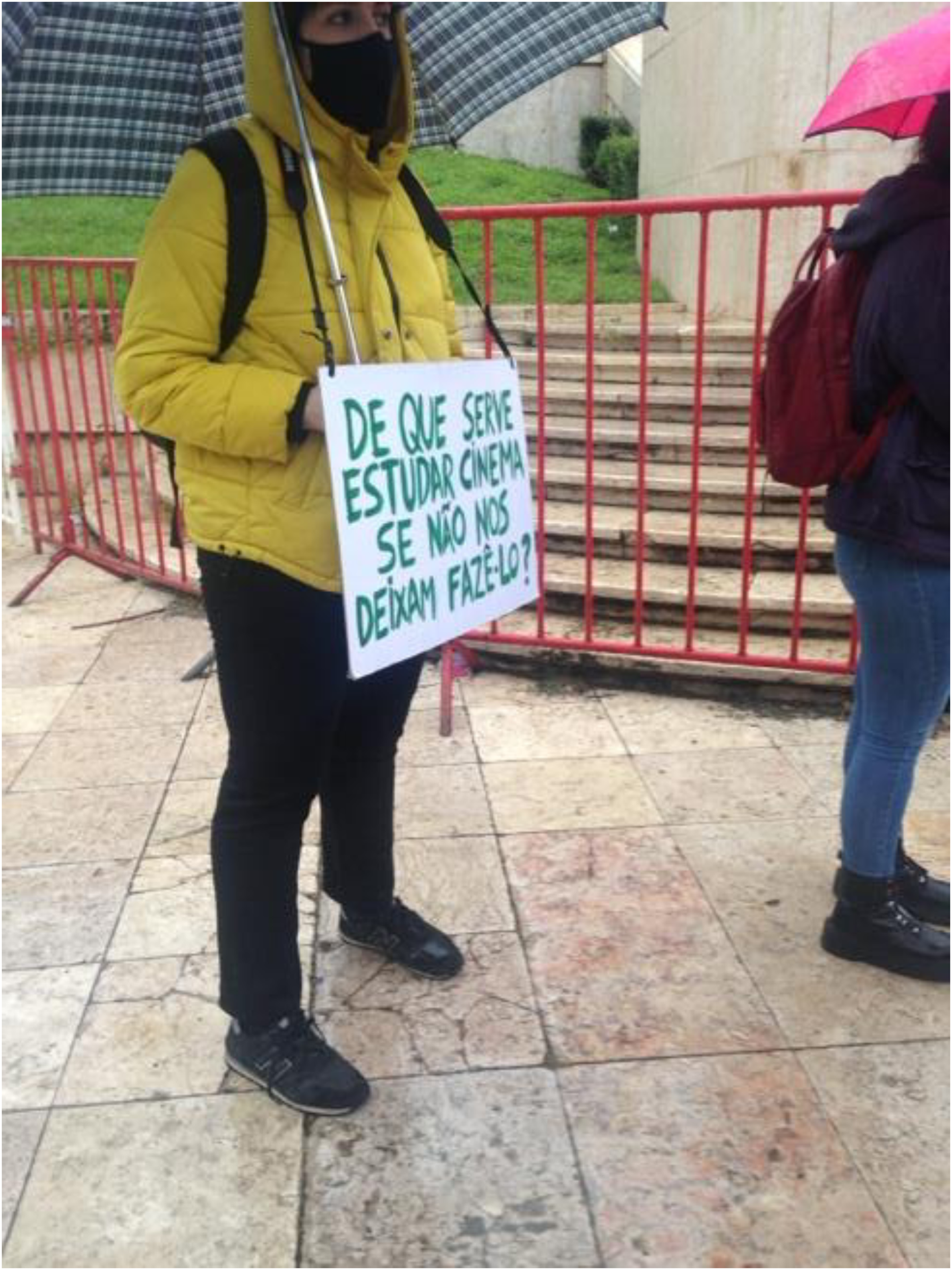
Protestors expressed resentment over the government’s decision to support the activity of big global media operators at the expense of the extant film-making scene. In their view, by exempting SVOD services from paying taxes, the new law would make “Portuguese cinema” even more fragile financially. One of the posters read: “We’re already limited to making shorts, don’t shorten us any further!” The new law would also make “Portuguese cinema” more inaccessible to creative workers (hence the slogan “don’t gentrify Portuguese cinema”). The student demonstrators, then, perceived the changes that were being announced both as a missed opportunity and as an impending crisis.
I wish to focus on this latter aspect. A common way of conceptualising a “crisis” is as a break in a routine that until that point had enabled one to make a living (if only barely). As Pierre Bourdieu has argued, one’s sense of the “forth-coming” is an important part of one’s routine of “things-to-be-done” (or pragmata), which he prefers to call the “experience of the regularities of existence” (Bourdieu, 1998: 189, my translation). The French sociologist locates this sense of the “forth-coming” in “the relationship between the structure of hopes or expectations that are constitutive of a habitus and the structure of probabilities that are constitutive of a social space” (Bourdieu, 1998: 189, my translation). We speak of a crisis whenever this sense of anticipated future, which is inextricably linked to our “experience of the regularities of existence” (Bourdieu, 1998, 189, my translation), fails (us). My research has recurrently revealed that, for quite a long time, film practitioners have been perceiving the conditions in which they make cinema in Portugal as hardly liveable. The life story of one of my interlocutors (let’s call him “Pedro”), who has been shooting since the mid-1980s, offers the portrait of someone who has managed to stay in the profession (though not to live on it – or not always) with very little employment prospects and against several odds. When he finished film school, “Pedro” felt he had no guaranties that he would have a profession, let alone a career, in film-making; in his own words: “there was no coherent or concrete notion of what the future would be” (interview, Lisbon, 4 January 2021). Nevertheless, he managed to hold on. For several years, apart from other small tasks, he worked as a continuity supervisor (anotador) and an editor, initially on an on-and-off basis, even when he received no pay or credits. His intention to become a film director, which had been there all the time, would materialise much later.
In our first talk, “Joana” similarly encapsulated the sector’s extreme instability and scarcity into the startling phrase: “we make films out of flour and water” (field diary, 17 December 2020). The phrase followed her complaint about the dearth of funds, but it was also used to support the statement that “the cinema is artisanal, not an industry” – a quality she believed might be “part of its charm”. What appeared to be a metaphor of lack was rapidly imbued with a positive meaning, as my interlocutor went on to explain: “it’s like being invited to eat at a place where the hostess has few ingredients, but, because of that, what she makes is very good – it’s different and much appreciated”. In the series of roundtables that the Portuguese Cinematheque organized, in July 2023, to celebrate the fiftieth anniversary of Portugal’s oldest film school, ESTC, better-known as “the Cinema School”, this narrative of scarcity, precariousness and permanent crisis resonated in the interventions of several film-makers who graduated from this public institution over the years. 21 In the last section, I will analyse in more detail some of these interventions, establishing their relevance to the issues under discussion.
Because this endemic state of instability and uncertainty over the future is openly acknowledged and referred to, not least within the circles where Portuguese cinema finds most support (such as the Cinema School and the Portuguese Cinematheque), I was rather intrigued by the students’ reaction to the government’s bill. They seemed impervious to the powerful “platform imaginaries” that have exuded a close to unanimous “positive image of global streamers” and felt particularly strong among practitioners of small peripheral countries (Szczepanik, 2024: 222–229) – a category that has also applied to Portugal (e.g. Liz, 2024). Why should these students, in other words, perceive the difficulties they saw coming with the new law as a crisis? How different were the problems they were now anticipating from the ones they were already familiar with and expected to find once they finished school and started working as professionals?
For a different set of reasons, one would say that the advocates of bill 44/XIV were also having difficulties in understanding the protest. In their open letter, they considered that the proposal had been “amply debated, as dozens of associations and interested parties had been heard by the Parliament’s Culture Commission”. 22 Being mostly comprised of people involved in the production of contents for film, television and the Internet, the subscribers of this letter hailed the opportunity to supply global OTT operators with “films and series celebrated for their quality all over the world”. 23 They, therefore, saw in the government’s decision to comply with the European directive and brand “Portuguese cinema and audio-visual” as “European works” a push towards the kind of “quality” and “diversity” that would get global market players like Netflix and other streaming “giants” interested in Portuguese film production. In their view, the “quality” and “diversity” of the ensuing contents would compensate for the absence of fiscal contributions.
Nowhere in the letter is it explicitly stated what these “quality” and “diversity” contents consist of, as though they were self-evident. It is clear that judgements about “quality” are to be left to the streamers themselves, not to ICA’s assessment panels. The latter would come under attack during the parliamentary hearings by representatives of the four professional associations that signed this open letter (namely, APRAF, APIT, ARCA and APAD), who expressed their dislike at having their projects reviewed by juries drawn from the academic and cinema milieu. 24 As far as “diversity” is concerned, the signatories of this letter apparently believe that the obligation of SVOD services to invest directly in Portuguese film productions will ensure creative diversity inasmuch as they will reinforce the diversity of sources. It should be added that under ICA’s rules, subsidised film projects cannot have 100% public funding, so the need for film producers to diversify their sources has been in place for quite a while. Needless to say, the equation of financial diversity with creative diversity is a much trumpeted free-market mantra that lacks empirical validation.
The relationship between big OTT companies and film-makers and the former’s impact on film “quality” and “diversity” issues is dramatized in Nani Moretti’s last film, fittingly entitled Il sol dell’avvenire (A Brighter Tomorrow, 2023), where a Netflix agent is trying to persuade Moretti’s desperate film-maker character, Giovanni, to introduce structural changes in his film so it can be watched in no less than 190 countries – “centonovanta!”, exclaims the overwhelmed Italian director after leaving the business meeting. Giovanni is less impressed by the creative concessions he is required to make, which entail changing the film plot and style to ensure it becomes marketable to the targeted audience. No such qualms assault the supporters of the Portuguese government’s bill, more sensitive to the argument that a contract with Netflix will mean a larger market and, allegedly, more jobs. As potential beneficiaries of the opportunities that will be thus created, young film-makers are expected to be the first to rejoice in the bill. Indeed, when I presented this case study at an international media studies conference, some of the participants expressed surprise at (and even admiration over) these young demonstrators – “my students would never be in this kind of protest” – a colleague from Central Europe told me in a half-ironical tone – “they are all too eager to work for Netflix!!”
Clearly, the students who demonstrated in that rainy October morning had in mind different notions of what there was to be gained and lost. More than a threat to their career prospects, the new law was being experienced as an existential threat. As one banner put it: “We shoot, therefore we exist” (Figure 6). In other words, the future that bill 44/XIV was building had, apparently, little to do with the future these students were making for themselves in their present-day routines, regardless of how precarious these routines might actually also be. The law had little to do, in short, with the “forth-coming” that the students believed would come out of the “production culture” they had already embraced and understood as their own. “We shoot, therefore we exist”. Lisbon, 20 October 2020. © Author.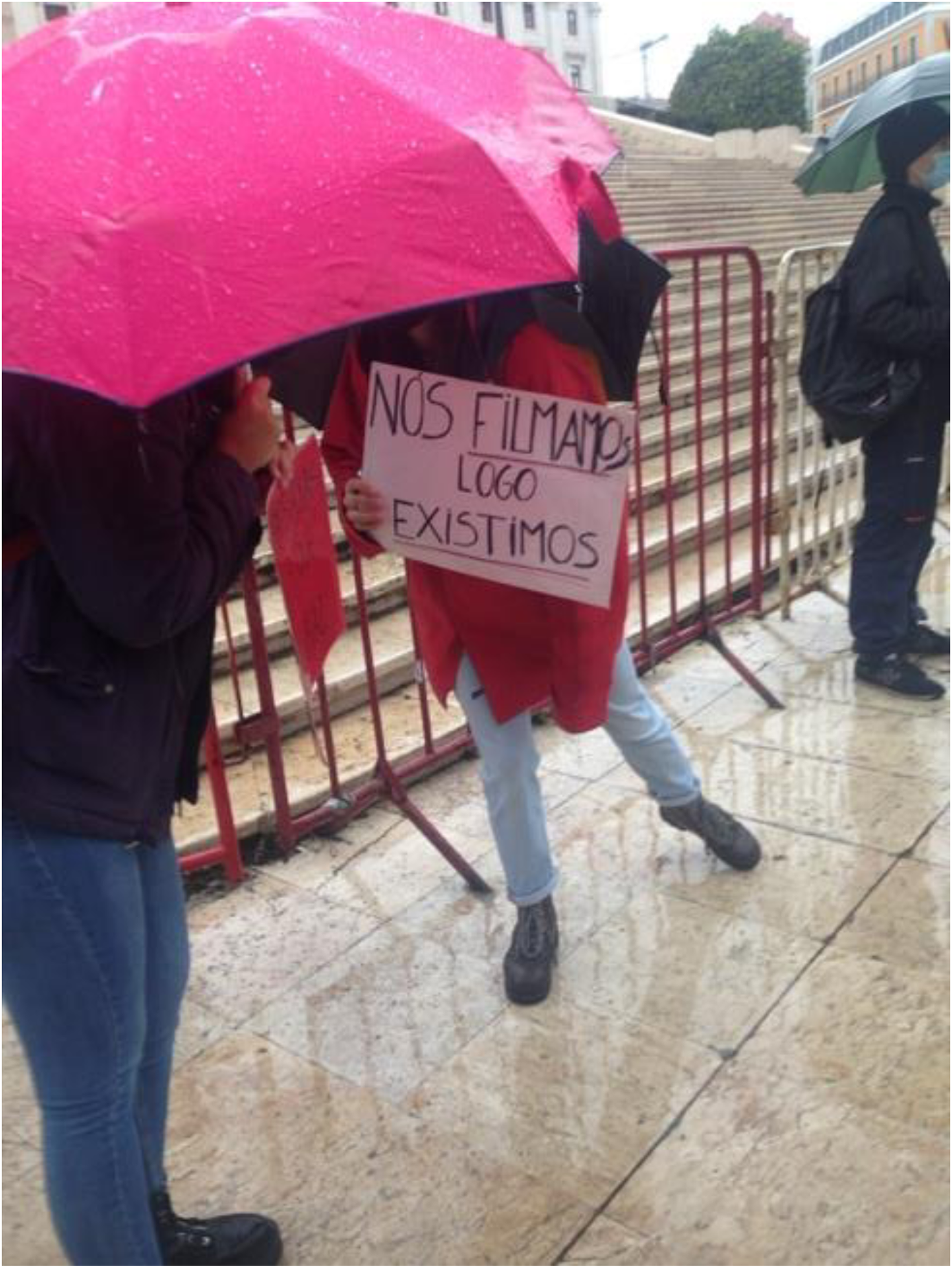
Film-making as life making
In what consisted this “production culture” that could cause such strong and contrasting reactions inside and outside the field? What made it defensible along existential lines and not simply as a fine job that could produce fine filmic works? The contours of this culture emerged more clearly in the series of roundtables that took place at the Portuguese Cinematheque, in July 2023. The organisers were interested in debating the relationship between the Cinema School (ESTC) and “Portuguese cinema” from the perspective of the generations that attended the former and, then, went on to produce the latter. Though expected to speak on behalf of their “generation”, the different guest-speakers ignored, or even rejected the term, notwithstanding the chairs’ insistence.
25
The three debates offered an important overview of the ideas and projects that had been generated and implemented over the years, from the school’s foundation, in 1973, as part of the National Conservatory, up to its present form as a public institution of higher education inserted in the Polytechnic Institute of Lisbon and located, since 1998, in the Lisbon metropolitan area (Amadora).
26
Despite the variety of visions, it became evident that the school’s first years played a crucial role in shaping outlooks and practices that remained influential among teachers, students and former students. Many of the speakers converged in identifying their film-making with a way of life. Pedro Caldas (n. 1958), who joined the school as a student between 1975 and 1978 and who has worked in sound ever since, evoked those first years: The cinema in which we were trained was ideologically determined – direct sound, respect for capturing what was before us and could be captured. (…) It was important to organize ourselves into groups with people from the school, because that was our life, and we wanted to make films that way. (Fieldnotes, 20 July 2023)
With a career in film editing, Manuela Viegas (n. 1951), a student between 1977 and 1980, recalled those years in a similar way: “choosing cinema was choosing a different kind of life, we spent hours in the streets, on the doorsteps, talking; that was our life” (fieldnotes, 20 July 2023). Former student and film-maker Joaquim Sapinho (n. 1965), who arrived at the school in 1983, stressed that it was all about building a community of people – essentially made up of teachers, students and former students – which would allow them to make films, it wasn’t just “an abstract idea of Portuguese cinema” (fieldnotes, 10 July 2023). A member of the audience (Isabel Silva, graduated in 1989-1991), who has been working in film production since the 1990s, added, “cinema is the creation of the collective and this is what moves me about cinema” (fieldnotes, 20 July 2023).
For Sapinho, coming to the school had been “a great miracle”; he added, “I found an extraordinary school where the whole question of creation and direction [offered] different experiences and [opened] different paths to 18-20-year-olds”. His teachers had included the likes of António Reis (an autodidact and a poet), Alberto Seixas Santos (an analytical and political mind trained in London and Paris), Paulo Rocha (a disciple of Manuel de Oliveira, who prized narrative and having a script), Jorge Silva Melo (who came from the theatre), and Vítor Gonçalves (who thought the film in terms of a “structure”). According to Sapinho, they all had “different ideas for the school” (fieldnotes, 10 July 2023).
This aspect was picked up and given a different turn in the second roundtable, when José Bogalheiro (n. 1950) borrowed from the title of the Cinematheque’s programme, which placed the school “at the heart of Portuguese Cinema,” and proposed to place it instead at the heart of the revolution (fieldnotes, 18 July 2023). Drawing from his experience as a student between 1975 and 1978, a teacher since 1981 (Natálio, 2024: 229) and a member of the board of directors until his recent retirement, in 2019, Bogalheiro reminded the audience that the school’s first course, launched in the academic year of 1972-73, had been interrupted by “the revolution” – that is by the massive cultural, political and social movements that immediately followed the military coup that overthrew the Salazar-Caetano dictatorship on April 25, 1974.
The school would resume its activities in September 1975, when the students participated in the admission process and made sure more candidates were selected, thus guaranteeing their “heterogeneous provenance”. Bogalheiro recalled the energy infused into the school, when students and teachers engaged in a series of collective, participatory-democratic and (self-)managing experiences that came to an end in 1976-1977 but had reverberations well beyond that time frame. Film-maker Pedro Caldas confirmed that the school had remained attached to the revolutionary context, adding, “everything seemed possible to us, everything was open” (fieldnotes, 20 July 2023). According to Bogalheiro, the people – like himself – who were later to assume governance responsibilities in the school (whom he calls os instituintes, or the builders) were deeply moved by these experiences and experiments, which they sought to incorporate in their teaching and training of young cinema professionals. 27 It was they (and not the “founders”) who had faced the enormous and challenging task of setting up and maintaining an institution that was yet to be. Bogalheiro mentioned, in particular, their determination to promote horizontal relations between co-workers, not least by avoiding the classic division of labour that organises technical skills into a fixed hierarchy. Their aim was to lend dignity to each of the three core areas of the curriculum (sound, image and editing) and thus bring about a transformation at the level of production. Older contributors to the debate corroborated the school’s commitment to a multidisciplinary education that discouraged early specialisation (students from every core area, for instance, had to direct a film).
All the roundtable participants – former students who had pursued or were pursuing a career in the cinema – acknowledged a shared “legacy” of ideas and practices that they had acquired in the school and continued to draw upon and relate to in their professional lives. After stressing that he had been a student in “a different school” (the Conservatory, in Bairro Alto, not ESTC, in Amadora), Caldas recognised there was a “continuity” with the younger film professionals: On second thought, I have worked as a film director with many people from the younger generations who attended the cinema school. I see in some of them a continuity with the concerns I had, we had, at the time [1975-1978], which has probably to do with the school’s education. (Fieldnotes, 20 July 2023)
A student in 2009-2012, Inês Teixeira confirmed that there was “an idea of school” that she identified with and recognized in others on the shooting set, adding, “there is not a unique language, but [there are] common things”. When she arrived at the school, the “founding teachers” had retired, but “there was a legacy and an idea of cinema that was shared with us” (fieldnotes, 18 July 2023). Another former student, speaking from the audience, highlighted that the school’s thoughts on film production influenced the creation of production companies that were committed to making cinema in a different way, such as Trópico Filmes (1984–1996) and Som e a Fúria (founded in 1998). Moreover, he mentioned the ongoing collaboration of former students who had not met in the school but who shared methods, experiences and different ways of conceiving of film production and the act of creation (fieldnotes, 18 July 2023).
The younger guest speakers – Mariana Gaivão (n. 1984), Inês Teixeira (n. 1991) and Leonor Teles (n. 1992) –, who started working 10-15 years ago, vented a darker perspective.
28
Though acknowledging the school’s “legacy”, they also considered it a place of violence, where they felt there was little room for failure, especially after 2009, when a fellow student obtained the highest prize at Cannes Film Festival.
29
According to Gaivão, From the moment João [Salaviza] won the Palme d’Or we stopped having breathing space. The film exists before it has even been made, I have to define myself at 22. This is what made me turn away from the school – if this is what I have to live with, then I’m off to work, to learn where I can fail, because at the school I couldn’t [fail] any longer. I felt constantly tired and seeing that permeability starting 15 years ago was a shock. (Fieldnotes, 10 July 2023)
Gaivão conceded that “it was not the school, this was going to be our life”, but she also regretted that the school was permeable to such violence, leading many (like herself) to leave because they “didn’t want to live like that”. In spite of everything, the youngest of these film-makers, Leonor Teles, showed no doubts about the profession she had chosen: I finished school in 2013, my class was the last one to (officially) shoot on film. The digital cameras we had weren’t incredible, there was no post-production, or equipment, no money – this is not an industry, it’s a craft [artesanato] (…) The cinema is also my life; I have been doing this for 10 years and I want to continue doing it. Time is also a test to people’s ideals and wills as artists and film-makers [cineastas]. Each generation has its own challenges and in Portugal everything is a challenge. (Field notes, 20 July 2023)
All in all, despite differences in the kind of challenges they encountered, there seemed to be continuities in the way older and younger participants conceived of film-making – namely, as a creative craft that was to be done collectively, even when there were limited resources. This, no doubt, explains most of the speakers’ resistance to seeing their experiences and views reduced to the trials and vagaries of a “generation”. 30 The biggest discontinuity to emerge from this series of round-tables was the idea that success and failure now seemed to be overriding.
Portuguese cinema has been regarded as a problem – and a case of “unsuccess” (Graça, 2021) – for much of its history, even though the criteria for measuring “success” remains questionable and a source of contention. Speaking of his experience as a film producer, José Bogalheiro took issue with this view: “I don’t know whether the film production Trópico Filmes, which lasted 10 years, was a failed experience” (fieldnotes, 18 July 2023). At stake are, clearly, different “regimes of value” (Appadurai, 1986; Graeber, 2001) and “worth recognition” (Narotzky and Besnier, 2014) applied to “cinema”, understood, concomitantly, as a cultural product, a commodity, a craft, a source of economic revenue (a sector), but also as a bundle of everyday life-making practices. Susana Narotzky and Niko Besnier have described the latter as an economy in its own right; an economy that cannot be reduced to the economic, as it crucially involves and relies upon non-economic dynamics. These life-making practices may be (mis)represented as “malfunctioning, deficient, or signs of ‘developmental backwardness’” (Narotzky and Besnier, 2014: S6), but they are, nevertheless, what sustains communities, endowing the lives of the people who undertake them with collective and personal meanings and value.
Conclusion
This paper’s main ethnographic vignette – young students demonstrating in support of “Portuguese cinema” having as backdrop the government’s proposal to exempt SVOD services from their fiscal obligation – allows us to address the question of what it means “to consider Netflix as cinema” (Burgess and Stevens, 2021). It is important to recall André Gaudreault and Philippe Marion’s argument that differences in naming are not irrelevant or “inconsequential” (Gaudreault and Marion, 2020: 72). That student demonstrators should choose to speak of “cinema” and not “audio-visual” is not irrelevant. “Cinema” has been described as an effect of discourse – namely, of a long-standing, albeit ever-changing (De Valcke and Hagener, 2005), cinephile discourse that has helped to carve a place for it in different spheres of social life. But “cinema” is also the product of practices and institutions – not least, the schools where these youngsters study. By wide opening the gates of screen production investment to SVOD operators, the Portuguese government – probably acting in good faith – treated Netflix as a mere “delivery technology of media content” (Gaudreault and Marion, 2020: 72), in blatant disregard of the power the new law was effectively granting Netflix to decide which contents could be made and how. 31
This, of course, did not escape the students’ attention, who were well aware of Netflix as a powerful production actor. What they feared was not so much that Portuguese cinema would lose its “national” element – which Netflix, anyway, is interested in preserving as part of its international market expansion and “diversity” strategies (albeit in an often caricatural or stereotypical way) – but that a certain “production culture” that they had been learning to practise and in which they hoped to participate one day as active decision-makers and creative workers was bound to disappear. The future the government’s proposal was placing before them, on the other hand, offered no certainties other than the predicament that global screen production workers have met elsewhere, namely: job insecurity, long working hours, and low wages (cf. Curtin and Sanson, 2016; Szczepanik, 2021). Although this predicament looked similar to what these students were familiar with and were prepared to face in upcoming years, it was also radically different, insofar as it also meant a dramatic break with the values that stood at the centre of their professional and everyday life practices. Stories of ‘opportunistic transnationalism’ in other peripheral and small countries, where opportunities had come down to the local provision of organisational and managerial services to international runaway productions or transnational streamers, and where decision-making had been pushed to distant external centres (cf. Szczepanik, 2014, 2024), have circulated widely among production practitioners, exposing the limits of dominant “platform imaginaries” (Szczepanik, 2024). The 2020 protest, then, was not about taking sides on a well-established battlefield that pitted cinema against television (and new media); national against transnational film practices; parochialism against cosmopolitanism; elitism against democracy; art against commerce. For these students, at least, it was all about retaining control over their present and future lives and professions.
The government’s bill triggered a public discussion that pushed to the fore and made visible the heterogeneous composition and dispositions of the film-making sector, where discourses from mainstream economics (such as those on failure and success) coexisted alongside other non-economic, but socially powerful ones. The latter can be traced back to the early days of the Cinema School, which had been deeply entwined with the cultural, political, and social movements that shook the country after 25 April 1974, in what has become known as the “Carnation Revolution”. The film-makers and technicians who lived through this period incorporated the revolutionary experiences, in various manners and to different degrees, into their filmic conceptions and film-making practices. As teachers at the Cinema School, they also brought those experiences to bear on their teaching. This historical content was gradually (or briskly, depending on who speaks) evacuated from the category “Portuguese cinema”, which became increasingly synonymous with a different set of practices and a different “tradition”. Attentiveness to questions of history and temporality in the field, following Georgina Born’s ethnographic proposal (2010, 2015), proved crucial to my research, enabling me to confront and recognise the place and role of the Cinema School in the students’ protest and, then, to retrieve a genealogy that had largely been obliterated and confused (or even replaced) with another one.
I wish to make one last point. As Born has convincingly argued (2010), issues of aesthetic value and judgement cannot be erased, as if they had no place in the social analysis of cultural production. Underpinning the debate around the government’s bill were (implicit and explicit) judgements about the cultural products that were being (or ought to be) produced. While supporters of the bill dismissed “Portuguese cinema” as boring and pretentious “high art”, its critics emphasised this cinema’s creativity and embeddedness in meaningful everyday life (and life-making) practices. The cultural products the new law was willing to support were similarly posited in terms of their “quality” and “diversity”. All social players, in other words, demonstrated awareness that the new law was going to condition what films would be made. Ultimately, it was the students’ immersion and identification with an alternative film production culture (“cinema”) that made them oppose the government’s bill. Their protest was a practical response to the forth-comings they had been able to anticipate (and choose from) on behalf of a profession they considered worth pursuing and a life they considered worth living.
Footnotes
Acknowledgments
Preliminary and partial versions of this paper were presented in two international media industries conferences held at King's College London (June 2023; April 2024) and a workshop of the EASA's Europeanist Network held at the Institute of Social Sciences, University of Lisbon (November 2023). I am grateful to the audiences of these events and the journal's anonymous referees for their helpful comments.
Declaration of conflicting interests
The author(s) declared no potential conflicts of interest with respect to the research, authorship, and/or publication of this article.
Funding
The author(s) disclosed receipt of the following financial support for the research, authorship, and/or publication of this article: This work was supported by the Fundação para a Ciência e a Tecnologia, (CEECIND/03453/2018/CP1541/CT0008, UIDB/50013/2020, UIDP/50013/2020, and LA/P/0051/2020).
