



Abstract
Child protection systems displace children’s social lives, marking an important space for understanding personhood and well-being. Drawing on yearlong fieldwork in Japan’s child welfare sector, I explore how one person’s—Yusuke’s—daily movements in and out of institutional care form a wide itinerary of social, affective, and imaginative encounters. His journeys of being-in-care index a lived present and embodied past, sometimes invoking both at once in ambiguous, unplanned ways. Considering the broader trajectory of care outcomes, I suggest how the system injects new forms of social precarity into children’s lives by way of forced and messy journeys into care, illustrating how children are remade as children of the state. The quest of seeking, listening to, and retelling marginalized stories contextualizes new possibilities for understanding the relationship between care, politics, and space. Yusuke’s story encourages an openness towards ethnographic portraiture with people who are ill, disabled, or have faced adversity.
Introduction: The politics of child welfare
Haruka, a senior caseworker
1
at the Juniper City Child Guidance Center, showed me the screen on her tablet (Figure 1). We were sitting in a drab, worn conference room of a child guidance center, a state agency responsible for child protective services. “Look at these posters… I think they’re intentionally evocative,” she said, showing me an array of imagery. These posters were part of a campaign to raise public awareness of child abuse and welfare services. Haruka continued, “I’ve seen this poster every time I pass through the Cedar City Station. You see here, this poster with the crying girl? Posters like these make a personal moral appeal, they make you feel like you are doing something wrong if you don’t comply… but the new message is about children’s rights, it’s less about shock value and more about informing the public about facts. What’s missing from this and other discussions are the children and youth themselves. Where are their voices in all this?” A government poster on child abuse awareness. The poster depicts an artistic image of a crying girl. The poster says, “If you notice distress in a child’s expression, call 189.” Image created by the National Network for the Prevention of Child Abuse (2017).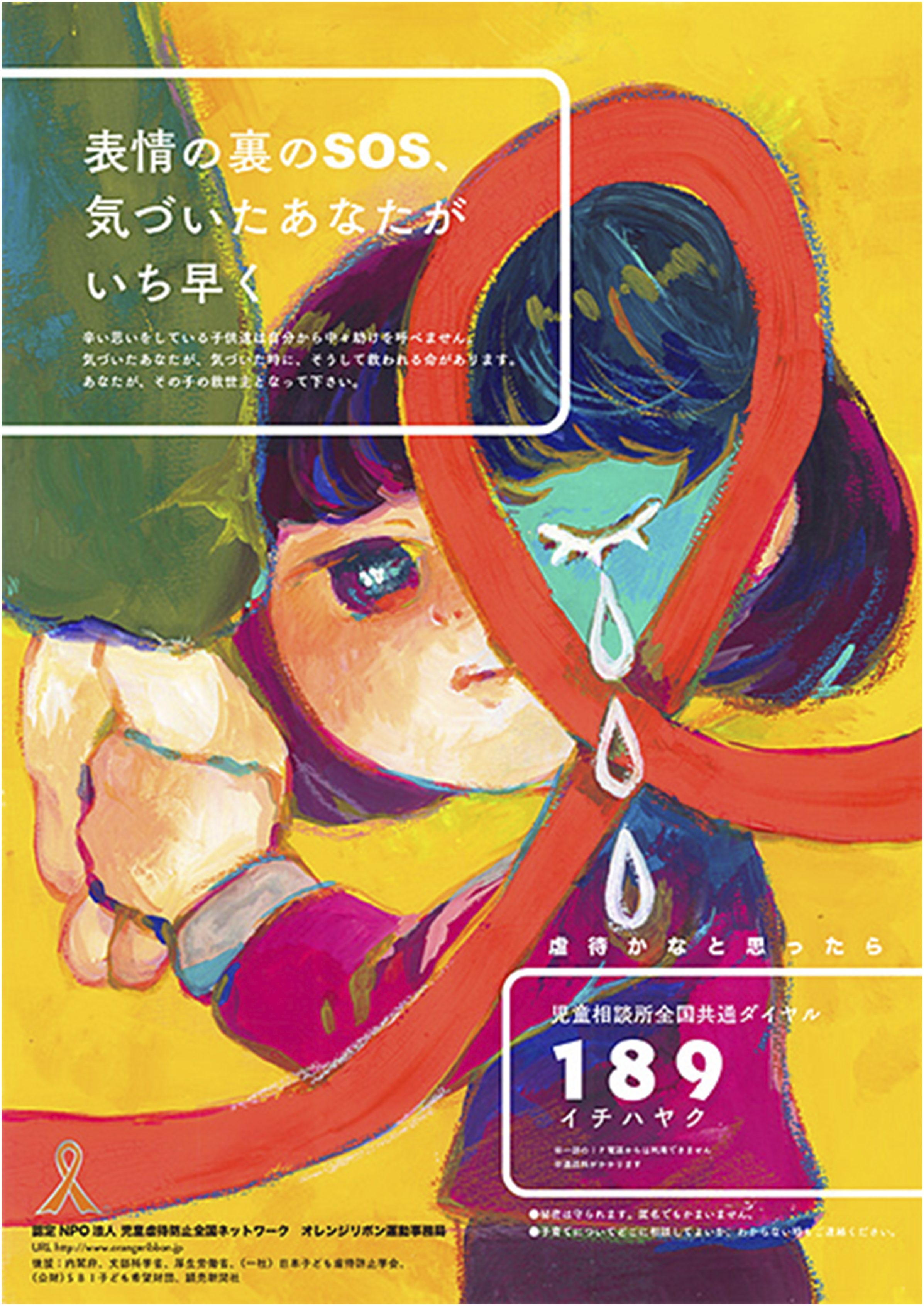
Children enter state care for a variety of reasons including abuse, neglect, illness, and family discord. In Japan, about 85 percent of children in care are placed in institutions (Ministry of Health, Labour, and Welfare, 2022: 2). By comparison, nearly 90 percent of children are placed with foster families in the United States (Kelly, 2020). Criticism of Japan’s reliance on institutional care stretches back to the 1980s but has been most pressing in the last decade (Saruta et al., 2014). In 2017, the Ministry of Health released a manifesto proclaiming a shift towards deinstitutionalization, with recent amendments on the role of children’s voice passing in 2022. Despite some small progress, however, residential care is still the mainstay of child welfare services. In the broader public imagination, child welfare institutions have an image as crowded, decrepit places where pitiful children live, an evocative image reminiscent of the poster above and of stereotypical caricatures of orphanages. The welfare system sustains this image; professionals I speak with continue to lament the ever-growing reports of child abuse, increasing disability and trauma, as well as the lack of therapeutic support for children and their parents (Goodman, 2000: 163-174). Child welfare is a complicated space for people involved—children in care, their families, and the people charged with the responsibility to look after them—to navigate because it indexes uncertain social landscapes.
In this paper, I explore complicated journeys in child welfare from the vantage of child and youth voice 2 , reflecting on how one person’s stories reflect on the relationship between movement, the body, and social precarity. On average, children live in care for five years. Haruka describes this as “a lot of time away from one’s family” in which “very little work is done by caseworkers to reunify families or help parents so that a child may come home.” Some of the professionals I talked with do not believe that children know what is best for themselves. This is a prevalent sentiment among biomedically-trained professionals who see children’s behaviors as productive or maladaptive symptoms (Hunleth, 2017: 10). Nevertheless, child and youth voice is slowly gaining traction as a rallying policy point in Japan and I was encouraged by advocates to consider how I would solicit and represent children’s experiences. Drawing on this, I argue how children’s journeys through state care constitute a dynamic, intersubjective space that injects new forms of inequity into their social lives, suggesting how children are remade into children of the state.
Conservative politics have dominated child welfare in Japan since the end of the Second World War. Policymakers support a welfare society, as opposed to a welfare state, a neoliberal framework that places responsibility on family, community, and business (Goodman, 2000: 24-27). Political debates emphasize welfare as a right or privilege, and policy since the 1980s and especially the early 2000s has centered on decoupling children’s life trajectories from state welfare through language of ‘self-reliance’ and ‘independence support.’ During my fieldwork in Japan, I observed how entrenched systems continued to endure despite calls for change amidst the protracted transition from residential care to foster families. I spoke with a teenager in care who said that child welfare is very much seen as “charity given to the less fortunate.” Imagery and narratives of “pitiful children” continue to persist in the public sphere (Chapman, 2024b). These discourses mask the everyday struggles and successes in children’s lives and very little is known about how children negotiate social relationships within the welfare system and how they make sense of the othering representations of being in care.
Care, and by extension caregiving, form the overarching concern of my research. Care is a broad term that offers expansive opportunities for theorization across the life course, and yet this same potential makes it difficult to condense the disparate ways in which care has been used across academic and professional disciplines. Elana Buch (2015: 279) offers a flexible definition of care as “a form of moral, intersubjective practice and a circulating and potentially scarce social resource.” Steven Black (2018: 80-88) discusses care as relationality and activity by reinforcing the importance of language; care performance indexes important moral values. Building on this, I found useful insight in María Puig De la Bellacasa’s (2017: 4-5) writing on care as “much more than a moral stance; it involves affective, ethical, and hands-on agencies of practical and material consequence.” I consider labor, affect, and morality/ethics together under a singular rubric of care politics, including the ways in which they complement or contradict each other. This leaning towards the political is intentional, indexing lived issues and desire for change in the contested space of child welfare. Alison Kafer (2013: 3-14) evokes this through her definition of politics as a scaffold for discerning how to get “elsewhere,” to other, more equitable, ways of being. People’s narratives of care reflect uncertainty and resilience within the welfare system and broader society, becoming political statements. These politics are transformational in that they demonstrate a marginalized-context crafted agenda that alters normative values, categories, and practices (Cohen, 2004: 31-8).
I am interested in how children in care utilize resources and how these acts index subjectivity. Subjectivity refers to the diversity of personhood across social settings and the dynamic relationship between inner processes and political economy, situated in the body as a conceptual focal point (Biehl et al., 2007: 1-9). It is with this understanding that I contextualize my interlocutors’ stories amongst their broader social relationships, taking inspiration from Michael Jackson's (2008: 41) reflection that the “subject never remains the sole author of his or her own life story.” In Jean Hunleth's (2017: 3-7) notion of “being closer,” closeness is a heuristic that highlights children’s material strategies for creating and sustaining social relationships by focusing on the techniques they use to establish physical presence. I contribute by exploring how separated children navigate relationships in the regulated spaces of child protection institutions. Navigation is a key element here, extending Vigh's (2010: 142) social navigation as an analytic lens to understand the moment-to-moment social possibilities as people move throughout uncertain care contexts (see also Silver, 2010). I situate navigation in terms of children’s day-to-day movements and actions that bring them closer, or not, to people and things—including how they may use people and things. To describe these interactions, I draw on Michel de Certeau's (1984: 29-43) notion of “making do” which highlights the agentive “tactics” individuals employ in navigating (and manipulating) power imbalances and structural inequities. This usage is an actively negotiated and inter-relational field that helps, as Julie Spray (2020b: 162-3, 189) argues, to re-center children’s agency in policy.
My emphasis on movement also draws on James Clifford’s (1997: 11) notion of location as an “itinerary,” as well as Tim Ingold’s (2011: 9-14) framing of placemaking as an aspect of movement. It is not that people are beings in place, Ingold suggests, but as beings along a path (of life). This appeal to life is crucial; people’s actions constitute an embodied intersection of social networks, pressures, and desires. Susanna Trnka (2020: 4) writes that traversing is about “how movement varies across different moments in the body’s temporality or life course as well as how the experience of time shifts as we move through, and with, it.” Child welfare, then, is an intersectional space that indexes state affairs, unstable family relationships, (embodied) memory, political debates, and forced displacement. Consequently, how children in care traverse this setting, including the ways in which they use the material world around them, offers a useful insight into the relationship between care politics and spatiality. Elucidating the intersectional journey of being-in-care and its social implications is the aim of this paper.
The voice of the child, as one psychologist explained, is about “humanness.” To illustrate a nuanced and speckled portrait of care, I focus on one person: Yusuke. I begin with an overview of the research design before sharing emblematic stories narrated by Yusuke. He shared a part of his life by taking me along on his daily journeys, showing me his artistic creations, and writing me a slice-of-life short story. I use this paper to share his stories with you and discuss how one young person reconciles their fragmented relationships with their family, peers, and society. Care practitioners I spoke with agreed that large-scale residential care was probably socio-developmentally harmful, while others countered that there was no conclusive evidence. Yusuke reported that he likes the Juniper Academy but understands that it is not a permanent home. These statements speak to a situated orientation and particular history which express multiple meanings. Yusuke’s narratives index a growing awareness that complicates the neoliberal ethic of Japanese child protection by articulating how the system shapes new inequities within the space of children’s lifeworlds.
The title of this paper, Yusuke’s Story, refers to narrative exchanges, particularly the slice-of-life story he authored. Yusuke’s performative storytelling was a social and inner project in crafting personhood. In the case of his written story, the resultant textual product became, in turn, a site of meta-commentary on the power of narrative to reshape one’s sense of self. I often lost track of time as we rewrote a certain phrase, mused over people’s motives, and learned from each other about our respective societies. Yusuke’s story is an example of how storytelling is a dynamic, intersubjective process (Biehl and Locke, 2010: 317-19). While I have included parts of it as static text, the details behind its creation, use, and recollection index a nuanced and complex slice of social life. By presenting them here, I continue this dynamic storytelling by promoting a dialogue that we expect and welcome to change us (Cox, 2015: 8).
This paper is a story of my own, built on the stories of many others, to contextualize my encounters with Yusuke. And yet, this is not a definitive statement on Yusuke as an individual or life in care in Japan. It is a fragment of an ongoing journey (Johnson et al., 1995: 6). I wrote this paper in a way that invokes this ethnographic context—a storied but non-linear account of everyday care and well-being in a controlled institutional space. This frame of multiplicity and narrative draws on Joseph Tobin's (2000: 44) Bakhtinian approach which avoids assigning definitive interpretations to children’s narratives, considering them as “expressions of the perspectives and tensions of the larger society.” My person-centered approach takes inspiration from Joao Biehl’s (2005) investigative look into Catarina’s subjectivity in an institutionalized and marginalized social space, Vita, by piecing together their ways of making meaning through their narratives in relation to displacement and exclusion. I am not searching for core ‘truths’ about Yusuke’s care journey, but rather how he navigates care inequity and his stories index social precarity (Briggs and Mantini-Briggs, 2016). My focus on Yusuke is also the result of the multi-sited interactions that occurred as he moved between places, a point that aligns with Bartoszko’s (2021: 119-120) argument that person-centered, multi-sited fieldwork can help account for the “physical and conceptual” movements and resulting interactions between places in the context of human services. Looking at Yusuke’s story as a lens into the Juniper Academy, the child welfare system, and postindustrial Japan foregrounds the enduring differences in the capacity of children with care experience to realize social, educational, and employment success. Yusuke will continue to embark on new paths and make relationships as he ages, but also retain poignant memories of his time in care, both of which provide an important context for understanding social care politics and the mediation of well-being.
Methods and narrative storywork
Beginning in 2021, I conducted 18 months of ethnographic research in Juniper City, Tokyo, specifically at child welfare institutions, foster homes, and child guidance centers. 3 I focused on the Juniper Academy, a residential care institution, and visited on weekends and during the afternoon and evening on weekdays. I helped children with their homework, assisted caregivers with their tasks, and played games with the children which provided time to get to know each other. 4 While everyone knew me first and primarily as a researcher, my daily engagements throughout the year led to new statuses ranging from volunteer and teacher to carer and friend (see also Chapman, 2023a). Participation in this research was voluntary and included a rigorous informed consent process, including informed assent for children and youth, that consisted of information sessions, project detail sheets, and Q&A sessions. 5
Alongside participant observation, I developed an approach I call narrative storywork in response to my ethnographic encounters (Chapman, 2023b). Children preferred to interact with me and others using things. Initially in my fieldwork, for example, a young boy took great delight in telling me about himself through his cherished baseball card collection. Later, a Japanese caseworker taught me about a tool called life story work, where children work with facilitators to co-create a visual representation of their lives before entering care to better understand their trajectory. 6 The caseworker encouraged me to incorporate local practices into my work which is why I decided to use material-based collaboration as a way of engagement. I utilized this multimodal approach to facilitate everyday care commentary. The purpose was to offer a more neutral platform for people to share their stories by their own volition rather than pose invasive questions. 7 Child welfare is a contentious space, and children may have painful backgrounds or particular care needs. As Haruka cautioned, I am careful not to reproduce restrictive or paternalistic discourse by writing in terms of casework, abuse, illness, and disability. Instead, I found an orientation to narrative a promising stage for inclusion, accessibility, and empowerment. Jean Hunleth's (2017: 13) work is a notable inspiration because it celebrates children’s perspectives through inclusive methods like drawing. Furthermore, there is an importance in contextualizing how people make use of the things of everyday life (De Certeau, 1984: 31). My attention to minute acts is not just about listening, but appreciating how these ways-of-doing mediate inequity, expression, and betterment.
The use of the creative arts as a methodological tool is well-documented, but Julie Spray (2021: 361-364) notes that “child-friendly” methods are often viewed as “childish.” “Childish” denotes a degree of separation from adults, particularly the researcher who observes, listens, and creates notes. While adults’ voices are often represented as text, this does not mean that alternative ways of expression are inferior (Spray and Hunleth, 2020: 42-5). It is important to consider how data is showcased to break down hegemonic assumptions about age and experience. Many children are not in care by choice. This makes the task of listening to their stories and relaying them to others a delicate matter of rationale and responsibility. This direction helps contribute to a more careful and transparent place for marginalized people’s stories in ethnographic writing (Allerton, 2016; Bluebond-Langner and Korbin, 2007; Morelli, 2017; Silver, 2020).
I interacted with children and caregivers through a series of weekly workshops where we discussed short, everyday life stories as depicted through objects and events. I did not tell people what to do beyond light suggestions to think about “meaningful” and “often-used” objects in everyday life to share in our workshops. I did not ask about people’s backstories or reasons for being in care as they were sensitive topics. The aim was to “share a story” 8 about everyday life, activity, and feeling. Most stories were spoken alongside a visual element, while others were text-based. Participants were encouraged to prepare a story in advance but sometimes people worked on their story during the workshops. My disposition towards happenstance was exciting because I did not know what people would do, and I emphasized listening earnestly (Kleinman, 2017).
Twenty children and several caregivers at the Juniper Academy, along with people at other places, like Haruka at the child guidance center, participated in narrative storywork across 5-month blocks. Participants were free to draw, present, tell, or take pictures. A person’s stories altogether formed a snapshot of their being-in-care. I offered a variety of tools, such as digital cameras, drawing supplies, and one-on-one or group discussions. Discussions were not fixed to a particular place—I learned from people at home and out in the community. By talking about their lives through things, they turned their care experiences into interactive narratives. It was not, consequently, the content of a picture or tour that mattered most, but the dialogue surrounding that object as a means of interaction. My interlocutors maintained creative control over what they chose to share and talk about. At the end of the months-long blocks, participants created an album of their creative work which they kept as a memento.
I focused on storytelling due to the conceptual potential it brings to the expression of experience. As Michael Jackson (2012: 8-9) writes, “a person always makes something of what he or she is made.” The reconfiguring capacity of narrative is compelling, as Cheryl Mattingly (2010: 38-45) suggests that individuals’ ongoing stories validate meaning, centering on action. For her, stories are about crafting an outcome, and I worked with this perceptiveness to think about how people’s stories were told, retold, and enmeshed in other stories (Jackson 2008: 34-6). This focus on narrative views life as dramaturgical performativity rather than textual production. I conducted narrative storywork alongside participant observation throughout the year. I kept detailed jottings on my observations and people’s narratives, later writing these interactions up as detailed field notes. Much of this data naturally centered on particular objects as facilitating tools. I analyzed data using an inductive, thematic approach, coding for patterns in how care and well-being played out in street-level interaction. This approach is productive because ethnographers engage people in real-world situations; it is important to be adaptable and note interactions as they emerge organically. I regularly talked about my findings with participants too, such as revisiting older photographs or walking tours, to further refine my data and invite new interpretations.
Participants did not need to create many drawings or take lots of pictures; sometimes it was a single story and its associated object(s) that were meaningful. Pictures did not need to be perfect and portraits did not need to be realistic, as I was not concerned with people making ‘good’ stories or following a formulaic narrative structure. It was the trying that mattered. I appreciated stories irrespective of normative frames of worth. Through this, I situated my ethnographic portraiture between, as Carole McGranahan (2020: 77) invites, the “documentative and the generative.” She reminds us that anthropologists and our interlocutors are storytellers, a point that is often overlooked.
Lastly, I want to reiterate that the purpose of narrative storywork is to provide a more equitable platform for ethnographic interaction through participant-led activities. While multimodal approaches form a core aspect of this approach, my aim is not to collect visual materials and curate them as research data. Many ethnographic stories will never make it to readers’ eyes. This point is reflected in the non-linear, partial narratives I was a part of. I illustrate it in the structure of this paper: there are aspects of Yusuke’s life that remain unknown. Similarly, methods that produce visual-material data do not need to presume that these data are for others’ consumption. This sentiment draws on the need to protect my participants’ identities and acknowledge their position as state wards. Children who enter care in Japan are not allowed to bring personal belongings with them; they keep very little of what they receive and their lives are often regimented. Most caregivers I talked with agreed that this material separation impacted children and youth’s experiences in the system, including the orientation of some people toward using objects as communicative tools. By not contesting my participants’ agency over their creative work, I try to make the researcher-participant relationship more equitable.
Journeys [from/to] home: Movement, memory, and being-in-care
I first met Yusuke on my second visit to the Big Sky Home, a group home in Juniper City (Figure 2). On a dark, rainy evening, caregiver Yumiko opened the door and welcomed me in. The house was abuzz with activity—the children standing around the small living room chatting, Yumiko trying to get them to properly introduce themselves, and me trying not to track water into the house. Yumiko leaned into a nearby stairway and called up to the second floor, “Yusuke, come on down here please!” I heard the rapid drum of footsteps as someone raced down the stairs, pulling up short of crashing into Yumiko. “What’s up?” he asked her. “Look who is here, you were stuck at school last time,” she replied. Yusuke glanced at me. “I don’t speak English though…” “They speak Japanese – don’t be rude! They are a social researcher.” “Whoa! Really? – That’s right.” he exclaimed. Yusuke turned to me and quickly bowed, “Nice to meet you.” After short introductions, I asked Yusuke about his hobbies. “There are a few things – I am in track and field and I like video games,” he said. One of the other residents interjected, “He is really good, none of us can win against him!” I added, “Well, I could try – I am pretty good too.” Yusuke said, “Oh? The Switch is right there, let’s go.” After an hour of gaming and conversation, it was clear that I was no match, but the experience was a dynamic introduction to the residents of the Big Sky Home and their lives in state care. The Big Sky Home, as colorfully drawn by Yusuke. Picture courtesy of Yusuke.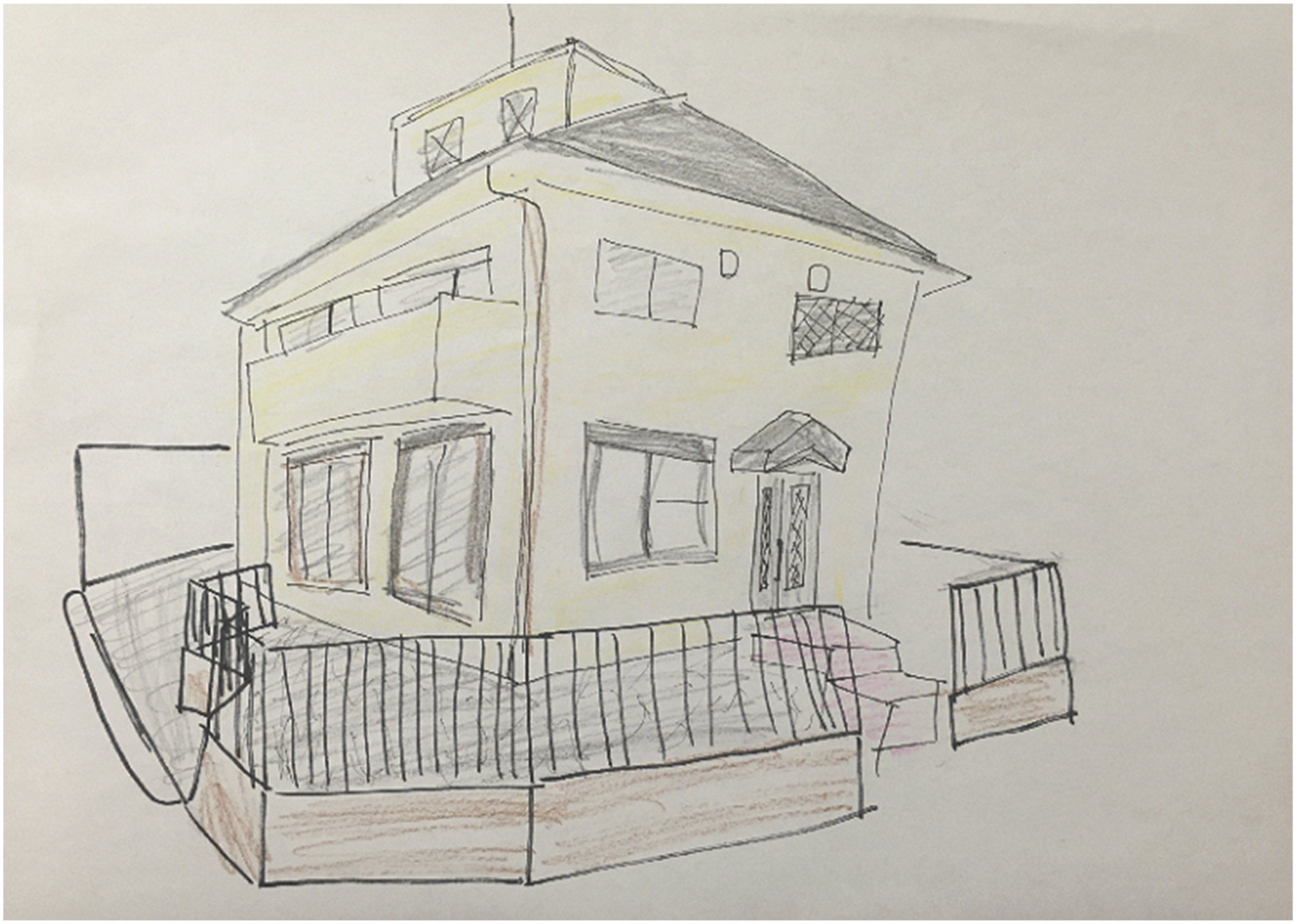
Juniper City is a calm residential space in the Tokyo metropolis, connected by a complex series of railways and roads. One caregiver described, “Here you can get a sense of what the countryside is like.” The municipal government recently installed bike lanes and increased the amount of green space by planting trees. On clear days, Mt. Fuji is visible in the distance. Juniper Academy, a residential care institution for children of the state—established in the postwar period for orphans—is nestled in a mixed-income neighborhood. It is one of six hundred institutions in Japan that look after children separated from their parents, housing approximately one hundred children between the ages of two and eighteen. Over sixty employees, including care workers, clinical psychologists, nurses, psychiatrists, and other support staff like gardeners work on the Academy’s sprawling campus. Most care practitioners were women. A two-story office building houses the central administration and psychologists’ workspace, in addition to multi-purpose rooms for study, meetings, and activities. Behind the office are two residential units, each housing six apartment-like rooms that house up to six children. The apartments were built during my fieldwork and their construction reflected the broader shift away from shared, dormitory-style accommodations to more ‘family-like’ spaces (Goldfarb, 2025: 63-4). 9 The campus is surrounded by leafy trees, colorful flowerbeds, and a large concrete wall that separates it from the surrounding neighborhood.
To promote relationships between children and the local community, Juniper Academy built several off-campus group homes starting in 2013. The Big Sky Home is one such home. The entryway opens to a cluttered living area complete with a dining table, work desk, and television. A kitchen and laundry room occupy the rest of the floor, while the children’s rooms, bathroom, and employee room are located upstairs. Six teenagers live in the Big Sky Home, three boys and three girls, alongside a team of four care workers. The care workers are full-time and work in shifts. Yusuke, fourteen years old at the time, had been living in the Big Sky Home for eight years.
Some weeks later, I sat with Yusuke at the dinner table. He grabbed the communal laptop and typed an address into Google Maps (Figure 3). “This is where I grew up,” Yusuke proudly introduced. He brought up the street view and angled the camera towards a white, five-story apartment complex. “This is where my mom lives,” he said. “I lived in apartment 404—see?” Yusuke expertly guided me through a tour of his childhood neighborhood. Across the street was a “children’s hall,” a publicly funded daycare for at-risk families. Some of Yusuke’s favorite memories with his friends are enshrined in this space. He went to the hall every day after school because his mother was working. Looking through pictures of the place, he explained each room and shared stories from his younger days. He said, “I used to meet Masa and Hiro here. We were elementary school students back then. Masa used to help me with my math homework.” Yusuke was astonished upon noticing a newly built playroom. Circling the building, he stopped in front of the entrance. The cement walkway to the front door was barren besides a few bushes. “I learned how to ride my bike here, my friends and I taught each other,” he explained. Nearby, Yusuke recalled playing with a friend in front of a stranger’s house. “That was when the earthquake struck in 2011,” he said. “I ran home to check on mom, and we watched the news about the tsunami and the reactor meltdown.” Finally, Yusuke retraced his commute to his first elementary school and spoke fondly of his old friends. Tokyo in Google Maps. Picture taken by author.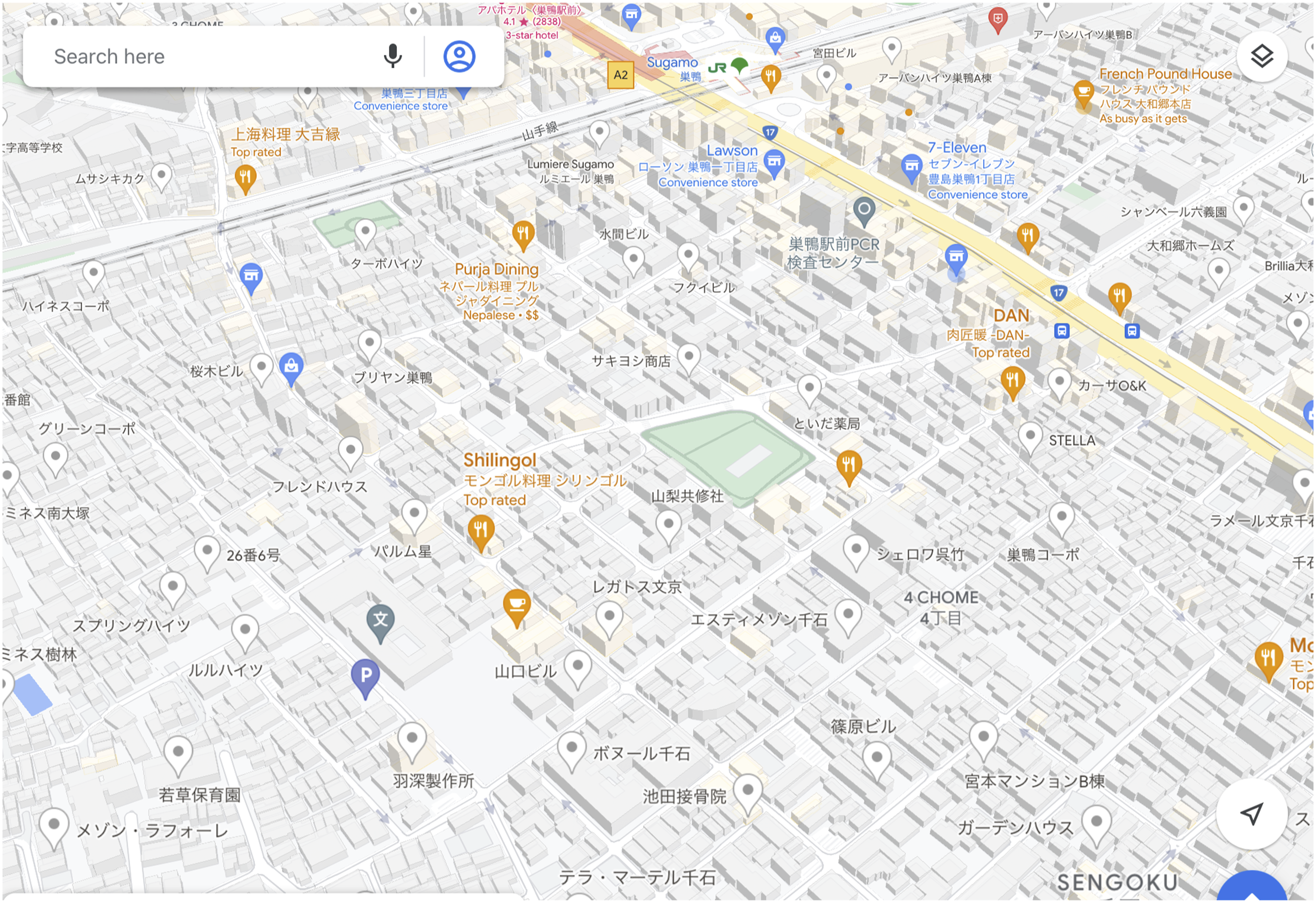
It may be difficult for an outsider to differentiate between the streets of Tokyo; to me, the area Yusuke grew up in looked unremarkable. For Yusuke, the neighborhood is intimately familiar. This sliver of space in the vast Tokyo metropolis is a vivid part of his childhood and he cherishes the memories of growing up there. Yusuke used technology to retrace his journey and share a nostalgic archaeology of his former social life. I later replicated this tour, showing him the spaces of my childhood in the rural United States.
I came to know Yusuke quite well over the year. He once described when he first moved into the Juniper Academy: “I came directly to the Big Sky Home. I’ve never actually lived on the main campus, but some of the people here rotate through. Some of them like it, some don’t – I think it depends on the caregivers … What I remember the most is seeing myself in the mirror for the first time here. I wore the hand-me-down clothes they gave me. I didn’t bring any of my own. I had a new toothbrush, bed, cup, and school supplies. I saw myself in the mirror and I felt like a different person.”
He also described how the staircase was new to him when he first moved in: “They are creaky… You can hear when people use them. After a while, I learned who people were by their footsteps—[older teenager resident] Akihiro going to the bathroom at midnight, or [caregiver] Yuta getting up early to make breakfast. It still sometimes wakes me up.”
In addition to his athletic and gaming hobbies, Yusuke likes to read graphic novels. He showed me a scene from a graphic novel he was reading (Figure 4). It was titled “Sunny.” It was a story for young adults that chronicled the lives of a group of children in a rural child protection institution much like the Juniper Academy. Sunny was an old car that the residents played in. Sunny became the center of their social lives and site of imaginative play. Yusuke hunched over and angled the camera to frame the picture. He explained the scene to me, and I saw his eyes move and stop along the page as he spoke. In the scene, Sei, a young boy with glasses, was just left by his parents to live at the group home. The other children welcome him, and they introduce him to Sunny. Inside, a couple of children revel in looking over an adult magazine, while Sei sits in the driver’s seat. It starts to rain; Sei sits alone. Yusuke explained that Sei “is processing the reality that his parents left him, but it’s not quite visible.” The rain, Yusuke indicated, represents “Sei’s inner grief, but he doesn’t let it show… he later imagines himself driving home to his parents.” Yusuke suggested, “In the beginning, most, if not all, children who enter care feel abandoned in this way. It hurts. But sometimes the feeling never goes away, remaining with them forever.” He explained, “It has been too long [for me]. The longer you are away from family, the weaker those connections grow.” Yusuke said it is “sad” (kanashii), but also that “it doesn’t really matter much anymore” because his life went in new directions. I saw how Sei and Yusuke’s position indexed a particular, intersubjective moment of past and present in relation to forced displacement. A scene in a graphic novel called Sunny. Picture courtesy of Yusuke.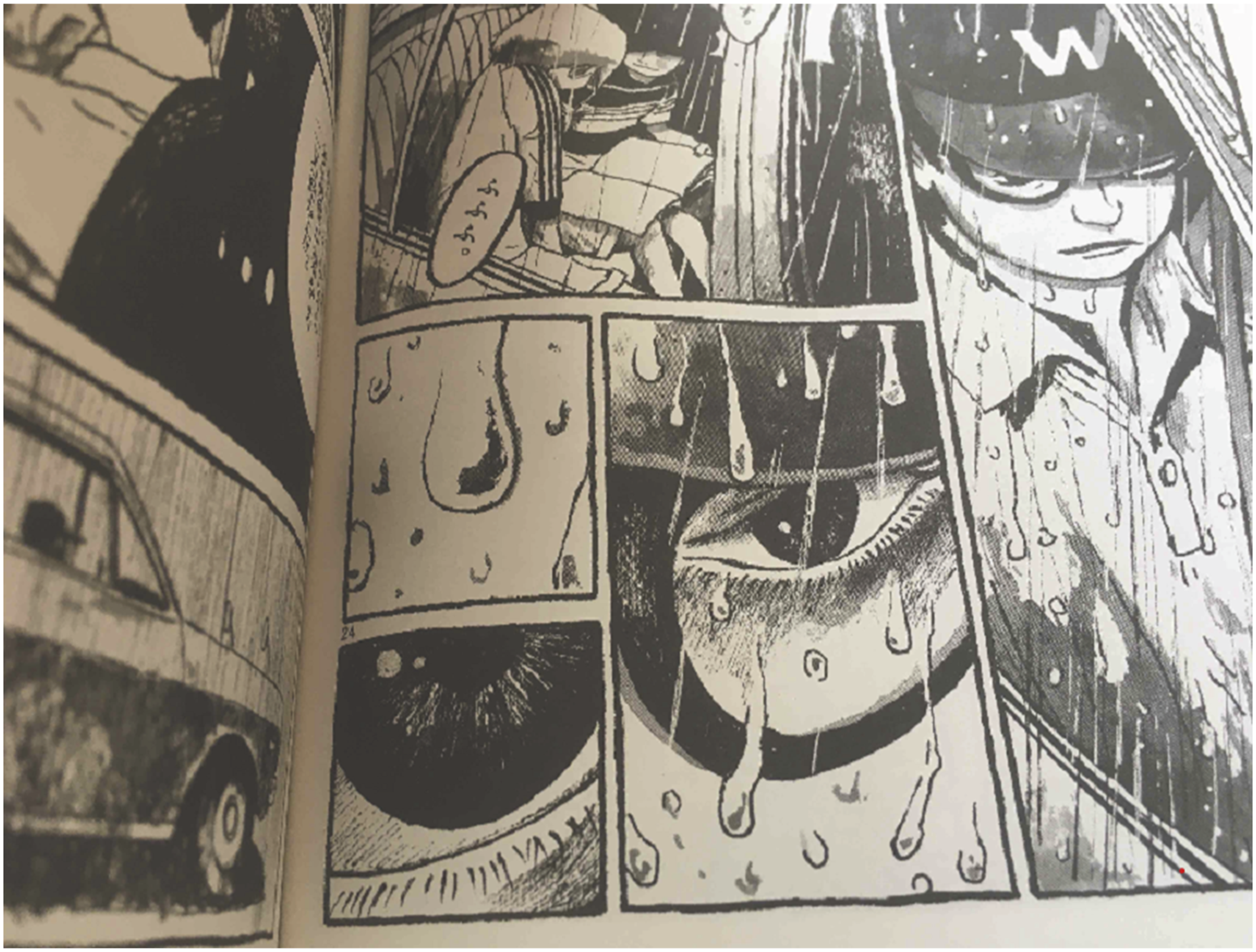
Yusuke has been separated from his original home and community; however, this is not something that he used to define his identity. After the Google Maps tour, he took me on a walking tour of his “current life”—places like his second elementary school and current junior high school. Yusuke described a sense of “melancholy” in losing touch with his childhood community, but reminded me that the Juniper Academy is his “new home.” He said that he “new friends, eats well, and has space to do homework and hobbies.” He did not define himself by what was lost and instead focused on what he has and wants. Being separated from one’s family by the state may be socially and emotionally disruptive but, unlike the welfare authorities with whom I spoke, I am unconvinced that it means children cannot reconcile the experience.
On a Sunday morning, the Big Sky Home residents and I were playing games. One of the girls, Hinako, while not upset, was vocal about losing. “Ah, you’re really annoying!” she complained. Yusuke smiled at the corner of his mouth. One of the younger caregivers, Hana, who was also playing, said, “Hinako, that’s not very nice.” The home’s phone started ringing, and Hana went to answer it. “Hello, this is the Big Sky Home,” she said. “Ah, hello! Yes, I will go check…” She quietly walked over to Yusuke with her hand over the receiver. “Yusuke… it’s your mother… do you want to talk today?” After several seconds, he replied, “Hmm, today… maybe not.” Hana nodded and shuffled away. I overheard her saying, “I am so sorry,” and saw her bowing profusely over the phone. Later, Hana explained that she made up an excuse, saying that Yusuke was out of the house.
In listening to Yusuke’s narratives, I understood how entering care may reshape a child’s social world and subsequently alter how children see themselves and relate to others in society. The material change in Yusuke’s life is striking as he lost access to and intimacy with once-familiar places, people, and objects. This reshaping reveals subtle discourses of the normative nuclear family and personhood in Japanese society. One of the key discursive rationales guiding child welfare reform is the idea of “family-like environments.” The Big Sky Home was built to simulate a “typical” family experience. Dr Matsumoto, a child welfare researcher I interviewed, said that policymakers consider the nuclear family to be fundamental as “Japan is a family-dependent society” (kazoku izon shakai). Children in care learn about this kinship ethic by way of their exclusion from it. Yusuke told me that while he knows family is “important,” his relationship with his mother has waned and the subject is no longer difficult to discuss. I saw this to mean that Yusuke’s redirected paths mediated his understanding of family and belonging. I found Yusuke’s narrative striking in its invocation of the past and the absence of a culturally normative family in the present, indicating Yusuke’s agency and navigation as processual facets of everyday movement and practice (Vigh, 2010: 157).
During one of our walks around the neighborhood, I learned that Yusuke, like the other Juniper Academy residents, has a sharp understanding of the local geography. As we approached a street corner, Yusuke indicated to turn right. “This is the edge of Juniper City, technically,” he explained. He pointed to the streets and buildings as the obvious markers. “That’s the community center there, though we’re headed over this way.” He continued, “Actually, I’m from Cherrygrove City, it’s one more city over … They [the caregivers] don’t like us going too far from home though, but we have busy schedules with school and such so we are pretty independent.” I asked if he learned about the neighborhood and his way to school on his own. He elaborated: “It really depends on who you know, the caregivers usually show the new kids around, but sometimes the people who have been here a while offer to take the newer ones to school – it helps people make friends, actually. These are the times you get to know the local drama, learn who is who, and so on.”
Yusuke explained that there are intricate social hierarchies and histories among the children and youth in the Juniper Academy, including infamous characters and lucky people who “made it.” Along the way, Yusuke and I also talked about his day: “I am nervous about the high school exams coming, mostly,” he said. “I know Akinori is headed off to an art school, but that doesn’t sound like a good idea to me. That’s not what I want. I’d like to go to a university and have a career, you know?”
Yusuke’s digital and physical neighborhood tours were compelling because they pointed toward aspects of social life outside of the Big Sky Home and Juniper Academy. Children spend most of their time at school and other places outside home; this realization unsettled my focus on life in care, inside the institution. Yusuke’s life in care is comprised of daily journeys and multi-sited interactions; thus, being-in-care is not solely about the occurrences inside a residential care institution or foster home, but the entirety of a person’s movement. These paths and encounters shape how people make sense of their social worlds (Carrithers, 1995: 261). As Biehl (2005) notes in Vita, Catarina used a hand-made dictionary to make new connections in her local world within the asylum. That is, her lived space was not static or experience-less but comprised of active efforts to comprehend. Extending this insight, I found that Yusuke’s stories spoke to one aspect of a young person’s journey of coming of age in care as a relational and experimental process. The experiences of Yusuke were more than the space over which authorities had control.
Yusuke took a picture of a house, shown in Figure 5, during one of our excursions. Back at the Big Sky Home, showed me the picture and explained why he took it: “Monday through Friday, I go to school. Morning until evening. That’s pretty much my life, going back and forth (chuckles). I’ve lived here for many years, but you know I don’t know any of the neighbors. I don’t know their names and we rarely exchange greetings. That’s just the way it is, right? That’s society. I walk to school and back alone most of the time since we [the other residents] have different schedules. I listen to music, finish homework, or read my novels … This house is one of the older ones on my route. It is old, and rusted—see? I like the little garden out in front. The house is old, but people still live here, and they tend to this garden. It must be tough though, especially if they are old. See that flower? I think it expresses a nice feeling.” A picture of the side of a house, including a small flower. Picture courtesy of Yusuke.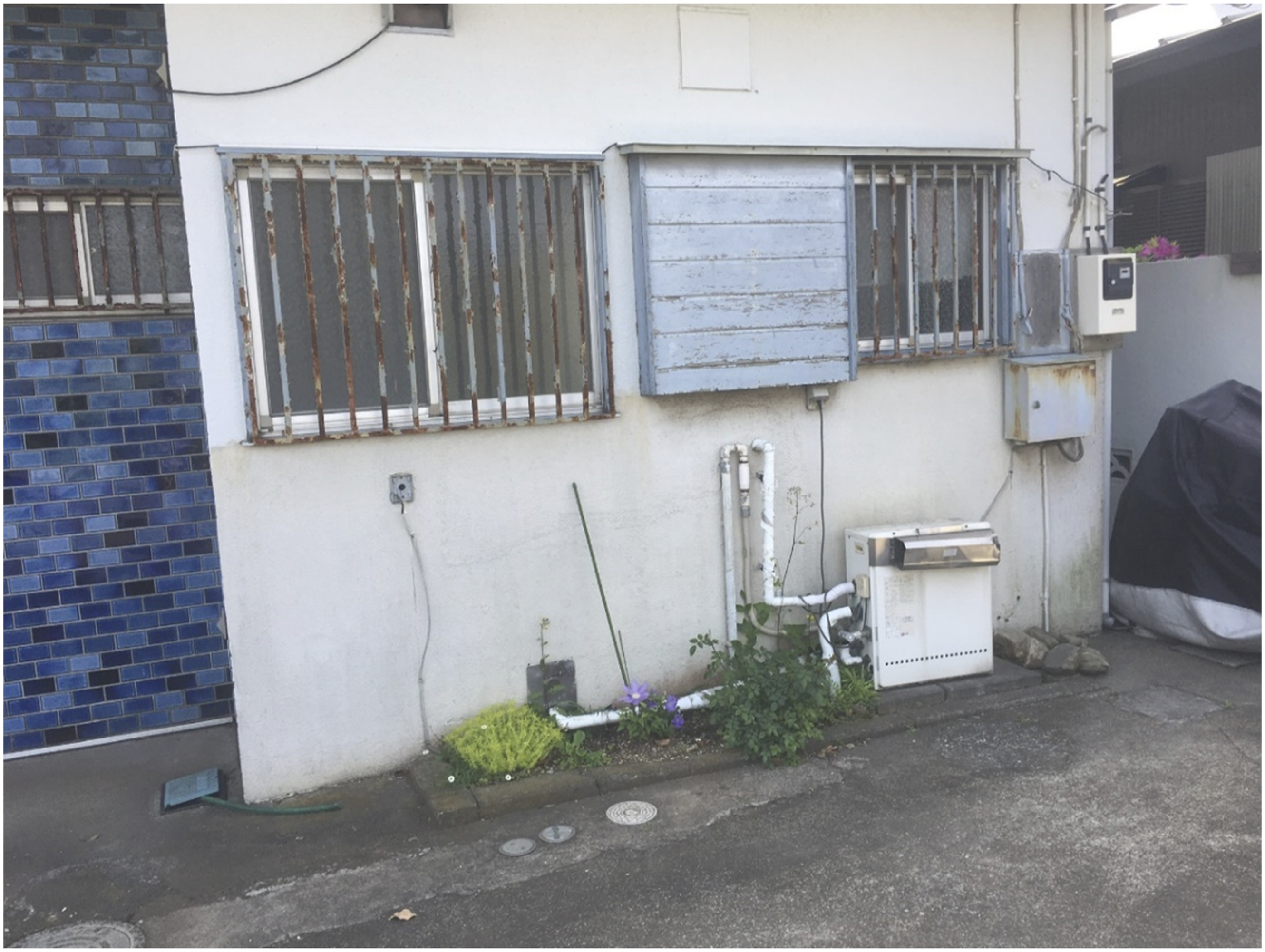
My encounters with Yusuke were not a simple matter of me entering his local world, but of me joining him on his journeys in and outside of the Big Sky Home. The experiences of sharing a meal, walking to the convenience store, or discussing his writing over a game of Tetris helped me to understand that being in care is not about static placement, but moving through new and different spaces. In terms of traversing and closeness, I saw how children’s paths in care could index a variety of affects, including a mixture of both a lived present and the sharp memory of a lived past (Stewart, 1996: 139). The reformation of Yusuke’s social life and network as he entered care, in framing them as reshaped paths and itineraries, also suggests a reorientation. Sara Ahmed (2006: 546-552) describes that “the objects that we direct our attention toward reveal the direction we have taken in life […] orientations are about the directions we take that put some things and not others in our reach” (see also Ahmed, 2007: 152-155). Histories shape bodies, she suggests, and bodies invoke histories through (inter)action. For Yusuke, coming into care and being-in-care reoriented him to a warped social world comprised of new routes, bodies, and encounters—such as his meeting with me. My own shift in orientation towards perceiving care as more than place-bound is notable, too. This frame of being-in-care aligns with Cox's (2015: 25-29) social choreography, illuminating the interconnectedness of bodies and space and the fluidity of identity-making in shifting locations. Movement is disruptive; it complicates normative discourses that re-designate children in care as an othered, in-need category—an insight I develop next.
Socially remade as a child of the state and the precarity of welfare
Late in my fieldwork, much to my surprise, Yusuke introduced me to his favorite hobby: writing short stories. Yusuke wrote me a slice-of-life story conveying his perspective on living at the Juniper Academy (Figure 6). The story, he said, “is about everyday life in care through the protagonist’s (shujinkō) point of view.” We discussed new chapters each week as he wrote them. Yet, conversely, the story’s plot centers on a day at school—the Academy only features at the beginning and end. Yusuke said that he feels a certain “rhythm” to his life that he “keeps in step with day in and day out.” The weekdays are a blur of morning grogginess, unexpected alacrity, rote stress, and subtle joy. School club activities are scheduled at odd times, marking an uptick in the daily bustle. Routineness, he said, can be peaceful. Like the neighborhood tour, his story captured a sense of movement, traversing, and journey that reminds me that locations are better thought of as itineraries. Yet, this frame of movement and spatiality demonstrates something othering about the position of being a child in care. In this section, I discuss how Yusuke’s story speaks to mismatches between children’s lives and the welfare system’s ethos of care. The first chapter of Old Memories. Translation by author.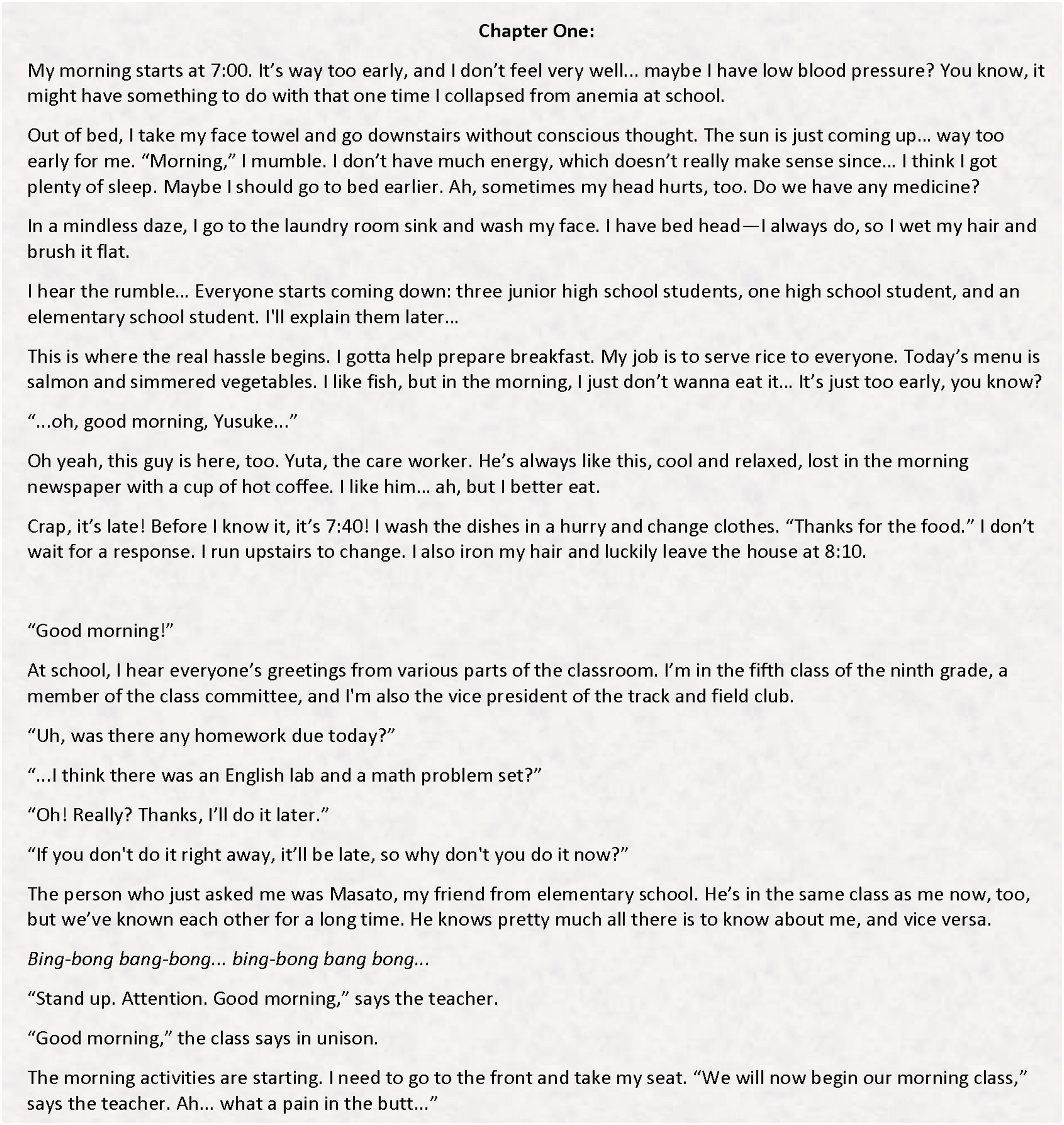
I learned about the organizational operations of the Juniper Academy and Big Sky Home throughout my fieldwork as I spent time with the caregivers and administrators. Yusuke’s journey into care began when his mother’s status as a single parent in a low-income household came under the gaze of child protective services. I learned this history through Yusuke’s case record, not Yusuke himself. I include it here to illustrate an acute difference in narratives surrounding Yusuke’s care journey and experiences.
10
His mother’s situation, according to the record, led to an investigation by a small team of caseworkers whose decisions guided Yusuke’s separation. He spent a couple of weeks in a temporary protection shelter while the state deliberated the next steps. A psychologist recommended residential care and the Juniper Academy placed him into the Big Sky Home so that he could experience “typical” family life to build proper social bonds. This information, along with behavioral and medical assessments, is contained within his case file; it is how the system sees Yusuke. I found it unsettling because its intimate yet cold caricature did not match my lived understanding of Yusuke. Yet, in contrast to authorities’ concerns for family-like bonds, abuse recovery, and psychosocial development, Yusuke told me that his biggest troubles had nothing to do with home, family, or the welfare system. Instead, as his short story’s orientation intimates, he was concerned about his education, peer relationships, and the future. “What will happen to me after I leave here?” he said. In a later chapter of the short story, Yusuke described an encounter with Hinako, another teenager at the Big Sky Home. One day they met at school but avoided acknowledging each other. During a conversation with Yusuke, he explained that the Juniper Academy residents do not acknowledge their relationships while at school to keep their status as children of the state private. He explained that this was a sensitive topic due to the assumption that children live with their natal family. Yusuke eventually titled his story Old Memories, saying, “It won’t be long before I move out, get a job, and have adult responsibilities, so this story is also a memento for the future, something nostalgic (natsukashii) for me” (Figure 7). The title page of Yusuke’s story, Old Memories. Picture courtesy of Yusuke.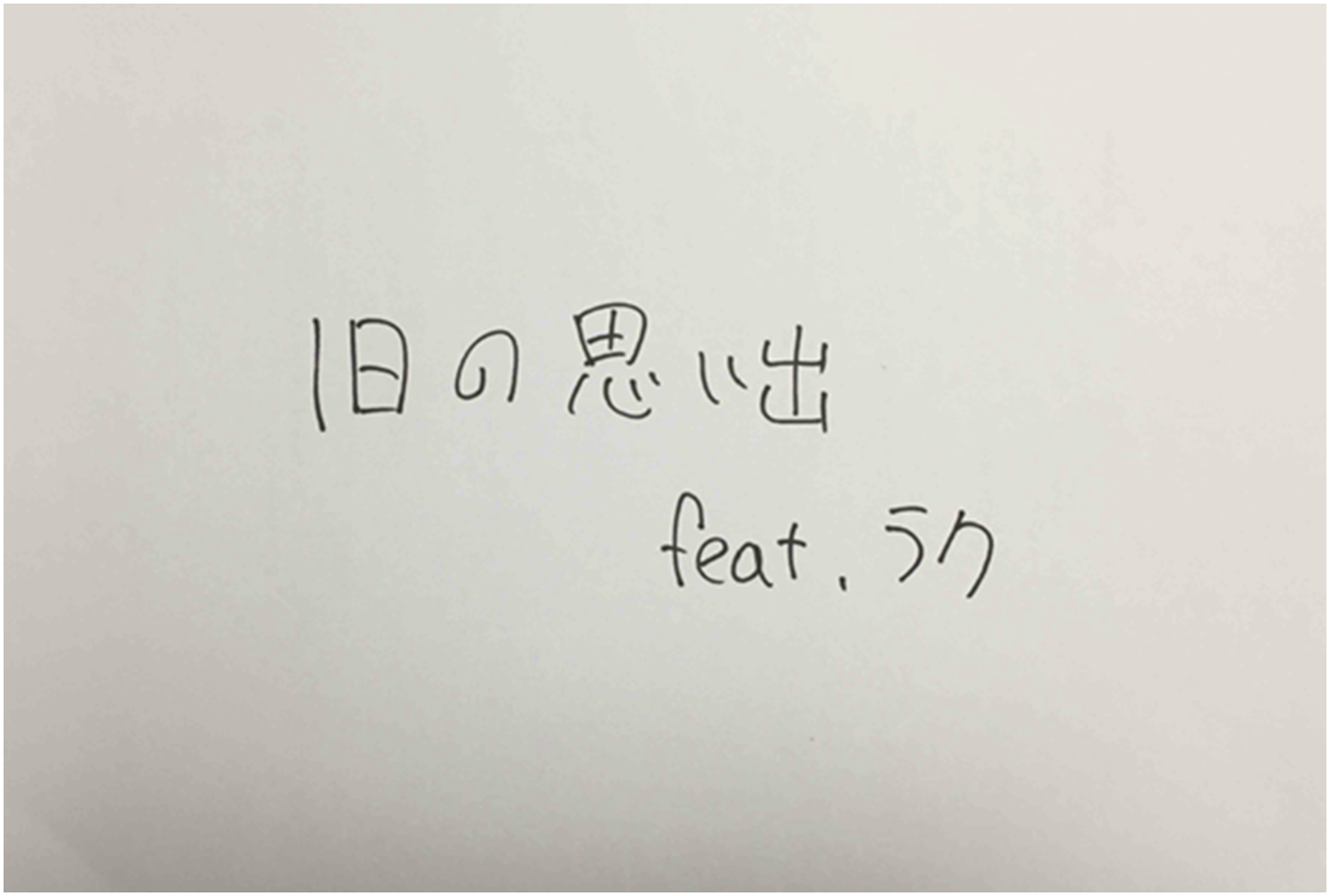
A nuance in discursive representations took shape in Yusuke’s narratives. When he described the protagonist, I noticed that he spoke in the third person. “Yusuke is Yusuke,” he said, “but I think that Yusuke [Old Memories] is a little different from this Yusuke [corporeal self] because the short story is about a simple slice of life, but I’m graduating junior high soon and am concerned about what I’ll do after.” Yusuke also found that the story had a transformative quality: “I like writing because it helps relieve stress […] I was surprised when I re-read the story because I formed an image of who the protagonist is, and it was a little different from how I thought it would turn out… it’s like, ‘Oh, is that actually the kind of person I am?’ This wasn’t a bad thing […] maybe a little uncomfortable at first, but I then thought, ‘Huh, so this is another part of who I am.’”
Yusuke’s narratives invoke a keen but subtle awareness of disrupted kinships, realigned peer relationships, and a changing sense of self. While the story as text points to an ordinariness in everyday life in care, his narratives surrounding the story indexed a concern about the future. Such worries are not uncommon among children and young people, but inequities in life trajectory after care hint at something circumspect in the role of social care services (Allison, 2013; Arai, 2016; Brinton, 2011). This ethnographic portrait, like the bureaucratic persona outlined in his case file, constitutes an image of Yusuke as a person; unlike the file, it captures absent details about Yusuke’s concerns over his nebulous future. He understands that he will be separated from the Big Sky Home once he ages out. He said, “It has been a long time since I saw my mother, so I don’t think I will move back in with her, I’d rather get an apartment if I need to or move into a university dormitory while I study.” He also knows he needs to start looking for work as the older residents, like Akinori, have started part-time jobs. Child welfare services are framed by authorities as a temporary measure and Yusuke agreed that residential care institutions are “not places to return to.” I found this poignant because it added depth to Yusuke’s upbeat, positive focus on coming of age.
Yusuke’s stories were emblematic of the concern that the residents of the Juniper Academy have about the transition into adulthood, another form of forced displacement as children leave the care system (Chapman, 2024a: 279-283). He and other Big Sky Home residents described feeling “on edge,” “uneasy,” and “confused” in a “messed-up society.” They were not aware of any statistics on aftercare outcomes, but they articulated a sense of inequity eclipsing their day-to-day movements when they described these feelings around the future. This led me to more closely examine how the welfare system mediates children’s subjectivities.
Scholars have identified the 1990s burst of Japan’s bubble economy as the end of unprecedented post-war growth and a catalyst of economic decline. Lifelong employment, high salaries, successful school-to-work transitions, and other praised aspects of Japanese society were lost. Anne Allison (2013: 21-42) writes about a precarious Japan due to a variety of present and growing social ills—an aging population, a low birth rate, unstable employment, unreliable education, and family fragmentation. An academic interlocutor said, “Since the bubble burst in the 1990s, the ideal of a ‘Japanese-style welfare society’ is not possible, the average family is no longer stable.” Yet, once children leave care, there is a tacit assumption by authorities that “their families will return and be present, supportive figures.” The enduring specter of the ‘welfare society’ manifests in the state’s assumption of Japan as a family-dependent society. Education is taken as a barometer of social precarity and, historically, has a strong relationship with employment; higher education is discursively held to be a pathway to happiness and stability in Japan (Kawano et al., 2014). Inequalities in higher education remain stark for children in care. Though most continue to high school, only 18% advance into a university program, falling significantly short of the 53% national average (Ministry of Health, 2022: 73). Young people leaving care often work in low-skill, part-time positions. At the Juniper Academy, the administration encouraged children to do well in their studies but maintained that it is the child’s responsibility to pursue an education. My young interlocutors said that they found “applying for scholarships,” “preparing for interviews,” and “deciding on cram schools” to be daunting solitary tasks.
Looking further at the relationship between the child welfare system and inequality, a high number of families maintain generational contact with welfare services and a higher percentage of low-income families come under the child welfare system’s scrutiny (Chapman, 2024a: 90). 11 While the welfare system may not always be a catalyst of inequality, it may reproduce or sustain it. Residential care institutions, like the Juniper Academy, do not afford children the means to move upward in a rigidly stratified society. As Lauren Silver (2015) writes regarding U.S. child protection, the system thwarts its own work by failing to alleviate hardship in the lives of children and families. I find that the Japanese child welfare system acts as a structural undertow, pulling on children’s socioeconomic mobility and connections that form cultural capital. Saki Nagano (2017: 12-13) writes that there have been patterns in the poor outcomes of children in care since the late 1980s, citing descriptions of young adults as having weak social networks or being at a “dead end” due to low employment levels (fukurokōji). The Nippon Foundation (2017: 69-70) suggests that the suicide rate of children with care experience is five times higher than that of the national average. Moreover, child welfare politics fail to address that children’s outcomes remain poor regardless of the type of care—whether foster family or institutional care. Children and young people leaving care face a pronounced set of pressures and dilemmas en route to adulthood.
Yusuke and the other residents’ stories complement an awareness among welfare researchers that there are issues in care outcomes. However, the residents of the Juniper Academy related their uncertainties to their position of being-in-care. Compared to the normative child of an intact family, those in care may experience or relate to precarity in different ways, as Yusuke showed. It is hard to label children in care as a homogenous group due to the great variety of experiences that constitute their being-in-care. Some children enter care for a few weeks, while others spend their entire childhood in the system. In terms of statistics, the welfare system has a critical influence on children’s life trajectories. Yet, there is a more poignant inequity at the personal, embodied level, one that emerges in terms of proximity and traversing which indexes structural inequality.
The welfare system fosters new forms of social precarity through the reorientation and rerouting of children’s social lives, whereby children adapt to and embody a reshaped social world of augmented possibilities, pressures, and expectations. Yusuke and other young people in care are concerned about the unknown quality of their life trajectories. The welfare system, then, becomes a hindrance by exposing children to intensified social, economic, and political challenges. Being-in-care also exposes children to varied registers of stigma—social, mental health, and disability. In comparison to the normative Japanese home as a reliable meeting point of people’s itineraries, the Juniper Academy is a liminal space because children’s journeys rarely bring them back to the institution after aging out. But while in care, children utilize creative tactics to express the precariousness of welfare, manage the shame of a being state ward, and learn about themselves and others. Yusuke’s stories highlight this interactional and transactional journey which re-attunes children to a life enshrouded by amplified forms of precarity—a traversed space beyond the reach of the system’s voice. Trnka (2020: 4) emphasizes the importance of being there, and Yusuke’s story features moments when his being-in-care transcended more than being emplaced. This includes when he took me on a journey ‘home’ through Google Maps and drafted a story with the mindset that it would become a future memento. In those instances, Yusuke traversed a very particular sensorial space—he dwelled in his old apartment, returned to when he first moved into the Big Sky Home, and relived days just past. Being a child in state care is about movement through space, time, and memory whether forced, willful, or accidental. This journey brings children into a new, insecure social world, one that differentially introduces a set of social encounters, pressures, memories, and barriers into their lives.
This intersubjective journey parallels Rania Kassab Sweis' (2021: 151-155) research on “paradoxes” in caregiving efforts between street children and aid workers. These paradoxes center on contradictions between children’s needs, workers’ efforts, and global health principles. While Japan has effectively taken up global values in child protection as a domestic narrative, I found a similar set of incongruences in the design and practice of care that may, as Sweis suggests, offer beneficial opportunities for children while at the same time prolonging their struggle. Rachel Burr (2006: 21), Leslie Wang (2016: 78), and Kathie Carpenter (2021: 44) likewise argue that welfare agencies, despite their best intentions, do not always understand children’s problems which are better framed as contextual and not universal. Yusuke’s story suggests the Japanese state may have a limited comprehension of what matters and happens to children in care. Rudolf Virchow's (2010 [1879]) writing on the flawed provision of physicians for marginalized people is fitting here, that health practitioners cannot rectify the social conditions that produce health inequality. In Juniper City, the “charity caregiver”—whether a caseworker, psychologist, foster parent, residential care worker, or even another child—provides a bounded service (Chapman, 2024a: 346-347). The treatment of child abuse and potential trauma through the supply of expert support is a key feature of child welfare services; however, improvement is less in resolving structural barriers and more in creating metrics around employee skill enhancement and the reduction of children’s problematic behaviors. Metrics like these are the presumptive objective means by which policy is crafted, as Hales (2016: 137) suggests, “becoming a precondition for state and private funding” (see also Erikson, 2016: 157-8). However, care practitioners cannot easily remedy the socioeconomic barriers children face because their attention and expertise are attuned to immediate, proximate matters. Welfare authorities I spoke with refuted the suggestion that the system may be a threat to children’s livelihoods, instead allowing for children to be blamed for failures in their adult life and parents to be blamed for their children’s developmental difficulties—a neoliberal trend in child welfare systems (Silver, 2015: 155-56).
Child and youth voice remains marginalized in policy and practice, but it provides a useful lens for understanding how children navigate social care. Leaving home and changing schools was upsetting, but Yusuke found resilience in storytelling, new friendships, and kind caregivers. Writing provided him with a measure of agency in an uncertain world, and Old Memories became a reflexive tool for Yusuke to rethink his journeys. Perhaps his concern for matters outside the home is a sign that the welfare system is succeeding in its efforts to promote family-like environments and healthy social relationships, though authorities continue to value intra-familial and inner-home dynamics over matters like school and work. Yet, Yusuke’s story reveals a complicated position. He likes the Juniper Academy, but the (re)orientation of his lifeworld, building on Ahmed’s description, speaks to the multifaceted ways in which children traverse a care system that casts a shadow of inequity on their life chances. Yusuke’s story, illustrated in terms of labor, affect, and morality, is a political statement: the welfare system is a source of inequity through the practice of displacing children to care for them. Children, despite being told they are blameless, are the ones separated from home and community. Inequity takes shape in that children must leave (and possibly return) home, reorient, readjust, redo, and relearn; this experience is textured by normative, psycho-technical infused discourses that pervade child welfare politics. That Yusuke felt a desire to give me a virtual tour of his past home and write a story on life in care expresses this inequity. The child in the intact, normative Japanese family would not be orientated this way. Following Halberstam’s (2012: 19) appeal to discussion “that revels in alternative ways of living and moving through the world that are not readily legible, known, visible and, thus, valued,” and coming back to Kafer’s search for a more equitable elsewhere, I find it compelling to ruminate on how being-in-care allows people to enact new ways of tactically and tactilely manipulating their social world, thereby uncovering new ways of understanding their uncertain, unfixed place in society.
The decisions that affected Yusuke’s journey into care are bound to a tangle of pressures, structures, and desires (Biehl et al., 2007: 1-9; Jenkins, 2015: 9-10; Kleinman, 1999: 71–2). There is also a temporal aspect that I find crucial to emphasize alongside the body’s movement in space. A parent’s decision to place their child in care is an intersubjective, moral act with consequences that ripple across social networks, accreting into new affective matter. 12 I met children who were managing the experiences of not knowing their natal parents and why they were in care. Child welfare is an intersectional space that unearths messy personal histories alongside multi-sited labor that seeks to protect children’s well-being, marking a complicated intersection between principle and practice (Berrick, 2017). Yusuke was pragmatic and hopeful for the future, and his creative narratives mark a continuation of his past encounters and a reformation of what they may mean, ultimately complicating authoritative discourses on vulnerability, protection, and care ethics. In a system that does little to consider the voices of those it prescribes to be unfit for decision-making, it is valuable to consider how people’s journeys form new political subjectivities that redefine normative values around personhood and well-being.
Conclusion
There is a great difference between stories of children and stories by children, as is the case with all marginalized people. The longstanding views of abused children among authorities and the media stood in contrast to what I experienced in the ethnographic present. I found it worthwhile to interrogate the nuanced relationship between care politics and spatiality to better appreciate the social dimensions of caregiving in controlled spaces like the Juniper Academy. As I have illustrated with this paper, Yusuke’s stories offered a mottled view on being-in-care that differs from adult authorities and some of the other residents. The Juniper Academy was not a decrepit, shunned place where pitiful children resided. The Big Sky Home looked no different from the surrounding houses and the people who spent time there tried to live happy lives. I do not discount lived experiences of suffering and struggle but instead offer a situated understanding of social care. Being-in-care is an embodied journey, one of physical movement through unfamiliar places and introspected reconciling of a fragmented life in a different place. I learned to see the Juniper Academy not as a fixed location, but as a series of encounters and exchanges through shifting spaces. This included the physical facilities and the dynamic, unbounded spaces children moved through each day—side streets, group homes, classrooms, train stations, and the internet. Children in care were an aggregate group and even though their daily routes may overlap, the experiential content of their traversing did not.
The residents of the Big Sky Home are self-proclaimed “typical” teenagers. They do not see themselves as “damaged” or “vulnerable.” Nearly half of all Japanese children in care have some form of diagnosed illness or disability; I made the conscious choice to not write about Yusuke in these terms because he himself did not use them. I wrote about him as I knew him—a young person who has lived through challenging moments, is worried about the future, and has found optimistic ways to make sense of the world around him. He and the other residents’ worries were about the society surrounding the Juniper Academy—school, work, and the future. It is as a reflection of this social zone that Yusuke and others saw their position as precarious. Child and youth voice, as marginalized voice, indexes a powerful means of understanding the relationship between movement, the body, and social precarity as well as of adapting ethnographic methods to people’s day-to-day experiences.
I situated these everyday interactions, movements, and narratives in a rubric of care politics, describing how they express broader dissonances in child welfare discourse. Yusuke’s everyday traversing spoke to an agency and awareness that complicated the neoliberal ethic of Japanese child protection. While many welfare authorities are focused on children’s home lives and psychosocial development, I found a poignant counter-narrative in that children in care spend most of their active hours away at school. Within this context, I discussed how the child welfare system injects new forms of precarity into the lifeworlds of children and how children are remade as children of the state, a distinctly othered social category. State protection interventions separate children from their homes, communities, and known lives, necessitating that they readjust to a new life in an unfamiliar space.
I conclude my discussion of child welfare as a source of precarity with Yusuke’s sketch of his “ideal home” (risō no ie) (Figure 8). “My ideal home would be much quieter, and I would have different rooms around the house for television, hobbies, and work,” he explained. “By twenty-five, I would like to be married and have one child.” Yusuke imagined that he would complete a university degree and find full-time employment as a writer. As Mary Brinton (2011: 167) writes, “Social institutions are not just the structural underpinnings for individual lives […] they bear an intimate connection to the way people formulate their identity and navigate in society writ large.” The child welfare system does not fully support Yusuke’s path towards his ideal home given the trend of children’s outcomes. Yusuke traverses a complicated social-political landscape, yet the agentive ways he evaluates this distorted space demonstrate a versatile, subversive process of care politics. Yusuke’s depiction of his ideal home. Picture courtesy of Yusuke.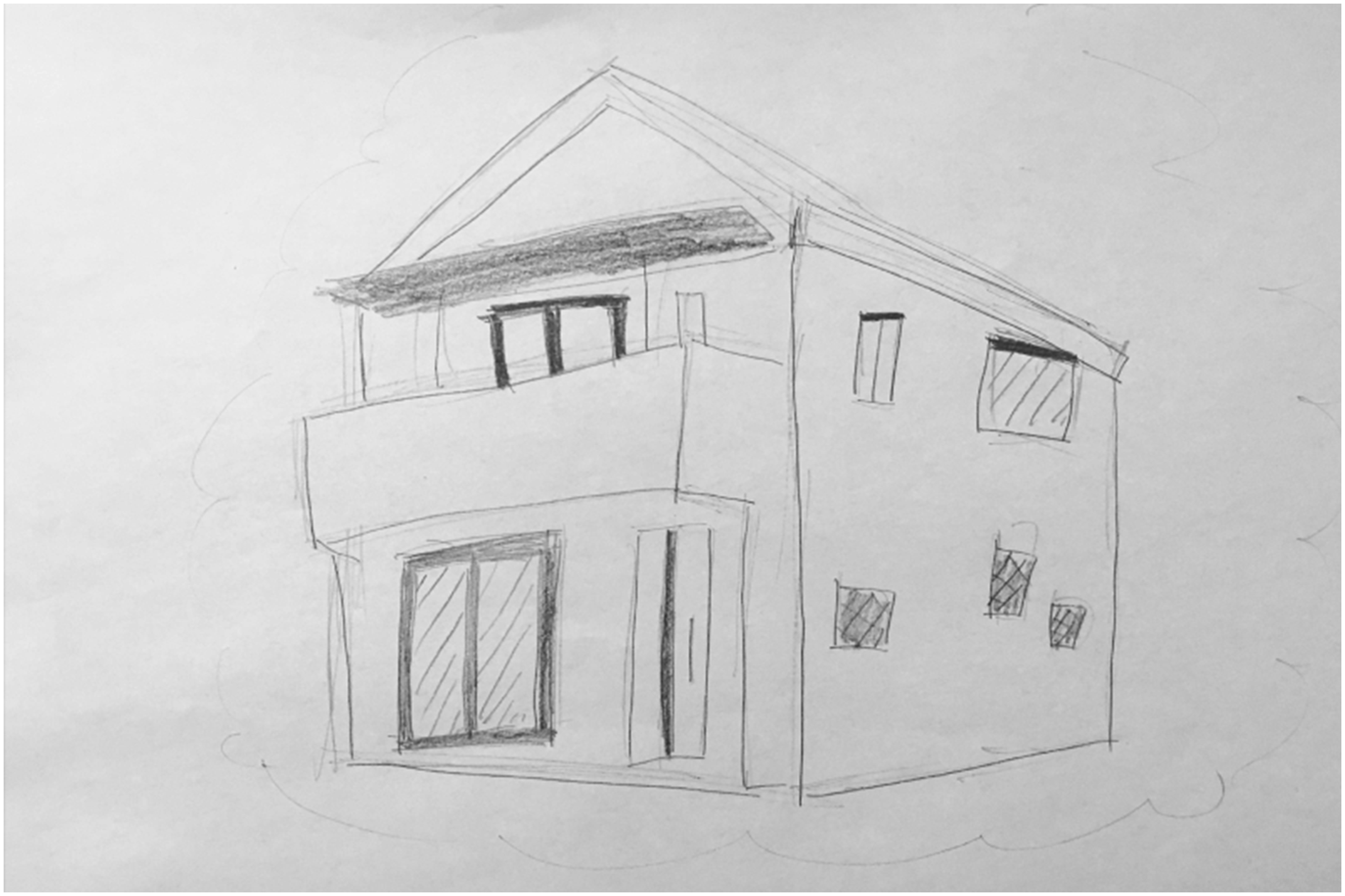
Footnotes
Declaration of conflicting interests
The author declared no potential conflicts of interest with respect to the research, authorship, and/or publication of this article.
Funding
The author(s) disclosed receipt of the following financial support for the research, authorship, and/or publication of this article: The research this paper is based on was supported by the Fulbright Program (30688) and the Japan Foundation Endowment Committee (6520420).
