



Abstract
The Fair Trade movement aims to provide producers and workers at the tail end of the value chain with secure working conditions and just incomes. However, the certification standards generated by these goals are often incompatible with the regional production systems. By comparing two Costa Rican banana farms––one Fair Trade, one conventional-my research reveals that Fair Trade regulations fail to account for the complexities of the structural issues that create and maintain precarity. This article shows that despite the movement’s best intentions it is unsuccessful in controlling the application of its values as it is disconnected from the communities on the ground. Fair Trade’s ideals become tainted locally because of pre-existing inequalities that shape social relations. I therefore specify that Fair Trade would benefit from integrating requirements specific to regional and national production processes––termed here “industry specific” standards.
Introduction
Fair Trade intents to provide the people at the production end of global food chains with secure working conditions and just incomes. To ensure these terms are maintained, Fair Trade requests that those wanting to be certified meet a series of requirements. These requirements are seen as the path to change and the basis of safe labour environments. However, these requirements, in their current form, and as this article will demonstrate, are not bringing better working conditions to banana labourers.
My study show that regardless of what Fair Trade’s aims are, it is unsuccessful in fully applying them on the ground as it is detached from the local communities and values. Other scholars 1 have had similar outcomes. However, my findings expand on these because of the comparative element, which has not been carried out before. This research is the only one that compares conventional and Fair Trade banana farms within the Dollar banana system. Dollar bananas refers to those produced in Latin America by US American companies. In contrast, ACP bananas (Africa, Caribbean and Pacific) are produced within a tariff system of trade established by European colonies. Dollar and ACP bananas were considered different commodities until the longest series of disputes in the history of the World Trade Organization united them in a common, single-tariff system (Raynolds, 2003; World Trade Organization, 2012). The original distinction between them matters because ACP’s modes of production are more closely aligned with Fair Trade values: small-scale farms, cooperative involvement and diversified control of the value chain. Numerous scholars of Fair Trade bananas, such as Steve Striffler, Mark Moberg, Aimee Shreck, Laura Raynolds and Douglas Murray have focused on ACP bananas. While their input has been extremely valuable in understanding the inconsistencies between Fair Trade regulations and the realities of producers and workers, it is necessary to expand these inquiries outside the ACP banana context. Dollar bananas account for 75% of global exports (Banana Link, 2021), and thus dominate world trade in bananas. They are also a classic example of what Fair Trade claims to oppose––extensive plantations, vertical integration, and the power of transnational corporations––making a study within this system essential for a proper and comprehensive evaluation of the role and future of the Fair Trade movement. The Costa Rican banana industry represents the original Dollar banana: it was here that the system was first established under the leadership of Minor Keith whose banana export business in Costa Rica in the late 19th century formed the basis for the creation of the United Fruit Company (Kepner and Soothill, 1935).
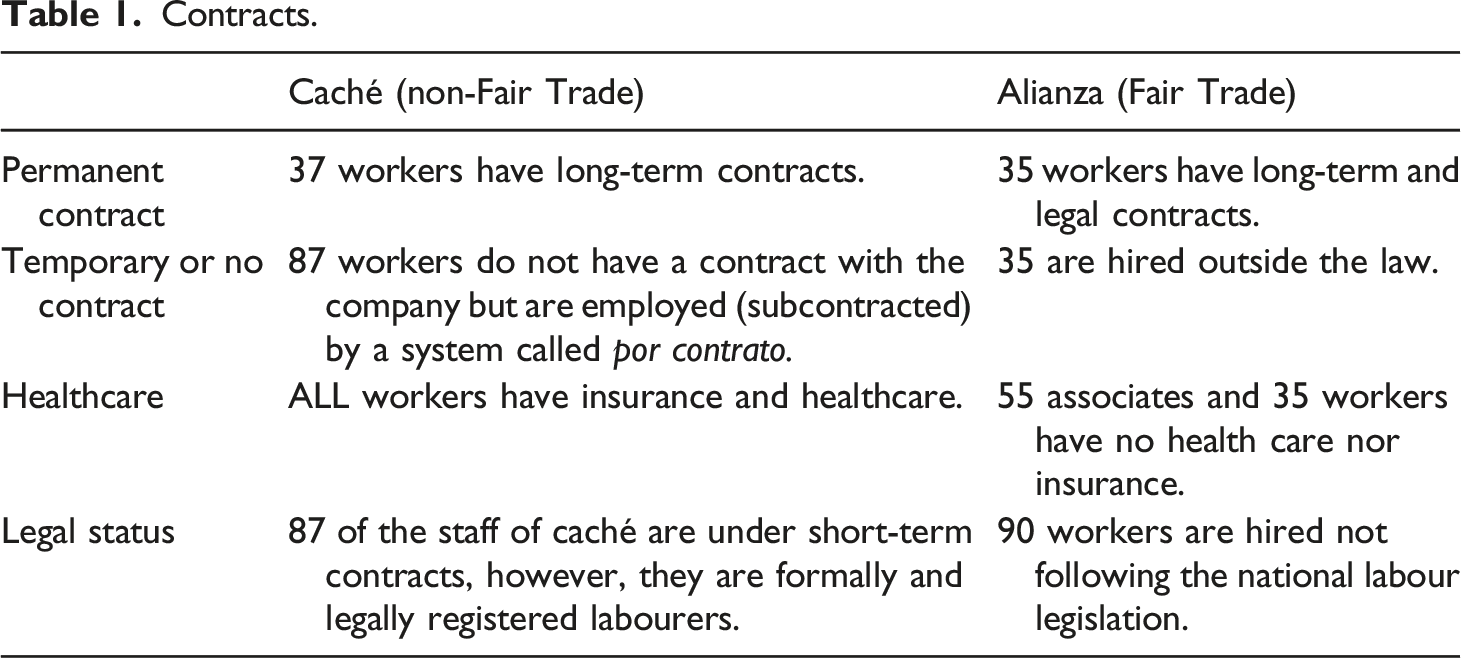
Contracts.
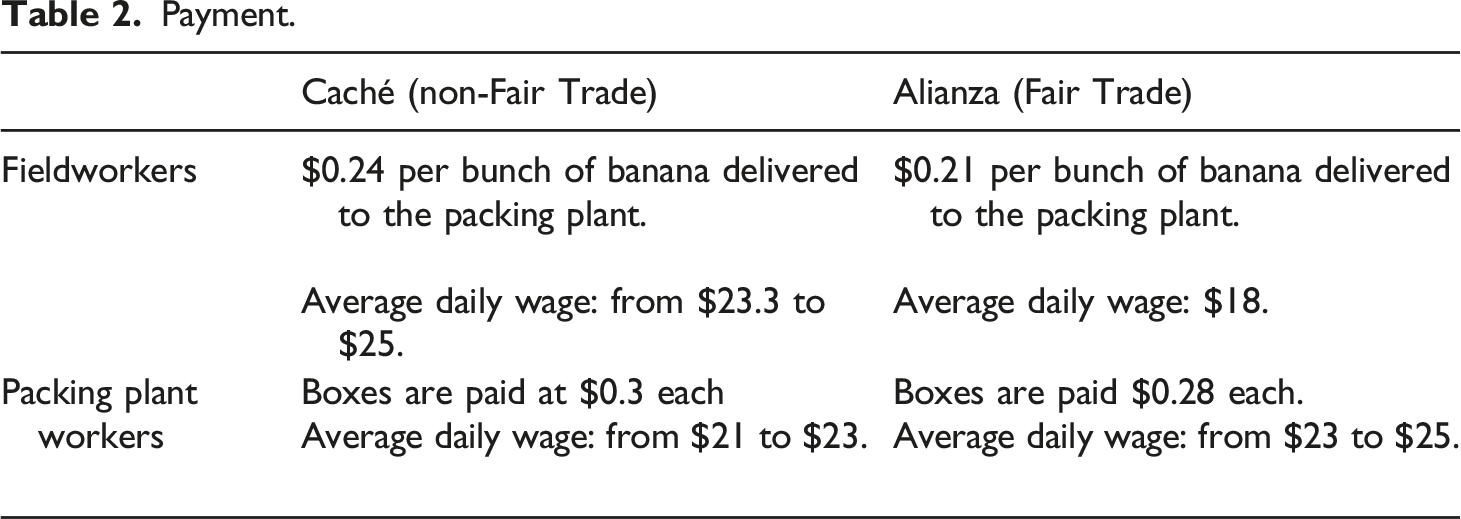
Payment.
Fair Trade ideals become corrupted on the ground because of pre-existing inequalities that shaped the current social and trade relations. We find here, extending Appadurai (1990), a disjuncture between the homogenization of requirements and the heterogeneous social contexts. This dichotomy of the national and regional heterogeneity and global homogenisation, is not helping the movement secure the application of their requirements. Fair Trade fails to see the limitations and exclusions that the universality of their requirements cause.
Several scholars have specified that what could help Fair Trade reach its transformative potential is to increase the participation of producers in decision-making and creation of standards (Daviron and Ponte, 2005; Lyon, 2015; Moberg, 2014; Dolan, 2008); as the producers’ perspectives will bridge the gap between locality and globalism. This article follows this literature by emphasising the importance of producer participation, but it also goes one step further by delving into what I call “industry-specific” factors that Fair Trade might usefully consider. By this I mean that Fair Trade would benefit from integrating not only social, cultural, and historical contexts in their requirements, but also practices specific to production processes in particular contexts. Put simply, the banana industry described by Mark Moberg in the Windward Islands does not operate in the same way as the Costa Rican industry and Fair Trade should therefore approach them differently.
My study shows that in the case of Costa Rica, the entanglements of the banana industry and the state need exploration in order to determine the role Fair Trade should play to make the lives of banana workers better. The empirical evidence reveals how the different historical circumstances that allowed the commercialization of bananas in Costa Rica affect the ways this industry functions and therefore directly impacts Fair Trade. Using my comparative study, I show how the Fair Trade farm does not function in a vacuum, and that the practices of the banana industry both nationally and internationally need particular attention for the farm to be economically sustainable and therefore give its workers better lives. I demonstrate however that Fair Trade currently does not focus on these practices, negatively affecting its workers.
In pursuing this approach, I consider the following contradiction: Fair Trade is nominally a force opposed to conventional international trade and aims to transform such trade, yet it also works within that same system (Jaffee and Edelman, 2007; Nicholls and Opal, 2005). Fair Trade’s approach to improving working conditions is based on requiring producers to adhere to a codified set of certification standards. Fair Trade is not challenging the structural impediments imposed by global capitalist system. Therefore, in order for Fair Trade farms to succeed in the market, I sustain it necessarily needs to prioritize economic sustainability. In other words, for Fair Trade farms to compete in the current global capitalist market, it may need to reinforce practices that are focus on profit maximization. Workers cannot secure fair labour conditions (and above all fair wages) if they are employed by an economically failing company. To this end, I will put forward recommendations that might improve the day-to-day labour conditions of workers in Costa Rica’s banana industry. All of these revolve around the need for a more ‘industry-specific’ approach to Fair Trade standards.
Methods
My analysis in this article draws from a 12-month ethnographic multi sited study of Costa Rican banana farms. I worked as a regular packing plant worker in two farms, Alianza and Caché, for 6 months (three in each farm). In the remaining 6 months I conducted 60 in-depth interviews which included owners of the farm, managers, foremen, but mostly farm workers. All names, including the farms, have been anonymized to protect the participants.
Alianza is the Fair Trade certified farm which is located in Zona Sur, the South Pacific region of Costa Rica. It is a cooperative founded in 1980 by a group of workers who previously worked for the transnational corporation United Fruit Company (Chiquita Brands). Alianza dealt with Chiquita for the first years of its operation. However, in 1995 Chiquita withdrew its distribution contract. In the years subsequent to this withdrawal, Alianza suffered significant economic decline and almost went bankrupt. In 1997, the cooperative saw an opportunity to save their business from bankruptcy by gaining Fair Trade certification. Alianza is registered under the standards of Fair Commerce with FLO (Fair Trade Labelling Organization). It directly sells its fruit to Agrofair, which is a Fair Trade buyer and distributor in Europe.
Caché is the conventional farm of this study which is also located in Zona Sur. Retired men who used to work as agronomists for Standard Fruit Company (Dole) initiated this business. The farm sells its fruit mainly to two distributers, Dole and Belbana.
Fair Trade realities: Wages, contracts and freedom of association
As an “alternative” trade system, Fair Trade has its own rules, imposed by the movement itself, that have been converted into standards. The main purpose of these is to “support producer empowerment, closer producer-consumer relationships, gender equity, long term partnerships, transparency, and sustainable community development” (Brown, 1993 in Bacon, 2010: 122).
The guidelines for the standards vary. Different crops have different production systems, therefore requiring specific definitions of labour standards. For instance, small family farms cannot be treated like big hired labour plantations. The Fair Trade Labelling Organisation (FLO) formulated a set of principles specific to hired labour. Nevertheless, these standards have been criticized for being too vague. For Costa Rican bananas, another complexity is added because the principles need to adapt to a plantation system. In cases such as coffee, sugar and cocoa these crops have been Fair Trade certified primarily for small farmer cooperatives due to the inherit labour inequalities of the plantation system (Besky, 2008: 3). Therefore, the introduction of Fair Trade banana plantations has raised questions as the extension of the plantations is significantly bigger and the lack of cooperatives and small farmers. This has been part of the “mainstreaming” of Fair Trade which not all Fair Trade supporters agree with. The main arguments for disagreeing with plantations being certified Fair Trade is that the plantation system replicates or weakens legal frameworks in order to protect labour rights, particularly freedom of association (Lyon, 2015: 161). In many cases, critics have denounced Fair Trade for certifying plantations that do not have a workers’ unions (Besky, 2008; Lyon, 2015). Indeed, as will be shown later, Alianza does not have a workers’ union.
Based on these principles or standards, Fair Trade advertising campaigns make a promise to the consumers: if they buy this product, they are assuring that the people who produce that product are getting fair wages and are working in fair conditions. How far is this true? There are key differences between Alianza and Caché, but in terms of contracts, payment, working hours and freedom of association, Fair Trade does not bring a better deal to those employed under its label. I examine these four aspects (contracts, pay, working hours and freedom of association) as they are the criteria that Fair Trade claim to take into consideration in hired labour situations, such as in the case of Alianza.
Contracts
In the banana industry in Costa Rica, getting contracts for labourers is a process that takes time to attain. Many workers would never have an official or long-term contract in their lives. Even though bananas are produced and harvested all year round, short-term contracts are more common than long-term contracts because of the economic implications of the former.
Caché is a conventional, non-Fair Trade farm. It has around 124 workers. Only 30% of workers have long-term contracts or as they are called record workers. The remaining 70% do not have a permanent contract with the company, and are employed by a system called por contrato.
Having a record means the worker has a contract with the company which grants all the legally mandated Costa Rican benefits. They have a right to paid vacation; sick pay and Christmas bonuses, 2 and unemployment insurance. Nevertheless, and notwithstanding that record employees have the right to the Christmas bonus, the payment of it is usually irregular. It is often paid in several installments and is frequently late. Other than that, my interviews showed that the rest of workers’ benefits are usually provided in a manner compliant with Costa Rican law.
Every employer in Costa Rica is obliged to enrol all their workers in the Costa Rican Department of Social Security’s Caja Costarricense de Seguro Social (CCSS). The CCSS is in charge of public health and also administrates the pension program. Each month, the CCSS will subtract 8.34% of the worker’s salary to cover healthcare and their pension. At the same time, the employer has to contribute 14.33% of each worker’s salary for the same purposes.
It is clear that there is a high cash and bureaucratic premium to be paid by the employers of long-term workers. Consequently, Caché hires most of its workers por contrato (short-term). These employees only enjoy health and insurance benefits. They do not have a Christmas bonus, nor do they receive paid vacations or unemployment insurance. Within the por contrato system, labourers effectively become regular employed workers. They work officially for the company only for 3 months, are then “let go” only to be re-hired after a period of a month or 6 weeks. They are let go short of 3 months because, according to Costa Rican Law, unemployment insurance only applies after a worker has worked continuously for more than 3 months. To overcome the “fallow” period between letting go and re-hiring, Caché has made a deal with another firm, Palmosur. Caché pays them to subcontract their workforce for a month or more, allowing them to “re-hire” their workers without any accrued benefits. During the period in which employees are enrolled with Palmosur, not much changes except that a percentage of their salary is withdrawn in order to pay Palmosur for their services. In other words, the por contrato (short-term) workers are effectively hired by a subcontractor firm at reduced pay to do the same work, before being re-hired by Caché.
On the other hand, Alianza is a cooperative made up of associates and workers. There are 55 associates, and 70 workers. The associates -most of them workers too-are the members of the cooperative and therefore have a financial stake in the farm. Just as at Caché, not all workers are long-term or enjoy the same benefits. Half of the workers are hired officially and long-term, in what is referred to as en planilla. The other half of the workforce––por factura––are not officially enrolled on Alianza’s payroll. To be an en planilla worker implies you have an official contract with the cooperative. These 35 en planilla employees have the right to health and pension services from the CCSS, paid vacation, sick leave, Christmas bonuses and unemployment insurance.
For the same reasons as Caché, half of Alianza’s workers are not hired with long-term contracts. The crucial difference is that in Alianza’s case they are hired outside the law. These workers are hired illegally because they are not enrolled in the CCSS. As mentioned before, in Costa Rica employers must enrol all workers in the CCSS. If an employee is not enrolled in the CCSS and not paying the requisite fees, the employer will face charges and the government has the power to temporarily close down the business. Naturally, por factura workers have no social security or any of the other benefits that en planilla workers enjoy such as paid vacation, sick pay or Christmas bonuses.
Part of the requirements of the Fair Trade certifications is to adhere to the relevant national labour legislation. The explanatory document issued by Fair Trade International concerning Conditions of Employment, states the following: “Permanent workers have legal, written contracts of employment” (Fair Trade Labelling Organizations International, 2015: 34). Nevertheless, Alianza has hired half of its workers illegally; therefore in order to keep the certification, they need to hide this fact. One of the por factura workers explains the strategies his bosses use to cover themselves: We are sent home the days when the people from Fair Trade visit. The company does not want us to be working when they are here because if they talk to us and ask us questions, they can find out that we are por factura. Once they are gone, they call us again, and we go back to work.
The rest of the workforce is made up of 55 associates. Most of the associates are workers as well. In theory they get paid the same salary as the rest of the workers and, depending on the cooperative’s economic situation, a bonus once a year. But most of the current associates have never enjoyed a bonus. Furthermore, associates are supposed to have the same health and social benefits as the por planilla workers but that is not the case either. In the penultimate month of my stay in the farm, all associates were left without social security. Because of a debt the cooperative has with the CCSS, they removed all associates from the official payroll, leaving them without health insurance and pension. This means that by the time I left the field only 35 workers from the 125 (approximately 20%)––between associates and workers––are legally working for the farm. The rest have no benefits other than their salaries.
Working hours and payment
In Caché and Alianza, as with the majority of the banana farms in Costa Rica, workers have different wages. Salaries are dependent upon the task and performance of the workers, as well as the number of hours worked.
In terms of working hours and payment there are notable differences between field and packing plant workers in Caché. On average, fieldworkers have 10-h work days, 6 days a week. There are also different modes of payment. For instance, the carreros, who are in charge of cutting and transporting the bananas, are paid a piecework rate of 134 colones ($0.24 3 ) per bunch of bananas delivered to the packing plant. Other chores such as embolsar (putting plastic bags on the banana bunch), cosechar (harvest) and fertilizar (fertilising) are also paid per task or piecework. Therefore, while there are rates of pay, there is no “official” salary; workers make as much as the number of bunches they have collected or the amount of plastic bags they have wrapped around each plant. However, all fieldworkers interviewed in Caché have said they earn from ₡13, 000 ($23.3) to ₡14, 000 ($25) per day.
On the other hand, in Alianza, fieldworkers usually work 12 h a day and earn a piecework rate of ₡120 ($0.22), making on average $18 a day. This means that fieldworkers are paid less in Alianza than in Caché. Nevertheless, fieldworkers in Alianza are still receiving slightly more than the daily minimum salary according to the Costa Rican law. The official minimum wage for manual labour is ₡9,663.04 ($17.3) (Ministerio de Trabajo y Seguridad, n.d.). In this case, Alianza is still fulfilling the Fair Trade regulations of paying workers the national minimum wage.
Packing plant workers’ payment is still piecework, but it is not individualised. The payment system is based on the number of boxes packed per day by the team. In Caché, packed boxes are paid at ₡180 ($0.3) each, whereas in Alianza it is ₡160 ($0.28). However, the average daily salary in Cach Caché is between $21 and $23, while in Alianza it is between $23 and $25. This is because of a common practice in the banana sector called reajuste. Even though workers’ incomes in the banana industry are dependent on daily achievements and productivity, there is a minimum wage per day stipulated by the Costa Rican law. Workers cannot earn less than the daily minimum wage, which is ₡9,663.04 ($17.30). If for some reason (for example not packing sufficient boxes by the end of an 8-h shift) the workers did not reach ₡9,663.04, the company must pay them the difference.
Several times during the year, Caché and Alianza applied reajuste for different reasons. For instance, during the dry season most bananas are not big enough to fulfil some market regulation, therefore in this season fewer boxes are packed. But packing fewer boxes does not mean the employees work fewer hours. Usually they still harvest the same amount of fruit, the only difference is that a smaller amount of fruit is packed at the end. Discarding and selecting the right product requires time, especially if the fruit is not “good enough” for the market standards. In brief, the number of boxes packed is not proportional to the amount of time spent harvesting, selecting and preparing the packing. That is why reajuste is so important. It protects the workers from having their wages unjustly reduced because of factors beyond their control.
It is important to point out that bananas in the global market are classified based on quality standards set by the market in the North. They are categorised as first class and second-class bananas. The main differences between the two have to do with aesthetics: colour, thickness, length number of bananas in each cluster, amongst others.
Caché sells to Dole, which is a first class banana buyer/distributer but also sells to Belbana, a second-class banana buyer/distributor. Belbana is less strict; they have lower standards concerning the quality of the product. Alianza on the other hand deals exclusively with Fair Trade (Agrofair) which is first class. This means that the surplus of all the banana harvest in Alianza is thrown away or sold to the local market instead of being exported as a second-class product. For instance, in Caché, one packed box required one bunch of bananas, whereas in Alianza they need three bunches to fill a box.
This has an economic impact on the workers. We can see it in the fact that the total number of boxes packed in Alianza is less than Caché even though the amount of fruit harvested is very similar. Another example is that during the dry season most bananas do not qualify as first class so Caché sells most of its fruit to the second class market, while Alianza has no choice but to sell fewer boxes, which means a decrease in the salaries of the workers.
For the first 2 months of my stay in Alianza the farm was packing one truck (960 boxes) per day. However, in the third month production decreased due to the lack of rain. Consequently, production had to be reduced to two trucks per week. The administration informed the employees that reajuste was going to be suspended. This decision caused much distress amongst workers because they were already reducing the amount of production––and consequently, their salaries. In addition, they were going to eliminate the reajuste, which is what protects them from earning less than the minimum wage.
Workers were worried and angered by the situation because when the plantation is in bad condition or the crop is less than optimal in terms of quality, labourers actually have to work more carefully in order to choose the right fruit. This expertise is a valuable and apparently unrecognised asset to the producer but noticeably slows downs the process. In other words, they still work long shifts even though the results are not the same as when the plantation and crops are of the highest standards.
Luckily after a week without reajuste, an external Agrofair quality supervisor visited the farm for 4 days. He realised what was happening and ordered the management to change their “no reajuste policies.” The administration immediately amended the orders because they knew that this could compromise their deal with It should be Fair Trade.
The “reajuste crisis” that I witnessed was solved due to the intervention of Agrofair. But even though employees were paid accordingly, the cooperative was packing only two trucks per week. By mid-May, my fourth month in the field, it was reduced to one truck per week. To put this in perspective, in order to maintain the salaries of everyone in the farm, at least three trucks of fruit needs to be produced per week. Cutting off the reajuste was one of the strategies the management was using in order to survive. Once the reajuste was reinstated, they needed to search for other alternatives. Therefore, the board of associates decided to pay the associates’ salaries in installments instead of one whole payment. Associates earn in the same way as the workers, they even have the same tasks.
The decision to pay the salaries of the associates in small installments was one defined as “forced.” To the managers, there were not many other options. They legally could not reduce the salaries of the workers; they were using the. Fair Trade premium to buy the cardboard boxes; they had already asked for loans to different financial entities but because of their current economic situation all had been denied. In addition, they were in debt with many suppliers as well as with institutions such as the CCSS. Consequently, to the management this resolution seemed the only option available. It is important to take into consideration that the people working in management are also associates who have been partially deprived of their salaries along with all the other associates.
During the last month of my stay––August 2016––the situation escalated. For a month associates had only received a week’s pay. They were running out of food and feared their home services (water and electricity) would soon be cut off. Carmen is an associate who works in the packing plant. She is the head of her household and had been struggling to pay her bills:
Sometimes I can only pay for electricity and water, and I have no money left to buy food. I cook the bananas from the farm in order to eat something. But still it is very hard. It’s difficult to see my colleagues who work in the field eating only rice, plain rice as if they were animals. Knowing that we are all hungry is very difficult. This is a quote and should have the format of a quote like the rest of the document.
Associates claim they are much dispirited. In the words of Elizabeth, an administrative associate: “It’s difficult to work and not make a living. Even though it is technically my own business, how much could I stay here?” Nevertheless, none of the associates left the farm and they still went to work every day. They found different ways to survive. Traditional support groups and social cohesion, such as extended family the Church, and the state played a pivotal role.
Over the years, associates have lost most of their benefits, to the point where they can no longer make a living. They persevere and stay in the cooperative with the faith that the situation will eventually improve, but mostly because they want to save “their business.”
When interviewing Alianza associates, they blame their poor financial situation on their lack of managerial experience. For instance Juvenal, a founding associate, believes both the associates and Fair Trade were administratively and technically under-prepared, and were not qualified to manage such a company. For years, Agrofair did not have the proper equipment to export the product, causing quality problems. Juvenal describes: Agrofair did not have a thing called controlled atmosphere. You see, all the transnationals have it, but they (Agrofair) did not at first. You can’t export bananas without that… so of course the fruit was going to get ripe. I asked them several times to use the proper equipment, but they said that it was too expensive, after some years they bought it, and the problems with the over-ripe fruit ceased. But we lost a great amount of money with those rejections. And Agrofair did not take responsibility, it was all on us.
The “controlled atmosphere” is a system that keeps the fruit refrigerated from the moment it is packed to when it is delivered to the supermarket. The previous buyer (Chiquita) used to be in charge of all the technical knowledge: the logistics, suppliers, applications of products like fertilisers and how to maintain the quality of the product. When Agrofair became the buyer they did not assume that responsibility. Alianza had to learn how to manage all areas of production and in the “learning” process made many mistakes that cost money.
The quality requirements in the banana market are the same for conventional and Fair Trade bananas. Fair Trade (represented by Agrofair) has a permanent employee in Alianza’s packing plant to supervise the quality of the bananas. In other words, Agrofair is as careful and strict with the banana quality as any other conventional farm. However, Agrofair lack the same experience or technical knowledge of banana production that Dole or Chiquita have. Nor does Agrofair contribute to the technical support for the plantation. Previously, Chiquita––as a buyer––was in charge of all the technical practices on the plantation, from agricultural topics to the logistics of the packing plant. When Agrofair became Alianza’s buyer, it did not carry on with the duties Chiquita once had. This caused a void.
In the banana industry, the buyer is usually involved not only in supervising but also directing the whole production process. When Alianza was founded, the associates and workers had great knowledge of harvesting and taking care of the plantation, but not of the quantities of supplies required or when to buy the supplies. This leaves Alianza in an unfavourable position in comparison to other farms. In this sense, Alianza has suffered from the lack of technical support from the buyer which has caused ongoing economic problems.
Freedom of association
Caché has no union and at the time of my fieldwork none of the workers had attempted to create one. On the other hand, Alianza’s relationship with unions is technically different from Caché because it has a kind of workers’ organization called workers’ committee. However, the outcome is the same, neither have an independent workers’ union. This absence of any sort of organisation to support the workers has two main causes: lack of knowledge on the topic, and fear. Both have historical roots and are linked to the regional identity of Zona Sur.
Costa Rican banana unions are considered the weakest in Central America (Frundt, 2010). Therefore, it is no surprise that despite ‘Freedom of association and collective bargaining’ being one of the three main Fair Trade principles specific to hired labour situations, Alianza’s workers do not enjoy freedom of association. Alianza and Caché employees’ reluctance to participate in any form of workers’ organisation is a manifestation of the struggles endured in banana farms over the past three decades, and by the development of the growth of Solidarista Associations in the 1980’s.
Solidarismo movement emerged at the end of the civil war in Costa Rica in 1948. However, the movement did not have much tracking for the first few decades. By the beginning of the 1980’s, 90% of the banana workers of Costa Rica were unionised (Bermudez in Frundt, 2010). Nevertheless, by the start of this decade the United Fruit Company started cutting personnel in their farms in Zona Sur.This met great opposition from the unions. Consequently, several lengthy strikes were carried out in different parts of the Zona Sur (Frundt, 2010: 104). Unionists were never able to reach an agreement with the company. Following the strikes, but not necessarily as a consequence of them solely, 4 the United Fruit Company abandoned the region and moved to Limón, closing down all its farms in the region. Therefore, many people link the fact that United left the area with the strikes that took place in the 1980’s.
In response to the opposition from the unions, the banana companies began an anti-union campaign, supported by the US embassy and the Catholic Church, advocating the Solidarista Associations (Frundt, 2010: 104). A series of strikes occurred resisting this change (Frundt, 2010). Nevertheless, the movement grew and strengthened to a point that by the first half of 1990’s, the Solidarista Associations in the banana sector were bigger than the workers unions (Banana Link, 2003).
Despite some reforms made to the unions at the request of the workers, 5 repressive tactics persisted (Banana Link, 2010: 2). While unions are legal and recognised, the fear of sanctions if workers exercise their right to join a union remains ever-present. The case of Neftaly, a Caché worker, illustrates how despite technically being legal, unions are not seen as a viable or realistic option. Neftaly who worked for years in Limón and described to me how the main companies in Limón operate: “If they found out you are organizing a union, they will fire you and put you on the blacklist. All farms share the blacklist, so you will never be hired somewhere else.”
The consultation of blacklists has been a longstanding practice within the banana industry. This––alongside other practices such as subcontracting and the rotation of workers––is a way of “disregarding labour laws with impunity” (Fundt, 2010: 105). As exposed before, both Alianza and Caché have their own ways of overlooking or bypassing the national legislation. The union issue has thus been manipulated or, more generously put, “managed” in the employers’ favour.
In the case of Caché, a significant number of employees do not know what a union is or what the requirements for its creation are. This group of workers are the younger generation who did not lived the extended workers’ strikes during the 1980’s. When asked about unions, Mariana, a 33-year-old packing plant worker, replied: ‘There is no union here. The owners of the farm have not created one yet, so there is no union’. In the same conversation, Karla (who is 36 years old), Mariana’s co-worker, asked who is responsible for the formation of one; ‘who is in charge of making the unions, the employer or the workers? I don’t know. Either way, I don’t see the owners or the workers willing to make one anyways.’ For this generation of workers who were born in the mid-1980’s or later, the concept of a workers’ union is not part of their aspirations. A union or any other type of workers’ organisation does not seem to be a potential response to the constant disagreements these workers have with their employers. Before considering organising themselves to resolve these disagreements, they contemplate quitting. This situation can be linked to the efforts made by the multinational banana corporations in conjunction with the Catholic Church and the government of Costa Rica. The unionising movement has been weakened to such a degree that it is now no longer even part of the collective imagination or understanding.
Equally, and conversely, the generation of workers born in the 1970’s or before are driven by a fear of unions. As explained before, the relationship between the banana industry and the unions during the 1980’s was highly controversial and contentious. These events coincided with the abandonment of the United Fruit Company from the South Pacific of Costa Rica. To most of this generation, the reasons behind the withdrawal of the company is due to the “trouble” caused by the unions. This generation was marked by the strikes and by the economic devastation caused by United’s departure. Mariano, a Caché worker but also former United Fruit Company labourer explains: In church, my pastor was saying that the unions were good at first but then the mission diverted. The heads of the movement were interested in their personal success, not the mission anymore. They started to lie and steal from the company. It got corrupted.
The prospect of dismissal or abandonment by the company for which they work because of union action is a constant fear in this generation’s imagination and indeed their historical reality, to the extent that being called a sindicalista––unionist––is considered an insult. Therefore, they try to protect their reputation from any behaviour that could be interpreted as sindicalista. For instance, Olman, a packing plant worker shared with me his frustration that Caché is not paying them according to what the labour law stipulates. However, he does not want to raise the issue otherwise “people would think” he is a sindicalista. This concern of being labelled a unionist prevents them from asserting their basic labour rights and undermines the possibility of collective identity or collective action.
For Alianza, the situation is different as it is a cooperative and a Fair Trade certified farm. Traditionally in Costa Rica cooperatives do not have unions, particularly because the nature of the organizations is not for profit and the main idea is that the cooperatives are made up of associates who are workers and co-owners at the same time. But because Alianza is Fair Trade certified, they must fulfill certain requirements. Fair Trade promotes freedom of association and representation of and by workers. Fair Trade came to an agreement with Alianza that they had to create an organisation that represented the workers. That is how the “Comite de Trabajadores”––Workers’ Committee––was established. Sonia, the person in charge of certifications at Alianza, revealed how it was formed; ‘the committee was created because Fair Trade asked us to have it, it was a requirement…Their job is to transmit the message from the workers’.
The Comite de Trabajadores is made up by workers who are chosen by the associates and workers in a general assembly. They choose the person they think will best represent them. Nevertheless, unlike a union, workers cannot join the committee, they can only elect a representative. Presently only three of the five members are active, the others resigned for personal or health issues. By August of 2016, the Committee has met “two or three times” that year. The meetings are arranged by Sonia who calls all the members: I call them; we try to make it during a day or at a time that does not affect the production of the fruit. We discuss the issues they want to discuss, I write a minute and at the end they all signed it.
The Committee’s meetings are planned by the management who also sit in on them. This is clearly far from being a safe space for workers to discuss the issues relevant to them. Jacklyn, a packing plant worker who was a member of the Committee expressed to me: I was a member of the Committee years ago. It’s obviously made only for Fair Trade… I feel the Committee is there to prove something to Fair Trade. When they come they will show them the sheets of papers with our signatures, as evidence that the meetings happened.
Most of the workers do not even know of the existence of the Committee. The only reason some of the interviewees did have knowledge of it was because they themselves were once members. For example, when I asked Moises, a packing plant worker, about the Committee, he replied ‘Imagine this, is the first time I’ve heard of the “Workers’ Committee’, I’ve never heard anyone talk about it before.” Moises’s testimony is very similar to that of other workers. Most pertinently, none of the employees who participated in the interview were able to name one thing achieved by the Committee, nor would they consider using it to address any of the grievances they had.
Considerations on Fair Trade requirements
It could be said that under the Fair Trade certification, labourers are not receiving a fair wage, a safe job (in terms of insurance and healthcare) or enjoy free association. The “Fair Trade” sticker does not ensures the consumer is buying a product that gives producers a fairer deal. As shown by my findings, ironically, the Fair Trade farm is in many ways performing worse from a workers’ and associates’ perspective.
In order to improve the conditions of the workers (and keep using the certification standards system), Fair Trade needs to look at industry-specific (not only crop specific) contexts. One of these industry-specific characteristics is the role of the buyer (also distributer) in the banana industry. First, it is important to reiterate that in the Costa Rican banana industry––as in any country within the Dollar banana system–three main US corporations controlled the majority of distribution. Not only are 53% of banana exports from farms owned by these three companies, but also 76.2% of the total banana exports are under these brands (Sanchez and Restrepo, 2016: 17). This means that a significant amount of the locally owned farms (such as Caché) sell their products to one of these three companies.
The buyer plays a crucial part in the efficiency of the plantations. They are not only supposed to buy the product and asses its quality they are also expected to give producers essential technical support. This has historic roots as in the past these companies were in charge of building infrastructure such as railways and ports. By combining the administration of these facilities and production, they took advantage of economies of both scale and scope (Raynolds, 2003). Most of the local competitors depended on them, either to use their facilities or to buy their supplies; therefore, most of the regional companies were driven out of business. At the present time, the three big corporations no longer have control over ports or railways, but they are involved in many aspects of the commodity chain: production, preparing and packing, transportation from the farms to the harbours, refrigeration containers, and in some cases (such as Del Monte), the ships (ibid).
For many years these big corporations controlled the knowledge and infrastructure to make the business successful. These dynamics in the industry not only prevent other actors participating at different levels of the commodity chain, but also create dependent relationships with local producers. This reflects the legacy of historic dependency on US corporations which has produced foreign ownership over the industry and an unwillingness to diffuse knowledge among local actors. This dependency has characterized development throughout Latin America (Hirschman, 1971). Foreign corporations, in order to protect their commercial interests, prevent locals from acquiring essential information-production practices, market conditions, adaptations to the landscape, etc.––that would make them potential competitors (Johnson and Runnalls, 1971).
These settings naturally affect Fair Trade producers today. Alianza has a problem with productivity: its farms are not producing enough fruit to economically sustain the company. It is important to ask if Agrofair, as the buyer, could give Alianza better technical support. It is evident that in comparison to other locally owned farms such as Caché, Alianza is disadvantaged as Agrofair is not supporting them in the way Dole does with Caché. In addition, Agrofair is not a producer and therefore does not have the production experience of Dole.
The role Dole has in Caché is part of a wider trend in the Costa Rican banana industry, where the buyer has a crucial role in the state of the plantation’s health and productivity. The lack of support and knowledge from Agrofair has negative consequences for the workers because the plantation is less efficient and therefore economically weak.
Technical support for producers should also come from the National Banana Corporation (Corbana), a semi-public institution. One of Corbana’s purposes is to provide national producers with tools to improve its production. However, this is part of the state’s support and not part of the role of private sector actors like Fair Trade or Agrofair. By this I mean that in the landscape of the banana industry in Costa Rica, independent producers receive technical support primarily from their buyers (mainly Dole, Chiquita and Del Monte) and not Corbana.
Remaining on the topic of productivity and economic sustainability, in Caché the second class market––represented by the distributer Belbana––balances out the shortage of production during the dry season. It also complements production for the rest of the year. It is no coincidence that Caché exports two times more than Alianza, even though both farms are very similar in size. The combination of markets have benefitted Caché greatly. Having an alternative to the first class market has allowed Caché to export more fruit, translating in better wages for their workers. On the other hand, Alianza deals exclusively with Agrofair (Fair Trade) which only sells in the first class markets. It would be undeniably favourable to Alianza to diversify by having more than one distributer, especially one that trades second class bananas.
Another approach to this problem of productivity would be for Fair Trade as a movement to push the boundaries of first and second class fruit. This would require dialogue with the buyers’ governments and a change in export regulations. However challenging this may appear, my research shows this must form a crucial part of Fair Trade strategy if it is truly committed to changing the current market dynamic to more sustainable and socially just practices.
Lastly, neither of the farms has an independent workers’ organisation. The efforts of Alianza to organise labour in order to follow Fair Trade guidelines have proven insufficient. Because of the historic relationship between unions and banana companies in Costa Rica, any form of workers’ association remains affected by perceptions of strikes or the tragic abandonment of the region by banana companies in the past. The fear at both ends has prevented labour from organising collectively in any meaningful fashion. This is an important contextual aspect of this industry that has been overlooked by Fair Trade.
Conclusions
In this article I have described how Fair Trade requirements translate into the realities of workers in the Costa Rican banana industry. I have analysed why farms such as Alianza, which lack the necessary infrastructure to generate sustainable profit do not fulfilling the Fair Trade requirements and suggested how––using Fair Trade’s own measurements––this situation could be improved. My ethnographic evaluation of local labour conditions indicates that Fair Trade is confronted with serious disjunctures, which are endemic in the competitiveness of global capitalism, but also relate to national and regional social realities and disempowerment.
Despite Fair Trade’s best intentions, the movement currently fails to control the application of its values because it is disconnected from the communities on the ground. Fair Trade decision-makers’ lack of understanding about local and regional social realities have, in some cases, produced results that are unsuited for the producers. This is where an increase in producer participation for the requirements presents itself as crucial. The points of view and knowledge from the people whose lives are impacted by the requirements-banana workers, producers, and other members of the community-will avoid irrelevant obligations such as freedom of association in a context like the Costa Rican banana industry where workers (especially from a cooperative) are not interested and even dislike the idea of joining a union. The knowledge from regional and national actors will create more efficient ways of dealing with inequalities on the production side. For instance, instead of forcing companies to create fig-leaf workers’ organisations, it might be more productive to create educational programmes on the subject. It seems clear that the Fair Trade requirements, though following the same principles, need to be contextualised and customised for each commodity and context; as Tsing explains engaged universals are charged and changed by their travels becoming effective universals (Tsing, 2011: 8).
The ethnography presented in this article has demonstrated that Fair Trade ideals become tainted on the ground because social relations are rooted in pre-existing inequalities. As I have argued elsewhere (Zaglul Ruiz 2019), Fair Trade regulations do not consider how workers are treated on the shop floor, how kin relationships might disturb or shape employer-worker relationships, how the Church influences people’s understanding of labour, and how gendered forms of violence are reproduced on the shop floor. The factors that allow exploitation are structural and deep-rooted, while Fair Trade requirements are abstract and general. As a consequence, Fair Trade ideals only touch the surface of exploitation and precarity. These pre-existing inequalities not only comprise the country-specific social relations but also the ones created within the industry both regional and nationally. Within the Dollar banana system, the way land was acquired, knowledge and production controlled, and infrastructure developed by the banana corporations is unequal. This is the foundation of the industry today. Fair Trade values are being implemented in a cooperative (Alianza) that functions in an already unjust playing field. It is therefore inevitable and unsurprising that these values are corrupted on the ground.
Finally, it appears that inequality is prevalent and deeply rooted not only in the local but also global context. Examples such as the issue of second and first class bananas show how the international banana trade is aggressively competitive and leaves little room for small producers that cannot deliver big volumes of the type of fruit the northern consumers are looking for. In addition, Fair Trade relies on more exclusive markets based in the US and Europe. This exclusiveness in terms of quality standards makes it difficult for smaller growers to make a profit. If the notions of quality are mostly socially constructed, it is important to ask whether these concepts can be challenged for the benefit of those at the tail end of the production chain.
These dynamics mentioned above are an integral part of the market in which Fair Trade operates. My ethnographic experience, however, indicates that there is room for improvement at the local level. This will be only achieved if Fair Trade officials show willingness to get involved in a long-term relationship with local producers, generating new avenues for the flow of knowledge, but also concrete networks of infrastructural support. I would like to think that my critical angle in this article will encourage a collaborative attitude on the past of Fair Trade, which may bridge in the future the rift of miscommunication and neglect.
Footnotes
Declaration of conflicting interests
The author(s) declared no potential conflicts of interest with respect to the research, authorship, and/or publication of this article.
Funding
The author(s) disclosed receipt of the following financial support for the research, authorship, and/or publication of this article: This work was supported by the Economic and Social Research Council (SeNSS postdoctoral fellowship).
