



Abstract
The use of video to unlock the minutiae of everyday entrepreneurship is growing in response to calls for more creative research methods in studying entrepreneurship. In this paper, we explore the value and relevance of participant-generated video diaries to the field. Drawing on data from a year-long empirical research project that used participant-generated video diaries, we evaluate the contribution of this method by contrasting it with adjacent and related video methods used by entrepreneurship scholars to-date. We find that it is the seemingly mundane and ordinary, the unromantic and commonplace, but powerfully intimate and otherwise invisible aspects of everyday entrepreneurial life that we get to see, efficiently and effectively, when we give an entrepreneur a camera. This, in turn, significantly enhances our understanding of the spatial, embodied and feeling-based experiences of entrepreneurs. Building on our experience, we provide suggestions for the design and execution of participant-generated video diaries in entrepreneurship research. We contribute to the field by guiding scholars to capitalize on the unique affordances of this method to broaden the methodological base of entrepreneurship research and to elicit new data about the minutiae of complex entrepreneurial experiences and practices.
Introduction
Video-based research methods, which have a long tradition in anthropology and sociology (Clarke, 2011), have been witnessing growth in the field of management and organization research (LeBaron et al., 2018). An increasing number of qualitative researchers are harnessing the power of videos to identify and analyze micro-behaviors and interactions – the ‘stuff’ – that underpins everyday organizational practice (Vesa and Vaara, 2014). However, entrepreneurship research has not kept pace with these developments, with qualitative methods such as observation, narrative research and interviews reigning supreme (Hlady-Rispal et al., 2021). While these methods have been instrumental in shedding light on the ‘how’ and ‘why’ of entrepreneurship, it could be questioned whether they are always the most appropriate for eliciting rich, inter-subjective stories about both the significant and mundane experiences of entrepreneurship.
With this paper we join calls for increased methodological plurality in entrepreneurship research (Hlady-Rispal et al., 2021; Rashid, 2022; Van Burg et al., 2022) by proposing a method that offers ‘audio-visual glimpses’ (Zundel et al., 2018: 387) into the everydayness of entrepreneurship. We argue that while these ‘glimpses’ taken on their own are just moments, rather than a fuller account of entrepreneurial life, when collectively analyzed they generate insights that enrich understanding of facets of entrepreneurship that remain hidden behind textual accounts. Drawing on data from an empirical research project that used participant-generated video diaries, we evaluate the contribution of this method by contrasting it with adjacent and related methods: video-recorded shadowing 1 , and other non-diary video methods. Excerpts from the empirical field study are provided to evidence that this method provides an effective means to ‘catch’ entrepreneurial experience as it fluidly and dynamically emerges in-the-moment by offering close-up recordings of spaces and places, embodied experiences, and the feelings and emotions associated with everyday entrepreneurship. We also reflect on our experiences and learning from adopting this method before concluding with suggestions for future developments.
It is important to note that the aim of this methodological paper is to explore the possibilities and challenges of using participant-generated video diaries in entrepreneurship studies. Therefore, we intend to refrain from theorizing from data. However, links are drawn to literature on entrepreneurship to demonstrate how the methodological choices made can advance understanding of entrepreneurship more broadly.
Pushing the methodological boundaries in entrepreneurship research
Historically entrepreneurship research has been overwhelmingly positivistic, generating quantitative studies that developed and tested insights into ‘the who, where, what, when, how big, how long, how many, and how much of entrepreneurship’ (McDonald et al., 2015: 308). Such studies are valuable in identifying causal relationships and generalizable patterns between variables influencing entrepreneurial decision-making and behavior (Molina-Azorín et al., 2012). Nonetheless, they provide only a partial picture (Leitch et al., 2010) and fail to reflect the diversity, complexity, and messiness of entrepreneurship and what it is like to be an entrepreneur (Neergaard and Ulhøi, 2007; Yamamura and Lassalle, 2022).
It is welcome, therefore, that there has been a shift towards more qualitative entrepreneurship research (McDonald et al., 2015) focusing on depth of understanding (Hlady-Rispal and Jouison-Laffitte, 2014). Qualitative methods contributed to theoretical advances in opening the ‘black box’ of ‘entrepreneuring’ from a practice-based perspective (e.g., Steyaert, 2007). Nevertheless, there have been calls to challenge the dominance of some qualitative methods, like interviews and observations, and to adopt more diverse, creative research methods (Hlady-Rispal et al., 2021).
Video methods, while relatively new to the field of entrepreneurship (Ormiston and Thompson, 2021), have become a methodological tool of choice in management and organization studies (for examples, see Jarrett and Liu, 2018; LeBaron et al., 2018; McMurray, 2020) to shed light on complex, fluid, dynamic phenomena as they emerge in-the-moment from the minutiae of everyday organizational life (Thompson and Illes, 2021; Zundel et al., 2018). As noted by LeBaron and colleagues (2018: 240), video technology is changing how we research as well as how well we research. Video offers sensory-rich and complex data (Brown and Spinney, 2010) that allows us to look at the world differently through the fine details of conduct. In this respect, video allows researchers to reveal subtleties underpinning the intricate nature of everyday work ‘in action’, including verbal and nonverbal behavior and interactions, the sensory and material aspects (Bates, 2015; Gibson, 2005), which may escape the conscious awareness of participants. This is a major benefit of video-based research methods over qualitative methods such as interviews, which rely on participants’ ability to be cognizant and retentive of organizational phenomena (LeBaron et al., 2018). Furthermore, having a permanent audio-visual record provides an advantage over traditional observational methods by allowing researchers to pay attention to different aspects of the data in different cycles of analysis over time (Christianson, 2018).
In addition, video cameras are now readily available on personal mobile devices, creating new possibilities. As many people are now photographing, filming and sharing aspects of their personal lives (Forsyth et al., 2009), video is becoming a familiar, prevalent, and popular tool in the fields researchers are empirically studying. Despite this rise in visual representations in and of our everyday life, using video as a tool for entrepreneurship research is relatively nascent.
That said, recently, Ormiston and Thompson (2021) undertook a systematic review of entrepreneurship studies that have utilized video methods and identified three categories: (1) capturing entrepreneurial practices ‘in the wild’, which includes videography of entrepreneurial pitching, video-recorded shadowing and video ethnography; (2) analyzing video content generated by entrepreneurs or others for non-field study uses, such as crowdfunding videos; and (3) using video in manufactured contexts, such as recording research interventions (interviews and focus groups) and using video in experiments and interventions. Table 1 includes further information about each of these video methods.
Overview of use of video methods in entrepreneurship research
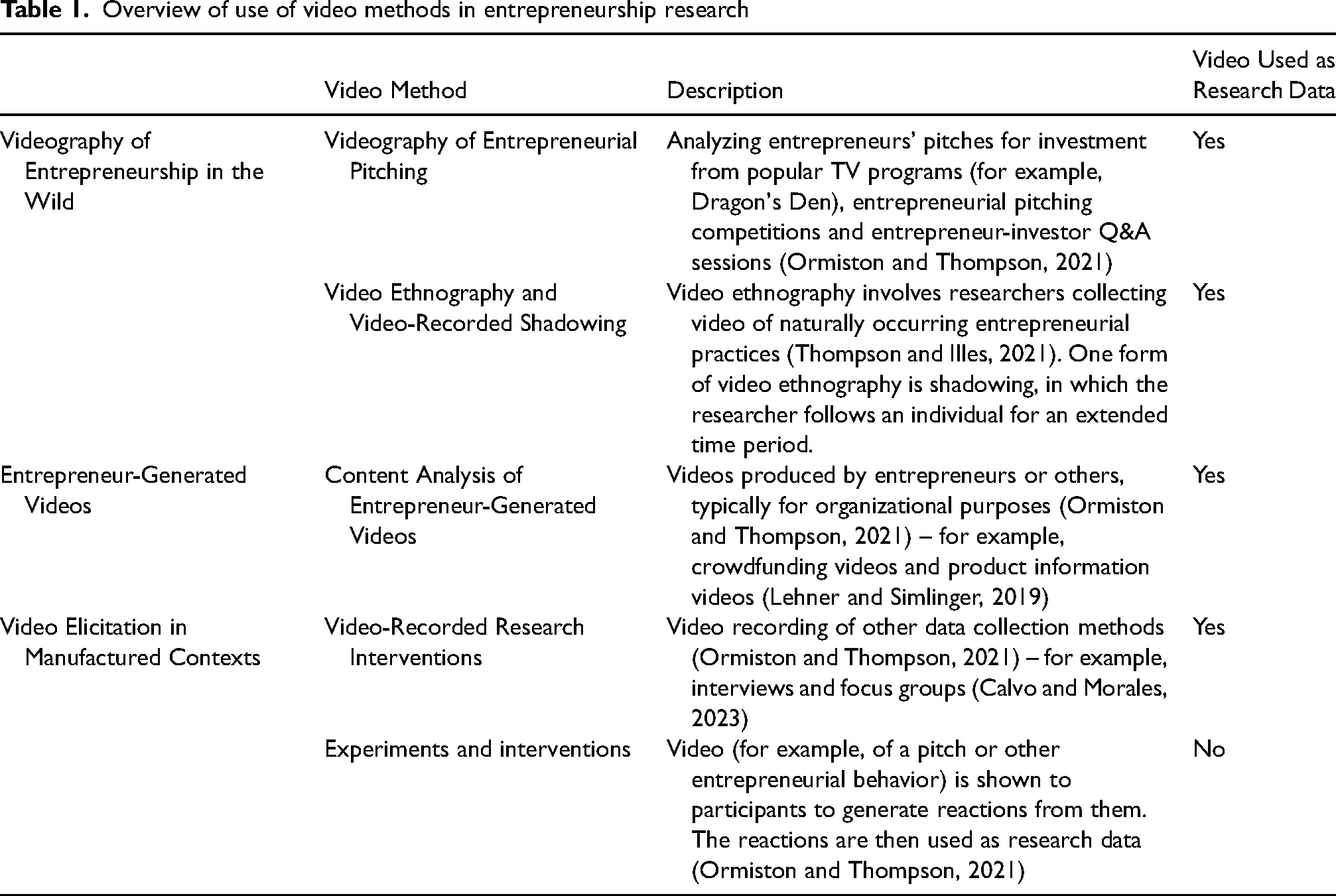
Despite the variety of ways in which video has been adopted in entrepreneurship scholarship, participant-generated video diaries have been under-utilized as a methodological tool. As such, focus on them is needed to understand the additive contribution they could provide over and above the methods outlined in Table 1. This is something that is assessed in the following sections 2 . Before commencing these discussions, we will outline the empirical context and approach used for collecting and analyzing participant-generated video diary data, which revealed key insights into the spatial, embodied, and affective aspects of entrepreneurship.
The field of study: the entrepreneur and her new venture
The participant-generated video diary extracts presented in this paper were collected as part of a research project to capture a real-time, autoethnographic account of entrepreneurial life. For this research project, we worked with one participant/ entrepreneur, Ali (a pseudonym), who was starting a co-working hub in Southwest England.
The purpose of the study was explained to Ali verbally, as well as in written format, and included an explanation as to how to participate in the study. Ali was asked to use her own smartphone to record video diaries and submit them to us, the research team, via WhatsApp. WhatsApp was chosen for data collection as it was familiar, free to use, allowed Ali to share videos and text in her own time and allowed us to respond and interact with her synchronously or asynchronously (Mavhandu-Mudzusi et al., 2022). Ali was also provided with guidance about recording videos responsibly, such as obtaining necessary permissions from people who may appear in the video, and handling confidential material which may invade other people's privacy. Participant briefing was also key to allaying any anxieties regarding common questions like ‘where shall I film?’ and ‘what shall I film? The study was reviewed and approved by the university ethics committee and Ali consented to the use of her WhatsApp entries within academic work, in adherence with the visual ethics guidelines outlined in PhotoVoice Statement of Ethical Practice (2023).
Instructions were offered to Ali in three ways. First, in the form of weekly instructions to comment on ‘How is entrepreneurial life this week?’, ‘how are you feeling about [the venture] this week?’. Second, following each video diary entry, we sent short prompting questions or comments to elicit further reflections from Ali. Third, more specific prompts were sent from previous entries to follow up on things that were happening with the venture (for instance, ‘How are things moving forward with…’, ‘How does it feel to see [the venture] buzzing with life?’). We vouched for a hands-off approach in instructions and prompts to Ali, and this was deemed important to respect her lived entrepreneurial experience. Indeed, when work-life became too hectic, or when private life was too overwhelming due to personal / family challenges, or when Ali was having time off, she chose to remain silent on WhatsApp, sometimes for several weeks. It was important to uncover issues as they were experienced and represented, and we valued these silences, recognizing that they were produced in response to a specific context (see Gibson, 2005). In this sense, rather than viewing these silences as a lack of data, we treated them as meaningful expressions of entrepreneurial lived experience. We reflected on these silences by situating them within the broader context of Ali's entrepreneurial journey, drawing on patterns or shifts observed in her prior video diary entries. This allowed us to interpret silence not as an absence, but as a deliberate act that revealed the challenges, priorities, or emotional weight she was experiencing at the time. Additionally, when Ali re-engaged with the diary process, her subsequent reflections often directly or indirectly illuminated the reasons behind her silences, providing insights into how periods of withdrawal related to her personal or professional circumstances.
The data set was gathered over 12 months, from January 2020 to January 2021. This period coincided with the launch of Ali's new venture, disruptions caused by the COVID-19 pandemic, and a re-launch of the venture. The data set comprised 37 video diary entries from Ali, 17 photographs, and one poem. The video diary entries ranged from 1 min 27 s to 18 min 42 s; the average was around 8 min long. Most were recorded in a monologue style by Ali and only three featured others. For the most part, the videos were ‘head shot’ films of Ali speaking to us. During the lifetime of the project, we had several offline conversations with Ali (usually in relation to her new venture and progress being made), and at the end of the project we met in person to reflect on the previous year, post-lockdown. In terms of the entrepreneurial stage, the timeline covered planning and concept development, resource acquisition, launch and implementation, an operational pause and strategic reassessment (due to COVID-19), and finally, pivoting, re-launch, and growth. The research project concluded when Ali succeeded in building a solid customer base.
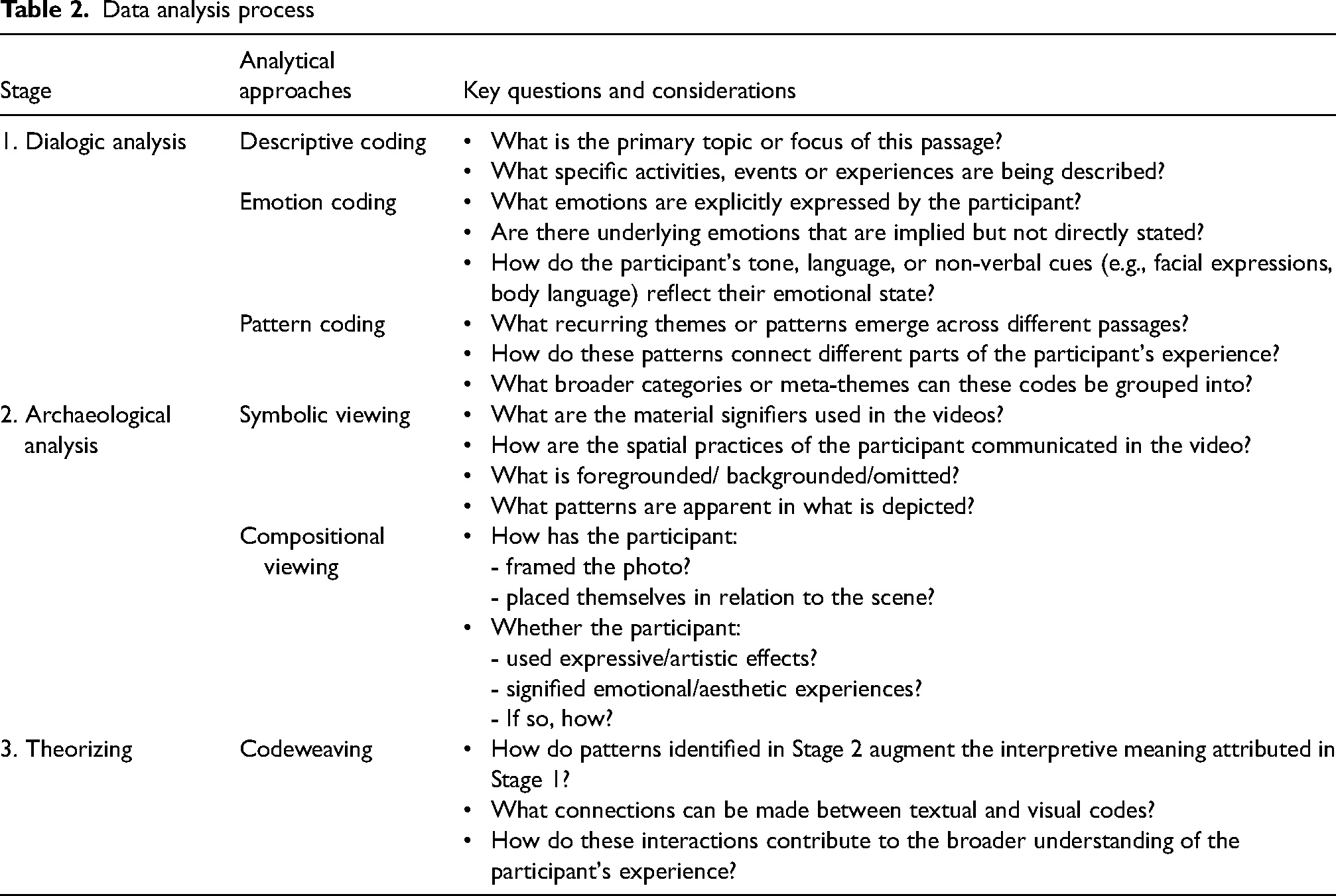
In analyzing the data, we drew from Shortt and Warren's (2019) approach to visual analysis and combined dialogical and archeological analysis in a three-tiered process. Dialogical analysis involves thematic coding of the transcripts of the video diaries (Saldaña, 2013). Three distinct coding methods were applied. Initially, descriptive coding was used to summarize the primary topic of a passage within the data. This resulted in an inventory of topics, like ‘support from others’, ‘unplanned / ad-hoc work’ and ‘multiple identities – mum, wife, mentor, entrepreneur’. We also utilized emotion coding to identify and label Ali's emotional responses. Some of these emotions were expressed and recalled by Ali herself. For example, when she said: ‘somewhat frustratingly we haven’t had the guys making the pod in … so I’ve kind of avoided going up there for fear of getting annoyed’, this was coded as ‘frustration’. In some cases, the emotion was not expressed by Ali but was easily inferred from the expressions she used. For example, when she said, ‘crumbling right now’, ‘I’m freaking out slightly’, ‘it has been quite stressful 24 h’, these were coded as ‘worry’. In some other cases, we had to rely on non-verbal cues in the videos to infer that she was feeling ‘positive’, ‘hopeful’, ‘energized’ or ‘lonely’ by paying attention to the emotional state she communicated through her voice and body language. In this respect, the coding choices were not just based on the content of the transcripts, but also on inferences from the recording's vocal and visual nuances (Saldaña, 2013). Once we generated the first order codes through descriptive and emotion coding, we proceeded to pattern coding (Saldaña, 2013: 209) to collect similarly coded passages from the data and pull them together. For example, descriptive codes such as ‘entrepreneurial identity’, ‘multiple identities – mum, wife, mentor, entrepreneur’, ‘juggling to manage competing identities’, and ‘role conflict’ were grouped under the theme ‘identity fluidity’.
The second iteration began with an ‘archeological recognition’ that the videos have a ‘sedimented social meaning’ signified through its visual features, and thus when juxtaposed they will create ‘a new way of seeing the phenomena studied’ (Shortt and Warren, 2019: 543). During archeological analysis, we employed symbolic and compositional viewing (Shortt and Warren, 2019) and paid attention to the material objects and spaces that Ali has used – what she has foregrounded or placed in the background – as well as to Ali's compositional choices around framing, camera angle and perspective. With symbolic viewing we began to see similarities and differences, for example, among the spaces she recorded the videos from. There were pavements, hallways, side streets, parks and her car – spaces typically used for transitioning. There were videos from private spaces like Ali's kitchen and garden or a hotel room she holidayed in, as well as videos from her workspace that revealed a pattern showing us the spaces of entrepreneurship and the different entrepreneurial activities that happen in different spaces. Other important material signifiers that emerged through symbolic viewing were Ali's clothing and things happening in the background. With compositional viewing we were able to notice how Ali situated herself in relation to the material environment in order to communicate through it. Was she inside the spaces she recorded from, or was she recording videos of the spaces? Was she stationary or mobile? Was she sitting or standing? Did she appear to be alone when recording (although we cannot know for sure whether anyone was standing with or behind her)? Or if there were others in the video how were they situated in relation to Ali? Was the camera angle eye-level, that provided a more natural perspective, or was there an attempt to make an expressive/ artistic video to evoke a specific emotion or create a mood?
In the final stage, we moved onto theorizing and considered how the patterns we identified through archeological analysis extended the dialogical data (Shortt and Warren, 2019). At this stage, we employed ‘codeweaving’ (Saldaña, 2013: 248) to integrate key codes from the dialogical analysis with those from archeological analysis and explore possible interactions and interplay among them. For example, the weaving of the emotion code ‘scattered’ with the pattern codes ‘identity fluidity’ and ‘clothing – casual’, ‘clothing – business’, which we coded during the visual analysis, allowed us to theorize the embodied experience of entrepreneurship. These stages are summarized in Table 2.
Data analysis process
What happens when you give an entrepreneur a camera?
We see the spaces and places of entrepreneurship
Participant-generated video diaries deepen understanding of the spatial aspect of entrepreneurship. Whilst other video methods, such as videography of pitching and video ethnography, also illuminate the spatial, we found that participant-generated video diaries provide access to spaces and places of entrepreneurship that are generally inaccessible through other methods (Zundel et al., 2018), and thus remain unexamined. This, as we show below, affords important insights.
Videography of pitching inherently limits the research to spaces and places in which these entrepreneurial activities are conducted – typically in formal contexts such as pitching competitions and shows (for example, De Villiers Scheepers et al., 2021). Whilst video ethnography can access a wider range of contexts, this approach often makes use of cameras that are stationary (e.g., Nicolai and Thompson, 2023) and/or are limited to relatively confined formal contexts, such as meetings (e.g., Preller et al., 2020; Sarker and Mateus, 2024) and start-up weekends (e.g., Thompson and Illes, 2021). This inevitably creates a degree of rigidity, which can be inconducive to the mobility often found in everyday entrepreneurship. Indeed, the hybrid, fluid, flexible working world of today increasingly requires utilizing methods that enable researchers (and participants) to capture all ‘sites’ of work, wherever and whenever that may be.
Video-recorded shadowing, which involves ‘a researcher closely following a member of an organization over an extended period of time’ (McDonald, 2005: 456), overcomes this rigidity since it is inherently mobile (Czarniawska, 2007). As such, compared to video ethnography, it enables a wider range of spaces and places to be captured. However, the act of following an entrepreneur can be intrusive and disruptive (McDonald, 2005), and therefore, shadowing is still confined to formal contexts, denying researchers access to certain spaces and places (Ferguson, 2016).
In contrast, with participant-generated video diaries, the camera is in the hand of the entrepreneur. It consequently transcends the boundaries of formal (such as pitching competitions, offices and workshops) and informal (such as home offices, holiday destinations), enabling access to a much wider range of entrepreneurial ‘workplaces’ (Zundel et al., 2018). For example, Ali recorded videos in her workplace (the co-working hub), on the move shopping for plants, during her morning run, as well as in her own home, which included a piece to the camera whilst in the bathroom and a quiet reflective moment on the roof of her house. Across the data gathered, we see the erosion of traditional, stable working spaces and places where entrepreneurship happens. The boundaries between home, private, and personal life merge and blend with work and entrepreneurial life. Whilst fluidity across boundaries has often been associated with entrepreneurial life (Symon and Whiting, 2019), participant-generated video diaries capture this richly and in real-time, which is unachievable through other video methods where the presence of the researcher restricts most data collection to certain settings. For example, one of Ali's entries is recorded in the co-working hub, where she talks about her home-based tenant. She says: ‘…one of our tenants is being difficult about this deposit…there's just constant noise in the background about all the different things that are going on, so trying to keep your head above water while focusing on the important stuff is pretty challenging really.’ (31st January 2020)
What is evident in Ali's videos (and in the quote above) is that she uses different spaces for different activities, such as being at the co-working hub (workplace), whilst attending to personal taxes and other non-work/ life/ home activities and feeling like this is a ‘challenge’. Yet other spaces, such as the park or the roof of her house, are used for personal reflection. There is a sense of calm in these spaces in terms of Ali's attention, voice, and storytelling. We also see other diary entries where Ali is on the move, walking to and from the hub, before or after a run, and it appears that she is skating the edges of the work and non-work boundaries and feeling the challenge of attempting to ‘do it all’ in these in-between spaces. The non-static, in-motion nature of our findings here raises some relevant reflections regarding mobile methods and the value of such an approach. Indeed, there is increasing methodological interest in, for example, ‘pocket-film making’ (see McMurray, 2020), and ‘emplaced mobile methods’ (Wolifson, 2016), where such methods allow the researcher to feel, see and be in a place where, as in this case, they are not able to be. Furthermore, visual mobile methods also enable participants to capture the sensory, affective, emotional aspects of place and their lived experience, in-situ.
Video diaries also provide access to the sensory nature of entrepreneurial spaces, particularly the auditory environment in which videos are recorded. This is an advantage that video diaries have, given that video widens the sensory attunement related to many work activities (Butler and Cunliffe, 2024). As part of our data analysis, the soundscapes of Ali's videos were considered and added to the broader social and cultural understanding of the experience of entrepreneurial life. For example, in the quote above, Ali notes the ‘constant noise’ (metaphorically speaking). In the background of this video diary entry, the noisy rhythms of everyday life are going on in the high street. This occurs across several videos Ali captures – traffic noise, builders, street hubbub and chatter. These are often associated with reflections on the challenges of juggling work and home. Indeed, we can hear (and see) in these videos that Ali is feeling pulled in many different directions, negotiating the balancing act of home/ private life alongside entrepreneurial work. The collapse of boundaries between work and non-work leaves the entrepreneur, as a flexible worker, in a state of being in-between. At times, however, the videos show her trying to create some boundaries between work and non-work: ‘Hey, I just thought I’d record a video. I haven’t done one for ages. I’m sorry. I went into coronavirus black hole. Came up on the roof to have a bit peace and quiet. It's really lovely out here. Hear the birds and everything. Yeah, my husband was pretty critically ill, was really nasty. And he's getting a bit better now. So, I'm refocusing on getting myself organized at the hub.’ (8th April 2020) (Figure 1).

Ali during a quiet reflective moment on the rooftop, 8th April 2020.
In this video, Ali is on the roof of her house. At sunset, looking out across the landscape, there is a sense of tranquility as she reflects on her day in an attempt to create a boundary between work and non-work.
Thus, it is this backdrop of the ordinary, and attention to not just what is said but how it is said and where that raises some pertinent questions – particularly given the current culture of working from anywhere. We might start to question; where are entrepreneurs most productive when it comes to the entrepreneurial work they need to do? What spaces make it difficult for them to focus on these activities and why? What forms of labor entrepreneurs have to engage in for creating and holding subjective spatial boundaries separating their activities?
We see the embodiment of entrepreneurship
The participant-generated video diaries reveal links between the spaces in which the entrepreneur chose to record the diaries, how the stories are narrated, and the clothes worn. To date, entrepreneurship research has focused predominantly on the symbolic use of clothing to project a particular image or identity to others to manage impressions (e.g., Clarke, 2011; Smith, 2021). Crowdfunding and archival videos, produced to project a particular image to the audience (Ormiston and Thompson, 2021), provide fertile ground for investigating how clothing is used to this end. Video ethnography and video-recorded shadowing could also be suited to studying the role of clothing in communicating identity to others, as evidenced by Clarke's (2011) video ethnography of entrepreneurs’ interactions with stakeholders, which revealed how entrepreneurs use mode of dress to convey a sense of being and portray legitimacy to different audiences. Whilst existing research adopts an impression management perspective to explore how adapting dress to audience is important for entrepreneurial performance, our video diaries generate additional insights on the impact of clothing on the entrepreneur themselves.
Participant-generated video diaries allowed us to observe the fluidity across boundaries in entrepreneurial life materially, through entrepreneurs’ clothes. We noticed Ali talking about work-related activities as well as home life whilst in the hub in her gym kit, fresh from a morning workout. In this particular video, filmed on 11th February, Ali's energy seems scattered, and she moves around a lot, talking about what needs to happen that day (both work and non-work related). There is a real sense of the multiple identities Ali has to continually negotiate – mother, entrepreneur, friend, wife. As she leaves the hub, she is still recording and says, ‘You just get derailed when life gets in the way sometimes’. In another video, Ali is in the hub with smart clothes on. Here, there is a different energy – a sense of enthusiasm, hope, and positivity, both in the language she uses and the tone of her voice (lighter and happier): ‘Good morning campers, this morning I feel like I should be singing “here I go again” on my own… Sitting now, I’m in the hub, I’m just waiting for M. to come and do the rest of the pods. And he's gone to get casters so that's really good development from that side of things. And I’ve got another lady coming in to work in here this morning… I’m feeling pretty positive about this week actually!’ (27th January 2020) (Figure 2).
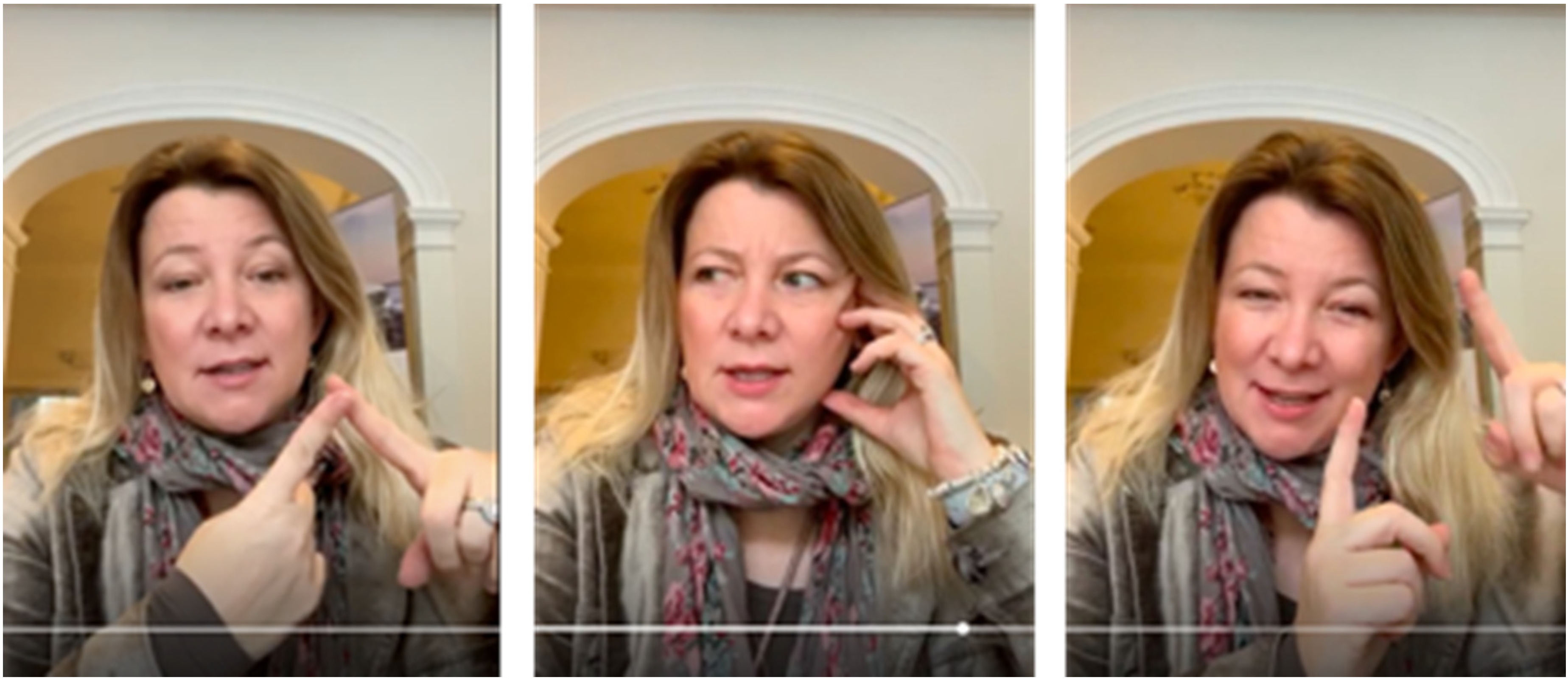
Ali at work, dressed for work, talking about work, 27th January 2020.
In this recording, in contrast to the one described above, the camera is still, and she is still. Here, Ali is at work, in work mode, dressed for work, and talking about work. There is more consistency with what we see, including her clothes and the narratives shared.
These are some examples from the data analysis, but across the video diary data set, there is a link between what Ali wears, where she is recording, and her thought processes and her ability to separate (or not) work/non-work activities, and as such, her identity. Ali is rarely fixed or stable in her videos; she is primarily ‘on the move’, moving around her place (work or home) or pacing up and down the streets whilst recording. This is the material manifestation of the fluidity of identity work. This contrasts starkly with the occasionally still camera, where she is also still, and comes across as ‘in control’ of her entrepreneurial activities, where it could be argued there is less negotiation with, and pull on, her entrepreneurial identity. The ability to see the juxtaposition of work-related thoughts at the same time as leisure-related clothes and the consequential scattered focus broadens understanding of the roles of clothes in the entrepreneurial experience and the nuanced complexities of the multiple identities these individuals juggle (and struggle) with.
These findings and observations raise questions surrounding how entrepreneurs’ clothing choices affect how distracted and scattered they feel when the clothes do not ‘fit’ the activity at hand or the identity sought. When considering the embodied aspects of entrepreneurship, the video diaries help us reflect on the role of clothes in assisting in the constant negotiation of identities associated with entrepreneurial experience and performance.
We see the emotions and feelings of entrepreneurship
Participant-generated video diaries offer rich insights into the emotional peaks and troughs of everyday entrepreneurial experience. This is an additive contribution over other entrepreneur-generated videos used in entrepreneurship research to-date, such as crowdfunding videos and archival videos. These videos are likely to be staged performances where the content is edited to convey the particular interests and motivations of the producer (Ormiston and Thompson, 2021). Therefore, emotions captured in these videos are instrumental for outward-facing commercial success. It could be argued that the entrepreneur is not acting as their ‘authentic self’ (Hochschild, 1983) and, instead, is consciously putting their (positive) emotions on display.
In this regard, video ethnography and video-recorded shadowing may get closer to capturing entrepreneurship as an emotionally charged experience. However, the emotional displays could be more guarded and constrained, providing only a partial view, since these methods allow for data collection in more formal settings where others (co-workers, business contacts, as well as the researcher) are present and where the need to manage impressions (Nagy et al., 2012) is felt due to social and organizational norms (Hochschild, 1983; Huang et al., 2021). Furthermore, using these methods to capture in-the-moment experiences of entrepreneurship and its emotional consequences would require significant researcher involvement in the field.
Participant-generated video diaries, due to their relative privacy, can capture raw affective data that affords insights into more authentic, and sometimes more intense, displays of emotion (Zundel et al., 2018). Such insights can also be captured more efficiently than other video methods, since the camera acts as a proxy for the researcher (Whiting et al., 2018). One could imagine that some authenticity might be lost in terms of representation of the self, due to the recording device and (distant) presence of the researcher influencing behaviors (Whiting et al., 2018). For example, Ali could have been self-conscious in front of the camera, especially as she was aware that the videos would be watched by ‘strangers’, the researchers, and used in academic work. Her video diary entries could have been ‘performed’ with dramatic effect for the camera. Nevertheless, Ali's videos, recorded for ‘public’ consumption, felt open, honest, and unmodified. Alone in front of the camera, often close-up to the screen with her head and shoulders taking up most of the frame, Ali adopted an almost confessional style of filming, seemingly without much concern for aesthetically ‘setting up a shot’ or artistic composition. The depth of disclosure mirrored the experience of Zundel et al. (2018: 405), who, in their study, were also ‘surprised by the level of disclosure provided’ by video diarists. Our experience here suggests that participant-generated video diaries can be a powerful facilitator and conveyor of emotion. Indeed, in Shortt's research with hairdressers, it was noticed that the act of sitting or working in front of a mirror engendered confessional behaviors and the divulgence, from both client and hairdresser, of personal and intimate feelings (Shortt, 2010; see also Black, 2004). The smartphone camera adopts a similar effect to a mirror and encourages a psychological response to (literally) reflecting on oneself, prompting emotional outpourings.
In our data analysis, these intimate self-reflection pieces to the camera appeared to emerge ‘in the moment’ as they were unedited. Ali, on several occasions, notes that she is simply recording ‘how it is’ and video diaries should be an ‘honest space to confess what is really going on’. For example, in one video, she is filming close up to her face, smoking a cigarette – something she later admits is not a common occurrence: ‘OK so this wouldn’t be very real video diary…I know it's bank holiday, but you know entrepreneurs don’t really care about bank holidays. This wouldn’t be a very real video diary if I didn’t do this [DRAWS HEAVILY ON A CIGARETTE] There's a… [EXHALES] there's a thing about flight to vices isn’t there in times of crises and something I’ve always enjoyed is smoking but I don’t do it, ‘cause I know how bad it is for you really. But I think when you've got things like this going on, you sort of take what comfort you can, don’t you? It's a weird situation and I know I’ll stop when it's over and I’m not doing it very much but a couple a day just keeps me going. And I just come out and admire the trees, spend a couple of minutes on my own. It's quite nice.’ (8th May 2020) (Figure 3).
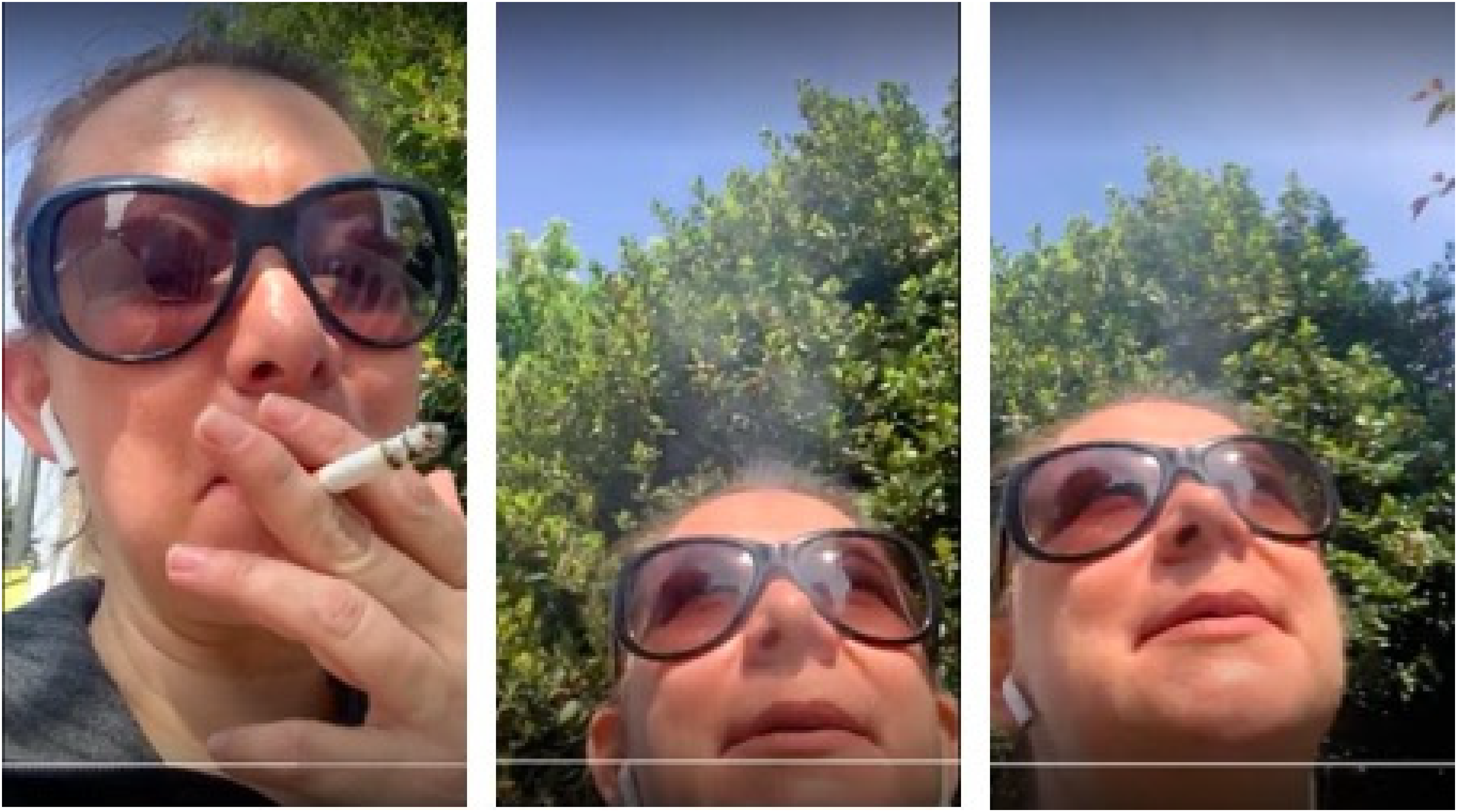
Ali during an emotional outpouring to camera, 8th May 2020.
This is one example of the many ‘confessional tales’ that Ali shared over the course of a year, sometimes sharing positive emotions and sometimes negative ones: ‘Gosh it's hard isn't it. Come for a run to clear my head this morning…Blossom on the trees they don’t seem to have really noticed. Really worried about a number of businesses that are in my sphere of influence and all the people that are involved in those… I don’t want to pretend it isn’t hard… Gosh… [STARTS CRYING] ‘I'm sad that the momentum… was starting to translate into new members, we had 2-3 people signing up. None of that is going to happen now…And I’m just trying to work out how on earth we’re gonna stay solvent…Yeah, I had to be honest and say I’m feeling really quite emotional today… And I thought I’d shout out. Yeah, it's gonna be real **** if it's gonna be a proper diary. Still love you all [SENDS KISSES TO THE CAMERA].’ (17th March 2020) ‘It took me quite a lot to get up for this morning. Because I’ve had a pretty down week. But how wonderful it is to have people around you who are super positive and keep you going. So, Y. and I had a conversation yesterday and she said “you've got to be on this thing”. Anyway, how energizing it is. It's brilliant. Look, I’ve got [MOVES THE CAMERA TO SHOW HER LAPTOP SCREEN] all these people from Europe who are all involved in co-working… Oh it's just waking up again. It's brilliant, loving it.’ (27th May 2020)
It was these recordings that led us to see, with this method, how feeling-led and emotionally-laden entrepreneurship is. The camera lens here is used as a sort of ‘screen-mirror’ and the emotional tone, feeling, ‘in the moment’ declarations of the highs and lows come through to the audience helping us to understand more about entrepreneurs’ affective responses to everyday experiences of creating a start-up. Prior research typically focuses on the role of affect in significant and broadly aggregated events, such as acquisition of resources (Baron, 2008), entrepreneurial exit (Cardon et al., 2012) or external crisis (Christofi et al., 2024). Our use of participant-generated video diaries affords real-time insights into the emotional facets of not only significant events (such as the Covid-19 pandemic) but also mundane events (such as an online co-working event) composing the everyday reality of the entrepreneur. They also reveal emotional dynamics, from a relative calmness when smoking, to distress after the morning run, to the happiness resulting from the online co-working event. In sum, they illuminate the emotional rollercoaster involved in entrepreneurship (De Cock et al., 2020) and the labor that goes into the emotion work of entrepreneurs. When the mask is allowed to slip in front of the screen-mirror; we can start to understand how and when a variety of emotions and feelings are experienced and are, of course, subject to constant change.
Discussion
There have been growing calls for transforming entrepreneurship research by bringing in a real-life perspective to entrepreneurship (George et al., 2016) and embracing its everydayness ‘in action’ to allow context-relevant theorizing of the interactional, embodied, emotional and material aspects of entrepreneurship (Symon and Whiting, 2019; Ormiston and Thompson, 2021). Scholars have been encouraged to bring in new methods to inquire into the overlooked aspects of what it means to be an entrepreneur that are often glossed over in theoretical portrayals (Rashid, 2022; Van Burg et al., 2022). Our paper addresses these calls by reflecting on the utility of participant-generated video diaries to explicate and evaluate entrepreneurial reality. We contend that this method enhances the relevance and rigor of entrepreneurship scholarship in a number of ways, some of which will now be discussed.
Audio-visual methods like video diaries offer a richness that is often not captured using more traditional qualitative methods like interviews. Observational methods could capture such audio-visual insights, but would require significant time investment from the researcher(s). In contrast, participant-generated video diaries enable researchers to efficiently capture not just verbal accounts but also the physical, spatial, and sensory dimensions of participants’ lives, which are often difficult to articulate in interviews. As we have found from the video diaries Ali recorded, the multisensory data generated can help capture entrepreneurs’ emotions, since emotions can be both heard (through language and tone of voice) and seen (through facial expressions and body language). The visual data generated offers more comprehensive insights than purely verbal / textual accounts, therefore providing more authentic insights into entrepreneurs’ emotions. For example, entrepreneurs may over- or under-estimate their emotional experiences when self-reporting them (Schmodde and Wehner, 2024), yet facial expressions and body language may indicate they are experiencing more or less intense emotions than they claim. Greater authenticity promises a fuller understanding to contribute to discourses about entrepreneurial emotions and emotion management.
Video diaries also enable emotional responses to be captured in real-time, overcoming the recall issues that affect qualitative interviews. By capturing these everyday emotions, video diaries show how the mundane and the minutiae of everyday entrepreneurship can elicit emotionally charged experiences akin to the more significant and aggregated events covered so far in the literature (for example, Christofi et al., 2024). This provides opportunities to build a much-needed understanding of how discrete negative and positive emotions influence and interrelate within events in the everyday entrepreneurial lifeworld (Huang et al., 2021), which would contribute to the theorization of antecedents of entrepreneurial emotions. Observational methods could capture such insights, but the presence of the researcher may lead to entrepreneurs downplaying the intensity of their experienced emotions due to social norms.
The audio-visual data collected through video diaries also captures the soundscapes of everyday life and as such encourages the researcher to engage in ‘sociological listening’ (Bates, 2015), a concept that highlights the importance of paying attention to the audio-visual nuances of participants’ environments, emotions, and narratives. Background sounds have been shown to be used to relax and escape emotional labour at work (Shortt, 2013), so the ability of video diaries to capture everyday insights into how diarists associate with background noise may provide novel insights into emotion management strategies of entrepreneurs. Again, capturing such insights through traditional observational methods would require deep immersion of the researcher in the field and would likely be missed without the replay function of videos.
Ali's video diaries enabled access to a wider range of work and non-work spaces than would likely be possible through other methods like interviews and observation. This is enabled by the absence of the researcher, and it helped reveal how Ali juggles work and non-work and her associated identities. Furthermore, it showed how location and clothes worn can influence entrepreneurs’ thoughts and their capability to create boundaries between work and non-work. This provides a novel insight about entrepreneurs’ work-life balance and also shows that enclothed cognition (Adam and Galinsky, 2012) can influence entrepreneurial endeavours. The impact of enclothed cognition on behaviours in the work domain is little understood (Chang and Cortina, 2024) and contributing such insights in the entrepreneurial context could help theorize clothing as a previously unnoticed input to entrepreneurial behaviour.
In addition to video diaries providing access to a wide range of contexts, they also offer greater agency than more traditional qualitative methods in terms of the insights participants choose to capture. This agency could also contribute new understanding about the work-life balance of entrepreneurs. Ezzedeen and Zikic (2017) found that entrepreneurs’ attitudes to work-life balance change as they progress through the entrepreneurial process and different life stages. Entrepreneurs’ choices about what to document about their work and non-work life through video diaries may provide insights into how they prioritise work and non-work, beyond simply what they espouse. Combined with the longitudinal nature of video diaries, this could provide additional temporal insights into entrepreneurs’ attitudes to work-life balance and how these attitudes influence the entrepreneurs personally and their entrepreneurial endeavours. Such insights could also be enhanced by the personal revelations that video diaries encourage from participants, something that we found was also a result of the sense of agency video diaries provide.
This agency empowers the entrepreneur to fully participate in the research process as a collaborator (Ruby, 2000). The method enables entrepreneurs to contribute with data they feel represents their life appropriately and authentically, foregrounding their own lived experiences (Holliday, 2004) and goes some way to redressing the power balance between the researcher and the ‘researched’, amplifying the voice of the latter (Warren, 2005).
The selective nature of self-presentation and performativity are important to consider in relation to video diary methods. As is part of the nature of this method, participants’ curatorial practice of making and filming raises important areas of reflection for the researcher. The ‘glimpses’ (Zundel et al., 2018) into Ali's experience are just that – moments rather than a fully comprehensive account. However, this in itself is significant; these are the moments that she has decided are critical moments for her and are the ones she has identified as meaningful enough to share. Thus, when collectively analyzing these moments, we are able to reflect on, for example, what sort of moments we are seeing across the data set? Are they predominantly glimpses into more challenging moments, or are they often decision-making moments, or a mix? This also highlights how selective participants can be with regards to what they share and why. In asking people to share audio-visual moments, we may not see the embarrassing, ugly, messy, parts of their everyday lives. This is the case with many visually-led methods, such as participant-led photography where participants may delete or omit photographs which they do not want the researcher to see. And of course, in traditional methods, such as interviews, participants may selectively share and not divulge the boring or messy. Yet we can be alert to this as data in itself. It is what the entrepreneur chooses to show (and not show) that brings in the much-needed real-life perspective to the field to reflect the ceaselessly unfolding multiplicity and volatility of everyday entrepreneurship. What is not included is as meaningful as what is included (Shortt and Warren, 2012), and as Bates (2015) reminds us, the performative aspects of visual diaries therefore require a tuned-in, nuanced interpretation of these data including context (time and place) and non-verbal cues, and indeed how our own prompts and instructions as researchers can influence the participants curation of audio-visual data.
As with any qualitative research, a climate where the entrepreneur feels safe and open is fundamental to the quality and quantity of data collected through video diaries (Buchanan et al., 1988). As noted by Way et al. (2015: 725) ‘people do not communicate just to convey information, but also to create relationships and be assured that they are lovable, smart, and desirable’ and equally the entrepreneur must feel ‘comfortable in their beliefs before engaging in any exploration of them’. As researchers we need to recognize that the entrepreneur is likely to be describing and considering feelings and experiences which they may not discuss with intimate others or even systematically reflect on for themselves (Buchanan et al., 1988). So how do we create a situation that allows the entrepreneur to let down their defences, candidly and freely share experiences and listen to themselves in a process of self-talk and self-questioning?
Building and maintaining rapport, generally considered an essential component of successful qualitative research, is a necessary condition for obtaining rich video diary data. We were able to spend several months getting to know the entrepreneur before the research began, so high levels of rapport, relationships, and trust had been built. We feel this was strengthened by the fact that Author 1 and Author 3, who conducted the fieldwork, are the same gender as Ali, and of a similar age. Author 3 also has a small child and so conversations with Ali regarding, for example, motherhood and the challenging juggle of work and home-schooling during lockdown provided shared moments of understanding and rapport. It is the interpersonal nature of fieldwork where crafting relations and interactions helps to form quality relationships (Coffey, 1999). We therefore recommend spending time with participants before starting the research, and with communications tools like Teams and Zoom this is possible even at a distance.
Yet, establishing rapport with the entrepreneur requires a conscious awareness of ethical boundaries. When researchers behave or present themselves in certain ways to establish rapport and trust with participants, it can lead to what has been termed as ‘faking friendship’ or ‘over-rapport’ (Duncombe and Jessop, 2012). Various studies recount personal experiences where the boundaries between research and friendship became blurred, causing researchers to feel uneasy and, in some cases, as though they had used or betrayed the trust of their participants (e.g., Ellis, 2007; Madziva, 2015).
Strategies typically associated with qualitative interviews, specifically dialogic interviews, are also useful for developing a safe space for prompting participant self-reflexivity (see Way et al., 2015 for in-depth discussion of interactional strategies). Probing questions to prompt the entrepreneur to reflect on and explain their initial diary entry and pointing out incomplete opinions and explicitly encouraging the entrepreneur to talk them through were useful in our case to engage Ali in self-reflexivity and ‘provide a spur for deeper and richer analyses’ (Bloor, 2001: 395).
The control given to entrepreneurs with this method can raise concerns about whether the video diaries are ‘representative’ of entrepreneurs’ lived experiences in ‘reality’. Indeed, video is inevitably a ‘constructed representation’ (Pink, 2001: 588). In this sense, video diaries are performative, whereby participants position and construct themselves in a specific way, purposefully, for their perceived audience (Baker, 2000). It cannot be assumed that these are intentional performances, all the time. Nevertheless, even if they were, they still communicate something about participants’ internalized perceptions about their position in the social world. In this respect, the choices the entrepreneur makes about how to present herself for the research in front of the camera are in themselves valuable data that provides a resource of analysis to advance more authentic understanding of entrepreneurial activity (Gibson, 2005; Shortt and Warren, 2019).
The reader may question to what extent the method brings in the voice of the entrepreneur in the research process, when they submit their self to the power of the researcher. Some may argue that the relationship between the researcher and the researched remains uncontested as soon as the entrepreneur agrees to participate in the research and agrees to record and submit diaries in intervals specified by the researcher. It is important to note our suggestions about ‘managing’ the research process here. As discussed earlier in the paper, we maintained a hands-off approach avoiding overt direction and allowing the entrepreneur to engage on her own terms. We found this to be important to foster a more genuine and respectful engagement, ensuring that the entrepreneur's voice was not overshadowed by the researchers’ agendas and priorities.
Another legitimate concern around entrepreneur's voice arises from the fact that it is the researcher who ultimately chooses which clips to pick for theoretical and practical reasons and how to interpret them (Jarrett and Liu, 2018). However, we join visual ethnographers like Holliday (2000), Pink (2001) and Ruby (2000), who reflect on the value of academic representation in giving a greater presence to lived experiences. As Holliday (2000) powerfully puts it: ‘The subjects of my study may not necessarily agree with my interpretations, but they do get to represent themselves with minimal interference at least’ (p. 518). It should be remembered that this representation, no matter how incomplete and imperfect, would have been missed altogether without the mediating role of the researcher to frame experiences.
Participant-generated video dairies allow accessible and active engagement with entrepreneurs through representational acts. However, this representation is an affective experience for entrepreneurs participating in the research relationship, as such it is a deeply ethical area requiring researchers to reflect on their practices to represent others ethically (Pickering and Kara, 2017). On this matter, some argue for prioritizing anonymity of participants and choose the use of composites and other forms of fictionalization (e.g., Markham, 2012). However, others (e.g., Hammersley, 2015; Moore, 2012) argue that anonymizing can operate as a form of silencing by excluding participants ‘from authorship and ownership of their own words’ (Moore, 2012: 332) and erasing their voices in doing so.
When thinking about anonymity in visual methods like participant-generated video-diaries, it is useful to consider the difference between anonymity in context, as well as outcome (see Langmann and Pick, 2014). Langmann and Pick (2014) note that when researchers ask participants to make images (be they still or moving), researchers must remain sensitive to ‘dignity in context’, by engaging in ongoing conversations with the entrepreneurs participating in their research to check in and sensitively acknowledge what was shared and how, asking how they felt about sharing their thoughts, and if they had sought support.
Langmann and Pick (2014), remind visual researchers that ‘dignity in outcome’ is another key ethical consideration – the extent to which publishing an image after the research has been completed might impact the participant, their life, work, relationships and so on. As such, following the visual data collection, researchers can speak to entrepreneurs participating in their research about their experiences of capturing the highs and lows of entrepreneurship and check they are still happy to share these moments, and therefore give them the opportunity to retrospectively remove any entries from what may be published. This involves, for example, reminding entrepreneurs that any features in the diaries can be blurred, cropped or edited. In the field study reported in this paper, the entrepreneur declined this and gave us permission to use the raw data, as it was recorded. It is useful to note at this juncture, that removing such elements can dehumanize people, raise questions about the integrity of the data (Allen, 2015), and of course may reduce the usefulness of the data in terms of visual analysis. However, Allen (2015) recognizes that if editing is required, then it is better to do that than not use any images at all.
Conclusion
In this paper, we investigated the utility of participant-generated video diaries to explicate entrepreneurial reality and understand the everydayness of entrepreneurial activity. As seen from the discussion so far, it is often the mundane and ordinary, the unromantic and commonplace, but powerfully intimate and otherwise invisible aspects of everyday entrepreneurial life that are seen, efficiently and effectively, when you give an entrepreneur a camera. We see this in the ability to access hidden spaces and places of entrepreneurship, the chance to witness the boundaryless nature of entrepreneurial life, the opportunity to see the influence of something as commonplace as clothes on entrepreneurial performance, and the recognition of how experiences of the everyday can have profound emotional implications.
This contributes to the field in areas such as the spatial and embodied aspects of entrepreneurial identity, and the impact of fluid positive and negative emotions on entrepreneurial performance.
There are, however, limitations and ways this method can be developed further. First, it is important to pay attention to the practicalities of the recording process. The entrepreneur was asked to use her phone and send the video diary entries via WhatsApp, which sometimes resulted in failed attempts. This risks losing content, but, most importantly, could potentially damage the commitment and goodwill of participants, as indicated by the audible frustration below: ‘OK so that's annoying. I just tried to record video for you, and I did it for three minutes and then it cut out and the whole thing crashed.’ (30th November 2020)
Secondly, only one diarist was used in this study. Whilst a sample size of one cannot present a unified ‘truth’ about the entrepreneurial experience, Ali's video diaries record experiences and interpretations from her specific cultural and social position and, therefore, have wider resonance beyond her individualistic representations of her lived reality (Holliday, 2000). Nevertheless, by recruiting multiple diarists, researchers can analyze characteristics running through different entrepreneurs producing a richer tapestry of entrepreneurship.
Third, entrepreneurs can be invited to be more involved in offering and integrating their understanding into researchers’ interpretations (e.g., Armstrong and Curran, 2006). Complementary research methods (such as follow-up interviews to discuss elements of video recordings) can add extra sensemaking data to video recordings produced by entrepreneurs.
Finally, considering the possibilities generated through the availability of video technology, it is also important to reflect on the suitability of the available dissemination channels. Are researchers losing the richness when disseminating visual material in the conventional academic paper format and presenting stills from the videos? In a recent article, Butler and Cunliffe (2024) embedded links to videos in their data set in the endnotes; however, what else can be done to help readers engage sensorily with entrepreneurial experiences, which may be felt but difficult to articulate? Until academic publishers become open to including video as a publishing medium, can entrepreneurship scholarship be attuned to situated, fluid, emerging and sensorial features of entrepreneurial reality? And can the entrepreneur, the ‘researched’, be fully present and empowered in our explanations of the lived and felt experiences of entrepreneurship? We hope to see further studies that not only empower participants to tell their stories but also empower researchers to tell and show, their stories, in non-traditional formats.
Footnotes
Declaration of conflicting interests
The authors declared no potential conflicts of interest with respect to the research, authorship, and/or publication of this article.
Funding
The authors received no financial support for the research, authorship, and/or publication of this article.
