



Abstract
An increased focus on renewable energy use and the liberalisation and digitalisation of the energy market has led to the adoption of innovative business models by energy businesses. This paper explores business model innovation in the electrical sector. Using multiple case studies of businesses in the electrical market in Scandinavia, this study shows why and how their business models have changed. Change forces and environmental strategies leading to certain patterns of business model innovation serve as the main study objectives. The pricing models, servitisation and appearance of new actors have mostly pronounced patterns of innovative business models of energy businesses. These patterns are predetermined by external pressures, such as industrial advancements and social trends, and are supported by businesses’ efficiency-oriented strategies. The study outcomes have implications on practice, showing the need for proactiveness and a consequent action plan for energy businesses to implement alternative environmental strategies. This study contributes by providing a novel insight into business model innovation by revealing mechanisms catalysing change from the multidimensional perspective – embracing the ‘cause’ and ‘effect’ of the change within energy businesses.
Introduction
The energy sector's current trends, such as decentralisation, digitalisation and open-energy markets, reconfigure the constellation of the business models (Amit and Zott, 2001; Carpenter et al., 2003; Hall et al., 2019). The new business models within the electrical energy sector extensively focus on environmentally oriented activities and emergent ways of delivering value to customers (Ladd, 2017; Alpsahin Cullen, 2021); some examples are data-driven control, new flexible energy solutions and smart energy grids (Behnam and Cagliano, 2019; Bohnsack et al., 2014). A business model is a blueprint for creating, capturing and delivering value from new services or products (Chesbrough and Roosenbloom, 2002). For pioneering markets and sustaining competitive advantage, businesses should innovate their business models (Coombes and Nicholson, 2021). However, the process of business model innovation is lagging behind the overall development of the electrical energy market (Abdelkafi et al., 2013; Giehl et al., 2020). These innovative processes place great challenges on energy businesses compressing their planning and strategies (Sosna et al., 2010; Niewenhuis, 2018). Despite this, the modernisation of business models can be seen as a tool for putting environmental strategy into practice and communication with the target groups (Ludeke-Freund et al., 2018; Pattinson, 2019). However, the business model innovation process is long and complex, and it depends on different factors. The research on organisational change highlights opposing forces for change by Lewin (1951) as a profound tool for identifying the cause of a change. Relying on Lewin's opposing forces of change (1951), that is, environmental pressure, legislation and leadership maturity, this work focuses on forces affecting certain environmental strategies and, consequently, patterns of business models innovation (cf. Boyer and Jones, 2002; Alpsahin Cullen, 2021). An investigation of the effects of these forces’ influence on business model innovation would most likely facilitate the process of business model change and sustain environmentally friendly energy deliveries. Therefore:
The purpose of this work is to explore business model innovation in the energy sector to answer the questions of why and how business models change in the energy sector.
The study's logic starts by understanding opposing forces standing behind business model innovation in the companies (the ‘why’). Following that, it explores certain patterns of change that energy business models follow depending on the new constellations and content of models’ attributes (the ‘how’). It concludes by shedding light on adopted environmental strategies as a main vehicle leading to business model innovation. Thus, the study offers a recipe for the adoption of up-to-date, effective environmental strategies and smooth business model innovation via reliable patterns of action.
This study contributes by providing a novel insight into business model innovation processes by considering both ‘the cause’ and ‘the effect’ of business model innovation. It ambitiously strives to illustrate the interchangeability between ‘the causes and effects’, where ‘the effect’ can play the role of ‘the cause’ and attaches this peculiarity to certain contexts. This further anchors the complexity of business model innovation mechanisms and confusion while adopting (cf. Gangale et al., 2017; Bentzen et al., 2021). This insight intends to address a doubt lifted by Ladd (2017), who underlines the low level of explanation of business model innovation logic within sustainability-oriented contexts such as energy and social work. This is also used by other innovation and entrepreneurship scholars (Rossiter and Smith, 2018; Coombes and Nicholson, 2021). To address this gap, this study encompasses the change, innovation and strategic management literature and applies the symbiosis to the environmental context, which might generate valuable input for the management of environment-oriented businesses (cf. Gomes et al., 2023). This grip also allows capturing businesses’ perspectives regarding the balance between the change and status quo as well as points to proactiveness in environmental initiatives. The business model innovation would not occur unless the right combination of forces linked to the complex time-market-territory configuration was in place. Therefore, this article strives towards depicting such ‘right combination of forces’ though emphasising strength and preferred order of ingoing forces suitable for renewable energy business for change planning (Lewin, 1951; cf. Boyer and Jones, 2002).
Empirical context of the study
This study focuses on energy companies operating in Scandinavia, limited to two countries: Sweden and Norway (excluding Denmark). The Scandinavian energy market is known for the larger energy use due to heating of houses and energy-intensive industries. The energy sector, especially within the electricity market in Sweden and Norway, is often characterised as one dominated by hydropower (129 and 61TWh) (Mayer and Truck, 2018). Hydroelectrical energy is close to 100% in Norway and 50% in Sweden (Bye and Hope, 2005). Both Norway and Sweden export a significant share of the electricity to other European countries, for example, Denmark and Netherlands. The two focus countries, Sweden and Norway, are the most famous international players integrated into the Scandinavian liberalised market since 2000 (Bergman, 2002). After the reform, new actors came into play, opening cross-border energy trade and the appearance of Nord Pool (Hellmer and Wårell, 2009). The role of governments, though, decreased and led to the entrance of new private firms. In this sense, Norway appears to be the most advanced in terms of open competition in comparison to Sweden (Karami and Madlener, 2021). Liberalisation pushed the development of relationships with final customers and assisted in the establishment of clear-cut types of user contracts. Energy businesses play an important role in the transition of the electrical market, for instance, via the introduction of clean and renewable energy sources and increasing energy efficiency (Franklin Mann, 2020). Some businesses can still afford to contribute through one or several of the activities from above, while others struggle to remain afloat.
This paper's structure is as follows: First, the study's empirical context is presented, followed by a theoretical review of the business model, opposing forces, change patterns and environmental strategies. Next, the study design, followed by the results and analysis, are described. Finally, the conclusions section revisits the research questions, and the contribution of the work as well as describes the implications of the work.
Theoretical review
Understanding business model innovation
The business model by Chesbrough and Roosenbloom (2002) is a blueprint for creating, capturing and delivering value from new services or products. It is a scheme for how a firm makes money and delivers value to its customers (cf. Osterwalder et al., 2011; Brown et al., 2022). Current business models in the renewable energy sector can be specified by increased focus on sustainable development via horizontal value chains utilising data hubs, allowing a broadening of customer roles and an opening for new value chain actors (Biloshapka and Osiyevskyy, 2018; Rossiter and Smith, 2018). These changes cause the occurrence of new components in business models, such as, for example, smart meters and joint digital platforms. These are sometimes called smart grid systems, which employ innovative products and services together with intelligent monitoring, control and communications (Berntzen et al., 2021). This reinforces the digitalisation focus, need for technological capabilities, and IT competencies and overall sustainable transition within the energy businesses (Coombes and Nicholson, 2021), but often leads to richer customer impact and stakeholders’ satisfaction (Cook, 2018). Business model research has focused on external influences affecting changes in existing business models using empirical cases as illustrations (Provance et al., 2011; Nieuweulius, 2018). Other research has focused on specific driving forces, such as digitalisation as the level of analysis (Burger and Luke, 2017; Bentzen et al., 2021). Only a few articles investigated overarching approaches to determine changes in the business models (cf. Giehl et al., 2020), but are still criticised for taking a static approach (cf. Tucci et al., 2016).
Opposing forces in the business model
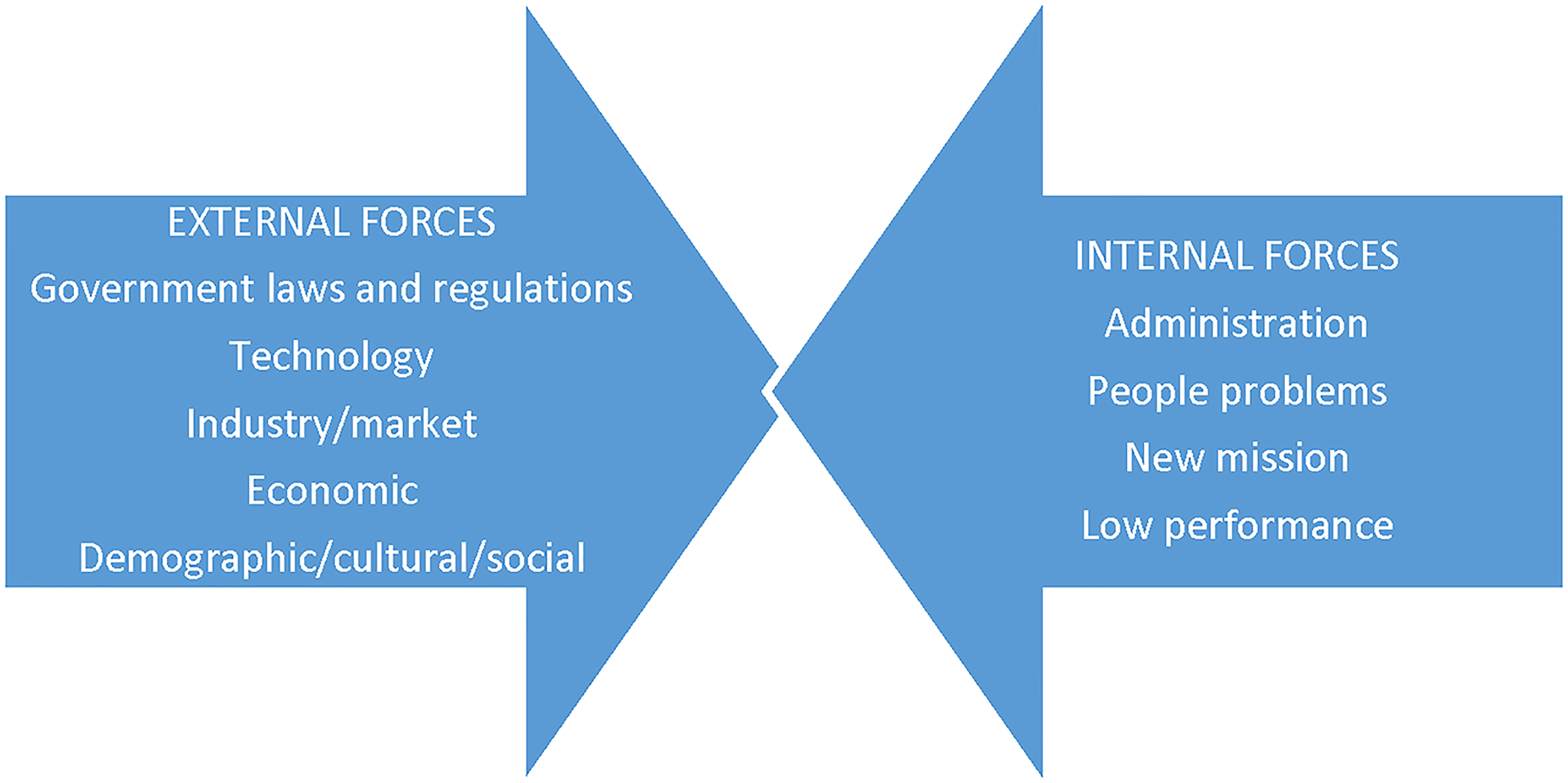
Changes within the energy market are linked to increasing demand for electricity due to the modern lifestyle (Nieuwenhuis, 2018). However, there is very limited research summarising all these forces into a framework. This article applies opposing forces (Lewin, 1951; cf. Boyer and Jones, 2002) as a tool for understanding business model innovation due to the following: (a) it grasps planned change focusing on affecting forces, (b) it respects the firm's standpoint of changing or keeping the status quo, and (c) it assists in achieving proactive change towards achievement of sustainable goals. The origin for these simplistic but overwhelming forces comes from field theory, change and group dynamics. Both driving and restraining forces are present and balanced, the strength of which is defined by the business strategies and goals (Neumann, 2005). The main ambition of the businesses is to reduce the resisting forces while driving forces are strong (see Figure 1).
External and internal forces for change.
Socio-economic and cultural trends, technological upgrades, market and industry changes and political and legal aspects are external forces for change (see Figure 1). For example, governmental laws and regulations impede the necessity to control and report the use of energy (Alpsahin Cullen, 2021). Cultural and social forces lift users’ careful and smart use of energy (Milios et al., 2019). Internal forces of change are administration, competence and human challenges, performance and mission (Lewin, 1951; cf. De Reuver et al., 2009). For example, the internal forces (see Figure 1), such as administration, include decision-making processes, leadership approaches and motivation for change. People problems refer to employees’ job changes, low competency levels and poor communication with leadership. A new sustainable mission but still low performance levels touch upon upgrading equipment and effectivisation (Amer and Daim, 2010). The combination of these and timing lead to the ‘correct’ change, namely, innovation of the business model.
Patterns of business model innovation
Pressured by internal and external forces, energy companies adapt their businesses and, therefore, change business models (Coombes and Nicholson, 2021). Change pattern is a critically important prism for studying business models because the solution found for one problem can be used in different situations, contexts and domains (Zott et al., 2011; Gassmann et al., 2012). The following is a list of 11 patterns of business model change (Lüdeke-Freund et al., 2018):
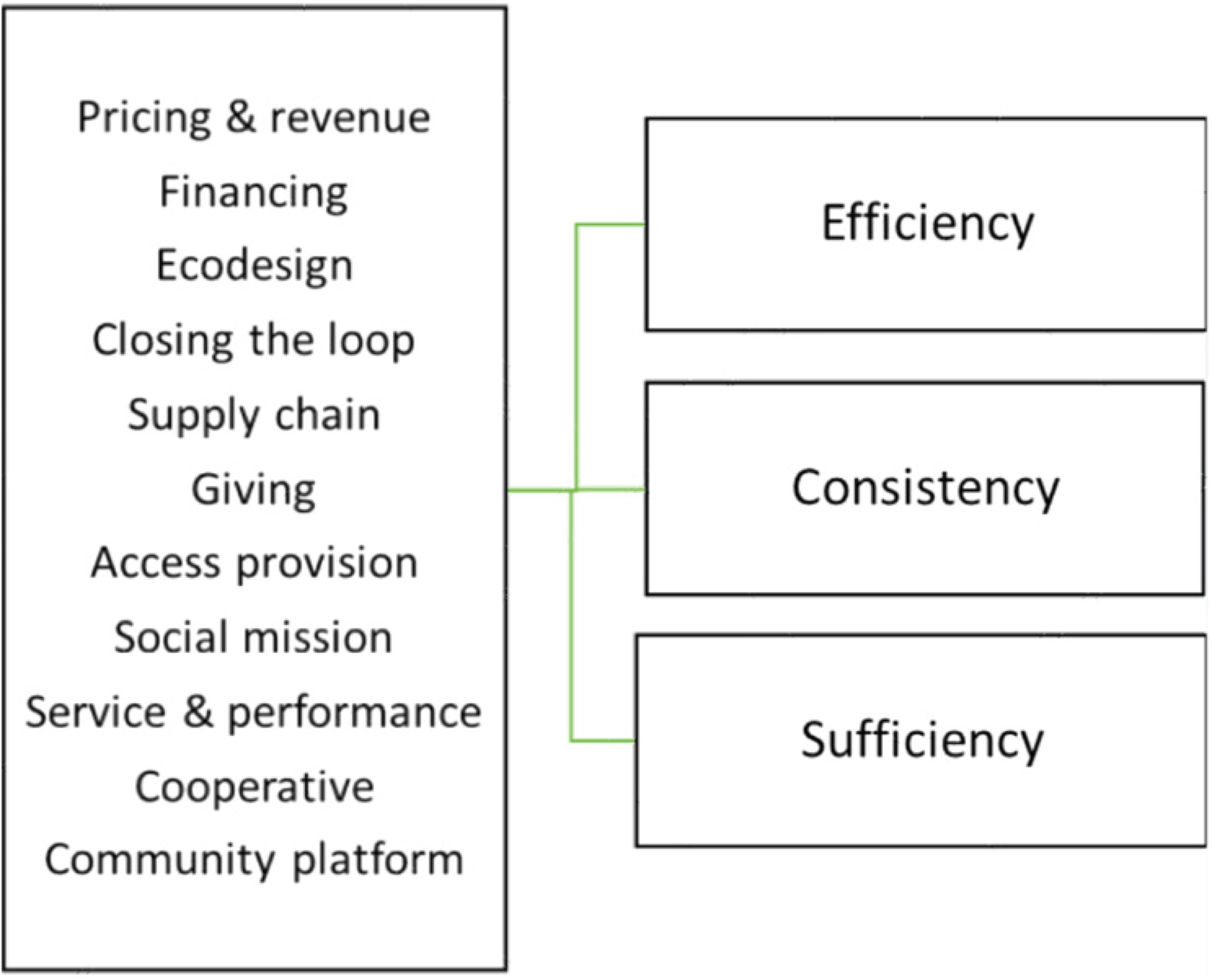
Pricing and revenue (abonnements for customers with preferences) Financing (crowdfunding) Eco-design (design of the offerings and substitutions) Closing the loop (repair or take-back management from customers) Supply chain (distribution with partners and/or retail) Giving (donations of products) Access provision (offerings for neglected/departed target groups) Social mission (integration with society) Service and performance (functionality and added services) Cooperative (co-owners and co-managers) Community platform (sharing resources)
These patterns are used for this study because they follow mostly often-met features during the transformation of businesses, for example, into circular businesses (Lüdeke-Freund et al., 2018); they anchor value creation (Ladd, 2017); and they synthesise stakeholders’ interests (Schaltegger et al., 2016). Finally, these patterns aim at driving businesses’ innovative edge and further anchoring environmental consideration into the energy market (Cook, 2018).
Environmental strategies and business model innovation: Synthesis
Strategic choices of the business are often intertwined with their sustainable transition action and can be divided into efficiency, consistency and sufficiency (Shaw et al., 2010; Lüdeke-Freund et al., 2018). The former, efficiency, improves input–output relations within the market as lean production (cf. Huber, 2000). This strategy tends to provide a smart increase in the consumption of existing products which might mean a pending improvement (cf. Cavallo et al., 2021). A consistency strategy has the potential to lead to sustainable development. This assumes following natural, technological cycles as, for example, the ‘green electricity’ sources (cf. Carpenter et al., 2003; Heikkilä et al., 2017). It has drawbacks of not corresponding to customer-dominant design. Sufficiency assumes customer satisfaction through the revision of habits from the long-term perspective (cf. Hall et al., 2019). In the case of unsuccessful habits, extreme overuse appears (Huber, 2000; Rossignoli and Lionzo, 2018). It is important to consider multiple environmental strategies of energy firms together with business model patterns—they embrace both the direction of the action and actions of the firms (cf. Coombes and Nicholson, 2021). These in symbiosis may lead to pioneering business model architectures via creating a novel value creation logic and rethinking the value content with conscious focus on sustainable development path.
The literature, however, underlines that not all the components of the symbiosis compatible. For instance, consistency has a direct relation to the Eco-design pattern and is less linked to giving. Similarly, the sufficiency approach is closely linked to supply chain and service and performance but ignores the community platform pattern. Despite these peculiarities, the work takes a broad starting point by linking general strategies and patterns of business model innovation (see Figure 2), allowing the empirical case to reveal linkages.
Symbiosis of business model innovation patterns and environmental strategies.
Environmental strategies and business model patterns in symbiosis can be viewed as a crucial link between sustainable development and corporate management. They function as tools to ensure the successful implementation of sustainability by enhancing environmental, social and economic outcomes (cf. Cavallo et al., 2021; Heikkilä et al., 2017). By prioritising sustainable development as an objective, businesses have the opportunity to contribute to the attainment of UN goals while generating greater value for customers and society (McWilliams and Siegel, 2011). Nevertheless, transitioning towards sustainable business practices is a complex undertaking accompanied by various risks and responsibilities. Achieving sustainability requires a profound understanding, adoption of new management tools and innovative approaches to tackle the associated challenges (Alpsahin Cullen, 2021). One such challenge is the tendency for short-term thinking, where implementing efficiency as an environmental strategy often leads to initial cost savings but becomes increasingly challenging to enhance in subsequent phases (Carpenter and White, 2004). Hence, apart from pursuing corporate sustainability objectives, the UN Goals should serve as guiding principles that reinforce the focus on innovation and sustainability within the energy businesses. For instance, Goal 7 promotes the swift expansion of modern renewable energy systems and technologies, while Goals 8 and 9 facilitate sustainable economic growth, innovation and industrialisation through the responsible utilisation of natural resources and existing ecosystems. Lastly, Goal 12 encourages responsible energy consumption through intelligent usage, necessitating joint efforts from businesses, the public sector and users alike.
Methodology
Design and data collection
This study uses the qualitative research approach and multiple case studies of energy companies operating in Scandinavia (Sweden and Norway). The main criteria behind this choice are that these countries (a) are pioneers in electrical market liberalisation, (b) develop sustainable technology, (c) introduce ELHUBs as orchestrators in their energy markets, and (d) achieve valuable results in energy renewability (Bergman, 2002; Bye and Hope, 2005; Mayer and Truck, 2018). The outcomes of their activities are not identical, especially regarding competitiveness, stakeholder involvement and service content. Norway is taking the lead (Cavallo et al., 2021). Private businesses are investigated in the study and are seen as the main drivers for renewability in the sector (Franklin Mann, 2020). This made these firms interesting study targets.
This study uses different types of empirical sources to describe the development path of energy firms, firstly, databases of energy firms and secondly, interviews with energy firms. The extracts from the ElHub databases (registered data from the Ediel system 1 ), which contained a list of active electrical firms, are obtained. This is the main tool for selecting the study's interview respondents. The firms delivering both electrical energy and innovative services within production and distribution chains are chosen. The interviews with energy firms took place between December 2020 and February 2021, exploring the complexity and challenges of transitions. We initially selected 225 energy companies in Sweden and Norway (168 and 57, respectively). Thirty firms from Sweden and twenty from Norway are our research targets. The criteria for choosing the companies are that they were (a) energy service providers and (b) initiated innovative solutions within the last three years (see Table 1). Such a wide-ranging setting contains a stronger potential to identify various change patterns and strategies (Creswell and Garrett, 2008). Interviews are conducted with the managerial personnel of the companies (at least three months), for example, marketing leaders.
Overview of the interviews with energy firms.
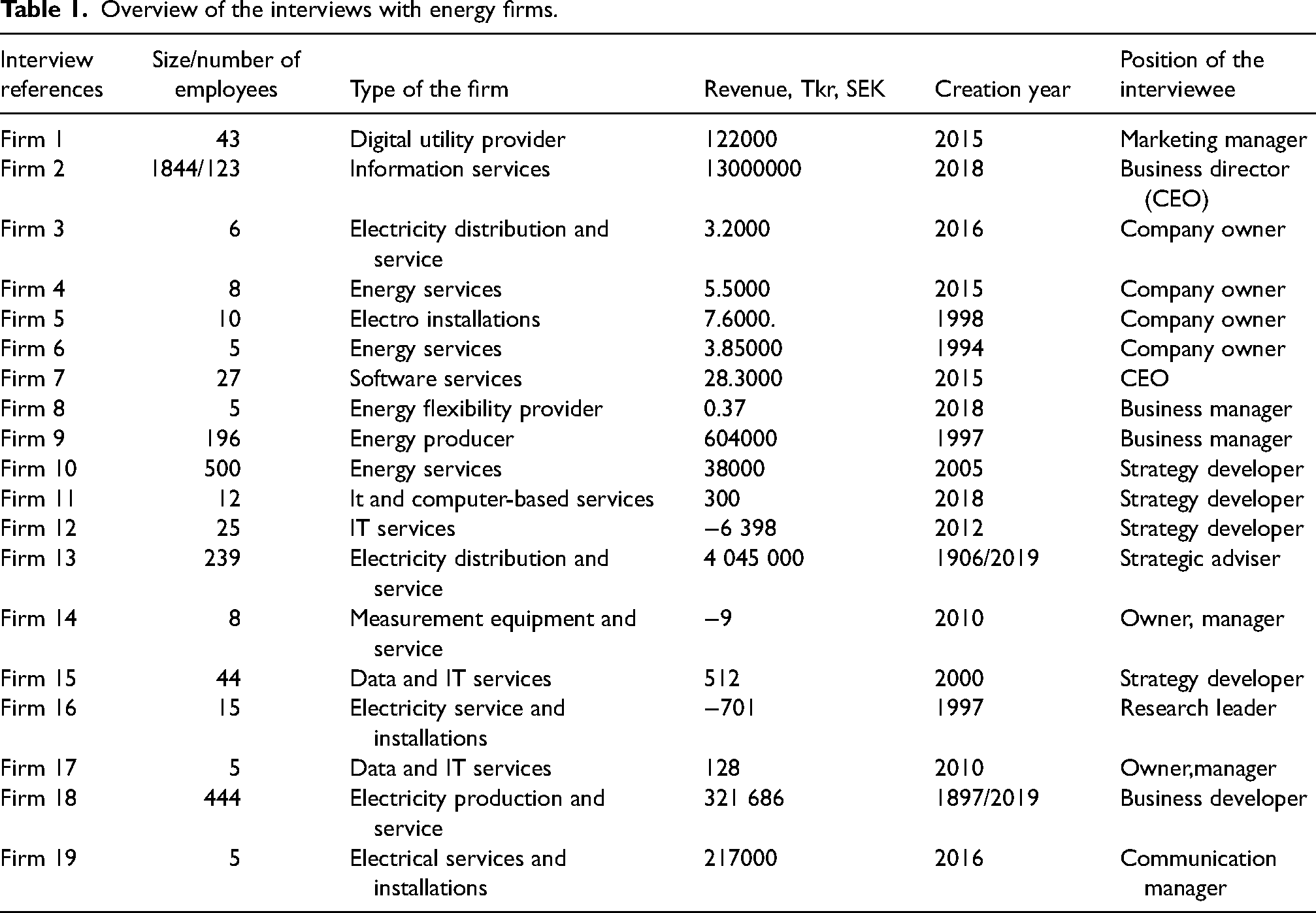
In total, 19 interviewees participated in the study (10 Swedish and 9 Norwegian companies). Each interview is approximately 40–70 min and was semi-structured in nature. The range of businesses contains companies from 5 to 500 employees, except for one firm, which had 1844 employees. This number represents a concern, where the focus falls into the division developing innovation services (123 employees). The age of the firms varied from 1994 to 2018, with exceptions for years 1906 and 1897; these are spin-offs of the original companies, which have changed their specialisations to more innovative solutions (2013 and 2019, respectively). Such innovative services contain collection and interpretation data from smart meters, tracking power quality and home management systems. Such specialisation provides increased flexibility by adjusting increasing demands and simplifying a switch to renewable solutions 2 . The interview guide is designed as part of a larger explorative study and contains four large blocks and fifteen topic-oriented questions (i.e., innovative services, partnerships, solutions, development and stakeholders). For the current study, answers to the questions about service delivery challenges and the development of the business models are specifically analysed. The responses touch upon both the respondents’ own organisations and more general reflections on developments within areas of interest. The interview data was recorded, transcribed directly after each interview and stored.
Data analysis
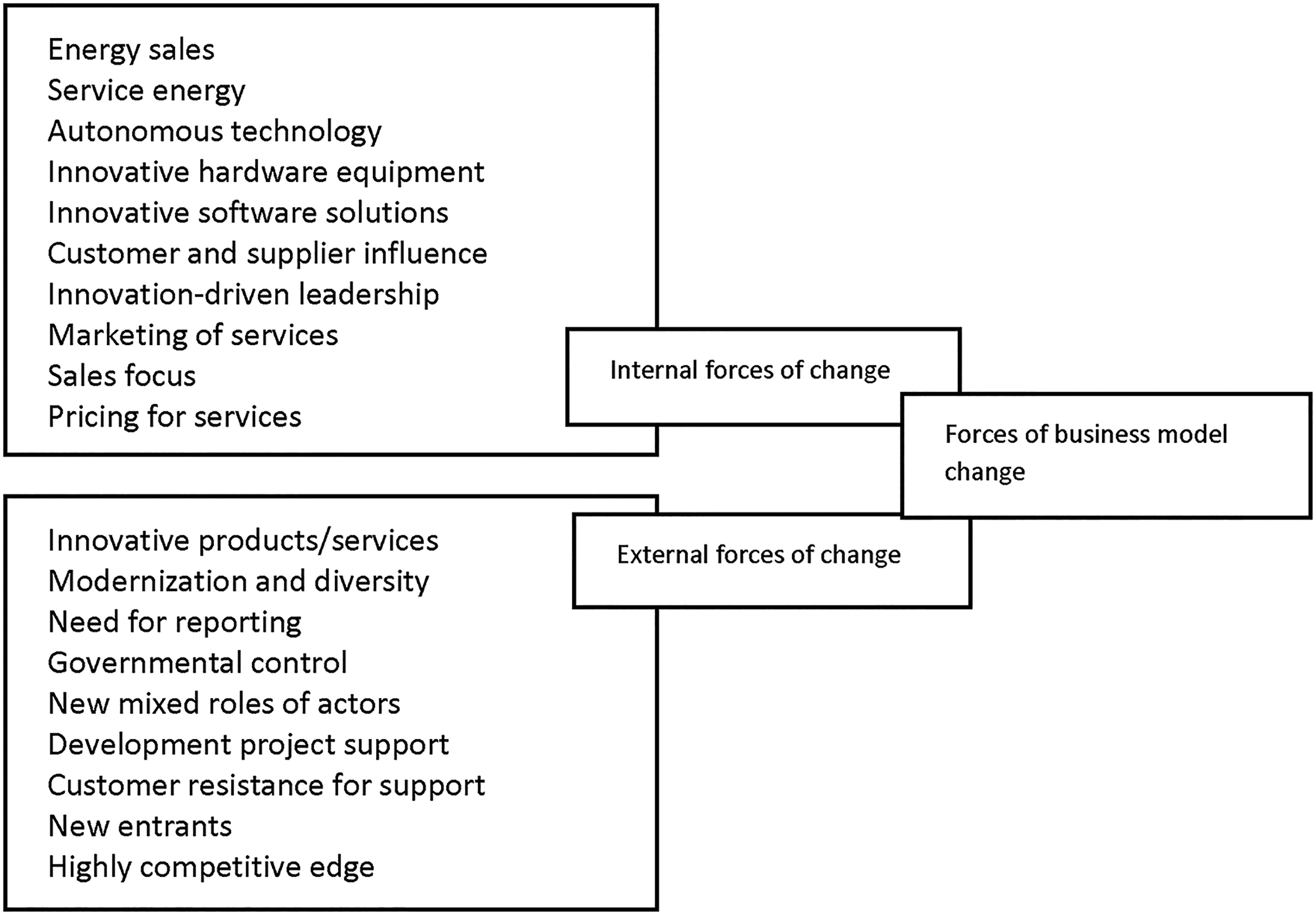
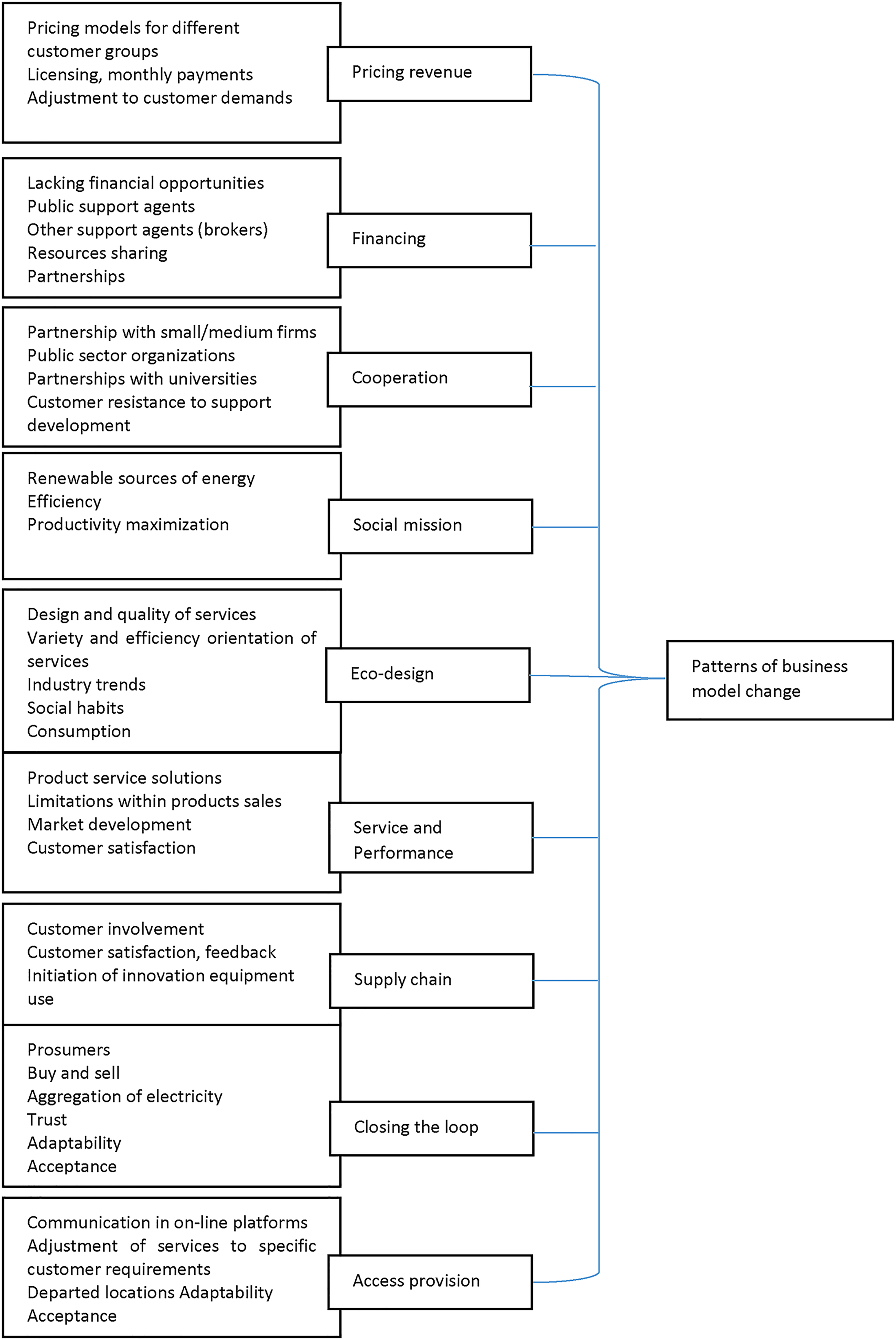
The data in this study is analysed using a thematic and content-wise approach (Ragin, 1998; Khan and VanWynsberghe, 2008), which aims to underline the activities and processes occurring within electrical firms regarding their business models. It allows for the extraction of important details that may have contributed to the business model's redesign and change. The data analysis comprises three stages: underlying facts from a single case, cross-case facts and assimilation of facts (e.g., Gioia et al., 2013; Figures 3–5).
Data content – forces of business model change.
Data content – patterns of business model change.
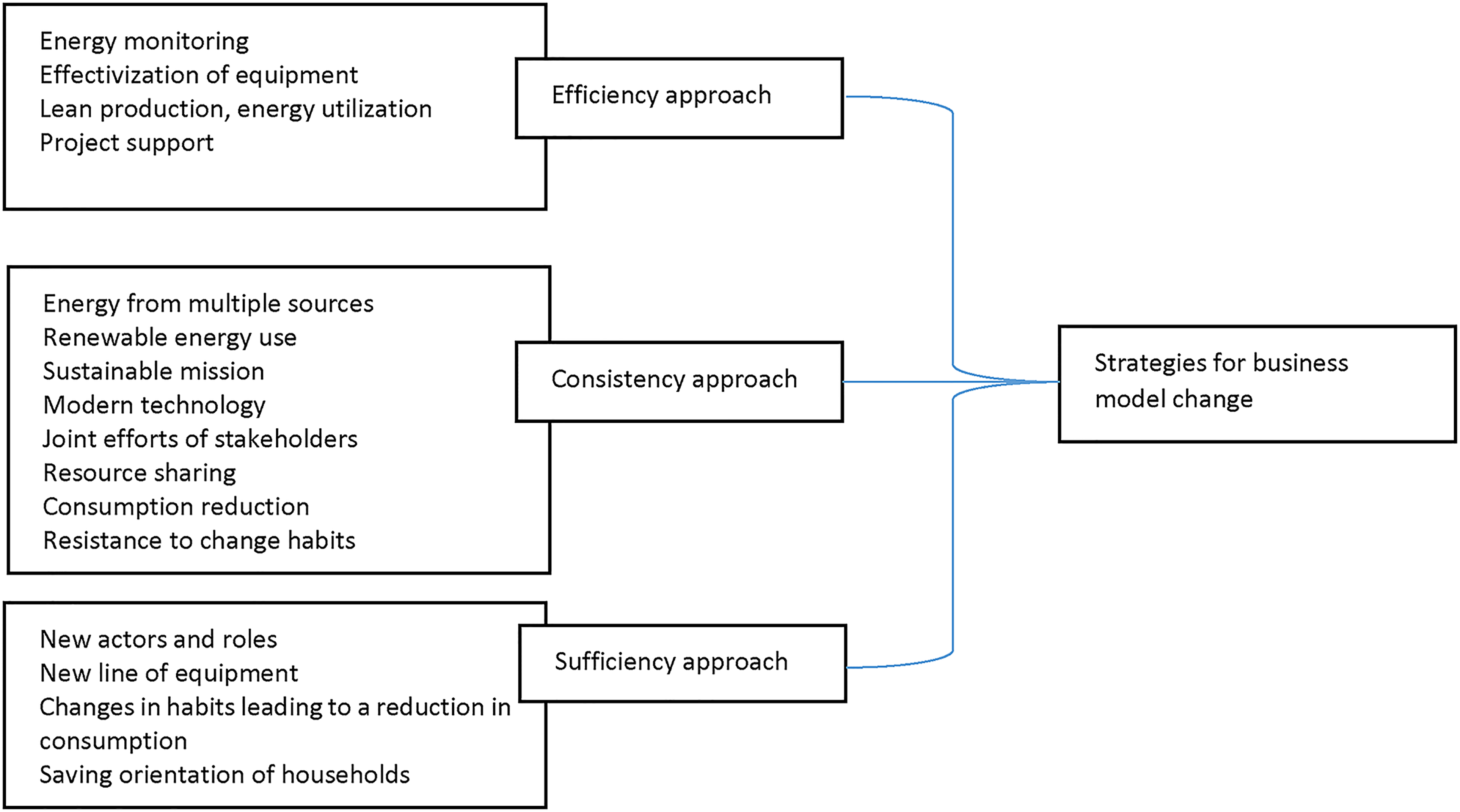
Data content – strategies of business model changes.
Firstly, the main keywords from the single cases are extracted from the interview data, which serve as a guideline for creating categories (see Figure 3). Two researchers use NVivo software to solely codify the interview data, underlining words and formulations related to the overarching research purpose. These are then discussed, thereby enriching the list of facts, to create the first-order categories.
Joint discussion, as is shown, carries an important quality-securing function. Secondly, these keywords are clustered into second-order categories. This results in the extraction of 14 s-order categories (Figure 4). Finally, the second-order categories are aggregated into dimensions—three pillars for data analysis, such as forces, patterns and strategies of change (Figure 5). The final pillars are the symbiosis of both theoretical and practical categorisations. These results are discussed, confirmed by the respondents, further specialised and improved for the best fit with the research questions.
Results
Energy renewability and efficiency
Interviewees addressed the innovativeness and diverse electrical solutions embracing the renewable electricity of different sources (mainly water, wind and solar) of their business models (Interviews 3–6, 10–19). Climate change and seasonality have not always played a positive role for traditional market actors but are advantageous for innovative energy firms (Interviews 2, 4, 5 and 15–17). Energy entrepreneurs lifted the most benefits from service provision rather than energy sales due to strict regulations (Interviews 1–19). Instead, add-on services focused on energy flexibility (monitoring, control and effectivisation) overrun traditional businesses, even if still underdeveloped (Interviews 3–5, 12, 15, 18 and 19). Most profits resided within the effectivisation of energy, considering Finland's experience, which is mostly unregulated (Interviews 12, 13, 15 and 17). For example, Interview 3 illustrated optimisation and control sensors as the perfect solutions, but not suitable for outlying regions with poor internet connections. The interview respondents also recognised the need for solution improvement within electricity monitoring:
We get an almost 70% increase in intakes due to the delivery of innovative solutions. However, we are striving more ambitiously, for example, automatic reports of energy use each 5th minute, in comparison to current reporting every 24 h – following the mission produce, use, and save.
Interviewee 1 described it in this regard:
There is a misfit between developers of hardware and front-end applications. We accept only a complete integration of hardware within the digital tools via machine learning. So, the integrated home steering package.
The main driver for business model changes, according to previous respondents, was a willingness to follow modern trends and technologies (Interviews 3, 4, 14 and 16–19).
Financing and R&D
The current development was heavily dependent on project financing. A paradoxical fact was that the customers wished to spend as little as possible and get as much as possible while fulfilling state requirements (Interviews 5, 14 and 19). Internal and partnership funding is very small for handling the challenges, while the Energy Agency and Vinnova grants were less beneficial due to time, competence and a low chance for attainment. The best solution for this paradox was to share expenses with partnering organisations in technology, transport and ICT, for example, joint development (Interviews 6, 13, 14, 17 and 19). The universities/research institutions could also be seen as partners but in regard to obstinance of external funding (Interviews 3–6, 10–19). In contrast, the Norwegian respondents experienced fewer challenges in the acquisition of state support via intermediary agents but still underlined a time-consuming issue (Interviews 18 and 3). Norwegian firms followed the regulation by, in practice, saving 40% of the intakes till the next year R&D (Interviews 5, 17 and 19). Despite the bottlenecks behind the development of innovative solutions, several heavily financed projects from Horizon 2020, Iris and green energy solutions were named (Interviews 5, 14, 13 and 12). The other firms launched marketing departments (Interviews 3, 7, 16, 17 and 18). This trick is taken from the IKEA practice of selling solar panels, it was considered a threat, when the customers did not see energy firms as the main providers of such equipment. The appearance of middle-hand actors (i.e., brokering, intermediary) helped customers to change electrical providers. These intermediaries were characterised as powerful but problematic, especially in Sweden, because at least 15% of customers changed their providers each year, in comparison to 5% in Norway (Interviews 9 and 17).
Stakeholders as change agents
Customers and suppliers were mentioned as driving forces for change for business model innovation. They participated in pilot projects testing products and services and started to produce electrical energy (so-called prosumers) (Interviews 4 and 10–15). Respondent 12 reflected:
We do work closely with the customers for service design to ensure that we create value. I realise that they get a lot from using new technologies, and we learn from that. It can assist in making things better, faster, and cheaper.
Surprisingly, customers were overly demanding and required certain changes in energy firms’ approaches to work and strategy (Interviews 3–6 and 10–19). Respondent 17 said in this context:
The customers are willing to live a life of luxury by using remote energy services, but they ignore the need to change their habits. We have, though, ‘small muscles’ to create such a customer experience.
This pointed to customers rarely experiencing needed product/service development, but the energy firms wished to become better (Interviews 9, 10 and 18). The suppliers, in contrast, saw their commercial interest in initiating new service development.
Pricing models and regulations
Current demanding situation for businesses was often mirrored in the higher pricing of both older and newer products/services (Interviews 15 and 17). Innovativeness and high tempo played a weakening role for businesses intakes. This led to the introduction of monthly prices for service packages rather than previously used prices per service. The lowest price for such a license was 39 SEK/month per customer, which might bring in return a 10–20% reduction in electricity usage. The price level also depended on the number of users attached to each agreement or per square meter. The Swedish customer mindset focused on the purchase of the cheapest and most necessary services, while the Norwegian customers seemed to be less particular about including a wide-ranging portfolio of services (Interviews 11–13, 15–19). Interviewee 6 said in this context:
We use a subscription pricing model where you have one license and a supporting agreement. We add extra-services to the initial offering and adjust, making possible reuse of the services for other clients. The gold package provides everything, including the services of the plumber and carpenter. Others pay for their work hourly.
The other driving force of change was state regulation, obliging energy reporting (Interviews 2, 3, 6, 17 and 19). These carried a restrictive role by keeping control of energy prices, bureaucracy burdens and licensing (Interviews 4, 5 and 10–19). Finally, the managerial personnel were also a driving force for change that required the involvement of innovation-inspired generation to take over. Both of these drivers had rather positive effect on pricing.
Analysis
Forces affecting change in the electrical energy sector
The findings indicate that forces such as service diversity and development are based on the renewable edge, regulations and managerial competencies that influence energy business models. Among these forces, solution packages are one of the leading change facilitators also mentioned as central by other scholars (Luttgens and Diener, 2016; Biloshapka and Osiyevskyy, 2018). This can illustrate both internal and external forces of change as well as facilitating and resisting drivers. For instance, the rawness of solutions can relate to a firm's incapacity within IT, management, quickness and diversity of offerings, seasonal adjustments of the offerings and limited partnerships (Haapasalo et al., 2006; Nieuwenhuis, 2018). Electrical businesses offer continuously developing solutions, not necessarily providing an expected level of comfort to the customer. This plays a weakening role in firm competitiveness and profitability (Gangale et al., 2017). In this sense, the firms’ low capability becomes a driving force for changing their business models (Aversa et al., 2015; Coombes and Nicholson, 2021).
The financing of projects is seen as mostly resisting forces for the electrical sector, stiffening innovative edge and development. The sources of project support are rather limited to state bodies and imitate a lottery game due to the many applicants and low acceptance rates (De Reuver et al., 2009; Gomes et al., 2023). The energy firms respond to this by changing their business models via reinforcing their partnerships with universities as well as marketing and R&D departments in their firms. The regulatory obstacles tend to be overcome through an extreme focus on services development. This benefits service variations and increasing attractiveness (Behnam and Cagliano, 2019). However, the new projects require more profound support, according to the existing research, to be on track with technology and service innovativeness. This corresponds to managerial capabilities, using traditional ways of doing business carrying a restricting character instead of focusing on partnerships and proactive action (Sosna et al., 2010; Hall et al., 2019).
The appearance of new hybrid actors and the domestication of new roles are taken by energy businesses both as negative and positive forces. There are other studies showing the vitality of hybrid actors and their roles in balance achievement and reinforcements of sustainability within the energy market (Shaw et al., 2010; Alpsahin Cullen, 2021). The contradictory opinions of the respondents about the new actors in the energy market are seeded by the unclear consequences they bring but also by the fear of losing a competitive edge (cf. Lunenburg, 2010). Despite this blurriness, energy companies develop a certain pricing model for prosumers and try to establish a close partnership with intermediate actors. This could represent a certain business model response to the changes occurring in the electricity market (cf. Cook, 2018; Nieuwenlius, 2018). The forces overview illustrates a reaction to occurring changes rather than a proactiveness and prime-mover action of energy firms (Kadar and Shaw, 2000). Indeed, further sections underline the need for an adjustment in energy firms’ strategies and improvement of internal capabilities to remain active players in the energy market.
Patterns of business model change
There are nine often-applied patterns of change in the electricity market (Table 2). The most pronounced ones are pricing, cooperation, service and performance, while rarer patterns are closing the loop and access, and giving and community platform patterns are rather inappropriate.
Relationship between forces and patterns of business model change.
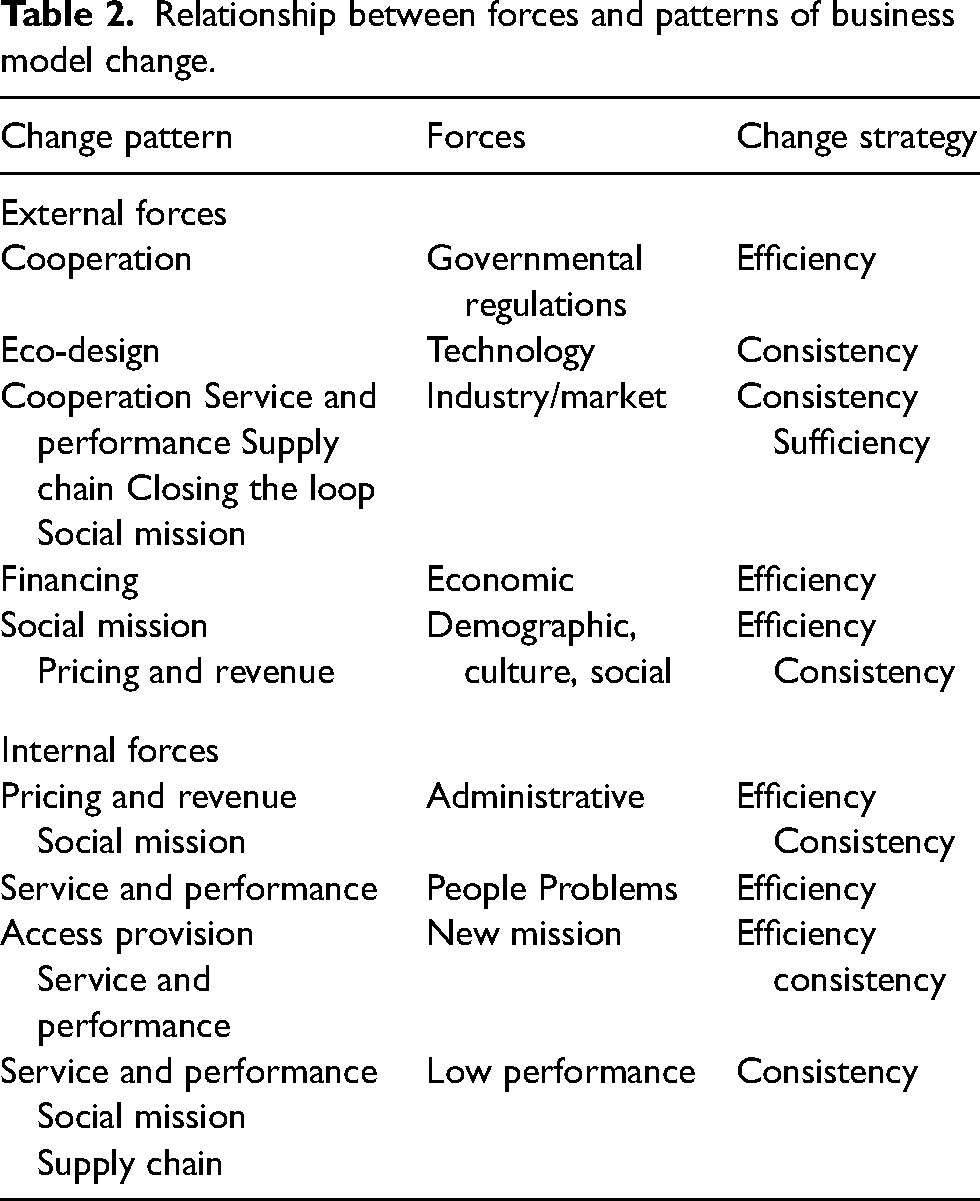
The pricing and revenue patterns customise different pricing models for different customer groups, taking into consideration the number of users, energy volumes and monthly licenses. Such variations in pricing models show the simultaneous usage of several business models by energy firms, which are continuously adjusted to customer demands. Such tendencies have also been named in other studies by Giehl et al. (2020) and Shaw et al. (2010). The multiplicity might be considered a source for covering up product insufficiency and low capability to satisfy customer demands (Ludeke-Freund et al., 2018; Biloshapka and Osiyevskyy, 2018). Financing also causes unwished change in energy business models due to lacking opportunities and restricting state regulations on this matter (cf. Bentzen et al., 2021). However, the environmental orientation of the regulatory balk increases financing within triple-bottom-line directions but plays the role of picking the ‘winners’ (Heikkilä et al., 2017). Joint project development and resource sharing might turn some actors into ‘winners’. This brings cooperation patterns of change, bringing private and public, small and large sized actors into play. The goal correspondence of these actors can become a critical factor for the enablement of cooperation. This setting is less effective for customers, as the study shows (Schaltegger et al., 2016). Further, social mission and eco-design could be called prerequisites for energy firms tackling renewability and goodwill for future generations (Carpenter et al., 2003). This seems to be inescapable for other businesses, sectors and society in general (Hall et al., 2019; Sosna et al., 2010). Service and performance patterns emerge and implement the need to switch from product packages to product-service solutions following industry trends and regulatory restrictiveness. The willingness to be profitable and competitive helps energy firms to build a profile of the provider of energy-as-a-service (Gassmann et al., 2012; Gangale et al., 2017). To withstand such an innovative profile, energy firms initiate inputs from their suppliers and customers pertaining to the cooperation and supply chain patterns of business model changes. This can be exemplified in joint project financing, marketing initiatives, idea seeding and development and feedback on service solutions, reinforcing the innovative potential of firms (cf. Abdelkafi et al., 2013).
Finally, the patterns of closing the loop and access provision seem to not be considered vital, probably due to the immature level of relationships between the producer and prosumers (Heikkilä et al., 2017). The access provision pattern has reinforced the changes only one-sidedly through the introduction of communication platforms, but the accent on certain customer groups is still minor (e.g., slightly lower energy prices for local customers).
Strategies leading to business model innovation
Thus, these patterns mainly correspond to two sustainable strategies of the firms, efficiency and consistency (Table 2). In terms of the efficiency strategy, it is applied in relation to both internal and external business model change forces. This means that energy firms actively apply energy-efficient characteristics to their business models mainly based on the willingness to remain competitive and follow state regulations (e.g., Huber, 2000; Shaw et al., 2010). However, efficiency focuses on monitoring that improves energy utilisation, but is less attentive to managerial decisions and obtaining funding (Goldstein and Almaguer, 2013). It is driven by industry trends and implicitly permeates business orientation (Boyer and Jones, 2002). This leads to the necessity to either switch strategic focus to consistency and sufficiency or apply their mix in practice for better outcomes in terms of further development and sustainable edge. In a consistency strategy, energy firms use flows of renewable energy from various sources, which provide value to the customers and follow sustainability goals (Bohnsack et al., 2014; Behnam and Cagliano, 2019). This strategy is implemented via the use of modern technologies, which are eco-oriented even if they do not always correspond to customer demands. It focuses on energy services to a lesser extent but rather on long-ranging savings (e.g., Cavallo et al., 2021). However, it carries drawbacks, again pointing to the need to use a mix of strategies to achieve sustainable development by convincing customers of the need to change their preferences. The sufficiency strategy, according to our findings, seems to be shown in relation to industry trends and the appearance of innovative actors and new roles. This mainly reflects the innovativeness of functions of these actors, which leads to changing habits and social trends (e.g., Ludeke-Freund et al., 2018). However, these do not always meet approval from the customers wishing to become prosumers to withstand their style of life, which does not go along with the UN Goal 12. This restricts the use of the sufficiency strategy, which is obviously preferable alone or as a mix with the others (Rossignosli and Lionzo, 2018; Luttgens and Diener, 2016). The latest strategy seems to be a future objective to be driven by all public sector businesses and academia rather than a current sustainability achievement.
Discussion
Energy firms seem to succeed in offering renewable-energy products, coming from renewable sources as a main value proposition, but they are less developed on propositions of packages, including an important servitisation aspect (cf. Bohnsack et al., 2014; Cavallo et al., 2021). The opportunity to improve the servitisation part of the value proposition may lie in collaboration with the customers, but the latter is driven by covering only necessary reporting requirements with minimal expense. It shows customers’ unpreparedness for change in their habits, which corresponds to a limited use of the sufficiency strategy by energy firms (Luttgens and Diener, 2016). This anchors customers as followers rather than as a co-creator and especially in the Swedish context (cf. Amit and Zott, 2001; Behnam and Cagliano, 2019). Norwegian firms seem to better handle R&D projects improving their value propositions, especially their digital support to users via the re-distribution of internal profits and better financing opportunities.
Despite the re-structurisation within the electrical sector and the separation of marketing departments, the commercialisation of innovative wind and solar solutions is still lacking. Energy firms are still dominantly occupied in traditional electricity sales, while newer businesses, originally from other sectors, are taken over by powerful market campaigns threatening the former (cf. Behnam and Cagliano, 2019). An interesting fact discovered in this study is that these newer firms primarily focus on private customers, while traditional electricity providers tend to consider this customer segment as troublesome, preferring business-to-business partnerships. This builds on richer financial possibilities and expected generosity from the businesses’ counterparts. The solutions developed for other businesses and later offered to private customers do not always correspond to their demands. This can negatively affect the willingness of the final user for habit change departing the energy sector from adopting a sufficiency strategy (US Goal 12). Largely driven by an increase in profitability, traditional electrical businesses still prioritise pricing models as an effective change tool. This is known for delivering short-term benefits (Sosna et al., 2010; Gassmann et al., 2012). New entrants’ strategies, in contrast, consist of cooperation patterns of change in close collaboration with other industries and actors with novel roles as prosumers, balance responsible.
Conclusions, implications and further research
The purpose of this article is to explore business model innovation in the energy sector, striving to answer the questions of how and why business models change with an accent on strategies, patterns and forces of change. The study identifies electrical businesses’ nine different business model patterns framed within two strategic choices. The formation of this path is affected by 19 opposing forces of change (internal and external). There are three overused patterns of change—servitisation, hybridisation of actors and roles and pricing models, and the following ost influential forces of change—state regulations, renewable sources of energy, industry partnerships, R&D project financing, service development and managerial competency (cf. Lewin, 1951; Boyer and Jones, 2002). The two environmental strategies, efficiency and consistency, or their mix, are mostly popular among electrical businesses (see Table 2). The findings of the study reveal ‘new’ business model patterns of change, enriching the theoretical framework, for instance, an intermediary enrollment in the face of new roles and middle-hand actions. It calls for the introduction of one additional business model pattern—customers as co-creators—into a separate pattern extracting it from the cooperation and supply chain categories. Intermediaries, prosumers and customers are, therefore, recommended as a primary resource pool for energy businesses. Overall, this study highlights that these three ingredients—forces, strategies and patterns—should be considered together for a better understanding of the roots of business model changes and reinforcement of sustainability focus. The study's findings point out that the strategic choices of energy firms serve as a framework for active change of patterns of business model innovation, which is also affected by the internal and external driving forces of change. It is important to notice that strategic choices, not always pronounced by still followed, make most likely an imprint of change patterns (cf. Ladd, 2017; Ludecke-Freund et al., 2018). This work realises the simultaneous use of several innovative business models by companies in the electrical market. The iterative processes between the use of different business model patterns and business models would support and integrate each other—creating all-encompassing business model designs (Aversa et al., 2015). Similar iterations of environmental strategies and business model patterns would help to establish priorities of relationships with new stakeholders and acceptance of their hybrid roles (Giehl et al., 2020).
These conclusions, as planned, reinforce the study's contribution by considering forces, strategies and patterns in a symbiotic manner, allowing for the identification of future business directions. They lift both ‘the cause’ in the face of opposing forces and ‘the effect’ of the change, such as environmental strategies and patterns on business model innovation. There is, however, unsteady evidence of cases where ‘the cause’ and ‘the effect’ are interchangeable, leaving the consequence of causes and effects being largely situation and context dependent. There is an implicit outcome of this work that the top-down-pushed environmental strategies often are ‘the cause’ of business model innovations, but in any other constellations, it varies—either environmental strategy leads to business model innovation or the change forces push alternative strategies implementation (cf. Bentzen et al., 2021). Regarding the proactiveness of businesses, the study findings reveal that businesses wish to change and innovate but do not as often take the proactive stance yet are still pushed by the competition and regulative insisters (cf. Kadar and Shaw, 2000; Pattinson, 2019). And finally, as Table 3 illustrates, the propositions of more advanced strategies for more advantageous use by the energy businesses carry better potential in terms of innovativeness and anchoring of sustainability work. This is an important work implication for acting practitioners within and cross-related sectors. These are proposed out of the ‘right combination of forces’ analysis—this can be seen as a receipt for innovation (Lewin, 1951; cf. Boyer and Jones, 2002). The continuous screening of external pressures and their domestication into internal routines might assist in achieving more effective business model innovations and sustenance of competitive advantage (cf. Ludeke-Freund et al., 2018, Coombes and Nicholson, 2021). Despite this, the current work calls for proactiveness in entrepreneurial choices, even in such complex situations, relying on an overall orientation towards sustainability objectives and not being trapped by short-term profitability aims.
Potential action plan for energy businesses – a mix of forces, patterns and strategies of business model innovations.
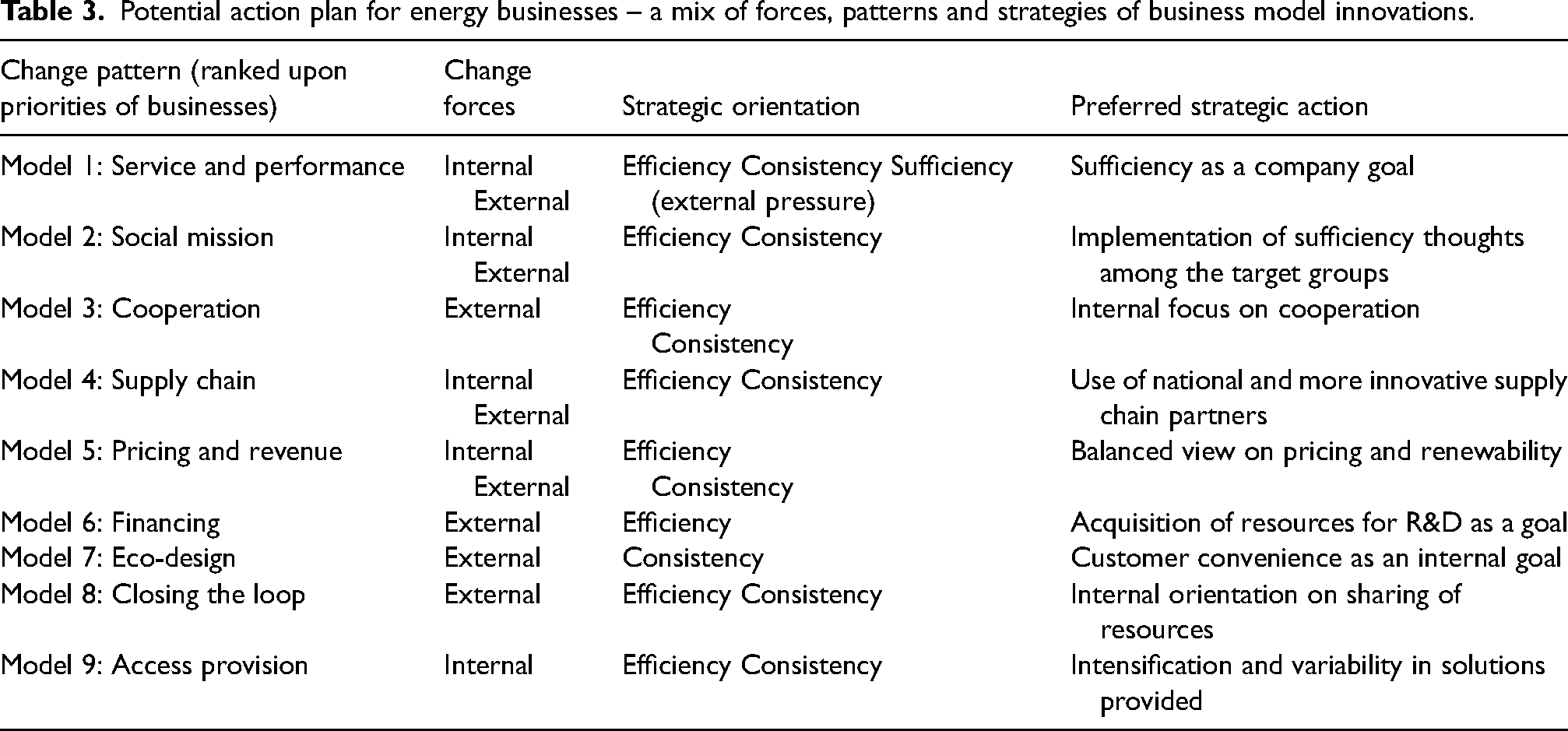
A future research focus can deepen two alternative business model patterns discovered by the study: new energy sector actors, such as prosumers, and the central role of intermediaries. The latter assumes new functions of intermediaries as well as new forms of relationships between intermediaries with energy firms. For instance, the Swedish ElHub is on hold, and the question arises—what kind of actor would replace this intermediary and portfolio of its services? The other topic is energy prosumers; these are still an elite group of individuals who have managed to go through several barriers, for example, obtaining state funding to support their own electricity production. It might be interesting to investigate what obstacles can be met while obtaining such funds. This may also be tested if a more transparent state funding scheme would lead to an increase in prosumers numbers. The final suggestion focuses on the referred but not executed ‘sufficiency’ strategy. The study mentions the main weakness of its implementation is altering customer habits in energy use. The question arises of what energy firms can do to kick the transformation of customer habits. One of the things that could contribute to this study's improvement is the widening of geographical coverage from two Scandinavian countries to the whole Nordic electrical market, including Iceland, Denmark and Finland. As a part of the EU, the Scandinavian electricity market follows its regulation and development. The application of the study results within the EU space is, therefore, possible and probably has a good potential 3 , but it still might require minor adjustments. Scandinavian achievement in business modelling can be considered benchmarking practice for less renewable European counterparts, such as Poland and even Ukraine 4 .
Footnotes
Declaration of conflicting interests
The author(s) declared no potential conflicts of interest with respect to the research, authorship, and/or publication of this article.
Funding
The author(s) disclosed receipt of the following financial support for the research, authorship, and/or publication of this article: This work was supported by the Norges Forskningsråd, (grant number 279896).
