




Abstract
There is an ongoing scholarly debate regarding the compatibility of sustained high levels of firm-level growth with today's environmental sustainability goals, which include targets for limiting carbon emissions and avoiding further biodiversity loss. In this study, we aim to explore this issue through a quantitative analysis of the relationship between firm-level growth and sustainable innovation (i.e., all innovations with benefits for the environment) within an international sample of small- and medium-sized enterprises (SMEs). To accomplish this, we utilise micro-data from the Community Innovation Survey, based on the conceptual framework provided by the Oslo Manual. By employing econometric models, we demonstrate that sustainable innovations promote SME growth. Specifically, we find that SMEs implementing sustainable innovations experience higher growth compared to those that do not practice them. Our research not only contributes to the existing literature in economics and management by providing more extensive knowledge but it also identifies several policy and management implications. Furthermore, we seek to offer novel insights into the importance of sustainable innovations adopted by growth-oriented SMEs.
Introduction
Understanding the role of innovation in climate change mitigation is not a novel concept (Fernandes et al., 2021). Indeed, several authors have focused their research on studying the progress and success of government programmes to facilitate the development and diffusion of technologies that can mitigate climate change (de Jong et al., 2016; Dhar and Marpaung, 2015; Haselip et al., 2015; Mowery et al., 2010; Su and Moaniba, 2017). Within this area, several authors have produced studies on the relationship between environmental, economic, growth and productivity issues (Dong et al., 2014; Kozluk and Zipperer, 2015; Kwak et al., 2023), while others have conducted research in which predictions are made and propose different scenarios regarding the impact of specific actions on climate change (Su and Moaniba, 2017; Rotondo et al., 2023).
Hence, there has been a noticeable upward trajectory in the academic literature concerning the necessary transformations for sustainable innovations in small- and medium-sized enterprises (SMEs) that concurrently foster (Acemoglu et al., 2016; Aghion et al., 2016). With mounting concerns about environmental issues across numerous industries and firms, governments worldwide are actively engaged in facilitating enhanced environmental and social performance among SMEs (Ferreira et al., 2019). Given that SMEs contribute significantly to economic activity and serve as primary drivers of global economic growth (Lobo et al., 2020; Pansiri and Temtime, 2008), they also account for employing over 60% of the global workforce (World SME Forum, 2020).
Small- and medium-sized enterprises should be key players in global efforts to achieve sustainable development, as they are responsible for 64% of the overall environmental impact in the European Union (EU) (Calogirou et al., 2010) and up to 70% of industrial pollution worldwide (Hillary, 2017). Given SMEs’ economic importance and impact on social and environmental issues, efforts to promote sustainable development are unlikely to succeed without their sustained involvement and commitment. Moreover, some countries aware of the crucial role of SMEs in achieving sustainable development goals have created sustainable development policies specifically targeting (Blundel et al., 2013; European Commission, 2020a; Parker et al., 2009; Pimenova and van der Vorst, 2004). However, despite implementing such policies, SMEs struggle to integrate social and environmental issues into their business models (Ferasso et al., 2020; Ferreira et al., 2022; Xu et al., 2023). Sustainable innovation research has also emerged as an anchor of the Europe 2020 Strategy, which identifies intelligent, sustainable and inclusive growth solutions as a means to assist the EU in developing a more resource-efficient, greener and more competitive economy, delivering high levels of employment, productivity and social cohesion (European Commission, 2020b; Wang et al., 2022).
However, Chang et al. (2018) concluded that SMEs face challenges due to their size characteristics when implementing such sustainable practices. Small- and medium-sized enterprises typically deal with limited human and financial resources (Ferreira and Fernandes, 2017), making it challenging to apply sustainable innovations because they cannot understand their benefits (Besser, 2012; Jenkins, 2009, 2006). Notwithstanding the existence of several studies that focus on the impact of various SME practices on sustainability, they have typically focused on which stakeholders can contribute to adopting green practices, including governments, suppliers, consultants and competitors, without effectively defining how such influence is operationalised (Chege and Wang, 2020). To date, there are no studies that compare the growth of firms that adopt sustainable innovations with those that process so-called traditional innovations (Boiral et al., 2019; Journeault et al., 2021). Furthermore, while previous studies have suggested the various business practices that contribute to overcoming barriers to sustainability adoption in SMEs (Collins et al., 2007; von Malmborg, 2007), little is known about which sustainable innovations SMEs practice and contribute to their growth (Johnson and Schaltegger, 2016; Fernando et al., 2019; Hermundsdottir and Aspelund, 2022). If it is unanimous that innovation promotes the growth of firms, we also see that a study is required to compare the growth of businesses that promote sustainable innovations with others that innovate traditionally. Thus, our research question arises: does sustainable innovation respond to SME growth?
Thus, empirical studies analysing how sustainable innovations can contribute to SME growth are fundamental (Chege and Wang, 2020; Jenkins, 2009, 2006). Therefore, our research seeks to contribute novel insights regarding the importance of sustainable innovations practised by growth-orientated SMEs. It contributes to the literature in three ways. First, despite various studies on business models and the multiple partnerships that contribute to sustainable SME practices, no existing literature highlights the relationship between the practice of sustainable innovations and SME growth. This study fills this gap by offering novel insights into the relationship between sustainable innovations and SME growth.
Secondly, this study goes beyond traditional growth models by considering sustainable innovation as an explanatory variable for firm growth. Typical studies assessing sustainable innovation policies rely on qualitative research and are essentially, even if not exclusively, oriented towards US firms (Bozeman et al., 2015; Chen and Lei, 2018; Stevens et al., 2011). This study focuses on firms in Europe, contributing to new findings on the effect of sustainable innovations on firm growth in this context. The third contribution concerns the source of the data. The study utilises data from the Community Innovation Survey (CIS), the leading survey on the innovative capacity of sectors by type of firm, on the different kinds of innovation and various aspects of developing an innovation, based on the conceptual framework provided by the Oslo Manual (OECD and Eurostat, 2018).
Theoretical underpinnings: The growth of the firm
The theory of the growth of the firm by Penrose (1959) is a milestone in the firm's evolutionary approaches. The Penrose contribution has generally been linked to a resource-based view of the firm, as suggested by Teece (1982) and Wernerfelt (1984), but the author's main objective was to understand the limits to firm growth. Several factors influence firm growth. Some of these factors are external and relate to the macroeconomic environment and are outside the control of the entrepreneur/manager, while others are internal and trying to control or at least influence them is part of the competence of the entrepreneur/manager (Ferreira, 2010; Ferreira et al., 2011). Davidsson (1991) assesses the impact of various external factors (such as market growth, customer structure and industry structure) on small business growth. Other investigations illustrate consistent differences between industries. For example, the investigations by Dunkelberg et al. (1987) and Doutriaux (1992) demonstrated higher rates of decline and lower growth rates in the retail and service industries than in the manufacturing industry, especially in high-tech firms. It is also noted that high-growth SMEs are not concentrated in specific industries. Smallbone et al. (1995) and Storey (2016) affirm that this type of SME can be found in labour-intensive, knowledge, industrial or even services industries. Sandberg and Hofer (1987) include several measures related to the characteristics of the industry and establish a positive relationship between market growth, barriers to entry and market heterogeneity from one perspective and performance on the other. Davidsson (1991) indicated a positive relationship between the market's growth potential and growth aspirations. By contrast, Davidsson states that the age and size of the SME are negatively related to growth rates. Davidsson suggests that younger SMEs are typically more oriented towards growth and that firm's age is negatively correlated with innovation, while the firm size is not.
Similarly, Doutriaux (1992) shows a negative relationship between the firm age and growth. Various investigations suggest that factors such as industry structure, market growth, geographic location, access to capital, taxes and other legislation affect entrepreneurial behaviour (Davidsson, 1991; Storey, 2016). Several authors argue that no single theory adequately explains the growth of SMEs (Barkham et al., 1996; Davidsson, 1991; Bozeman et al., 2015; Chen and Lei, 2018). This is due, in part, to the heterogeneity that exists in the various types of SMEs but also to the range of factors that can affect growth, which can interact in different ways and circumstances (Barkham et al., 1996; Davidsson, 1991). Storey (2016) suggests that the growth process of these firms results from a combination of three basic components, namely: (1) the characteristics of the entrepreneur/manager; (2) the characteristics of the SME and (3) the SME development strategies. The requirement to understand the relative impact of each of these three components to obtain a complete picture of SME growth is noted by several researchers (Barkham et al., 1996; Jennings and Illes, 2000; Lang, 1996; Mayfield and Hynes, 1999) and taken into account in this study. However, it is difficult to identify, in the literature review, the variables that most contribute to explaining the growth processes of SMEs. This illustrates the fragmentation of the research area and the difficulty in comparing the results of different investigations. Many studies cover a multitude of variables, suggesting that most investigations are multidisciplinary (Bozeman et al., 2015; Chen and Lei, 2018; Stevens et al., 2011). Thus, several researchers have suggested the requirement to be aware of the importance of including dimensions such as (1) life cycle stage; (2) resources and capabilities; (3) strategy; (4) motivation and (5) environment, so that they can study, to extend and solidify the existing research (Covin and Slevin, 1991; Davidsson, 1991; Lumpkin and Dess, 1996; Davidsson and Wiklund, 2008).
In the 1990s, as an explanation of firm growth, taking into account their focus on sustainability, the Triple Bottom Line (TBL) emerged (Elkington, 1994). The TBL is a business concept that posits that firms should commit to measuring their social and environmental impact and financial performance rather than focusing solely on profit generation or the standard ‘bottom line’. It can be divided into ‘three Ps’: profit, people and the planet (Yee et al., 2021). This approach has been supported by several researchers, who suggest that firms should measure their growth not only by evaluating the traditional bottom line but also by considering ecological and social responses to environmental issues (Markley and Davis, 2007; De Giovanni, 2012; Longoni and Cagliano, 2018). By contrast, there is also a growing awareness of building sound supply chain sustainability management principles, such as integrating a firms economic, environmental and intangible objectives to improve the long-term performance (Tippayawong et al., 2015; Venkatraman and Nayak, 2015; Stindt, 2017). Sustainability performance refers to economic, social and environmental factors to achieve market competitiveness (Chin et al., 2015; Ali et al., 2019). Thus, a firm’s sustainable performance requires a connection between economic, environmental and social performance to obtain a competitive advantage (Chin et al., 2015).
Sustainable innovation and SME's growth
Solow (1956) proposed the innovation-growth link a long-term relationship between economic growth and innovation. Several authors have confirmed this hypothesis (Bayarçelik and Taşel, 2012; Fernandes et al., 2021; Ferreira et al., 2020, 2019; Freeman, 2002; Grossman and Helpman, 1991; Wong et al., 2005).
Shelton (2005) suggests that organisation growth is an appropriate strategy to overcome any resource deficiencies. Hoy et al. (1992) suggest growth can be measured in several ways, from increasing market share to revenue growth, return on investment or number of customers. Ardishvili et al. (1998) and Gilbert (2006) suggest that possible growth indicators may be assets, profits, physical products, jobs, firm resources and sales. Some authors suggest using two measures simultaneously, namely revenue and employment (Davidsson and Wiklund, 2008; Wong and Aspinwall, 2004), due to their ease of access. However, while knowing how to effectively measure growth is essential, it is equally important to understand its causes (Scuotto et al., 2021). Thus, several studies have investigated the strategic role of innovation in the growth of SMEs. All are unanimous in finding that innovation is necessary for SMEs growth (Carden et al., 2005; Ganotakis, 2012; Hay and Kamshad, 1994; Scuotto et al., 2021; Slaper et al., 2011).
Rogers (2003) suggests that what defines an innovative SME is how they implement new ideas or technology in contrast to its competitors to obtain competitive advantages through efficient and effective utilisation of time, cost and quality of service. Pittaway et al. (2004) suggest innovation is a means of economic survival and an essential driver of growth, productivity and competitiveness. Notwithstanding the importance of innovation in business growth, it is increasingly conforming to sustainable practices by SMEs (Chege and Wang, 2020). The central focus of environmental sustainability is on excellence in the management of organisations (Windolph et al., 2014), with attention to the working conditions of employees and the quality of operational processes related to economic, social and environmental issues of sustainable development (Du et al., 2010).
Junior et al. (2014) note 93% of the 250 largest firms globally are involved in sustainable innovation processes and committed to publishing information on their sustainable performance. However, concerns about developing sustainable business practices in developed and developing countries arise from the SME sector (Chang et al., 2018; Zhu et al., 2019). Small- and medium-sized enterprises are progressively seen as the critical source in developing new products and technologies (Hilmersson, 2014). With the focus on a dynamic business environment, the ongoing challenge for all parties involved in a business is to identify and support the factors that drive SMEs to achieve higher levels of growth (Chege and Wang, 2020).
SMEs have more limited resources than larger firms to develop a competitive advantage (Chang et al., 2018). Thus SMEs whose strategic focus is to differentiate their offerings inevitably have an interest in allocating part of their resources to innovation practices (Rahman et al., 2017). Small- and medium-sized enterprises with the ambition to grow often opt for a differentiation strategy to include R&D in their approach and priorities (Jenkins, 2009). Small- and medium-sized enterprises that innovate are more environmentally sensitive (Jenkins, 2009), and sustainable practices can stipulate an essential innovation capability (Ueki et al., 2016). Small- and medium-sized enterprises should increasingly create environmentally friendly innovation practices and strategies (Arnold, 2016). Small- and medium-sized enterprises’ eco-innovations thus include a wide range of activities, including eco-efficiency (Soundararajan et al., 2018), cleaner production (Soundararajan et al., 2018) and eco-design (Besser, 2012). Thus, achieving higher growth levels is key to motivating SMEs to implement sustainable innovation practices (Arnold, 2016). Thus, product and process innovations are essential for firms with the strategic goals of achieving growth and attaining growth through sustainable innovations (Bocken et al., 2014; Wynarczyk, 2013). Thus the following hypotheses are proposed: H1: SMEs that practice sustainable innovations grow more than firms that do not practice sustainable innovations.
H2: Sustainable innovations have a positive effect on SME growth.
Methodology
Data
The empirical analysis in this study is supported by data from the CIS, Eurostat's central statistical survey on Innovation in Enterprises, based on the conceptual framework provided by the Oslo Manual, excluding industries alluding to the activity classification (NACE) Rev. 2 sections O to U consisting of public administration, education, health and social work, arts, entertainment and recreation; other service activities (professional organisations and personal services), households and extraterritorial bodies (Eurostat, 2016).
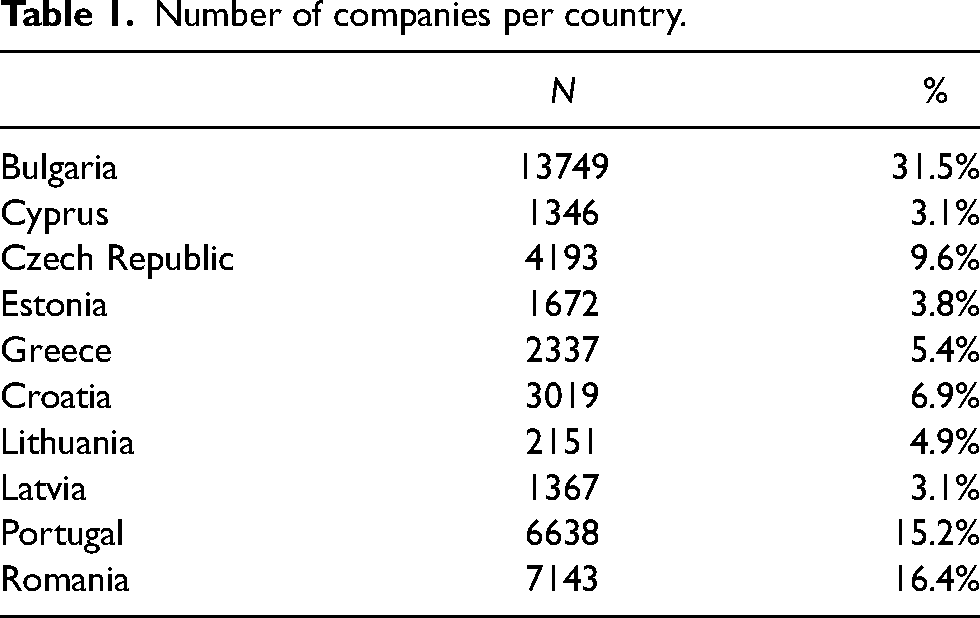
Community Innovation Survey includes questions on various topics related to innovation activities, such as expenditure on innovation, expenditure on the acquisition of external knowledge and training, relevance of information sources and cooperation for innovation activities, barriers to innovation and protection of intellectual property. The data in this study refer to the SMEs that responded to the CIS 2014, with each observation period relating to the three years (start of 2012 to end of 2014), and includes the countries for which microdata are available. In each country, the sample selection was random, based on the country's official statistical and updated business registers. Data on the firm's NACE classification and size class according to the number of employees were used to stratify the sample. Community Innovation Survey 2014 includes 98,809 firms with more than 10 employees from 14 EU countries (Bulgaria, Czech Republic, Germany, Estonia, Greece, Spain, Croatia, Hungary, Lithuania, Latvia, Malta, Portugal, Romania and Slovakia) and Norway. This study used data from 43,615 SMEs present in the CIS database. Table 1 presents the number of firms included in each year and country.
Number of companies per country.
Variables
Dependent variables: SME growth
Employment growth and turnover growth were used as variables referring to growth. Employment and turnover are available for the first year of the reference period (2014) as well as for the last year of the reference period (2016), and the following variables were created:

Control variables
The variables collected regarding the firm profile were the economic activity; Size (10–49; 50–249), Part of an enterprise group (No; Yes), Internationalised firm (No; Yes) and Turnover in 2016 (thousands of euros).
Independent variables: Sustainable innovation
Regarding sustainable innovation, the following variables were used: Environmental benefits due Product (goods or services) innovations (No; Yes), Environmental benefits due Process innovations, Environmental benefits due Organisational innovations (No; Yes) and Environmental benefits due to any type of innovation (product, process, organisational or marketing) (No; Yes).
Statistical methods
To assess the association of control variables and environmental innovation with employment growth and turnover growth, we used one-way ANOVA, t-test for two independent samples and the significance of the correlation coefficient. Two Analysis of Covariance and respective multiple linear regression models were used to evaluate the impact of SME characteristics and environmental innovation variables on employment growth and turnover growth. All data were analysed with IBM-SPSS software version 27.0 (IBM Corporation, New York, USA).
Results
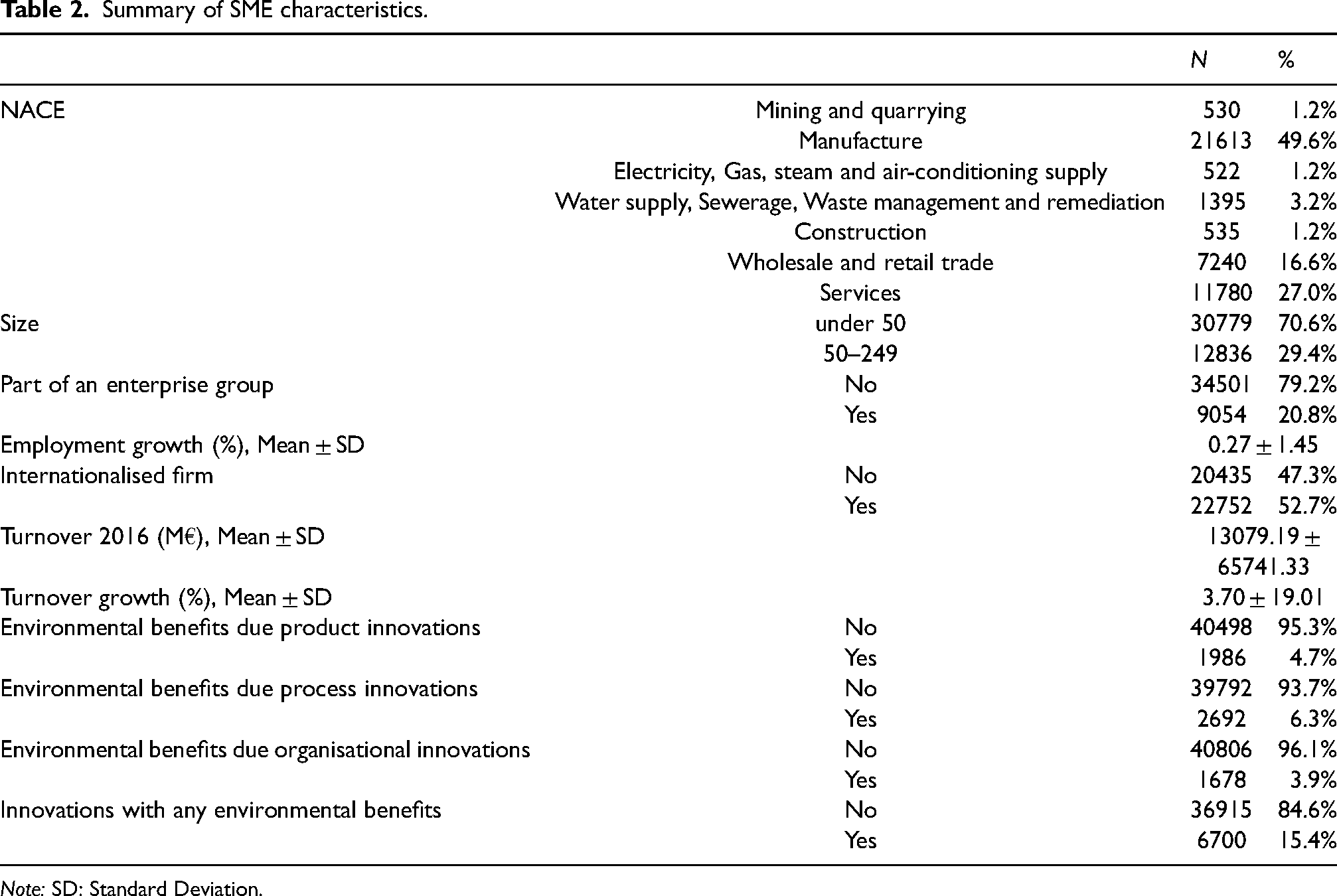
The data sample is described in Table 2. The sample of 43,615 firms comprised 49.6% manufacturing, 27.0% services sector and 16.6% wholesale and retail trade sector. In total, 70.6% had less than 49 employees, 20.8% were included in a business group, 52.7% had international activity and the average turnover in 2016 was 13,079 Euros. Regarding environmental innovations, 4.7% obtained Environmental benefits due to product innovations, 6.3% referred Environmental benefits due to process innovations, 3.9% presented Environmental benefits due to organisational innovations and 15.4% cited the creation of Innovations with any environmental benefits. The average Employment growth and Turnover growth were 0.27% and 3.70%, respectively.
Summary of SME characteristics.
Note: SD: Standard Deviation.
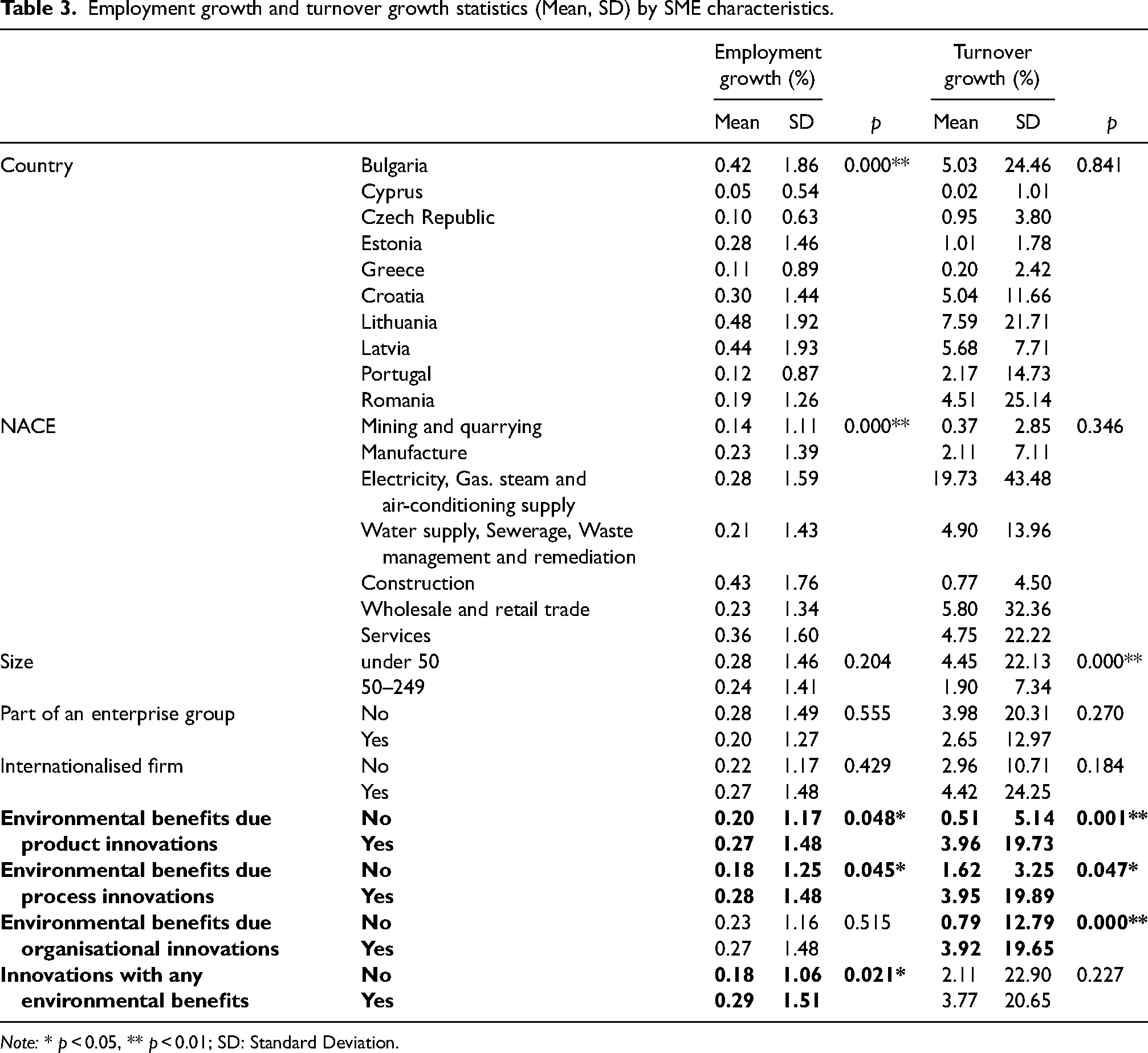
Table 3 presents the association of SME characteristics with SME control and environmental innovation variables.
Employment growth and turnover growth statistics (Mean, SD) by SME characteristics.
Note: * p < 0.05, ** p < 0.01; SD: Standard Deviation.
There are statistically significant differences (p < 0.001) in employment growth between countries, economic activities and turnover growth in SMEs with less than 50 employees and those with more than 50 employees. Cyprus (0.05%) and Czech Republic (0.10%) were the countries where SMEs had the lowest average employment growth, while SMEs in Latvia (0.44%) and Lithuania (0.48%) had the highest average growth levels. Small- and medium-sized enterprises in Mining and quarrying (0.14%) and Water supply, sewerage, waste management and remediation (0.21%) showed on average lower employment growth, with the highest growth in the Services (0.36%) and Construction (0.43%) sectors. Firms with less than 50 employees (4.45%) showed higher turnover growth than firms with 50 or more employees (1.90%).
As for the variables referring to environmental innovations, the existence of a statistically significant association (p < 0.05) of employment growth with environmental benefits due product innovations, or Environmental benefits due product process innovations or with the existence of Innovations with any environmental benefits was observed. Small- and medium-sized enterprises with Environmental benefits due to product innovations (0.27%) had significantly higher employment growth than those that did not report this benefit (0.20%). Small- and medium-sized enterprises with environmental benefits due to process innovations (0.27%) presented substantially higher employment growth than those that did not report this benefit (0.18%). The SMEs that reported Innovations with any environmental benefits (0.29%) presented significantly higher employment growth than the others (0.18%).
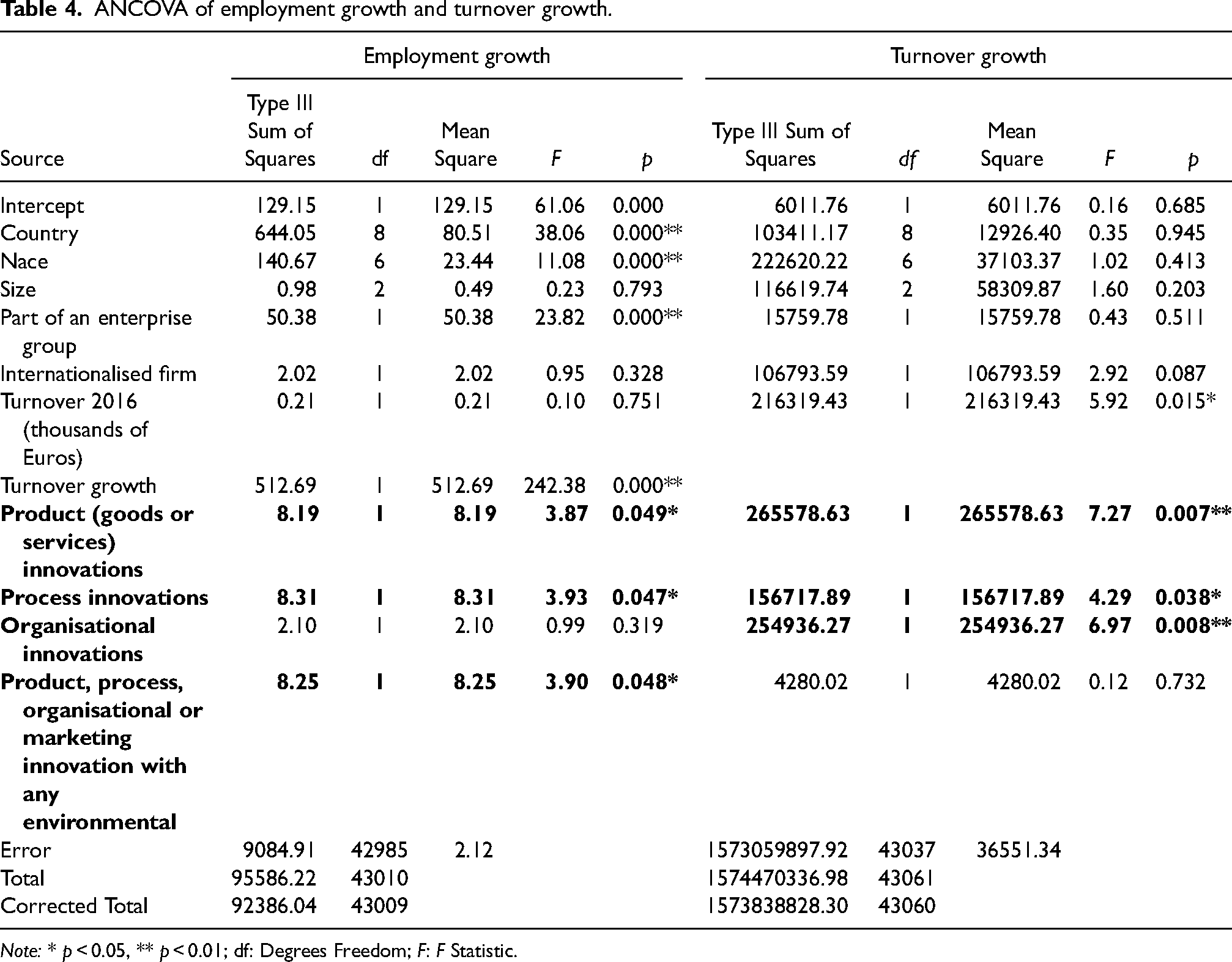
The turnover growth observed the existence of a statistically significant association (p < 0.05) with the variable's Environmental benefits caused by product innovations, Environmental benefits due to process innovations and Environmental benefits as a result of organisational innovations. Small- and medium-sized enterprises experienced Environmental benefits due to product innovations (3.96%) and demonstrated a significantly higher turnover rate than those that did not report this benefit (0.51%). Small- and medium-sized enterprises reported Environmental benefits due to process innovations (3.95%) had a statistically higher turnover growth than those that did not report this benefit (1.62%). Small- and medium-sized enterprises reported Environmental benefits due to process innovations (3.92%) had a significantly higher employment growth than the others (0.79%). Table 4 presents the impact of SME characteristics and environmental innovation variables on employment growth and turnover growth.
ANCOVA of employment growth and turnover growth.
Note: * p < 0.05, ** p < 0.01; df: Degrees Freedom; F: F Statistic.
In the control variables, country, economic activity, the firm being part of a group and turnover growth have a statistically significant impact (p < 0.001) on employment growth. As for the variables related to environmental innovations, it was observed the existence of a statistically significant positive impact (p < 0.05) of the existence of Environmental benefits due to product innovations, or Environmental benefits due to process innovations or the existence of Innovations with any environmental benefits also have a positive impact on employment growth. As for turnover growth, the study found a statistically significant association (p < 0.05) with environmental benefits due to product innovations, Environmental benefits due to process innovations and Environmental benefits due to organisational innovations.
Discussion and conclusion
The study confirmed hypothesis H1: SMEs that practice sustainable innovations grow more than firms that do not practice sustainable innovations. The results highlight that environmental sustainability is effectively becoming a significant concern for firms in general and for SMEs in particular (United Nations, 2013; Windolph et al., 2014). Successful SMEs rely on sustainable innovations and achieve higher financial success and social well-being (Zhu et al., 2019). Thus introducing sustainable innovation-oriented interventions in the current Business Models entails a change in the strategic direction of SME's as a reaction to external or internal phenomena (technological advancements, socio-economic trends, deregulations or managers’ decisions, changes in business models core components) to fulfil new, hidden or unmet customer needs (Cosenz and Noto, 2018) and implement an improved way of offering value to all stakeholders (Bini et al., 2016; Teece, 2010). Therefore, Business Models Sustainable Innovation is a strategy reformulation process to adopt ‘designed, novel, non-trivial changes to the key elements of a firm's business model and/or the architecture linking these elements’ (Foss and Saebi, 2018, p. x).
The H2 hypothesis was also supported: Sustainable innovations have a positive effect on SME growth. Despite innovation's importance for SMEs, sustainable innovation has an impact of particular importance (Wynarczyk, 2013). Sustainable innovations enable higher growth levels, thus demonstrating they are key to motivating SMEs to implement sustainable innovation practices (Arnold, 2016). This study found that sustainable innovation is a path to (Bayarçelik and Taşel, 2012; Ferreira et al., 2020, 2019). Examples of Sustainable innovations include potentially adopting transport facilities with low levels of pollutant gases and promoting clean procurement and supply chain activities of firms (Mensah et al., 2019). This infers those sustainable innovations coupled with strategic policies are crucial not only for the growth of SMEs but also for sustainable growth (Bekhet and Latif, 2018).
This study examines the relationship between sustainable innovation and SME growth. The findings underscore that SMEs are not compelled to make a trade-off between adopting sustainable practices or pursuing growth, as demonstrated by various authors (Ward et al., 2016; Wiedmann et al., 2015). They can effectively achieve both objectives. Consequently, it becomes essential to devise sustainable business models that can foster and capitalise on an increasingly environmentally friendly and cleaner society, thereby transforming sustainability from an exception into a norm. Daly and Farley (2011) argue that one of the key criticisms of traditional economics lies in its exclusive focus on resource allocation efficiency, disregarding social welfare and the ecological carrying capacity of ecosystems. Over the past decade, there has been a growing interest in studying and implementing alternative economic systems that facilitate climate change mitigation (Neumeyer and Santos, 2018). Consequently, one potential approach to address the excessive consumption of natural resources involves the development of new systems that prioritise sustainable practices, processes and technologies. However, Fernandes et al. (2021) contend, the realisation of these sustainable systems hinges on the active involvement of all stakeholders – government agencies, entrepreneurs and consumers – in building a greener and more sustainable society.
Theoretical implications
One of the implications of our research for theory was the positive identification of the relationship between sustainable innovation and SME growth. Of the SMEs that make up our sample (Mining and quarrying; Manufacture; Electricity, Gas, steam and air-conditioning supply; Water supply, Sewerage, Waste management and remediation, Construction, Wholesale and retail trade, Services), regardless of the sector to which they belong, those that innovate sustainably (Environmental benefits due to product innovations; Environmental benefits due to process innovations; Environmental benefits due to organisational innovations) grow more than firms that innovate with any environmental benefits. Given the specificities of these SMEs and the differences inherent to their size, large firms show the importance of investigating that they also develop sustainable practices while contributing to their growth (Scuotto et al., 2021). Sustainable innovation in SMEs thus becomes more relevant in a highly competitive business environment, where the search for reaching certain levels of growth is incessant (Chege and Wang, 2020). However, we cannot forget, according to the literature, that sustainable innovations are practised by entrepreneurs who prioritise the environment (Soundararajan et al., 2018). This relationship is not new since Triandis (1979) developed a study on the theory of interpersonal behaviour in which the author verified a positive link between several entrepreneur characteristics and the option for sustainable practices. Hay and Kamshad (1994) concluded, for example, that product innovation is the most popular strategy for expansion in various sectors. Cefis and Orsenigo (2001) also highlight the relevance of innovation for the growth of SME's as well as the need for further research on such relationships. Thus, when the consequences of innovation are considered, specifically sustainable innovation, several investigations that emphasise the strategic role of innovation for the growth of SMEs are apparent (Ganotakis, 2012; Scuotto et al., 2021; Slaper et al., 2011). The contribution of this study reinforces and extends these considerations. This study broadens the understanding that SMEs can behave sustainably and grow simultaneously. The study brings theoretical implications to demonstrate that growth is not hindered by sustainable practices, on the contrary.
Practical implications
Our study presents new evidence that sustainable innovations can positively impact firm-level growth (measured in terms of turnover and employment). The study offers several implications for policy and practice. For example, it suggests that public policies to promote these kinds of sustainable innovation could have co-benefits, such as employment growth and economic development. Such a policy could potentially assist make innovation policies more politically acceptable.
One practical implication is about individual behaviour. The literature concluded that the individual behaviour of each SME, in the adoption and practice of sustainable innovations, lies the solution for mitigating the effects of climate change. United to combat the climate impacts caused by environmental change, countries through the United Nations Framework Convention on Climate Change have agreed to implement countermeasures focused on the common goal of reducing global emissions of carbon dioxide and other greenhouse gases (UNFCCC, 2015). There has been an increasing trend of studies on sustainable innovations in recent decades (Fernandes et al., 2021; Su and Moaniba, 2017). Thus, for several authors, sustainable economic growth refers to any form of economic growth that does not harm the environment (Nino, 2016). From here, we can foresee that if sustainable innovation is one of the main factors that contribute to economic growth (Dong et al., 2014; Fernandes et al., 2021; Kozluk and Zipperer, 2015), it is also fundamental for the growth of SME, as demonstrated in this study.
Muñoz and Dimov (2015) argued that ignorance and lack of knowledge regarding the concept of sustainability in a sustainable environment is an even more significant challenge in sustainability orientation. Schoneveld (2020) suggests sustainable value principles (environmental, social and economic value) are thus fully integrated into all business model elements. This implies that sustainability is at the heart of the business model's value proposition, sustainable value is created and delivered to stakeholders and is transformed into economic value for the firm and its shareholders (Aagaard, 2019). Schaltegger et al. (2016) proposed a well-accepted definition of sustainable business model: helps describe, analyse, manage and communicate (i) a firm's sustainable value proposition to its customers and all other stakeholders, (ii) how it creates and delivers this value and (iii) and how it captures economic value while maintaining or regenerating natural, social and economic capital beyond its organisational boundaries. Consequently, the most important implication of this study for practice is that SMEs should not ignore environmental challenges and should not view sustainability as something that will take away their competitiveness or even wealth creation. This study demonstrates that the adoption of sustainable innovations contributes positively to the growth of SMEs. Thus, to highlight that SMEs can have sustainable behaviours and strategies and that these enhance their consequent growth is, one of the significant contributions of this study. A sustainable entrepreneurial orientation is the utmost challenge for SMEs.
Limitations and future research
As every research, also our study holds several limitations. Firstly, it focused solely on CIS data, thereby potentially excluding organisations with higher innovation levels that have acquired the capability to fulfil market demands using internal resources. Future research should investigate how the level of economic development and even income inequality within countries influences the sustainable behaviours of SMEs. The second limitation is the absence of an examination of the impact of diverse sustainable policies on SME growth. Analysing sustainable innovations within specific entrepreneurial ecosystems to gain insights into the systemic effects of adopting such innovations and their influence on SME growth presents a promising avenue for further research. The third limitation pertains to our utilisation of only two financial indicators as a limited proxy for a more intricate organisational growth process. Therefore, it is crucial for future research to explore the literature that has evolved from the work of Edith Penrose (Theory of the Growth of the Firm).
Footnotes
Author notes
João J. Ferreira is currently affiliated with Management University of Beira Interior, Department of Management and Economics & NECE Research Unit in Business Sciences, Portugal. QUT Australian Centre for Entrepreneurship Research, Brisbane, Australia.
Pedro Mota Veiga is currently affiliated with University of Maia, UNICES, Maia, Portugal & NECE- Research Unit in Business Sciences, Portugal, Estrada do Sineiro, Polo IV 6200 Covilhã, Portugal.
Declaration of conflicting interests
The author(s) declared no potential conflicts of interest with respect to the research, authorship, and/or publication of this article.
Funding
The author(s) received no financial support for the research, authorship, and/or publication of this article.
