




Abstract
Internationalisation, the notion of cross border business, has become one of the key strategies for growth for small and medium enterprises (SMEs) in developing countries in recent years. Although many SMEs have used internationalisation strategies, there remains a gap of understanding the relative importance of factors influencing SMEs internationalisation particularly from developing countries perspectives. Drawing on the Resource Based View of the firm (RBV) theory, this research develops and validates the dimensions and sub-dimensions of the drivers of internationalisation. The study further identifies the relative importance of these dimensions from a developing country context. The study used a questionnaire survey to collect primary data from 212 Bangladeshi SMEs based on area wise cluster sampling. This study used partial least square based structural model (PLS-SEM) to assess the key drivers for foreign market entry by developing country SMEs. The findings confirm that the drivers of internationalisation represent a hierarchical construct consisting of three primary and eight sub-dimensions. The study suggests that SME internationalisation in a developing country is contingent upon two categories of capabilities: critical organisational capabilities or resources (linked to internal processes largely associated with human resources) and critical institutional capabilities (associated with state level provision and the cultural fabric).
Keywords
Introduction
Small and medium enterprises (SMEs) are the engine of economic growth as they constitute almost 95 per cent of all globally active enterprises (Hack-Polay et al., 2020; Odunukan et al., 2021). The growth of SMEs significantly contributes to socioeconomic development and poverty reduction in an economy (Rahman et al., 2017). While the global economic growth is highly related to the success of SMEs, internationalisation is found to be a decisive factor for the long run success of SMEs (Mendy et al., 2021). Internationalisation has been defined as the development of organisational capabilities to exploit international business opportunity, “either in the form of an increased commitment to existing foreign markets or as an entrance into a new foreign market” (Li and Gammelgaard, 2014: 153). Firm internationalisation often starts slowly and incrementally with non-regular export activities before full exporting through agents and investing in the foreign market (Haddoud et al., 2017). This study defines internationalisation as inward (such as, import) and outward (such as, export) perspectives. The importance of internationalisation of SMEs has attracted growing research focussing on the identification of drivers that help SMEs to grow across borders although significant research deals with developed economies (Mendy et al., 2020; Rahman et al., 2017). It is believed that firms that takes proactive approach to internationalisation makes them more robust and potentially more successful (Forbes, 2015). Therefore, firms are motivated to internationalise to increase sales, diversify operations and reduce risks/uncertainty, reduce overreliance on domestic market, access technology or cheap labour supply, etc.
The study resource-based view of the firm (RBV) theory (Wernerfelt, 1984). RBV contends that some firms experience greater success because they can exploit their resources strategically (Wang and Ahmed, 2007; Zhou and Li, 2010). The organisation's resources or capabilities that are valuable, rare and inimitable can be used to integrate and reconfigure internal and external resources (Beregszaszi and Hack-Polay, 2012; Lin and Wu, 2014). Adaptive and absorptive capabilities seem to enhance firms’ innovative capabilities (Foss et al., 2011). There are differences in the business environment and the organisations’ capabilities or resources in developed and developing economies. The differences are reflected in important factors such as economic, social, geographical, technological, government policies and the competitive market forces (Mendy and Hack-Polay, 2018). These conditions need to be examined to understand the predicators of developing countries firm's internationalisation capabilities. Although research on emerging economies is portrayed by scholars as a forward-looking activity, albeit at a slow pace, there is a paucity of research that focuses on developing countries. Only few studies have addressed the drivers of internationalisation in emerging economies (Brennan and Garvey, 2008; Mendy et al., 2021; Rahman et al., 2021). This is persistent despite evidence that developing countries are more dependent on SMEs (Mendy and Hack-Polay, 2018).
There are some areas where this research makes original, theoretical and practical contributions to SMEs internationalisation research in general and drivers of internationalisation from developing economies in particular. First, using the drivers of internationalisation concept, we conceptualise and empirically test the observable and unobservable drivers of internationalisation. Second, we develop a hierarchical drivers model which can be used as a template to examine the drivers of internationalisation in the context of other developing countries. Finally, we examine the capabilities of SMEs and their ability to reconfigure their resources in order to address the change, moving from local to international environment.
Most of the research on the drivers of SMEs internationalisation are concentrated in Australia (Mendy et al., 2021), Sweden (Rundh, 2007), UK (Barnes et al., 2006), USA (Johnson, 2004). This shortcoming in the literature renders pertinent the investigation of the drivers of SME internationalisation in developing countries. Therefore, this article contributes to knowledge by providing practical, theoretical and new perspectives on the resource-based view (RBV) of the firm theory as applied to SMEs in developing countries. Our approach and methods enabled us to develop new data and empirical insights into the drivers of SME internationalisation, with specific reference to Bangladesh which is a prominent developing economy in South Asia. Bangladesh is linked to its extreme dependence on SMEs as a major source of economic growth (Mendy et al., 2020). Ahmed et al. (2011) reported that 82 per cent of the Bangladeshi labour force work in SMEs. O’Neill (2013) pointed out the potential for Bangladesh to become a world leading emerging market. However, due to lack of appropriate empirical research to identify relevant international market entry drivers for the SMEs in developing countries, potential entrepreneurs might have incorrect or insufficient information about the possible challenges while entering foreign markets. Therefore, the identification of the international market entry drivers for Bangladeshi SMEs in this study is a timely response.
The organisational context has been examined to highlight the business environment and drivers of SME internationalisation in Bangladesh (Young, 2010). Organisational capability is likely dependent on institutional environments prevalent and helps build the foundations for innovative entrepreneurship (Aidis, 2017). The paper is divided in four main sections. The next section examines the existing literature and positions the hypotheses. This is followed by the methodological considerations. We then present the main results and discuss them before drawing the implications of the study.
Literature review and hypothesis development
Institutional and organisational capabilities
From an institutional theory standpoint, institutions are formal (e.g. laws, rules, and regulations) and informal (e.g. custom, norms, religion, and social values) rules that govern individual and firm behaviour (North, 1991; Tehseen et al., 2021). North (1991) perspective on institutions is both sociological and economic – a perspective espoused in this study. This is because it captures the political, economic, social and legal constraints linked to market activities. Firms must navigate between the enabling and constraining rules of the institutional environment (De Castro et al., 2014). The institutional forces influence individual and firm behaviour (Shantza et al., 2018). Hostility in the firm's environment only has an impact on searching opportunities and threats (Frank et al., 2017). We use the resource-based view of the firm (RBV) (Beregszaszi and Hack-Polay, 2012; Tehseen et al., 2021; Wernerfelt, 1984) to support this research. This theory projects a strategic approach to seeing the organisation's competitive strategy. According to North (1991), these capabilities include human capital, skills and external structures, including the institutional fabric in which the firm operates, e.g. culture, legal frameworks, etc. This means, the organisation does not just work with its internal resources or capabilities, but it also strategically exploits, adapts and negotiate external resources and factors which it can turn into additional capabilities. RBV defines a business as a unique collection of resources and capabilities, and those that are valuable, rare and inimitable, together with the suitability of the firm's organisation to exploit these tangible and intangible assets (VRIO framework) give the firm competitive advantage and consequently greater financial rewards [Pindado and Sánchez, 2018, p. 5].
Consequently, RBV theory focuses on the firm's operational capabilities (Denrell and Powell, 2016). In Teece’s (1997) perspective, enabling the organisation to “create, extend, or modify its resource base” in response to the environment in which it operates. Researchers have identified several notable drivers for SME internationalisation including market expansion and economies of scale, management and firms’ capability (Dutta et al., 2016), market knowledge (Hack-Polay et al., 2020), social networks or nexus (Rahman et al., 2017; Shane, 2000), international experience (Lopez, 2007), growth and profit expectations (Rundh, 2007). For Shane (2000), nexus or ties are critical to seise opportunities in the market. In addition to these firms’ specific drivers, internationalisation is motivated by some industry specific drivers, e.g. skilled labour (Williams and Williams, 2011), frequent interaction or social network facilities. Similarly, there could be some country specific drivers for SME internationalisation, e.g. knowledge resources (Brennan and Garvey, 2008), cheap labour (Navaretti et al., 2010), Information and communication technology (ICT) facilities (Pezderka and Sinkovics, 2011), education (Wengel and Rodiriguez, 2006).
Interest in SME research has increased over the last two decades (Al-Hyari et al., 2012; Hack-Polay et al., 2020). The RBV approach conceptualises entrepreneurial capability as the individual freedom and ability to pursue an entrepreneurial opportunity within one's environment (Tehseen et al., 2021; Wilson and Martin, 2015). Lau et al. (2004) examined the correlation between organisational capabilities and firm performance of SMEs in various environments in Hong Kong. They found that organisational capabilities can significantly explain the level of SME performance and the impacts of environmental dynamism on these relationships. There is also a significant relationship between environmental dynamism and the resource capabilities of SMEs (Frank et al., 2017).
Even though SMEs are usually formed with particular focus on the local market in most cases, internationalisation is considered as a highly popular strategy to ensure SME sustainability (Mendy et al., 2020). However, deciding to go for internationalisation is not a straightforward storey. Considering the resource limitation (Rahman et al., 2020), SMEs need to analyse the key drivers very carefully. This issue is more significant in emerging economies due to their higher dependency on SMEs for job creation and economic growth compared to developed countries. If SMEs are unable to know the key drivers to be used, potential benefits of internationalisation will remain underutilised, be bypassed or be used as a measure of last resort.
Conceptual model and hypotheses development
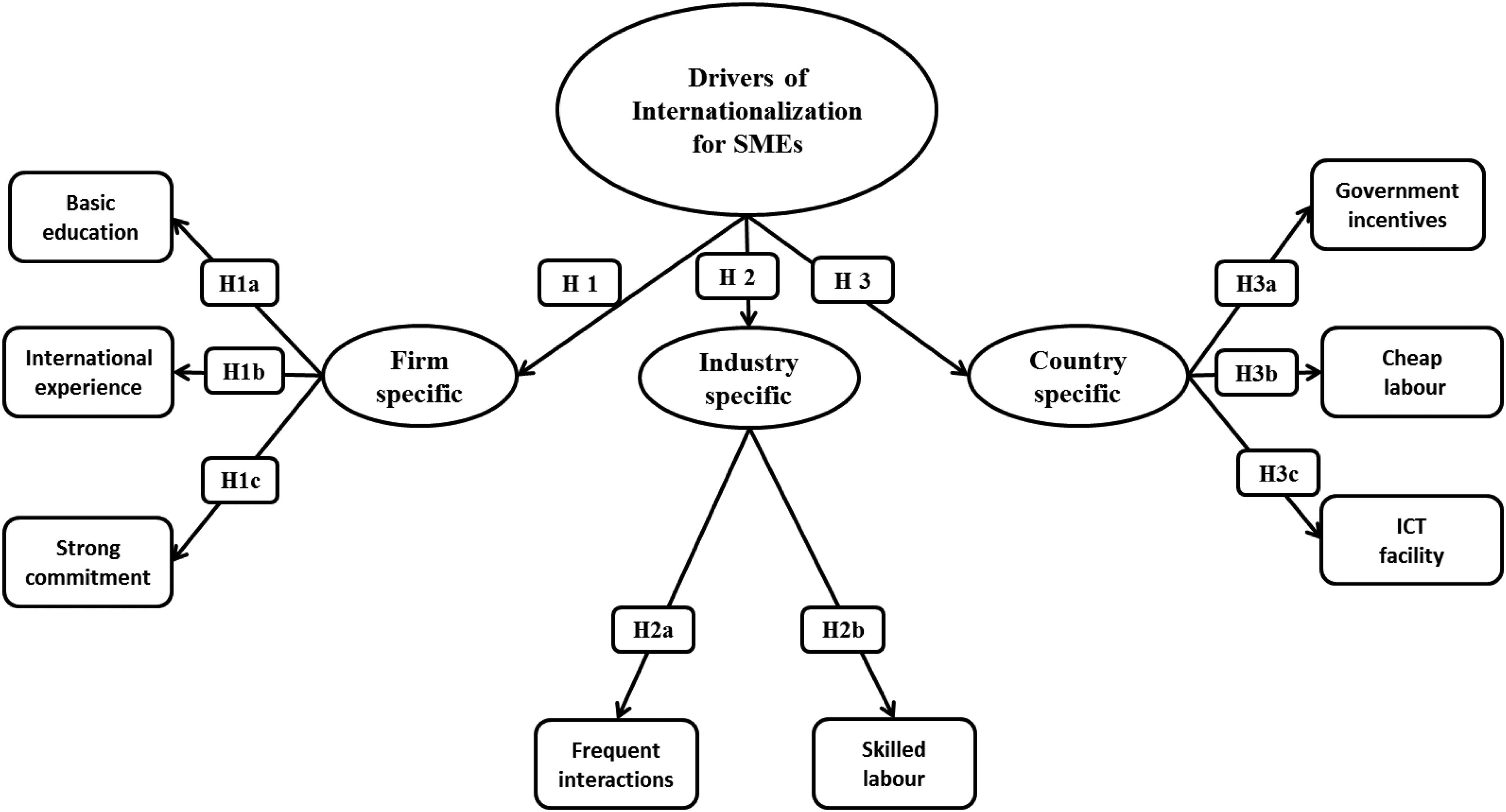
Based on the extant literature on the drivers of internationalisation of SMEs, this study proposes the following research model for Bangladesh (see Figure 1). This model proposes that there are three major drivers for internationalisation of Bangladeshi SMEs. These are firm specific drivers (FD), industry specific drivers (ID) and country specific drivers (CD). First, firm specific drivers consist of basic education (FD1), international experience (FD2) and strong commitment (FD3). Second, Industry specific drivers consist of frequent interactions (ID1) and Skilled labour (ID2). Finally, country specific drivers consist of government incentives (CD1), cheap labour (CD2) and ICT facilities (CD3).
Hypotheses.
Figure 1 shows eight hypotheses based on eight major potential drivers of SME internationalisation in the context of Bangladesh. These eight drivers are further categorised in 3 groups -Firm specific drivers, industry specific drivers and country specific drivers. Firm specific drivers are Basic education, international culture experience and strong commitment. Industry specific drivers are frequent interaction and skilled labour. Finally, country specific drivers are government incentives, cheap labour and ICT facilities. In the following section of the study, we justify these hypotheses.
Basic education is related to the fundamental knowledge, skill and gained from formal and informal instruction or training (Tiana et al., 2011). These represent important human capital – within the RBV theory- which is sine qua non for entrepreneurship. In Bangladesh, primary education is considered as Basic Education which can be different in other economies (Rumnaz Imam, 2005). In the context of entrepreneurship research, human capital is considered as one of the three most important factors (human, financial, and social) for the business growth (Burnett and Danson, 2017). As a determinant of human capital, a higher level of education significantly influences the formation and growth of new ventures (Dutta et al., 2016; Ferran et al., 2020). These firm characteristics fall into internal capabilities (Denrell and Powell, 2016).
While human capital is important for all firms, large firms can hire experts through outsourcing by using their resource-based advantages. In terms of financial capability, SMEs still lag behind in their capacity to use the full potentials of educated and skilled workforce through hiring (Rahman et al., 2020). Therefore, these firms are more dependent on the basic education of firms’ owners and managers. Owing to the demonstrated relationship between basic education and internationalisation, some studies have examined the direct and indirect impact of education as a driver of internationalisation (Hack-Polay et al., 2020). In contrast, some other studies do not consider basic education as a key driver of internationalisation for SMEs (Mendy et al., 2020). Considering the important link between basic education (of owners and managers) and firm specific drivers of internationalisation, this study proposes basic education as a function of firm specific drivers of internationalisation in the context of developing countries’ SMEs. In the light of the above discussions, our first hypothesis is proposed:
Experience is the elementary understanding of people related to facts, expertise and custom acquired from the participation in same or similar things or events (McEvily and Marcus, 2005). It is generally agreed that the experience has a positive relationship with performance. In the context of daily life, every human being develops their abilities through the experience to reach their inherent targets under favourable experimental conditions (Dutta et al., 2016). Entrepreneurship is also influenced by the experience of the owners or managers to handle the day-to-day business in relation to the entrepreneurial cognition (Kosa and Mohammed, 2017). Entrepreneurial cognition is “the knowledge structures that people use to make assessments, judgments, or decisions involving opportunity evaluation, venture creation and growth” (Mitchell et al., 2002: 97). Although entrepreneurial cognition is important for both local and international business, it is more important for the firms to understand the potential opportunities in foreign market, evaluate them to create international venture and ensure the growth.
Through internationalisation, a firm starts operation in a more vulnerable and complex situation (Rahman, et al., 2020). Cognitive scholars argues that entrepreneurs who have no or limited international experience are particularly exposed to these additional challenges in new and complex environments (Hack-Polay et al., 2020). Supporting the relationship between international experience and internationalisation, many studies highlight experience as a driver of internationalisation (Rundh, 2007). Some other studies do not consider international experience as a driver of internationalisation (see, Dutta et al., 2016). Considering the important link between experience (of owners and managers) and firm specific drivers of internationalisation, this study proposes international experience as a function of firm specific drivers of internationalisation in developing countries. The above discussion enables the formulation of our second hypothesis:
Commitment is the dedication or willingness of different partners to conform to the agreed practises on behalf of the relationship (Cichosz et al., 2020). Strong commitment requires firm bindings between two parties on a set of condition of satisfaction within an agreed time cycle (Welty and Becerra-Fernandez, 2001). In case of international market expansion, strong commitment is a key driver (Bianchi et al., 2018). It has been argued ‘‘that the commitment to a market affects the firm's perceived opportunities and risk’’ (Johnson and Vahlne, 1977: 27). It is also stated that, ‘‘knowledge of opportunities or problems is assumed to initiate decisions’’ (ibid.). While some studies considered strong commitment as one of the important drivers of internationalisation (e.g. Javalgi and Todd, 2011), some others ignored it (for example, Câmara and Simões, 2008). Supporting the relationship between owner commitment (and managers) with internationalisation of SMEs, this study proposes strong commitment as a function of firm specific drivers of internationalisation in the context of developing countries’ SMEs. In the light of above discussion, the following hypothesis is proposed:
Interaction is the way of exchanging views by two or more parties having effect on each other in the form of communication, presentation, writing or other forms of networking (Pempek et al., 2009). This is an important element of building networks both in personal and social activity. It has been argued that interaction also plays an important role in achieving the entrepreneurship success (Mendy and Hack-Polay, 2018). Interaction is the key to build relationships and the quality of relations with other organisation significantly influence the success of the business organisations (Franco and Haase, 2016). These relationships among the related business and other organisations (government bodies, media, etc.) are known as business networks. Although networking is important both for larger and smaller firms, large firms are more dependent on their own resources because their own resources are usually sufficiently large. Small and medium enterprises are more dependent on the frequent interaction and network building to ensure collaborative arrangements. For Keen and Etemad (2012: 573), “such collaborative arrangements may also allow companies to access resources embedded in the regional networks, including the unused or underutilised resources of network members, thus reducing the adverse impact of SME's resource constraints”.
In international business operations, the importance of interaction with potential resource partners is even higher. Frequent interactions with international contacts can be a source of vital information about foreign market condition (Håkansson and Ford, 2002) and potential opportunities (Musteen et al., 2010). The information based on the frequent interactions by the SMEs might also decrease the risks (Eriksson et al., 1997) and increase the business potentials (Musteen et al., 2010) associated with the international business expansion. Some studies do not consider frequent interaction as a driver of internationalisation for SMEs (e.g. Rundh, 2007). This study therefore proposes frequent interactions as a function of industry specific drivers of internationalisation in the context of developing countries’ SMEs. From the above discussions, the following hypothesis is proposed:
Skills are the ability of an individual to carry out a certain task with efficient use of time and energy or both (Kirkpatick and Locke, 1991). Several sources can help develop skills such as, “training, experience, judgement, intelligence, relationships and insight of individual” (Barney, 1991: 101). It is generally agreed that skills are key to success. From this point of view, business organisations need skilled workers to gain success (Bryan, 2006; Jasra et al., 2011). Using the better financial capability, large firms find it comfortable to hire more skilled workers to work for them. In contrast, small and medium enterprises find it difficult to hire skilled labour unless they are economically available due to resource limitation. Some countries may have some skilled labour related to a particular industry, like readymade garments sectors workers in Bangladesh (Hossan et al., 2012), IT sector workers in India (Shastry, 2012) and electronics sector workers in China (Chan, 2010). Despite this importance, other studies do not highlight skilled labour as a driver of internationalisation (e.g. Barnes et al., 2006). This study considers skilled labour as a function of industry specific drivers of internationalisation in the context of developing countries’ SMEs. Therefore, the following hypothesis is proposed:
Incentive is the reward to inspire an individual, group of people or certain type of business organisation to start or continue certain activities (Majchrzak and Malhotra, 2013). Therefore, incentive is the combination of support and reward. In an early attempt, Rodgers et al. (2009) explained the support services from two perspectives- extension services (advisory service, counselling, and training research) and financial services (loans, grants and subsidies). Although the incentives are required both for large firms and SMEs, it is generally agreed that the priority should be given to SMEs. This is because of their vulnerable position due to resources constraints and higher contribution in socio economic development of the economy. In case of international business expansion, SMEs may require higher level of incentives so as to become competitive in the global market. It is essential to have government support to be successful in the international market for the SMEs from developing countries. This is supported by other researchers including Mendy and Hack-Polay (2018); Franco and Haase (2016); Martincus and Carballo (2010). In contrast, government support service ineffectual for the internationalisation of SMEs. Supporting the relationship between the government incentives with internationalisation of SMEs, this study proposes government incentives as a function of country specific drivers of internationalisation in the context of developing countries’ SMEs. From the above discussions, the following hypothesis is proposed:
Cost of labour is directly related to the cost of production or cost of service. In this context, lower labour cost through cheap labour might ensure the low-cost production or service strategy. It has been argued that labour cost is one of the three (land, labour and resources) most important factors to attract investment and ensure business growth (Bose, 2012). Although cheap labour is an advantage both for local and international business, it is argued that the importance of cheap labour is more significant for international trade particularly for exporting countries (Rahman et al., 2020). Availability of comparatively cheap labour fuelled the growth of business in general and SMEs in particular in many countries to compete internationally for long time (Eaton and Goulart, 2009). This is more important for developing countries having low cost of production due to the availability of cheap labour (Hessels and Kemna, 2008). This is also supported by the findings of various authors including Navaretti et al. (2010), Niosi and Tschang (2009), McDowell et al. (2008). Despite this importance, some of the studies do not include cheap labour as the drivers of internationalisation (e.g. Rahman et al., 2020; Orser and Dyke, 2009; Câmara and Simões, 2008). Considering the connection between cheap labour in developing countries and international business growth, this study regards skill labour as a function of industry specific drivers of SME internationalisation in developing countries. Therefore, the following hypothesis is proposed:
ICT is the combination of some devices (audio visual networks, computer, telephone and wireless signal) that enables individuals or business organisations to collect, storage, manipulate and distribute information (Ogunsola and Aboyade, 2005). The development of ICT facilities is considered as one of the most important factors in day-to-day business now a day. ICT is assisting business organisation to gain better performance (Dyerson and Spinelli, 2011), achieve better productivity (Hack-Polay et al., 2020), to increase sales, new product development (Rahman et al., 2020) and to have better customer satisfaction (Hack-Polay et al., 2020). Although ICT is influencing both large firms and SMEs, overall use of ICT is low in SMEs (Mohamad and Ismail, 2009). It has also been claimed that the small and medium enterprises are not using the ICT with full potential like the large firms (Consoli, 2012) party due to their resource limitation (Girgin et al., 2011). Despite this inability, it is believed that ICT is playing an important role to ensure the growth of SMEs (Consoli, 2012). Although ICT is important for local business, its importance might be higher in international trade. Some studies do not consider ICT as one of the drivers of internationalisation for SMEs (for example, Barnes et al., 2006; Kocker and Buhl, 2007; Lopez, 2007). This study considers ICT facility as a function of country specific drivers of internationalisation for developing country SMEs. Therefore, the following hypothesis is proposed:
Method
This study proposed a hierarchical reflective model on the drivers of internationalisation for Bangladeshi SMEs and it formulates a theory that is empirically testable. To validate the partial least square (PLS) based structural model, this study used empirical data which is one of the most effective practises to measure a causal relationship (Mendy et al., 2021; Odunukan et al., 2021). As the factors of this structural model are observable and measurable, this study considered the idea of positivism as a research philosophy (Saunders et al., 2015). In the context of research approaches (inductive and deductive), this study used deductive process where the model was formed prior to collect data to validate. Although there are many strategies for empirical data collection, this study used survey- “a research strategy which involves the structured collection of data from a sizeable population” (Saunders et al., 2015: 115). Considering the nature of investigation, the cross-sectional survey technique was applied to extract views from the respondents only once. For the potential to achieve the maximum response rate from a developing country perspective, postal survey was applied rather than email, telephone or online survey (Mendy et al., 2020; Rahman et al., 2017).
To validate the model, an empirical survey was carried out which followed deductive research approach. The data was collected from four major divisions of Bangladesh – Dhaka, Khulna, Chittagong and Rajshahi. 1000 questionnaires were distributed among these four divisions (250 questionnaires each) following the cluster sampling technique. Following Mendy et al. (2020), this study used cluster sampling as there was no data on the SMEs. To ensure equal selection opportunities, a systematic random sampling technique was applied. The population for the survey was defined as the SMEs doing international business, i.e. interacting or trading with other businesses and customers across borders. Non-internationalised firms were excluded as the dynamics of local firms are very different than the internationalised SMEs (Mendy et al., 2020; Odunukan et al., 2021). 219 responses were received. Among the 219 returns, 7 were unusable due to excessive missing data. Finally, the data from 212 questionnaires were analysed. As common method variance (CMV) is an issue for survey based empirical examination with several constructs particularly in social science, this study applied Harman 1 factor test as suggested by Mendy et al. (2020). Harman 1 factor test found no significant biases which ensured that CMV is not an issue for this data set. We have also compared the test on the average of early and late responses to examine non-response biases.
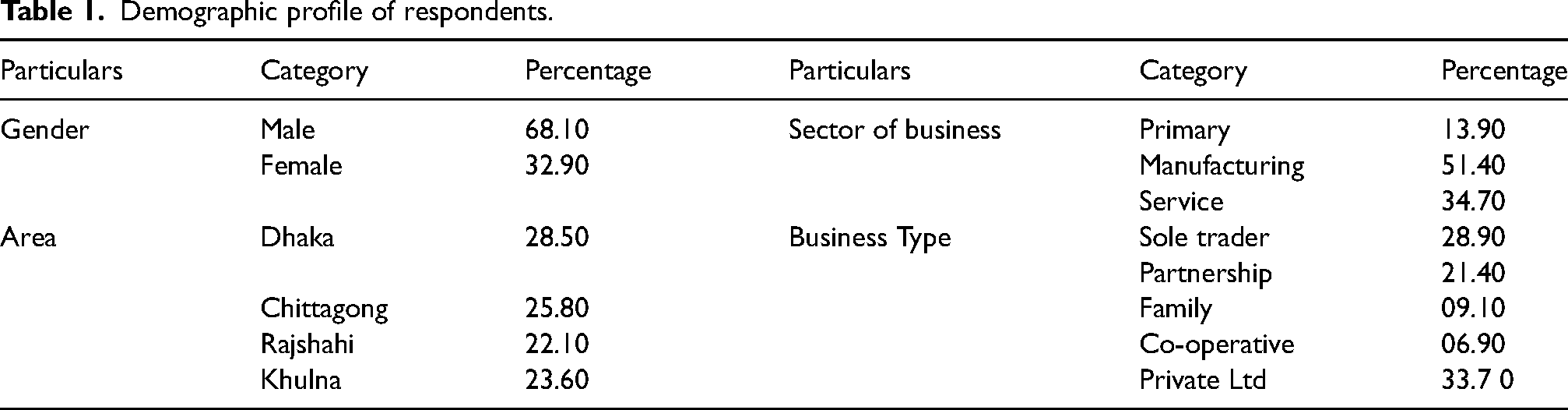
Table 1 shows that the data for this study was collected from range of cross-sectional population. The final tally of 212 respondents is split between 68.1% males and 32.9% females. In the context of sectors of activity, 13.9% are from primary sector followed by 51.4% in manufacturing and 34.7% in service sector. From divisional distribution point of view, 28.5% from Dhaka, 25.8% from Chittagong, 22.1% from Rajshahi and 23.6% from Khulna division. In the case of business types by ownership among the respondents, 28.9% sole traders, 21.4% Partnership, 9.1% family business, 6.9% co-operative and 33.7% private limited company.
Demographic profile of respondents.
The key drivers of SME internationalisation were identified from a systematic review of literature. 8 key divers were identified by dropping the item with less contribution in the model. All the items of the questionnaire were measured in 5-point Likert-scale. At the initial stage of the research, a pre-test was carried out on 20 individuals typical of the sought sample characteristics and 5 academics to ensure the appropriateness of wording, contents, scales, sequence and format. Based on their opinion at the pilot stage, this study only collected data from the international SMEs in Bangladesh. However, the responses from the firms that are thinking of international expansion could be used. The researchers recognised this as a limitation and therefore applied variance based structural model. Although the drivers are broadly defined, this study examined how these drivers are performing as a group and as an independent variable through repeated indicators (see Appendix 1).
Drivers of internationalisation as a hierarchical reflective model
This study specified drivers of internationalisation for SMEs as a hierarchical reflective model based on hierarchical construct. This hierarchical reflective model is based on the constructs and their relationships with the drivers of internationalisation of SMEs. According to Bagozzi (2011: 263), “… the theoretical meaning of a construct inheres in what it is and to what it relates conceptually. A construct standing alone is less rich in meaning than one that is explained by something else or one that also explains or predicts something else.” Therefore, it is very much important to use the hierarchical constructs in different dimensions. Therefore, the hierarchical construct is also known as the multidimensional construct. To capture and overall latent variable, this study used multiple dimensions at several hierarchies (Jarvis et al., 2003; Mendy et al., 2020; Rahman et al., 2017; Wetzels et al., 2009). It has been argued that the multi dimensions in several hierarchies assist hierarchical model to reduce model complexity and increase theoretical discretion (Akter et al., 2010; Mendy et al., 2020; Rahman et al., 2017). In addition to this, it has been reported that the ‘level of abstraction for predictor and criterion variables’ (Edwards, 2001) is one of the most important benefits of using the hierarchical constructs in the research studies (Rahman et al., 2020). In addition to these methodological advantages, extant research on the internationalisation of SMEs has embraced the use of hierarchical reflective constructs particularly in internationalisation of SMEs.
As this paper aims to identify the key drivers of internationalisation for Bangladeshi SMEs, this study specifies the drivers of SME internationalisation as a hierarchical-reflective model with three reflective constructs. These constructs are firm specific drivers, industry specific drivers and country specific drivers. Besides, all the constructs of this model share the common theme; that is the overall drivers of internationalisation for Bangladeshi SMEs. It is generally agreed that the factors influencing the internationalisation of SMEs have a good correlation. This is also supported by the suitability criteria of hierarchical reflective model. The correlation between two measures is supposed to be highly positive for a reflective construct. This is also supported by Petter et al. (2007) who explained internal consistency as one of the most important elements of reflective constructs. In addition, the un-dimensional nature of the reflective measures supports to get rid of the individual measures with the intention to improve the construct validity with no effect on the content validity (Petter et al., 2007).
Figure 1 conceptualises the drivers of internationalisation of Bangladeshi SMEs as a hierarchical reflective model with two orders- first and second. First order of the model consists of three latent variables of drivers of internationalisation for Bangladeshi SMEs-firm specific drivers, industry specific drivers and country specific drivers that are related to the respective indicators (manifest variables-MVs) each. In the second order, drivers of internationalisation for Bangladeshi SMEs are shown in a hierarchical, reflective model that is constructed by 8 MVs (3 + 2 + 3) of 3 first order constructs.
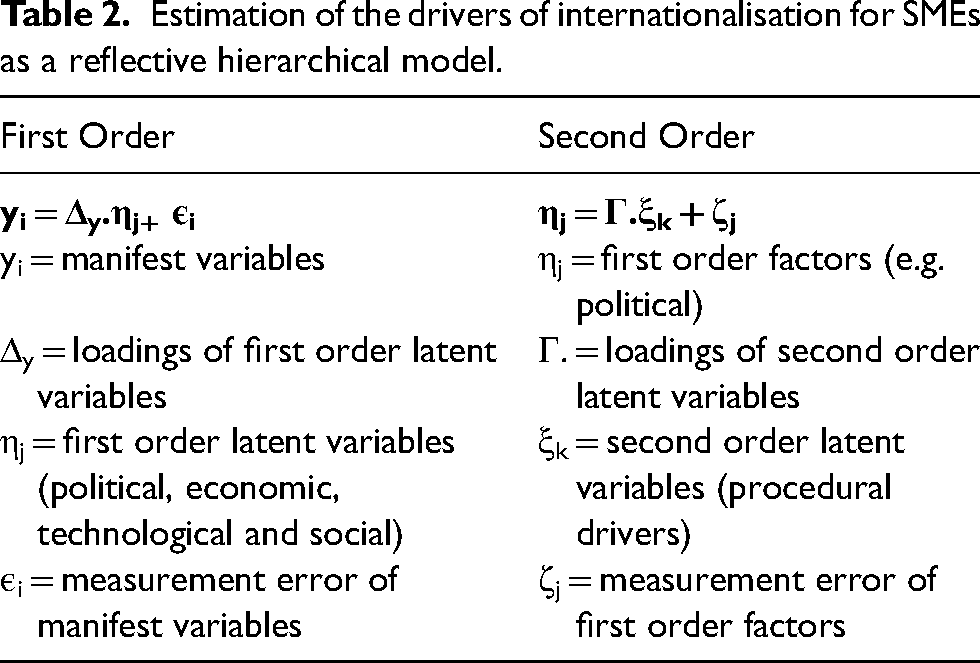
Table 2 shows the equation for estimating the hierarchical reflective models on the drivers of internationalisation for SMEs are presented. The equation for the first-order model specifies first-order manifest variables (yi), latent variable (ηj), loadings (Δy) and an error term (εi). The equation of the second-order model specifies the first-order factors (ηj) in terms of the second-order latent variables (ξk) and error (ζj) for the first-order factor and second-order latent variable loadings (Г.).
Estimation of the drivers of internationalisation for SMEs as a reflective hierarchical model.
Using PLS to assess the drivers of SME internationalisation
There are two common types of structural equation models popularly used by the researchers- co variance based structural modelling and component based structural modelling (also known as partial least square-PLS based structural modelling. Although CB SEM is the most dominant paradigm, there are constraints, e.g. larger sample size required, model complexity and indeterminacy in factor identification (Chin, 2010; Hulland et al., 2010). This study is based on comparatively small sample size and tried to avoid the model complexity and indeterminacy in factor identification. As such, this study adopts component-based SEM or PLS path modelling to identify the key drivers of internationalisation of SMEs. Again, PLS based structural modelling is appropriate for this study as the intention of this paper is to develop and validate a theoretical model through explaining and prediction (Chin, 2010; Mendy et al., 2020) about the drivers of internationalisation for SMEs. Besides, “it can give more accurate estimates of mediating and moderating effects by accounting for the measurement error that attenuates the estimated relationships and improves the validation of theories” (Akter et al., 2010: 5). Furthermore, it is suitable for the study where the objective is prediction and the research context new or changing. Besides, the use of PLS provide component based loading and structural path similar to the CB SEM without requiring distributional assumption. These advantages led the study to use PLS-based SEM to identify the key drivers of SME internationalisation.
Findings
The findings from the empirical investigation related to the drivers of internationalisation of Bangladeshi SMEs will be presented in three stages- evaluation of the model measurements, evaluation of the model and finally the relationship in the model are tested. It is reported that the use of these three steps prior to drawing the conclusion might ensure the validity and reliability of the latent variables (Cheah et al., 2018; Hulland, 1999).
Analysis of measurement model
This paper used PLS graph 3.0 (Chin, 2001) in the form of hierarchical model with PLS path modelling with a path weighting scheme for the inside approximation (Akter et al., 2017; Mahmoud et al., 2020). As a second order reflective model, this study used nonparametric bootstrapping following the path weighting scheme (Mendy et al., 2021; Wetzels et al., 2009) where the standard error of the estimates is obtained by using 500 replications. By using the path coefficient, this study examined the possible causal associations between manifest variables and latent variables. This study also used the approach of repeated indicators to estimate the higher order latent variables as recommend by Wold (1985). Therefore, the second order factors (basic education, international experience, strong commitment, frequent interaction, skilled labour, Government incentives, cheap labour and ICT facility) are directly measured by the first order constructs (Firm specific, Industry specific and Country specific). To gain acceptability of the research based on primary data, it is important to confirm the validity and reliability. To confirm the acceptability this study also calculated average variance extracted (AVE) and composite reliability (CR) as Chin (2010) suggested. While AVE is the measurement of variance that a construct confines from the relevant indicators relative to the measurement error, CR measures the internal consistency of the data (Chin, 2010; Mendy et al., 2020). These two tests are popularly used to measure the extent of association between the construct and its indicators.
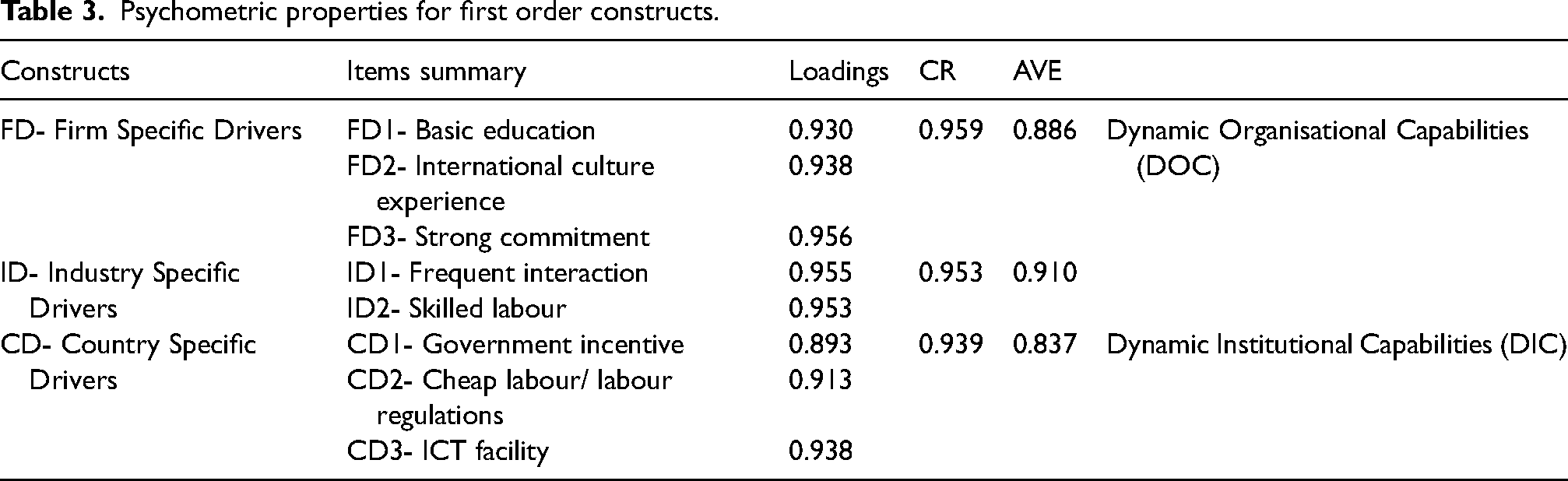
Table 3 shows that the individual item loading is higher than 0.70 and it is significant at 0.01. Additionally, to assess reliability of the scale, the CR and Average Variance Extracted (AVE) were estimated (Chin, 2010). The calculated CR values for firm specific drivers, industry specific drivers and country specific drivers are higher than the modest threshold 0.70 (Hulland, 1999; Mendy et al., 2021), which indicates that items of each scale are highly consistent. Furthermore, the calculated AVE for firm specific drivers, industry specific drivers and country specific drivers are also higher than the modest threshold 0.50 (Fornell and Larcker, 1981; Rahman et al., 2020). This indicates that each construct captures adequate variance from its items and all the constructs are conceptually distinct. Thus, the convergent validity of all the scales was ensured. Finally, square root of AVE was calculated to ensure discriminant validity, which indicates that all the values (i.e. square root of AVE) are higher than the corresponding correlation coefficients in the correlation matrix (Chin, 1998; Fornell and Larcker, 1981; Hulland, 1999; Mendy et al., 2020). Therefore, all the results related to the analysis of the measurement model were satisfactory having adequate reliability, convergent validity and discriminant validity.
Psychometric properties for first order constructs.
Assessment of higher order model
In Table 1, the drivers of internationalisation are shown as a hierarchical construct model. The degree of explained variance in second order constructs (overall drivers) is reflected in the first order constructs, that is, firm specific drivers (83%), industry specific drivers (77%) and country specific (40%) drivers. All the path coefficients from overall drivers of internationalisation to second order (firm specific drivers, industry specific drivers and country specific drivers) are significant at P < 0.01. Besides, the CR and AVE value for the first order constructs (firm specific drivers, industry specific drivers and country specific drivers) are higher than 0.70 and 0.50 respectively that indicate the validity of higher order reflective model.
Analysis of structural model and results of hypotheses testing
To assess the structural validity of this model (see Figure 2), this study has estimated the relationship between the overall drivers and its sub-dimensions i.e. firm specific drivers, industry specific drivers and country specific drivers. In Figure 2, the results show a strong relationship between overall drivers with firm specific drivers, industry specific drivers and country specific drivers with standardised beta of 0.912, 0.875 and 0.634. All these path coefficients are significant at p < 0.01. Thus, all the hypotheses are supported.
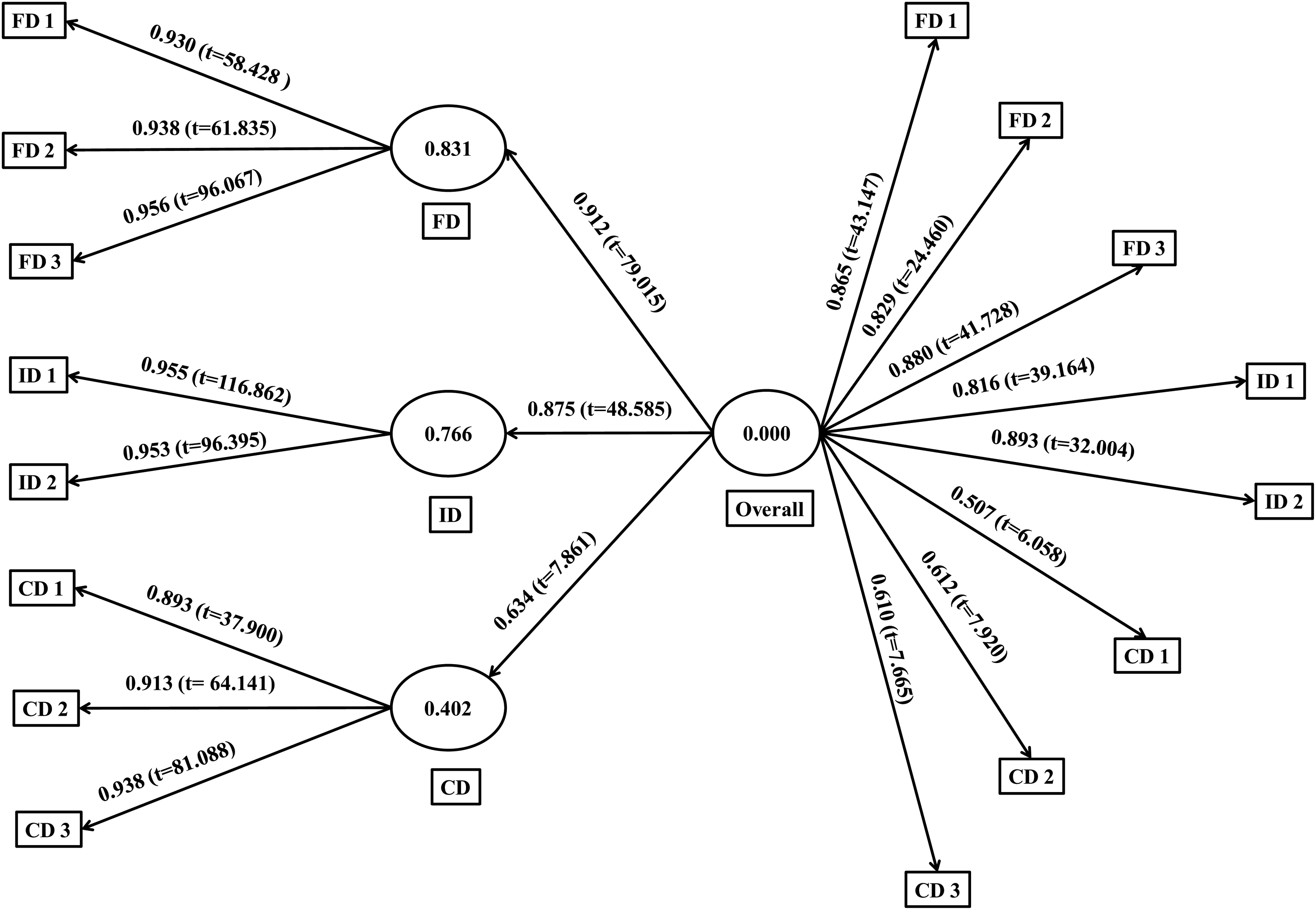
Main loadings of the model.
Discussion
To identify the major drivers, this study develops and validates a hierarchical reflective model through PLS based SEM. From the structural analysis, this study proposes 3 major types of drivers related to the internationalisation of SMEs in the context of Bangladesh- Firm specific drivers, industry specific drivers and country specific drivers, which we conceptualised in two broad frames: Organizational capabilities/resources + Institutional capabilities (Figure 2). This shows that entrepreneurship activity cannot be divorced from its institutional context (Shane, 2000; Hack-Polay et al., 2020), particularly in developing countries. Although each individual type of drivers holds a unique principal, collectively these three types of drivers can explain the drivers of internationalisation of Bangladeshi SMEs more strongly in the hierarchical model. While these three types of drivers (Firm specific drivers, industry specific drivers and country specific drivers –forming our conceptualised critical organisational capabilities or COC and critical institutional capabilities or CIC) are significantly related to the overall drivers of internationalisation, firm specific drivers seem most influential as they represent around 83% explained variances.
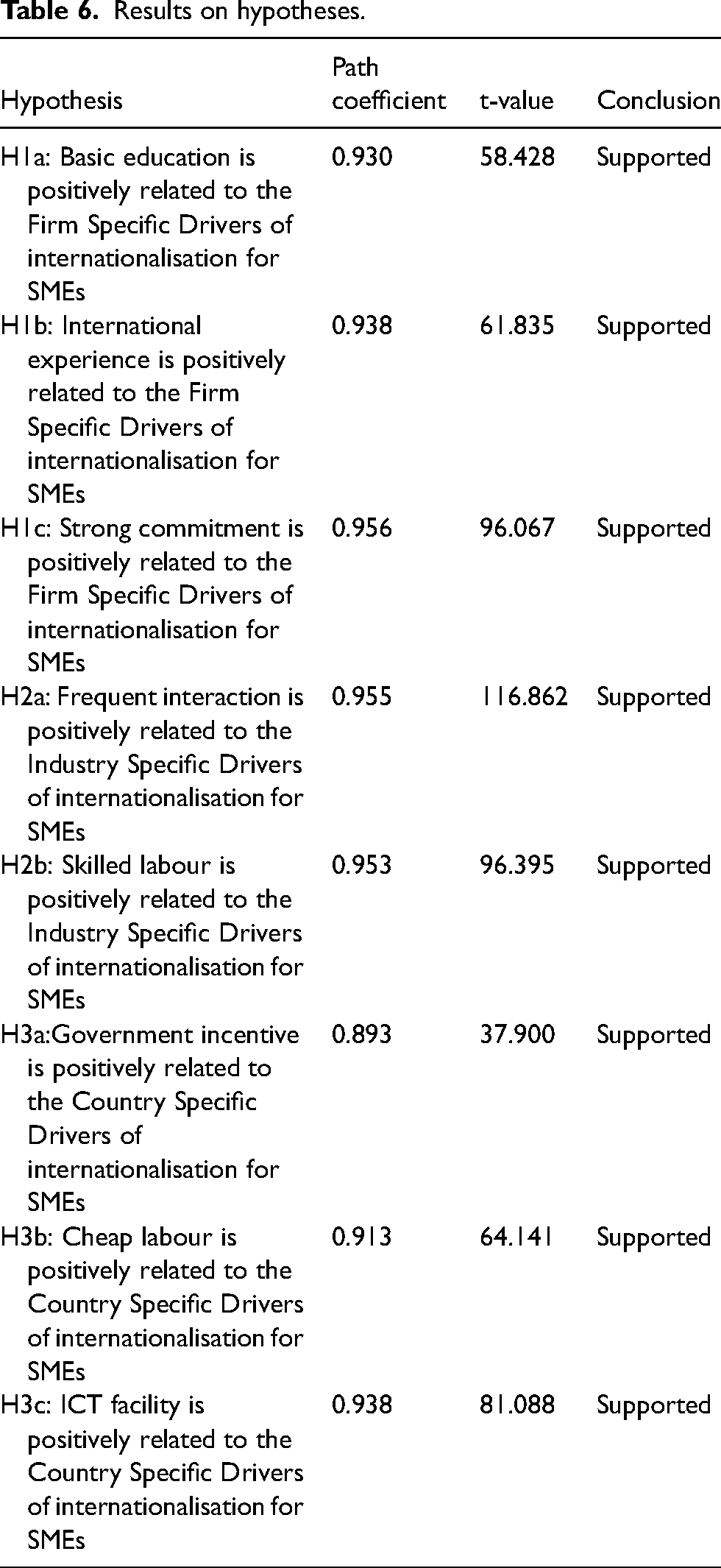
Under the category of firm specific drivers, there are three factors- basic education, international experience and strong commitment. The association between basic education and drivers of internationalisation (β = 0.930) was significant at p < 0.001. Thus, basic education of the owners and managers was validated as a significant factor in the context of firm specific drivers of internationalisation for SME internationalisation. Similarly, the association between international experience and drivers of internationalisation (β = 0.938) was significant at p < 0.001. International cultural experience of the owners and managers was confirmed as a significant factor in the context of firm specific drivers of internationalisation for the internationalisation of SMEs in Bangladesh. The association between strong commitment and firm specific drivers of internationalisation (β = 0.956) was significant at p < 0.001. Strong commitment of the owners and managers was confirmed as a significant COC in SME internationalisation (Odunukan et al., 2021). This also confirm North’s (1991) perspective of the significance of institutional frameworks in economic activity.
The empirical findings validate the role of industry specific drivers as an important dimension of overall drivers of SME internationalisation in Bangladesh with 77% explained variances. There are two major factors that are influential as the industry specific drivers of internationalisation, these are- frequent interaction and skilled labour. The association between frequent interaction and industry specific drivers of internationalisation (β = 0.955) was significant at p < 0.001. Frequent interaction was confirmed as a significant COC for internationalisation. The association between skilled labour and industry specific drivers of internationalisation (β = 0.953) was significant at p < 0.001. Skilled labour was confirmed as a further significant COC in internationalisation. This corroborates the findings of Hack-Polay and Mendy (2018) but also Shane’s (2000) perspectives on entrepreneurial success.
Finally, the empirical findings of the paper validate the role of country specific drivers (which we conceptualised as critical institutional capabilities or CIC) as an important but weaker dimension of overall drivers of internationalisation for the SMEs in Bangladesh with 40% explained variances. There are three key factors in terms of CIC in this study- government incentives, cheap labour and ICT facilities. The association between government incentives and country specific drivers of internationalisation (β = 0.893) was significant at p < 0.001. Government incentive was confirmed as a significant factor in the context of country specific drivers of internationalisation for the SMEs in Bangladesh. Similarly, the association between cheap labour and country specific drivers of internationalisation (β = 0.913) was significant at p < 0.001. Cheap labour was confirmed as a significant factor in the context of country specific drivers of internationalisation for the SMEs in Bangladesh. Again, the association between ICT facility and the CICs of internationalisation (β = 0.938) was significant at p < 0.001. ICT facility was confirmed as a significant factor in the context of country specific drivers for SMEs in Bangladesh.
Conclusion
Summary and originality
This paper has identified the key environmental drivers of internationalisation for the Bangladeshi SMEs. It has successfully framed the drivers of internationalisation for Bangladeshi SMEs as a second order hierarchical model, indicating all three dimensions of drivers significantly reflect on the overall drivers. All 8 hypotheses are supported. The findings of the research suggest that SME internationalisation in a developing country is contingent up two categories of capabilities: critical organisational capabilities (linked to internal processes largely associated with human resources) and critical institutional capabilities (associated with state level provision and the cultural fabric). Taken in isolation, none of these instances can advance internationalisation effectiveness and draw competitive advantage. There needs to be a high degree of interaction between the two instances.
However, one of the parameters identified (firm specific drivers –within the organisation's critical psychological capabilities) appears to have significant strength. This signifies that if firms increase their internal capabilities, including competencies, they can use minimum institutional capabilities to draw much benefit from international markets. The originality of the study centres on the evidence found, which helps to frame developing countries’ institutional frameworks (often deemed weak) as capabilities for SME internationalisation, particularly from a Bangladesh perspective. The findings of this paper will contribute to fill up this gap. In addition to this theoretical contribution, this study contributes to methodological perspectives through the development of a hierarchical reflective model using PLS to assess the drivers of internationalisation for Bangladeshi SMEs.
Implications of the research
The theoretical implications of these findings have significant impact within the field of SMEs internationalisation research particularly from developing countries’ context. Drawing on the institutional and RBV perspective, this study extends the SME internationalisation literature by developing and validating a second-order drivers of internationalisation model with eight variables under three categories. Internationalisation of SMEs is considered as an important strategy for the growth of SMEs (Mendy et al., 2020). However, there is a gap in the existing literature to conceptualise the drivers of internationalisation in a hierarchical structural relationship. Several studies examined the barriers of internationalisation through structural relationship (Mendy et al., 2020; Mendy and Rahman, 2019). However, the structural relationships as drivers of internationalisation remain a lack of research which sustantiates and validates dimensions of internationalisations drivers. Our research fills this gap and extends the RBV theory in the context of developing country SMEs.
This paper tackles one of the most critical problem faced by the policymakers in developing countries which is related to priority settings. By categorising and examining the relative importance of the factors into dimensions and subdimension, this reearch propose that policymakers give more priritities in supporting organisational capacity building followed by industrial and national capabilities.
Theoretical contribution
Methodologically, the likelihood to develop internationalisation opportunities can be supported not only via traditional financial incentives or training programmes but also by developing a structural model highlighting what the key drivers to their capabilities and internationalisation are (see Table 4). Hence, a methodological understanding of testing several key constructs of internationalisation within a hierarchical approach has been absent and consequently a contribution instead of just recognising the drivers of internationalisation (Tables 5 and 6).
Latent variable correlations.
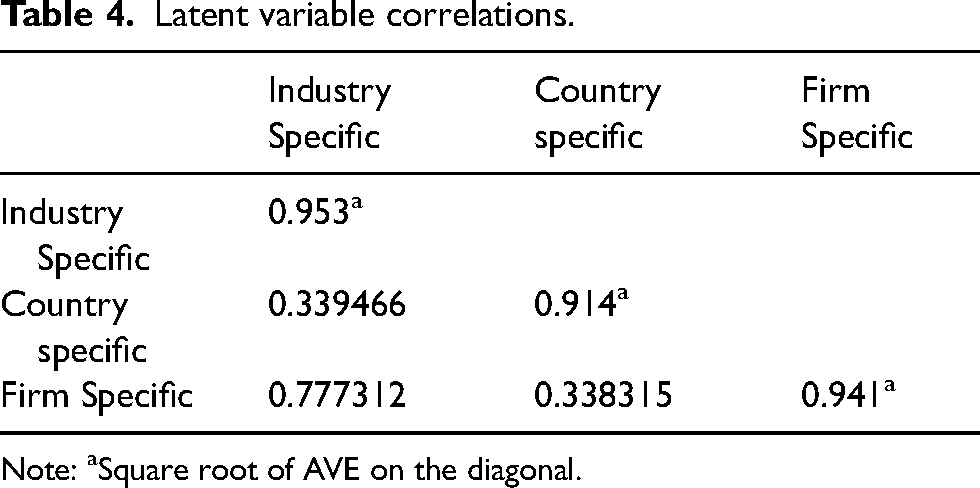
Note: aSquare root of AVE on the diagonal.
Path coefficients (mean, STDEV, T-values) for drivers.

Results on hypotheses.
An integrated adaptation capability is one of the crucial aspects for firms to compete in international market. This is more crucial for resource constrained SMEs. The study has managerial implications for the ways in which SME capability for internationalisation could be defined and assessed. The duality internal versus external drivers can be conceptualised as COC and CIC –which are central to North’s (1991) institutional theory. These two types of critical capabilities work in synchrony to draw and maintain international opportunities for developing country SMEs looking to trade across borders. Most of the developing economies are very depedendent on the SMEs for income generation and employment (Mendy and Rahman, 2019; Mendy et al., 2021).
Limitations and further research
A major limitation of the research is the narrow geo-cultural focus on Bangladesh. This reduces the generalisability. A suggestion, thus, is that subsequent research accounts for cultural and socio-political and economic specificities within the Southeast Asia region. In doing so, a larger sample could yield more data and increase the analytical scope.
Footnotes
Declaration of conflicting interests
The author(s) declared no potential conflicts of interest with respect to the research, authorship, and/or publication of this article.
Funding
The author(s) received no financial support for the research, authorship, and/or publication of this article.

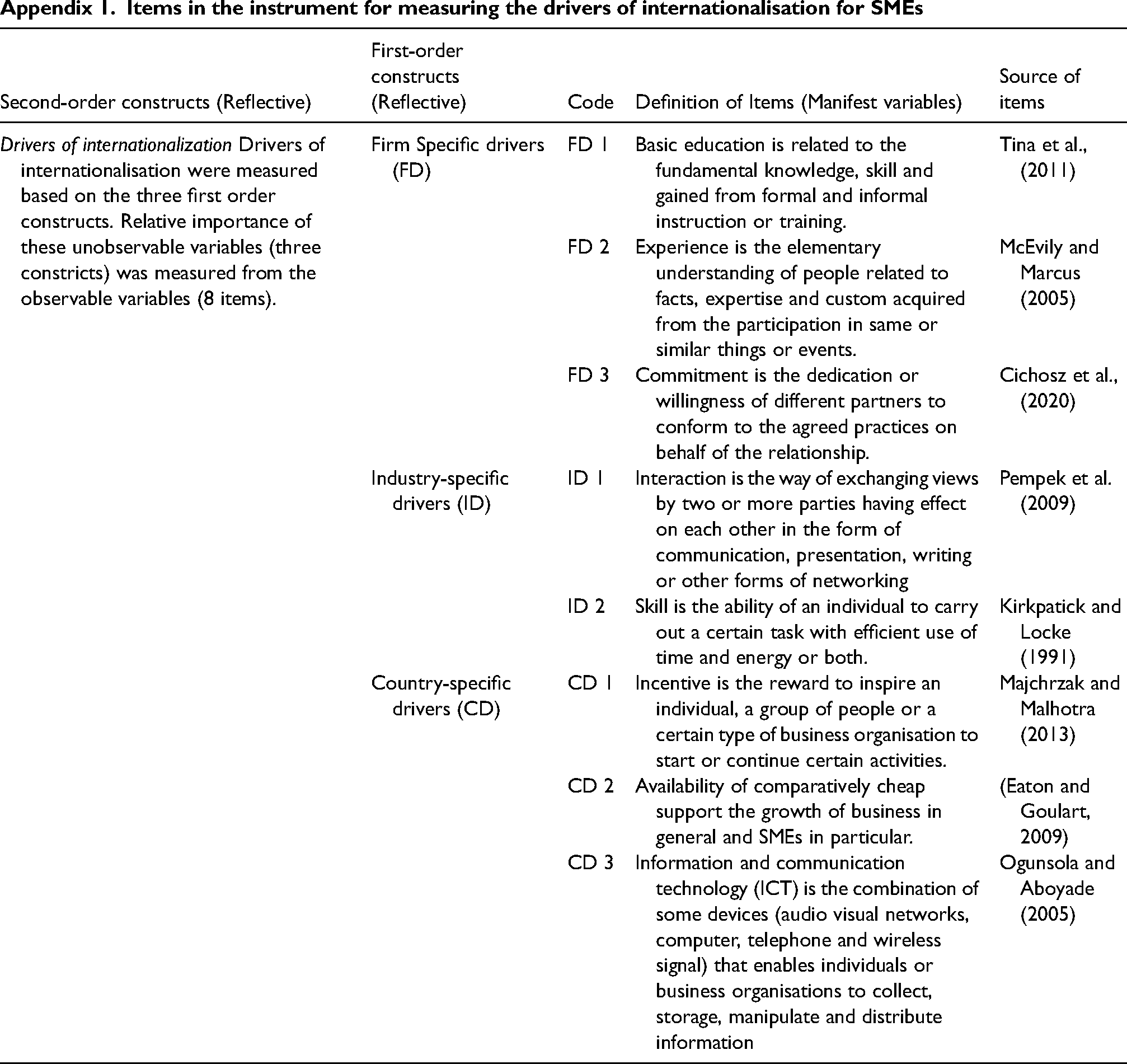
| Second-order constructs (Reflective) | First-order constructs (Reflective) | Code | Definition of Items (Manifest variables) | Source of items |
|---|---|---|---|---|
| Drivers of internationalization Drivers of internationalisation were measured based on the three first order constructs. Relative importance of these unobservable variables (three constricts) was measured from the observable variables (8 items). | Firm Specific drivers (FD) | FD 1 | Basic education is related to the fundamental knowledge, skill and gained from formal and informal instruction or training. | Tina et al., (2011) |
| FD 2 | Experience is the elementary understanding of people related to facts, expertise and custom acquired from the participation in same or similar things or events. | McEvily and Marcus (2005) | ||
| FD 3 | Commitment is the dedication or willingness of different partners to conform to the agreed practices on behalf of the relationship. | Cichosz et al., (2020) | ||
| Industry-specific drivers (ID) | ID 1 | Interaction is the way of exchanging views by two or more parties having effect on each other in the form of communication, presentation, writing or other forms of networking | Pempek et al. (2009) | |
| ID 2 | Skill is the ability of an individual to carry out a certain task with efficient use of time and energy or both. | Kirkpatick and Locke (1991) | ||
| Country-specific drivers (CD) | CD 1 | Incentive is the reward to inspire an individual, a group of people or a certain type of business organisation to start or continue certain activities. | Majchrzak and Malhotra (2013) | |
| CD 2 | Availability of comparatively cheap support the growth of business in general and SMEs in particular. | (Eaton and Goulart, 2009) | ||
| CD 3 | Information and communication technology (ICT) is the combination of some devices (audio visual networks, computer, telephone and wireless signal) that enables individuals or business organisations to collect, storage, manipulate and distribute information | Ogunsola and Aboyade (2005) |