



Abstract
Lundgren Tours (LT) is an awarding-winning regional tour company founded by a student entrepreneur in 2016. In 2020, the UK left the EU and the country's first Covid-19 patients were identified, leading to international anti-coronavirus restrictions and the cancellation of tours for 12 months. The case considers several aspects (explained in ‘Themes’) of the catastrophe through the founder's eyes, revealing the influence of entrepreneurial psychological capital and how striving to survive disaster can lead to new strengths and opportunities.
Learning outcomes
Analytical
Students will analyse the impact of a unique, global macro-environmental crisis on a small, regional enterprise, generating and evaluating alternative responses.
Conceptual
Students will understand practical examples and apply theories and concepts of external macro- and micro-environmental analysis relevant to entrepreneurship and small business.
Students will apply theories and concepts of internal analysis such as entrepreneurial psychological capital, bisociation and coping strategies such as competitor collaboration and risk management.
Presentation
Students will identify knowledge gaps and relevant missing material, conducting independent research and merging it with the case data.
Themes, aims and objectives
The aim of this case is to provide students with an authentic, personal insight into the individual and organisational response to crisis and chaos as an entrepreneur. It tells the story of Lundgren Tours (LT) of Northumberland, UK and its founder, student entrepreneur Robert Lundgren Jones. The case is fast-paced and accessible, dominated by verbatim quotations from an entrepreneur at the heart of a personal and professional existential crisis. Direct quotations can indicate clarity of links between data, interpretation and conclusion (Corden and Sainsbury, 2006).
In 2020, LT experienced the unprecedented twin turbulence of Brexit and the global Covid-19 pandemic, resulting international lockdowns and then back to Brexit. The origins and motives of the company are described. An impression of the extreme uncertainty and inconsistency of government Covid-19 guidance is provided as a backdrop to rapid operational decisions and shut down. Themes of opportunity recognition, entrepreneurial behaviour and small business coping strategies in the context of regional and, arguably, rural tourism are addressed.
The first objective is to describe in detail multiple practical issues facing this young entrepreneur such as individual adaptability, motivation and resilience, information-seeking and planning, crisis funding, the role of family and external networks and adaptation to a new trading environment.
The second objective is to suggest concepts and theories to analyse the evident circumstances, events and decisions. These include definitive concepts such as Smith and DiGregorio’s (2002) ‘bisociation’ and Burgelman’s (1983) resource ‘piggybacking’. Cutting edge theories in development, such as ‘entrepreneurial psychological capital’, are explored. Environmental analysis and coping through networks are discussed, among other theory associated with entrepreneurial action and survival.
The final objective is to propose further student research, questions, discussions, tasks and exercises to engage students in strategizing into the future of LT as lockdowns are eased and industry refocuses on Brexit.
Students and readers are invited to research around the case using the myriad source formats available about these high-profile issues and a well promoted company.
Introduction
Tourism is one of the UK's most important industries, responsible for 1.6 million jobs and worth over £145 billion in 2018 (7.2% of UK GDP) (Office of National Statistics, 2018), with spending by overseas visitors in 2019 of £28.4 billion (Department for Digital, Culture, Media and Sport, 2020), a rise of 7.3% on the previous year. Spending by visitors from the EU member states represented 37.5% of the total. The North East region of England represents almost 5% of this, including Northumberland, England's northernmost and least populous county, situated along the North Sea coast between the ancient northern border of the Roman Empire, Hadrian's Wall, and the modern Scottish border. Tourism is a key economic driver for the county with over 10 million visitors during 2018. However, the North East is the weakest regional entrepreneurship eco-system in the UK on all measures: attitude, ability and aspiration. (Global Entrepreneurship and Development Institute, 2014, see Table 1). Here we find Lundgren Tours (LT), founded by a Northumberland-born 19-year-old student with Scandinavian seafaring ancestry in response to an appeal by a cottage letting agency and the requirements of his course. On January 31st, 2020, the UK leaves the European Union and the country's first Covid-19 cases are treated in Newcastle upon Tyne. By March, a national lockdown is enforced and lasts in various forms for 16 months. LT, already challenged by the potential effects of Brexit on their core market, is forced to cancel activities and wrestle suddenly with the professional and personal effects of an unpredictable environment, incomplete, inconsistent and ever-changing advice and regulation and three national lockdowns. We join them as they prepare to resume limited activity and attempt to plan for a post-lockdown and post-Brexit future. The company specializes in Viking, Game of Thrones and Harry Potter themed tours and will need epic navigation, complex plot prediction and a sprinkling of magic spells to survive the twin turbulence of Brexit and the Coronavirus.
Ranking the 12 UK entrepreneurship ecosystems, scoring ‘attitude’ (ATT), ‘abilities’ (ABT) and ‘aspirations’ (ASP).
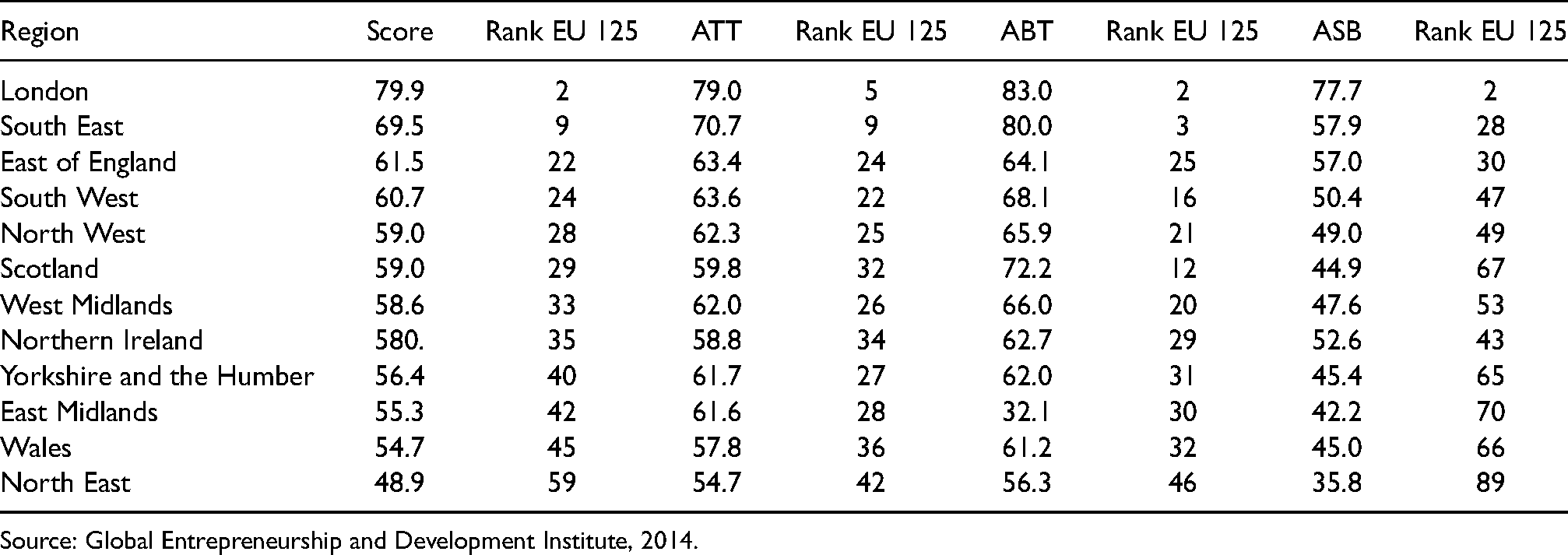
Source: Global Entrepreneurship and Development Institute, 2014.
Company background

LT is a family business founded in Northumberland, UK in April 2016 (Lundgren Tours, 2021). Their first tour ran in August 2016. By November 2016, Robert Lundgren Jones, the founder and student on an undergraduate entrepreneurship degree at a local university, had been shortlisted for ‘Enterprising Learner of the Year’, an award run by the Small Firms Enterprise Development Initiative and the Institute of Enterprise and Entrepreneurs. In 2018, a Harry Potter-themed tour won silver in the ‘Guided Tour of the Year’ at the North East Tourism Awards. In 2020, LT was named ‘Tour Operator of the Year’ by the North England Prestige Awards and given a Tripadvisor Travellers’ Choice Award. Since launch, LT has hosted over 1000 visitors, doubled its revenue and was due to generate £50k turnover in 2019 (Northern Insight, 2019). The company is run ‘from home’ by three family members: Jones, now 25 years old, who plans and delivers the tours and develops client relationships. Alongside is Tim Jones, his father, with a business and consultancy background, as Commercial Director focusing on logistics and finance and Karen Jones, his mother, with a sales background, as Marketing Director working on social media promotion and partner destination relationships. They also hire part-time staff for daytrips.
Originally limited to Northumberland, LT specializes in tailored, themed tours such as a Viking tour to Lindisfarne (Jones dresses as Ragnor Lundgren, a Viking warrior), a Game of Thrones inspired tour of Hadrian's Wall (with Jones dressed as Jon Snow) and a Harry Potter experience at Hogwarts film location, Alnwick Castle, in which Jones (with red hair and Gryffindor uniform) dresses as Ron Weasley. Other tours go to other northern English locations such as Durham and York to the south, Manchester and The Lake District National Park to the west and Scotland to the north. The significance of operating in two of the UK nations (England and Scotland) will become apparent once different coronavirus restrictions are initiated.
LT has 3 main markets:
the national and international incoming student market, organising large group tours during term-time and corporate work with regional universities during the summer and Easter holidays the international tourist market comprising mostly Americans, organising private, bespoke tours for 2-6 people for a full day the corporate market, organising tours associated with conferences, from cruise ships arriving in the Tyne river and one-off major sporting events in the region.
Their aim is to show Northumberland and the North East as a great area in which to live, work or invest or to show guests a good time while they are visiting. LT has been characterized as ‘rural entrepreneurship’ but Gaddefors and Anderson (2019) might challenge this definition by examining the extent of the company's engagement with the ‘rural’ context: geographic, social and economic, which interact with different stages of the entrepreneurial process.
Summary of the situation
In June 2016, a UK referendum decided by a 2% margin to leave the EU, a process known as ‘Brexit’ and completed in January 2020. One of the most controversial political developments in the recent history of the UK and the EU (Globaldata, 2020), it has significant implications for the tourism industry via the free flow of movement, border control and security, employment opportunities, areas previously funded by the EU and destination imagery. However, before it was ever complete it had been overtaken for environmental turbulence and uncertainty by the global pandemic of Covid-19 and the consequent international lockdowns and travel bans all over the world. LT, a regional tourism business with an international student market, was disrupted by Brexit before being forced to suspend their tours in March 2020 as part of ‘Coronavirus restrictions’ in the Coronavirus Act 2020 (Legislation.gov.uk, 2021). One year on and new, more flexible restrictions will allow LTs to resume operations at half-capacity. With the roll-out of Covid vaccinations progressing well across the UK (Baraniuk, 2021), there is hope for a return to full capacity later in 2021, when the company will again have to respond to Brexit impact. This case study reviews the situation in April 2021 with its founder.
The Lundgren Tours story
Spotting the opportunity: bisociation as entrepreneurial action
‘In school I was quite academic but always inspired by people who had set up their own businesses (…). When I attended the Open Day [for the entrepreneurship course], I fell in love with (it). The programme (…) lets you work in your own way. It's interactive and team-based but it also encourages independent thinking, which is what you need to set up your business.’ ( IOEE Admin, 2017 ). ‘I love entertaining and meeting new people. I’m also passionate about Northumberland having lived here all my life. I think its unique history, wild landscapes, wonderful people and unspoiled night skies are fantastic assets that should be enjoyed and I can help people to do that. This was the inspiration for setting up in business, but it was the support and advice from my tutors and friends on the [degree] programme which really gave me the confidence and entrepreneurial mindset to go for it.’ (Northern Insight, 2019). So explains Jones, founder of LT. Based on a Finnish model of education, Team Academy, his was one of the first two universities to pioneer this approach in the UK. Jones joined in September 2015 with no definite business idea. He identified the opportunity for a tour company when he interviewed a Northumbrian holiday cottage owner for his studies: ‘She said that although business was going reasonably well, the people staying in her cottages were sometimes a little isolated because Northumberland is rural and the transport links aren't the greatest – unless you have a car it can be inaccessible.’ (Northern Insight, 2019). Jones had also read an article by Cottages in Northumberland in which they wished there were tours to offer to their residents. Spotting a gap in the market, knowing how much he would enjoy sharing his home county with visitors and relishing the idea of setting up in the North East, Jones decided to set up a coach touring business: ‘I telephoned the cottage owner, said I would do it and that gave me a deadline to meet.’ (personal communication, 2021a). Jones found that he enjoyed it and was a good tour guide so wanted to make it work. Initially, he did everything – organising the tours, sales and marketing and administration as well as guiding. The business grew but Jones soon learned that this individual approach was unsustainable and adapted his business model to make it viable long-term, persuading his parents to become involved and hiring casual staff to help on tours. Towards the final year of the course a final assignment required students to consider whether to continue or close their fledgling business, including a consideration of crisis management. Students could choose to focus on factors such as uncontrollable external factors and economic uncertainty, but no-one chose to do so ‘because no-one likes to think about if a crisis might strike.’ (R. Jones, personal communication, 2021a).
Balas Rant et al. (2021) found that young people base a business start-up decision on their own values and competences, personal support from friends and family and institutional support. The ‘pull’ from cottage owners and ‘push’ from the course coincided to form the conception of LT through a process of ‘bisociation’. First identified by Smith and DiGregorio (2002), bisociation occurs when two previously unrelated matrices of information, knowledge or resources are combined and is entrepreneurial action as fundamental organisational behaviour. Organisations taking entrepreneurial actions are able to develop sustainable corporate entrepreneurship (Mungule and Vuuren, 2016). This is in turn a useful strategy for enhancing organisational performance which could bode well for the future of LT if it grows and becomes more complex.
Observable here is a tenet of corporate entrepreneurship: piggybacking. Jones ran the business fulltime alongside his studies. The launch piggybacked on existing resources: funding, time and skills. Bringing these resources together in new ways is one of the key skills of the entrepreneur (Burgelman, 1983). Entrepreneurs create value by exploiting opportunities. They are willing to fail in order to learn and are persistent in pursuit of their dreams (Thornberry, 2001). Opportunity-seeking behaviour comes from a pool of unused resources, so ‘induced strategic behaviour’ [following corporate strategic plans] is unlikely to exhaust the potential opportunities perceived by entrepreneurs at an operational level (Burgelman, 1983). However, they can run out of energy and motivation through doing two jobs and ‘working 18 h a day’ (Thornberry, 2001: 532).
Coronavirus hits: a crisis unlike any other
Dateline January 31st, 2020: Covid-19 has caused 213 deaths, all in China (BBC, 2020a). The Financial Times reports: ‘A York University student and a member of their family were being treated for the new coronavirus at a specialist unit in Newcastle, as the government confirmed the first cases in the UK.’ (Tighe et al., 2020). The patients were transferred to the ‘high consequence infectious disease’ unit at the Royal Victoria Infirmary in Newcastle upon Tyne, one of only two hospitals in England with the specialized ward and in the capital of LT territory. Close contacts of the patients were not quarantined (Public Health England, quoted in BBC, 2020a).
On February 2nd, LT was due to visit the Ice Sculpture Festival in York. Jones reflects: ‘We thought that Brexit was the worst possible thing that could happen to us. When the news of the virus and lockdowns started to leak into the UK media our attitude was that we would just keep going until someone tells us to stop.’ (personal communication, 2021a). ‘Obviously, we did think about what the PR consequences would be of cancelling – but we asked our customers what they wanted to do and they weren't bothered. At that time, concerns were being raised but everyone thought ‘it's fine, don't worry’ and things continued as normal.’ On February 3rd, Boris Johnson, the UK Prime Minister, delivered a speech about the potential of Britain's post-Brexit future without mentioning Covid (Gov.uk, 2020). By early March, individual cancellations started at LT and numbers started to decrease. ‘We are facing a global health crisis unlike any in the 75-year history of the UN’ ran the opening line in a March 2020 report (United Nations, 2020: 1). LT's last trip was on the 14th of March, described by Jones as ‘do we / don't we cancel’ (personal communication, 2021a). There was a lot of ‘back and forth’ about what to do but many students were excited about the trip. The attitude of both customers and organisers was ‘this is our last chance to do it’ so it went ahead. Two days later, Johnson advised ‘now is the time for everyone to stop non-essential contact with others and to stop all unnecessary travel’ (2020a) and a week later the first UK-wide national lockdown was announced, legally enforceable from March 26th. Jones: ‘There was a lack of urgency or real feeling of crisis as we thought the lockdown would be short-lived’ (on March 19th, the Prime Minister had estimated that the UK could ‘turn the tide within the next 12 weeks’ (2020b)). In mid-April, the national lockdown was extended by three weeks and at the end of that month Johnson announced ‘we are past the peak and we are on the downward slope’ of the pandemic (2020c). Initially Jones waited a week and then cancelled everything until the end of May. Shortly afterwards, a packed summer programme of corporate events was also cancelled.
By July 2020, anti-virus restrictions were gradually lifting and lockdowns applied to local ‘hotspots’ only (Institute for Government, 2021). In August, the UK government's ‘Eat Out to Help Out’ scheme was offering a 50% discount on inexpensive meals to encourage people to patronize restaurants and restrictions were eased further. In September, restrictions were re-introduced, including a curfew on hospitality and the ‘rule of six’ limiting group sizes (see Figure 1). In mid-October, a three-tier system of regional restrictions was initiated in England (Northumberland in the highest, most restrictive) and in late October a second national lockdown was announced. In parallel, the Scottish government passed its own legislation, issuing rules and guidance on its devolved responsibilities which sometimes differed from those in other UK nations (Scottish Parliament Information Centre, 2021), meaning LT, operating in both England and Scotland, must consider two sets of law and advice.
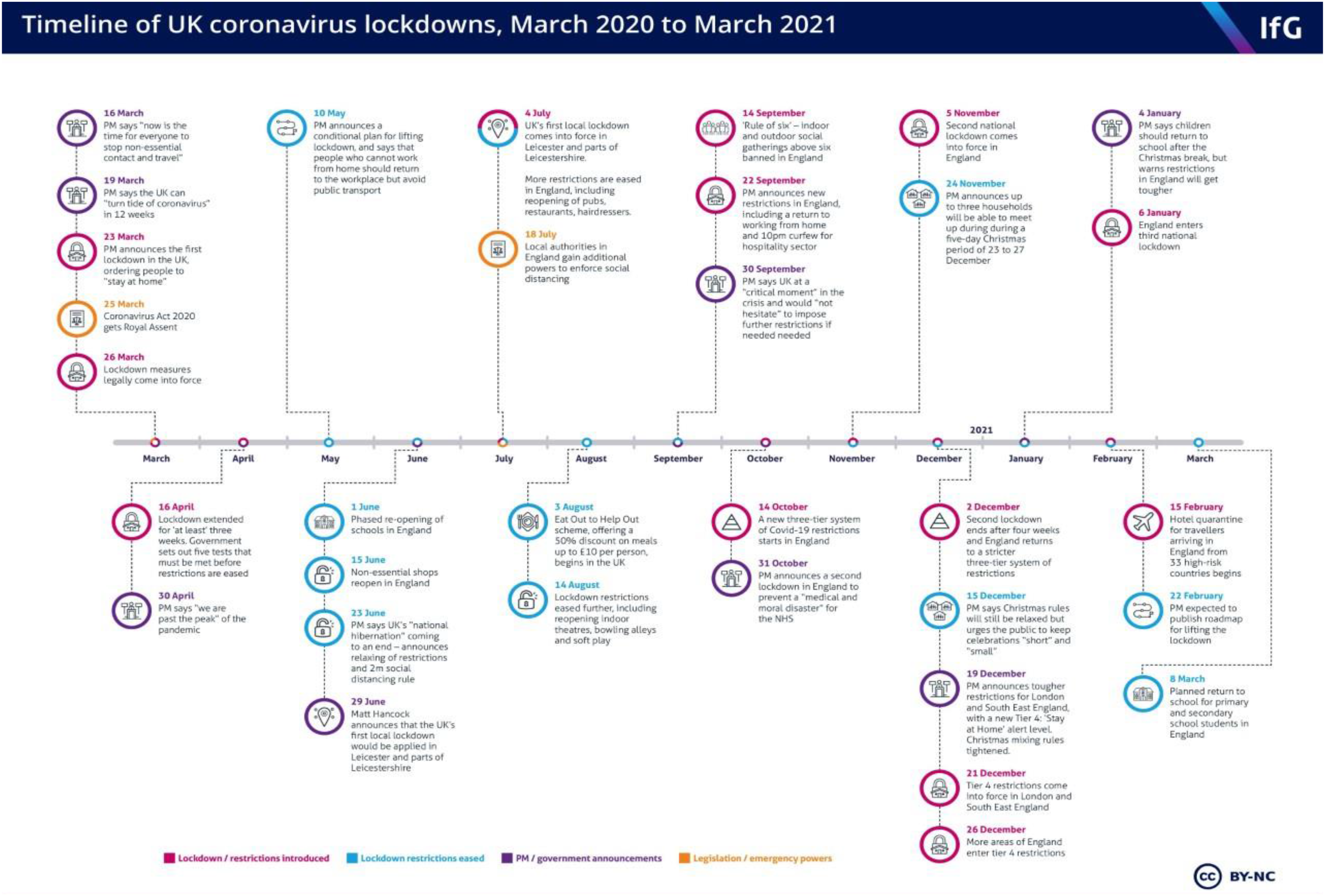
Timeline of coronavirus lockdowns, march 2020 to march 2021. Source: INSTITUTE FOR GOVERNMENT, 2021.
The macro-environment of a business consists of those external factors impacting but outside the control and influence of the company. It can be assessed through the STEEPLE model for its diversity (the numbers of factors in play), complexity (the extent to which those factors are interconnected) and the speed of change. Factors include trends, drivers of change, weak signals, events, patterns and systematic structures (More et al., 2015) although wild cards / shocks and discontinuities are most relevant in this case.
Personal response: extraversion under lockdown
Jones describes ‘having all the devastation quite early’ (personal communication, 2021a) as the summer business was eliminated, but claims to have avoided ‘falling into a mental crisis’ by taking ‘quite a mature’ approach. This meant he made the most of the newly available time to design new tours for clients, collaborate on developing virtual tours and build new relationships for a September 2020 restart. ‘I felt quite proud that we were able to adapt, do the virtual stuff, keep our clients happy and still have an income’. ‘This capacity to work flexibly and respond to market demand and opportunities marks Robert out as a true entrepreneur’ (IOEE Admin, 2017).
However, Jones labels himself ‘a massive extrovert’ (personal communication, 2021a) and the lack of social interaction affected him seriously, leading to ‘several very low points’. ‘Tour guides are extraverts – that's why they do it and are good at it.’ During summer 2020 life was tolerable: the weather was good and the lockdown was a novelty. However, in the autumn everything deteriorated. ‘It's got to the point now that I hate everything virtual’ Jones laughs, ‘and I just want everything to go back to normal.’ In September some tours ran, excepted from the ‘rule of six’ (see Figure 1), so these became Jones’ social life. The winter lockdown - with tours again banned - was harder for him – ‘I have some kind of personal meltdown on a weekly basis and have been feeling very demotivated - those times when there is no end in sight and we have discussed whether or not this is worth it. I am only 24 and I have not exactly made lots of money to plan for the future, like getting married or getting on the property ladder. It has been really tough’. Jones’ extraversion means he compares himself to others. He characterizes this as ‘a bad personality trait of mine’. He explains: ‘I don't like going to the gym as I (…) compare myself to everyone else. I don't compete with myself; I always need to have someone else to compete with. I don't enjoy it unless I have a benchmark to work against So, during the lockdowns it's been extra tough and it's the main reason I get ‘down’. Social media brings me down – everyone posting positive things and claiming to be doing well.’
Jones acknowledges he is more fortunate than many but finds the lack of spontaneity exhausting (checking the regularly changing rules currently and locally in force). He cites the lack of ‘progression’ as a challenge, finding it difficult to take a long-term view. At one point he could not think more than a day ahead. Jones has suffered two bouts of Covid-19 himself – neither contracted from tours.
Having family involved in the company is a double-edged sword. In a small business, it can be assumed that colleagues work together but are not involved in one another's personal life. But in the family, according to Jones, members know everything and they have a way of understanding each other. The problem is that they all have ‘off days’ which demotivates others. Personal issues must be dealt with as well as the effects on the business. Jones describes the curse of the ruminating mind with no outlet: ‘You have all this time to think and nothing to look forward to. Things spend longer in your mind and seem to take longer to resolve. All problems separate from Covid are amplified by Covid’.
Significant swings of attitude can be observed here, as described in Pearce (2016). One feature of a home-based business is that work-life balance is achieved through sustained discipline (Kapasi and Galloway, 2015). ‘Psychological capital’, drawing from the field of positive psychology, consists of self-efficacy (Bandura, 1977), hope (Snyder, 2000), optimism (Seligman and Csikszentmihalyi, 2000) and resilience (Masten, 2001). Pease and Cunningham (2016) suggest that future models of ‘entrepreneurial psychological capital’ (the psychological resources entrepreneurs need to succeed) focus on psychological characteristics open to development, rather than ‘positive states’ eg. passing moods, and ‘positive traits’ which are fixed eg. intelligence, extraversion, agreeableness etc. (Luthans et al., 2007). Listing those in current entrepreneurship theory, they include future orientation, optimism, self-confidence and self-reliance. Various traits, personality characteristics and aspects of entrepreneurial psychological capital are in evidence in Jones’ response to events in 2020/21 and his plans for the future outlined below.
Business response: adaptation and collaboration
After cancelling the summer programme, even though lockdown restrictions were eased, LT discovered their events were exempt from the ‘rule of six’ introduced on September 14th (see Figure 1) and so they ran tours of 30 through to October. ‘It was a massive success and I got so many thank you messages because we were the only ones prepared to do it’ enthuses Jones (personal communication, 2021a).
University clients were supportive and collaborative. They could not justify running large in-person events on campus as there was significant public concern about positive Covid cases in student accommodation and on campuses (BBC, 2020b). However, they knew it was important to provide some in-person experience so worked with LT to create risk assessments approved by the universities and, by extension, the local government councils. ‘To have that endorsement and support was fantastic. We were the only tour operators continuing at that time, so it was a big risk, but it paid off.’ (R. Jones, personal communication, 2021a).
Most competitors went ‘dormant’ and used the time to improve their processes, website etc. LT focussed on how to adapt, maintain business relationships, stay visible. Competitors with whom they collaborated during the crisis were those they had always worked with for strategic advantage or critical mass. This time it was more intense, especially on a virtual reality project creating content for a software engineer. ‘With lots of projects we’re working on, our main collaboration is just to communicate regularly, share intel, share what clients are saying etc. This is the most beneficial’. Jones was in regular contact with companies in Yorkshire, for example, as the regional tier lockdown system (see Figure 1) meant conditions were different to in Northumberland. He also consulted competitors in Scotland, where guidance was almost always different. This informal information sharing was reciprocal. ‘We were comfortable sharing the guidance and where we got it from’, says Jones ‘and it's useful to know how others are responding. If more people are doing something, you feel safer about doing it – to avoid falling foul of the law or making a mistake. In March and April, 2021 [third phase of lockdown easing] there was no guidance re guided tours so everyone assumed the rules would be the same as last September and October. It was useful to know everyone was thinking that so we could plan for it.’
Northumberland Tourism, the local ‘Destination Management Organisation’, interpreted generalized government guidance for the ‘hospitality industry’ or ‘events’ so that it was applicable for LT and other niche businesses. They passed on advice before it was published on government websites.
Company revenue decreased but the family survived financially. While some companies focussed on accessing government emergency funding such as grants and inexpensive loans, LT found that with no business premises they were ineligible. ‘It was quite frustrating, so we got to the point that we just stopped looking. We don't have high overheads or sunk costs so we managed to scrape by. We were never desperate, but we never made searching for grants and loans a priority.’ (R. Jones, personal communication, 2021a). Due to the way LT is structured as a public liability company, Jones was ‘furloughed’ as an employee through the UK government's ‘Coronavirus Job Retention Scheme’ (HM Government, 2020) which covered 80% of wages over certain periods of inactivity. ‘If you did things the way you were supposed to, you could get the furlough. If you tried to be paid via dividends and not go through PAYE1 you couldn't. So Lundgren Tours were fortunate to have done everything the way the system wants you to.’
The benefit Jones has derived from this crisis is that business relationships with clients and collaborators have been consolidated and his reputation enhanced. ‘You have more free time and if you are willing to provide a service during lockdown you get more priority. We’ve deepened those relationships we already had.’ For example, Jones was invited to lead the re-opening of Bamburgh Castle, a major tourist destination, on March 29th (Jepson, 2021 (video)) and was featured on ‘Good Morning Britain’ (independent breakfast television show with the highest national viewing figures). ‘We made the best out of it. We got clients on our side and got them promoting our tours which they wouldn't before as they had their own cultural programme. It will be interesting to see if they keep us on board or go back to delivering everything in house.’
A study by Tinsley and Lynch (2007) found that areas with more formalized tourism development are less reliant on horizontal networking. Many small firms rely on close family and friend networks (Hite and Hesterly, 2001) yet operating in a looser network would enhance longer-term entrepreneurial success. The tighter the network, the more situational interpretations are shared, resulting in less variation in interpretation and less potential for innovation (Dobson et al., 2013). Interactions between small businesses and their external environment are crucial for innovation and their long-term survival through what Hyvönen et al. (2004) term the ‘continuous process of knowledge conversion’. British students are used to investing significant effort and financial resources in their education (Dziewanowska et al., 2016) and this might explain Jones’ attitude towards public funding. For SMEs, key characteristics shaping responses include informality, resource poverty, the liability of smallness, centralized control and vulnerability to external changes (Cardon and Stevens, 2004).
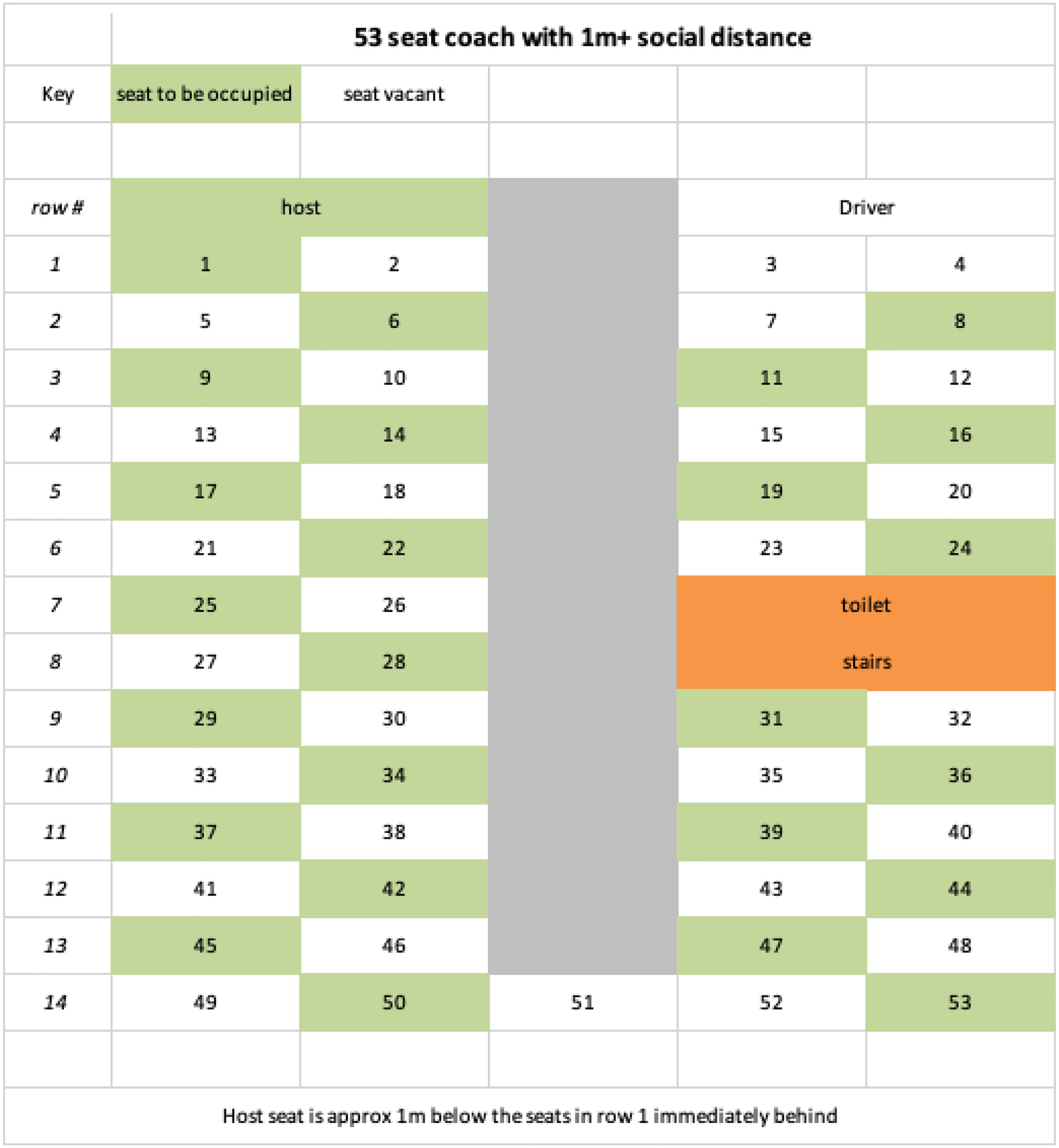
Lundgren Tours' coach seating plan (source: LUNDGREN TOURS (2021).
The future: resilience, optimism, ambition
‘I absolutely can't wait!’ exclaims Jones (personal communication, 2021a). On April 12th, trips restart at half-capacity and will be ‘good on both professional and personal fronts.’ At first LT will plan a month ahead. Tours have been redesigned to ensure both safety and comfort. For customers they are an opportunity to interact with people, which Jones feels is important. A 53-seater coach now seats 26 all masked and socially distanced (Figure 2). In a city, the group is split into two – one has free time and the other a tour with Jones wearing a visor, which he finds exhausting. Half capacity is feasible as trip prices have increased 33% and are now, in Jones’ opinion, quite expensive. LT earns a third of their normal revenue. The substitute cost of providing for 24 people rather than 50 + lies in the additional time spent ensuring safety. However, dealing with fewer people takes less time. ‘In terms of the effort we have to make, it's about the same.’ Normally, student trips are not offered during April as students are travelling independently or working on their studies. ‘We thought this was quite a big risk. We didn't know if this would work.’ In April 2021, however, they had sold out during the week as well as at the weekend (Figure 3). The National Union of Students had subsidised some tickets and this has made the price more affordable for LT's student clients.
Although there is no formal risk analysis, register or management and no formal contingency planning in the business, risks are discussed as part of business strategizing and development: ‘we always have a Plan A and a Plan B.’ (Figure 3).
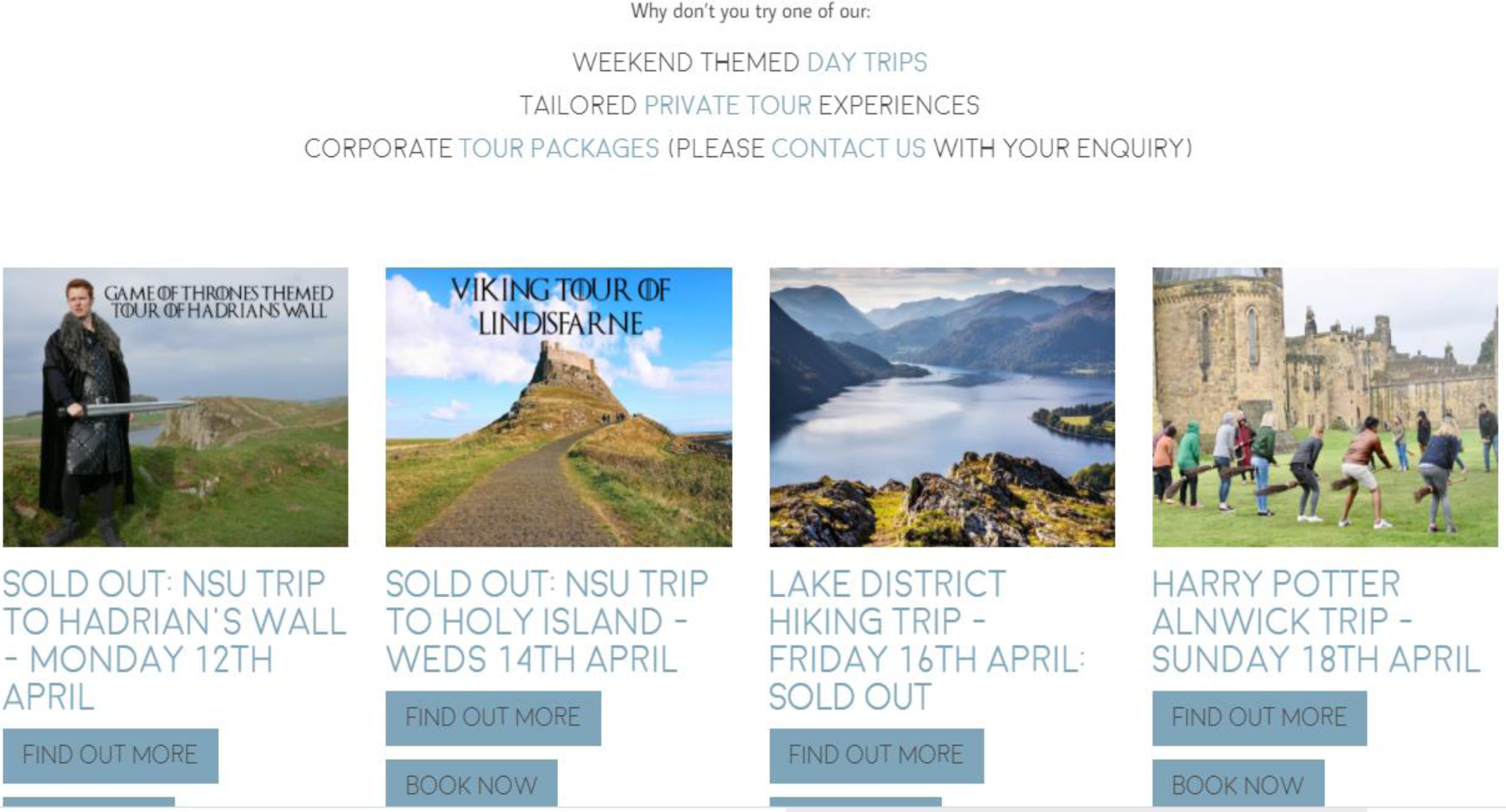
Webpage showing Lundgren Tours almost sold out through early April 2021.
The hope is that by September 2021, tours will return to full capacity. The UK government's ‘roadmap out of lockdown’ (Gov.uk, 2021) stipulates that all restrictions will not be lifted before June 21st but Jones remains cautious while confident that the hitherto successful vaccination roll-out will transform the situation. Many questions about the summer season remain unanswered and Jones must choose between focussing on that, putting everything into a September ‘relaunch’ or developing for the longer term. His business development strategy is to build up a varied portfolio of trips, expanding into multiday trips to the Scottish Highlands and the Giant's Causeway in Northern Ireland, for example, increasing capacity and regularity. This is intended to reduce risk and increase profitability. Already working with Newcastle, Northumbria and Durham universities, the obvious move is to expand into Sunderland and Teesside. The ultimate aim is for Jones to become a tour co-ordinator operating behind the scenes, training and employing drama or theatre students as tour guides to deliver the tours themselves and operate simultaneous trips and then launch a LT franchise model elsewhere in the country. This would make LT the largest tour operator in the North East by scaling up a profitable coach trip model. ‘We will do in 2022 what we planned to do in 2020. This year will be all about adapting to how people live now. This year is just trying to adjust. Growing the business is next year! Post Covid we will try to get back to normal and also learn about all the changes that have happened to our industry and region. With students, as soon as they are allowed to get out, they want to. However, our competitors are now “everything else” people are allowed to do. For example, from April 12th you are allowed to drink outside a bar - would you rather sit outside the bar or go on a trip? That is the mentality of locked down people.’ (R. Jones, personal communication, 2021a).
LT has not forgotten about Brexit, the predicted resulting recession and the lack of Erasmus funding which encourages international students to study in the UK. Changes to the student body are yet to be clarified. Brexit feels quite known and predictable compared to the virus and lockdowns. Jones believes it could change things rather than wreck them. The greatest influence will be the attitude of international students and foreign universities towards coming to the UK. Jones’ challenge is to communicate the opportunities and possibilities. European students report that their news media are portraying the UK as a difficult destination. ‘Brexit might have a more long-term effect than Covid, but it also feels like I might have more influence.’ states Jones optimistically. Necessity-driven (as opposed to passion-driven) entrepreneurship is ineffective during recessions (Devece et al., 2016). Innovation and opportunity recognition are more relevant as success factors during periods of recession than during periods of prosperity.
Postscript
A follow-up interview with Jones was conducted in late August 2021. His hope that tours would return to full capacity has been realised with most Covid restrictions lifted in July. Over summer, LT was the only tour operator of the type still running, allowing them to maintain and develop relationships and clients, who in turn were supportive. They used the season to experiment with new tours and this generated visibility, search engine optimisation and blog content while they picked up last-minute private clients on ‘staycations’. Further, unpredictable numbers of international students attending summer schools meant the universities outsourced the cost and risk of organising activities for them to LT, continuing into the September ‘Welcome’ season and, Jones hopes, beyond.
Focussing on students is confirmed as an advantage due to their attitude towards coronavirus. While other companies gradually increase capacity for cautious customers, LT can flex between normal, full capacity ‘relaxed’ trips with no social distancing and their recently developed ‘covid-safe’ configuration for a different target. Universities have requested trips for smaller numbers to closer destinations and LT have responded.
While 21/22 is the final year of UK Erasmus participation, the effects of Covid and Brexit on international student numbers are uncertain and unpredictable. Jones participates in social media fora for international students and detects many more queries much earlier from those considering studying in the UK. This is an opportunity to engage with them but Jones also senses a wariness of scams borne of weary familiarity with on-line deceptions. So, LT have invested funds for the first time in attending local university induction events and ‘freshers fairs’ in person, negotiating discounted marketing packages with the students’ unions. Jones claims they are more prepared than in previous years.
Meanwhile, ‘home’ student numbers have increased due to post-pandemic unemployment. With ‘staycations’ the norm this year, Jones wonders if his trips will attract those who prefer not to socialise by drinking in the cities’ nightclubs. Significant price increases made in the pandemic have replaced incremental increases and Jones is optimistic about future profitability and continued freedom from restrictions. He anticipates possible re-introduction of measures due to winter infection rates and strain on health services but no further lockdowns.
The summer was an opportunity to experiment and, if the autumn goes as planned, Jones will feel the crisis is past. It has presented opportunities, partnerships and clients Jones expects to endure. Lack of competition has helped as LT was temporarily a monopoly and it is unclear whether other companies will return. The small scale of the business has helped it to adapt and Jones’ personal circumstances - no mortgage or family - also allowed him to focus. He determined to develop his client relationships (eg. visitor attractions in Northumberland) and they have been keen to support him to help themselves. Jones admits he is not as skilled in marketing communications as his competitors, but his collaborative strategy has been more effective in a crisis. “If they are prepared to take a risk on me, then we have to give it a go.” (R. Jones, personal communication, 2021b). LT did not focus on ‘how can we make trips happen?’, they adapted by, for example, running on-line events. Instead of complaining, LT focussed on what impact they could have.
In the short-term, LT lost opportunities and revenue. Jones himself suffered several pandemic-related calamities with two bouts of viral illness, periods of despair and having to move back into his parents’ rural home from his city-centre flat (Lundgren Jones, 2021). Longer term, Jones is looking forward to seeing if the new ideas, partnerships, client relationships, reputation and confidence in their adaptability will drive sustained growth. “However horrible the pandemic was, it has created opportunities. In future, I will feel proud that we survived and didn't just do nothing or wait for things to return to normal.” (R. Jones, personal communication, 2021b).
Footnotes
Declaration of conflicting interests
The author(s) declared no potential conflicts of interest with respect to the research, authorship, and/or publication of this article.
Funding
The author(s) disclosed receipt of the following financial support for the research, authorship, and/or publication of this article: This project has received funding from the European Union’s Horizon 2020 research and innovation programme under the Marie Skłodowska-Curie grant agreement No 734824.
