




Abstract
This paper critically explores how women anti-mining activists conceptualize development, in the context of living with and resisting large-scale resource extraction in Cajamarca, Peru. I contend that participatory photography provides an opportunity to contest hegemonic development narratives and the notions of ‘lack’, ‘poverty’ and ‘progress’ that are bound up with such narratives, enabling participants to simultaneously evoke both hoped-for alternative futures and nostalgic renditions of a threatened present. Moving beyond an explicit and immediate focus on the socially and environmentally destructive nature of large-scale mining, I explore how the women instead document productive Andean livelihoods and everyday ways of life, capturing the ways in which hoped-for futures are enacted in the present. The women activists articulate their resistance through photography, identifying and celebrating practices of hope in their everyday lives and communities and providing an emotive counter-narrative to extractive-led neoliberal development discourses. The paper reveals that participatory photography approaches generate critical insight into the emotion-suffused ways in which development is understood by grassroots activists in contexts of extractivism.
I. Introduction
Whilst the concept of development has been extensively critiqued, contested, reinvented and rejected (see, amongst many others, Escobar, 1995; Esteva et al., 2013; Lang and Mokrani, 2013), it continues to have a high degree of resonance and traction as a set of normative ideas, values and practices aimed at tackling poverty and inequalities—indeed a whole industry and global architecture continue to exist based on designing, implementing and evaluating development initiatives (Ingram and Lord, 2019; Mawdsley and Taggart, 2022; Patel, 2022), dating back to ‘the multiply scaled projects of intervention in the “Third World” [that] emerged in the context of decolonization struggles and the Cold War’ (Hart, 2010, p. 119). Whilst these colonial histories and presents have been extensively problematized (Kothari and Wilkinson, 2010; Wilson, 2012; Taylor and Tremblay, 2022), I argue that it is still vital to understand how development is conceived, engaged with, rejected or embraced, by those who can be considered to be at its coalface—in this case grassroots, Global South women actively engaged in contesting the dominant model of neoliberal economic development as experienced in much of Latin America—extractive-led development (Acosta, 2013; Svampa, 2012). The extractive-led model of development, based on the large-scale extraction of natural resources, primarily for export and with minimal processing, has been vigorously pursued by Latin American governments on both the left and the right since the mid-1990s, as a potential route to prosperity and poverty reduction (Burchardt and Dietz, 2014; Deonandan and Dougherty, 2016; Svampa, 2012), and has been contested equally vigorously by a range of interest groups whose priorities often coalesce around a strong critique of neoliberal development and the social and environmental harms of extractivism (see, e.g., Bebbington, 2012; Lyra, 2019; Haarstad and Fløysand, 2007; Urkidi and Walter, 2011). Women activists have also been at the forefront of contesting extractivism in many contexts (Jenkins, 2017; Li, 2009; Velasquez, 2012; Ulloa, 2016). The research discussed here, carried out in 2017–2018, aimed to provide a space for women anti-mining activists to articulate their own critiques of, and approaches to, the notion of development, and to explore what this concept means to them in the context of living with, and resisting, large-scale gold mining in Cajamarca, Peru.
The year-long participatory project brought together 12 women from three women’s organizations engaged in resisting extractivism, 1 culminating in a public exhibition of their work in Cajamarca city, on International Women’s Day 2018. Guided by the well-established photovoice methodology (Wang and Burris, 1997), the scope of the project was collectively agreed upon in initial workshops, and participants received guidance on using the cameras, ethics and safety. Each woman was given a camera to take photos for three months as they went about their daily lives, reflecting on three collectively agreed themes: alternatives to extraction, well-being and community. Participants met regularly with the project research assistant to download their photos and select their preferred images. Follow-up workshops and interviews provided spaces for the women to reflect individually and collectively on their images, and to prepare for the final exhibition. 2
Here, I critically analyse how the women used photography to articulate their resistance to large-scale resource extraction, in the context of making sense of their own understandings and experiences of development, responding to Spiegel’s recent call for a ‘greater focus on women’s place-based storytelling and its communicative power’ (2020, p. 120) in relation to understanding the social and environmental transformations wrought by resource extraction. The paper explores how the women’s photographs visually contest hegemonic development narratives, and the notions of ‘lack’, ‘poverty’ and ‘progress’ that are bound up with such narratives, through harnessing a range of emotions, simultaneously evoking both hoped-for alternative futures, and nostalgic renditions of a threatened present. Through this discussion, it becomes evident that participatory photography approaches generate critical insight into the emotion-suffused ways in which development is understood by grassroots activists in contexts of extractivism, providing an important counterpoint to neoliberal, technocratic development narratives.
I begin by situating the research in relation to existing work on development imaginaries and emotions, and consider how this articulates with key debates around extractive-led development in Latin America, before introducing the context of women’s resistance to large-scale mining in Cajamarca. The remainder of the paper then explores how participatory photography reveals the ways in which activists’ perspectives on development are characterized by the intertwining emotions of hope and loss.
II. Disruptive Development Imaginaries and Extractive-led Development
It is increasingly recognized that development is an inherently emotional and emotive subject matter (Baillie Smith and Jenkins, 2012; Wright, 2012). As Wright (2012) argues:
Emotions, as they articulate with affect, mutuality and empathy, cannot be excised from critical research agendas, from our understanding of how development is imagined and enacted, or from our reflections on how knowledge is produced and authored. (p. 1125)
Furthermore, feminist development scholars have particularly emphasized the importance of paying attention to emotion, the body and the everyday, in understanding gendered inequalities (Harcourt, 2009), whilst recent decolonial feminist thinking from Latin America has been especially important in foregrounding embodied and emotional understandings of women’s relationships to territory and place (Rodríguez Castro, 2020; Rodríguez Aguilera, 2022; Zaragocin, 2019).
An engagement with emotion is also at the heart of critiques of representations in development, especially in relation to the ways in which poor communities in the Global South, and above all the most marginalized within those communities, have been represented in particular, often disempowering, ways. Imagery is central in influencing Global North public understandings of, and responses to, poverty and inequality, as well as in relation to charitable fundraising; whether sympathy or solidarity is evoked is crucial in shaping the sorts of relationships and connections that underpin the theory and practice of development work (Baillie Smith, 2013; Smith and Yanacopulos, 2004). An extensive literature critiques the ways in which development NGOs have deployed images of poverty and famine, framing people in the Global South as vulnerable victims, and as objects of development (Clark, 2004; Smith and Donnelly, 2004; Smith and Yanacopulos, 2004; van der Gaag and Nash, 1987; Voluntary Service Overseas, 2002), and Li (2014) characterizes such representations as ‘images of deficiency [that] do powerful work’ (p. 597), in terms of the particular narratives of development that they perpetuate. Although there has been a determined move towards tackling such development imaginaries (Ramamurthy, 2012; Wilson, 2011), these supposedly more ‘positive’ representations of people and places in the Global South often still serve to re-work and perpetuate problematic power relations and notions of agency (Wilson, 2011).
Nonetheless, it is evident that representations of development are still relatively infrequently produced by those who are perceived as the target for interventions. Photovoice approaches, which enable participants to reflect on their own social realities, offer an opportunity to shift and unsettle the development gaze, in this case foregrounding women’s own representations and interpretations of development and of their lives. As Poole observes: ‘…the specific ways in which we see (and represent) the world determine how we act upon that world and, in so doing, create what the world is’ (Poole, 1997, p. 7). 3 This chimes with a growing emphasis on decolonizing development, engaging with questions around how development is represented, practised and understood, and by whom and why this is important (Morris and Gomez de la Torre, 2020; Rutazibwa, 2020; Taylor and Tremblay, 2022). Such work interrogates how particular ‘versions’ of development are more or less powerful, and how they shape the kinds of interactions that happen on the ground. In this light, Smith and Yanacopulos (2004) advocate for a wider range of civil society actors to create more diverse representations of development, emphasizing the possibilities this presents for re-working traditional North–South dynamics. The potential of photovoice lies in the way in which it might contribute to shifting the development gaze through foregrounding participants’ own representations of their lives, rather than having their needs and aspirations assumed or represented by others. In this research, this translates into grassroots women being the ones doing the looking rather than being looked at, reflecting Mirzoeff’s (2011) assertion that ‘The right to look claims autonomy, not individualism or voyeurism, but the claim to a political subjectivity and collectivity’ (p. 473). Piper-Wright (2022) identifies that claiming this right to look represents a ‘feminist decolonial strategy’, recognizing the potential for change-making that this presents.
In this regard, it is useful to consider the particular role that images play in relation to activists and activism. Images may be deployed in environmental activism in order to bring closer distant scenarios of environmental destruction (Velasquez, 2019; Wooden, 2017), as well as to enable diverse interest groups to coalesce around a particular agenda (Velasquez, 2019). Sanchez Francesch and Vargas Cerna (2019) consider how particular images become iconic symbols of resistance—reflecting on the iconic image of Maxima Acuña in relation to anti-mining activism in Peru—while Li (2019) explores the possibilities that images and creative methods provide for disrupting dominant ways of thinking about resource extraction, through ‘produc[ing] ruptures in dominant narratives about resource-led development, suggesting new ways of seeing and thinking about extraction’ (p. 78). This approach is reflected in recent examples of using visual methods to interrogate local people’s experiences of environmental change (Boudewijn, 2022; Spiegel, 2020; Tremblay and Harris, 2018). This research furthers these provocations to disrupt dominant narratives and imaginaries of development. Photovoice provides an opportunity to gain insights into the worldviews of participants that might not be achieved by more traditional research methods, both through the photos themselves and from the ideas, discussions and emotional engagements that the photos and photo-taking activities stimulate—capturing and allowing us to interrogate that which participants might otherwise take for granted.
The context of Cajamarca, Peru, provides an appropriate scenario in which to explore these issues. The city of Cajamarca is located 14 km from the Yanacocha gold mine, the largest gold mine in South America, which has been in operation since 1993. The city and wider province (also called Cajamarca) have become an emblematic site for understanding resistance to large-scale resource extraction, given a series of high-profile social mobilizations and protests in relation to proposed expan-sions and new developments (Bebbington et al., 2008; Li, 2009, 2015). Extensive and prolonged activism by a wide cross-section of the community led to two proposed mining developments being abandoned—Cerro Quilish in 2004 and Conga in 2012 (Li, 2013; Paredes Peñafiel and Li, 2017). A strong civil society presence has been influential in bringing these issues to international prominence, with the case of Maxima Acuña Chaupe becoming a particularly high-profile example of the community’s continued opposition (Sanchez de Francesch and Vargas Cerna, 2019). Given this extensive engagement with debates around resource extraction and its impacts, accompanied by a well-developed presence of women’s organizations actively intervening in this sphere, Cajamarca is a productive site through which to explore how women activists conceptualize development, in the context of living with ongoing resource extraction activities and contesting the dominant extractive-led model of development. 4
III. Intersections of Activism, Emotions and Development
This section explores the ways in which emotions of hope, loss and nostalgia are intimately bound up with ways of thinking about, enacting and contesting development, reflecting feminist scholarship that argues against the possibility or desirability of an—implicitly white male—‘objective’ development gaze (McKinnon, 2017; Wright, 2012). A growing body of work explores how notions of hope are intrinsic to the ideas of development, conceived as a set of normative ideas and values geared towards betterment and the possibility of imagining the world otherwise (Courville and Piper, 2004; Duggan and Muñoz, 2009; McKinnon, 2016). Anderson and Fenton observe, ‘a secular practice or ethos of hope becomes a way of embodying the conviction that the future may be different from the present’ (Anderson and Fenton, 2008, p. 77), exploring how hope and the act of hoping open up, however tentatively and imperfectly, spaces and opportunities through which to explore, think through, nurture and imagine other ways of being in the world. Without hope—for different futures, alternative presents—development ceases to have any meaning. Indeed, we should situate hope as central to the project of decolonizing development (Smith, 2016, p. 4; see also Gibson-Graham, 2005; McKinnon, 2016), alongside also recognizing the importance of not reducing the experiences of people living in the global South to suffering and pain (Francis et al., 2021; Wright, 2012). Scholars emphasize that hopeful development is about ‘making visible the diversity of social and political and economic realities [that] gives them a presence in the here and now and generates new possibilities in the present that are otherwise obscured by the dominance of hegemonic discourses’ (McKinnon, 2016, p. 268), rather than chasing a utopian ideal future. Thus, Gibson-Graham focuses on ‘what the [community] has rather than what it lacks’ (Gibson-Graham, 2005, p. 29), while Bauckham and Hart (1999) conceptualize hope as ‘soundly rooted in real possibilities in the world’ (cited in Dinerstein and Deneulin, 2012, p. 595). Below I highlight two aspects of this work that particularly resonate with this research—the intersections of hope, loss and activism on the one hand; and the connections to Latin American theorizations of buenvivir, on the other hand.
Hope, loss and nostalgia are all identified as important components in sustaining activism and resistance over time (Bradbury, 2012; Courville and Piper, 2004; Dinerstein and Deneulin, 2012). For example, Courville and Piper (2004, p. 57) recognize that ‘The crucial role of hope is that it can sustain a movement until the timing is right to enforce change’, whilst Duggan and Muñoz (2009) identify the intertwining of ‘educated hope’ with enacting critique. Such ideas are also explored by Griffiths (2017) who characterizes fear and hope as mutually constituted, with fear serving to mobilize ‘critical or radical forms of hope and, in turn, [animate] resistance to oppressive impositions of power’ (p. 631). These scholars and others, thus position hope as an essential emotion in motivating activist practices—emphasizing the importance of collective hope in efforts to achieve social justice (Courville and Piper, 2004).
Nonetheless, it is also important to recognize how hope and hopefulness are co-constituted with less ‘positive’ emotions, and here several authors emphasize the role played by emotions of loss, fear and nostalgia in provoking hope (Anderson and Fenton, 2008; Dinerstein and Deneulin, 2012; Griffiths, 2017; Pickering and Keightley, 2006; Wright, 2008), alongside those who foreground the riskiness embedded in hope and hoping (Duggan and Muñoz, 2009). Similarly, Anderson and Fenton (2008) underline the fragility of hope, conceptualizing hope as at once fragile and enduring, intertwined with risk and loss, whilst Joronen and Griffiths’ (2019) consider hope as a ‘practice of everyday waiting (for a radically different future)’ (p. 71), that is vital in disrupting spaces of precarity and occupation, and enabling people to persist in seemingly hopeless circumstances.
This centring of temporality in theorizations of hope is also evident in how scholars have linked hope, nostalgia and waiting to understand how feelings of nostalgia can also motivate—and simultaneously be harnessed by—activism and resistance (Bradbury, 2012; Courville and Piper, 2004; Joronen and Griffiths, 2019). Whilst typically characterized as regressive, backward-looking and melancholic (Pickering and Keightley, 2006), nostalgia is also recognized as a driver for future-oriented activism (Pickering and Keightley, 2006) and identified as an outlook that enables people to live with hope through placing themselves at an ‘imaginative distance’ from the struggles and difficulties of their daily lives (Bradbury, 2012, p. 347). Such nostalgia may then ‘also be productively galvanized in creating possibility, living a meaningful life and provoking critical action’ (Bradbury, 2012, p. 347).
These narratives resonate with much contemporary Latin American theorizing around alternatives to development, in particular theoretical and practical moves towards buenvivir or ‘living well’. Emerging from indigenous conceptualizations of well-being, and in particular, translating the Quechua notion of ‘Sumak kawsay’ and Aymara ‘Suma qamaña’, 5 buenvivir is often associated with debates around post-extractivism and post-neoliberalism, reflecting ‘the increasing understanding (and feeling) in South America [that] the modernity project is exhausted’ (Gudynas, 2011, p. 447). Gudynas (2011) characterizes buenvivir as an umbrella term for a multiplicity of approaches across different indigenous cultures in Latin America, united in their fundamental challenge to notions of development as ‘progress’ and ‘perpetual growth’ (Gudynas, 2013), instead emphasizing indigenous cosmovisions and ontologies. Key aspects of buenvivir include prioritizing the inter-relationship between individuals, nature and society and the promotion of a holistic understanding of development that prioritizes collective well-being, redistribution and equality. In this sense, buenvivir encompasses a recognition of the importance of living well, not better than, or at the cost of, others, alongside a recognition of the rights of nature, 6 and an emphasis on working with nature rather than usurping, dominating or plundering it (Thomson, 2011; Villalba, 2013). These approaches encapsulate a focus on alternatives to capitalist development and promote the (re)imagining of more culturally appropriate trajectories, tying in with broader notions of hope and hopeful development. For example, Acosta (2017, p. 2604) emphasizes that notions of buenvivir open up multiple trajectories that ‘need to be imagined in order to be constructed, and, on the other hand, are in fact already a reality’, resonating with McKinnon’s impetus towards hopeful development as ‘a project of finding and creating hope in the world we live in, the here and now’ (McKinnon, 2016, p. 268). In this light, buenvivir also chimes with Pickering and Keightley’s argument that nostalgia should not be conceptualized as necessarily the antithesis to progress, alongside Bradbury’s assertion that ‘nostalgic recollection and hopefulness place us at an imaginative distance from current circumstances, suggesting that the world could possibly be different’ (Bradbury, 2012, p. 347). Similarly, Pickering and Keightley emphasize that a nostalgic ‘desire to imaginatively return to earlier times is then felt to correlate with an acute dissatisfaction with the present’ (p. 923), representing a rejection of the transience of modernity that attempts instead to capture a (lost) sense of continuity and coherence. The concept of solastalgia put forward by Albrecht (2006) is also relevant here, in terms of understanding the loss and anguish associated with environmental change and the impacts on people’s sense of home and connectedness to place (see also Askland and Bunn, 2018; Boudewijn, 2022). As Askland and Bunn recognize in their discussion of the impacts of mining in Australia, ‘it is not only the damage that a mine creates to the physical landscape that can be the root of distress but rather, for example, a sense of temporal rupture and feeling of betrayal and deception’ (Askland and Bunn, 2018, p. 19).
Notions of loss and nostalgia are of particular relevance in thinking through the powerful intersection between photos, nostalgia and loss in the context of activism (not only in relation to environmental change but also more broadly), where photos are used to communicate the threat of loss, as well as representing that which has already been lost. Through capturing a moment in time, photographers enable that moment to be ‘remembered’, to be present in the historical record and to endure beyond the time and space in which the photo is taken (Rosario Montero, 2022; Thomas, 2020). Photographs, as ‘emotionally resonant objects’ (Rose, 2004, p. 549) are, therefore, also imbued with a sense of loss, through their ability to make present, to remember, that which is now absent or gone, as well as those people who are deceased or currently physically distant from us (Rose, 2003). As Thomas (2018a) describes in relation to the highly emotive context of the disappeared in South Africa, ‘the stories buried in photographs, like the remains of those who have been exhumed, provide a means to return to the lives and deaths of those who were “disappeared”’ (p. 430). The use of photos, specifically portraits, in relation to campaigning for justice in relation to the disappeared, is a strategy we see repeated across time and space—from the Mothers of the Disappeared in Argentina and Chile (O’Keeffe, 2009; Tandeciarz, 2006), to post-apartheid South Africa (Thomas, 2018a). Physical photos, and their materiality, may then take on an almost talismanic status, through the ways in which they come to represent that which is absent or has been lost, as well as anticipating a future loss or a ‘sense of loss in the present’ (Rose, 2003, p. 12). Photos are therefore key in bearing witness and commemorating (Thomas, 2018a, 2018b), as well as in claims-making for reparations and justice (Thomas, 2018b; Wooden, 2017), speaking to the ways in which photos are widely considered as a particularly compelling form of evidence (Bogre, 2012) that work to forge solidarities across time and space (Thomas, 2020). Rose also observes how through their representations of the past, photos also speak to possible futures, ‘act[ing] as reminders of a past, a there–then, which is also an evocation of another there–then, the future: “there’ll be more to come”’ (Rose, 2003, p. 15), thus evoking a particular sense of continuity, temporality and hopefulness. Whilst Rose’s discussions stem from a very different context (the ways in which family photos are used by UK mothers in domestic spaces), the ways in which she articulates the ‘work’ that photos do around temporality, emotion and representation resonate far beyond the immediate context of her research.
This ‘sense of loss in the present’ (Rose, 2003) is particularly harnessed in imagery used in environmental activism. Molloy (2016) characterizes this as ‘environmental nostalgia’, exploring how this works in the context of documentary films juxtaposing pristine ‘unspoilt’ natural environments with images of environmental destruction associated with resource extraction (in this case fracking for natural gas). Molloy (2016) argues that such environmental nostalgia provides a tool through which specific conflicts may be ‘delocalized’ and travel across contexts. This strategy is exemplified by Velasquez (2019), who shows how symbolic images, in this case the chakana, an Inkan cross, and images of unspoilt mountain ranges, were used to unite diverse interest groups including politicians, students, environmentalists, and rural and urban dwellers, around a common agenda of fighting large-scale mineral extraction in Southern Ecuador. Velasquez identifies the imagery of ‘pristine paramos’ as pivotal for garnering support for the anti-mining cause:
Neither randomly selected nor an unmediated representation of the Andean landscape, images of the pristine paramo constitute a visual discourse that links water with life, conjuring a specific kind of urban environmental movement that questions the legitimacy of mineral extraction in watersheds. (Velasquez, 2019, p. 102)
This mechanism of using images to bring closer that which is distant is a trope repeated in other contexts around the world where the natural world is under threat. For example, in Kyrgyzstan, Wooden (2017) observes that visual imagery helped ‘to create a public imaginary where distant mined places become familiar and part of the community, easily seen as close and central to what is important to defend and protect’ (p. 181). Similarly, Doyle (2007) explores the powerful role of visual imagery in Greenpeace’s campaigning work, both in relation to ‘convey[ing] the visual beauty of nature at risk’ and in Greenpeace’s non-violent direct action where images have been a central component of a strategy of ‘“bearing witness” to environmental damage’ (p. 131). Doyle (2007) also foregrounds the role of temporality in Greenpeace International’s use of imagery, exploring ‘the need to visually reference the past, in order to communicate the present and the future’ (p. 137), again reflecting the symbolic use of an idealized, pristine natural landscape in visualizing the threat of future destruction. However, Doyle (2007) also identifies the potential for the use of such pristine landscapes to have a distancing effect, rendering climate change as something that happens elsewhere, affecting remote habitats and animals, rather than demanding action from the viewer. 7 This juxtaposition also reflects two distinct uses of imagery in activist work—on the one hand, to drive attitudinal change and invoke solidarities amongst directly affected communities and stakeholders (e.g., Sanchez de Francesch and Vargas Cerna, 2019), and on the other hand, to raise awareness and build solidarities with a broader, less immediately affected, and often more geographically distant, audience (e.g., Adams, 2012; Kroijer, 2019).
Considering these conceptualizations of how visions of development futures and resistance to hegemonic development presents are imbricated with emotions of hope and loss, the remainder of this paper critically explores how women anti-mining activists’ photography enabled them to identify and reflect on both ‘practices of hope’ (Joronen and Griffiths, 2019) and threatened loss in their everyday lives and communities. In elucidating how women’s depictions of development futures are tightly bound up with emotions, this paper speaks to a growing body of feminist work (Boudewijn, 2022; Ey, 2018; Tremblay and Harris, 2018) that argues that to understand struggles around resource extraction, it is essential to recognize such struggles as intensely and inherently emotional, in stark contrast to dominant masculinist discourses around extractivism that dismiss, erase or overlook such embodied responses ‘as intangible, “airy fairy” and irrelevant’ (Ey, 2018, p. 2). With all this in mind, I first analyse the ways in which the women’s photos constitute visual contestations of extractive-led development, speaking to notions of hoped-for futures enacted in the present, before moving on to reflect on the ways in which their photos and photo-taking activities were also shaped by, and representative of, feelings of loss and threatened presents. In the discussion that follows, I analyse a sub-set of the total images produced—10–15 images per woman, selected by each of them as their most important images, and discussed in one-to-one photo interviews with me. 8 The data, thus, comprise images and qualitative interview data, both of which have been coded and analysed using NVivo. Thematic coding enabled key connections to emerge across the data set, providing the basis for the analysis presented here. Specific photos and narratives were selected for inclusion here as exemplars of the wider body of material, whilst also aiming to include contributions from different women participants.
IV. Hoped-for Futures Enacted in the Present
The Everyday as Symbolic of Hoped-for Futures
The women’s photos and accompanying interviews exemplify how they position everyday, gendered practices as symbolic of alternative and hopeful development futures. I argue that the women’s images—and the ways that they speak about these images—seek to contest hegemonic conceptualizations of development as progress, exemplified in the dominance of extractivism, through highlighting the variety of different livelihoods, ways of subsisting and everyday forms of household reproduction, that they see around them and experience every day. Joronen and Griffiths (2019) talk about cyclical processes of everyday life as a means of maintaining hope in the face of precarity (in that case in Palestine), and elsewhere I have discussed how women activists use tactics of ‘staying put and carrying on’ as a means of demonstrating their continued resistance to being displaced from their land and their determination to maintain a particular way of life (Jenkins, 2017). In many of their photos, the women have chosen to capture and celebrate such ‘practices of hope’, enacted by women in their everyday lives, in the face of the continued threat from large-scale mining.
Blanca Tasilla Moqueira/Women, Mining and Photography 2017.
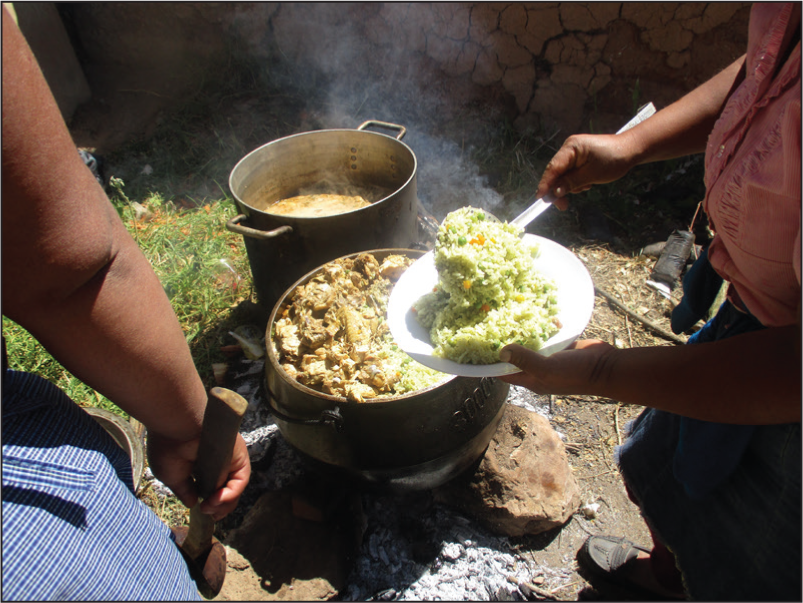
In a huge number of the women’s photos, and across all the women who took part in this project, women’s everyday practices, objects and activities—including food, market stalls, communal cooking pots and hats—are depicted as symbolic of hoped-for alternative sustainable futures, as these are also already enacted in the present (as seen in Figures 1–6). At the same time, the women’s photos and narratives present the everyday as a highly emotive signifier of their continued resistance to extractive-led forms of development, and the process of cataloguing the everyday itself becomes a form of hopeful resistance. Through the women’s commentaries, we see the ways in which they imbue their photos with meanings that give a particular resonance to everyday activities, reflecting strategies in other contexts, whereby women anti-mining activists frame mundane and everyday practices as an integral part of their repertoire of resistance to large-scale resource extraction (Jenkins, 2017; Rodríguez Aguilera, 2022).
Making Visible Viable Alternatives
Killari/Women, Mining and Photography 2017.
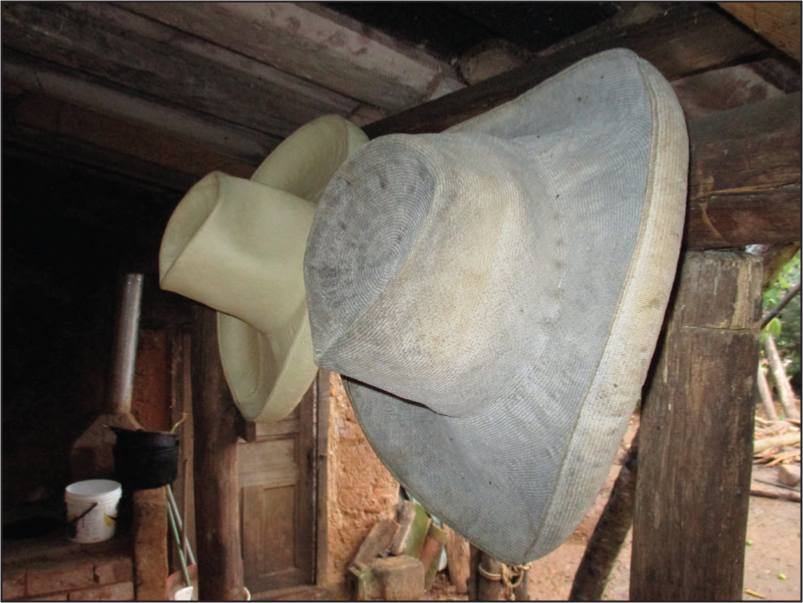
Killari: It is part of our identity, part of our daily life too, the use of the hat. … It is part of an alternative to development because it is a hat that is made here … by hand, not on an industrial scale, but handmade. … So because of this, it’s an alternative to development. And if the mine goes ahead here then it will also be lost.
Ana/Women, Mining and Photography 2017.
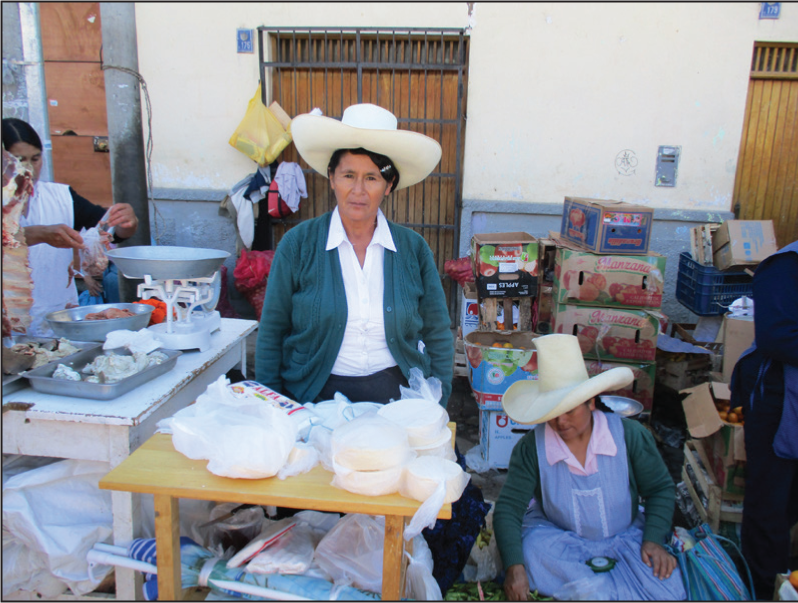
Ana: This lady is an entrepreneur, using her voice and her products. She makes the cheese herself, brings it and sells it like that. She is also known to me, she is my countrywoman, and her cheese is delicious, I buy it every week. … This is her livelihood, her cattle. In the countryside, she lives from this business of making cheese, it gives her an income to take back home with her.
I argue that, through capturing these diverse practices the women aim to make visible the activities they consider viable alternatives to extractive-led development, exploring the opportunities that these activities offer for more culturally appropriate development:
Dianira Trigoso Vizconde: Well, the truth is that you see a lady who is working, weaving by hand, and I think it is part of her, of her skill, right? But it also shows us that she is fine, right? She feels good, it’s not a job that requires a lot of effort, so yes, I think that this helps a lot with a person’s well-being, too - to work, with dignity. And you can see from her face that she is happy, you can see that she is relaxed. I think it shows that she feels good about her work, she feels good to be working, it is not an exploitative job. *** Killari: The companies put everything they can in front of our eyes, the best televisions, for what? So that we can make more of an effort or accept mining to be able to buy that car, to be able to buy that television, the latest model of that cell phone… we couldn’t do it with what we have here, right? But as my grandmother used to say, I have [enough] to live… and that’s enough. I have my bed, my house and food to eat, and that’s sufficient.
At the same time, the women problema-tize notions of economic progress and modernization as measures of development, echoing—and sometimes, as in the example below, explicitly referring to—discourses of buenvivir as a way of making sense of these representations.
Felicita Vásquez Huamán/Women, Mining and Photography 2017.
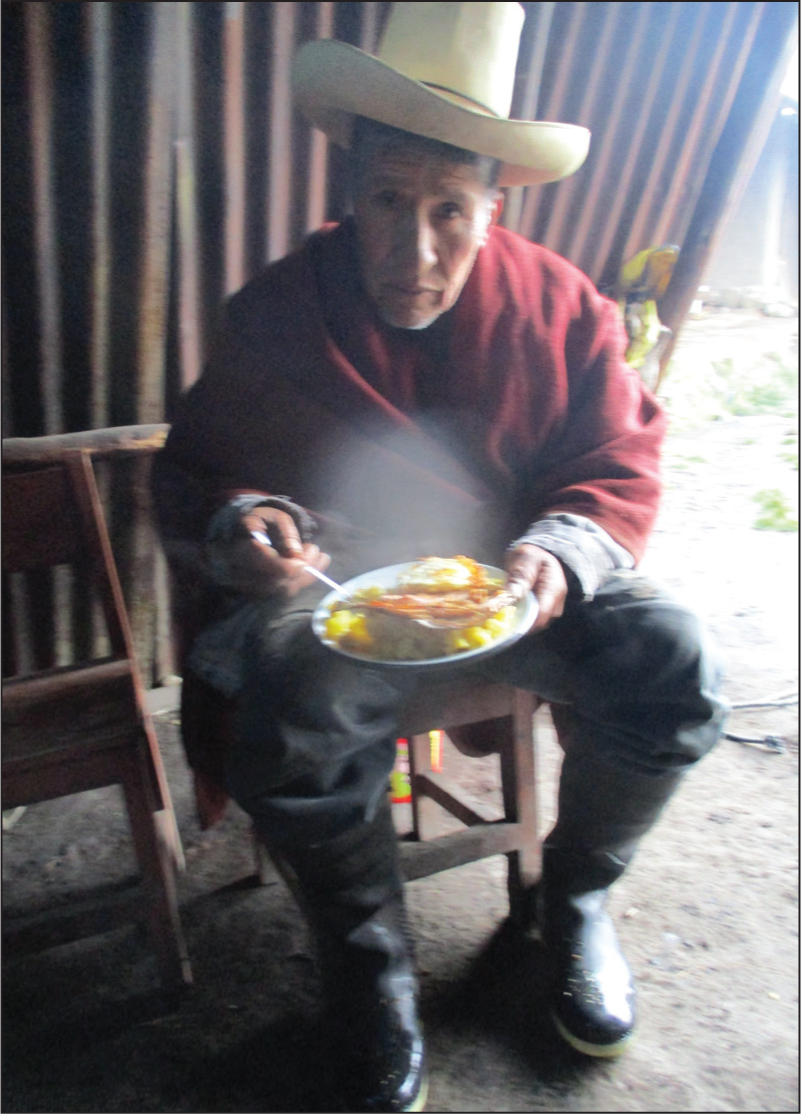
F: In the morning, we were having our breakfast, having done our chores while my Mum prepared the food. And my Dad is having his breakfast of potatoes and trout.
Interviewer: Delicious! And why did you want to take this photo?
F: Because it is buen vivir.
Interviewer: In what sense?
F: Well, in the city, we breakfast with really just a cup of coffee. On the other hand, in the countryside, it’s different. In the countryside we have potato, trout or caldo verde for breakfast.
Interviewer: Hot stew?
F: Yes, something natural, something that is produced in our own zone.
Interviewer: Of course. And for you is this buen vivir? What does it mean?
F: Feeding ourselves with products from here.
The women’s commentaries underline the longevity of these livelihood strategies, emphasizing that they pre-date large-scale resource extraction in the region and, therefore, represent viable alternatives, evoking a sense of continuity that does important work in legitimizing anti-extractive struggles (Jenkins, 2017). By capturing these images, the women explained that they seek to demonstrate that they are concrete and real possibilities for more sustainable development futures—i.e., that they are not unrealistic or fanciful, but that they are already existing hopeful alternatives.
Counteracting Narratives of Lack and Poverty
The women explain how, through their photos, they seek to counteract the dominant narratives which present large-scale resource extraction as the only viable strategy for otherwise poor communities:
Blanca Tasilla Moqueira: Well, [I took the photo] to say that in Cajamarca we have our products and we don’t need [mining]. They say that Cajamarca doesn’t have enough to eat, they say—the people from the mining industry, the people who come here have always said—that Cajamarca used to be very poor, they had nothing to eat, but with these photos I want to show that Cajamarca has its own products that serve to feed us naturally, right? They are from the land, right? That they strengthen us a lot, and that thanks to these products we can survive, and that we do not need extractivism or mining, as they say. *** Killari: It is a way of demonstrating that we can live without mining, that without mining we can live more peacefully. And yes it’s true that we’re not going to gain the millions that they gain [from mining], no, but we can survive and we have survived a long time without mining! And they say now that those who live without mining won’t be able to live. Because they’ve put this in our heads now, but you look back in time and you know that yes they were able to live.
Reflecting their activist subjectivities, the women’s narratives contest the predominant discourses about their communities, that foreground lack and poverty for which the mine is presented as the panacea. Thus, they emphasize the abundance, productivity, and cultural and culinary richness that they perceive in their communities (for example Figure 5), deploying these depictions to counter suggestions that they ‘need’ the mine:
Felicita Vásquez Huamán/Women, Mining and Photography 2017.
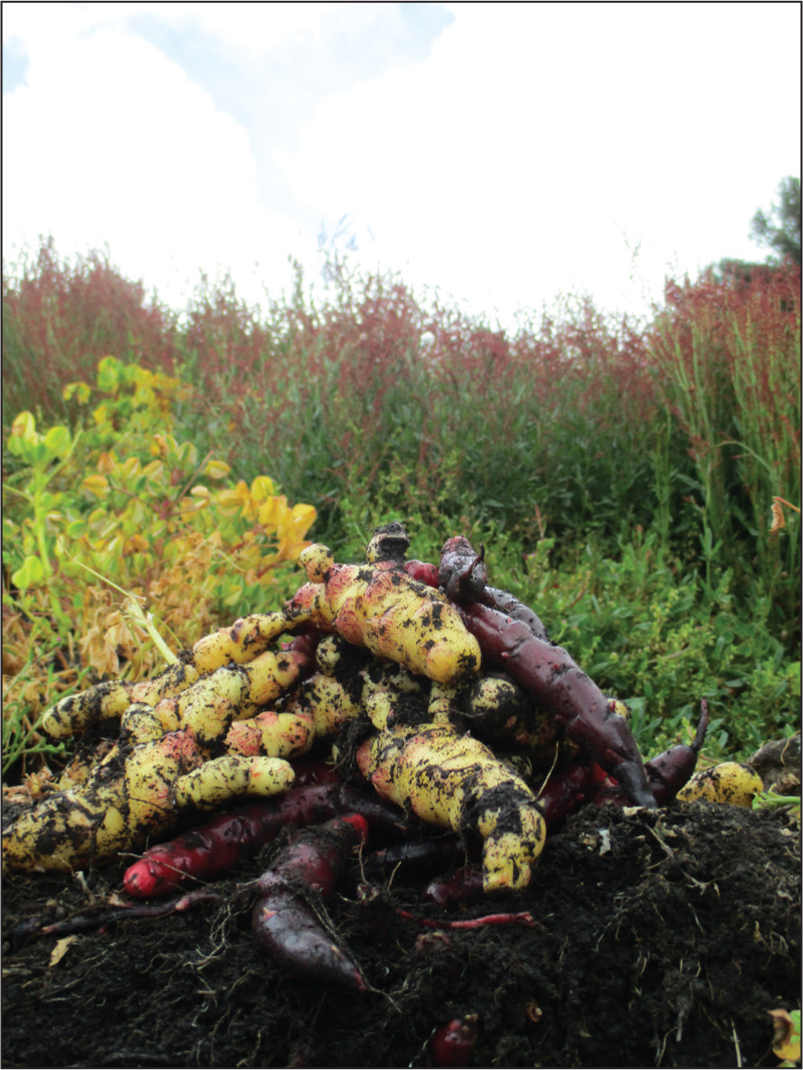
F: Here are the oquitas, that we ourselves produce, agriculture, that we have sown ourselves. Well, this is a product that we call native. We dedicate ourselves to this work.
Interviewer: And why did you take this photo?
F: Why did I take it? Because it is against mining, as we say. I took it because it comes from our land. We dedicate ourselves to this. It is an alternative to mining.
Interviewer: Agriculture?
F: Agriculture. That’s why I took this photo. To demonstrate that - according to them my Jadibamba has nothing, there aren’t any people there, it produces nothing - and I took it to say that yes we produce…
Yeni Cojal Rojas/Women, Mining and Photography 2017.
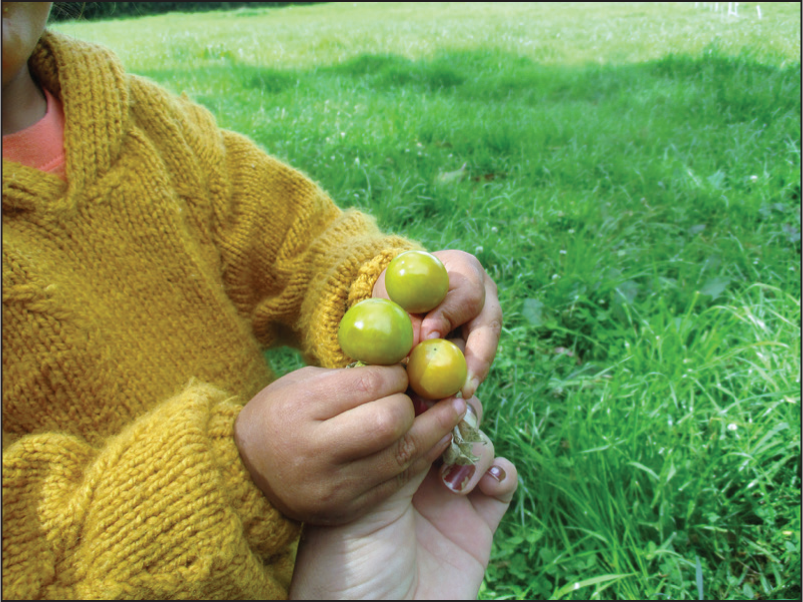
Yeni Cojal Rojas: And a message in this photo could be that we continue planting the tomato, that we continue, respecting it, wherever it grows, and that we harvest it and prepare it because that is where food comes from, that provides an alternative economy, right? And that is something sustainable, right? And you only need to sow it, produce it, harvest it and sell it, nothing more.
This emphasis on the productivity of the land, and the way that the women portray it as able to provide a ‘good life’ for people and communities, can also be understood as a response to the way in which governments and mining companies have constructed particular territories as being ‘empty-yet-full’ of resources, and ready to be transformed into a productive space (Svampa and Antonelli, 2009). The women characterize the land as already productive and explore the opportunities that they see for other, lower impact, forms of development that start from what they already have and value. In this light, ideas about endogeneity are also evident across the women’s photos, emphasizing the importance of valuing that which is theirs and which is associated with a particular place and way of life.
Whilst there is an element of ‘rose-tinted glasses’ to these depictions of bountiful rural idylls (Jenkins and Boudewijn, 2020), I argue that they can be understood as hopeful depictions of alternative development trajectories that are already in existence, counteracting uni-dimensional narratives around large-scale resource extraction, and refusing to be bound by oppositional narratives that focus on the negatives of mining, instead making visible and finding joy in multiple development trajectories and ‘the diversity of social, political and economic realities’ (McKinnon, 2016) already existing in the present. Such an approach also reflects Poole’s (1997) recognition of the role of pleasure in photography: ‘we frequently forget that images are also about the pleasures of looking. Visual images fascinate us. They compel us to look at them, especially when the material they show us is unfamiliar or strange’ (p. 17), underlining the value of depictions that pay attention to the already existing assets of a community (Gibson-Graham, 2005) and resonating with Hage’s (2003) articulation of ‘hope on the side of life’ (cited in Wright, 2008). Thus, the women’s photos encapsulate what Dinerstein and Deneulin (2012) recognize as a politics of dignity, where emphasis shifts away from oppositional demands per se, and towards getting on with living a different, and better, life.
V. Loss and Documenting Threatened Presents
However, at the same time as they reflect on hopes for the future, the women also powerfully convey a sense of loss, underlining the extent to which they feel that their communities, livelihoods and ways of life are under threat from large-scale mining. Their photos provide a medium through which they meditate on future anticipated losses, resonating strongly with Spiegel’s (2020) observation that photovoice provides an opportunity to ‘[pay] attention to anxieties embedded in difficult realities and powerful emotions tied to changing landscapes’ (p. 127). Although the research was not initially conceived in this way, the women explained to me that the photography became an important means through which to document the cultural and natural abundance that they perceived in their daily lives. 9 Their ongoing activism motivated them to create evidence of that which they experienced as under imminent threat of disappearance, an approach also reflected in the motivations expressed by Spiegel’s (2020) participants to document that which is ‘still there’ and therefore in need of protection (Spiegel, 2020). The women, therefore, framed their photography as the creation of an archive, proof to be drawn on in the future to make claims for reparations from the mining company. This strategy echoes Wooden’s (2017) assertion of the key role of images in justice claims by anti-mining activists, whilst also resonating with notions of ‘truth’ and authenticity and their role in activism work (Bogre, 2012; Rosario Montero, 2022). The women perceive the photos as evidence of a way of life, evidence that a particular landscape and territory is able to provide sustenance, in stark anticipation of its future devastation. This approach also speaks to the dilemma that Doyle (2007) outlines, regarding the difficulty of visually communicating future loss and environmental damage.
Photos play a central role in shaping our collective imaginations and understandings of particular places or events, with certain images often becoming enduring or iconic representations of how those places and events are imagined and remembered. 10 The way in which photos operate to ‘fix’ particular understandings and representations of people, places and events in our minds, is crucial to have at the forefront of our minds when it comes to making sense of the work that photographs do for activists and activism—we cannot take such photos at face value or as an incontrovertible ‘truth’. In this light, the ‘archive’ of evidence represented by the women’s photos also exemplifies a particular approach to place-making through the strategic use of visually appealing images. Thus, many photos capture images of largely rural ways of life, despite the fact that many of the women lived in more urban areas. The women explained that they deliberately sought out opportunities to capture images of typical Cajamarquino ways of life that they valued and felt were at risk of disappearing. These planned, rather than spontaneous, images encapsulate aspects of their lives and communities that the women activists perceive as particularly resonant in the context of their struggles against large-scale resource extraction, reflecting how dissatisfaction with the present generates a desire for a return to a simpler, more coherent past (Pickering and Keightley, 2006), but simultaneously harnessing this nostalgia as a resource for ‘provoking critical action’ (Bradbury, 2012). This also conjures a ‘sense of loss in the present’ (Rose, 2003), invoking a sense of nostalgia for that which is not yet (entirely) lost, and aiming to motivate an ongoing resistance to the activities of mining companies in their territories, and to shape solidarities with distant others—the imagined audiences for these photos, in the Global North. Thus, their images are imbued with emotion and ‘travel across time and space, [serving] as a conduit for raising awareness about injustice and for forging transnational solidarity’ (Thomas, 2020, p. 1).
The women activists’ photos also reflect how markers of indigenous identity, and broader representations of emblematic rural livelihoods, are deployed strategically within anti-extractives activism (Haarstad and Fløysand, 2007; Jenkins, 2017; Velasquez, 2012), with such images capturing a sense of difference (to globalized Western culture) and mobilizing a sense of history and connection to pre-Hispanic cultures that does important symbolic work. Their photos frequently focus on emblematic and often very photogenic elements of Andean culture, such as guinea pigs, weavings, particular Andean foodstuffs and campesino hats. These were considered as illustrative of a distinct and valued way of life under threat but simultaneously as representative of hopeful alternatives to extractive-led development, exemplifying the ‘practices of hope’ (Joronen and Griffiths, 2019), continuity and sustenance that they encounter in their everyday lives. Whilst it is important to be alert to how such imagery can reinforce essentializing notions of indigeneity, freezing indigenous cultures and peoples in time and space (Briggs and Sharp, 2004), the women’s use of such imagery to convey a sense of nostalgia illustrates their own understandings of the emotional resonance of such images in global civil society spaces.
These nostalgic renditions are characteristic of how visual imagery is used in environmental activism more broadly, in particular, the need for images to harness a link with the past in order to convey the present and future threats to the natural environment (Doyle, 2007), as well as reflecting the importance of understanding women’s imaginings of ‘past, present and continuity’ in the context of the temporal disruptions wrought by mining and the emotional landscapes that flow from this (Boudewijn, 2022, p. 21). Perhaps unsurprisingly, given the very similar context, many of the women’s photos also resonate with Velasquez’s (2019) observations of the role that ‘pristine paramos’ play in shaping public discourses around resistance to large-scale extractivism in Ecuador, and bringing closer distant, unspoilt landscapes (as seen in Figures 7–9):
Yeni Cojal Rojas/Women, Mining and Photography 2017.
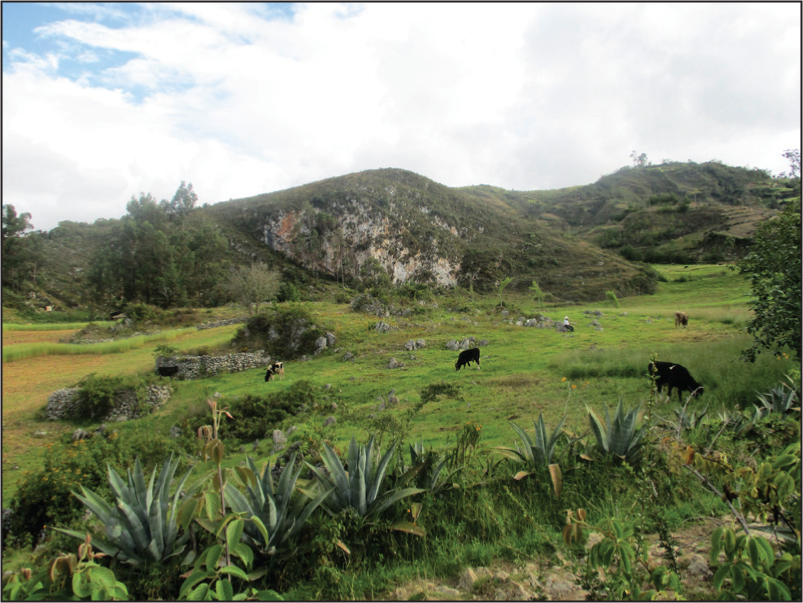
Yeni Cojal Rojas: Here are my father’s lands, now I remember the times of the year when we plant particular seeds. In one part we sow crops, that is the chacra, and we make fences of oats so that the [different crops] do not mix with each other.
Felicita Vásquez Huamán/Women, Mining and Photography 2017.
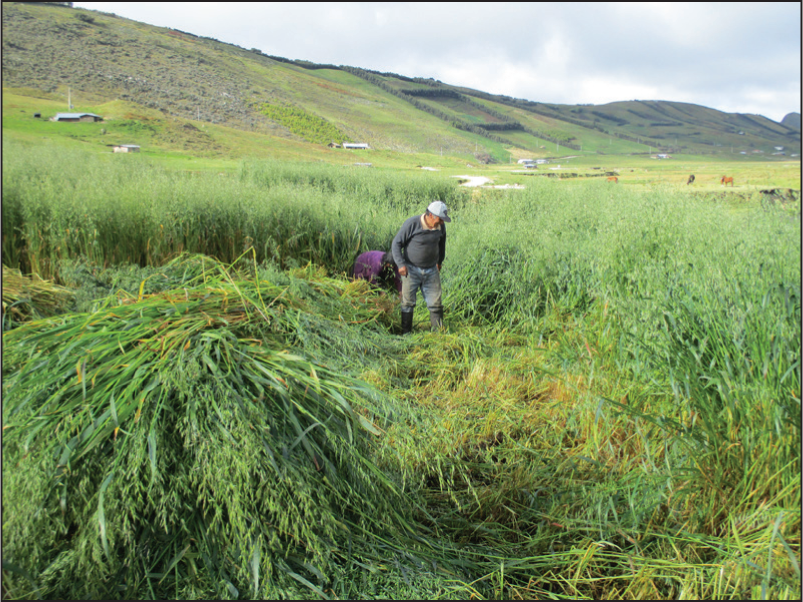
Felicita Vásquez Huamán: We are ranchers, farmers, we want to show the world that there is production in our Jadibamba. According to the mine, they say no, that no people live there, that’s a lie. Yes, we do live, and we are ranchers, farmers, and with that I want to show that there is life.
Ana/Women, Mining and Photography 2017.
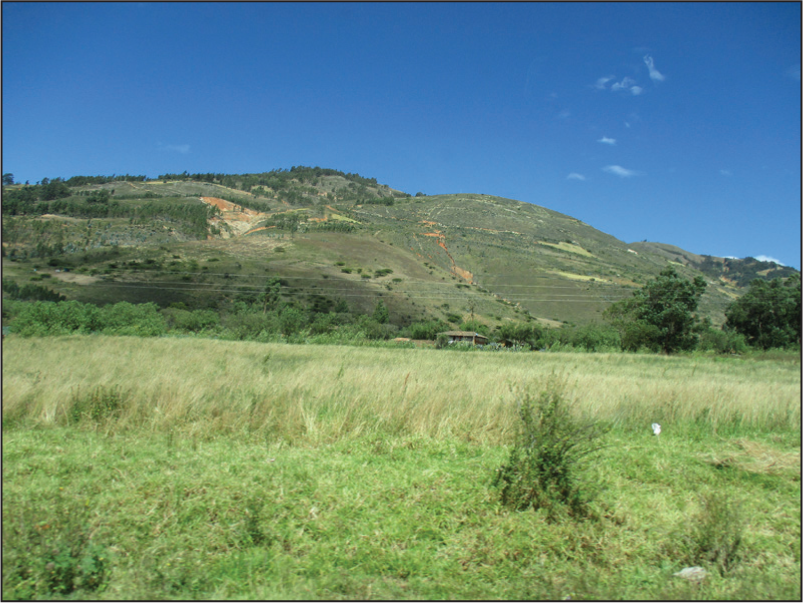
Ana: At first glance, it is just a landscape. If we look at it that way, it doesn’t make much sense, but for me it makes a lot of sense…. Because first, look here, this for me is the joy of feeling like a campesina, of this vocation, and that’s why you don’t see this blue sky in other places. And that same sky, that same colour, it’s as if it hugs you, as if it holds you, as if it loves you.
However, what is also clear from these examples is that the women portray such landscapes not as pristine in terms of being entirely untouched, or uninhabited, spaces, but as uncontaminated and productive places in which lives are able to be lived and sustained, and livelihoods forged, and this is intrinsic to the value that they perceive in these places, and thus to the imminent existential threat that they identify. The reflections that are evoked by their photos of these threatened landscapes also speak to the interweaving of memory, territory and identity. The women articulate the sense of loss they feel, through exploring their own familial and also spiritual connections to the land:
Yeni Cojal Rojas: It’s not about valuing any old land, it’s about valuing and loving our land. Where you were born, where you grew up, where you were raised, you see? *** Ana: I never knew my grandparents, and there’s little that I remember about them, but anyhow my mama always told me their stories, how they would sow, and in what season…
Furthermore, both Felicita and Yeni have chosen to include their fathers in their photos (Figures 7 and 8). Such reflections exemplify the way that photovoice opens up spaces for ‘both personal narrations and collective deliberation, negotiating stories of past, interpretations of present, and reflections of aspirations for the future’ (Spiegel, 2020, p. 127). The photovoice process provides a window into how participants’ emotionally charged conceptualizations of development—what it is and what it might be in the future—are shaped by their memories of continuities and discontinuities, histories and presents, that are in turn bound up with their emotional and embodied connection to the land (Velasquez, 2012; see also Askland and Bunn, 2018; Boudewijn, 2022). Further, their conceptualizations of what development should be resonate with ideas around buenvivir and living well, despite the women themselves mostly not self-identifying as indigenous, and buenvivir being relatively less established as a set of ideas in Peru.
VI. Conclusion
Bringing the women activists’ images and narratives into dialogue with ideas around hope and loss provides an opportunity to under-stand how these emotions are fundamental to grassroots women’s visions of develop-ment beyond resource extraction. Through combining photography and interviews, the women have developed powerful interventions that go beyond an immediate focus on the impacts of mining per se, to provide nuanced, emotive and emotional visions of alternate presents and futures. Such narratives were not necessarily already ‘existing’ but have also been articulated or made sense of during the project itself, underlining how subjectivities are negotiated through such participatory experiences (Tremblay and Harris, 2018).
The outward-facing nature of the project—culminating in a public exhibition—and the women’s own activist sensibilities are also essential in situating their images and making sense of the interplay of narratives of hope and loss in their work. These images were not destined for a private album or even (primarily) for the pages of a journal article, but to be consumed by both local and international publics. 11 Thus, the women’s selected images represent deliberately evocative interventions into debates around extractive-led development, drawing on their own visual literacy and experiences of being involved in anti-extractive struggles. Taken together, their photos provide an emotive counterpoint to (more commonplace) images of destruction and devastation wrought by mining, instead speaking to McKinnon’s (2016) articulation of development as a ‘project of finding and creating hope in the world we live in, the here and now’ (p. 268) and to moving beyond narratives of suffering, deficiency and despair (Francis et al., 2021; Wright, 2008, 2012), in order to create the world otherwise. The women’s photos communicate a strong sense of the community resilience, natural abundance and cultural richness that they perceive as providing the foundations for a development model that is not predicated on resource extraction, whilst also providing a stark and visually compelling insight into what is at stake for Andean communities impacted by extractive-led development. The paper, therefore, emphasizes the possibilities that participatory photography opens up for exploring and understanding the role of emotions in producing conceptualizations of development from the Global South, in particular revealing how hope and loss are imbricated in gendered narratives of development in contexts of resource extraction.
Footnotes
Declaration of Conflicting Interests
The author declared no potential conflicts of interest with respect to the research, authorship and/or publication of this article.
Funding
The research was funded by a Leverhulme Trust Research Fellowship RF-2016-413/8.