




Abstract
Youth in rural Honduras experience barriers to accessing education, vocational training, and social supports for their formative development. This study evaluated over 18 years of youth-specific development interventions implemented by a Honduran organization in two rural municipalities. The study draws on 94 semi-structured interviews and demographic data from 1596 program participants. Three impact pathways were identified through which respondents experienced positive outcomes from program involvement: transformative participation; meaningful collaboration; and low-risk experimentation. The findings parallel known development theories and empowerment frameworks, including the Human Development and Capabilities Approach and Positive Youth Development, thus supporting the effectiveness of these approaches in facilitating youth development and capability expansion in remote Honduran communities.
Keywords
Introduction
Honduras, like many low and middle-income countries, is experiencing a ‘youth bulge’: over half the country’s 9.6 million people are under the age of 25 (UNDP, 2019b; UNFPA, 2019). This growing population creates potential for a ‘demographic dividend’, with positive implications for the country’s long-term development. However, the current livelihood situation for these youth lends itself, instead, to a ‘demographic bomb’ (Yifu Lin, 2012). 1 Almost 28% of Honduran youth, including 42% of young women, are neither employed nor pursuing further education (UNDP, 2019b). 2 Livelihood instability is exacerbated by high levels of crime and violence, including one of the world’s highest per capita murder rates (World Bank, 2017). Many youth are vulnerable to gang recruitment, and the government’s Mano Dura (Heavy Hand; Iron Fist) response to gang activity has alienated youth from law enforcement personnel, exacerbating mistrust of legal and political authorities and widening the gap between political institutions and young people (Bruneau, 2014; Cruz, 2015; Williams and Castellanos, 2020).
Rural-dwelling youth face additional livelihood constraints. Approximately 43% of Hondurans live in rural areas, where over 60% of households subsist below the national poverty line (World Bank, 2020). The primary career option is small-scale, low-input agriculture; however, inheritance practices often result in land fragmentation, and acquiring additional land can be financially unattainable for youth (Roquas, 2002). Furthermore, agrarian households are vulnerable to the impacts of climate change, extreme weather events, and seasonal food insecurity (Harvey et al., 2018; Keller et al., 2018). While national statistics suggest that Hondurans can expect 10.1 years of schooling, 3 the current average is 6.6 years (UNDP, 2019b), and youth living in remote communities experience economic and geographic barriers to accessing even basic education. Since formal education can introduce livelihood options apart from agriculture, these barriers constrain opportunities for rural youth to pursue alternative livelihood options.
Outmigration is a common response to rural livelihood instability, limited opportunities, and insufficient resource access. 4 While migrating internally or internationally can be a strategy for improving quality of life, patterns of distress migration 5 and practices of undocumented migration raise concerns around well-being and safety, particularly for children and youth (Villegas, 2019). Implementing high quality youth-specific development interventions in rural Honduras is critical for directing the country’s ‘youth bulge’ into an asset for, rather than an impediment to, long-term sustainable development. Indeed, supporting youth formative development is a priority within the Sustainable Development Goals (SDGs) as a mechanism for empowering youth as leaders and change-makers in their communities (UNDP, 2019c).
The aim of this study was to retrospectively evaluate the effectiveness of over 18 years of youth-specific rural development programming implemented in Jesús de Otoro, Intibucá and Yorito, Yoro by the Honduran non- governmental organization (NGO) La Fundación para la Investigación Participativa con Agricultores de Honduras (The Foundation for Participatory Research with Honduran Farmers, Spanish acronym: FIPAH). Analysing both quantitative and qualitative data, the authors describe how, why, when, and for whom FIPAH’s youth programming has had positive impacts. More specifically, the authors identify program mechanisms that participants described as having facilitated meaningful outcomes in the short- and long-term. These mechanisms are organized into three impact pathways, which are interpreted using the Human Development and Capabilities Approach (HDCA) and Positive Youth Development (PYD).
FIPAH’s Youth Program
Established in 1993, FIPAH is committed to supporting food security, food sovereignty, and inclusive community development in the hillsides of Honduras. FIPAH partners with smallholder and subsistence farmers in remote communities to establish Comités de Investigación Agrícola Local (Local Agricultural Research Committees, Spanish acronym: CIALs). These CIALs conduct field trials, testing new agricultural production techniques and adapting seed varieties to local growing conditions. FIPAH currently works in 178 communities across five departments of Honduras, focusing on underserved agrarian regions. The effectiveness of their programming in improving seed quality, food security, livelihood stability, social cohesion, and gender relations has been well-documented (see Classen et al., 2008; Gomez et al., 2018; Humphries et al., 2000; Humphries et al., 2005; Humphries et al., 2012; Humphries et al., 2015). Through long-term presence alongside positive program impacts, FIPAH has established a strong foundation of trust and rapport in program communities.
In 2000, FIPAH received funding to launch youth-led CIALs in Yorito, Yoro, where their adult-CIAL programming was most extensive. FIPAH’s goal in establishing youth-CIALs was to expand capabilities among rural youth in ways that would facilitate the pursuit of sustainable rural livelihoods, thus helping mitigate experiences of distress migration. They partnered with local public schools as a cost-effective strategy for integrating schooled youth into their program, and they dedicated other financial and human resources to reaching unschooled youth in particularly remote areas. Through further funding availability, FIPAH expanded the youth-CIAL program into Jesús de Otoro, Intibucá.
In the first programming phase (Phase 1, 2000–2007), FIPAH engaged youth in creative problem-solving tasks related to local development issues, such as food and nutrition security, agricultural productivity, and natural resource management. FIPAH also incorporated other capacity-building opportunities, including support for formal education, training in various trades, business skill development, gender sensitivity training, and leadership development.
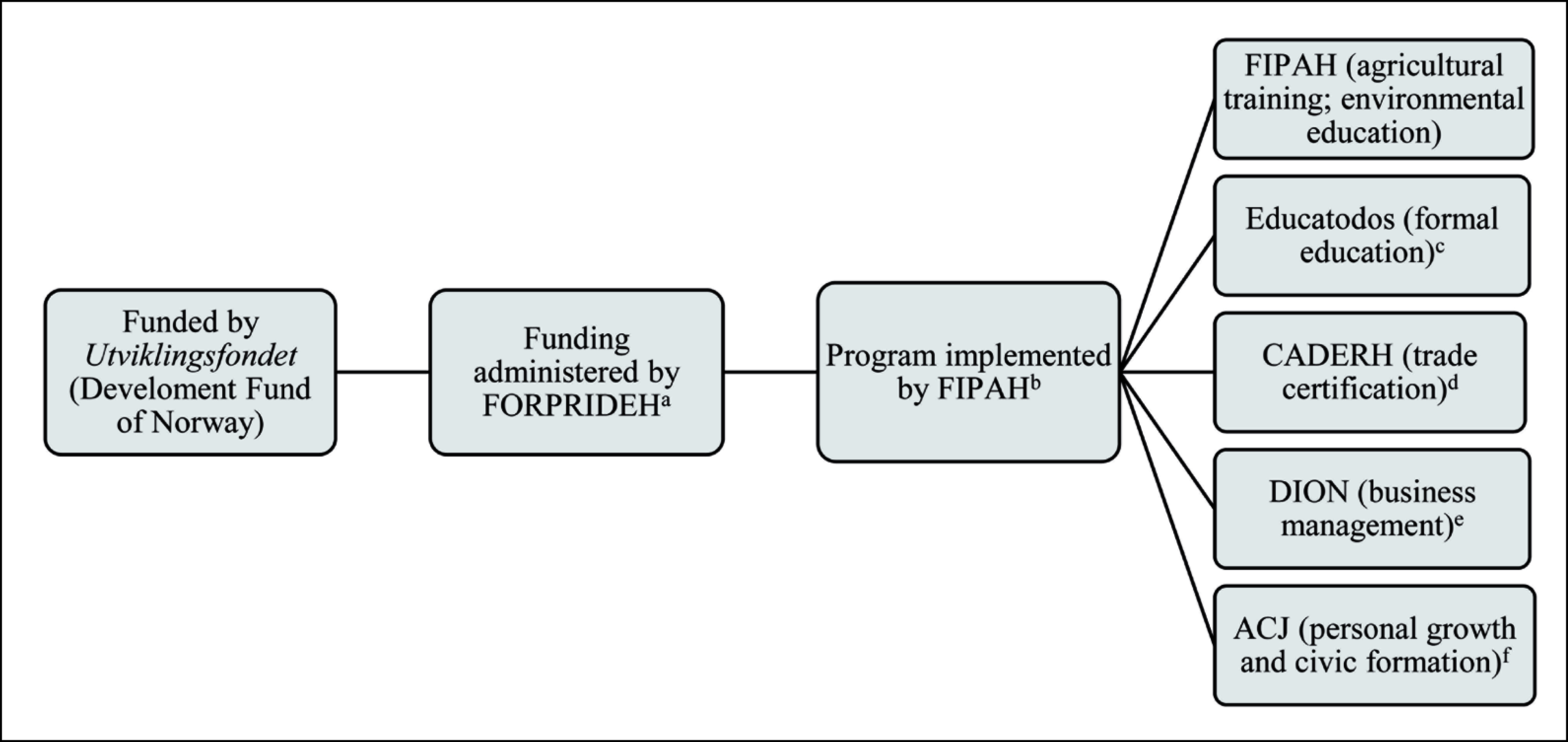
In 2007, FIPAH became the Honduran implementing agency for a large-scale youth-specific development initiative called Con Derecho a un Futuro (With the Right to a Future, Spanish acronym: CDF). FIPAH specialized in agricultural education while overseeing program logistics for other specialist organizations (Figure 1). Through this second programming phase (Phase 2), FIPAH scaled their youth-CIALs both up and out. In other words, with stable funding and strong inter-organizational partnerships, FIPAH reached more rural youth with more formative development opportunities. The five-year CDF project launched in 2008 (2008–2012, inclusive), targeting youth between ages 15–23.
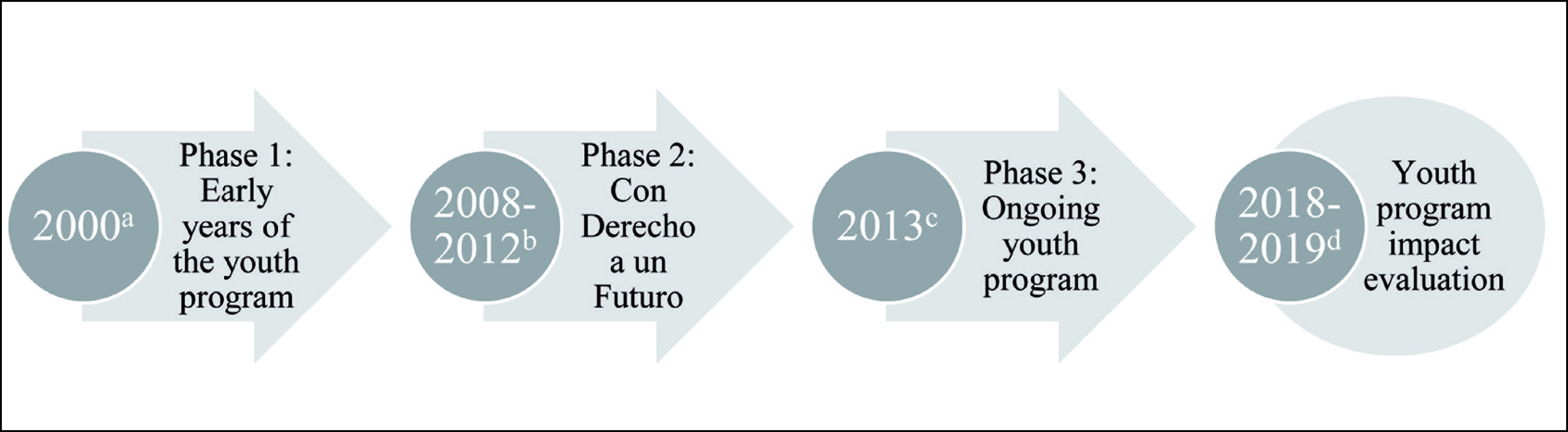
When the CDF project ended, FIPAH’s youth-CIALs continued with a smaller operating budget. During this third programming phase (Phase 3), FIPAH’s implementation approach resembled Phase 1: staff leveraged resources creatively and formed partnerships with both public and private institutions as opportunities arose in order to maximize the quality, scale, and scope of their work. FIPAH’s commitment to supporting rural youth has persisted and strengthened throughout the years. In 2018, FIPAH, with the support of Canadian researchers, initiated this comprehensive evaluation of their youth-specific programming to understand the short- and long-term impacts of these youth-centred rural development efforts (Figure 2).
Capabilities, Human Development, and Youth Empowerment
Findings from this study are discussed using the Human Development and Capabilities Approach (HDCA), 6 due to its alignment with FIPAH’s program theory. The HDCA is designed to promote human flourishing at all ages and in all settings (UNDP, 2020). Rooted in the Capability Approach (CA) (Sen, 1999), the HDCA focuses on increasing livelihood opportunities that people have reason to value, and expanding the freedom of choice that people experience in navigating those opportunities. According to the HDCA, ‘the process of development should at least create a conducive environment for people, individually and collectively, to develop their full potential and to have a reasonable chance of leading productive and creative lives in accord with their needs and interests’ (UNDP, 1990, p. 1, emphasis added). In a context with many development constraints, FIPAH strives to create a conducive environment for youth to experience formative development (capability expansion) and to explore diverse, viable rural livelihood opportunities.
Intrinsic to the HDCA is the concept of agency. 7 To engage meaningfully with one’s livelihood options, an individual must have agency, be aware of their agency, and make use of their agency (Alsop and Heinsohn, 2005; Kleine, 2010). In this way, the HDCA connects to the empowerment literature. Empowerment theories integrate human development concepts at individual and collective levels (Zimmerman, 1990). Acknowledging that optimal human development is fostered through a reciprocal relationship between individual and collective agency, empowerment theories address personal and structural factors that affect agency, and thus influence human flourishing. Integrating empowerment theories with the HDCA facilitates discussions around creating conducive environments for growth. This integration is useful for understanding FIPAH’s role in supporting capability expansion among rural youth, and for understanding how youth have applied program learning to their livelihood trajectories in the short- and long-term.
Positive Youth Development (PYD) is a youth empowerment model that applies human development concepts specifically to youth. This prosocial, strengths-based approach to youth programming focuses on the positive potential of youth to contribute meaningfully to their communities (Damon, 2004; Olenik, 2019). This perspective aligns with FIPAH’s attitude toward youth-CIAL participants. PYD is backed by the literature on youth empowerment, positive psychology, and adolescent development (Alvarado et al., 2017; Damon, 2004; Zimmerman, 1990). The model describes conditions that create a conducive environment for expanding capabilities among youth, including positive relationships with adults, access to knowledge and resources, constructive learning environments, and development of leadership skills (Damon, 2004; Olenik, 2019).
Although FIPAH’s youth program was not directly influenced by the HDCA, nor PYD, our discussion will demonstrate the utility of these development frameworks for understanding FIPAH’s program theory and interpreting the study findings. Connections to the HDCA position this study within emerging literature on applications of the HDCA to youth-specific programming in low-resource settings (see Lopez-Fogues and Melis Cin, 2017). Additionally, connections to PYD help address a literature gap regarding the effectiveness of PYD programming strategies in low- and middle-income countries (see Alvarado et al., 2017). Moreover, linking the study findings to recognized development frameworks helps FIPAH articulate their program theory and its effectiveness to policymakers and funding bodies. Overall, with a large sample of youth participants spanning over 18 years of programming in remote communities, this study provides rich insight to address literature gaps regarding known development theories and to inform successful rural development interventions for youth.
Study Context
This study was designed and conducted by a research team including Canadian and Honduran researchers, FIPAH staff, and youth leaders from the study locations. FIPAH has collaborated with Canadian researchers for over 25 years. These long-term relationships, characterized by trust, respect, and mutuality, enhanced the feasibility and quality of this study. FIPAH facilitated access to the study communities by identifying local youth leaders to join the research team, help shape the research design, and lead the data collection process. FIPAH’s history of program implementation, evaluation, and research, plus their long-term commitment to the study communities, provided a foundation of trust and rapport between researchers and research participants. The nature of this research partnership is explored in detail elsewhere (Dodd et al., 2021).
The study was conducted in the municipalities of Jesús de Otoro, Intibucá (Central Honduras) and Yorito, Yoro (Northern Honduras) between 2018–2019. These locations were chosen because they are the sites of FIPAH’s youth programming. Both municipal centres are surrounded by remote, hillside communities, where subsistence agriculture is the primary livelihood strategy. Maize and beans are staple crops and coffee is the main cash crop; however, droughts and other impacts of climate change threaten agricultural productivity, food security, and livelihood sustainability (Classen et al., 2008; Dodd, Gómez Cerna, Orellena, et al., 2020). Agricultural labour is traditionally dominated by men, while women perform household and caretaking tasks (Humphries et al., 2012; Ivanoff, 2012). A culture of machismo contributes to ongoing gender discrimination (Humphries et al., 2012; Kar et al., 1999; Ortega Hegg et al., 2005). This patriarchal form of masculinity emerges from an ideology that men are biologically dominant and therefore have a right to ultimate authority in the household (Humphries et al., 2012; Ortega Hegg et al., 2005). Educational opportunities are limited in these communities, and many youth help on the family farm or work as day labourers on nearby farms. The coffee harvest is a key source of income among youth and a driver of short-term migration between rural areas, as labourers travel to coffee fincas to pick ripened cherries (Ivanoff, 2012). Migration to Honduran cities or other countries is commonly practiced, and has become a focal point in community discourses on livelihood strategizing (Dodd et al., 2020; Ivanoff, 2012).
Quantitative Data Collection and Analysis
In 2018, the research team compiled demographic information on former youth-CIAL members from the study locations. FIPAH staff provided basic demographics and program involvement information from organizational records. Staff also facilitated contact with former participants, reliable family members, or community informants, to collect information regarding the current livelihood situation of former participants. If this information was inaccessible, the participant was excluded from the database. The final database included basic demographics (e.g., sex, home community), program involvement details (e.g., years of participation, leadership roles), and current livelihood situation (e.g., location and occupation). Descriptive statistics were calculated for each programming phase.
Qualitative Data Collection and Analysis
Between 2018–2019, youth leaders conducted semi-structured interviews with current and former program participants. An open-ended interview guide explored motivations for participation, perceived outcomes related to learning and growth, perceived livelihood impacts, and recommendations for future programming. Purposive sampling was used to maximize information power (Malterud et al., 2016). The research team invited youth with diverse program experiences and livelihood trajectories to participate in the study. Consideration was given to educational attainment, career pursuits, and migration decisions. 8 FIPAH facilitated contact with youth who were identified for invitation. The final sample included a representative proportion of female and male respondents from all three programming phases. Interviews were conducted in Spanish, audio recorded, and transcribed.
Transcriptions were coded using both deductive and inductive strategies (Fereday and Muir-Cochrane, 2006). A priori categories were structured around the interview guide, deductive codes were developed through familiarization with interview content, and inductive codes were noted during the first round of coding and were added to the codebook after initial review. A secondary coding process ensured that all data were considered in light of all codes. Coding was completed using NVivo 12.6 qualitative analysis software.
Coded data were analysed through a realist lens to assess how, why, when, and for whom the program had positive impacts (Blamey and Mackenzie, 2007; Floate et al., 2019; Rycroft-Malone et al., 2012). This approach was selected due to the predominance of positive experiences shared by interviewees: in lieu of comparing positive and negative experiences, the research team sought to understand the nature of these positive impacts. Using respondents’ descriptions of program experiences, associations were traced between program mechanisms and positive short- and long-term outcomes that respondents identified. Mechanisms were understood as program components that brought about meaningful change in the lives of participants (Pawson and Tilley, 1997). These mechanisms were organized into three impact pathways, illustrating how program components worked in tandem to generate positive outcomes for youth.
Results
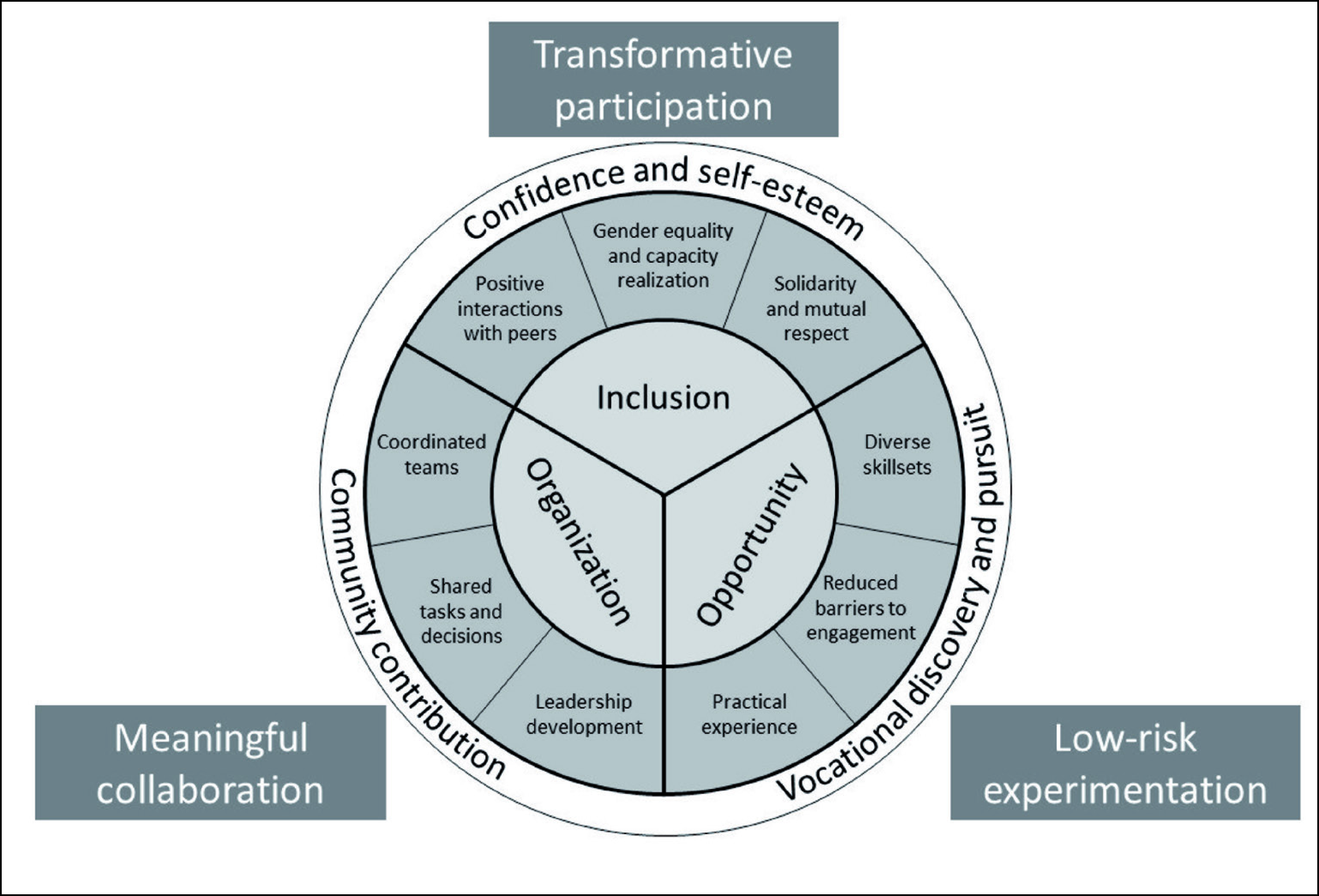
Here we present demographic data from 1596 former program participants. Subsequently, we use interview data from current and former participants (n = 94) to construct three impact pathways through which youth described experiencing positive short- and long-term outcomes from program participation. These pathways include transformative participation, meaningful collaboration, and low-risk experimentation. Interviewees expressed overwhelmingly positive experiences in FIPAH’s youth program, consistently attributing positive formative development and livelihood outcomes to participation. These pathways trace connections between program mechanisms and outcomes identified by respondents (see Figure 3 for a summary of impact pathways). Associations presented herein were identified across programming phases, and were particularly strong among Phase 2 participants.
Demographic Trends
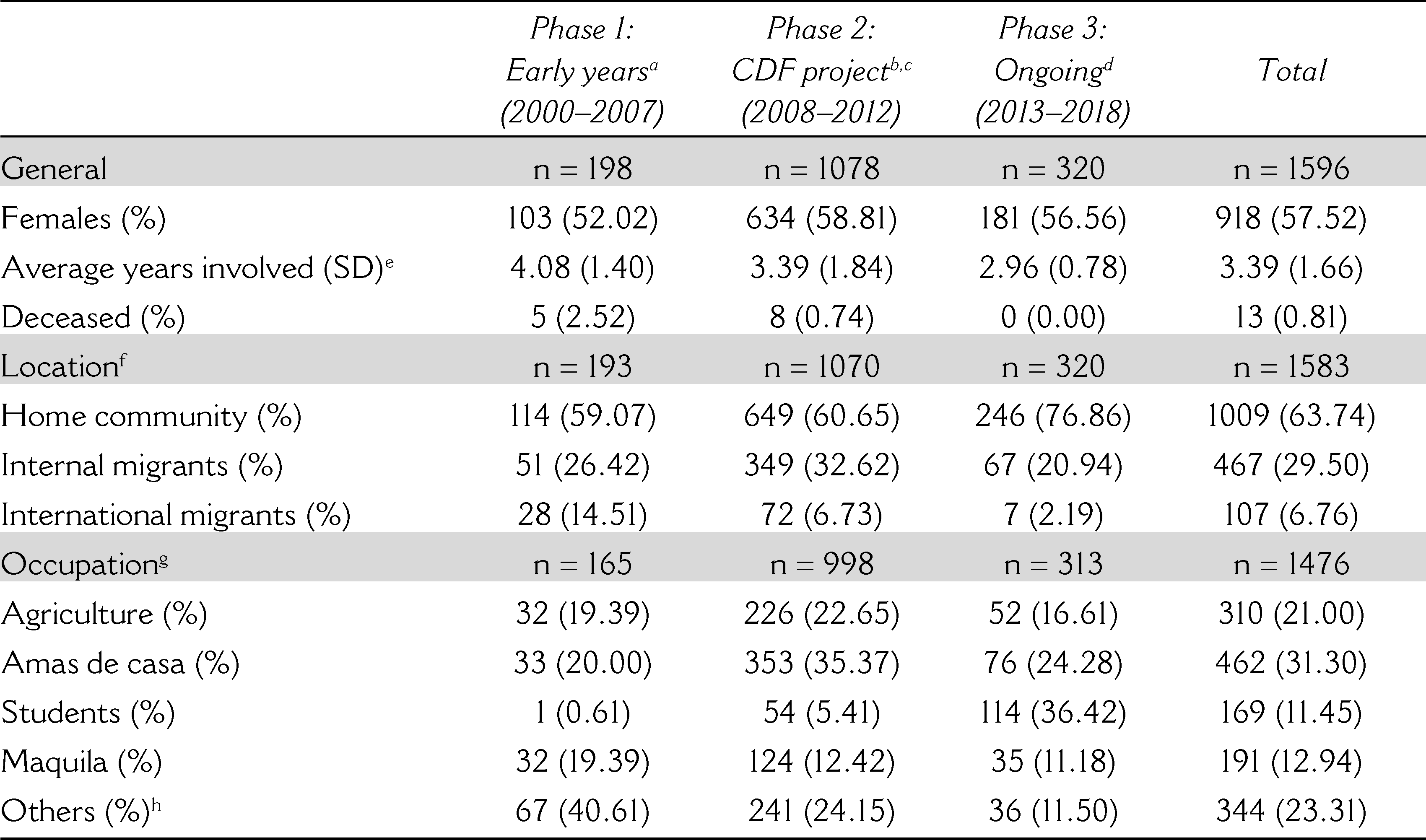
Demographic information was validated for 1596 former program participants, representing 83.3% of youth-CIAL members involved between 2000–2018. Table 1 presents descriptive statistics from these data. Participants came from 36 rural communities: 25 in Yorito and 11 in Jesús de Otoro. During Phase 2, the programming scale peaked, with 34 rural communities running youth-CIALs.
Characteristics of Youth from Jesús de Otoro, Intibucá and Yorito, Yoro, Honduras who Participated in FIPAH’s Youth-CIALs Between 2000–2018 Across Three Phases of Implementation (n = 1596)
b) Membership starting before Phase 2 and ending after, or starting/ending during the CDF project.
c) Participants from Jesús de Otoro were listed under Phase 2.
d) Membership starting in/extended beyond 2012.
e) SD = standard deviation.
f) Excludes deceased individuals.
g) Excludes deceased individuals and international migrants.
h) Including beauty, clergy, communication, education, business, government, trades, NGOs, professional careers, health, public services, domestic work, and transportation.
Women made up 57.5% of participants, representing over half of youth-CIAL members across programming phases. When these data were collected, most youth were living in Honduras, with 63.7% residing in their home communities. This proportion was highest among recent participants (Phase 3). Phase 3 participants also showed the highest proportion of students and the lowest proportion of international migrants. Of all former participants, 6.8% had migrated internationally, with the highest proportion among Phase 1 participants. Among those in Honduras, 19.6% named agriculture as their primary profession and 29.2% identified as amas de casa (homemakers). 9 These 462 homemakers represented 50.3% of all female participants. The proportion of farmers and homemakers was highest among Phase 2 participants, which may reflect the broad reach of the CDF project, since agrarian livelihoods and traditional gender roles are more prevalent in remote areas.
Table 2 presents demographic data on interviewees (n = 94). Respondents were a representative subset of all former participants: approximately 13.8% of interviewees were involved during Phase 1 (12.4% of all participants); almost 66.0% were involved during Phase 2 (compared to 67.5%); and 20.2% were involved during Phase 3 (compared to 20.1%). Interviewees represented 30 rural communities across the two study locations. Over 75.5% of respondents had completed at least one year of secondary-level education. Almost 43.6% held a high school diploma equivalent and over 12.7% held a university degree. 10
Characteristics of Youth from Jesús de Otoro, Intibucá and Yorito, Yoro, Honduras Who Participated in Semi-Structured Interviews Between 2018–2019 Regarding Involvement in FIPAH’s Youth Program (n = 94)
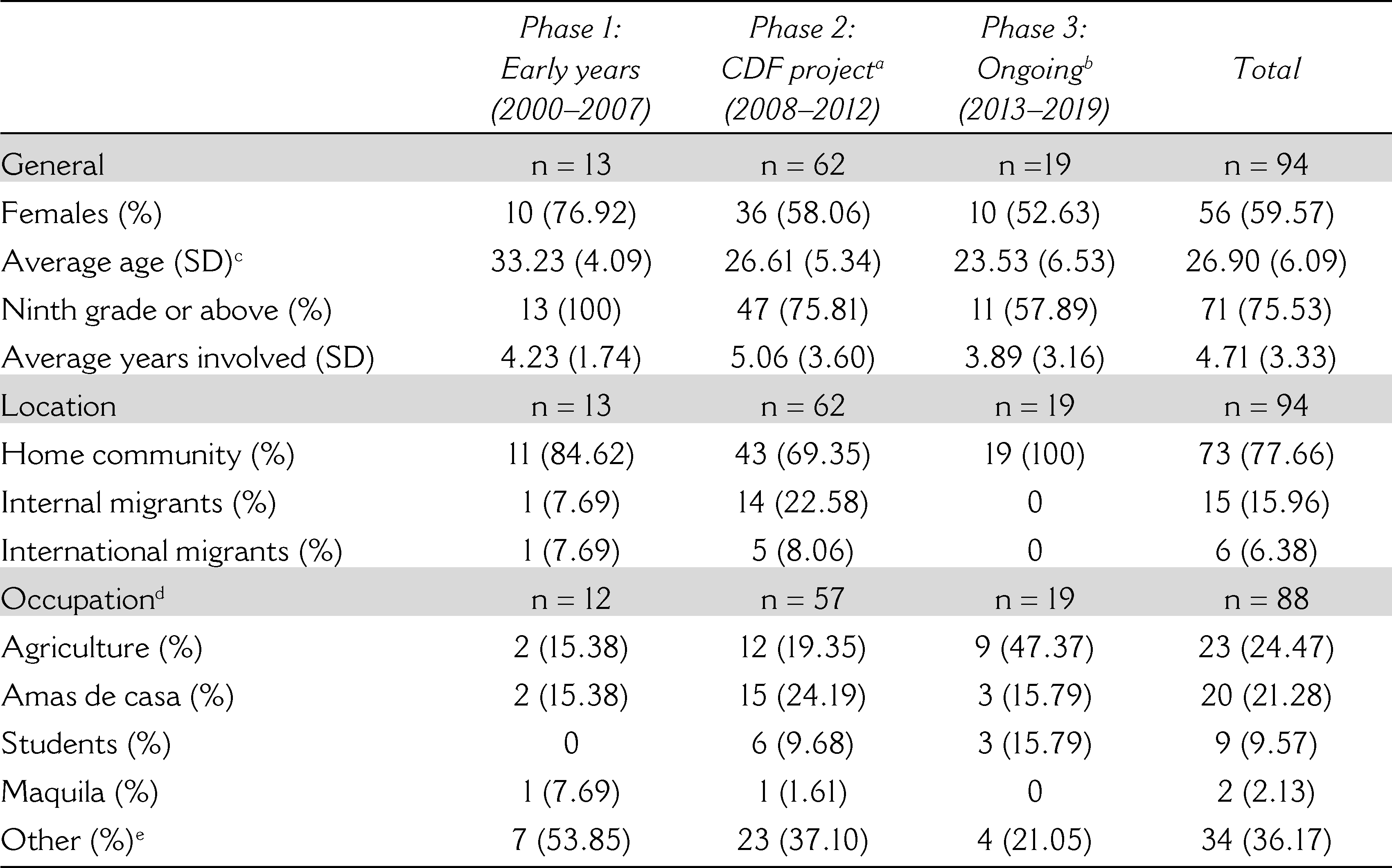
b) Membership starting in/extended beyond 2012.
c) SD = standard deviation.
d) Excludes international migrants.
e) Including beauty, communication, education, business, government, trades, NGOs, professional careers, health, public services, and domestic work.
First Impact Pathway: Transformative Participation
Transformative participation refers to the personal growth that respondents experienced through program involvement, helping them become more active in program activities and community initiatives. Many respondents described themselves as ‘shy’ before joining FIPAH’s program. Young women, in particular, spent limited time outside of the family home, where many held roles as homemakers and care providers. Both women and men identified youth-CIALs as a supportive space in which to practice social skills and build social networks. One male respondent stated:
More than anything, I learned how to express myself in the sessions, the talks. Because I was a little timid, a little lost. […] I learned how to interact with people there. Also [I learned] humility; above all, being humble is important because perhaps you have knowledge and another has other [knowledge] and you share, you exchange experiences and knowledge (Phase 3, Yorito).
According to interviewees, it was not simply the opportunity to interact that reduced their fear and shyness, but the manner of those interactions. Respondents felt accepted and valued as program participants, regardless of gender, social status, faith practice, or education level. Some interviewees even described their CIAL as a ‘family’. The inclusive space that FIPAH created was an important mechanism motivating program involvement and fostering formative development among participants. Non-discriminatory inclusion was particularly important in shifting from dichotomous gender roles toward group solidarity. One young man explained:
This was very important because we live in a place [where] we know machismo predominates and through the youth project, we learned that both women and men have equal rights. We learned to respect the ideas of the women, and [the women], those of the men (Phase 1, Yorito).
Participants worked side-by-side in all program activities, regardless of whether the work was traditionally considered men’s or women’s. Interviewees were impacted by realizing that women could perform agricultural labour and men could complete household tasks. Female respondents associated these realizations with elevated self-esteem and increased confidence to move beyond traditional gender roles. For example, one young woman explained how her perspective shifted:
Well, I learned [about] my self-worth as a woman because, really, for a long time women were not given opportunities either within community-level organizations or at the national level. Women had to be, as they say, only doing housework (Phase 2, Yorito).
Both women and men expressed surprise at realizing their own capabilities, and those of their peers, through these shared tasks. One young man reflected on working alongside women in his CIAL:
Regarding gender, I must say that what changed me the most was to learn, well, to realize that in the matter of gender, men and women have the same capacities. And that there are some who have capacities that stand out in one respect or another. Then I learned that, first of all, men and women are equal in their possibilities and that when you accept that, you can discover the talents that each person has (Phase 2, Yorito).
By practicing gender equality through program activities, respondents like this young man were able to move beyond gender divisions. Instead of defining female peers by their sex, he considered their skills, interests, and potential as individuals. Establishing gender equality within the CIALs was a key mechanism in unifying participants. By moving beyond dichotomous gender roles, participants could engage one another as true peers, pursuing interests, developing skills, and making community contributions together. Notably, one young woman distinguished FIPAH’s mutual, participatory approach to gender equality from other forms of gender empowerment she had observed:
Some of my peers felt less than the opposite sex, but they realized that they were capable, thanks to the training we received in FIPAH. In this regard, I would like to highlight the part of gender equity that FIPAH developed differently [from other organizations]. There are many organizations that put so much emphasis on machismo and feminism that each of the sexes comes to hate the other. But at FIPAH they taught us [to be open to positive gender attributes]
11
[and] it was amazing, really, because we became a beautiful family (Phase 2, Otoro).
This respondent distinguished between gender empowerment programs that divided the sexes and gender empowerment strategies that built supportive community. Overall, many respondents described their program experience as ‘formative’ and discussed ways that it shaped them as people. The transformation that respondents experienced through participation in FIPAH’s program thus created a foundation of personal growth, active engagement, and group solidarity on which youth built.
Second Impact Pathway: Meaningful Collaboration
Meaningful collaboration encompasses the opportunities that participants experienced to contribute cooperatively toward community development. There were few institutions offering youth-specific programming in the study communities, so there were limited opportunities for youth to be formally organized. Respondents identified FIPAH’s program as an exception. The structured environment of FIPAH’s program was a motivating mechanism for youth involvement; respondents valued the opportunity to be united with other youth. Some interviewees viewed participation as a positive alternative to spending time in ‘vices’, referencing drug use, alcohol consumption, and early pregnancy. One young woman described the following shift in perspective:
Yes, there have been many changes, because, for example, let’s say that when you are young, […] let’s say you go down the bad roads. On the other hand, when you are working in groups of youth, you try to support each other, and then this helps you see life differently. That one cannot only go the easy way, but rather, you have to go looking for solutions in life (Phase 2, Otoro).
As an alternative to ‘[going] down the bad roads’, respondents valued the CIALs as an opportunity to collaborate with their peers on constructive projects, align their efforts with community needs, and follow through to see positive results. During Phase 2 in particular, examples of youth-led initiatives included community clean-up campaigns, local construction projects, natural resource management activities, and fundraising efforts for student scholarships and loans. Youth also taught health and wellness modules in local schools, and advocated for establishing an Office for Youth in their municipality. In all programming phases, CIALs produced and sold agricultural products in their communities. One young woman described attending a seed fair with other producers:
We had the opportunity to share between all the CIALs. And the seed fairs were really interesting because they comprised all the products that we had succeeded [in growing] and it was like the pride of taking the years [of work] and presenting them. And feeling proud of what we had done (Phase 2, Otoro).
Team initiatives were a mechanism through which youth made meaningful community contributions during the program. Youth in all programming phases selected and designed team projects collaboratively, engaging in group problem-solving and decision-making. Respondents described developing the self-assurance to share their ideas and opinions during group discussions, and giving others space to do the same. They discussed how practical experiences, such as dividing tasks and sharing responsibilities, were mechanisms that prepared them to engage in similar endeavours in the future. One woman stated:
I am no longer the same shy person that I was […] I am not afraid to undertake [a project] because now I see it from another point of view. If I could do it before, I can do it now. It is like the hand that gave me a push toward the light to allow me to see and to help me realize that nothing was impossible. Having the will and the knowledge that I acquired, today I am not afraid to undertake a project by myself (Phase 2, Yorito).
Interviewees described learning skills in teamwork, leadership, and project management through program activities. They indicated that rotating through leadership roles in the CIALs gave them confidence to take on leadership roles in other community organizations. Thus, leadership development within the program was a mechanism for ongoing community engagement. One young man described long-term applications of this skill:
We have been recognized as leaders. And other colleagues who were in the CIAL group […], they are also part of the leadership group that exists in the communities. I have seen how there are people from the communities, from the youth, who are involved on the water boards (juntas de agua), on the administrative boards of drinking water projects, on community councils (patronatos), and in the other social groups that exist in the community such as church groups, soccer groups, youth groups. I have seen that there is good leadership and that it has brought development (Phase 2, Otoro).
Respondents felt that community involvement during the program elevated their status among community members, so that they were accepted as leaders in the short- and long-term. They attributed this status shift to the fact that other community members observed their capabilities through program activities. Interviewees felt that they had a positive impact on community development, perceiving that their CIALs inspired other community members toward positive change. Participants themselves were inspired by their experiences of meaningful collaboration within the CIALs. As one young woman shared:
[I learned] that youth who are organized, well, there is nothing that is difficult for them, and with the support of organizations such as the CDF project it is very useful. It helps youth formulate long-term visions, and also to look toward a future, to help them improve…to have a better quality of life (Phase 2, Otoro).
Respondents valued the program as ‘an opportunity to be organized’. Working in solidarity, they learned to appreciate the power of teamwork and the value of strong leadership. Thus, through the mechanisms of meaningful collaboration, rural youth not only made contributions in and through the CIALs, but also developed the confidence and motivation to engage actively in long-term community development.
Third Impact Pathway: Low-Risk Experimentation
Low-risk experimentation refers to diverse ways that FIPAH’s program enabled youth to explore their educational and vocational interests; trying new activities and practicing skillsets in a safe, encouraging, and cost-free environment. FIPAH offered interpersonal and resource support for educational pursuits, training in technical agriculture and trades, as well as business skill formation. As one female respondent explained:
The trainings were the best I have had. It is probably not easy to bring in someone to do [local] trainings; [and personally] paying someone to come and train you is costly. [But] the trainings, organized through the CIALs […] were totally free. And that is something that has helped me up to the present because it is [the kind of] learning that one does not forget. Rather, one can put it into practice in any moment and it is something that will stay with you for all your life (Phase 1, Yorito).
Respondents highlighted diversity of experience itself as a valuable dimension of program involvement, with positive implications for short- and long-term livelihood stability. For example, a male respondent associated knowledge expansion with an improved economic situation:
From the moment I joined the CIAL, I started acquiring different types of knowledge and that has given me many opportunities to generate income. Because the learning we had through the project was extensive and we had ample opportunity to acquire resources in many ways. […] I have seen that I have improved a lot and the financial need that was there before is more limited. Similarly, there are many families who, like me, use the same practices (Phase 2, Yorito).
Breadth of experience acted as a mechanism to facilitate future livelihood opportunities for participants. For this respondent, the opportunities facilitated livelihood diversification and contributed to perceived improvements in livelihood stability. The following sections provide specific examples of capability expansion through low-risk experimentation within the program.
With the CIAL, getting involved is very important because from there opportunities are generated regarding how to study, how to continue studies or win scholarships to go study abroad or right here within the country at universities. Always, if you want to study, then you should never waste the opportunity if you get it. There are youth who have known how to make use of such opportunities and who have completed their studies and who are now great figures in the communities and who have truly come to help community development (Phase 2, Yorito).
During Phase 2, formal education was made particularly accessible and equitable through a specialist partner organization.
12
Even in the most remote areas, participants in the CDF project could reach secondary-level education within their home communities for free. One young woman described how this opportunity impacted her migration decisions:
And thanks to FIPAH who supported us, I could study here and complete the ninth grade and there was no need to go to another place. More than anything, in the community, I could achieve what I wanted (Phase 2, Otoro).
While this young woman would have pursued employment through migration to support her studies, FIPAH’s program enabled her to achieve educational goals from home. Other respondents described similar shifts in mobility decisions through local provision of educational opportunities. FIPAH’s program lowered the investment requirements, and thus the risks, for rural youth to engage in formal education. With educational support mechanisms, youth could pursue academic interests within and beyond rural communities.
Working in agriculture, that has helped me a lot in the sense that I have been able to produce, been able to sell, with the result not only of improving the diet of the family, the diet of the household, but also to be able to have some income through sales. This was the case with vegetables; for example, vegetables have constantly provided income and economic benefits for [our] families (Phase 1, Yorito).
As shown in Table 1, 21.0% of program participants went on to work primarily in agriculture. Many others, including women, engaged in agriculture as a secondary profession, grew staple crops for their family, or maintained a kitchen garden. Respondents indicated ongoing use of CIAL-related knowledge and skills to enhance long-term agricultural productivity for household use and market sale. For example, one young man described using drought-resistant seeds:
With the canicular (annual dry spell between July–August), that we just saw […] [there is] a variety called Dicta Sequia (Drought Dicta), that we had been producing for various years in the community, which had also been identified and improved throughout the [experimental] process of youth-CIALs. […] Now I know this variety is a solution to drought because all the producers lost a large part of their crops, but my little parcel [of Dicta Sequia] was not lost. This indicates that the variety was adapted [to drought], as I only watered it once so as not to lose everything. I had found a variety that is more resistant (Phase 2, Otoro).
This respondent observed how seed varieties that were developed in the youth-CIAL contributed to long-term yield stabilization. He emphasized the importance of seed resilience and yield stability in the face of climate change. Small-scale field trials are core to FIPAH’s CIAL program, acting as a mechanism for risk-averse farmers to test crop varieties and cultivation techniques. For youth, this mechanism not only expanded immediate agricultural skills and outputs, but prepared future farmers for ongoing engagement in this form of low-risk experimentation to improve crop productivity and resilience.
[Our CIAL has] a fund and we work with small loans among ourselves. So that helps us a lot because we also have savings [and] if we need some money, we already have [a place] where we can go to get it (Phase 3, Yorito).
During Phase 2, support from specialist organizations ensured that business-related training and resources were particularly accessible.
13
CIALs obtained loans for microenterprises and received guidance from program staff throughout this low-risk opportunity to practice business strategizing and financial management. Some respondents, including the young woman quoted below, associated these experiences with future success in financial endeavours:
I learned to develop personally… after the CIAL I think I was an entrepreneur. I set goals to get ahead and leave poverty behind. In the CIAL, they train you… they give workshops that help you develop as a person. Since I was really a novice, I didn’t know anything. And then, thank God and thanks to the CIAL, thanks to CDF, I studied, got my family ahead and, well, I really appreciate this CDF project (Phase 2, Otoro).
For this participant, low-risk experimentation during the program instilled an entrepreneurial spirit that helped her push past cycles of poverty. Other respondents built on program experiences to initiate community projects, start local businesses, and work on organizational boards. Thus, FIPAH’s provision of mentorship and resource support in small business ventures acted as a skill-development mechanism through which youth built confidence to undertake financial endeavours in the longer-term.
Prior to FIPAH’s youth-CIALs, organized and inclusive spaces for youth were uncommon in the study locations. This dearth of youth-specific support may explain, in part, the prominence of positive views toward FIPAH’s CIAL program: many respondents were comparing having youth-centred formative development opportunities in their home communities with not having these opportunities or supports. Consequently, identifying parallels between FIPAH’s program theory and known development theories, including the HDCA and PYD, is valuable for interpreting the study findings and understanding their significance. Below, we explore and discuss these parallels to illustrate how, why, when, and for whom FIPAH’s program had positive impacts on participants.
Creating a Conducive Environment for Youth Development
In addition to geographic barriers inhibiting institutional investment in youth-specific programming, interviewees indicated that youth (particularly women) lacked social power in these socio-cultural contexts. FIPAH was well-positioned to address these challenges. A long-term leader in agricultural development, FIPAH had rapport in the program communities, which may have enhanced community acceptance of their youth programming. Furthermore, FIPAH had a history of facilitating socio-cultural transitions through adult-CIALs: elevating the status of marginalized community members; shifting gender relations; and incorporating women into decision-making spaces (Classen et al., 2008; ASOHCIAL and Classen, 2008, p. 11; Humphries et al., 2012). These experiences prepared FIPAH to address distinct forms of marginalization among rural youth, as age intersects with socio-economic status and gender.
FIPAH’s program parallels the HDCA by empowering participants to take ownership of decision-making processes in their lives. According to the HDCA, agency enables individuals to make reasoned choices regarding the opportunities available to them (Nussbaum, 2011; Sen, 1999; UNDP, 1990). Interviewees described enhancements to both individual and collective agency through program participation. Individual-level empowerment featured prominently in the mechanisms of transformative participation, with FIPAH staff supporting the self-esteem, prosocial engagement, and equal participation of all youth-CIAL members. This groundwork facilitated collective empowerment, as evidenced by the mechanisms of meaningful collaboration. Meanwhile, confidence-building experiences, described through the mechanisms of low-risk experimentation, gave youth opportunities to exercise agency in educational and vocational pursuits.
FIPAH’s youth empowerment strategies also parallel PYD by affirming the capabilities and potential of youth in order to create a conducive environment for their development. PYD is frequently contrasted with problem-centred or risk-reduction approaches to youth development, especially the United States’ criminal justice system (Damon, 2004; Olenik, 2019). Similarly, FIPAH’s positive approach to youth programming can be contrasted with the Mano Dura approach that Honduran legal authorities have taken toward youth suspected of gang involvement (Bruneau, 2014; Cruz, 2015; Williams and Castellanos, 2020). While acutely aware of the risks and challenges faced by many rural youth in navigating livelihood options, FIPAH focused on providing ‘developmentally appropriate structure, emotional support, positive adult interaction, and skill development’ (Olenik, 2019, p. 5) to all youth who participated.
FIPAH’s emancipatory approach to youth programming was particularly important for elevating the status of young women, representing 57.5% of all participants. In a meta-analysis of women’s empowerment for health promotion, Kar et al. (1999) discussed ‘the empowerment effect of involvement’ as a key factor in addressing male chauvinism and moving toward gender equality. In a dominant machista culture, the equal participation of women in FIPAH’s youth-CIALs was particularly notable. More specifically, women’s involvement in agricultural activities indicates that female participants surmounted traditional gender roles. Even interviewees who self-identified as amas de casa were often involved in household agricultural production and income-generating activities. Female respondents indicated that participation itself expanded their sense of agency, facilitating their livelihood pursuits both within and beyond agriculture. These findings echo previous research on women’s involvement in FIPAH’s adult-CIALs (Classen et al., 2008; Humphries et al., 2012).
Developing the Full Potential of Youth
A central goal of the HDCA is to expand availability of high quality opportunities so that people can pursue livelihoods that they consider meaningful and valuable (UNDP, 2020). A key way that FIPAH’s programming aligned with this goal was in providing diverse formal and informal educational opportunities. According to baseline data from the CDF project, prior to participation, many youth from the program communities had less than a primary education. Some commuted to study, others worked, and still others neither worked nor studied. According to interviewees, FIPAH’s program substantially expanded opportunities for knowledge formation, which proponents of the HDCA consider a foundational capability that all people should be afforded (Nussbaum, 2011; Stewart, 2019).
By expanding formative development opportunities for youth, and acting as a hub for these opportunities, one could argue that FIPAH offered an ‘emerging adulthood experience’ in a setting where youth were rarely afforded such opportunities. In developmental psychology, ‘emerging adulthood’ is described as an extended period of identity formation, accumulation of experiences, and development of one’s personal worldview (Arnett, 2000). Spanning late adolescence and early adulthood (the age range for FIPAH’s youth-CIALs), this developmental process can foster positive formative development outcomes associated with exploring one’s interests and pursuing one’s potential (Arnett, 2007; Arnett and Eisenberg, 2007). With diverse training opportunities, resources, and social networks available through one organization, FIPAH’s program facilitated self-actualization among participants.
FIPAH’s role as an information and resource hub was particularly evident during Phase 2. In this phase, FIPAH coordinated the efforts of various organizations, channelling education, vocational training, and personal development opportunities through one cohesive program. As noted, the CDF project leveraged FIPAH’s existing CIAL network, scaling youth-centred programming both up and out. At the time, FIPAH had approximately fifteen years’ experience coordinating adult-CIALs, and over seven years’ experience using the CIAL structure specifically with youth. They were well-positioned for program expansion. With stable funding and strong partnerships, the CDF project capitalized on FIPAH’s organizational capacity, prudently and efficiently implementing a high quality formative development experience for rural youth.
Emerging adulthood has been observed primarily among demographics with resources and support systems that enable extensive discernment of identity and direction; namely, the upper middle class (Arnett, 2000; Galambos and Martínez, 2007; Hendry and Kloep, 2007). Among those of low socio-economic status, in contrast, adolescence and early adulthood has been described as a time to determine how to earn a living (Galambos and Martínez, 2007). This perspective is relevant in the study locations, where many youth described making livelihood decisions based on immediate family needs, social expectations, and resource constraints. In this context, therefore, indication of an ‘emerging adulthood experience’ through youth-specific programming is particularly exceptional and interesting. Diversity of program experience was described most clearly through the mechanisms of low-risk experimentation, while exploration and experimentation were also observed through the mechanisms of meaningful collaboration. By encouraging exploration through individual pursuits and team initiatives, FIPAH enabled youth to explore their potential in an environment where failure would not devastate a livelihood and success could be built upon in productive and creative ways.
Enabling Youth to Lead Productive and Creative Lives
FIPAH’s commitment to serving rural youth aligns with HDCA commitments to promote human flourishing at all ages, in all settings, and among all socio-economic groups (Stewart, 2019). Furthermore, in a sociocultural and political environment where many youth experienced marginalization, FIPAH affirmed their value and highlighted their positive attributes within the broader community, thus aligning with PYD. As previously noted, FIPAH’s youth-CIALs emerged from their adult-CIAL program. FIPAH staff observed that youth participants in adult-CIALs exhibited more open-mindedness, energy, and creativity than their adult counterparts. Recognizing these traits as assets, FIPAH adapted their program to build on these strengths and expand the freedoms that participants experienced in choosing what to do and be (Sen, 1999; UNDP, 2020).
Rather than treating rural youth as a homogenous population, FIPAH designed an adaptable program, suiting the needs and interests of different youth in different settings. FIPAH’s staff used participatory methods in program design and implementation, such as surveying youth regarding desirable vocational training opportunities, and allowing youth-CIALs to select collaborative projects. These strategies align with youth empowerment theories, which emphasize ownership of development processes by program participants (Ledford et al., 2013). PYD particularly prioritizes youth-led initiatives, arguing that youth who exercise some control over their formative development experience greater individual empowerment and are more likely to take initiative in community development processes, thus contributing to collective empowerment as well (Olenik, 2019; Zimmerman, 1990). Indeed, through FIPAH’s program, respondents expressed an expansion of personal and collective confidence to engage in community development.
Importantly, program activities were contextualized to rural areas, thus offering formative experiences with immediate relevance to the lives of participants. FIPAH sought to align participants’ capability expansion with gaps and needs within rural communities so that youth would experience meaningful applications of their energy and creativity. White (2012) has observed that school curricula often position agrarian livelihoods as traditional and outdated. Conversely, FIPAH’s ‘curriculum’ explored ways that desirable rural livelihoods could be established and sustained. Some capability expansion occurred within agriculture: ‘technical’ and experimental agriculture provided alternatives to the traditional subsistence-style farming that is typical of these communities, thus presenting new possibilities for agricultural careers. Opportunities for youth were also expanded beyond agriculture: other rural livelihood options were made accessible through vocational training and formal educational qualifications. These provisions demonstrate FIPAH’s attention to the capabilities that rural youth had reason to value, given their context (Sen, 1999).
Respondents indicated that the program’s diverse opportunities broadened their capacity to envision livelihood possibilities, while also refining their vocational interests. Indeed, the demographic data showed considerable diversity in career trajectory among former participants. Breadth of skill development may also have facilitated livelihood diversification, which is crucial to the sustainability of many rural livelihoods (Bernard et al., 2017; Nygren and Myatt-Hirvonen, 2009). However, our data only showed primary occupations reported by participants, thus lacking insight into secondary or tertiary livelihood activities among youth and within households. While some interviewees discussed diversification strategies, this did not emerge as a major theme in the data. Overall, interviewees indicated that capability expansion through the program helped them feel equipped to take initiative in their lives and communities. By encouraging youth to apply skills innovatively and constructively, FIPAH’s program facilitated creative approaches to sustainable rural livelihoods and community development.
Conclusion
This retrospective study integrated qualitative and quantitative data to assess how, why, when, and for whom FIPAH’s youth-CIAL program facilitated positive short- and long-term outcomes for youth from Jesús de Otoro and Yorito in Honduras. The findings showed that, across three programming phases spanning over 18 years, FIPAH fostered transformative participation, meaningful collaboration, and low-risk experimentation among program participants. FIPAH’s youth-CIAL program theory parallels known development theories and youth programming approaches, including the HDCA and PYD. This study, therefore, contributes to emerging literature on applying the HDCA to youth-centred development programs in low-resource settings. The study also provides empirical evidence supporting the effectiveness of PYD strategies in remote areas of low- and middle-income countries. Overall, FIPAH’s youth-CIAL program offers a rich example of an intervention that supports youth development and capability expansion. Findings from this study are helping shape FIPAH’s ongoing youth programming, while also bolstering FIPAH’s advocacy for systemic changes that support rural livelihoods in Honduras. Findings from this study can be used by other policymakers and development practitioners to inform high quality, youth-centred program theories in other remote settings.
Supplemental Material
Supplemental material for this article is available online.
Footnotes
Acknowledgements
The authors gratefully acknowledge the contributions and support of FIPAH staff members and youth leaders from Jesús de Otoro and Yorito in study design, data collection and preparation of transcriptions for analysis. An earlier version of this article is available in the first author’s MSc thesis (Wyngaarden, 2020).
Declaration of Conflicting Interests
The authors declared the following potential conflicts of interest with respect to the research, authorship, and/or publication of this article: As representatives of the research partner (FIPAH), co-authors Esmeralda Lobo Tosta, Veronica Zelaya Portillo, and Paola Orellana have received or currently receive salaries from the organization.
Funding details
The authors disclosed receipt of the following financial support for the research, authorship, and publication of this article: This work was supported by a Social Sciences and Humanities Research Council (SSHRC) Partnership Engage Grant [grant number 892-2017-3017]; a SSHRC Joseph-Armand Bombardier Canadian Graduate Scholarship; and a SSHRC Michael Smith Foreign Study Supplement.
Notes
References
Supplementary Material
Please find the following supplemental material available below.
For Open Access articles published under a Creative Commons License, all supplemental material carries the same license as the article it is associated with.
For non-Open Access articles published, all supplemental material carries a non-exclusive license, and permission requests for re-use of supplemental material or any part of supplemental material shall be sent directly to the copyright owner as specified in the copyright notice associated with the article.
