




Abstract
Recent studies in psychology and journalism consistently show that preparing future journalists to be resilient is crucial. Resilience enables journalists and media organizations to withstand challenges in their daily practice. However, despite the recent increase in embedding resilience and trauma literacy in journalism curricula, many barriers remain. This study, guided by the framework of ethics of care, uses a global survey and in-depth interviews to investigate how journalism educators approach trauma-informed education across diverse socio-cultural contexts amidst increasing conflict. The findings reveal that training of journalism educators is the most significant factor that shapes their work and the pedagogy they adopt. This supports our argument that journalism educators would benefit from more context sensitive trauma training, care focused pedagogy, and accessible resources. This would help educators to fulfil their duty of care and support future journalists in their roles.
Introduction
The role of journalists is essential in informing audiences about the political, economic and socio-cultural affairs in society. Journalists often strive to hold power to account, support national development, promote change and educate the public in a distinctly challenging and hostile media environment (Andresen et al., 2017). According to Reporters Sans Frontiers (2022), during the past 10 years, 335 journalists have been killed in war/conflict zones. Not only do journalists face significant physical dangers but they also grapple with the psychological and emotional traumas in their daily working lives (Bélair-Gagnon et al., 2023).
Despite routinely doing emotionally demanding work, many media professionals do not receive adequate education to cope with the psychological effects of trauma exposure (Browne et al., 2012). According to Olivia Messer, who left her job as the lead COVID reporter at The Daily Beast due to extreme stress, journalists “do not feel supported by newsroom leaders; that they do not have the tools they need to handle the trauma they are absorbing; and that most of their bosses don’t seem to care about how bad it has gotten” (see Miller, 2021). There is consensus among scholars that journalists are experiencing more trauma, and media organizations and educators must work together to prepare students for the demands of the job and enhance their resilience (Ogunyemi and Price, 2023; Wake et al., 2023). We argue that trauma informed education is vital for journalists’ resilience, defined as the ability to bounce back from negative emotional experiences (Tugade et al., 2004). Most research on journalism and resilience focuses on the coverage of extreme events such as war, conflict and violence but there is growing scholarly attention on well-being, health and happiness in journalism more generally (e.g. Bélair-Gagnon et al., 2023).
This research explores how educators teach trauma literacy in diverse cultural contexts, amidst global conflicts. The need for this research is underscored by studies showing that journalism educators are aware of trauma’s negative impact on journalism practice but lack the confidence and materials to teach it effectively (Ogunyemi and Price, 2023; see also Andersen et al., 2017).
Trauma and journalism education
Trauma is understood broadly as the psychological and emotional impact experienced by individuals exposed to traumatic events and the challenges faced by journalists while carrying out their duties (Radoli, 2024). Some estimates show that between 80 and 100% of journalists have been exposed to a work-related traumatic event (Smith et al., 2015) and have exhibited high rates of trauma experiences ranging from 38% to 90% in countries such as the United States, Australia, Finland, Japan, and Kenya (Feinstein et al., 2015).
Studies in the field of psychology and journalism studies unequivocally demonstrate that it is imperative for journalism schools to prepare future journalists to be resilient in their future journalism practice and to help counter the high turnover rates in the industry (e.g. Jones, 2021; Wake et al., 2023). They argue that to prepare future journalists to cope with risks, journalism educators need to have a full understanding of a range of dimensions of various stressors such as physical, psychological, digital or financial threats (Slavtcheva-Petkova et al., 2023) and their sources (state, non-state or foreign actors) to guide their pedagogy. Recent work indicates that journalism educators are beginning to recognize the impact of trauma on journalists. For example, 48% of respondents in a global survey of journalism educators, conducted in 2021, understand the potential psychological toll of journalism practice and 88.4% are aware that it is common for journalists to experience emotional distress on the job (Ogunyemi and Price, 2023). Journalism educators generally understand trauma – events like violence, poverty or oppression that overwhelm coping mechanisms (see Herman 1992) – largely due to their journalism background and relevant research. However, despite their enthusiasm, educators face obstacles when trying to incorporate trauma focused courses in journalism curricula. For example, restructuring curricula or adding new courses to university study plans is a difficult and time-consuming process (Malik et al., 2022), leaving some potentially traumatic and sensitive topics often overlooked or partially covered. The topics that are covered vary widely: from including journalist self-care, covering trauma on deadlines, recognizing symptoms of trauma in themselves and victims, to practicing compassion and empathy (Dworznik and Garvey, 2019). When trauma training is offered, the breadth and depth of training are inconsistent (Newman et al., 2023). This reinforces the argument that many journalism graduates struggle with the realities of trauma and safety in their daily newsgathering work, mirroring the experiences of established journalists (Melki et al., 2013). The literature shows efforts to include trauma literacy in journalism curricula are inconsistent and face many challenges that require further exploration.
Affirmative pedagogy
There is little understanding of the pedagogical approaches adopted by journalism educators to teaching trauma informed literacy. We adopt the framework of affirmative pedagogy based on ethics of care to examine this further. Care ethics theory is rooted in the work of Gilligan (1982) but has been applied to many other fields, including journalism and education. Mathewson (2021) argues that the journalist’s duty of care entails a strong commitment to the ethics of care, recognizing that ethical journalism can influence and inspire the public to demand meaningful change in response to serious societal issues: “The ethics of care declares a moral standard based on human empathy, calling for an active response to the needs of others, rather than on cool, detached reason” (p.2).
The components of one of the three dimensions of caring for others proposed by Tronto (1995, 2013), that is, care about someone or something, incorporating attentiveness, responsibility, competence, responsiveness, and solidarity are used to inform the research questions and methodology. For instance, attentiveness, knowing the needs of others by attending to others, demands that the voices of students are heard and they are valued for what they said and did. Responsibility, feeling responsible for others’ care, implies that educators are conscious of and work to mitigate the impact of traumatizing content on students and provide mental health support. Competence, action with appropriate resources and effort, implies that educators will leverage on their experience to understand the trauma topic to provide students with the appropriate resources to do their work and will continue to build on their knowledge through continuous professional development. Responsiveness adjusting our caregiving specifically for the person and not by simply imagining what needs we ourselves might have, suggests that educators must recognize that not all kinds of caring are beneficial or equal because what is caring for one person, may be harm to another. Finally, solidarity, a sense that we all deserve care in society, as a value urges young journalists to make connections with their peers and understand how other institutions commune in solidarity with them (see Tronto 1995, 2013). In the context of journalism education, care is not only for those who need it, or a concern for those who guarantee its provision, but it is also a public and political necessity to ensure that journalism as an essential element of democratic society continues to thrive. The ethics of care recognizes the need for journalism practice that is attuned to the needs and wellbeing of both journalists and their sources.
Given the potential impact of trauma on journalists, their sources and the wider communities, we aim to explore the extent to which educators practice affirmative pedagogy in their teaching/training practice. Traditional journalism education does not sufficiently equip journalists who are reporting on traumatic events to: demonstrate sensitivity when dealing with victims (Dufresne, 2004); employ ethics of care approaches such as attentiveness and responsibility in trauma-aware interviewing, supporting victim recovery while minimizing distress (Newman et al., 2023); avoid serious ethical violations such as misrepresentation, lying, and being unnecessarily intrusive (Walsh-Childers et al., 2011).
Educators struggle to merge trauma literacy with a care-based approach, balancing students’ needs with the demands of storytelling, all while avoiding traumatization (see Dworznik and Garvey, 2019). In relation to the latter, scholars suggest student care in the classroom involves two phases: understanding students’ backgrounds and creating a supportive environment. This includes practicing empathy, making collaborative decisions, and providing counseling to shape emotionally healthy journalists (see Arrey and Reynolds, 2023). We are exploring how educators incorporate care-based teaching and what hurdles they face, crucial given the ongoing challenges in preparing journalists to handle trauma.
Therefore, we pose the following research questions: RQ1. What is the degree of understanding of work-related trauma in journalism practice among journalism educators? RQ2. What are the challenges to trauma-informed teaching and learning across different contexts? RQ3. What pedagogical approaches to teaching trauma literacy do journalism educators adopt in their practice?
Methods and study design
To address the research questions, we adopted a mixed method approach. First, this research utilized a survey aiming to build on previous work that examined the attitudes of educators towards embedding trauma literacy in journalism education and their awareness of trauma in journalism (see Price and Ogunyemi, 2023; Wake et al., 2023). This allowed for the collection of diverse data – ranging from current pedagogical practices to challenges and responses from a range of different socio-cultural settings – providing us with a robust descriptive foundation for statistical analysis and broader generalizations.
An online survey was administered to journalism educators globally using the Qualtrics survey platform which has a security setting to prevent multiple submissions. Ethical approval for this pilot study was granted by Sheffield University in November 2024. Informed consent was secured and integrated into the survey from the outset. The survey was open for 8 weeks i.e. April to May 2025, and reminders were posted throughout this period to encourage responses through the email circulation lists of the Journalism Education Trauma Research Group (JETREG) that was established in 2020; the World Journalism Education Congress (WJEC); ECREA and ICA Journalism studies sections. The survey potentially reached over 300 journalism educators who are members of these research associations; 138 respondents started the survey but did not finish it so these responses were disregarded. It was completed by 95 respondents 1 . We collected demographic information of participants such as gender, education, region/country, employability status and length of teaching experience. Regarding the region/country, the majority (29%) of our respondents are based in North America, which is seen as a leader in trauma literacy training (Barnes, 2013; Rentschler, 2010); followed by 15% in Western Europe; 11% in both Australia/Oceania and South Asia. 10% of respondents in Eastern Europe and Sub-Saharan Africa; 7% in MENA and 8% in South America. The sample is small and does not allow for large scale generalizations but we have interpreted the data with this in mind. Nevertheless, our survey reached a very diverse range of participants based in 28 countries.
The survey consisted of a total of 35 closed questions and three open-ended questions structured in thematic areas: knowledge of critical and potentially traumatizing incidents and the type of materials used in teaching trauma informed literacy; challenges of embedding information about critical and potentially traumatizing incidents; journalism educators’ reflection on their pedagogical approaches and recognising the emotional impacts by modelling care for others and themselves, fostering dialogue with students and collaborating with students, and supporting them through encouragement and validation. The questionnaire included an option for participants to leave their email addresses if they were interested in being contacted by the researchers for a follow-up in-depth interview. We were able to conduct semi-structured interviews with 23 journalism educators. Semi-structured interviews were chosen for their flexibility and capacity to elicit deep understanding, reflection, explanation, and insights into interviewees’ lived experiences and perceptions (Adams, 2015).
We used R to analyze specific quantitative aspects of our questionnaire through multi-step descriptive and inferential statistics using the tidyverse and ggplot2 for manipulation and visualization. For categorical variables, associations were assessed using Chi-square tests, with Cramer’s V calculated to test if the associations were strong. To compare continuous outcomes across groups, independent samples t-tests and Two-way Analysis of Variance (ANOVA) were applied for two-group and multi-group comparisons respectively. Furthermore, mediation analysis was conducted to explore the underlying mechanisms between the training methods and the attitudes towards trauma. Statistical significance was defined at p < 0.05 for all analyses. The open-ended survey questions were coded and analyzed through Nvivo.
Interviews with 23 educators based in 14 2 countries were conducted to supplement data from the survey and to add nuance to our analysis of educational practices and institutional culture. The interviews were conducted online, lasted between 30 and 45 minutes. They were transcribed, coded and analyzed by thematic analysis, utilizing NVivo software to systematically code and interpret the collected data thematically. The researchers employed both a deductive and inductive approach based on the work of Braun and Clarke (2006): the deductive approach began by establishing a coding framework drawn from the existing theories of trauma literacy and ethics of care discussed in our review of literature. The coding process initially applied those theoretical frameworks to code the interviews according to predefined themes. For example, we coded for affirmative pedagogy based on the themes of attentiveness, responsibility, competence, responsiveness, and solidarity that we defined in our literature review. The inductive approach complemented the deductive process by identifying patterns that emerged from the data itself. Such inductive refinements allowed for capturing more specific, context-dependent pedagogy strategies across different contexts.
Findings
Awareness of work-related trauma in journalism and the challenges of teaching it
Our results were consistent with previous research showing overall very good awareness of trauma in the journalism profession among educators (e.g. Ogunyemi and Price, 2023). The majority of all respondents strongly agree (63.3%) or somewhat agree (27%) that they have a good understanding of the risks of exposure to trauma with no statistical differences between former and non-journalists as illustrated in Chart 1. Views by journalists' status. Types of content used in teaching practices.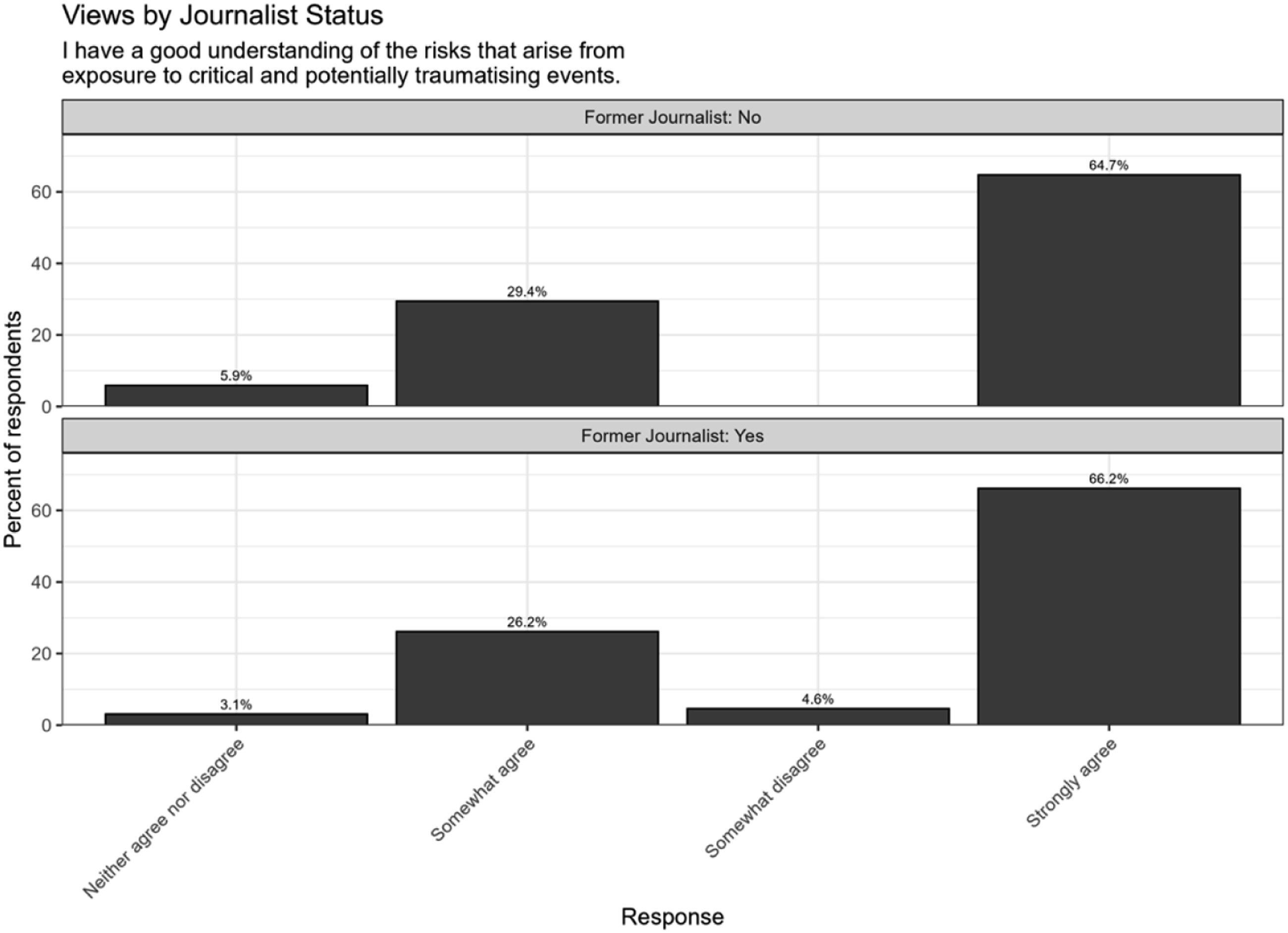
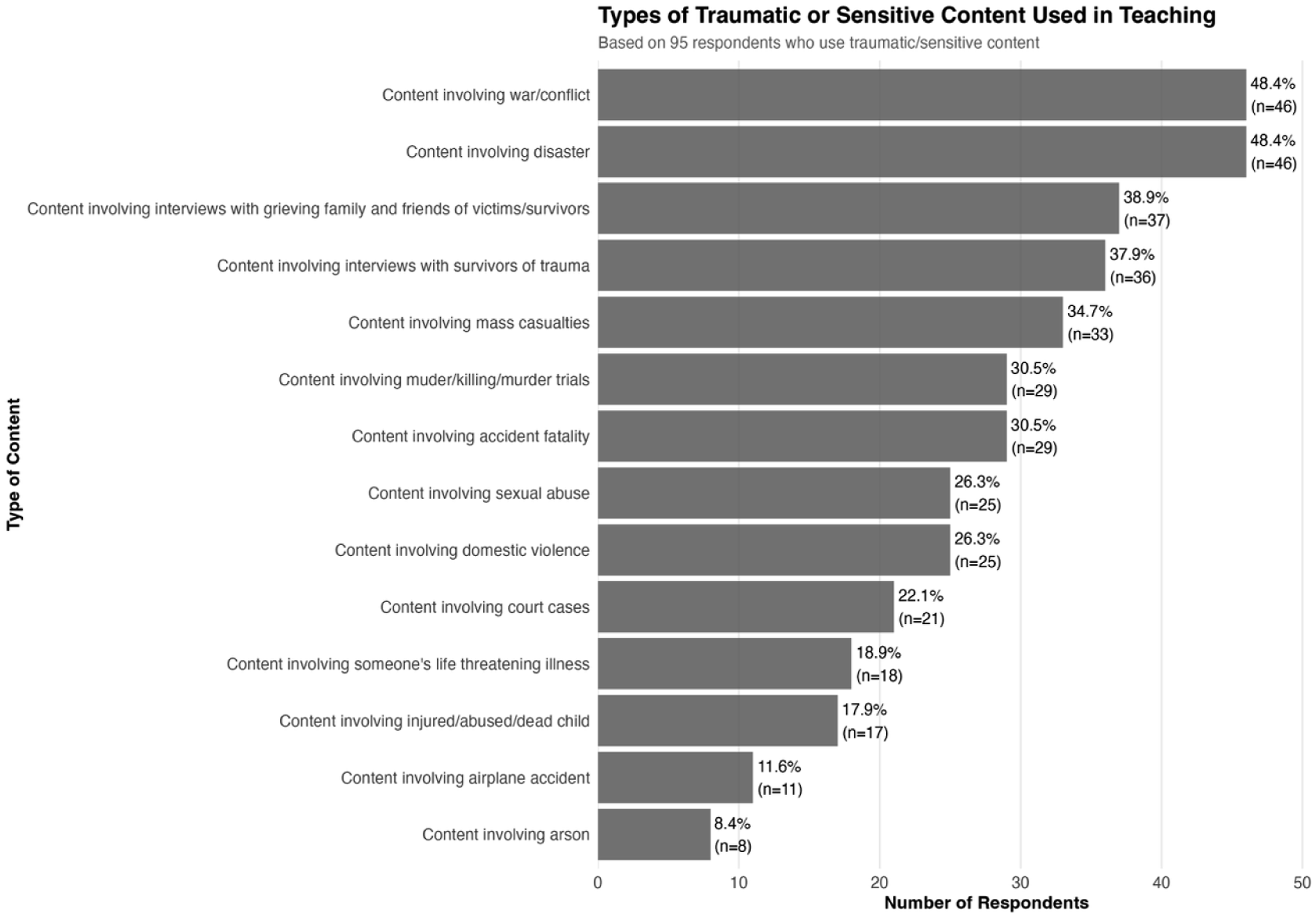
Chart 1: Views by journalists’ status
The majority of our respondents (68.4%) are former journalists, currently teaching on journalism courses or training working journalists. Studies have shown that a significant proportion of staff in journalism schools have a journalism background, having worked in industry for many years, and even decades before entering academia (Eccles, 2023). This explains how most respondents know journalists who have suffered the effects of trauma – (65.5% of respondents strongly agree or somewhat agree (27.4%)). In addition, the majority also strongly (60%) and somewhat agree (30.5%) that it is common for journalists to experience emotional distress on the job.
We probed this further in the interviews. For example, we asked our interviewees if they had reported on any potentially traumatic events during their careers and those who had worked as journalists prior to entering journalism education mentioned covering violent events, such as gang/cartel violence and organized crime, armed conflict, domestic violence, sexual and human rights abuses, refugees, Aboriginal deaths in custody, illness, road accidents, climate disasters (e.g. floods/cyclones), insurgencies, massacres, murders, graphic court hearings and working with graphic images/content, or experiencing direct hostility, harassment/abuse for their work.
Chart 2: Types of traumatic or sensitive content used in teaching practices
As shown in Chart 2 above, the prevalence of traumatic or sensitive topics used in teaching varies significantly across different themes, ranging from large-scale or ongoing events to specific individual tragedies. At the high-frequency level, using examples or reporting of large-scale events such as war, conflict, and disasters are the most common, with each being utilized by 67.6% of respondents. The mid-frequency tier includes a broad range of more human-centric and legal perspectives, such as asking students to read interviews with grieving people (54.4%) and trauma survivors (52.9%), as well as viewing or reading stories involving mass casualties (48.5%), murder trials (42.6%), accident fatalities (42.6%), sexual abuse (36.8%), and domestic violence (36.8%). Low-frequency content consists of more specialized or niche categories, such as examples of reporting of life-threatening illnesses (26.5%), crimes involving children (25.0%), airplane accidents (16.2%), and arson, which is the least frequently used at 11.8%. We further gave an opportunity to the survey respondents to specify any different type of content that they have used in their teaching practices. These included examples of negative social media discourse against gender non-conforming individuals; spiritual/religious stories; reading testimonials from journalists who have experienced trauma; reading stories involving suicide and killing of journalists; racism and/or white supremacist fascism; threats to life and some country specific reporting such as covering bushfires. The range of real-life examples and teaching associated reporting skills indicates educators’ responsiveness and sensitivity to constantly evolving challenges in journalism practice but also attentiveness to their students’ own realities outside the classroom. The analysis of interviews shows a similar pattern when it comes to pedagogy of care by modelling care for themselves and fostering dialogue with students. All interviewees described at length what type of content they tend to include or not include when they teach students about trauma in journalism and why. This includes numerous examples of affirmative pedagogy (particularly sensitivity, attentiveness and solidarity) such as when dealing with examples involving racism, violence, war reporting or when students are studying journalism during ongoing war as the following quotes illustrate: “When it comes to the topics, let's say I talk about racism […] I tried to use a specific language, or I try not to go into details, because we have students of color from all over the world and I'm trying not to trigger them.” (P20, Germany) “I started working as an educator during the period of full-scale war in Ukraine and it's a really hard situation because a lot of students for example could be displaced and who just come not because they want to be students at our university but because of the war in their territories because of danger… And it's a challenge because every time I should keep in mind that different topics could be very sensitive and even when we are talking about ethics or when we are discussing how to write about the war it could be traumatizing for my students not only because we live in this situation but because for example their fathers could serve in the army forces. (P19, Ukraine)
Because many topics (like sexual abuse or war) can be deeply personal, all interviewees noted that when they teach sensitive topics, illustrate with examples or teach reporting techniques, they routinely give students advanced warnings about the type of content or examples of real-life journalism they are about to encounter empowering them to determine the nature and extent of their engagement with material that resonates with their personal histories. These findings are in line with studies showing that educators are generally dedicated to fostering inclusive learning spaces and minimizing potential harm to students through content advice (Boyle et al., 2025).
Pedagogical approaches and ethics of care
Previous studies have indicated that adopting innovative pedagogical methods in enhancing resilience are essential for journalism education. For instance, simulation events, scenario-based and immersive experiential training, combined with intensive classroom-based sessions, are very effective for enhancing safety and resilience (Murphy, 2024). Virtual Reality (VR) training is helpful in increasing awareness of and resilience to the physical and psychological dangers of journalistic practices, resulting in heightened emotional and situational awareness, increased professional insight, and a stronger sense of competence (Hoak, 2025). Yet, the analysis of the top five teaching methods illustrated in Chart 3 shows that ‘My own lecture’ is the most frequently used method, reflecting the traditional, hierarchical structure of higher education. Teaching methods.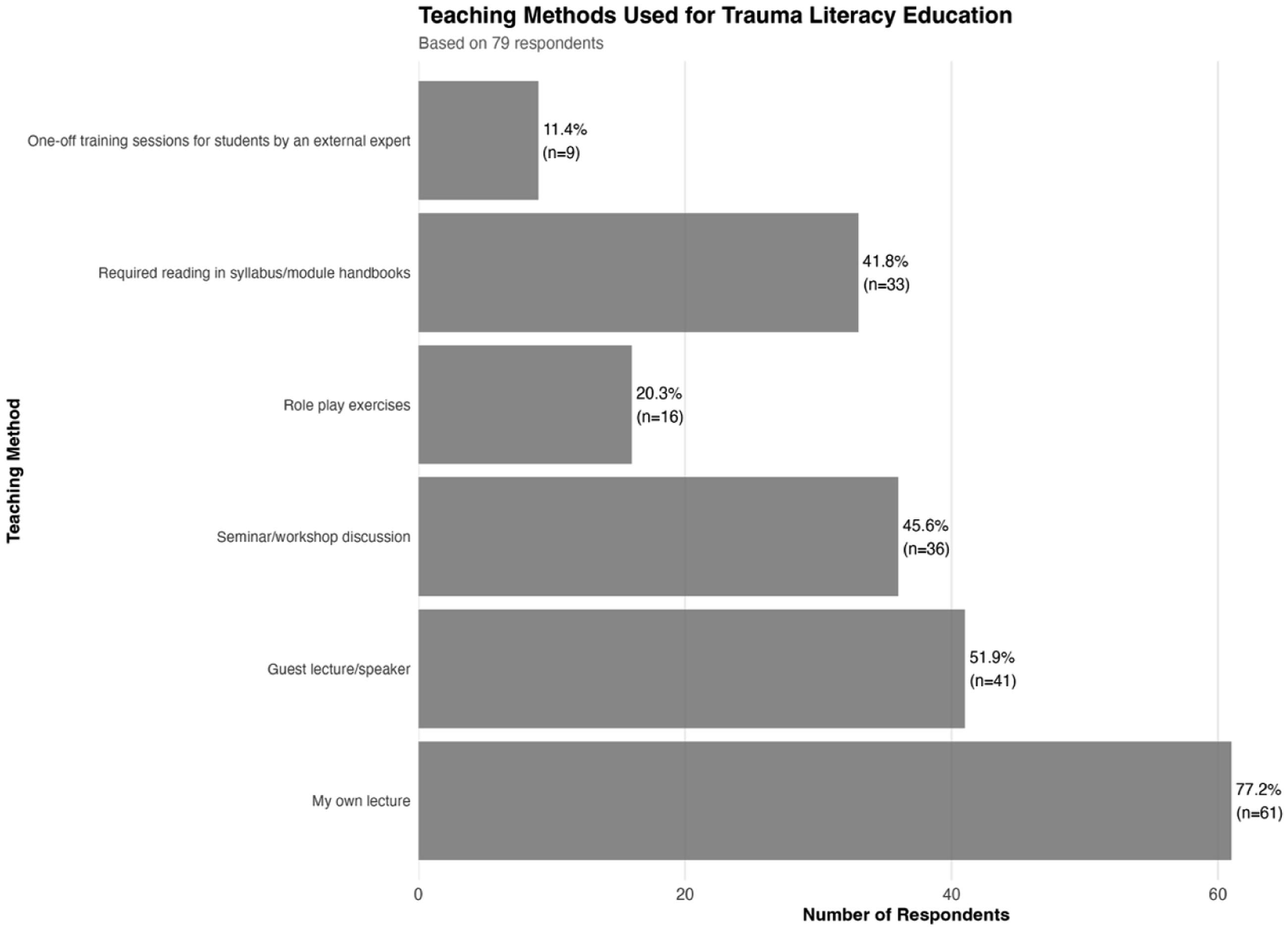
Chart 3: Teaching methods
Beyond this shared method, the second most popular method is guest talk/lecture followed by seminar/workshop discussion. The remaining methods put the emphasis on mental health and self-care and utilize reporting guidelines. The popularity of well-known organizations such as the Dart Center, now renamed Global Centre for Journalism and Trauma (GCJT), can also influence the curriculum by providing practical resources and tools for educators. It is still rare for educators to use more diverse techniques like role-play exercises, simulations of potentially traumatic events such as accidents/fire or to use immersive experiential learning. Seminar discussions do not require risk assessments, significant investment and specialist expertise in comparison to the technology and facilities required to develop and conduct labor intensive full simulations. Cost-effective methods such as own lectures and seminars remain popular method for educators to teach future journalists about the realities and challenges of reporting traumatizing events, but they do not necessarily do so effectively or have the desired effect.
Coding of the open answers revealed that external resources and guidelines are an important tool that facilitates teaching and learning (e.g. Dart Centre, now Global Center for Journalism and Trauma (GCJT)) most commonly cited; government-funded public health initiative such as Mindframe in Australia, INGOs like UNESCO, World Health Organization and Reporters Sans Frontiers). Dedicated trauma courses or modules are still rare with only 17% of respondents noting such specialist courses, the majority targeting undergraduate and postgraduate students. Exploring deeper through the interviews with educators from different regions, the most dominant theme was reliance on educators’ own lived experiences (23 interviewees) as former and current journalists, which in turn falls within the framework of ethics of care. We coded a strong pattern of educators looking to build and develop their competence and be responsive to the needs of their students. Given the background of our interview participants (all but two are former and many still work as current journalists), it is not surprising that they all tend to use examples and cases from their own practice and personal experiences that are relevant to teaching students about trauma. These quotes illustrate this pattern very well: Whatever I teach by heart, and I feel very much connected with my students, I try to give them direction based on my personal experience and I always try to help them in whatever way because I try to put myself in their shoes. I have been in their situation once upon a time. So I can easily understand what is the situation they are going through. So there I try to help them as much as I can and it is mostly based on my personal experience; to some extent research […] research is there but the front seat always is my personal experience (P1, India). “It's a unique quality to be able to bring that experience as a working journalist to the larger discussions around mental health and trauma and best practice […] I still get nervous telling my story because it's activating memories of distressing events. So that's a small stressor, but I've actually made great peace with that because I think there's great value in showing leadership and sharing part of one's own story.” (P7, Canada) “I also share a lot of my personal experience as a journalist because if you look at all the assignments I did, especially the long-term stories I did in my career, they were always involving some aspect of trauma, whether it was like someone, suffering from an illness […] I don't know if that's the best way to describe it, but just it could be anything like stories on domestic violence or refugees.” (P5, USA)
Factors that limit pedagogy of care
Previous studies show that educators often lack confidence in teaching trauma-informed literacy (e.g. Ogunyemi and Price, 2023; Wake et al., 2023). This suggests a clear need for targeted training for journalism educators. Our survey supports this finding. A total of 53% of respondents reported that they had not received specific training in teaching trauma literacy. In comparison, 37% said they had received training, while 11% were unsure. We also examined the type of training reported. Responses were first coded under competence, then divided into two categories:
Self-directed training
This included activities such as independent study, attending conferences, and workplace discussions. Some respondents relied on personal research or informal learning. Others referred to resources from organizations such as Dart Center for Journalism and Trauma (now GCJT) and Mindframe in Australia. These approaches advance the ethics of care by depicting an understanding of students’ background and an opportunity for collaborative decisions.
Formal training
This included structured learning delivered by external experts or organizations. Examples include mental health first aid courses, personal and digital safety training, UNESCO workshops on journalist protection, conflict-sensitive reporting training, and general health or CPR courses. These approaches advance the ethics of care by creating supportive environments and providing resources to shape emotionally healthy journalists.
In order to explore the combined effect of training on educators’ attitudes, we examined whether respondents have received relevant training, by region, illustrated by Chart 4. Training on trauma by region.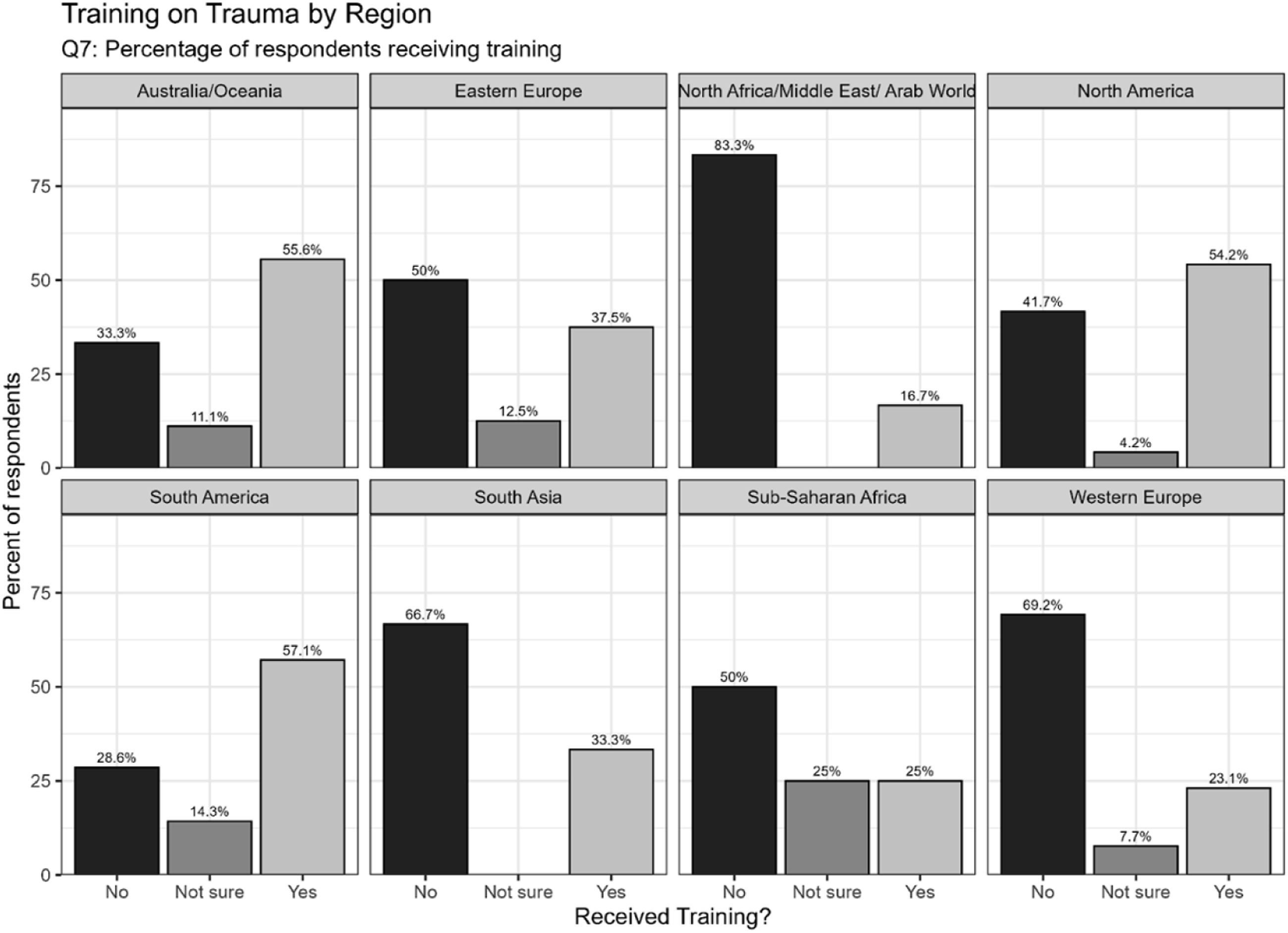
Chart 4: Training on trauma by region
Such training can help educators to equip students to deal with complex issues such as ethics in trauma reporting and appropriate reporting techniques. Our results show that training received is highest in South America (57.1%), followed by North America (54.2%). Australia/Oceania (55.6%). In contrast, the lack of training is most prevalent in North Africa/Middle East (83.3%), Western Europe (69.2%), South Asia (66.7%) and Eastern Europe (50%). “Not sure” responses are uncommon but most noticeable in Sub-Saharan Africa (25%) and Australia/Oceania (11.1%). Further to regional comparison, the results show that Western Europe falls in the training-poor regions. This mismatch suggests some regions with heavy traumatic content use (e.g., media coverage of war and conflict) lack proportional training.
Training and attitudes
We wanted to find out if receiving training on trauma in journalism affect educators’ attitudes toward trauma literacy and equip them to create supportive environments in the classroom. An independent samples t-test revealed a statistically significant difference in attitude scores between participants who had received training on trauma in journalism (M = 3.99, SD = 0.72) and those who had not (M = 3.31, SD = 0.69), t (91) = 4.49, p < 0.001. The large effect size (d = 0.96) indicates that training is strongly associated with more positive attitudes. A Two-Way ANOVA confirmed that training is a unique and primary predictor, F (1,87) = 19.19, p < 0.001, even when controlling for years of professional experience, which was not a significant factor (p = 0.379). This demonstrates that targeted training, rather than general experience, is the primary factor driving positive attitudes toward trauma-informed journalism education as shown in Chart 5.
3
Attitude scores by training status.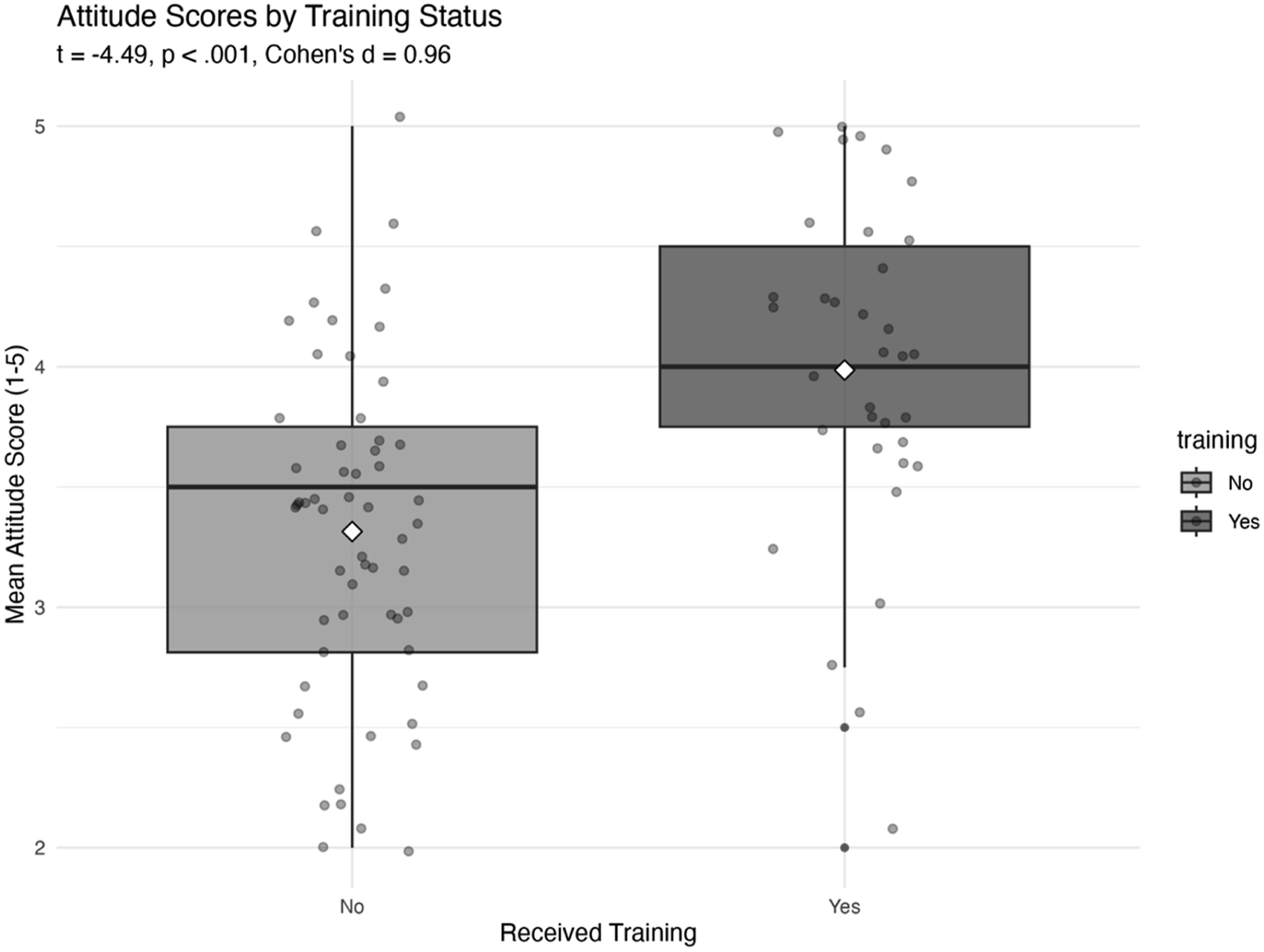
Chart 5: Attitudes scores by training status 3
Training fully mediates the relationship between institutional support (availability of training opportunities) and educators’ attitudes toward teaching trauma literacy. A mediation analysis revealed that institutions offering training opportunities had significantly more educators who received training (77% vs 33%, χ2 = 10.42, p = 0.001), which in turn was associated with significantly higher attitude scores (M = 3.98 vs M = 3.26, t = 4.25, p < 0.001). Critically, when controlling for individual training receipt, the direct effect of institutional support on attitudes became non-significant (p = 0.215), indicating full mediation. The indirect effect size was 0.32 points, suggesting that institutional training availability improves attitudes entirely through facilitating individual training uptake.
Challenges to educational practice
When it comes to barriers to adopting pedagogy of care as illustrated by Chart 6, our results show that lack of specialist knowledge is the most significant hurdle, cited by 53.5% of respondents while nearly half (48.8%) report that a lack of time prevents the inclusion of trauma literacy in their teaching. Approximately 39.5% of participants feel they lack the personal confidence required to teach these sensitive subjects effectively. Structural barriers and internal processes are a challenge for 36.0% of respondents. Stigma associated with the topic and the lack of resources, particularly for participants in the Global South also poses barriers to curriculum development. Challenges to including trauma literacy in curriculum.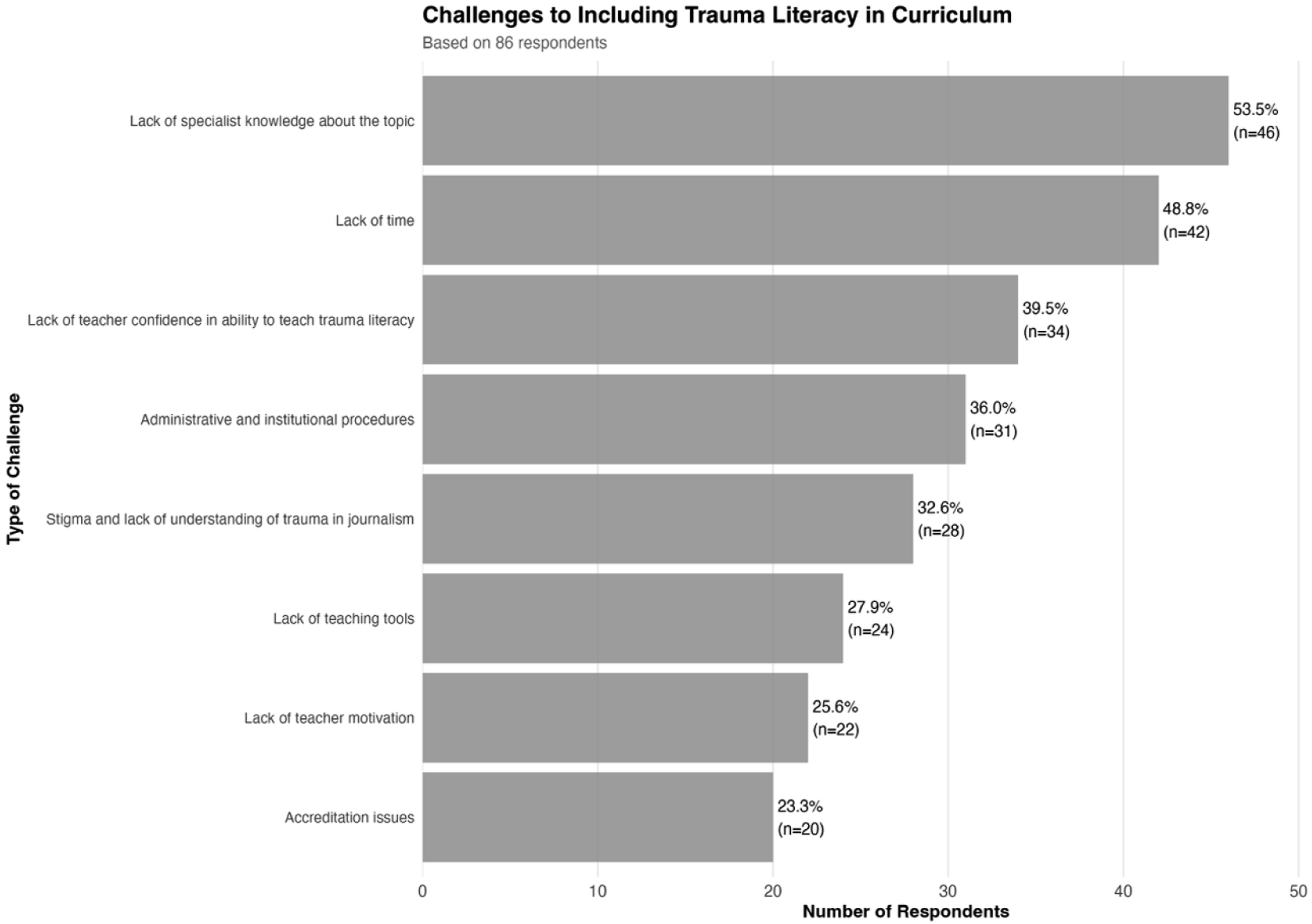
Chart 6: Challenges to practice
Types of challenges coded from the open-ended answers in the survey are closely linked to these: “There’s a lengthy process to make it part of the core”; “Waiting time for the periodical curriculum review”; “stigma about topic” in own institutions but also in journalism; “lack of support” (this includes both lack of adequate support for students or long waiting times to see a qualified professional counsellor) and “lack of support from director and other faculty members”. In the interviews, stigma is also linked to institutional culture: in institutions where there is a supportive culture, educators can openly talk about trauma not only to their students but also to their peers and managers. For those where the lack of appropriate support mechanisms is particularly pronounced, educators find it difficult not only to teach students about trauma and self-care using non-traditional pedagogical approaches but also to practice affirmative pedagogy of care where arguably it is needed most by their students.
Discussion and conclusion
With regard to journalism educators’ understanding of work-related trauma in journalism practice, (RQ1), our findings are consistent with previous studies that show that journalism educators globally are aware of the potential impact of trauma on reporters and their sources. Journalism educators understand the interplay of the risk factors and the power dynamics that threaten journalists’ professional routines. Awareness of issues associated to safety of journalists is closely linked with pedagogical practices in journalism schools and how journalism educators teach future journalists about threats they are likely, or already experience in their work. However, there is little evidence of integration of pedagogy of care to equip students to deal with the ethics in trauma reporting. The participants express a concern for lack of support from their institutions to break the stigma surrounding mental health and wellbeing in journalism; and to encourage the provision of adequate support for future reporters.
Focusing on the challenges to trauma-informed teaching and learning across different contexts (RQ2), despite the limited sample of our survey, the findings give a clear indication of the type of barriers to teaching trauma literacy that educators face. Trauma literacy, as we noted earlier, is important for ethical and safe journalism practice with both consideration for the wellbeing of sources and journalists. The lack of resources to teach trauma has often been cited by journalism educators as one of the main impediments to their pedagogy (Ogunyemi and Price, 2023). Previous studies indicate that pedagogy can be hindered by journalism educators’ lack of consistent and informed strategy which makes them worry about providing incorrect or outdated information about mental health or feel uncomfortable advising students about stress management (Newman et al., 2023; Wake et al., 2023). Our results are consistent with those findings showing that lack of specialist knowledge about the topic and confidence in own ability to teach trauma literacy are still hindering educational practices and the ability of educators to prepare and equip future journalists with the skills they need. The United States has often been credited for being a pioneer of trauma training for student journalists (Rentschler, 2010), thanks to the work of the US based Dart Center for Journalism and Trauma since 1999, now Global Center for Journalism and Trauma, USA (GCJT). While the launch of the Dart Center Asia Pacific in 2004 (now Centre for Journalism and Trauma Asia Pacific) and the Dart Center, Europe, in 2012 (now European Centre for Journalism and Trauma (ECJT)) has been providing useful resources for journalism educators, there is no equivalent Center in the Global South to support journalism educators. The data suggests that the willingness to teach trauma literacy is generally present, as teacher motivation is among the lowest-ranked challenges. Instead, the implementation is primarily hindered by capacity, a gap in specialist expertise and the time required to address such complex topics within an existing and crowded curriculum.
Addressing our final question that examined pedagogical approaches to teaching trauma literacy (RQ3), our findings highlight the importance of emotional and trauma literacy in a care-based teaching approach, advancing the ethics of care. Simple steps like open conversations, guest reporters, and integrating trauma content into teaching can build relationships, reduce stigma, and create supportive environments. Despite being more effective, immersive learning methods (see Hoak, 2025; Murphy, 2024) are still rarely used among our participants, highlighting a gap in applying care ethics in teaching.
Innovative pedagogy and teaching resources can be developed further by understanding the practices of journalism educators as this study aimed to do. Slow or complex administrative and institutional procedures is a sign of a short-sighted approach by higher education institutions in many regions who still fail to support and facilitate the embedding of trauma literacy in journalism curricula. Trauma and safety education in journalism curricula can enable student journalists and entry-level journalists to develop strategies for understanding the hostile environment in which they operate (Simunjak and Menke, 2023). This work is crucial in enabling more journalism practitioners to hold power to account without sacrificing their own wellbeing. Training of educators emerged as the most significant factor that shapes journalism educators’ work. This adds further weight to our argument that while educators are working on their competence, adding more formal trauma training would be beneficial for both teaching staff and students.
It is important to note that despite the challenges, the data shows that they draw upon the pedagogy of care, particularly responsiveness (to new issues) and solidarity (Tronto, 1995, 2013). The findings from interviews indicate that journalism educators are very responsive to students’ social backgrounds, practicing empathy and making an effort to avoid unnecessary harm. Scholars have argued that educators have an ethical responsibility to foster emotionally healthy future for journalism by creating a supportive environment for students (Arrey and Reynolds, 2023). We find that educators’ own, sometimes difficult lived experiences as former and current journalists, play an important role in pedagogy of care. They often relive those experiences in order to prepare their students for a rewarding but challenging profession. More research is needed to examine the combined toll of the years spent as a journalist and as educator on educators’ own wellbeing and health.
There is emerging evidence that collaboration, solidarity and the shared drive by educators, researchers and news organizations are starting to make a difference in journalism education. This includes a rising number of courses/modules globally that teach trauma literacy and more future journalists are receiving such training (Price et al., 2026). The study’s small sample of educators, likely with a vested interest in trauma literacy, means the findings are not generalizable. However, it still offers insight into how journalism educators prepare students to navigate challenging and sensitive topics like the ethics of trauma reporting and techniques. Future research should investigate how care ethics inform teaching, assess the effects of trauma informed pedagogy on students, and create guidelines for educators to address trauma in varied classroom settings.
Footnotes
Acknowledgements
We would like to acknowledge Anran Ju, PhD candidate at the School of Information, Journalism and Communication at the University of Sheffield, who provided us with valuable assistance with the survey data analysis and visualization. We would also like to express gratitude to our participants and to everyone who commented on drafts of the article.
Declaration of conflicting interests
The authors declared no potential conflicts of interest with respect to the research, authorship, and/or publication of this article.
Funding
The authors received no financial support for the research, authorship, and/or publication of this article.
Ethical considerations
Ethical approval for the study was sought from the corresponding author in October 2024 and granted in November 2024, after the application was reviewed by three independent reviewers. (Ethics approval number: 064955 from The University of Sheffield).
Consent to participate
Informed consent was sought from all participants. Written informed consent for the survey was obtained after participants received information about the study. Verbal consent from interview participants before each interview and after the researchers gave detailed information to the participants about the study.

Data Availability Statement
The survey dataset generated and analysed during the study is available from the corresponding author upon reasonable request. The interview data contains topic sensitive information that could identify the participants and as such potentially harm them. According to the study’s ethics approval, it does not allow it to be shared.