



Abstract
Since 1950, remarkable changes have occurred in both mass media, mental healthcare, and mental health discourse. Despite mass media’s pivotal role in reflecting and shaping societal attitudes about mental illness, little scholarly attention has been dedicated to the historical development of media representations of individuals with mental health issues. In this study, unique historical data serve as foundation for analysis of Norwegian newspaper articles about mental illness from 1950 to 2020. Through combining quantitative and qualitative methods, the analysis of selected news stories illuminates how these stories both complement and challenge medical and journalistic authority. Two main findings emerge. Firstly, notwithstanding the authoritative status of expert voices, individuals with mental health issues have transitioned from being essentially absent to becoming increasingly visible in the news. However, secondly, these individuals primarily represent lighter illnesses, or “general”, unspecified mental health conditions. Consequently, one may question the assumption of destigmatization for all mental illnesses, including more severe diagnosis. In conclusion, this study underscores the role of media professionalization, tabloidization, and technology in fostering societal openness to mental illness.
Introduction
The struggle for representation has been central for marginalized groups. Having one’s voice recognized is important for both identities and the democratic functioning of societies. Also, in efforts to lift the stigma of mental illness, issues of representation have been important. Historically, the mass media has frequently depicted individuals with mental illnesses negatively, characterizing them as violent, unlikeable, unemployed, and potentially dangerous (see e.g., Blood and Holland, 2004; Morlandstø, 2010; Wahl, 1992). In contrast, authentic, personal stories of mental health issues are held forth as anti-stigmatizing (Pinfold et al., 2005). This mirrors a faith in the force of the human exemplar to personalize an issue, resonate with audiences and elicit identification and empathy (Hinnant et al., 2013). Through personal accounts, individuals have challenged professional knowledge, experts, treatment systems and prejudices (Robert et al., 2021).
Despite the anti-stigmatizing role of these stories, little research has targeted the presence or absence of individuals with mental health challenges in a historical context. To my knowledge, no studies have tuned into the long-term manifestations of visibility and voice, such as sourcing, quotation, and naming. Moreover, the influential power of photographs/images has been overlooked (Price, 2022). To illuminate the changes in how newspapers represent people with mental health issues over time, the research question of this study is: How are people with mental health issues represented in Norwegian newspapers between 1950-2020, and what mental health challenges are depicted?
A theoretical framework that underscores the importance of visibility in asserting representational authority will be applied (Eide, 2011; Hall et al., 2013). A ‘representational ladder’, initially introduced by Elisabeth Eide (2011) is adapted to indicate degrees of visibility. The theoretical underpinning also highlights power dynamics in representation, focusing on the authority of laypersons, medical professionals, and journalists (Borkman, 1976; Carlson, 2017; Fairclough, 1992; Foucault, 1972/2005; Hall et al., 2013).
Background and theoretical framework
Media representation and sources
Media representation has been pivotal for marginalized groups (Hall et al., 2013). Elites and power institutions can be seen as primary definers of public knowledge (Hall et al., 2013). They give their own opinions and demonstrate their own expertise, while lay people usually are interviewed as cases, representing others who are struggling with a similar dilemma (Tuchman, 1978: 123). This reconstitutes power systems, privileging influential individuals and institutions. Journalistic deadlines and professional demands for impartiality and objectivity substantiates the practice (Hall et al., 2013). Additionally, many journalists feel inadequately prepared to cover mental illness (Ross et al., 2024), potentially giving expert sources significant influence.
Research indicates limited representation of lay perspectives in mental health coverage, often endorsing expert opinions (see e.g., Rowe et al., 2003). Nonetheless, recent studies suggest a new societal openness about mental health issues (see e.g., Parrott et al., 2019; Paulsen, 2023; Van Beveren et al., 2020). In one study, personal stories even surpassed other categories in mental health coverage across several European countries, serving as a type of “expertise” (Van Beveren et al., 2020). These individuals are portrayed as relatable or even role models (Parrott et al., 2019; Van Beveren et al., 2020). Despite criticisms of personal narratives being simplistic journalism, human-interest stories are largely seen as vital for combating stigma (Hinnant et al., 2013; Morlandstø, 2010).
Individualized, subjective media
Journalism has evolved since the 1950s, shifting from partisan press to professional independence in the U.S. (1960s) and Norway (1970s to 1990s). This led to lay people’s voices gaining prominence for challenging authoritative powers (Schudson, 2015; Turner, 2010). Individualizing trends include tabloidization and a blend of “hard” and “soft” media productions, accompanied by personal and emotional testimonies and the rise of social media (Coward, 2013; Eide and Knight, 1999). This has accentuated privatization, highlighting public figure’s private lives, and personalization, viewing societal issues through the perspectives of individual actors and ordinary citizens in news (Jebril et al., 2013). While Norway has a high prevalence of human-interest stories (Figenschou et al., 2021), health news tends to selectively focus on certain diseases, victims, and storylines (Figenschou et al., 2021). This selectivity brings subjectivity, traditionally perceived against journalistic norms, to the forefront as key to experience-based knowledge (Borkman, 1976; Schudson, 2015). Notably, tensions can arise between different authorities (Borkman, 1976). For instance, Swedish newspapers’ heavy reliance on expert knowledge of mental illness has been contested by lay voices, indicating a field where legitimacy and authority are increasingly problematized (Ohlsson, 2018).
Authority in the text
Signs, words, and images in newspaper articles derive their meaning from sign interpretation, which is intrinsically tied to social conventions and the prevailing discourse (Foucault, 1969; Hall et al., 2013). Authority, in this context, is an interpretive and relational concept expressed through communicative conventions (Carlson, 2017: 10–11). These conventions may claim, accept, or contest authority (Carlson, 2017: 10). One such convention is interactional control, involving features that regulate the orderly functioning and control of interaction (Fairclough, 1992: 152, 234). It involves conventions on who introduces topics, who can define the context for what is said, and ‘modality’ referring to the degree to which propositions are asserted or denied (Fairclough, 1992: 152–162). Notably, press photos are typically considered high modality semiotics, meaning that they aim to represent reality (Ledin et al., 2020: 62). In a journalistic context, the interactional control typically favors journalists, who select topics, frame questions, and edit content. Analyzing interactional control conventions thus provides insights into who wields control over the interaction, as well as how social hierarchies are claimed and negotiated, and authoritative power are constructed in the text (Fairclough, 1992: 152).
A hierarchical framework inspired by Eide (2011), applied by Thorbjørnsrud and Figenschou (2016), and modified for this study operationalizes source authority. This ‘representational ladder’ assumes quotes as a symbol of authority (Eide, 2011: 155; Zelizer, 1989). According to the representational ladder, sources can appear as “silenced others” (Eide, 2011: 149) or represented indirectly through experts (Eide, 2011: 150). As visibility increases, sources are briefly cited, often without specific identification, mainly serving as examples (‘one-sentence cases’ (Eide, 2011: 151)). The next level (‘The Other with a life story’ (Eide, 2011: 152)) allows subjects to provide more insights about themselves, while the highest level of representation grants a source the opportunity to directly comment on issues such as politics or economics (‘speaking Outside of Himself’ (Eide, 2011). This framework helps descriptively outline the historical representation of people with mental health issues.
Data and methodology
Data
This study, part of a larger project 1 , analyzes health coverage from three Norwegian newspapers spanning 1950 to 2020, with data collected for four systematic weeks every 5 years. Two research assistants manually collected data from microfilms and PDFs sourced from the national press archive. The newspapers chosen for analysis are Aftenposten (the main national, conservative broadsheet), Dagbladet (liberal, one of the national tabloids) and Dagsavisen (formerly known as Arbeiderbladet, the labour newspaper). Norway had a party press system, and these publications were selected for their distinct political orientations, and potential differences in individual focus due to tabloid formats. The labour-intensive collection method makes for a unique material that would not otherwise have been possible to access. Among the 3501 total articles pre-coded for information like date and genre, 405 pertained to mental illness and were analyzed further. Of these, 69 articles stemmed from 1950-65, 107 from 1970-85, 141 from 1990 to 2005, and 88 from 2010 to 2020 (this last time period was 5 years shorter than the others). The sample included news articles, feature articles, briefs, editorials, op-eds and letters to the editor. The unit of analysis is the article. Relevance was determined if the title, abstract, or caption referenced mental health or illness or related personnel or institutions. The research was registered with Sikt, the Norwegian Agency for Shared Services in Education and Research (former NSD).
Mixed methods
A mixed methods approach was adopted for this study, with an initial descriptive content analysis to examine the portrayal of individuals with mental health issues in news from 1950 to 2020. This quantitative analysis addressed the sub research question: What is the frequency and nature of representation of individuals with mental health issues in Norwegian newspapers from 1950-2020, and what specific mental health challenges are most commonly depicted? A structured coding instrument was developed by the author, drawing on the abovementioned literature and tailored to the research focus of this study. This instrument addressed predefined elements of representation, including quotes (are individuals with mental health issues referred to directly or indirectly? Are their quotes short, medium, or long?), anonymization (yes/no), visual portrayals (does the article include photos or illustrations of individuals with mental health issues?), and diagnosis (which diagnosis are depicted?). Letters to the editor counted as direct quotation. Source anonymity or use of full names was coded assuming reduced fear of stigmatization when full names are used. Finally, diagnoses were coded, to trace the evolving patterns of conditions that garner media attention. Unspecified terms like “insanity”, “mental illness” and “mental health problems” were coded as “general mental health issue/ not specified”. Intercoder reliability was assessed by recoding about 10% of the material, achieving an average kappa value of ,774, indicating substantial agreement.
As part of the broader quantitative analysis, the representational ladder (Eide, 2011) was applied as a mapping tool. It was modified to capture a wider range of representations, including an intermediate level of quotation (between one-sentence cases and life story-cases). These typically give some, but limited information about personal background and experiences. The modified ladder also included whether the person’s actual name was mentioned, and it the individual was specified when referred to in 3rd person. For a graphical representation of this, see Figure 1. The hierarchical Ladder of representation, as it is applied in this study.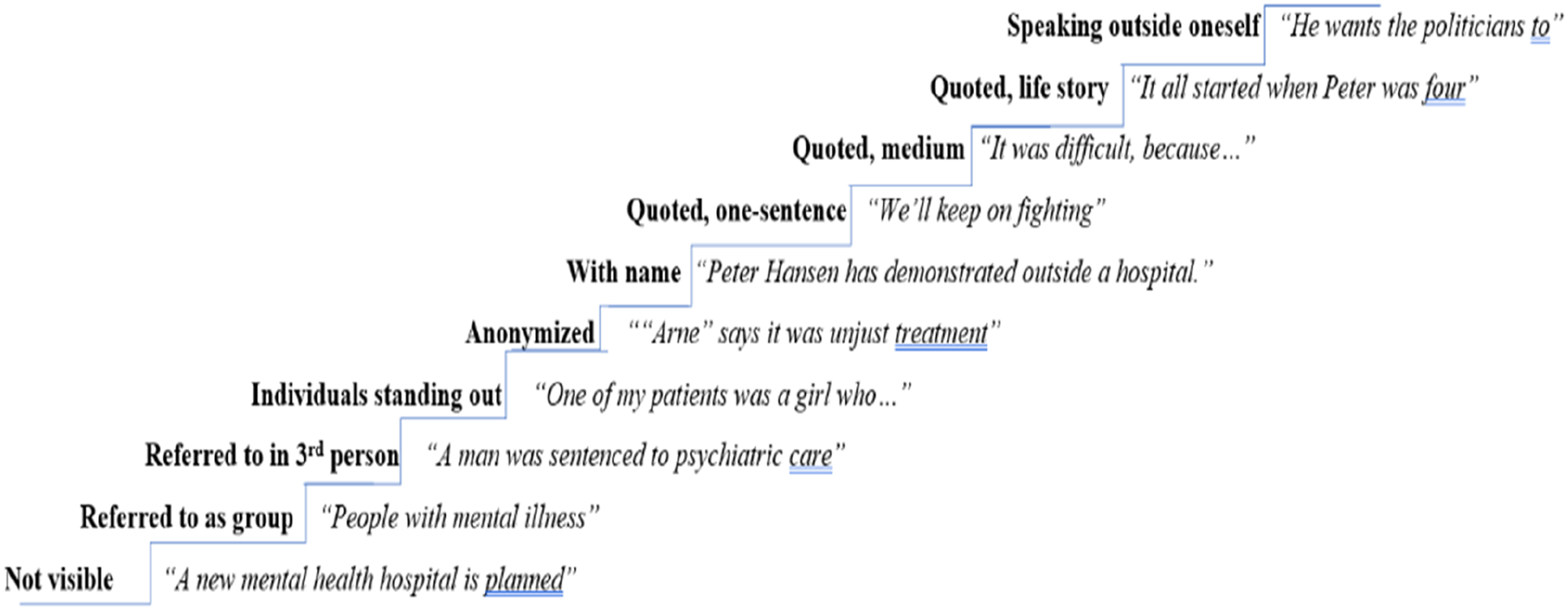
Qualitative discourse analysis
The second phase of analysis seeks to answer the following sub research question: How is the discourse surrounding individuals with mental health issues constructed in Norwegian newspapers between 1950-2020? One article per period, totaling four, was selected for qualitative analysis, using critical discourse analysis (Fairclough, 1992; Hågvar, 2007) and visual semiotics (Kress and Van Leeuwen, 2006). These articles were selected based on the inclusion of individuals with mental health issues at the highest possible rung on the representational ladder (Figure 1), relative to the period. The selected articles are exceptional, in the sense that they epitomize each period’s practices of featuring individuals with mental health issues. They provide valuable insight into how different historical periods shape the creation of subjects identified as mentally ill (Hall et al., 2013). The texts were first analyzed for contextual aspects such as newspaper sections, social media interaction, and social norms. Each text was then segmented for a detailed analysis of linguistic features such as terminology and presuppositions, and ‘voice’.
Cues of low or high modality were highlighted, referring to how journalists align with or distance themselves from the propositions in the text, which relates to negotiations of social and power relations (Fairclough, 1992: 142, 152). Images and layout were assessed for portrayal of individuals, considering factors like distance, gaze, image size and positioning (Hågvar, 2007; Kress and Van Leeuwen, 2006). This investigation supplements the quantitative mapping, shedding light on how individuals with mental health issues are represented in Norwegian newspapers from 1950 to 2020.
Results and analysis
General overview
Throughout the years, people with mental health issues were barely consulted as sources. Expert sources, particularly health experts, were the primary sources. Individuals with mental health issues were mostly referred to collectively or in third person, seldom commenting on grand topics like politics. In relation to the representational ladder (Eide, 2011), the sampled articles distribute themselves with fewer articles for each step the higher up in the ladder one goes, starting from representation on group level (Figure 2). Ladder of representation including numbers of articles on each stage. Many of the stages on the top will also be included in the stages below.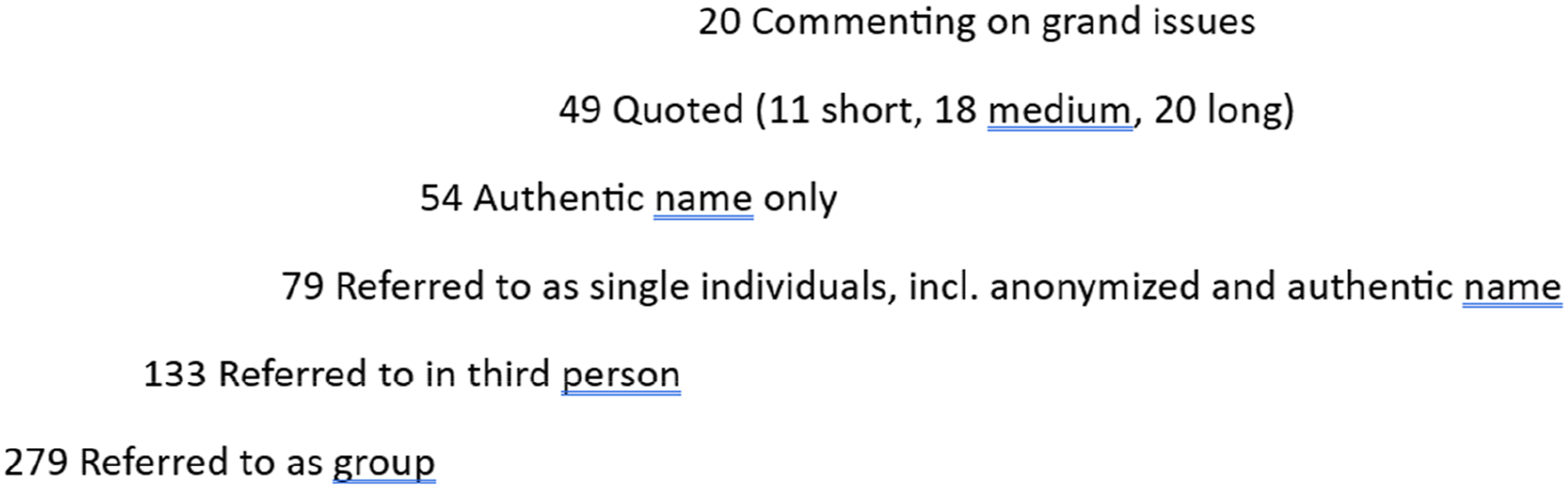
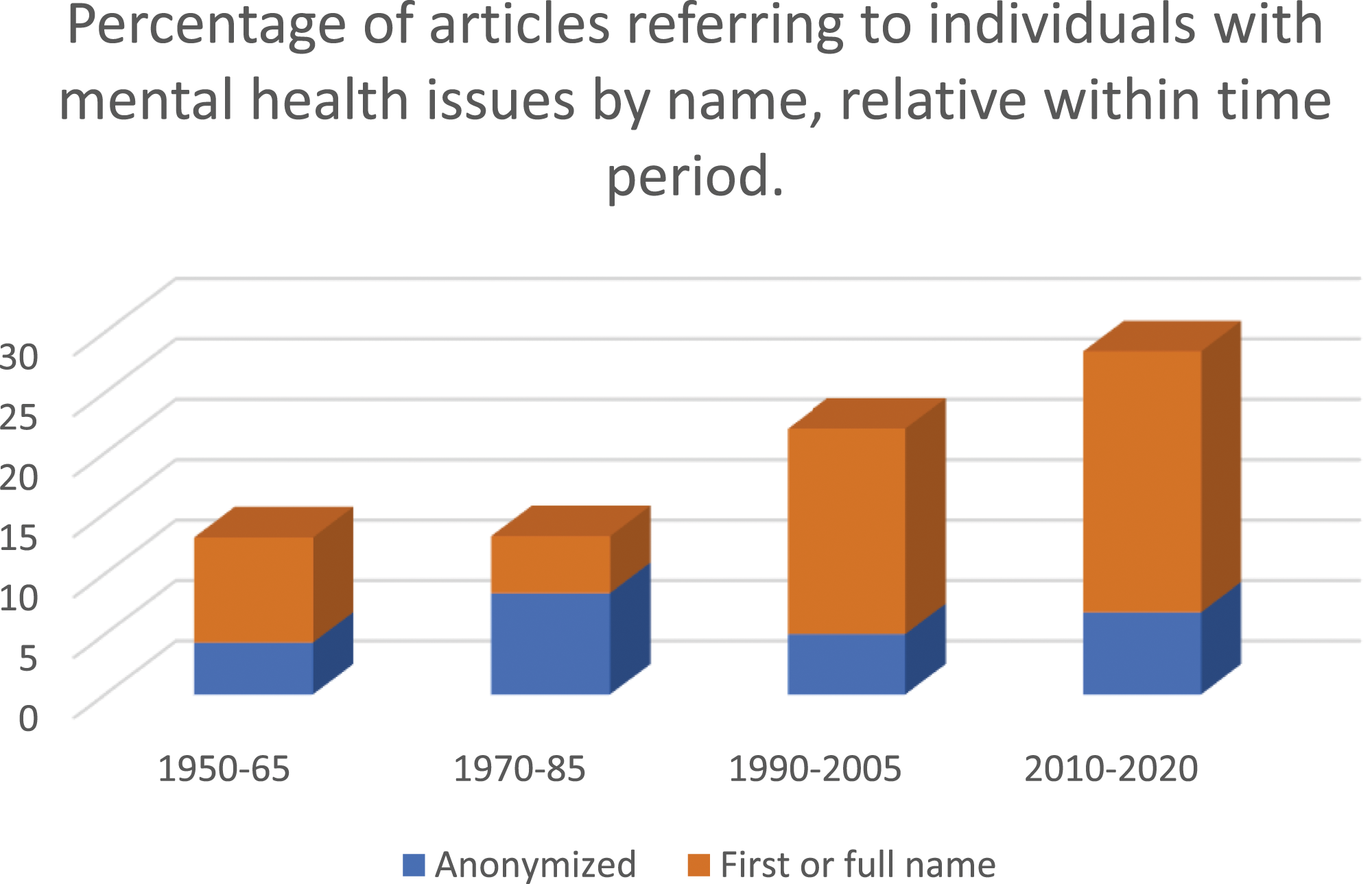
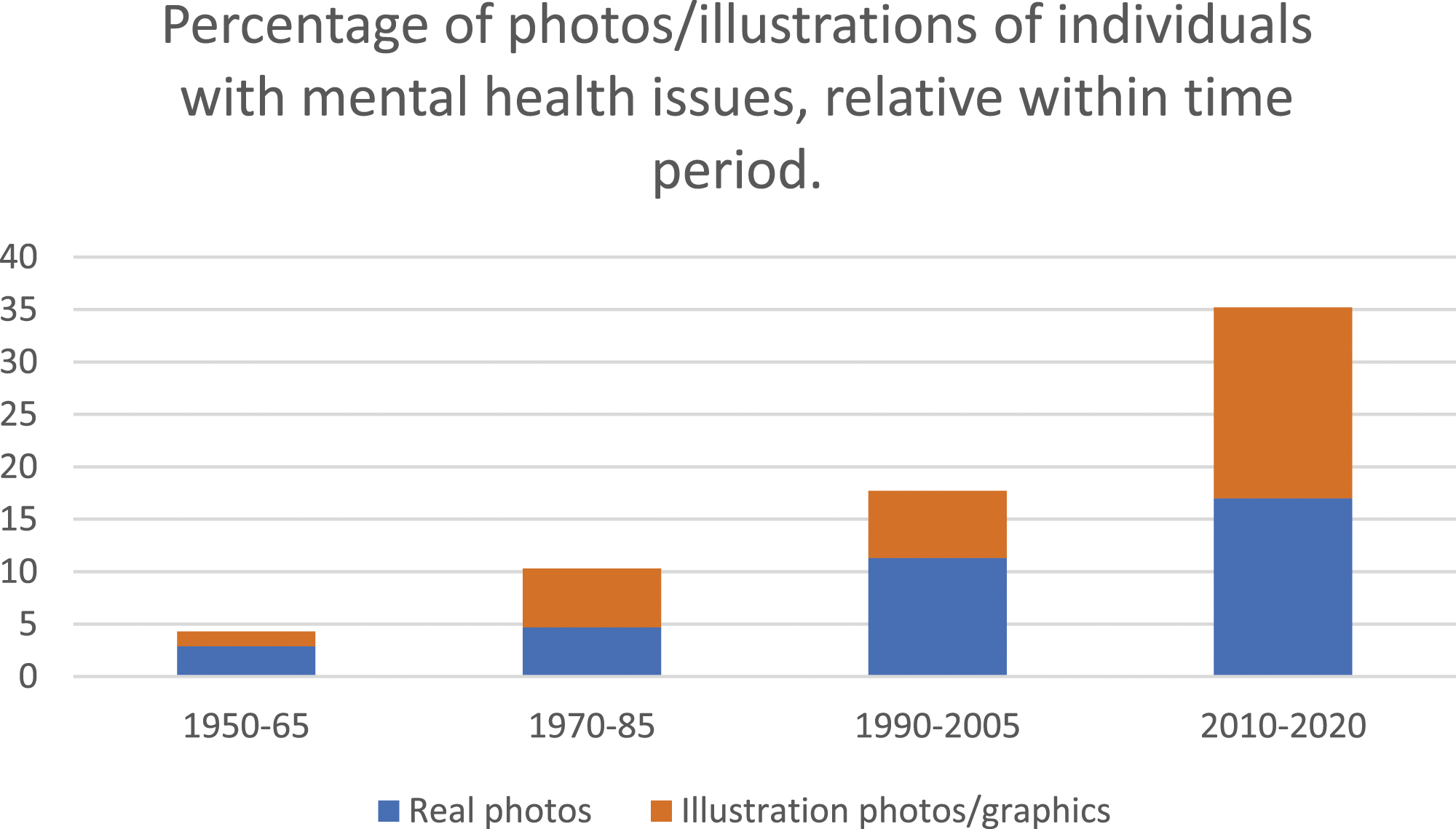
While this is the general picture of the total period, individuals with mental health issues have become increasingly visible, climbing the representational ladder, as further analysis will show. This is evidenced by direct references/quotations (Figure 3), real names (Figure 4), and photos (Figure 5). Note that the last time period spans 10 years, not 15. A brief presentation of the quantitative analysis is given here, to be elaborated on with the qualitative analysis, following the historical timeline. Direct reference of individuals with mental health issues (N = 405). Anonymization of individuals with mental health issues (N = 405). Photos of individuals with mental health issues (N = 405).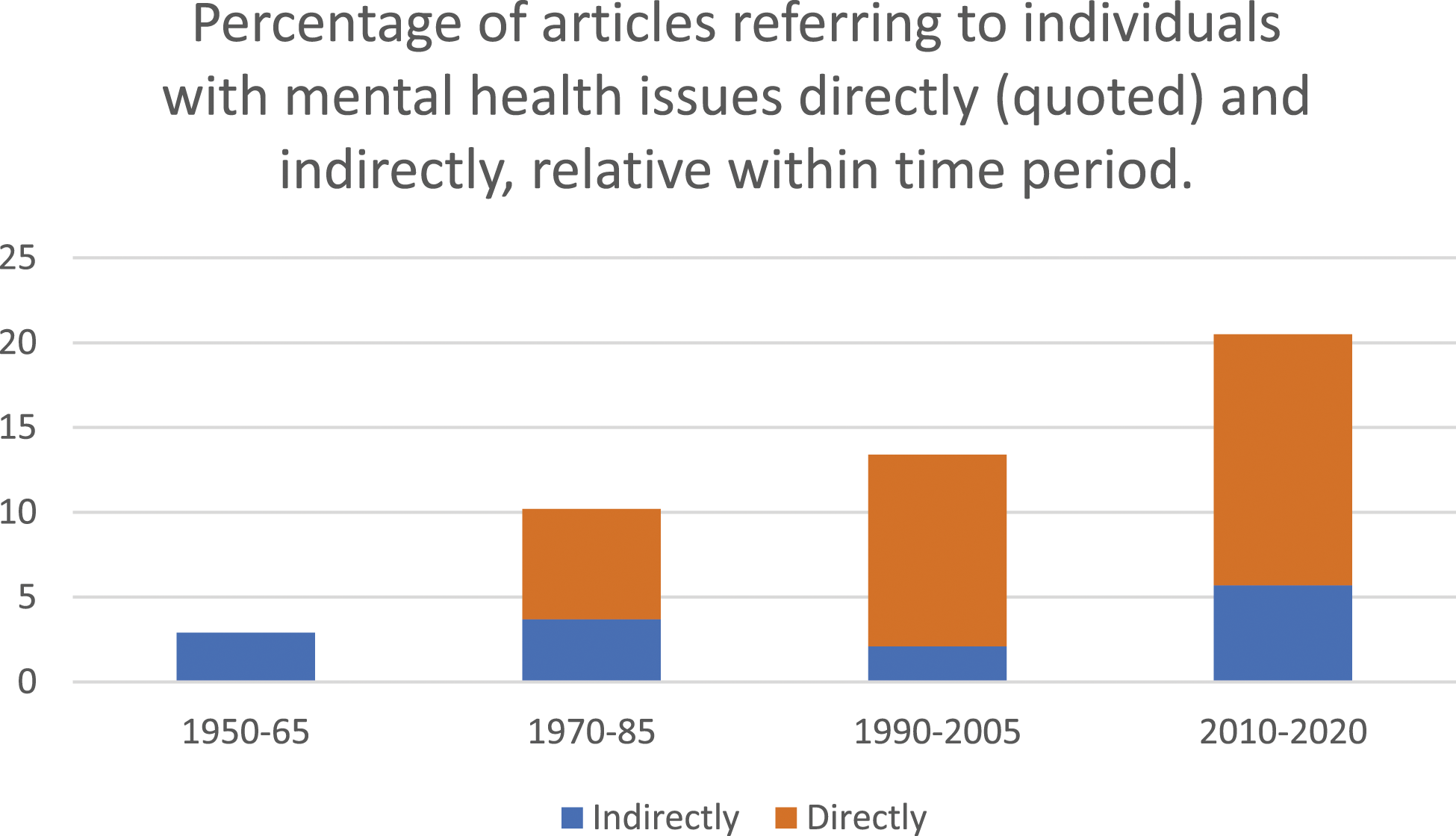
From not being consulted as sources at all in the newspapers between 1950-65, the involvement of individuals with mental health issues has progressively grown (Figure 3).
Regarding anonymization (Figure 4), the biggest changes are seen since 2000, with an increased proportion of articles including authentic names, indicating increased visibility and perhaps reduced fear of stigmatization. The count of photos of people with mental health issues has risen in the selected sample (Figure 5), especially in recent decades when considering both illustrations and photos.
Diagnoses
The increased visibility of people with mental health issues in newspapers are linked to broader coverage of various diagnoses and conditions (Figure 6). Notably, most articles refer to a general understanding of mental illness, without specifying diagnose, typically “insanity” in the 50s or “mental problems” in 2020. As for particular diagnosis, the term ‘depression’ was not commonly used for mental illness in the earliest decades and its prevalence has increased over time. Depiction of diagnosis (N = 405).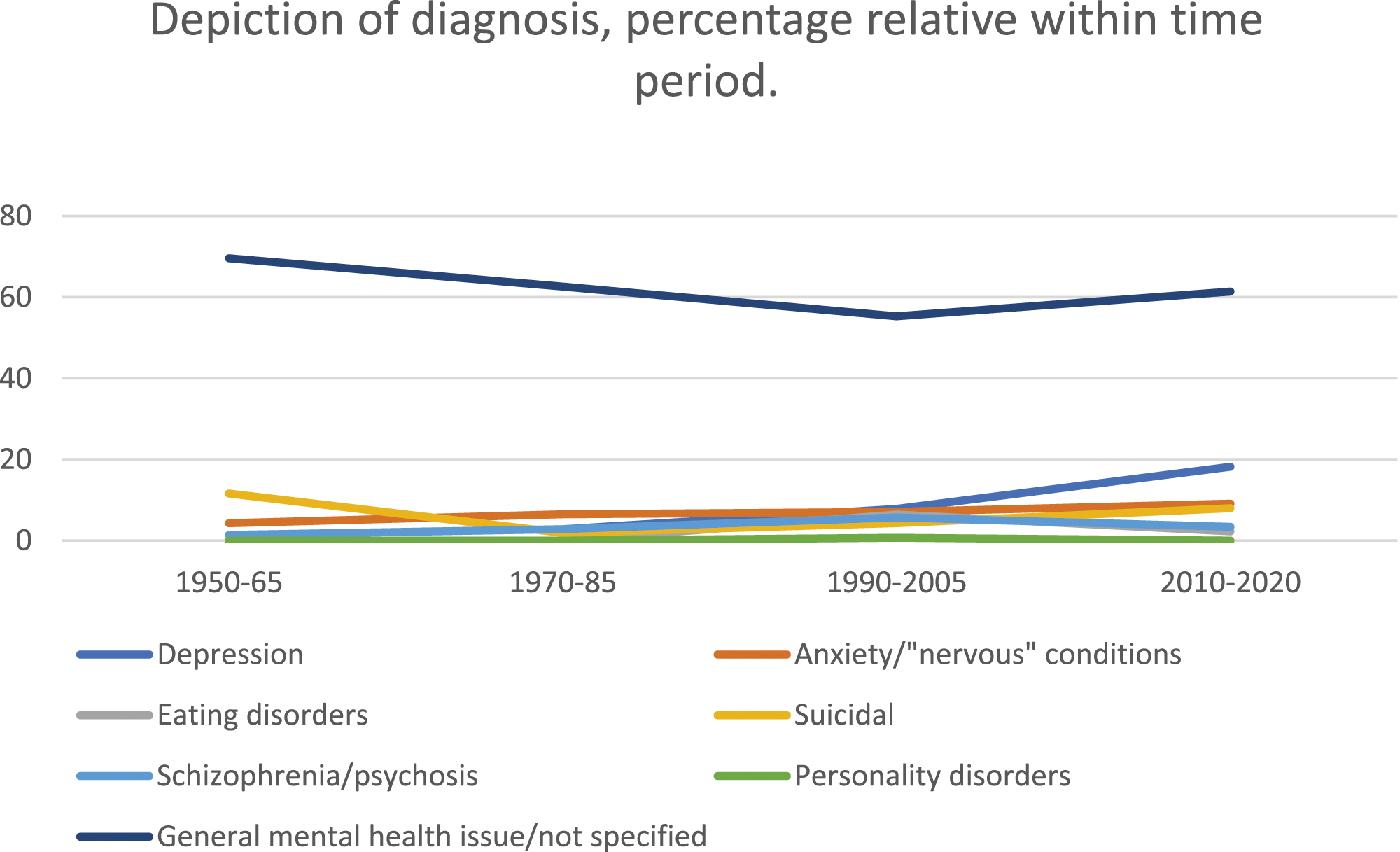
Individuals were mainly quoted in newspaper articles about depression, anxiety, or unspecified mental health problems. A human face was also put on eating disorders, which was introduced late in the material, reflecting an increased professional and societal attention from the 1980s (Skårderud et al., 2004). Rare cases were quoted directly or indirectly regarding bipolar disorder, suicide (via family members), PTSD, psychosis, and impulse control disorders. However, conditions like schizophrenia, personality disorders, obsessive-compulsive and paraphilic disorders lacked personal representation throughout the period.
1950-65
Direct input from individuals with mental health issues in newspaper depictions was absent in this period. Of the 69 articles on mental illness, only two indirectly quoted these individuals. One of them was quoted by a police man, the other one is analyzed below.
Eight of nine articles naming individuals with mental health issues focused on crime and law, often debating their status as sick or criminal, or too disturbed to be imprisoned. Notably, very few of the total articles between 1950 and 2020 directly quoted individuals with mental illness in crime-related contexts. When such quotes were present, they usually depict the individual as victim of a flawed system.
Only two individuals were pictured between 1950-65. One image showed an elderly, disturbed man awaiting transfer from prison to a private farm, partially hidden behind a police officer. The other photo was of a court case suspect.
The 1950 coverage prominently revolved around establishing public mental healthcare, arguing to alleviate the burden on families who “have to fight with the insane” at home (Dagbladet 01/10/1950). “Insanity” (sinnsykdom) was the common term for describing general mental illness and was associated with severe disturbances. Optimism surrounded brain surgery as a cure. In 1961, a national mental health care act introduced a shift in terminology, replacing “insanity” with “mental illness”, and advocated equal treatment for mental and physical illness (Arbeiderbladet, 05/06/1960). Consequently, “insanity” was rarely used in the material from 1965.
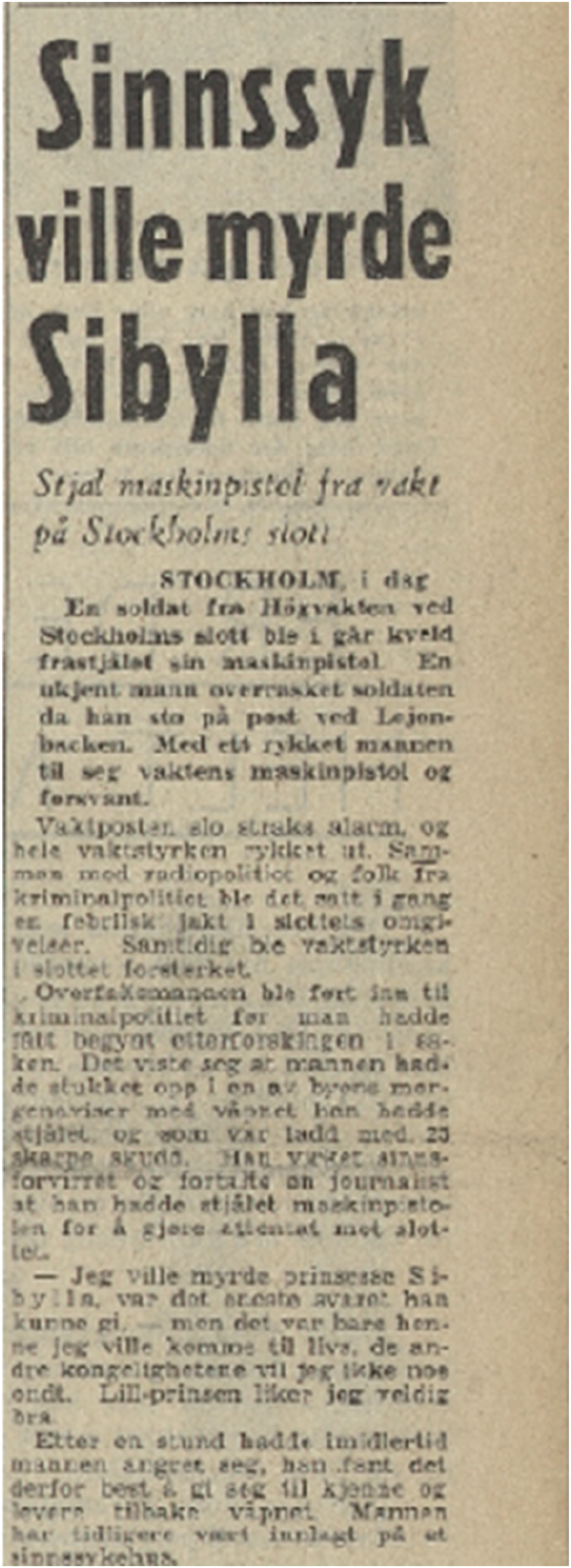
An illustrative example from 1960 capturing these prevailing attitudes, is Dagbladet’s “Insane wanted to murder princess Sibylla”.
Facsimile from Dagbladet, dated 27/10/1960
This article recounts an incident where a soldier guarding the Swedish castle was taken by surprise when a man seized the guard’s machine gun and disappeared. The man later appeared at one of the morning newspapers with the loaded gun and is quoted: “I wanted to murder princess Sibylla (…)”. However, he soon expressed remorse, and turned himself in. These quotes likely came from a morning newspaper witness. The perceived danger in the situation was underscored by the presence of a loaded gun (‘25 live rounds’) and the man’s unpredictable behavior, described as an ‘assailant’. The prevailing explanation, and presupposition, is that the man is “insane”, as foregrounded in the title. This is reinforced in the final sentence: ‘the man has previously been admitted to a mental hospital’. The man remains nameless, faceless, and devoid of physical descriptions.
The article accentuates the rapid and robust response from the police and guard forces (“immediately sounded the alarm” (…)“the entire guard force moved out”), even though the man surrendered himself. This could indicate the journalist consulted with these authorities, conveying control. It reflects journalism’s tendency to privilege powerful, legitimate authorities, reinforcing societal power structures (Hall et al., 2013), and the idea that strong authorities are needed to safeguard society from perceived threats posed by the ‘insane’ (Foucault, 1972/2005).
1970-85
The first instances of subjective voices from individuals with mental health issues appeared in two letters to the editor in 1975. One argued that medications mask patients’ underlying problems, another critiqued exorcism practices in psychiatric hospitals. Health experts dominated the coverage. However, a few individuals with mental health issues were consulted, primarily critiquing their psychiatric treatment from prison. Only 11 out of 107 articles included photos or illustrations of people with mental health issues, and their identities were kept anonymous. One article stands out from 1985, including a close-up portrait of a lay woman who was baffled by how helpful it had been to see a psychiatrist for her anxiety, advising people to seek help (Arbeiderbladet 11/16/1985). It turns out that this article was written by the wife of a psychiatrist.
Until 1985, no journalist consulted a person with mental health issues as main source. This period saw two pivotal cases in Norwegian psychiatric history that influenced the 1999 Mental Health Act, improving patients’ legal rights (Bahus, 2023). Reitgjerdet, a public hospital for challenging patients, was closed in 1982 following revelations of illegal and degrading treatment (Kringlen, 2007). The media reported on it extensively, primarily referencing health experts from the court case. The other case involved Arnold Juklerød, an anti-psychiatry figure who was forcefully hospitalized in 1971 and 1974 and given the diagnose “Paranoia 297,0 - religious quarrelsome type”. Until his death in 1996, he advocated against Norwegian psychiatry and Gaustad psychiatric hospital and demanded the upheaval of his diagnosis.
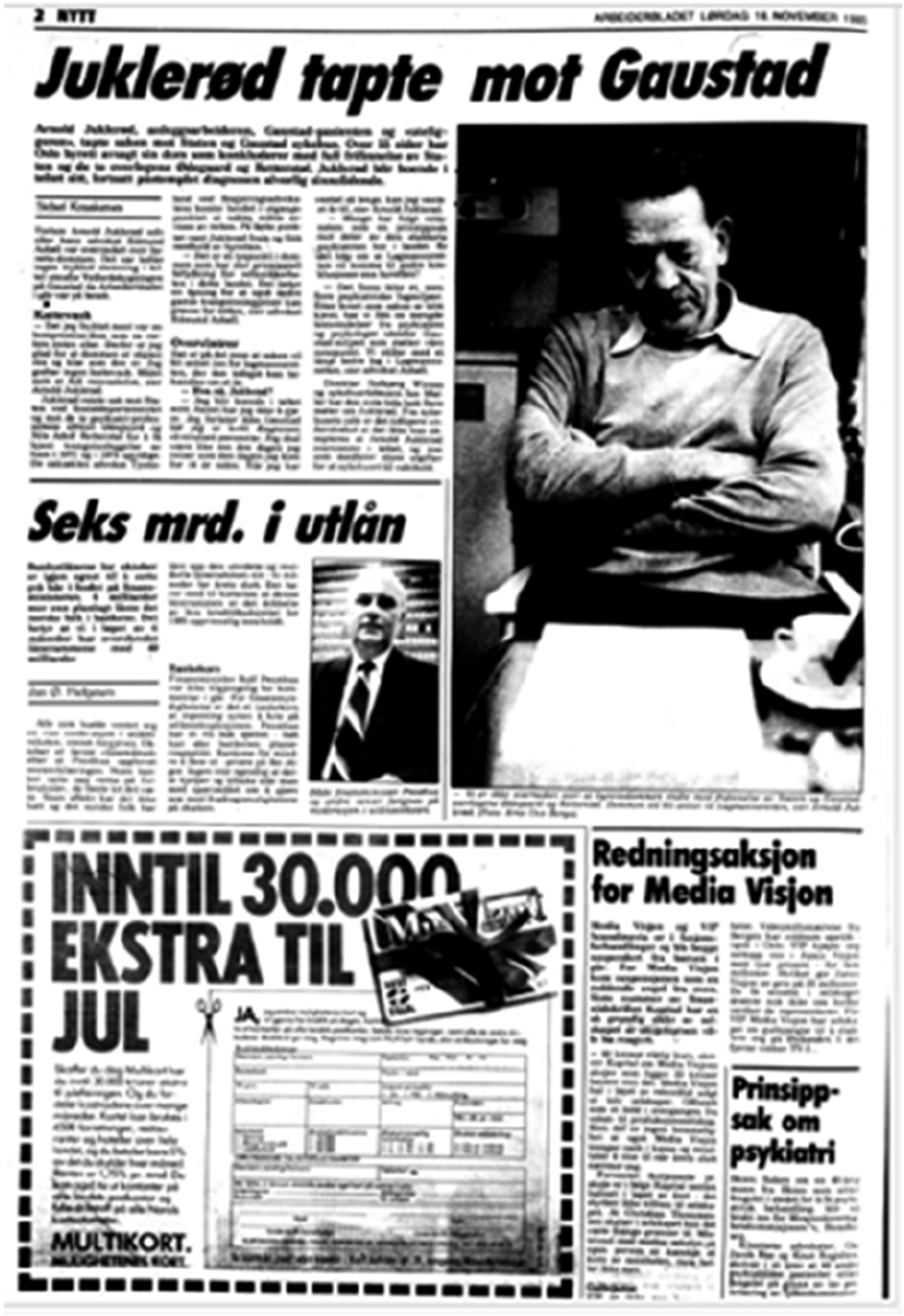
Illustratively, the article ‘Juklerød lost against Gaustad’, published in Arbeiderbladet in 1985, stands out as the first in this dataset to feature a photo, full name, and quotation of a person with a history of mental health issues.
Facsimile from Arbeiderbladet 16/11/1985
The black and white photo of Juklerød, appearing disheartened while looking at sheets of paper (possibly the verdict) aligns with the story’s theme, and journalism’s goal of conveying factual information. As the viewer tends to perceive press photos as ‘true’ (Ledin et al., 2020: 62), it is worth noting how Juklerød’s crossed arms also communicate a sense of resistance.
Juklerød’s voice is prominent in this text. Mentioned by his full name five times, he is the first person quoted and provides two substantial quotes. Despite his juridical loss, he expresses contentment with the verdict’s clarity, stating, “I don’t accept any cat-lick. My goal is complete cleansing.” Thus, he asserts his authority to accept or reject and exhibits a high degree of agency in pursuing his goal. He further emphasizes his commitment to continue to demonstrate from his tent: “When I have waited this long, I can wait another year.” Juklerød is portrayed as a man who remains steadfast in his convictions and exhibits remarkable perseverance.
The other main source in the text is Juklerød’s lawyer, who emphasizes that the case is “of great principal importance for the rule of law in this country”. This makes Juklerød’s fight a collective one. The preamble concludes that Juklerød will still be ‘labeled’ with the diagnosis, indicating a lower affinity (Fairclough, 1992) with the given diagnosis compared to a statement such as ‘His diagnose will not be removed’. The voices not heard in this story are those of the opposing side: the psychiatrists, the defense attorney, and representants for Gaustad, nor his family, who had their own perspectives on the media coverage (NRK, 2020).
1990–2005
In this period, media representation evolved significantly. While individuals with mental health issues were rarely named in newspapers until 2000, a shift occurred in this period, with celebrities openly discussing their experiences with burnout, anxiety and general mental health struggles. They were also portrayed in photos.
Letters to the editor continued to be an important genre for sharing personal experiences. In 1990, a man recounted a suicide attempt, and in 2000, an 11-year-old girl detailed her weight, height and struggles with eating, in the advice column “Simon/På skråss”, who reported receiving ‘a flood of” similar letters in recent months.
As in the 1980s, anonymized imprisoned individuals were featured, along with two individuals objecting against their treatment by health authorities, Arnold Juklerød (discussed above) and the lobotomized survivor Mary Lehne. These articles mark a journalistic emphasis on standing up for the little man against the system.
An article about a man struggling post-robbery (1995) marks a turn towards a broadening depiction of mental illness. Terminology used to describe individuals expanded to include not just ‘the mentally ill’, and ‘patient’, but also “users”, or with references to specific diagnoses like ‘the depressed’, or ‘the eating disordered. References to broader groups, such as ‘children’, or ‘prisoners’, were also applied, as well as ‘people with mental illness’. This reflects a more diverse range of subjects within the ‘mentally ill’ category, and a discourse on mental illness that extended beyond serious cases requiring hospitalization. These changes occur within a wider context, where the general media focus turns from illness to an extended conception of health (Kveim Lie et al., 2022; Price, 2022).
The 2005 Aftenposten article ‘- No one taking responsibility’ discusses a report on the public Escalation Plan for Mental Health, based on in-depth interviews with long-term mentally ill people and their families. Users expressed a desire for more influence over their treatment and a need to coordinate their own healthcare due to perceived neglect. The story centers around a ‘user’, Siri Lindahl, whose photo and quote “You have to be very healthy to be mentally ill” are highlighted on the front page.
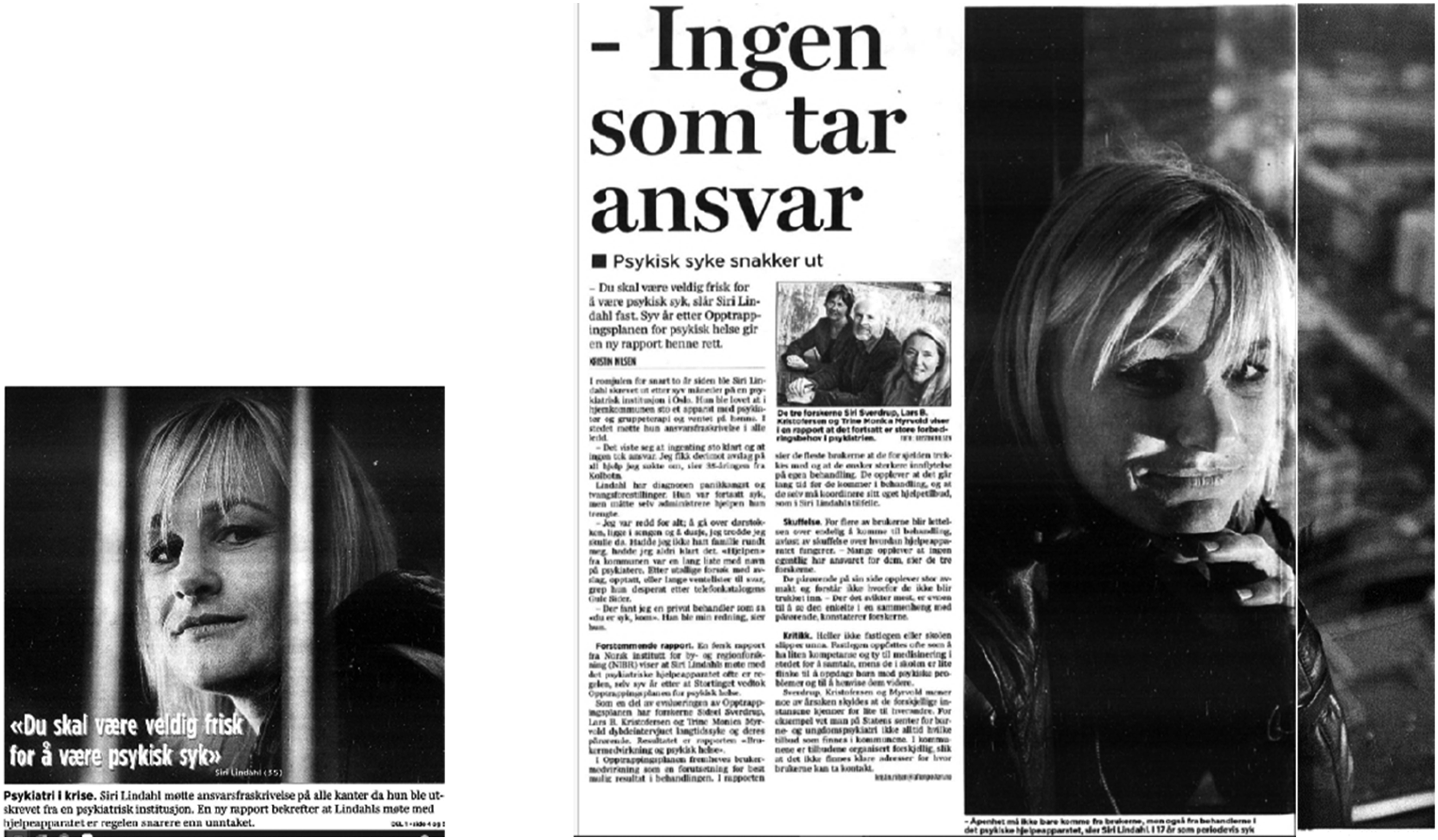
Facsimile from Aftenposten 10/03/2005
Lindahl’s photos are close-ups, a distance typically reserved for people with intimate relationships (Kress and Van Leeuwen, 2006: 124). She is portrayed as someone close to us. Her direct gaze not only offers direct access to the individual (Kress and Van Leeuwen, 2006), it also addresses “you”, constituting an “image act”, where the viewer is called upon to enter into an imaginary relation with the individual in the photo (Kress and Van Leeuwen, 2006). These photos demand (Kress and Van Leeuwen, 2006: 117) an attitude or action from the viewer. As a construction of social realities, they shape an engaged public. They also reflect the news media’s commitment to engaging the audience.
While the news in this article is the report, it begins and revolves around Lindahl’s personal experiences. Her prominence in the text and on the front page, signifies importance according to the inverted news pyramid. Lindahl’s quotes form the basis for the title, preamble and photo text. Overall, she is quoted much more than the researchers. Her authority is strengthened by the research report which, according to the text, “proves her right”. However, it is actually the other way around: her quotes complement and validate the research report. Lindahl is portrayed as a representative case, symbolizing other users (Tuchman, 1978). This raises questions about her actual authority as a source (Rowe et al., 2003). The researchers are the primary definers of knowledge (Hall et al., 2013), while Lindahl plays a secondary role. Thus, what may seem like a challenge to traditional hierarchical roles by an “experience-based expert” (Borkman, 1976), can also be viewed as a journalistic technique, using Lindahl as exemplar to attract attention to the story.
2010–2020
Over time, individuals with mental health issues were allotted more space to express themselves. For instance, a 2015 article prominently featured three individuals with anorexia, detailing their experiences in a six-page, front-page article (Aftenposten 02/14/2015). However, there was a shift in photo composition. Of the nine photos zooming in on the face of a real person with mental health issues, bringing them to an intimate distance (Kress and Van Leeuwen, 2006), seven were captured between 2000 and 2015, with none in 2020. In contrast, 2020 saw more photos featuring upper bodies, suggesting a somewhat less intended intimacy again (Kress and Van Leeuwen, 2006).
Terminology shifted from ‘patient’ and ‘mentally ill’, to broader categories like ‘people/man/youth/children/parents with mental illness’ as well as ‘students’ and ‘lonely people’ and even ‘us’/’we’/”people”. The articles covered a wide range of topics, including crime, public healthcare, and suicide, as in the 1950s, but also anxiety about going to the dentist, ‘corona-loneliness’ and environmental anxiety. Mental struggles related to traffic accidents (2010) and adoption (2010) were also thematized, and celebrities continued to humanize mental health issues.
The 2020 Dagbladet article “Christoffer’s way out of anxiety” reflects this evolving media landscape.
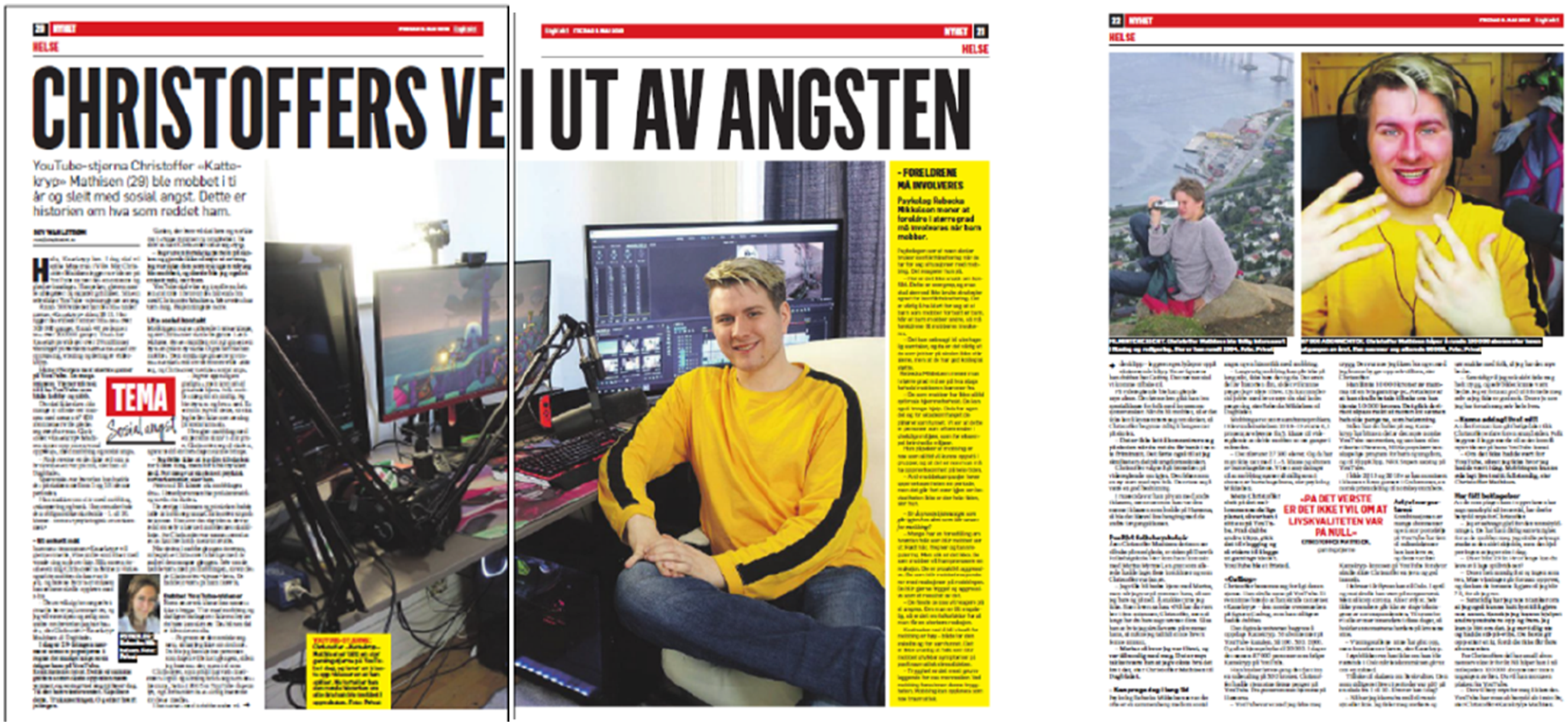
Facsimile from Dagbladet 08/05/2020
A prominent text box on the first page reads: ‘Theme: social anxiety’, a regular feature of Friday’s editions of Dagbladet. In the two recent photos, Christoffer looks directly at the camera/audience, signaling identification and engagement (Kress and Van Leeuwen, 2006), while the two photos of him filming and gaming also authenticates his transformative process and his current life. Sequences in this text can be summarized as follows: (1) Christoffer endured childhood bullying with lasting effects. (2) His situation improved. (3) He is now a highly successful YouTuber.
Here, several factors complicate the assumption of journalistic control in the interaction with sources (Fairclough, 1992). Firstly, Christoffer had already initiated a public sharing of his story through his YouTube channel, giving him control over its core elements. Furthermore, the photos, all credited as ‘Private’, seem to be provided by Christoffer himself, indicating control over the visual representation.
The text strongly conveys the impression of being ‘Christoffer’s story’, with his account represented as facts, and an absence of sources that might provide alternative perspectives. Within the main text, all quotes from the psychologist support Christoffer’s narrative regarding the negative impact of bullying. However, in a separate yellow text box, the psychologist reminds readers that the bully is a child, and the journalist asks about traits of those who are bullied. The separate text box disconnects this somewhat more critical stance from the total article (Kress and Van Leeuwen, 2006: 181–182), allowing the journalist to attempt norms of a certain balance without interrupting Christoffer’s own version.
Crucially, the text constructs substantial ethos around Christoffer, describing him as a ‘mega success’, who sustains himself through his hobby, and all the viewers that he has. He is also portrayed as authentic: “I want to be open and honest with others about how it has been”. Consequently, he is presented as a role model, aligning with other celebrities who disclose their mental illness through the media (Parrott et al., 2019).
Discussion
The present study reveals two key findings, that support an argument about the media’s influence on the societal perception of ‘the mentally ill’: (1) While, in the first decades after 1950, individuals with mental health issues were essentially absent from newspaper articles, they have become increasingly visible, through photos, naming and quotations. They have progressed through the hierarchy of the representational ladder (Figure 1) from the lowest to the highest level. This shift implies that while media often prioritize powerful figures and professional expertise (Hall et al., 2013; Morlandstø, 2010), individuals with mental health issues have gained relatively more authority over time. (2) The notion of mental illness has evolved, moving from representing highly deviant conditions to encompassing a broader range of conditions and individuals, including the general population. This is reflected in how approximately one in five people today will meet the criteria for a mental disorder (Folkehelseinstituttet, 2024). The further discussion suggests explanations for the observed trends, integrating key transformations in the media landscape with shifts in mental health care. It’s crucial to note these trends are closely connected, leading to potentially overlapping explanations.
Individuals with mental illness emerging as authorities
The postwar period saw a shift towards tabloidization in mass media, with a focus on personal narratives and service journalism, often featuring the ‘little man’ battling the system (Eide and Knight, 1999). As journalism professionalized, ensuring public voices were heard became essential (Eide and Knight, 1999; McNair, 2009: 239). Around the millennium, nearly all European full-format newspapers had transitioned to tabloid formats, and an increase in personal stories and confessions (Coward, 2013) coincided with a ‘demotic turn’ in TV production (Turner, 2010) allowing ordinary people more visibility. These trends influenced the journalistic coverage of mental illness, potentially conflating it with a general openness about mental illness.
This coincided with intellectual shifts in health care. Parsons’ influential ‘sick role’ theory from the 50s and 60s, depicting patients as reliant on and obedient to their doctors, was challenged by intellectual movements in the 1960s-1980s, bringing marginalized perspectives to the forefront. Postmodernist approaches, demonstrated by Szasz (1960) and Foucault (1972/2005), challenged the notion of ‘neutral’ medical knowledge and the prevailing doctor-as-expert discourse. The observed trends represented an epistemological change in societal values, transitioning from an emphasis on professional expertise to a priority on experience-based knowledge from lay people. The 1999 Escalation Plan for Mental Health 2 , referenced in the article about Siri Lindahl, was not only a substantial political and economic boost, but also placed service users at the center, stressing their experiences, knowledge, and insight. This aligned with the increased emphasis on patient voice and autonomy in healthcare (Pedersen, 2020), underscored by the adoption of informed consent in Norwegian doctors’ professional ethics in the 1990s. The Mental Healthcare Act of 1999 3 formalized these trends, ensuring patient autonomy and legal rights.
Arguably, in that epistemological transition, media logic and development played a crucial role. However, using experience-based knowledge (Borkman, 1976) from potentially vulnerable sources introduced tensions with journalistic ideals of neutral, truthful and critical examination. Articles from after 1985 displayed high confidence in source statements (high modality) and positive descriptions of individuals, emphasizing their valuable personal qualities and determination, and a lack of opposing perspectives. As such, journalistic norms of balance and neutrality seem somewhat toned down in favor of unwavering support for a vulnerable and idealized source (Figenschou et al., 2021).
Today, as exemplified by the Dagbladet case of Christoffer “Catbug” Mathisen, traditional journalistic authority is challenged by a multitude of communicators on social media (Carlson, 2017). While the typical Dagbladet reader might not be familiar with this social media celebrity, highlighting his success elevates him to an authoritative figure whose story is accepted as a legitimate account of events (Carlson, 2017). The use of factual language, including the more critical text box, and emphasizing that he is ‘telling Dagbladet’, create an illusion of exclusivity, and are ways in which Dagbladet asserts journalistic authority. As such, the media depiction of an individual with mental health issues intertwines with media priorities related to journalism’s professional mandate and the newspapers’ positioning in a field where journalists are increasingly losing authority as society’s legitimate storytellers (Carlson, 2017). Today, individuals frequently share their mental health issues on social media, which also influences depictions in traditional media (Holland, 2018). It remains to be seen whether this modern media context will lead to a greater or reduced focus on individual stories in legacy media in the long term.
A broader conception of mental illness
Several important developments in Norwegian mental health care around the millennium give insight into the changing terminology. The implementation of ICD-10 as the official Norwegian classification of mental illness in 1997 (influenced by the American classification system DSM) included a broader and more detailed classification of psychiatric diagnosis (Malt and Braut, 2022). Furthermore, in 1998, Norwegian prime minister Kjell Magne Bondevik publicly disclosed his depression, sparking debate and an increased focus on openness. These events are reflected in the press’s wider coverage of various conditions and the expanding concept of mental illness in the years that followed. However, media coverage varied across diagnoses, with a surge in stories about depression. In contrast, personality disorders, which was widely discussed among Norwegian psychiatrists from the end of the 1980s (Kringlen, 2007), were not at all given a human face in this material, demonstrating media bias.
As Foucault (1969) pointed out, discourse operates through individuals. The discourse produced ‘subjects’ (Hall et al., 2013: 40) personifying mental illness in different ways throughout the period. From being labeled as deviants, they are now described in terms more like you and me, suggesting a normalization of deviance (Paulsen, 2023). It constructed a ‘subject position’ (Hall et al., 2013: 40) that included everyone, contrasting with older discourses that clearly distinguished between the ill and not ill. To some extent, this shifting terminology aligns with what has been treated as mental illness. In 1950, Norwegian psychiatry was influenced by German psychiatry, focusing on severe mental illnesses and somatic treatments. About 2500 individuals underwent lobotomy between 1947-60 (Kringlen, 2007: 230-231), and most psychiatric patients were schizophrenic, or had diagnoses including psychosis, alcoholism, epilepsy and intellectual disability, termed “retardedness” (Kringlen, 2007: 226). The significant increase in Norwegian psychologists over the years, reaching 3734 in 20,00 4 , and 8622 in 20,20 5 , allowed for treatment of lighter illnesses like anxiety and depression (Kringlen, 2007: 467).
Certainly, the relationship between personal narratives and mental health stigma is complex. An overemphasis on success stories (Atanasova et al., 2017; Holland, 2018) risks attributing undue recovery responsibility to individuals. Conversely, narratives depicting acute suffering may induce audience discomfort, leading to further stigma.
This study’s limitations include its sole focus on Norwegian print newspapers, excluding online and TV content, which limits generalisability. Future research could include other countries and media, and potentially apply the representational ladder to understand representation for other groups.
Conclusion
The findings suggest a more open and accepting attitude toward less severe mental illness. However, celebrities are overrepresented compared to lay people, and primarily lighter diagnosis are represented by a human face. The ambiguity of what constitutes “mental illness” in newspapers may contribute to a perception that mental illness is generally destigmatized, while significant distinctions exist between lighter and heavier diagnosis. In this material, individuals with schizophrenia and personality disorders remain as invisible as they were in 1950. Therefore, the increased openness and visibility of individuals grappling with mental health issues should also be considered in the context of profound shifts in media developments the later decades. The professionalization and tabloidization of journalism, with increased focus on individuals and criticism of authorities, along with technological development enabling greater use of images, are trends that in themselves lean towards increased visibility and apparent authority for people with mental health challenges. With the advent of social media, these storyteller’s authority is further strengthened, potentially at the expense of journalists’ own authority. As such, the new openness of mental illness should not only be attributed to the destigmatization of all mental illnesses, but also to media logics and technological development.
Footnotes
Acknowledgements
My sincere gratitude goes to Hedda Paulsen for her assistance with recoding, and to Kjersti Thorbjørnsrud, Tine Figenschou and Harald Hornmoen for valuable article development feedback.
Declaration of conflicting interests
The author(s) declared no potential conflicts of interest with respect to the research, authorship, and/or publication of this article.
Funding
The author(s) received no financial suppsort for the research, authorship, and/or publication of this article.
