



Abstract
For the half-century or so in which the relationship between women and news has been researched, two of the key themes have been the underrepresentation and marginalisation of women as both subjects/sources and journalists. The latest Global Media Monitoring Project (GMMP) iteration – the largest international collaborative study of women and news, running since 1995 – found the pace of change regarding women’s visibility across the news landscape to be painfully slow. Focusing on the 2020 data from the UK and Ireland, this article asks how visible are women in the news and how has this changed over time? It documents how women remain overshadowed as sources and subjects: for every two women seen or heard, there are five men. While the number of women journalists is gradually increasing, they are still less likely to cover prestigious beats such as politics and have the strongest showing as news anchors and presenters. In this article, we also use news about politics and COVID-19 as vignettes to illustrate how in times of crisis or when authoritative voices are sought, journalists are often drawn to those male sources who are already more present than women in positions of power. This contributes to the marginalisation of women’s voices in the most prominent news stories and undermines their right to full participation in democratic society.
Introduction
Understanding women’s presence in the news is a crucial means through which their participation and representation in society can be explored, but recording this data is conceptually and methodologically challenging. The Global Media Monitoring Project (GMMP) is an international study of news media that monitors how women feature in and report the news around the world. It is the largest and lengthiest longitudinal study of gender and news, providing a snapshot every 5 years since 1995. There is some evidence of improvement over 25 years: the overall proportion of women appearing as news subjects and sources in newspaper, television and radio news globally has increased from 17% in 1995 to 25% in 2020 (Macharia, 2021: 17). The pace of change is, however, disappointingly slow: a mere 8% over 25 years, a period which has witnessed a significant increase in women’s participation in all aspects of cultural, political and economic life. With such depressing familiarity in the 2020 findings, it might be argued that it is time for researchers and activists to turn their attention to different subjects and methods. However, as Bruce et al. (2010: 128) argue in their content analysis of Olympic sportswomen, this kind of “tedious documentation” remains strategically important. As feminist academics invested in producing usable research, GMMP can – and does – help lobby for change in our work with media organisations, offering an important opportunity for longitudinal and international comparisons due to the relative stability of its methodology across time and place.
In this article, we outline the broader landscape of women’s representation in the news before detailing the GMMP methodological approach and its operationalisation by the UK and Republic of Ireland (RoI) teams in 2020. The results are presented first by examining women as sources and subjects in the news, followed by women as journalists. Politics and the COVID-19 pandemic are then used as vignettes to further explore the findings.
Why representation matters
The GMMP is part of a long tradition of scholarship focused on women’s representation and inclusion, both in newsrooms and media content output. The landmark UN Commission on the Status of Women conference in 1995 – GMMP’s first year – identified the need for balanced, non-stereotypical portrayals of women in media. Two decades on, the European Parliament (2018) raised ongoing concerns, highlighting how women are less visible on certain news beats such as sport, politics and economy, noting that women’s visibility here is crucial “not only for representations but also for reasons of equal opportunities and the full recognition of their expertise and knowledge”. Invisibility – across both content and production – has been well documented in scholarly work, often anchored to Gaye Tuchman’s (1977) “symbolic annihilation” hypothesis, whereby women are repeatedly omitted, trivialised and condemned in the news. Ultimately, there are societal repercussions if men – particularly elite men – continue to define coverage: Zoch and Turk (1998: 771) suggest such coverage presents a world in which attention is directed away from women’s activities, and audiences are instead led to believe that “news is made and information controlled almost exclusively by men acting in some official capacity, with official status”. Such patterns, they argue, “would have audiences and consumers believe that women are virtually without power and thus have no access to information that would be of use to the public”.
Despite broad societal progress in women’s rights (for example, RoI’s legalisation of abortion in 2018) and increasing awareness around issues such as sexual assault, media representations can still lag: coverage of #MeToo has been found to reinforce a depoliticisation of the feminism involved and emphasise White, wealthy celebrities (De Benedictis, S. et al., 2019). Such findings reiterate the need for ongoing studies capturing the complexity of how women are represented in news, and why this might be the case. GMMP’s approach captures two core pillars by recording both content and journalists. The results raise familiar questions about whether the problem is a broad societal one whereby journalists simply reflect the imbalances or prejudices of its society, or whether it is a journalistic, newsroom-level problem – or a combination of the two. A content analysis can never provide a definitive answer but can shed valuable light on the patterns. Therefore, in this study, we ask: how visible are women in the news in Ireland and the UK, and how has this changed over time?
Where are the women in news content?
Previous research has documented the marginalisation of women-oriented subjects, whilst women continue to be significantly underrepresented as sources (Ross et al., 2018; Shor et al., 2015), despite their increasingly visible public role. The prevailing marginalisation of women’s voices is especially notable in the most valued news genres such as political reporting (Humprecht and Esser, 2017; Santia et al., 2024). For example, a large-scale study of COVID-19 news coverage across the UK, Australia and US found that for every mention of a woman politician, there were five mentions of a man politician; even when references to political leaders were excluded, the ratio remained 1:4 (Jones, 2020). Of course, politics and government are themselves male-dominated, though to different degrees in the five nations sampled in this GMMP analysis: in 2020, two of the five nations (Scotland and NI) had women leaders and in two (NI and RoI), the main opposition parties were led by women. Yet while party leadership is one useful indicator, overall membership of parliament is arguably equally as significant: in the 2019 (UK) and 2020 (RoI) elections, just 34% and 22% respectively of parliamentarians were women. The cabinet positions after these elections saw 7/23 positions go to women in the UK, and 4/15 positions to women in RoI. Such overarching male dominance resonates with the central question identified above, regarding whether the problem with journalism’s gender imbalance is rooted at the societal or newsroom level, or both; given the well-documented reliance on official and elite sources in news reporting, it is perhaps unsurprising – although not justifiable – that women’s voices end up on the margins. As Shor et al. (2015: 978) noted, “as long as the real-world glass ceiling remains resistant to change, the paper ceiling of newspaper coverage is likely to remain in place”. Although they focused on print, there is little evidence to suggest online news dynamics fundamentally alter women’s presence (Humprecht and Esser 2017).
In addition to research on politicians, concern exists with the gendered function of news sources. Previous studies – including prior iterations of GMMP – have found that women are often called upon to speak from personal experience rather than expertise (Ross et al., 2018; Wheatley 2020). However, not all women are invited to comment in this way: a recent Scottish study suggests that women of colour are not routinely invited to speak from personal experience (Boyle et al., 2024). When it comes to experts, studies in the UK and RoI point to the continued dominance of men (Howell and Singer, 2017) and White men in particular (Boyle et al., 2024). This tendency is heightened in relation to particular topics: Jones’ (2020) UK study of COVID-19 news stories found that for every mention of a woman STEM expert, there were 19 mentions of men; with economic expertise, the ratio was 1:5. Furthermore, even when women are called upon for their expertise, they may still be expected to divulge personal experiences in professional contexts in ways their male counterparts are not (Boyle 2022). This reflects findings from studies focused on other sectors, including health, where ‘ordinary’ women are used to provide “victimised coverage”, emphasising vulnerability and emotion (Wheatley 2020).
Where are the women making the news?
Looking at the gender dynamics around news production, there is considerable evidence highlighting ways in which employment patterns and experiences are gendered. In RoI, there is a clear trajectory towards gender balance in a previously male-dominated field: 44% of journalists are women, compared with 30% in the mid-1990s (Rafter and Wheatley 2023). Meanwhile, in the UK, women now comprise 53% of the journalism workforce (Spilsbury, 2021: 2) and, in the UK, as elsewhere, women also comprise the majority of journalism students (Josephi and Oller Alonso, 2023). Nevertheless, across Europe, women’s media career aspirations are stalling, and they are scarcely visible in senior managerial and leadership roles (Robertson et al., 2021), while a persistent gender pay gap is another enduring feature of the wider media industry (Brogi et al., 2020: 89). Horizontal segregation also persists with sports (Women in Journalism Scotland, 2022) and business beats (Feller, 2018) remaining particularly male-dominated. In the press, women are less likely than men to find their by-lines on front pages (Mills et al., 2017) and the continuing intersection of sexism and ageism experienced by women over 50 regarding front-of-camera roles is well documented (Ross 2024). The overrepresentation of White men reporting the lead news stories was similarly identified in a recent study of Scottish news (Boyle et al., 2024). Concerns around media work, therefore, extend beyond gender, with race, ethnicity and socio-economic status among the additional barriers, demonstrating the ongoing struggle to achieve reporting that better reflects the diverse public that journalism should serve.
One ongoing question regarding women’s influence on news content relates to whether women journalists are more likely to include women in their reporting; this is often deemed overly simplistic (Van Zoonen, 1988), because of the reliance on elites who are typically male (Shor et al., 2015), alongside the inherently masculine socialised nature of news production environments (Lobo et al., 2017). However, previous research has found that women may be more likely to include women as sources (Zoch and Turk, 1998), albeit modestly and within a dominant news culture in which male sources and subjects prevail as the foremost voices. Furthermore, there is some evidence to suggest that women may bring different values and practices to a newsroom. For example, among Irish journalists, women are more committed to “speaking on behalf of the marginalised” and “advocating for social change” than men, while men place a higher value than women on “attracting the largest audience”, all of which may shape their work in some way (Rafter and Wheatley 2023).
Coding the day’s news: A global methodology
The GMMP is designed to provide a “snapshot” of the world’s news – across television, radio, print, online and twitter – on an “ordinary” news day. In 2020, teams in 116 countries coded 30,172 news stories from 2,251 media outlets, using the same methodology on the same date: Tuesday September 29, 2020 (Macharia, 2021: 4). An original April 2020 date was rescheduled because of the COVID-19 pandemic, and the new September date was selected, in May 2020, in consultation with regional co-ordinators.
The news media monitored across the five countries.
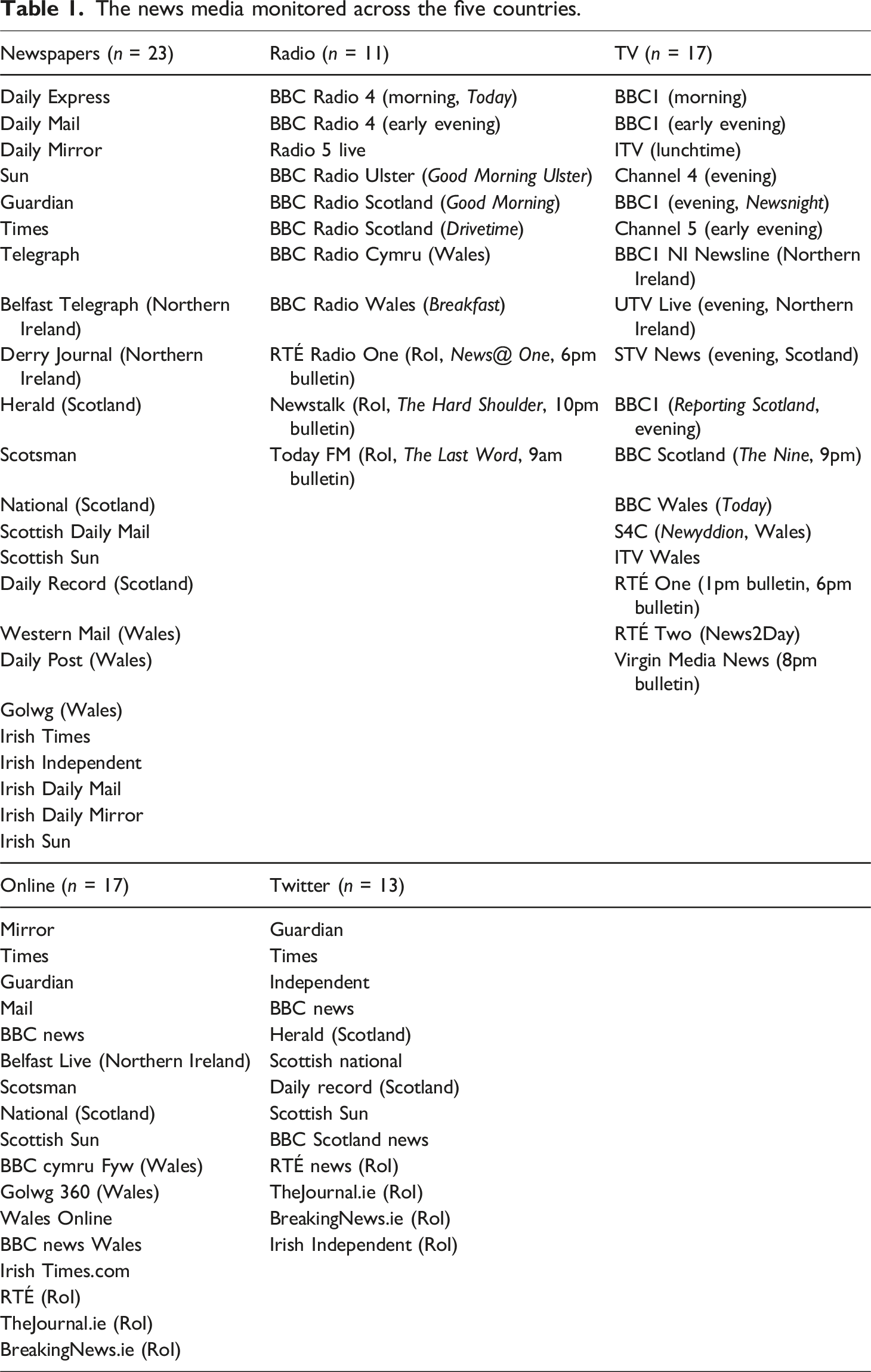
Although we refer to the “nations” at different points, it is important to note that there is no English national news media (and no English parliament) since content produced in England is distributed more broadly around the UK. In print, we coded both the London-based Daily Mail, The Sun, and The Mirror and the Scottish and Irish editions produced by the same media groups. While the Scottish and Irish editions include nation-specific content, particularly around politics, there is also shared content, although stories are often nuanced to reflect the different national contexts. Broadcasters tend to refer to the “nations and regions” with national programming for Scotland, NI and Wales, whilst England is split into regions.
Main methodological points for five formats, and the composition of the 1095 total stories by format.
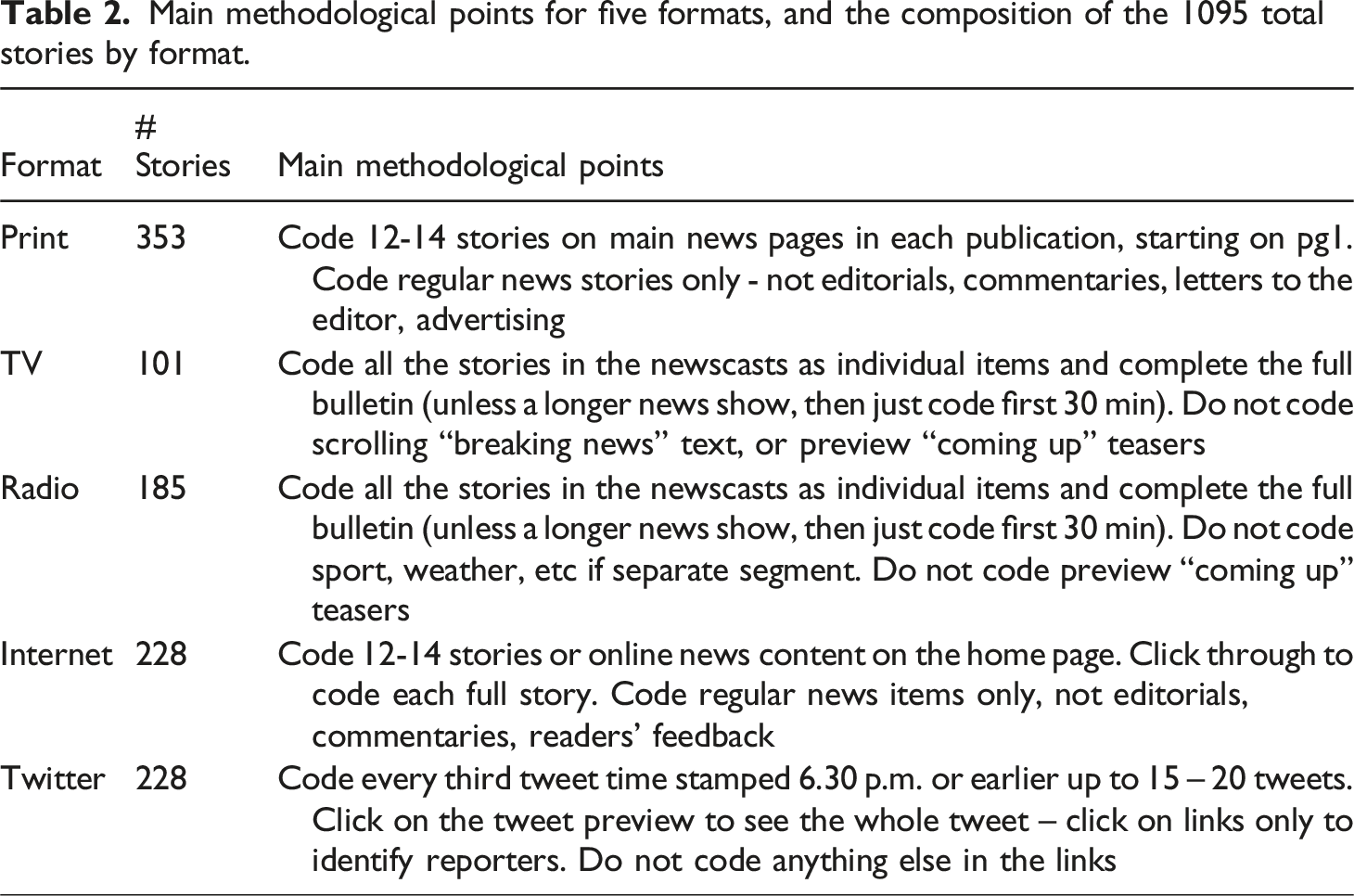
Within each media type, our coding focused on news reporting (editorial content, commentary, advertisements and specialist sections such as business and sport were all excluded) with an emphasis on the most prominent stories as GMMP required. This meant that we started from the front of newspapers (to reach 12-14 per publication) and internet homepages, and we coded the entirety of main bulletin news reports on TV/radio or the first 30 min of longer programmes.
In addition to basic story-level information (including topic and scope), the gender of all people appearing – as journalists, reporters or anchors, or as news subjects/sources – was coded. For subjects/sources, additional information including occupation, story function, whether they were photographed or directly quoted, and (estimated) age was also recorded.
Content analysis relies on coding the patterns in media texts, meaning assumptions and interpretations must be made. Following the GMMP methodology, individuals were coded as male/female using only information available in the story (e.g. pronouns or gendered terms such as “spokeswoman”); the category “other” was used for trans, gender-nonconforming and non-binary individuals only if explicitly identified in that way. In total in the UK/RoI data, no journalists were coded as “other”, and only 1 subject/source. In the overall international data, gender minorities comprised <0.2% of all subjects/sources across all formats (0.2% on radio, 0.1% of those on television and news websites, .07% in print, .05% in news media tweets). Given these small numbers overall, it is not possible to draw conclusions about the presence of minority gender identities, highlighting the constraints of using general news samples to explore representations of statistically small communities, where qualitative approaches can be more fruitful (see Capuzza, 2019).
GMMP provided extensive standardised training materials and a detailed codebook which country co-ordinators used to guide their coding team. The UK/RoI team organised an online training session where volunteers received guidance on coding and categorising stories, and co-ordinators responded to classification queries post-coding day. Overall, 41 volunteers were involved in the coding, but it was not possible to carry out intercoder reliability tests.
Limitations of the method
Whilst GMMP’s focus on a single day allows for comparability across nations, news’s inherent unpredictability means there is always a risk that major stories or prominent individuals impact results. Whilst no one story dominated on the 2020 coding day in any of the five nations, the coronavirus pandemic is, of course, noteworthy. As part of the global GMMP 2020 methodology, a preliminary question asked if a story was about COVID-19, and national teams answered this (yes/no) before then going on to also code the underlying story topic. Covid-related articles comprised 40% of the sample, but all these stories were still coded as another topic, so not all stories about COVID-19 were coded as “science and health”. For example, if a story was about the post-lockdown return of university students, the story was coded as both “yes-Covid-19” and also “education”. Overall, GMMP provided 58 potential story topics, categorised into seven larger categories: politics and government; economy; science and health; social and legal; crime and violence; gender and related; celebrity, arts and media, sports. No stories were recorded in the “gender and related” category so – although a notable finding in itself – it is excluded from the results presented here. Each story could just be coded as one single topic (alongside its yes/no classification regarding COVID-19).
Another caveat relates to recording journalists at work, which only captures women involved in the most prominent stories, and in the most visible roles, so cannot be considered a comprehensive review of the industry workforce. Furthermore, the emphasis on the “most popular” media in a country is logical for a wide-ranging international study but may feel somewhat dated given how little younger audiences engage with mainstream formats and outlets, as they increasingly consume more fragmented news diets, customised to niche interests which may or may not include more diverse voices.
There are many elements the GMMP framework cannot capture which are nuanced and worth exploring but beyond the project’s scope, such as social class. Efforts were made to record data on race/ethnicity but much of the complexity gets lost in the strictures of any coding sheet (but we note that we recorded 6% of sources/subjects being from an ethnic minority based on story details or on appearance but acknowledge that as a somewhat subjective measure and beyond this article’s scope). Similarly, while age was a recent addition to GMMP methodology, its subjectivity renders it only partially useful as a reliable and accurate datapoint.
For the purposes of the global GMMP methodology, data from the four UK nations are composited, whilst RoI is treated separately (Macharia, 2021), but we primarily discuss the aggregated findings across the five nations except where national differences warrant consideration, for example, politics. However, given the relatively limited sample size from each nation, our findings can only be suggestive and highlight the need for further, national-focused research. Some of this more in-depth analysis is already underway, with GMMP tools being adapted for larger-scale national studies (e.g. Boyle et al., 2024).
Findings
Women as sources and voices in the news
Across all five media and 1095 stories, we coded 2040 sources comprised 29% of all sources and subjects. Print afforded the most space for women (32% of sources were women), followed by TV (31%), twitter (28%), internet (27%), with radio lagging behind (23%).
The number of stories per major topic across all formats, the number of sources recorded across these stories, and the percentage of sources that were women. The ‘Other’ category was a diverse mixture of stories, such as animal rescues and preparation for stormy weather.
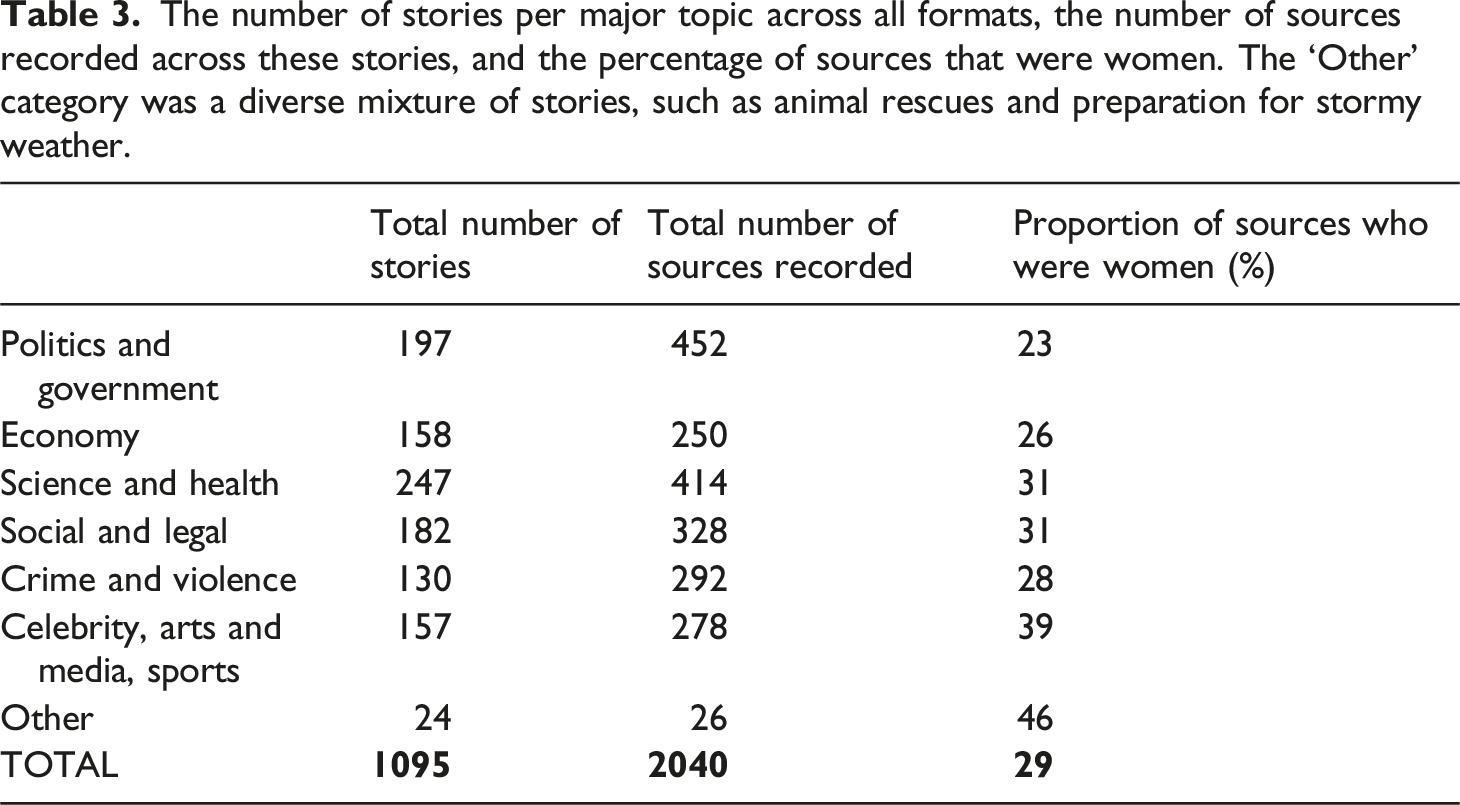
Figure 1 compares the women’s presence in these topics over time (using the legacy TV, radio and print formats). There are fluctuations across some categories, but “celebrity” is the only one in which 2020 marks the highest point. Interestingly, women’s representation in science/health stories has decreased despite COVID-19 being the backdrop: 30% in 2020 compared with 2015 (42%) and 2010 (31%). Other notable results include the consistent patterns evident across the three periods in both politics and government (20%–25%) and economy (24%–27%). The percentage of sources who were women, broken down by major story category, across legacy formats (print, radio, TV) between 2010 and 2020.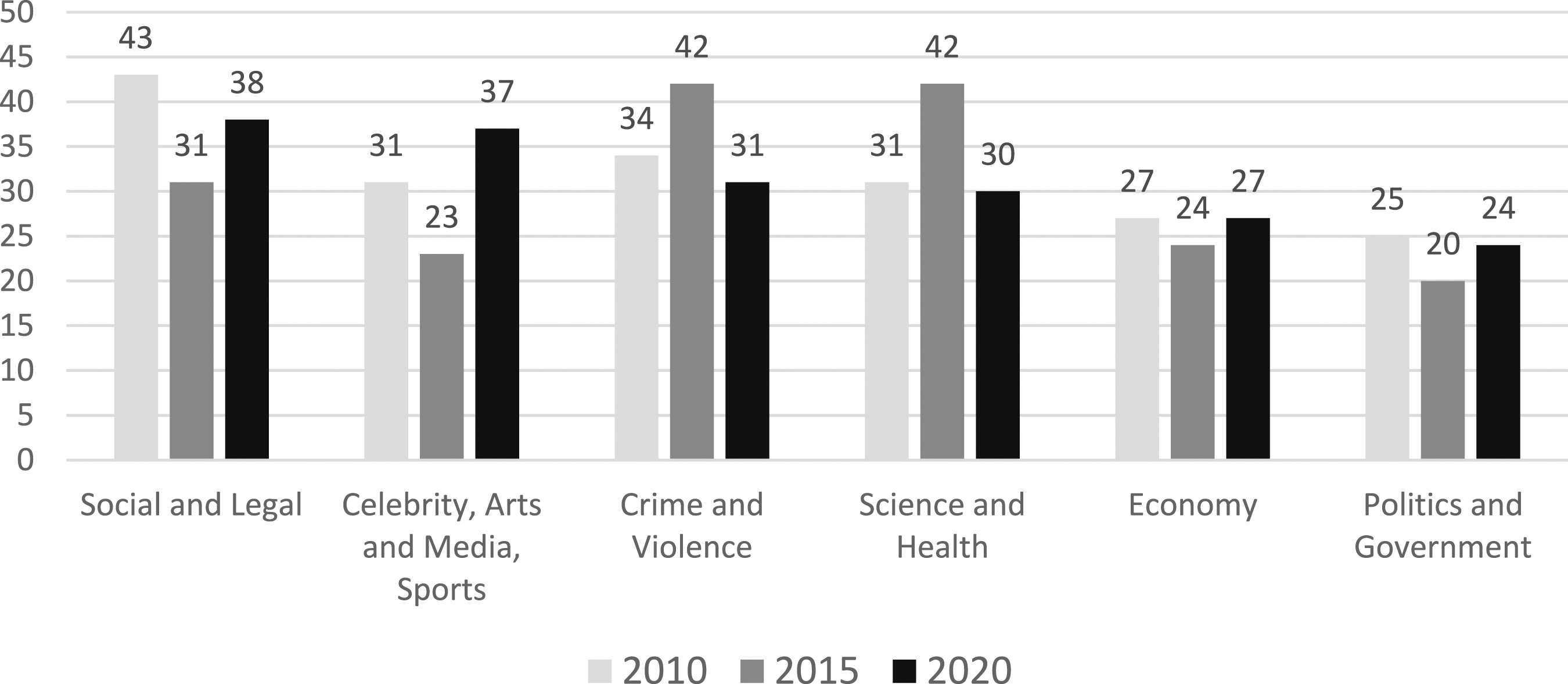
At this point it is useful to contextualise the UK/RoI results internationally, focusing on the legacy categories of print, radio and TV. The headline figure of 31% women sources in our five-nation sample is above the overall international average of 25%, and European average of 28%, and almost double the Middle Eastern average of 17% (the lowest regional result). When broken down by story topic, we can see that UK/RoI lags behind the European average in key areas of economy and science and health stories in print/broadcast yet lies above the European average in celebrity/entertainment stories, raising questions about the substance of roles afforded to women in the news here.
Professional roles and functions
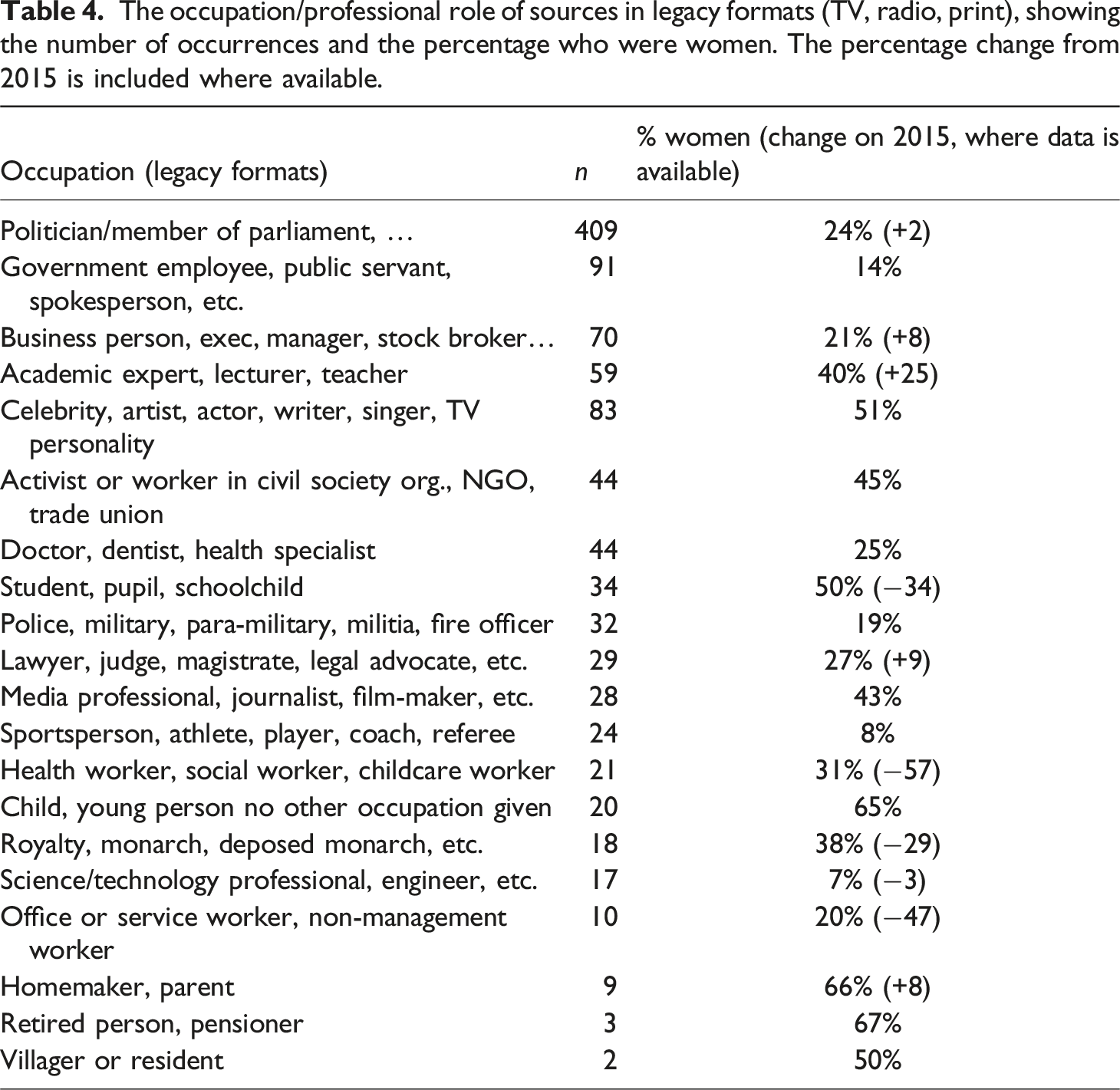
The occupation/professional role of sources in legacy formats (TV, radio, print), showing the number of occurrences and the percentage who were women. The percentage change from 2015 is included where available.
Every source had their key function in the news report recorded and the results show that, when present, women were most frequently represented in personalised roles (sharing personal experience, eyewitness or voice of public opinion, such as a vox pop) and were less evident as the authority or focus. Figure 2 shows how this pattern has remained largely consistent over time, and in 2020 we continued to see women less visible as the sole focus of a news report, with only around one in four experts or commentators across legacy formats being women, and a similar number acting as a spokesperson. Overall, 30% of the subjects in news reports are women, reinforcing men as the dominant focus of most reporting. The percentage of each function category who were women (legacy formats) 2010-2020.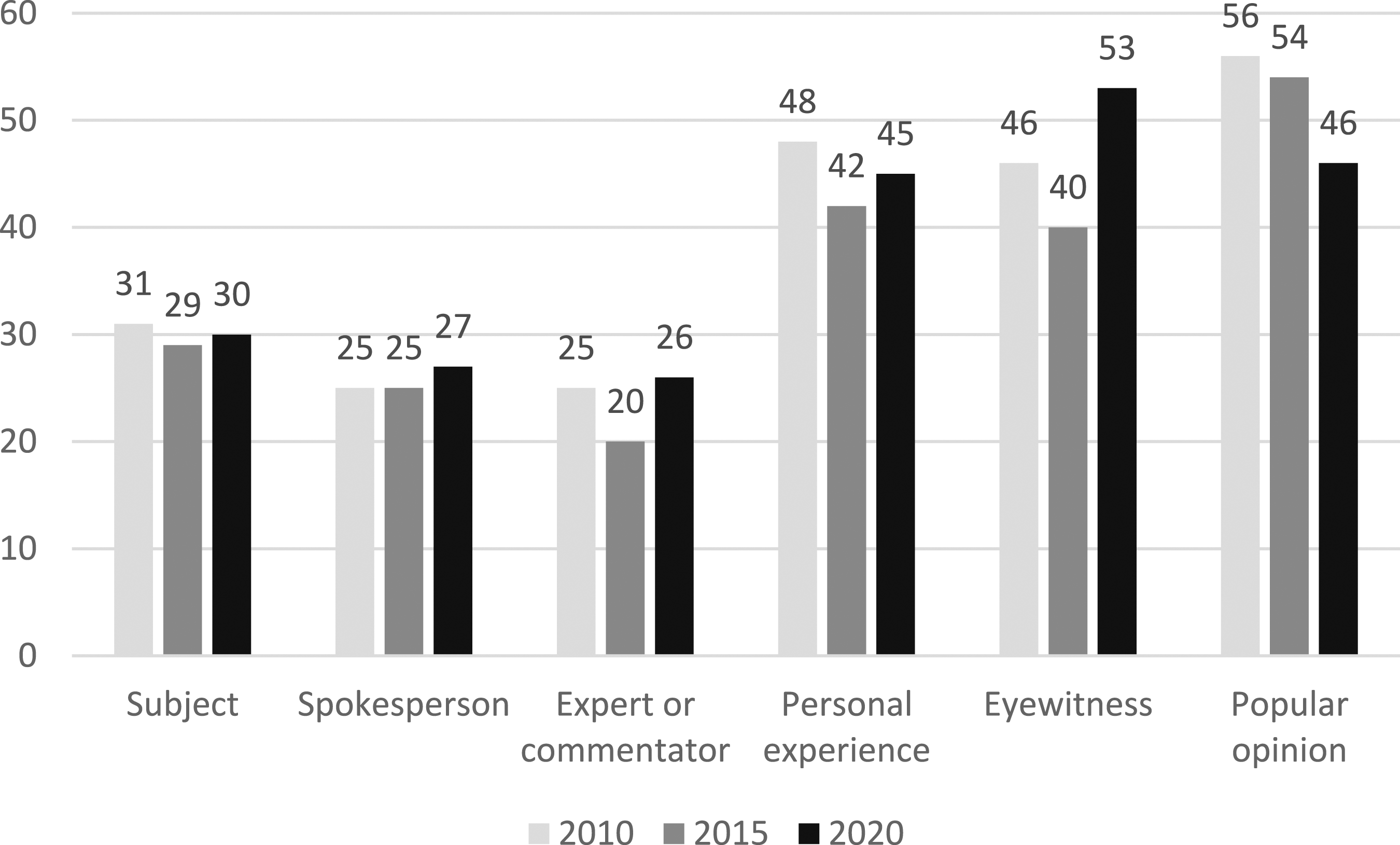
Women in news: seen or heard?
We looked at the extent to which sources or subjects were quoted, photographed, or had their family status mentioned; there were minor variations between the five nations but patterns were generally consistent. When they were included, across all five formats, women were more likely than men to be directly quoted, varying by region: in the UK, 87% of women sources were quoted, compared with 78% of men, while it was 65% of women in RoI and 75% of men. While this inclusion of quotes from women can be viewed positively as giving women voice, it may be tied to their function in the story: acting as human-interest contributor or eyewitness lends itself to direct quotes. Furthermore, this finding should also be understood in the context that women are still in the minority and men remain the dominant contributors: we still hear/see many more quotes from men overall.
Women were more likely to be photographed in the stories in which they appeared, indicating that they serve an important visual role in news reporting (Jia et al., 2016). Yet questions remain about all women’s visibility: across print, TV and the internet, we coded for age where possible (by eye and/or if the story mentioned age), and found that as sources got older, women were less and less evident across all media. For example, in print media, women comprised 43% of the 35-49 age group, 31% of those aged 50-64 and only 13% in the 65-79 category. The results for TV were 32%, 25% and 15%. The number of sources in our sample aged 80+ was too small (n = 15) to enable us to draw meaningful conclusions about this group. Finally, regarding women’s societal or family role, across all formats news stories were more than twice as likely to mention the family status of women subjects/sources in stories than men, regardless of whether the journalist was a woman or a man.
Women journalists at work
Shifting attention to the journalists across RoI and the UK, we again see only incremental change. Across all five formats we coded a total of 893 identifiable journalists, reporters and presenters, 41% of whom were women, up from 32% in 2015. Figure 3 shows the direction over the past decade across legacy media: the most substantial increase has been in TV where the combined percentage for women in reporting and presenting/anchoring roles is now 50%, whereas the radio and print increase has been rather less dramatic: radio actually remains lower now than a decade ago. It is worth noting that presenter roles across both television and radio have a higher proportion of women than reporting roles on those formats. Elsewhere, women have been carving out spaces for themselves across the digital media landscape where 41% of online and 51% of twitter stories were attributed to women. The percentage of journalists who were women, by legacy format, 2010-2020.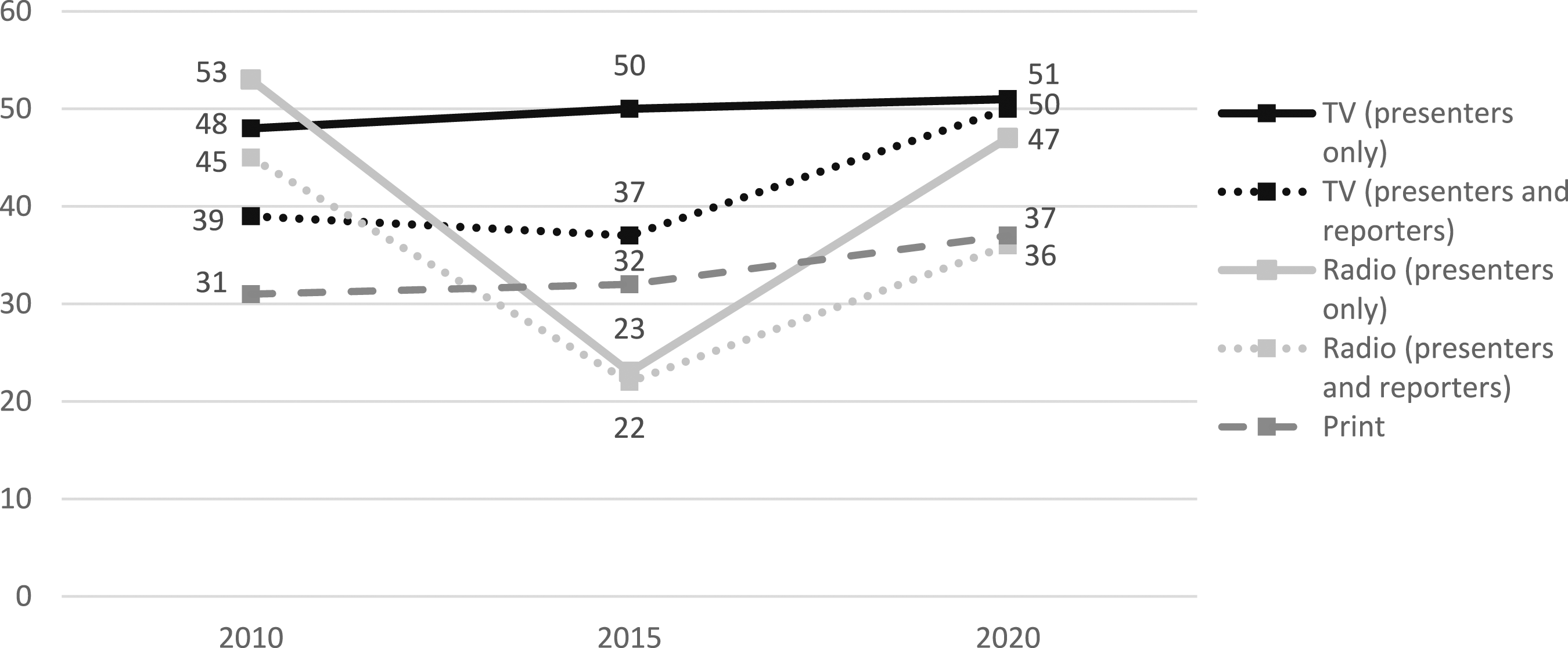
Regarding the major topics, we noted that women and men are allocated quite different beats. Figure 4 compares the reporting of the major topics by the % of stories reported by women, in 2010 (print) and 2020 (print, radio and television). The results paint a broadly consistent pattern: a slight increase in politics and government – albeit a low base – while economics remains the same (31% reported by women). Celebrity remains the only category that breaks 50%, in which more women than men report. This pattern was even evident among the COVID-19 stories, where women wrote 30% of ‘Covid + politics’ stories but 61% of ‘Covid + celebrity’ stories. Major topics by the percentage of women reporting 2010 Vs 2020. The figures are based on 2010’s print figures compared with 2020’s print/TV/radio figures.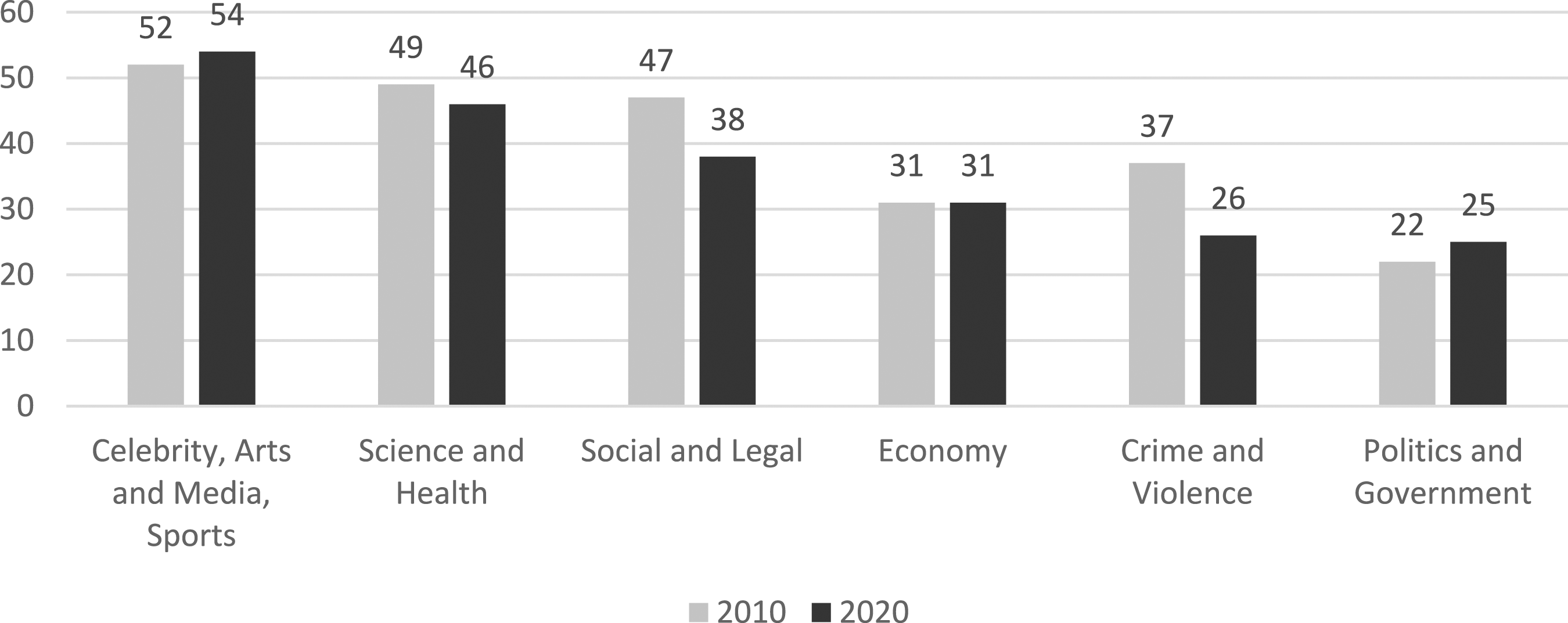
Finally, one long-running question in gender and journalism studies is the extent to which having more women in newsrooms alters content, increasing the number of women in stories. GMMP has consistently found that globally, women journalists include between 5%–7% more women subjects and sources in their stories than men (Macharia, 2021: 7). For example, across all formats, we found 27% of sources/subjects included in stories written by men were women, but this increased to 32% in stories written by women.
Discussion: Making sense of women’s roles in news
Politics as a window into wider patterns
Women politicians in the news and in parliament on Monitoring Day in September 2020.
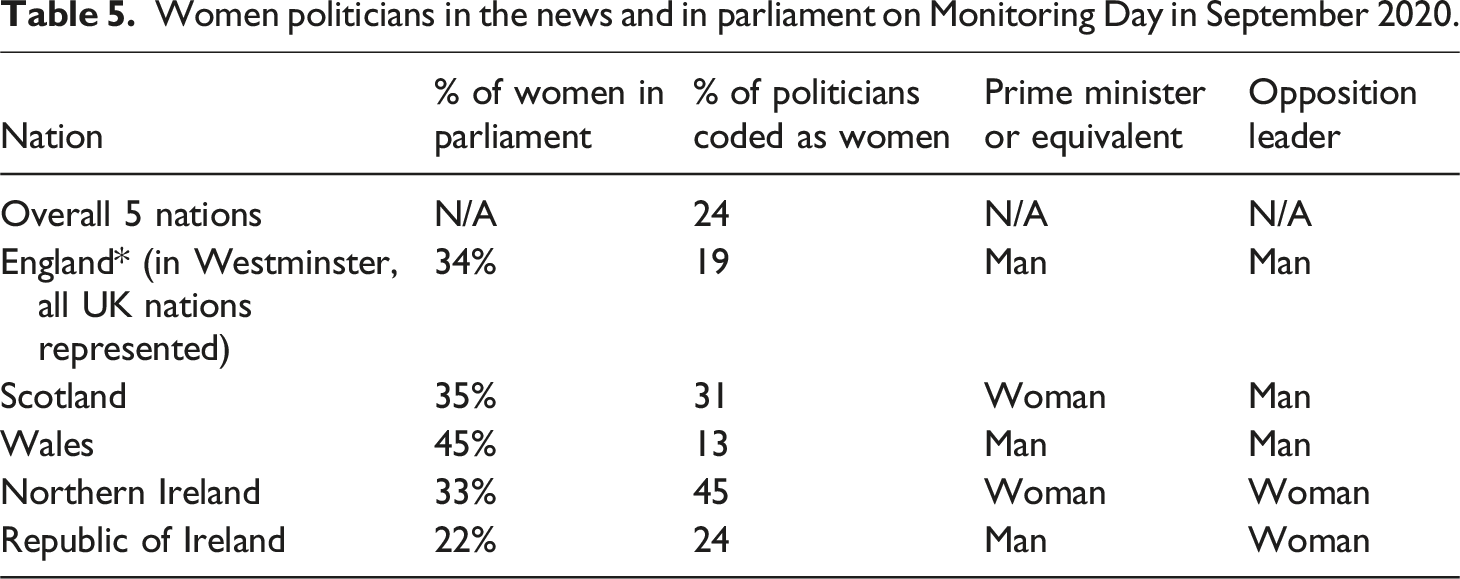
These data reflect similar patterns to those we have seen not only in previous GMMP iterations but across decades of research showing the routine marginalisation of women politicians in news. Partly, this can be explained by their status and position in their parties, the portfolios they hold and thus their relative newsworthiness, but we argue it is also a consequence of party decisions about who to field as spokespeople. Notably, women comprised only 27% of spokespeople in legacy formats, suggesting not only that journalistic practices need to evolve, but political parties and public bodies need to review their decision-making processes. Marginalising women’s contributions as political actors and health experts raises questions about democratic legitimacy if such institutions are ultimately reinforcing gendered inequalities.
COVID-19, experts and domestic roles
Covid-related articles comprised 40% of the sample across all formats and the influence of the pandemic on the news agenda is clear. It is important to note we do not suggest that women’s marginalisation in stories at this time is solely a consequence of journalistic bias, and the pandemic can actually help illuminate why women may be overlooked as journalists pursue the elite definers of newsworthy topics. For example, the regular COVID-19 briefings from Downing Street were led exclusively by men for 6 months (Walker, 2020); nearly half (43%) of the daily press conferences for Westminster’s significant Covid announcements featured an all-man line-up with no woman politician or expert present, and only a third (92 of the 274) of members on COVID-19 advisory boards were women (Smith, 2020). Very few women occupied high-status positions within the health domain which would lead to them being of interest to journalists (exceptions were Dr Jenny Harries, deputy chief medical officer and Jeane Freeman, cabinet secretary for health and sport in Scotland). In RoI, the Taoiseach (prime minister), health minister, chief medical officer and deputy, and chief executive of the HSE (health service) were all men, and all to the fore of daily coverage. Nevertheless, the dominance of these (male) characters in authoritative positions effectively “crowd out” space for women, yet concurrently raises important questions as to why key actors in the elite spheres continually capture such extensive journalistic attention. Such familiar patterns, echoed across many historical and contemporary studies, contribute to the perception that news is ultimately about, and under the remit of, “men acting in some official capacity” (Zoch and Turk, 1998:771).
Elsewhere, beyond the political arena, the impact of the pandemic is clear when we compare the frequency of science/health topics in legacy formats – which may have included stories about Covid symptoms or the virus itself – in 2020 (23%) with 2015 (8%). Yet familiar patterns appear: Figure 1 earlier showed a 12-percentage point drop in women appearing in science and health stories between 2015 and 2020. Among science/health articles, women were more likely to speak from personal experience (64%) than as experts (27%), and 25% of health specialist sources we coded were women.
That the presence of women has decreased whilst the importance and prominence of science/health stories has increased reiterates how women are least prominent in the most important stories. We suggest that the relatively low presence of women in science and health stories, when compared with their domination of health as an occupational domain (OECD, 2019), is a consequence both of their scarcity in senior roles, the potential reluctance of some women experts to make media appearances (Howell and Singer 2017), as well as journalists’ preference to source women in human interest stories to leverage their emotional value with the audience. Women’s domestic focus in health policy stories has previously been shown in RoI (Wheatley 2020), where the only source category in which women were more prevalent than men was “ordinary people”, such as concerned mothers fighting for healthcare access, or women as victims of poor services sharing their own experiences.
Related to this, but beyond pandemic or political stories, what is striking about the professions in Table 4 is that none of the six roles in which women reached or exceeded 50% as contributors – retired person/pensioner; homemaker/parent; villager or resident; student, pupil, schoolchild; celebrity – are within the traditional professional sphere. Instead, we see attention granted to women in domestic roles, as entertainment figures, or girls as juvenile contributors. This trivialisation or sidelining of women’s activities is evident across many results: for example, the more frequent inclusion of personal family details about women further narrows portrayals. Emphasising personal details reinforces domesticated, homemaker connotations, rather than recognising women’s expertise and professional occupation: the trivialisation, stereotyping and marginalisation prevail (Tuchman, 1977). Furthermore, the fact women are more likely to be photographed than men reflects the more superficial, aesthetic roles afforded to women in media, supporting previous work regarding the tendency for women to be seen, not heard (Jie et al., 2016). The increasing invisibility of older women, based on estimated ages of sources, is also concerning, consistent with studies showing how women effectively fall off the edge of the media landscape at middle age (Ross 2024; White, 2020).
Women journalists and “prestigious” beats
While issues of women’s representation within news content remain problematic, the number of women working as journalists and presenters across all parts of the media landscape has been increasing. However, women are still less likely to work the more prestigious political and economic beats. They do achieve gender parity as presenters and anchors, positions often considered less serious than “formal” reporters. That women are more visible as TV announcers than any other role is likely associated with the “feminisation” or “intimisation” of news, where scholars note that news is often fronted by an attractive young-ish woman, sometimes paired with an older, authoritative man, whose “friendly” persona is regarded as more appropriate for delivering news-as-infotainment (Ofcom, 2019; Wolfe and Mitra, 2012).
Elsewhere, although a long-standing debate, our results demonstrate that women journalists were more likely to include women in their reporting, giving some credence to the view that women journalists can make a difference to story content. Of course, broader patterns of male domination prevail, with men still comprising the majority of those featured, but our data shine a small light of hope on gender’s impact on journalistic practice.
Conclusion
The results and analysis demonstrate a frustratingly familiar set of findings: women in the news remain outnumbered by men’s voices and perspectives, are least likely to feature in the most “valued” news content and are disproportionately asked to provide personal insights rather than function as active participants, experts or professionals shaping events. Results of most content analyses of mainstream news typically find a heavy reliance on elite actors, politicians, professional experts and official spokespeople, raising familiar echoes around the “rationale” for women’s relative exclusion being the insufficient number of women in high-level public roles which could make them newsworthy. However, in an era in which many social institutions are actively working towards increasing diversity and gender equality, we argue that there seems to be something of a gender credibility gap and time lag in newsrooms and news output, a tendency highlighted in the UK media regulator’s own reports (see Ofcom, 2019).
One criticism of GMMP is its reliance on one “ordinary” news day every five years and thus vulnerable to being extra/ordinary because of a major event that could skew datasets. However, it is that very unpredictability which lies at the heart of the news industry, and which has produced a set of routines, practices and norms underpinning how journalists function and deal with unexpected events. A snapshot methodology is better than no picture at all and GMMP’s longitudinal, international and standardised approach ensures its place as a valuable tool for exploring how gender is implicated in news discourse.
Finally, while issues of women’s representation in news content continue to be problematic, the number of women working as journalists and presenters across all parts of the media landscape has been increasing. However, by focusing on the most prominent news stories, GMMP reveals that women are still less likely to be working in the more prestigious beats of politics and the economy. Where they do achieve gender parity is as presenters and anchors, positions often considered less serious than the role of “formal” reporter or journalist. Although quantifying data by gender can tell part of the story, to fully understand what longitudinal trends mean and what they signify, it is necessary to comprehend the why and the how of the process, not just the outcome. Using both the COVID-19 pandemic and the political news beat reporting as vignettes demonstrates how, particularly in times of crisis and when official voices are sought by journalists, the tendency to rely on male sources is still ultimately reinforced.
Footnotes
Declaration of conflicting interests
The author(s) declared no potential conflicts of interest with respect to the research, authorship, and/or publication of this article.
Funding
The author(s) received no financial support for the research, authorship, and/or publication of this article.
