




Abstract
This study observes content-related indicators of the editorial decisions made by fact-checkers during the 2022 Brazilian run-off election. Specifically, it aims to investigate fact-checkers’ outputs
Introduction
Fact-checking has gained popularity over the past few years, especially in post-truth political debates, as a primary response to tackle political disinformation, that is, false information intentionally spread to deceive and achieve political goals (Bennett & Livingston, 2018; Wardle & Derakhshan, 2017; Zimmermann & Kohring, 2018). The seminal work of Graves (2016) has prompted several studies, including a few comparative analyses (Graves & Cherubini, 2016; Humprecht, 2018, 2020; Humprecht et al., 2020). Nonetheless, little is known about fact-checking operations in non-English-speaking countries and non-Western powers. Nieminen and Rapeli (2019) observed that US-affiliated scholars produce 88% of the research on fact-checking, although other countries are catching up. Indeed, a few studies have examined fact-checking projects in the Global South, such as those in Brazil (D. D. R. Damasceno & Patrício, 2020; D. de R. Damasceno, 2022; Lelo, 2022; Recuero et al., 2022; Rodríguez-Pérez & Seibt, 2022), India (Kumar, 2022), China (Liu & Zhou, 2022), Latin America (Moreno-Gil et al., 2021; Palau-Sampio, 2018; Rodríguez-Pérez et al., 2021), and Africa (Cheruiyot & Ferrer-Conill, 2018; Mare & Munoriyarwa, 2022). However, much of this literature has employed a qualitative approach, focusing on the professional practices and perceptions of fact-checkers. There has been limited exploration of fact-checking content, crucial for understanding their editorial choices within this evolving journalistic practice.
To address this research gap, this study assesses fact-checking outputs with the aim of uncovering their selection process during the 2022 Brazilian run-off election. Specifically, it explores fact-checkers’ choices regarding verification genre, monitored actors, types of verified falsehoods, and inspected platforms. We conducted a quantitative content analysis of verification articles (n = 349) published by leading Brazilian fact-checking organizations. Brazil is chosen as the focus due to its status as one of the world’s largest democracies and a significant hub for disinformation (Humprecht et al., 2020; Rodríguez-Pérez & García-Vargas, 2021). The impact of disinformation in the 2018 Brazilian presidential election (Dourado & Salgado, 2021; Santini et al., 2021) further highlights the importance of studying fact-checkers’ strategies in countering falsehoods in 2022. This ballot was also noteworthy because it was seen as a pivotal juncture for the future of far-right populism in Brazil, with potential international ramifications. Analysts even remarked: “What Happens in Brazil Won’t Stay in Brazil” (Doctor, 2022). Notably, the definition of populism is complex and multifaceted (for a comprehensive overview, see Kaltwasser et al., 2017).
Overall, this research contributes to the limited literature on fact-checking in the Global South and provides valuable insights into Brazil’s disinformation environment. By analyzing the content produced by Brazilian fact-checkers, this study not only sheds light on their choices for combating disinformation but also indicates from a quantitative perspective how they, as gatebouncers (see below), have attempted to ‘purify’ the public debate. Thus, it is pertinent to assert that this study resides at the intersection of an evolving global journalistic practice and a non-Western idiosyncratic media system, in that it does not easily fit the established classification of the liberal, corporatist, or polarized model (Echeverria et al., 2022; Hallin & Mancini, 2004).
This study initially highlights the disinformation order and the deliberate employment of disinformation strategies by far-right populism actors to achieve political goals (Bennett & Livingston, 2018; Bennett & Pfetsch, 2018). It is followed by a discussion of fact-checkers as gatebouncers, describing their activity of retrospectively distinguishing between facts and alternative facts (Vos, 2019). Additionally, we describe Brazil’s low resilience to disinformation, conceptualizing resilience as a structural framework that minimizes the proliferation of disinformation (Humprecht et al., 2020; Rodríguez-Pérez & García-Vargas, 2021). Subsequently, the methodological procedures and results are presented.
Disinformation order
Prior to the digital media era, limited information sources and a higher level of trust allowed authorities and the press to effectively filter out dangerous narratives from social extremities (Bennett & Livingston, 2018). However, alongside traditional media, the Internet has emerged as a central medium for public communication (Gerhards & Schäfer, 2007), leading to an increase in the disintermediation of the public sphere (Bruns, 2003; Neuberger, 2008). This transformation challenges journalism’s social role and authority given the increasing ability of various actors to disseminate (false) information (Ekström et al., 2020). Zimmermann and Kohring (2018: pp. 537–538) propose a theoretical definition of the disinformation phenomenon, that is a communication process characterized by topicality and claims of truth. It is not restricted to a specific dissemination medium. However, it may foremost occur on the Internet and social media. They argue that a complete differentiation of false or merely misleading information is meaningless in terms of definition. But it is possible to empirically distinguish between several strategies of deception. With the rise of radical and far-right movements, the use of disinformation as a communication strategy to target and disrupt adversaries has become increasingly prevalent (ibid.).
Studies have linked radical-right populist actors with disinformation escalation (Bennett & Livingston, 2018; Hallin, 2019; Hameleers, 2020; Hameleers & Minihold, 2022; Marwick & Lewis, 2018), which is also evident in Brazil (Recuero et al., 2022; Santini et al., 2021). The general Brazilian (2018) and Indian (2019) elections marked the first instances of mass dissemination of disinformation through WhatsApp (Mello, 2020; Santini et al., 2021). Bolsonaro’s tactic partially relied on this communication strategy, particularly by ridiculing political figures to incite outrage and discursively delegitimizing information that did not correspond to his viewpoints (Hameleers & Minihold, 2022). His 2018 campaign revolved around two political themes: dissatisfaction with corruption, initially targeting the left, and the advocacy for religious and moral conservatism (Recuero et al., 2022; Santini et al., 2021). The Brazilian far-right employed a “mediated strategy that heightens political polarization and social-media culture wars” (Smith, 2020: p. 77). Numerous falsehoods circulating during the 2018 pre-election period targeting Lula (center-left) – Bolsonaro’s (far-right wing) main adversary – were spread primarily on Facebook and WhatsApp by conservative right-wing politicians and journalists working for the mainstream media (Dourado and Salgado, 2021). Despite a few existing analyses on Brazil’s disinformation environment, Staender and Humprecht (2023) show in their compilation of disinformation studies that most research has focused on the US or specific types and sources of health (COVID) disinformation.
Fact-checkers: The gatebouncers
The disinformation and fact-checking phenomena are closely intertwined with the “breakdown of the twentieth-century mass media” order and the establishment of “disaggregate mediated spheres” (Waisbord, 2018: p.1). This shift has led to new journalistic practices and epistemologies of knowledge production. In the digital public sphere, the journalistic role no longer resembles that of traditional gatekeepers. As non-selected information persists online, these communicators now act as ‘gatewatchers’ or content curators. “[A]s the term implies, gatewatchers keep a constant watch at the gates, and point out those gates to their readers that are most likely to open on to useful sources” (Bruns, 2003: p. 34). However, particularly relevant within the fact-checking framework is the concept of ‘gatebouncing’, coined by Vos (2019). Both terms – ‘gatewatchers’ and ‘gatebouncers’ – refer to curating already published information circulating online. Nonetheless, gatebouncing describes the retroactive selection process employed by fact-checkers to distinguishing between facts and alternative facts (Vos, 2019). Fact-checkers as ‘gatebouncers’ aim to counter disinformation by symbolically removing ‘uninvited guests’ from the public discourse. Their task involves scrutinizing the information published by third parties to ‘purify’ the public sphere (ibid).
While closely associated with professional journalism and committed to journalistic principles, fact-checking organizations maintain a distinct identity (Bélair-Gagnon et al., 2023). Unlike most journalistic practices, fact-checking incorporates verdicts (Steensen et al., 2023). Fact-checking comes into play after the information has gained social impact, reverberation in public debate, or online resonance (Rodríguez-Pérez & Seibt, 2022). Thus, fact-checkers do not determine what news is, but rather what is true in the public debate. In contrast to traditional journalism, fact-checkers place less emphasis on timeliness, originality and exclusivity (Graves, 2016). Their work is geared toward relevance and impact, which is also reflected in the prominence of targets and sources of information that they verify.
As a response to the disinformation phenomenon, 417 organizations operate worldwide (Stencel et al., 2023). Several outlets integrated the International Fact-Checking Network (IFCN) and have endorsed the network’s codes of principles (Poynter, 2019), which include commitments to non-partisanship and fairness, transparency in sources, funding, and methodology. Monitoring ‘both sides’ requires a careful balancing act. The goal is to ensure rough equality in scrutinizing government and opposition claims without enforcing strict quotas. While it may be accurate to focus more on one candidate during a run-off election, doing so also risks creating a perception of bias (Graves, 2016). Fact-checkers also need to avoid ‘false balance’ since there are actual differences between politicians and their adherence to the truth (Birks, 2019).
As gatebouncers, fact-checkers (a) inspect claims stated by public figures to safeguard accountability and correctness in the public debate (fact-checking) and (b) verify online rumors on social media spread by unofficial or anonymous sources to foster a healthier online environment (debunking) (Luengo & García-Marín, 2020). However, there are diverging missions in the fact-checking community and a repositioning strategy, that is, “a focus on combating online misinformation began to supersede one on checking rhetoric from public figures” (Graves & Mantzarlis, 2020: p. 585). To enhance the reach and effectiveness of their outputs, fact-checkers have partnered with technology platforms (Graves, 2016; Humprecht, 2019), such as Meta’s Third-Party Fact-Checking Program (3PFC). It certifies independent fact-checkers through the IFCN and has expanded to include over 90 organizations worldwide. This program provides crucial funding for fact-checkers globally and facilitates the establishment of new fact-checking outlets, particularly in the Global South (Bélair-Gagnon et al., 2023). However, one should note that the funding is limited due to a monthly article production cap (ibid.).
The Brazilian fact-checking movement
Brazil has the second highest number of organizations (9) in Latin America, after Chile (11) (Stencel et al., 2023). Lelo (2022) identified at least 15 fact-checking projects in Brazil, including temporary small and regional initiatives (Moreno-Gil et al., 2021). The leading organizations – Agência Lupa and Aos Fatos – were established in 2015. The Brazilian fact-checking venture flourished during the 2014 and 2018 elections. In 2017, organizations associated with traditional media outlets emerged: UOL Verifica (2017), AFP-Checamos (2018), and Estadão Verifica (2018). Rodríguez-Pérez and Seibt (2022) highlight the emergence of fact-checking as a new business in journalism, with traditional newsrooms in Latin America embracing this genre. Lelo (2022) observed similar trends in Brazil. Due to limited staffing and growing financial dependence on tech companies, fact-checking organizations are adapting their verification approaches to different platforms, prioritizing debunking over fact-checking. These organizations face economic and political constraints like traditional news media, which they expect to reform (ibid.).
From an individual perspective, fact-checking organizations might not minimize misperceptions, principally among citizens most susceptible to believing in them (Nyhan & Reifler, 2012). Regarding Brazil, Recuero and colleagues (2022: p. 149) note that while the dissemination of disinformation is “fueled by far-right groups”, fact-checking articles circulate more within leftist groups. However, from a macro societal standpoint, the growing political importance of these organizations cannot be denied, particularly during the 2022 election. Drawing on fact-checkers’ verdicts as endorsement, the opposition coalition led by the Workers’ Party (PT) requested that the Brazilian Supreme Electoral Court remove incorrect content spread by Bolsonaro’s fake news machinery (Pires, 2022).
Brazil’s media system and “resilience deficit” to online disinformation
Brazilian fact-checking organizations operate within a ‘liberal captured’ media system (Albuquerque, 2012; Guerrero, 2014), characterized by solid media market concentration, savage deregulation, and weak professionalization. Thus, it is unsurprising that media trust in Brazil has significantly decreased in recent years, from 62% to 48% (Carro, 2022; Fletcher et al., 2022). These aspects correlate with the variables impacting resilience to disinformation (Humprecht et al., 2020). Peréz and Vargas (2021) replicated Humprecht's (2020) analysis in Latin American countries, finding that they exhibit unfavorable conditions for resilience against online disinformation.
Perception of polarization among Brazilians is predominant (Layton et al., 2021; VDem, 2019), and the last two presidential elections have been considered the most pernicious since re-democratization. Data from the V-Dem Institute (VDem, 2019) shows the dimension of the problem. On a scale from 0 to 4, Brazil's polarization reaches 3.82. Populist communication also had a more preponderant role in the country after Bolsonaro’s election, who is deemed one of the proponents of the current global upsurge of right-wing neo-populism (Mendonça & Caetano, 2020). Populist leaders often employ disinformation to reinforce their in-group/out-group dynamics, and Bolsonaro extensively exploited this strategy (Mendonça & Caetano, 2020). Another point is that Brazil has a weak public service media (De Albuquerque & Tavares, 2021; Guerrero, 2014). Audience fragmentation is also striking. Although television still holds great importance regarding media expenditure, it has lost considerable space. Around 65% of the population currently acquires their news from social media (Carro, 2022). While the number of Brazilians using Facebook for news has declined, it remains a source for 40% of the population. WhatsApp (41%), YouTube (43%), Instagram (35%), and Twitter (13%) are also popular sources of news (Carro, 2022). Since half of the Brazilian population relies solely on mobile phones for internet access, messaging platforms such as WhatsApp and Telegram have become crucial tools for bypassing traditional gatekeepers (Santini et al., 2021).
Furthermore, Brazil has a significant presence on social media platforms, with 160 million social media users and high engagement (Palau, 2021). It is among the countries with the highest use of social media for news (Carro, 2022). Because social media are considered amplifiers of online disinformation, their intensive use could translate into an elevated probability for disinformation agents to establish a network of partisan followers (Humprecht et al., 2020). Additionally, the widespread popularity of WhatsApp in Brazil is noteworthy, with the app installed on 99% of mobile phones (Paiva, 2022).
Research questions and assumptions
Drawing on the preceding theoretical observations, our inquiry was as follows:
What is the frequency of debunking compared to fact-checking articles during the Brazilian election run-off period? Due to the influence of the 3PFC program, Brazil’s low resilience to online disinformation, and its high social media use, the quantity of debunking articles may surpass the number of fact-checking articles.
Which actors did Brazilian fact-checkers monitor during the electoral run-off period? Despite their commitment to the norm of balance, we assume that fact-checkers will focus more on far-right political agents since they are more likely to use disinformation as a political communication strategy.
Bearing in mind that fact-checkers’ performance is built upon traditional journalistic values, such as prominence (of disinformation agents and targets), we also ask:
Who are the victims of disinformation, that is, the target actors portrayed in the verification articles? Considering the strategic use of disinformation by Jair Bolsonaro’s 2018 campaign, we expect that fact-checkers will focus on verifying a greater number of falsehoods targeting the opposition and the media, who are the usual targets of Bolsonaro’s fake news machinery.
Which social media platforms were primarily monitored during the 2022 Brazilian presidential election? Based on the data provided by the 2022 digital news report and Meta 3PFC, fact-checkers will likely prioritize Facebook and WhatsApp, the most used social media platforms for news in the country.
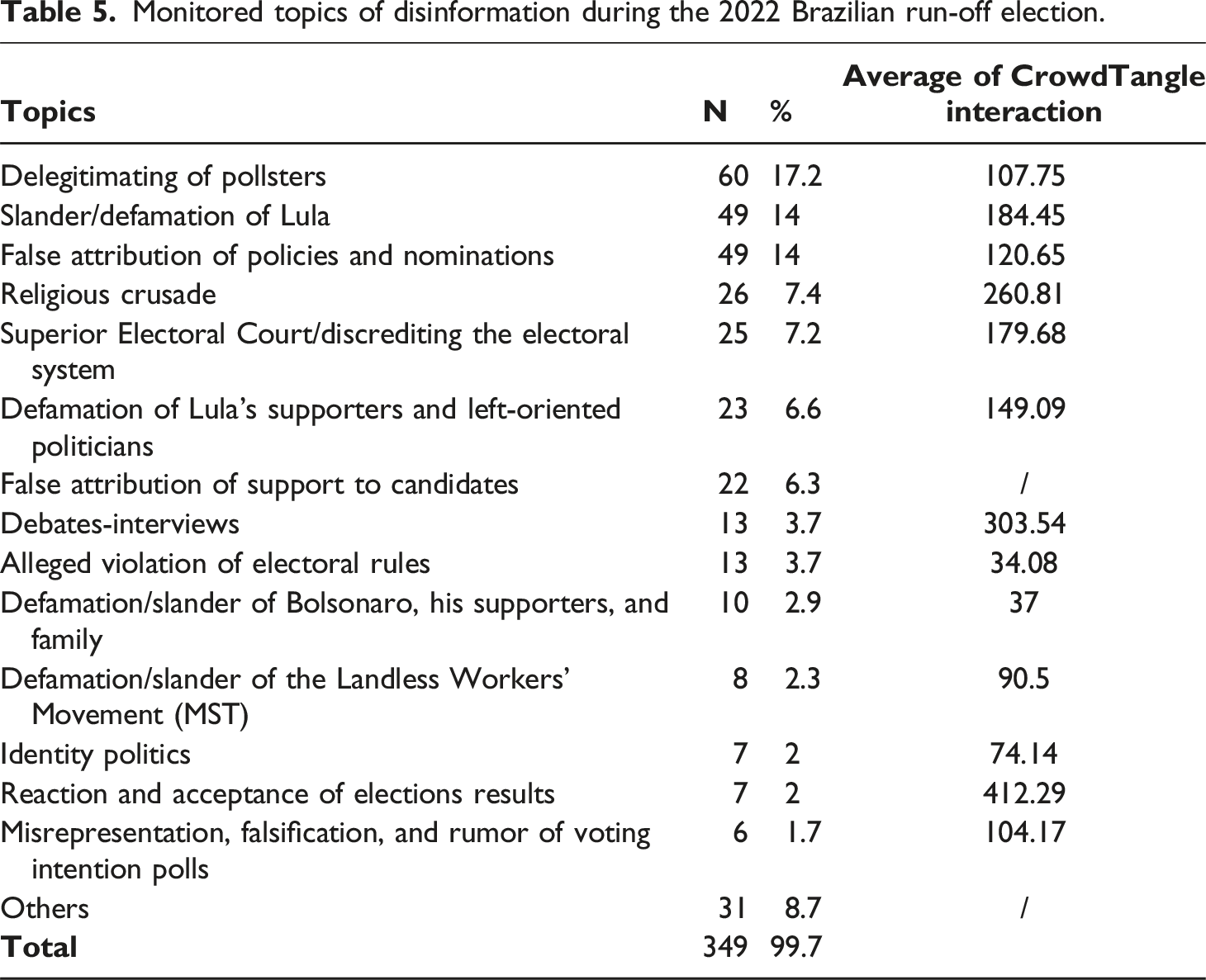
Which topics and types of falsehoods were primarily scrutinized by Brazilian organizations? Due to the lack of studies or different research designs regarding fact-checkers' selection of falsehood types, especially in the Global South context, we kept RQ5 open.
Methodology
Selected fact-checking organizations.
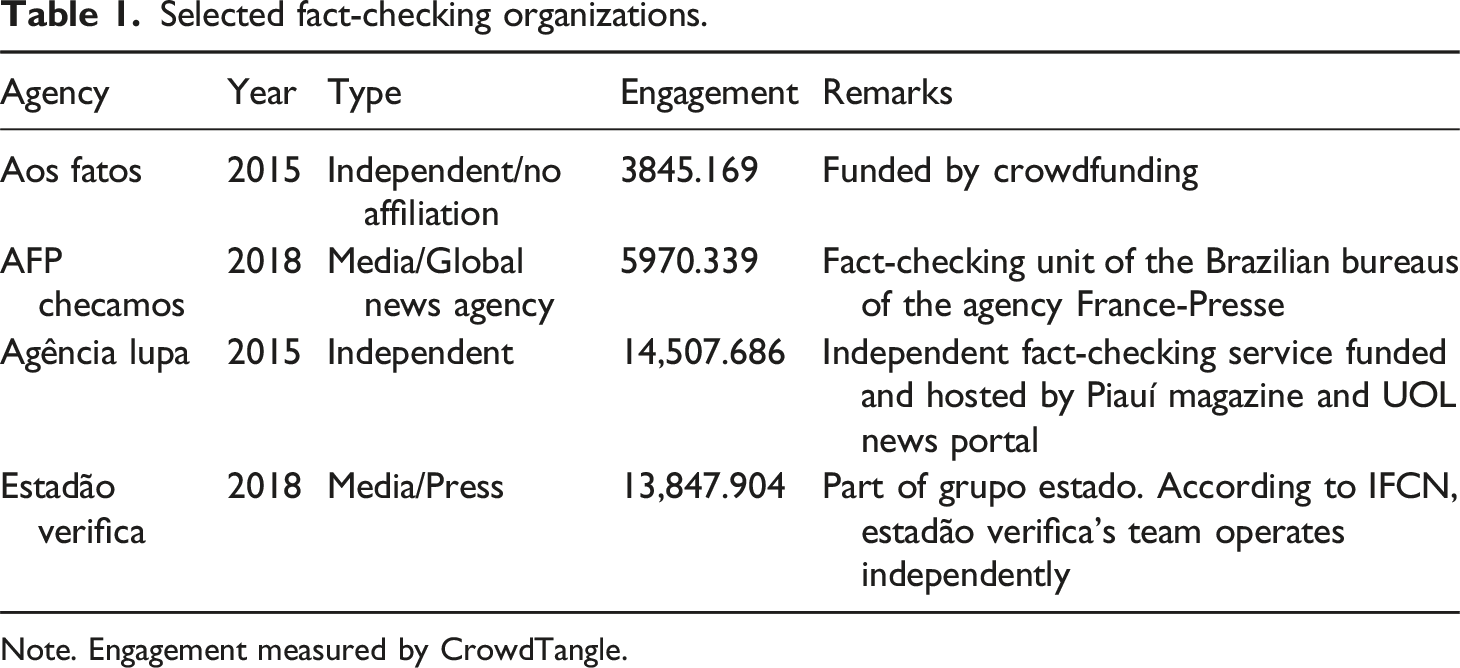
Note. Engagement measured by CrowdTangle.
Coding scheme and reliability
Two Portuguese speakers coded the articles. A subsample of 14% of the population was used in the pre-test. After making minor adjustments, intercoder reliability was calculated and is presented below, along with the level of agreement and a description of the variables.
Types of articles
To address
Agents and targets of disinformation
Monitored sources were coded to answer
Monitored platforms and directions of dissemination
Channels of dissemination were coded to answer
Scrutinized topics and types of false information
The pre-test resulted in a list of topics to answer
Findings
Debunking and fact-checking (RQ1)
Fact-checkers’ monitoring of statements by public figures (fact-checking) played a minor role over the period analyzed (RQ1). Only 5.5% of the sample comprises fact-checking articles. Debunking of online rumors spread by unofficial sources (82.2%) predominated.
1
Other types of articles comprised 12.3%. These results corroborate other studies (Graves & Mantzarlis, 2020; Lelo, 2022), indicating that the priority to combat online falsehoods has displaced the verification of (political) claims by public figures. This trend is clear among all four analyzed organizations, even though the independent ones (Aos Fatos and Lupa) show a slightly higher number of fact-checking items (see Figure 1). Amount of fact-checking and debunking articles by organizations.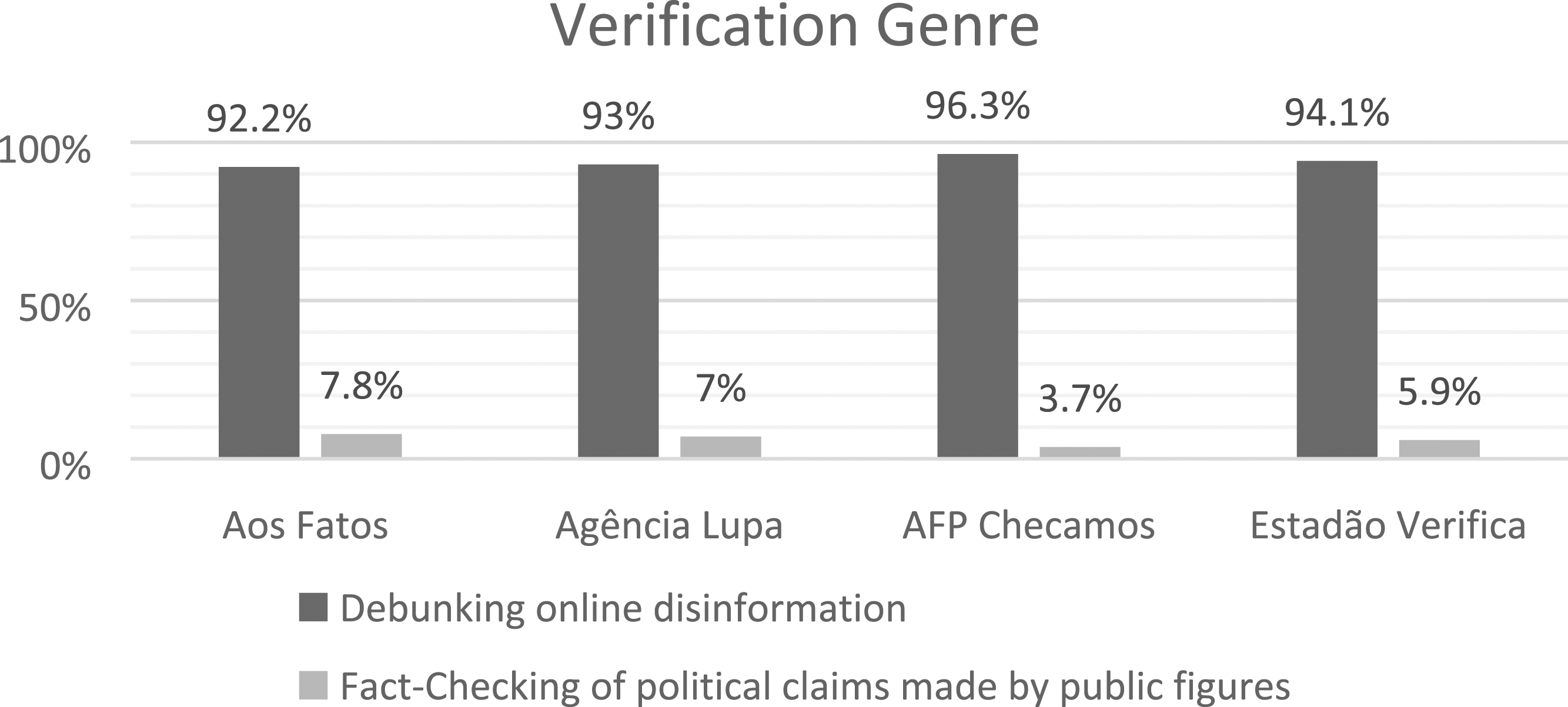
Although our first assumption was confirmed, the shift towards debunking can only partially be attributed to the 3PFC program since there is a monthly limitation on the number of articles an organization can verify for Meta. Brazil’s low resilience to disinformation, WhatsApp popularity, and social media’s role during elections (Carro, 2022) have led fact-checking agencies to allocate resources to scrutinize social media. Similar, for instance, to studies on Austria (Humprecht’s, 2018), we can assume that online falsehood is an essential type of disinformation in Brazil, often selected for gateboucing. Additionally, verifying political rumors may be less time-consuming than fact-checks (Graves & Mantzarlis, 2020: p. 589), particularly outside of electoral debates – which introduce a ‘breaking news logic’ to the verification process (Steensen et al., 2023). This immediacy during elections increases the ‘epistemic pressures’, resulting in less complex verifications based on previous verifications and media reports (ibid).
Monitored sources and targets of disinformation (RQ2-3)
Main monitored agents of disinformation during the 2022 Brazilian run-off election.
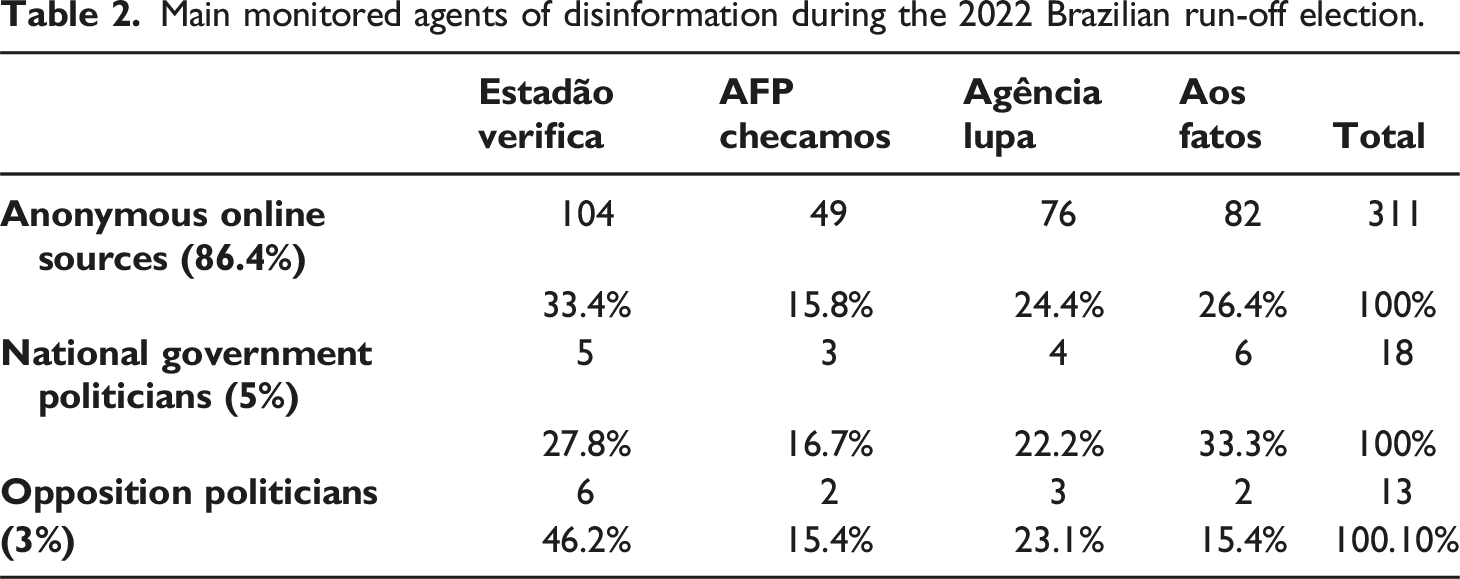
Due to the focus on verifying online falsehoods, agents of false information are not always evident. However, in 2018, investigative reports discovered that pro-Bolsonaro businesspeople sponsored an illegal campaign to flood WhatsApp users with disinformation about the opposition (Mello, 2020). Bolsonaro could rely on hundreds of ‘digital soldiers’ to spread dubious information in his favor. Regarding these unclarities and the Brazilian political polarization, we found that 77.4% of thefalsehoods benefited Bolsonaro or his party, and 12% strengthened Lula’s campaign and the Workers’ Party. In 10.3% of the cases, the beneficiary could not be identified.
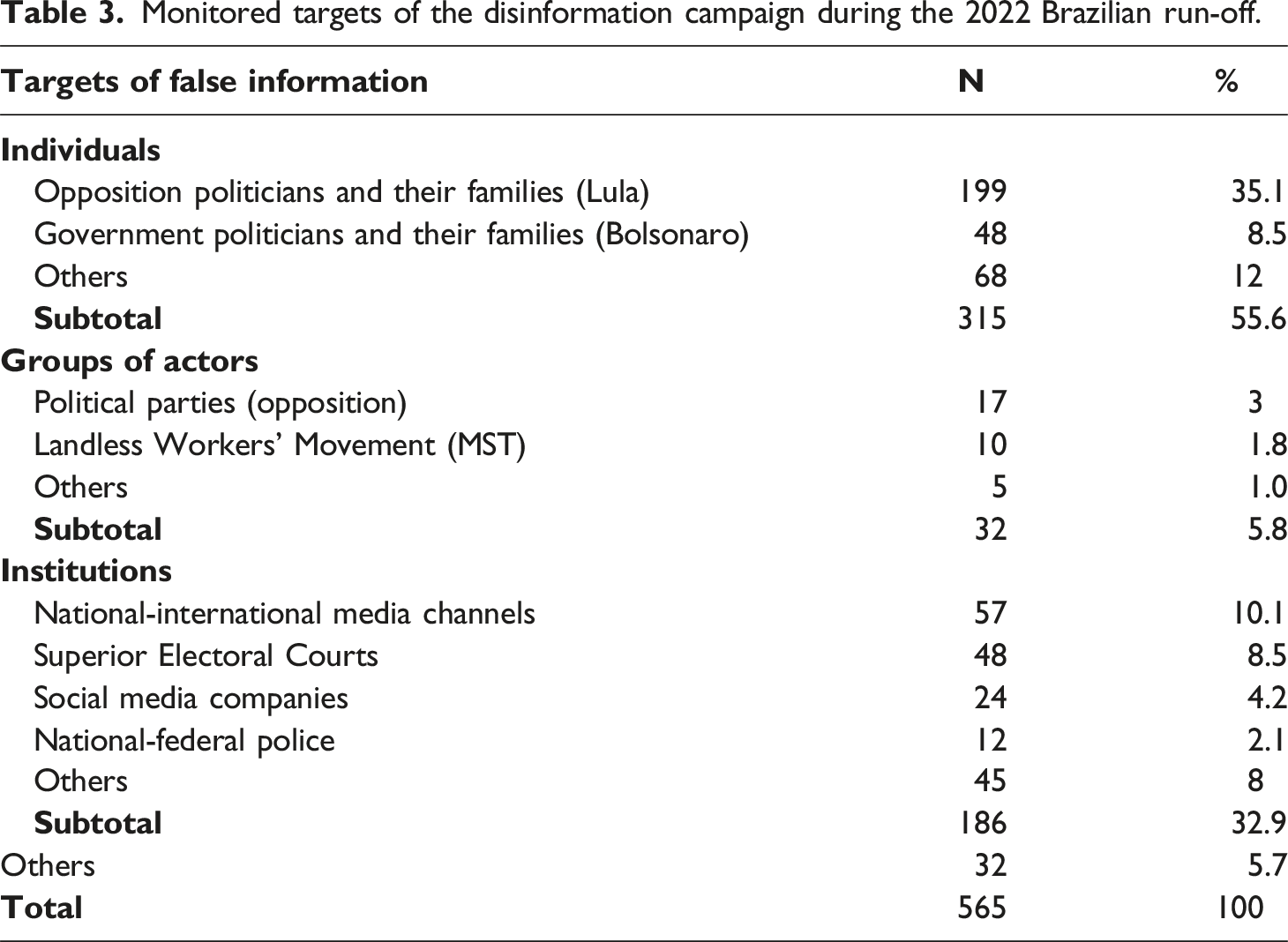
The main targets of disinformation campaigns (RQ3), as identified by fact-checkers, were individuals (55.6%), institutions (32.9%), and groups of actors (5.8%) - see Table 3. These findings are consistent with Brazil’s strong anti-petism as they show that PT politicians and their families (35.1%) were the most common targets of falsehood campaigns by far-right actors. All organizations primarily focused on debunking disinformation targeting the opposition, confirming our expectations. National and international media (10.1%) and social media companies (4.2%) were also victims of disinformation, especially by the imitation of their brands (imposter content). Although media trust in Brazil has declined, (anonymous) disinformation agents paradoxically still mimic established media to forge credibility to their falsehoods. Given Bolsonaro’s attacks on the electoral system, it is unsurprising that the organizations debunked rumors targeting the Superior Electoral Court (8.5%).
Channels and direction of disinformation (RQ4)
Monitored targets of the disinformation campaign during the 2022 Brazilian run-off.
Topics, engagements, and levels of veracity (RQ5)
Channels monitored by fact-checkers.
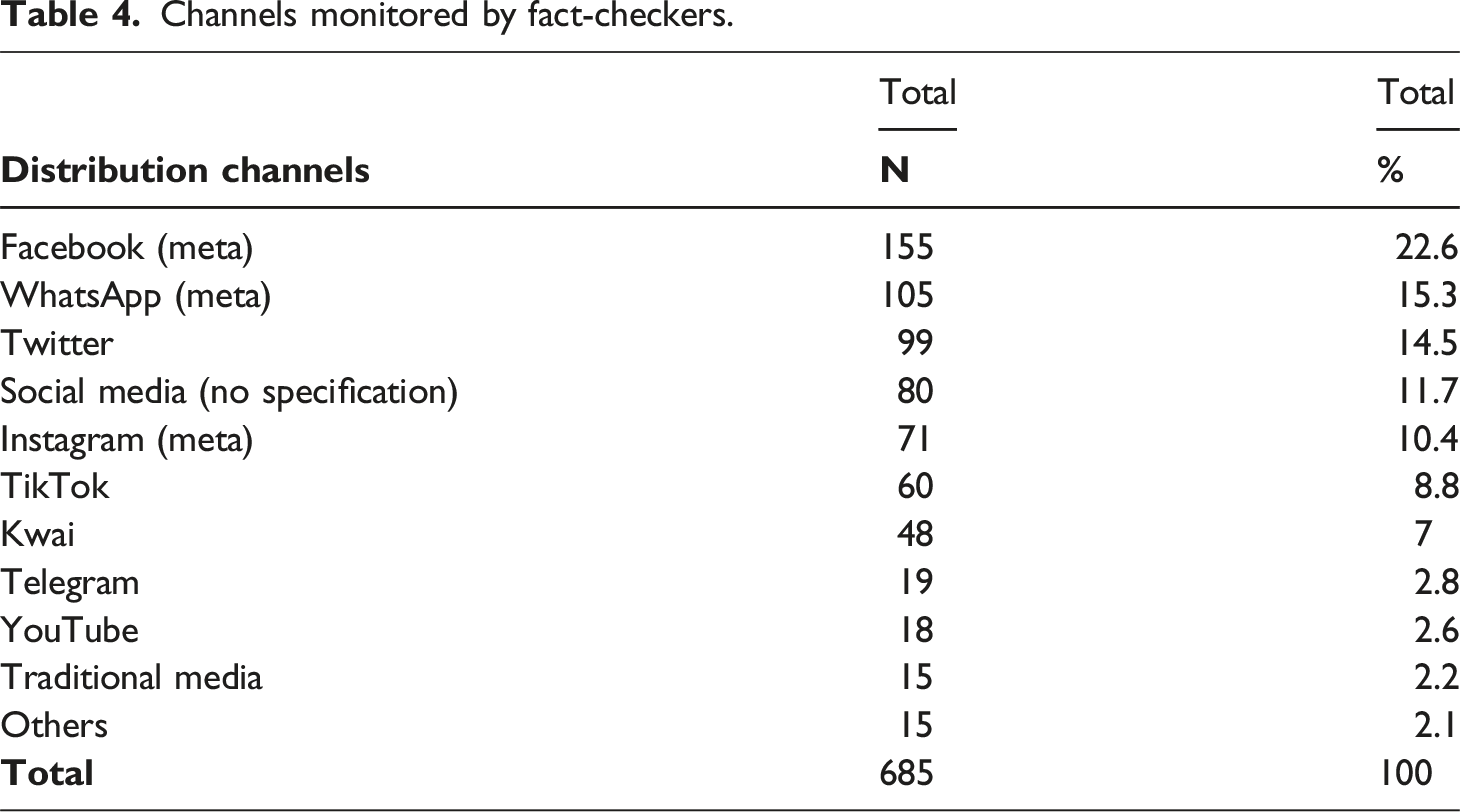
The most debunked topics also generated higher social media engagement levels, as indicated by likes, shares, and comments measured by Crowdtangle. This suggests that ‘resonance on social media’ serves as a criterion for fact-checkers in selecting which content to address, thereby reinforcing their tendency to gatebounce widespread falsehoods (Graves, 2016). Verification articles on debates and interviews garnered the most interaction, probably due to the involvement of established media channels. Religious topics and the possibility of Bolsonaro’s denials of the election results also motivated substantial engagement.
Monitored topics of disinformation during the 2022 Brazilian run-off election.
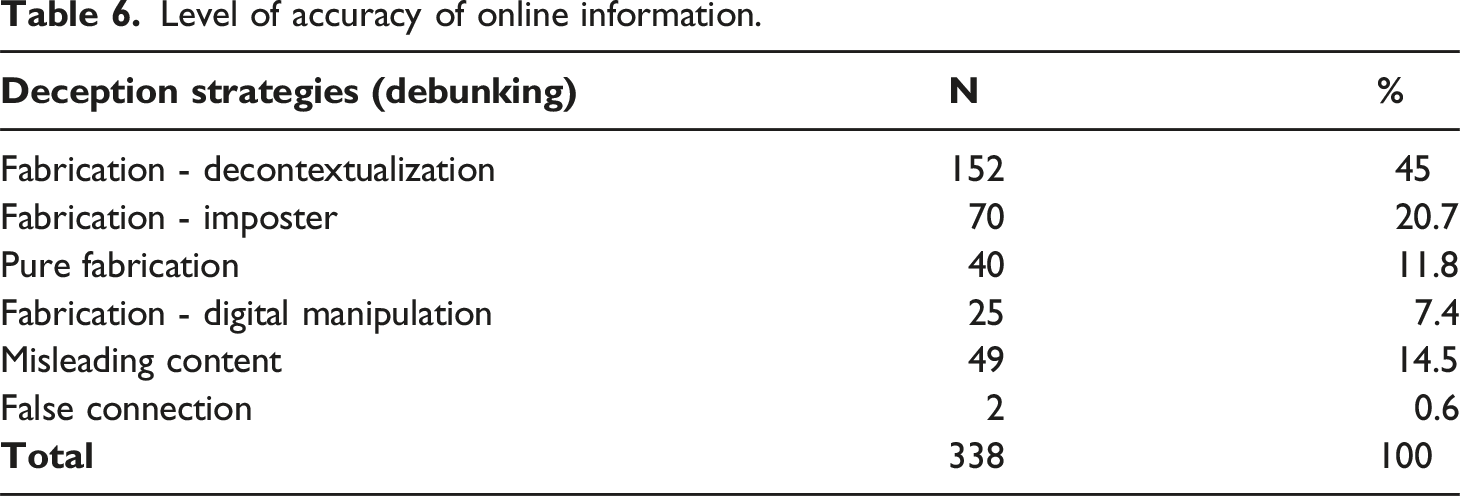
Level of accuracy of online information.
Discussion and conclusion
This study offers some insights into fact-checkers’ editorial choices during the 2022 Brazilian run-off election based on their selection of verification genre, monitored actors and targets, types of verified (dis)information, and inspected platforms. This paper contributes to the literature on fact-checking, an evolving form of journalistic practice and epistemology of knowledge production, as it focuses on a non-Western power and non-English-speaking country, which is considered fertile soil for disinformation and marked by a strong right-wing conservative populist movement (Humprecht et al., 2020; Rodríguez-Pérez & García-Vargas, 2021).
We found that Brazilian fact-checking agencies prioritized debunking online disinformation over scrutinizing public statements (RQ1). This finding underscores the global reorientation in fact-checking practices, that is, more debunking and less scrutiny of public statements (Graves et al., 2023; Graves & Mantzarlis, 2020; Lelo, 2022). Although the literature has acknowledged this shift, this present study is, to the best of our knowledge, one of the first to provide quantitative evidence of this trend. Certainly, one could attribute this tendency to the 3PFC program. Fact-checking organizations may pay more attention to falsehoods circulating on social media because Facebook provides them with financial support and appropriate tools for detecting disinformation within its platforms (Full Fact, 2020). However, the limited number of articles organizations can monthly verify to Meta (Bélair-Gagnon et al., 2023) suggests other factors at play. Aligned with studies on other countries (e.g., Humprecht, 2018), online falsehoods hold significant importance as a disinformation type in Brazil, particularly given the country’s high reliance on social media for news consumption (Carro, 2022). Consequently, addressing these falsehoods becomes a priority for Brazilian gatebouncers (Vos, 2019). Therefore, the disruption of the Brazilian public sphere (Bennett & Livingston, 2018) likely influenced the fact-checkers’ decision to concentrate on the ‘purification of the online environment’, which could have a decisive influence on elections, – as seen in Bolsonaro’s victory in 2018. Despite limited airtime (8 s), he still won the election by relying on the dissemination of falsehoods (Santini et al., 2021) and taking advantage of a multifaceted political crisis
Accordingly, our results confirmed that Brazilian fact-checkers primarily scrutinized Facebook and WhatsApp, Brazil’s main social media and messaging platforms for news consumption (Carro, 2022). Concurrently, they also dedicated efforts to non-Meta platforms, such as Twitter – despite its comparatively low popularity in the country (ibid.) –, TikTok, Kwai, and, to a lesser extent, Telegram. These findings regarding monitored (dis)information channels (RQ4) are essential for two reasons. First, the (false) information verified during the run-off election could not reflect Telegram’s significant role as a communication channel for Bolsonaro’s supporters and its contribution to propagating disinformation (Lupu et al., 2020), highlighting a gap between what circulates and what manages to be checked. Second, since Meta has taken indirect measures (e.g., 3PFC) to counter disinformation, ‘bad actors’ will likely migrate to platforms like Kwai, TikTok, and Telegram. Hence, Brazilian fact-checkers should closely monitor these other platforms in the future.
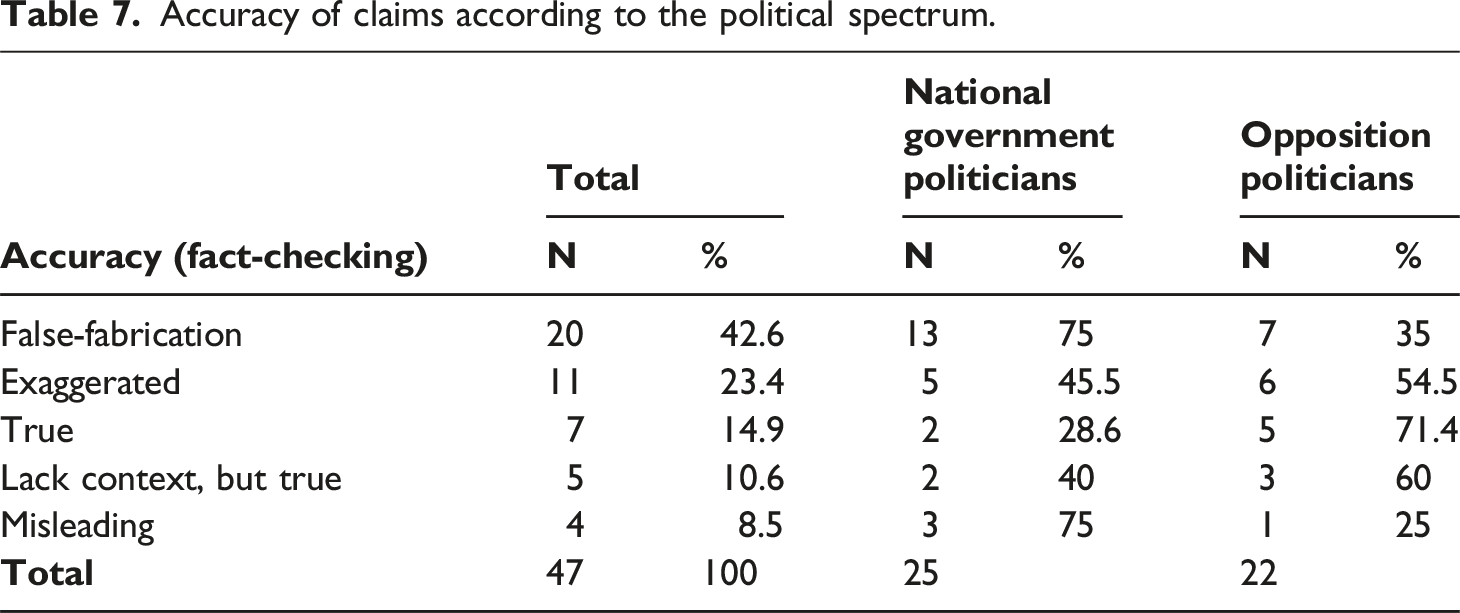
Accuracy of claims according to the political spectrum.
Another significant finding refers to the most prevalent topics of verified disinformation (RQ5). Fact-checkers responded to newly created falsehoods concerning the polls and the Superior Electoral Court, countering Bolsonaro’s attempt to follow Trump’s playbook. Moreover, given the political polarization and ‘cultural war’ in Brazil, reminiscent of the 2018 election, it is unsurprising that fact-checking organizations continued to focus on disinformation pieces involving the defamation of the candidates, especially of Lula. The verification of religious falsehoods speaks to the fact that “populism in Latin America has acquired a much more explicitly religious expression” (Siles et al., 2021: p. 361). Generally, five main areas of falsehoods addressed by fact-checkers were identified: violence and criminality (associated with Lula), religion and customs, discrediting the electoral system, and, finally, the socioeconomic agenda and policies (Pires, 2022).
Most of the false content verified during the 2022 presidential elections corresponded to all types of fabrication (84.9%), that is, complete fabrication, imposters, manipulation, and decontextualization. This number reinforces that disinformation is a right-wing political strategy (Bennett & Livingston, 2018; Hameleers, 2020), and fact-checkers still have to deal with Bolsonaro’s fake news machinery. When looking solely at the small portion of fact-checking articles, the government (Bolsonaro administration) was mostly scrutinized and held accountable for 75% of the false statements (fabrications). However, this finding does not necessarily indicate bias; rather, it serves as a pointer to the levels of political disruption and use of disinformation by far-right populism in the country (Bennett & Livingston, 2018).
Two main limitations should be noted. First, this research concentrated on a specific political event and cannot be generalized to the overall operations of fact-checking organizations in Brazil. Future studies should, therefore, analyze the editorial choices of fact-checkers during non-electoral periods to determine if the results regarding their selection of verification genres, monitored targets and sources, topics, and disinformation types are consistent with our findings. Moreover, examining fact-checking output in the aftermath of the Brazilian election, which witnessed the storming of government buildings in Brasilia, could provide valuable insights into whether such an event could have been prevented or predicted through improved monitoring of alternative online platforms, such as Telegram. These platforms arguably served as crucial channels for spreading falsehoods undermining the election results and inciting outrage. Second, this research lacks a comparative perspective. Comparative analyses incorporating other Global South countries with low resilience to disinformation should also shed light on content-related choices made by fact-checkers.
Footnotes
Acknowledgements
We are indebted to the four reviewers for their valuable insights and thankful for the enriching discussions during the refereeing process.
Declaration of Conflicting Interests
The author(s) declared no potential conflicts of interest with respect to the research, authorship, and/or publication of this article.
Funding
The author(s) disclosed receipt of the following financial support for the research, authorship, and/or publication of this article: We are grateful for the financial support provided by the German Research Council (DFG CA 2840/1-1) and the DAAD-Capes program, a partnership between the German Academic Exchange Service and the Brazilian Coordination for the Improvement of Higher Education Personnel DAAD/Capes 88881.199741/2018-01).
