




Abstract
This study compares the editorial coverage of the 2015 migration crisis in major centre-left and centre-right newspapers in three European countries affected (the UK, Germany and Greece). We test the empirical validity of the ‘national media-system’ hypothesis, and in particular the hypothesised characteristics of the different media systems these countries represent through a systematic content analysis of all editorials referring to the issue of migration/asylum for the period 2015–2016. For the purposes of data collection, we develop an original coding scheme that combines concepts and categories from the extant literature on media systems, as well as the literature on migration-related news frames. Our findings largely confirm the relevance of media-system characteristics in the coverage of the crisis, although UK editorials are markedly more polarised than expected. We also find that there was no consensus-based editorial coverage in the initial phase of the crisis.
Introduction
The 2015 European migration crisis was a disruptive event in European politics and its unfolding was widely covered in media around Europe. Narratives of the crisis ranged from sympathetic to empathetic in early 2015 and later shifted to suspicion and, in some cases, even hostility towards groups of immigrants (Chouliaraki et al., 2017). In different European countries, dominant political narratives towards migration projected through traditional media, and, consequently, journalistic practices were put under scrutiny. As such, the 2015 events offer a fertile ground to test journalistic practices within various media systems, their boundaries and role in constituting the public perception of the crisis (Cinalli et al., 2021; see also Mancini et al., 2021).
The present study compares the editorial coverage of the crisis in major centre-left and centre-right newspapers in three European countries affected (the UK, Germany and Greece). The literature expects coverage to differ along country lines, according to the characteristics of the different media systems (Liberal, Democratic/Corporatist, Mediterranean Polarised/Pluralist) these countries represent, as initially presented in Hallin and Mancini (2004) and later revised taxonomies (e.g. Bruggemann et al., 2014). We test the empirical validity of the ‘national media-system’ hypothesis through a systematic content analysis of all editorials referring to the issue of migration/asylum for the period 2015–2016. We also ask whether polarisation in coverage was driven by partisan, in particular right-wing populist editorials (Müller et al., 2017). Lastly, we examine whether editorial coverage was initially more consensus-based but became more critical in later months (Figenschou and Beyer, 2014).
The evolution of the European media systems: key dimensions and challenges
In their fundamental study of media systems in the Western world, Hallin and Mancini (2004) identified three distinct models: the Mediterranean/Polarised Pluralist (which prevails in Southern Europe), the North European/Democratic Corporatist (prevalent in Northern-continental Europe) and the North Atlantic/Liberal model (exemplified by the UK and Ireland). They suggested that media systems can be classified based on four key dimensions: the degree of state intervention in the media, the extent of political parallelism, the development of media markets, 1 and the level of journalistic professionalism.
While Liberal media systems exhibit moderate pluralism, Mediterranean/Polarised media systems traditionally tend to present high levels of polarisation, reflecting patterns of political behaviour and characteristics of political systems in these countries (Papathanassopoulos, 2007), as well as high levels of clientelism (Hallin and Papathanassopoulos, 2002), which in turn tend to affect levels of professionalism.
Professionalism has been a focus of scholarship for many years (Waisbord, 2013; Zelizer, 2004) covering journalism as a profession, role perceptions, norms and ideals, and practices (e.g. Bantz, 1985; Esser, 1998). For the purposes of our analysis of editorial coverage, we are interested in the level of autonomy journalists enjoy as a key aspect in assessing media systems. Autonomy can be limited either by external forces, such as political or economic actors, or by actors within the news organisations, such as publishers or owners. We are also interested in two additional dimensions of professionalism, identified by Hallin and Mancini (2004): distinct professional norms (e.g. practical and ethical routines/principles concerning the protection of confidential sources) and the public service orientation of journalists (i.e. towards an ethic of public service rather than the interests of individuals). The absence of journalistic professionalism manifests itself in the instrumentalisation of journalists by economic or political interests, which in turn diminishes their credibility (Bruggemann et al., 2014).
Political parallelism is the degree of media partisanship and the extent of the party system’s reflection on the media. The relation between journalism and politics has a long history; many newspapers started as political voices for parties and movements (Nygren, 2015) and most newspapers in Europe are still politically coloured. We follow Hallin and Mancini’s initial operationalisation and examine the degree to which media content reflects distinct political orientations, and whether journalistic practices follow a politically activist tradition and stronger emphasis on comments. 2 In this regard, the turbulent media history in the Mediterranean countries traditionally tends to produce distinctively higher levels of political parallelism than in Northern Europe.
Degree of state intervention in its most direct form comes from the public service media owned and funded by the state, as in Mediterranean countries. Among Democratic-Corporatist systems, the German state provides billions of euros for a broad variety of national and regional public media outlets in its territory. More indirect forms of state intervention may appear as more threatening to the public interest. Bruggemann et al. (2014) distinguish state interventionism that complements private media with public media, state measures that directly support private media, and measures that restrict media. Especially with the advent of Web 2.0 and the rise of digital media, state intervention may come in various forms and produce a series of effects that can curtail press freedom, such as public security laws or health and safety restrictions introduced after the onset of the 2020 global pandemic crisis (Clark and Grech, 2017; Maniou and Ketteni, 2022).
Hallin and Mancini’s classification was widely criticised and revised (e.g. Norris, 2009; Bruggemann et al., 2014; see also analysis in Maniou, 2022). Importantly for the present study, media systems in western countries seem to have gone through several transformations since 2004, which Hallin and Mancini (2017) themselves have recognised, acknowledging “that media systems…undergo long-, short- and medium-term variation, based on various external and/or internal factors” (p. 167). A typical example is offered by Portugal, which in recent years seems to be moving towards a more Liberal model (Bruggemann et al., 2014; Maniou, 2022).
At the same time, Liberal media systems seem to be experiencing the most notable changes, based on recent studies in the field (e.g. Nechushtai 2018). Journalistic coverage of recent developments in Liberal media systems (e.g. recent US elections, Brexit) cannot but reflect the fact that contemporary media in the US and the UK are operating in a polarised socio-political environment, characterised by a shrinking sphere of consensus. In 2009, Hallin himself (p. 333) wrote that in three of the four media systems dimensions, “the US media are converging toward something rather closer to the Polarized/Pluralist model, which we identify as characteristic of Southern Europe.” Nechushtai (2018), in examining the US case, verified this argument and suggested that as Polarised/Pluralist elements become entrenched in the American news system, it seems to be approaching a hybrid category of “Polarised Liberal”, which, if applicable beyond the US, could become the focal point of convergence in the future.
The 3 countries selected for this study represent typical examples of the three distinct models of media systems, as identified by Hallin and Mancini (2004). Media in these countries seem to have followed different courses of development, based both on their internal characteristics and on political and socio-economic factors. Greece seems to be the most prominent example, as the country’s turbulent political history resulted in the development of a media system exhibiting extensive polarisation, clientelism and partisanship (Papathanassopoulos, 2007) and close ties between media and political parties (Hallin and Papathanassopulos, 2002). These resulted in editorial pressures and a strong interconnection between media and politicians (Iosifidis and Papathanassopoulos, 2019), which led to the suppression of journalistic autonomy and remains an issue today.
Partisanship of the media also tends to be a historical characteristic of the UK media. Government and political parties have been the main patrons of many English newspapers since the 18th century (Curran and Seaton, 2003). However, economic and formal media ties with political parties were less common than in Southern Europe (Hallin and Mancini 2004) while the media approach towards politicians became more critical (Blumler and Gurevitch, 2001). This could be partially attributed to the fact that the partisan press system, coupled with strong commercial pressures and impartial broadcasting media (Cushion et al., 2022), allowed the media to operate free from immediate political control. The UK media, as part of the Anglo-American press system, during the 20th century became an influential reference model for measuring and judging journalistic behaviours in other countries based on core values, such as objectivity and high professional standards (Esser and Umbricht, 2013). However, as Hallin and Mancini (2004) note, the concept of ‘press parallelism’ was also developed in the UK and relates to the tendency of the press to reflect divisions in political parties and to adopt distinct political orientations. These orientations are more clearly manifested here in news reporting than in other Liberal countries, particularly in the tabloid press. In recent years, the coverage of highly debated issues (e.g. Brexit) seems to have led to increased levels of polarisation coupled with more interpretative aspects of journalism practice and a turbulent political scenery.
In Germany, the political and media systems were traditionally much more closely integrated than in the UK. Until the 1960s, it was not uncommon for the head of a political party to be at the same time the head of the corresponding newspaper. Through the years, control of political parties over the media diminished, political and media systems became less integrated, thus offering journalists more autonomy (van Daalen et al., 2011). At the end of the 1960s, the relation between journalists and politicians was no longer dominated by political parallelism but rather by ‘critical professionalism’ (Djerf-Pierre, 2000) while over time, as in the UK, the media became more critical towards politicians (Brants and Van Praag, 2006). Thereafter, the German media system, currently representing the largest print and audiovisual market in Europe, progressed as a pure form of the Democratic/Corporatist model advancing core journalistic values. However, recent studies suggest that after 2000 there was an increase in scandal reporting in the press and broadcasters, increasing use of conflict and negativity, as well as a tendency towards more personalisation in news reporting (Karidi, 2018).
A significant point of departure from the canonical media-systems model may be the coverage of disruptive events in different media systems. A number of studies have documented that disruptive events tend to alter journalistic practices and routines during a crisis (e.g. Nossek, 2008). In the first phase, mainstream media often engage in ritualised coverage, moving away from their everyday professional roles as critical reporters into a “sphere of consensus” (Andenæs, 2012; Nossek, 2008). According to Molotch and Lester (1974), and Nossek (2008), events initiated by disruptive outsiders potentially create more substantial changes, in contrast to elite-controlled events, which mostly offer very limited openings for changes in public discourse. Following this line of argumentation, Figenschou and Beyer (2014) argue that mainstream media definitions of appropriateness and deviance are usually challenged some time after the disruptive event, as journalists adapt to new political contexts. Still, most of these studies refer to extremely violent and unexpected occurrences, such as terrorist attacks. The 2015 migration crisis presented the basic characteristics of a disruptive event in the European public sphere, but differs from a violent accident or a terrorist attack. Its unfolding lasted much longer and in this sense is analytically similar to other recent crises, such as the COVID-19 pandemic or the 2022 Russo-Ukrainian War. More generally, the scope conditions of this study include major events covered extensively by media that involve vulnerable populations, are likely to trigger the use of humanitarian versus threat frames and lead to solidarity contestation in national and transnational public spheres (Benson, 2013; Hallin, 2015; Mancini et al., 2021).
The 2015 migration crisis in Europe as a crucial case for media-systems theory
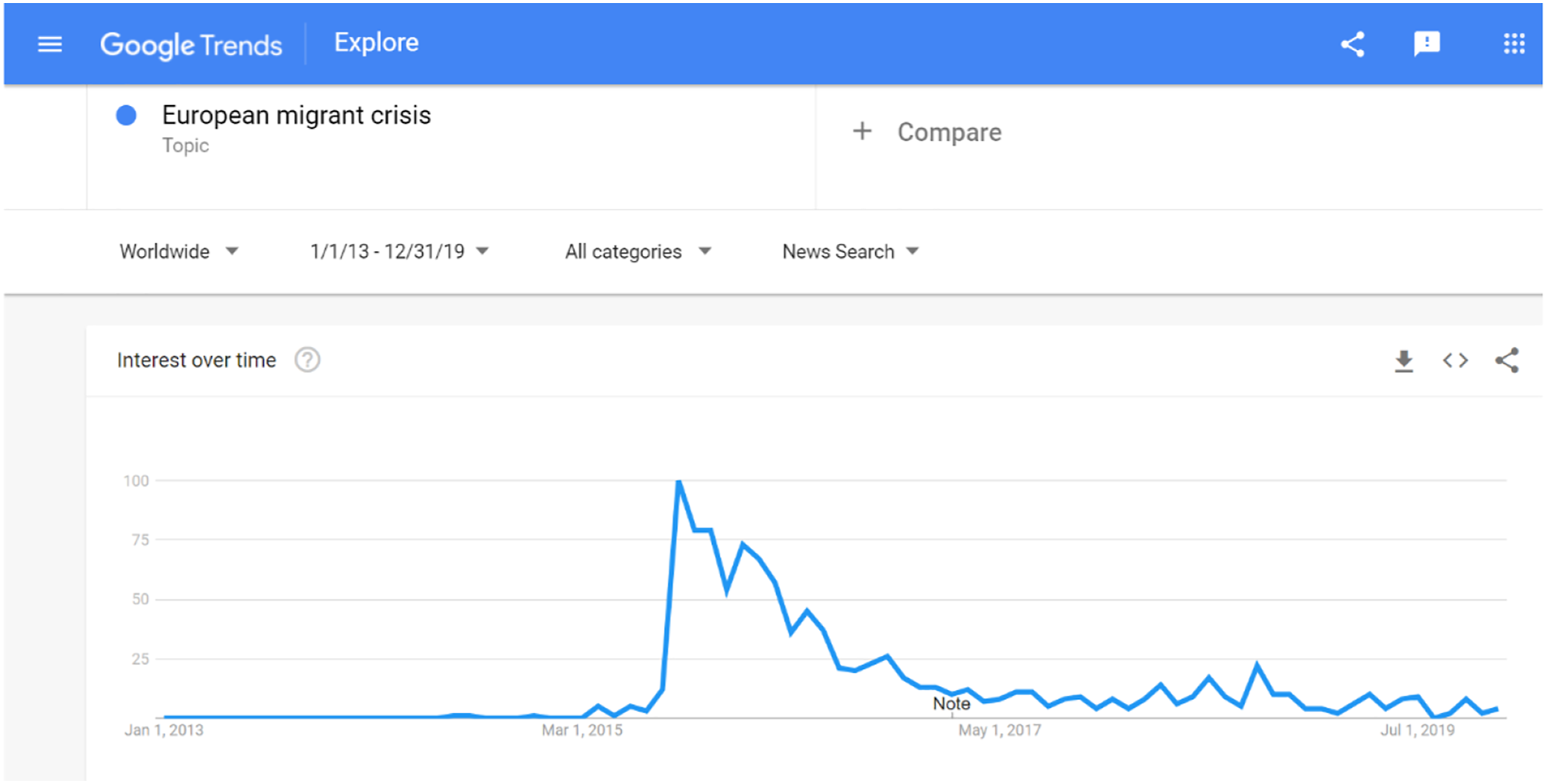
The 2015 migration crisis provides a fertile testing ground for macro-level theories, like the media-systems theory and the disruptive-event theory, because it involved the largest concentrated movement of refugees on European soil since the 1950s (until the 2022 Russian invasion of Ukraine). The crisis was the culmination of irregular movements of people fleeing conflicts in, among others, Syria, Afghanistan, Iraq, Eritrea, and Somalia. Most countries on the continent, including the three covered here, experienced significant and, in the case of Germany, dramatic increases in asylum applications in 2015. There were over a million first-time asylum applications across the EU in 2015 (Eurostat, 2016). The crisis was also widely covered and politically contested in European media. Multiple competing frames emerged as dominant political narratives (Greussing and Boomgaarden, 2017; Triandafyllidou, 2018). The scope and scale of the crisis was so large that the salience of the issue of migration increased sharply, as Figure 1 illustrates. The peak in worldwide interest coincides with the period of largest inflows of asylum seekers into Europe, summer 2015. News trends for European migrant crisis (Source: Google trends).
3
It is important to note that European media did not merely react to the crisis following these events, but co-constructed it. As Cinalli et al. (2021) note, media offer core mediating capacities and the public stage for societal conflicts; they choose the language, narratives, frames and actors that constitute the crisis. Indeed, “crises unfold through the available media spheres and infrastructures in Europe – new and old media, offline and online and news” (p. 27). In this paper we examine one important aspect of this media event, namely whether there were any systematic patterns of similarity and difference across three countries representing different media systems.
Recent literature on the media treatment of the 2015 migration crisis focuses precisely on this crisis-constitutive role of media, in particular on agenda setting, framing effects and an emerging European media sphere in the aftermath of what was a crisis of European migration and asylum policy. Chouliaraki and Zaborowski (2017) examine practices of “journalistic bordering” between refugees and European societies-at-large. They perform a content analysis of newspaper articles related to the crisis in 2015. However, they only look at practices shared across countries and do not differentiate among countries, as we attempt here. Joris et al. (2018) perform news framing analysis in five European countries (including Germany and the UK) and identify humanitarian, security-based and pragmatic-utilitarian frames through which European newspapers present the 2015 crisis. Nerghes and Lee (2019) contrast mainstream and social media in terms of the frames of victimhood, threat, empowerment, and shared humanity. Like Chouliaraki and Zaborowski (2017), these authors choose to present commonalities and focus less on potential systematic differences across countries. Heidenreich et al. (2019) do find differences across countries but focus on their geographic location or status as receiving countries, not on their media-system characteristics.
More generally, studies that employ journalistic coverage of migration as an application of media-system theories have been scarce. Two recent reviews of the literature on mass-media portrayal of migration (Eberl et al., 2018; Lecheler et al., 2019) reveal that there are many studies about how it affects the salience, tonality and framing of the issue, as well as how it shapes public opinion. But there is considerably less on how this portrayal can be used as a test for trends in the broader media landscape. Three exceptions are works by Bennett et al. (2013), Gemi et al. (2013), and a 2015 special issue in the American Behavioral Scientist (Hallin, 2015; Thorbjørnsrud, 2015). They identify aspects of the media system as important for the coverage and framing of migrants, but do not cover the period of the 2015 migration crisis. Our study aims to fill this gap. In particular, we look at different aspects of media systems (state intervention, professionalism, polarisation), which we would expect to play an important role in the coverage of the crisis.
Research questions, method and sample
The literature review in previous sections has yielded the following research questions: RQ1. Do media systems in Europe exhibit national characteristics in their coverage (political parallelism, polarisation, professionalism) of the 2015-2016 refugee crisis, as expected by media system theory? RQ2. Does the disruptive event of the refugee crisis lead to a more consensus-based commentary initially, but more critical commentary over time?
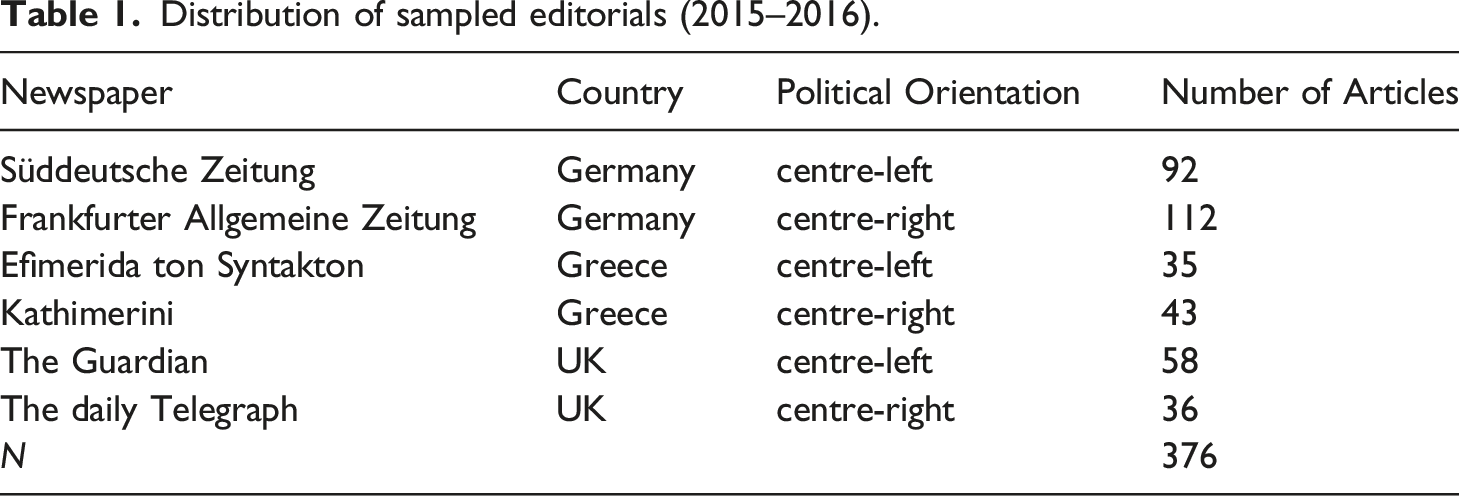
The study is based on a quantitative content analysis of editorials published in 6 European newspapers: the Guardian and the Daily Telegraph from the UK (Liberal media system), Kathimerini and EFSYN-Efimerida ton Syntakton from Greece (Mediterranean, Polarised/Pluralist media system), and Frankfurter Allgemeine Zeitung and Süddeutsche Zeitung from Germany (Democratic/corporatist media system). There were two main criteria for the selection of these three countries: they were directly or indirectly affected by the migration crisis and each represents a different media system, based on Hallin and Mancini’s (2004) study. Each country selected for the study is represented by a centre-left and a centre-right traditional newspaper. The sample consists of all editorial commentaries, published in every newspaper, referring to migration during the years 2015 and 2016. The specific time range was selected to reflect the period when the migration crisis in Europe unfolded and the issue trended in worldwide media, as shown in Figure 1.
As already noted, the selection of the UK, Germany, and Greece is justified by their role as paradigmatic cases (Blatter and Haverland, 2012: 176–177) for the most important types of media systems identified in the literature. Arguably, Germany and Greece were more heavily affected by the 2015 crisis, which may have increased coverage and political polarisation around the issue. Germany was the most important country of destination and the Greek islands served as the geographic point of entry into the EU for most asylum-seekers, following the so-called Eastern Mediterranean route. Although the increase in first-time asylum applications in the UK in 2015 was one of the lowest among the EU-28, the salience of the issue was consistently high in the UK throughout the period under study; more than 40% of British citizens considered immigration one of the two most important issues facing their country (Eurostat, 2016, cited in Dennison and Geddes, 2017). In addition, the repercussions of the crisis featured heavily in debates surrounding the 2016 Brexit referendum. Unsurprisingly, we find that journalistic coverage of the migrant crisis was equally (if not more) extensive in the UK than Greece and, in certain time periods, on a par with coverage in Germany.
Distribution of sampled editorials (2015–2016).
Editorial articles, that is, columns and articles separate from news items expressing opinions and commentaries, traditionally hold a prestigious place in every newspaper, setting the tone for the content that follows. According to Marques and Mont’Alverne (2021), editorial pieces in quality newspapers are published, (usually) non-signed texts in which a newspaper presents its opinions on matters of social relevance and a strategy by which the journalistic organisation can propose debates outside the ‘hot’ agenda of daily coverage. Through editorials, a newspaper offers moral judgments and interpretations about what it considers to be in the public interest (Ryan, 2004), and a space in which newspapers react to events, situating themselves in controversial issues.
The editorial page is the only place in a newspaper where, according to the principles of quality journalism, opinion may be expressed (Meltzer, 2007). We thus consider editorials pertinent for testing the importance of media system characteristics such as professionalism, political parallelism, and polarisation. Compared with news segments, editorials enjoy more freedom in their writing styles and commentator practices. However, this does not necessary guarantee absolute freedom to their authors, since editors mostly aim to maintain a degree of regularity in how newspaper opinions are formed over time. The stable consensus among professionals and over the decades is that the opinion presented in editorial texts belongs to the institution (Mont’Alverne et al., 2018). As such, neither the opinions presented in editorials nor the arguments raised are random; on the contrary, they tend to set the line of argumentation regarding the issues examined.
As regards the coding procedure, two researchers initially coded randomly selected editorials in two rounds, as a pilot, representing 10% of the entire sample. The items were selected from all newspapers examined and all 22 variables that resulted from the operationalisation of key media-system dimensions. The first round of coding yielded an intercoder agreement of 60% and the second round, following consultations among authors and re-training, yielded an intercoder agreement of 89.7%. For 20 of 22 variables Krippendorff’s alpha coefficients after the second round were above 0.80 and for the two remaining variables, the calculated Krippendorff’s alpha intercoder reliability coefficients were higher than 0.77 (see Appendix 2, Table A2 for a full list of coefficients). Based on these scores, Coders 1 and 2 proceeded and coded the overall sample for the study.
Variables and operationalisation
The codebook for the study consisted of 22 variables, each carefully constructed to adhere to the four key dimensions used to classify western media systems (Hallin and Mancini, 2004). We also included several variables drawn from the literature on media framing of the migration issue.
Political parallelism was examined on the basis of five variables: (a) Criticism of government/opposition, (b) Reliance on partisan sources, (c) Reference to opposing sources, (d) Criticism of individual citizens, and (e) Criticism of NGOs. All variables in this cluster were coded on a 1–5 scale (1 = “Not at all” and 5 = “Observed at a high level”)
The degree of state intervention as reflected in editorials was examined on the basis of two variables: (a) Degree of reference to state agencies/state officials, and (b) Degree of reference to NGOs. Both variables were coded on a 1–5 scale, where 1 = “No reference to state agencies, officials/No reference to NGOs” and 5 = “Many references to state agencies, officials/Many references to NGOs.”
Polarisation was examined on the basis of four variables: (a) Pro-refugee comments, (b) Anti-refugee comments, (c) Nationalist comments, and (d) Anti-nationalist comments. All variables in this cluster were coded on a 1–5 scale, similar to those on political parallelism.
Professionalisation was examined on the basis of seven variables: (a) Reference to facts, (b) Reference to journalist’s personal opinion, (c) Reference to sources by name, (d) Reference to anonymous sources, (e) Reference to all sides/factors, (f) Affective content (whether the commentary was negative, neutral or positive towards the issue), and (g) Quality of facts (overall assessment of the features presented in the commentary). In this cluster, variables (a), (b), (f) and (g) were coded on a 1–5 scale, where for (a) and (b) 1 = “no reference” and 5 = “high degree of reference”; whereas for (f) and (g) 1 = “facts are presented totally subjectively/as totally negative” and 5 = “facts are presented objectively/as totally positive”. Variables (c), (d) and (e) were coded as binary, where 0 = No(non-existent) and 1 = Yes (existent).
Four additional variables were added to the codebook to examine interest group intermediation and framing of the editorial commentaries, prompted by the existing literature on the migration crisis. A variable ‘References to unions, lawyers, anti-discrimination groups and other civil society actors’ was used to test interest group intermediation and coded on a 0–2 nominal scale, where 0 = Low, 1 = High consensual and 2 = High conflictual. We expect consensual interest-group intermediation to be particularly salient in editorials from Democratic-Corporatist media systems, while editorials from Liberal and Mediterranean polarised/pluralist systems are expected to feature either low or high-conflictual emphasis on interest-group intermediation. Finally, the diagnostic framing of editorial comments vis-à-vis the refugee crisis was analysed using three binary variables: (a) Cultural framing, (b) Pragmatic framing, and (c) Humanitarian framing. We follow the standardised framing repertoire focusing on Identity-based, Moral-Universal and Utilitarian (economic, security and pragmatic) frames developed in Helbling (2014; see also Lecheler et al., 2019). We include these variables to check whether there are different framing choices in different media systems. All three variables were coded on a 1–5 scale, where 1 = No cultural/pragmatic/humanitarian framing, and 5 = the commentary is mainly based on cultural/pragmatic/humanitarian framing. Table A1 in Appendix 2 provides a summary description of all variables.
Findings
We begin by looking at the evidence to answer whether media systems in Europe exhibit national characteristics in their coverage of the 2015–2016 refugee crisis, as expected by media system theory and the use of migration-related framings. Alternatively, if editorials in the three countries provide a similar style of coverage of the crisis across countries, this is evidence of convergence that is incompatible with media-system theory.
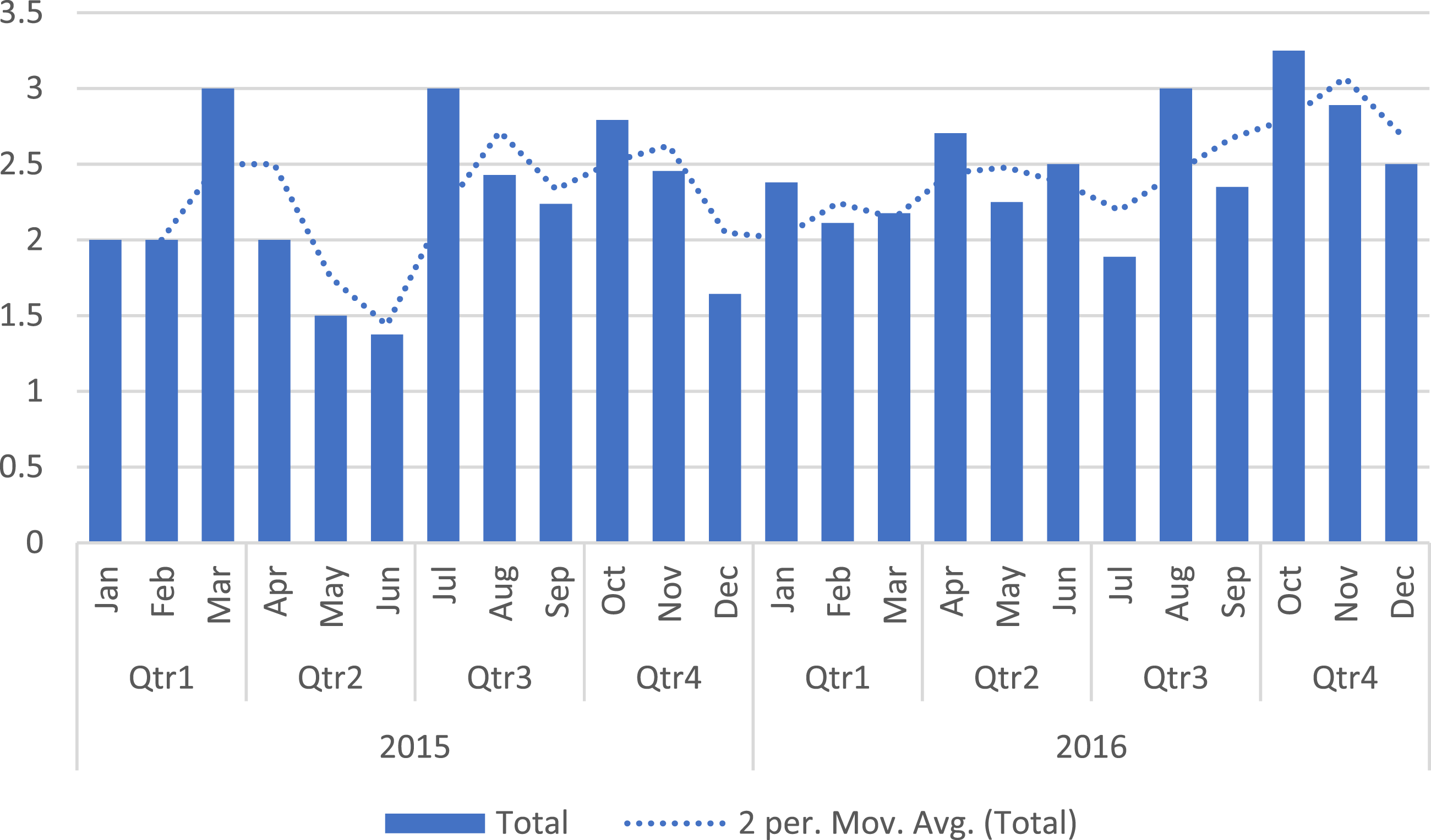
Of the various indicators for political parallelism, national differences in criticism of government/opposition are not statistically significant and references to opposing sources are about as frequent in German as in UK newspapers; criticism of NGOs or individual citizens occur at about the same rate (not shown here). German editorials are more likely to rely on partisan sources, which is inconsistent with the empirical implications of media systems theory in Democratic-corporatist models. The major evidence consistent with the predictions of media system theory is that Greek editorials are more “politicised” in that they refer to opposing sources considerably less frequently. Figure 2 demonstrates these points by depicting the mean opposition towards government/opposition and the mean likelihood of referring to all sides in the coded editorials by country. Criticism of government/opposition and reference to all sides.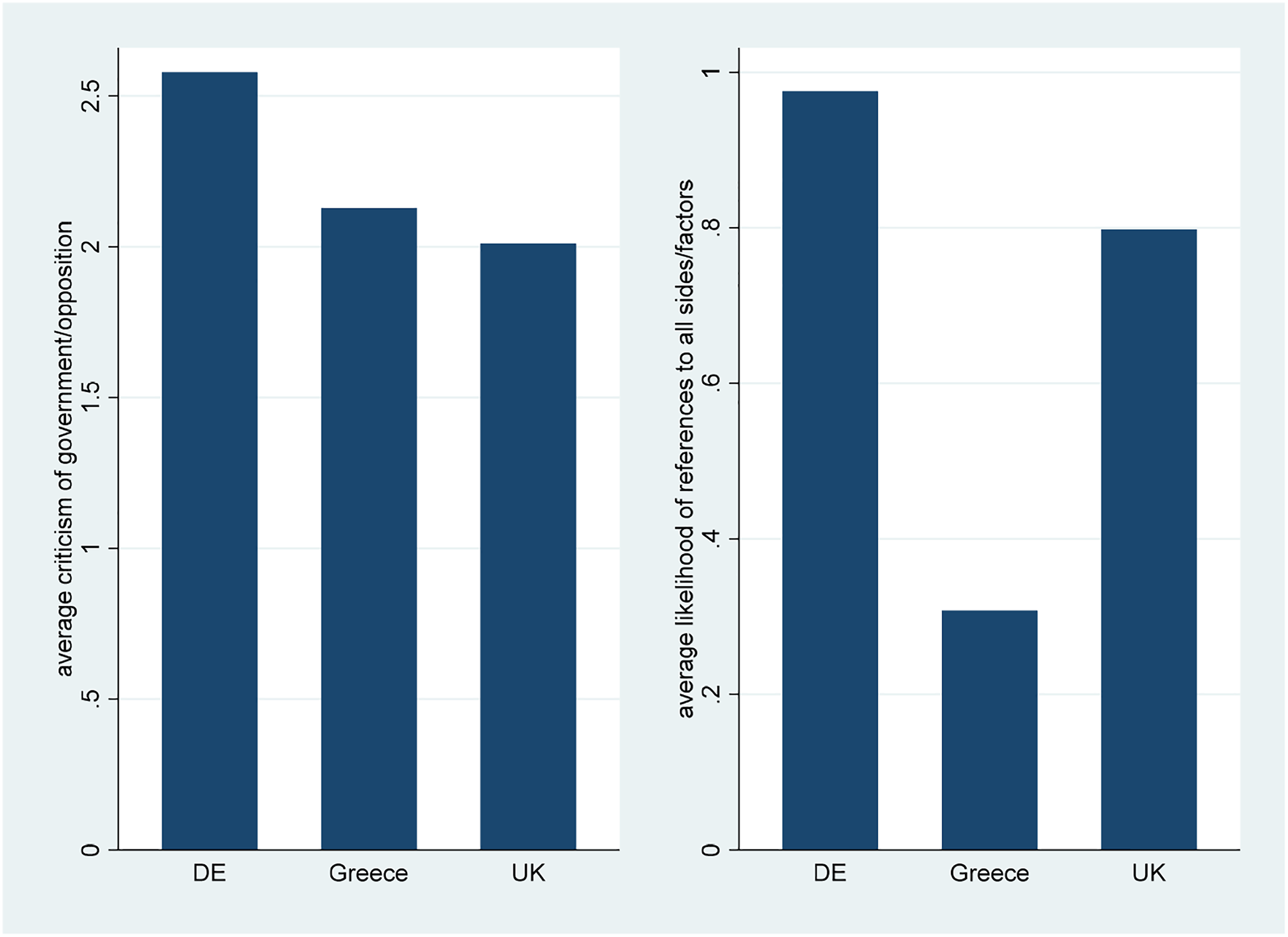
As regards polarisation, we find evidence of more pronounced national differences across partisan lines. To measure partisanship-led polarisation, we introduce the variable left-right, with 0 being left-leaning and 1 being right-leaning (newspaper). We then cross-tabulate this binary with the variables “references to pro-nationalist and anti-nationalist arguments”, and “references to pro-refugee and anti-refugee arguments”. We observe high levels of polarisation between left-wing and right-wing newspapers in UK editorials, but we also find heavy polarisation on the issue of anti-nationalism in German editorials, where the media systems theory expects fewer differences. This is because centre-left German newspapers like the Süddeutsche Zeitung are very critical of citizens or social movements who exhibit nationalism. The German newspaper’s editorialists were very vocal against right-wing social movements criticising the ‘welcome culture’ in 2016. Greece, perhaps surprisingly, features lower levels of polarisation between left and right. The Figure A2 and Figure A3 (see Appendix 1) demonstrate these findings. Left-right differences within countries are more important than differences in the editorial coverage among countries. The latter indicates that there was no consensus around the topic of the migration crisis across countries, with the UK right-wing newspaper adopting a more hard-line editorial stance than its counterparts in Germany and Greece.
As regards the seven indicators of journalistic professionalism in our operationalisation, there are, for the most part, no significant differences among countries. Still, a notable empirical pattern is that UK editorials tend to refer to their sources by name more frequently than editorials in the other countries. This indicated, perhaps, the more personalised nature of debates in UK editorials. Greek editorials are considerably less likely to include references to opposing sources and reference to all sides (approximately in 62%, compared to 72% of German and 95% of UK editorials), which indicates lower levels of professionalisation.
Finally, national differences are not very pronounced when we compare the existence of migration-related journalistic frames (coded as cultural, pragmatic and humanitarian). Overall, there are no large differences among countries, in fact their average use of frames in editorials is remarkably similar. However, there is one notable difference, namely the likelihood of resorting to humanitarian frames and principles, which is lower in Greece and much lower in the UK, in particular in the right-wing editorials, while partisan differences are moderate in Germany (see Figure 3). Mean likelihood of humanitarian framing.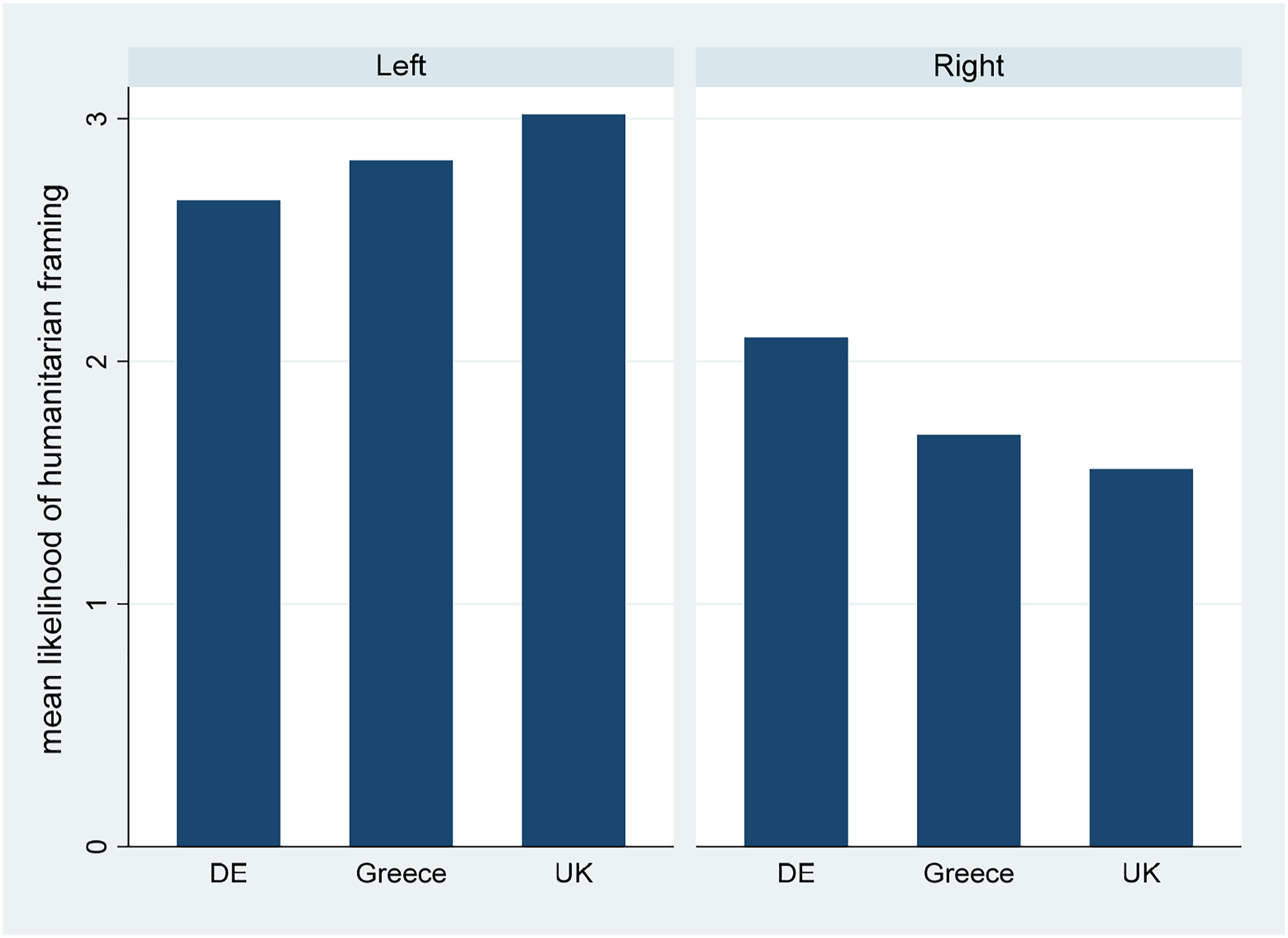
Overall, the existence of national media systems on the coverage of the migration/refugee crisis is supported by evidence in our analysis, especially as regards the use of opposing sources and reference to all sides. Greek newspapers score lower in these dimensions of professionalism, as we would expect from a country belonging to the Mediterranean polarised/pluralist model. Even more robust, however, is the evidence for a left-right dividing line in nationalism-driven polarisation and the use of (humanitarian) frames in the UK editorials.
Selected pairwise correlations.
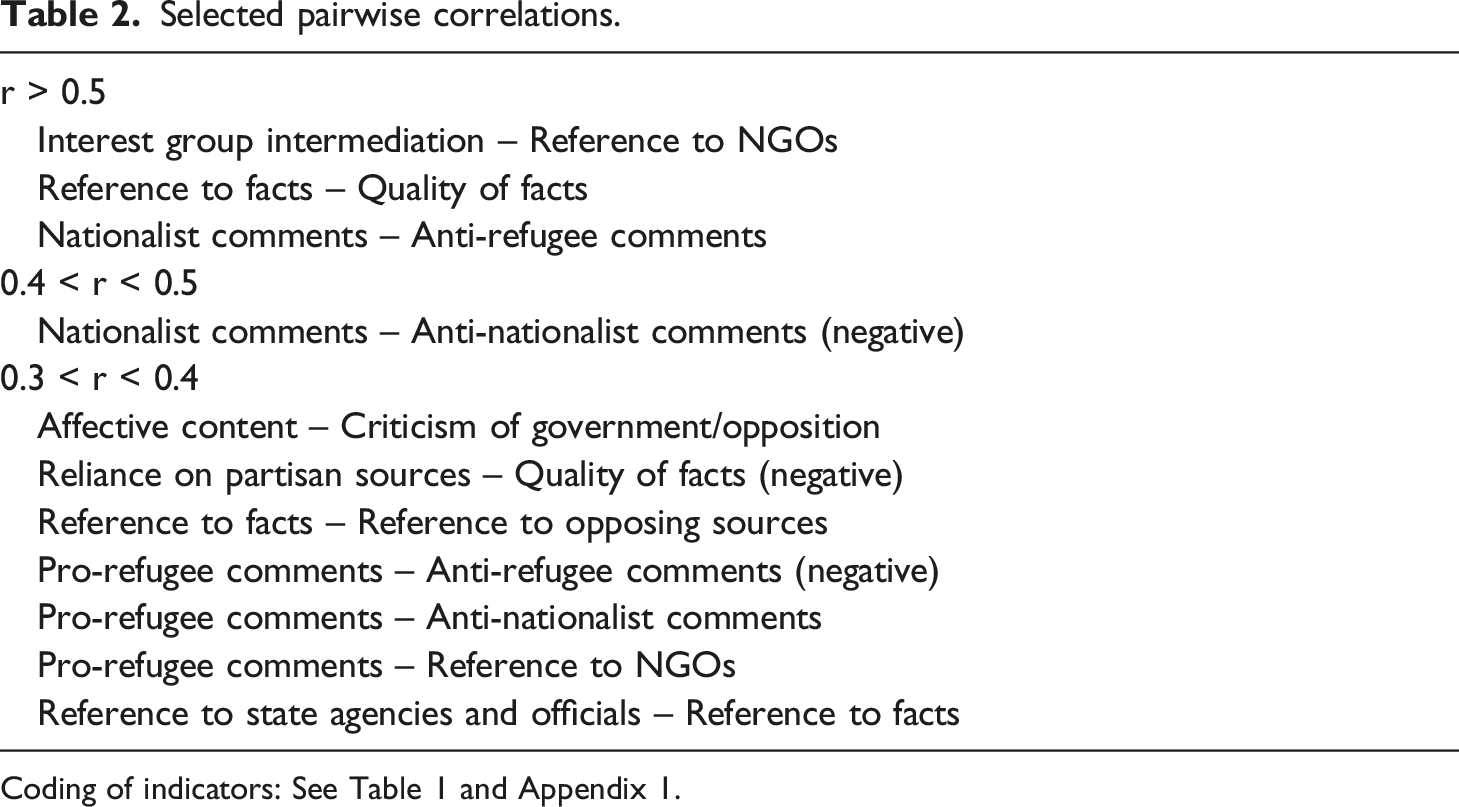
Coding of indicators: See Table 1 and Appendix 1.
If the predictions of media system theory are borne out, we should observe that newspapers in different countries demonstrate media-system characteristics in their coverage of the migration crisis in a clustered way. In other words, we should observe that the variables we have coded cluster (factor) together and that the underlying dimensions correspond to the dimensions predicted by media system theory (political parallelism, polarisation, professionalisation).
The correlation analysis above already hints that political parallelism does not appear to be an underlying dimension in our analysis of the editorials from the three countries. We further conducted a factor analysis, a statistical technique more suitable for identifying multi-indicator dimensions. In Table A3 (Appendix 2), we present the factors and their loadings for the whole sample, irrespective of countries. The Table depicts the three factors with Eigenvalue > 1, the standard threshold of statistical significance for underlying dimensions.
For the first underlying factor with Eigenvalue > 1, there are strong loadings derived from scores on pro-refugee/anti-refugee and nationalist/anti-nationalist comments. Thus the first underlying factor captures polarisation on the topic of migration. The second factor influences the reference to facts and quality of facts; we can assume that this captures the dimension of journalistic professionalism. Interestingly, it also influences the criticism of individual citizens, but this is probably driven by Germany scoring highly on this dimension in editorials that simultaneously criticise reactions to the arrival of asylum seekers and make heavy references to facts. The third factor influences the reference to facts, reference to opposing sources and reference to state officials. This is not a clear feature of the media system as we have operationalised it. In addition (and as already noted), the political parallelism aspects of our coding scheme do not seem to be very relevant as indicators of a media-system dimension, when using the entire sample.
These patterns do not change when we examine the national subsamples (see Table A4, Table A5 and Table A6 in Appendix 2). In accordance with Figure 2, Figure A2 and Figure A3, the UK editorials demonstrate polarisation on the topic of migration. For the first underlying factor with Eigenvalue>1, there are strong loadings from pro-refugee/anti-refugee and nationalist/anti-nationalist. This explains much of the variance when we isolate the UK editorial data. In the case of Greek editorials and for the first factor, there are strong loadings from reference to facts, reference to opposing sources, quality of facts, reference to sources by name, and reference to state officials. This relates to the importance of professionalism as an underlying dimension, which is at the lower end of professionalism in Greece than Germany.
To conclude, there seems to be weak evidence for the existence of national media systems as regards political parallelism. However, we see some evidence of polarisation in the UK and Greece, consistent with the Mediterranean/Polarised pluralist model and the thesis of a liberal model undergoing a process of polarisation. Still, anti-nationalist norms are also very strong in Germany and lead to a high frequency of anti-nationalist editorial comments. We also find some evidence for lower professionalism in Greek editorials, consistent with the predictions of the Mediterranean/Polarised pluralist model. The evidence for similarities across countries and along partisan lines is, in fact, more robust, as many of the indicators do not demonstrate consistent variation or clustering across countries.
Differences along partisan lines invite the question whether they are driven by right-wing/populist newspapers. As already noted, our coding has yielded evidence for the lower use of humanitarian framing in the UK When we break the editorials down by partisan orientation (left-right), we see that Greece and the UK demonstrate greater divergence between left- and right-leaning editorials in their coverage of the migration crisis than Germany. Overall, we find, unsurprisingly, partisan differences within all three countries as regards invoking humanitarian principles in the treatment of refugees/asylum-seekers, but these partisan differences are more pronounced in the UK Taking national averages as indicators of the use of migration-related journalistic frames obfuscates this important difference (see Figure 3, Figure 4 and Figure 5). Indeed, the finding that the Daily Telegraph editorials use more nationalist and anti-refugee frames to cover the crisis is matched by an opposite trend observed in the Guardian editorials and betrays a polarised discursive environment in the UK on this issue, more so than in Greece and Germany. To be sure, the Greek newspapers score quite low on mentioning opposing views, but the UK editorials (especially those of the right-leaning newspaper) did not score highly on that particular dimension either. This is all the more interesting, since the UK was the least affected by the crisis in terms of numbers of first-time asylum applications. Number of editorials related to migration crisis (2015–2016). Average of government/opposition criticism (2015–2016).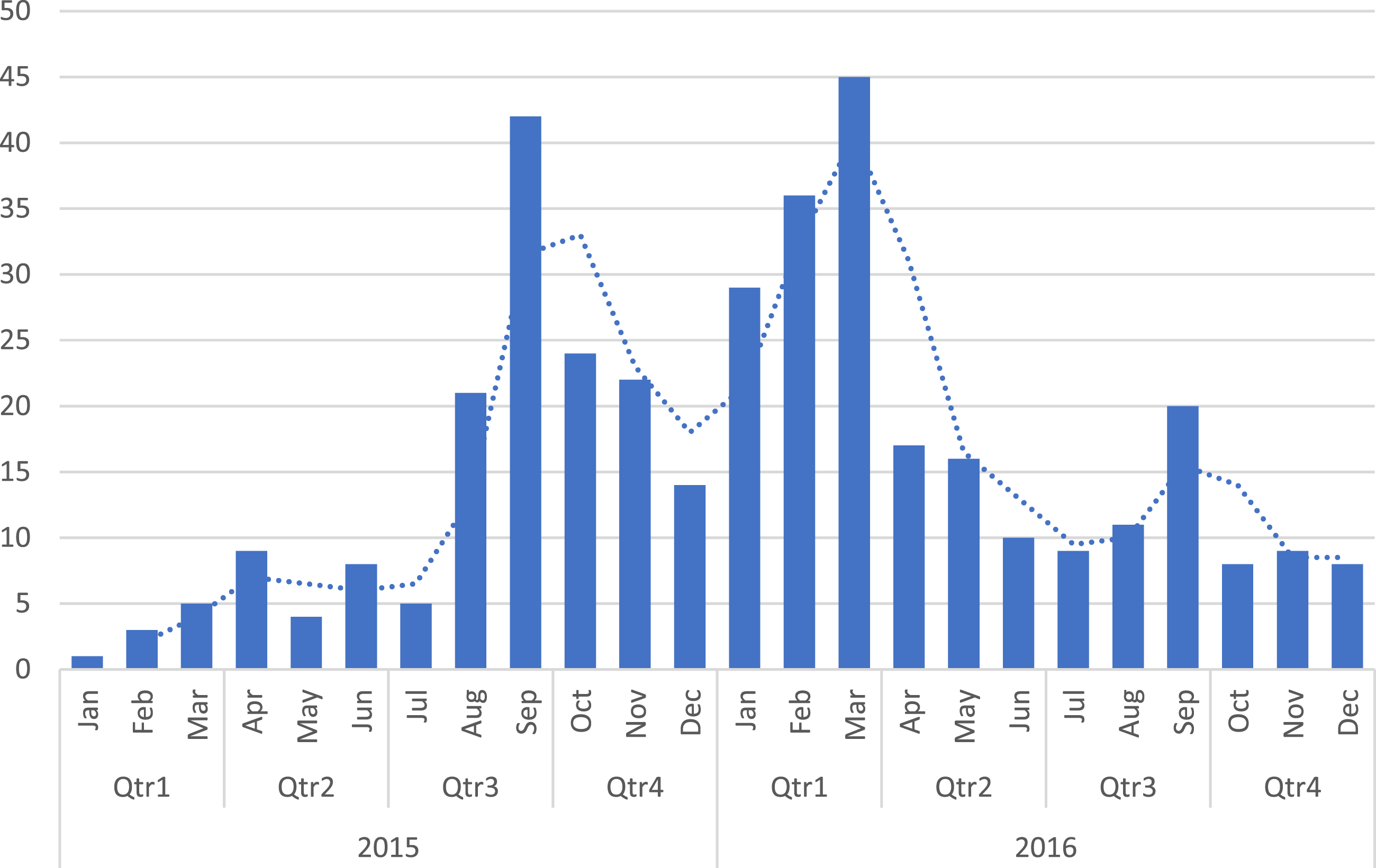
We conclude that there is evidence of framing polarisation in the UK, and that it is primarily (but not solely) driven by the right-leaning UK newspaper in our sample. This finding agrees with the observed rise in right-wing populism in the UK, a paradigmatic case of liberal media systems. The degree of polarisation was, somewhat surprisingly, higher than in Greece, where the media landscape is considered quite polarised.
The second research question derived from the literature on disruptive events relates to the effects of the passing of time. We examine evidence of whether the refugee crisis led to an initially more consensus-based commentary, emphasising resilience and crisis resolution rather than conflict and criticism, and evolved towards more critical commentary over time. The hypotheses related to the ‘disruptive event’ can be tested using several variables from our dataset: (a) criticism of government/opposition; (b) pro-refugee comments; (c) nationalist comments and (d) affective content. It is important to take into account not just the average values of these indicators, but also the number of editorials devoted to the issue, demonstrating an increase in the salience of the topic.
In terms of the total numbers of editorials dealing with the crisis, there are two peaks in coverage, one in summer 2015 at the height of the crisis and especially when the photos of the dead body of Syrian toddler Alan Kurdi on the coast of Turkey emerged in early September; and one in February-March 2016, which corresponds to the period several countries along the ‘Balkan Route’ tightened border controls for asylum seekers. This latter period culminated in the EU-Turkey deal on March 18, 2016. It is notable that Greek-newspaper editorials only manifested a rise in the number of editorials in 2016, mostly because over the summer of 2015 Greek newspapers were preoccupied with the country’s negotiations and referendum on a third bailout agreement with its lenders.
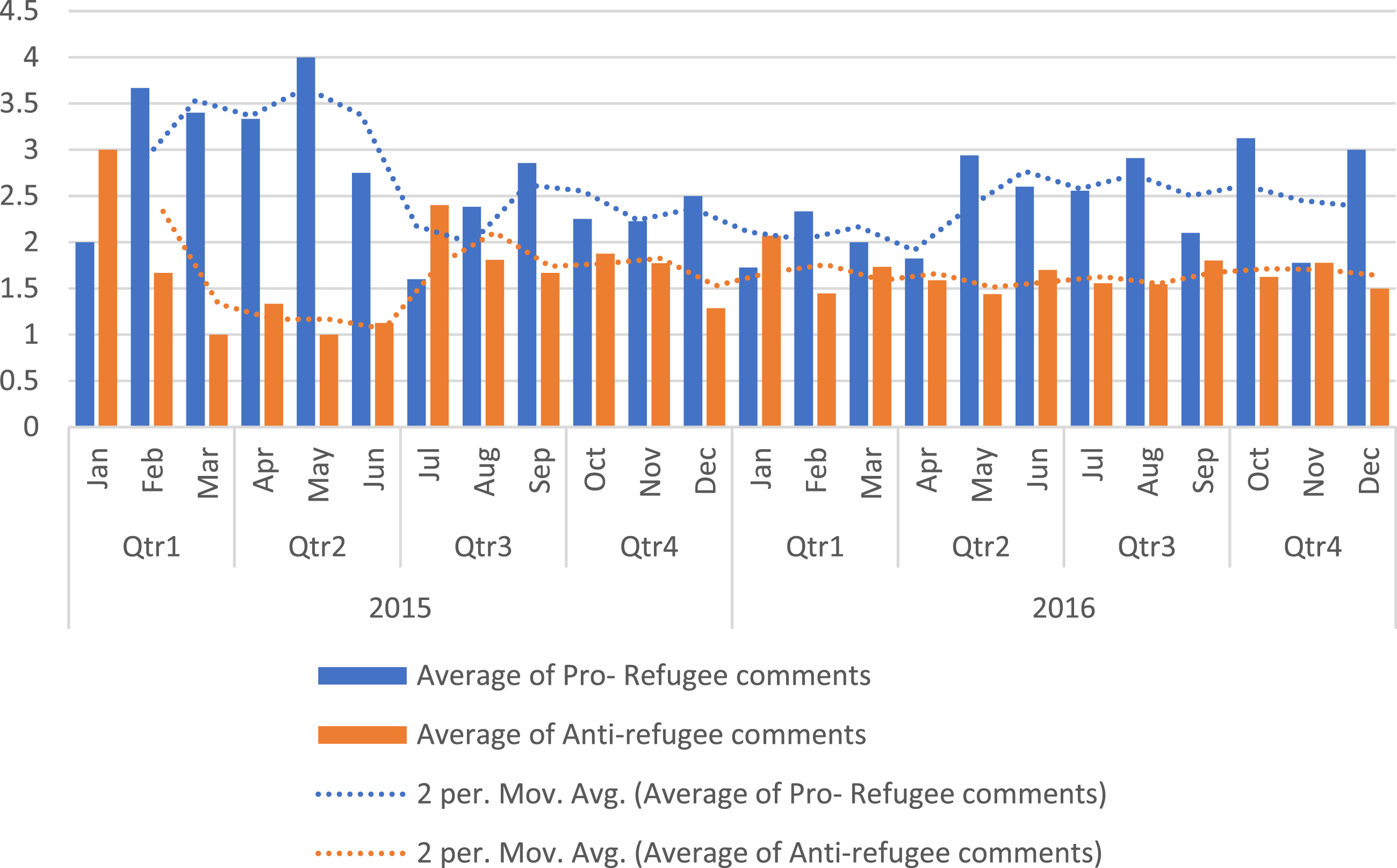
As we see in Figure 5, Figure 6 and Figure 7, the disruptive event hypothesis is not confirmed, because we observe an increase in critical commentary, anti-refugee comments and pro-nationalist references from the beginning of summer 2015, when the crisis intensifies and the salience of the topic increases. The exception is Greece, where we observe more negative, anti-refugee commentary appearing some months after the crisis, in early 2016 (not shown here). If we take the two trends of salience and negative commentary in editorials together, we observe a large increase in negative commentaries in July, while salience of the topic is still low, followed by a steep increase in salience and pro-refugee comments in July-August. The overall impression is thus one of higher salience coinciding with higher polarisation in editorial commentaries. Average of Nationalist Comments (2015–2016). Average of Pro- and Anti- Refugee Comments (2015–2016).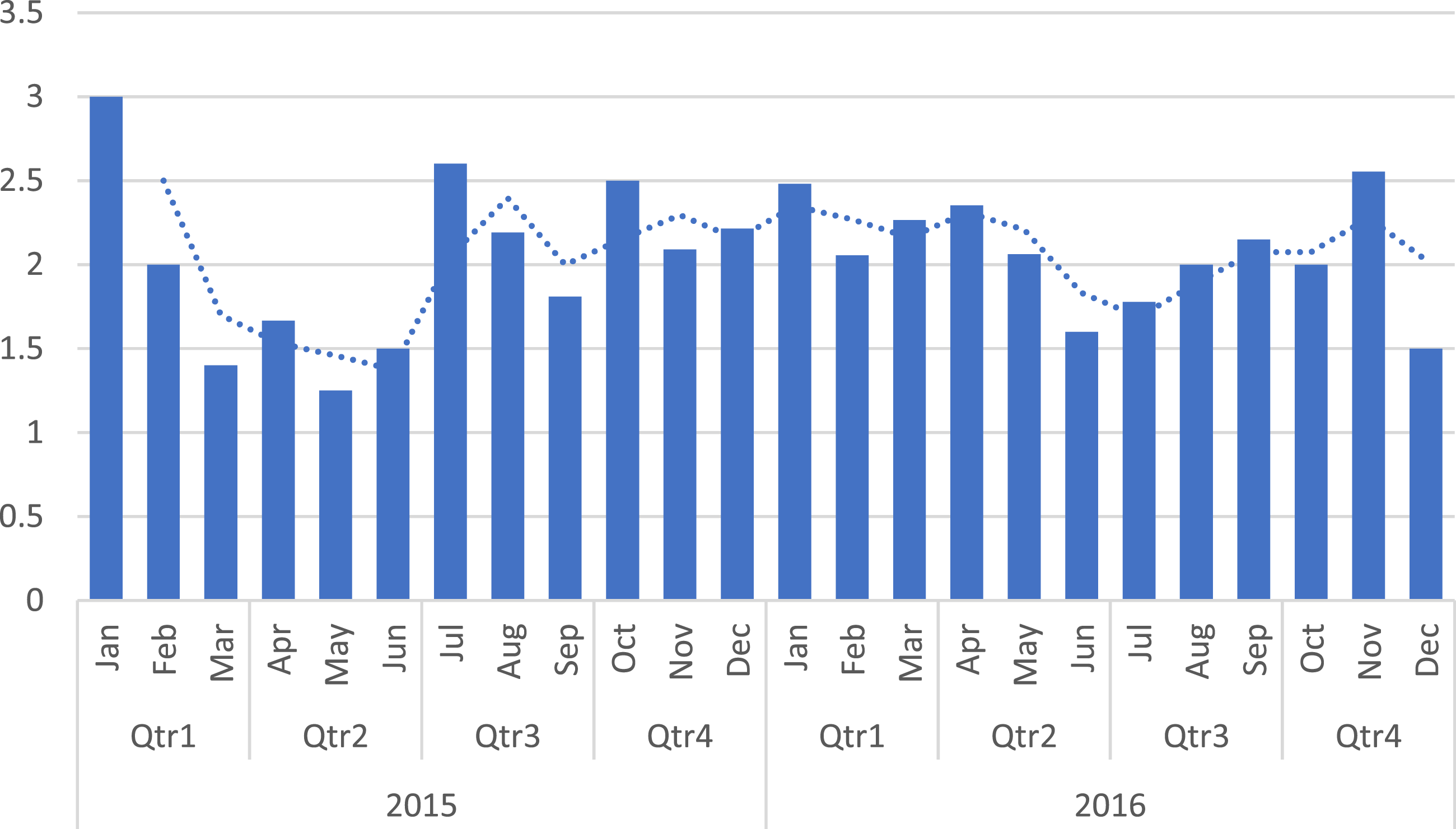
Discussion and conclusions
The analysis of editorials covering the 2015 migration crisis in established newspapers in Germany, Greece and the UK partly confirms several differences in media system characteristics of these countries, in particular the lower level of journalistic professionalism and higher level of polarisation in Greek editorials, as well as the high level of professionalism in German and UK editorials. Our findings identify that several aspects of the media system fundamental theory remain intact while others seem to be evolving.
The Greek newspapers confirm that polarised/pluralist media systems may continue to exhibit low levels of professionalism, despite earlier studies on the field (e.g. Bruggemann et al., 2014) showing that for some of the countries in this category (e.g. Portugal), professionalism levels seem to be rising. In Greece the post-2008 Great Recession seems to have played a crucial role, as it coincided with the migration crisis, and the majority of the country’s population partially attributes the effects of the economic crisis to the massive inflows of migrants even before 2015 (Cavounidis, 2015).
Regarding the other dimensions of Hallin and Mancini’s (2004) theory, political parallelism and references to state actors do not differ significantly among the three countries and, as the factor analysis demonstrated, they do not form distinct dimensions. Polarisation around the issue is high in Greek and low in German editorials, which is consistent with the empirical implications of the theory, but perhaps the strongest finding is that polarisation is highest among UK editorials.
These findings seem to show that several key aspects of the national media systems remain intact while others seem to have evolved, especially in the case of the Liberal media systems. For example, in line with Nechushtai (2018), we find that Liberals seem to be rapidly evolving into a hybrid form of ‘Polarised Liberals’; and Mancini et al. (2021), who show that British newspapers reported the shipwreck at Lampedusa in a parochial way. Relevant findings were identified by recent research on European media systems as regards the Great Recession after 2008 (e.g. Maniou and Ketteni, 2022). In line with Nechushtai (2018) who tested the US case, we argue that the UK seems to be drifting away from the Liberal model into a hybrid category of “Polarised Liberal”, which could become the focal point of convergence in the future.
In the case of the Democratic/Corporatist media systems, we find that they seem to be evolving towards a more competitive media market, in line with Shehata (2010). The findings from German editorials hint that media in democratic/corporatist countries tend to rely more on partisan sources, exhibiting structural changes in their characteristics; representation of political interests projected through the media seems to be shifting from social groups (e.g. trade unions) to individuals (e.g., activists, politicians, consumers) (Herkman, 2009). This conclusion is reinforced by our finding that German editorials are not more ‘pragmatic’ or less value-based (‘humanitarian’) in their framing of the migration crisis than their counterparts in Greece and the UK, and by the partisan salience of the anti-nationalist norm among German editorialists.
Lastly, we find no evidence that there was a consensus built around coverage of the crisis in the three countries, as the disruptive event hypothesis would imply. Editorial commentary in the three countries became increasingly preoccupied with the crisis as it was unfolding, and it simultaneously grew increasingly polarised, immediately clashing over norms of appropriateness and deviance in the editorial coverage (see also Chouliaraki et al., 2017). This finding implies that terrorist acts, upon which the literature relies, are very specific kinds of events and do not compare easily with other kinds of disruptive events, such as the refugee crisis, that have a longer time span and trigger media contestation over antipathy/solidarity towards vulnerable groups. Media coverage of more recent crises, such as the Great Recession after 2008, seem to be more closely related to these findings (see Maniou and Ketteni, 2022), while the 2022 Ukrainian refugee crisis may have conformed to predictions of consensus-based coverage, because it did not trigger media contestations over antipathy/solidarity towards Ukrainians fleeing their country.
Footnotes
Declaration of conflicting interests
The author(s) declared no potential conflicts of interest with respect to the research, authorship, and/or publication of this article.
Funding
The author(s) disclosed receipt of the following financial support for the research, authorship, and/or publication of this article: The study was supported by the University of Cyprus, Article 3/311/2021.
