



Abstract
Scholars repeatedly argue that ‘audience engagement’ as a concept and, consequently as a practice, remain inconsistent and ambiguous. Such conceptual inconsistency is in tension with the relevance that the phenomenon of audience engagement has gained in contemporary discussions about journalism. In this article, we tackle the conceptual inconsistency of audience engagement by conducting a qualitative examination of all academic peer-reviewed publications (217) that dealt with ‘audience engagement’ and interrelated terms such as ‘user engagement’, ‘news engagement’ and ‘engaged journalism’, published between 2007 and 2018. Grounded in this empirical examination, we found that, first, definitions and operationalisations of audience engagement emphasised the production context of journalism over that of reception, yielding relatively unbalanced insights into the phenomenon. Second, we offer a Dynamic Model of Audience Engagement composed of four dimensions: normative, habitual, spatio-temporal and embodied. By grasping the complexity and multidimensionality of audience engagement and by aligning audience engagement with the notion with journalism’s democratic goal of informing the citizenry and more concretely its audience, our Dynamic Model of Audience Engagement facilitates future academic discussions in and around the topic of audience engagement.
Introduction
Engaging audiences lies at the centre of contemporary debates on how news organisations can become more relevant for users and develop sustainable business models. Scholars argue that engagement can contribute to both building or restoring trust in news media and better inform citizens (Zayani, 2021; Cherubini and Nielsen, 2016). Moreover, since the economic viability of journalism has become a vital concern (Nelson, 2019), research suggests that developing an engaged audience can contribute to ensuring donations to or paid membership of news outlets (Posetti et al., 2019).
However, the relevance of audience engagement for journalism studies and practice is in tension with its continuous conceptual inconsistency. Despite the growing importance of engagement practices in newsrooms and an increasing amount of research into them, scholars have repeatedly claimed that audience engagement as a concept, and consequently as a practice, remain inconsistent and ambiguous. For instance, Min (2020) described the notion as a ‘recent buzzword in the journalism industry as well as in the academic studies of journalism’ (p. 626), Chen and Pain (2021) argued that ‘news engagement has been widely studied but lacks consistent conceptualisation’ and Djerf-Pierre et al. (2019) have claimed the concept ‘lacks a unitary definition’. Likewise, the concept has been described as ‘slippery’ (Steensen et al., 2020: p. 1664) and as ‘a mantra in media industries, albeit one that has several meanings’ (Schmidt and Lawrence, 2020: p. 518).
It is worth asking why, if audience engagement is extremely relevant to journalism both in practice and in theory, is there still so much confusion about its conceptual meaning? Research examining the meaning of engagement within journalism practice suggests that the lack of definition of the term stems from practitioners viewing engagement as a means to an end rather than an end in itself (Nelson, 2019). That is, the journalism industry equates engagement with audience growth rather than as a normative concern of journalism: increasing their societal involvement. The implications of this are not without consequences. If engagement is approached by practitioners in an instrumental way, as Broersma (2019) has argued, it risks overlooking its importance as an indicator of journalism’s role in society and democracy.
Interestingly, while the relevance of the notion to the democratic function of journalism has been noted in studies addressing the ambiguity of audience engagement within journalism studies, such research has focused on specific aspects of the concept and less on its connection to the social role of the profession. Research – as we will discuss in the next section – has explored how technology complicates the understanding of metrics or how different media regimes influence the way engagement is practised. While these studies have helped to identify the more complex aspects of engagement, they have not provided a comprehensive understanding of the concept that would clarify its meaning and relevance for journalism studies. We will argue how a renewed conceptual alignment of audience engagement with journalism’s democratic remit seems to offer a way to dispel its ambiguity and better understand its relevance to journalism studies and practice.
In this article, we aim to overcome the conceptual ambiguity of audience engagement by putting journalism’s democratic role at the centre of the analysis. By conducting a qualitative examination of 217 academic peer-reviewed publications dealing with ‘audience engagement’ and interrelated terms such as ‘user engagement’, ‘news engagement’ and ‘engaged journalism’, published between 2007 and 2018, we have analysed how audience engagement has been made relevant for journalism and journalism studies and what we as scholars have gained from this research. Grounded in this empirical examination, we offer a Dynamic Model of Audience Engagement composed of four dimensions: normative, habitual, spatio-temporal and embodied. This model grasps the complexity and multidimensionality of audience engagement by aligning knowledge of the notion with journalism’s democratic goal of informing the citizenry – and more concretely, the audience. The exploration of these four dimensions will facilitate future academic discussions on audience engagement as it will serve to better understand how journalism can contribute to improving the relationship of audiences to citizenship or democracy and to deepen our understanding on the role and significance that journalism holds within a democratic society.
Literature review
Audience engagement with journalism has become crucial to journalism’s survival. A decade ago, Napoli (2011) noted that engagement ‘moved from the periphery to the centre of how media organisations and advertisers think about audiences’ (p. 95), today, there is no doubt that audience engagement stands as a top priority for newsrooms. This need to be more attentive to the interests and preferences of news audiences began to intensify in the late 2000s, when the introduction of social media altered the nature of news consumption. With the widespread adoption of social media by news outlets, advertising revenues shifted from print to digital, making engagement figures the new core of journalism’s digital business model (Costera Meijer and Groot Kormelink, 2021). Against this background, news organisations around the world have opened up dedicated engagement jobs and positions, bringing together a variety of tasks and skills that make engagement a multi-layered endeavour (Lawrence et al., 2018; Wenzel, 2019).
However, the widespread recognition of the relevance of engagement in the present and for the future of journalism has been undermined by an ongoing concern about the conceptual ambiguity of the term. This lack of understanding of what audience engagement actually means hinders an understanding of the implications of what engaging audiences entails for the profession, not only commercially but also in terms of its societal mission.
Research that has examined the lack of definition of audience engagement in journalism practice has offered some explanations for this problem. Lawrence et al.’s. (2018) investigation into different engagement practices among editors of media outlets in different countries found that the lack of definition of audience engagement could be explained by the limitations of current professional discourse? According to the authors, journalists’ tradition of keeping their distance from audiences weakened their capacity to explain the meaning of their interactions with them, undermining their ability to make sense of and describe their engagement practices. Similarly, Nelson (2018) noted confusion in the newspaper industry about how audience engagement was defined and measured. This time the source of ambiguity was not language but the interpretation of engagement metrics. In studying Hearken, an engagement start-up, Nelson (2018) found that the company was unable to quantify the benefit of its offerings and that their advice to newsrooms was largely based on intuition. This difficulty in interpreting the measurement of engagement was also identified by Ferrucci et al. (2020) when examining how journalists discuss and conceptualise it in journalism trade magazines. Scholars found confusion in the interpretation of what audience engagement metrics reveal, which was marked by discrepancies in journalists’ perception of the audience. Practitioners’ difficulties in interpreting engagement, Nelson argued, indicated that newsrooms see engagement as a means to an end, rather than an end in itself. That is, the journalism industry attends to engagement more as a synonym for audience growth than as a normative concern of journalism.
Investigations addressing the ambiguity of audience engagement at a conceptual level have also pointed to the need to move beyond an instrumental interpretation of the notion. However, the perspectives used to analyse and conceptualise it have failed to offer a comprehensive examination of what engagement means and how can it be examined. First, the work by Steensen, et al. (2020) reflected on audience engagement by focusing on its relationship with technology but overlooked the broader developments around engagement, especially the off-line practices of interaction between journalists and their audience. Through a theoretical reflection on the tendency to equate engagement with behavioural analysis, the authors argued that audience engagement involves ‘dialectical tensions of objective actions and subjective experiences’ that are flattened by metric-based parameters as they do not capture the complexity of the phenomenon. With this analysis, Steensen, et al. (2020) argued that research on the notion entails methodological challenges in four domains which the authors define as behavioural, emotional, normative and spatio-temporal dimensions. This methodological distinction, however, only seems to be useful in demonstrating that engagement cannot be captured by metrics alone and the challenges this poses to researchers. By leaving out insights from extensive research on offline engagement, scholars have failed to provide greater conceptual clarity on audience engagement beyond its technological dimension.
Nelson (2019), in turn, analysed audience engagement from the perspective of media regimes. He introduced an important distinction between a reception orientation and a production orientation of engagement. Production-oriented audience engagement pertains to the ways in which journalists attend to their audiences, while reception-oriented audience engagement comprises the ways in which audiences attend to journalists. However, missing from these orientations is an aspect that Steensen et al. (2020) found to be highly relevant: technology. Such an analytical framework gives little consideration to the multidimensional nature of audience engagement, especially to how technology mediates the audience–journalist relationship. Contributions of this analysis are thus primarily oriented to the journalism market. The reception-oriented definitions of audience engagement appeal to for-profit publishers ‘because these definitions can be translated into quantifiable measures that may be considered valuable by advertisers’ (p.7). Production-oriented definitions, in turn, can be more important to non-profit media, as these publishers are less concerned with advertising revenue and instead want to measure their success by the degree to which their audience feels included and empowered by their information (p.7). While this approach may help to better understand how journalists and audiences relate to each other in different media markets, it falls short in clarifying engagement as a complex social and technological phenomenon.
Finally, Broersma (2019) contributed to the understanding of the concept by highlighting the role of engagement for the social and democratic function of journalism. However, his work placed special emphasis on the audience perspective rather than on engagement per se. According to Broersma (2019), audience engagement refers to ‘the cognitive, emotional or affective responses that users have to media content or brands’ (p.1) and it indicates, on the one hand, the value and worth of news for individual users and society at large, and on the other hand, the role journalism should play in society and democracy. The author proposed to conceptualise audience engagement as a process composed of four stages: point of engagement, actual engagement, disengagement and re-engagement. Yet, by focusing primarily on the audience, this attempt to reduce the ambiguity of the notion fails to take into account how journalists and other relevant actors are involved in engagement.
In the present investigation, we take into consideration the contributions and limitations of previous research and advance the conceptual clarity of audience engagement by empirically analysing what scholars have learned from research on audience engagement in the context of journalism’s democratic role. The research questions this article poses are: 1) How can the conceptual inconsistency of audience engagement be tackled by using insights from previous audience engagement research? 2) How does the alignment of this knowledge about audience engagement with journalism’s goal to inform audiences enable a model of Audience Engagement that grasps the complexity and multidimensionality of the notion?
Method
This article aims to overcome the conceptual ambiguity of audience engagement by conducting a qualitative examination of 217 academic peer-reviewed publications dealing with ‘audience engagement’ and interrelated terms such as ‘user engagement’, ‘news engagement’ and ‘engaged journalism’, published between 2007 and 2018. We decided to use this specific time frame because relevant studies on audience engagement show that the introduction and widespread implementation of social media in journalism are relevant in the development and growth of engagement practices. Looking at the research between 2007 and 2018 allowed us to capture social media growth and technological innovations in audience ‘traceability’ (Lewis and Molyneux, 2018).
To answer our first research question, namely, ‘How can the conceptual inconsistency of audience engagement be tackled by using insights from previous audience engagement research?’ we investigated the elements constituting a scholarly object (cf. Borger et al., 2013; Lowrey et al., 2008). To this end, we collected all theoretical and empirical studies inside and outside the field of journalism studies by searching the academic databases ‘Web of Science’ and ‘Scopus’, using the keywords ‘audience engagement’, ‘news engagement’, ‘user engagement’, ‘engaged journalism’ and ‘engagement+journalism’. Because we wanted to understand how engagement had been studied, we decided not to set an explicit definition of the concept in advance. Rather, we focused on exploring how scholars have made sense of the notion itself (and similar ones), understanding that engagement can encompass any and all interactions between news producers or content and news consumers.
Next, given that our interest was to cover articles from all angles, the selection criteria only required that publications addressed both engagement and journalism, regardless of the journal in which they were published. The search resulted in a list of 445 articles, which was then checked against a revision on Google Scholar to verify that no relevant publications were missing. After refining the list and eliminating duplicates, we manually screened each article’s abstracts to ensure that they dealt with audience engagement in journalism. The resulting list yielded 217 peer-reviewed articles, distributed across 60 different journals (see Appendix A), the most recurrent being Digital Journalism (30), Journalism Practice (28), Journalism Studies (19), Journalism (17), New Media & Society (9) and Media International Australia (8).
Subsequently, we examined how audience engagement was conceptualised and operationalised in each of the 217 publications. We registered the implicit and explicit definitions of what is meant by engagement in each publication, recorded the research questions formulated in each article, as well as the contributions that they offered to the study of audience engagement. Likewise, we logged both the actors involved in the engagement, as well as the direction of the relationship (e.g. engagement of young people with political news, engagement of news organisations with communities etc.). Following Borger et al. (2010), we employed basic descriptive quantitative analysis as an extra tool to envision the investigations’ approaches.
To answer our second research question – how does the alignment of this knowledge about audience engagement with journalism’s goal to inform audiences enable a model of Audience Engagement that grasps the complexity and multidimensionality of the notion? – We performed a thematic analysis (Guest et al., 2012) of publications covering audience engagement. We recorded the repetition rate of the different definitions and operationalisations of audience engagement as well as the conceptual frameworks used to study the phenomenon. Within this thematic analysis, we paid particular attention to the methodological design of the investigations and the connections that were both presented and omitted among the concepts covered by each research. We annotated the limitations raised in each research and their reflections on future investigations. This helped us to, first, identify gaps in the literature on audience engagement and, second, to uncover analytical perspectives and/or research methods that are (potentially) useful for investigating how audience engagement serves journalism’s goal of informing audiences. Using a coaxial analysis (Corbin and Strauss, 1990), we identified the categories and perspectives that predominate in the research study of the concept across disciplines. This thematic analysis resulted in the identification of the four perspectives constituting the dimensions of audience engagement. Each dimension will be presented in the next section.
Results
The first finding that emanated from our analysis is that audience engagement research has yielded a relatively unbalanced understanding of what the phenomenon means. As Figure 1 shows, from 2015 to 2018, the number of articles on audience engagement in journalism journals tripled, reaching 39 publications in 2018. While the significant growth in publications correlates with the popularity that research on audience engagement has in other domains, especially in Human and Computer Interaction (28) and in Business and Management (7), it is noticeable that journalism increasingly concentrated research in and around the notion. However, as we will show later in this article, this increased amount of knowledge about audience engagement emanating from journalism journals did not seem to translate into a greater understanding of the value and worth of news to individual users and society at large. Frequency of articles on audience engagement per area.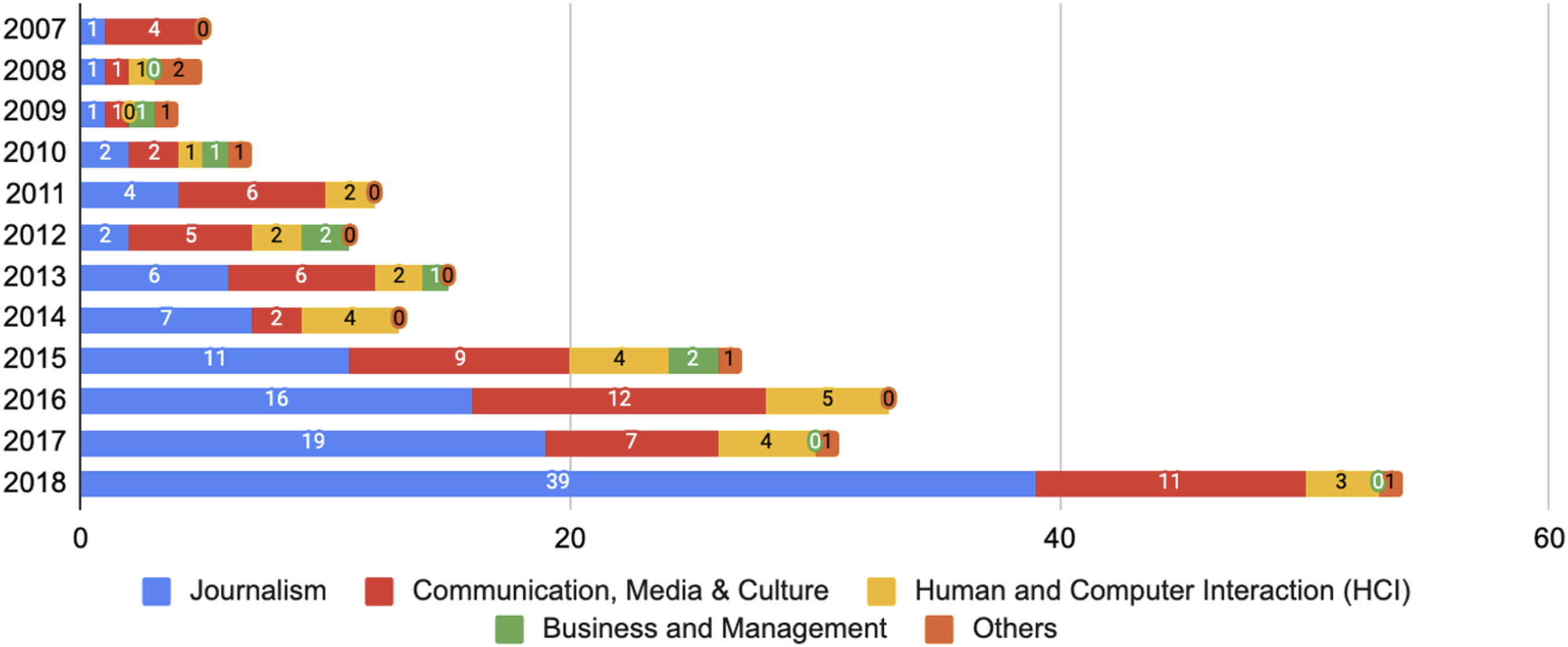
The second finding that emanated from our analysis confirmed Nelson’s (2019) suggestion that definitions and operationalisations of audience engagement emphasised the production context of journalism over that of reception. We found that 145 articles on audience engagement were primarily oriented to tackling the changes that professional culture was experiencing, while a smaller number of 60 articles approached how audiences perceived engagement. Only 29 publications examined how audience engagement contributed to journalism’s goal of informing the audience, yielding a relatively unbalanced knowledge on the phenomenon.
Definitions and operationalisations of audience engagement between 2007 and 2018 mostly concentrated on the changes of journalistic practices in relation to the audience (63). In second place was journalists’ adherence to professional norms while considering the audience (53), especially by investigating how practitioners negotiate their norms of autonomy or objectivity towards the audience (see Figure 2). Considerably fewer articles have focused on the reception of engagement. Most of them centre on the attraction that journalism triggers on the audience (36), while a smaller number deal with the attention that users give to the news across time and space (13), and the impact of journalism in audiences’ lives (11). This emphasis on the production side of engagement might be due to the methodological and financial challenges that are involved in conducting audience research. Moreover, this finding speaks to a larger bias within journalism studies towards researching news production rather than reception more generally. Definitions and operationalisations of audience engagement between 2007 and 2018.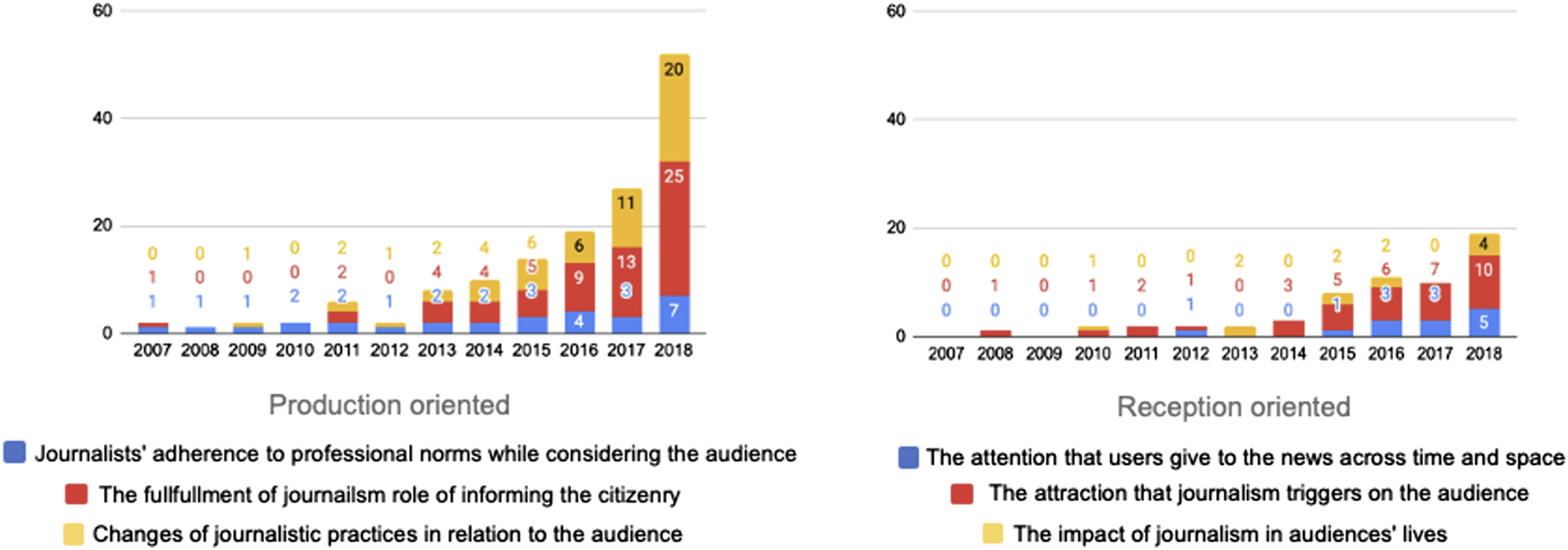
In the next section of this article, we analyse how the knowledge gained about audience engagement can contribute to furthering our understanding of how audience engagement is relevant to journalism studies.
Conceptual relevance of audience engagement for journalism: The introduction of the dynamic model of audience engagement
To answer our second research question, we examined audience engagement research through the lens of journalism’s goal to inform audiences. Interestingly, this examination led to the identification of similar dimensions as the ones posed by Steensen et al. (2020), namely behavioural, emotional, normative and spatio-temporal. However, given that our analysis focused on how empirical knowledge around engagement is aligned with journalism’s goal of informing audiences, and not on how engagement metrics can best be investigated, the four dimensions we identified produce different results from those of previous scholars. In contrast to Steensen’s et al. (2020) findings, the dimensions we identify in our analysis recognise the angles and methods by which meaning has been given to the phenomenon, thus enabling an understanding of engagement that integrates its multi-layered nature.
Considering the number of articles dealing with the fulfilment of the profession’s democratic functions – the first dimension of audience engagement that emerges from academic publications is the normative dimension. This dimension deals with journalism’s ideals and values ranging from its democratic goal of informing the citizenry, to the evaluation of professional norms, particularly objectivity and autonomy. Next, we discovered the habitual dimension, where routines and organised tasks emerged as part of journalistic responsibilities regarding the audience. Finally, we identified two dimensions that accounted for ways of dealing with the audience. The first was the spatio-temporal dimension, pertaining to the traceability of the audience, particularly in relation to the temporality and spatiality of news use. The second was the embodied dimension, which captures how audiences’ interest in the news is understood as a bodily experience involving specific emotions and actions.
A key finding that emanated from the identification of the dimensions is that the clearest and most balanced interpretation of engagement does not necessarily seem to require paying greater attention to audiences, but rather a kind of attention that is conducive to examining what makes for a well-informed audience. The balanced growth of each of these dimensions throughout 2007–2018, as evidenced in Figure 3, demonstrates the multidimensionality and complexity of audience engagement. In the following in-depth analysis of each dimension, we point out methodological and conceptual gaps in the knowledge we have gained and how this multi-layered approach can enrich our academic discourse and its relevance within journalism studies. Articles published across the four dimensions of Audience Engagement.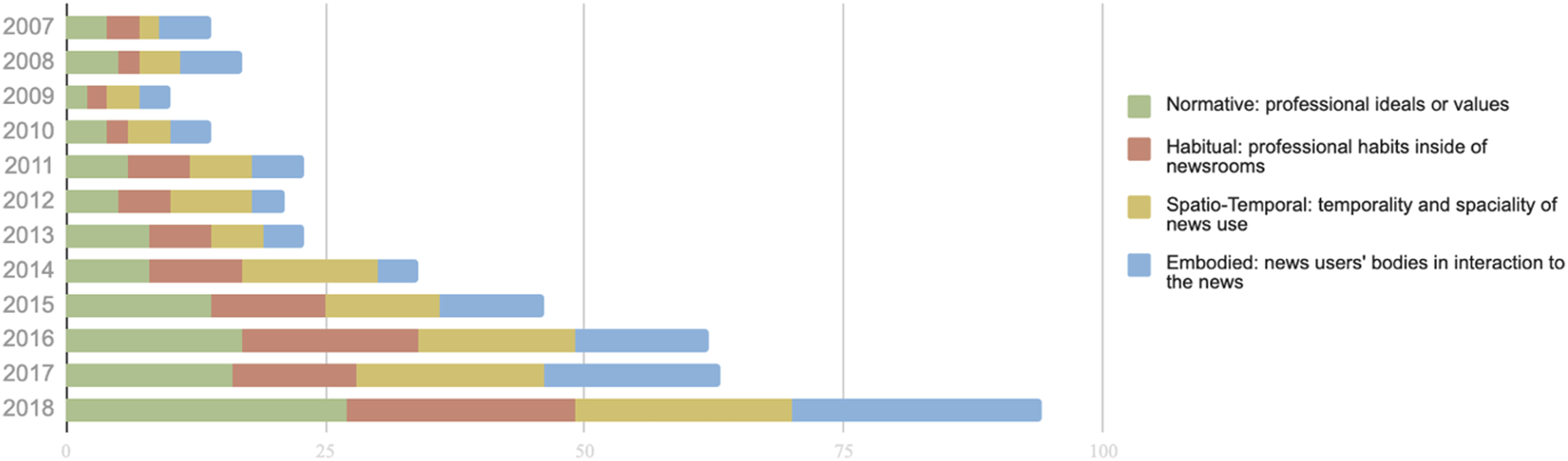
Normative dimension: Assessing journalisms’ ability to better inform the citizenry
The normative dimension deals with journalism’s ideals and values ranging from its democratic goal of informing the citizenry, to the evaluation of professional norms, particularly objectivity and autonomy. Our analysis found that from 2007 until 2010, scholars discussed the notion of audience engagement primarily as an opportunity for journalism to revitalise its social role (Livingstone and Markham, 2008; Markham and Couldry, 2007). Investigations touched on issues such as the exclusion of certain groups of people in news coverage (Baym, 2007), the increased possibilities for journalists to listen and respond to the audience to generate a sense of community (Ames, 2007) and the strategies of interaction that could potentially enhance news credibility (Chung and Nah, 2009). The main suggestion was that the increased use of the internet could lead to higher news consumption rates, and accordingly, an increase in engagement with civic life (Nip, 2012).
Since 2011, however, it was less clear what exactly makes for a well-informed audience. While most of this research provided useful information by explicitly identifying a normative value of audience engagement, the interchangeable use of audience engagement as a synonym for civic engagement suggested that researchers relied on the assumption that individuals’ mere exposure to news, especially public affairs stories, more or less automatically contributed to or was an expression of citizenship. This assumption persisted over the years, obscuring a more empirical assessment of how, when or even whether, journalism contributes to a socially engaged citizenship. In addition, research gradually began to focus on how professionals working at mainstream news organisations were putting their autonomy and objectivity at risk (Anderson, 2011; Ferrer-Conill and Tandoc Jr, 2018). Less attention was given to the democratic relevance of their engagement practices. The limited and disputed normative assessment of audience engagement centred more on journalism’s norms than on the fulfilment of its social and democratic function.
Interestingly, research on local (Firmstone and Coleman, 2014), hyperlocal (Harte et al., 2017), constructive (Kovacevic and Perisin, 2018) and community journalism (Konieczna and Robinson, 2014) somewhat counterbalanced this gap. These scholars illustrated that it was still thinkable to examine how journalism’s goal of informing the audience is performed in relation to, and not to the exclusion of, news users. For example, Carson et al.’s (2016) research on local journalism in Australia found that local media helps citizens imagine themselves as part of a community and therefore, they were ‘fulfilling civic responsibilities, many in accordance with Schudson’s ideal functions, as well as providing a “geo-social” role’ (p. 144). Likewise, Yousuf & Taylor (2017) found that engagement and negotiation between citizens and professional journalists actually helped to promote normative values instead of undermining them. Scholars investigated citizen journalism in Syria through the framework of ‘connective journalism’, a perspective that focuses on the ‘ways to ensure that collaboration between journalists and citizens does not affect the normative values of journalism’ (p. 313). Consequently, these bodies of work approached the normative dimension of audience engagement as directly linked to the fulfilment of journalism’s democratic functions, while traditional norms, such as objectivity or autonomy, were seen as part of the journalistic criteria that enable journalists to play a better role in the communities they serve (Ferrucci, 2017; Batsell, 2015).
Habitual dimension: developing new journalistic routines for better informing audiences
The habitual dimension deals with routines and tasks that emerged as part of journalistic responsibilities regarding the audience. Many studies on audience engagement focused on analysing new and growing forms of audience feedback within news organisations. These investigations unveiled the diverse skills and tasks that denote the new roles or positions that emerge as part of increasing audience-related journalistic responsibilities (Ferrer Conill and Tandoc Jr, 2018). However, journalists’ new routines of engagement were mostly addressed as a process without an explicit or clear outcome. Scholars’ overall assertion was that as social media has taken over as the locus of news consumption and distribution (Hermida, 2011; Thelwall, 2008), professionals must ‘adapt’ to the process of convergence by capturing the attention of the audience (Assmann and Diakopoulos, 2017).
This research gap became apparent in much of the research on the habitual dimension of audience engagement, most of which tended to focus on how the digitalisation of news impacted the profession rather than on how the new routines helped to better inform audiences. Journalists’ tasks or routines were addressed in terms of the normative challenges of accommodating their audience, and little research has been done on the actual professional challenges of engaging to better inform news users. Within this little group of investigations, scholars have shown how journalists’ engagement practices in the service of a better-informed audience lead to insightful findings.
Technology-related research exposed the challenge of managing audience analytic software. For example, Cherubini and Nielsen’s (2016) research on the use of metrics within newsrooms suggested that BBC journalists are ‘empowered to act on the data rather than just delivering them a bunch of numbers on a dashboard’ (p. 17). The obstacles that scholars observed in this process are twofold: firstly, the lack of skill of professionals in using technology tools and secondly, the high costs of technological innovations.
With regard to storytelling, scholars approached professionals’ skills that were oriented towards the production of ‘engageable content’ (p. 32) or the elaboration of interactive storytelling formats that would motivate users to ‘actively participate’ (Meier et al., 2018: p. 1054). Srisaracam (2018) examined how newsrooms can ‘gain benefits from social media storytelling to stimulate ordinary people, influential voices in society and policymakers to act on important issues’ (p. 1089). Practices such as AB testing of news by the ‘fashion of a headline that will be more searchable according to the search engine optimization’ (p. 32), or the elaboration of interactive storytelling formats, would motivate engagement with the audience that can ‘ensure that the quality of journalism is upheld in respect of providing a well-rounded coverage of diverse issues’ (p. 1081). To this end, research acknowledged the potential benefits of experimentation for journalists, particularly concerning innovation-based formats that range from news bulletins featuring personalised news content (Torrijos and Gonzalez-Alba, 2018) to immersive VR storytelling (Soomin Kim et al., 2017) or even news games (Plewe and Fürsich, 2018).
Concerning communication, in turn, scholars lent importance to the moderation of news forums or the personal attributes needed to communicate online (Bossio and Sacco, 2017). Research pointed out that informing the audience not only involves publishing content but also moderating the conversation generated around the stories (Meier et al., 2018). Communicative skills were framed in terms of personal attributes such as ‘respectful manners, openness, and tolerance of frustration and stress’ along with a ‘good sense of humour and sobriety as well as the willingness to be a leader of the conversation’ (Meier et al., 2018: p. 1058). Likewise, practices such as ‘listening’ to news users and maintaining a close relationship with them were described as crucial in fostering journalism’s relevance in society (Marchionni, 2013). This is supported by research on reciprocal journalism (Belair-Gagnon, et al., 2019), which has suggested that lasting exchanges with concrete news users can ‘deepen collective trust, social capital, and overall connectedness—essential components for the vitality of communities of all kinds’ (Lewis et al., 2014: p.230).
Spatio-temporal dimension: Tracing news-users’ patterns to improve their experiences with journalism
The spatio-temporal dimension deals with the traceability of the audience, particularly in relation to the temporality and spatiality of news use. Here, we observed how the advancement of technological tools enabled researchers to both know how audiences are exposed to the news and how their attention is distributed throughout space and time (Lee and Tandoc, 2017; Carlson, 2018). However, while engagement research expanded insight into audiences’ practices of attention to the news, we observed a research gap in the type of attention given to audiences. Research increasingly focused on the amount of time users spend on news and less attention was given to how to enhance the quality of that time (cf. Groot Kormelink and Costera Meijer, 2018). In other words, studies mostly discussed engagement in terms of the amount of attention users give to certain news content, and less attention was given to how to make such real-time knowledge about audiences relevant for journalism’s goal of informing them.
Interestingly, research from other domains such as Human Computer Interaction studies suggested how the integration of new methods can contribute to study the journalistic relevance of tracing news users. For example, researchers O’Brien and Cairns (2015, 2016) spent nearly two decades investigating how information systems can improve their performance through examining the ways in which users interact with online news. To answer the question of whether there is a universal measure of user engagement, researchers tested the validity and reliability of a user engagement scale factoring in the dimensions of aesthetic appeal, usability and focused attention. This information about online user behaviour patterns suggests ways in which journalists can manage and control the attention that particular news genres, styles or modes of online interaction may receive (O’Brien and Toms, 2010; Lehmann et al., 2017). As such, these studies showed how conceptualising audiences also as users enables a closer examination of the ways in which engagement can lead to better informing them. A key aspect that the studies have highlighted is the importance of the information experience.
Mobile news usage studies, for instance, have demonstrated that tracking audiences’ news access patterns can help produce news that users find meaningful or relevant (Westlund, 2015; Van Kerkhoven and Bakker, 2014). Cai and Ye (2016) created a news app specifically meant to examine how people reacted to this technology and its content. Findings showed that proximity significantly affected both user engagement and user satisfaction in mobile journalism. Through geolocation, journalists can know precisely where certain news is being accessed which helps to adapt the content to the person’s spatial location. This process of constant adaption can lead to more engaging news experiences which makes for more efficient and effective news content production, especially in local or hyperlocal journalism.
In the same line, user-oriented research can provide a more comprehensive understanding of how engagement can be improved, by showing how to interpret metrics not only as an indicator of performance but also as an input for improvement. For instance, the notion of ‘small acts of audience engagement’ (Romic et al. 2017) contributes to this view as it recognizes the complexity of online users’ behaviour and does not assume the intentions and motivations of users; instead, it allows their active investigation. More concretely, this perspective suggests considering the ‘implicit and less visible factors influencing engagement, including temporal, spatial and technical affordances’, and further ‘the social position of the producer, for example, altruism, personal gain, social contexts, attitudes and skills, social and cultural capital, and subjective reasons for engaging’ (p. 29).
Embodied dimension: Examining the impact journalism produces in people’s lives
The embodied dimension of audience engagement deals with audiences’ interest in the news as a bodily experience involving specific emotions and actions. In our analysis, we found that research advanced the understanding of how people are attracted to journalism and to a lesser extent it provided insight into their attention’s impact on their lives. A great deal of engagement research has sought to tackle the problem of a lack of social and political participation. However, much of this research started from the assumption that accurate and objective reporting is what determines whether the audience is well-informed. Research on users’ motivations in attending to news rarely focused on an open approach to audiences. In general, practitioners and academics tend to infer users’ motivation or behaviour based on metrics’ incomplete information.
A few examples of research have led to a more holistic understanding of the engagement in alignment of journalism’s goal of informing audiences. For instance, Ahva and Hellman (2015) explored how amateur imagery plays a role in how audiences respond to humanitarian crises. Focusing on the news coverage of the Arab Spring in Syria and Libya, researchers found that engagement is improved through the use of citizen imagery. The embodied feeling of presence evoked by citizen imagery is a ‘potential tool with strongly engaging characteristics, especially in terms of its authenticity and to some degree also its affectivity’ (p.671) and it can ‘transport viewers to the depicted setting, inviting them to sense the depicted world as immediate’ (p. 675). Such feelings were manifested in participants’ bodily sensations such as dizziness or increased heart rate. In a similar vein, comparative research on peace journalism (PJ) and war journalism (WJ) provided a fruitful approach to tackle the capacity of journalism to ignite empathy and compassion among viewers. McGoldrick and Lynch (2016) found that while viewers of WJ versions tended to identify the ‘culprits’ and wanted action against them, PJ viewers tended to favour policy responses to address what they saw as underlying structural problems. Specifically, experiences of watching versions of PJ evoked ‘less anger and less disgust, while promoting hope and empathy, and allowing for cognitive engagement with the problems presented at multiple levels of causality, thus opening receptivity to a range of corrective measures’ (p. 365). One of the most interesting findings of this case study was that engagement with news protagonists prompted participants to ‘engage with unfamiliar arguments; arguments that challenged propaganda and dominant frames and narratives’ (p. 635). A major issue in building a constructive audience experience therefore is how the information is presented.
These studies show that delivering the news alone is not enough to enable audiences to be informed and eventually participate in society. As Beckett and Deuze (2016) argued: ‘if news is going to work for citizens, then we have to find better ways to create, deliver, and consume journalism that is more relevant, reliable, and responsive to the audience’ (p.3). Both how stories are reported or framed (what journalists want the audience to find relevant) and how they are displayed (how such relevance is presented to the audience) are components of the news experience that ultimately shape how people are informed by journalism.
Moreover, Business and Marketing Studies provided relevant insights into the role of embodied experiences in mediating the interest of the audience. Mersey et al. (2012), for instance, conducted in-depth interviews with consumers about the role that specific news outlets play in their lives and identified several specific experiences linked to online news, TV news, newspapers and magazines. Some of the experiences they encountered were temporal – ‘It’s part of my routine’ – or intrinsic enjoyment – ‘While I am on this site, I don’t think about other sites I might go to’ (p. 706). According to these scholars, engagement represents ‘the cumulative experience of the readers across the entire range of ways that content affects their lives’ (p. 698), suggesting that the process by which audiences pay attention and make sense of the world through news cannot be understood without considering people’s emotions and perceptions: their embodied experience.
Conclusions
This article aimed to solve the conceptual inconsistency of audience engagement by conducting a qualitative analysis of 217 academic peer-reviewed publications dealing with ‘audience engagement’ published between 2007 and 2018. A first finding from our research is that audience engagement research has yielded a relatively unbalanced understanding of what audience engagement means. Research has emphasised changes in journalistic practices in relation to the audience and journalists’ compliance with professional norms, especially when investigating how professionals negotiate their autonomy or objectivity vis-à-vis the audience. However, while a first reading might indicate that – an increase in audience-centred research – might be enough to clarify its ambiguity, our analysis suggests that more is needed. Both in production-oriented and reception-oriented research, we observed that its insights into the social and democratic implications of audience engagement were limited and usually dealt with in a rather implicit manner.
A second finding of our research is the identification of the four dimensions of engagement: normative, habitual, spatio-temporal and embodied. The conceptual analysis of audience engagement around these dimensions allowed us to recognise that gaps in engagement knowledge are more related to the quality and orientation of the attention than to the amount of attention that journalists or audiences receive. This is an important finding which underlines this paper’s contribution to ‘the search for and discourse around engaged journalism’ (Wenzel and Nelson, 2020: p. 517). By offering a Dynamic Model of Audience Engagement (Figure 4), that puts journalism’s goal of informing the citizenry at the centre, this model both complements previous conceptual research on the notion and unifies and structures the discussion on engagement. With this model we address the knowledge gaps in audience engagement research and articulate a conceptual and methodological entry-point that opens up new questions and new methods for further investigations of the notion.
First, in articulating a normative dimension, we suggest that future research could devote more attention to the question of when and under what conditions journalism can inspire audiences to become engaged with society. This is relevant in light of recent research on ‘dark participation’ and online harassment of journalists showing that engagement can also entail negative consequences (Lewis et al., 2020). In this regard, research on audience engagement could benefit considerably from perspectives developed in studies on alternative, local or peace journalism that have specifically explored how journalism might potentially encourage, reinforce and reflect the active democratic engagement of readers as citizens (Harcup, 2016). Dynamic model of audience engagement.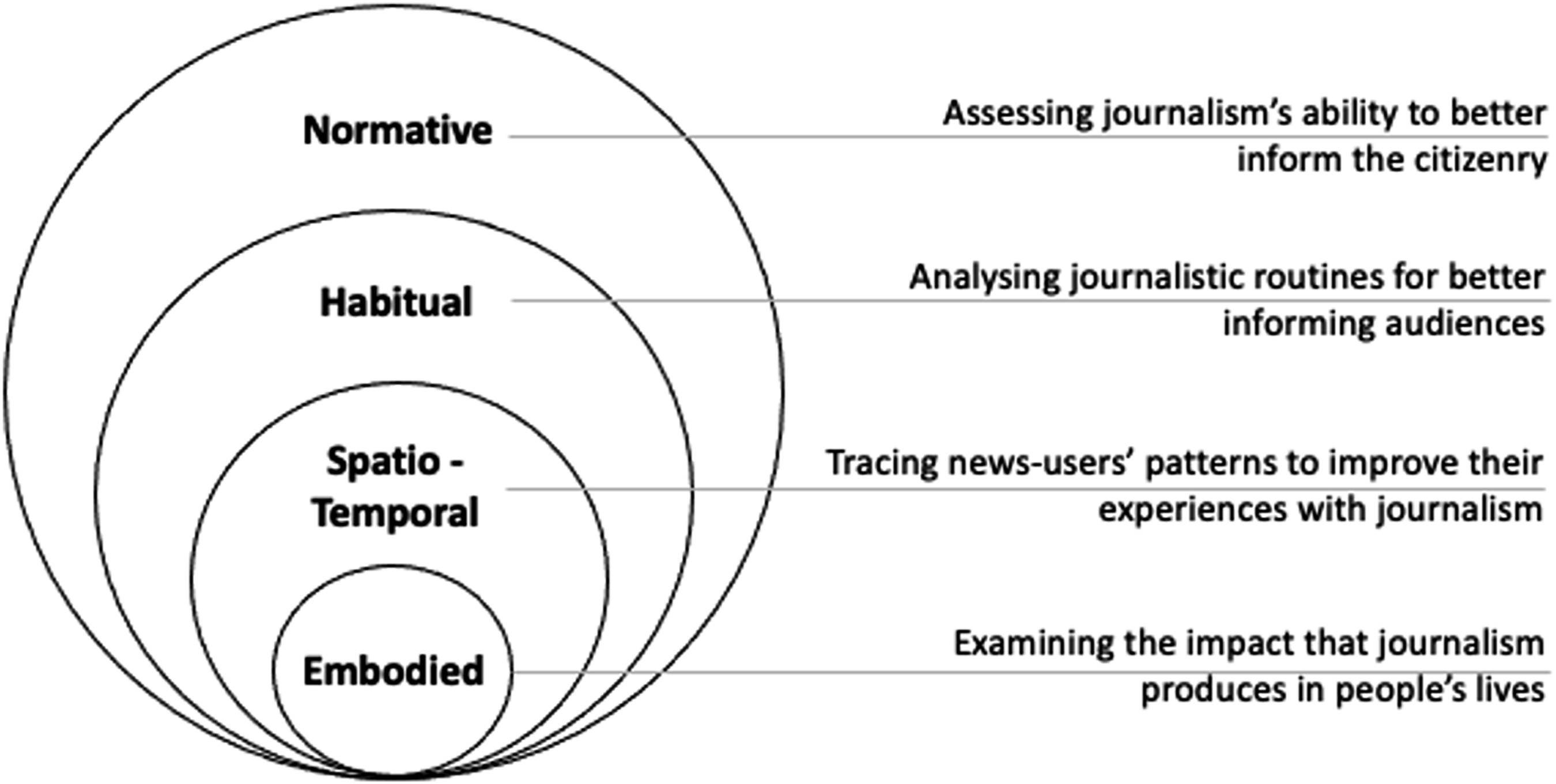
Likewise, future studies could benefit from an extension of journalism’s normative framework that provides scholars with new concepts and terminology suitable for newly assessing the democratic role of the profession (Gajardo et al., 2021). Normative notions such as Silverstone’s (2007) concept of ‘mediapolis’ seem useful to carry out a deeper exploration and subsequent evaluation into how engagement with journalism contributes, in practice, to society. Silverstone’s norms of ‘proper distance’ and ‘hospitality’ can contribute to the study of journalism’s democratic role as they ‘establish mutual responsibility between producers and audiences/users, as well as a capacity for reflexivity on the part of all involved, including recognition of cultural differences’ (Dahlgren, 2013: p.144).
Third, since journalistic routines are the translation of journalism values into practice, a deeper examination of journalists through the habitual dimension of audience engagement could help to develop new indicators to evaluate their democratic performance – indicators in concordance with the complex nature of evolving everyday news use. The inclusion of the notion of Valuable Journalism (Costera Meijer, 2010, 2013; 2019) in engagement research, for example, would enable a closer examination of how journalism can provide the kind of user experience people really appreciate as an enrichment of their life and are willing to pay for in money and/or attention.
Fourth, future research could focus on assessing the nuances and complexities of news users’ online ‘behaviour’ – their preferences, tastes and reactions towards journalism which are considered in the spatio-temporal and embodied dimension of audience engagement. This requires considering the complex nature of audiences as composed of concrete human beings who continually switch positions as citizens or as consumers, and who at other times use journalism for other interests or purposes (Belair-Gagnon et al., 2020; Costera Meijer, 2001; Schrøder, 2019). A key aspect here is the consideration of metrics beyond the rules of the attention economy. Research conducted by Groot Kormelink and Costera Meijer (2018), for instance, has suggested that audience analytics can actually contribute to producing better quality news as ‘information about users might be used for tracing and providing news that has “proportional relevance” to different communities’ (p. 681). Monitoring users can help to produce better quality news by enhancing the usability of particular journalism, as well as the pertinence of its distribution in a particular area. The incorporation of perspectives from the fields of HCI and Business and Marketing contributes to this angle as it illuminates the strengths and weaknesses of both the collection and interpretation of user data. Moreover, an exploration of the multi-layered nature of how audiences experience the relevance of the news (Costera Meijer, 2021) can also shed light on the opportunities and limitations in building and sustaining relationships between audiences and news users as an embodied experience (Lakoff and Johnson, 1999). Costera Meijer and Groot Kormelink (2020) showed that from an embodied dimension it is not only the content of the news that matters but also ‘the materiality of devices and platforms and people’s sensory embodied experiences’ (p. 639).
And fifth, considering that audience engagement is vital to the present and future of the profession, an important part of improving research into the phenomenon lies in the availability of both human and financial resources to carry out research. As we have seen in this article, studying audience engagement demands an approach that takes the audience into greater account and embraces new research methods and tools, both of which can be costly to fund. This means that the challenge of advancing audience engagement research rests not only on the shoulders of academics, but also on the commitment that universities and research institutions demonstrate to fostering the development of knowledge conducive to exploring how journalism can play a better democratic and societal role.
Finally, it is important to note that the results and conclusions of this research may be somewhat limited, as only indexed academic articles published between 2007 and 2018 have been considered. However, although extending the range covered to later years would have allowed us to include more recent research in the analysis, we do not consider this will alter our analysis nor the conclusions. After all, this interval covers the emergence and the full implementation and expansion of audience metrics and social media into journalism practice.
Supplemental Material
sj-pdf-1-jou-10.1177_14648849221080356 – Supplemental Material for How to tackle the conceptual inconsistency of audience engagement? The introduction of the Dynamic Model of Audience Engagement
Supplemental Material, sj-pdf-1-jou-10.1177_14648849221080356 for How to tackle the conceptual inconsistency of audience engagement? The introduction of the Dynamic Model of Audience Engagement by Constanza Gajardo and Irene C Meijer in Journalism
Footnotes
Declaration of conflicting interests
The author(s) declared no potential conflicts of interest with respect to the research, authorship, and/or publication of this article.
Funding
The author(s) disclosed receipt of the following financial support for the research, authorship, and/or publication of this article: This work was supported by Becas Chile Scholarship Program, ANID, Chile (grant no. 72180532).
Supplemental Material
Supplemental material for this article is available online.
Author Biographies
Constanza Gajardo is a PhD Candidate in Journalism Studies at the Vrije Universiteit Amsterdam. Her research focuses on analysing the democratic potential of the relationship between journalism and its audiences in the new media landscape. Her work is being financed by the Becas Chile Scholarship Program under Grant 72180532 (ANID, Chile), with the support of Universidad de Concepción (Chile).
Irene Costera Meijer is Professor of Journalism Studies and head of the Journalism Studies Department (Ma and Ba-program) at Vrije Universiteit Amsterdam. In addition, she works as a professor II at the Research group for Media Use and Audience Studies of the Department of Information Science and Media Studies at University of Bergen (Norway). Costera Meijer is an international expert on media audiences and the principal investigator of both the NWO Research project The New News Consumer  and the research project Reinventing Quality Journalism in the Digital Age. Her research interests focus on audience studies and in particular on the impact of digitalisation on changing practices of media consumption and news use and their consequences for media organisations. Related to this Costera Meijer often collaborates with media organisations which makes it easier to translate research results into relevant suggestions for every day professional practices. Costera Meijer is on the editorial board of the academic journals Digital Journalism and Journalism Practice.
References
Supplementary Material
Please find the following supplemental material available below.
For Open Access articles published under a Creative Commons License, all supplemental material carries the same license as the article it is associated with.
For non-Open Access articles published, all supplemental material carries a non-exclusive license, and permission requests for re-use of supplemental material or any part of supplemental material shall be sent directly to the copyright owner as specified in the copyright notice associated with the article.
