



Abstract
The microbiome has captured the attention of researchers and newspapers. We studied how the subject is covered in The New York Times, The Times, and El País via DowJones Factiva (2007–2019), analyzing aspects that included article type, word count, authorship, topic, and citation of researchers, organizations, and journals. We found that 87.6% of newspaper articles (409/467) were news articles and most were longer than 300 words (396; 84.8%), with The New York Times devoting the highest proportion to newspaper articles over 1000 words (99; 45.4%). While basic science findings received the most attention from newspapers from 2007 to 2015, topics related to medicine and nutrition attracted increasing attention from 2016 to 2019. Newspapers showed a domestic preference for their respective researchers, organizations, and journals.
Introduction
The role of quality newspapers in public opinion about scientific discoveries
Despite structural changes in newspapers through the transition from print to online newspaper articles, broadsheet or quality newspapers still function as a source of information not only for the lay public, healthcare professionals, politicians, and different industries, but also for other newspapers (National Science Board, 2018; Wolf and Schnauber, 2015).
Previous studies have shown that leading quality newspapers played a key role in disseminating information and shaping perceptions about the human genome (Costa, 2003), personalized medicine (Marcon et al., 2018), graphene (Guasch et al., 2019), and emerging biotechnologies (Marcon et al., 2019).
Within newspapers, the opinion and editorial pages of major newspapers not only influence general public opinion, but they can also set the agenda for decision makers and can therefore be seen as an indicator of debate and social interest around a specific topic (Coppock et al., 2018).
Journalistic factors affecting the completeness and quality of the reporting of biomedical information
Although conciseness is one of the main features of journalistic information, when reporting biomedical information, it is difficult to be concise, rigorous, and informative at the same time. Some authors have set the minimum length of a piece of biomedicine news at 300 words for information related to disease prevention or therapeutic or diagnostic procedures (Casino, 2015; Schwitzer, 2007). Articles of between 100 and 300 words (also known as “news briefs”) are incomplete (Schwitzer, 2007), while the length of health-based articles is a predictor of their higher quality score (Robinson et al., 2013). It has also been shown that news briefs are associated with press releases more frequently than longer articles (Casino, 2015). As press releases from leading medical journals contain various deficiencies that contribute to distorting research findings, the abundance of biomedical news briefs based on press releases would lead to incomplete and inaccurate biomedical information, which constitutes a public health threat (Woloshin and Schwartz, 2002).
Beyond the length of news articles, the presence or absence of authorship in a journalistic article can be considered an indicator of the content’s quality. Health and nutrition newspaper articles attributed to named journalists have shown significantly higher quality scores compared to anonymous articles (Kininmonth et al., 2017; Robinson et al., 2013).
Social relevance of the microbiome
Information on microorganisms and their role in health—in contrast to the widely held belief that the only good microbe is a dead one—has become a topic of considerable scientific and public interest (Huang et al., 2019; Marcon et al., 2021; Prados-Bo and Casino, 2021; Shan et al., 2019).
The microorganisms living in a specific habitat, their genomes, metabolites, and the surrounding environment are collectively called the microbiome, while the term microbiota refers to the microbes themselves (Berg et al., 2020). The microbiome has received increased attention over the last 40 years, as supported by a search in PubMed database performed in March 2021 showing that the number of studies mentioning “microbiome” or “microbiota” in their title or abstract grew from 10 in 1980 to more than 16,000 in 2020. Microbiome research has moved from cataloging microorganisms to harnessing them—especially gut microbes—in the clinical setting. Studies have shown an association between an altered gut microbiome and both gut diseases and metabolic and neuropsychiatric disorders, although causation has yet to be established (Lynch et al., 2019). Beyond human health, research on microbiomes also has implications for food production and environmental sustainability (Sariola and Gilbert, 2020).
As microbiome science and potential use in prevention and therapeutics evolve, it is also important to address their social implications. In that regard, a previous comparative analysis between microbiome research articles in general and business newspapers and the scientific literature between 2007 and 2019 showed that the press tends to focus on observational studies, with less coverage given to clinical trials and systematic reviews (Prados-Bo and Casino, 2021). Further research on microbiome coverage by newspapers showed that microbiome health benefits and actions that could be taken to reap said benefits are typically oversold despite the research in the field being in its infancy (Marcon et al., 2021). As with other scientific breakthroughs, the microbiome has generated hopes and hypes that can lead to misinterpretations (Bik, 2016; Hanage, 2014; Shan et al., 2019). Therefore, with the increasing pace of microbiome articles appearing in the press, studying how information about the microbiome is covered, above all in quality newspapers, takes on a socially significant role.
Press citations to assess the impact of scientific journals and research articles in the lay press
One way of studying the social relevance given to a scientific topic is through content analyses of newspaper articles in which a paper, researcher, organization, or journal is cited, known collectively as “press citations” (Casino, 2018). Content analysis of that kind has been widely used for studying the journalistic coverage of scientific articles (Bartlett et al., 2002; Cortiñas-Rovira and Ramon-Vegas, 2013; Houn et al., 1995); the extent to which newspaper coverage of research is associated with a higher number of downloads of scientific articles (Mathelus et al., 2012); and the characteristics of medical research news reported in newspapers in terms of study design (Selvaraj et al., 2014).
Although scientific findings traditionally disseminate to the scientific community via scientific journals, when studies are reported in newspapers they tend to receive a higher number of citations. That explains why most leading scientific journals issue press releases (Bartlett et al., 2002). Different studies have supported the notion that coverage of science findings in the lay press may amplify the transmission of research results and increase citations in academic journals, compared to no media coverage at all (Fanelli, 2013; Kiernan, 2003; Phillips et al., 1991). The citation advantage seems to be more pronounced for the studies covered in quality newspapers (Dumas-Mallet et al., 2020).
Although emerging interest in the microbiome has been the focus of studies on the language used when informing on microbiome science (McLeod et al., 2019; Nerlich and Hellstewn, 2009), an in-depth content analysis of information on the microbiome in the press during a reasonable period of time is lacking.
Journal citation patterns according to newspaper nationality
The presence of authors from different world regions in high-impact medical journals shows a marked under-representation of developing countries. Sumathipala et al. identified four regions of the world with different patterns of representation of their respective authors in the medical literature. Three regions were well characterized and include the USA, the UK, and other Euro-American countries (Canada, Australia, New Zealand, and European countries other than the UK). The fourth region, which was less defined in the medical literature, comprises countries from the rest of the world (Sumathipala et al., 2004).
A further analysis of a sample of 22 international quality newspapers belonging to the four regions described by Sumathipala et al. (as described above) identified national citation patterns for medical journals. First, American and British newspapers showed a high number of citations of medical journals, non-American and non-British Western newspapers showed a moderate number of citations of medical journals, and newspapers from the rest of the world showed a low to very low number of citations of medical journals. Second, American and British newspapers showed a highly nationalistic pattern of citation of their respective national medical journals (Casino et al., 2017).
Objectives and hypotheses
Our aim is to analyze how three quality newspapers, The New York Times, The Times, and El País (one from each of the three medical journal citation patterns described above), reflected research advances on the microbiome over the period 2007–2019.
The first objective is to analyze the number of news and opinion articles that each newspaper devotes to the microbiome.
Hypothesis 1. Quality newspapers will cover the microbiome through a high number of editorials and opinion pieces in the context of an abundance of news articles on the subject. The second objective is to analyze the length of newspaper articles and the attribution of articles to named journalists as indicators of the completeness and quality of reporting on the microbiome.
Hypothesis 2. Quality newspapers will inform on the microbiome mostly through long, in-depth articles (300 words or more) that include authorship. The third objective is to analyze which microbiome-related conditions and which interventions to manipulate the microbiome as a means of maintaining health and treating disease are mentioned the most.
Hypothesis 3. Medicine and nutrition-related aspects around the microbiome will receive considerable public attention. Finally, the fourth objective is to explore whether newspapers favor domestic research in their coverage of the microbiome.
Hypothesis 4. The sample of influential newspapers analyzed will reflect a preference for domestic researchers, organizations, journals, and research projects.
Methods
Scope and analysis form description
The newspapers were selected according to two criteria. First, they are considered to be among the foremost quality newspapers that lead opinion in the countries mentioned in the three citation patterns (USA, UK, and other Euro-American countries excluding USA and UK) (Casino et al., 2017). Second, they feature in the DowJones Factiva database for the period under study. When selecting El País, we used two additional criteria: representation of the third pattern (other Euro-American countries) in terms of volume of citations of papers from medical journals (Casino et al., 2017), and knowledge of the newspaper (Gonzalo Casino coordinated health news at El País for more than a decade).
Variables analyzed for each newspaper article on the microbiome.
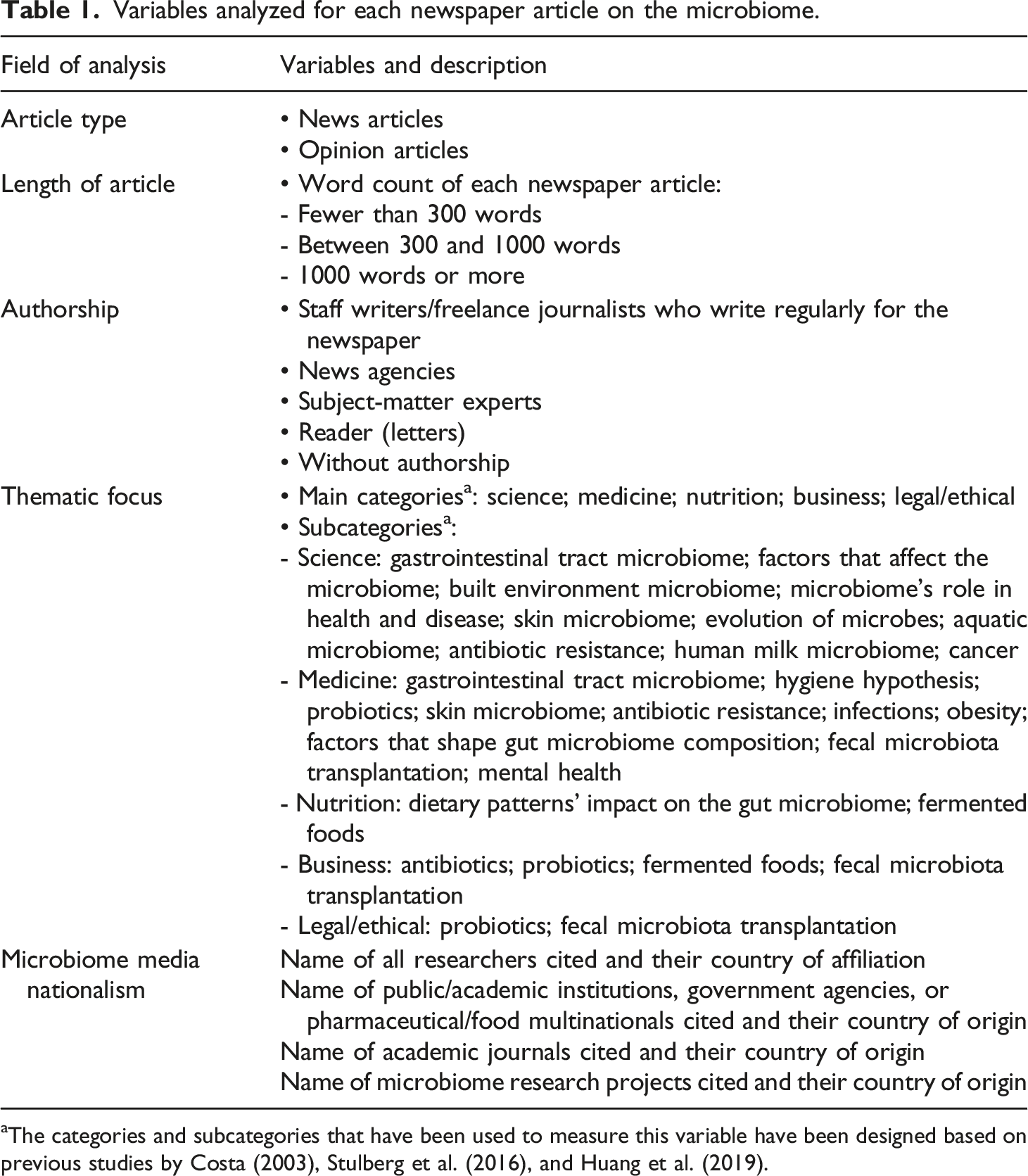
aThe categories and subcategories that have been used to measure this variable have been designed based on previous studies by Costa (2003), Stulberg et al. (2016), and Huang et al. (2019).
The process used to obtain and classify variables of interest for each newspaper article on the microbiome is described in detail in the Supplemental material.
Data collection
In line with previous studies on press coverage of biomedical research (Dumas-Mallet et al., 2017, 2018, 2020; Pallari et al., 2017; Prados-Bo and Casino, 2021), the Factiva database was used to search for newspaper articles on the microbiome in The New York Times, The Times, and El País.
All searches were performed annually and print and online editions of each newspaper were analyzed together, after ruling out duplicate newspaper articles. The searches were performed by one author (Andreu Prados-Bo) from January to March 2020. Search phrases and filters used in Factiva are listed in the Supplementary file. The two authors (Andreu Prados-Bo and Gonzalo Casino) analyzed the entire data set of 467 newspaper articles. Disagreements were discussed until agreement was reached.
In total, 1348 newspaper articles included the word microbiome or any of its synonyms in the three newspapers. After the selection process, 218 newspaper articles were selected from The New York Times (179 news articles and 39 opinion articles), 146 from The Times (132 news articles and 14 opinion articles), and 103 from El País (98 news articles and five opinion articles) (Figure 1). Flow diagram of the collection of newspaper articles on the microbiome.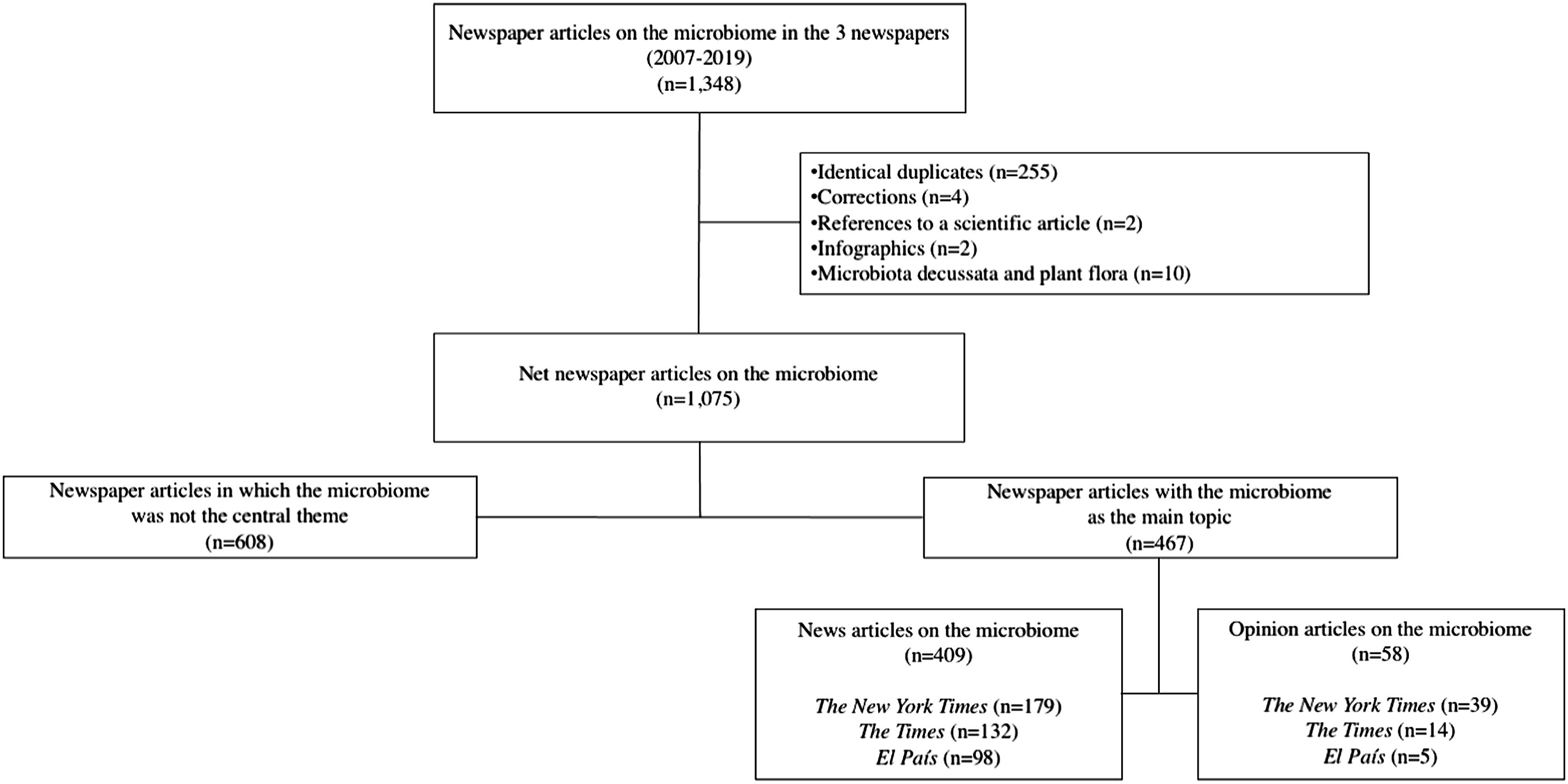
Statistical analyses
The primary outcome variable was the number of newspaper articles on the microbiome collected by year from 2007 to 2019. That variable was presented as absolute frequency and percentage for the overall sample and subinterest groups: individual newspapers, article type, word count, authorship, themes, subcategories, researchers, organizations, journals, and research projects.
The relationship between qualitative variables was evaluated with a Chi Square test. The level of significance was set at 0.05. Version 3.5.2 of software R (SPSS Inc., Chicago, IL, USA) was used for all analysis work.
Results
Coverage, word count, and authorship of newspaper articles on the microbiome
Coverage, word count, and authorship of newspaper articles on the microbiome.
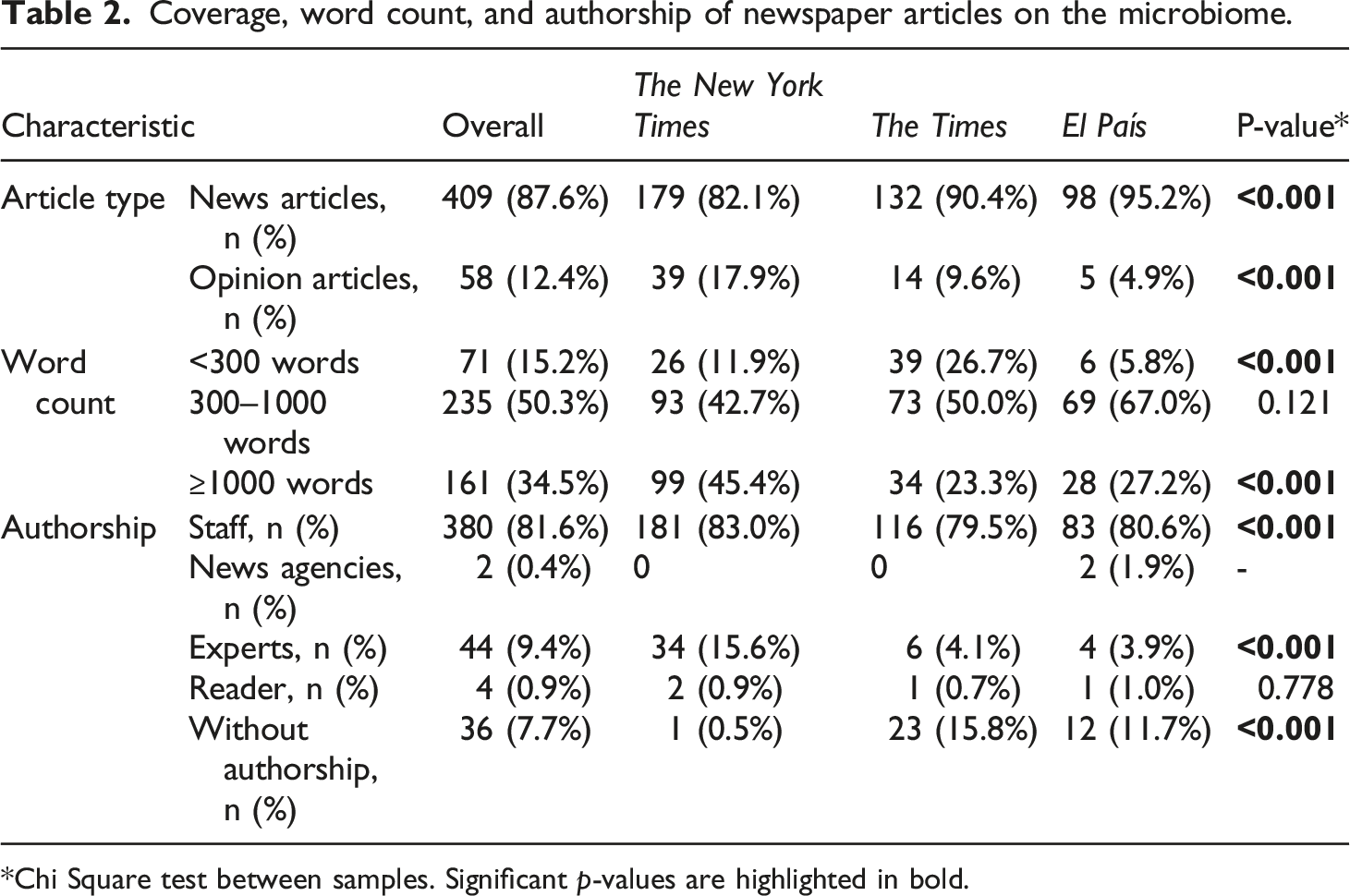
*Chi Square test between samples. Significant p-values are highlighted in bold.
Newspaper articles on the microbiome were mainly long texts with a word count of more than 300 words for all three newspapers from 2007 to 2019 (396; 84.8%). The New York Times was the newspaper with the highest proportion of newspaper articles on the microbiome that were more than 1000 words long (99; 45.4%) (p < 0.001), while in The Times and El País, the coverage of the microbiome was mainly in the form of newspaper articles between 300 and 1000 words long (73; 50.0% and 69; 67.0%, respectively). The Times was the newspaper with the highest proportion of brief articles less than 300 words in length (39; 26.7%) (p < 0.001) (Table 2).
For authorship, 181 (83.0%) newspaper articles from The New York Times, 116 (79.5%) from The Times, and 83 (80.6%) from El País were written by the newspapers’ own staff or freelance journalists (p < 0.001). The New York Times was the newspaper with the highest number of newspaper articles on the microbiome written by subject-matter experts (34; 15.6%), followed by The Times (6; 4.1%), and El País (4; 3.9%) (p<0.001). In The New York Times, articles written by experts were in the form of opinion articles, and it was the newspaper with the highest proportion of expert-written articles and opinion-type articles. On the other hand, The Times was the newspaper with the highest number of newspaper articles on the microbiome that were without authorship (23; 15.8%), followed by El País (12; 11.7%) and, last, The New York Times (1; 0.5%) (p < 0.001) (Table 2). Furthermore, newspaper articles without authorship from The Times were precisely the shortest in length (61–257 words), but the same trend was not observed for El País, where average length was 496 words.
Thematic focus of newspaper articles on the microbiome
A constant characteristic of all the newspapers under study was the abundant presence of themes relating to science (195; 41.8%), medicine (193; 41.3%), and nutrition (54; 11.6%) (p < 0.001), albeit not equally distributed across the study period. Basic science findings received the most attention from newspaper articles on the microbiome from 2007 to 2015. In contrast, medicine and nutrition represented more than 50% of the overall microbiome topics covered in the three newspapers from 2016 to 2019. Business (15; 3.2%) and legal/ethics (10; 2.1%) were the topics that attracted the least attention from newspapers (p < 0.001) (Figure 2). Distribution of newspaper articles on the microbiome by thematic focus.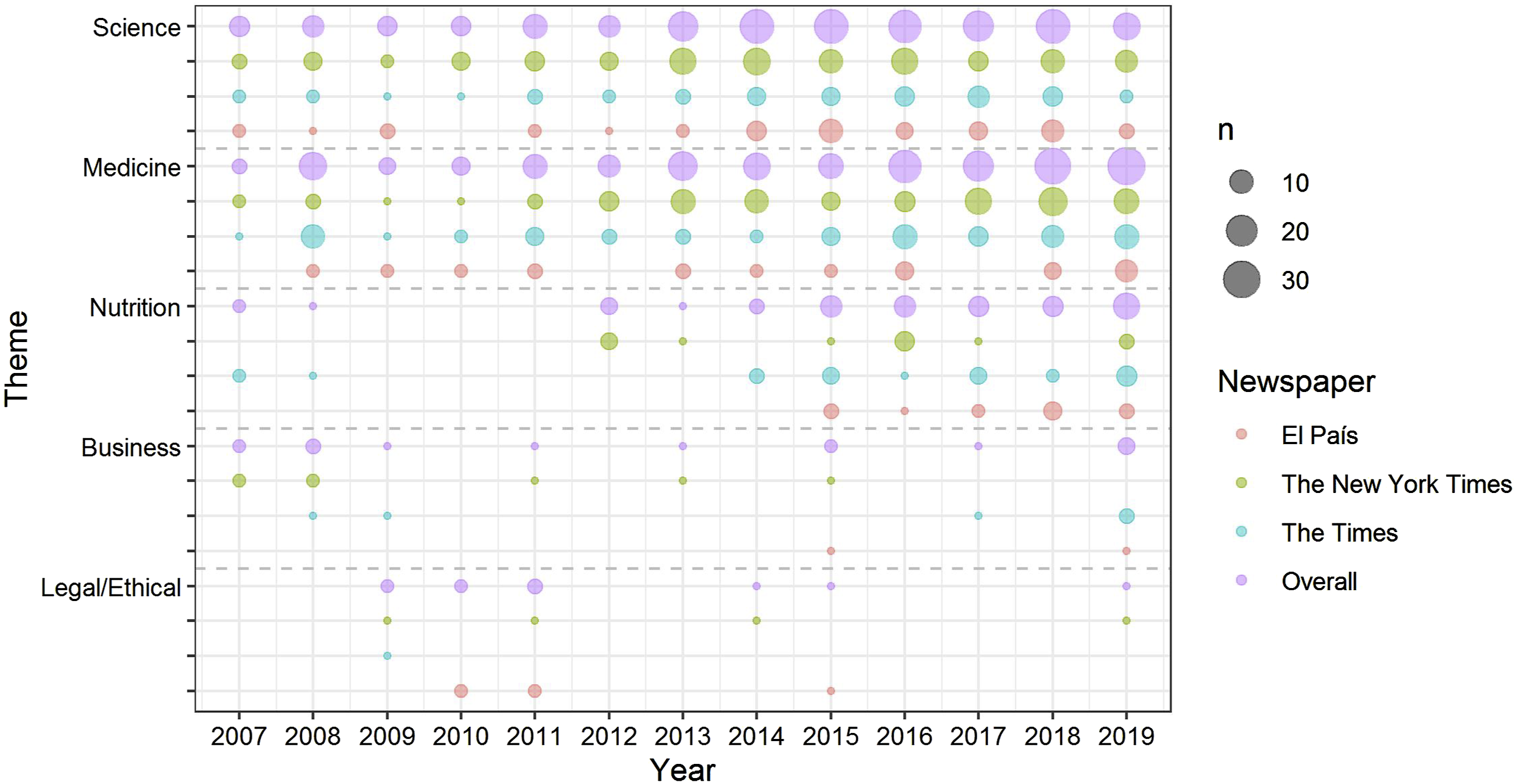
The 10 most discussed scientific topics in all the newspapers under study were the gut microbiome (61; 29.0%), factors that affect the microbiome (including diet, delivery type, and antibiotics) (25; 12.0%), the built environment microbiome (14; 7.0%), the role microorganisms play in all ecosystems’ health (11; 5.0%), the skin microbiome (11; 5.0%), evolution of microbes (10; 5.0%), the aquatic microbiome (10; 5.0%), antibiotic resistance (9; 4.0%), human milk microbiome (5; 2.0%), and mechanisms linking gut microbes with cancer (5; 2.0%).
On the other hand, the 10 most discussed medical topics were the gut microbiome (22; 11.0%), the hygiene hypothesis (17; 9.0%)—this hypothesis postulates that a decrease in the frequency of infections secondary to sanitation and antibiotic use may contribute to the current increase in the frequency of immune-related diseases—, probiotics for disease prevention or treatment (16; 8.0%), the role of skin microbiome in health and skin-related maladies (14; 7.0%), antibiotic resistance mediated by harmless microorganisms (13; 7.0%), infections led by gut bacteria (12; 6.0%), the role of gut microbiome in obesity (12; 6.0%), factors that shape the composition of gut microbiome (10; 5.0%), fecal microbiota transplantation for tackling Clostridioides difficile infection (8; 4.0%), and the microbiome-gut-brain axis (5; 3.0%).
The most frequently mentioned nutrition and lifestyle-related topics were the impact of dietary patterns and specific nutrients on the gut microbiome (30; 55.6%) and the nutritional and health benefits of fermented foods (19; 35.2%).
Despite business being the least covered topic, within this category antibiotics (6; 28.6%), probiotics (4; 19.0%), fermented foods (4; 19.0%), and fecal microbiota transplantation (2; 9.5%) captured the most attention from newspapers. Moreover, regulatory issues regarding probiotics and fecal microbiota transplants were the most intensely covered topics within the legal/ethics category (6; 60% and 3; 30%, respectively).
Nationality of researchers, organizations, journals, and research projects cited in newspaper articles on the microbiome
The top five researchers and organizations cited in the newspapers under analysis (2007–2019) and their nationality, according to the three world regions of journal citation patterns by newspaper nationality, as described by Casino et al., 2017.
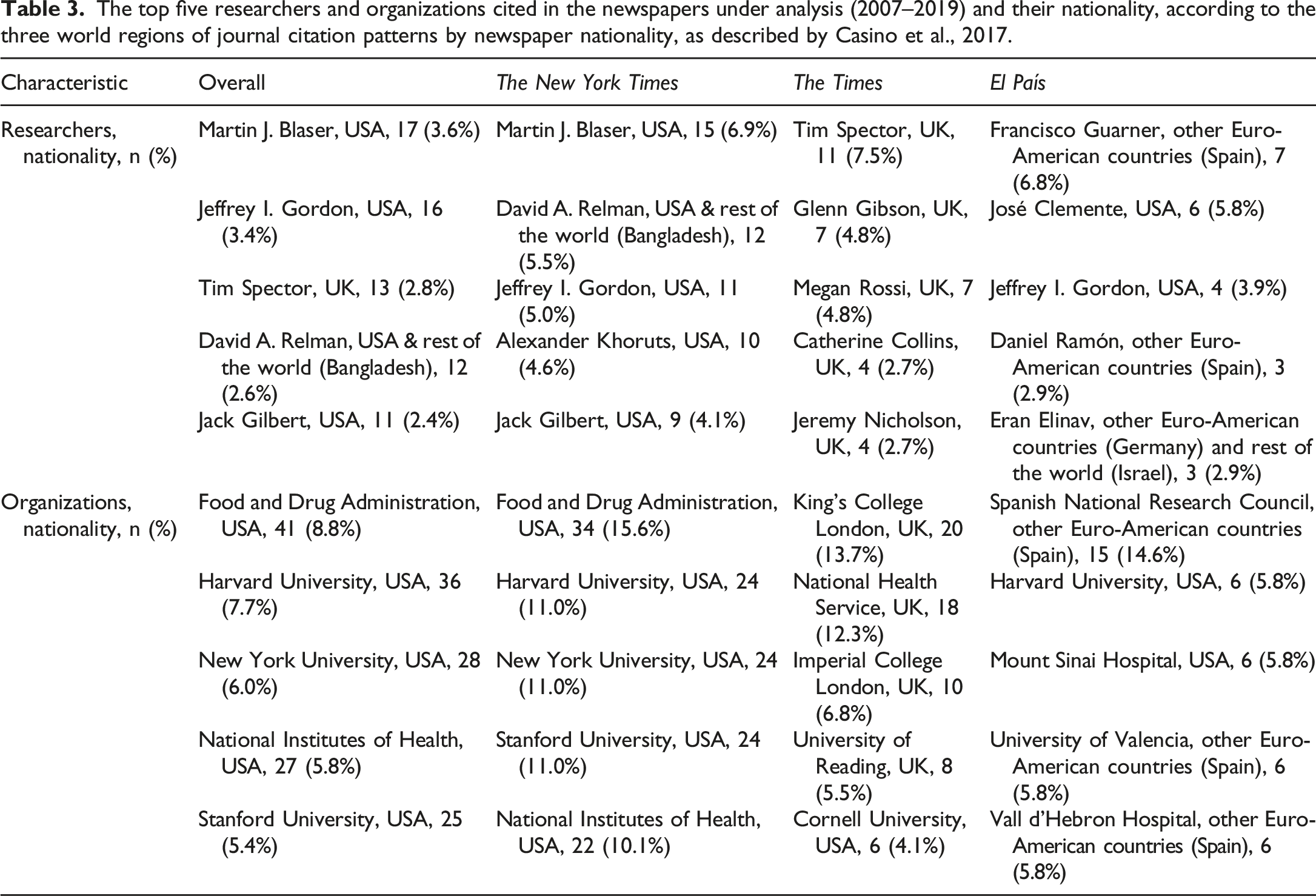
Likewise, all newspapers showed a preference for covering stories from national organizations, which consisted mainly of public and academic institutions and government agencies. While The New York Times covered the work of government agencies in both first and fifth positions (Food and Drug Administration and National Institutes of Health, respectively), The Times prioritized the National Health Service in second position. Moreover, the first organization echoed by El País was the Spanish National Research Council, while the other organizations cited were distributed evenly between US and Spanish organizations (Table 3). Newspaper articles on the microbiome that did not mention any researchers, organizations, or academic journals represented 22.1% of all newspaper articles on the microbiome in The New York Times, 25.9% in The Times, and 21.4% in El País.
In contrast, the presence of pharmaceutical/food multinationals in newspaper articles on the microbiome was scarce and was limited to some newspaper articles on business and nutrition categories (appearing in less than 3% of total articles; data not shown).
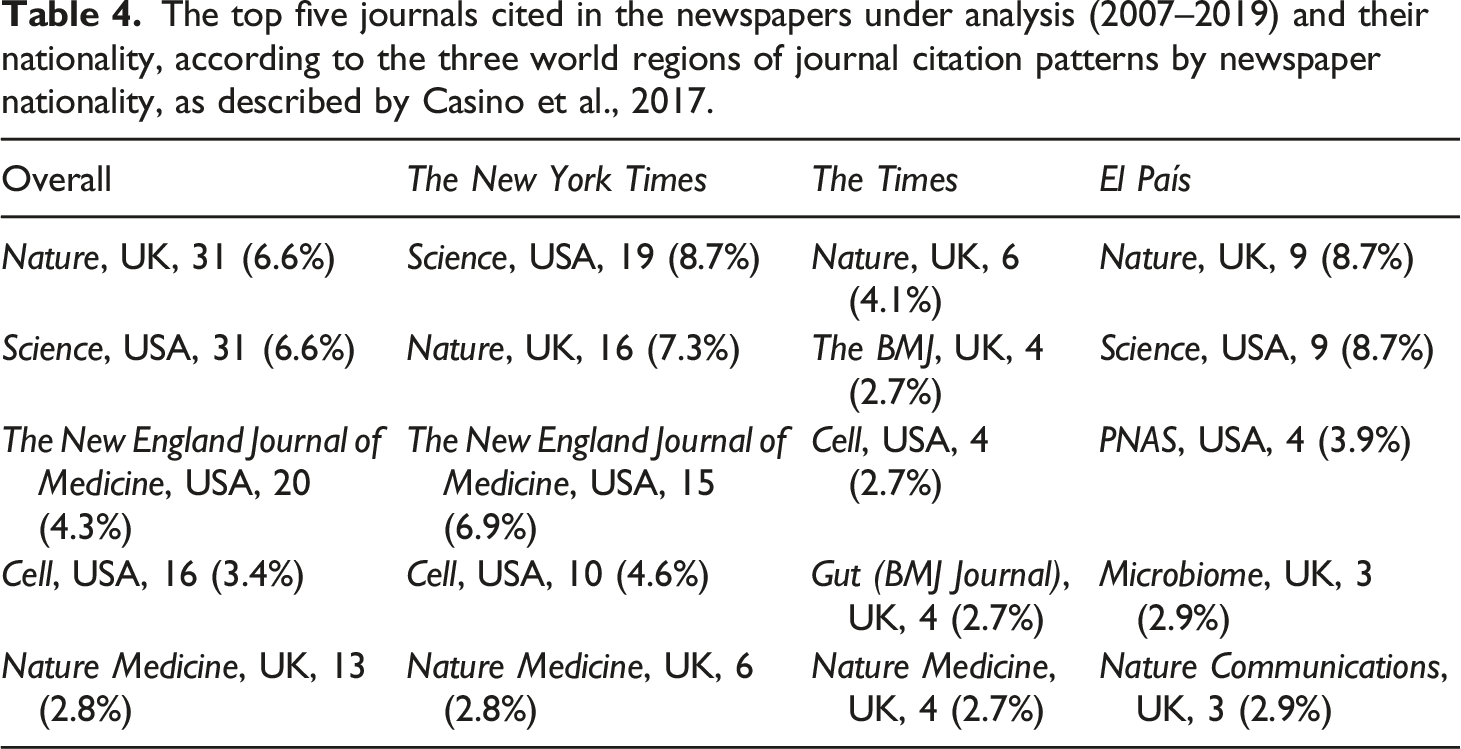
The top five journals cited in the newspapers under analysis (2007–2019) and their nationality, according to the three world regions of journal citation patterns by newspaper nationality, as described by Casino et al., 2017.
Within newspaper articles citing a microbiome research project, the Human Microbiome Project was the most mentioned in all newspapers (25; 39.1%), followed by the American Gut Project (6; 9.4%), and the British Gut Project (5; 7.8%).
Discussion and conclusions
The content analysis of the microbiome newspaper articles that appeared over the period 2007–2019 in three leading quality newspapers reveals that the microbiome is largely portrayed in the form of long news articles by named journalists. There is also an evolution from a focus on basic science toward more medicine and nutrition-related topics, with a national preference for the newspapers’ respective domestic researchers, organizations, and academic journals.
Newspaper coverage of the microbiome
The coverage of newspaper articles on the microbiome found in The New York Times, The Times, and El País was not surprising, given the well-known biomedical coverage provided by the three newspapers (Casino et al., 2017). The annual number of articles on the microbiome in The New York Times, The Times, and El País during the period 2007–2019 is 17, 11, and 8, respectively. To put those data into context, those numbers are considerably higher than the annual number of articles published in 2007–2017 in The New York Times, The Guardian, and El País on graphene (around two articles a year in all three newspapers), which is another subject of considerable scientific interest (Guasch et al., 2019).
Newspaper articles on the microbiome are mainly covered in the form of news articles by staff or freelance journalists who write regularly for the three newspapers. The New York Times is the newspaper that publishes by far the most opinion pieces in absolute and relative terms compared to the other two. Most of the articles are written by experts from US companies, universities, and microbiome research centers, which is not surprising because the top institutions involved in microbiome research and related applications are also in the United States (Li et al., 2020). Similarly, the representation of graphene and the human genome in the press also showed that most of the articles are written by the newspapers’ own staff (Guasch et al., 2019) and that opinion articles have a high presence in The New York Times (Costa, 2003). The proportion of opinion articles on the microbiome in the three newspapers under study outweighs the number of opinion articles about graphene in The New York Times, The Guardian, and El País (Guasch et al., 2019), which may indicate social interest around the microbiome (Coppock et al., 2018). That is testament to the emerging role of the microbiome in health and disease that has led some scientists to call it the “forgotten organ” of the human body (O’Hara and Shanahan, 2006).
Length and authorship of newspaper articles on the microbiome
Newspaper article length and the presence of authorship confirm the microbiome’s relevance in the context of biomedical information in quality newspapers. The microbiome is covered in the three newspapers mostly in the form of long newspaper articles between 300 and 1000 words long (50.3% overall). It is worth noting that overall in the quality press analyzed, more than a third of the articles (34.5%) are 1000 words or longer, which shows that newspapers of that type have taken an in-depth approach to many microbiome-related topics. While The New York Times was the newspaper with the highest proportion of articles that were more than 1000 words long, The Times was the newspaper with the highest proportion of articles with fewer than 300 words. In the coverage of the Human Genome Project, Costa also showed that The New York Times preferred long and exhaustive articles (Costa, 2003). The proportion of short articles (fewer than 300 words) on the microbiome in El País was 5.8%, which is much lower than the proportion of short articles that cover biomedical topics from top medical journals (33.7%) in the same newspaper (Casino, 2015). Marcon et al. found that the reporting of concerns about personalized medicine increased with word count (Marcon et al., 2018), highlighting how long articles are preferred for accurately covering complex topics, such as the microbiome.
As expected, the vast majority of articles on the microbiome include authorship and only a minority are anonymous. Health-based newspaper articles attributed to named journalists showed higher quality scores compared to anonymous articles (Kininmonth et al., 2017; Robinson et al., 2013), which highlights the importance of authorship as an indicator of the quality of reporting on the microbiome. While 71.5% of biomedicine news briefs in El País are associated with a press release, that proportion decreases for articles of 300 words or more, of which 45.2% are associated with a press release (Casino, 2015). It is also well known that press releases from medical journals contain various deficiencies that contribute to distorting the research findings (Schwartz et al., 2012; Woloshin and Schwartz, 2002) and the quality of journalistic information is closely associated with the quality of press releases (Sumner et al., 2014).
The Times was the newspaper that showed the highest proportion of anonymous newspaper articles (15.8%), followed by El País (11.7%), and said articles are the shortest in length. That can be explained by the fact that short articles usually came directly from press releases, so journalists tend not to add their name and publish only the most relevant information. Although the percentages of anonymous articles in the two newspapers are not high, the findings are worrisome, as news briefs of fewer than 300 words have been linked to incomplete and less rigorous health and medical information and are more likely associated with a press release (Casino, 2015; Schwitzer, 2007). For a topic as complex as the microbiome, it is likely that news briefs cannot ensure a minimum of completeness and quality for the information reported. In contrast, only 0.9% of The New York Times’s articles were anonymous (shorter than 300 words), with the newspaper’s coverage of the microbiome confirming its leadership in scientific content.
Thematic coverage of the microbiome in quality newspapers
The broad thematic press coverage of the microbiome observed in our study is expected, given the emerging involvement of microorganisms in human and environmental health. Basic science findings, clinical trials about microbiome-targeted interventions, and nutrients and dietary patterns for shaping the gut microbiome were the most frequently covered themes. However, the intensity of the topics covered varied depending on the study period. An emerging pattern shows prominent coverage of basic science findings from 2007 to 2015, followed by a gradual increase in medicine and nutrition-related topics from 2016 to 2019, mirroring scientific publications on the microbiome in thematic focus (Nerlich, 2017).
Within scientific topics, the gut microbiome and factors that affect its composition were the two most intensely covered topics. That is explained by the fact that major research focus worldwide has been mainly on gut microbes, rather than the microbiome of other habitats. In addition, diet is one of the most widely studied environmental factors to which the gut microbiome is exposed daily. In agreement with our findings, dietetic advice that the reader can take to reap microbiome-related benefits was the most commonly mentioned topic among American and Canadian audiences between 2018 and 2019, although only 19% of articles make microbiome-related critiques or limitations (Marcon et al., 2021). The findings are expected, as previous content analyses of nutrition-based stories have described newspapers’ increasing interest in information about food and nutrition that will seize readers’ attention, despite said information often being supported by poor quality evidence (Cooper et al., 2012; Kininmonth et al., 2017).
In addition, the gut microbiome still remains the most intensely covered theme in medical newspaper articles, followed by the microbiome’s contribution to the current rise in modern immune and metabolic diseases and, in third position, the role of probiotics in disease prevention and treatment. When it comes to the first and second most covered frames, it should be acknowledged that observational study types are often over-represented in newspaper articles on microbiome research (Prados-Bo and Casino, 2021). That highlights the need to inform the public that an association between an altered microbiome and a specific condition does not necessarily mean the causal involvement of the microbiome (Prados-Bo and Casino, 2021). Moreover, although “dysbiosis” is an inaccurate term referring to reduced microbiome diversity, which implicitly prompts the reader to act to improve that diversity despite it not always presenting a risk to health, the expression is widely used in the newspaper articles under analysis. In order to properly communicate information about the microbiome without misinterpretations, more accurate expressions suggested by scientists instead of dysbiosis include “changed,” “altered,” “adapted,” or “different” (Shanahan and Hill, 2019).
Articles on probiotics appeared as the third most discussed subcategory within medicine/health category, which reflects the public’s interest in ready-to-use treatments for improving health through the gut microbiome (Hill et al., 2014). Even though a previous study on newspaper coverage of the microbiome showed that taking probiotics is the second most frequently cited action in newspapers for taking care of the microbiome, cautionary notes are not always acknowledged (Marcon et al., 2021). Similarly, fermented foods have received increased attention from newspapers within the nutrition category, with kombucha, yogurt, kefir, and kimchi among those commonly listed in the three quality newspapers for taking care of the gut microbiome. Despite their popularity, beyond yogurt and kefir, there is limited clinical evidence for the effectiveness of most fermented foods in gastrointestinal health and disease (Marco et al., 2021).
Despite C. difficile-related diarrhea being one of the few indications where microbiome-related treatments in the form of fecal microbiota transplants are supported by robust evidence (Walter et al., 2020), this was the ninth most mentioned subtopic in medical newspaper articles. Marcon et al. also found that the topic is only discussed in a small number of articles in the English-language press (Marcon et al., 2021), which can be explained by the media’s representation of the treatment as inherently disgusting (Chuong et al., 2015).
The finding that business and ethical/legal issues received little attention can be explained by the fact that no microbiome therapeutics requiring US Food and Drug Administration and European Food Safety Authority or European Medicines Agency scrutiny have been approved for human use yet (Taroncher-Oldenburg et al., 2018).
Countries to which the most frequently mentioned researchers, organizations, journals, and research projects belong
The New York Times, The Times, and El País show a domestic preference for their respective national researchers, organizations, and journals. The patterns of featuring researchers and organizations from their own countries was more apparent for the American and British newspapers, while less so for the Spanish newspaper. The Times seems to be more domestically oriented than The New York Times, which was to be expected due to the British newspaper’s stronger preference for its top national biomedical journals, compared to its American counterpart (Casino et al., 2017). This fact is also explained as the United States and the United Kingdom are over-represented in the medical literature published in high-impact journals compared to other countries (Sumathipala et al., 2004).
The choice of elite peer-reviewed high-impact journals such as Science, Nature, The New England Journal of Medicine, and Proceedings of the National Academy of Sciences when reporting on microbiome research has two explanations. First, journalists tend to inform mainly on a limited number of academic journals that have a high impact factor and which usually publish the most important research. Second, journalists focus on journals that promote papers through press releases in an attempt to garner more media coverage by facilitating the work of journalists (Conrad, 1999). However, previous research has shown that press releases launched by academic journals or institutions are usually incomplete and contribute to exaggerating the perceived importance of findings (Schwartz et al., 2012; Sumner et al., 2014).
Although our study offers an in-depth examination into how quality newspapers have dealt with the microbiome across an ample period of time, it also has limitations. We did not focus on studying the impact of microbiome research in other mass media such as low-circulation newspapers, magazines, radio, television, blogs, or social media. Our study is limited in scope as it only focuses on a small sample of print and online newspapers from three countries, although our selection includes some of the most widely read and best quality international newspapers. Furthermore, the mention of a researcher, organization, or academic journal in a newspaper does not provide any information about the context of the citation or the newspaper article’s quality.
In conclusion, despite being a recent area of research that is still in its infancy, our study suggests the microbiome is subject to in-depth coverage in the quality press. A transition from basic science to medicine and nutrition topics can be seen as an indicator of the gradual maturity of the science that is reaching the lay public, which mirrors the patterns observed in the scientific literature itself. Last, the fact that newspapers favor domestic researchers and journals may be hindering communication of the overall picture of what is going on in microbiome research in fields beyond those reported in high-impact journals.
Supplemental Material
sj-pdf-1-jou-10.1177_14648849211067858 – Supplemental material for How have quality newspapers covered the microbiome? A content analysis of The New York Times, The Times, and El País
Supplemental material, sj-pdf-1-jou-10.1177_14648849211067858 for How have quality newspapers covered the microbiome? A content analysis of The New York Times, The Times, and El País by Andreu Prados-Bo and Gonzalo Casino in Journalism
Footnotes
Acknowledgements
The authors would like to thank Mireia Bosch for her support with data management and statistical analyses.
Declaration of conflicting interests
The author(s) declared the following potential conflicts of interest with respect to the research, authorship, and/or publication of this article: Andreu Prados-Bo works as a health writer for companies commercially involved in the gut microbiome and probiotics. Gonzalo Casino has declared no competing interests.
Funding
The author(s) received no financial support for the research, authorship, and/or publication of this article.

Supplemental Material
Supplemental material for this article is available online.
Author biographies
References
Supplementary Material
Please find the following supplemental material available below.
For Open Access articles published under a Creative Commons License, all supplemental material carries the same license as the article it is associated with.
For non-Open Access articles published, all supplemental material carries a non-exclusive license, and permission requests for re-use of supplemental material or any part of supplemental material shall be sent directly to the copyright owner as specified in the copyright notice associated with the article.
