




Abstract
This study develops a multi-method approach to analysing political information environments, exploring how media and political systems help shape people’s understanding of news. In doing so, we ask a question fundamental to democratic citizenship: how well do news media communicate political responsibility and policy differences across political systems? Our study examines the United Kingdom’s political information environment, where significant power is devolved to Scotland, Wales and Northern Ireland, with different political parties in control. Drawing on a content analysis of 17,765 news items, a representative survey of 3272 respondents and 15 semi-structured interviews, we examine the dominant information sources about UK politics by longitudinally tracing coverage of devolved issues from 2007 to 2016, and gauging how well it was understood by television news viewers. Our results suggest that while BBC news is more sensitive to communicating the devolved relevance of news than more commercial outlets, there remains a democratic deficit in the supply of political information and audience understanding of where power and responsibility lies. If news coverage more regularly communicated the relevance and context of devolved issues, we argue it could open up democratic opportunities for citizens to consider a wider range of policy options debated in all four political institutions.
Keywords
In a landmark book, Is Anyone Responsible?, Shanto Iyengar (1994) demonstrated that when television news adopts an episodic rather than thematic form of reporting, it makes it difficult for audiences to grasp the causes of social, economic and political trends and events. In these incomplete narratives, things ‘just happen’, and those in power with responsibility for policy-making are let off the hook. More importantly, when storytelling ignores causes and consequences, it prevents viewers from learning about alternative political or policy ideas that may deliver different outcomes.
It is, of course, possible for news reporting to compare and contrast policy options against the historical record or independent evidence – a form of public interest news that is the life-blood of representative democracy. This remains a workable journalistic ideal, although a body of research demonstrates that news often focuses on the process of politics rather than matters of policy (Cushion and Thomas, 2018). In many nation states, the ability to compare and contrast different policies and parties is undoubtedly complicated by the devolution of power and responsibility between national, regional and/or local government (Hough and Jeffery, 2006).
In recent years, particular attention has been paid to the role of media systems in shaping people’s understanding of public affairs (Strömbäck, 2016). Drawing on comparative cross-national surveys and content analyses, several studies have pointed towards the importance of having a robust public service media system as the most reliable means of enhancing people’s understanding of politics (Curran et al., 2009). But there has been less sustained academic engagement with how different political systems influence the information environment and affect the opportunities to learn about politics. Although comparative studies have theorised how political dimensions can help shape national media systems (Cook, 1998), few empirical news studies focus on the complexities of understanding power and responsibility, especially in the many countries where that power is devolved and dispersed between local, regional and national governments (Cushion, 2012; Cushion et al., 2009, 2012; Dekavalla, 2012). This is particularly important when power is not only devolved to different levels of government, but where those levels can be politically distinct. For many people, in other words, understanding power, politics and responsibility means understanding who has power over what and where.
When political systems have been examined, the focus has often been more about process than power – comparing majoritarian and proportional political systems, for example, and the characteristics they have in determining the volume and nature of news (Strömbäck and Kaid, 2008). Despite being a fundamental part of democratic life, the success of news reporting in communicating the distinct demarcation of power between levels of government has received little attention. For countries which have strong and distinct regional and national media, news coverage is often compatible with levels of political power. But in countries with more centralised media systems, there are fundamental questions about the news media’s ability to communicate basic policy differences or where power and responsibility lie.
The aim of this study is to explore just such a case, where power is devolved but media are not. Our focus is on the United Kingdom, where significant power is devolved to its four nations (England, Northern Ireland, Scotland and Wales). We pay particular attention to Wales, where the reliance on UK-wide media is most acute. We draw upon a range of methods – a representative survey, content analysis and interviews – to explore where people in Wales get their information from, to assess how informative it is and to consider whether this influences people’s understanding of politics.
Although there has, for some time, been a clear distinction between local and national government in the United Kingdom, in 1999, key areas of responsibility – like health and education – were devolved from the UK government to elected governments/assemblies in Scotland, Wales and Northern Ireland. While the UK government still holds reserved powers, in areas like immigration or defence, the devolved institutions now have considerable policy-making power. Previous research about how devolution is reported in the United Kingdom has shown the media have largely ignored politics outside England and struggled to accurately reflect policy debates in Scotland, Wales and Northern Ireland (Cushion, 2012; Cushion et al., 2009, 2012; Dekavalla, 2012). Dekavalla (2012), for example, found Scottish newspapers were far more informative than their English counterparts during the 2001 and 2005 general election campaigns. However, most of the United Kingdom’s major broadcasters have public service obligations that require news programming to reflect the United Kingdom as a whole, particularly the BBC which has clear editorial aims about reporting the nations and regions (Cushion, 2012).
This article focuses on network broadcast news programming, which continues to attract large audiences from across the United Kingdom (Cushion, 2015; Cushion and Thomas, 2018). Overall, our study asks the following:
To what extent has the devolution of information – in terms of news and current affairs – mirrored the devolution of political power and responsibility?
If people in a devolved nation – like Wales – rely on UK-wide media, how well has UK media reflected the division of power and responsibility?
To what extent are people able to understand the devolved nature of power and responsibility?
From a quantitative understanding of the political information environment to a qualitative assessment of news consumption
The concept of a political information environment was defined by Esser et al. (2012) as ‘the quantitative supply of news and public affairs content provided to a national audience by routinely available sources’ (p. 250). They used it to explore the opportunities for citizens in 13 countries to access information about politics in television news, comparing the TV schedules over a 30-year period (between 1977 and 2007). They found that the volume of news and public affairs programming had increased, with the introduction of commercial television adding to this supply, but with public service channels (particularly those not dependent on advertising) contributing most information. While they could map the quantitative flow of news in many Western democracies, their large-scale schedule analysis was not designed to make an assessment about the quality of information.
In recent years, quantitative studies exploring the relationship between knowledge and news consumption have included some analysis of news content. So, for example, Curran et al.’s (2009) study of public knowledge in the United States, the United Kingdom and Norway relied on a content analysis of comparing hard and soft news with people’s ability to answer questions about politics and public affairs. They found that harder news was supplied more widely in Norwegian and UK media systems than in the United States, which correlated with differences in levels of public understanding. Likewise, Iyengar et al. (2009) examined the balance of hard and soft international news in Switzerland and the United States, and compared people’s knowledge of foreign affairs based on the responses. The limited supply of hard international news in US news media, they argued, was a key factor in explaining why people in Switzerland were better equipped to answer questions about foreign affairs.
Some studies have attempted to use specific content indicators to characterise coverage in ways that can be connected to people’s understanding of political issues. So, for example, De Vreese and Boomgaarden (2006) explored people’s understanding of European integration in Dutch media by examining the topics and institutional sources of stories across television and radio. Consuming a high volume of news, they argued, enhanced people’s knowledge and likelihood to vote. In reaching this conclusion, they emphasised ‘the importance of taking content into account when investigating the relationship between media and political knowledge and engagement’ (De Vreese and Boomgaarden, 2006: 333). While there are cultural differences between media systems, this emerging body of scholarship suggests that, in broad terms, the type of news media people consume will influence how well informed they are. This is nonetheless complicated by the nature of news content, and that some outlets communicate information more successfully than others (Cushion and Thomas, 2018).
This broad conclusion is refined in studies of political media priming and news narratives, where people may be stimulated by the form of news storytelling. So, for example, experiments have been conducted showing how journalists convey stories that can influence audiences’ judgements about issues or candidate (Scheufele and Tewksbury, 2007). This has also been explored in the context of how people watch and understand television news (Lewis, 2001). Lewis (1991), for instance, has argued that the lack of a clear narrative structure in television news makes it difficult for people to comprehend different news stories, and that stories using narrative devices – providing more context and explanation throughout a news item – were more successful in conveying both details and meaning. These findings were corroborated by Machill et al. (2007), who concluded that ‘the application of the narrative news concept … can significantly and clearly increase the retention and comprehension of news content’ (p. 200). In short, both broad media ecologies and specific forms of storytelling can influence how audiences understand, recall and interpret issues being reported. Lewis’ (2001) work also shows more generally how narrative and other textual features of news reporting can lead to the spread of misinformation, which, if they are politically exploited, can have ideological consequences.
Methods: Connecting the content and interpretation of news
In order to develop a picture of the information environment in Wales, we drew on a representative survey of 3272 people in Wales carried out in March 2016 by YouGov (an online polling organisation). This allowed us to assess the relative influence of news produced in Wales for audiences and news produced in England (mainly London) for UK-wide audiences.
The survey revealed that the most widely used and influential sources of news in Wales are UK network broadcast news programmes. This study focuses upon these UK-wide broadcast news programmes. We draw on four content analysis studies of UK network television, radio and online news conducted in October and November 2007, 2009 and 2015 over 4 weeks, as well as a 2-week sample in January and February 2016. 1 The full sample included the most popular UK-wide news programming on TV, radio and online.
For BBC television, we analysed BBC News at One, BBC News at Six, BBC News at Ten, BBC News (BBC One Saturday and Sunday afternoons), Newsnight, The Politics Show, and 1 hour per day of the BBC News Channel (5:00–6:00 p.m., Monday–Friday; 6:00–7:00 p.m. weekends). For BBC radio, we analysed Today (7:30–8:30 a.m.), World at One, PM, Six O’Clock News (all Radio 4) and 5 live Breakfast (7:30–8:30 a.m.). For BBC News online, we analysed items on the ‘Home’ and ‘Politics’ pages at 5:00 p.m., Monday–Friday. For commercial television, we analysed Channel 4 News, ITV News at Ten (including weekends) and 1 hour per day of Sky News (5:00–6:00 p.m., Monday–Friday; 6:00–7:00 p.m., weekends).
The wider range of BBC network programming included in the sample reflects the BBC’s popularity and reach as a news source. Table 1 shows the distribution of the media sample by the type of media.
Percentage of media sample in 2007, 2009, 2015 and 2016.
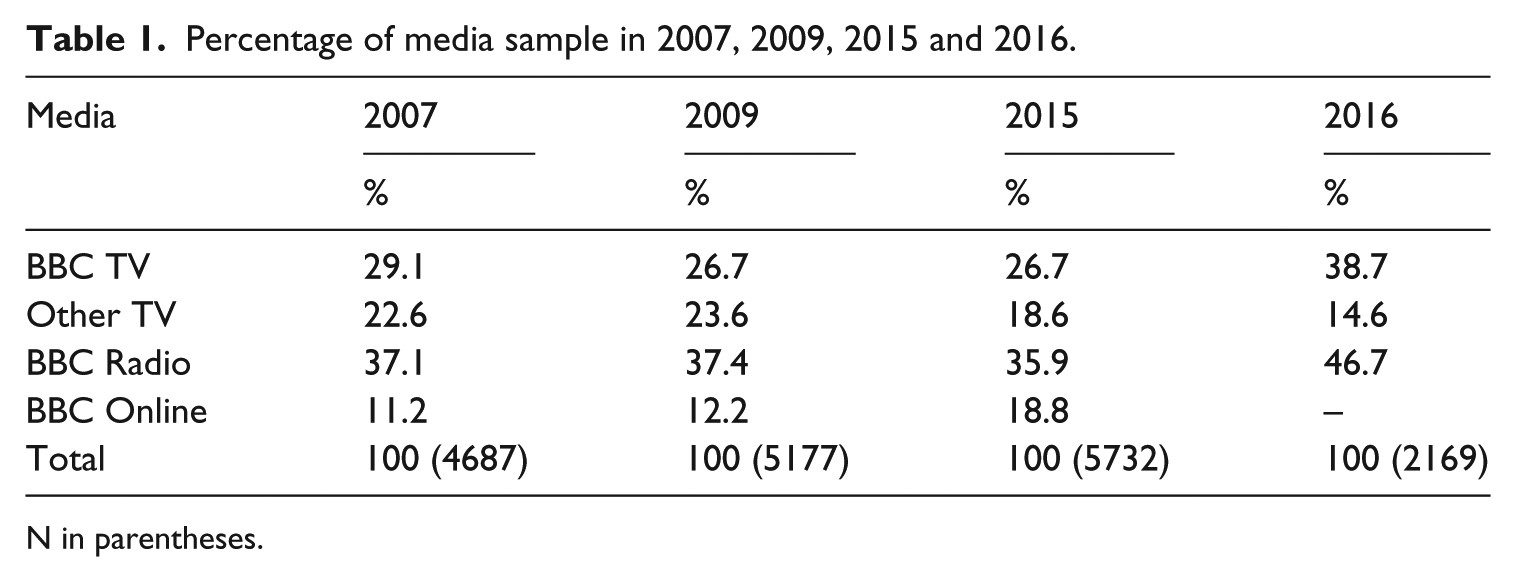
N in parentheses.
Our longitudinal content analysis of UK network news media between 2007 and 2016 was based on a substantial total of 17,765 news items. Our analysis was designed to go beyond standard variables (such as sources) in order to quantify how devolved issues are communicated to audiences. 2 While we explain these variables in greater detail as we present them, they aim to assess the clarity in which the political relevance of stories is communicated in network news, both in terms of who is assigned power and responsibility and its geographical applicability.
The aim of the final part of the study was to explore, in a more qualitative way, how well people understand the political relevance of news stories. This involved conducting 15 in-depth interviews (lasting about an hour) with people from Wales, based on viewing six television news clips (drawn from our most recent content analysis). Responses from interviewees will, in part, be based on their interest in and prior knowledge about politics. We therefore recruited a mix of people, including four interviewees with a self-reported low level of interest in politics, three with a low/medium level, five with a medium level and three with a high level. All the interviewees lived in Wales – either Cardiff or Newport – and were aged between 25 and 39 years. While we present some of the interview responses quantitatively, the sample was not designed to be representative. Typically, those aged 40 or over are more likely to vote in an election than younger people. The aim of our interviews was to gain some insights into how successful the UK news media were in communicating who held power and responsibility in a range of policy areas.
Devolution of power, centralised news
Our survey of people’s news sources confirms the dominance of UK network news. As Figure 1 shows, fewer than 5 per cent regularly read a newspaper produced in Wales, such as the Western Mail or Daily Post. When asked to name their main newspaper, only 1 per cent said the Western Mail – widely seen as the most comprehensive source of news about the National Assembly for Wales. By contrast, the London-based Daily Mail is nearly 10 times more likely to be named as people’s main daily newspaper. While the Western Mail covers the actions of both Welsh and UK governments, the Daily Mail largely focuses on English issues and UK politics. Overall, most of the popular UK newspapers are read more regularly than Welsh-produced titles.
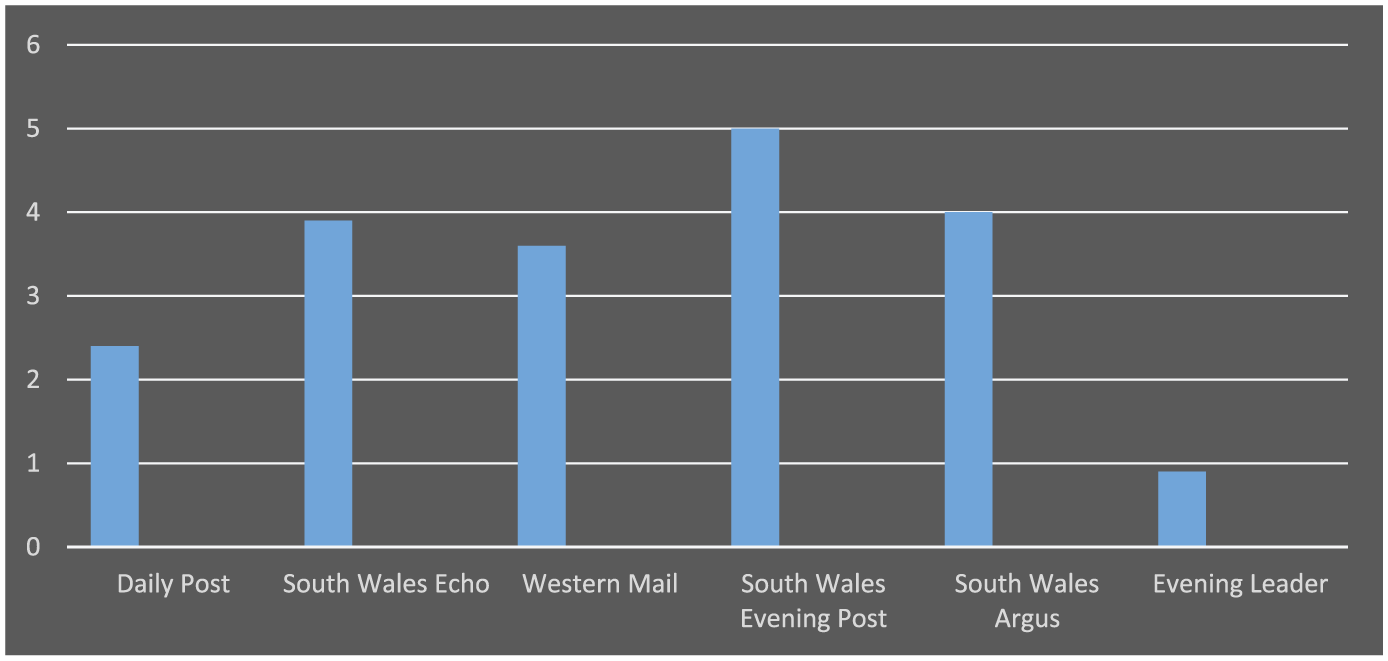
Percentage of people in Wales who regularly read Welsh newspapers.
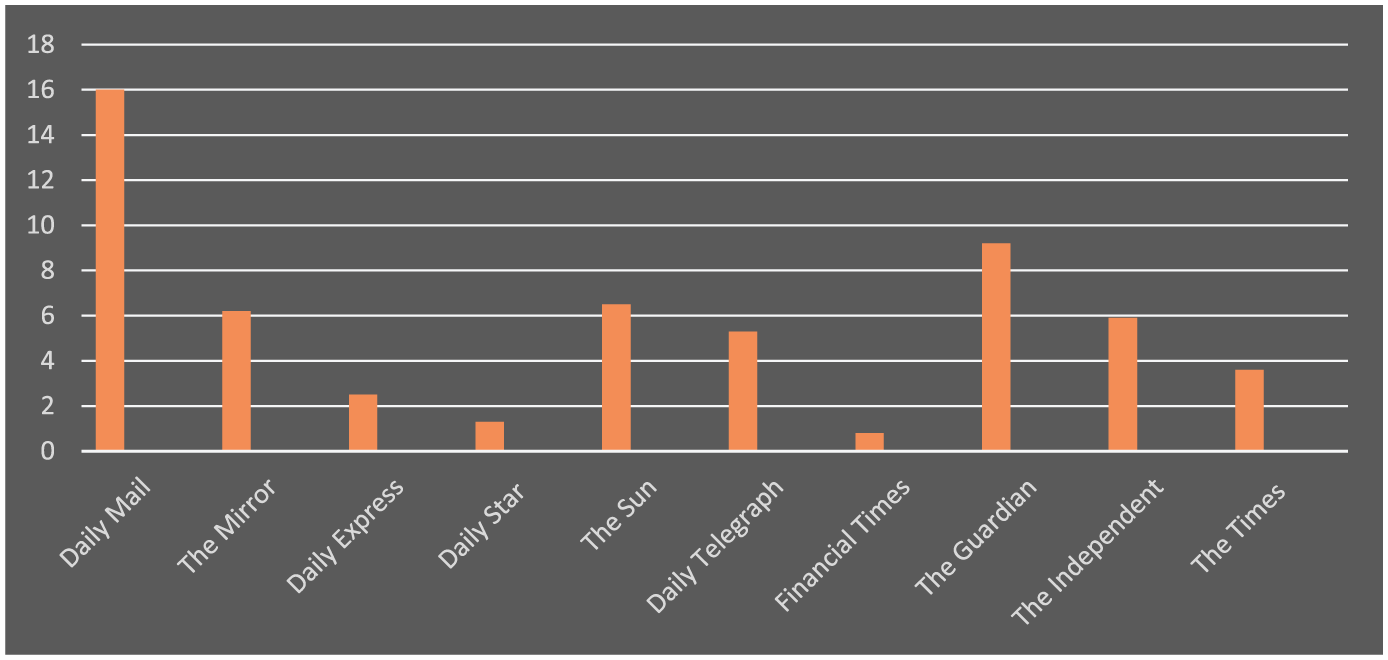
Percentage of people in Wales who regularly read English newspapers.
The most widely consumed Welsh news sources are broadcast news programmes made by BBC Wales for a Welsh audience (part of non-network provision on BBC and ITV): 37 per cent regularly watch BBC’s Wales Today, 17 per cent watch ITV’s Wales Tonight and 13 per cent listen to BBC Radio Wales (see Figure 3). Despite this, Figure 4 shows UK-wide network news is more routinely used as a source of news about politics than Welsh broadcast news. BBC1 was the most watched source of network news with 37 and 30 per cent indicating they tuned into the News at Six or Ten (11% regularly watched ITV’s Evening News or News at Ten and 13% Sky News).
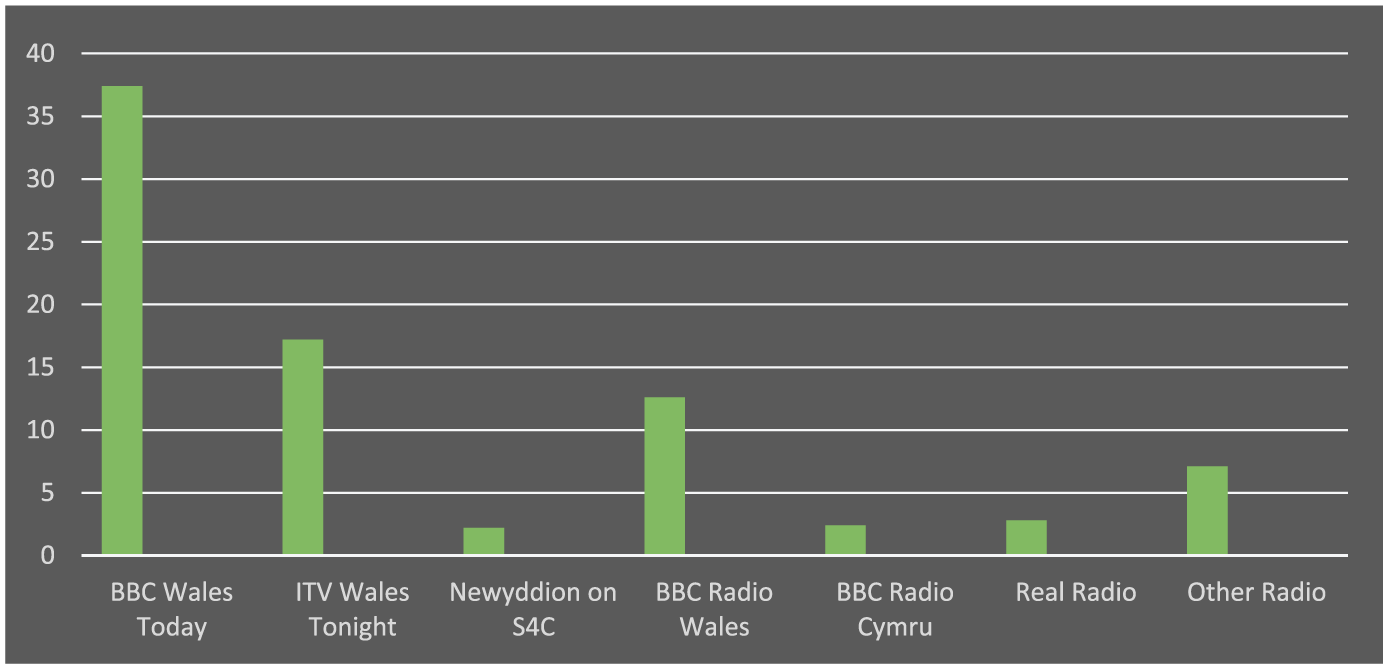
Percentage of people in Wales who regularly watch or listen to Welsh broadcast news.
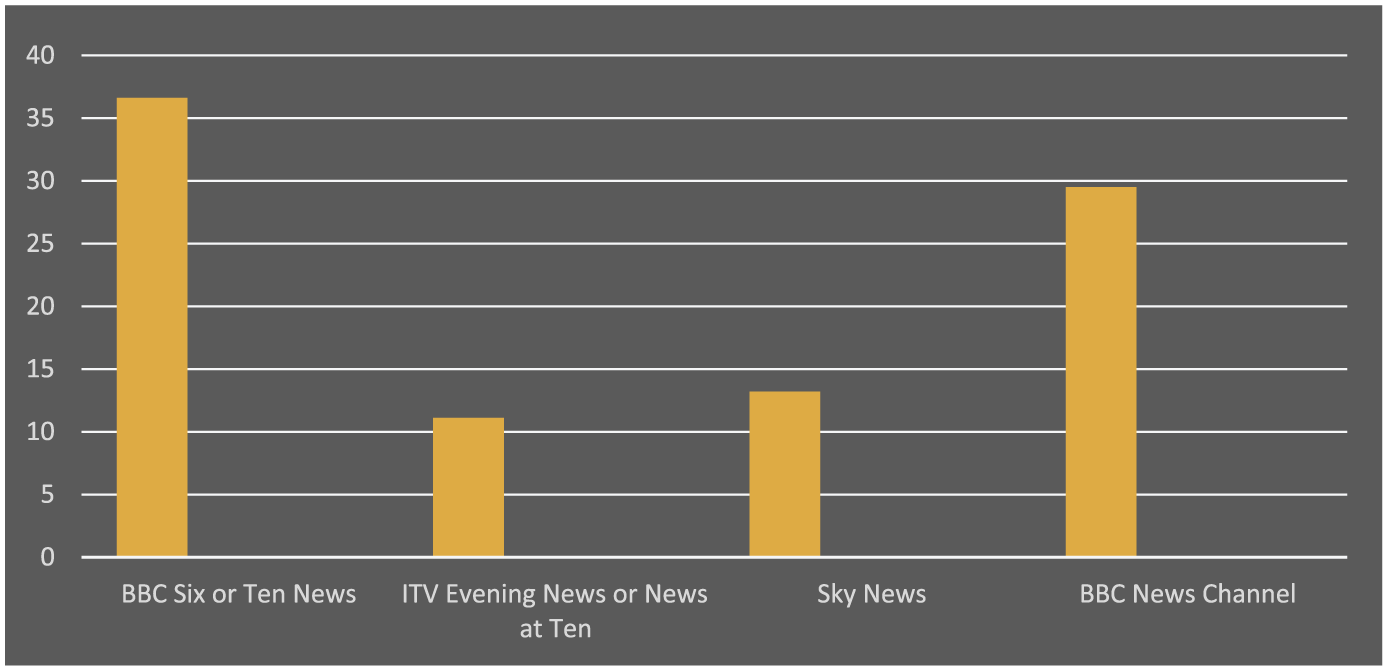
Percentage of people in Wales who regularly watch UK-wide television news.
The survey also indicated that the Internet was a source of news for 11 per cent of people, which included online sites, blogs and Twitter and Facebook. It is difficult to know whether these platforms were regularly used as a source of news about Welsh politics, but previous research suggests online and social media sources tend to reinforce the consumption patterns of offline news, such as the BBC or Mail Online.
Overall, these data confirm that, with the exception of BBC’s Wales broadcast and online services, news made by and for people in Wales represent a small proportion of people’s news diet in Wales. Despite two decades of devolution, people continue to rely on network news produced in England (a reliance exacerbated by the decline in the Welsh press – Cushion et al., 2009). Television news, in particular the BBC, remains the dominant supplier of news about politics.
Does network news reflect the United Kingdom post-devolution?
In the face of Wales’ dependence on UK network news sources, how well do they communicate who has responsibility for key areas in people’s lives? There are two aspects to this: first, the extent to which people understand whether particular policy initiatives are relevant to them; and second, people’s awareness of policy differences between the four nations in the United Kingdom, especially since they have all been governed by different political parties since 2010.
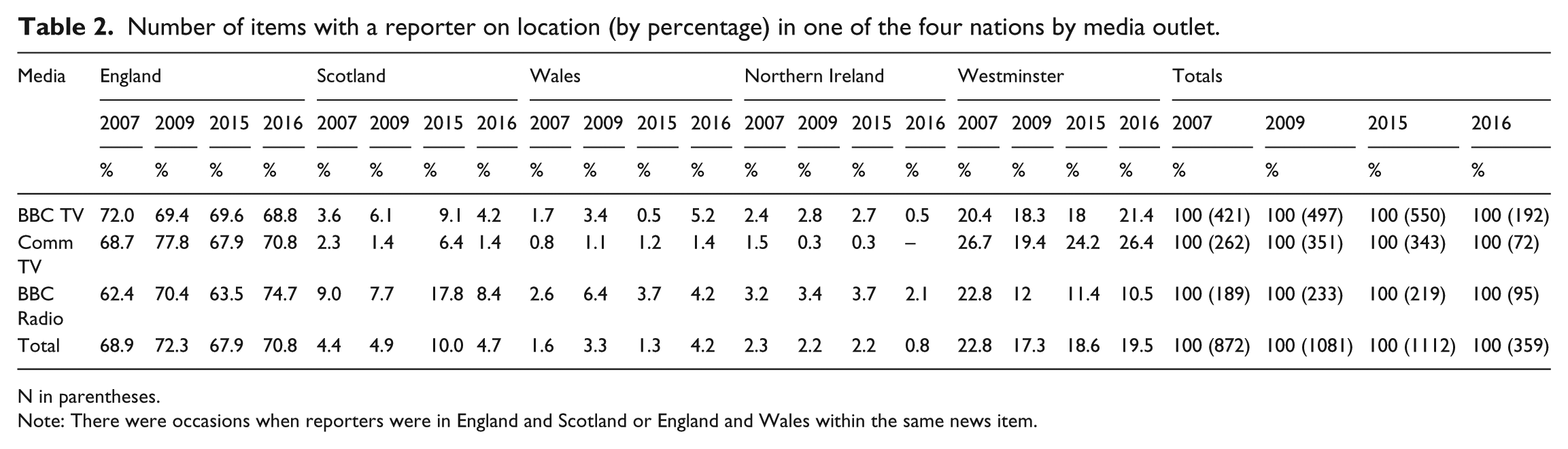
Table 2 shows the proportion of all news items (across all genres of news) reported from one of the four UK nations. Overall, the overwhelming majority of reporters (between 2007 and 2016) were based in England, with a large share – between roughly one-third and one-fifth of all items – reporting from Westminster, the home of the UK (and, on devolved matters, English) Parliament. Indeed, reporters filing stories from Westminster consistently outweighed all stories on any topic from Scotland, Wales and Northern Ireland combined.
Number of items with a reporter on location (by percentage) in one of the four nations by media outlet.
N in parentheses.
Note: There were occasions when reporters were in England and Scotland or England and Wales within the same news item.
Since England has the largest population, we would expect it to receive the lion’s share of coverage. However, in most years on most outlets, there are fewer reports from Scotland, Wales and Northern Ireland than we might expect given their population share.
This marginalisation is more pronounced if we look more specifically at those items about devolved political issues outside England (a criminal justice story in Scotland, a health story in Wales or a social policy story in Northern Ireland, for example). Table 3 shows that devolved issues in Scotland, Wales and Northern Ireland make up a tiny fraction of the network news agendas across different media, with the proportion of overall coverage typically just above 1 per cent of news items in most years (with the exception of 2015 when it rose to 3.6 per cent, in the aftermath of the 2014 vote on Scottish and the emergence of the Scottish National Party (SNP) as the dominant political force in Scotland). UK/English politics, by contrast, consistently represents a large chunk of news coverage, between 12 and 16.2 per cent over our 9-year sample period, clearly overshadowing news about policies pursued in Scotland, Wales and Northern Ireland (a ratio that is, once again, significantly greater than we would expect if coverage reflected the population of the four nations of the United Kingdom).
The proportion of news items about devolved politics or Westminster politics (by percentage of all news) in 2007, 2009, 2015 and 2016.

Our findings also add weight to the body of research (Curran et al., 2009), which suggests a link between public service broadcasting and levels of knowledge about politics and public affairs. BBC outlets consistently have a higher proportion of information about devolved issues in Scotland, Wales and Northern Ireland than commercial television news.
Our first study in 2007 raised the possibility that the focus on UK/English politics was potentially a source of confusion and misunderstanding – one that, in part, stems from the nature of the devolution settlement (Cushion et al., 2009). The risk to democratic understanding here is palpable: audiences might not only be ignorant of the various policy options being pursued in different parts of the United Kingdom, they may incorrectly assume that English policy initiatives apply to the United Kingdom as a whole.
The 2007 study found repeated instances where policy news about England was reported with no indication of who actually held power and responsibility. As a consequence, in the 2009, 2015 and 2016 studies, we looked more closely at the extent to which news coverage added to or clarified this potential confusion by specifying – especially in those items that were only relevant to England – who the story applied to and why.
This created a sub-sample of items that were relevant to devolution in one of the four nations (in most cases, as we have suggested, England). This increased over the period: being 8 per cent of the total sample in 2007, 10 per cent in 2009, 13.3 per cent in 2015 and 13.5 per cent in 2016. We then focused on those items relevant to England to assess whether the issue being reported – in, say, health or education – was signposted as only relevant to England (or, in the case of areas like criminal justice, England and Wales), so that viewers or listeners would understand that this story did not necessarily apply to people in Scotland, Wales or Northern Ireland (or, indeed, that different policies might be pursued in those places). We set the bar fairly low: any reference to England, however brief or vague, was coded as suggesting that the news item’s geographical relevance was limited to England – a point we shall return to shortly.
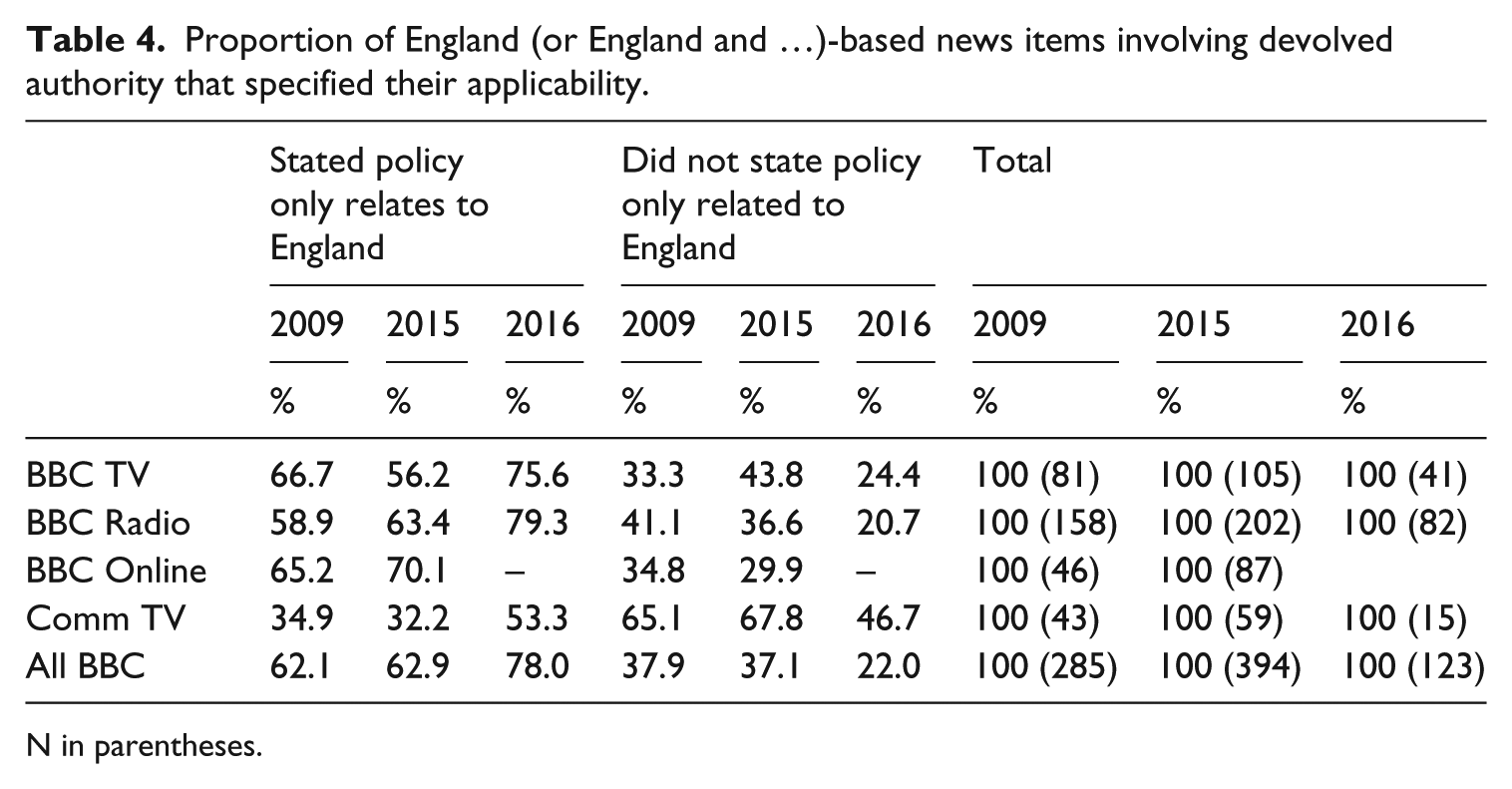
Table 4 shows that between 2009 and 2016, signposting the relevance of English policy news items – while by no means automatic or routine – improved on BBC outlets. In 2009, 62.1 per cent of all BBC news items about devolved issues in England signposted its geographical applicability; in 2016, this had increased to 78.0 per cent. This improvement followed a series of policy initiatives within the BBC to address this issue (Cushion et al., 2012). We see a much more limited improvement on commercial television: but even in the best year (2016), only around half of those items that only applied to England were signposted as such.
Proportion of England (or England and …)-based news items involving devolved authority that specified their applicability.
N in parentheses.
Qualitative audience studies show that most people tend to absorb the general gist of news items rather than taking note of details (Lewis, 2001) – especially if those details are glossed over quickly. One of our concerns, in this context, was that when news is about English policies made in the UK parliament, broadcasters adopt a cursory, box-ticking approach to communicating political relevance. Stories from Scotland, Wales or Northern Ireland, by contrast, were clearly located in those nations in ways that made clear to whom they applied and why. We explored this point in two ways.
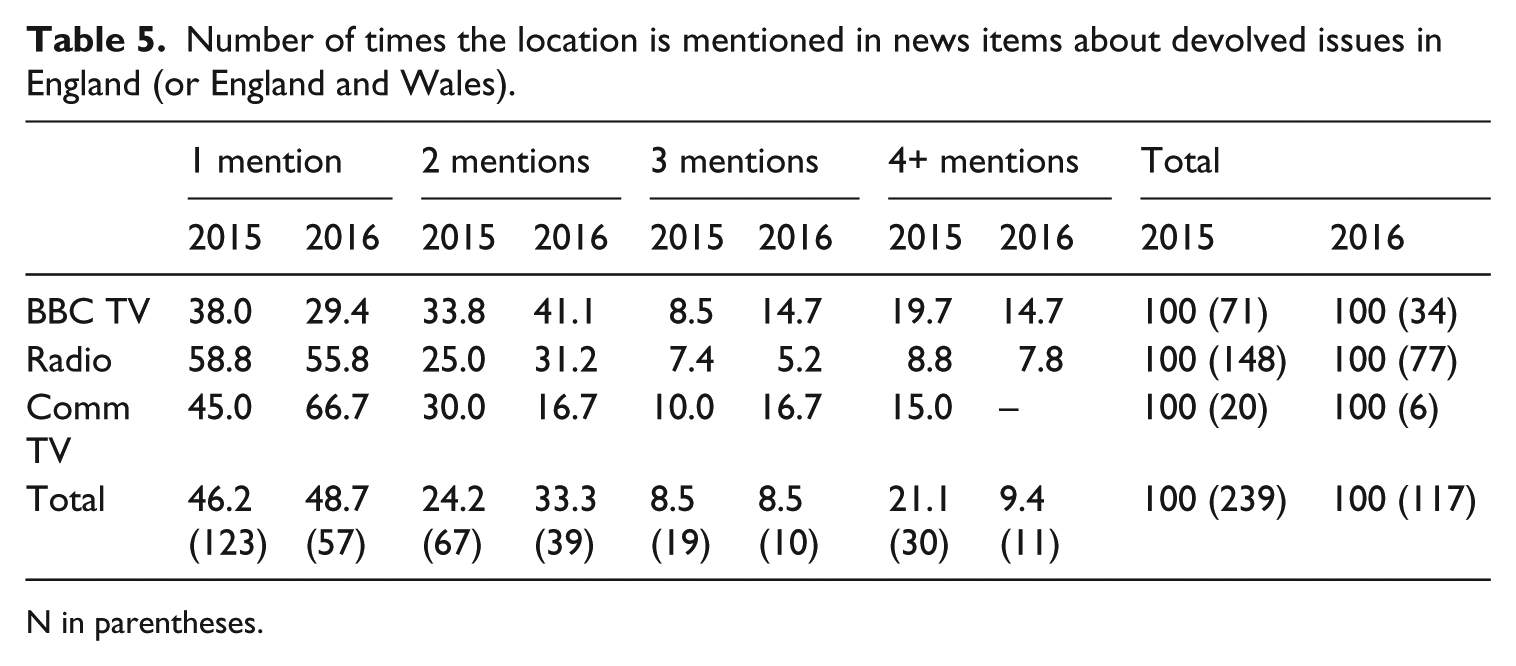
First, in our 2015 and 2016 studies when news items were about, for example, the English health service or the education system in England, we counted the number of times reporters located the story in England (see Table 5). Overall, we found that almost half of all news items – in both years – only mentioned political relevance (to England) once. These mentions tended to be at the beginning of an item – often in the presenter’s introduction.
Number of times the location is mentioned in news items about devolved issues in England (or England and Wales).
N in parentheses.
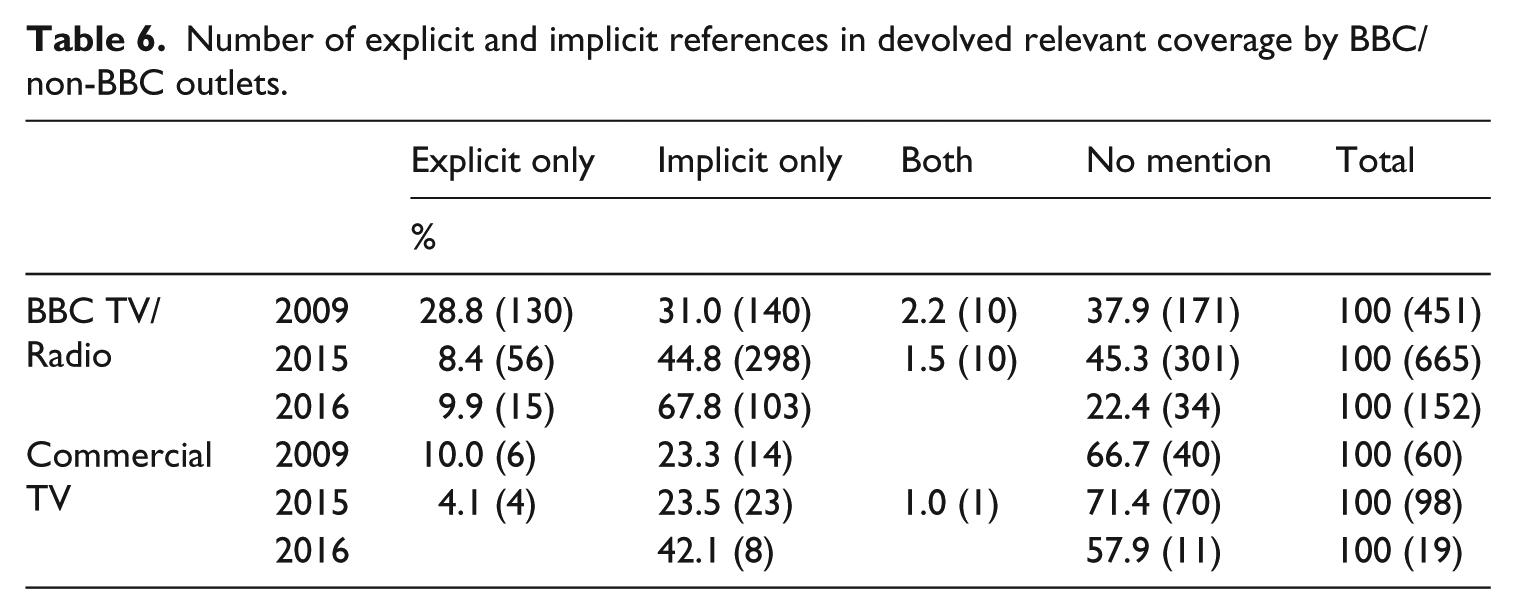
Second, we looked at the clarity of language used by broadcasters. We distinguished between explicit references to policy relevance, which refer to the specific power and responsibility of devolved areas, and implicit references, which typically involves stating where a story takes place without linking this to the relevant political authority, and without explaining whether and why the story did not apply elsewhere.
Table 6 shows that when the political relevance of stories is mentioned, these references are, in most cases, implicit rather than explicit. Indeed, the data suggest a decline in the use of explicit references over time, particularly on commercial television news. When explicit references were used, they tended to be made in passing, and we found very few instances of broadcasters taking the opportunity to compare and contrast different policies enacted across the four nations of the United Kingdom.
Number of explicit and implicit references in devolved relevant coverage by BBC/non-BBC outlets.
Interpreting the political relevance of UK news
Our audience interviews were designed to consider the implications of our content analysis, which broadly showed that coverage of UK domestic issues did not always clearly state whether a policy was only relevant to England – and, if they did, it was limited to relatively vague references mentioned just once or twice in a news item. Our findings raised the possibility that audiences may miss this brief and implicit signposting and assume that policies pursued in England were relevant elsewhere. We conducted 15 in-depth interviews during which audience members in Wales were shown six news clips: the first five were the most typical, stories about England that used brief implicit references to signpost the story’s political relevance (to England). The last news item was more explicitly signposted as applying only to England, the reporter explaining that the story did not relate to Scotland, Wales or Northern Ireland.
In between each clip, we invited respondents to discuss the news item. After each group of (3) clips, we then prompted them with a question about whether it affected them personally in any way (without specifically mentioning devolution). An informed response, in this context, would be to recognise that the story did not apply to Wales (or anywhere outside England) where distinct and different policies were being pursued. If, after all the clips had been shown, interviewees still did not mention the devolved relevance of the stories, we asked explicitly whether they thought the clip affected people living in Wales.
The first group of three clips concerned the opening of a new grammar school in England. The second group of three clips involved a strike by junior doctors in England, following a dispute with the UK government about working hours (who are only responsible for the National Health Service (NHS) in England). Both were devolved areas of responsibility where the government in Wales (and elsewhere) was pursuing very different policies (the Welsh government is committed to comprehensive education and was not seeking to change junior doctor’s contracts). Example of implicit references to political relevance in both stories – made at the beginning of each item – included the following:
For the first time in half a century a new grammar school site is approved in England. Ministers say it’s not a change of policy. (BBC News at Ten, 15 October 2015; emphasis added) The Health Secretary, Jeremy Hunt, is offering junior doctors in England a rise in basic pay of 11%. It comes the day before they start receiving ballot papers for strike action over the government’s plans for seven day working. The basic pay rise is offset by other measures, including what constitutes unsociable hours and some doctors say they could still lose out. Mr Hunt is writing to all 50,000 junior doctors in England in a last ditch attempt to persuade them not to go on strike over the new contract. (BBC News at One, 4 November 2015; emphasis added)
The last of the second group of clips included a more explicit reference to political relevance:
The planned reforms will affect England. The Welsh and Scottish Governments have opted not to change the current contact. Under the plans, basic pay for doctors will be moved up, but at the same time pay for unsocial hours, including weekends will come down. The government admits that about 1% of doctors will lose out, but the rest will see their overall pay increase, or stay the same (BBC News at Six, November 6, 2015).
Most of our interviewees were, by the very nature of the exercise, paying closer attention to news items than they would normally. In this sense, our study involved an implicit bias towards greater understanding of how devolved issues are communicated.
By the end of the interview, after prompting and watching the more explicit news item, most respondents (13 out of 15) were able to identify that the stories applied to England but not Wales. Table 7 summarises the chronology of the moment when respondents first showed an awareness of a story’s political relevance.
The point at which interviewees mentioned devolved relevance.
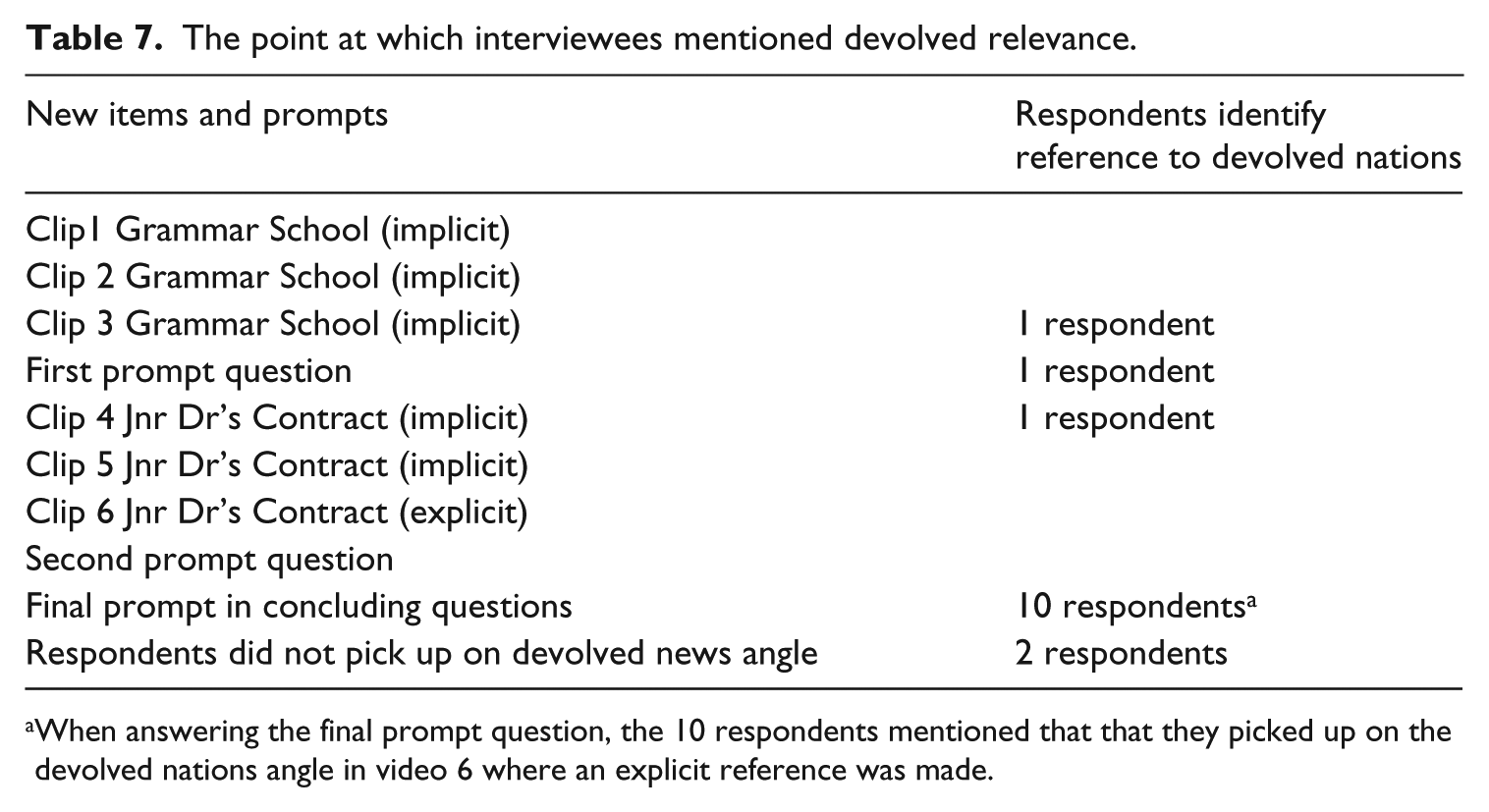
When answering the final prompt question, the 10 respondents mentioned that that they picked up on the devolved nations angle in video 6 where an explicit reference was made.
During the interviews, just two people – one reporting a medium and one with a high interest in politics – identified the limited relevance of the grammar school story (to England). Although this suggests a clear understanding of devolved politics, one of the respondents later admitted that they had been confused at an earlier stage in the coverage of the junior doctors’ strike (before the interviews were conducted):
We’ve had quite a lot of coverage of the doctors’ striking and actually it was quite a while after that that I realised that this doesn’t apply to Wales.
Most (13 out of 15) did not pick up on the education story’s inapplicability to Wales, even after prompting. In other words, all three implicit references used to signpost the political relevance of the story failed to do so.
We found the same pattern for the Junior Doctors’ story: apart from one respondent (someone with a high interest in politics who showed an awareness of the geographical relevance of the junior doctors’ dispute after the first clip), most respondents were only able to identify the political relevance after the more explicit clip and more overt prompting by the interviewer. While this might suggest that both implicit and explicit references failed to prompt an appreciation of political relevance, all 10 of those respondents referred specifically to the more explicit reference as prompting their understanding of political relevance:
do you feel that the initial clips, especially the ones around the grammar schools, did it make it clear that that was a kind of England or nation only …?
Obviously not because I didn’t realise.
What about the junior doctors one, did you pick up on that?
I did on that one because they specifically said that Scotland and Wales had opted not to take the new contract.
Two respondents, even after both the explicit clip and explicit prompts, were unable to specify the political relevance of either story. When asked whether the stories in the TV clips had communicated that they applied to England and not to Wales, most responded negatively, as this exchange illustrates:
No.
Not at all?
Not at all, no. They may have said England but they didn’t … it would be better if they said this doesn’t apply or only England or something like that, that would be better. I don’t think they did. I don’t think any of them did. They may have.
What about the doctors’ story, did that make it clear?
No, it was NHS. They just talked about the NHS …
As this respondent suggests, the repeated use of phrases like ‘the NHS’ or ‘the Health Minister’ on a UK-wide broadcast creates the (not unreasonable) impression that the story is addressing a UK-wide audience. Health, of course, is a devolved area of responsibility, so without communicating whether the story related to the NHS in England or Wales, it might be difficult for viewers to understand its relevance to their own lives, let alone appreciate their relationship to policy differences between a Conservative administration in England and a Labour one in Wales.
For most respondents, much of the discussion was therefore based on a basic misunderstanding. Stories about England were assumed to have political relevance to the United Kingdom as a whole (and therefore to them as Welsh citizens). So, for example, some of our respondents assumed that their local hospital would be affected by the doctors’ dispute:
How do the issues in this particular story about the junior doctors affect you?
Obviously if I need to go to hospital and it’s a strike day that would affect me …
A common refrain from the interviews was, as one respondent put it, ‘I don’t really know what does apply to me or what doesn’t’ – a lack of understanding that weak signposting – combined with a general appeal to a UK audience – appears to do little to address. As a consequence, many called for more explicit indicators of political relevance:
They could make it blatantly obvious and when they’re talking about Wales, they could have a Wales map or Wales flag in the corner. They could just introduce it better. If you’re going to highlight Wales, tell me the issues about education in Wales, but then also tell me what the difference is, or similarity, make a comparison between England and Wales and what’s happening, who’s better. They [broadcasters] could put a flag up on the screen and say what … I don’t know. They could have some sort of way of saying it, this applies to England only.
Even the respondents who were able to pick up on the implicit references felt that the coverage raised more questions than it answered. As this respondent put it after the third Grammar School story clip,
Well, it didn’t mention … I don’t know what the law is in Wales, but they did say so many grammar schools left in England, and what the rule is in terms of expansion – I don’t know whether that applies to Wales or Scotland.
While the limited number of interviews means our findings should be interpreted cautiously, the failure of subtle, brief signposting techniques to communicate the political relevance of stories – even to a number of people with a high or medium level of interest in politics, in conditions that encourage close viewing – is very much in line with what research tells us about the reception of news (Machill et al., 2007).
Opening up democratic opportunities: Enhancing the political information environment in the United Kingdom post-devolution
The concept of political information environment has largely been applied descriptively and quantitatively in large-scale cross-national studies (Esser et al., 2012), with research identifying a relationship between different types of news ecology and levels of public understanding (Curran et al., 2009). Our study is an attempt to develop our understanding of this relationship and broaden the scope of research about political information environments. Combining a content analysis, with a representative survey of people’s sources of news, we built on these findings to examine more qualitatively how news reporting connected to television viewers’ understanding of political power, policy and responsibility. This meant greater analytical attention was paid to how political systems shape the supply (and reception) of news about politics than previous studies exploring political information environments.
Overall, our study paints a gloomy – yet in many aspects revealing – picture of the United Kingdom’s political information environment and the state of democratic understanding. As we have shown, most people continue to depend on UK network news despite a devolution of power to areas like Wales. Yet, our content analysis shows that UK network news remains England/Westminster-centric, while tending to assume a level of political understanding about the devolved policy structure of the United Kingdom that, as our interviews indicate, most people do not possess. Our findings, in this sense, echo Iyengar’s (1994) conclusions about the failure of US television news to adequately inform viewers about where power and responsibility lie when reporting politics and public affairs. In his words, ‘By discouraging viewers from attributing responsibility for national issues to political actors, television decreases the public’s control over their elected representatives and the policies they consume’ (Iyengar, 1994: 2–3).
Our study also identified a number of more subtle influences stemming from how political information is communicated. Reinforcing previous research, we found public service news is likely to have a positive influence on public understanding (Strömbäck, 2016). The content analysis showed that the BBC has been more sensitive than commercial television to the realities of devolved policy-making in the United Kingdom. The BBC is also more inclined to report both political and non-political stories outside England and is more likely to signpost the political relevance of English stories in areas like health and education. In this context, the BBC has clearly taken its public service commitments seriously, making a positive and distinct contribution to the state of public discourse about reporting UK politics.
However, our evidence suggests that while the BBC has acknowledged the importance of conveying information about different political authorities within the United Kingdom, its network news coverage remains England-centric, alluding to new political realities but only rarely spelling them out. On those occasions when the policy differences between the four nations are made clear – even briefly – it is easier for audiences to appreciate a story’s political relevance. Yet, these occasions remain the exception rather than the rule. Our audience interviews suggest that their routine methods of political signposting are too cursory for most viewers, whose attention is only caught by more explicit references to the political relevance of stories. In short, the undoubted efforts made by the BBC appear to have had only a limited success in communicating the political relevance of politics in a devolved United Kingdom. The routine reliance on a few implicit references to signify a story’s political relevance may work for a small group of well-informed citizens, but it would appear to pass most people by.
It may seem churlish to criticise the BBC in this regard, particularly since they are far more assiduous in reporting the devolved nature of UK politics than commercial news outlets. It does, however, point to an uneasy compromise between public service obligations to inform people (about democratic power and responsibility) and three journalistic tendencies: to assume high levels of political understanding, a reluctance to repeat ‘background’ or ‘contextual’ information and to focus on speaking to the largest audience (in this case, in England). This produces a quick-fix, box-ticking approach to political communication, whereby it is possible for (already well-informed) audiences to glean a story’s political relevance without encouraging a clearer understanding.
Indeed, if most Welsh viewers in our study assumed English policies applied to the United Kingdom as a whole, English audiences would have been unlikely to appreciate that other policy options were being pursued in Scotland, Wales or Northern Ireland. This is, we would argue, a significant missed opportunity. Devolution allows different parts of the United Kingdom to pursue different policy options – and this, in turn, allows citizens a greater understanding of the policy options available. A ‘compare and contrast’ approach, in our view, would be compatible with journalistic impulses in a way that the repeated insertion of caveats and explanations of political relevance are not. A story about a distinctive policy in England, Scotland, Wales or Northern Ireland would be made more interesting to a wider UK audience if it allowed comparisons with the policies pursued across the United Kingdom. This would not only signify its geographic relevance, it would open up democratic opportunities for citizens to learn about political decision-making across all four nations, thereby exposing audiences to a wider range of policy options and preferences pursued by different governments in the United Kingdom.
As it is, our research indicates a clear democratic deficit, in which it is difficult for citizens to attribute democratic responsibility to the bodies that govern their lives. The dangers of such basic forms of misunderstanding are profound, creating the conditions for a polity based only on simple associations in which the nature, causes and consequences of political power become blurred.
Footnotes
Acknowledgements
We are grateful to Roger Scully at Cardiff University for allowing us access to his SPSS file to explore news consumption in Wales.
Funding
The author(s) disclosed receipt of the following financial support for the research, authorship, and/or publication of this article: The survey was funded as part of the Economic and Social Research Council (ESRC) project titled ‘2016 Welsh Election Study’ (Grant ES/M011127/1).