




Abstract
Narratives of violence and resilience weave through the fabric of our collective consciousness of womanhood, echoing in the stories of friends, family, and public figures alike. These intimate and distant accounts often serve as stark reminders of the persistent dangers shadowing women's passage through both public and private spaces. Drawing on Brian Massumi's concept of affective facts and Sara Ahmed's understanding of affect theory, this article contends that the circulation of fear-laden media not only shapes consumer demand but sustains societal conditions that render fear an essential aspect of femininity. I explore how this pervasive fear fuels the creation of what I term the ‘market for women's safety,’ a commercial sphere where ordinary feminine objects are transfigured into instruments of defence. In this marketplace, items like lipstick tasers and glittering keychain alarms transcend their practical function, embodying both protection and the aesthetics of empowerment. These products fortify the body and the psyche, cultivating a fragile resilience in environments fraught with risk. Grounded in the lived experiences of sellers, this article reveals how the market's reliance on fear reflects and reproduces the anxieties of those who sustain it. Vendors, often women themselves, straddle the spaces of entrepreneurship and activism, transforming personal apprehension into commercial ventures. Fear, far from repelling, becomes a powerful force, reshaping women's relationship to safety, vulnerability, and the fragile pursuit of self-determination.
Introduction
The prevailing discourse within academic scholarship on the growing market for women's safety remains anchored in the proliferation of mobile applications and technological interventions. Sarah Banet-Weiser and Katherine Higgins (2023: 33) encapsulate this emphasis, characterising it as a ‘utopian vision of technology.’ However, despite the pull of technological innovations within scholarly inquiry, there exists a need to widen the analytical opening. Indeed, the landscape of women's safety is far broader. It extends into underexplored realms where empirical and qualitative scrutiny remains limited. Among these neglected terrains lies the self-defence market, a domain projected to ascend to US$4.10 billion by 2030, expanding at an annual growth rate of 6.62% (Acumen Research, 2022). North America, in particular, emerges as a critical locus for growth (Acumen Research & Consulting, 2022). Against this background, the analysis in this article focuses on the United States, with Philadelphia, Pennsylvania serving as a focal site of investigation.
The expansion of this market speaks not only to the vitality of the sector but also to its latent potential, underscoring the multifaceted dimensions of evolving public discourse centring women's safety. Certainly, narratives of fear punctuate our collective consciousness, threading through the experiences of friends, family members, strangers, and public figures alike. These stories, shared intimately or at a distance, serve as reminders of the persistent dangers accompanying women's navigation of public and private spheres. While diverse approaches exist to confront such pervasive violence, this article narrows its analytical gaze to the instrumental role of self-defence products. As products of what I conceptualise as a ‘market for women's safety,’ these items occupy a liminal space among empowerment, autonomy, and fear. This market, I note, appropriates and transforms seemingly benign, feminine-coded objects into tools of self-defence. From lipstick tasers to glittering keychain alarms, these products not only arm women physically but also fortify psychological resilience, cultivating a sense of preparedness amidst environments often fraught with risk.
Crucially, this article advances four principle and interlocking arguments. First, it argues the existence of an ‘affective fact’ that renders the female body inherently vulnerable to sexual and domestic violence. Drawing from Brian Massumi's (2015) theorisation of affect, the article explores how fear-laden media images and narratives circulate, shaping collective consciousness and structuring social interactions. This pervasive affective atmosphere constructs the conditions under which a market oriented around women's safety can flourish. Second, this article contends that fear operates not as a deterrent but as a generative force. This fear catalyses demand, propelling the expansion of the self-defence markets. Through the transformation of feminised, quotidian objects into instruments of survival, the market crystallises anxieties into consumable, commodified forms. Bedazzled pepper sprays, feline keychains, and pastel stun guns exemplify this phenomenon, embodying the fusion of aesthetics and function. This commodified fear reflects and amplifies entrenched gender inequalities and structural failures, reinforcing narratives that privilege individual responsibility over collective accountability.
Third, the article interrogates the lived experiences of those who inhabit the self-defence market as sellers. Sellers navigate the nexus of entrepreneurship and activism, channelling personal fears into commercial ventures designed to arm others. This dual positionality foregrounds the reciprocity between production and consumption, revealing the interdependent dynamics that sustain the market.
Finally, the article highlights the aesthetic dimensions of self-defence products, scrutinizing the strategic deployment of ‘cuteness’ as a marketing tool that emphasizes notions of feeling safe. This aestheticization, far from superficial, operates as a mechanism to normalise defensive weapons, embedding them within the texture of daily life. In other words, in rendering instruments of violence palatable and discreet, the market responds to societal imperatives that compel women to anticipate and mitigate potential threats, operating at a juncture that begs the question of what it means to truly be safe as a woman. Ultimately, this article seeks to chart the contours of a market that seeks to protect women and that endeavors to reconstitute women's relationship to safety, agency, and the everyday embodied and felt experience of female vulnerability.
Media and womanhood
I begin this section with the premise that media is an act of making and remaking, a dynamic process of negotiating, contesting, and altering our perceptions of the cultural worlds we inhabit. Drawing upon Nelson Goodman's (1978) concept of worldmaking and media, I agree that the world is not a singular, fixed reality but rather a multiplicity of perspectives, each offering a unique lens through which we experience and understand our lived experiences. As Goodman describes, worldmaking involves a continuous process of breaking the world into pieces, judging and organising them, leaving some things out, adding new information, and sometimes distorting how we see reality. These transformations transcend the boundaries of language, unfolding through a rich tapestry of symbols, images, sounds, music, and gestures. Each distinct mode of mediation, each shift in focus, births a new world, a new reality, revealing the profound power of representation to construct the contours of our collective experience of womanhood and shape the conditions for building a demand for what I term a market for women's safety. While womanhood is by no means singular, the repeated images of women that circulate through our media weave together a collective imaginary, a repository of meaning that shapes our understanding of who she is; and though individual women encounter safety, fear, and vulnerability in ways contingent upon race, class, profession, and support systems, my concern is not with the singular woman, but with the architecture of womanhood itself, how it is built, upheld, and inhabited, and what its very structure reveals about the conditions of women's safety.
Notably, however, rape, as a form of violence against women, is one of the most prominently discussed discourses of gender-based violence in US media. As Susan Griffin, in the opening of her seminal 1986 work Rape: The Politics of Consciousness, reflects: I have never been free of the fear of rape. From a very early age, I, like most women, have thought of rape as part of my natural environment – something to be feared and prayed against like fire or lightning. (Griffin, 1986: 1)
The concept of agency is fundamental to understanding how media narratives construct and disseminate discussions of rape. Too often, these narratives reinforce a framework that erodes rather than affirms the subjectivity of women. As feminist scholar Sharon Marcus (1992: 394) argues in Fighting Bodies, Fighting Words, rape scripts teach women to see themselves as subjects of fear, ‘to identify with a state which does not elaborate our subjectivity but dissolves it.’ This fear is not merely an internalised psychological response but a powerful affective force that circulates within culture, reinforcing the affective fact that the female body is intrinsically vulnerable to sexual violence. In doing so, it naturalises subjugation and sustains the patriarchal structures that render agency around safety as abstract. Recognising and reclaiming female agency, then, is not just an act of resistance but forms a response to discourses that shape how sexual violence is understood and mediated.
Rape as a topic has maintained a pervasive presence in films, television, news, and advertisements, embedding itself deeply into our cultural lexicon. The saturation of this narrative, as Meenakshi Durham (2021: 1) notes in MeToo: The Impact of Rape Culture in the Media, has led us to: a ‘MeToo moment,’ or so the media tell us. The very term is a media goldmine: It is jauntily alliterative and seems to have an instantly recognizable meaning. It pops up in headlines and TV news teasers whenever a famous man is accused of sexual abuse, assault, or harassment, which seems to happen on the hour somewhere in the world.
Drawing on Michel Foucault's theorisation of ‘social apparatuses,’ Durham illuminates the intricate mechanisms through which media both conceals and unveils rape, entrenching patterns of erasure and disclosure. These structures shield those in positions of power and craft the very landscape of believability and victimhood. The actual danger, then, as revealed by the MeToo movement, she contends, lies not in the spectacle of malicious women harming innocent men, which is essentially an anomaly, but in its direct challenge to the entrenched entitlement that has long permitted predators to prey upon women with impunity. This further underscores the necessity of agency, as it reveals how power operates not only through acts of violence but also through the discursive and institutional frameworks that dictate who is heard, who is believed, and who is denied the right to define their own experience.
The discourse surrounding women and believability has long been shaped by various intersecting factors. Class plays a significant role (Cole, 2007; Davis, 1983), as do race and geography (Nash, 2018; Phipps, 2021). Professionalism also influences this discourse (Chouliaraki, 2021; Kinnell, 2013; Vera-Gray, 2024). Additionally, entrenched global power dynamics contribute to the complexity of the issue (Dasgupta, 1998; Hedge, 2011). These forces blur the line between justice and the unsettling emotions of perceived injustice.
Wendy Brown's (2018) work on morality offers a profound lens through which to examine these evolving notions of justice. For Brown, morality, though imperfect and often in tension with prevailing power structures, remains dynamic and open to debate, and is indispensable for a healthy democracy. It is a fight for what is just within the framework of an open dialogue. Moralism, however, manifests as rigid and punitive, and frequently weaponises moral language, collapsing disagreement into a framework of shame and an outlet for ideological conformity. Put another way, society often grapples with a desire for moral clarity. But this impulse is increasingly complicated by the erosion of shared principles or collective visions of ‘the good life.’ While the urge to act morally often endures, the absence of coherent ideals renders the concept of the ‘good” intangible. Brown argues that in this vacuum, morality often deteriorates into moralism.
Rather than forging new pathways toward the ‘good,’ moralizers frequently retreat into critique, opposing perceived transgressions without offering constructive alternatives. Brown (2018: 28) illustrates this phenomenon: The moralizer refuses the loss of the teleological and becomes reactionary: clinging without logical ground to the last comforting frame in the unravelling narrative, pluralism, the working class, universal values, the Movement, standpoint epistemology, a melting pot America, woman's essential nature, whatever it was that secured the status of the true, the status of the good, and their unbroken relationship. This, too, is a form of moralizing. However, it takes the especially peculiar shape of reproaching history by personifying and reifying its effects in particular individuals, social formations, theories, or belief structures.
Thus, the moraliser clings to the traces of former ideals, safeguarding beliefs or communities that once epitomized ‘the good.’ In doing so, they project blame onto specific entities or ideologies, such as feminism (see also Faludi, 2010), resisting historical pluralities and disagreements, and perceive change as moral decay. In relation to women's bodies, this reactive moralism often clings to nostalgia, with an idealisation of whiteness, heteronormative values, and patriarchy, constraining the horizon of possibility and subverting the emergence of a more expansive gendered moral evolution.
A striking example of this moralising of female bodies appears in the media, as described in the work of Sarah Banet-Weiser and Higgins (2023), who scrutinise three limited-run streaming series: Unbelievable (2019), The Morning Show (2019), and I May Destroy You (2020). Each of these shows is selected for its mediated depictions of sexual violence against women within the framework of the #MeToo movement. Through the conceptual lens of an ‘economy of believability,’ Banet-Weiser and Higgins (2023: 131) articulate how women's testimonies are persistently subjected to doubt: ‘Patriarchy does not expect women to be truthful because it has never needed them to be—our words need not be our bonds if we are already bound sufficiently.’
Precisely, then, the economy of believability operates within an intricate web of narratives surrounding authenticity. In her work Authenticating Whiteness: Karens, Selfies, and Pop Stars, Rachel Dubrofsky (2023) specifically unpacks how whiteness and authenticity are performatively constructed and strategically represented across popular media landscapes. Dubrofsky's analysis crosses the domains of celebrity culture, influencer branding, and reality television, illuminating how whiteness frequently serves as a conduit for trust, depth, and relatability. Central to Dubrofsky's thesis is the concept of ‘inferential surveillance,’ through which authenticity emerges as a culturally mediated construct. She states that media representations habitually depict white individuals as more empathetic or genuine by behaviours and emotions that, when enacted by people of colour, are often received with suspicion or derision. In her words: Surveillance as culture emphasizes surveillance as constitutive of aspects of culture: surveillance is not only something we do and respond to, but part of our sense-making processes, part of the conditions that produce understandings of ourselves and the world we live in. Surveillance as culture asks us to think of surveillance as a discursive influence, looking at what happens as a consequence of being in contexts where surveillance is ubiquitous and to consider how, when not explicitly apparent, surveillance is inferentially present and, indeed, constitutive of key practices. (Dubrofsky, 2022: 23)
Dubrofsky's framing of surveillance reaffirms how agency is about navigating a media system in which visibility begins from a position of uneven distribution, where believability and authenticity are culturally permitted and marginal identities bear the cost of one's own self-definition and autonomy.
The connections between media, gender, moralism, and surveillance resurfaces in Camilla Nelson's (2024) critical examination of the media's commodification of the Johnny Depp and Amber Heard trial. Nelson describes how the trial's spectacle engendered widespread media engagement, fostering lucrative opportunities for influencers, content creators, and digital platforms. As Nelson (2024: 5) observes: ‘Depp's acts of violence that were alleged in evidence—including a documented threat to ‘rape [Amber's] burnt corpse’—were minimized or cast as witty and charming.’ The trial's digital afterlife, shaped by platform incentives and audience engagement metrics, amplified pro-Depp narratives while marginalising Heard's testimony. This asymmetry of empathy is eloquently theorised through Kate Manne's concept of ‘himpathy,’ which serves as a critical lens in Nelson's analysis, illuminating the commodification of misogyny. Here, the spectacle of gendered violence is not merely repackaged as consumable content that disproportionately extends believability and absolution to powerful men accused of harm, it also underscores the deeper ideological battleground contemporary feminism must navigate.
Moreover, Elizabeth Ellcessor (2019) traces the effect of this media and surveillance through the emergence of blue-light emergency phones on college campuses, a material manifestation of feminist agitation for safer public spaces. Catalysed by student-led efforts such as ‘lighting tours’ to expose shadowed pathways, the implementation of escort services, and broader anti-rape campaigns, these measures reflected an urgent reckoning with the dangers women faced. The 1986 murder of Jeanne Clery is noted as particularly galvanising for this infrastructural response, embedding blue-light phones as both a symbolic and practical means to presume safety.
The symbolic weight of cases like Jeanne Clery's murder and the subsequent Clery Act
1
cannot be understated. As I have previously argued: one may consider the following list of prominent cases involving missing White women such as Madeleine McCann, Jessica Lunsford, Hannah Graham, Grace Millane, and most recently, Sarah Everard and Gabby Petito. Their stories may not be identical, but these women are well known to the public because of news media coverage that ignited the moment they disappeared. We know these women; we care about their victimhood. Our identification with these women bestows on them a lifetime of celebrity, where their bodies become artifacts that connect us to structures of violence. (Gill, 2024: 931)
Similarly, Alice Bolin (2018: 56) delves into the cultural obsession with the ‘dead girl’ narrative, observing: ‘It is clear we love the dead girl, enough to rehash and reproduce her story, to kill her again and again, but not enough to see a pattern. She is always singular, an anomaly, the juicy new mystery.’
The proliferation of true crime podcasts further underscores this fascination. Tanya Horeck (2023), in Justice on Demand, interrogates the interactive engagement such podcasts afford, highlighting the gendered and racialised lenses through which these stories are often filtered. Podcasts like Serial, West Cork, and Missing and Murdered: Finding Cleo grapple with the ethics of storytelling, oscillating between amplifying victim voices and sensationalising their pain. Horeck (2023) critiques the voyeuristic consumption of female trauma, emphasizing how such narratives not only reinforce unequal power dynamics but also lead to unsettling use of intimate materials such as diary entries. Jennifer O’Meara (2023) further articulates this tension, noting how the emotive voices present in feminist podcasting disrupt the neutrality espoused by traditional journalism. The rawness of sobbing, vocal breaks, and impassioned testimony foregrounds the authenticity of survivors’ experiences, forging a visceral connection with listeners. O’Meara notes that such emotive delivery, while humanising, often risks veering into the realm of female spectacle. Interestingly, the allure of this spectacle, as Amanda Vicary and Fraley (2010) argue, may be rooted in evolutionary anxieties. Women, disproportionately drawn to these narratives, seek strategies for survival, yet this engagement often sustains the very fear that drives their consumption. As Vicary and Fraley (2010: 85) observe, ‘Despite the fact that women may enjoy reading these books because they learn survival tips and strategies, it is possible that reading these books may increase the very fear that drives women toward them in the first place.’ This cyclical entrapment reflects the broader paradox of gendered violence, a ceaseless negotiation between visibility, fear, and agency—tensions that provide fertile ground for empowerment and moralising women's safety.
Taking this together, this circulation of a particular type of fear (a fear of rape and strangers) through the media is a key foundation of sustaining demand for what I call a market for women's safety. Ultimately, the media's role in worldmaking has profound implications for the reinforcement of patriarchal structures and affective facts about vulnerability and womanhood. What are we to do when the doubt haunts us that our voices will be dismissed, when the ‘truth’ of our pain may never be believed? What recourse do we have when we do not fit the narrow, prescribed image of the ‘right’ victim or the ‘correct’ form of sexual assault? What becomes of us when, consciously and subconsciously, we perceive the looming threat of violence, racialised and sexualised, hovering above us, masked as rape? What are we to do when we no longer trust that society will care enough to protect us from harm? And if you don't have a response to the above, maybe you can answer me this: What do we do when we fear that we are expendable in the eyes of those entrusted with our protection?
Turning to a market for women's safety ⇌ moralism, culture, and affect
Fear does things. While this may seem like a simple observation, it is crucial to emphasise as I start exploring what I term a market for women's safety. I conceptuale this fear not merely as a psychological state but as an affective fact that (most significantly through the media) positions the female body as inherently vulnerable to sexual and domestic gender-base violence in the face of an ever-threatening patriarchal world. In response to this, I define the market for women's safety as a phenomenon that essentially transforms everyday feminine items into instruments of self-defence, empowering women to navigate both public and private spaces with heightened confidence. This market spans a spectrum of products, from bedazzled pepper sprays and pink stun guns to lipstick tasers and feline-themed keychains, each object infused with the promise of protection. Sellers within this market frequently target specific demographics, particularly single women, shaping societal perceptions of morality and redefining the boundaries of ‘true’ victimhood in cases of sexual violence. Beyond products, this market also encompasses a broader array of gendered services, counselling, technologies, and initiatives designed to safeguard women from a spectrum of harm, be it physical, emotional, psychological, or digital. In doing so, it underscores the extent to which fear of violence has become commodified, shaping the very ways in which women engage with the world around them.
As Banet-Weiser and Higgins (2023: 82) poignantly note: Tragically, there is a ‘market’ for sexual violence prevention because there is such an immense ‘consumer’ base: as Jenn Selby (2020) reports, this consumer base comprises the vast numbers of women who are assaulted, harassed, and raped, and the countless more who feel they must remain vigilant to this possibility at all times, and especially in their dating lives.
This market, driven by the very real threat of violence, revolves around objects like guns, self-defence weapons, pepper sprays, and personal safety classes, which provide women a sense of control and security in an otherwise uncertain world. These tools, though physical, serve as symbolic mechanisms to cope with the ever-present anxiety of potential gendered harm.
The United States provides fertile ground for this market with its deeply ingrained culture of self-defence and its constitutional Second Amendment right. Guns, deeply intertwined with American ideals of freedom and individualism, hold a unique place in the nation's cultural psyche. Approximately 40% of American households own firearms, with two-thirds of gun owners citing personal protection as their primary reason for ownership (Parker et al., 2017). While this culture of armed self-defence is often seen as masculine, this trend has been reversing for many years now. For instance, in the 1990s, the NRA's extensive advertising campaign targeted women, urging them to ‘choose to refuse to be a victim.’ Though initially rejected by women's magazines in 1988, these ads laid the groundwork for a broader cultural shift.
Notably, writers such as Naomi Wolf (2000: 33) have long championed the notion of female empowerment through self-defence, observing how ‘while they [women] looked after their families and tended their marriages, they were also teaching themselves to blow away potential assailants.’ Certainly, by 1992, women had become the fastest-growing segment of the firearms market. Similarly, Stange and Oyster (2000) highlight the costs of women's exclusion from gun culture, arguing that women who own firearms are asserting their autonomy and rejecting dependence on male protectors or the state. For many of these women, the act of carrying a gun is a feminist statement: a powerful symbol of self-sufficiency and personal agency.
Likewise, Martha McCaughey (1997), in her work Real Knockouts: The Physical Feminism of Women's Self-defense explores how self-defence courses, particularly those targeting women, disrupt traditional gender norms and provide a means for women to safeguard themselves. In her introduction, McCaughey (1997: 1) poignantly reflects: I was once a frightened feminist. I knew much about male violence and little about stopping it. When my odyssey into self-defence culture began, I was neither a fan nor a critic, but simply a feminist with strong opinions and a lack of confidence in speaking out.
She argues that femininity is not merely a role but an embodied set of behaviours ingrained by society. However, through self-defence training, she suggests, women can transform these learned behaviours, shifting from a ‘feminine’ habitus to a ‘fighting’ habitus, a reconfiguration of both the self and agency.
Sharif Mowlabocus builds upon this notion by analysing a popular sex offender tracking app. The app was removed from the marketplace in 2016, but prior to this it was described as the most downloaded app within the genre of ‘crime locator apps’ (Mowlabocus, 2018: 146). The app, known as ‘the tracker,’ provided users with information that could be used to monitor nearby sex offenders, cultivating the belief that knowledge of their proximity could mitigate risk. This logic further reflects the dynamics of surveillance as outlined previously, where racial discrimination and class-based anxieties influence perceptions of danger and determine who is seen as deserving of protection. It also shapes narratives around the forms of gender-based violence that women are taught to fear most: in short, rape. Indeed, for many women seeking safety, these avenues become not just a rational but a necessary choice. The pervasiveness of female fear creates a scenario where it becomes nearly unthinkable not to carry pepper spray or a weapon, or at the very least to inform others of one's whereabouts, because it is always better to be prepared.
This empowerment-driven consumer ideology ties into broader cultural and political shifts influenced by market fundamentalism, a concept explored by Naomi Oreskes and Erik M Conway (2023). Market fundamentalism asserts that unregulated markets are inherently superior and that government intervention only hinders the natural flow of economic and social progress. This ideology, which frames regulation as an infringement on freedom, has profoundly influenced American public policy and opinion despite recognising that markets often fail and that regulation can ensure stability and equity. As Oreskes and Conway (2023: 418) note, ‘Free markets only work their magic when prices reflect all available information, when there is genuine freedom of opportunity, and when the rules of the game support genuine competition. Which is precisely never.’
The entanglement of market fundamentalism and feminism, what Andi Zeisler (2016) terms ‘marketplace feminism,’ reveals how feminism in the 21st century has been reconfigured into a brand, commodified and repackaged for mass consumption by advertisers including the NRA. This transformation is most evident in the appropriation of empowerment language and symbols, such as T-shirts, which reinforce the idea that happiness and confidence can be bought. As Zeisler (2016: 25) critiques, advertising aimed at women has long thrived on manufacturing insecurities, selling products as solutions to problems that a consumer: might not ever know she had until she was alerted to and/or shamed for it. By 2014, after decades of feminist movements, advertising had a so-called revelation: Don't make women feel like shit and they’re more likely to buy your product. An incredibly low bar had been cleared, and everyone rushed to pat themselves on the back for it. Suddenly, there was a name for the phenomenon: femvertising, or excuse me, #femvertising.
Specifically, my contribution to the conceptualisation of markets and feminism seeks to centre affect, bringing emotional and psychological dimensions into sharper focus. Markets are traditionally understood within an implicit, broadly stable framework that spans diverse societies globally. In economic scholarship, the study of markets and their intricate dynamics has long been a cornerstone of both academic inquiry and societal discourse, often framed through the lens of supply and demand. However, this conventional perspective overlooks the decisive role of affective experiences in determining market behaviours and consumer choices. By examining markets through the lens of affect, I aim to reveal how emotional responses of fear are not merely byproducts of a market for women's safety but an integral force that drives economic systems, transforming them into complex landscapes of material exchange and emotional negotiation. This expanded understanding of markets broadens our understanding of economic activity and contributes to our awareness of how markets are woven into the fabric of our emotional and social lives (see also Zelizer, 2013).
In considering affect as a framework for understanding markets, I draw upon Donovan Schaefer's (2019: 1) working definition of affect, which proposes that ‘affect theory asks what bodies do – what they want, where they go, what they think, how they decide – and especially how bodies are impelled by forces other than language and reason.’ This perspective invites us to see affect not merely as a passive emotional response but as a force that shapes people's relationships with consumer culture, products, brands, and the broader market environment. In this light, consumers cannot be understood as simple, passive actors responding to market incentives or predefined notions of fear.
Fiona Vera-Gray (2018) examines how the constant threat of violence, harassment, and intrusion by unknown men compels women to engage in what she terms ‘safety work.’ This ‘safety work’ involves a set of habitual strategies—altering behaviour, adjusting appearance, and modulating movement—designed to navigate public spaces while maintaining a semblance of safety. As Vera-Gray (2018: 5) observes: Because of these experiences, those of friends, and what they would read and hear, all of the women were also making habitual decisions about where to go or how to get there, what to wear or where to look, often without even thinking about it – not so much a choice as just what you do.
Fear, in this context, is not a linear or immutable force but becomes an ingrained part of the experience of women in the market for safety. It is an affective fact we collectively accept, whether we are conscious of it or not. Thus, affective forces intertwine with consumer choices, subtly shaping a culture where the market thrives by capitalising on the ever-present circulation of fear.
Sara Ahmed's (2004) conceptualising of affective economies is particularly pertinent to this discussion, as the circulation of fear not only creates a heightened sense of fear that contributes to a perception of constant threat but also speaks to the legitimacy and desire for fear surrounding women's bodies that becomes disproportionately embedded and reflected in our everyday. Ahmed (2004) uses affective economies to draw together how emotions permeate and shape interpersonal and communal dynamics. Emotions operate as a form of capital, whereby the more they are circulated and exchanged within a socio-material framework, the more value they acquire to significantly impact individual subjectivities, collective identities, and societal configurations. Against this background, the circulation and repetition of fear surrounding the body of a woman can reinforce specific emotions of vulnerability, safety behaviours, and ideologies, reinforcing social divisions but also emphasising the role of exchange, and the ‘non-residence of emotions is what makes them “binding”’ (Ahmed, 2004: 118). Within the framework of affective economies, emotions like fear stick to women's bodies, perpetuating a habitual association of the female body with a heightened sense of exposure.
Crucially, these narratives sustain a demand for a market for women's safety that simultaneously enables one to feel protected and deeply vulnerable. On the one hand, the visibility centred on women's bodies within narratives of fear can engender a sense of security bolstered by the existence of a market dedicated to prioritising their safety. On the other hand, this idealisation imposes a burden, requiring constant vigilance and alertness to potential dangers. Fear prompts us to take protective measures against perceived threats, yet it can also immobilise us, hindering progress. This biological response, deeply embedded in our physiology, underscores the importance of fear as it is not merely a reaction to immediate dangers but also a response to potential threats. This duality makes fear a multifaceted emotional experience, extending beyond the present and characterised by its lingering impact on our bodies. It reminds us of what we can lose and gain as we navigate our world.
Through the lens of the equation ‘The Market for Women's Safety ⇌ Moralism, Culture, and Affect,’ it becomes evident that economic activities within this domain are inextricably linked to non-rational, intangible, and historical forces that reflect broader societal dynamics. This conceptualisation marks a shift in understanding markets not merely as transactional spaces defined by supply and demand but as living, breathing entities where fear may be embedded in the social and psychological fabric of human experience.
Methodology
The second half of this article centres on sellers operating in the market for women's safety. Focusing on an in-depth reading of qualitative interviews with three sellers based in Philadelphia, this section addresses three fundamental questions: First, what are the primary motivations of sellers engaged in the market for women's safety, and what legal, political, or social barriers do they encounter in their trade? Second, how do activists within the women's safety sector characterise their target consumers and the perpetrators they aim to protect against? Third, how are the various affective dimensions of fear communicated through this genre of commodification?
The interview was chosen due to its methodological flexibility, encompassing diverse approaches associated with meaning-making by exploring individuals’ lives, histories, experiences, and perspectives (King et al., 2019). The distinctive dyadic interaction offered by in-depth, individual interviews situates specific meanings and interpretations of motivations and desires, which is crucial to emphasise. It is the aspiration of this article that the analysis of these two interviews will serve as a catalyst for further exploration and dialogue surrounding this market, paving the way for a more comprehensive examination in future work. This article also employs pseudonyms, specifically ‘Felix’ and ‘Sophia,’ to denote the husband-and-wife pair comprising one of my interviewees, while ‘Mia’ is used to designate the other interviewee. Appropriate safeguarding has been implemented to protect these individuals’ identities, fostering an environment conducive to candour, trust, and care. Additionally, this project was granted institutional review board approval by the University of Pennsylvania, with each interviewee completing signed consent forms that carefully articulated the boundaries of their shared experiences and the extent to which their voices may be shared within any publication. Crucially, this article examines a central theme that emerged from my interviews: the concept of feeling safe. It explores how elements such as cuteness, the act of fighting back, and heightened awareness contribute to the perpetuation of a demand for safety. These factors both obscure and illuminate the dynamics of who is considered safe and what constitutes safety.
Empowering with cuteness: welcome to the marketplace
Upon relocating to Philadelphia, I encountered Felix and Sophia while leaving a grocery store. They promptly stopped me to unveil an array of safety equipment tailored for women they were selling from the trunk of their car. Motivated by their desire to ‘protect me from the monsters in the city,’ they approached me with well-intended concern, prompting a dialogue that would span a year. Focusing on their background, Felix had spent much of his childhood without his parents and recounted a formative history of selling on the street. Evolving from his humble origins of exchanging fragrances for DVDs, following some difficulties with law enforcement he shifted his attention toward selling personal defence items, notably tasers, which gradually formed the cornerstone of his commercial repertoire.
Felix and Sophia’s paths first crossed at a nail salon where he was promoting his tasers. Sophia, who was in an abusive relationship at the time, purchased a self-defence product from him at a discounted rate. Reflecting on this encounter, Sophia acknowledges: I got a Taser, and from him, he gave it to me almost for pennies, but I know his prices were … But he gave me the taser cheaper. At that time, I did not know that we would meet again. (Sophia, personal communication)
After leaving her abusive relationship, Sophia reunited with Felix at a trade fair, where their friendship blossomed into a partnership, and eventually moved into a marriage.
Their business emerged at the convergence of fear and care, shaped by the quiet intimacy of shared vulnerability. Sophia's experience of an abusive relationship met with his unwavering kindness, became more than an act of comfort; it stood as a profound validation of personhood and the silent weight of pain. In that exchange, they not only witnessed each other but were deeply seen, forging a connection that transcended the immediate and that unfolded into a shared understanding of suffering and resilience. This mutual recognition became the foundation upon which their business now rests, a space where empathy and commerce intertwine. In channelling the emotional contours of their past, they crafted an enterprise that reaches beyond the transactional, offering solace and empowerment to others whose stories echo their own. Moving beyond conventional Marxist interpretations, there is an intrinsic value of commodities that holds some significance for sellers in this market. While surplus value remains a primary concern for sellers, their work, born from this convergence of personal scars and collective healing, speaks to what Sophia emphasises as their commitment to helping people: His primary focus was helping people. Always trying to make sure everyone is safe, women are safe. He is very protective of women. Everything that he does, just watching him, he works with people. I have seen him give away so many free items. He will check the news and stuff, see things on the news, and then we will be like, okay, things are getting terrible. This is happening. Everything is discounted today. Oh, no, we are giving this to you because you are in this area. (Sophia, personal communication)
Moving away from tasers, the duo now boasts a comprehensive inventory of self-defence products, with the most popular items being their pink bedazzled pepper sprays, customised keychains, lipstick and comb knives, and lipstick tasers (see Figure 1).
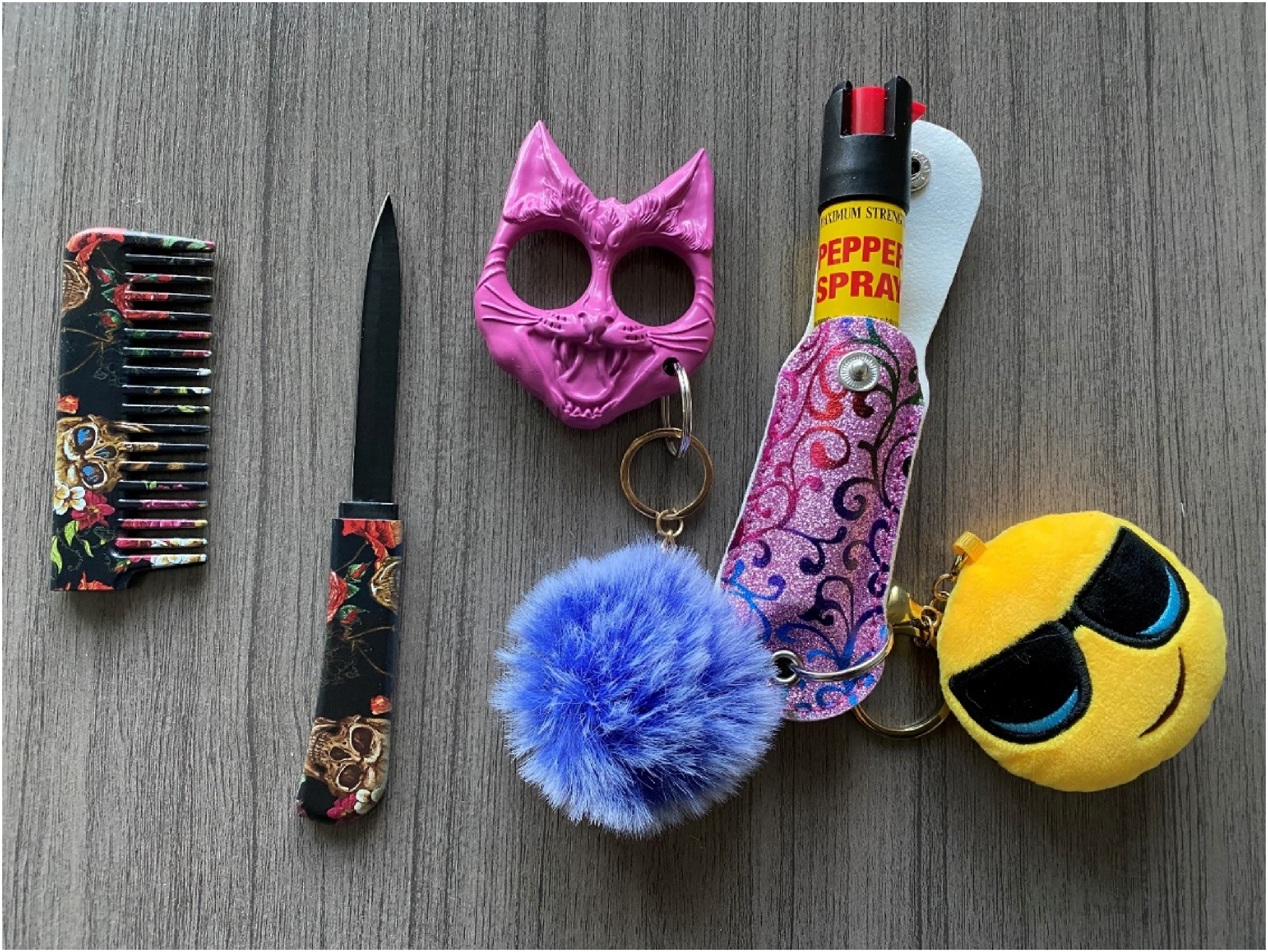
Felix and Sophia offer various self-defence products, including a hair comb knife, a tabby cat brace knuckle, and a pepper spray keychain adorned with a teddy bear emoji toy, all displayed from left to right.
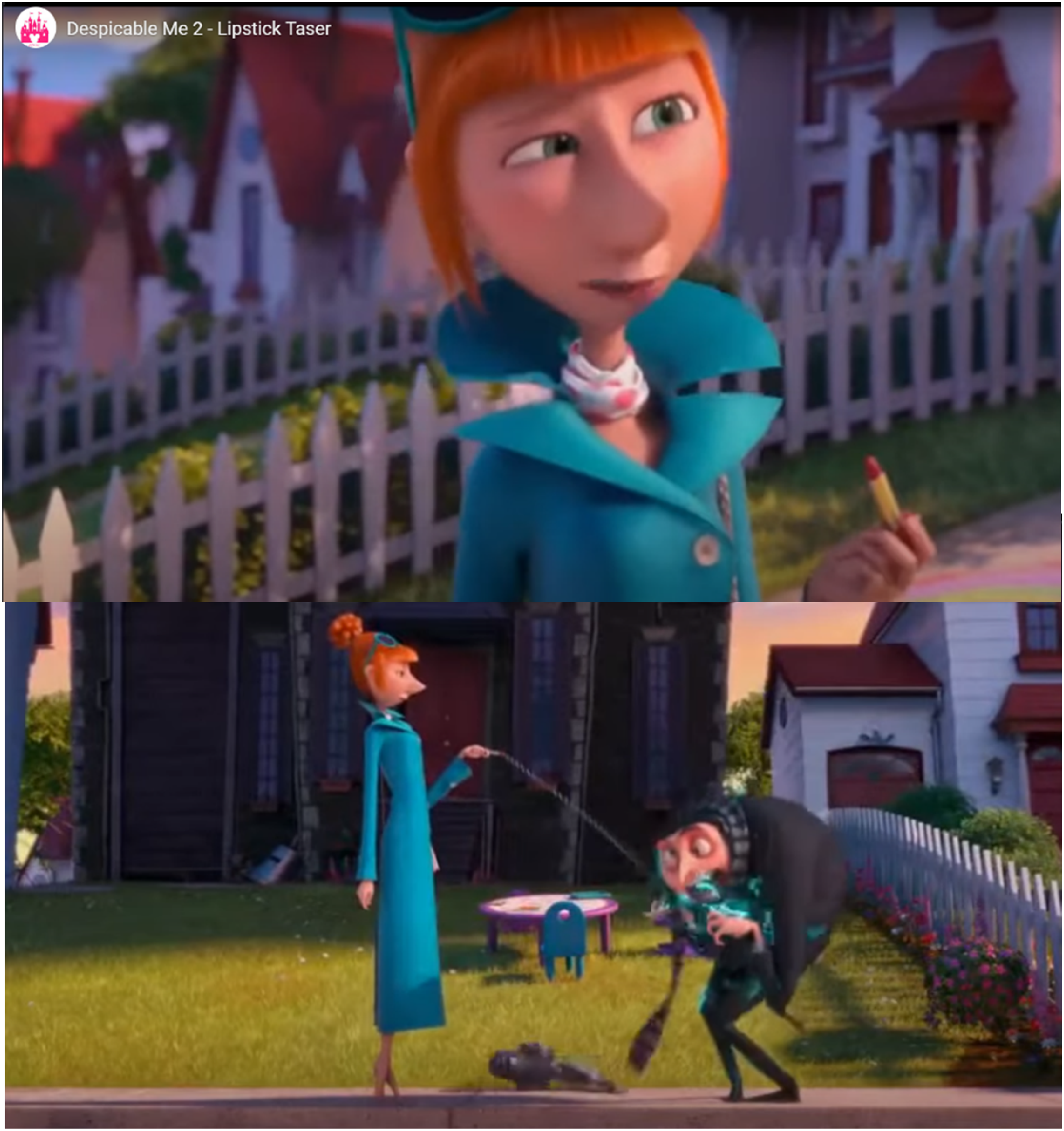
Movie still from Despicable Me 2 where anti-villain league agent Lucy Wilde uses her lipstick taser on Felonius Gru.
When examining pepper sprays in isolation, the primary application ascribed to this product concerns its use in self-defence, constituting 85% of the market share (Market Reports World, 2023). In other words, most people who purchase pepper sprays do so to use them for self-defence purposes. The global market for pepper spray is mainly concentrated in North America and Europe, with both regions collectively contributing to about 80% of the market (Market Reports World, 2023). Geographically focusing on North America, where the substantial market share is primarily dominated by the United States, the popularity of pepper spray is attributed to a rise in interest from women. The legislative landscape in the United States creates a more favourable environment for the supply, purchase, and use of pepper spray. Its legality spans all 50 states except the District of Columbia (Armament Systems & Procedures, 2024). However, specific restrictions exist at the state level. For example, only individuals above 18 years old can purchase pepper sprays in New York. Indeed, across the nation, 12 states have imposed age-related restrictions on purchasing pepper spray (Armament Systems & Procedures, 2024). Additionally, significant pepper spray manufacturers, including SABRE, Fox Labs, BlingSting, Safariland LLC, Mace Security International, and Zarc International Inc., are predominantly situated in or headquartered in the United States (Market Reports World, 2023). This geographical concentration presents substantial economic opportunities at both the local and national levels.
Likewise, the growing trend of marketing that disguises stun guns and tasers, such as those concealed within lipstick casings or flashlight designs, has gained notable traction among contemporary consumers (360 Research Reports, 2023). Distinguished by their operational proximity, stun guns operate in close quarters, while tasers employ electrodes capable of attaching to targets at a considerable distance. Despite these slight mechanical disparities, both stun guns and tasers converge in their ability to administer an electrical charge, resulting in temporary paralysis or incapacitation of the assailant. This phenomenon has also gained attention in popular culture, exemplified by the portrayal of a lipstick taser in the 2013 animated film Despicable Me 2, where the portrayal of empowered women in such children's cartoons, wielding weapons or mastering self-defence, cultivates a veneer of cultural coolness that, beneath its surface, subtly affirms the affective fact of women's inherent vulnerability (Figure 2). In doing so, we delicately reinscribe patriarchal norms, sustaining the illusion that women's security is contingent upon their preparedness to defend themselves rather than dismantling the very systems that cultivate the conditions of their endangerment.
Finally, the last product of focus is self-defence keychains. Compared to other products, the legal status of self-defence keychains varies across jurisdictions and hinges upon the specific attributes of the keychains in question (Artman, 2024). Despite the possible legal constraints, self-defence keychains in this market for women's safety are characterised by their customizable and often ‘cute’ designs, blending a message of fun with safety. This is further evident in numerous TikTok posts under the hashtag #selfdefencskeychains, which have amassed 143.7 million views. Danya Hajjaji (2022: 1) investigates this TikTok phenomenon and the videos that attract ‘thousands, sometimes millions of views.’ One particular account of interest goes by the name Trap Girls (2022: 1) Beauty, which simultaneously endorses and sells self-defence keychains, stating in one video: ‘Me shipping orders out of the country knowing the risk because I love y’all and want you to be safe.’ Directing attention to the 75,000 followers of this account and the legality of the content disseminated, Hajjaji (2022) raises concerns about the dual role played by sellers and platforms, both endorsing and commercialising self-defence keychains, thereby complicating where legal responsibilities for such products lie.
Despite the necessity for proper training in the effective use of the products offered, Felix suggests that they ‘cover the basics. Like, how to open the pepper spray, how to properly hold it, and when to use it’ (Felix, personal communication), but beyond this the responsibility for protection is placed squarely on the woman customer. The emphasis on training is less of a concern than just having a product on you: ‘Sometimes you walk around and you feel naked and don't have anything. You can go to the store, but what if something happens? You know what I mean?’ (Felix, personal communication). Carrying a product becomes less about actual preparedness and more about mitigating fear. This reflects how safety products can hold symbolic value, where the act of purchasing and carrying them is itself reassuring in the everyday.
Felix reinforces the principle of defence when explaining his motivations behind staying in this market, and emphasizes the imperative of readiness for personal safety: ‘Stay safe by staying ready’ (Felix, personal correspondence). Sophia echoes such thoughts and celebrates the increased awareness among women of the potential dangers they face: Fortunately, from when we first started to now, I’m seeing how many more women are becoming more aware that they need to protect themselves. But before, they weren't actually … Everybody wouldn't have a taser. Everybody didn't have a pepper spray. Now you go places and most of the women have something. And it's just seeing like, okay, now we’re finally seeing some people wanting to fight back. We’re starting to want to fight back. Some women, we do hear them say things like, ‘Oh, I don't want to hurt anybody,’ but that doesn't stop anybody from wanting to hurt you. That's always my response. That doesn't stop anyone from wanting to hurt you or trying to hurt you or anything. You should always have something. (Sophia, personal correspondence)
While there is a difference between feeling safe and being safe, the pair does not make this distinction in the quote above. Indeed, I share this quote in full because when read with the repeated stories of women's vulnerability, this affective communication of fear produces particular sites of pain. These narratives of women's vulnerability undoubtedly enable us to connect them with stories at an individual and personal level. The repetition provides a means to understand structures of fear and womanhood. In other words, to navigate the world, thinking that ‘you should always have something’ (Sophia, personal correspondence) perpetuates deep undercurrents of gendered fear that we cannot escape. In earning a living from circulating this fear, this market reminds us of those failed by broader social structures that combine capitalism and care.
Felix emphasizes the everyday nature of carrying these overtly feminine self-defence weapons, particularly highlighting the practicality of lipstick knives as gifts, especially for Christmas: ‘They put them in their little stockings and stuffers’ (Felix, personal communication). He suggests that people can discreetly carry these items in their purses, as they resemble regular lipstick to those unaware. Here, the aspect of concealment adds to their effectiveness as defensive tools. Considering gender as a relational construct, masculinity and femininity mutually reinforce each other (Connell, 1998). I note that the significance of repurposing everyday feminine items into self-defence weapons is threefold for women:
It underscores women's need to anticipate potential dangers in their daily lives. It encourages women to cultivate resourcefulness and agency by transforming perceived symbols of weak femininity into empowerment tools to feel safe. It normalises carrying self-defence products by associating them with gift-giving rituals and symbols of care.
Fighting back
Mia's work unsettles the conventional boundaries of the marketplace through her forceful and visible embrace of her role as an activist. Growing up in Ohio, Mia was immersed in an artistic environment, accompanying her mother to trade fairs where they sold art. Inspired by her upbringing and her identity as a queer person, Mia's art is deeply influenced by the vibrant trans community around her. Rather than framing her creations as mere tools for self-defence, Mia views them as works of art. Among her most popular items are custom brass knuckles. These pieces, adorned with radical feminist or queer trans motifs, embody Mia's vision of blending beauty with strength. While somewhat diverging from Felix and Sophia through her creations, Mia seeks to challenge conventional notions of femininity, intertwining delicate aesthetics with unyielding resilience (see Figure 3): I wanted to make something for people who experience a lot of street harassment that would make us laugh or feel powerful and make it a cute thing that we’re excited or proud to hold on to … And these bring people a lot of joy … I think as queer and trans people, we’re refused our identities for most of our life. And so it's really fun to wear them in a prideful way and a way that makes us feel strong because sometimes those are the words that people use against us to hurt us in the street. They’ll say things like slut or fag and dyke, but now it's like, Yeah, I am. You better be scared of me. (Mia, personal correspondence)
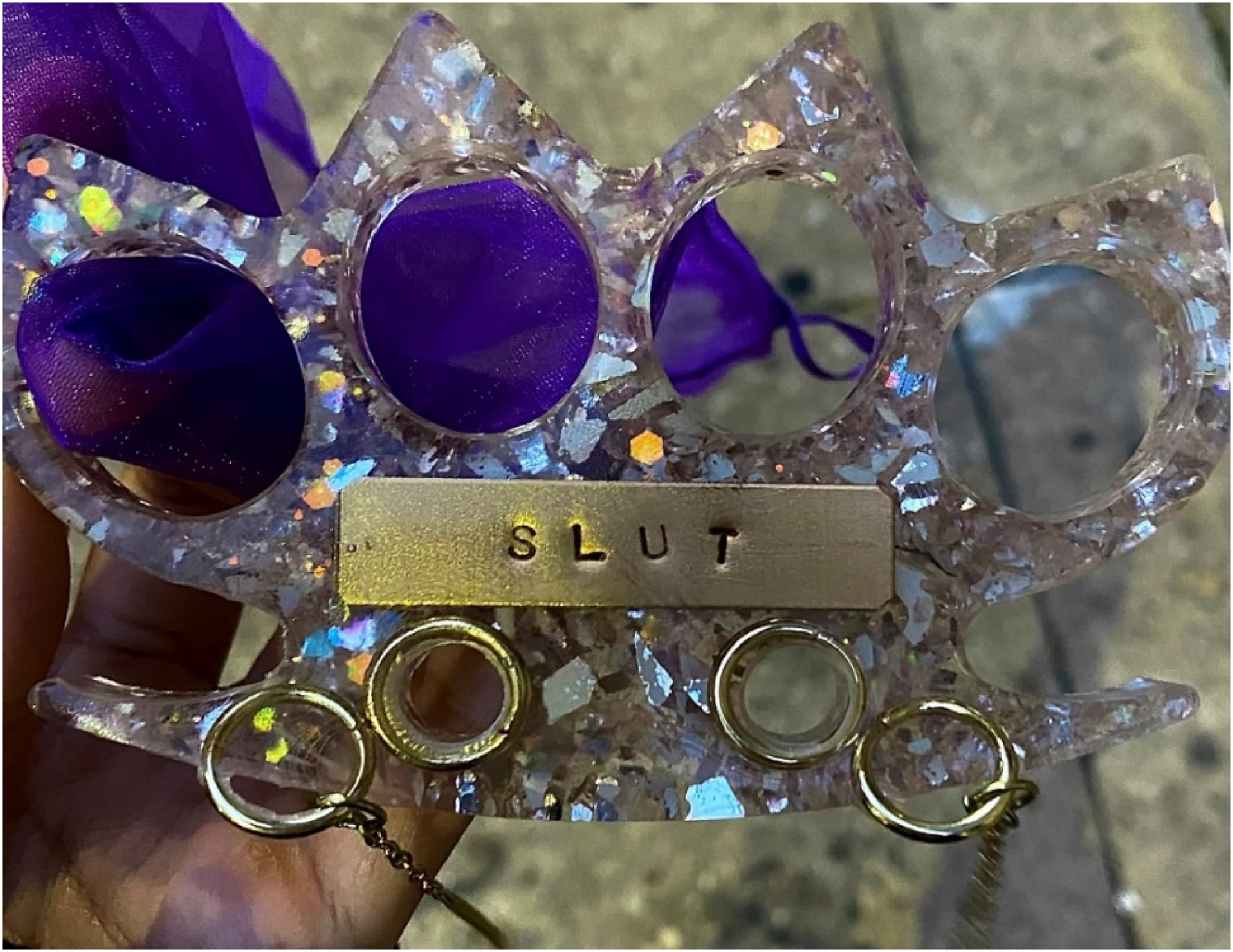
This is an example of a brass knuckle embedded with the term ‘slut’ as designed and sold by Mia.
In recognizing the incorporation of derogatory terms like ‘slut,’ ‘fag,’ and ‘dyke’ as weapons and armour in street harassment, Mia chooses to embrace these words as symbols of pride. By openly adopting them, she neutralises their power to hurt and asserts her resilience and defiance. Mia's bestselling words, including ‘cry-baby,’ ‘silly goose,’ ‘rat,’ ‘666,’ ‘dyke,’ and ‘fag,’ have historically been wielded against marginalised individuals or communities. However, by reclaiming this language, some individuals may find a means of redefining negative stereotypes and asserting autonomy and self-expression to channel their rage at social structures in innovative ways.
In her book Empowered, Banet-Weiser (2018: 185) concludes with a resounding call: ‘We need a lasting feminist rage.’ While Banet-Weiser refrains from delineating the precise contours of this rage—its form, texture, or weight—my conversation with Mia reveals rage as a multifaceted phenomenon, unfolding across intersecting dimensions. Here, rage transcends mere emotion; it emerges as an unrelenting force, surging in response to the systemic shaming that stains everything it touches. Yet, paradoxically, this rage also mirrors the shifting currents of cultural desire—what is ‘all the rage’—signifying the collision between collective fury and the commodification of subversion. Words once wielded as instruments of degradation, ‘slut,’ ‘fag,’ resurface, stripped and repurposed within the theatre of popular culture, transformed into emblems of defiant visibility. Instead, repeating her words, ‘it is really fun to wear them in a prideful way and a way that makes us feel strong’ (Mia, personal correspondence). In other words, Mia's words reflect a dynamic interplay of affect, including enjoyment, pride, and a sense of strength, associated with carrying or wearing self-defence weapons. In this duality, rage oscillates between rupture and spectacle, insurrection and trend, illuminating the ways feminist anger is both catalysed by injustice and co-opted by the very structures it seeks to dismantle.
Although this approach may not eradicate the harmful use of such terms by others, Mia's act of reclaiming engages with the idea that we contain our failures. In making this assertion, I aim not to endorse a neoliberal ideology of self-help but to emphasise what I find most compelling in Mia's motivations, namely that power is an ever-present, ever-changing historising force in all human interactions, permeating within and around the very fabric of our societies. It is not a trade-off between effectiveness and control but rather an entity contingent upon the potential for dissent or resistance. It is essential to acknowledge the profound sense of enjoyment and collective solidarity that emerges from the selling of self-defence products, objects that intertwine the dual promises of pleasure and perceived safety. This recognition unveils a landscape rich with paradoxes, revealing that the commodification of such items cannot be dismissed solely as harmful. Instead, these contradictions form an inescapable terrain, urging us to confront the complexities that arise when protection is both a commodity and a source of feeling safe.
Safety for and from whom?
As a final note in this analysis, it is crucial to identify the target consumers for this market as perceived by Felix, Sophia, and Mia. According to Sophia, they typically sell to older individuals, security personnel, college students, nurses, overnight workers, and those on late shifts. Felix narrows this market further by suggesting that his focus tends to be selling to single women, whom he perceives as particularly vulnerable to potential attacks during commutes via subway, bus, or ride-shares like Uber. The imagery surrounding the single woman not only reinforces her as the most vulnerable figure but also emphasises how this position represents a departure and deviance from the other, safe heteronormative conditions (Lahad, 2013). Indeed, the term ‘single woman’ can refer to two overlapping but distinct concepts. The first is a woman who is unmarried and has no partner. The second describes a woman who navigates life independently, regardless of her relationship status. These interpretations, while related, emphasise different aspects of being single. Both, however, reflect contemporary discourses where women are frequently depicted as requiring a partner to achieve a sense of completeness or to navigate the world's complexities, including ensuring their safety. Thus, the longing to fit into these norms is driven by a desire for acceptance and the basic human need for security and stability. Lilie Chouliaraki's (2024: 28) assertion that ‘the victim is not a person per se but an iterative act of speech through which the self is produced as vulnerable at the very moment it claims to suffer’ resonates profoundly here. Victimhood transcends mere identity; it emerges as a communicative act, an articulation steeped in the tremors of fear of being alone and the weight of inevitable injustice.
This messaging infiltrates various facets of life, as evidenced by my interviewees’ approaches to devising strategies to combat violence against women and girls. Encouraging individuals to walk in groups or avoid being alone at night, often with the implied suggestion of being accompanied by a man or a group of friends, inadvertently reinforces the idea that a woman's safety hinges on her relationships.
Moreover, when asked why single women are his priority, Felix also emphasised that this figure could amplify product awareness by networking with other single women. Notably, Sophia also specifies that they do not sell to young men. Contrary to a blanket acceptance of all customers, Sophia emphasises restrictions on who can purchase from them, highlighting a deliberate choice to provide a niche market chosen on moral grounds. However, this marketed gendered segregation can also lower acquisition costs, reduce the need for product diversification, and provide a foundation for establishing trust within a specific purchasing community that promotes use of their products.
Indeed, all interviewees shared a common perception of young men as potentially dangerous, reinforcing the notion that such a body warrants suspicion. Mia, for example, recalls encountering much scepticism from young men, mainly straight, cisgender individuals, regarding the products she sells. In response, she defends her business by suggesting, ‘Wow, if you have ever been assaulted, it would maybe make a little more sense’ (Mia, personal correspondence). When asked where she feels women are most likely to be attacked, Mia draws attention to the prevalence of street-based attacks, attributing them partly to exacerbated poverty in the post-pandemic era. She observes, ‘stuff happens on the street. I think post pandemic, poverty is just worse and worse. And sometimes people do things like hurt other folks’ (Mia, personal correspondence). This observation echoes concerns raised by Felix and Sophia, who intertwine discussions of perpetrator mindsets with the influences of capitalism. Together, they present a narrative suggesting that conditions of poverty can intensify stress and feelings of inadequacy, particularly in young men who may struggle to fulfil their culturally prescribed role as providers (Connell, 1998). While this narrative does not justify violence, it underscores a commonly held belief within perpetrator discourse. However, it is essential to emphasise that not all individuals experiencing poverty resort to violence, and not all perpetrators of abuse come from impoverished backgrounds. Violence, in other words, does not have to lead to further violence and nor should abuse need to lead to further abuse.
Ultimately, the fear that covers the construction of perpetrators serves to cast these figures as deviant, detaching them from the broader frameworks of misogyny, patriarchy, and capitalism. They are rendered as anomalies, manifestations of unprecedented malice or evil, waiting for vulnerable women. Yet, fear in this context does not exist as a discrete or objective entity; it unfolds as a sedimentation of affective exchanges, layering over time. These exchanges crystallise into affective facts, offering a semblance of gendered order even as they fortify the very systems we might seek to dismantle. Against this paradox, fear becomes both a refuge and a barrier, simultaneously legible and insidious, shaping our perceptions and constraining our capacities for change. Fundamentally, while my aim in this article is not to discredit fear, I seek instead to use this analysis to address a fundamental question of what it truly means to be safe as a woman, and how this discussion on the market for women's safety may bring us closer to answering that question.
Footnotes
Data availability statement
The data supporting the findings of this study are available from the corresponding author upon reasonable request.
Declaration of conflicting interests
The author declared no potential conflicts of interest with respect to the research, authorship, and/or publication of this article.
Ethical approval and informed consent statements
This study was approved by the University of Pennsylvania's Institutional Review Board. Informed consent was obtained from all participants involved in the study.
Funding
This research did not receive any specific grant from funding agencies in the public, commercial, or not-for-profit sectors.
