



Abstract
Early childhood trauma is widely experienced and can lead to diverse outcomes. Early childhood education and care (ECEC) educators are expected to implement trauma-informed approaches as a strategy to reduce potential negative outcomes of trauma experiences. This requirement, however, assumes that there is agreement on meanings of trauma and that educators can implement trauma-informed approaches. As the first step to exploring this assumption, this article aims to identify how trauma is constructed in the international ECEC literature. The article reports findings from a scoping literature review that yielded 63 relevant sources. With analyses of the literature conducted thematically from a constructivist paradigm, constructions of trauma were found to be predominantly shaped by prevailing Western discourses from fields including medicine and child protection, with limited perspectives from early childhood education. Furthermore, trauma was constructed in five different ways across a spectrum of deficit- and strengths-based positionings: trauma as burden, trauma as risk, trauma as conditional, trauma as injustice and trauma as adaptation. The findings highlight under-recognised contestations in how trauma is conceptualised and provide insights into how constructions of trauma might align with trauma-informed education.
Keywords
Introduction
A growing body of literature across the health, education and social work sectors has identified trauma as an epidemic (Fidyk, 2019; Habal, 2022; Subramaniam and Wuest, 2021). Approximately two-thirds of participants in extensive studies identified having had traumatic experiences in childhood in Australia and the United States (US). For instance, an Australian study by Haslam et al. (2023) found childhood trauma experienced in 62% of participants, and international studies by Felitti et al. (1998) and Merrick et al. (2018) found experiences of childhood trauma in 67% and 61% of participants, respectively. Furthermore, over half of all children in the world are assumed to experience violence every year (Hillis et al., 2016). According to this literature, experiencing trauma in early childhood may lead to adverse outcomes that can persist over a lifetime, including increased risk of serious illness such as cancer and chronic lung disease, reduced attendance and concentration at school and poor relationships with peers (Bick and Nelson, 2016; Felitti et al., 1998).
These prevalence figures, however, stem from one framing of trauma – a biomedical construction. From the medical field, this construction takes a reductionist, determinist approach and frames childhood trauma as events that cause negative effects. These figures, therefore, do not represent constructions of trauma that are more holistic (Blehm, 2024). For instance, the role of the environment and structural injustices such as ‘racism, sexism, homophobia, classism, and all forms of oppression’ (Venet, 2023: 13) are not explored as trauma experiences and simultaneous outcomes of trauma.
Attending high-quality early childhood education and care (ECEC) can counterbalance the negative impacts of early childhood trauma (Roseby and Gascoigne, 2021). Such services have been shown to support children's emotional, social and language development (Mortensen and Barnett, 2016). Despite the gains from attending ECEC, however, academic, social and developmental gaps persist between children who have experienced trauma and their peers (Mortensen and Barnett, 2016). Specific trauma-informed approaches in ECEC, therefore, could contribute to closing this gap. Indeed, the value of trauma-informed approaches in ECEC is recognised internationally. For instance, national early years curriculum frameworks in Australia and the US respectively require educators to ‘adopt trauma-informed practices’ (Australian Government Department of Education (AGDE), 2022: 44) and ‘understand and appropriately respond to prevalent child mental health concerns, including … trauma (US Administration for Children and Families, 2024: 46).
Despite the expectation that ECEC services provide trauma-informed interventions, educators are reported as feeling ill-prepared to do so. The limited research undertaken in ECEC has elucidated that ECEC educators worldwide are facing an increased prevalence of children who have experienced trauma (Berger et al., 2023; Sun et al., 2023), and that they generally feel unprepared to support them (Bilbrey et al., 2024; Chudzik, Corr and Wolowiec-Fisher, 2023; Sun, Skouteris, et al., 2024). While trauma-informed approaches are now expected in ECEC, identifying how trauma is constructed by educators warrants investigation. Within ECEC, reviews have identified what educators know about trauma and how they practice trauma-informed education, and the outcomes of trauma-informed approaches (Chudzik, Corr and Wolowiec-Fisher, 2023; Sun, Blewitt, et al., 2024; Sun et al., 2023). Thus far, however, no review has aimed to uncover the dominant discourses around trauma in ECEC. Understanding how trauma is constructed is vital given that prevailing discourses about it influence educators’ understandings and practices of trauma-informed education (Thomas et al., 2019).
In response to this research gap, this article aimed to investigate how trauma is constructed in the ECEC literature. Following is an outline of the study's methodology, including how social constructionism, discourse theory and constructions of children and childhood inform the study. Thereafter, the study's research design is presented.
Methodology
Theoretical approaches
The study was situated in a social constructionism paradigm and guided by discourse theory and constructions of children and childhood. Social constructionism views knowledge as shaped by an individual's interactions with the social world (Burr, 2015), which, in respect to the focus of the study, included dominant discourses about trauma and prevailing constructions of children and childhood.
Social constructionism and discourse
Social constructionist perspectives recognise that knowledge is subjective and influenced by social interaction and discourse (Burr, 2015). Discourse refers to both the dominant ideologies that inform individuals’ meaning making in larger society and the language used in interactions between individuals. Discourse, then, influences the individual as they construct a social model of the world, ultimately shaping how people see the world and how they interact within it. Furthermore, discourse at the macro level is constructed to suit the interests of dominant groups (Burr, 2015). Accordingly, constructions of trauma have been critiqued as being shaped by the relatively powerful and for silencing marginalised perspectives (Golden and Petrone, 2021). Exploring these constructions will expose the dominant discourses surrounding trauma that likely influence ECEC educators as they construct their knowledge of trauma and trauma-informed practices.
Constructions of childhood
Historically, constructions of childhood have been seen as taken for granted assumptions that reflect the shared values of families, education and schooling. For instance, in the Western world, childhood is generally positioned as an ‘oppositional binary’ to adulthood, and children are defined by what they cannot yet do in comparison to adults (K Robinson and Jones-Diaz, 2017: 52). Since the early 1990s, however, sociologists (James and Prout, 1990; Jenks, 1989) have explored and deconstructed these assumptions, with childhood now understood as rooted in ‘social, political, historical and moral context’ (Staiton Rogers, 2015: 116). Over the last few decades, focus shifted to whether these constructions ‘promote or constrain equity and equality [in how] they position the child’ (Woodrow, 1999: 7). For example, constructing children through Western discourses, like age and stage and what is developmentally the norm in that stage, has led to the creation of ‘globalized standards for judging other peoples’ childhoods’ (Woodhead, 2015: 21). These discourses lead to the Othering of any experience of childhood that does not fit the Westernised norm.
ECEC pedagogues and theorists argue that how educators construct childhood impacts their educational practice, such as the language they use when talking about children (Woodrow, 1999). For example, seeing the child as an oppositional binary to adults perpetuates the notion that adults have power and children should not. Through this positioning, an educator may see children in the ECEC setting through a deficit lens and give them limited agency. Education is therefore used as a vehicle to transfer knowledge that is privileged, thus leading to Othering and a continuation of oppression and marginalisation (hooks, 2014).
Methods and search strategy
To understand the constructions of trauma and childhood used in ECEC trauma literature, this study employed a scoping review method. A scoping review follows a systematic search process, although, unlike a systematic review, a critical evaluation of the literature is not undertaken as the aim is to identify and map the evidence rather than confirming the quality of it (Munn et al., 2018). A scoping review can be conducted to clarify key concepts and identify characteristics related to them in the literature (Munn et al., 2018). This approach was deemed appropriate given the aim of identifying how trauma is constructed in the ECEC literature.
The Preferred Reporting Items for Systematic Reviews and Meta-Analyses guidelines for scoping reviews (PRISMA-ScR; Tricco et al., 2018) were followed to identify the literature to be reviewed. Four relevant online databases were used: ERIC, PsycInfo, Sociology Source Ultimate and SCOPUS. Sources included peer-reviewed articles, books and chapters written in English, not including media outlets. Publication dates were limited to 2014–2024 with the various terms used in the search (refer to Table 1). Terms used in Search 1 were limited to include ‘trauma’ and did not include variations of this word (e.g. maltreatment, violence or abuse). Such terms were viewed as loaded and based on different epistemological assumptions regarding trauma. For instance, the term ‘maltreatment’ is often used to reflect biomedical understandings of trauma and limits the potential for further exploration. Therefore, to capture how trauma is constructed in the ECEC literature, the first search required the use of the word ‘trauma’.
Search strategy.
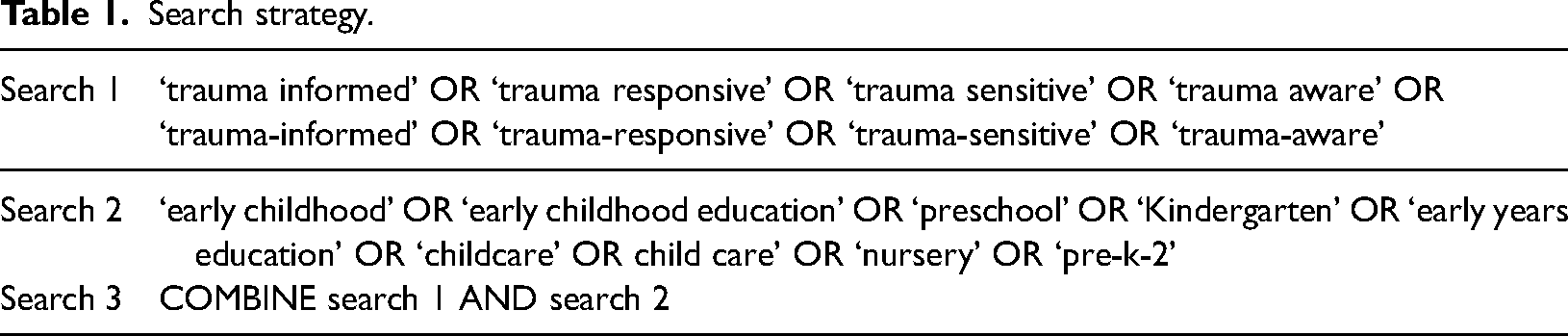
Inclusion and exclusion criteria
First, the literature was required to explicitly focus on early childhood trauma in respect to ECEC. For example, sources that described, discussed or evaluated trauma-informed programmes, practices and approaches implemented by educators in ECEC were included. Contrastingly, literature that explored trauma-informed approaches for counselling, paediatrics and social work were excluded. This criterion was selected to ensure the findings were drawn from and of relevance to educators in ECEC. Second, during reading, the literature was screened to ensure it defined, conceptualised or explained trauma in some way, either directly or indirectly.
Review procedure
The initial search returned 578 publications. After removing duplicates, 414 publications were screened using title and abstract. Screening saw 331 publications removed, with 83 read in full to assess their eligibility. Following the full reading, 20 sources were removed, leaving 63 publications included in the review (see Figure 1). Screening was completed by the first author as part of a doctoral study.
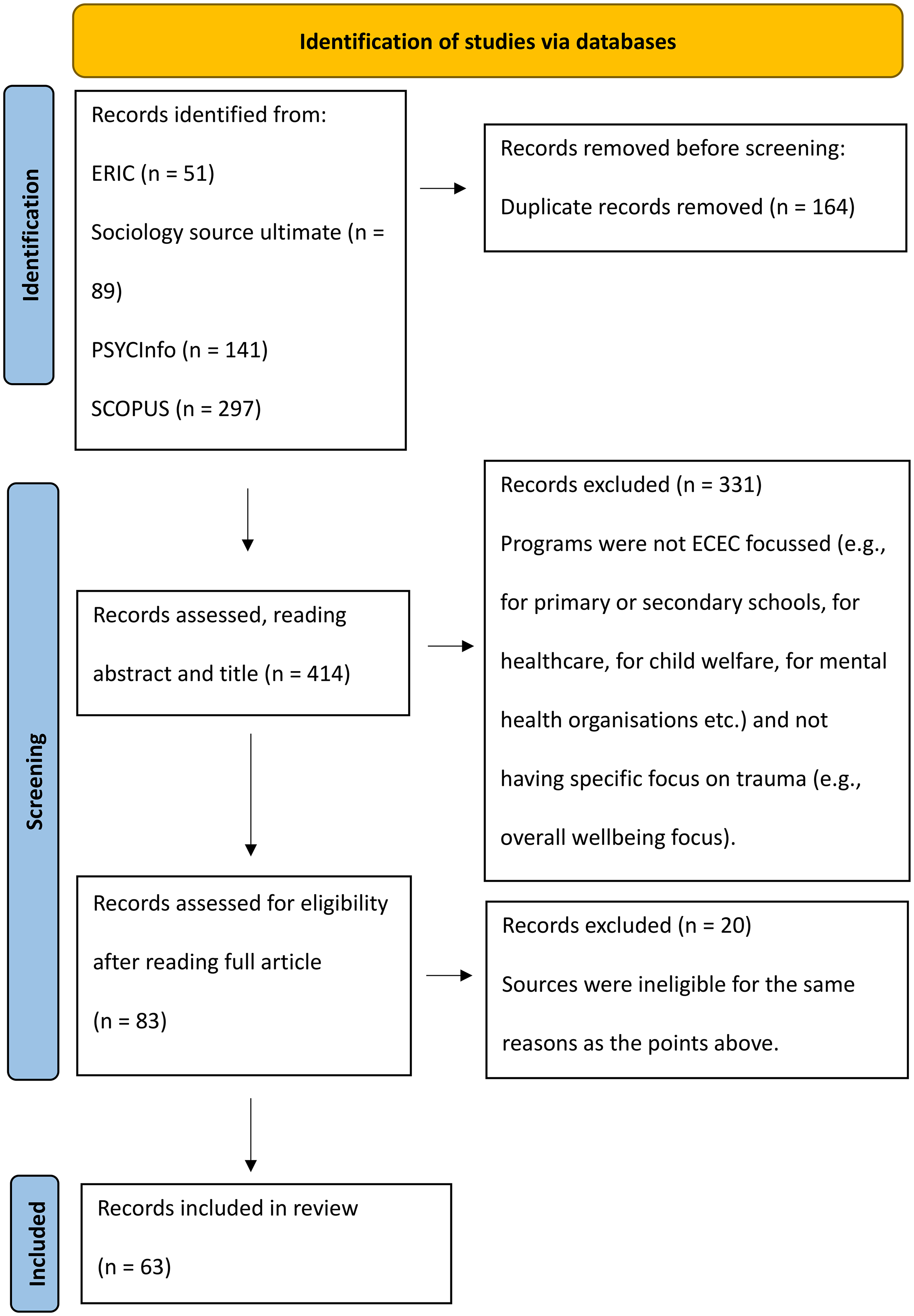
PRISMA flow chart of sources.
Data extraction and analysis
The 63 publications were exported into NVivo qualitative data analysis software. The following data were extracted from all sources by the first author: source type (e.g. journal article, book chapter); method and participant information (if relevant); country; professional background of the first author; from whose perspective was trauma described; purpose of publication; and constructions of trauma. If a study included participants who were not ECEC educators or data not relevant to ECEC practices (e.g. primary school, mental health professionals), only data specific to ECEC were extracted.
Thematic analysis (Braun and Clarke, 2006) of all 63 publications was undertaken by the first author using extracted constructions of trauma data, while the second author independently completed thematic analysis on a subset of the articles. The authors then collaboratively reviewed and discussed any discrepancies and emerging themes until consensus was reached on the final themes (Braun and Clarke, 2006). Guided by a constructionist lens, the first author deductively analysed the data to discover ‘the ways in which … meanings … are the effects of a range of discourses operating within society’ (Braun and Clarke, 2006: 81). In this research, the meanings being examined were the ways in which trauma is constructed, and how these constructions aligned with images of children and childhood. Thematic analysis was appropriate as it allowed the authors to explore data at the latent level, identifying not only how trauma is constructed in ECEC but also underlying influences and, ultimately, how trauma-informed approaches might be practiced (Braun and Clarke, 2006).
Findings and discussion
The 63 sources reviewed comprised 33 journal articles reporting empirical research, 13 conceptual journal articles, eight reviews, six book chapters, two books and one set of education guidelines. The literature was drawn from nine countries across the Americas, Australasia and Europe, reflecting constructions of trauma from the Western world.
The empirical research included 16 quantitative, 12 qualitative and five mixed-methods studies. While empirical research included families and professionals such as early childhood special education teachers who worked with prior-to-school-aged children, most of the data constructing trauma were extracted from conceptual sections in the literature. With only 38% (n = 24) of the first authors having professional backgrounds in ECEC, the constructions of trauma in this review largely showcase the discourses of trauma expressed in academia, often originating from the arguably higher status medical, welfare and broader education sectors. Furthermore, of the 63 sources that captured participant perspectives, only 17% (n = 11) included ECEC educator participants. Therefore, while ECEC educators are significant in shaping children's development and are expected to implement trauma-informed approaches, they have limited social power (Van Dijk, 2012) in shaping trauma discourse in ECEC literature.
Themes identified from the data and as presented in Table 2 showed that trauma is constructed in five ways. The most prevalent construction was trauma as conditional, identified in 100% of sources; followed by trauma as risk, found in 95%; then trauma as burden, evident in 73% of the literature; then trauma as injustice, found in 63%; and finally, trauma as adaptation, identified in only 35% of the sources. The themes are discussed in the sections below.
Extracted data and identified themes.
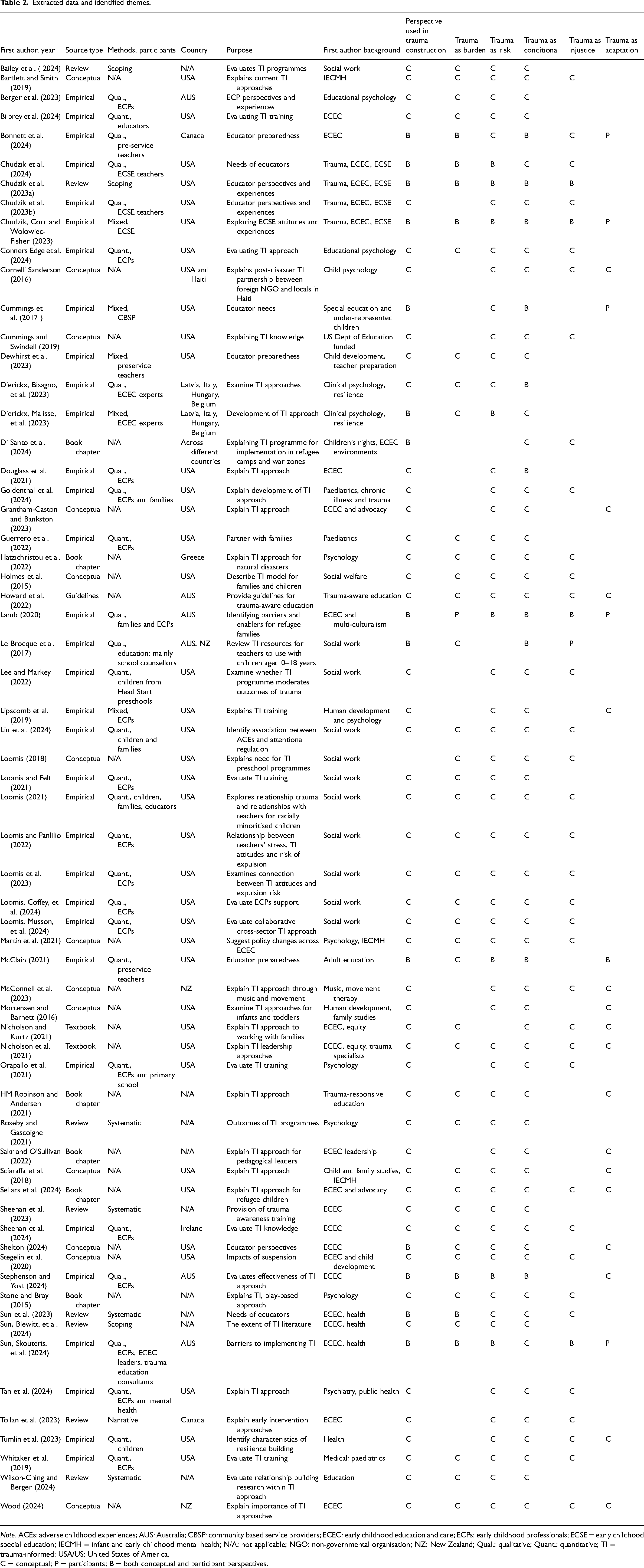
Note. ACEs: adverse childhood experiences; AUS: Australia; CBSP: community based service providers; ECEC: early childhood education and care; ECPs: early childhood professionals; ECSE = early childhood special education; IECMH = infant and early childhood mental health; N/A: not applicable; NGO: non-governmental organisation; NZ: New Zealand; Qual.: qualitative; Quant.: quantitative; TI = trauma-informed; USA/US: United States of America.
C = conceptual; P = participants; B = both conceptual and participant perspectives.
Trauma as conditional
Trauma as conditional was the most prevalent theme, with all 63 authors discussing this construction, 10 of which included participant perspectives reflective of this theme (refer to Table 2). This theme highlights the role of the environment in shaping experiences of trauma, recognising that potentially traumatic events occur in context, and different contexts influence whether events are experienced as trauma. Effectively, viewing trauma as conditional sees events as akin to sitting on a set of balancing scales. Whether an event is experienced as trauma depends on the conditions in which it is experienced, and whether there are positive environmental factors to counterbalance potential adverse effects. In this construction, therefore, while trauma may occur, negative outcomes are not destined.
Six conditions that may contribute to or alleviate trauma were identified in the literature and spanned the context of the individual child, the child's family, the community and the ECEC setting. In the individual child's context, there were two conditions: the individual child's perceptions of trauma, for example, whether an event is novel, unpredictable or perceived as physically or emotionally harmful or life threatening; and the child's developmental stage when an event occurs, for example, when an event ‘is powerful and dangerous in which a feeling of helplessness overwhelms the child's capacity to cope’ (Zindler et al., 2010, as cited in Mortensen and Barnett, 2016: 78). In the context of the child's family, two conditions were found: the quality of, or whether an event occurs in, the caregiving relationship (Dierickx, Bisagno, et al., 2023); and cultural perceptions and constructions of trauma, for example, ‘the diverse ways [people] make meaning of and describe [traumatic] experiences are influenced by culture and language’ (Nicholson et al., 2021: 208). In the context of the community, one condition was found: feelings of safety in the community, for example, acts of community violence ‘such as beating, shooting, stabbing, or robbery where the child was a victim or witness’ (Holmes et al., 2015: 1650) may directly or indirectly impact a child. Finally, in the context of the ECEC setting, the condition discovered was the quality of it, for example, trauma could be experienced due to education settings being ‘unsafe … reactive … rigid and inflexible’ (Nicholson et al., 2021: 54). Most notable in this theme was the recognition that relationally attuned and responsive ECEC educators may counterbalance the harm that may occur from experiences of trauma.
Constructing trauma as conditional reflects the perspective of ‘The Ecological Child’; that is, the view that each child develops in context. Viewing trauma as conditional means identifying the ecological conditions in a child's life that may not be sufficient for them to thrive in this society. Thus, the educator works within and across the child's current contexts, for example, beyond working with the individual child, the educator supports and partners with families and communities to mitigate the experience and outcomes of trauma.
Trauma as risk
Trauma as risk was evident in 95% of sources (n = 60), with the majority (n = 52) stemming from conceptual discussions of trauma, and the remainder from participant perspectives (n = 8; refer to Table 2). This construction focuses on the adverse effect(s) of trauma on the individual child. Across the conceptual sections of the literature, a range of adverse outcomes were discussed, including negative impacts on health, academic performance, social relationships, play skills and overall physical, emotional, spiritual and psychological well-being. Participants identified the same adverse outcomes, for instance, that trauma causes negative impacts on ‘executive functioning and social-emotional development’ (Chudzik et al., 2024: 118).
Additionally, literature drew on prevalence data to showcase the extent and significance of the risk. Generally, contextually relevant information was provided, as seen with Wood (2024) sharing that ‘ACEs [adverse childhood experiences] are common in Aotearoa New Zealand’ (2024: 33). The literature also highlighted that most trauma experiences occur in early childhood, with adverse effects potentially lasting a lifetime.
This construction of trauma as risk reflects an image of ‘the vulnerable child’ (Woodrow and Press, 2007). Since trauma is prevalent in Western society, attention is given to alleviating future potential negative outcomes rather than working with the present child. Further, in positioning the child as vulnerable, they are seen as impoverished and passive, so children are not afforded rights and agency (Read, 2015). Aligning with child protection perspectives, when transferred to ECEC, surveillance, reporting and reducing future negative outcomes are prioritised in the name of preserving childhood innocence. While reporting is certainly important, educators may falsely assume the risks are removed and they have saved the future child once the ‘abuse’ or ‘neglect’ are reported.
Trauma as burden
Constructing trauma as burden positions it through the load it places on others. Such strong, negative messages were identified in 73% (n = 46) of sources, including in the conceptual sections (n = 38), participant perspectives (n = 1) and both (n = 7; refer to Table 2). In the conceptual sections, reference to the burden trauma poses in a range of contexts was identified, for instance, the burden on the classroom, including for other children and educators; on the schooling system; on families of children who experience trauma; on communities; on economies; and even on the country. Terminology used ranged from general concern, with trauma framed as a ‘significant public health concern’ (Sun, Skouteris, et al., 2024: 1), to more evocative language such as ‘contributing to enormous societal costs’ and having ‘devastating consequences for … the country’ (Martin et al., 2021: 120) and to more powerful pejorative phrasing, including ‘troublesome conduct’ and ‘unacceptable behaviour’ (HM Robinson and Andersen, 2021: 7).
ECEC participants provided contrasting perspectives, with some explaining the burden through the challenges they faced when working with children who were experiencing trauma. In explaining trauma as challenging, educators – positioned in the literature as being ‘on the front lines’ (Shelton, 2024: 37) – provided accounts of the difficulties they were experiencing, thus highlighting the complexities and demands of the role. Sun et al. (2023), for example, found that educators shared that working with children who experience trauma had a ‘negative impact on their personal wellbeing, using words such as “emotional struggle”, “burnout”, “compassion fatigue”, “emotional burden”, “crying”, “frustration”, “hopeless”, and “despair”’ (2023: 5).
Seeing trauma as burden aligns children who experience it with the image of ‘the child as monster’ (Woodrow, 1999: 9), essentially dehumanising the child and decontextualising their experiences. While supporting children who experience trauma is not without its challenges, such language positions these children and their families as Others who pose a threat to society. Framings such as this can lead to a dangerous perpetuation of harmful stereotypes. Furthermore, constructing trauma as burden and the child as monster places the blame for behaviours aligned with trauma on the child, not on the conditions that enable such behaviours to flourish (Woodrow, 1999). Thus, the onus is placed on the child to adjust to the trauma (albeit with support), but this approach does not reduce nor confront the contextual or inequitable conditions that led to trauma in the first place (Venet, 2023). Ultimately, in this positioning, the educator is all powerful, maintains the social order and aims to protect the classroom from this monster (Woodrow, 1999).
Trauma as injustice
The theme of trauma as injustice recognises that institutional, historical and structural inequities create experiences that lead to daily stresses and adversities for the marginalised and oppressed, and which thus can be traumatic. This theme was less prevalent in the dataset, though it was still identified in a majority (n = 40; 63%) of sources. This literature included only one source with just participant perspectives reflecting this theme, and four sharing both participant and conceptual constructions (refer to Table 2). Groups impacted by inequities as identified in the participant perspectives were those experiencing disability, socioeconomic disadvantage and/or racism, and those from culturally and linguistically diverse and/or refugee or immigrant backgrounds. The conceptual sections of the literature identified the same groups, as well as families and children impacted by homelessness, discrimination and gender disparities.
The literature also explored the compounding nature of oppression and marginalisation – that belonging to one marginalised or oppressed group increases the likelihood of further trauma. For instance, children experiencing disability are more likely to experience early childhood trauma. Additional examples of the hardships experienced due to inequities included food insecurity, unemployment, incarceration, political unrest, deportation, displacement and immigration crises. In viewing trauma as injustice, the inequities ‘embedded in [the] structures … and institutions … and the policies’ provide conditions for adversities and trauma to flourish (Nicholson and Kurtz, 2021: 12).
This positioning of trauma reflects the image of ‘the child as a rights-bearing citizen’ (MacNaughton and Smith, 2015: 172). Viewing trauma in this way, the educator works toward socially just practices, ensuring that every child can participate as a valued member of society and that the harmful structures and systems in society, or at the very least in their ECEC setting, are destabilised. Their practice may also extend beyond the setting, for instance, they may engage in advocating for universal access to inclusive, high-quality ECEC.
Trauma as adaptation
Trauma as adaptation constructs trauma responses as adaptive strategies and recognises strengths within the child to survive trauma experiences. Present in only 35% of sources (n = 22), with five of these sources sharing participant perspectives only and one sharing both participant and conceptual constructions of trauma (refer to table 2), this positioning was the least prevalent theme. This positioning places the child in the present, without focussing on the future child, and observes and draws on the unique ‘coping strategies that a child intelligently develops’ (Vericat Rocha and Ruitenberg, 2019: 136). In constructing trauma as adaptation, children are not defined by the trauma they have experienced. Like diamonds, which are made under pressure, trauma is seen as ‘one thread in the fabric of someone's life’ (Nicholson et al., 2021: 196). Discussions of trauma are balanced with strengths-based, resilience-focussed conversations.
In contrast to the language used in constructing trauma as burden, trauma as adaptation explores the harsh realities of trauma while leaning towards optimism. The construction is characterised by hope, resilience and possibility. For example, participants shared that they understood children are ‘doing what they’re doing for a reason’ (Bonnett et al., 2024: 128), recognising ‘there is a lot of resilience’, which some participants described as ‘“remarkable”, “amazing” and “impressive”’ (Cummings et al., 2017: 2735). Conceptual framings positioned trauma responses as basic adaptive, survival strategies.
Educators whose perspectives align with this construction of trauma are likely to see ‘the child as agentic’. Educators draw on strengths-based approaches to working first and foremost with rather than for (MacNaughton and Smith, 2015) children but also with families and the community, including other professionals such as psychologists and allied health professionals. Educators not only work to redress the inequities that cause marginalisation and oppression, but they also ensure children have agency to do and say what they need, ultimately leading to child-centred, family-centred and community-centred approaches. Rather than aiming to fix children, educators see the child as capable and support them in healing from trauma (Nicholson et al., 2021).
Translation to practice
The five identified constructions can be reframed along a continuum from deficit- to strengths-based perspectives – trauma as burden, trauma as risk, trauma as conditional, trauma as injustice and trauma as adaptation – and be seen to align with a spectrum of images of children (see Figure 2). While constructing trauma as injustice or adaptation does not situate trauma as a positive experience, it does encourage viewing it as meaningful adaptive responses and fosters educators to adopt strengths-based perspectives when working with children in this situation.
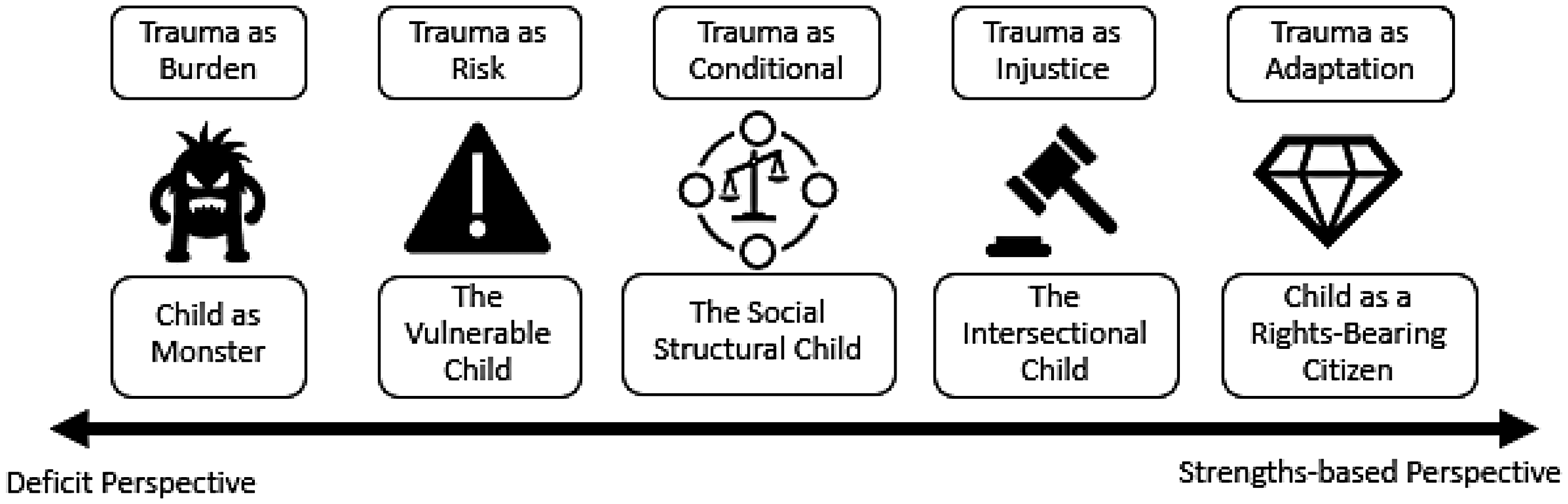
Alignment of constructions of trauma and childhood.
Educators are encouraged to reflect on the ways in which they construct trauma and how these constructions may influence the work they do with children, families and communities who have experienced it. As constructions impact practice, reflecting on them can support educators to consider a broader understanding of trauma and its complexities, potentially leading to more strengths-based, equity-centred, community-focussed practices. Further studies into how constructions of trauma translate into trauma-informed practice are recommended.
Limitations
While this review presents novel findings regarding ECEC constructions of trauma, it is not without its limitations. For instance, using a scoping rather than a systematic review method meant that the rigour of literature in the dataset was not analysed. While this is a limitation, it is, however, also a strength. As the aim of the review was to identify how trauma is constructed in the ECEC literature, engaging in a scoping review allowed a variety of sources, including textbooks and conceptual articles, to be included, thus presenting a wider scope of literature.
Much of the reviewed literature only discussed trauma within the conceptual sections of the respective sources, and the number that captured ECEC educators’ voices regarding constructions of trauma was limited. The limited inclusion of educator perspectives may be attributed to most of the literature being from the medicine and child protection fields, with limited perspectives from early childhood education. Evident across sources was that the literature was written for ECEC educators, not with them. This limitation is consistent with ECEC educators being often discursively positioned as carers rather than professionals, with less social power than professionals in other male dominated sectors such as medicine (Van Dijk, 2012). Despite the high level of training received, the role of the ECEC educator is considered to draw on tacit knowledge or the naturally occurring knowledge that comes with maternal and caregiving roles. Therefore, the ECEC educator is positioned as performing natural roles inhabited by females (Wu and Devine, 2024), rather than professional work grounded in scientific knowledge. Therefore, future research should aim to spotlight ECEC educators’ voices in recognition of the valuable role and specific knowledge they bring to the important discussions around trauma.
While the search strategy was thorough, using only four databases may have been a limitation. The databases were selected to capture sources from diverse sectors relevant to trauma and early childhood education: ERIC included education-related literature; PsycInfo shared psychology and related behavioural and health science sources; Sociology Source Ultimate produced social behaviour and interaction publications; and SCOPUS provided literature from various fields, including medicine, social sciences and humanities. Adding more databases to the search strategy could have yielded a broader spectrum of literature. It is therefore possible that the findings and constructions of trauma may not represent the full scope of the available literature.
The final limitation is that the intentional use of ‘trauma’ as a search term and the retrieval of ‘English only’ literature may have meant that culturally and linguistically diverse constructions of trauma were missed. For instance, in many cultures (including Malaysian, Pakistani and Mauritian), the term ‘stress’ is used rather than trauma, while in other cultures (including Haitian and Tanzanian), trauma may be considered a normal part of life and is therefore not generally discussed or seen as an issue (Nicholson et al., 2021). Furthermore, literature that uses new and strengths-based language around trauma, such as healing-centred approaches (Ginwright, 2018), instead of trauma-informed approaches were not captured in the search. Therefore, while this review aimed to identify how trauma is constructed in the ECEC literature, without capturing diverse constructions of trauma from various countries and cultures, the findings are mostly reflective of dominant Western perspectives. Despite the study highlighting that ECEC voices are missing from the literature on trauma, voices of the linguistically and culturally marginalised and oppressed also appear to be missing, which could potentially lead to further marginalisation and oppression. Therefore, investigating these constructions with broader search terms that capture the diverse language around trauma could shed light on more strengths-based and culturally diverse constructions of trauma.
Conclusion
This scoping literature review identified five constructions of trauma in the ECEC literature and showcased their alignment with constructions of children. Findings suggest that, in ECEC, trauma is constructed as conditional, risk, burden, injustice and adaptation, with each construction having implications for educators’ image of children experiencing trauma and thus potentially their practice of trauma-informed education.
Despite the limitations, as the first review to investigate how trauma is constructed in ECEC, the findings provide a strong foundation for further research into trauma-informed approaches in ECEC. Importantly, the review elucidated five contrasting constructions rather than one universally accepted positioning of trauma, with those adopting deficit images of children being prevalent. Further investigations into how trauma-informed education is constructed and whether the practices align with the constructions of trauma and corresponding images of children will shed light on how conceptual knowledge is translated into practice. Furthermore, with the most strengths-based constructions being the least common in the literature, and few educator-participant voices heard, studies into how trauma-informed education is constructed and practiced in ECEC can help redistribute power to ECEC and support educators to lean towards social justice, hope and joy while continuing this important complex work.
Footnotes
Acknowledgements
The authors would like to acknowledge Associate Professors Emma Tseris and Cathy Little for their feedback on an earlier version of this manuscript.
Declaration of conflicting interests
The author(s) declared no potential conflicts of interest with respect to the research, authorship, and/or publication of this article.
Funding
The authors received no financial support for the research, authorship, and/or publication of this article.
