




Abstract
Both the concept of well-being and the work of early childhood educators are complex. To date, research concerning educators’ well-being has lacked a comprehensive conceptualisation that reflects these complexities. With increased research, policy and practice attention, a clearly articulated conceptualisation is now needed to guide empirical research and practical efforts to better support educators’ well-being. In this article, the authors draw on multidisciplinary perspectives to propose such a conceptualisation. Philosophical, psychological, physiological, organisational science and sociological sources are explored and critiqued for their relevance to early childhood educators’ well-being. Key aspects of these sources, and Bronfenbrenner’s ecological systems theory, are brought together to argue for a morally anchored conceptualisation which acknowledges that educators’ well-being is indivisible from the contexts in which it is experienced.
Introduction
Despite the ubiquity of the term ‘well-being’, understanding differs across disciplines (Gillett-Swan and Sargeant, 2015), societies and cultures (Estola et al., 2014; Ryff and Singer, 2008). It is necessary, then, to have definitions and conceptualisations of well-being that pertain to particular contexts – in this case, to the context of early childhood educators’ work environments. 1 It is particularly timely to have clearly articulated definitions and conceptualisations of early childhood educators’ work-related well-being as the effects of educators’ well-being for children are attracting increasing attention from researchers, employers, practitioners and policymakers (Bullough and Hall-Kenyon, 2018). Clearly articulated definitions and conceptualisations could therefore guide empirical research and practical efforts to better support educators’ well-being. The purpose of this article is to support these endeavours by drawing on multidisciplinary perspectives to propose a holistic conceptualisation of early childhood educators’ work-related well-being.
Early childhood educators’ work is highly complex and challenging, characterised by distinctive emotional, intellectual, relational, economic and discursive demands (Cumming, Sumsion & Wong, 2015). There are also unique physical demands in early childhood work environments – including frequent bending and the need to lift and carry children and equipment – placing particular strains on educators. Also contributing to the complexity of educators’ work are the diverse funding and management structures – within and across national contexts – and the regulation and governance of their work environments. The interrelationship of these elements and contexts involves politics – for example, politics of workplace cultures (Bloechliger and Bauer, 2016), relations of the service with families (including pressures exerted by families (Kotaman, 2016)), regulatory pressures (Jovanovic, 2013), and the discourses of maternalism and selflessness that can characterise the sector in some national contexts (Bown et al., 2011). A holistic conceptualisation of well-being must therefore recognise the interaction of many relational and governing discourses, and be understood much more broadly than a subjective assessment of individual well-being. Existing research literature concerning educators’ well-being does not fully reflect these complexities. Instead, research is fragmented across different topics and different methodologies (Hall-Kenyon et al., 2014), and often focuses only on the measurement of psychological aspects of well-being (Cumming, 2017). This existing research focus is problematic insofar as dominant social and political discourses can come to shape (and limit) understandings of well-being as a primarily psychological phenomenon that it is an individual’s responsibility to improve on (Corr et al., 2015).
Work-related well-being (in general terms) refers to employees’ engagement and job satisfaction (Rosila et al., 2011), and to their mental and physical health (Organisation for Economic Co-operation and Development, 2013). In literature from the organisational sciences – including areas such as human resource management, organisational psychology, and health and change – the work climate is recognised as having an important influence on employees’ work-related well-being (Organisation for Economic Co-operation and Development, 2013). Personal factors such as underlying health, perceptions of stress, personality, motivation and self-confidence (Rosila et al., 2011) are also understood to influence employees’ work-related well-being. The quality of work environments is important for the employees themselves (intrinsic value), as well as for the benefit of the employer (instrumental value) (Organisation for Economic Co-operation and Development, 2017: 25). Accordingly, there are multiple rationales for investigating and supporting educators’ work-related well-being. From an instrumental perspective, there are costs to employers, families and children when educators experience compromised well-being. For example, through investigating aspects of well-being such as job satisfaction and stress, links have been made between poor educator well-being and personal and employer costs (Kusma et al., 2012), and to compromised outcomes for children (King el al., 2015; Ota et al., 2013). Issues such as absenteeism due to illness or injury can result in employers incurring the costs of employing casual staff, paying workers compensation (Kusma et al., 2012) or higher insurance premiums. Educator absenteeism may also mean that children have unstable care arrangements, and that relationships with families may be compromised (Bloechliger and Bauer, 2016). From an intrinsic perspective, educators and their families may suffer the flow-on effects of low or lost pay or ongoing health difficulties as a result of the poor conditions experienced by many in the sector (Linnan et al., 2017).
When there is a good-quality work environment (from an employee perspective), there are also likely to be positive effects for the organisation and its purpose – for example, good educator well-being has been linked to higher-quality interactions with children (De Schipper et al., 2008), improved child engagement and behaviour (King et al., 2015), improved capacity for fostering children’s resilience (Bouillet et al., 2014), and providing emotional support (Jennings, 2015). Variables contributing to educators’ work-related well-being are thought to include a good work climate (Schreyer and Krause, 2016; Zinsser et al., 2016) and good pay (King et al., 2016), supportive colleagues (Hur et al., 2016) and role autonomy (Royer and Moreau, 2015). These findings suggest the need not only for further attention to the aspects of educators’ roles and work environment that may impede or support well-being, but also for thinking about ways in which intrinsic and instrumental needs can be mutually supportive (Grawitch et al., 2006).
In order to work towards a holistic conceptualisation of educators’ well-being, we begin by outlining the ways educator well-being has been understood in the extant research literature. We then turn to a discussion of key themes concerning the concept of well-being, drawing on literature from philosophical, psychological, physiological and sociological sources. We conclude the article by proposing a holistic conceptualisation of well-being that combines broader perspectives on well-being with the specificities of educators’ work environments. Our proposed definition echoes Bronfenbrenner’s (1979) ecological systems theory – a means of understanding complex systems that was originally developed in relation to early childhood education contexts (Bone, 2015). Ultimately, we argue for a morally anchored conceptualisation which acknowledges not only the multiple aspects of work-related well-being, but also that an individual’s well-being is indivisible from the contexts and politics in which it exists and is experienced. This necessarily implies that responsibility for early childhood educators’ well-being is shared between those experiencing, as well as all of those in the various contexts that shape and benefit from it.
Existing conceptualisations of early childhood educators’ work-related well-being
There are very few definitions and conceptualisations of well-being in the extant research literature. As illustrated in Figure 1, our systematic review of literature concerning early childhood educators’ well-being found 81 relevant peer-reviewed journal articles published in the past 30 years. Of these 81, only two offered definitions of well-being relating to the research study being reported. For example, Ylitapio-Mäntylä et al. (2012: 461) defined well-being as a ‘comprehensive social, physical, and emotional experience’, while Wei (2013: 9) noted two dimensions of well-being: working towards personal satisfaction and having a ‘meaningful spiritual life’. Others defined and studied specific aspects of well-being, such as emotional well-being (Faulkner et al., 2016; Løvgren, 2016), financial well-being (King et al., 2016) or psychological well-being (Jeon et al., 2016; Royer and Moreau, 2015). Another group of articles distinguished between physical health and psychological well-being (e.g. Erdiller and Doğan, 2015; Jovanovic, 2013; Whitaker et al., 2015). The term ‘well-being’ was widely used without any definition and, in many cases, was limited to the aspect being studied – for example, stress, job satisfaction, burnout or mental health (see Cumming, 2017). Whilst providing descriptions of aspects of work-related well-being, then, this body of literature did not provide an adequate conceptualisation of well-being as it relates to early childhood educators’ work.
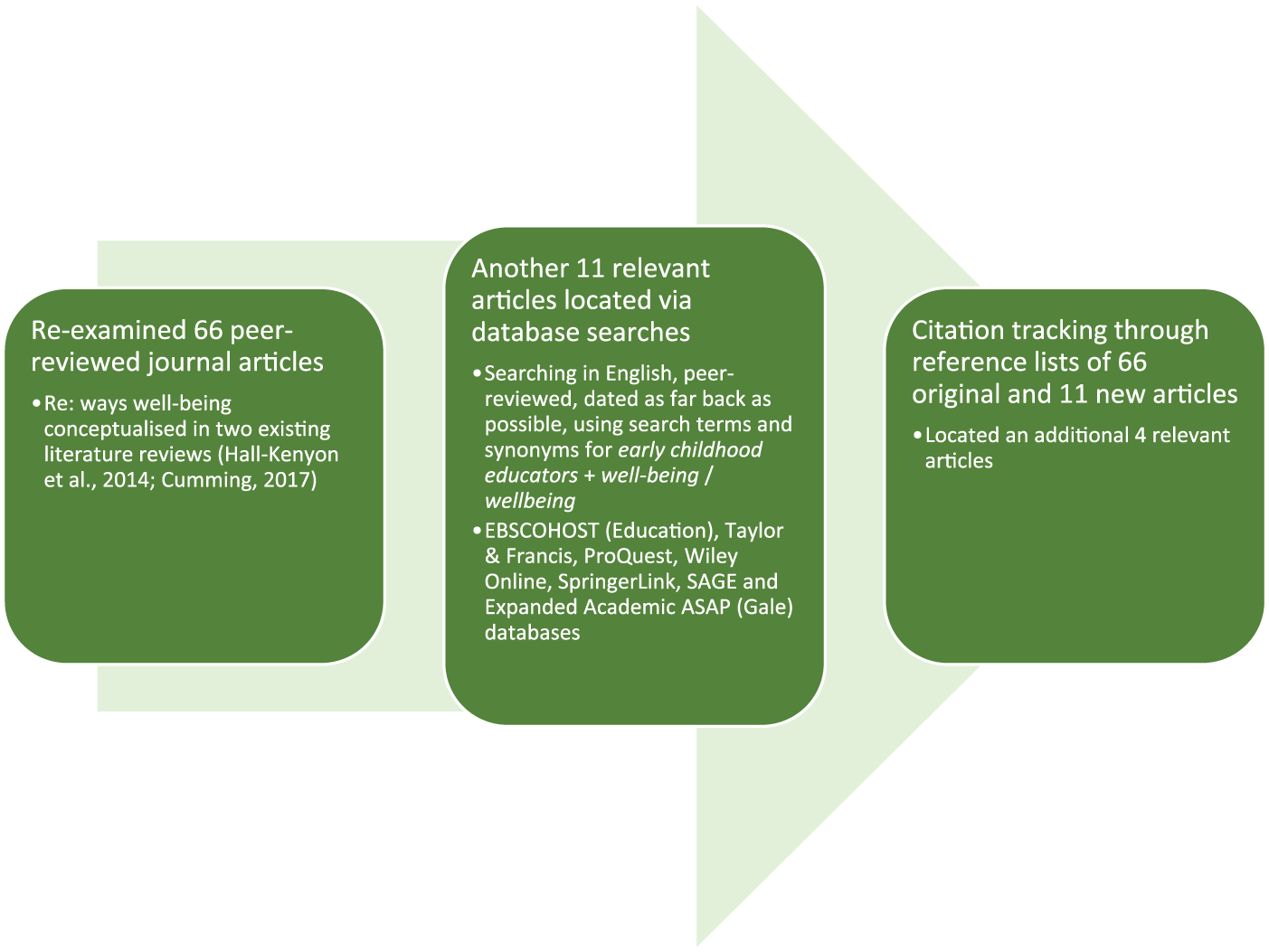
Database search procedure.
With conceptualisations and definitions of early childhood educator work-related well-being largely absent from the extant literature, we have turned to perspectives on well-being in multidisciplinary literature from philosophy, psychology, physiology, organisational sciences and sociology. These perspectives are considered in the following sections as a means of informing a holistic conceptualisation of educators’ work-related well-being. The intention is to provide an overview of the key ways well-being has been conceptualised in this broader literature, rather than to offer a systematic review. The first source is philosophical perspectives on well-being.
Ways of conceptualising well-being
Philosophical perspectives
Western conceptualisations of well-being often draw on eudaimonic and hedonic perspectives that originated in ancient Greek philosophies, and are concerned with ways of living well (Ryan and Deci, 2001). Eudaimonic perspectives emphasise ways that individuals work towards achieving ‘optimal functioning, meaning and self-actualisation’ (Dagenais-Desmarais and Savoie, 2011: 661). Accordingly, a eudaimonic approach to ‘living well’ concerns socially acceptable, appropriate and ethical ways of living (Estola et al., 2014) that contribute to a ‘good’ society (Ryan and Deci, 2001). By contrast, hedonic perspectives emphasise the fulfilment of an individual’s needs and desires: ‘momentary enjoyment, relaxation and the individual’s subjective feeling of happiness’ (Estola et al., 2014: 932). Both perspectives are thought to contribute to an individual’s well-being, although eudaimonic perspectives tend to be associated with longer-term well-being over the lifespan, and hedonic perspectives with shorter-term gratification.
Eudaimonic and hedonic perspectives have been critiqued on the grounds that ‘growth and human fulfilment [are] profoundly influenced by the surrounding contexts of people’s lives, and as such … the opportunities for self-realisation are not equally distributed’ (Ryff and Singer, 2008: 14). This insight draws attention to the effects of social and economic inequality, both within and between societies, such that having the opportunity to choose what would be individually fulfilling or pleasing must be recognised as a privileged position. Moreover, eudaimonic understandings of ‘optimal’, ‘socially acceptable, appropriate and ethical’ ways of living (Dagenais-Desmarais and Savoie, 2011: 661) could be said to reflect normalising discourses that shape or limit individual options for realising life purpose. These examples demonstrate that conceptualisations of well-being need to attend to critical questions of what and whose values are served by the concepts (Pawelski and Moores, 2014; Ryan and Deci, 2001).
Capabilities approaches – in particular as articulated by Nussbaum (2011) – offer a way of conceptualising well-being that addresses some of these issues of context and uneven opportunities for self-actualisation. Capabilities approaches recognise the interconnection of the individual with social settings and actors, and that individuals have capabilities which enable them to make choices that support their well-being. However, rather than emphasising the role of individual agency in well-being, capabilities approaches also emphasise the responsibilities of a ‘decent society’ (Nussbaum, 2011: 21) to provide the conditions for the development of individual capability, as well as the conditions in which the individual can exercise choice. Societies therefore have an ethical responsibility to provide the resources for the optimisation of ‘bodily health, bodily integrity, senses, imagination and thought, emotions, practical reason, affiliation, other species, play [and] political and material control over one’s environment’ (Gillett-Swan and Sargeant, 2015: 140). In this way, capabilities approaches account for the complex influences on well-being, as well as the social and political contexts in which well-being is enabled (Dagenais-Desmarais and Savoie, 2011).
Eastern philosophies of well-being – especially those from Buddhist traditions – offer yet another perspective on well-being. In Eastern philosophies, the idea of realising ‘one’s fullest potential’, for example, is linked to practices of ‘wisdom, compassion and creativity’ (Wallace and Shapiro, 2006: 691), rather than to the pursuit of individually oriented life purpose or pleasures. In contrast to hedonic perspectives, Buddhist traditions see the pursuit of happiness as only fleeting, and as not necessarily contributing positively to mental well-being (Wallace and Shapiro, 2006). Eastern and Western philosophical approaches to well-being need not be considered mutually exclusive. These approaches have been combined, for example, in meditation practices, which neuroscience has shown directly improves individuals’ mental and immunological function (Wallace and Shapiro, 2006). This example of meditation practices also illustrates a composite approach (Pawelski and Moores, 2014), which often underpins practical supports for well-being. A composite approach recognises the benefits of direct supports for individual flourishing – in the example above, meditation – alongside supports that indirectly mitigate the negative impact of conditions – such as chronic stress.
The perspectives outlined here demonstrate the complexity and politics of conceptualising well-being, as well as understandings of the philosophies that underpin them. These underpinning ideas are also evident in the psychological and work-related perspectives that we now turn to.
Psychological perspectives
Psychological well-being is understood to broadly involve cognition, emotion and motivation (Chen et al., 2013), and the subjective experience and assessment of these domains (Gillett-Swan and Sargeant, 2015). While the purpose of this article is not to describe or critique measurement of well-being, the issue of measurement is difficult to exclude from discussions of what well-being ‘is’, and how those understandings might inform a holistic conceptualisation for educators. For example, well-being has been variously understood as a state in its own right or as a construct – that is, an umbrella term under which specific types of well-being (e.g. emotional, physiological or financial) are grouped (Gillett-Swan and Sargeant, 2015). This distinction of well-being as a state or umbrella construct relates to the issue of measuring outcomes – specifically, whether a distinct effect can be measured for well-being as a state or only according to the effects of its various dimensions (Chen et al., 2013).
There is also contention regarding relationships of time, stability and context in relation to psychological well-being. Gillett-Swan and Sargeant (2015: 138) argue, for example, that ‘considering isolated points in time is … not sufficient to inform a long term perspective of an individual’s social and emotional wellbeing beyond subjectivity’. These authors go on to argue that, indeed, ‘an individual’s holistic wellbeing may never truly be able to be objectively evaluated as complete, as it continues to evolve and respond to past and present conditions’ (139). Some psychologists have attempted to account for this temporal complexity by creating a resources-and-demands model of well-being. According to this model, individuals negotiate life challenges more and less successfully on the basis of their capacities and resources (Dodge et al., 2012). These capacities, resources and challenges might be psychological (e.g. depression), physical (e.g. stamina, obesity) or social (e.g. shyness). Further, some resources may be enduring throughout life – such as temperament (Dodge et al., 2012) – and others accrued through life experiences – such as resilience (Gillett-Swan and Sargeant, 2015). According to these perspectives, a state of well-being is said to occur when individuals have the resources they require to meet particular challenges (Dodge et al., 2012: 230) at a given point in time, and in specific life ‘domains’ (e.g. family, work, culture) (Dagenais-Desmarais and Savoie, 2011). So, while well-being can only be measured at any one point in time, these points are constantly dynamic as individuals negotiate their life circumstances.
Other researchers suggest that, while processes of psychological well-being are dynamic, they also have a regular range. According to this homeostatic perspective, an individual’s well-being has a ‘set point’, which is said to be influenced by genetic characteristics and experiences, and, accordingly, is specific to each individual (Cummins et al., 2014). An individual’s sense of well-being tends to return to their ‘set point’ even when influenced negatively by circumstances of their material conditions and environment (Royer and Moreau, 2015). These understandings suggest that psychological well-being may be assessed as a dynamic state relative to context and circumstances, requiring the mobilisation of personal resources to meet challenges (Dodge et al., 2012) and the accrual of capacity for doing so over the life course (Gillett-Swan and Sargeant, 2015). Whilst both the resources-and-demands and homeostatic models recognise the effects of experiences of well-being across different life domains (Dagenais-Desmarais and Savoie, 2011), they do not explicitly recognise the social conditions and structures (Ryff and Singer, 2008) that enable or constrain individuals’ opportunities to obtain, create or live in optimal conditions for their thriving.
Conceptualising positive psychological well-being and distress
Well-being has also been examined in the psychology literature by measuring psychological distress – for example, depression, stress or burnout – and these measures have often been conflated with ideas of psychological well-being (Dagenais-Desmarais and Savoie, 2011; Gillett-Swan and Sargeant, 2015). Deficit conceptualisations of psychological well-being have mostly influenced the ways in which early childhood educators’ work-related well-being has been understood and measured. However, there is increasing evidence that psychological distress and psychological well-being are discrete states (Dagenais-Desmarais and Savoie, 2011). Positive psychological well-being is understood as the presence of a positive mood, absence of a negative mood and subjective assessment of satisfaction with life (Chen et al., 2013), and self-realisation, personal growth and development (Connerley and Wu, 2016). Six aspects of psychological well-being are widely accepted: purpose in life, personal development, good relationships, good mental health, autonomy and self-acceptance (Ryff and Singer, 2008).
There is also increasing attention to ‘thriving’ as a means of supporting psychological well-being. In particular, positive psychology, as articulated by Seligman (2011), considers how a person’s strengths support their flourishing. According to Seligman’s (2011: 27) conceptualisation, flourishing includes individuals’ ‘self-esteem, optimism, resilience, vitality, self-determination and positive relationships’. Proponents argue that by focusing on these aspects, individuals can directly improve their well-being. This ‘positive’ focus has been critiqued, however, on the grounds that the concept of ‘flourishing’ may not fully reflect an individual’s overall state of well-being (Gillett-Swan and Sargeant, 2015). For example, whilst a person might have self-esteem and resilience (aspects of flourishing), their physical health may be poor, so that their well-being has both more and less positive aspects (Organisation for Economic Co-operation and Development, 2013; Ryff and Singer, 2008).
Emotions and identity
Emotions and identity are aspects of psychological well-being that are broadly understood as feelings (such as happiness, satisfaction or grief) in connection with, and in appraisal of, individuals’ environments (Frijda, 2008). Emotions can also be associated with individuals’ ability (or inability) to make choices on matters of personal value (such as spirituality or quality of life) (Gillett-Swan and Sargeant, 2015). Identity, meanwhile, concerns the ways individuals understand themselves, and how others recognise them, according to personal, collective and relational identities (Matsumoto, 2009).
In relation to early childhood educators, for example, an educator might have a personal identity (related to their perceptions of what makes them distinctive), feel part of a collective identity as an educator (related to values or characteristics that they share with others in this profession) and a relational identity (concerning the qualities displayed in interactions with others). Emotions and identity, then, are key aspects of psychological well-being, enabling individuals to live well.
Implications of psychological perspectives for conceptualising early childhood educators’ work-related well-being
A number of implications for a holistic conceptualisation of educators’ well-being emerge from these ideas about psychological well-being. The first of these concerns emotions, which may be manifested in educators’ work by, for example, negotiating the nature of love for children other than an educator’s own family (Elfer, 2015) or the need to manage difficult emotions or to evoke condoned emotions (Elfer and Dearnley, 2007; Page and Elfer, 2013). There can also be particular emotional stresses related to working with children under two years – as their limited communication can make it difficult to determine children’s needs (De Schipper et al., 2008) – and/or with families whose expectations of educators are somewhat unrealistic (Corr et al., 2014). The often subjective and fleeting nature of emotions makes this a difficult area to research and to support in practice. Nevertheless, as research concerned with educators’ emotions and their well-being (Elfer and Dearnley, 2007) has demonstrated, emotions are a contentious and important aspect to be considered as part of conceptualising educator well-being.
Educators’ identity – particularly their professional identity – is also an important aspect of their work-related well-being (Bullough and Hall-Kenyon, 2018). Powerful, often competing discourses that shape ideas of what are the accepted ways of being an educator (Cumming, 2015) can make educators’ professional identity especially problematic. Notably, in relation to educators’ well-being are maternalist discourses that situate early childhood education as ‘naturally’ women’s work (Bown et al., 2011). These discourses may compete with emergent discourses of the early childhood educator as a teacher or professional (Gibson, 2013). At the same time, there have been calls for a reclamation of the ‘care’ aspect of educators’ role as a central part of their professional identity (Bullough and Hall-Kenyon, 2018). The circulation of these (and other) discourses can make it difficult for educators to shape a professional identity with which they are comfortable and which supports the recognition of the complexity of their role (Gibson, 2013).
A final implication of psychological conceptualisations of well-being regards the role of individual agency and capacity for using resources to negotiate challenges (as in the resources-and-demands model of psychological well-being articulated by Dodge et al. (2012)). For early childhood educators, social, regulatory (Ylitapio-Mäntylä et al., 2012) and workplace cultures can provide resources that educators can draw on to support their work and negotiate challenges, but these same systems can also act to limit individual agency (Cumming, 2015). These possibilities indicate the need for examining the relational dynamics of educators’ work environment – not only their individual capacity for exercising agency within it.
Physiological well-being
The physiological – that is, the ways the body works, and effects on these processes – is an important aspect of well-being that must be incorporated into a holistic conceptualisation (Gillett-Swan and Sargeant, 2015). Physiological well-being is typically conceptualised in terms of the quality of functioning of cardiovascular (i.e. ways the blood circulates), immune (i.e. ways the body can protect itself from disease) and endocrine (i.e. regulation of cell and organ function) systems (Kuykendall and Tay, 2015). Measures of blood pressure and cortisol, and ratios of weight, height, age, flexibility and fitness, can illuminate the physiological aspects of well-being (D’Angiulli and Schibli, 2016). Research has also established positive association between indicators of good physiological well-being (especially stress, insulin regulation, cholesterol and sleep) and indicators of psychological well-being (such as personal growth, life purpose and good relationships) (Kuykendall and Tay, 2015; Ryff and Singer, 2008). Indeed, evidence suggests that ‘high levels of purpose, growth, and quality ties to others … is part of what keeps people healthy, even in the face of challenge’ (Ryff and Singer, 2008: 31). In particular, eudaimonic well-being seems to be associated with ‘better neuroendocrine regulation, better immune function, lower cardiovascular risk, better sleep, and more adaptive neural circuitry’ (Ryff and Singer, 2008: 32). Clearly, then, there are complex interactions of physiological and psychological aspects of well-being which mean that they should both be considered part of a holistic conceptualisation.
Work-related physiological well-being has traditionally been associated with workplace health and safety and injury prevention (Dickson-Swift et al., 2014). These areas have typically been addressed through the assessment and remediation of risks in areas such as ergonomic design, equipment and materials (Martinsson et al., 2016). In this way, preventative workplace health and safety practices indirectly support employee well-being. Examples include health promotion information sessions and the provision of exercise facilities or healthy snack food – all of which aim to improve the weight and blood pressure of employees (Dickson-Swift et al., 2014). Medical screening tests – for heart health or to prevent diabetes – might also be offered, as well as training focusing on issues such as managing work-related stress (Dickson-Swift et al., 2014). As Noblet and LaMontagne (2006) and Ylitapio-Mäntylä et al. (2012) argue, however, to be effective, individually targeted strategies for stress reduction must be accompanied by action on the causes of workplace stress, which are often related to organisational cultures or structures.
The importance of both preventative and health-promoting practices is not to be underestimated. A recent estimate claimed that the global average cost of work-related injury and illness is 4% of gross domestic product (International Labour Organization, 2014). Mental ill health and musculoskeletal problems account for a large percentage of these costs. In addition to personal impacts and costs for employees (Martinsson et al., 2016), poor work-related physiological well-being results in enormous costs for employers. These costs may include compensation payouts, as well as the costs of absence from work and turnover. Recent studies have also suggested that employees working in small businesses (ranging from less than 5 to less than 100 employees, depending on the national context) experience disproportionate rates of workplace injury and ill health. This incidence is thought to be due to issues such as small business owners’ low spending on prevention and promotion, lack of knowledge of illness and injury rates in the business, and structures – such as whether a business is family-owned or has high rates of contracted staff (Cunningham et al., 2014).
Implications of physiological perspectives for conceptualising early childhood educators’ work-related well-being
Both these latter points – concerning the costs of poor work-related well-being and the particular needs of small business work environments – have relevance to holistic conceptualisations of early childhood educators’ well-being. Firstly, as was demonstrated by data gathered in one Australian state from 2012–2015, the everyday tasks of educators are highly hazardous (WorkSafe Victoria, n.d.). These tasks include lifting children (especially those working with children aged birth to two years); moving equipment such as tables, chairs and outdoor play equipment; bending and squatting to be at children’s height; sitting on the floor or small chairs; storing materials and working in office areas. WorkSafe Victoria (n.d.) identified that ‘[c]ommon injuries to workers include musculoskeletal injuries (sprains and strains, fractures and soft tissue injuries)’, which comprise over 60% of all workers’ compensation claims. These claims cost employers close to AU$47 million. Figures from similar surveys conducted in the USA (Linnan et al., 2017) and New Zealand (Alexander, 2016) suggest that these are not issues confined to the Australian context. The safety of educators’ work environment as well as individual work practices within the environment clearly need attention.
An additional consideration is raised by the use of salivary cortisol assays to assess educators’ levels of physiological stress. Findings from Finnish research (Nislin et al., 2016) have suggested a relationship between the high relational and emotional demands of educators’ roles and chronic physiological stress, while those from a Canadian study (D’Angiulli and Schibli, 2016) identified a relationship between low levels of educator cortisol and higher-quality early childhood environments. These findings are significant to educators’ well-being because of the long-term impacts of chronic levels of stress – ‘insulin resistance, hypertension, cardiovascular disease and sleep apnoea’ (Nislin et al., 2016: 29), as well as inhibited regulation of stress responses (D’Angiulli and Schibli, 2016). Physiological stress, injury and poor health indicators are therefore clear areas of risk for educators’ physiological well-being, and must be acknowledged as part of a holistic conceptualisation.
Work-related well-being
Research in the organisational sciences has made ‘empirical links between workplace practices, employee well-being and organisational improvements’ (Grawitch et al., 2006: 130), thereby establishing a strong ‘business case’ for attention to employee well-being (Baptiste, 2008). The implementation of well-being programs in a variety of organisational types has been reported to yield improvements such as the reduction of absenteeism and turnover, and increases in employee commitment to the organisation (Kalliath and Kalliath, 2012). Moreover, attending to employees’ well-being has been shown to result in the competitive advantage of being an ‘employer of choice’, as well as improved economic performance (Grawitch et al., 2006).
Work-related well-being is most often understood in terms of employees’ psychological and physiological states (Kuykendall and Tay, 2015), including individuals’ experiences of their organisation’s culture (Dagenais-Desmarais and Savoie, 2011). Aspects of organisational culture can include the hierarchy and structure of an organisation, the ways management and other staff communicate, team-based cooperation and collegial support, as well as flexible work options (Dickson-Swift et al., 2014). The communication of mutual respect and value underpins many of these aspects of organisational culture, suggesting the need for attention to the ways work is done, as well as to what tasks are completed and with what efficiency (Dickson-Swift et al., 2014). As Laszlo argues, however, neither the ‘business case’ nor attempts to promote ethical corporate values have been successful motivators for attention to employee well-being. Instead, he argues, a shift is needed in the way businesses see and situate employees’ rights to dignity and freedom as central values of the business (in Organisation for Economic Co-ooperation and Development, 2017: 4).
Work-related well-being is frequently understood via measurements of employees’ job satisfaction (Spector, 1997), stress (Noblet and LaMontagne, 2006) and engagement (Shuck, 2011). These dimensions are often correlated, though each has distinct characteristics (Shuck, 2011). Job satisfaction is the extent to which a person likes or dislikes their job, and has been associated most frequently with organisational commitment, burnout, physiological health and job performance (Spector, 1997). Studies also suggest that psychological well-being is an important moderating variable between these factors – such that better psychological well-being and job satisfaction are associated with better job performance (Wright et al., 2007). Job stress is generally understood via subjective measures, and to vary widely between individuals – even in the same workplace – depending on personal factors (such as coping ability) and situational factors (such as the quality of interaction and communication or conflict) (Noblet and LaMontagne, 2006). One way of understanding the interplay of the many complex factors implicated in work-related stress is to consider an individual’s perception of the balance between effort and reward in their work environment (Noblet and LaMontagne, 2006). Generally speaking, when individuals perceive that high levels of effort are rewarded inadequately, job stress results. Job engagement is understood (broadly) as ‘a positive psychological state of motivation with behavioural manifestations’ (Shuck, 2011: 305). Manifestations might be cognitive, emotional or behavioural, with examples including the amount of effort an employee is willing to make in their work, their involvement in tasks, their sense of responsibility to the employer and their intention to stay or leave an organisation (Shuck, 2011).
There is broad concurrence that work-related well-being is the mutual responsibility of employees and the organisation (Dickson-Swift et al., 2014). For example, alongside programs that encourage individual behaviours supporting well-being, organisational structures create a ‘caring culture’ for employees via, for example, recognition of work quality, fair exchange of labour for payment, and opportunities for continuous development of skills and knowledge (Kossek et al., 2012: 742). In this way, organisations provide the conditions in which employees are more likely to be able to experience work-related well-being. Nevertheless, drawing on Ryff and Singer’s (2008) critique of an essentialist approach to well-being, the creation of good conditions for work-related well-being does not guarantee that all employees will experience it. In particular, structural inequalities or discrimination in the work environment can have impacts on individuals’ opportunities for work-related well-being. Some of these issues include pay gaps between men and women in the same positions (Lips, 2016), work-based sexual harassment (Holland and Cortina, 2016), or discrimination based on individual characteristics such as ethnicity (Combs and Milosevic, 2016) or sexual preference (Woodruffe-Burton, 2015). Changing structural conditions of work in industrial societies can also be implicated in work-related well-being, and the ways it is understood over time. Kossek et al. (2012), for example, highlight the challenges wrought by insecure work arrangements, underemployment and tele-work. These structural factors will clearly have impacts on the psychological, financial and physical aspects of workers’ immediate and longer-term well-being.
One further – and related – aspect of work-related well-being concerns emotional labour (Hochschild, 1983). In customer-facing work, organisations can expect employees to invest personal emotions in their work through the display of what are considered to be the appropriate emotions – for example, always appearing happy or showing patience. Limitations on the expression of ‘real’ feelings or expectations that individuals must display authentic positive emotions can lead to individuals feeling alienated from their own feelings through their commodification as part of their work role. This alienation is thought to perhaps contribute to burnout or other forms of psychological distress (Andrew, 2015). These examples of inequality and possibilities of emotional alienation are reminders of the need for attention to the structural and relational conditions in which employees’ well-being is shaped.
Implications for conceptualising educators’ work-related well-being
Perspectives on work-related well-being offer a number of ideas, and cautions, for conceptualising educators’ work-related well-being. For example, as Bretherton (2010) found, an ‘employer of choice’ strategy used by one early childhood service resulted in improved working conditions, as well as lower rates of turnover than were evident prior to the introduction of the strategy. A more stable workforce, in turn, benefited both the children and the organisation. The benefits of the ‘employer of choice’ strategy outlined by Bretherton suggests one way that the intrinsic and instrumental aspects of work-related well-being (Laszlo, in Organisation for Economic Co-operation and Development, 2017) can be mutually beneficial.
At the same time, consideration must be given to the possible effects in early childhood work environments of the managerialist discourses that can accompany commercially derived ideas of work-related well-being. High-quality early childhood education and commercial early childhood education services have rarely been well matched (Duhn, 2010; Osgood, 2004; Sumsion, 2007), with profit imperatives sometimes prioritised ahead of children’s and educators’ interests. Further, particular benefits of supporting work-related well-being – such as improved organisational profitability from a well-functioning workforce (Grawitch et al., 2006) – may sit uneasily with a sector motivated by providing high-quality education and care. Relatedly, educators may experience guilt due to conflicting desires to attract compensation commensurate with the complexity of their role, whilst feeling concerned that this might only come in the form of rising costs, paid for by families (Woodrow, 2007).
Nevertheless, pay and conditions incommensurate with the skills and responsibility of early childhood educators’ role have been consistently suggested by researchers to play a role in educators’ well-being (Whitebook and Ryan, 2011). Research from the USA and Canada, for example, suggests that a sense of ‘financial well-being’ – that is, being able to meet your financial responsibilities – is important to psychological well-being (King et al., 2016). However, research focusing on pay and educator well-being also consistently suggests that issues such as professional recognition, mental and emotional health, and role autonomy must be considered alongside pay reform (Hall-Kenyon et al., 2014; Irvine et al., 2016).
Another implication of work-related well-being perspectives concerns the concept of an organisation and its responsibility for providing conditions in which educators can thrive. Adapting conceptualisations of work-related well-being from the organisational sciences to early childhood educators’ work may, for example, be complicated by the diversity in type, scale and national context of organisations in early childhood education. As noted by Lloyd (2014), privately operated early childhood education services are common in the USA, Canada, Australia, parts of Africa and the Asia-Pacific region. By contrast, services are more often publicly provided in France and the Nordic countries. A further level of complexity is added in many contexts by governance structures, which, in addition to a day-to-day manager, frequently involve a management committee or board. These committees or boards might comprise the service manager, family members and external board members (Australian Government Productivity Commission, 2014), and can be very influential in both how monies are allocated in services and how service philosophies are operationalised (Kusma et al., 2012). These differing ownership and governance structures lend unique contexts to considerations of the ways ‘organisations’ are or could be involved in, and responsible for, supporting educators’ well-being.
The diversity of ownership and governance structures of early childhood education services may also complicate responsibility for providing conditions in which educators can thrive. Much research to date has focused on individual early childhood educators’ experiences and capacity for coping with the demands of practice. Far less attention has been given to the quality of their work environment as a supportive or challenging context (Whitebook and Ryan, 2011). This individualised focus is problematic, as it can, for example, lead to expectations that educators will (and should) assume responsibility for changing their ‘perceptions and attitudes, and increasing self-management and care’ (Corr et al., 2015: 70). Efforts to support well-being may therefore continue to focus on remediating what are seen as individual ‘weaknesses’, without adequate attention to the role of the context (Corr et al., 2015; Greasley and Edwards, 2015). One way of addressing this inattention could be to reconceptualise the ‘quality’ of an early childhood education and care setting to include the quality of the adult work environment, as well the children’s learning environment.
Research from the organisational sciences also suggests the need for attention to issues of discrimination in work environments, as a threat to well-being. Although few studies have focused on these issues in early childhood work environments, evidence of bullying behaviours (such as deliberate exclusion or marginalisation of colleagues) has been reported by Hard (2006) and Alexander (2016), and issues concerning prejudice and educators’ ethnicity have been explored by Cheruvu et al. (2015) and Cumming and Sumsion (2014). While little is known about the ways these sorts of issues might impact on educators’ well-being, evidence of their impact from organisational sciences suggests that their possibility should be explored further.
A holistic conceptualisation of early childhood educators’ work-related well-being
Our discussion has endeavoured to justify the need for a specific holistic approach to conceptualising early childhood educators’ work-related well-being. Drawing on this discussion, we propose the following definition of early childhood educators’ work-related well-being:
A dynamic state, involving the interaction of individual, relational, work–environmental, and sociocultural–political aspects and contexts. Educators’ well-being is the responsibility of the individual and the agents of these contexts, requiring ongoing direct and indirect supports, across psychological, physiological and ethical dimensions.
This definition takes account of the complexity of early childhood educators’ work by acknowledging the multiple influences on well-being, and the connections and interactions between aspects of the complexity. In this way, our definition, whilst not derived from our a priori understanding, is nevertheless congruent with Bronfenbrenner’s (1979) ecological systems theory of human development, which is well understood in early childhood education. As Bone (2015) argues, systems approaches – such as Bronfenbrenner’s – attend to the dynamism of relationships of people, places, materials and regulation over time, and the necessity of seeing efforts to support well-being as ongoing rather than a one-off.
Ours is also a moral stance, drawing on Nussbaum’s (2011) iteration of the capabilities approach and Laszlo’s view that businesses must embrace a ‘third way’, ‘building a new narrative that focuses on human dignity and freedom as core values that each business should embed and celebrate’ (in Organisation for Economic Co-operation and Development, 2017: 4). Accordingly, we argue that educators have a right to high-quality work environments in which they can thrive, and not as human capital whose value is calculated according to their role in turning out productive citizens. In this way, our definition acknowledges the potential for, and the right to, individual agency, but does not assume that all have equal opportunity or capability to exercise it. This necessarily implies that responsibility is shared between educators and the systems and structures that shape the contexts and the discourses and relationships within them.
Concluding thoughts
Just as the work of early childhood educators is complex, so too is the task of conceptualising their well-being. Taking into account multidisciplinary perspectives has enabled us to illuminate specific aspects of educators’ work – such as emotional and physiological aspects of well-being – which have been little explored in existing research literature, yet are of particular importance. Considering diverse perspectives on well-being has also highlighted the need for attention to preventative action and to means of supporting educators’ thriving, as well as attending to aspects of distress. We argue that alongside a holistic conceptualisation of educators’ well-being, research might also be conducted in a holistic manner. Similarly, interventions might attend to conditions that better enable educators’ well-being, including financial, material and relational conditions, and the ways educators might experience greater autonomy over, and in, their work environments. This task is made more complex by the diversity of the organisational, governance and regulatory bodies involved in early childhood education provision, making it hard to identify any one body that could be considered responsible for ensuring conditions for thriving are provided and sustained. However, perhaps reacknowledging the value of educators’ role in children’s education and families’ workforce participation, and the many costs across multiple dimensions when educators do not experience well-being, might act as a catalyst for action.
Footnotes
Acknowledgements
The authors gratefully acknowledge suggestions made on a draft of this paper by Associate Professor Niklas Chimirri.
Funding
The authors received no financial support for the research, authorship, and/or publication of this article.
