




Abstract
This article explores the use of iPads as part of a child-centred data collection approach to understand young children’s creativity. Evidence is presented from a small study of three- to five-year-old children’s creative play. Analysis of the children’s engagement with iPad video diaries and free-to-use tablet applications was logged across two early educational settings over a three-month period. The findings suggest that iPads offer a mechanism to allow children to articulate their creative play and to encourage involvement in the research process. However, bespoke research software to use with early years children is required to improve this process.
This article reflects on the process of using technologies – specifically iPads – as part of a child-centred data collection approach for understanding creativity. The context for this article is a series of methodological questions that were challenging for the design of a study into children’s creativity. The aim of the project was to establish effective methodologies for exploring young children’s creativity in partnership with the child, including their perspective. Several explorations of children’s creativity were evident in the literature (Howard-Jones et al., 2002; Kudryavtsev, 2011; Saracho, 2002), yet in most instances inferences about creativity were established through adult observations using involvement and creativity scales (e.g. Robson and Rowe, 2012). While valuable, these explorations constitute an adult-centred interpretation of creativity. It contrasts with contemporary early years research approaches, where the need to understand the child’s perspective directly and to consult children on matters that affect them is entrenched in everything we do. This resulted in our first methodological question: ‘How can children’s participation in research be facilitated to allow for a child-centred exploration of creativity?’
A second consideration in our study is the extent to which research participants are merely present or actually contribute to the investigation. Social research methodologies and participatory approaches to research have advanced in recent years. Several decades ago, the introduction of new technologies allowed for a new strand of data collection techniques in the form of visual methods (see Margolis and Pauwels, 2011) and visual ethnographies (see Pink, 2006; Schwartz, 1989). Now, contemporary research methodologies focus on ‘digital ethnographies’ (Murthy, 2008), analysis of online social networks (Aggarwal, 2011; Ediger et al., 2010) and the use of digital media more broadly as part of the data collection process (Dicks et al., 2005). Early years research is no different – for example, Plowman and Stevenson (2012) have incorporated mobile phone imaging and picture messaging to create a storyboard of children’s daily routines. Similarly, video observations or audio-recordings are regularly utilised to capture children’s play (Flewitt, 2006). Researchers, practitioners and parents, however, framed these observations. With the advances in child-friendly user interfaces on new technologies, the use of technologies as a data collection device need not exclude children as direct users. Thus, here we explore how iPads can be used to empower children to use the technologies directly as part of a data collection process, in much the same way as children take part in photovoice commentary (Cook and Hess, 2007; Einarsdottir, 2005; Loebach and Gilliland, 2010). This resulted in our second and third methodological questions: ‘In what ways can we use technologies to advance child-centred methodologies about creativity?’ and ‘How can technologies empower children during the research process?’
In this article, we draw on evidence from a recent small-scale study to describe our experiences of attempting to address these methodological uncertainties. Our desire to involve children in the research process, and the evidence that children are capable and competent technology users (Levy, 2009), led us to question whether, and how, technologies can be used to offer children more independence in the research process, while still providing meaningful data about children’s creativity. We draw on analysis of rich qualitative data as evidence to demonstrate that, with some development, iPads offer a promising platform for children’s involvement in research processes and a mechanism for children to articulate their creativity.
The contemporary early years ethos: Listening to children in a digital age
Backed by the New Social Studies of Childhood (James et al., 1998) and the children’s rights movement (United Nations, 1989), children are now seen as competent research participants with valuable opinions to share. The global paradigm shift which suggests that children’s actions influence the wider world has led to the understanding that childhood is not a universal experience (Powell and Smith, 2009). Consequently, the rationale that children’s ideas and opinions should be captured first-hand, rather than by the proxy of a gatekeeper or parent (Christensen and James, 2008; Scott, 2008), has become part of the ethos of early years educational research. The perception is that researchers should establish methods that enable them to listen to children and capture their views directly (Clark et al., 2003) – a concept which is thought to be more than just a methodological tool, but instead is a ‘way of being’ for engaging with children (Clark et al., 2005). The result is many studies which involve children in research not only as participants, but also as key decision-makers and co-researchers (Alderson, 2001). A wealth of methodological literature that extensively documents how it may be possible to ascertain children’s views informs these studies. In early years research, probably the most renowned is the Mosaic Approach (Clark and Moss, 2011), which utilises a collection of participatory child-centred methods to elicit children’s views.
In this article, we explore how we can make advancements in this area to allow children to be active participants in the research process while engaging with technologies. Such an approach speaks to children’s growing interest in, and competence with, these resources. Thus, grounded in the philosophy that children are capable and confident technology users, and that children themselves are the single best people to comment on their own creativity (Scott, 2008), this project attempted to empower children to be autonomous research participants while using iPads as part of the data collection process. We also sought to give the children agency and control over what data was collected. The lessons learned from this process were practical in terms of how best to structure iPad activities to support children’s involvement in the research process.
Methodology and methods
Data was collected from one preschool in central Scotland and a local science museum. The nursery was chosen because of its close working relationship with the University of Strathclyde, offering flexible access; willing and interested parents who were keen to participate in research projects; and children who were familiar with external visitors. The museum was targeted because it had planned ‘Little Explorer Days’, with science activities for children aged three to five. The museum offered a ‘high-traffic area’ for children who may be interested in creative play with construction (traditional and motorised) resources. In the museum, the study took place in the children’s multipurpose room, which had brightly decorated walls, including animals and flowers, and a colourful carpet. In the nursery, the research was conducted in the main three-to-five playroom. The settings provided two contrasting environments to explore children’s creativity: the nursery offered a busy and vibrant setting with lots of peer interactions and engagement; the museum offered a structured and quiet experience where adults and parents could support children’s creativity.
Approximately 25 children were involved in this project across both settings. We visited the nursery during four morning sessions (9.30–11.00 a.m.), and the same cohort of children was observed on multiple occasions during these visits (although often different children within this group chose to use the resources during each visit). Alternatively, the museum is a public space and different parents and children visited during the two full days (10.00 a.m.–4.00 p.m.) when we collected data. Overall, a child-led approach was adopted where children’s participation in various activities was wholly dependent on individual children’s desire to take part at any given time. The children drifted in and out of the activities as part of a fluid process which was typical of their early play experiences in educational settings (Moyles, 2014).
Given the nature of each setting, parents were not involved in creative play in the nursery, although practitioners were involved in children’s play at times. The museum, however, offered an opportunity to see children engage with parents during their creative play. This was necessary because the ethical approval stated that children in the museum must remain in the care of their parents. Within the museum, there were no other peers or practitioners who could serve as collaborators or assist children in creative play – it was typical for one family to visit the research area at a time, although this was not by design, but down to the individual participants – and therefore parents often assumed the role of co-player in this context. The researchers provided no guidance about the level of parental involvement. Instead, organic interactions were encouraged.
Children’s construction play provided the context for understanding creativity. It has been suggested that practical applications foster children’s creative abilities (Wheeler et al., 2002), making construction activities a prime mechanism for exploring creativity. The children were provided with construction resources as part of their free-choice time in the nursery. In the museum, construction resources were presented in the children’s room, and visitors were free to use the resources if desired. During each visit, we provided:
Traditional construction blocks and natural tree logs;
Two sets of colourful plastic gears that could be assembled in a variety of ways and, when constructed, could be controlled remotely;
A Meccano motorised box – a set of resources to create remote-controlled vehicles.
The data was collected via observations, iPad diary software and researcher-led activities. Table 1 describes the methods in depth. We observed children’s play on any occasion when children voluntarily decided to use the resources. In both settings, we advised the children that we were writing a story about their play, so that they were familiar with our purpose.
Describing the instruments.
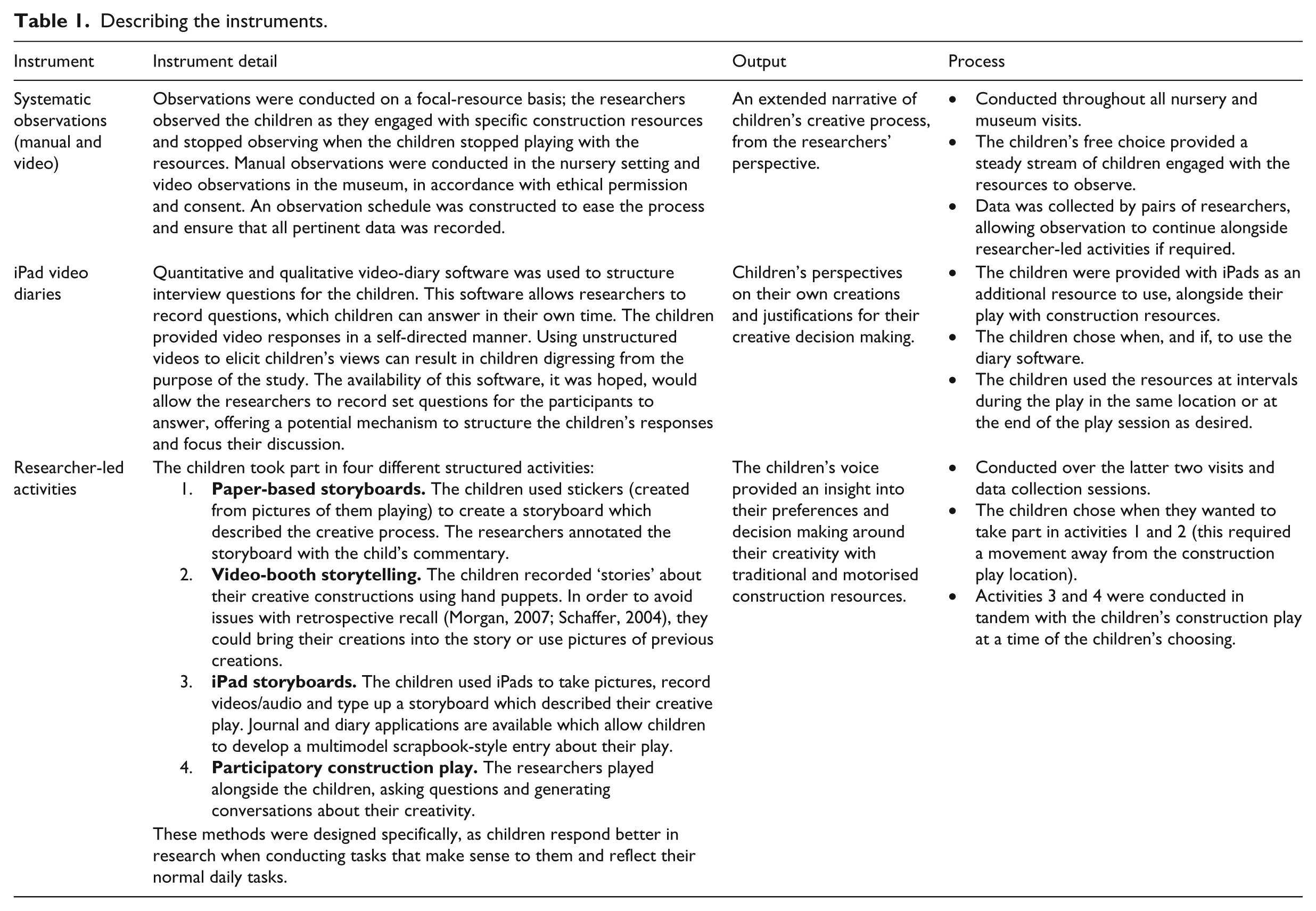
The iPads were introduced to the children and made available alongside their play for them to use freely. The iPad diaries provided a process whereby children could respond to video questions. The questions typically asked about the construction resources were: ‘What makes the toys fun?’; ‘Which toys do you like?’; ‘What do you want to build/What have you built?’; ‘What are you building?’; ‘Have you seen this creation before somewhere?’; ‘Do you like these toys?’; ‘What do you do with these toys?’; and ‘What can you do with these toys?’.
We demonstrated the diary process to the children, which buttons were used to record and move through the questions, and how to review their responses. The children were able to skip through questions they did not want to answer and rerecord any answers as many times as they wished by pressing the record button again. Not all of the children answered all of the questions. We facilitated the use of the iPads when children requested help. Otherwise, the children were able to engage with the resource of their own accord. This was an iterative process across the settings for the initial data collection period. If desired, the children were also able to use the free record functions on the iPad and the standard camera.
The initial visits were completely child-led, whereby engagement with the resources (e.g. iPads) was dictated by the children. Due to the exploratory nature of the study, iterative analysis after each session informed the next session with the children, and changes were made to the data collection approach where appropriate. Midway through the data collection we concluded that the iPad software was not capturing the full extent of the children’s creative outputs (the reasons for this are discussed in the findings section below). In order to ensure that we gathered children’s views on their own creativity, we introduced alternative researcher-led methods in the final phase of the fieldwork, such as storyboarding (see Table 1). These approaches provided a richer data set and a comparison to the structured iPad software.
The children participated voluntarily in all elements of the data collection. Thus, not all of the children conducted the iPad diary activities or the researcher-led activities, and the number of observations for each child varied, depending on their interest in the play throughout our visits. This in itself was useful evidence because it provided an insight into the usefulness of each planned activity for motivating children to be involved in a research project.
This project was exploratory and aimed to evaluate methodologies for data collection about creativity, with the child having agency in the process. As such, qualitative inquiry (Creswell, 2012) provided the rich data required. In this article, iPad-facilitated methods are evaluated. The central focus of this article is how children were able to use iPads in a variety of ways to express their ideas about creativity. We draw on the researchers’ detailed analysis of the data collection processes to inform this article. After each data collection visit, the researchers engaged in a debriefing process, whereby key reflections were noted and discussed by the researchers. This process involved reflecting on:
The children’s play processes and whether our coding structure was encompassing enough and authentic;
The suitability of the data collection methods for exploring creativity;
The suitability of the methods for understanding the children’s perspective of creativity and their creative play; and
Links to literature and theory in relation to our findings.
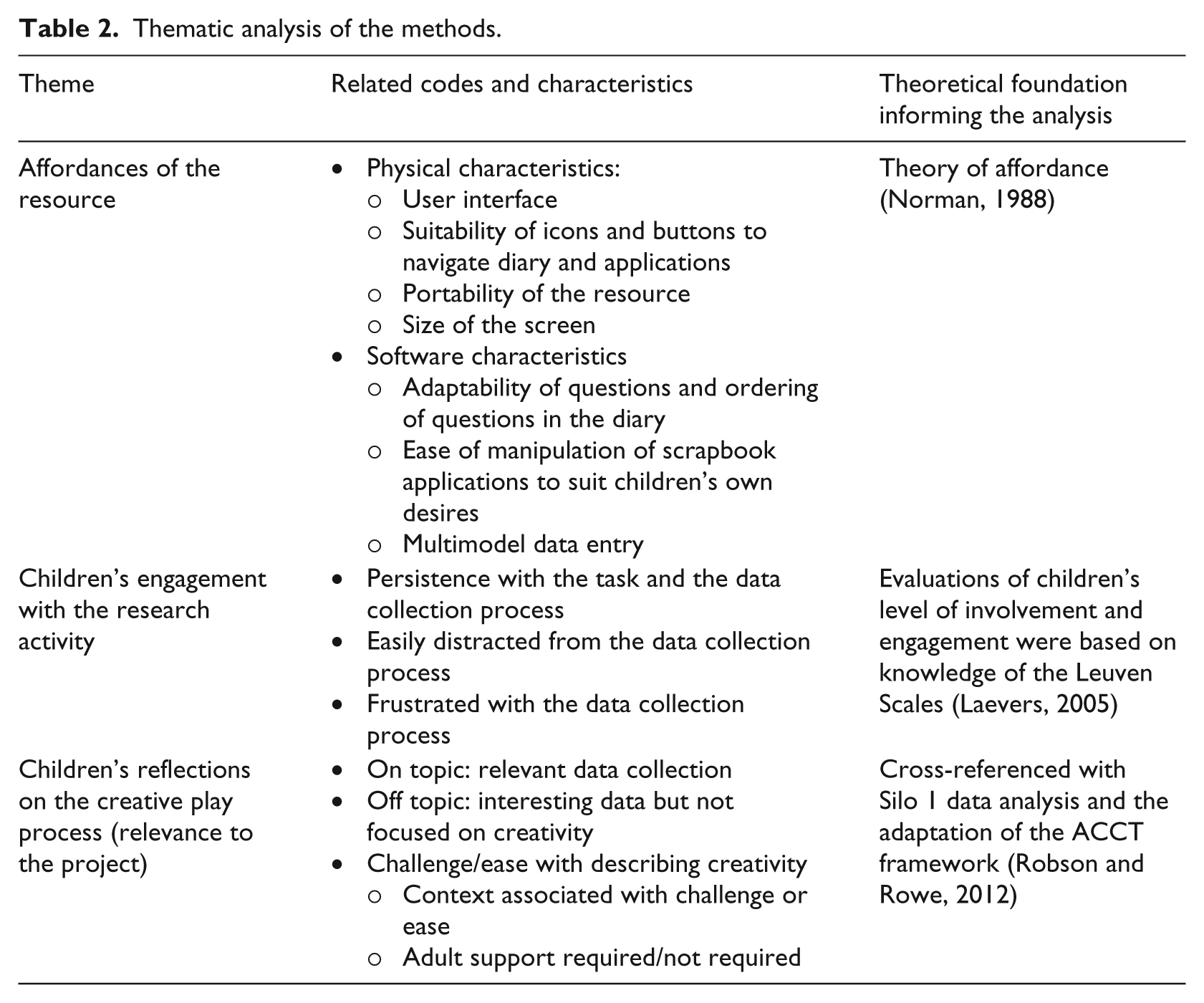
The data was analysed in two silos: (1) an exploration of the children’s creative play and (2) an evaluation of the appropriateness of the methods used for collecting data. Data from Silo 2 is the focus of this article. For silo 1, an adaptation of the Analysing Children’s Creative Thinking (ACCT) framework (Robson and Rowe, 2012) informed our coding of children’s creative play. We do not present the full coding structure here because the focus of this article is on evaluating the methods for allowing children to reflect on their creativity, rather than the creative play itself. For silo 2 (the focus of this article), systematic, thematic and iterative data analysis, which focused on evaluating the research methods employed, was conducted. Three central themes emerged to direct our evaluation and focused on (1) the affordances of the resource; (2) children’s engagement with the research activity; and (3) children’s reflections on the creative play process. While the themes and codes will undoubtedly be influenced by the researchers’ previous theoretical knowledge, they were in essence grounded in the data. Table 2 presents an overview of the themes and the breakdown in coding. Each observation was analysed in relation to these themes (and subcodes) and cross-referenced between codes – for example, to decipher the link between the affordances of the resource and children’s engagement with the research activity. The data was stored in terms of episodes and categorised according to the research method being evaluated. These episodes were then compared against the themes and coding structure provided in Table 2 in order to understand whether iPads offered an optimal platform for data collection with children in relation to creativity.
Thematic analysis of the methods.
Findings and discussion
The data analysis for this article focused specifically on evaluating the appropriateness of the data collection methods employed in order to consider how they allowed children to express their ideas about creativity, and how technologies began to give children agency in the data collection. This knowledge is the first step in moving towards a child-centred understanding of creative play. The focus of this article is not to present that understanding or the key characteristics of children’s creative play. The findings are not intended to be generalisable, but are aimed at stimulating discussions around using technologies to empower children as part of the research process within the context of exploring creativity.
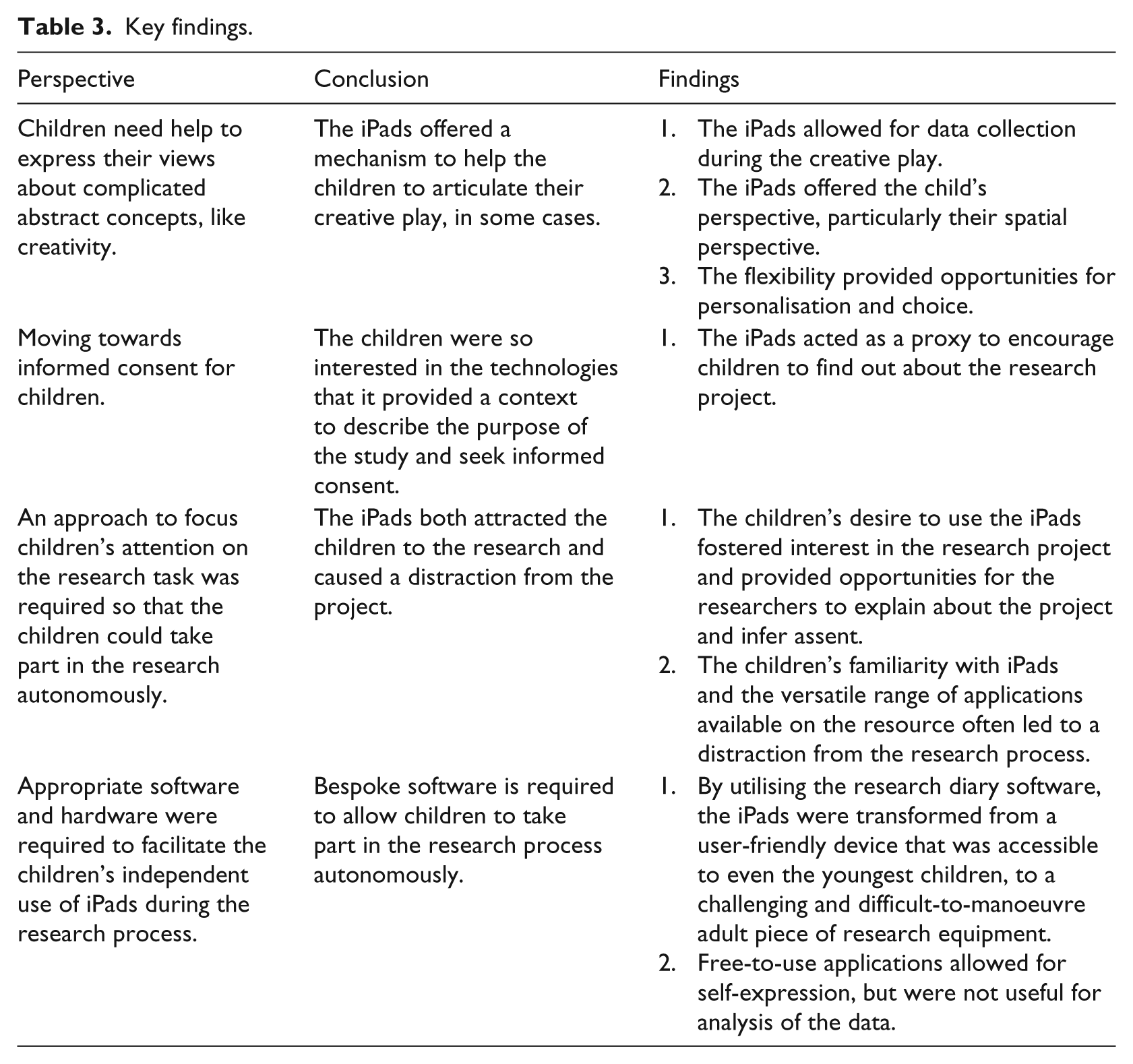
Four key findings and discussion points emerged from the study. These are summarised in Table 3 and are unpicked throughout the remainder of the article.
Key findings.
Moving towards child-centred perspectives on creative play
Creativity is an abstract concept, which is difficult to define, observe and understand (Fumoto et al., 2012), even for adults. Moyles (1989: 70) suggests that creativity is ‘inextricably linked … to the development of representation and symbolism’. Consequently, it is a complex concept for children of preschool age to discuss. As children mature, they become more fluent in symbolic play and use abstract ideas, including creativity, but initially this can be challenging, especially when attempting to help children articulate their creative play in a research project. Thus, it was essential to establish an approach to data collection where children could describe their creativity in ways that were meaningful to them.
The findings from this study suggest that the use of iPads, at times, offered a mechanism to alleviate some of the challenges children face when articulating their views about abstract concepts, like creativity. Three key elements appeared to be contributory:
The iPads allowed for real-time data collection from the children during, rather than after, their creative play.
The iPads, quite literally, offered a view of the children’s perspective, from their level of sight.
The flexibility of the iPads offered multiple approaches to data collection, allowing for personalisation and choice in the data collection process.
The iPads provided an opportunity for children to describe their creativity in situ and during the creative process. This was compared to alternative approaches, where questions were asked retrospectively about the children’s creative experiences, which appeared to exacerbate children’s struggle with describing the process. It is widely recognised in both developmental psychology (Schaffer, 2004) and video-stimulated-recall literature (Morgan, 2007) that children’s retrospective commentary is fraught with difficulty. One primary concern is that children of this age are very sensitive to suggestive influences when attempting to recall past events (Bruck and Ceci, 1999). Similarly, because of the way questions are asked, children provide answers which they think the adult wants to hear (Poole and Lamb, 1998). By allowing the children to use iPads during their play, and either answer questions as they went along or record video and commentary as they created constructions, we removed many of the problems associated with retrospective commentary.
The iPads afforded the benefit of, quite literally, offering the child’s spatial perspective, if used during creative play. The portable nature of the resource means that children can record their creative play from their eyeline view and from the angle that they choose, rather than from an adult-focused bird’s-eye view. Commentary about what the children were doing as they built a creation with the resources could supplement this recording. Figure 1 illustrates how a child wanted to use the iPad to record and talk about her construction as she was creating it. The size and weight of the iPad were conducive to portability for the child, and the large screen, coupled with a front camera, allowed her to see what she was recording. This meant that creativity was captured from the child’s perspective – that is, the mobile and flexible nature of the iPad meant that the children could place it on the floor, near to them, and prop it up (or use a stand) to record from their level of sight. This, coupled with the child’s commentary, allowed the researchers to move beyond the traditional adult-led observational approach to understanding creativity, whereby adults observe from a distance and document elements of creativity on a creativity scale based solely on what they are seeing (Robson and Rowe, 2012).
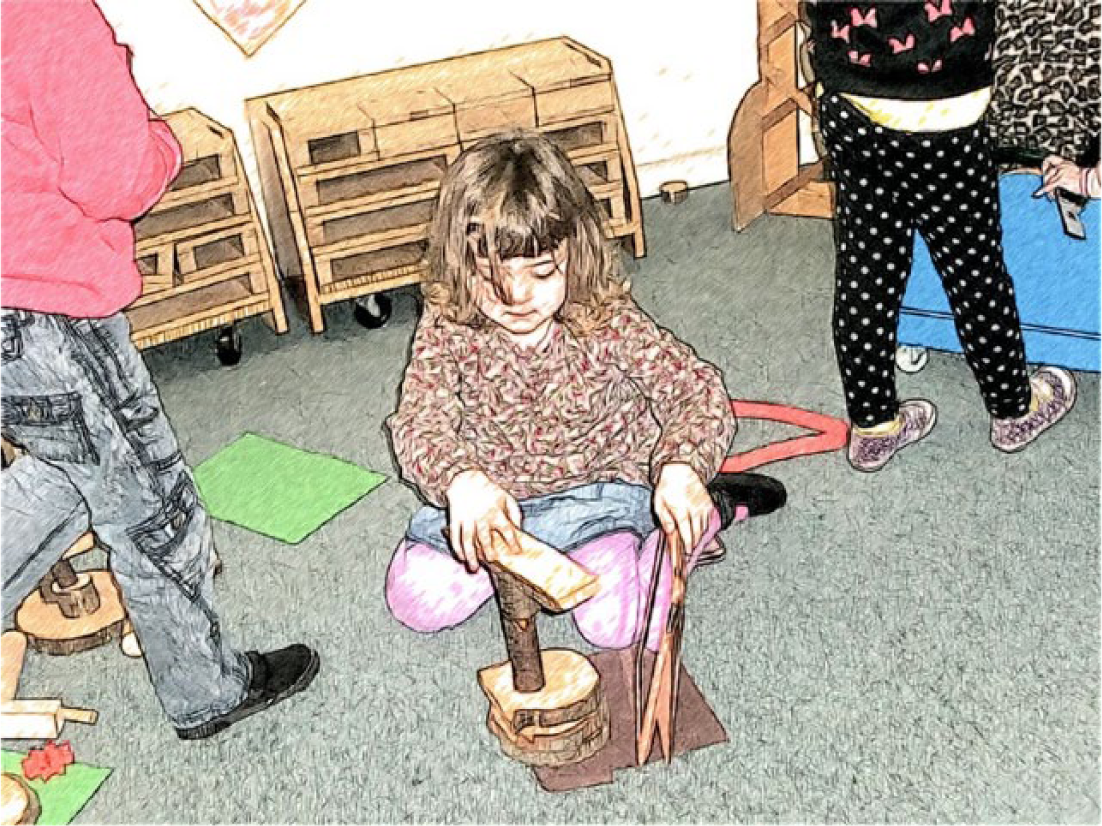
iPad commentary.
The flexibility of the iPad software also offered multiple opportunities for the children to express themselves if the video diary did not appeal to them. The children were very vocal in telling the researchers exactly how they would like to take part, with some children requesting to answer questions, while others indicated that ‘I don’t want to answer questions, I just want to record/draw’. In these situations, we turned to various freely available to download scrapbook and journal applications (not specifically designed for research), which allowed the children to take pictures of their creations and record audio clips/video clips to describe their creative ideas and overlay these on their pictures. The iPad offers a versatile range of applications for children to use, and the applications offered a wealth of user-friendly approaches for the children to describe their creative play. This meant that the children could talk about their creativity via, for example, scrapbook software. The children responded effectively to these applications – they maintained the children’s interest in the task and reduced the frustration associated with answering questions about creativity. The children’s commentary typically included a description of their construction, the names given to their ‘robots’, and photographs of themselves with the resource and in the environment. From this, and as part of the analysis when coupled with observations of the children’s creative play, we are beginning to attribute meaning to their constructions and are seeing glimpses of the logic and reasoning associated with their creative play.
Providing children with the opportunity to contribute to the study by using iPads enriched our understanding of their creative play. It allows researchers to supplement their inferences and observations of children’s creative play with children’s first-hand data about their play experiences and their reflections on this process. This was particularly the case for the scrapbooking tasks, as the children were able to reflect on their images. Such an approach reflects Robson’s (2012: 57) suggestion that children are ‘highly practised in interpreting and making meaning from television and video images’, and it is particularly useful for understanding creative thinking.
Towards informed consent for young children in research
The iPads also had a role to play in shaping the children’s interest in the study. In line with previous work on young children’s technology use (Arnott, 2013), the children’s interest in iPads and new technologies was high. As Muller and Perlmutter (1985) suggested, the children were attracted to the novelty of having new resources in the nursery. Thus, iPads acted as a bridge between the researchers and the children. They provided a mechanism with which to introduce the children to the research project and ask for their voluntary participation, for example. When the children noticed the iPads, they were quick to ask to use them. Indeed, the children crowded round the resources both to attempt to use them together or to queue for their ‘turn’, as shown in Figure 2.
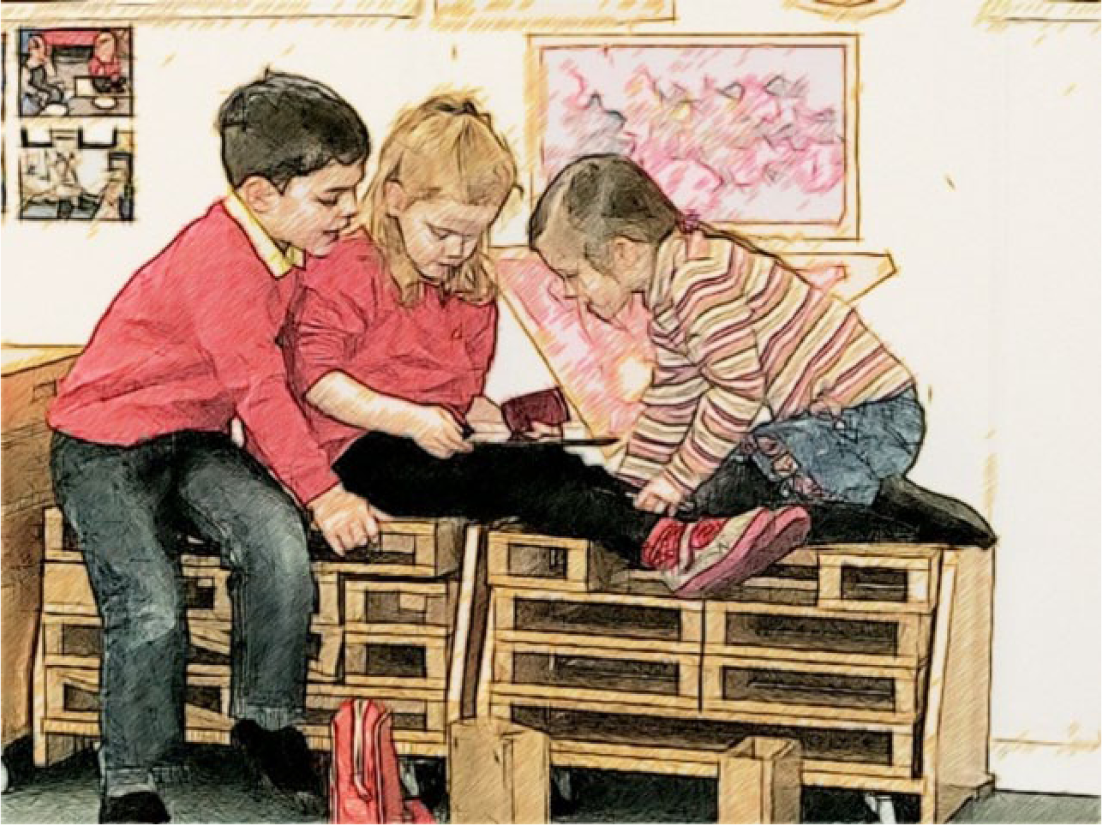
Playing with the iPad.
A link between engagement and tablet computers among children has been identified (Couse and Chen, 2010), and this was certainly the case for the children involved in this study. Every child who took part in this study asked to be involved, and we did not need to initiate any involvement by the children. The impetus for the children to gain access to the iPads from the researchers meant that the children asked questions of the research. They were very competent at doing so. They quickly questioned why we were visiting the nursery and what we intended to do while we were there, and what role the iPads would play in the process. In doing so, the children gave us opportunities to explain the research process and the project. We were able to ask them continually whether they were happy with us conducting the study, observing their play or conducting various activities with them. We were also able to confirm with them that they were happy for us to use the pictures of them and write about them in our ‘story’ about their creativity.
The children’s genuine interest in why we were there and what we were doing, by proxy of why we had iPads for them to play with, made the ethical process of obtaining consent and assent far more straightforward. The contemporary focus on child-centred and participatory methods has resulted in much debate around associated ethical implications. In particular, children’s ability and competence to consent to their involvement in research is explored extensively, albeit predominantly in medical studies or health research (Tait et al., 2003). The accepted methods for obtaining consent in early years research are outlined in various policy guidelines (British Educational Research Association, 2011; Scottish Educational Research Association, 2005). In Scotland, for young children whose voluntary informed consent is considered impractical due to age or competence, the guidelines state that ‘researchers must fully explore alternative ways in which they can be enabled to make authentic responses’ (Scottish Educational Research Association, 2005: 6). Consequently, the generally accepted approach is to infer assent from the child, in conjunction with voluntary informed consent from a parent or guardian.
Yet, inferring assent rather than obtaining consent has been criticised. It is suggested that children have a legal right to consent; that assent has weaker legal stature than consent; and that researchers may abuse, whether inadvertently or intentionally, the assent process and inappropriately involve children in research when they have no desire to be involved (Alderson and Morrow, 2004). It is this last issue that is of interest in relation to the findings from this study. We argue that children’s extensive interest in iPads offers a route to allowing researchers to explain their purpose for visiting, and helps to move towards children voluntarily taking part in research projects.
Empowering children in research about creativity
Children describing their creativity during play is, as described above, of course possible with traditional research methods. The iPads, however, offered the additional advantage of allowing children autonomy in the process and heavy involvement in the data collection. It meant that the children were able to choose which parts of the play they wanted to record and for what duration, because they could review the pictures, videos and diary entries to see what they had recorded before returning the iPad to the researchers. The video-diary software allowed the children to rerecord entries after they had reviewed their entry if they were not satisfied. Thus, providing the children with full control over the iPads created opportunities for respondent validation, because the children who used the resource always wanted to play back their contribution.
Overall, the children autonomously controlling the resource reduced the need for the researchers to find ways to ‘question’ the children about their play. The affordances of the resource – defined by (Norman, 1988: 9) as ‘the perceived and actual properties of the thing, primarily those fundamental properties that determine just how the thing could possibly be used’ – may provide opportunities for children to have agency in the research process, particularly by selecting what data to include and empowering them to be a key decision-maker in the data collection process (Kellett, 2005). Here we are making a progression away from tokenistic participation towards children as main deciders in the research process (Hart, 2013). The user-friendly and accessible nature of these technologies has been widely recognised in research involving children with autism spectrum disorder, and provides a route for children to express themselves, which they would otherwise find challenging (Hourcade et al., 2013). In essence, being able to record their actions as they were playing, and being in control of the device, offered a channel for self-expression, while placing the child at the centre of the process.
Distraction from the focus of the research
The interest in the iPads was beneficial in terms of developing curiosity about the research activities, but it also brought with it its own challenges. While the iPads offered opportunities to better understand children’s creative play and to bridge the relationship divide between the research team and the children, they did not always facilitate the research process. In fact, some of the data led us to believe that the iPads, to some extent, distracted the children from the research process. Figure 3 shows a boy who, when provided with an iPad, completely disengaged with the construction resources and therefore his previous creative construction play. Similarly, since the children were using the devices autonomously, there were no unrelated preloaded applications, games, emails or Internet access on the devices. Despite this approach, many of the children were familiar with iPads from home or other situations, and understood their potential. Particularly, they understood how simple it was to modify the iPads, and they approached us and asked us to install applications. One child asked: ‘Do you have Angry Birds?’ When we advised him that we did not have that game, he implied that it was easy to download from the App Store, and seemed unsatisfied when we indicated that we could not download it for him. We reminded the children that we had brought the iPads to help us understand their constructions and creativity, but they continued to ask to use them for other purposes.
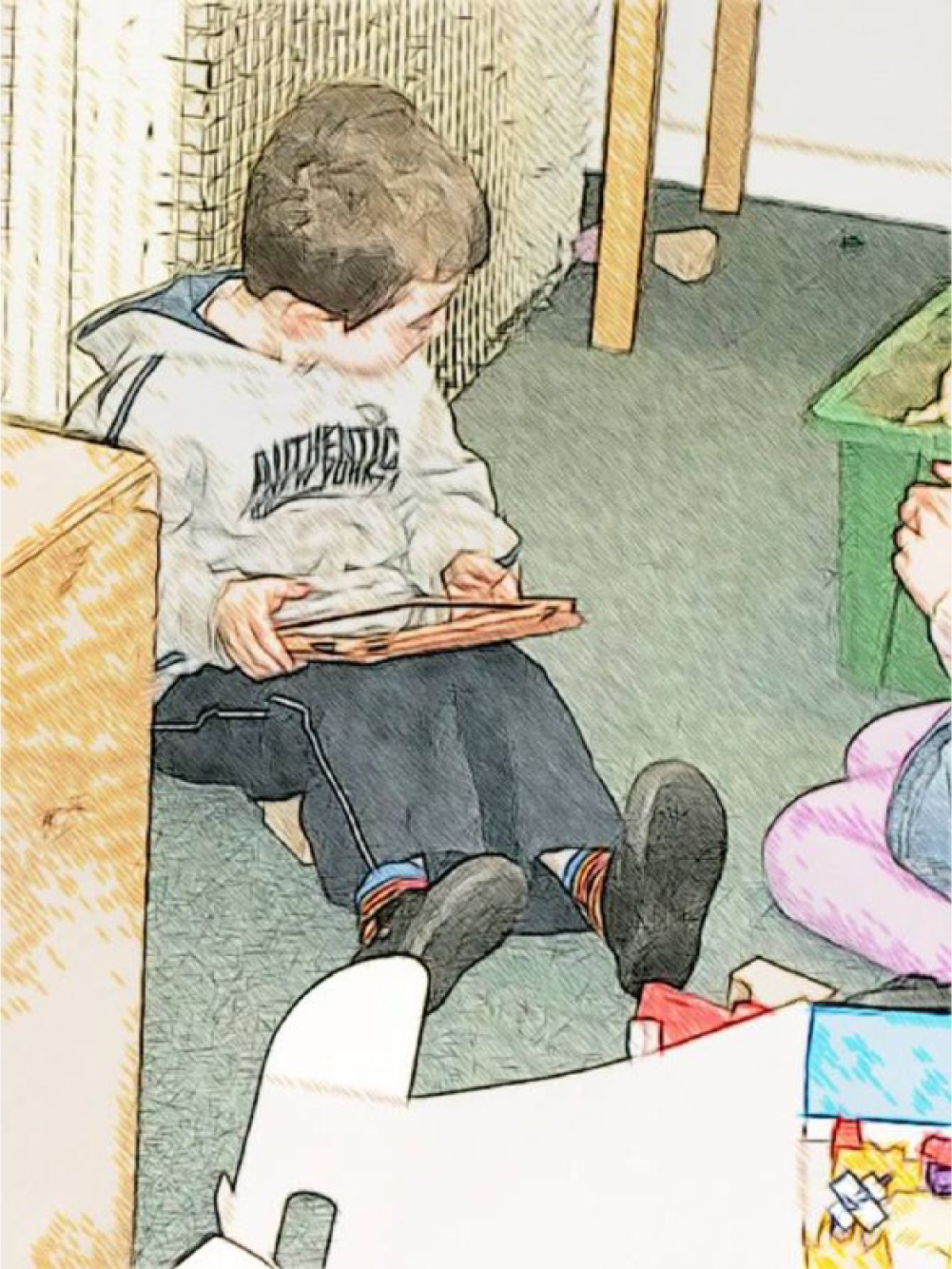
Distracted by the iPad.
While we had hoped that iPads would allow children to discuss their constructions freely (which, in some instances, they did – in terms of Figure 1), in some cases, the iPads were a cause for distraction and only hindered the research process. This was counter-intuitive to our desire to give the children more autonomy in the research project. We wanted to encourage the children to use the diary software, or other applications that would allow them to express themselves creatively, specifically in relation to their creative construction play. However, they would practise typing on the iPads, flip through the home screens, or take pictures and ‘selfies’ unrelated to their creative construction play.
This was discouraging for us, as we were keen to understand children’s creative play specifically around the construction toys, with iPads as the medium for capturing that data. The aim was to evaluate a methodology and associated methods that simultaneously provided some structure to guide children towards the research focus, while maintaining children’s autonomy in the process. While ‘selfies’ and other pictures may reflect the child’s creativity in the broader sense, they did not provide data to facilitate our analysis of creative play with construction resources. In this case, the use of iPads had no advantage over providing children with a basic camera – an approach that is limited because the result is excessive data that, while interesting, may not be purposeful and related to the project.
Lack of suitable early years research software
The children’s distraction from the research process, we believe, could partly be attributed to the lack of appropriate research software to facilitate data collection about young children’s creative play. As part of the project, we purchased commercially produced video-diary software. It was designed to allow adults, and children, to answer questions independently. Yet its user interface was complicated for children to use. The noisy playroom atmosphere meant that the children could not adequately hear the questions, and they found it challenging to replay the questions. The children enjoyed seeing their faces on the screen and replaying the videos (on the few occasions when they managed to record answers), but the buttons to manoeuvre through the questions were particularly small and were multifunctional, depending on which page was displayed. The children often forgot which buttons to press in order to complete the series. Their frustration showed and they quickly gave up using the software. The following vignette – a researcher’s reflections on helping a child with the video-diary software – demonstrates the difficulty the children experienced with the software:
I showed him how to use the software but it was noisy so he had to listen carefully to the question. I showed him how to replay the question several times. The start and stop recording button was challenging [potentially because of its small size and the fact that you press the same button twice – once to start and once to stop]. He pressed start but forgot to hold the camera in place to see the screen, instead waving the iPad around. Eventually, he answers all questions first with some help, but then he wanted to do it again, to try it on his own. He answered the questions but continually asked, ‘What do I do again?’
This resembled previous research on children’s competence with technologies, which indicated that children found it difficult to navigate a desktop computer and became frustrated by the process (Stephen et al., 2008). Yet it is at odds with findings which suggest that the user-friendly nature of iPads creates a relatable and manageable resource for young children to use (Bower, 2012). It seemed that, by utilising the research diary software, the iPads were transformed from a user-friendly device that was accessible to even the youngest children, to a challenging and difficult-to-manoeuvre adult piece of research equipment. This was a design flaw in the software because observations demonstrated that the children were confident and competent users of the iPads when other applications or software were used. For example, they were able to use the scrapbook and journaling applications skilfully. The children only appeared to ask for help when using the specialised diary software, signifying to us their perceived difficulty with the resource.
The diary software became a less desirable tool to document creativity because it had an imposed structure that was not specifically designed for young children and was inappropriate at times. The structure was not easy to manipulate in order to make it more child-friendly, and so it caused confusion for the children. For example, you could not alter the position or use of the buttons – they were static. Similarly, you had to move through the questions in order, rather than allowing the children to answer an individual question at a specifically relevant point in time.
Nevertheless, the scrapbook and journaling applications were not without their challenges. From the researchers’ perspective, the data was not easily extractable for analysis or publication because the applications were not specifically designed for storing and collating data, but rather for personal reflection. Analysis then had to take place directly on the applications and separate notes taken away from the children’s collages, for example. There appeared to be no way to download the collages and journal entries for importation into qualitative research software.
This study was conducted with limited funds and, as such, it was essential to use readily available software. Yet, we failed to find any commercially available software or free-to-use applications that provided the optimal platform for collecting data about children’s creativity at this age. Certainly, we found software that was useful and gave us an insight into children’s creative play, but collecting the data was cumbersome. Nevertheless, we are confident that, with the development of bespoke child-centred research software, children would confidently be able to record their perspectives on their creative play. With the development of more bespoke software geared towards collecting data from the under fives in a fun and playful manner, we believe that iPads could be an invaluable tool for research in preschool. We foresee the ability to allow children to participate autonomously and independently as part of the research process, thereby empowering children.
In the development of a bespoke application specifically tailored towards collecting data from young children and affording children control over the process, we suggest that, in order for this to be successful, it must:
Provide multiple approaches to data collection, such as video, audio, drawing or storyboarding.
Allow for buttons and prompts to be customised, depending on the children involved – older children may be able to cope with word prompts to demonstrate the button’s function, but young children may require a verbal cue to describe what each button does.
Allow for a questioning platform that is engaging, using characters or familiar animated friends.
Provide children with freedom over which questions to answer, rather than questions appearing in sequence.
Allow children to create changes as appropriate.
Offer a route to personalisation so children’s identities are disclosed when the data is processed.
Conclusions
We firmly position ourselves within the New Social Studies of Childhood. We are persuaded by the research literature and from experience that children are highly competent actors who have valuable opinions and experiences that should be heard, and we recognise the importance of understanding their perspectives. We are aware that researchers who only involve children in research projects in a limited way run the risk of being labelled tokenistic (Hart, 1992). Similarly, we understand that the developmental argument that preschool children are too young to be involved in the research process is not acceptable, and the onus is on researchers to find ways of involving all children in the research process. Indeed, the research literature on participation denotes that, in order to allow involvement by children in research, researchers must re-evaluate their conceptual framework to one that caters for children’s participation (Christensen and James, 2008). As such, the focus of this study was to better understand how young children’s creative play could be understood from the child’s perspective. We question how technologies – specifically iPads – can aid this process.
The conclusions that we draw from this small-scale study are that iPads can provide fun activities to allow children to articulate their creative perspectives; foster interest in the research process; and offer a route towards informed consent. Essentially, the iPads themselves not only served as a medium for the children to be creative, but also offered a medium for expression in the study. The software available for these technologies, however, largely determines the quality of the data collected. In order to obtain high-quality data, while maintaining children’s interest in the project and avoiding any distractions, bespoke child-centred research software targeted at young children is required. Children are capable of using iPads as a research device, provided the activities are sufficiently appealing to children to capture their interest and avoid children using the resource in ways that are unrelated to the project. The iPads themselves are highly versatile and user-friendly for children, but they must be coupled with equally well-designed software. When this is achieved, iPads may offer children a mechanism to articulate their creative process from their own perspective.
It has been highlighted that ‘champions of participatory work with young people may have “glossed over” some of the methodological and practical challenges’ (Smith et al., 2002: 194). This article has aimed to bring these challenges to the fore.
Footnotes
Acknowledgements
The authors would like to thank the children, parents and practitioners for their involvement in this project, without whom the study would not have been possible.
Funding
The author(s) disclosed receipt of the following financial support for the research, authorship, and/or publication of this article: This work was supported by the University of Strathclyde ‘Bridging the Gap Fund’, with no specific reference code.