



Abstract
Despite the increasing focus on prison inspection and monitoring bodies in international law and policy, little is known about their operations in practice. This study contributes to fill this gap by examining how countries of the European Union (EU) have responded to these demands, paying special attention to one of the central tasks of these bodies: the making of recommendations. To do so, we used data from the first EU-wide survey of prison oversight bodies, with responses from all Member States. Our findings reveal that recommendations-making is a key part of the work of these bodies. They also provide evidences that the approach to dialogue between these bodies and prison authorities advocated in the legislation is taking place on the ground.
The independent oversight of prisons by inspection and monitoring bodies 1 can play an important role in preventing breaches of human rights in places which are far from public view. As Liebling and Crewe (2013: 286) note, ‘the prison is a sui generis institution, uniquely liable to abuses and distortion of power’. In recent decades, prison inspection and monitoring has become increasingly visible in efforts to strengthen the frameworks for protecting human rights in places of detention. In this regard, the Optional Protocol to the United Nations Convention against Torture (OPCAT) (UN General Assembly, 2003) was a major development in the oversight of prisons globally. OPCAT is based on the premise that regular visits to places of detention by independent bodies can support the prevention of torture and other forms of cruel, inhuman, or degrading treatment or punishment.
Central to OPCAT is the concept of ‘National Preventive Mechanisms’ (NPM), which refers to national bodies with the power and remit to visit places where people are deprived of their liberty. The designation or establishment of NPMs is a requirement of all states parties who have signed and ratified OPCAT. Other international human rights instruments require states to create independent bodies at the domestic level to inspect and monitor prisons. In fact, there has been a marked increase in the attention given to prison oversight within international human rights standards in recent years. This attention is evident in the conclusion of OPCAT itself, as well as the increased powers provided to prison oversight bodies in recent revisions to human rights instruments concerning prisons. The original United Nations’ Standard Minimum Rules for the Treatment of Prisoners, for example, contained a requirement on states to establish prison inspection bodies. The wide-ranging 2015 revisions to those rules, known as the Mandela Rules, continue this obligation on states to set up independent forms of prison inspection, and to provide those bodies with powers of access and information-gathering (UN General Assembly, 2015). The European Prison Rules (EPR) also require Council of Europe member states to establish independent prison inspection bodies (Council of Europe Committee of Ministers, 2020).
Supranational forms of prison monitoring also exist, with the Council of Europe having the longest history in this field through the European Committee for the Prevention of Torture (CPT), which came into operation in 1989 (Council of Europe, 1987). OPCAT created the Subcommittee on Prevention of Torture and other Cruel, Inhuman or Degrading Treatment or Punishment (SPT), which has the power to visit places of detention within states party to the Convention (Murray et al., 2011) and it also has an advisory role to NPMs. Both these bodies have the power to enter places where people are deprived of their liberty, speak to detainees and staff of their choice in confidence, and obtain documents and records (Article 8(d) European Convention for the Prevention of Torture and Inhuman or Degrading Treatment or Punishment, Article 14(2)(b) OPCAT).
States are now under clear obligations from international and regional human rights law to establish independent inspection and monitoring bodies for prisons. These obligations reflect an increasing recognition of the importance of a complementary approach to human rights recognition and protection, which deploys both preventive approaches and the formal machinery of enforcement, such as through the European Court of Human Rights (ECHR). Only very few violations of rights will ever be adjudicated upon by courts. Preventive approaches, including the work of prison inspection and monitoring bodies, may be able to act more speedily, more flexibly, and with a broader impact. This complementarity is perhaps most evident in the relationship between the European Court of Human Rights and the CPT, with the Court referring to CPT reports in its analysis of ECHR obligations, and the CPT able to use its caselaw when visiting states and engaging in dialogue with the authorities (Cliquennois and Snacken, 2018; Muršić v. Croatia [GC], 2016; van zyl Smit and Snacken, 2009).
Despite the increasing focus on preventive approaches to human rights’ protection through prison oversight, remarkably little is known about the operation of such bodies in practice. Most examinations of the work of NPMs and other prison oversight bodies is by means of legal analysis, examining their structures as well as the legal obligations and powers under OPCAT (e.g., Bicknell and Evans, 2017; Morgan and Evans, 1999; Murray et al., 2011; Evans and Morgan, 1998). While these examinations form an essential part of understanding the work of prison oversight bodies, there is also a need to examine the operation of these bodies in practice. In doing so, Criminology can play an important role in developing our understanding of the application of human rights to punishment to; there is evidence of a growing interest in the activities and impacts of prison oversight bodies (Cliquennois and Snacken, 2018; Daems and Robert, 2017; Dünkel and Morgenstern, 2018; Hardwick and Murray, 2019; Lappi-Seppälä and Koskenniemi, 2018).
In this article, we seek to contribute to this developing literature by presenting findings from the first EU-wide survey of NPMs and other prison oversight bodies, with responses from the 28 Member States comprising the EU at the time of data collection. We provide the first comprehensive analysis of how countries of the European Union have responded to the introduction of OPCAT in the area of prisons and the growing international consensus in human rights law that prison oversight is necessary. Our examination is of national-level prison inspection and monitoring bodies and focuses on the power of NPMs to make recommendations to the authorities concerning ways in which the operation and functioning of prisons could be improved. Making recommendations is central to the work of NPMs under OPCAT. Prison oversight bodies usually do not have powers of enforcement, nor the ability to sanction prison systems which are not complying with human rights standards. Recommendations, therefore, constitute the main tool by which prison oversight bodies can effect change, and they have the potential to affect the protection of rights in prison.
International standards on prison inspection and monitoring
The principle that the inspection and monitoring of prisons can promote the protection of human rights and prevent torture and ill-treatment has become well established in international human rights law, particularly in the last two decades. This is perhaps especially apparent in the adoption of OPCAT. NPMs are domestic bodies which conduct visits to places of detention, with greater regularity than that which is possible by international bodies (Hardwick and Murray, 2019). OPCAT requires NPMs to be maintained, designated, or established at the latest one year after a state ratifies or accedes to OPCAT. At a minimum, NPMs must be granted three powers (Article 19): 1) to regularly examine the treatment of people deprived of their liberty, 2) to make recommendations to the relevant authorities, and 3) to submit proposals and observations concerning existing or draft legislation. Although NPMs have the remit to visit all places where people are or may be deprived of their liberty (e.g., police stations, immigration centers), this article focuses on their activities concerning prisons.
OPCAT places a very definite obligation on State Parties to create and maintain NPMs with a view to preventing torture and other cruel, inhuman, or degrading treatment or punishment in prisons. Prison oversight bodies are, however, required by other human rights instruments also. The Mandela Rules, for example, require states to establish independent forms of prison oversight ‘to ensure that prisons are managed in accordance with existing laws, regulations, policies and procedures, with a view to bringing about the objectives of penal and corrections services, and that the rights of prisoners are protected’ (Rule 83.2).
Inspection and monitoring of places of detention is provided for in several other international human rights instruments, including the Principles on the Effective Prevention and Investigation of Extra-legal, Arbitrary and Summary Executions (ECOSOC, 1989, Principle 7), the Istanbul Protocol (Principle 7), and the Principles and Best Practices on the Protection of Persons Deprived of Liberty in the Americas (IACHR, 2008, Principle XXIV). The United Nations Rules for the Treatment of Women Prisoners and Non-Custodial Measures for Women Offenders (UNODC, 2011) do not contain a specific requirement of their own concerning inspection but do provide that such bodies shall include women members.
Members of the Council of Europe are also obliged to establish independent prison monitors under the European Prison Rules (Council of Europe, 2020). The 2020 revisions to the EPRs strengthened the powers of prison inspection and monitoring bodies, requiring states to guarantee such bodies access to all prisons, records, the opportunity to make unannounced visits, access to all prisoners and the ability to conduct private and fully confidential interviews (Rule 93(2)). Other Council of Europe bodies also stress the importance of domestic prison inspection and monitoring bodies. The CPT has emphasised the need for domestic inspection and monitoring, stating that ‘effective grievance and inspection procedures are fundamental safeguards against ill-treatment in prisons’ (CPT, 1992: para 54).
At the EU level, the European Parliament has stated a strong view that member states should implement ‘effective and independent national supervision mechanisms for prison and detention centres’ (European Parliament Resolution, 2011: para 19), though, e as is the case with the Council of Europe, no specific European Union legal instruments currently exist concerning prison inspection and monitoring bodies. The European Parliament has called on Member States and accession countries to sign and ratify OPCAT and has encouraged the EU itself to sign and ratify OPCAT as part of its policy vis-à-vis third countries (European Parliament Resolution of 15 December 2011 on detention conditions in the EU (2011/2897(RSP)).
The central role of recommendations to the work of prison oversight bodies
Whatever type of prison inspection and monitoring body exists in a state, a critical part of their role is, or should be, the making of recommendations to the authorities. Article 19(b) of OPCAT provides that NPMs must be granted the power: ‘to make recommendations to the relevant authorities with the aim of improving the treatment and the conditions of the persons deprived of their liberty and to prevent torture and other cruel, inhuman or degrading treatment or punishment, taking into consideration the relevant norms of the United Nations’.
Making recommendations is also viewed by the SPT as part of the ‘advisory function’ which NPMs have, with recommendations coming in the form of opinions, proposals, or reports. For the SPT, recommendations in visit reports should ‘propose practical and verifiable corrective measures’ where concerns exist, and they should be well-founded (i.e., grounded in international, regional, and national norms and practices), preventive in focus, feasible and practicable, focused, precise and non-complex (OHCHR, 2018: 27). NPMs are also advised to engage in regular monitoring of the implementation of their recommendations, to conduct follow-up visits and publish reports which provide information on the implementation of recommendations. There is a corresponding duty on states parties to take account of recommendations made by NPMs and at least begin discussions on their implementation. Article 22 of OPCAT requires the competent authorities to ‘examine the recommendations of the national preventive mechanism and enter into a dialogue with it on possible implementation measures’. Bicknell et al. (2018: 17) describe this obligation as ‘significant’, as it means that the role of the NPM is not only to make recommendations and describe the situations that it finds, but also to engage in ‘active follow-up' (2018: 17). There is therefore a close link between the NPM’s power to make recommendations and the ‘cooperation function’ (OHCHR, 2018: 6), which involves NPMs engaging in meaningful dialogue with the authorities concerning the prevention of torture and ill-treatment.
The making of recommendations is also an important feature of the Mandela Rules’ requirements for prison inspection bodies. Rule 84 states that prison inspectors shall have the authority to ‘make recommendations to the prison administration and other competent authorities’. The Mandela Rules also require the prison authorities to indicate within a reasonable time frame whether or not they will implement the recommendations (Rule 85.2). The revised commentary to the European Prison Rules similarly states that prison monitoring bodies should have the authority to make recommendations ‘on what needs to be done to meet standards set by national and international law’ (European Committee on Crime Problems, 2018: 66). Revisions to the rules now also deal with the response of the authorities, by stating in Rule 93.6 that ‘the national authorities or prison administration shall inform these bodies, within a reasonable time, on the action being taken in respect of such recommendations’.
As Buckland and Csergö (2019) note, recommendations made by NPMs have a particular significance, as they seek to deal with the root causes and systematic issues giving rise to torture, ill-treatment, and other violations of human rights. Recommendations are, in their view, ‘one of the most important tools that NPMs have to effect change’ (2019: 4), though without follow up and monitoring, and indeed actions of the authorities themselves, they are not enough.
While recommendations are central elements to the work of NPMs, we know rather little about how the making of recommendations operates in practice. Some NPMs provide information on the numbers of recommendations made and those implemented (e.g., Slovenian NPM, 2019) while others only report on the numbers of recommendations made (e.g., Spanish NPM, 2019). Others, again, choose to provide examples of where their recommendations have been followed up (e.g., Norwegian NPM, 2019). Information on the numbers of recommendations, their implementation status and actions on follow-up is not provided in any systematic way across NPM reports. It is also clear that NPMs and other oversight bodies face challenges in having their recommendations implemented, with Daems (2017) noting a variety of ways in which countries may avoid putting CPT recommendations into practice. A greater understanding of the recommendations-making process is therefore needed.
The operation of prison inspection and monitoring bodies
There is now a vibrant scholarship examining OPCAT and the work of NPMs. Reflecting the fact that many countries around the world are yet to designate NPMs, or are at the early stages of implementation, much of this scholarship uses legal methodology to interpret OPCAT’s provisions (Murray et al., 2011; Rogan, 2019; Steinerte, 2014; Steinerte and Murray, 2009), especially to assess how OPCAT operates, or will operate, in particular countries (Culo, 2015; Fernandez, 2005; McGregor, 2017; Pierce, 2014). Scholarship has also examined the interactions between different types or layers of prison monitoring, such as the relationship between the SPT and the CPT (de Beco, 2011). Outside of NPMs, similar scholarship has examined the structures for other kinds of prison oversight bodies (Mushlin and Deitch, 2010). Again, much of this work has sought to provide an understanding of the legal structures and a general overview of the activities of prison inspection and monitoring bodies in different countries (Lappi-Seppälä and Koskenniemi, 2018).
Empirical work on the operation of NPMs and prison oversight bodies in practice is also beginning to emerge. As Bicknell et al. put it ‘many NPMs are only just beginning to amass the experience necessary to capitalise on their role’ (2018: 25), a point which may also be made about empirical research in this field. Hardwick and Murray (2019) have studied the regularity of visits by NPMs in Europe, finding great variety even in how the concept of regularity is understood. Though not the focus of any specific study to date, recommendations have emerged as an important feature of the work of prison oversight bodies in analyses of their work. For example, Lappi-Seppälä and Koskenniemi (2018) refer to the making of recommendations by prison oversight bodies in all Nordic countries as playing a role in supporting change. Similarly, Padfield (2018) points to the ability of the Prisons and Probation Ombudsman to make recommendations in the context of England and Wales as an important feature of its work. Perhaps because the CPT has been operating longer, more empirical studies have examined the types of recommendations that this body makes as well as the responses of countries to these recommendations (Aizpurua and Rogan, 2019; Daems, 2017; O’Connell et al., 2021). These empirical analyses have identified healthcare as the area receiving the highest number of recommendations. They have also showed that states accept the recommendations offered by the CPT in fewer than 50% of the cases (Aizpurua and Rogan, 2019; Lappi-Seppälä and Koskenniemi, 2018). When recommendations are not accepted, states most frequently provide evasive responses or show disagreement with the issues identified, the proposed corrective measures, or both (Aizpurua and Rogan, 2019; Lappi-Seppälä and Koskenniemi, 2018).
Despite the rapidly growing number of NPMs across the world, little is known about their operations in practice, or the challenges such bodies face in their work. This study contributes to filling this gap in the literature by examining how countries of the European Union have responded to the increased demand of domestic inspection and oversight bodies, and by investigating one of their central tasks: the making of recommendations.
Data and method
The target population for the study was NPMs and oversight bodies in the EU at the time of data collection. Potential respondents were identified by reviewing official data, including relevant websites (e.g., United Nations Office of the High Commissioner) and information from the National Preventive Mechanisms designated in each Member State. For countries which have not ratified OPCAT, potential respondents were identified through publicly available documents such as reports produced by international inspection and monitoring bodies appointed to the respective countries. Email and postal addresses were collected by the authors by a combination of public sources and personal networks.
The questionnaire was developed by the authors and pretested using a panel of five international experts. These experts were selected based on their training and experience (additional information about the experts is available in online Appendix A). They reviewed the questionnaire individually using a standardised form that requested their feedback regarding the content and the structure of the survey. Their suggestions were incorporated into the fielded questionnaire.
Data was collected between 29th January and 8th April 2019. Postal prenotification letters were mailed to NPMs and oversight bodies in the 28 EU Member States. Three days later, personalised prenotification emails were sent to them. The survey invitations containing the survey URL were distributed the following week. Since not all states had established their National Preventive Mechanisms at the time of data collection, a two-path survey that presented respondents with different sets of questions was designed. These questions were equivalent and only the wording changed slightly to better tailor the survey to the NPM status. The survey was programmed and distributed online using Qualtrics.
Non-respondents received up to three additional reminder emails and a telephone call (additional information on the types and number of contacts during data collection is available in online Appendix A). All study materials (prenotification, information sheet, questionnaire, reminders) were written in English. The survey closed on 8th April, with a 100% response rate. The questionnaire took approximately 45 minutes to complete and no incentives were offered for participation. Informed consent was obtained from every participant in the study, which was approved by the School of Law’s Research Ethics Committee at Trinity College Dublin.
Measures
Two groups of variables were used in this study, including those referring to the inspection and monitoring bodies and those related to the recommendations made by them. The former comprises the states in which the bodies operate, whether they function as National Preventive Mechanisms, and, if so, their type of structure in terms of number of bodies. The second set of variables included whether they make recommendations to the competent authorities and the percentage of time devoted to issuing recommendations with respect to other tasks. Other variables used are the level of publicity of their recommendations, whether their implementation status is public, and if prison administrations indicate whether recommendations will be implemented. In addition, respondents were asked if their institutions follow-up on their recommendations to assess their degree of implementation, and whether there are consequences in cases of non-cooperation from authorities. When responded affirmatively, each of these items was followed by a mark-all-that-apply question to specify the types of activities implemented to monitor the status of recommendations and respond to inaction. Responses to these two questions were summed to create a total number of follow-up activities and consequences for each participating country (see online Appendix B for the exact wording of all survey items).
Analytic strategy
Prior to the analyses, a data validation process was performed. This involved checking for internal inconsistencies across the responses (i.e., where conflicting information was provided in response to different questions within the questionnaire), as well as cross-referencing responses with official, publicly available data. When inconsistencies were found, the respective states were contacted by email(request for clarification and up to two reminders for non-respondents). The problems encountered were specified and states were asked to provide clarifications or update their responses. This process was conducted between 7th May and 14th June 2019, with responses from the 12 relevant states. The questions subject to clarification and the sources of information used to validate each question are provided in online Appendix A.
Once the validation process was completed, descriptive statistics were computed for the study variables, including frequencies, percentages, means, medians, and standard deviations. A chi-square test was used to assess the relationship between publishing the content of the recommendations and their implementation status, and Cramer’s V was calculated as an indicator of effect size. Independent t-tests were used to examine differences in the time devoted to issuing recommendations based on the publicity of the recommendations (always public versus in some cases) and the implementation status. In these cases, Cohen’s d effect sizes were calculated. Finally, to test the association between the number of follow-up tools and the number of actions that bodies have at their disposal in cases of non-cooperation, Pearson’s correlation coefficients were computed.
Findings
NPM status and recommendation-making
At the time of data collection, 25 of the 28 EU member states had ratified OPCAT. The countries awaiting ratification – Ireland, Latvia, and Slovakia – have signed, but not ratified, the Optional Protocol. All the countries that had ratified the protocol indicated that they had established their NPMs. The exception was Belgium, which ratified OPCAT most recently (July 2018). Latvia, meanwhile, had established its NPM despite not having ratified the Optional Protocol. Of the countries that had designated their NPMs (n = 25), the preferred structures were single-body institutions (84.0%), while four states– Germany, Malta, the Netherlands, and the UK – had designated multiple bodies to perform the preventive mandate under OPCAT.
All countries indicated that NPMs and oversight bodies in their respective countries make recommendations to the competent authorities. In fact, issuing reports and recommendations was the second activity that countries devoted more time to, only preceded by visiting places of detention (see Figure 1). The median time invested performing this task was 25%, with nine member states scoring above this cut-off point. The states reporting the most time issuing reports and recommendations were Hungary (60%) and Sweden (45%). Among the countries devoting the least time to perform this task were the three states in which NPMs have not been established yet (Belgium, Ireland, and Slovakia).
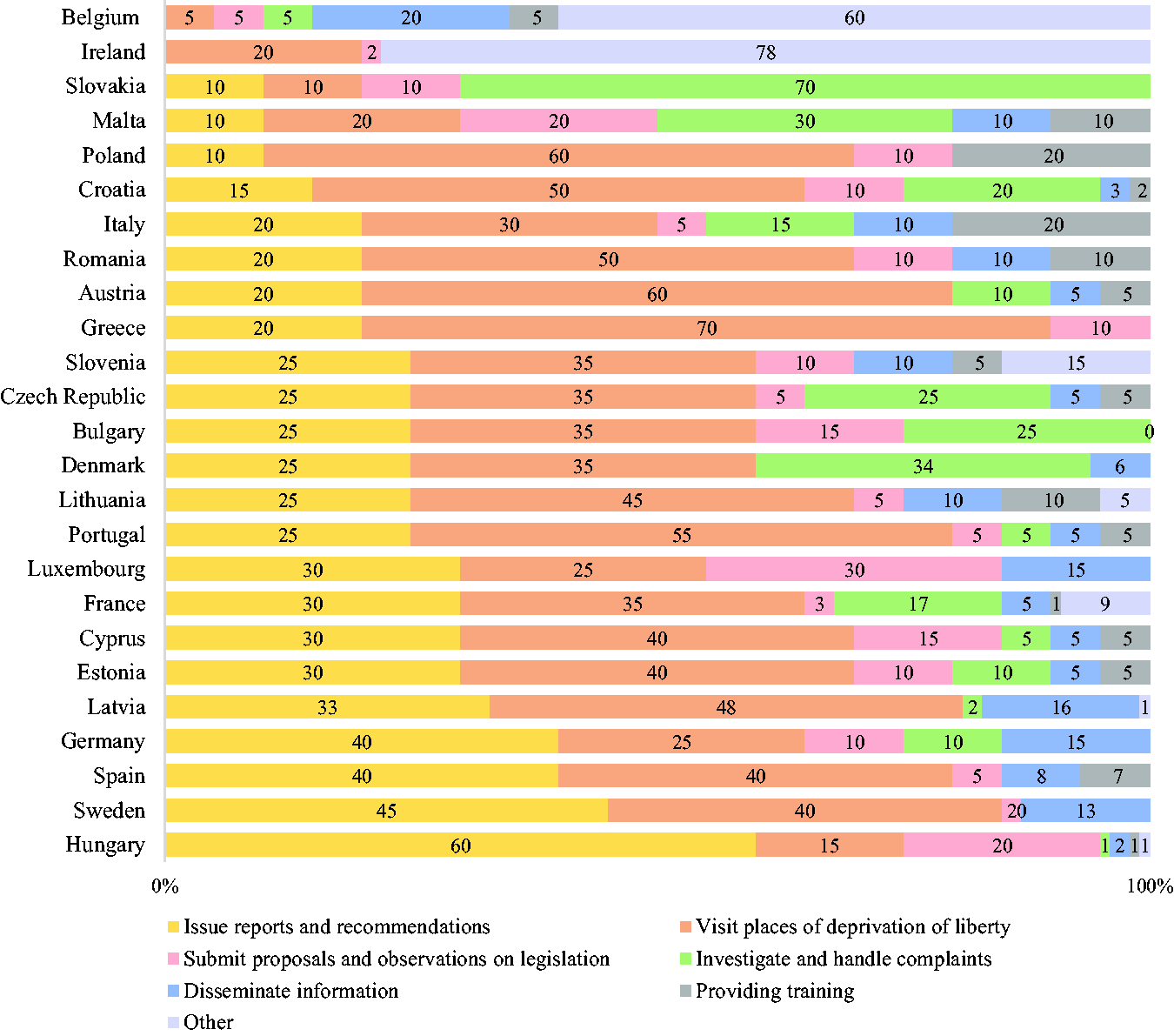
Percentage of time devoted to tasks by state (n = 25).
In terms of publicity, states indicated that recommendations were either always public (60.7%) or public in some cases (39.3%). None of the countries reported that their recommendations were, in general, not public (see Table 1). More variability was found regarding publication of the recommendations’ status. While 15 NPMs stated that they generally publish the implementation status of their recommendations, 12 answered otherwise. States that made recommendations public in all cases were more likely to publish their status of implementation when compared to those making recommendations public only in some cases (68.8% versus 36.4%). Although this difference did not reach statistical significance due to the small sample size, the effect size was medium (X2 = 2.77, p = .13 2 , Cramer’s V = .32).
Publicity of the recommendations and their implementation status by state.
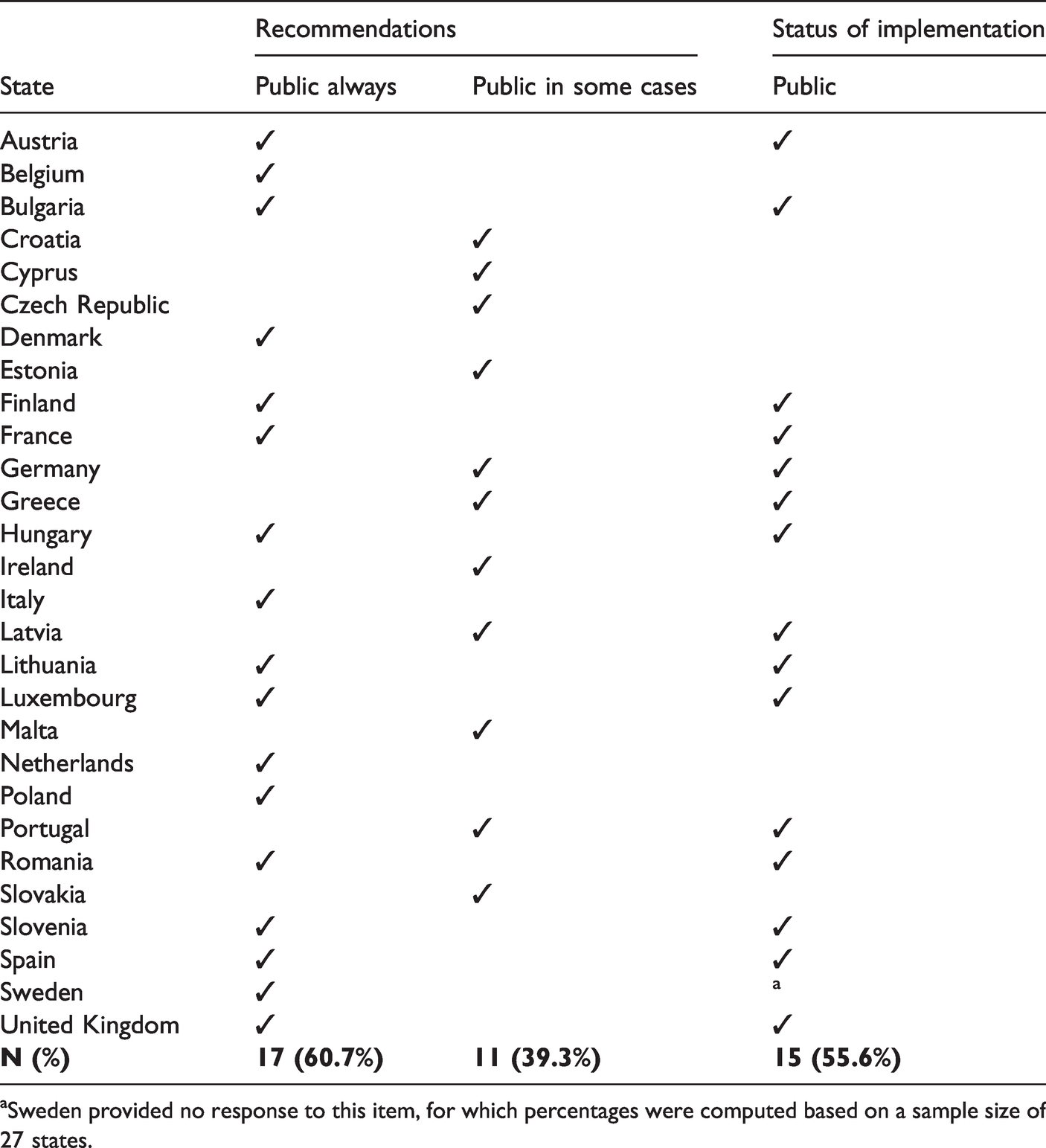
aSweden provided no response to this item, for which percentages were computed based on a sample size of 27 states.
NPMs and oversight bodies always making their recommendations available spent, on average, 24% more time making recommendations when compared to those that only make some recommendations available (M = 26.79, SD = 14.62 versus M = 21.64, SD = 11.89). This difference did not reach statistical significance, although its effect size was small to medium (t = 0.95, p = .35, Cohen’s d = 0.39). Similarly, bodies that publish the implementation status of their recommendations indicated spending approximately twice as much time making recommendations than those not publishing this information (M = 30.23, SD = 11.21 versus M = 15.91, SD = 10.91). This difference was significant and represented a large effect size (t = 3.16, p = .005, Cohen’s d = 1.29).
Monitoring implementation of recommendations
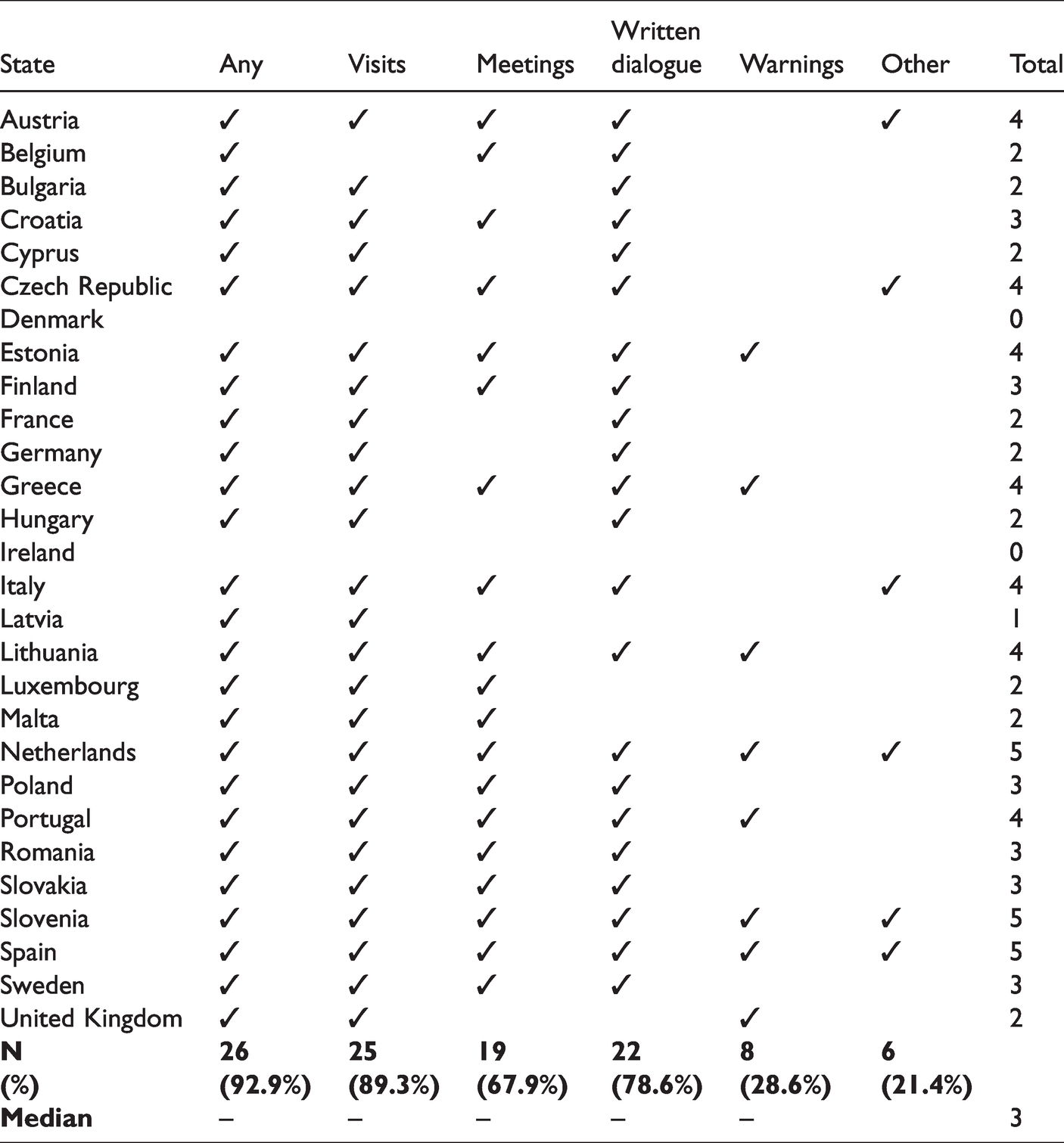
When it comes to the recipients of the recommendations, all but two countries (France and Ireland) stated that the competent authorities indicate whether they will implement the recommendations within a reasonable time. As shown in Table 2, most of the states indicated following up on their recommendations to assess their degree of implementation. Different activities were used to perform this task, the most common being conducting follow-up visits (89.3%) and engaging in written dialogue with the competent authorities (78.6%). These activities were followed by having meetings and personal exchanges with authorities (67.9%) and, to a lesser extent, sending warnings (28.6%). A few countries reported using other tools to monitor the implementation of recommendations (21.4%), which mostly implied cooperation with civil society and the media. While the number of activities varied among the countries (0–5), a typical body implemented three different strategies.
Tools used by the states to monitor the implementation of recommendations.
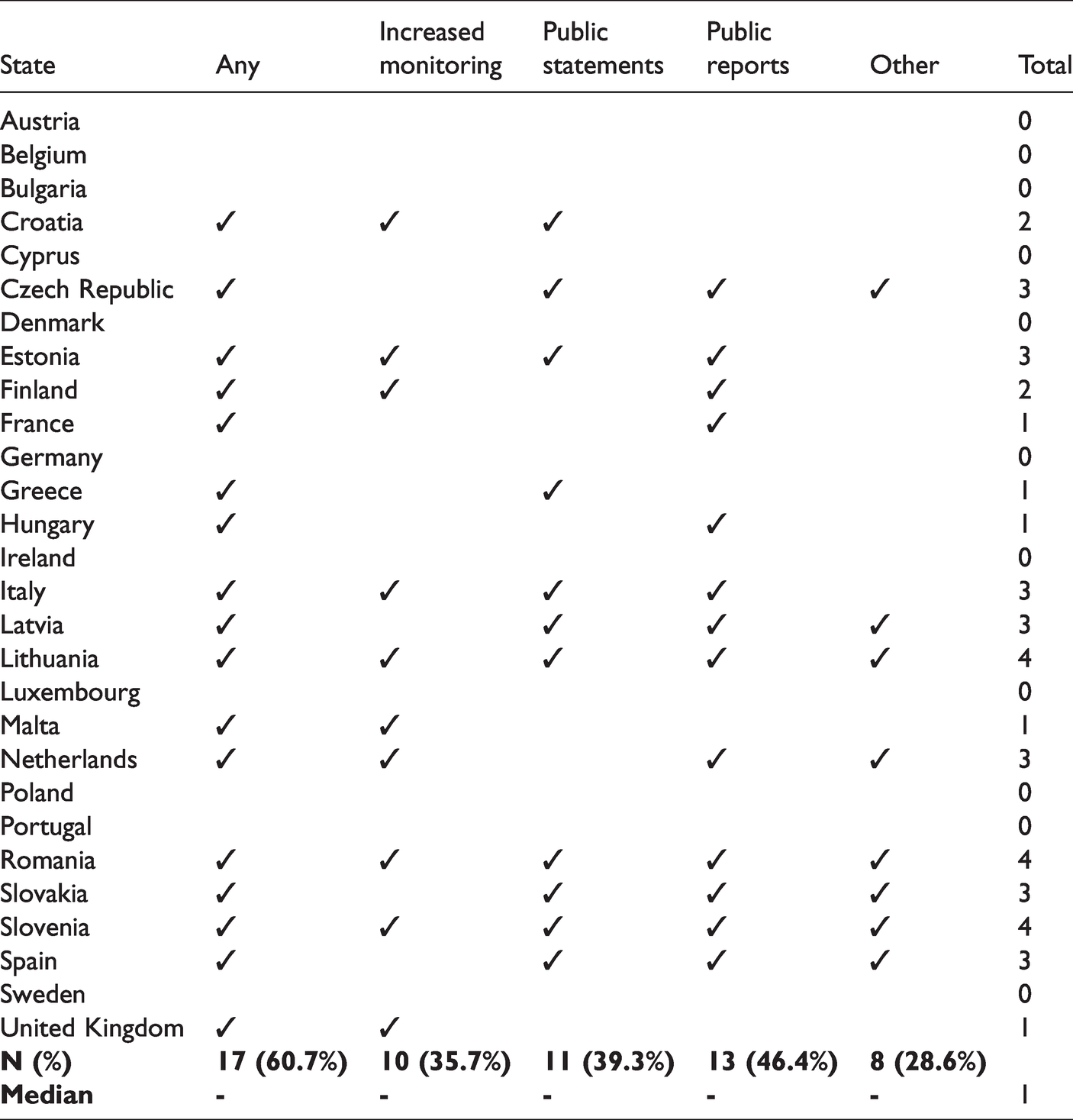
In addition to the activities carried out to monitor the implementation of recommendations, NPMs and oversight bodies were asked what consequences, if any, would occur in case of non-cooperation. As presented in Table 3, this question resulted in a split map of the EU member states, with 17 of them reporting consequences in case of non-cooperation (60.7%) and the remainder indicating otherwise. The most frequent actions were public reports (46.4%) and public statements (39.3%). These were followed by increased monitoring, reported by slightly over one-third of the states (35.7%), and other sanctions (28.6%). Other sanctions included, in most of the cases (62.5%), notification to superior authorities. A moderately high correlation between the number of follow-up activities and the number of consequences was found (r = .55, p < .01), suggesting that states that implement more activities to oversee the implementation of their recommendations tend to take a wider range of actions in the event of non-cooperation, and vice versa.
Consequences in case of non-cooperation by state.
Discussion
Our study draws upon data from the first EU-wide survey of NPMs and oversight bodies to explore how countries of the European Union responded to the requirements of OPCAT in the area of prisons. At the time of data collection, 25 of then 28 member states had ratified the Optional Protocol and established their National Preventive Mechanisms, revealing the high coverage of OPCAT in the EU. OPCAT sets out the requirements of National Preventive Mechanisms, but does not prescribe any specific structure or model, providing flexibility to the states in choosing the best-suited approach according to their circumstances. Despite this, the results of this study show a preference for single body institutions, with only four of the 25 countries having designated multiple institutions as their NPMs. While the formal status of NPM may lie with one body only, however, some countries cooperate with other institutions to perform their duties, a notable example being Denmark, where the Danish Parliamentary Ombudsman is designated as the NPM (Permanent Mission of Denmark to the United Nations Office at Geneva, 2017), but where this body has signed agreements with the Danish Institute for Human Rights and the NGO Dignity to collaborate on its work (Danish Parliamentary Ombudsman, 2019).
The power to make recommendations is at the heart of the preventive mandate of prison inspection and monitoring bodies. Our findings support the contention that recommendations play a central role on the monitoring function of NPMs and oversight bodies. Not only did all of them report making recommendations, but issuing reports and recommendations was the second task to which they devoted most time (Mdn = 25%), only preceded by visiting places of detention (Mdn = 35%). This is not unexpected, given that NPMs’ main means of effecting change is to issue recommendations to authorities. There is, however, variation, with ten states devoting less than 25% of their time to making reports and recommendations. This suggests that not all bodies are able to devote as much time to report-making and recommendations as others. Whether insufficient resources, confronting priorities, or a belief that other strategies are more effective to changing policies are behind these lower numbers is a question for further empirical research. In the context of the regularity of visits, Hardwick and Murray (2019) found a lack of association between the NPM’s resources and the visits conducted by them. The relationship among resources, activity, and impact warrants further attention in this area of research. Given the importance of recommendations and dialogue under OPCAT, our findings suggest the need for prison oversight bodies to examine their strategy for making recommendations and the time and resources they can dedicate to this task, to ensure optimal practice.
Only three participating countries did not have designated NPMs under OPCAT at the time of data collection. It would therefore be unwise to draw strong conclusions about differences seen between NPMs and non-NPMs. However, it is notable that among the three countries with the lowest time dedicated to making reports and recommendations were those without an NPM designation. This finding does raise questions about whether the dialogic nature of the NPM structure plays a role in placing more attention on recommendations and reports and suggests that those without such status face particular barriers in their work. Further research with larger sample sizes across multiple geographical regions is necessary to determine the impact of NPM status.
In terms of publicity, OPCAT does not require all reports and recommendations be published. Rather, Article 23 obliges states parties to undertake to publish and disseminate the annual reports of the NPMs. Despite this, 17 of the 28 NPMs and oversight bodies described here indicated that their recommendations were always public, with no states indicating that they never make their recommendations public. In this respect, countries of the EU are exceeding the minimum requirements placed upon them by OPCAT, showing a commitment to transparency. The publication of recommendations suggests, on the surface at least, that there is the possibility of some public oversight of what is happening in prisons and how issues identified therein could be improved. This is important considering that research has systematically shown that public understanding of prisons is low (e.g., Aizpurua, 2016; Roberts and Hough, 2005).
There is a more nuanced picture when it comes to the publication of the status of recommendations. OPCAT does not require prison authorities to publish the implementation status of recommendations made by NPMs. The Mandela Rules require prison authorities to indicate whether or not they will implement recommendations within a reasonable time frame. However, there is no requirement to make this information public, and it seems that giving an indication to the prison oversight body alone is enough to meet this requirement. Amongst EU member states, slightly over half of NPMs and oversight bodies generally publish the implementation status of their recommendations. In addition, most states reported that the competent authorities indicate whether their recommendations will be implemented within a reasonable time frame. The lack of a requirement in international human rights instruments to make the status of a recommendation’s implementation public may be questioned by these findings. Those states whose oversight bodies always make recommendations public are nearly twice as likely to publish the status of recommendations, suggesting a kind of virtuous circle of transparency. Oversight bodies seeking to encourage the publication of the status of recommendations´ implementation may therefore take the view that publishing recommendations themselves may support this process. Though there may be sensitivities in particular situations, we suggest that it is good practice for oversight bodies always to make recommendations public, as it tends to support a culture of publication in response.
The revised European Prison Rules state that not only monitoring reports, but also ‘the responses thereto’ shall be made public (Rule 93.6). This is a striking development, particularly as practices of prison authorities and monitoring bodies concerning the publication of responses vary widely across Europe. This is a very welcome change, allowing the public to see what action, if any, has been taken in response to a monitoring report and if none is taken, what reasons there might be for that position. While this alone will not lead to greater implementation of recommendations, documentation of responses will permit greater oversight by civil society organisations and researchers. Despite the benefits of transparency in recommendation making, our findings point to the resource burden that this commitment entails. NPMs and oversight bodies always making their recommendations public spent, on average, 24% more time issuing reports and recommendations. In addition, the time devoted to this task was twice as much for bodies publishing the implementation status of their recommendations when compared to those not making this information public. These findings have practical implications, as they draw attention to the need to provide NPMs and oversight bodies with further resources if they are to fulfil this requirement.
The final aspect examined in this research is the activity conducted to monitor the implementation of recommendations. The SPT emphasises the importance of the cooperation function which NPMs have, whereby they are to engage in meaningful dialogue with the authorities on measures which they can take to prevent torture and ill-treatment (SPT, 2016). As Birk and colleagues stated, ‘the ability of NPMs to secure the implementation of their recommendations is key to their success and impact’ (2015: 11). It must, nevertheless, be remembered that NPMs should not be automatically criticised when prison authorities do not comply with them. It is evident that prison authorities are responsible for changing prison practices, not oversight bodies. Indeed, to do so risks the situation whereby NPMs issue easy-to-reach recommendations in order to be seen effective on paper. Good practice requires NPMs to make necessary and evidence-based recommendations, however challenging they may be to implement in practice.
Ultimately, recommendations are aimed at changing policies, practices, and behaviour to prevent torture and other ill-treatment (Birk et al., 2015). The results of our study show that NPMs and oversight bodies in the EU do engage in multiple activities to monitor and promote the implementation of their recommendations. Only two states did not conduct any form of follow-up, with the median number of activities reported by EU member states being three. Consistent with previous research conducted with NPMs exclusively (Birk et al., 2015), the most frequent activities reported by NPMs and oversight bodies were follow-up visits, written dialogue, and personal exchanges with the authorities. The fact that most bodies are engaging in these types of activities suggests that their collective experience shows them to be useful. A minority of bodies indicated issuing warnings to the authorities, which is consistent with their preventive approach which focuses on cooperation rather than confrontation. This preventive approach also explains that consequences in cases of non-cooperation are less frequent, with 11 of the 28 EU states reporting no consequences in the event of non-cooperation. The most reported initiatives by NPMs and oversight bodies were public reports, public statements, and increased monitoring. Our results also reveal a moderately strong association between the variety of follow-up activities and the variety of actions taken in cases of non-cooperation. The impact of these two domains in the actual implementation of recommendations is an important avenue for future research. Our findings indicate that having a multiplicity of methods is good practice, as it provides some indication that an NPM is active in following-up instances of non-cooperation. We suggest that NPMs undertake evaluations of their recommendations and follow-up procedures, to promote transparency in their work, to strengthen their practices, and to understand the extent to which their recommendations are being implemented.
Despite the contributions of this study to improve our understanding of the work of NPMs and oversight bodies around recommendation-making, limitations of our research should be noted. First, our population comprises countries of the European Union only, and the cross-sectional nature of the data provides information at a single point in time. As such, our findings are limited in their generalisability to the NPMs and oversight bodies in the EU as of 2019. Future studies should replicate these findings using repeated cross-sectional designs that allow to examine variation over time. Although our study included all EU Member States at the time of data collection, the sample size was 28. Some of the bivariate associations, while having small to medium effect sizes, did not reach statistical significance due to our limited statistical power. Larger samples of NPMs and oversight bodies from broader geographical areas are needed to explore associations and patterns in recommendation making. Second, structural differences among NPMs and oversight bodies made some cross-national comparisons difficult. Two strategies were undertaken to ameliorate this problem, including the expert review of the questionnaire prior to the fieldwork, and programming a two-path survey with several filter questions to better adapt the questions to the specific situation of the country. While respondents were asked to answer questions about the prison-related mandate specifically and to consider their work as a whole (see online Appendix B for question wording), a particular issue in the case of multi-body institutions or bodies which collaborate with other agencies, there may be variation between individual bodies which requires further examination in future research. We adopted an input harmonisation strategy to enhance comparability, but future studies would benefit from combining different harmonisation approaches to capture, more deeply, the specificity of each country. Country-specific studies would also be of value to understand the particular features and nuances of individual prison oversight bodies. Finally, the information used in this study is based on self-reports and subject to measurement error. To mitigate this source of error, the questionnaire was based on factual questions and self-administered online, which minimises social desirability bias (Gnambs and Kaspar, 2015). To foster the robustness of the data, a validation process was performed prior to the analysis. Although our survey is designed for cross-national comparisons, nuances at the national level were not captured and future studies could fill this important gap. In addition, some of the concepts might have caused comprehension difficulties in light of the validation process. This is the case concerning the difference between single and multi-body institutions, which comprised roughly one-third of the requests for clarification (35.3%). Although this concept was not identified as problematic during the expert review, our findings point to potential difficulties. We encourage researchers to conduct multiple rounds of pre-test with different groups of the population and combining pre-testing methods to identify potential issues at the design stage.
The above limitations notwithstanding, a number of strengths associated with our study warrant mentioning. These include providing up-to-date data from all EU member states and examining one of the central powers of the NPMs under OPCAT: the making of recommendations. This, along with the scarce body of research analysing prison oversight bodies, particularly from an empirical perspective, make this a novel contribution to the literature. While it may be unsurprising that European NPMs are, to a large extent, following OPCAT, this is the first study to provide evidence of the degrees of compliance with the recommendations-making provisions of the Protocol. It is also notable that there is variability in terms of compliance with OPCAT, even within the geographical region with the Protocol’s highest penetration, and, tentatively, that NPM status seems to make a difference to the operation of an oversight body. It is, further, of wider significance that good practices, such as always publishing recommendations and status of recommendations, tend to co-occur, indicating that oversight bodies that are performing ‘well’ on one measure of compliance with OPCAT are likely to perform well on others. This study should be supplemented with other analyses, including mixed-method approximations and in-depth, qualitative case studies of the work of NPMs in practice.
Conclusions
This study adds to the growing literature on prison oversight by presenting the results of the first EU-wide survey of NPMs and oversight bodies. Our findings reveal that recommendations-making is a key part of NPM’s work, suggesting that they are fulfilling this aspect of their mandate. By publishing their recommendations and their implementation status, some countries of the EU are exceeding the minimum requirements placed upon them, displaying a commitment to transparency. There is also evidence that the approach to dialogue advocated in OPCAT is taking place on the ground, with most bodies monitoring the implementation of their recommendations. This work provides a rare glimpse into the non-enforcement side of human rights recognition and protection, to complement studies of how judicial action impacts on prisons (Daems and Robert, 2017). Our findings provide some evidence that the ideal of a mutually supporting system of judicial enforcement of human rights standards and a ‘softer’ approach focusing on prevention, dialogue and working with authorities, is working, however imperfectly, in practice. Given the paucity of empirical studies in this field, research identifying best practices is also essential.
Supplemental Material
sj-pdf-1-pun-10.1177_14624745211020818 - Supplemental material for Rights protection in prisons: Understanding recommendations-making by prison inspection and monitoring bodies in the European Union
Supplemental material, sj-pdf-1-pun-10.1177_14624745211020818 for Rights protection in prisons: Understanding recommendations-making by prison inspection and monitoring bodies in the European Union by Eva Aizpurua and Mary Rogan in Punishment & Society
Footnotes
Acknowledgement
This project has received funding from the European Research Council (ERC) under the European Union’s Horizon 2020 research and innovation programme (Grant Agreement No. 679362). The authors wish to thank the anonymous reviewers for their helpful and thoughtful comments on the article. We are also most grateful to the Editor-in-Chief, Alessandro De Giorigi, for very constructive and helpful suggestions. We are indebted to Jean-Sébastien Blanc, Ian Cameron, Hugh Chetwynd, Deirdre Malone and Elina Steinerte for their insights on the questionnaire used in this study. We also warmly thank Mark Bell, Suryapratim Roy, Sarah Curristan, Sophie van der Valk, Christine Morgenstern and Ciara O’Connell for their comments. We are also very grateful to all the participants at the Prisons: the rule of law, accountability, and rights conference of November 26th 2020 and the Prison Oversight in International and National Contexts of April 2nd 2020 for valuable insights which shaped much of the thinking behind this article. Our deep thanks to those from the countries who participated in the survey and gave of their time and expertise very generously.

Notes
References
Supplementary Material
Please find the following supplemental material available below.
For Open Access articles published under a Creative Commons License, all supplemental material carries the same license as the article it is associated with.
For non-Open Access articles published, all supplemental material carries a non-exclusive license, and permission requests for re-use of supplemental material or any part of supplemental material shall be sent directly to the copyright owner as specified in the copyright notice associated with the article.
