




Abstract
Prison scholarship has tended to focus on the pains and frustrations that result from the use and over-use of penal power. Yet the absence of such power and the subjective benefits of its grip are also worthy of attention. This article begins by drawing on recent literature and research findings to develop the concept of ‘tightness’ beyond its initial formulation. Drawing primarily on data from a study of men convicted of sex offences, it goes on to explain that, in some circumstances, the reach and hold of penal power are not experienced as oppressive and undesirable, and, indeed, may be welcomed. Conversely, institutional inattention and an absence of grip may be experienced as painful. Prisons, then, can be ‘loose’ or ‘lax’ as well as ‘tight’. The article then discusses the different ways in which prisons exercise grip, and, in doing so, recognise or misrecognise the subjectivity of the individual prisoner. It concludes by identifying the connections between this ‘ground-up’ analysis of the relative legitimacy of different forms of penal intervention and recent discussions in penal theory about the proper role of the state in communicating censure and promoting personal repentance and change.
The smallest thing could give you away. A nervous tic, an unconscious look, a habit of muttering to yourself – anything that carried with it the suggestion of abnormality, of having something to hide. (Orwell 1949, ch. 5)
Perhaps not being watched is even worse than being watched, so terrible that the insult of perpetual surveillance is itself a fictional defence against something worse, invisibility before god and man. (Alford, 2000, pp. 132–133)
The depiction of institutional power, intrusion and state surveillance as oppressive and pervasive has a venerable history, from the dystopian literary accounts of Kafka’s The Trial and Orwell’s 1984, to penological classics such as Bentham’s Panopticon (see Engelmann, 2011) and Foucault’s (1977) Discipline and Punish. As expressed in the quotation from Orwell above, such texts consistently depict the reach and gaze of the state apparatus, or of the penal institution specifically, as highly insidious. Yet, as Fred Alford suggests – in an article provocatively titled ‘What would it matter if everything Foucault said about prison were wrong?’ (Alford, 2000) – there may be good grounds for probing prevailing assumptions about the nature of contemporary penal power. Alford’s primary argument is that The Bentham’s Panopticon was never truly instantiated, and many prisons are characterised more by coercion and neglect than by the modes of classification and disciplinary training that Foucault elaborated. Indeed, writing about prisons in the United States, Alford (2000) declares bluntly that ‘the empirical reality of prison (not the same thing as the discourses of penology) shows Foucault to be wrong’ (p. 1250). As the epigraph above suggests, Alford also draws attention to the possibility that, while invasive penal practices might generate considerable frustration, they might be preferable to the institutional indifference of the ‘nonopticon’.
For current purposes, this latter critique is more relevant than the former. In Western Europe, even where prisons have not been designed to the Panoptic blueprint, penal scholars have noted that their techniques of control and compliance have generated an experience of power that often corresponds with Foucault’s formulation. One way that this experience has been conceptualised is through the idea of ‘soft power’ and the metaphor of ‘tightness’ (Crewe, 2011a, 2011b). Such terms are designed to convey the sense of penal power being ‘omnipresent but strangely invisible’ (Alford, 2000, p. 129), exerting an enveloping ‘grip’ upon the self through bureaucratic decision-making, disciplinary regimes of actuarial risk assessment, processes of responsibilisation, and invasive forms of psychological profiling and intervention. These qualities and conditions are generally described in negative terms, as stifling, constraining and repressive, for example, through metaphors of being in a kind of ‘harness’ or ‘straitjacket’ (Crewe, 2011a). Prisoners’ own terms – ‘dangling carrots’, ‘moving goalposts’, ‘walking on eggshells’ and ‘the power of the pen’ (Crewe, 2011a) – are equally pejorative. They are consistent with the traditions of a field that has tended to regard all forms of power with suspicion (McMahon, 1992), and has therefore identified the pains and frustrations associated with the imposition of penal power much more than its absence.
Yet the absence of penal power and the subjective benefits of its grip are also worthy of attention (see Crewe, Liebling and Hulley, 2014). This article begins by drawing on recent literature and research findings to develop the concept of tightness beyond in its initial formulation. It goes on to explain that, in some circumstances, the reach and hold of penal power are not experienced as oppressive and undesirable. Indeed, as Alford hints, institutional grip may be welcomed, when, for reasons that can be normative or instrumental, prisoners consider themselves in need of institutional attention. Conversely, institutional inattention and an absence of grip may be experienced as painful. Prisons, then, can be ‘loose’ or ‘lax’ as well as ‘tight’, and it may be the deficiencies in their grasp that are experienced negatively. The article then discusses the different ways in which prisons exercise grip, and, in doing so, recognise or misrecognise the subjectivity of the individual prisoner. It concludes by identifying the connections between this ‘ground-up’ analysis of the relative legitimacy of different forms of penal intervention and recent discussions in penal theory about the proper role of the state in communicating censure and promoting personal repentance and change.
Characterising penal ‘tightness’
When first elaborated, ‘tightness’ referred to the textural form of penal power that Crewe (2011a) argued had become increasingly significant to the prisoner experience, in England & Wales at least. In this initial depiction, tightness was characterised in terms of three main pains. The first was the pain of uncertainty and indeterminacy, in particular, capricious and seemingly inconsistent decision-making both in relation to the prisoner’s present and his or her future, caused in part by ‘diffuse and decentralized’ nature of power’ (p. 514). The second was the pain of psychological assessment, in which prisoners are placed into ‘psychologically manageable categories’ (p. 515) or portrayed on file (through forms of paperwork), in ways that over-write subjective identity and force them to ‘adopt a bi-focal view of themselves’ (p. 516) in order to advance through the prison system. The third was the pain of self-government, in which the prisoner is enlisted in the process of self-regulation, required to ‘manage and monitor a broad range of conduct’ (pp. 519–520), and made accountable for an increasing range of decisions.
Each of these components features in a range of literature relating to imprisonment and post-release supervision. The difficulty for prisoners of having to become self-regulating agents has been identified in a number of studies, particularly those conducted in open prisons, typically holding prisoners deemed to be low-risk or nearing release, and who are granted glimpses or gulps of freedom (Pennington, 2015; Pettersson, 2017; Shammas, 2014). Such institutions tend to have low staffing levels and minimal perimeter security, meaning that, should they wish to, prisoners could simply walk out. In such circumstances, forms of institutional regulation are contracted out almost entirely to the individual. This absence of direct control and restraint requires prisoners to impose upon themselves a disciplinary gaze, or, in Neumann’s (2012, p. 148) terms, to ‘build inner bars’, in order to exercise self-control relative to the temptations presented by relative autonomy and the proximity of freedom.
Studies conducted in a number of institutions and jurisdictions have also highlighted the difficulties of having to engage in forms of micro-regulation, in which all manner of attitudes, habits and ‘quotidian and private areas’ (Werth, 2016, p. 155) become subject to ongoing institutional judgment (Beckmann, 2016). Writing about two different penal facilities for women in the US, for example, Haney (2010, p. 13), describes the way that ‘institutional exchanges and conflicts [were] fought on the terrain of women’s psychologies and psyches’, creating ‘an environment of perpetual monitoring’ (p. 138), in which ‘all actions could become fodder for the therapeutic mill; all behavior could signify something about one’s state of mind’ (p. 160). In her study of women released on temporary license from a female prison in England & Wales, Campbell-Wroe (2015) reports that many participants described ‘almost obsessive self-surveillance, constantly checking phones and itineraries whilst out on leave’, to ensure that they were not deemed to have breached the terms of their temporary release. Others resented having to account for ‘every nap and every shower’ (p. 66), and expressed a fear of making ‘one little mistake’ (p. 68) and thereby losing furlough privileges or being returned to closed conditions.
Tightness, then, is often connected to the tension and insecurity associated with awaiting a different kind of penal status or fearing a regressive move. It also often accompanies forms of therapeutic coercion, in which highly intrusive interventions are justified by discourses of cognitive-behavioural modification. Just as Haney (2010) describes the requirement among women to divulge their innermost thoughts to programme counsellors, or risk having freedoms withdrawn or being returned to non-therapeutic institutions, in his study of a therapeutic prison unit for male sexual offenders in Canada, Waldram (2012) portrays a milieu in which prisoners must engage fully in a regime of narrative confession and retraining, or be expelled from the programme and returned to the penitentiary. Participation entails learning and adopting a new language, in which the individual is required to recast his autobiography so that it is compatible with therapeutic discourse (see also Lacombe, 2008). 1
As Waldram (2012, p. 113) notes, within such processes, ‘what the inmate feels to be relevant about his life is secondary to the concerns of the treatment team’. The prisoner’s self-understanding is assumed to be erroneous or dysfunctional, and the aim of treatment is to over-write it. Alongside this, the prisoner’s ‘official’ life story takes shape through an ‘electronic dossier’ (p. 141), ‘a textual elaboration of panoptic principles, in which not only is the inmate continually observed, but such observations are frozen in time as they are recorded and then become available for future purposes of surveillance’ (p. 228). Several other scholars have noted similar tendencies: for files and reports to become regarded as the sole source of truth (Beckmann, 2016); for cognitive-behavioural interventions to ignore prisoners’ perceptions of their own needs (Hörnqvist, 2010); for therapeutic discourses to reduce complex problems to simple meta-narratives (such as addiction or pathology; Haney, 2010); for institutional demands to be incompatible with lived realities, so that – for example – highly structured itineraries for prisoners on temporary release fail to recognise the ‘necessary spontaneity of motherhood’ (Campbell-Wroe, 2015, p. 66); and for prisoners to have to reconstruct themselves as different kinds of beings in order to progress through the prison system (Liebling et al., 2012).
In all such cases, there is a dissonance between institutional and subjective discourse. Whether bureaucratic or therapeutic, the individual is addressed through a framework of truth that does not correspond with his or her self-understanding. To draw on McNeill’s (2019) analysis, this entails a form of ‘misrecognition’, in which the painfulness of penal regulation is symbolic as well as material. The prisoner (or the individual under community supervision) is constructed as untrustworthy and ‘unworthy of dominion’ – either a bad person or a ‘bad bet’, in terms of future conduct. As McNeill (2019, p. 207) states, ‘the pains of super-vision might be as much about being distorted and degraded, as they are about being disciplined’. What might hurt most is not being governed per se, but the sense of being unseen, misunderstood, or regarded as someone who is not ‘capable of responsible, ethical conduct’ (Werth, 2016, p. 157).
Generally, then, tight forms of penal power – whether or not they are described using this term – have been regarded pejoratively, as coercive, insidious or symbolically injurious. As suggested above, these negative dimensions of tight forms of penal power are often revealed through the penalties that result when prisoners fail to subjectify themselves appropriately. In such circumstances, individuals are likely to be in some way disadvantaged, for example, by being slowed in their passage to release or returned to a more punitive prison environment. Generally, then, ‘the “smack of firm government” (Sparks, 2007: 85) is poised in the background’ (Crewe, 2009, p. 448), forming a hard boundary around softer modes of power.
At the same time, however, a distinctive quality of these modes of power is that they are subjectifying. Neither straightforwardly coercive nor legitimate (see Garland, 1997), in their ‘ideal’ form – that is, when they ‘work’ – they produce subject positions that are adopted by some prisoners without any sense of having been externally imposed, and without cynicism (although see Fleetwood, 2015; Warr, 2020). Thus, some prisoners introduce and describe themselves in terms of their risk level: ‘I’m medium’, ‘I’m 102 [in terms of my risk score]’. When they talk of ‘wanting’ to do courses, it is almost impossible to find a distinction between what they genuinely desire and what they have little choice but to do. Obligation and will are conflated, reflecting the manifest voluntarism but latent coercion that Scott (2010) identifies with ‘reinventive’ institutional forms. Such prisoners embrace what they cannot ignore, and take on the self-understanding that is most intelligible within psychological discourse. Notably, for current purposes, they barely recognise that power is operating on them at all. Its form feels weightless, almost imperceptible, and non-restrictive, because they have no wish to stretch its shape. Conceptualised as such, ‘tightness’ communicates a form of grip whose closeness and consistency, and ability to seamlessly stitch the individual into its own project, is precisely what makes it so pernicious.
Alternatively, the grip of penal power is sufficiently strong that it locks individuals into particular subject positions, even if these represent modes of compliance that are formal and feigned, rather than substantive and sincere (see Crewe, 2009). In such cases, what is symbolically painful is the prisoner’s awareness of their own subjection, the gap between their self-understanding and the way they are seen by the prison system, and the requirement that they adopt this ‘penal avatar’ (Crewe, 2011a, p. 516) in order to advance.
These conceptualisations of tightness represent the experience of soft power when it operates effectively, according to its own terms and objectives. In such situations, prisoners are risk assessed, characterised on file, and monitored in ways that turn them into self-regulating, risk-reducing, penal subjects, whose progression through the penal system is expedited by a particular mode of active and enthusiastic engagement, whether or not it is authentic. Yet as the article now discusses, the assumption that ‘tight’ forms of penal power operate like this in practice is highly questionable. This is not just because prisoners resist the terms of power– though they certainly do – but because of deficiencies in the ways that the system itself exerts its grip. For prisoners in England and Wales, the empirical reality is defined as much by laxity, deficiency and inconsistency as it is by tightness.
Methodological note
Our data are drawn primarily but not exclusively from a study of men found guilty of sex offences held in HMP Littlehey, one of a small number of prisons within England & Wales whose population is composed entirely of men convicted of such offences. According to a recent official inspection, 44% of the prison’s population were ‘serving lengthy sentences of between four and 10 years, with over a third serving more than 10 years. Around 150 prisoners were serving indeterminate sentences, including life’ (2019, p. 5). Almost half of the prison’s population were aged 50 or over, and almost four-fifths were deemed to present a high or very high risk of harm.
Semi-structured interviews were conducted with 45 prisoners, over a period of five months, between May and September 2018. The fieldwork formed part of a study of the relationship between penal power and prisoner social relations among female prisoners and men convicted of sexual offences, and was itself one of four sub-studies comprising a broader research programme comparing penal policymaking and prisoner experiences in England & Wales and Norway. All five members of the research team undertook interviews, with the largest number conducted by the article’s second author. Participants were sampled opportunistically, and were recruited through in-person interview requests, often following a considerable amount of informal discussion as part of the more ethnographic component of the study. Interviews had a mean length or around three hours on average, and were conducted in private, in offices or recreation rooms. While the interviews were structured by a relatively lengthy list of questions (covering topics such as staff-prisoner relationships, trust, friendships, hierarchy, safety, shame, guilt, identity, risk assessment and experiences of treatment), their semi-structured nature meant that they were considerably more fluid than the multi-page protocol might suggest.
All interviews were transcribed and coded in full, using NVivo computer software. Many of the coding themes were established a priori, based on the conceptual framework that underlay the wider research programme, in particular, the themes of the ‘depth’, ‘weight’, ‘tightness’ and ‘breadth’ of imprisonment (see Crewe, 2014), and matters of shame, guilt and ‘penal consciousness’.Much of the content of this article derives from the portion of the interview schedule that was specifically focussed on the concept of ‘tightness’, in particular, a set of questions about prisoners’ experiences of offending behaviour programmes, their engagement with their sentence plans, and issues relating to ‘progression’ through the prison system. These questions were based on an initial assumption that prisoners were gripped by new forms of penal power, and that they resented this grip: it was only as fieldwork progressed that the more complex picture, as depicted in this article, became apparent. Many other additional and unexpected themes emerged during the research process, and were added to a coding tree that was principally designed by the second author, in consultation with the rest of the research team.
The validity of our methodological approach rests on a number of factors (see Creswell and Miller, 2000), including time spent in the field – which itself enabled a degree of member checking with the research participants – the triangulation of findings through the use of a bespoke survey alongside semi-structured interviews and ethnographic conversation, and regular collective deliberation among the research team, which allowed for the discussion of any disconfirming or clarifying evidence. Indeed, the design of the broader research programme enhanced the analysis significantly, by allowing us to contrast the findings in different jurisdictions and with different prisoner groups in ways that brought into relief key themes and concepts.
Prisoners convicted of sex offences in England & Wales may have some distinctive tendencies. They may be more inclined than other prisoners to draw on ‘censorious’ forms of critique (see Mathiesen, 1965), and to consider themselves in need of behavioural and cognitive intervention (Ievins, 2017), for example. They are also subjected to a more intense kind of risk logic, a more intrusive psychological gaze (from prison officers and specialists), and to more restrictive post-release licence conditions. In this regard, they may represent the subjects of ‘tightness’ par excellence. Nonetheless, since they constitute around 18% of the overall prison population in England & Wales (Ministry of Justice, 2019), they represent a significant minority. Moreover, our analysis is consistent with the experiences of a broader range of prisoners, especially those serving the kinds of indeterminate sentences for which ideas of tightness and ‘soft power’ are most germane. There are therefore good grounds for believing that the empirical observations in this article are applicable well beyond the primary population on which the analysis is based.
Inconsistency, deficiency and un-grippability
Perhaps the most consistent source of frustration about the operation of ‘soft’ forms of penal power is that the risk-bureaucracy is inconsistent, inefficient or inadequate. Such complaints are about paperwork being inaccurate or incomplete, parole hearings being delayed, the requirement to undertake forms of therapy that the system is unable to resource, the difficulty of getting onto courses due to limited provision, and recommendations whose inconsistencies have invidious consequences. In a recent study, for example, ‘AJ’ described the vagaries of his ‘sentence planning’.
2
Having been told during the first half of his sentence that he was unsuitable to undertake a particular offending behaviour course, he was released and then recalled to custody and subsequently advised to pursue it: They said to me, ‘You don’t suit the criteria for this course.’ So, I then said, ‘Okay, fine.’ Anyway, I’ve come in […] and they still try to refer me for the same course that I’ve been told that I’m not suitable for. […] I said, ‘You’re taking the piss. Two years ago, you said I wasn’t suitable for it, and then all of a sudden, I’m suitable?’
Similarly, Russell’s complaint was that his progression through the prison system had been impeded by a combination of inconsistent recommendations and the absence of institutional provision: Keeping me in for these last two and a half years has served no one any good whatsoever, […] [But] someone decided that they wanted me to do a course [which] two facilitators that I had in group have said I wasn’t suitable for. [That’s] the only reason I didn’t get D Cat [i.e. open prison]. That was it.
And then have you ever done [the course]?
No.
Why not?
Because they never offered it to me. (Russell)
Such experiences – experiences which, to use a somewhat over-worked term, have a quality that is quintessentially Kafkaesque – are not uncommon. In her research on men in open prison conditions serving indeterminate sentences, Pennington (2015) includes examples of prisoners being delayed in their progression or release for a host of reasons that are reflective of systemic inefficiency: being unable to access courses that their sentence plans required them to undertake; being required to complete courses that no longer existed; or waiting years to be assessed for interventions for which they were then deemed unsuitable. A number of official reports corroborate this picture of systemic shortcomings in the delivery of offender management (see, for example, HM Inspectorates of Probation and Prisons, 2013; HMI Prisons, 2019; HMI Probation, 2019; see also Millings et al., 2019a).These include missing, poor-quality and overdue sentence plans, insufficient face-to-face contact between prisoners and offender supervisors, poor comprehension among prisoners of ‘what they had to do to achieve the objectives set for them’ (HM Inspectorates of Probation and Prisons, 2013, p. 28), the delivery of interventions not in accordance with sentence plan objectives, ‘no alternative offence-focussed work […] for prisoners deemed too low risk for accredited programmes for sex offenders’ (HMI Prisons, 2019, p. 42), and a lack of access to accredited courses. To quote from a major report, many prisoners were being held in prisons ‘that did not run the programme they needed to address their offending behaviour and there were no plans to transfer them to an establishment with appropriate provision’ (HM Inspectorates of Probation and Prisons, 2013, p. 9).
Here, the context of financial austerity is relevant. As clearly indicated in official reports (HM Inspectorates of Probation and Prisons, 2013; HMI Prisons, 2019), the resources made available to prisons for the purposes of offender management have simply not matched the requirements of the model. Additional problems relate to staff recruitment and training, inadequate communication and cooperation between offender management units within prisons and probation staff in the community, and long delays – caused primarily by a lack of headroom in the prison estate – in the transfer of prisoners to establishments where they can undertake mandated courses. Such issues produce a chasm between official discourse and practice that is experienced as highly contradictory. The broader point is to emphasise that the typical form of penal intervention is not ‘tight’ exactly, so much as inconsistent and – on its own terms – inadequate.
In a similar vein to previous examples, Carlton expressed no objection in itself to being subjected to forms of risk management. Instead, he criticised a lack of clarity and precision that, within a broader, formalised risk regime, threatened to work against him: The parole panel said to me, ‘It’s a really robust risk management plan; have you got any issues with it?’ And I said, ‘I’ve got no issues with it in principle. [But] I’m wondering how some of these conditions are going to work.’ And she said, ‘Give me an example’. And I said, ‘There’s one here that said that I shouldn’t talk to any unknown females when I’m out and about anywhere’. And she said, ‘Well, what’s wrong with that?’ And I said, ‘Suppose I’m standing at the bus stop and somebody asks me the time, or suppose I’m walking down the High Street and somebody is doing a survey. Or supposing a policewoman comes up to me and asks me what I’m doing, or who I am’. […] She said, ‘But you know what the condition’s trying to achieve?’ I said, ‘Yes, it’s trying to achieve a scenario where I don’t meet some female who is single and arrange to go on a date with her, or something’. She said, ‘Well, there you go then’. And I said, ‘Yes, but that’s not what the condition says’. So unless the condition is written properly, then I could be recalled for something that it wasn’t intended that I should be recalled for. [My view is], I’m happy to comply with your conditions, but please just write them in a way that is clear. (Carlton)
A second set of frustrations thus relate to the sense that monitoring, oversight and assessment are deficient rather than excessive. Often, then, prisoners’ criticisms are that officers are uninterested in them and their personal development (or are too distant from them to effectuate care), that the system does not recognise or acknowledge change (see Cox, 2017, p. 70), and that staff make little effort to engage with issues relating to their offending behaviour:
Do [officers] ever talk to you about your parole or your offence or anything like that?
No, they won’t talk to you about it, they’re not interested, they don’t care. […] All the staff are here to do is unlock you and lock you, feed you when you’re supposed to get fed, they’re not there to really sit down and listen to your life’s fucking deepest darkest … they don’t care. (Robert)
How does the prison try to shape who you are as a person?
They don’t because they don’t have anything to do with me. I’m left in my cell to rot basically. […] There’s no interaction for me with the staff; I wish I could say otherwise. (Kenny)
A related grievance is that the members of staff who make key decisions relating to progression, release, and post-release conditions are simply unavailable. Many prisoners describe never having met or spoken with probation staff, and failing to get replies to repeated attempts to contact them. For example: [My probation officer] She’s never met me; I’ve never seen her; […] I’ve written to her, I think, ten times over the course of two and a half years, and she’s written back to me three times. […] It does make me angry. (Frank) At the moment I have a probation manager that I have never met, seen, spoken to or even introduced herself to me currently.
Not even over the phone?
No.
A letter?
No. Not even ‘hi’.
Do you know her name?
The only reason I know her name is because I wrote to my probation officer five times at the beginning of the year. I got no reply. I sent my mum and dad to the probation office. So they turned up at the office and explained who they were. They went, ‘Oh yes, his probation manager changed in January. He’s now under [probation officer X]’. And that’s the only reason I know. I then wrote to [her]. I never got a reply. […] Now technically I’m in my last 12 weeks. I know there’s going to be MAPPA meetings in four weeks’ time, which is discussing my licence conditions with all the other sources. She’s going to base an entire conversation off reports written by others. (Joel) I’m anxious and I’m stressed because at the moment I now am going to be controlled by somebody that I have never spoke to, seen or had any interactions with. I just exist to them as a report on a table somewhere. They don’t know who I am as an individual, and that worries me greatly. But on the other side of that, I completely respect probation because they have a huge job to do. They have stupidly large caseloads, which must be unworkable. (Joel) My probation hasn’t spoken to me. I got told to keep regular contact with them, so every at the beginning [of] every second month I sent them a letter – no reply. […] I asked my offender manager to check: nothing. […] But that doesn’t stop him from getting his grubby claws into [the post-release] conditions on my life [through my licence restrictions]. (Terry)
For other prisoners, it is being un-grippable within the institutional logic of risk that generates frustration. Prisoners who are considered to be ‘too low risk’ to merit formal interventions point out that, as a result, they are idle or static, and struggle to progress. Ricky, for example, reported being unable to demonstrate reduced risk – or fully understand some aspects of his offending behaviour – because his risk level was not high enough for him to be considered a priority for offending behaviour programmes. As a result, and despite his normative enthusiasm for such interventions, his progression to an open prison had been impeded: I can’t progress to a D Cat because I haven’t done programmes. But I can’t do programmes because I’m not the correct risk, or a low risk. […] And every time it comes back with the Cat D review it says ‘You haven’t done any work [on your risk]’. It is not that I haven’t done any work; it is that they system as a whole has nothing to help me with. [Pause] So it is quite depressing. I want to progress I would love to do [courses], to go through whatever process to make sure that I understand all of my triggers and all of my risks and that I have the correct tools to go forward with. (Ricky)
One way of conceptualising this penal dynamic is through the image of the ‘claw crane’ machine, often found in fairgrounds, video arcades, supermarkets, shopping malls and other sites of leisure consumption. Typically, the consumer is able to control a mechanised claw, which descends into the machine and attempts to grasp one of the items within the pit of the machine – normally, one among a large number of small prize items (e.g. toys, dolls, confectionary, jewellery, etc.) – before releasing its grip and either dispensing whatever it has managed to grab (to be taken away by the consumer) or simply releasing its empty pincers. To be ‘liberated’ from the machine requires that the items within it are selected, making them dependent on the machinery and its operation – to quote from a scene in the movie Toy Story, ‘The Claw is our master; The Claw chooses who will go and who will stay’. Whether an item is or is not ‘chosen’ is somewhat arbitrary. In addition, to be gripped successfully, an item must fit the grasp of the pincers; those that are the wrong size or are angled in the wrong way will not do so. Even if selected, it is always possible that an item will slip from its grasp, since the claw is programmed to have a strong grip only part of the time and to ‘drop’ items en route to the consumer. In this respect, the claw grips imperfectly; loosely as well as tightly.
Orientations
The criticisms presented so far in this article are essentially censorious rather than oppositional. Many prisoners have no particular issue with risk assessment and monitoring, within and beyond the prison, but reproach the prison system for failing to engage in such practices in a manner that is thorough, internally consistent and based on a sound knowledge of who they feel themselves to be. Their objections are not to institutional demands per se, but to systemic inefficiencies, and the possibility of being ‘unseen’ or unintelligible within a particular regime of risk-thinking. In this regard, the operation of soft power differs from that of the Bentham’s Panopticon, as Bentham originally envisaged it, where the aspiration of the prisoner was to be free from the gaze of the panoptic inspector – to be invisible. In contrast, for many prisoners in England & Wales – and in other jurisdictions – being non-visible brings disadvantages. Relatedly, these kinds of grievances are not, in a simple sense, about a particular mode of power being too exacting – indeed, when prisoners say that the prisons ‘expect[s] nothing of me’, they do so as a rebuke. On the contrary, such criticisms are about being neglected, or, in the context of a distinctive set of demands, being gripped too loosely.
Returning to Ricky’s quote, we see that these rebukes can derive from two primary orientations. The first is instrumental, based on the desire to progress through the prison system. Many prisoners solicit a diagnostic label, attend cognitive behavioural courses, or seek out institutional attention to ensure that, in their hope of advancing towards release, they are not disregarded. Like the items in the claw crane, their subordination to the machine requires that, unless they wish to remain within it, they orient themselves towards its requirements regardless of any normative commitment. As is often a feature of censorious orientations, they criticise power only after having, in effect, submitted to its terms. Here, then, the legitimacy deficit is that prisoners are encouraged to conform to a set of institutional demands and expectations, but are not given the means to meet such requirements.
The second orientation is normative, and is expressed by prisoners who feel shame and remorse about their offending, or believe there is something ‘wrong’ with them that the system might be able to remedy. The concern expressed by such prisoners is that institutional oversight abandons them to unwanted thoughts and feelings (relating to offence-related issues, or problems resulting from experiences of trauma and abuse) and leaves them unrecognised and unsupported in their sincere attempts to control violent or sexual impulses. While the proportion of prisoners who see themselves as a significant risk, and seek out highly invasive intervention, is small, many prisoners communicate some awareness of their ‘issues’ and want to address them both through and beyond the terms of official programmes (‘because then once you know [the underlying cause] you can address it’ (Manny)). Such men do not question the prison’s judgment that they are in need of intervention. Asked to reflect on whether he minded being asked to undertake the ‘Healthy Sex Programme’, for example, Emmett responded with affirmative shock: ‘Oh, you’re joking aren’t you? With what I’m here for? And what my past is?’. Likewise, Frank explained that he ‘recognised the need to change, because … even when I was doing the things I was doing, I didn’t want to do them; […] I didn’t want to be the person that I was’.
Although such prisoners often use an institutional language of ‘triggers’ and ‘strategies’, it would be mistaken to conclude that they are being inauthentic or have simply been colonised by psychological discourse. For these men, the frustration is that there is too little intervention to help them understand and address the underlying causes of their offending behaviour, or that the interventions that are on offer are inappropriate, inadequate or misdirected: Since I’ve been here, there’s been absolutely no support. No one is actually looking at why this has happened again. […] No one has done anything to help me. […] If this is to be stopped I need support and treatment, help and support to get it right. […] If you don’t do anything, if you don’t fix the problem, it’s going to keep getting broken and how do I get out of this cycle? (Jesse)
Forms of tightness
Our argument so far is not simply that penal power can function in a manner that is loose rather than tight, but that – in circumstances where it is demanding yet unresponsive, even to its own directives and requirements – it can be both loose and tight at the same time. Power can be too firm and close, or too light and distant, or it can be both. One way to think about different configurations of tightness, or forms of grip, is through the use of two conceptual axes. As depicted in Figure 1, the horizontal axis represents the extent to which the penal system or institution is demanding, exacting and invasive; while the vertical axis represents the extent to which it is assistive and responsive in relation to its own demands. This figure helps us to illustrate the way that, like clothing, the grip of penal power can be either loose or tight in ways that are more or less preferable: thus, a piece of clothing that is described as ‘tight’ might fit closely but comfortably, and might reshape the body supportively, or might be highly constrictive and constraining, pulling the body into a shape that feels highly unnatural. Likewise, a garment that is loose can be comfortable or uncomfortable, depending on whether it is carefully contoured or ill-fittingly baggy.
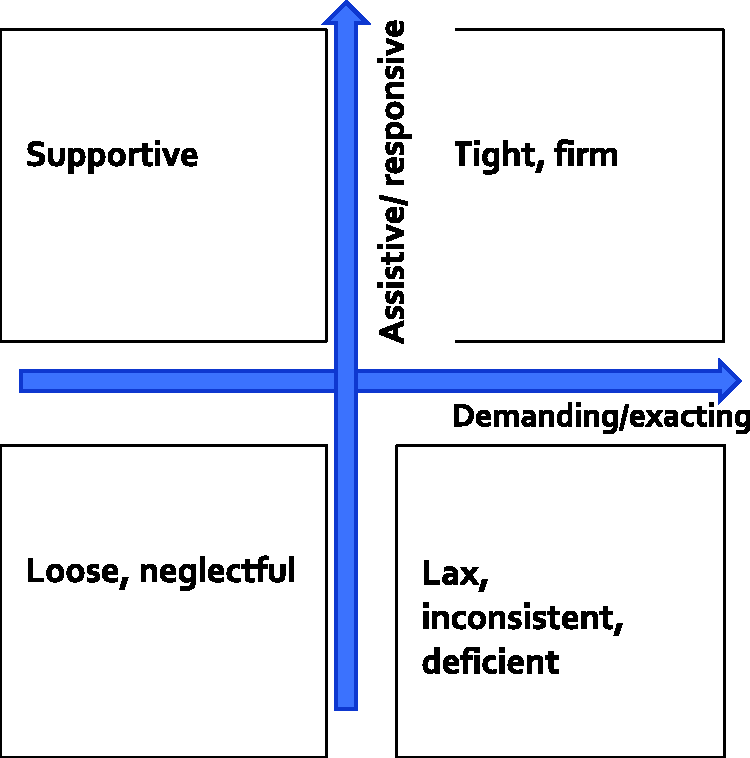
Forms of institutional ‘grip’.
The figure allows us to describe four ideal types. In the first – in the top-right quadrant – the prison is ‘tight’ both in its requirements and in the execution of those requirements. Its grip is firm, in the sense that – at its best – it is bureaucratically thorough, discursively consistent, and provides the resources and interventions that are needed for those who are subject to its power to become the kinds of subjects that it requires them to be. For some individuals, this closeness of grip makes it almost imperceptible, reshaping their subjectivity through a form of envelopment that feels smooth and unenforced. On the whole, however, its tightness is likely to feel crushing and oppressive. Power is encasing and overwhelming, and the prisoner is cast discursively in a manner that remoulds and reshapes his or her identity. As Lacombe (2008) found in her study of a sex offender programme in a prison in Canada, nothing escapes judgment, normal behaviours are re-configured as expressions of pathology and risk, and the bearers of psychological power are given privileged status to define normal and abnormal conduct and cognition (see also Haney, 2010; Waldram, 2012). In the quotations below, for example, Carlton decries being viewed with suspicion by a prison psychologist for always seeking out good jobs within prison, and being trapped in a system whose discursive certainty leaves no room for alternative truths: She said, ‘I’ve noticed, looking at your record, that in every prison you’ve been in, you always go for the best jobs […] and you never go and work in a workshop or do anything really manual’. So again, the implication being that I was narcissistic in some way and that I was getting jobs that I felt reflected my status and what-have-you. If a sex offender hasn’t done anything for ten years, they say, ‘Oh well, that’s to be expected, because sex offenders are manipulative and he’s just keeping his head down to try and get through the system’. […] They are waiting for me to lose it, and then they can say, ‘Ah, here we go, this is the real behaviour’. […] The whole risk assessment [process] starts with this assumption that my true nature is normally hidden and only the offending episodes show my true nature. And so they are always looking for evidence to support that theory, and never ever anything that disproves that theory.
In the second ideal-type, in the bottom-right quadrant – and as described in much of this article so far – the prison or prison system is demanding but is inconsistent, deficient or bureaucratically lax in providing the means that would allow prisoners to become what it necessitates them to be. Expressed in alternative terms, power is both tight and loose, taut and slack, in that prisoners are pulled and pressured into a particular shape (or subject position) but with insufficient assistance to be able to meaningfully inhabit it – for example, expected to exhibit self-control, in an institutional context where the opportunities to do so are highly limited (Cox, 2017, p. 604). Moreover, they are unsupported in becoming the self that is desired by the institution while also impeded or abandoned in their efforts to realise the version of selfhood to which they authentically aspire. This form of misrecognition is particularly egregious, because individuals are misrecognised and at the same time are penalised for systemic deficiencies that are beyond their control. Like victims of domestic abuse or coercive control, they are made dependent on power, are subjected to it in ways that feel highly arbitrary, and are never able to meet the standards against which they are held responsible.
Prison systems occupying the ‘low demand’, ‘low assistance’ quadrant (bottom-left) are ‘loose’, in the sense that they demand very little from prisoners but also do very little for them. Their archetypal form is similar to the kind of ‘nonopticon’ that Alford (2000) describes, in which prisoners are abandoned and invisible, at least with regard to any meaningful effort either to change them or to help them change themselves. Notably, though, Birkbeck (2011) argues that there are significant distinctions between the superficially similar paradigms of ‘warehousing’ and ‘internment’ found in different parts of the Americas: 3 in the US warehouse prison, as Irwin (2005) describes it, opportunities for self-improvement (such as education, vocational training, counselling) are scarce, and staff–prisoner relationships are highly degraded, leaving prisoners ‘un-recognised’ as individuals by the institution. At the same time, power is exerted through a form of bureaucratised coercion. ‘Prison life is completely routinized and restricted’ (p. 154), with ‘a vast and pervasive set of rules’ (p. 161). The overall effect is a dual assault, in which the prisoner’s agency is oppressively subjugated while his or her selfhood is completely disregarded.
In contrast, in some Latin American prisons, institutional indifference represents a less malign form of neglect, granting prisoners considerably more autonomy, for example with regard to collective self-governance and visiting conditions (see Darke, 2018). Whereas imprisonment involves a project – ‘some kind of act of social engineering’ (Birkbeck, 2011, p. 320) – the logic of internment is such that ‘What happens inside penal facilities is strictly irrelevant and concern only arises when the inmates escape. Control focuses on containment rather than internal organization and activity’. To summarise, ‘in North America, control is assiduous in the sense that it is unceasing, persistent and intrusive; in Latin America, control is perfunctory in the sense that it is sporadic, indifferent and cursory’ (pp. 319–320). Put in an alternative way, while Irwin’s warehouse prison is characterised by the dominance of the right – or disciplinary – hand of the state, detention – as characterised in Birkbeck’s analysis – is best represented by the state holding both hands behind its own back.
With regard to selfhood and subjectivity, power in both institutional forms is loose. From the perspective of the institution, the offence itself, and the way that it is understood by the prisoner, is virtually irrelevant. Any interest that the prisoner might have in discussing and overcoming issues relating to his or her offending is disregarded. There are almost no opportunities to process feelings of shame or access help in dealing with psychological issues or addictions that prisoners might themselves identify as in need of attention. There is no direct or deliberate intrusion into the prisoner’s psyche, no attempt to reconfigure his or her persona. The high levels of surveillance in many US prisons are not the kind of panoptic observation directed at ‘discipline’, in the Foucauldian (Foucault, 1977) sense of the term, but are instead oriented to minimising escapes, violence and mobility. Their function is repressive rather than productive, constraining the agent but leaving the subject untouched.
In contrast, prisons in the top-left quadrant of the figure are assistive and responsive, without being overbearing or exacting. The institution offers help without judgment or censure, and does so to some degree on the prisoner’s own terms: when he or she is ready to discuss the offence, engage in therapeutic work, or build up relationships with staff. To give an example, a prisoner in Norway, convicted of a serious sex offence and being held on a specialist treatment wing, explains in the quotation below what happened following his decision to write a letter to a programme leader informing her that he was ready to discuss his offence: She came as quickly as possible, right away. So I said that I want to talk about something […] I’ve wanted to [talk] a few times. And she said ‘Yeah, I understand that. You have something you want to tell me but you can’t. Talk until you’re done and I’ll understand you’. So I told her about it. […] Then she asked me some questions about it, and I answered, and she said ‘Good job. Now I can help you move forward, before you lose any more time. Its’s your problem, you have told me, now we can talk about it with the prison director and the department and stuff’ (Ulrik)
In contrast to Schinkel’s account, in some units in some prisons in Norway, prisoners describe having ‘every opportunity to work with yourself’. Within a relationally decent environment, they are given headspace and opportunities to reflect upon their actions and lifestyles, and are supported in these efforts by a relational culture in which uniformed and specialist staff engage with prisoners deeply and carefully. Moral dialogue – about prisoners’ previous deeds, their offences, and the lives they want to lead in the future – is not limited to the terms and confines of offending behaviour courses. The focus is emotional as well as cognitive. In this model, then, the fit of power is snug, like a piece of clothing that rests on the contours of the body in a manner that provides comfort without restriction. Prisoners are recognised on their own terms, as agents rather than merely subjects of institutional power. Accordingly, the institution is responsive – within some parameters – to prisoners’ own understandings of how they need to change, rather than imposing upon them cognitive models that are generic or predetermined. In its ideal form, then, the grip of power makes its subjects feel held or contained, gripped supportively rather than constrictively.
Concluding thoughts: Institutional tightness and penal theory
In a recent publication, Bottoms (2019) probes an ongoing debate about the proper role of the state in seeking a commitment among prisoners to what he calls ‘repentance’, by which he specifically means ‘a change of mind or purpose’ (p. 127) rather than a ‘deeper’ and more stringent definition of this term. Drawing on Foucault, Bottoms argues that there is a distinction between a carceral, disciplinary model of punishment, which subjects prisoners to various forms of behavioural intervention and coercive training, and a more rights-based and minimalist ‘juridical’ model. As expressed by Von Hirsch (2017, cited in Bottoms, 2019, p. 122), a key objection to the former, which is often expressed by proponents of the latter, is a concern about ‘the state’s proper standing to delve so deeply into sentenced offenders’ moral attitudes’, and thus interfere with his or her autonomy as a moral agent. Bottoms argues, however, for a form of penal censure that encourages prisoners to ‘turn around’ their lives, without demanding ‘deep contrition’ (p. 128) or seeking ‘to elicit certain internal states’. Importantly, the form of repentance that he endorses is future-oriented rather than ‘backward-looking’, i.e. geared towards the construction of a new set of life practices rather than preoccupied with a past deed (with ‘no explicit focus on remorse or regret’ (p. 129)). This, Bottoms argues, is not only normatively defensible, but is also consistent with the desire expressed almost universally by prisoners to desist from crime, even in the initial absence of feelings of deep remorse. As Bottoms goes on to note, as part of his discussion of excessive penal interventions, ‘it is actually more common for [offenders] to complain that criminal justice workers have provided insufficient help towards “going straight”, than that the state has been intrusive’ (p. 136, italics in original).
Our article represents a ground-up corroboration and refinement of Bottoms’s argument. We have argued that prisoners often welcome institutional attention – including certain forms of oversight and intervention – when it is supportive rather than coercive, and where it recognises and maintains the integrity of the individual through authentic engagement with his or her full personhood rather than trapping him or her in the amber of the past, or refracting his or her selfhood through the limiting prism of cognitive behavioural discourse. There are limits to this model, of course, where prisoners falsely claim innocence, genuinely believe that they have done no wrong, engage in forms of denial, misidentify their own needs, or dispute aspects of their offence in order to protect themselves against legal harms. In such situations, they might always resent attempts to help them. Nonetheless, some forms of intervention are more illegitimate or damaging than others, and the legitimacy of non-intervention should also be questioned. If opportunities to work upon the self are absent or deficient, prisoners experience a form of ‘misrecognition’ and neglect that is harmful to them, in terms that are both practical and existential. Thus, while an earlier critique of ‘tightness’ highlighted its assault on prisoners’ ‘negative liberty’, that is, their freedom from interference (Crewe, 2009), here we draw attention to the importance of ‘positive liberty’, that is, the possibility of self-realization through particular forms of enablement that represent neither a form of Orwellian surveillance or Foucauldian discipline, nor Alford’s alternative depiction of abandonment and indifference.
Footnotes

Notes
Acknowledgments
Sincere thanks to other members of the COMPEN team, Dr Julie Laursen, Dr Kristian Mjåland and Dr Anna Schliehe, for their contribution to this article, through the effort they put into the project fieldwork and their involvement in discussions that helped shape this article.
Funding
The author(s) disclosed receipt of the following financial support for the research, authorship, and/or publication of this article: This work was supported by the European Research Council [Consolidator Grant Number 648691].