




Abstract
Ghana continuously suffers from the impact of the climate change crisis despite its minimal global carbon contributions. Although Ghana has instituted some climate change policies and general environmental regulations, it has not yet promulgated a Climate Change Act to aid the regulation of climate change mitigation, especially of corporations that are the major emitters of global greenhouse gas emissions. This article examines the climate change regulation of corporations in Ghana and its effectiveness in addressing climate change challenges. It assesses the country's international climate change profile and the role of corporations in contributing to its carbon emissions, evaluates the strengths and weaknesses of Ghana's general environmental regulation and discusses alternative regulatory frameworks such as judicial, market and surrogate regulation for managing climate change impacts in the absence of statutory climate change regulation. Further, this article looks beyond the presence of a statutory climate change regulation and examines the potential structuring of climate change regulation in Ghana. The article argues that the traditional command and control regulatory system will be unsuitable for effective regulation of the climate change participation of corporations in Ghana, and instead proposes the adoption of the Dilute Interventionism approach supported by a Veto Firewall system for this purpose. The article argues that these concepts present a practical and effective approach to regulating corporations’ involvement in climate change mitigation in Ghana. However, the successful implementation of this approach will require political will, corporate compliance, and technical capacity. This article provides policymakers, stakeholders and interested parties in Ghana and beyond with useful insights to address climate change challenges.
Keywords
Introduction
Africa is one of the most vulnerable continents to climate change in the world, despite contributing the least as the continent to global warming and having the lowest emissions. 1 Reports have it that Africa contributes to approximately 3.8% of Global greenhouse gas (GHG) emissions. 2 Climate change poses a huge impact on the food systems, public health and means of livelihood of citizens within African states. 3 In Ghana, more than 50% of its citizens are employed in the agricultural sector and this sector is predominantly rainfed with less than 1% of land cultivated in Ghana having been irrigated. 4 In Northern Ghana alone, 90% of people living there rely on agriculture as their primary means of livelihood. 5
The Climate and Health Country Profile of Ghana released by the World Health Organisation revealed that in Ghana climate change exacerbated already existing health problems, with extreme weather conditions causing deaths, cardiovascular and respiratory diseases, infectious diseases and malnutrition. 6 There is an urgent need to as much as possible reduce the impact of climate change in Africa.
Ghana's economy is largely dependent on the exportation of commodities such as oil and gas, cocoa and particularly gold. 7 The service sector however remains the largest contributor to Ghana's gross domestic product (GDP). 8 The service sector contributed a staggering 49% of Ghana's total GDP in 2021 alone, this was largely due to the growth in its sub-sectors such as education, health and information and communications technology. 9 The industrial sector is the second largest sector contributing to 30% of Ghana's GDP in the same year. The agricultural sector stood at 21%. 10
The agricultural sector suffers the most from the impact of climate change considering that agriculture is significantly impacted by climate change and this sector employs over 50% of Ghana's workforce. However, other sectors also suffer from the impact of climate change due to the interconnections between the sectors. 11 A recent study shows that in Ghana, temperature and CO2 fertilisation are channels through which climate change directly impacts agriculture in Ghana. 12 High CO2 concentration in the atmosphere greatly impacts agriculture by increasing the photosynthesis rate and use of water. 13
In recent times, the impact of climate change on agriculture and food production in the dry Guinea Savannah covers the five Northern regions of Ghana. 14 This region, as opposed to the Southern region, has only one rainy season which often begins in May and ends in September. 15 The southern region, however, has two rainy seasons, the main season from April to July, and the mild rainy season from September to November, many farmers in the Northern region oftentimes face food insecurity. 16
This article argues that to address the climate crisis, Ghana should focus on effectively regulating corporate contributions to climate change, as corporations are the main carbon emitters in the country. The article further argues that Ghana's current climate change framework is poorly structured, lacking a clear legislative basis and is insufficient to tackle the global climate crisis. Consequently, Ghana should consider adopting the dilute interventionism approach to restructuring its climate change framework to address the identified shortcomings.
Corporate contributions in the energy and land use sectors to Ghana's carbon emission profile
Although Ghana contributes a fraction of global emissions, it disproportionately suffers from climate change-induced impacts. A recent report which covers four (4) years shows that between 2016 and 2019, Ghana's GHG emissions increased from 32,090 to 37,650 tonnes with an increased rate of 4% yearly. 17 An assessment of Ghana's total gas emissions shows that it has also seen a rapid increase over the years. In 2016, CO2 emissions in Ghana were 14,469,986 tonnes compared to 2015 when CO2 emissions in Ghana were 13,974,820 tonnes. 18 These figures reflect a 3.54% increase. 19 Data released by World Data Atlas shows that in Ghana, CO2 emissions increased by an average of 5.29% between 1972 and 2021. 20 In 2021, CO2 emissions for Ghana were 23.6 million tonnes, while in 1972 CO2 emissions were 2.5 million tonnes. 21 In 2000, CO2 emitted in Ghana contributed 45% of the total GHG. 22 The energy sector during that period contributed 41% of its emission. 23 In 2008, these figures increased rapidly, CO2 generated from the burning of fossil fuel alone contributed 65% of the greenhouse emission in Ghana. 24 In 2021, corporate greenhouse emissions in Ghana was dominated by emissions from the energy sector (47%) and the agriculture, forestry and other land use (AFOLU) sector contributed 44% of Ghana's total emissions. The waste sector contributed 7% of GHG emissions while the industrial processes and product use sector contributed 3% (Figure 1). 25
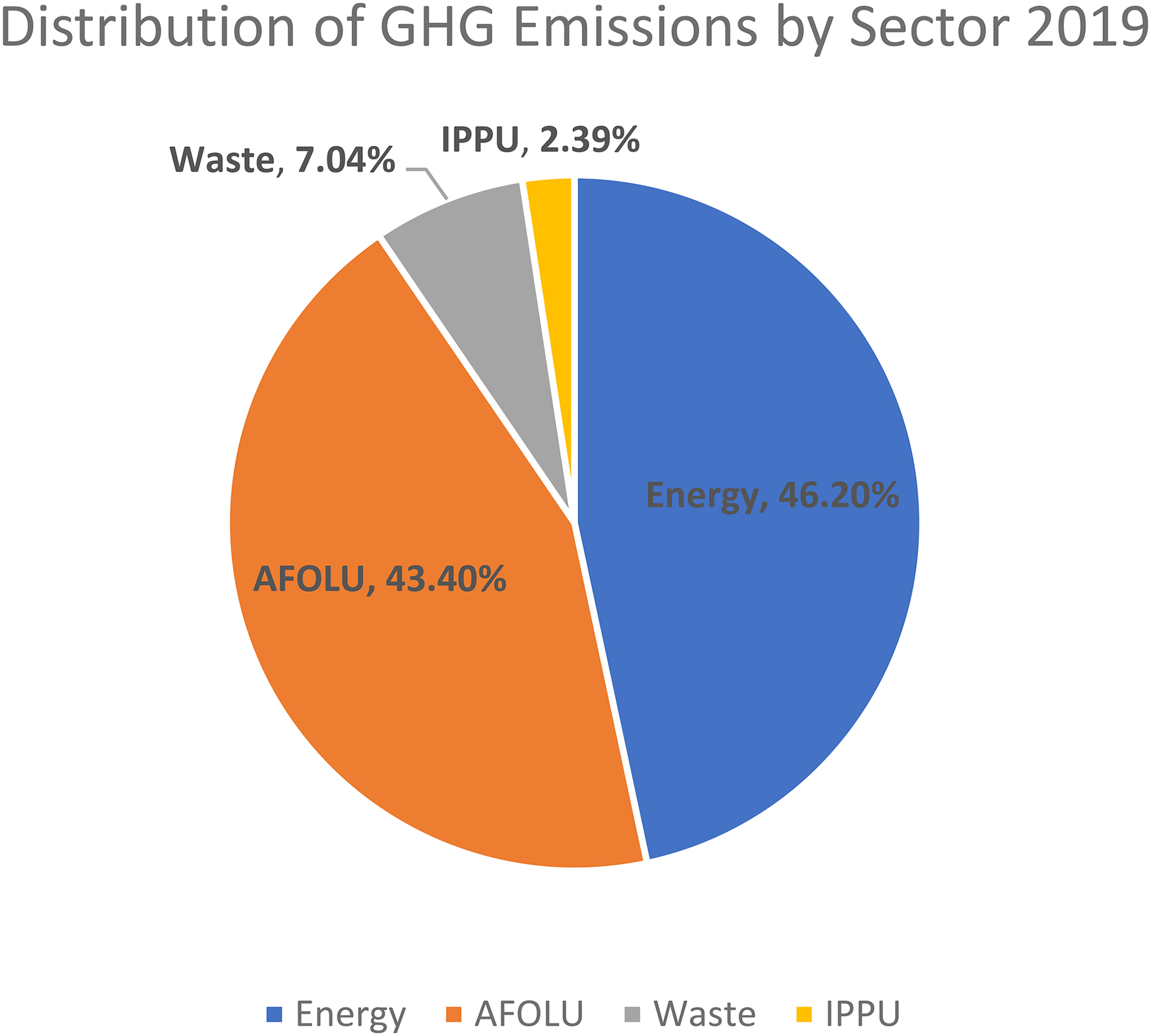
Distribution of Ghana's GHG Emission by Sectors in 2019. Source: Ghana's Fifth National Greenhouse Gas Inventory, 2021. GHG: Greenhouse Gas.
The energy sector plays an important role in carbon emissions in Ghana, and this is largely attributable to Ghana's overreliance on oil and gas fuel for its energy mix. According to official reports, oil and gas accounts for over 85% of Ghana's energy source in 2021. 26 The aggregate contributions of the energy and AFOLU sectors account for 91% of Ghana's GHG emissions. Considering that these two sectors are overwhelmingly dominated by corporations, it is apparent that Ghana's growth in CO2 is predominantly driven by the corporate sector. It is, therefore, indisputable that corporate activities have immense impacts on climate change mitigation in Ghana and any attempt to effectively regulate climate change activities in the country must largely focus on corporations as the regulatory target.
Defining ‘corporation’ in the climate change context in Ghana
The term ‘corporation’ is very often associated with private enterprises globally. These private enterprises can be large local businesses in different sectors of the economy (energy, transportation, agriculture, etc.), small and medium enterprises or multinational corporations (MNCs) with transnational operations in different countries including in the host nation. However, within the climate change context, the term ‘corporations’ adopt a slightly more nuanced meaning mainly due to the nature of operations contributing to carbon emissions, the entities engaged in climate change-impacting activities and the entities with sufficient financial tools for positively contributing to climate change mitigation. Specifically, considering the focus on carbon emissions within the climate change context, the relevant ‘corporations’ to be considered for regulation would be entities that engage in significant carbon emissions-producing activities. These activities mostly arise from the energy sector, transportation sector and agriculture sector.
While large local private businesses and MNCs often engage in these sectors, in many African countries, the dominant entities in these sectors are either wholly or substantially owned government-funded public enterprises. For instance, in many energy-producing African countries, the energy sector is both the largest contributor to GDP and the largest carbon-emitting sector and the state-owned oil corporations are usually among the biggest entities in the sector. In that context, ‘corporations’ must necessarily include the public entity as the target of climate change regulation. Further, in many of these energy-dependent African countries, MNCs are also major players in the energy sector and must also be included as the target of climate change regulation.
In Ghana, the oil and gas sector is dominated by the state-owned Ghana National Petroleum Corporation (GNPC) which controls over 55% of all oil and gas exploration and mining in the country. The remaining 45% of the oil and gas sector is controlled by private entities, most notably Ghana Oil Company Limited (19%), Total Petroleum Ghana Limited (8%), Vivo Energy Ghana Company (8%) and Zen Petroleum Limited (7%). 27 In the second highest GHG contribution sector – AFOLU, private entities dominate this sector with Cargill Co (largest cocoa company in the world), West Africa Agro-Tech Company Ghana Ltd and Agro-Africa Limited having the biggest shares of the agribusiness sector in Ghana. 28
Consequently, given the dominant role played by the state-owned GNPC in the oil and gas sector which is the sector with the highest GHG emissions in Ghana, ‘corporations’ in the climate change context is used liberally to include both public and private entities engaged in climate change-impacting activities. In this sense, the regulatory approaches discussed in this paper for managing corporate participation in climate change extend to both public and private ‘corporations’. Although a public ‘corporation’ like GNPC is already subject to government regulation as a public entity established by statute, it will still be subject to parallel regulatory monitoring and control in the climate change sector in its participation in the oil and gas or AFOLU sector and will be subject to the same regulatory controls as private entities in these sectors.
Dilute interventionism and the regulation of corporations in climate change
The regulation of corporate activities in climate change mitigation is imperative for achieving sustainable climate action in Ghana considering the oversize contribution of corporations to the country's climate change profile. However, the traditional command and control style of regulation will be unsuitable for achieving this purpose as it relies on key features of a regulatory system that are sorely lacking in many African countries, including Ghana. The primary problems with traditional regulatory systems in African countries are the dependence on two critical features – strong regulatory mechanisms capable of subjecting corporations to regulatory compliance; and, flowing from the first feature, corporations that are accustomed to complying with regulatory controls.
African countries generally lack sufficient regulatory frameworks to compel corporations to comply with standards and controls. The weak bargaining powers of many African countries and their over-dependence on the economic products of these corporations, mostly in the energy sector, result in their inability to control corporate excesses through regulatory mechanisms. While this could easily be rectified by instituting strong statutory controls, the real problem is the cumulative impact that decades of poor regulatory control have developed in terms of corporate attitude in these countries. Corporations have developed a ‘culture of regulatory resistance’ 29 which minimises the impact of instituting strong regulatory controls in climate change mitigation. To overcome this resistance, African countries like Ghana runs the risk of titling over into regulatory unreasonableness by instituting an unreasonable prescriptive approach which will be counterproductive and ineffective. A delicate approach to reasserting regulatory controls over corporate activities in climate change is, therefore, imperative for Ghana to achieve effective climate action.
Consequently, this paper proposes that Ghana should not only institute strong regulatory controls over corporations through enacting a Climate Change Act, but, more importantly, these regulatory controls should be instituted from a dilute interventionism approach which balances prescriptive mechanisms with facilitative mechanisms in a form of ‘carrot and stick’ approach to climate change regulation. Pairing the dilute interventionism approach with a veto firewall protection 30 of the climate change regulator will ensure the strength and effectiveness of the climate change regulatory framework for corporations in Ghana.
The dilute interventionism model 31 is a regulatory framework that provides a structured approach for sectoral regulators to design specific regulatory intervention measures within a specific sector. 32 It involves the use of strong legal instruments with stringent prescriptive measures as a starting point to ensure compliance with regulatory standards. 33 As compliance increases, interventions are de-escalated to more co-regulatory interventionist measures, with the state and regulatory bodies working together with corporations to achieve better compliance. 34 This allows corporations to regulate themselves in certain aspects of the regulatory framework when regulatory standards have been complied with to a satisfactory standard.
Essentially, the dilute interventionism approach focuses on a blend of prescriptive, command and control regulatory tools with facilitative tools including co-regulation and self-regulation. However, the important feature of this approach is the unique manner that these disparate regulatory tools are structured in an inverse pyramid format with prescriptive tools at the bottom as the initial regulatory tools and corporations having to comply their way up the pyramid with more facilitative tools. Each level of compliance by corporations ‘rewards’ them with less prescriptive tools, which is preferable for them, up to the point where they have displayed sufficient compliance with regulatory tools to be granted self-regulation through voluntary guidelines and rewarded with economic and fiscal incentives. The opposite approach conceptualised in the responsive regulatory approach
35
initially grants corporations self-regulation and other facilitative measures as the starting point of regulation and punishes them for non-compliance with more prescriptive tools imposed on them. This approach uses the threat of ‘punishment’ as a regulatory incentive for corporations to comply as reflected in Figure 2.
Ayres and Braithwaite 1992
36
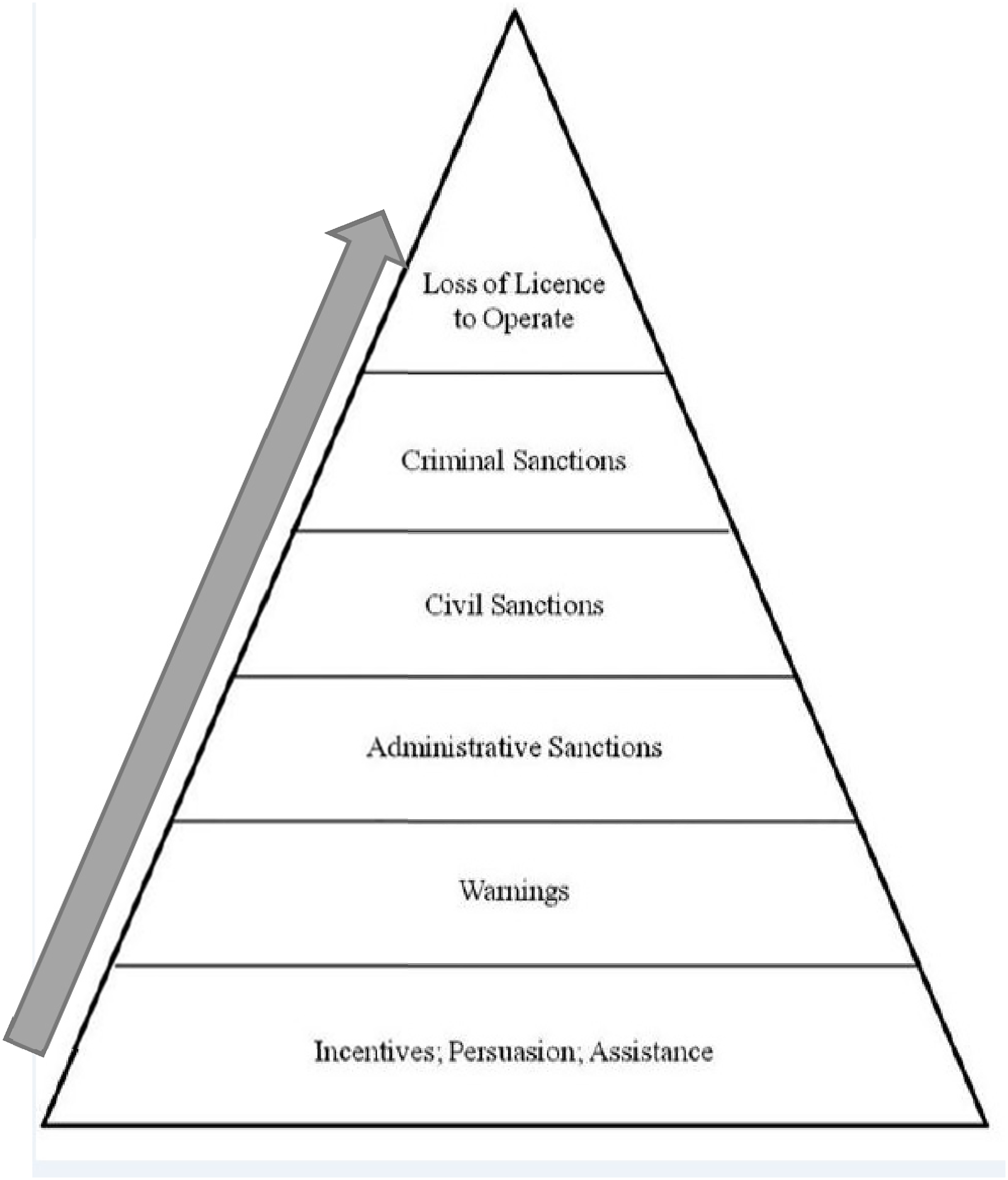
The responsive regulation enforcement pyramid.
On the other hand, dilute interventionism uses the lure of a ‘reward’ as a regulatory incentive for corporations to comply. This approach is reflected in Figure 3.
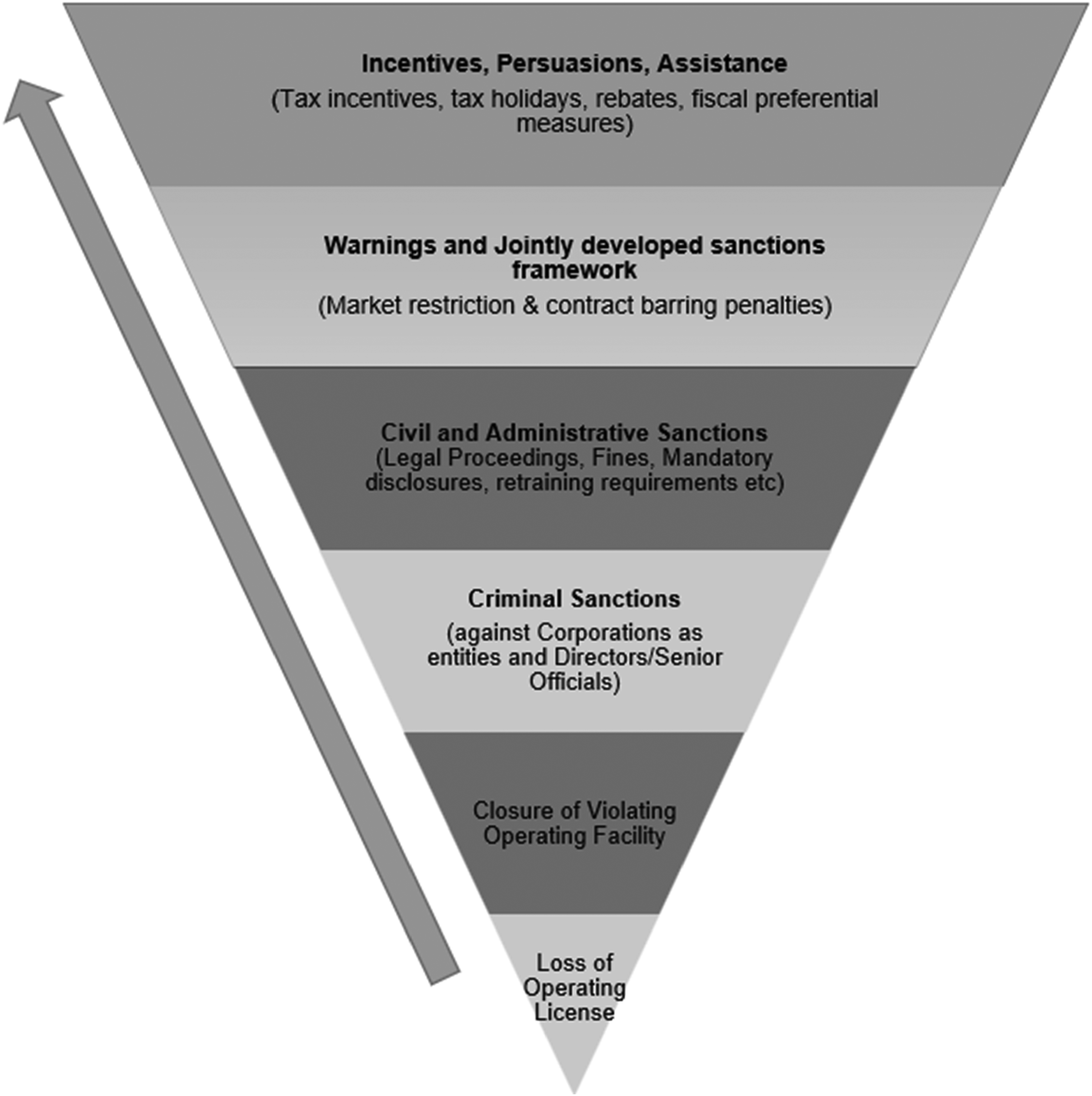
The dilute interventionism regulatory approach. Source: Kikelomo Kila.
In the climate change sector, the abundance of oil and gas corporations and their importance to the economy of Ghana means that the government should consider adopting the dilute interventionism regulatory approach to incentivise corporations to reduce their carbon emissions and climate change-impacting activities without being too prescriptive with a counterproductive effect.
Before extensively discussing the implementation of this regulatory approach in Ghana, it is necessary to examine the shortcomings of the current environmental and climate change regulatory framework in Ghana and how the dilute interventionism approach fits within this structure to address the critical gaps in the framework.
Environmental regulatory framework in Ghana
The Constitution of Ghana 1992 (as amended in 1996) obliges the government to protect the environment of Ghana and the wider international environment. Article 36(9) stipulates that – ‘The State shall take appropriate measures needed to protect and safeguard the national environment for posterity and shall seek co-operation with other states and bodies for purposes of protecting the wider international environment for mankind’.
Ghana's Constitution also imposes an environmental protection obligation on the citizens as Article 41(k) requires that all citizens protect and safeguard the natural environment of Ghana.
38
One key item missing in Ghana's Constitution is the lack of any explicit right to the environment as it does not expressly guarantee a right to a clean and healthy environment. Nevertheless, this right can be drawn from Article 24 of the African Charter on Human and People's Rights 1981 (ACHPR) ratified by Ghana, and which can be deemed to be incorporated among the human rights in the constitution under Art. 33(5) of the Constitution.
39
Article 33(5) provides that – ‘rights, duties, declarations and guarantees relating to the fundamental human rights and freedoms specifically mentioned… shall not be regarded as excluding others not specifically mentioned which are considered to be inherent in a democracy and intended to secure the freedom and dignity of man’.
In this context, the government of Ghana is arguably under a constitutional obligation to protect the environment, and this includes climate change protection measures. Nevertheless, while legislative measures have been put in place for environmental protection in Ghana, climate change has not received the same level of attention, with only policy instruments enacted in respect of climate change mitigation in Ghana. The first statutory regulation on the Environment in Ghana was the Environmental Protection Agency Act (EPA) (1994). 41 The EPA Act established the EPA 42 and section 2 provides for its functions. Some of these include the formulation of environmental policy, issuing of environmental permits and notices of pollution abatement. The Act also gives the Agency the power to prescribe standards and guidelines etc. 43 Section 10 Part 2 of the Act establishes a hazardous chemical committee. The committee comprises representatives from key government organisations with a specific interest in chemical management to monitor and advise the Agency on the hazardous chemical's importation, exportation, manufacturing and distribution. Other laws exist which also address environmental issues in Ghana. The Renewable Energy Act (2011) Act 832, for instance, provides for the management and utilisation of renewable sources of energy to produce heat and power in a productive and environmentally sustainable manner. 44 The Ghana Meteorological Agency Act (2004) Act 682 establishes the Meteorological Agency and provides its functions and powers. One of its functions requires the Agency to co-operate with the EPA and provide early warning signs on potential disasters and other information for the benefit of agriculture and water management. 45 The National Disaster Management Organisation Act (1996) Act No. 517 established the National Disaster Management Organisation 46 and sets out its functions. Some of its functions include preparing national disaster plans for preventing and mitigating the consequence of the disaster and monitoring, evaluating and updating national disaster plans. 47 The Act also establishes a National Disaster Management Committee and provides for its functions. Under section 8, the committee will be responsible for the implementation of national policies on the disaster and to identify, receive and supervise relief items. The Petroleum Production and Exploration Act (2016) Act 919 in section 82 requires the carrying out of an environmental impact assessment in an area where production activities are to be carried out and makes it a strict liability offence for any pollution caused by a company's petroleum activities.
The Environmental Assessment Regulations of 1999 (as amended by the 2002 regulation) require that all activities that would pose an adverse effect on the environment must be immediately subjected to environmental impact assessment before the issuance of a permit for the commencement of the activity. 48 Ghana has also drafted a key policy document known as the Ghana National Environmental Policy. Its objective is to ensure sustainable development based on integrated and coordinated environmental management. 49 The National Environmental Policy for instance was developed from Ghana's National Environmental Action Plan (NEAP), the plan sought to redirect national development into more environmentally sustainable programmes. 50 Other policy documents include the Environmental Sanitation Policy, National Irrigation Policy, National Water Policy, National Widelife Policy and the National Environmental Policy. 51
Climate change regulatory framework in Ghana
Currently, there is no Climate Change Act or binding statutory instrument on climate change regulation in Ghana. The EPA Act 1994 does not extend to climate change matters but exclusively focused on general environmental issues even though some of these tangentially touch on atmospheric pollution. Consequently, any governmental regulation of climate change is subsumed within wider issues of environmental protection, land use, or natural resource conservation, with climate impacts a secondary consideration. 52
However, Ghana has soft laws and policy instruments that make some provisions relating to climate change. The National Climate Change Policy (NCCP) which was released in 2013 53 enumerates the vision and objectives concerning adapting and mitigating the impact of climate change. The policy emphasises climate resilience and a climate-compatible economy with the main aim of achieving sustainable development and equitable low-carbon increase for Ghana. It places more emphasis on the need to create a climate-resilient development pathway as well as on low-carbon growth as stated earlier. The NCCP attempts to tackle climate change in Ghana by integrating traditional knowledge with recent and emerging knowledge and provides for the establishment of a dedicated climate change research centre for conducting climate change-related research. The policy goes on to provide five priority areas some of which include: increasing infrastructure and community resilience and improving environmental management practices and ecosystems for greater biodiversity. It also set key focus areas, some of which include disaster preparedness and response, natural resource management, and equitable social development. 54
In addition to the NCCP, Ghana also has the National Climate Change Adaptation Strategy (NCCAS) which outlines key strategies to increase climate resilience, decrease the vulnerability of the population, increase awareness and facilitate the mainstreaming of disaster risk reduction to national development frameworks. 55 The NCCAS aims to develop capacity in key areas such as infrastructure, and the knowledge to tackle the impact of climate change and reduce vulnerability in the different regions of Ghana. The policy mandates the National Climate Change Committee to serve as the implementation agency of the strategy. 56 It further makes it obligatory for town and area councils within Ghana to develop climate change adaptation plans and submit the same to district assemblies to form part of the district plans. It goes on to create regional coordinating councils and proposes to connect and synergize their work with other disaster management platforms. 57 The NCCAS in a nutshell focuses on an early warning system, poor and vulnerable, improved land use management, etc.
There is also the Ghana Shared Growth and Development Agenda 2014–2017 which was developed in 2010. The document acknowledges the importance of addressing climate change impacts in Ghana. The document aims to utilise the goals of mitigation and low CO2 development with that of adaptation and development through human development, employment, and productivity, accelerated agricultural modernisation and natural resource management, transparent and accountable governance, etc. 58 However, like the NCCAS, it is a soft law instrument without any statutory backing and is mostly declaratory.
Corporate regulations on climate change
A critical review of Ghana's legal framework reveals that it does not have any regulations governing companies and their contribution to climate change. Although there are general regulations on corporate activities in the economic and general environmental sector, there are no specific regulations relating to corporate participation in climate change mitigation either in the form of mandatory carbon emissions targets, minimum requirements for investments in GHG reduction or any form of prescriptions of corporate activities as relates to climate change mitigation.
Some of the laws already discussed above contain several provisions regulating environmental activities of corporations in Ghana. The Petroleum Production and Exploration Act 2016 requires companies to consider the environmental principles prescribed in the Environmental Agency Act 1994 or any other subsidiary legislation made under the Act. 59 Section 82 makes it mandatory for conducting an environmental impact assessment in an area where production activities are to be carried out, and under section 83, it is a strict liability offence for any pollution occasioned by a company's petroleum activities.
The Environmental Assessment Regulations of 1999 require that all activities that would pose an adverse effect on the environment must be immediately subjected to environmental impact assessment before the issuance of a permit for the commencement of the activity.
Consequently, while corporations in Ghana have explicit environmental obligations (the extent of compliance with these obligations is outside the scope of this paper), there are yet no equivalent statutory obligations on corporations relating to climate change. Considering the overside impacts that corporations (mostly in the energy sector) have on Ghana's climate change profile and the deleterious impacts of climate change on Ghana's agricultural sector and the economy, the absence of corporate climate change obligations is a significant regulatory gap in the country's legal framework.
In the absence of explicit statutory obligations/regulations, reliance continues to be placed on the soft law policies and instruments, most notably the NCCP discussed above which have some strong points in terms of regulating corporate participation in climate change mitigation in Ghana. As Ghana does not have a Climate Change Act, the NCCP provides a useful tool for guiding climate change policy decisions and actions in Ghana. Some of the strong points of the policy include the NCCP's comprehensive approach to climate change, addressing issues related to both mitigation and adaptation. It provides a comprehensive framework that covers all relevant sectors and stakeholders, making it a useful tool for guiding policy decisions and actions. In other to ensure resilient measures are put in place, the policy proposes the establishment of a dedicated climate change research centre. This research centre aims to carry out research on the earth's climate and solve pressing issues on climate dynamics. This is in line with global practices in climate change mitigation policies.
Nevertheless, the shortcomings of the NCCP are numerous. Most notable of these shortcomings is the lack of enforceability or any form of sanctions attached to its guidelines and policies. An effective regulatory framework requires enforceability and some form of punitive tools to achieve its objectives, otherwise, it is merely a collection of lofty declarative ideals of the government's policy thrust. Corporations involved in climate change-impacting activities will not in any way be curtailed or managed through a non-enforceable policy document. Despite providing for semi-regulatory bodies such as the National Climate Change Coordinating Council, this Council only plays an advisory role and has no enforcement ability, power or tools to play the role of a regulator.
To further compound the lack of sanctions in the NCCP, there has not been any implementation drive by the government concerning the comprehensive framework for addressing climate change in Ghana proclaimed in the NCCP. This is mainly due to a lack of political will and inadequate funding which has resulted in a serious gap between policy intentions and actual implementation.
Finally, there is the challenge of securing sufficient financial resources for implementing the policies. Climate change mitigation and adaptation initiatives require substantial funding, and the policy has not been able to mobilise sufficient financial resources to effectively address the climate challenges in Ghana.
Alternative strategies for regulating climate change mitigation in Ghana
The absence of any enforceable legal framework for climate change mitigation in Ghana leaves us searching for alternative strategies or structures that could be relied upon to achieve some regulatory controls over corporate activities in mitigation projects. In this regard, several alternative regulatory frameworks in climate change mitigation could be considered in Ghana for achieving regulatory controls. The major alternative frameworks that could be considered are judicial regulation, market regulation and surrogate regulation of corporate participation in climate change. By discounting the effectiveness of these alternative strategies, this article demonstrates that the dilute interventionism approach remains the most suitable for addressing the shortcomings of Ghana's climate change framework.
Judicial regulation of climate change activities of corporations in Ghana
Judicial regulation focuses on the utilisation of the courts to achieve regulatory controls over corporations in terms of their involvement and contribution to climate change impacts. Although the judiciary is a separate arm of government and not involved in any regulatory function per se, the exercise of its adjudicative and interpretative function can lend itself to exercising and instituting limitations, controls and prescribing rules for corporations through lawsuits filed by individuals and other concerned groups and organisations. This process is often regarded as the ‘judicialisation’ of climate change mitigation whereby the judiciary's adjudicatory function acts as some form of constraint on corporate activities on climate change, thereby achieving similar objectives as regulatory systems. Judicial regulation, in this context, therefore, refers to the restraining and monitoring of corporate activities in climate change by the judiciary through climate litigations.
The reluctance of governments around the world to act decisively in favour of climate change mitigation has created the demand for judicial intervention to curtail corporate excesses in terms of carbon-emitting activities. In the United States, Europe and even other African countries like Kenya, the judiciary has continued to play an important role in declaring the obligations of corporations to manage their climate change-impacting activities. 60
In Africa, the judiciary systems of many countries are gradually warming up to the responsibility of holding corporations accountable for climate change malfeasance, even though this appears to be limited to a few jurisdictions, for example, Kenya and South Africa.
61
Addressing the increasing popularity of climate litigation in Africa as a regulatory strategy, Rumble & Gilder stated that – …activist groups [are] using litigation to drive ambition in climate action, taking a longer-term view beyond the immediate wins and losses of individual cases.4 In particular, climate groups are turning to courts, to spur the adoption of higher levels of mitigation ambition, new rules and more effective implementation of and compliance with existing ones. This form of litigation is also contributing in innovative ways to transnational climate governance, by complementing the implementation of the Paris Agreement at a national level.
62
Nevertheless, there is a dearth of relevant litigation currently filed before the courts in Ghana utilising this right to pursue climate change goals. This has been attributable largely to the lack of interest domestically, as climate change ranks very low on the concerns of the citizens with other pressing socio-economic issues ranking high on people's concerns. 66 As a result, civil societies and non-governmental organisations in Ghana do not take climate litigation as a priority. Similarly, the slow judicial process and prohibitive costs of litigation prevent individuals from pursuing such avenues for climate regulation. The domestic legal infrastructure in Ghana provides a solid groundwork for combating climate change, as highlighted by its Constitution's clear emphasis on environmental protection and sustainable practices. 67 However, the practical enforcement of these provisions faces several challenges.
In addition to the above challenges, there are other reasons for the low utilisation of climate change litigation in Ghana. Firstly, while the constitutional mandate is robust, there is a dearth of specific legislation that directly addresses climate change issues. The overarching mandates outlined in the constitution do not necessarily equate to actionable frameworks for managing issues such as GHG emissions or other specific climate change-related environmental problems. 68 Secondly, Ghana grapples with a lack of technical capacity and resources needed to implement and enforce environmental regulations effectively. Institutions in charge of upholding these laws often suffer from limited funding, inadequate equipment, and a shortfall of professionally trained personnel, all of which hamper their ability to monitor and control environmental degradation effectively. 69 Thirdly, public awareness about climate change and its ramifications is relatively low. Despite constitutional provisions for education about environmental sanitation, a comprehensive understanding of climate change and its impacts remain limited among the general populace. This lack of awareness undermines public backing for climate change mitigation and adaptation measures. 70 Lastly, the judiciary system in Ghana faces its own set of challenges, particularly a lack of expertise to handle climate change litigation. With climate change-related cases on the rise, there is a pressing need for a judicial body equipped with the necessary knowledge and experience to adjudicate these cases effectively. 71
Market and surrogate regulation of climate change mitigation in Ghana
Market regulation refers to the utilisation of economic tools and fiscal instruments to regulate how corporations engage in climate change-impacting activities. This is mostly done through carbon tax and the utilisation of emissions trading schemes whereby corporations can trade excess emissions with other corporations.
Ghana does not have a carbon tax or emissions trading scheme in place. However, the government of Ghana has taken some steps to promote the reduction of GHG emissions and increase the use of renewable energy sources. For example, Ghana has signed and ratified the Paris Agreement, which commits the country to reduce its GHG emissions and adapt to the impacts of climate change. 72 Ghana has also submitted a Nationally Determined Contribution under the Paris Agreement, which outlines the country's plans to reduce its GHG emissions by 15% by 2030. 73
Additionally, the government of Ghana has implemented several policy initiatives to promote renewable energy, such as the Renewable Energy Act of 2011, 74 which provides a framework for the development and promotion of renewable energy in the country, the EPA Act of 1994 (Act 490), 75 the National Environmental Policy, 76 and the Ghana Environmental Sanitation Policy, 77 among others.
Surrogate regulation, on the other hand, focuses on the use of other third parties to regulate the climate change activities of corporations. In this context, other parties doing business with the corporations can become surrogate regulators by holding the corporations to account for their climate change impacts. This can be done through insurance companies underwriting the facilities and assets of corporations in the climate change sector, suppliers and other contractual parties dealing with these companies. Thus, an energy corporation can have its insurance company or banks prescribe strict carbon emissions rules for it as a condition for insuring its business facilities or operations or the bank providing it with banking facilities. This becomes a surrogate regulation of the energy corporation through a contractual third party, in this case, the insurance company/bank.
Another important form of surrogate regulation, particularly suited to the energy sector is the incorporation of climate change restrictions in the joint venture agreements (JVA) or production sharing contracts (PSC) between the government of Ghana and the oil corporations as part of the grant of license for exploration and exploitation of oil in the country. These restrictions are backed by contractual sanctions and thus achieve some regulatory controls over the corporations. However, a review of relevant JVAs, PSCs and other contractual policies in the relationship between major corporations and third parties in Ghana has not revealed the presence of consistent climate change mitigation clauses or other restrictions aiming to achieve some form of limitations on the climate change impacts of corporations. Consequently, surrogate regulation is an opportunity that has not yet been seriously explored in Ghana for regulating corporate involvement in climate change mitigation.
Implementing the dilute interventionism regulatory approach in Ghana
The previous section has demonstrated the shortcomings and limitations of the potential alternative strategies/regulatory systems that could be adopted e for climate change regulation in Ghana. This article will now critically analyse the proposal for adopting the dilute interventionism approach to regulate corporate participation in climate change mitigation and argue that this approach portends the most effective strategy for Ghana to restructure its climate change framework.
While the dilute interventionism approach is flexible enough to fit into different sectors, the unique nature of the climate change problem raises the need to specifically apply the dilute interventionism model to achieve the regulatory objectives involved in climate change mitigation. Considering that Ghana has set a target of reaching net-zero emissions by 2050, 78 which is in line with the global goal of limiting warming to 1.5 degrees Celsius above the pre-industrial level, 79 urgent regulatory action and strategy are required to give Ghana a chance of achieving this target.
The dilute interventionism approach can be utilised as a policy foundation for designing a regulatory framework that is suitable for Ghana's climate change mitigation efforts. This approach would entail restructuring some of the sanction mechanisms at the various stages of the enforcement pyramid in terms of their severity, targets, and impacts on regulatees but still maintaining the general tenor of the pyramid flow from the most severe measures at the bottom de-escalating upwards based on compliance by corporations. 80 As corporations comply, the approach incentivises corporations to adopt climate-friendly practices to reduce their carbon footprint and adopt environmentally sustainable practices. From a conceptual standpoint, implementing the dilute interventionism approach requires two key features – framework legislation and independent/strong regulator.
Legislative framework
To adequately address climate change within Ghana, a comprehensive legislative framework is crucial. Rather than focusing on isolated provisions, it is more productive to provide a structure that influences the enactment of robust legislation, especially considering that Ghana currently only operates under soft law climate policies devoid of specific legislation.
Consequently, the first and most important step to be adopted by Ghana is the enactment of a comprehensive Climate Change Act focusing exclusively and extensively on climate change management, regulation and obligations in Ghana. This is the starting point for any effective regulatory framework on climate change. A few African countries have already taken this critical step including Kenya, Nigeria, Mauritius, Uganda and Benin Republic. Ghana should, therefore, borrow a leaf from two of its immediate West African neighbours – Nigeria and Benin Republic – in enacting a framework legislation on climate change. Enacting this act has numerous positives and almost no downsides. Some of the main benefits include – the opportunity to clearly enshrine the country's climate change policy on a statutory footing and binding on the government; imposing explicit climate change obligations on corporations, individuals, government bodies and all stakeholders towards achieving the country's climate change objectives; enshrining an explicit human right to a clean environment which gives impetus to judicial regulation of corporation participation in climate change through climate litigation which will have a strong statutory footing; establishing a strong and independent climate change regulator with enforcement powers, clearly defined mandate and authority to curtail corporate excesses in the climate change sector; instituting stiff penalties and sanctions for flouting the climate change targets; potentially instituting market mechanisms through an emissions trading scheme; requiring businesses to adopt some form of surrogate regulation of other businesses; and instituting fiscal and economic incentives for corporate participation in climate change mitigation, for example, tax holidays, tax rebates, etc.
Essentially, therefore, the Climate Change Act will not only institute a statutory regulatory mechanism for corporate participation in climate change with a strong statutory regulator, but it can also become a statutory platform for establishing the alternative regulatory frameworks – judicial regulation (right to a clean environment), market regulation (emissions trading scheme and carbon tax, if desirable) and surrogate regulation (climate change obligations on businesses towards one another). In this way, the Act will set up an elaborate network of interconnected regulatory frameworks to not only curtail corporations in their climate change activities but also adequately incentivise them to take proactive steps towards promoting climate change goals and targets in Ghana for the promise of reward of self-regulation and other economic and fiscal incentives.
Further, the suggested Climate Change Act modelled on the dilute interventionism approach would empower the regulator to promote the enactment of subsidiary legislation through compliance with the parliamentary procedure for enacting subsidiary instruments in Ghana. 81 This subsidiary instrument can become the basis for elucidating the modalities and structure of the dilute interventionism approach by instituting rules which require severe initial punitive measures such as loss of operating license to ensure initial compliance. Subsequently, less stringent prescriptive sanctions like the closure of the operating facility, or criminal/civil sanctions against the corporations and their senior officers could be employed. Ultimately, the framework should evolve towards self-regulation by corporations through incentives and assistance to encourage compliance with the prescribed regulatory standards.
Establishing an independent climate change regulator in Ghana
The second critical feature of the dilute interventionism approach is the establishment of a strong and independent climate change regulator. The approach seeks to strike a balance between government intervention and corporations in managing climate change activities. In implementing the approach, an independent sole regulator plays a critical role in enforcing the regulatory objectives of government towards maintaining control of corporate activities in climate change while at the same time being insulated enough from executive control to enable it to exercise sound and independent judgment devoid of political, economic and developmental considerations that have so far hindered any effective control of climate change activities of corporations.
The regulator's primary responsibility is to issue licenses to corporations that intend to engage in climate change activities that may harm human health and the environment. These licenses will contain conditions and requirements that the corporations must comply with to ensure that their activities are safe and sustainable. The regulator will also monitor the corporations’ compliance with these conditions and take enforcement actions when necessary.
In addition to licensing and monitoring, the regulator will also be empowered to raise revenue for its activities through fees and fines on corporations to cover the regulatory costs associated with implementing the regulatory goals. This funding mechanism ensures that the regulator has the resources it needs to effectively regulate and enforce compliance. To counter resistance from corporations, the regulator should have a range of enforcement mechanisms. These mechanisms should include strict penalties for non-compliance, and incentives to reward compliance, such as tax credits, subsidies, or other forms of support for corporations that adopt sustainable practices. 82
To ensure regulatory effectiveness and independence, the regulator should be a statutory body with legal personality and the ability to own properties on its own, raise funds, self-govern, promulgate and implement its own rules. The nomenclature of the regulator should also reflect its focus, status and scope and can be termed ‘Independent National Climate Change Commission (INCCC) or ‘National Climate Change Agency’ (NCCA) if it is not considered necessary to express its independence in the title, perhaps for the fear of taking it completely away from parliamentary control. Regardless, the regulator should be independent in the exercise of its functions and powers regardless of whether this is reflected in the title.
Finally, it must be a sole regulator in the sense that it should not share the regulatory space with any other agency/body, for example, the EPA. This will help to avoid regulatory overlap of functions, potential regulatory conflicts and regulatory duplication which will be counterproductive. To achieve this aim, the Act should explicitly divest all other agencies/bodies of regulatory powers so far as climate change matters are concerned even if the substantive subject falls within their exclusive regulatory sphere, for example, general environmental issues relating to climate change will then be vested on the climate change regulator and not the EPA even if its arises from, say, environmental pollution or burning of forests, etc.
Beyond the focus on the statutory composition and powers of the regulator, its technical competence is an essential aspect of its effectiveness. The independent regulator should have the necessary technical competence to understand the complexities of the corporations they are regulating and undertake effective regulation. 83 This will enable them to properly assess and evaluate the potential environmental risks associated with the corporations’ activities and ensure that the necessary safeguards are in place to mitigate those risks.
One way to achieve this is by empowering the regulator to recruit external consultants who possess the required technical expertise to support the regulator's work. These consultants can provide valuable insights and recommendations based on their expertise. Alternatively, the regulator can establish partnerships with technical institutions such as universities or research centres to provide the necessary expertise. 84 These partnerships can provide a broader range of technical expertise to the regulator and ensure that they have access to the latest research and best practices in environmental mitigation.
In either case, the regulator must have access to the necessary technical expertise to ensure that their decisions are based on sound scientific principles so that they can effectively and confidently communicate with the corporations they are regulating.
Implementing veto firewall protection for the climate change regulator in Ghana
In the realm of regulatory control, the term ‘veto firewall protection’ 85 alludes to protective measures designed to prevent undue influence or pressure on the regulator by executive members or other powerful entities. 86 It seeks to ensure the independent operation of the regulator, enabling decisions made purely on the merits of a case, free from political interference or external pressures. This kind of autonomy is vital for the fair and impartial enforcement of regulations and for maintaining the credibility and legitimacy of the regulator's decisions amongst all stakeholders. 87
A ‘veto firewall’ relies on ‘veto players’ who perform checks and balances in the appointment and removal of officials of an institution. In this context, the veto firewall system focuses exclusively on the appointment and removal process of senior officials of the climate change regulator and not the day-to-day operations of the regulator. The appointment and removal process is critical to the regulator's independence as it provides a reliable system for inserting and removing officials which is fair, impartial and unbiased and vests the appointed persons with confidence and security of tenure that enables them to function independently without fear of being removed from office for taking steps unfavourable to the government or executive authorities. Once this independence in appointment/removal is secured, the operations of the regulator can be conducted largely in an independent way based on the security of tenure guaranteed to the senior officials.
Veto firewalls can be single-tiered or double-tiered depending on the number of veto processes involved in the appointment and removal process. A single-tier process involves just one veto process, and this usually arises when the President appoints/removes the senior official of the regulator and parliament is required to approve the appointment/removal. A double-tier process is reserved for the institutions considered most fundamental to national development and it involves a second veto layer of approval for the appointment/removal of senior officials, for example, a double-tier veto firewall system is currently instituted for the appointment and removal of the Governor of the Bank of Ghana 88 while a single-tier veto firewall system exists for the appointment and removal of the members of the board of directors of the Bank of Ghana. 89 Here, an independent body will usually be statutorily empowered to commence the process by nominating a person for approval/removal as a senior official of the regulator. The President is obliged to either accept or reject the nomination/removal but cannot nominate/remove a person by him/herself. When the President approves the nomination/removal, it is sent to parliament for a second stage of approval before it becomes effective.
In either case, to ensure the successful implementation of climate change regulatory goals, a veto firewall system, either single-tier or dual-tier, is crucial for shielding the regulator from undue executive influence. 90 However, considering the climate emergency, the need for urgent climate action in Ghana and the present and anticipated increase in Ghana's carbon emissions, it is arguable that the climate change regulator can be classed among the vital regulatory institutions deserving of a dual-tier veto firewall system to enshrine its independence and improving its ability to stringently curtail corporate excesses in the oil and gas sector which has the biggest impact on the climate change sector but which is the most sacred industry for the executive government owing to its contribution to the nation's economy.
Consequently, the double-tier veto system for the regulator can be designed in a way whereby the appointment/removal of the head and senior officials of the regulator are performed by the President upon the recommendation of an independent body, with subsequent confirmation by the Parliament. Such a system incorporates necessary checks and balances that enable the regulator to function independently. 91
While a case can be made for a completely independent process of appointment and removal of the senior officials of the regulator without any involvement by the President and parliament (i.e., an independent body appoints/removes and sends this directly to parliament for approval or does not even involve parliament), this suggestion is neither advisable nor practical because – (a) it could be interpreted as seemingly undermining the constitutional executive and legislative powers of the President/parliament in terms of the composition of critical national institutions and (b) such suggestion will not pass the parliament or be signed by the President if included in a climate change bill, and this could even potentially defeat the chances of securing statutory regulation of the climate change sector as parliament sometimes ‘throw away the baby with the bath water’, that is, discard a whole bill because it contains a particular provision considered repugnant. Not even the Bank of Ghana, the Electoral Commission nor any other national institutions have such an independent process instituted for its senior officials and the chances of the climate change regulator obtaining such a privilege are non-existent.
Essentially, so long as a double-tier system guarantee a high level of independence for the climate change regulator, that is sufficient for the dilute interventionism regulatory approach (Figure 4).
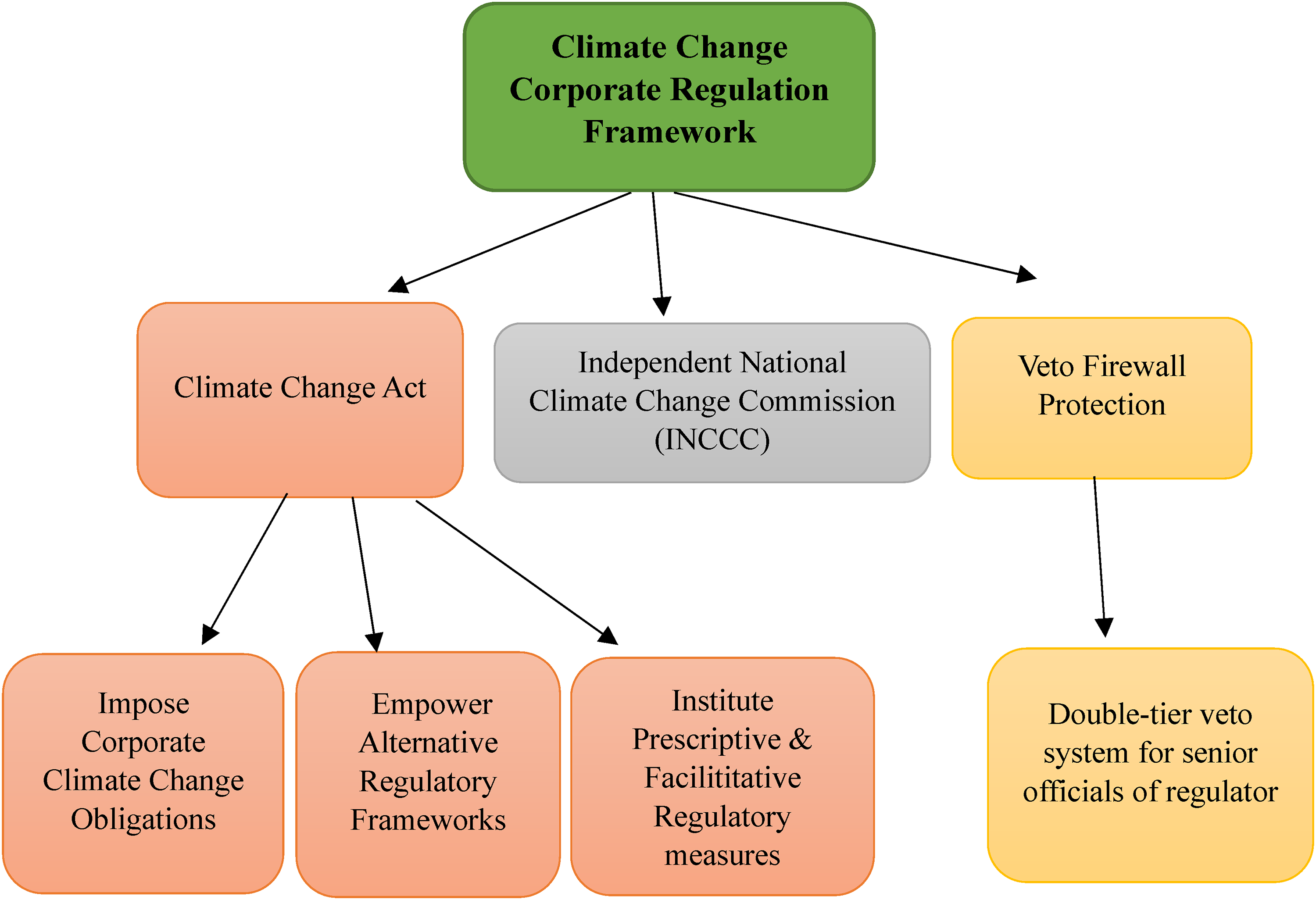
Designing a dilute interventionism approach to climate change regulation of corporations in Ghana.
Conclusion
The implementation of the Dilute Interventionism and Veto Firewall Paradigm in Ghana is likely to face a range of challenges. Among these are limited government resources, limited awareness, corruption and limited technical capacity. Regarding limited government resources, Ghana's government may struggle to marshal the substantial resources required for the effective execution of the dilute interventionism model. This model necessitates a significant commitment to monitoring and enforcing compliance with climate change regulations, which could be hampered by limited funding, potentially leading to insufficient enforcement and diminished corporate compliance. 92 Limited awareness arises from the lack of public awareness regarding the gravity of climate change mitigation and adaptation in Ghana which hinders widespread backing for implementing comprehensive regulatory frameworks. This knowledge gap may potentially compromise the success of the dilute interventionism model. 93
In terms of corruption, given the notable levels of corruption in Ghana, the effectiveness of the veto firewall protection intended to insulate the climate change regulator from undue influence could be undermined. This could lead to the potential risk of regulatory capture, where the regulator's actions reflect the interests of corporations more than those of the public. 94 Finally, regarding limited technical capacity, a potential deficiency in the technical capacity of the regulator could pose a significant challenge to the successful implementation of the dilute interventionism model. There may be an insufficient number of trained personnel to perform effective monitoring and enforcement of climate change regulations. 95
To overcome these challenges, it will be crucial to establish a well-resourced regulatory body with the expertise and authority to enforce climate change regulations, implement anti-corruption measures, and improve legal systems. Furthermore, public education initiatives about the importance of climate change mitigation and adaptation will be essential to garner public support and ensure the successful implementation of the model. 96
The dilute interventionism approach and veto firewall protection are two viable strategies that can be employed in Ghana's legislation to regulate corporations in Ghana that are involved in activities that contribute to climate change. However, the successful implementation of these strategies will depend on overcoming several challenges, including limited capacity, corporate resistance, weak legal systems, political interference and insufficient public education.
To mitigate the impact of the global climate change crisis, Ghana should prioritise both climate change mitigation and adaptation. This can be achieved through a proactive approach to regulating corporations that engage in climate change activities. To facilitate this, Ghana should establish a comprehensive regulatory framework that is specifically designed to address climate change mitigation and adaptation. This regulatory framework should be developed to achieve long-term sustainability, and it should be grounded in sound scientific principles, as well as incorporate best practices from around the world.
Given the urgency of the climate change crisis, Ghana must act swiftly and decisively in this regard. In particular, there is a pressing need to raise public awareness and educate the populace about the challenges posed by climate change and the importance of mitigating its impact. By doing so, Ghana can help to ensure that its citizens are equipped to make informed decisions that are conducive to long-term environmental sustainability.
Footnotes
Declaration of conflicting interests
The author declared no potential conflicts of interest with respect to the research, authorship, and/or publication of this article.
Funding
The author received no financial support for the research, authorship, and/or publication of this article.
