




Abstract
There is an urgency to address societal challenges due to earth's environmental crisis and its capacity to sustain human well-being. In this context, ‘transformations towards sustainability’ move to centre-stage and are increasingly institutionalised within global scientific and policy discourses. Sustainability transformations involve reorientation and restructuring of governance processes and actions. Though the governance of transformation involves multiple actors, this article examines the role of the judiciary in steering a transformation process towards a sustainable and equitable future. Judicial intervention, as a strategic tool, can effect change in human action thereby enabling transformative changes. Drawing on social science literature, the article offers a novel interdisciplinary analysis of illustrative Indian climate change legal decisions located within the sustainability transformations discourse underpinned by the environmental rule of law. The Indian judiciary, noted for expansive thinking, and acting as a ‘lever of transformation’, is slowly addressing climate cases. These cases categorised as – climate conscious, climate accountability and climate futurity – reflect progressive cumulative outcomes, albeit incremental, but they nevertheless enable conditions for transformative change.
Keywords
Introduction
There is an urgent need to respond to societal challenges due to earth's environmental crisis and its capacity to sustain human well-being. It is time to re-think our lifestyles, current production modes and consumption patterns to achieve sustainability. In this context, there is space to broadcast a powerful global message that moves ‘transformations towards sustainability’ to centre-stage. Increasingly, this message is institutionalised within global scientific and policy discourses. 1
The 2021 United Nation Environment Programme (UNEP) Report states system-wide transformation is the key to a sustainable future. The ‘transformation will involve a fundamental change in the technological, economic and social organization of society, including world views, norms, values and governance’. 2 A move towards a transformative future envisions ‘integrate[ing] people and planet across scales, and can be defined as attaining human prosperity and social inclusion within a stable and resilient earth system … a holistic perspective helps to prevent lock-ins and mobilizes opportunities to accelerate and leverage the transformation towards sustainable development’. 3 The UN 2030 Agenda for Sustainable Development envisions ‘transforming our world … a call for action to change our world’ 4 to achieve a better and sustainable future for everyone. The sustainable development goals (SDGs) as envisaged under the 2030 Agenda seek transformation towards a better world. The SDGs, inter-related and inter-dependent, are bold, integrated, and transformative steps that balance the three dimensions of sustainable development: the economic, social, and environmental dimensions. 5 They are structured around the five P's – people, planet, prosperity, peace, and partnership – to shift the world onto a sustainable and resilient path.
Transitions approach.
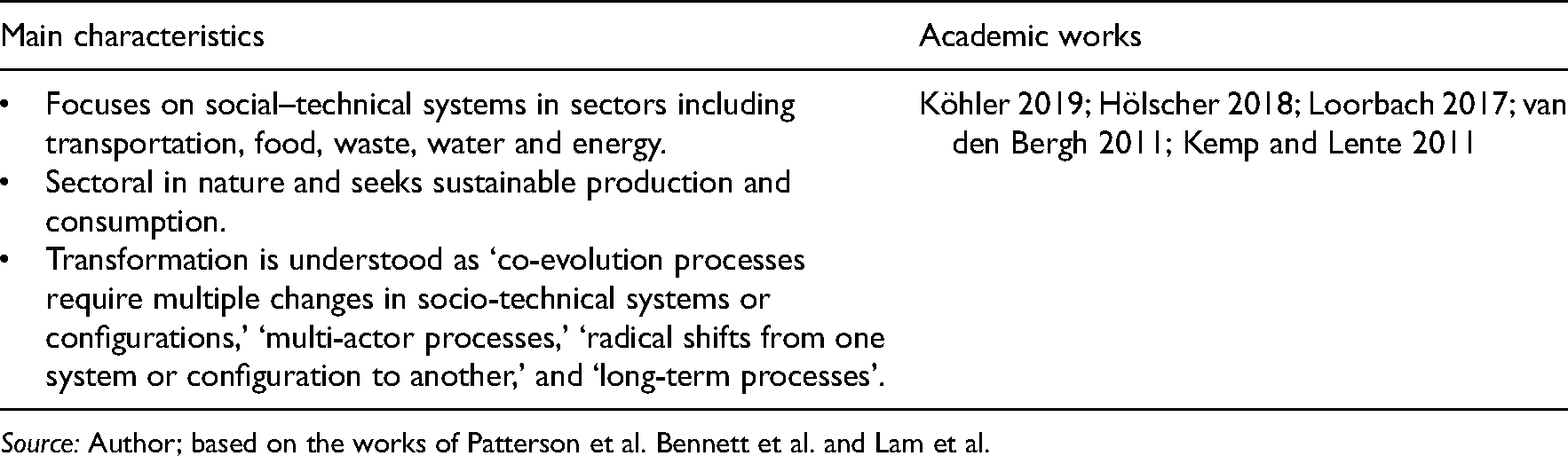
Source: Author; based on the works of Patterson et al. Bennett et al. and Lam et al.
Social–ecological transformations.
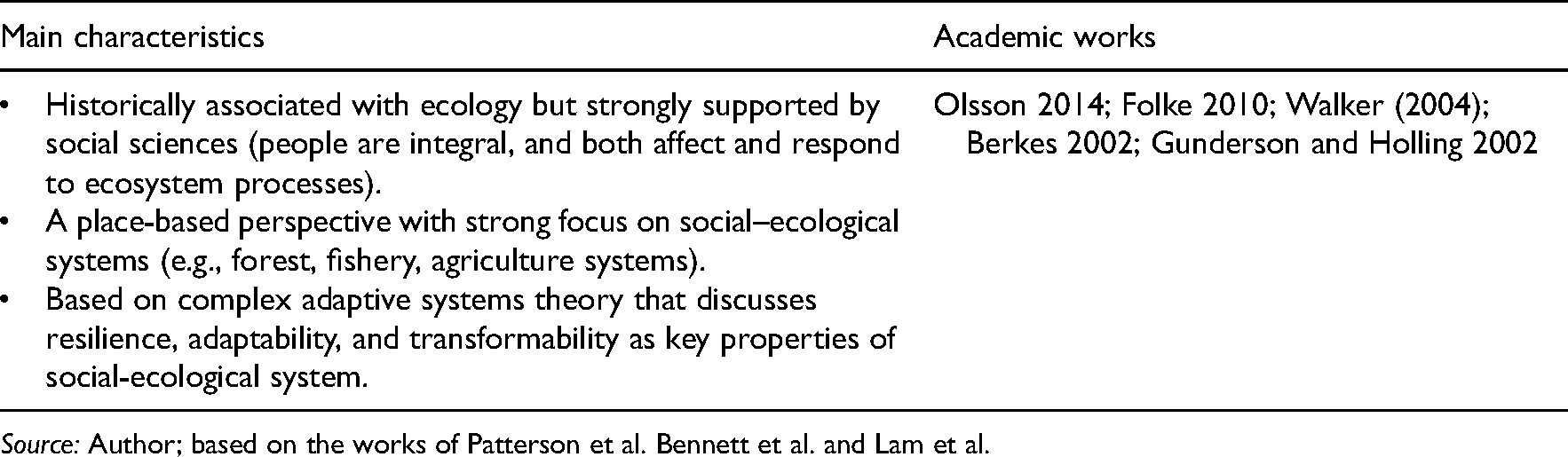
Source: Author; based on the works of Patterson et al. Bennett et al. and Lam et al.
Sustainability pathways.
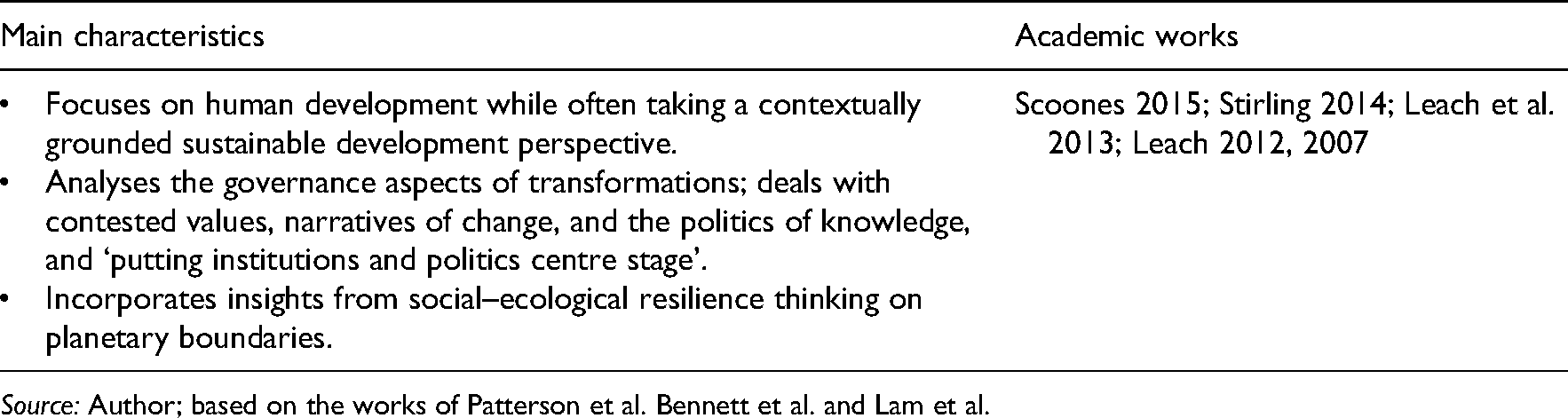
Source: Author; based on the works of Patterson et al. Bennett et al. and Lam et al.
Transformative adaptation.
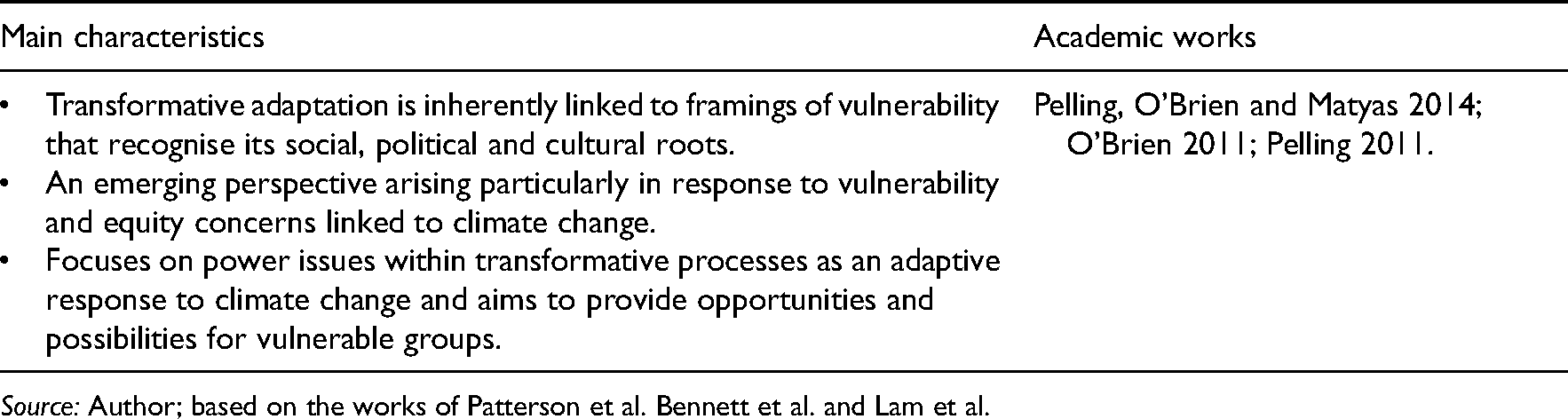
Source: Author; based on the works of Patterson et al. Bennett et al. and Lam et al.
Sustainability transformations involve reorientation and restructuring of governance processes and actions. The term governance ‘covers the whole range of institutions and relationships involved in the process of governing’. 6 It is how ‘collective goals are chosen, decisions are made, and actions are taken to achieve those goals’. 7 Though the governance of transformation involves multiple actors, this article examines the role of the judiciary in steering a transformation process towards a sustainable and equitable future. The judiciary is identified as a crucial partner in achieving sustainability and the SDGs. The SDGs place justice and environmental rule of law at the heart of development. SDG16 (peace, justice and strong institutions) and its target 16.3 places the judiciary as an enabler to promote the environmental rule of law and ensures equal access to justice for all. Robust judiciaries underpinned by the rule of law can ensure good governance, and achieve SDGs. Judicial intervention, as a strategic tool, can effect transformative changes through implementation, development and enforcement of environmental laws and promoting a sustainability agenda.
In this context, Indian climate change cases are employed as a case study through transformative discourse. Global north climate litigation is driven by ‘different mindsets, [comprehensive] legal and policy frameworks, and climate change challenges’. 8 Essentially it is comprised of climate change cases that include ‘human rights arguments … alternative strategies against “Carbon Majors” ranging from claims of nuisance to fraud and disclosure-related lawsuits … deceptive greenwashing marketing campaigns … and regulatory challenges to permits authorising high emitting projects’. 9 These cases, being increasingly in the public eye, nudge shifts by key actors and thereby advance climate policies. On the other hand, climate change litigation in the global south has historically failed to address key issues that include flawed regulatory and policy regimes, governance constraints in management and enforcement, poor management of resources, and constrained political will. 10 Recent trends indicate that the global south is experiencing litigation change through the lexicon of ‘climate language, human and constitutional rights, disaster management, resource conservation, and enforcement of existing environmental and planning legislation’. 11
However, this article diversifies and identifies a different way of approaching ‘climate litigation’ 12 through the transformative dialogue. Drawing on social science literature, the article offers a novel interdisciplinary analysis of Indian judicial decisions that are located within the sustainability transformations discourse underpinned by the environmental rule of law. In essence, a sustainability agenda integrated with the elements of environmental rule of law directs incremental transformations for a sustainable future. The article is divided into five sections. First is the introduction. The second section briefly unpacks, explores and characterises the social science literature on transformations towards sustainability thereby providing a pluralist account. Section three examines the role of the judiciary in responding to the transformative agenda. The judiciary is regarded as a lever for transformative change by applying the environmental rule of law. Section four examines illustrative Indian climate case law – Supreme Court and the National Green Tribunal (NGT) – within the transformative discourse under three categories: ‘climate conscious’, ‘climate accountability’ and ‘climate futurity’. This is followed by the conclusion.
Transformations towards sustainability: Theoretical review
Defining the term
Transformation is defined as ‘physical and/or qualitative changes in form, structure or meaning-making … can also be understood as a psycho-social process involving the unleashing of human potential to commit, care and effect change for a better life’. 13 It involves social and technological innovations driven by multiple forms of knowledge in pursuit of desirable (sustainable) futures. It can be understood as an ‘organised, top-down managed process towards a certain goal in a given sector or as a radical, bottom-up perspective to change … [it] includes the active construction of new practices and new meanings … and involves an intention to change a situation to a more beneficial state’. 14
Transformations are increasingly presented as a solution to environmental sustainability and societal change. Drawing on the rich academic literature, Patterson et al. define transformations towards sustainability as ‘fundamental changes in structural, functional, relational, and cognitive aspects of systems that lead to new patterns of interactions and outcomes … It places an explicit focus on the processes of change in human society involved in moving towards more sustainable and equitable futures, which can be approached in both a normative way (e.g. as a good/desirable thing to do) as well as an analytical way (e.g. what actually “happens”, and how and why)’. 15 It deals with actions that strike at the roots of unsustainability resulting in radical shifts in society's value-normative systems and shifting relations across personal, political and practical levels simultaneously. 16
Approaches
The social science literature that addresses transformations towards sustainability is both voluminous and complex. It is predominantly produced by western scholars whose work is shaped by and directed towards the interests of the global north. This literature maze is difficult to traverse and for this reason, the tabulated overview categorises how transformations towards sustainability are perceived by a range of scholars in terms of discipline, ethical positions, aims, perspectives, politics and economic interests. The conceptualisation of transformations towards sustainability encompasses the four tabulated approaches: Transitions approach, social-ecological transformations, sustainability pathways, and transformative adaptation. Acknowledging the seminal works of Patterson,
17
Bennett
18
and Lam,
19
independent key cataloguers, the tables offer a graphic precis of the main characteristics of sustainability transformations in various approaches, and how they are understood within the research academy and practitioners.
Transitions approach.
20
Social–ecological transformations.
21
Sustainability pathways.
22
Transformative adaptation.
23
Thus, these tabulated approaches of academic scholarship often overlap but also have distinctive characteristics that inform strategies and actions for sustainable transformation. These provide a conceptual understanding of sustainability transformations as ‘nonlinear, complex, long-term, multilevel, multiphase and cross-scale processes’.
24
Incremental or radical transformations: The debate
Transformations can be stimulated through incremental or radical change. These matters have generated a body of active discordant opinion and literature, but that debate extends beyond the scope of this article. 25 Incremental change represents ‘small adjustments made in response to perceived or expected changes’ 26 or ‘slow, step by step, short term changes’ 27 and ‘when effective, do not necessarily stay small … indeed, they can amplify and cumulate into large-scale change’ 28 having systemic outcomes. Lindblom states ‘a fast-moving sequence of small changes can more speedily accomplish a drastic alteration of the status quo than can an only infrequent major policy change’. 29 Radical change focuses on ‘alterations that have systemic consequences and are considered as structural shifts that challenge our assumptions, beliefs, and values, along with government regimes, development paradigms, and power relations’. 30
In sustainability transformations discourse, radical actions are prioritised over incremental action. Incremental actions are considered insufficient to achieve the desired goals due to ‘lack of goal orientation, conservatism, limited applicability, unconduciveness to analysis’ 31 and being ‘shallow, partial and slow’. 32 Temmer states ‘changing the system by adding or adjusting some instruments, processes, or structures, without altering the taken-for-granted frames of reference, is deemed insufficient’. 33 However, the realities of actioning in-depth, quick and large-scale radical changes are not easy. Radical changes can be reactive, resisted and trigger organisational crisis thereby creating discontinuity.
Despite increasing interest in western societies for radical change, the position differs in developing and emerging economies. The questions about ‘which transformation? for whom? and by whom?’ 34 are of particular relevance within these economies. High population densities and basic human needs create complex transformational challenges to reconfigure the relationship between nature, people, resource consumption and emissions. 35 Further, ill-functioning institutions (formal and informal) restrict the well-being of the majority and enhance the benefits of a small minority. 36 An instance of the ill-functioning institutions is the under-developed coordination and weak synergies between regulatory bodies and their operational processes that include human and technical capacity constraints.
In this context, Patterson's position of integrating incremental change within the transformative agenda provides a middle ground. A ‘normative focus on sustainability transformations helps to orient incremental efforts within a broader narrative of transformative change’. 37 Patterson citing Weick states ‘small wins … identifying, gathering, and labelling several small changes that are present … small to moderate changes could have the potential to cumulate into more substantial transformation over time’. 38
The authors agree with Patterson and advocate a middle path for developing economies. Change does not mean ‘massively or quickly but it could be a product of incremental but cumulative changes … moving society along pathways toward a sustainable future that will vary across nations, regions and contexts, including through existing institutions and policy approaches’. 39 Domestic and localised incremental sustainability responses in developing economies could trigger cumulative, manageable transformational changes. Required responses could include understanding (values, principles, and institutions including the social context limitations that underlie the transformative process); determination of the current ground realities; creating and developing the capabilities to change (for example technological innovation and leadership) and implementing and monitoring the preferred solution. Thus, a move towards a sustainable future involves ‘connect[ing] long-term normative sustainability goals with the realities of incremental decisions in the present’. 40
Governance for transformations, judiciary and the environmental rule of law
Governance, operating at multilevels, involving multiple actors, includes structures and processes for policy and decision-making, exercising responsibility and ensuring accountability. 41 The popular usage of the term governance has resulted in multiple definitions. 42 However, in this article, the focus is on the role of the judiciary regarding the transformative process.
From a normative perspective, governance has been used ‘as something which should be adopted to achieve some preferred end point … one of the most well-known formulations is that of “good governance” … associated with an efficient public service, an independent judiciary, a respect for law and order, as well as human rights'. 43 The judiciary is guided by a collective vision as the guardian of the rule of law. Justice Weeramantry in his commentary on the Bangalore Principles of Judicial Conduct observed ‘a judiciary of undisputed integrity is the bedrock institution essential for ensuring compliance’. 44 The rule of law is a dynamic and multifaceted concept intricately interlinked with values including dignity, freedom, fairness, justice, democracy and human rights. The judiciary as an independent institution, weaves together the above-mentioned values to ensure solidarity, respect for all and shared responsibility.
The etymological creation of the term ‘environmental rule of law’ by UNEP's Governing Council Decision 27/9 in February 2013 reinvigorated the integration of the rule of law in environmental matters to reduce the violation of environmental law and achieve sustainable development. 45 The 2019 UNEP Report recognises the environmental rule of law as ‘offer[ing] a framework for addressing the gap between environmental laws on the books and in practice and is key to achieving the Sustainable Development Goals … institutions [judiciary] are key drivers of sustainable development’. 46 The environmental rule of law is no longer an option but a prerequisite without which equitable economic growth, inclusive social development and environmental sustainability are unachievable. The 2030 Agenda places justice and the environmental rule of law at the heart of development. Within the justice element, especially SDG16 (target 16.3), access to fair justice systems and accountable institutions of democratic governance are integral to achieving sustainable development. In this context, the environmental rule of law is present in institutional values and practices.
The 2021 UNEP report states ‘transformative systemic change is prerequisite for a sustainable future’. 47 The role of the judiciary as drivers of sustainability transformations is based on the environmental rule of law that places society on a sustainable trajectory. As a dynamic adjudicatory forum, the judiciary by locating sustainability under the spotlight contributes in two ways towards transformational change. First, the traditional law enforcement and compliance process wherein the power of legitimacy, and high standards of accountability and transparency are important elements that influence sustainability transformations. The judiciary's contribution to the transformative agenda is by ‘bolster[ing] environmental laws and policies and strengthen the rule of law by ensuring consistent enforcement of all laws, including by eliminating corruption and strengthening institutions such as independent judiciaries’. 48 Thus, the advancement of sustainability is dependent upon the effective implementation and enforcement of environmental laws.
Second, the judiciary through the ‘culmination of many seemingly small but strategic actions’ 49 implement a powerful sustainability agenda that directs transformative change. A ‘people and planet centred perspective’ 50 employing synergetic' 51 and ‘holistic’ 52 approaches support the sustainability agenda in judicial decision-making. The affirmation, adoption and scaling up of sustainability decisions by the judiciary help the move towards transformational change. These include achieving good life and well-being, sustainable consumption and production patterns, values of responsibility, decarbonisation, externalities, reduced inequalities and technological innovation. 53
In this context, the judiciary acts as a proactive and incremental facilitator in actioning the environmental rule of law to further transformational sustainability. Thus, the environmental rule of law is ‘incremental and progresses nonlinearly’. 54 It ‘integrates critical environmental [sustainable] needs with the elements of rule of law [fair, just and accountable laws], thus creating a foundation for environmental [sustainability] governance that protects rights and enforces fundamental obligations’. 55 By addressing the range of environmental sustainability challenges including climate change, biodiversity loss and soil degradation, the environmental rule of law has moved from ‘obscurity to ubiquity’. 56
Indian judiciary, climate change and transformations
This section analyses India's climate change litigation and the role of its judiciary in the context of sustainability transformations. The article neither delineates climate change cases comprehensively nor chronologically. Instead, it focuses on illustrative Indian cases that contribute to an understanding and evaluation from the transformative perspective.
The discourse on transformations as a pressing societal response with respect to climate change is intensifying. Transformational change requires urgent and systemic societal changes to produce far-reaching solutions that meet the Paris Agreement 1.5C reduction targets. Envisioning and shaping a shift towards more ambitious mitigation and adaptation efforts in climate change requires improved governance interventions. In this context, strategic interventions from the judiciary help realise this vision.
Before reviewing the Indian judiciary, the global perspective of judicial responses within climate governance is visited albeit briefly. In essence judicial participation is recognised as vital for promoting sustainable futures and proactively facilitating transformational outcomes. According to Justice Benjamin, the involvement of the judiciary in addressing climate change is important for four reasons. First, the pragmatic argument assumes ‘no substitute exists for court system … the lack of other or better alternatives makes courts an inevitable choice’. 57 Second, excluding climate change would ‘handicap and ossify environmental jurisdiction, transforming it into a body without its heart and preventing the legal system's evolution in a world of rapid transformations’. 58 Third, creating spaces for meaningful intervention by the courts would complement their role in the societal transformation. Fourth, climate litigation cuts across environmental matters such as environmental impact assessments (EIAs), protected areas, deforestation, water resources, wetlands, and desertification and hence cannot be ignored.
Similarly, Chief Justice Brian Preston argues as an independent and critical pillar of the government the judiciary can contribute in at least nine ways to solving the problem of climate change. 59 These include ‘providing equal access to justice; determining and not deferring climate change claims; upholding the rule of law; taking and forcing the executive, legislature and private sector to take climate change seriously; explaining and upholding the fundamental values underpinning the law; promoting environmental values and putting a price on them; assisting the progressive and principled development of climate change law and policy; and making reasoned and evidence-based decisions’. 60 In this context, specialised trained, motivated and resourced judges play an important role in gaining better climate outcomes and governance thereby promoting rule of law. For Justice Mansoor Ali Shah, the role of courts is significant in developing a common language to ‘build a global judicial consensus on climate justice’. 61 Learning from each other through their sound judgements, according to Lord Carnwath, is the way forward to address the global challenge of climate change. 62
In recent times, scholarly works, international reports and institutions identify increasing climate litigation and judicial responses to the global discourse on climate jurisprudence. 63 Illustrative global climate change thematic litigation focuses on issues of rights based litigation (including issues of standing, right to a healthy life and environment, intra- and inter-generational equity, public trust doctrine and rights of nature), 64 enforcement of statutory and executive commitments relating to climate change, 65 adaptation and its impacts, 66 corporate liability and responsibility especially the fossil fuel producers 67 and climate vulnerability including indigenous communities, women and children. 68
Indian judiciary and climate change through a transformative discourse
A brief scene-setting account regarding India's commitment to tackle climate change reflects action and progress. The government's response to the call for collective action is evidenced by three integrated initiatives. These are transformative and accelerated changes that include low-carbon shifts across several sectors, re-configuring technology and institutional mechanisms for holistic outcomes, and mutually reinforcing well-defined policies. 69 India's commitments by 2030 include voluntary reduction of emissions, some 40% cumulative electric power installed capacity from non-fossil fuel energy resources, and the creation of an additional carbon sink of 2.5–3 billion tonnes of CO2 equivalent through forest cover. 70
India does not have comprehensive climate legislation though several environmental acts address different facets of climate change. 71 India's record as a progressive jurisdiction in environmental matters through its proactive judiciary is internationally recognised. 72 However, in climate change litigation, climate concerns are peripheral and usually driven by the use of climate language, human and constitutional rights jurisprudence, and enforcement of existing environmental laws. 73 In contrast, the authors present an alternative rationale for India's climate litigation. The authors introduce three categories of Indian climate change cases identified within sustainability transformations discourse founded on the environmental rule of law. These are ‘climate conscious’, ‘climate accountability’ and ‘climate futurity’. This novel approach realises and melds climate change commitments within the SDGs agenda.
Independent, strong, and specialised judiciaries can provide steadfast foundations in climate change litigation. They accelerate incremental but cumulative structural changes towards sustainability transformations. Accordingly, the judiciary acts as a ‘lever of transformation’ 74 to advance the environmental rule of law in climate cases. This includes implementing and enforcing clear, unambiguous laws; strengthening environmental legislation; ensuring accountability and transparency of the public authorities in their decision-making process; participatory cross-sectoral coordination of different stakeholders in their clear and coordinated mandates and roles in decision-making; and placing sustainability and SDGs at the centre of judicial decision-making thereby leaving no one behind.
Examples of judicial leverage include the right to a healthy environment; addressing planetary emergencies and human well-being together; enforcing Paris Agreement commitments towards emission reductions and low-carbon economy; accounting for nature by internalising externalities in decision-making; displacing unsustainable practices; compliance of environmental taxes, subsidies and market instruments such as carbon credits; and implementing and enforcing energy regulations, renewable energy targets and infrastructure for electric vehicles. 75 Thus, the paramount goal of the environmental rule of law is to ‘change behaviour onto a course toward sustainability by creating an expectation of compliance with environmental law’. 76
The authors argue that the Indian judiciary through a step-change or a small win process underpinned by the environmental rule of law contributes towards an evolving climate change transformation. For example, Justice Chandrachud in an illuminating 2021 Supreme Court judgement states ‘environmental rule of law seeks to create essential tools – conceptual, procedural and institutional to bring structure to the discourse on environmental protection [including climate change]. It does so to enhance our understanding of environmental challenges – of how they have been shaped by humanity's interface with nature in the past, how they continue to be affected by its engagement with nature in the present and the prospects for the future, if we to radically alter the course of destruction which humanity's actions have charted’. 77 This step-change process has been described by Lindblom as ‘incremental steps can be made quickly because they are only incremental. They do not rock the boat, do not stir up the great antagonisms and paralysing schisms, as do proposals for more drastic change’. 78 To facilitate this, it is necessary that these are not aspirational metaphors but within a developing economy are firmly grounded and realised in present realities and desirable futures.
Based upon this background, the authors’ categorisation being ‘climate conscious’, ‘climate accountability’ and ‘climate futurity’ contribute to creating sustainable niches for an ‘incremental but cumulative changes’ 79 move towards transformation as discussed below.
Climate conscious
Mary Robinson, the former Irish President, and also Ban Ki Moon's special envoy for climate change, employed a ‘climate conscious’ approach to climate disruptive challenges. 80 According to Robinson, climate consciousness required ‘to get ourselves into a 1.5 °C mindset …. it means to limit warming to 1.5 °C'. 81 Essentially, the approach focuses on heightened awareness that helps us understand, identify and respond to the root causes that generate and reproduce climate crisis. Thus, climate consciousness is a prerequisite to drive a transformational change by recognising the reality rather than the perception of an immediate climate threat, 82 and ‘rethinking actions in light of the climate challenge … and is useful in considering the responses to disruptive climate’. 83
As a continuous and relational approach, the development of climate consciousness requires mindful engagement with the seriousness of climate challenges and helps frame transformational responses. For Preston CJ, adopting a climate-conscious approach ‘involves identifying the climate change issues and consequences of different courses of action and incorporating these into the preferred solution to the legal problem or dispute’. 84 Judicial responses provide forward-looking, systemic, and long-term guidance that identify causes and impact but also develop a holistic approach to achieving sustainability and SDGs within climate change. For example, these include redefining our relationship with nature. This reset would avoid climate disaster, address climate change crisis and human well-being needs in tandem, and direct the adoption of tangible steps, including commitments and targets under international legal instruments, adaptation, and mitigation measures, to address climate risks. In these incremental sustainability responses, shared values and concerns help develop ‘collective connection with the notions of “climate change” and “climate justice” … [thereby] raising climate consciousness’. 85
In a broader sense, climate consciousness connects global climate problems with their local consequences through the paradoxical feelings of ‘externalisation’ 86 and ‘leave no one behind’. 87 ‘Externalisation’, a negative and feeling of despair, is associated with the ‘dialectic of environmental [climate] destruction … crisis of consciousness also serves as a motivation for social action and the transformation of the environment. To be conscious is to also be conscious of one’s own death. Knowledge of our own death brings a tremendous concern’. 88 Contrarily, the positivity and hope of leave no one behind in the SDGs are based on the consciousness of integration, indivisibility and universality. It raises awareness that climate sustainability implies ‘heal and secure our planet and shift the world on a sustainable and resilient path’. 89 Thus, climate consciousness, through conflicting emotions, builds a wish for collective action to avoid the tragedy of the commons. In this context, the judiciary ‘can and do play a useful role in developing the law and contributing to a change of [climate] consciousness, and these developments can in turn catalyse new and needed actions: by states, international organisations, private sector, NGOs, and individuals’. 90 This, in turn, creates ‘security, stability, and a willingness to accept law’ 91 that promotes a climate sustainability course thereby building legitimacy both in the judiciary and in the environmental rule of law.
An emerging trend in Indian decisions reflects the spirit of climate consciousness. For example, in Ajay Khera v. Container Corporation of India 92 the NGT employed the concept of carrying capacity as a yardstick of sustainability to raise climate consciousness. The tribunal through the sustainable development vision held that consciousness requires meaningful commitment by devising measures in climate capacity to restrict overuse of natural resources on reaching optimum capacity. The concept of carrying capacity, originally developed by ecologists, means the maximum number or density of individuals of a population that a specific area can sustainably support. It is an essential ‘tool for sustainable development of human settlements especially in the face of the serious environmental degradation of air, water, and land … a threshold level of anthropopressure, which the environment is able to balance and withstand without irreversible changes and serious degradation’. 93 To tackle climate change and realise the SDGs, there is an imperative need to develop long-term assessments of physical and environmental carrying capacity. In this case, the NGT directed the regulatory authorities to carry out capacity assessments in 102 ‘non-attainment cities’ relating to air pollution. 94 The assessment includes the number of vehicles, population, and extent of different activities including institutional, industrial and commercial. This helps develop policy decisions for comprehensive sustainability actions to combat air pollution in the interest of public health.
Livestock is a major source of methane emissions. 95 Methane has a warming potential 20 times higher than carbon dioxide. By consciously framing a direct link between methane emissions and livestock, the NGT raised awareness by constructing a climate sustainability narrative to adopt safeguards that are necessary to protect the environment and public health. In Nuggehalli Jayasimha v. Government of Delhi 96 the NGT examined the climatic impact of the dairy livestock. Referring to a 2018 study, the NGT observed Indian livestock emitted 15.3 million tonnes of methane in 2012 and has the potential to increase surface temperatures up to 0.69 mk over a period of 20 years. Accordingly, the NGT directed the central pollution control board (CPCB) to develop an evidence-based, livestock-methane inventory for dairies throughout India and lay down sustainability indicators as guidelines for the management and monitoring of livestock farming.
Climate consciousness is again evidenced in forest-related cases. The judicial decisions reflect a sense of awareness, connection, and responsibility towards the importance of forests and their protection to maintain ecological sustainability in the biosphere. In Court on its own motion v. State of Himachal Pradesh 97 the NGT contextualised the illegal felling of trees and its adverse contribution to deforestation including the destruction of carbon sinks, animal habitats and medicinal plants; global warming; and soil erosion. By highlighting the severity of climate change impact, the tribunal engaged with deep and complex inter-dependent sustainability domains. Similarly, in Rajiv Dutta v. Union of India 98 the NGT observed emissions from forest fires contribute to climate change by increasing concentrations of greenhouse gases and changing the earth's albedo by depositing more light-absorbing particles such as black carbon. 99 The case related to large scale and uncontrolled forest fires ravaging the States of Uttarakhand and Himachal Pradesh thereby undermining the ecological sustainability of an already endangered biological zone. The NGT directed the central and respective state governments to formulate national policy and guidelines for forest fire prevention and control.
Durga Dutt v. State of Himachal Pradesh 100 illustrates climate impact on glaciers. To experience ‘requires awareness or consciousness’ 101 and contemplate measures in the light of climate challenge. The facts of the case related to environmental degradation and damage to the glacier of the Rohtang Pass Valley, known as the ‘Crown Jewel of Tourism in India’. Global warming has a direct impact on the environment and ecology of any zone. Rohtang Pass, being one of the eco-sensitive and fragile areas of the glacier, has retreated due to the black carbon effect. Accordingly, the tribunal ordered the regulatory authorities to evolve specific guidelines and measures to take greater care of the glacier in the interest of sustainability, sustainable development, and ecological balance. 102
Climate consciousness is further evidenced when the NGT advanced the adoption of India's National Action Plan on Climate Change (NAPCC) that promotes ‘development objectives while also yielding co-benefits for addressing climate change effectively’. 103 In Gaurav Bansal v. Union of India 104 the NGT directed state governments to submit their climate action plans in consonance with NAPCC and obtain approval from the Environment and Climate Change Ministry. The tribunal also expressed its willingness to entertain specific cases regarding violation of the NAPCC, its impact, or consequences. 105
Climate accountability
Accountability, a virtuous but contested concept calls for powerful institutions and authorities to be accountable to their public. 106 It is a ‘relationship between an actor and a forum, in which the actor has an obligation to explain and justify his or her conduct, the forum can pose questions and pass judgement, and the actor may face consequences’. 107 The quintessence of accountability is based on ‘answerability’ 108 and ‘enforceability’ 109 in matters of public purpose or interest in the ‘public domain’. 110
In climate change governance, the issue of accountability is critical and holds actors responsible for their decisions that result in greenhouse gas emissions. As climate change is a collective action concern, accountability is at the heart of emission reductions and decarbonisation transformational change. Sareen and Haarstad's thought-provoking article argues accountability helps understand ‘power differentials and tendencies towards biased representation’. 111 It is underpinned by ‘norms considered legitimate by a wide range of actors; by metrics and data that, if used for public benefit, provide knowledge about distribution of goods and services; by spaces for negotiations between different levels of authority and by coordination between levels of governance to uphold good governance principles’. 112
In this context, the judiciary through its checks and balances plays a crucial role in addressing climate change. It is concerned with making transformational decisions involving both the ‘processes and outcomes’. 113 Processes include making public authorities accountable for their actions or omissions that produce unsustainable practices, non-implementation and non-enforcement of laws. Desirable outcomes encourage and promote the sustainability agenda in line with the SDGs. Such an understanding makes the judiciary the ‘face of environmental rule of law to the public … institutions instilled with integrity and accountability are more effective at delivering enduring sustainable development’. 114
Transformative change builds support for a culture of compliance and long-term climate sustainability to drive a sustainable future for present and future generations. Accordingly, the Indian judiciary has infused climate accountability within the environmental rule of law paradigm. In Hanuman Laxman Aroskar v. Union of India (2019) 115 , Chandrachud J stated that Article 14 of the Constitution of India guaranteed action against arbitrary decision-making and an affirmative duty of fair treatment. 116 This ensures not only upholding environmental rule of law through effective, accountable, and transparent institutions but also promotes the advancement of SDGs and transformative change. This is the first Indian case to formally recognise and explain sustainability transformations. 117 The Supreme Court suspended the flawed environmental clearance granted for the development of a greenfield international airport at Mopa in Goa. The integrated environmental parameters across the SDGs domains, for example, the emissions from aircraft and their anticipated impact on the forests and terrestrial ecosystem, were overlooked in the EIA report. Despite the shortcomings, the Expert Appraisal Committee (expert body) granted clearance without following the statutory approval process. Expressing displeasure the court stated ‘the expert body abdicated its role and function by taking into account circumstances which were extraneous to the exercise of its power and failed to notice facets of the environment that were crucial to its decision making … the processes of the decision are as crucial as the ultimate decision’. 118 Relying on the SDGs, Paris Agreement, India's Nationally Determined Contribution to the Paris Agreement, and international reports, the court directed the government to balance the environment including climate issues with the airport construction objective. Importantly, the court advanced ‘transformative change which reconfigures basic social and production systems and structures … including implementation, compliance and enforcement … this would help pursue the 2030 Agenda the SDGs and achieve the internationally agreed goals on pollution control’. 119
Climate accountability is witnessed in construction project cases. The construction industry consumes enormous resources and has a significant energy footprint. Globally, the sector accounts for 40% of greenhouse gases. 120 Domestically, the construction sector emits 22% of India's total annual carbon-dioxide emission. 121 The regulatory authorities failed to adequately address the evaluation and assessment or monitoring of the environmental and long-term sustainability impacts of these construction projects. For example, in Society for Protection of Environment & Biodiversity v. Union of India 122 the NGT declared illegal those parts of a government notification that exempted specific building and construction projects from the environmental clearance requirement. In the name of ‘ease of doing responsible business’, the government ignored environmental impacts that have a direct bearing on environmental protection and sustainable development. This exemption was also in derogation of India's international commitments to the Rio Declaration 1992 and Paris Agreement 2015, especially when read in the light of the precautionary principle. Environmental clearances, as a part of the precautionary approach, require the drafting of an EIA report. The EIA report evaluates carbon emissions associated with the construction project, its adverse impact on the environment, and best practice strategies to reduce these emissions. This helps in achieving the ambitious targets and is directly linked to the SDGs.
Carrying capacity assessment is an essential part of urban planning and includes constructional activity. 123 It gives effect to sustainable development. In University of Delhi v. Ministry of Environment, Forest and Climate Change 124 the NGT suspended environmental clearance for the construction of a high-rise building project in close vicinity to a reserve forest area. High-rise buildings use more energy than low-rise buildings and generate substantial carbon dioxide emissions. 125 In this case, the regulatory authorities failed to consider the vital physical and environmental requirements related to the carrying capacity assessment of the project. The environmental clearance was granted mechanically and without meaningful appraisal in terms of estimations of total existing particulate matter load, assimilative and supportive capacity. According to the tribunal, ‘carrying capacity is an integral part of sustainability, without which working towards SDGs to tackle climate change only remains on paper … the whole exercise must lead to environmental sustainability which is the basis of environmental rule of law’. 126
Climate accountability is again evidenced in the case of Sukhdev Vihar Residents Welfare Association v. Union of India. 127 The NGT permitted the operation of a waste to energy plant in a densely populated residential area. The plant met the prescribed emission standards, installed improved technology and introduced new mechanisms with respect to segregation, processing and induction of waste. Accordingly, the plant was qualified as a Clean Development Mechanism (CDM) project as it took care of ‘all environmental issues as per the international standards including stoppage of generation of greenhouse gas emissions and are environment friendly, and thus eligible for carbon credit’. 128
Climate futurity
The concept of futurity is crucial for transformations towards sustainability. Futurity encompasses imagination as an essential feature of transformation. It is mediated by rethinking our relationship with nature and requires ‘an imaginative extension into the future one hopes to sustain’. 129
In climate change matters, imagination requires ‘capacity to collectively envision and meaningfully debate realistic and desirable futures’. 130 For instance, Dan Bloom's ‘cli-fi’ (climate change fiction) fashions a climate future narrative denoting a wake-up call to the existential threats and a call for climate justice. 131 Another example is the climate crisis and its translation into the language of posterity for future generations. 132 A proactive judiciary shapes a sustainable future by envisioning ‘environmental rule of law and SDGs that are mutually reinforcing’. 133 As a transformative lever, the judiciary can ‘refer to a series of actions to stop doing the wrong things … and at the same time [promote] an enabling environment with a [climate] sustainable vision’. 134
In India, nascent climate futurity is illustrated by visionary judgements that reflect sustainability and its dependence on the environmental rule of law. For example, Hanuman Laxman Aroskar v. Union of India (2020) 135 (subsequent to the 2019 case 136 ) demonstrates the Supreme Court's sustainability vision to advance low-carbon initiatives to reduce greenhouse gas emissions. The court directed the regulatory authorities to explore best practices for climate change and energy conservation in the construction of greenfield airports. These could include green infrastructure development programmes, the adoption of less emission-intensive technologies, renewable energy programmes, electrical vehicles, airport carbon accreditation, and the installation of LED lights. In this case, the court allowed the Mopa airport to proceed on the assurance by the appropriate authorities to adopt a Zero Carbon Programme both in the construction and operational phases of the airport.
Promoting non-coal fuel sources reflects climate futurity. For example, the NGT in Utkarsh Panwar v. CPCB (brick kiln industries) 137 directed exploring and employing cleaner fuels including piped natural gas (PNG), compressed natural gas, biogas, propane, butane and others that help in reducing carbon dioxide emissions. In Babubhai Saini v. Gujarat PCB 138 the NGT ordered closure of coal gasifier units unless they switched to PNG or clean technology. In Vinay Shivanand Naik v. State of Karnataka 139 the NGT accepted the statement of the state of Karnataka for a transitional move to electric vehicles as an alternate clean, green fuel. These incremental decisions herald carbon emission reductions thereby benefiting the climate and fostering sustainable development.
Similarly, climate futurity is evidenced in the renewable energy sector. In Hindustan Zinc Limited v. Rajasthan Electricity Regulatory Commission 140 the Supreme Court promoted renewable sources of energy in the larger public interest to reduce pollution. To reduce dependency on fossil fuels, it is imperative to follow the renewable energy obligations as framed under the energy regulations. 141 As India has ratified the Kyoto Protocol, the promotion of efficient and environmentally friendly measures to generate and consume green energy should be encouraged for sustainability and SDGs. Other renewable energy cases encourage wind energy projects 142 and solar energy projects. 143
Interestingly, there is a revenue case trend that reflects climate futurity. For example, in Joint Commissioner Income Tax (Gandhinagar) v. Kalpataru Power Transmission 144 carbon credit and carbon market mechanisms that mitigate the growth in the concentration of greenhouse gases are recognised. The goal is to allow market mechanisms to drive industrial and commercial processes in the direction of low emissions and sustainability. These are validated under the CDM although remaining subject to tax law.
Conclusion
The climate change crisis has resulted in a clarion wake-up call that addresses how we live and assume the right to exploit the finite resources of planet earth for the benefit predominantly of the few and for the present generation. It identifies a limited human understanding and interest in the choices and perils of living in an anthropocene era. However, we are increasingly aware of potentially irreparable consequences due to climate change and are developing appropriate transformations to sustainability responses. The authors have presented a novel argument based on the pursuit of sustainability transformations underpinned by the environmental rule of law through robust institutions like the judiciary. Bolstering the implementation and enforcement of environmental laws alongside infusing a powerful sustainability agenda leads to actioning the environmental rule of law to further the transformational change. As guarantors of environmental rule of law, the judiciary provide the legal foundation to promote transformative societal, organisational and individual changes that ‘reverse the current trends [including climate change, biodiversity and pollution issues] that threaten the well-being of the present and future generations and the survival of other species … and realisation of the collective vision of a sustainable future for the humanity’. 145
The Indian judiciary, noted for their expansive thinking, and acting as a ‘lever of transformation’, are slowly addressing climate cases despite the lack of comprehensive domestic climate change legislation. The illustrative cases categorised as – climate conscious, climate accountability and climate futurity – demonstrate a sustainability transformative approach. The judicial decisions on climate consciousness create heightened awareness and develop a narrative by transforming climate threats into tangible peril in line with sustainability and SDGs. In climate accountability, the Indian judiciary emphasises that processes are as significant as outcomes. Fostering effective, accountable, and transparent decision-making in climate matters is a transformative incremental step. The judicial imagination in climate futurity is valuable in exploring the vision of a decarbonisation trajectory that helps an incremental move towards a sustainable future. The selected cases reflect progressive cumulative outcomes, albeit incremental, but they nevertheless enable conditions for transformative change. The judicial contribution both actual and potential to the climate crisis offers legitimacy, sustainability progress and support for the SDGs.
Footnotes
Acknowledgements
We acknowledge Professor Chris Rodgers and the two anonymous reviewers for their insightful comments.
Declaration of conflicting interests
The authors declared no potential conflicts of interest with respect to the research, authorship, and/or publication of this article.
Funding
The authors received no financial support for the research, authorship, and/or publication of this article.
