




Abstract
Ten years after the Marine and Coastal Access Act 2009 that introduced marine planning to UK, this article investigates the progress and effectiveness of marine plans. It identifies that initial plans are still being produced in parts of the UK. Scotland has led the way with a National Marine Plan that has already been reviewed. England’s approach has been to produce a sequence of regional plans with two adopted. Wales adopted its National Marine Plan in November 2019 and Northern Ireland’s national marine plans are under preparation. The article examines the effectiveness of the plans through a framework informed by implementation theory assuming that plan-making indicates a ‘top-down’ approach to policy. The plans and their policies are assessed to draw reflections on the soundness of the documents. Marine licensing decisions are considered to assess the extent to which they reflect adopted policies. Limited evidence of the explicit influence of policies in those decisions was established. The findings were supplemented by interviews with key actors including applicants. This revealed a culture of conciliation and cooperation among decision-makers. Analysis and reflection led to positive and challenging conclusions for the future development of marine plan-making in the UK and elsewhere.
Keywords
Introduction
The purpose of plans is to effect change. Plans influence decisions such that outcomes are different from those that would have happened had they not existed. Spatial plans ensure that decisions recognise locational difference and respond to the territorial implications of policy. In introducing the second reading of the Town and Country Planning Act to parliament in 1947, the minister, Lewis Silkin, said the objects of town and country planning…are to secure a proper balance between the competing demands for land, so that all the land of the country is used in the best interests of the whole people. This is especially necessary in these small, densely populated islands. More than ever, there is today heavy pressure on our limited supply of land.
1
The Marine and Coastal Access Act 2009 (hereinafter referred to as ‘the 2009 Act’) in the UK was a trailblazing piece of legislation. 2 It marked the point at which marine spatial planning became an established part of the administration of marine activities in UK waters, years ahead of the EU Directive requiring marine planning by all coastal states by 2021. It is now the genie that can’t be put back in the bottle. In 10 years, the first plans have emerged or are emerging in all parts of the UK but relatively few have been officially adopted as policy and inevitably they appear tentative and limited in impact.
This article seeks to assess the strengths and weaknesses of the first round of plans from the point of view of their effectiveness in shaping the marine environment. This research examines the plans, their content and decisions that have been made in those areas where marine policies have been adopted. It asks the questions ‘how effective have the plan policies been in influencing decisions made by the relevant administrations’ and ‘what can we learn from the answers to that question that will assist in shaping future marine plans’. While it might be considered that given the relatively few plans that have been adopted in the 10 years since the 2009 Act it is premature to review their effectiveness at this point in time, the authors would argue that as plans develop, an approach to implementation of policy should be established and learning between different regimes can take place. Plan-making is an ongoing and maturing process, and initial mistakes and successes need to be acknowledged and reflected upon from the start.
There has been much academic comment on marine spatial planning as a concept, 3 but there has been little granular research and reflection on the implementation of marine planning for the UK waters. The authors conducted research over an 18-month period, reviewing adopted plans and a selection of marine licensing decisions and decision-making processes for England and the UK devolved administrations. The complexity of the overall legal and policy context for the development of marine plans and their use in decision-making for marine licences, as part of a larger marine management regime, lent itself to the use of an implementation framework with which to assess the effectiveness of the marine plans.
In this article, the legal and institutional framework for marine planning in the UK is set out. This is followed by a discussion on implementation theory, methodology and the precise method of research. The findings are explained and developed into an ‘Analysis and Discussion’ section. Progress, from UK legislation to adopted plan, has been slow and, therefore, it is still early to draw conclusions from these diverse approaches. Initial reflections are possible, and the authors anticipate that these might provide insight for the ongoing process of marine plan-making in the UK, throughout EU member states and elsewhere.
Legal and institutional framework for marine plans in the UK
Legal framework
The 2009 Act resulted from nearly a decade of increasing awareness from Non-Governmental Organisations and international organisations that an integrated management system was required for the seas and oceans. 4 Around the world individual jurisdictions had begun to enact marine management regimes with a varying degree of success. 5 The EU was developing an Integrated Marine Policy that would manifest itself in the Marine Strategy Framework Directive (MSFD) and the Maritime Spatial Planning Directive 2014. 6
In 2006, the Department for Environment, Food and Rural Affairs (Defra) published the Marine Spatial Planning Irish Sea Pilot, 7 a research project that simulated the production of a marine plan for that part of UK waters. It also made recommendations for the adoption of a plan-making system that was heavily influenced by the terrestrial planning system in UK. It advocated a plan-led approach to decision-making (marine licensing) and was adopted as a basis for that part of the 2009 Act.
The UK position was complicated not only by its extensive coastline but also by its intensive use of surrounding seas. The 2009 Act therefore provided a framework for a new system of marine management, including the introduction of marine spatial planning, across the UK. The 2009 Act covered the whole of the UK, with the legislation applying to the individual administrations of England, Scotland, Wales and Northern Ireland. It includes a requirement on the four administrations to produce marine plans in the context of a Marine Policy Statement (MPS) 7 and to ensure that decisions made by public bodies would be in accordance with ‘the appropriate marine policy documents (unless relevant considerations indicated otherwise)’. 8
Marine planning was also supported by several different ministries (responsible for different aspects of public policy) with Defra in the lead. Devolution had extended some powers and duties relating to marine planning, and each regime has developed a separate process under its own administration. The 2009 Act, however, remains the overarching legislation that enables those individual regimes to be implemented.
The 2009 Act established the Marine Management Organisation (MMO) in England to administer marine management. 9 The Scottish Parliament is entitled to legislate in relation to activities affecting the marine environment in Scotland’s inshore waters, subject to reserved matters such as oil and gas. 10 Under the 2010 Act, Scottish Ministers must prepare and adopt a National Marine Plan, 11 with only one plan document required for inshore and offshore waters (Scotland’s National Marine Plan). 12 In Northern Ireland, marine planning is also being implemented through the 2009 Act and a separate piece of legislation as a result of devolution: The Marine Act (Northern Ireland) 2013. 13 In Wales, under the 2009 Act, Welsh ministers are responsible for marine planning in both inshore and offshore waters. 14
UK marine planning institutions
The marine planning institutions across the UK are also not uniform in their roles and responsibilities. The MMO in England is the body charged with responsibility for producing marine plans and with administering marine licences. Marine Scotland is the Directorate of Scottish Government responsible for the production of Scotland’s National Marine Plan and implements marine planning through the marine licensing process. In Wales, the national marine plan has been produced by a team of civil servants based in the Marine Policy Branch of the Marine and Fisheries Division of Welsh Government. However, marine licensing is undertaken by a separate organisation, Natural Resources Wales, which is a Welsh Government sponsored body with a variety of responsibilities for the countryside, environment and forestry. It has a Board, Chief Executive and offices throughout Wales and is responsible to the Minister for Environment. In Northern Ireland, the marine plan is being produced by the marine plan team in the Marine and Fisheries Division, Department of Agriculture, Environment and Rural Affairs, which is also responsible for licensing.
UK marine planning documents
Marine Policy Statement
In 2011, the MPS was adopted by the four UK administrations. It sets out the framework for the production of marine plans for all UK waters in line with the high-level marine objectives adopted following the Safeguarding Our Seas report (2011). 15,16 It provides an overarching policy context for decision-making, and for those areas not yet covered by an adopted plan, it is the primary marine policy document.
It also advocates cooperation in cross-border marine planning and with terrestrial planning regimes. In England and Wales, Nationally Significant Infrastructure Projects (NSIPs), which may be marine or terrestrial (or both), as designated under the Planning Act 2008, are subject to the policies set out in National Policy Statements (NPSs) and where these are relevant, projects must be determined in accordance with the NPS, having regard to the MPS and marine plans. 17 This regime is administered by the Planning Inspectorate (PINS). 18
The MPS sets out the process for developing marine plans which, among other things, should be ‘based on an ecosystem approach, participative and informed by data provided by consultees, stakeholders, regulators and relevant experts’. 19 It also includes the economic, social and environmental considerations taking into account various European Union Directives including the MSFD. 20
Marine plans
Since the passing of the 2009 Act, several marine plans have been produced and adopted for UK waters as set out subsequently.
UK marine plans
2014 – Marine Plan East England (adopted) 21
2015 – Scotland’s National Marine Plan (adopted) 22
2016 – Marine Plans for North East, South East, South West and North West England (started, due for adoption 2021) 23
2018 – Marine Plan South England (adopted) 24
2018 – Draft Marine Plan for Northern Ireland (published for consultation) 25
2019 – Welsh National Marine Plan (adopted) 26
MAP of UK-adopted marine plans
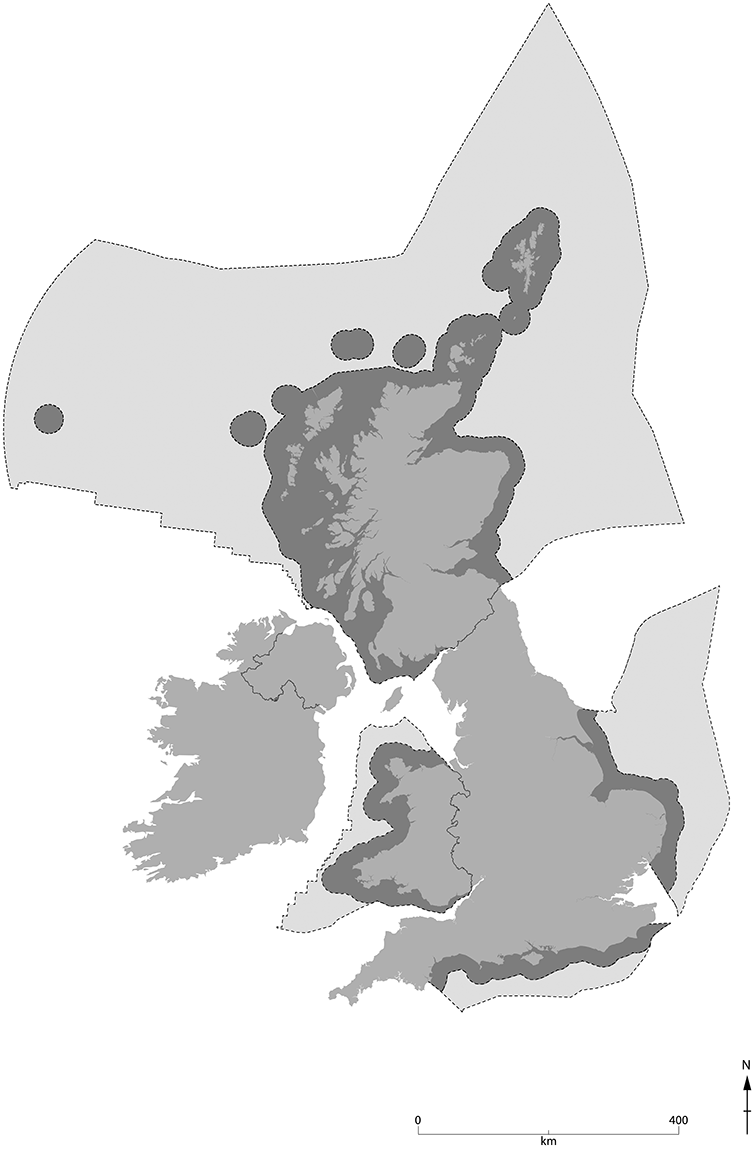
In England, a regional approach has been adopted from the beginning, but in the other three administrations, Scotland, Wales and Northern Ireland, a national plan has been produced. In Scotland, this is being augmented by regional plans. 27 The regional marine plans for England set out a vision and objectives together with policies for economic growth, social benefits and environmentally sustainable development, as well as a full range of specific marine activities. 28 Two have been adopted in the East and South.
Regional Marine Plans in Scotland are being implemented by Marine Planning Partnerships as set out in the Marine (Scotland) Act 2010. 29 Eleven marine regions have been identified for Scotland out to 12 nautical miles. 30 Two Marine Planning Partnerships have been established: Shetland Isles and Clyde. A further one is in the process of being implemented for Orkney. 31 No regional marine plans have yet been adopted in Scotland, but it is expected that the Shetland Islands Regional Marine Plan will be adopted in 2020. 32 The Scottish National Marine Plan was adopted in 2015 and has been reviewed by Scottish Government in 2018. 33 In the period before regional plans are fully established, the policies of the MPS and the National Marine Plan will apply. A non-statutory marine plan was produced for the Pentland Firth and Orkney Waters marine area in 2016 as a pilot plan for marine planning in the Northern waters of Scotland. 34
The Welsh National Marine Plan was adopted in 2019. 35 There is no regional dimension to the Welsh Plan. The draft Marine Plan for Northern Ireland is made up of two plans, one for the inshore area under the 2013 Act and one for the offshore area under the 2010 Act. 36 The Marine Plan for Northern Ireland combines the plans for both in one document. The process of adopting a final marine plan in Northern Ireland is expected to be completed following the resumption of the Northern Ireland Assembly in January 2020.
An overview of the legal, institutional and policy framework for marine planning in the UK and for this study of effective implementation of those marine plans has now been provided. The next stage of the article is to consider the method of research and the use of implementation theory to assess the marine planning process.
Research methodology and method
To assess the effectiveness of policies in the emerging marine plans, the authors have reviewed the plans and assessed them against implementation criteria, derived from the literature on planning implementation. 37 They have also examined a selection of decisions on marine-related proposals to assess the effective use of policy in determining applications for planning permission (development consent orders (DCOs) or marine licences). These initial findings were augmented by a series of semi-structured interviews conducted with representatives of applicants and decision-makers in marine licensing bodies in England and Scotland. The questions asked were consistent and revolved around the central theme of what difference the adopted marine plans and their policies had made to the licensing decisions. The interviews were not used to gather evidence of confidential negotiations or proceedings involving the interviewees. Such information was neither sought by nor disclosed to the authors. The licence review was undertaken in the second half of 2018, and the results informed the interviews which were conducted in late 2018 and in 2019.
The criteria initially used to assess the effectiveness of the emerging plans were adapted from Sabatier’s necessary conditions for effective implementation from a top-down perspective. 38 This interpretation of implementation theory considers that producing plans with policies assumes a top-down understanding of implementation, whereby the policies in the plan direct the decisions of the implementers. The implementers, in the case of marine planning, are the authorising authorities, specifically those that license activities. The marine plans have, therefore, been conceived as a mechanism for delivering top-down implementation of marine planning.
Furthermore, the context for this evaluation is an understanding of implementation theory in a spatial planning context. Nilsen, albeit in the context of medical science, has developed a taxonomy that distinguishes between categories of theory in implementation science. 39 He identifies three overarching aims of such models as (1) describing, (2) understanding and (3) evaluating implementation, and a further five categories of theoretical approach. All types of implementation theory have lessons for marine spatial planning which in its infancy has focused on the process of plan production rather than policy implementation. Figure 1 illustrates Nilsen’s approach. The research, the subject of this article, focused on the central concept: understanding and/or explaining what influences implementation outcomes.
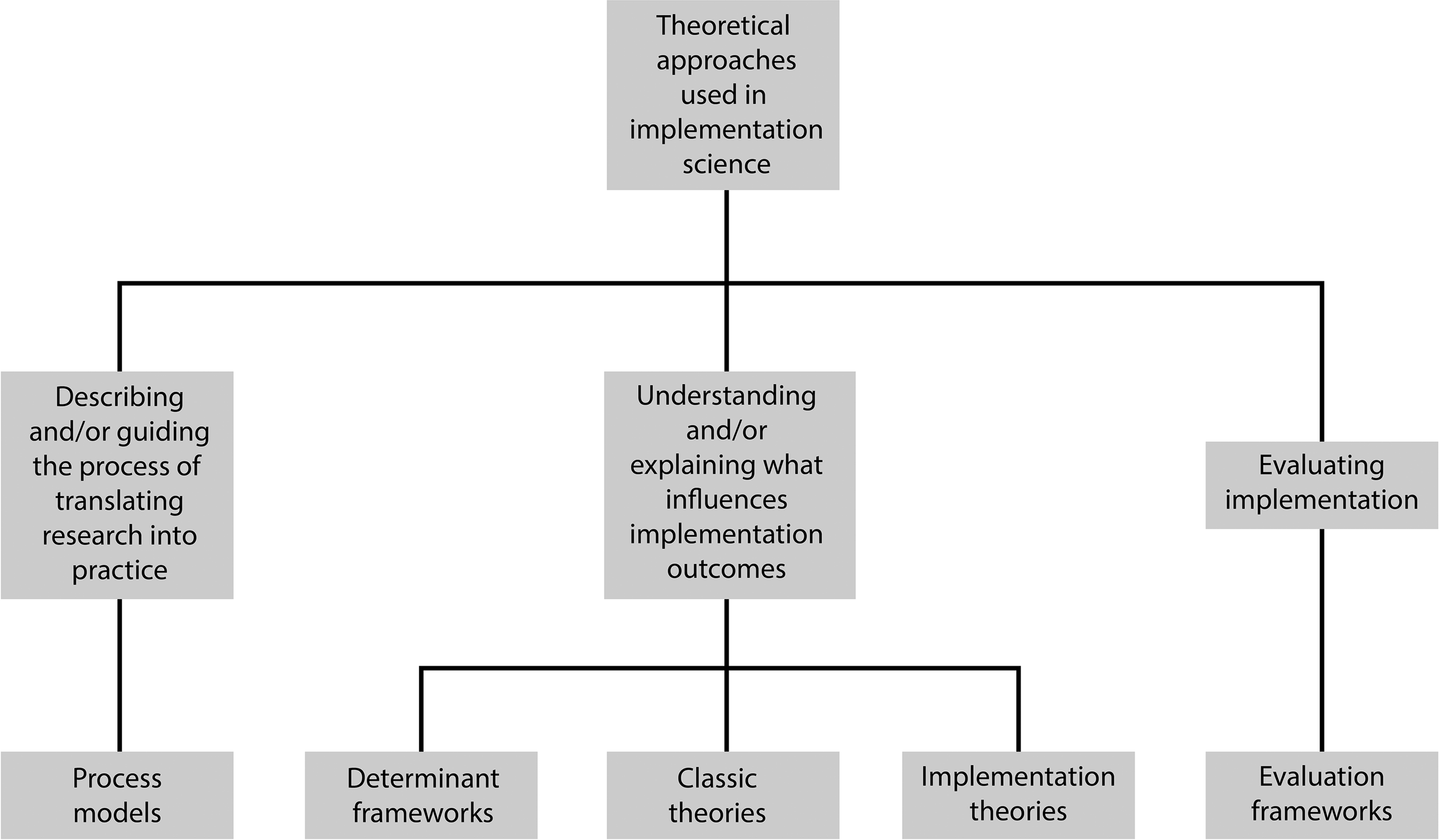
The consolidated framework for implementation research: Aims and categories identified in implementation science. Source: Nilsen (2015).
Smith explains that the consolidated framework for implementation research describes implementation processes as a series of related but non-sequential sub procedures which may occur simultaneously at multiple levels within an organisation. 40 The authors recognised the validity of the many related and simultaneous procedures towards implementation as a realistic and helpful methodology for the analysis.
This is illustrated in Figure 2. The figures represent the involvement of many individuals and processes in a number of contexts, of which contribute to the implementation of policy in the planning process.
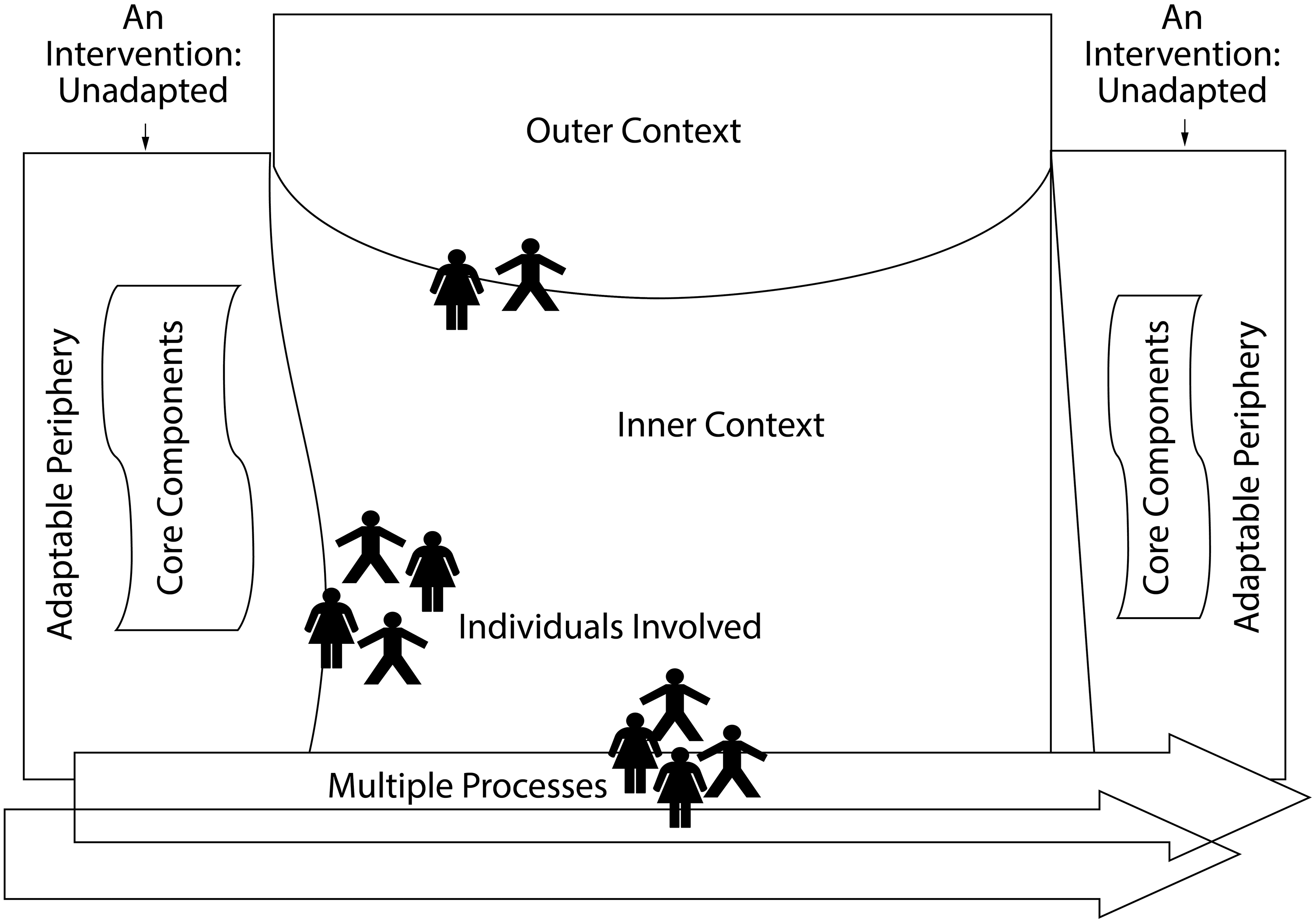
Decision-making process: Interventions and multiple processes. Source: Smith (2018).
Drawing on Nilsen and Smith, the authors’ interpretation of the implementation framework required for effective marine spatial planning is as follows:
Are the objectives of policy clear and consistent?
Is there an adequate explanation of the choice of policy to address the issues identified?
Is there a strong legal/administrative structure to ensure compliance or does the involvement of complex individual interactions act to mediate outcomes?
These three clear criteria were considered by the authors, when examining the UK-adopted marine plans. Each plan is now described and discussed.
Review of plans and research findings
Review of the MPS
The MPS was a commitment of the 2009 Act. The introduction describes it as ‘a key step towards achieving the vision…. of having “clean, healthy, safe, productive and biologically diverse oceans and seas”’.
41
It also states ‘the MPS will facilitate and support the formulation of Marine Plans, ensuring that marine resources are used in a sustainable way in line with the high level marine objectives.…and thereby Promote sustainable economic development; Enable the UK’s move towards a low-carbon economy, in order to mitigate the causes of climate change and ocean acidification and adapt to their effects; Ensure a sustainable marine environment which promotes healthy, functioning marine ecosystems and protects marine habitats, species and our heritage assets; and Contribute to the societal benefits of the marine area, including the sustainable use of marine resources to address local social and economic issues’.
This is an ambitious set of objectives and clearly depends on action other than the production of marine plans. The high-level marine objectives were a commitment of a 2009 report ‘Our Seas: a shared resource, high-level marine objectives’. 42
The MPS, however, sets the ‘direction for marine licensing and other relevant authorisation systems’ by asserting ‘the process of marine planning will: Achieve integration between different objectives; Recognise that the demand for use of our seas and the resulting pressures on them will continue to increase; Manage competing demands on the marine area, taking an ecosystem-based approach; Enable the co-existence of compatible activities wherever possible; and Integrate with terrestrial planning’.
The MPS sets out the process of producing marine plans based on evidence and setting out the means of managing marine resources through providing ‘a clear, spatial and locally-relevant expression of policy, implementation and delivery’. 43 ‘A key principle will be to promote compatibility and reduce conflict’. 44 It identifies economic, social and environmental considerations to be taken into account and commitments under other laws. It also explains the detailed issues for consideration in respect of a series of the main marine topics and how they should be taken into account in the plan. The MPS also sets out policy objectives for key activities, for example, marine protected areas, energy production and ports and shipping. 45 Each section refers to potential impacts and issues for consideration and consequently the framework for policy development in the marine plans.
Review of English Marine Plans
The East and South Marine Plans in England are compatible with the MPS and follow a similar pattern in respect of their presentation. 46 The introductory chapter sets the context in terms of the national policy and an explanation of the plan itself. The ensuing chapter contains the vision and objectives followed by the policies. There is a presentational difference between the two plans in that the earlier document for the East follows a more conventional planning document lay out: listing the policies under the heading of the objectives, followed by an explanation and accompanied by maps illustrating the spatial dimension. The South Plan was split into two documents, with the Plan document supplemented by a longer technical document. In the main document, it uses a tabular presentation of its policies, again under the umbrella of the plan’s objectives, and incorporating an abbreviated explanation of the policy’s intention. This is followed by a generic chapter on the use and implementation of the policies. There are some wording differences between the two plans. Finally, both documents conclude with a chapter covering monitoring and review.
The East Plan was subject to review in 2017, 47 following the principles set out in the Implementation, Monitoring and Review section, 48 the principles of which were, in 2016, subject to a Review of the Marine Planning Monitoring and Evaluation Framework and Development of Baselines. 49 The 2017 review was generally confirmatory of the plan’s objectives and policies, and the evaluation supported the continued use of the plan. Some of the more detailed aspects of evaluation, however, were judged to be premature and these included measures of effectiveness. Consultation with users of the plan (described in the report as stakeholders, i.e. developers, decision-makers, consenting bodies, NGOs and interested parties) reported a high level of awareness. Delivery of the objectives was confirmed by comparing levels of provision/conservation and so on with the base line. There was little evidence that these benefits had been achieved through use of the plan policies. For example, the increase in offshore wind capacity during the plan period was identified as a direct effect of plan policies, however, there is no evidence to support this claim. In fact, the 2016 document raises the interesting concept of ‘counter-factual’ evaluation, in other words ‘what would have happened if there were no plan?’ The authors would claim that the outcome would have been exactly the same because the process of approving offshore wind is predominantly as a result of NPS policies and the NSIP process of consenting. The policies of the NPS have primacy over those in other policy documents but because the marine policies lack specificity they fail to influence the detail of decisions. In interviews with plan-users for this research, there was no evidence that the adoption of plans had made any difference to the nature of applications made for consent or to decision-making on them. In other words, there is no evidence of the positive impact of the East Marine Plan. Overall the review process is very strong on process but does not drill down to the level of licensing decisions as this research has done.
Review of Scotland’s Marine Plans
Scotland’s National Marine Plan (2015) specifies a core set of General Policies that apply to all plan-making and decision-making with specific issues addressed through the 11 sector policies.
50
Key issues addressed in each sector chapter are as follows: supporting economically productive activities; interactions with other users; living within environmental limits; and climate change.
There are, for example, three chapters on energy: oil and gas, 51 carbon capture and storage 52 and offshore wind and marine renewable energy, 53 and however, the environment is covered throughout.
The Scottish National Marine Plan was reviewed in 2018 by Marine Scotland as required under the 2009 Act. 54 Scottish Minsters decided, based on that review, that it was not necessary to replace or amend the Plan. 55 The review included a consultation with key regulatory and decision-making organisations in Scotland, as well as stakeholder evidence as a measure of policy effectiveness, which provided useful data on the implementation of the Plan. Like the evaluation in England, however, the review failed to drill down to the level of actual licensing decisions.
The National Marine Plan Review Questionnaire Analysis report indicated that several general attributes of the Plan were considered of value to decision-making processes and the wider marine environment. 56 For example, the adoption of the Marine Plan for the marine environment was regarded as a significant milestone. 57 It was also acknowledged that content within the Plan which states the importance of ecosystem health and taking an ecosystem approach to policy development is a valuable indicator of government direction and policy. 58 There were some specific sections which demonstrated the effectiveness of policies or objectives: the cables and the priority marine features policies were regarded as providing clear direction to decision-makers for the first time. 59 A view supported by interviews as part of this research.
A number of general attributes of the Plan, however, were identified as challenging to the decision-making process and it was considered that the Plan would benefit from clearer setting of priorities. 60 Furthermore, the wording of some policies is not directive enough to influence decision-making: for example, words such as ‘should’ introduce ambiguity for decision-makers. 61 The social and economic policies need to be more explicit and more directive for use within the regulatory process. 62 It was also pointed out that some policies and objectives appear incompatible, for example, oil and gas objectives which maximise recovery and prolong production and the climate change ones which aim to facilitate a low carbon economy. 63 Overall, there are clearly issues with many of the policies of the plan in terms of prioritisation, conflict between the overarching objectives and in ambiguity of language. 64
An issue in relation to the ‘fit’ with the terrestrial planning system was also identified in the 2018 review. Notwithstanding that guidance had been provided in 2015, by a Circular, ‘The Relationship Between the Statutory Land Use Planning System and Marine Planning and Licensing’, 65 there was clearly an awareness by some local authorities of the need for more integration of the marine and the terrestrial system. 66 The review acknowledged that this required both consciousness raising and training, as well as alignment of the marine plan and the terrestrial planning cycles. 67
A National Planning Framework for Scotland (NPF) has existed since 2004. 68 The current one, Scotland’s third National Planning Framework (NPF3) is the spatial expression of the Government’s Economic Strategy. 69 It includes National Developments: key infrastructure projects and provides an overarching framework for the development plans in Scotland: Local Development Plans and Strategic Development Plans. There is some spatial and legislative overlap between the NPF and the National Marine Plan with clear opportunities for further integration.
Review of the Welsh National Marine Plan
The Welsh National Marine Plan was published in November 2019.
70
Its vision is that Welsh seas should be ‘clean, healthy, safe, productive and biologically diverse; Through an ecosystem approach, natural resources are sustainably managed and our seas are healthy and resilient, supporting a sustainable and thriving economy. Through access to, understanding of and enjoyment of the marine environment Through blue growth more jobs and wealth are being created and are helping coastal communities become more resilient, prosperous and equitable with a vibrant culture, and Through the responsible deployment of low carbon technologies, the Welsh marine area is making a strong contribution to energy security and climate change emissions targets.
71
Our vision will be achieved through an integrated, evidenced and plan-led approach that respects established uses and interests whilst securing the benefits from new opportunities, recognising the importance of our heritage, ecosystem resilience, the value of biodiversity and the imperative to adapt to climate change’. 72
It contains a series of objectives. That which relates to sustainable development and other Welsh legislation is described as ‘overarching’ and the rest covering a sustainable marine economy, a strong, healthy and just society, living within environmental limits, promoting good governance and using science responsibly. Most pertinently, it recognises that marine planning will make a contribution to delivering the vision and objectives but that ‘it is only part of a wider picture’. 73 The Well-being of Future Generations Act (2015) and the Environment (Wales) Act (2015) – Natural Resources Policy (2017) are cited as being relevant. 74 It should be noted that there is a National Development Framework (NDF) for Wales, albeit somewhat out of date (2008), 75 with a further NDF in draft and anticipated for 2020. 76
The plan contains policies that are ‘General cross-cutting’, which include those entitled economic, social, environmental, governmental and scientific. A series of sectoral policies cover aggregates, aquaculture, subsea cabling, defence, dredging, fishing, energy, oil and gas, ports and shipping, tourism and waste water. The general cross-cutting policies go little further than to elaborate on the objectives of the plan, seeking to ensure consistency of decisions and recognition of the dimensions of sustainability, mentioning some of the more obvious contexts within which decisions will be made, for example, coastal communities, protected environments, climate/coastal change, pollution and water quality. Policies addressing good governance refer to cumulative impact and the context of other relevant policy documents while the science policy advocates a risk-based approach.
The policies contain a novel concept in UK marine planning of identifying strategic resource areas for a variety of topics such as aggregates, aquaculture, renewable energy, ports and shipping. These are described as ‘a tool to improve the management of marine activities, space and resources, helping to support the management of sector-sector interactions and providing a focus for further strategic planning’. 77 They represent a clear expression of ‘spatial planning’ where certain uses will be prioritised in the future, but this is different from the concept of zoning which implies an exclusive use. Sector policies are accompanied by evidence, sector-specific aims and objectives and the policies themselves. There is section in the Introduction to the Plan on the use of the plan addressed to different user groups including consenting authorities.
Northern Ireland
The draft Marine Plan for Northern Ireland is made up of two plans in one document, one for the inshore area under the 2013 Act and one for the offshore area under the 2009 Act. 78 It is a small area, compared with others in the UK, but is adjacent to the marine plan areas and planning regimes for England, Scotland, Wales and the Republic of Ireland, as well as the Isle of Man. The Northern Ireland plan is commendably clear on the legislative basis for the plan, how and why it has been prepared and the area over which it relates. It is also set out in a visually accessible manner with policies summarised in ‘at a glance’ boxes.
It has an overall vision of a healthy marine area that is managed sustainably for the economic environmental and social prosperity of present and future generations. There are also eight wide ranging and ambitious marine objectives that are described as sitting within the wider context of the UK’s vision in the MPS. The Northern Ireland plan contains two categories of policies: core policies that cover the general issues to be considered for all proposals and key activity policies that support or safeguard a particular activity without due impact on the marine area, its ecosystem services and the users that rely on them. 79 The core policies include requirements relating to issues such as public participation, sustainable development and marine litter which are dealt with in more detail through other legislation, nevertheless have the benefit of being restated as part of the marine planning document. 80
In other policies, for example, on coastal processes coexistence and heritage assets, there is a policy requirement to avoid adverse impact, but where that is unavoidable to minimise and then to mitigate. Key activity policies cover all relevant marine topics. Aquaculture, for example, has a policy presumption in favour of development where it can be demonstrated that there will be no unacceptable or adverse impact on marine activities, uses and/or the marine area and any potential adverse impact is, in order of preference avoided, minimised and/or mitigated (as is the case in the other plans above). There is a similar policy, with a presumption in favour for dredging and for tourism and recreation. The policies both core and key are very much a first statement of the results of a detailed survey of the existing marine activities for Northern Ireland’s coasts and waters. The issues and the relevant legislation are set out clearly for each subject area, and there are associated maps of the relevant activities within the marine environment.
Review of marine planning decisions
Decision-making has always been linked to the implementation of plans in the UK. In the terrestrial environment, this is achieved through planning permissions. Marine planning in the UK is implemented through a requirement that all public authorities taking authorisation or enforcement decisions should do so in accordance with marine plans, unless relevant considerations indicate otherwise. 81 The exception being that for NSIPs in England and Wales decision-makers must ‘have regard to marine plans’ with policy being set by the generally non-spatial NPSs. The marine planning system is therefore what is regarded in the terrestrial planning regime in the UK as a plan-led system. There is not a mandatory requirement to ‘slavishly’ follow the plan, as a plan-led system allows discretion where ‘relevant considerations’ allow a departure from the plan policies. 82
The statutory marine planning regime operates in parallel with other regulatory and existing application requirements. The MPS, therefore, identifies that economic, social and environmental considerations need to be taken into account as do commitments under other laws, including EU Directives, such as the MSFD which represents the environment pillar of EU Integrated Marine Policy 83 and the Water Framework Directive which requires river basin planning including extending into the marine area. 84 Marine decisions are therefore taken in the context of a much wider and very complex legal and policy framework, of which the MPS and the marine plans are just one element.
All the separate regimes in the UK acknowledge the process of implementation of marine planning. For example, Scotland’s National Marine Plan explains that it does not replace or remove existing regulatory regimes or legislative requirements but provides a consistent framework for their continued operation. Scotland’s National Marine Plan and the policies that it contains therefore applies to all decisions taken by public authorities that affect Scotland’s marine area: Marine Scotland, wider Scottish Government and local government authorities, including statutory advisors, regulators and agencies. It requires that all public authorities take authorisation or enforcement decisions in accordance with marine plans, unless relevant considerations indicate otherwise. 85
The authors examined a sample of the online records of MMO, 86 PINS, 87 Marine Scotland 88 and a selection of Scottish local planning authorities determining fish farming applications in inshore areas. Only areas where marine plans had been adopted in advance of the decisions were considered. They sought evidence that plan policies had been considered in the decision-making process, and the extent to which policies had influenced the resulting decision.
They found that MMO has included a question on its application form for marine licences requiring confirmation that the details of the proposal conform to the policies of the marine plan. Similarly, applications for development consent to PINS are required to address all areas of relevant planning policy including the MPS and marine plans. In Scotland, marine licensing adopts a ‘check list’ approach to note compliance with policies in Scotland’s National Marine Plan. The awareness of the existence of a policy is therefore acknowledged, by such a check list approach, but there is no explanation as to what is required for proposals to conform with the policy. This requires an assessment of the impact of the proposal and the means by which it is being mitigated. In other words, compliance with policy is more nuanced than merely ticking yes or no to indicate conformity. Although it is acknowledged that additional information is often provided by other assessment documents, such as the environmental impact assessment (EIA).
Implementation of the policies of the plans is also achieved through their influence on decisions made by marine organisations in both the private and public sectors (not something explored in this article) but reported on behalf of the MMO in, External Decision Making and Implementation Mapping of Marine Plans. 89 The 2009 Act is clear that decisions made by the MMO should be in accordance with the MPS and marine plan policies. 90
The other organisation that is involved in the implementation of marine policies in England is PINS which administers the Planning Act 2008 in respect of applications for NSIPs, such as marine renewable energy projects, ports and other coastal developments. 91 It grants or refuses DCOs including deemed marine licenses, taking the MPS and marine plan policies into account while being guided primarily by government policies contained in NPSs for such projects, with which such decisions must conform. 92
In the UK, both the MMO and Marine Scotland are the marine plan-making body and licensing authority. The different tasks are undertaken by separate teams that are not always co-located. In fact, for licensing decisions there is a highly systematic approach that involves each application being subject to gateway checks on its passage from registration on the portal to decision. One of those checks is a plan policy assessment tool; however, this like other gateway checks appears to be mechanistic in the view of the researchers and is consequently very dependent on the intention of the policy being explicit in the policy wording.
The analysis that follows in this article is also informed by research undertaken by one of the authors, Jim Claydon, in 2018 for the Welsh Government, in which he examined approaches to socio-economic decision-making in the UK. Fourteen marine-related decisions made under different consenting regimes were reviewed. 93
Analysis and discussion
The use of implementation theory to analyse marine planning
The complexity of the overall legal and policy context for the development of marine plans and their use in decision-making for marine licences, as part of a larger marine management regime, lent itself to the use of an implementation framework with which to assess the effectiveness of the marine plans. The research revealed that there is an organisational disconnect between policymakers and licensing officers in plan-making and decision-making to a greater or lesser degree in different administrations; there is a lack of specificity and rigour in the policies; there is an uneven applicability of policies in different sectors; the culture of decision-making (among licensing officers) is inclined to conciliation and there is an absence of political input to the process of marine licence decision-making.
The research tests for effective implementation are set out earlier in this article and require a positive response to the following questions;
Are the objectives of policy clear and consistent?
Is there an adequate explanation of the choice of this policy to address the issues identified?
Is there a strong legal and administrative structure to ensure compliance or does the involvement of complex individual interactions act to mediate outcomes?
The review of published documents against the three questions set out above suggests that the objectives are clear and consistent, if highly ambitious. The examination of the published plans, both draft and adopted, suggests that a lot less attention appears to have been paid to the second criterion as to whether there has been an established rationale between the choice of policy and the means by which it may be interpreted in decision-making. In respect of the third criterion, there is no doubt that in all UK regimes there is an effective administrative structure for the making of decisions, and this is backed up by consultation, publicity and enforcement powers and, in the case of marine licensing, the opportunity for applicants to appeal adverse decisions. However, there is also no doubt that the linkages between acknowledgement of the existence of relevant policy and its interpretation in decisions are subject to complex interactions between key actors. Interestingly, the desktop study has revealed that since the adoption of the plans there is very little evidence of marine policy explicitly influencing decisions or being expressed in the documents accompanying decisions. The authors, therefore, sought to examine this particular weakness of the emerging marine planning system. The implementation of the UK marine plans is now discussed in detail.
MPS: Discussion
The MPS establishes clear sets of objectives for both plan-making and decision-making in relation to marine development. All the UK marine plans reference the MPS and explain that the objectives have been developed within the context of that overarching policy document. The MPS also identifies the plan-making and decision-making bodies as the organisations charged with achieving those objectives and gives directions for the development of policies in relation to a range of topics. What is less clear is how the plans and decisions will achieve the full range of objectives, although in relation to selected topics there is guidance and a rationale for policy development. Objectives such as ensuring ‘a sustainable marine environment which promotes healthy, functioning marine ecosystems and protects marine habitats, species and our heritage assets’ are unlikely to be achieved solely through application of plan policies. This would require proactive measures for established ecosystems that lie beyond the marine planning system.
English Marine Plans: Discussion
The regional approach in England allows for one regional plan to learn from the previous plan but it raises questions of consistency. For example, if in plan A, a particular topic is dealt with in one way, what justification can there be for dealing differently with the same topic in plan B, produced a year or so later? Where these topics have common characteristics around the whole coast of England there is a danger of what should be consistent national policy being applied differentially. For example, having different policies for cabling in different regions would not be sensible, as many cables cross regional boundaries. Similarly, if new criteria are introduced at a national level, such as ‘net environmental gain’, policies will reflect the date of plan adoption rather than the current needs of the issues surrounding that topic. While all plans are reflective of the policy environment in which they are developed, this is particularly problematic where national policy is the product of the aggregate of a succession of regional plans.
One of the biggest drawbacks with the two English-adopted plans (East and South) is in the wording of policies that are clearly subject to the same influences. While some policies are fairly straightforward in their support for particular types of activity or of consulting relevant bodies in their use, others follow a formula that would make negative implementation very difficult. For example, where proposals are required, in relation to potential adverse effects from different types of proposed activity, to ‘a) avoid, b) minimise, c) mitigate, or d) state why none of the above are possible’, it is difficult to envisage any circumstance where none of these criteria could not be met, even if it is merely to state it was difficult to achieve. While ‘avoiding’ an adverse effect is measurable and mitigating may be assessed against stated criteria setting out what degree of mitigation might be acceptable, the term ‘minimise’ is not defined and highly disputable. Similarly, there is no indication what kind of justification for not responding to an adverse effect would be acceptable. While stoutly defended by the MMO and other commentators, the authors consider that this formulation of policy, commonplace in both plans, renders many policies unimplementable. The authors’ view is that an applicant for marine consent could justifiably argue that they had attempted to ‘minimise’ an impact, however minimal the adjustment had been and could equally argue that they had provided a valid reason why it was not possible to do so. It is worth noting that the National Planning Policy Framework for terrestrial planning in England says in its section on preparing and reviewing plans, para. 32 Local plans and spatial development strategies should be informed throughout their preparation by a sustainability appraisal that meets the relevant legal requirements. This should demonstrate how the plan has addressed relevant economic, social and environmental objectives (including opportunities for net gains). Significant adverse impacts on these objectives should be avoided and, wherever possible, alternative options which reduce or eliminate such impacts should be pursued. Where significant adverse impacts are unavoidable, suitable mitigation measures should be proposed (or, where this is not possible, compensatory measures should be considered).
94
As a consequence, the two English Plans have limited potential to be effective in implementing the vision and objectives through the application of their policies to proposals for development in the marine environment. Many policies do not meet the necessary criteria of being concise, unambiguous, monitorable and measurable. While it is recognised that there are differences in the context of terrestrial and marine planning, it is clear from the 2009 Act and the MPS that both systems are plan led. The MPS states in para. 2.3.2.1 Enforcement or authorisation decisions that affect or might affect the UK marine area must be made in accordance with the relevant marine policy documents unless relevant considerations, such as advances in scientific knowledge and technology for example, indicate otherwise. This means that decisions on activities in the UK marine area will be plan led once marine plans are in place.
95
Scotland’s Marine Plan: Discussion
The Scottish National Marine Plan sets out the objectives for marine policy which are clear and consistent. They are in line with the MPS and provide a coherent vision for the sustainable development of Scotland’s marine area. The general policy and the topic chapters also provide an adequate explanation of the choice of policy to address the issues raised. Some of the policies are vague and identified as such in its own review (e.g. sea fisheries: existing fishing opportunities should be safeguarded where possible), 96 but others provide clear direction and fill a policy vacuum that previously existed (e.g. the burying of telecommunications cables). 97 There is an existing legal and administrative structure, but it is not yet strong in terms of implementation of the marine plan policies. The recognition of the place of the plan and role that it can play in shaping decisions, including refusals, is limited. There is clearly an opportunity in Scotland for the National Plans: marine and land to be synchronised and aligned. This in itself might raise the profile of the marine plan and embed it with the decision-making process to enhance effective implementation.
Welsh Marine Plan: Discussion
Like the English plans, the policies are not all sufficiently clear in their intentions, for example, a number includes the same hierarchy of mitigation tests that should be applied to proposals, such as, in relation to historic assets, ‘Proposals should demonstrate how potential impacts on historic assets and their settings have been taken into consideration and should, in order of preference Avoid adverse impacts on historic assets and their settings; and /or Minimise impacts where they cannot be avoided; and / or Mitigate impacts where they cannot be minimised’.
If significant adverse impacts cannot be avoided, minimised or mitigated, proposals must present a clear and convincing case for proceeding’. 98
The same criticism applies to the Welsh Plan as has been explained earlier. There are numerous examples of this hierarchy of mitigation throughout the Social and Environmental General Policies sections and other policies that also lack precision. Effective policies should be precise, unambiguous, monitorable and measurable, and many of the policies in the Welsh National Marine Plan fail this test.
In Wales, as explained earlier, the body tasked with implementing the marine plan through marine licensing is Natural Resources Wales (NRW). Uniquely in UK marine planning, there is a separation between the plan-making body (Welsh Government) and the main implementing body. NRW has its own organisational objectives and priorities. 99 While the authors have found no evidence that this has led to conflict, the potential for organisational dissonance is self-evident and could create a barrier to effective implementation of the plan. Implementation theory suggests that one of the conditions for perfect implementation requires that there is a single implementing agency and that in turn would suggest that the closer the relationship between policymaker and implementer the more effective implementation will be. 100 The more distant that relationship the greater the opportunity for the mediation of outcomes through the interaction of individuals.
Draft Northern Ireland Marine Plan: Discussion
The draft Northern Ireland Marine Plan consists of both ‘core’ and ‘key’ policies. It is very much a first statement of the results of a detailed survey of the existing marine activities for Northern Ireland’s coasts and waters. It reads like a manual for marine licensing and management, rather than providing strategic guidance as part of a marine planning process. The policies are both vague and aspirational in terms of content. For example: There is a presumption in favour of tourism and recreation proposals, where it can be demonstrated: a) there will be no unacceptable adverse impact on marine activities, uses and/or the marine area and any potential adverse impact is, in order of preference, avoided, minimised and/or mitigated.
101
UK Marine Plans overview: Discussion
The examination of UK marine plan policies, therefore, suggests that many are expressed in broad terms and others contain considerable ambiguity. It must be very difficult to interpret the purpose and intent of such policies and very easy to assume general conformity, which begs the question how have such inexact policies come to be adopted in marine plans? Interviewees confirmed that the introduction of marine planning policies had made no difference to the compilation of documents (except in the acknowledgement of the plan’s existence) or the drafting of DCOs. It was also confirmed that policies that required impacts to be ‘minimised’ made it relatively easy for applicants to demonstrate conformity to policy.
Marine decisions: Discussion
The review of decision-making based on the policies of adopted marine plans was only possible in England (East and South) and Scotland, no other plans having been adopted at the time of the research. The authors found that marine licence applications in England and Scotland usually acknowledged the existence of an adopted plan, but commonly the response was confined to a tick or a brief written confirmation. No examples were found which elaborated how and which policies were being complied with. In PINS applications, which generally require significant quantities of documentation, conformity was elaborated to a far greater degree; however, there was little evidence of what difference the requirement to conform to marine policy had made to the application. The authors believe that mere acknowledgement of policy is insufficient and that in decisions the extent to which proposals conform and the means by which they may be mitigated should be elaborated.
In relation to the examination of the marine licences, no examples were found of such licences being refused in the relevant plan areas, nor were there any examples of appeals against decisions or against conditions attached to those decisions. In the decision letters of the MMO, there were no examples of requirements that appeared to have been generated by the necessity to conform to specific marine policies and little reference to specific marine policies in the decision letters.
The 2018 examination of the socio-economic decision-making and review of UK marine-related decisions established that the most successful examples were the product of a substantial hierarchy of plans from strategic to detailed. 102 It also found that the least effective examples of socio-economic considerations being influential were in marine licensing cases. 103 It is worth noting that prior to the 2009 Act, licensing decisions were frequently made primarily on the basis of EIA. Reasons suggested for this are combined with the overall conclusions of the more recent and wider research and these are set out in the next section.
Conclusions on the review of the progress and effectiveness of the plans and their policies
Establishing this first round of UK marine plans has released a new forward-looking comprehension of our seas and their future. This is perhaps the greatest achievement of marine planning in the UK so far. Nevertheless, marine planning is still new, and the policies and processes may have yet to be fully understood by applicants and decision-makers. It is clearly still early, therefore, to draw definite conclusions from the diverse approaches to marine planning and its implementation to date. This detailed research and analysis on implementation of UK marine plans has, however, enabled some conclusions to be drawn.
The three main conclusions are now discussed under the headings of causal relationship, cooperative and constructive relationships and political decision-making.
Causal relationship
The general lack of evidence of a causal relationship between the marine plan policies and the decisions in adopted marine plan areas was surprising. The post 2009 Act plan-led system makes the necessity to conform to marine policy, as set out in the MPS and marine plans, as paramount. There appear to be a number of possible explanations for this lack of evidence of influence of marine policies on marine decisions. These explanations range from: the lack of specificity in policies which tend to lack locational or criteria-based requirements; an organisational disconnection between policymakers and licensing officers; a culture of decision-making among licensing officers that is not conducive to the use of marine policies, possibly as a result of the novelty of marine planning; and the lack of political input to the process of marine consent decision-making.
In practice, it was found that in each jurisdiction there is a systematic approach that involves each licensing application being subject to gateway checks on its passage from registration on the decision-making portal. This method of assessing applications requires that policies are very carefully written with the systematic approach described earlier always in mind.
One explanation of the ambiguity of adopted policies is that in the UK there has been no independent examination of such plans such as would have been required of terrestrial plans of similar scope and purpose. Interviewees took the view that only policies that had been subject to environmental assessment (which does apply to marine plans) together with independent examination would carry significant weight in examination or at appeal. This view is supported by recent publication into ‘The post-political nature of marine spatial planning and the modalities for its re-politicisation’ by Clarke and Flannery in which they argue ‘that the focus on reducing conflict in marine governance removes debate about the purpose of MSP’ and that ‘differences between actors must be brought into a public forum in which they can be explored and articulated’. 104
A further explanation is that the particular contribution that policy makes to marine decisions is not recorded explicitly, as there appears to be no explicit expectation in decision letters or committee reports for decision-makers, to assess marine policy conformity, although this is explicit in the 2009 Act. 105 This may be a product of culture (see below) or a product of the processing of applications.
Cooperative and constructive tradition in marine licensing
The research interviews in both England and Scotland revealed that there is a tradition of cooperation and a constructive approach to adverse impacts encountered in the licensing process. Where potential impediments to consent are identified, licensing officers work with applicants and consultees to overcome such obstacles and arrive at negotiated outcomes. This appears to be a custom and practice approach which needs to be acknowledged as there is a distinct culture within this function in both the MMO and Marine Scotland that may well have been inherited from the licensing bodies which predated the 2009 Act, the MPS and marine plans. Such approaches are not unknown in terrestrial planning, 106 but the constraints to the exercise of discretion in land use development control are set by planning policy (both national and local), 107 whereas in marine licensing, the impression gained by the authors is that marine plan policy is one of a number of parameters that may be taken into account by the individual officers in carrying out their role. There is nothing inherently wrong in negotiation and cooperation in decision-making but only where applications meet a minimum level of conformity to policy. Where policy is lacking in specificity, it is difficult to gauge whether that level has been met and possibly, as a consequence, cooperation and negotiation are the best means of achieving a more acceptable outcome. The result is that there are very few refusals of applications, and everything is done to enable and facilitate proposed marine development. This conclusion was endorsed in interviews.
Political decision-making
The interviews disclosed that a distinct difference between marine licensing and development management in terrestrial planning is the lack of political input. This conclusion is linked to a general consensus that consideration of environmental impacts addressed through EIA is adequate in assessing the suitability of applications, and the socio-economic benefits are discounted as secondary in the minds of applicants and decision-makers. This can be contrasted with planning permission decisions in local authorities, where elected members oversee decision-making and where there are significant or contentious applications the decision will be made by members. There is no equivalent process in marine licensing (except with Scottish Local Planning Authority decisions on fish farms). Where a politician wishes to represent their constituents’ interests in a marine decision she/he is involved as an interested party, is able only to comment on an application, not be involved in its determination. It was speculated by an interviewee that this might lead to the assessment and justification of decisions that were less heavily dependent on policy. This would be difficult to verify.
In DCO applications, the final decision is made by a politician (the relevant government minister) having received a recommendation and report from a panel of examining inspectors acting on behalf of PINS. Councillors and MPs for affected areas are similarly interested parties able only to make representations on behalf of their constituents. The culture of the PINS is very different from that of marine licensing, and strict adherence to policy is deeply ingrained. All aspects of recommendations for marine DCOs and ministerial decisions are substantially supported by policy from the NPSs, local and marine plans. However, the lack of evidence that marine policies have made a significant difference to decisions, in whole or in part, suggests that culture is not the main explanation, but the nature of the marine policies. The exception to this is that where a supportive policy exists, this has been weighed in the balance of positive and negative impacts with which all DCO applications conclude. For example, where there is a policy to support proposals for new wind farms inside Crown Estate designated Round 3 zones, this policy has been considered as part of the reasons for approval by examining authorities. 108
Reflections on marine planning: 2009–2020
This final section contains reflections on the implementation of marine planning, 10 years on. The reflections draw on the conclusions from the research into the review of the progress and effectiveness of the UK marine plans and their policies utilising an implementation framework and observation of the marine planning process through a terrestrial planning lens.
The 2009 Act was a trailblazing piece of legislation that established a comprehensive approach to marine planning in the UK. It united the four administrations of England, Northern Ireland, Scotland and Wales in one regime of plan-making and licensing with the adoption of the MPS but allowed for different approaches to be taken.
The analysis of this review of marine planning implementation in the UK clearly indicates that there should be both some strengthening of policies in marine plans and equally importantly strengthening of the administrative arrangements surrounding plan policy implementation. Reviewing their findings through the lens of urban planning, the authors believe that one aspect of this strengthening could come about as a result of legal challenge and testing of marine policy implementation. In terrestrial planning, the system of plan examination and appeals against decisions have developed pragmatic practices in managing the decision-making process. For example, the concept of the Rochdale Envelope, which emerged from town planning case law, is commonly used in applications for offshore wind farms and other NSIP determined under the 2008 Planning Act. 109
The initial reflections are set out subsequently and are categorised as positive or challenging outcomes as follows:
Positive outcomes Establishing this first round of plans, and in some cases reviews of these, has released a new forward-looking comprehension of our seas and their future. This is perhaps the greatest achievement of marine planning in the UK so far. The diverse approaches among the different administrations has allowed for learning and comparisons. This reflective exercise is still in its infancy.
Challenging outcomes It was claimed by some interviewees that all the plans have proved more complex to develop than was perhaps anticipated and the requirements in terms of information and engagement by interested parties, including the engagement of other government departments, have been particularly demanding. The consistency of policies in relation to topics is threatened by a regional approach adopted over a period of time, as is demonstrated by the English regional plans. For example, it is important to achieve consistency across borders between different regions for policies that apply to subjects like underwater cabling where inconsistency could lead to different policies applying to the same cable depending on in which regional plan area it was laid. Marine plan policies would benefit from legal challenge during adoption and in application. A view supported by Clarke and Flannery in their recent research.
110
The authors anticipate that these reflections both positive and challenging might provide insight for the ongoing process of marine plan-making in the UK, throughout EU Member States and elsewhere. It will also form the basis of future research in this area.
Footnotes
Declaration of conflicting interests
The author(s) declared no potential conflicts of interest with respect to the research, authorship and/or publication of this article.
Funding
The author(s) received no financial support for the research, authorship and/or publication of this article.
